A/62/PV.94 General Assembly


First of all, I would like to express my delegation’s appreciation to you, Mr. President, for organizing this thematic debate around the theme “Recognizing the achievements, addressing the challenges and getting back on track to achieve the MDGs by 2015”. The debate is timely, as we are at the midpoint in the process of implementing the Millennium Development Goals (MDGs) and must take stock of what has been accomplished so far and determine what tasks remain to be accomplished in order to achieve the Goals before the target date.
My delegation associates itself with the statements made on behalf of the Group of 77 and China and the African Group.
As indicated by various United Nations reports and previous General Assembly debates on the MDGs, the progress achieved so far has not been very encouraging, although varying degrees of progress has been made by countries. The mixed outcome of the efforts made, however, should not be viewed as lagging behind, but as an impetus for a further redoubling of our efforts and commitments to achieve the Goals.
The challenges associated with the implementation of the MDGs are obvious and have been discussed at various times and on various occasions in the past. But now that we are halfway through the MDG implementation process, it is high
time that we identify the key challenges and take concrete actions to address them effectively and in a timely fashion. It has been repeatedly stressed that, unless we secure an adequate global partnership, efforts by developing countries alone will not yield the results that we all wish to see — at least not before the deadline. It is obvious that our development partners have failed to deliver on their promises to implement the Monterrey Consensus, the Millennium Declaration and other internationally agreed commitments. That lack of partnership, coupled with the increasingly volatile and difficult global economic situation, has compounded the challenges already being faced by developing countries, has negated whatever limited progress they may have achieved thus far in the process and has increased the magnitude of the difficulties. My delegation fully shares the view that scaling up investment in agriculture, infrastructure and social sectors should be accorded paramount importance. In order to accelerate industrial development and increase overall economic growth, it is essential to develop the agricultural sector, which is crucial in ensuring the provision of inputs for industry and achieving food security. The emphasis placed on agriculture by our development partners and by the international financial institutions, however, has been inadequate, rendering weak and ineffective that sector’s significant contributions to the efforts of developing nations to combat hunger and poverty. Likewise, the lack of a sufficient and constant supply of resources in the social sectors, such as health — since the majority of the people in developing countries suffer from preventable and curable diseases — and education, an area whose contribution to capacity-building is critical, is one of the major obstacles to achieving the MDGs. Ethiopia, with its agrarian economy, has duly recognized the key role of the agricultural sector in the economy and its quick, positive impact, right from the beginning, on the growth of the other economic and social sectors. The agricultural sector provides critical resources in terms of the human power and the natural resources needed to achieve fast development, and it is the major source of foreign exchange. That is why the Government of Ethiopia has prepared an agricultural development-led industrialization strategy with the objective of according primacy to the agricultural sector as the driving force behind overall development. Under the strategy, thousands of development agents have been trained through agricultural technical and vocational education and training institutions, and more than 5,000 farmer training centres have been established to support farmers in increasing agricultural production enough to meet local needs and to make the country competitive in world markets, with comparative advantages. An improved package of extension services has been made available in accordance with existing environmental and market conditions; these are designed to address problems related to production and productivity. For those and other reasons, the sector has so far been registering steady growth in terms of production and, together with strong export performance, has contributed to the achievement of tangible results in speeding up economic growth in recent years. During the current budget year alone, we have so far achieved 10.8 per cent economic growth, and we have also registered average economic growth of 10 per cent for five years in a row. That significant economic performance also happens to be above the average rate of economic growth for countries in sub-Saharan Africa. Ethiopia, in addition to being among the first countries to prepare and implement its Poverty Reduction Strategy Papers, has made positive progress in implementing the MDGs. In fact, during the preparation of the now-completed Sustainable Development and Poverty Reduction Programme at the dawn of the new Ethiopian millennium, the Government seized the opportunity to incorporate the MDGs into our national development plan. In our efforts, we have achieved encouraging results that should make us optimistic that we will meet the targets of some of the Goals. With regard to primary education coverage, the number of children in primary schools increased from 8.1 million in 2002 to 12.6 million in 2006. That brought the gross enrolment rate from 61.6 per cent in 2002 to 91.3 per cent in 2006. The enrolment ratio for females also increased, from 52.2 per cent in 2002 to 83.9 per cent in 2006. The Government of Ethiopia also recognizes that the poor health status of its citizens is a serious constraint on economic productivity and impedes efforts to reduce poverty and combat hunger. Common poverty-related diseases, including malaria, tuberculosis, childhood illnesses and HIV/AIDS, continue to cut short the lives of Ethiopians. The Government, fully supporting the emphasis on health in the MDGs, has developed and has begun to implement a 20-year health sector development programme. Early results of its implementation indicate that access to health services has risen from 52 to 72 per cent and that the under-five and infant mortality rates have both declined, from 167 to 123 per 1,000 people and from 97 to 77 per 1,000, respectively, all in five years. The Government, in its determination to build on what has been achieved over the years, has designed a comprehensive five-year development plan, called the Plan to Accelerate Sustainable Development to End Poverty. The plan is now being implemented, with the aim of carrying forward important strategic objectives being pursued under the completed Sustainable Development and Poverty Reduction Programme. Not only will the agricultural and social sectors continue to receive the highest priority and attention in our development, but other important sectors such as energy and infrastructure development will also be accorded the emphasis that they need and deserve. The measures taken to develop the energy sector, by building the capacity of our national power-generation schemes for rural electrification and electricity exporting programmes, have been very encouraging so far. The Government’s efforts to expand the country’s national road network outward from the capital in all four directions and to develop communication infrastructures have also started to have a positive impact on the growth of the economy. Both sectors will undoubtedly continue to enjoy the Government’s full support, as they are crucial in achieving the MDGs and other internationally agreed development goals. Although developing countries are doing their best to make sure that they do not remain behind, they need to secure an adequate and predictable supply of resources from our development partners. My delegation therefore calls for an increase in pro-poor investment in order to enable developing countries, especially those in Africa, to achieve the MDGs by the target date. The full and timely realization of the international community’s commitment to meet the target of allocating 0.7 per cent of gross national income as official development assistance is highly imperative. We also call upon the international community to level the playing field for African countries so they can fairly compete in international markets and to take additional measures for the effective implementation of the African Growth and Opportunity Act and the Everything but Arms initiative. By delivering on all promises in terms of support in financing and by our partners taking the urgent, necessary steps with regard to the implementation of major development initiatives, we believe that the targets of the MDGs will be achievable, despite the multifaceted challenges we are facing now.
Mr. Soborun (Mauritius), Vice-President, took the Chair.


At the outset and on behalf of my delegation, I would like to congratulate the President of The General Assembly on having convened this high-level debate on the theme “Recognizing the achievements, addressing the challenges and getting back on track to achieve the MDGs by 2015”. Since assuming the presidency of the General Assembly, Mr. Kerim has taken many initiatives within your mandate, particularly with regard to achievement of the Millennium Development Goals (MDGs). I would like also to congratulate the Secretary-General, Mr. Ban Ki-moon, on his tireless efforts towards the same end and for having fully involved all relevant bodies of the United Nations system in order to achieve the MDGs.
Mauritania aligns itself with the statement made by the representatives of Antigua and Barbuda, the Democratic Republic of the Congo and Bangladesh on behalf, respectively, of the Group of 77 and China, the Group of African States and the least developed countries.
This high-level debate is an important milestone in assessing the progress made so far towards achieving the MDGs, as well as the difficulties that have been encountered in this endeavour. At the half- way point, we must admit that the hoped-for results on the MDGs are far from being achieved. Even if some countries have made progress, for many, particularly in Africa, much remains to be done in terms of combating poverty and hunger and improving education and health, not to mention all the other areas. It is urgent that the international community genuinely mobilize itself towards the achievement of the MDGs by
providing the resources and means necessary to reach that objective.
Following free and fair elections in 2007, Mauritania is currently a democratic country with institutions based on the people’s will and where the rule of law exists and democratic freedoms are respected. The Government has formulated a three-year development programme. In order to finance this programme, the assistance of development partners was requested at a round table held in Paris in 2007. At that event, approximately $1.9 billion was pledged. The Mauritanian authorities are working with donors, to monitor the status of the use of the pledged funds while taking the necessary steps to guarantee swift implementation and ensuring that all sectors work together towards carrying out projects to which the international community has committed itself. With the mobilization of the resources agreed at the Paris round table, Mauritania will be able to make good progress towards achieving the MDGs, beginning with strengthening its poverty alleviation programme.
With regard to health, my Government’s efforts have focused on improving the quantity and quality of the services offered to the population. In this framework, we will be taking major steps, inter alia, to build and extend the health infrastructure network, improve the supply and distribution of medicine and prevent the most widespread illnesses.
The midterm plan for our Health and Nutrition Support Programme is being reviewed. The Programme was launched three years ago and aimed at improving the effectiveness of the health sector in Mauritania, in particular with respect to promoting quality care and to changing the mindset of mothers regarding the nutrition of young children. This programme is helping to improve people’s health and nutrition by improving the living standards of pregnant women and nursing mothers and children under 2 years of age, by helping to spread the consumption of iodized salt and by building the capacity of health care institutions.
With regard to HIV/AIDS, a national awareness campaign is under way to draw attention to the dangers of this disease and to explain how it is transmitted and how to protect oneself. In this framework, 70 non-governmental organizations and 52 women’s cooperatives have received funding.
The National Institute of Medical Specialists is providing on-the-job training in surgery and
paediatrics; there has been improvement in the staffing of regional hospitals. The Institute has also organized visits by surgeons to the interior of the country to bring health care to the people. Despite our efforts, the ratios for both generalists and specialists continue to be below those recommended by the World Health Organization.
In the area of education, a status report is being prepared to introduce major reforms to enable that sector to meet human resource requirements, based on appropriate training and taking account of the realities of the contemporary world and the demands of globalization.
Concerning gender equality and the empowerment of women, Mauritania has taken important steps by making men and women equal under the law. The country’s development strategy, which aims to reduce the percentage of Mauritanians living under the poverty line to 17 per cent, puts Mauritanian women at the core of its anti-poverty strategy. To this end, special priority has been given to women in terms of building their capacity to participate in economic life by emphasizing the improvement of women’s access to the market through better access to bank loans, microcredit and savings; access to secure property rights; and increased participation by women, particularly women heads of household, in wealth-generating activities.
In terms of employment of women in the public sector, major progress has been made since Mr. Sidi Mohamed Ould Cheikh Abdellahi assumed the presidency of the Republic in April 2007. For the first time in Mauritania’s history, women have been appointed by the President to senior posts, as ambassadors, regional governors, prefects and other senior positions which were previously reserved to men.
Furthermore, by law there is a 20 per cent quota for women in the two chambers of the parliament and in municipal councils. Mauritanian women are gaining all their rights and achieving full equality with men under laws guaranteeing the development and empowerment of a group that represents more than 50 per cent of the population.
The efforts being made by Mauritania cannot, on their own, ensure that we achieve the Millennium Development Goals by 2015; the solidarity and support of the international community are also needed. The
urgent mobilization of the funds pledged at the Paris round table will be an important step in that direction.

I call now on the observer of the Observer State of The Holy See.
Monsignor Auza (Holy See): In the year 2000, in this very Hall, heads of State or Government agreed on an ambitious, yet needed, set of global development goals to be achieved by 2015. At the halfway point, while much has been done towards achieving the goals, abject poverty, hunger, illiteracy and lack of even the most basic health care are still rampant, indeed worsening, in some regions. Tackling these challenges, which continue to afflict hundreds of millions of people, remains therefore at the very centre of our concerns.
Authoritative studies tell us that, in spite of the remarkable economic growth in many developing countries, the overall goal of reducing hunger and poverty has remained elusive. My delegation believes that greater international solidarity is necessary if we are to succeed in narrowing the ever-increasing gap between rich and poor countries and between individuals within countries.
While international aid is important, a fairer international trade environment, including addressing market-distorting practices, which disadvantage weaker economies, is even more decisive. In this regard, the importance of the upcoming Doha review conference cannot be stressed enough. The combined efforts to meet the 0.7 per cent of official development assistance (ODA) and to review trade and financing mechanisms, on the one hand, and to end bad governance and internecine conflicts in recipient States, on the other, will go a long way in lifting millions of people out of extreme poverty and hunger.
My delegation wishes to assure the Assembly that the Holy See remains actively engaged in alleviating poverty and hunger, which are an offence against human dignity. It will not cease to highlight these basic needs, so that they remain at the centre of international attention and are addressed as a matter of social justice.
The Holy See is very pleased with the good progress made towards achieving universal access to primary education, with some of the poorest regions seeing a dramatic increase in enrolment. However, without redoubled efforts, 58 countries may not
achieve the goal of universal primary schooling by 2015.
Education underpins all the Millennium Development Goals (MDGs). It is the most effective tool to empower men and women to achieve greater social, economic and political freedom. Governments and civil society, public and private sectors and parents and teachers must invest in the education of future generations to prepare them to face the challenges of an increasingly globalized society. In particular, utmost efforts must be made to give equal educational opportunities to boys and girls, and to ensure that no child is left behind for purely economic and social reasons. Precisely with this end in view, thousands of educational institutions of the Catholic Church are located in degraded inner cities and in far-flung villages, in the peripheries of huge cities and in places where children are constrained to work in order to survive.
The health-related MDGs also require our collective action. While progress has been made in reducing child mortality, there has been slower progress in addressing maternal health, HIV/AIDS, malaria and tuberculosis. The overriding cause of the slow progress has been the lack of resources at the most basic levels of health care and the continued lack of access to even those levels. It has long been demonstrated that investing in primary health care, rather than in selective, culturally divisive and ideologically driven forms of health services, which camouflage the destruction of life among medical and social services, is one of the most cost-effective and successful ways to improve the overall quality of life and the stability of families and communities.
Moreover, the lack of progress on the health- related goals demonstrates the interconnected and mutually reinforcing nature of the MDGs. The significant correlation between poverty and the persistent high levels of HIV/AIDS, tuberculosis, malaria and maternal mortality is evident. My delegation wishes to assure members that the Holy See, through its institutions, will continue to provide basic health care, with a preferential option for the most underserved and marginalized sectors of society.
This thematic debate, at the halfway point between the Millennium Declaration and 2015, comes at this rather poignant time of the sixtieth anniversary of the Universal Declaration of Human Rights. At the
heart of both the Declaration and the MDGs is the goal of a better future for all. More than talks and summits, the achievement of this goal requires commitment and concrete action. Our common fight against extreme poverty, hunger, illiteracy and illness is not merely an act of generosity and altruism — it is a condition sine qua non for a better future and a better world fit for all.
I now give the floor to the observer of Palestine.

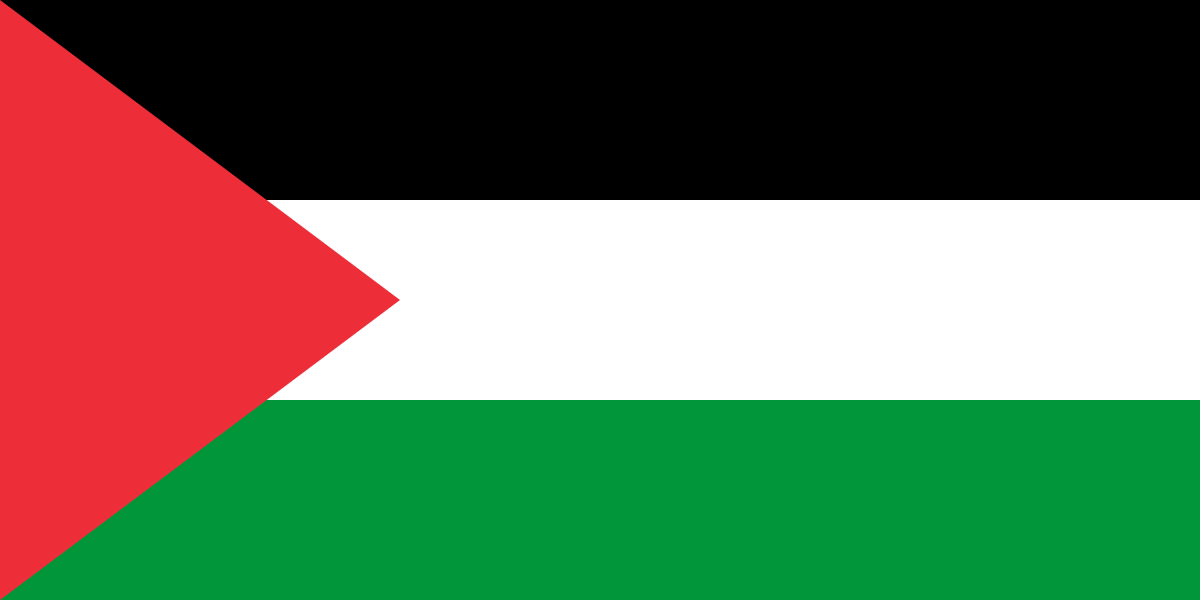
Allow me to express my delegation’s appreciation to the President for organizing this important debate.
Palestine aligns itself with the statement delivered on behalf of the Group of 77 and China.
The Palestinian people face serious challenges in their attempts to achieve the Millennium Development Goals (MDGs). While progress has been made, the Palestinian people have been unable to create an enabling domestic environment for realizing their MDGs: namely an environment free from the oppression and punitive, destructive restrictions and measures of military occupation — an environment in which the ability to progress is not contingent on the occupier’s permission, but rather on the actual work and energy exerted by a people to achieve these goals. The ongoing Israeli occupation of the Palestinian Territory, including East Jerusalem, constitutes the main and most formidable obstacle to the Palestinian people’s achievement of any form of sustainable development and the MDGs as a whole.
Particularly over the past eight years, the illegal policies undertaken by Israel, the occupying Power, have actually plunged Palestine into a development process, in reverse, undoing all previous progress towards the MDGs. According to the World Bank, the Palestinian economy registered steady growth in real gross domestic product (GDP) of 8 per cent each year until 1999. The World Bank notes that since 2000, however, due to the harsh effects of the Israeli-imposed closures and movement restrictions, Palestinian real GDP has shrunk by 40 per cent.
The socio-economic consequences of such a regression of the economy are vast. This dire situation has negatively impacted the goals of eradicating extreme poverty and hunger among the Palestinian people. Poverty has risen to unprecedented levels due to rising unemployment, and food insecurity has
become a major concern. The United Nations Relief and Works Agency for Palestine Refugees in the Near East (UNRWA) now warns that almost half of the population does not have enough food to meet its needs.
This humanitarian crisis is a man-made disaster caused by occupation policies, especially the collective punishment which Israel continues to inflict on the Palestinian civilian population via, inter alia, closures and restrictions on movement, home demolitions and illegal confiscation of Palestinian land. In this regard, the Office for the Coordination of Humanitarian Affairs (OCHA) cites Israel’s matrix of movement restrictions as “a primary cause of poverty, and the humanitarian crisis in the West Bank and Gaza Strip” (A/61/500, para. 37). Such illegal measures are being taken to extremes by the occupying Power, which continues to impose a suffocating siege on the Gaza Strip. It also continues to illegally construct and expand settlements and the wall in the West Bank, turning Palestinian communities into isolated bantustans, further dissected by more than 580 checkpoints and roadblocks, and making movement and internal trade between Palestinian cities and towns nearly impossible.
The situation in the Gaza Strip is most dire as living conditions continue to plummet. On 9 August 2007, Filippo Grandi, Deputy Commissioner-General of UNRWA, declared:
“Gaza risks becoming a virtually 100 per cent aid-dependent, closed-down and isolated community within a matter of months, or even weeks, if the present regime of closures continues”.
Since then, Israel’s siege has caused even further devastation as hundreds of industries and factories have been destroyed or shut down and thousands of employment-generating opportunities have been halted or lost, forcing the entire population to survive only on the minimal humanitarian assistance that the occupying Power permits to enter the area.
The negative effects of the occupation on the living conditions and development of the Palestinian people are not limited to the economy. The goal of universal primary education has also been gravely impacted. A recent school survey released by UNRWA in the Gaza Strip reveals a nearly 80 per cent failure rate among grades four to nine, with the highest rate among grade-four pupils, 90 per cent of whom failed
math. Tragically, that is what results when children, who must cope with the psychological and physical traumas of constant exposure to conflict and violence and who have been forced into extreme poverty, go to school hungry and unable to focus and learn. Dropout rates for boys and girls are also increasing, and deepening poverty has led to increased levels of child labour. Moreover, despite earlier successes, attendance at girls’ schools in the upper levels is decreasing, obstructing efforts to promote gender equality and the empowerment of women.
The Palestinian people also continue to struggle to reduce child and maternal mortality rates, which have been affected by problems of access to health care and food supply. Israeli checkpoints, curfews and the wall obstruct access to health care and delivery facilities, affecting reproductive health care, both pre- and post-natal. Moreover, rising poverty and hunger have led to a marked increase in anaemia and malnutrition among Palestinian women and their children.
In addition to the impact on the economic, social and health situation, the Israeli occupation has also seriously harmed environmental sustainability. Environmental degradation due to scarcity of water, rapid population growth and Israeli land confiscation and exploitation of natural resources has reduced Palestinian green lands, forests and biodiversity from 4.3 per cent in 1998 to below 1.5 per cent by 2004. That dramatic loss of green lands is also due in part to Israel’s systematic use of Palestinian land as a dumping ground for untreated chemical and sewage waste, as well as the construction of illegal settlements and the wall, the uprooting of trees and the obstruction of environmental projects, such as sewage and sanitation projects, especially in the Gaza Strip.
Special attention should be given by the international community to those unique circumstances and challenges confronting the Palestinian people. Here, we recall that, in the Millennium Declaration, world leaders affirmed the collective responsibility
“to uphold the principles of human dignity, equality and equity at the global level… [as] a duty… to all the world’s people, especially the most vulnerable and, in particular, the children of the world, to whom the future belongs” (resolution 55/2, para. 2).
Development cannot coexist with oppression and hegemony, whose worst manifestation is foreign
occupation. We must uphold our commitment to spare no effort to ensure that all civilian populations suffering disproportionately the consequences of armed conflicts and humanitarian crises are given the necessary assistance and protection so that they can be empowered to work towards a better future for themselves and their nations.
Palestine should not be the exception. The Palestinian people have clearly asserted their desire for peace and a life of freedom, dignity and prosperity for their children. Those goals also undoubtedly encompass the achievement of the MDGs, which would help to lift the Palestinian people out of the misery that the occupation has imposed on them. We thus reiterate our call for the international community’s full and firm support for the right of the Palestinian people to self-determination, which the world has come to realize and agree is a prerequisite not only for peace, but also for development, and without which achievement the MDGs will, regrettably, remain out of reach.
In accordance with General Assembly resolution 57/32 of 19 November 2002, I now call on the observer of the Inter-Parliamentary Union.

Allow me to begin by welcoming President Kerim’s initiative of convening this thematic debate on the Millennium Development Goals (MDGs).
It is my pleasure today to address the General Assembly on behalf of the member parliaments of the Inter-Parliamentary Union (IPU).
Over the years, through a number of resolutions and debates, the IPU has sought to disseminate the MDGs among parliamentarians as a way of stimulating a groundswell of activity at the legislative level. The parliamentary community, after all, has a role and responsibility in that process, not only because of its legislative function, but also — in a very practical sense — in terms of ensuring necessary budgetary allocations to support a large array of pro-poor economic and social policies.
An important illustration of our work on the MDGs will come in less than two weeks time on the occasion of the 118th IPU Assembly that will be held in Cape Town, South Africa, the overall theme of which will be pushing back the frontiers of poverty.
That debate, like those that preceded it, will seek to build a better understanding among legislators of the concrete actions required to at least halve poverty by 2015, as set out in Goal 1, and will help to identify some of the best practices that members of parliament should support in their concurrent roles as legislators, community leaders and opinion-makers. Indeed, over the past few days, we have had the opportunity to hear from member States about the establishment of select parliamentary committees and sub-committees and about the passing of relevant MDG-related legislation in several countries.
Turning now to the question before us today — that of the challenges in helping countries achieve the MDGs in the remaining years — I wish to highlight three key critical areas from our perspective.
The first obvious challenge is to support more capacity-building for more informed and effective policy-making. Part of that is enabling members of parliament to better grasp competing policy options available to them, as well as building the capacities of parliament as an institution with distinct and far- reaching responsibilities. While things have certainly improved in that domain, we are convinced that much more remains to be done. The full potential of parliaments, especially but not exclusively in developing countries, to exercise their functions in a way that maximizes available resources and improves decision-making processes for development remains largely untapped. We are hence investing a lot in lending support to parliaments in the exercise of their functions.
One of our most recent initiatives in that respect consists of a new programme that IPU is setting up with the Office of the United Nations High Representative for the Least Developed Countries to help parliaments in those countries better integrate the Brussels Programme of Action into their own agenda of work.
Another initiative that may be worth mentioning here is being conducted with the United Nations Department of Economic and Social Affairs and is aimed at strengthening the information and communication technology capacities of parliaments so that they can improve their working methods and become more open vis-à-vis the people whom they are elected to represent.
A second critical obstacle standing in the way of the MDGs, which we are keen to help remove, is that of funding. There is, as we know, a huge shortfall between current allocations to official development assistance (ODA) and the estimated cost of achieving the MDGs. ODA is a key source of development financing for precisely those countries that are now most off track; it is not increasing at sufficient speed, and its overall effectiveness continues to leave much to be desired. That is why the IPU will scale up its efforts in this domain, including by supporting the new Development Cooperation Forum (DCF) of the Economic and Social Council, where we work to provide a strong parliamentary input, including through the DCF Stakeholder Forum. Over the long term, we will also seek to help parliamentarians master the intricacies of the ODA machineries in both donor and recipient countries, with the aim of ensuring that every aid dollar spent achieves the best possible outcome.
A third key issue that, in our view, remains to be resolved if we want to recover some of the lost ground on the road to achieving the MDGs has to do with the formulation of more incisive, coherent and inclusive national development plans. Although some countries have managed to vastly improve their development planning, there is still a long way to go in order to ensure that national development plans are internally sound and consistent with actual priorities on the ground.
We believe that two key areas that have tended to be neglected — at least in relative terms — within national development plans are employment creation and gender equality. We are more than ever convinced that the decent-work agenda needs to be put squarely at the centre of national development plans if we are to make a serious leap forward in virtually all of the MDGs. To that effect, we will seek to work with the International Labour Organization to make sure parliaments understand that agenda and actively stand behind it.
Last but not least, policies targeting the specific needs of women, as key economic and political agents, must also receive more attention in national development plans. The IPU will continue to support this in many ways, including by helping more women participate in politics, where they remain severely underrepresented, and by helping parliaments integrate a gender perspective into the budgetary process.
In accordance with General Assembly resolution 49/2 of 19 October 1994, I now call on the observer for the International Federation of Red Cross and Red Crescent Societies.

The International Federation of Red Cross and Red Crescent Societies (IFRC) agrees with the President of the General Assembly that priority should be placed on poverty, education and health as the most challenging goals for our purposes today.
At the thirtieth International Conference of the Red Cross and Red Crescent, held last November, all the Governments in the world endorsed the outcome declaration, entitled “Together for humanity”, in the strong belief that none of the major humanitarian challenges facing the world can be resolved by any organization or Government acting alone. We have spoken many times about Millennium Development Goal (MDG) 8 and the need for effective and constructive partnerships between Governments, intergovernmental organizations and civil society. All too often, that objective remains far from being attained in practical terms; yet it is an absolutely essential prerequisite for achieving the MDGs.
We will continue our efforts to involve National Red Cross and Red Crescent Societies in national planning to deal with the risks and vulnerability that are produced by poverty, lack of education and rampant disease. We will also continue to focus on communities and implementation needs in policy and programming discussions, not least because statistics and data on progress, as often presented, too frequently mask the reality of despair. The tendency to discuss a nation’s poverty or other indicators in terms of averages does not enable us to gain a real understanding of national, communal or individual realities.
Besides partnerships, our concern extends to two other issues. First, we are concerned by the fact that the non-achievement of the MDGs per se implies a continued impact on human risks as they define humanitarian vulnerability. We are ever more concerned that continuing population growth, environmental degradation, conflict, economic and financial crisis, slowed economic growth and agflation will expose every human being to a growing potential for risk, which in turn will further negatively affect every individual’s vulnerability status. As if that were
not enough, climate change and its humanitarian consequences is an issue of a scale that will multiply risks and increase vulnerability to the extent that it will change every community’s way of life and every individual’s identity.
Secondly, we believe that there must be no gaps in funding action to achieve each MDG. It is only common sense that, while there might be other factors that hamper achievement of the MDGs, no progress in implementation can be made if there is inadequate funding. In that context, it should go without saying that funding for adaptation measures in response to climate change must be largely, if not fully, subject to additionality.
We are ready to share our experience and expertise. In implementing our Global Agenda, we have the clear intention of delivering results that assist in the achievement of the MDGs. To show what we do in a measurable way, I will offer just one example. In 2006, the IFRC published a booklet describing its activities in support of the achievement of the MDGs. The booklet is available on the Internet and remains a valid source of information, demonstrating measurable action and providing illustrative examples of measures taken by National Red Cross and Red Crescent Societies to advance common goals. In addition, a baseline survey conducted by the IFRC to assess our ability to reach the most vulnerable showed that our programmes reached an estimated 158.5 million people in 2005.
On the basis of the foregoing considerations, and mindful of the time limits that the presidency has set for interventions, we ask the following. All of us must be reiterative, accountable and transparent in demonstrating our resolve to achieve the MDGs. Governments must commit themselves to the building of meaningful partnerships. Implementation of the MDGs and adaptation to climate change must progress in a complementary and synergistic manner. Agreed funding levels must be reached sooner rather than later, given the additionality aspect of climate change adaptation funding. Otherwise, and unless individuals in communities become involved in the design, implementation and monitoring of MDG-related programmes, achieving the MDGs by 2015 will remain a noble dream, failing to become a human reality.
In accordance with General Assembly resolution 48/265 of 24 August
1994, I now call on the observer for the Sovereign Military Order of Malta.

I would like to express my sincere thanks, on behalf of the Sovereign Military Hospitaller Order of Malta, for this opportunity to speak on the crucial topic of recognizing the achievements, addressing the challenges and maintaining a steady course to achieve the Millennium Development Goals (MDGs) by 2015.
First, my highest congratulations go to the President of the General Assembly on his wise guidance in organizing this important thematic debate and choosing the MDGs as an area of focus for the General Assembly at its sixty-second session. It is only with leadership of his calibre that the United Nations, our most indispensable international institution, can come back from the current crisis in resources and personnel to emerge even more effective and respected worldwide. From the onset, the Order has pledged to continue expanding our cooperation with the United Nations in the field of humanitarian assistance and sustainable development, and we reiterate that pledge today.
The Order of Malta considers the Millennium Development Goals to be an example of the teachings of the two most recent Popes on the preferential option for the poor. Combating poverty, along with diseases and suffering, which are other MDG targets, has been at the heart of the Order’s activities for more than 900 years. Since its founding in the eleventh century, the Order of Malta has historically directed its efforts towards the poor, the sick and the homeless, regardless of race, religion or nationality. The Order’s 12,500 members, 80,000 permanent volunteers and professional medical staff and 13,000 doctors, nurses and stretcher-bearers make up an exceptional network permanently present in 120 countries, providing hospitals, hospices and medical services. Those activities are carried out with great expertise, often by the Order’s worldwide relief service, Malteser International.
With respect to MDG 1, to eradicate extreme poverty and hunger, the Order is saddened by the unfortunate fact that the absolute number of poor is rising in sub-Saharan Africa and is projected to be around 360 million by 2015, despite an overall per capita gross domestic product growth in developing
countries worldwide. That is the greatest challenge to the realization of our Goal on poverty.
Background papers for this meeting highlight the improvement of slums as a unique grassroots opportunity for reaching the MDGs. Towards that goal, the Order has considerably expanded its activities in those most disadvantaged areas. For example, in the slums of Nairobi, Kenya, the Order finances numerous health centres and operates far-reaching programmes for the treatment of tuberculosis and HIV/AIDS.
The fight against hunger is an even more challenging part of the MDGs. Inflated food prices, unfair trade regulations and climate change are among the obstacles. The Order of Malta demonstrates its substantial commitment to eliminating hunger in the South Kivu province of the Democratic Republic of the Congo. There, we oversee nutrition centres for undernourished and malnourished children. At the same time, we distribute seeds and small livestock to their parents and teach them about planting and nutrition. The Order is grateful to the Food and Agriculture Organization of the United Nations, the United Nations Children’s Fund, and the World Food Programme for partially funding those initiatives and working as partners towards meeting the goals on hunger, with a focus on sustainability. Successful progress towards MDG 1 is key to more rapid progress towards all eight Goals.
The Order of Malta works towards the Goal on education by increasing the availability of education in developing countries, particularly for girls. For example, the Order has established kindergartens in Sao Paulo and Brasilia, Brazil, while giving job training and employment to unmarried mothers. We have a medical centre in Milot, Haiti, which educates 600 children in addition to meeting the medical needs of women and children. The Order administers schools in western Afghanistan for 20,000 children, 40 per cent of whom are girls.
The MDGs regarding health are of particular importance to the Order. The Order has been working towards the MDGs in health in Cambodia after its 30-year civil war. We have carried out a comprehensive community-based mother-child health project there. Infant health, maternal health and HIV/AIDS converge in the issue of mother-to-child transmission of the virus. In Mexico, the Order of Malta’s programmes bring infected women into prenatal care and, because
of that, all have given birth to healthy, disease-free children. There, as in the many countries with Order of Malta programmes, we align ourselves with efforts towards the Millennium Development Goals. On five continents, the Order operates clinics and hospitals for the treatment of HIV/AIDS, malaria and tuberculosis — all diseases that disproportionately affect the poorest people. MDGs 4, 5 and 6 on health are interconnected. Failure on any one is likely to slow progress on another. We are grateful to speak on such an important theme, and we are honoured to be partners with Member States and the dedicated professionals of the United Nations on our common goals. We are convinced more than ever of the importance of the MDGs, which cover the spectrum of human rights and social justice issues that are at the core of the Order’s raison d’être. With the continued leadership and support of the United Nations and its specialized agencies, those goals become more real every day. We are emboldened by the commitment and admirable leadership of the General Assembly. It is now up to us in the international community to complete the realization of the Goals by 2015.
The President returned to the Chair.

In accordance with General Assembly resolution 58/83 of 9 December 2003, I now call on the observer for the International Institute for Democracy and Electoral Assistance.

In 2000, the Millennium Summit and the consensus on the Millennium Development Goals (MDGs) created for the first time the conditions for concerted long-term action to bring about a lasting impact on the lives of the poorest. The eight MDGs are interdependent and interact with other areas for action laid down in the Millennium Declaration. Peace and security, equal and guaranteed rights of all citizens to political participation, and equal access to resources, infrastructure and public services are key factors for the achievement of the MDGs.
There are many examples of the linkages between the achievement of some MDGs, broad political dynamics and democratic processes. On MDG 1, data show that poverty reduction has been accompanied by rising inequality. The United Nations Millennium Development Goals Report 2007 states that “the
benefits of economic growth in the developing world have been unequally shared, both within and among countries”.
MDG 3 on gender equality and the empowerment of women includes a specific indicator on the number of women elected to national parliaments. That indicator shows that women gained ground politically, though men still wield control, and that women are also underrepresented at most levels of government, especially in ministerial and other executive bodies.
The links between the MDGs and the political environment can be made even more explicit. The choice of Mongolia to adopt a national MDG 9 on promoting human rights, fostering democratic governance and fighting corruption shows that democratic institutions and practices, in addition to contributing an enabling environment for the achievement of the MDGs, can constitute an objective tailored to addressing country-specific needs.
The rich discussion of the past few days has highlighted the importance of two principles: ownership of the strategies aimed at the achievement of the MDGs, and mutual accountability within the global partnership envisioned by the MDGs, which emphasizes the responsibilities of the international community in honouring its commitments, including in terms of the volume and predictability of official development assistance.
I wish to underscore two additional elements emerging in many countries and regions that play a role in the achievement of the MDGs.
The first is the very concept of ownership, as related to the importance of the strengthening and consolidation of democratic institutions. While the responsibility of defining and implementing national strategies remains with Governments, the concept of ownership has gradually widened so as to encompass other actors, such as civil society organizations and legislatures, that constitute an arena for dialogue on national priorities and exercise indispensable oversight of the implementation of national strategies. That implies that exclusive emphasis on the executive branch may undermine the functions of other actors in political systems, parliaments and political parties above all.
The second element is represented by the interlinkages between the promotion of broad-based,
equitable growth on the one hand and democratic practices on the other. In fact, the time horizon utilized for the definition of the MDGs — 15 years — presupposes the creation of long-term visions of national development that can be effectively pursued only if they are shared beyond the lifespan of an executive so that they can be supported over time, even in the event of a change in Government. Experience shows that countries that have succeeded over time have invested in the development of such long-term visions, in the building of capacities for the effective functioning of democratic institutions and in the creation and consolidation of mechanisms to translate long-term visions into reality.
This is particularly challenging in highly polarized political environments, not least in post-conflict situations, since the space for dialogue is reduced and the scope for the definition of nationally owned, broad-based visions for development is limited. And yet, as many speakers have recalled in this debate, there is a need for long-term engagement and support by the international community in such contexts.
In the 2006-2011 International IDEA Strategy, the links between democracy and development are a prominent cross-cutting dimension. In June, IDEA will organize a round table on democracy and development in Delhi, back to back with the 2008 meeting of the IDEA Council, comprising our 25 member States. The Delhi round table will be an opportunity to address the links between democracy and development, including from the angle of the MDG agenda.
Let me conclude by stressing International IDEA’s support for the MDGs and its commitment to continue collaborating with Member States, the United Nations system and other regional organizations in the pursuance of effective approaches to their achievement.
We have heard the last speaker in the thematic debate on the Millennium Development Goals.
Statement by the President
I would like to begin by thanking all the 110 delegations — including many ministers — representing Member States and Permanent Observers, that have contributed to this important debate. Our focus on facts and substance demonstrates that we take very seriously the achievement of all the Millennium
Development Goals (MDGs) by 2015, in all countries. It also demonstrates that, when dealing with substance, the Assembly is stronger and is able to send a strong message to the rest of the world.
Let me begin by highlighting some of the key conclusions that I will take away from our thematic debate on the Millennium Development Goals.
First, it is clear that significant progress has been made, but that progress is uneven and too slow. We have the solutions. The key issue is that we all must deliver on our commitments, scale up our efforts and accelerate progress.
Second, Africa and the least developed countries need additional long-term assistance from the international community to catch up with the rest. In particular, there were strong calls for investment in agriculture — a critical source of income for the poorest of the poor — and infrastructure to achieve that.
Third, the MDGs are interdependent, and making progress on the poverty and hunger, education and health targets will have a catalytic effect on the other Goals.
Fourth, the international aid architecture is constrained by too much fragmentation, undermining the impact of aid. If our efforts are to be more effective, the international community needs to work together in closer partnership to reduce transition costs and increase predictability over the long term.
Fifth, partnerships with civil society and the private sector are essential in order to accelerate progress. The private sector should therefore be given the opportunity to provide goods and services to the poorest bottom billion, and large foundations should be encouraged to champion specific MDGs in order to produce concrete results.
Sixth, climate change is already undermining the achievement of the MDGs, particularly in the poorest countries and in those at greatest risk from its effects. Development must be environmentally responsible and sustainable.
Seventh, progress on the MDGS and economic growth can be greatly improved by closing the gender gap, empowering women and providing better access to maternal health care and basic health services, including reproductive health.
Eighth, trade is a potent tool in the fight against poverty. A timely and successful conclusion to the Doha Development Round has the potential to lift millions out of poverty. Preferential trade access for agricultural and value-added goods from Africa and the least developed countries would immediately boost the prospects for the MDGs as well as economic growth. For example, if the European Union and the United States removed cotton subsidies, cotton exports from Africa would increase by 75 per cent.
Ninth, rising food and energy prices are increasing food insecurity and malnutrition, a primary cause of infant mortality, stunted growth and other serious health risks.
Tenth, countries emerging from conflict urgently require better long-term support and improved modalities for delivering aid from the international community to reduce the likelihood that they will fall back into violence and instability.
Eleventh, better management of revenues — in particular from the recent commodity boom — including through the establishment of international guidelines, would increase domestic resources for development.
Twelfth, education is the foundation for lasting development. An additional investment of $10 billion in official development assistance is required to meet the Goal of providing basic education for all by 2010.
Thirteenth, investing in basic health care and services not only saves lives, but also is smart economics. According to a study by the United Nations Population Fund, every dollar invested in family planning can save up to $31 in Government spending on education, food, health, housing and water and sewage services. To achieve MDGs 4 and 5 by 2015, $5.5 billion is required.
Fourteenth, national ownership and policy space are vital requirements, enabling developing countries to follow their own development paths and to take full responsibility for their own development. Fundamental reform of the international architecture is necessary in order to give developing countries a greater voice and greater participation in the global policy and decision- making process.
Fifteenth, the MDG framework is the internationally accepted and intergovernmentally agreed benchmark for international development and
forms the basis of our global partnership. Any attempt to change the Goals without intergovernmental agreement would only serve to undermine their legitimacy.
If there is one point that has been made clearly and repeatedly, it is that delivering on our commitments is a priority and delivering results a necessity. Donors need to provide the additional aid and debt relief that they have promised. And developing countries need to integrate the Millennium Development Goals into national development plans and speed up the implementation of other commitments, including the commitment to achieve better governance.
Ekhard Deutscher, Chair of the Development Assistance Committee of the Organization for Economic Cooperation and Development, made it clear that donors are not on track to increase aid by $50 billion by 2010: that aid has fallen in real terms for the second consecutive year. “Money is not everything, but everything is nothing without money”, he said. We also heard that only 17 per cent of the developing countries have operational strategies for integrating the MDGs into national development plans. The target that they set for themselves is 75 per cent by 2010.
Despite the many positive initiatives that many Member States have emphasized over the past few days, it is clear that progress on both sides of the partnership is lagging. Without concrete, results- focused MDG plans, donors naturally find it difficult to cut their own domestic spending in order to invest in developing countries: they need to demonstrate results to maintain public support. Without the confidence that donors will deliver extra resources, developing countries are not able to scale up programmes that deal with the MDGs. This appears to be a classic catch-22 situation, but really it is not. Fortunately, many donors, developing countries, multilateral organizations, private-sector entities and non-governmental organizations are already meeting one another halfway. That expresses the true spirit and meaning of MDG 8 — to forge a global partnership for development — and the values that the United Nations promotes and holds dear.
It is clear that more commitment and dedication are needed if we are to achieve the Goals on time. As one representative said, we have the knowledge, the technology and the wealth to make a difference for
millions of people on our planet by helping to lift them out of grinding poverty. That is why I would like to commend Ted Turner’s United Nations Foundation initiative, which is working with Lutheran and Methodist organizations to provide $200 million to fight malaria in Africa, and the Secretary-General’s work to scale up implementation in Africa by identifying MDG financing gaps, in partnership with all stakeholders. Donors now have concrete investment opportunities to deliver on their promise to double aid to Africa by 2010.
It is also clear that the aid landscape is changing. The private sector now contributes approximately $14 billion in aid, with non-governmental organizations and civil society contributing approximately $12 billion. The role of the private sector will continue to grow, but it will not replace the role of Governments. Development does not happen without effective and accountable States that are capable of delivering services to their own citizens. We did, however, hear some very compelling arguments that the private sector should be given the opportunity to provide goods and services to the poorest bottom billion, and that private equity is prepared to work for a social dividend.
Charitable foundations are also playing a bigger role, by championing specific goals and by bringing in donors and developing countries to work on targeted initiatives. The MacArthur Foundation’s work on MDG 5 — on maternal health — is an excellent example. More foundations should be encouraged to champion specific MDGs with respect to which they can add value and generate public support.
It is clear that, working together, we are stronger and that in partnership, we can make progress. When aid is effectively aligned behind national Governments and is predictable over the long term, progress can be achieved. Malawi recently doubled agricultural productivity in just one year. Ghana has introduced a successful national school nutrition programme. Since 2003, India has reduced the number of its children not attending school by almost 5 million per year. Honduras, Kenya, the United Republic of Tanzania, Uganda and many other countries have abolished fees for primary schools, dramatically increasing enrolment. Zambia has cancelled fees for basic and rural health services, and Burundi has introduced free medical care for mothers and children.
The General Assembly has a critical leadership role to play in mobilizing global support for the achievement of the MDGs. Many delegations endorsed my proposal that the Assembly meet each year until 2015 to take stock of global implementation and to hold all partners to account in keeping their MDG commitments.
The General Assembly established the historic Millennium Development Goals. It therefore has a responsibility to monitor their implementation and the commitments made by all parties to achieve their full implementation. In addition to holding an annual meeting devoted to that objective, the Assembly should mandate the United Nations Secretariat, working with all relevant funds, programmes and agencies, to submit an annual MDG global monitoring report, analysing implementation in all countries, to form the basis for our debate.
The Assembly has further opportunities to demonstrate its leadership role. Our meeting on 22 September 2008 focusing on Africa’s specific development needs and the MDG event to be organized by the President of the General Assembly and the Secretary-General on 25 September provide two additional opportunities to rally global support and announce concrete new initiatives.
Let this debate create an impulse that will resonate not only in New York, but around the world: 2008 must be a year of action.
The thematic debate entitled “Recognizing the achievements, addressing the challenges and getting back on track to achieve the Millennium Development Goals by 2015” is now concluded. The General Assembly has thus concluded this stage of its consideration of agenda item 116.
The meeting rose at 11.45 a.m.