A/65/PV.32 General Assembly


First, I would like to express my delegation’s satisfaction with the Secretary-General’s report entitled “Sport for development and peace: strengthening the partnerships” (A/65/270). We welcome the actions undertaken by the United Nations system, especially the Office of Sport for Development and Peace.
I would also like to stress how much my delegation values the continuing and unstinting efforts of Mr. Wilfried Lemke, the Secretary-General’s Special Adviser on Sport for Development and Peace. We particularly applaud his activities in Côte d’Ivoire in cooperation with the United Nations Operation in that country and the role he has played on behalf of the United Nations vis-à-vis the authorities of that friendly country, to which a Tunisian contingent has been sent as part of the United Nations peacekeeping forces there. We wish Mr. Lemke every success in his noble endeavour and assure him of our full support for his efforts to ensure the success of programmes aimed at promoting sport around the world. Tunisia, which
supported the original idea of the International Year for Sport and Physical Education in 2005 (resolution 58/5), remains determined to continue its efforts to make sport, through its ability to promote communication and rapprochement, become a driving force for integrating development, at both the national and the international levels, and a means of promoting solidarity, tolerance and cultural and human diversity.
Today, sport is part and parcel of the United Nations and an effective tool that should be borne in mind as we consider the issues confronting this Organization, as was pointed out during the consultations on the Outcome Document (resolution 65/1) of the Summit on the Millennium Development Goals (MDGs), whose paragraph 67 deals with the role that sport can play in facilitating the implementation of the MDGs.
We thank the Secretary-General for formulating the Action Plan in his report to the sixty-first session (A/61/373), and we welcome the fact that that has been continued in the current report, with proposed improvements and adjustments that will undoubtedly only strengthen the effectiveness of sport as a tool for promoting peace, development, education and health.
I would like to take this opportunity to congratulate South Africa on its successful holding of the last World Cup, and Singapore on the success of the first Youth Olympics. Those events clearly demonstrated the unifying nature of sport and the enthusiasm it can generate for friendship and solidarity among athletes and fans, irrespective of their origins,
loyalties and beliefs. Given sport’s noble nature and the vital contribution it can make to the emergence of younger generations in good physical and mental health, Tunisia takes this opportunity to call on Member States to take all necessary measures to confront the dangers of doping, which threatens both the health of athletes and the image and credibility of sporting events. We welcome the growing number of Member States that have signed the International Convention against Doping in Sport, which is the first global instrument in the fight against that scourge, adopted at the thirty-third session of the UNESCO General Conference in 2005.
Based on our interest in continuing that momentum and making sport a means of promoting universal principles in the service of future generations, I have the honour to introduce draft resolution A/65/L.4 entitled “Sport as a means to promote education, health, development and peace”, on behalf of Monaco, Tunisia, the members of the Group of Friends of Sport for Development and Peace and on behalf of the other sponsors, whose names are listed in the document.
I would like to point out that, since the publication of that document, the following Member States have joined the list of sponsors, namely, Belgium, Bosnia and Herzegovina, Bulgaria, Canada, Central African Republic, Croatia, Cyprus, Finland, Lithuania, Montenegro, Poland, Portugal, San Marino, Spain, Thailand and Zambia.
The draft resolution is the outcome of consultations, both with a large number of Member States and with United Nations bodies, to whom we extend our sincere thanks and gratitude for the interest accorded to the draft text.
The draft resolution encourages all stakeholders to cooperate with the Special Adviser to the Secretary- General in order to make more widely known the importance of including sport in development programmes, while calling on Member States to appoint focal points responsible for sport for development and peace and to establish innovative partnerships with the United Nations Office on Sport for Development and Peace.
Here, I would like to express the hope that the draft resolution will enjoy the support of all General Assembly Member States, which would send a strong message to all those acting in the name of the noble
practice of sport and provide great encouragement to all athletes.


At the very outset, the Brazilian delegation would like to welcome draft resolution A/65/L.4, submitted by the delegations of Monaco and Tunisia and entitled “Sports as a means to promote education, health, development and peace”. That effort seems to be in close harmony with the main initiatives and programmes undertaken by Member States and international organizations to promote that objective in an integrated manner that is consistent with accomplishments in other social fields.
The practice of sports is deeply rooted in Brazilian society. Accordingly, sport in Brazil is traditionally regarded as instrumental in forging good standards of citizenship, thereby playing a very special role in maintaining a healthy social fabric. Furthermore, it cannot be overstressed that access to sport constitutes a fundamental social right that is enshrined in our Constitution.
In that regard, the Brazilian Government firmly believes in the potential of sport as an important factor in social inclusiveness and development, as well as a tool for fostering role model values and a solid upbringing for our children and youth.
Our Government’s policy is to consider sport as part of a broader context that also encompasses the fields of education and health. We believe that dealing with sport in a socially integrated and holistic way promotes peace and development.
That view stems from the collective awareness that sport alone is not capable of solving complex social and economic challenges and that it cannot, by itself, ensure peace and mutual cooperation. Bearing that in mind, the Brazilian Government has adopted a series of public policies focused on promoting citizenship, education and health through sports.
Thus, several governmental initiatives are been launched in Brazil with a focus on multi-stakeholder partnerships with representative institutions in our society. For instance, we have started a programme that employs over 12,000 inmates from State prisons to manufacture sports equipment, whose output is then used in other educational sports programmes carried out by the Brazilian Government.
The so-called Second Half programme fosters, in turn, sports activities for children and youngsters
enrolled in public schools, and it already has more than 1 million participants. Likewise, pursuant to the recommendations of draft resolution A/65/L.4, Brazil is currently developing international sports cooperation projects in partnership with other developing countries, namely, Benin, Botswana, Kenya, Palestine, South Africa, Tanzania, Uganda and Zambia. We remain open not only to increasing and expanding the scope of such programmes with other countries, but also to launching initiatives in cooperation with United Nations agencies and programmes.
We feel that an exciting sports-centred decade has just begun. Over the next six years, Brazil will host three mega-sporting events: the fifth World Military Games in 2011, the World Cup of the Fédération internationale de football association in 2014, and the Olympic and Paralympic Games in 2016. During this decade, sports will be at the top of the Brazilian social, political and economic agenda.
The decision to host those mega-events is very much consistent with the priority accorded to the promotion of sustainable development and social inclusiveness. Hence, the Brazilian Government remains committed to fostering and adopting public policies, convinced that hosting such events will help generate more jobs and improve our national infrastructure and increase opportunities for Brazilian youth.
Brazil also hopes that those mega-events will provide an opportunity for us to share experience in promoting sports as a means to achieve social inclusiveness and to enhance the development of partnerships with other nations, especially developing countries.
For all those reasons, it is with the utmost satisfaction that Brazil renews its support for and sponsorship of the draft resolution on sport as a means to promote education, health, development and peace.


At the outset, on behalf of the Republic of Kazakhstan, I wish to express our warm appreciation to Mr. Wilfried Lemke, Special Adviser to the Secretary-General of the United Nations on Sport for Development and Peace, and his Office for their record of commendable activities over the past year.
My Government would also like to convey special gratitude to the Secretary-General, Mr. Ban Ki-moon, as the driving force behind that thrust, for his report entitled “Sport for development and peace:
strengthening the partnerships” (A/65/270). The report presents a comprehensive overview of how sport has been used to achieve development and peace at the national, regional and international levels. It also highlights the innovative use of sport in carrying forward the messages of the United Nations at major global games and sporting events, such as during the 2010 World Cup of the Fédération internationale de football (FIFA) in South Africa.
That was the first FIFA championship hosted on the African continent, indeed in a developing country, which gave momentum to the political, socio-economic and development goals of the region through the convening power of sports. In addition, the Secretary- General’s appeal to all Member States to adhere to the Olympic Truce, called for in the universally accepted resolution 64/4, has been effective in upholding peace, security and human dignity, as demonstrated during the XXI Olympic Winter Games and the X Paralympic Winter Games, in Vancouver, Canada, in February and March 2010.
The Action Plan on Sport for Development and Peace should be an integral component of all national and international policies and agendas aimed at promoting peace and development. My country would therefore like to underscore the decisive role of the Sport for Development and Peace International Working Group in providing consultations and technical assistance to Member States with a view to making sport a vehicle for advancing national measures for security, human rights, equality and the betterment of humankind.
Kazakhstan took special steps to align itself with the work of the United Nations by developing a large- scale programme of physical training and sports throughout the country, accessible to all age groups and levels of the population, for the period from 2007 to 2011. The 2008 national legislation makes it obligatory for the Government to create sports facilities and infrastructure, provide training for national teams and protect the legal right of each citizen to have equal access to those possibilities.
Kazakhstan has already set in place a complex goal-oriented agenda and programme for the athletes competing in the XXX Olympic Summer Games in London in 2012. Furthermore, Kazakhstan will host the seventh Asian Winter Games, Asiada 2011, and intensive projects are under way to ensure that the stated objectives and targets are reached in time. The
programme will comprise 11 different types of sport and 69 sets of tournaments, with an estimated total of 10,000 accredited participants and approximately 1,400 athletes.
The Ministry of Tourism and Sport of the Republic of Kazakhstan, together with leading world architects, has developed a massive project for constructing numerous sports stadiums, arenas and related facilities of the highest standards in quality, meeting international norms of durability and safety. Currently, some 80 per cent of construction work is under way, and it is anticipated that all facilities in Astana will be completed by 25 October 2010 and in Almaty by the end of this year. Asiada 2011 will be the first Winter Games of the continent, and my Government is striving to make them a memorable event for the region. The preliminarily expenditure for constructing facilities and for other preparations is to the tune of $1 billion.
Kazakhstan strictly complies with the regulations of the International Convention against Doping in Sport and has ratified it. We would especially like to stress the effectiveness of the use of sport as a tool for development and peace, as demonstrated during the XXI Olympic Winter Games in Vancouver. Kazakhstan will continue to do its utmost towards that objective in its national and regional activities and also at the international level.
Inspired by the ideals of the Paralympic Games, Kazakhstan, like all other countries, pays increasing attention to sports for the personal development and rehabilitation of persons with disabilities by creating the optimal conditions for their participation. I am pleased to report that Kazakhstan will soon ratify the Convention on the Rights of Persons with Disabilities and its Optional Protocol.
Kazakhstan also undertakes measures for enhancing excellence in professional and competitive sports and, at the same time, developing leisure sporting activities for the wider community with varied interests. The focus is also on using sport for physical fitness and inculcating the values of a healthy lifestyle in the population. Legislation has been adopted to support the effective creation and functioning of sport- oriented non-governmental organizations to partner with the Government to promote education, physical and mental health and well-being.
A very significant advantage of sport is its effectiveness in inspiring youth with the positive ideals of national and community service, as well as promoting the values of equity, tolerance, respect for rules, fair play, hard work, healthy competition and good character. Kazakhstan focuses on all those elements.
My delegation considers that the accelerated dynamism and outreach seen in United Nations efforts to integrate sport for development and peace, under the leadership of the Secretary-General, are most encouraging. We call for the further engagement of all stakeholders — Governments, parliamentarians, religious leaders, academia, the business sector, media, civil society and especially youth groups — to work for this new vision of sport. Through collective multilateral action, sport can become one of the most powerful means to accelerate the achievement of broader development goals, including the Millennium Development Goals.
Sport is only a means, yet an important one, to strengthen our collective multilateral enterprise in combating climate change, drugs and illicit trafficking in all forms and in promoting environmental conservation and sustainable development, human rights and gender equality, as well as interreligious and cultural dialogue, to mention a few issues, through raising awareness and mobilizing action on them. We need to fully seize this moment to utilize sport in propelling action to support the United Nations, as well as the individual efforts of Member States for their agendas of development and peace.


The San Francisco Charter established the bases of a new system of international relations, conceived to avoid repetition of the terrible consequences of the two world wars of the twentieth century. The main purpose, inscribed in the first paragraph of the Charter, is to save succeeding generations from the scourge of war and to create a democratic and equitable international order based on respect for the dignity of all human beings equally.
More than six decades after the creation of the United Nations, the vast majority of the world suffers the consequences of the profoundly unjust and unsustainable prevailing international order. We are witness to a sad economic and social panorama, characterized by the combination of the economic and financial crisis, the food and energy crisis and the
negative impact of climate change, which endangers the human species.
Now more than ever, it is our duty to promote a peaceful international environment through solidarity, cooperation and multilateralism.
Sport constitutes a significant aspect of development at both the national and the international levels. Sport strengthens solidarity and friendship among peoples as essential elements in the promotion of peace, development and cooperation among nations.
Since the triumph of the Cuban revolution in 1959, sport in our country has not been an exclusive pastime and became a right for all our people. As a result, Cuba has achieved significant success in regional and international sport competitions.
We have fostered a pedagogical system that includes physical education as an integral part of all stages of training the human being. We work to provide sport training for our children from an early age. Likewise, we oppose athletic activities that have money as their only reward. We also denounce the talent drain in sports, which developing countries are victims of. Cuba has suffered the consequences of that unacceptable practice.
For years, the Cuban sports movement, led by the Cuban Olympic Committee and the National Institute of Sports, Physical Education and Recreation has selflessly collaborated with various countries of the South. We have sent to those countries technicians, professors and trainers who in a modest way teach new sport training methods, thus contributing to improving sport results and people’s participation in sport and developing bonds of brotherhood and friendship between peoples.
Likewise, we have strengthened international cooperation by making our Institute of Sports Medicine and the National Anti-doping Laboratory available to other countries, with the purpose of contributing to the fight against the scourge of drugs, which corrupt athletes and impede fair play.
Cuba created the International School of Physical Education and Sport, dedicated to training professionals from different countries. Its central value is solidarity.
The countries of the South also deserve to host the Olympic Games, which are a forum for
brotherhood and solidarity. We are certain that the 2016 Olympics Games, in Rio de Janeiro, Brazil, will be a success for the entire South.
If we promote international solidarity, including through the Olympic ideal, all the weapons created by this civilization will be rendered superfluous. Let us promote and sow peace and development through sport, and we will have a better world.


Allow me at the outset, Mr. President, to congratulate you on your assumption of the presidency of the Assembly at its sixty-fifth session. I wish you every success in your task so that we can achieve our desired objectives.
Sport is an important means of strengthening social cohesion and the ideals of peace, brotherhood, solidarity, justice, non-violence and tolerance. It facilitates the resolution of problems in post-crisis times. Sport can bring people together and serve as a forum for development, peace and social development. It is a recognized means of reinforcing peace among various countries of the world. It transcends borders and social classes and plays an important role in social integration and economic development in the political, cultural and geographical fields.
The participation of youth in sport is an important element for achieving peace and development in the world, not to mention its cultural and intellectual contributions to different issues. It enables youth to be uniquely creative in developing their societies. In reinforcing their participation in sport, we must provide youth with the necessary means and resources for them to achieve their vision of and aspiration to a prosperous homeland. That will help them build their capacities and skills so that they can be positively integrated in society and achieve the objectives of peace and development and so that they can spread their vision and goals and increase their chances of creative participation within their societies.
The General Assembly recognized this in resolutions 58/5, 59/10, 60/9 and in its proclamation of 2005 as the International Year for Sport and Physical Education, seeking to encourage sport as a means of promoting education, health, development and peace. Also, the 2005 World Summit Outcome (resolution 60/1) states that sport could foster peace and development.
Sport and physical education could provide opportunities for solidarity and cooperation that would foster tolerance and a culture of peace and equality between genders. It can also provide for the needs of disabled persons, achieve dialogue among civilizations and foster social cohesion and concord.
We need a joint framework within the United Nations to encourage sport as a means to reinforce education, health, development and peace. To that end, we must expand the mandate of the Group of Friends of Sport for Development and Peace, along with the United Nations communications team that would set up a practical approach, strategies, policies and common programmes in order to increase awareness and cooperative action within the United Nations and with other partners from outside the Organization.
The Government of my country, under the sponsorship of His Excellency the Sultan of Oman, provides to Omani citizens every means to carry out their tasks in the fields of development and construction, especially since the young of both sexes constitute the largest percentage of our society. In 2004, we established a Ministry of Sport that prepares youth in the field of sport and that cooperates with other Government bodies all over the country. That enhances sport in Oman in many domains and helps to utilize the potential of youth and their ability to communicate with other friendly and sisterly countries.
Our Ministry, on the basis of that noble objective, has a vision of establishing a sports system that ensures optimal use of technical, human and material resources in the field of competitive sport and sport for all. The Ministry also seeks to send a clear message that promises quality sport services and facilities through the activation of good organization, communications, marketing and building partnerships with relevant institutions.
As we seek to strengthen relations among various peoples, we will host the second Asian Beach Games in December 2010, to be sponsored by the Olympic Council of Asia. It will include many sports activities with a large number of Asian countries participating in various capacities.


The United States delegation supports promoting the use of sport to advance peace and development. My delegation appreciates the potential of sport to contribute to the achievement of the Millennium Development Goals.
Sport can foster development and peace, can build an atmosphere of tolerance and understanding, and can serve as a tool for education. Well-planned sporting programmes promote cooperation, solidarity, social inclusion and health among all of those engaged.
Throughout history, sport has played an important role in the social, political and economic lives of peoples and nations. Sport is a shared cultural passion that can bring people together across the divisions of region, race and religion. One of the great things about sport is that it reminds us of what humanity has in common — not what may drive us apart.
The United States recognizes the value of sport in that way and has created an office called SportsUnited within the Bureau of Educational and Cultural Affairs at the Department of State. It is dedicated to international sport programming designed to work at the grass-roots level. Its purpose it to aid foreign youth in discovering how success in athletics can be translated into the development of life skills and achievement in the classroom. SportsUnited provides for those foreign youth exposure to American life and culture. It also provides American youth interacting with them the opportunity to learn about foreign cultures and the challenges young people from other countries face today.
Since 2002, the Department of State has funded and organized sports programmes in more than 80 countries in all regions of the world. Those programmes have featured activities in over 25 sports and areas such as disability sports, managing sports centres, recreational sports and sports management.
There is so much from the world of sport to imagine and apply towards improving lives together, whether across oceans, in neighbourhoods or in our homes. For example, First Lady Michelle Obama’s 2010 “Let’s Move!” campaign against childhood obesity is making a difference in the lives of children and families. It encourages physical activity for youth and is improving the quality and availability of physical education in schools. And we are proud to note that “Let’s Move!” is based on an exemplary partnership between the public and private sectors that has underpinned its success.
Sport has the power to bring us together and to build stronger societies. One critically important way that our societies improve is through integrating
women and girls fully, and sport has proven powerful in that regard.
Recently, United States Permanent Representative Susan Rice was recognized by the Women’s National Basketball Association with its Inspiration Award. Having been an athlete in school, she reminded the gathering:
“Our daughters need role models who can inspire them to play to the best of their abilities, to compete to the limits of their strength, and to win on their own terms … Sports are just simply too important to be left to the boys. Determination and drive are habits girls must learn early on and use for a lifetime. These really are the fundamentals — the skills I learned on the court — long before I ever sat at a negotiating table.”
Another way that sport contributes to our society is its inherent lesson of fair play. Perhaps the biggest threat to that is the destructive practice of doping in sport. I am pleased to note, in that regard, that in 2008 the United States signed an instrument of ratification on the International Convention against Doping in Sport, at the United Nations Educational, Scientific, and Cultural Organization. That ratification demonstrated our long-standing commitment to the development of international anti-doping controls and our promise to apply and facilitate the application of appropriate anti-doping controls during competitions held in the United States.
My delegation appreciates the report of the Secretary-General for today’s debate (A/65/270). It updates us usefully on progress regarding Sport for Development and Peace, International Working Group policy recommendations, the functioning of the United Nations Office of Sport for Development and Peace, the Trust Fund for Sport for Development and Peace, and the Action Plan on Sport for Development and Peace.
Furthermore, the United States is pleased to offer its support for today’s draft resolution, “Sport as a means to promote education, health, development and peace” (A/65/L.4), under agenda item 11, “Sport for peace and development”.
Athletes and sports accomplishments provide powerful examples in our globalized society, more and more each year. As I have described, the United States has made sport part of its global outreach efforts for
decades. That commitment goes all the way to the top. President Obama recently invited young Russian basketball players — boys and girls — to Washington on a SportsUnited sports visitor programme. He invited them to the White House court to shoot some hoops.
Diplomacy these days is not only about official meetings in conference rooms; it is also about people- to-people exchanges that break down barriers and build up goodwill. Sport truly is a global language. Sport teaches us how to work in teams. Sport builds discipline and confidence. Sport builds upon those values and strengths in our work here at the United Nations, promoting development and peace through sport.


Australia is committed to the principles of sport for development and peace and to the role the United Nations can play in furthering those principles. We welcome the report of the Secretary-General on this subject (A/65/270) introduced this morning and would like to take this opportunity to thank Mr. Wilfried Lemke, the Secretary-General’s Special Adviser on Sport for Development and Peace, for his efforts.
We would also like to thank Tunisia for introducing the draft resolution (A/65/L.4) before us today, which Australia is pleased to co-sponsor.
We would also like to thank Switzerland, and in particular Ambassador Peter Maurer, for his role as co-Chair, along with Ambassador Jomaa of Tunisia, of the Group of Friends over recent years. We appreciate Monaco’s taking over the co-chairship of the Group, and we look forward to working with Ambassadors Picco and Jomaa in strengthening the role of the Group of Friends.
A growing body of research on sport for development provides strong empirical evidence of the direct role that sport, as a component of international development programmes, plays in advancing human rights, social inclusion and community development. Apart from physical fitness and good health, sport contributes to the development of other life skills and attributes, including confidence, self-esteem, teamwork, cooperation, social interaction, interpersonal communication, tolerance and conflict resolution. Sport offers a way to improve the lives of the most marginalized and excluded children, including girls, children from poor communities, out-of-school and working children, and people with disabilities.
Because of that, sport remains an integral tool in Australia’s development cooperation. Through the Australian Sports Outreach Programme, funding is provided in more than 40 countries for sport-for- development programmes at the grass-roots level. Working with local authorities and communities, Australia is able to increase the capacity of partners to plan and conduct quality sport-based activities that contribute to addressing locally identified development priorities.
In 2010, the sport-for-development programmes include a children’s surf life-saving education programme in Viet Nam, increasing services to persons with disabilities through sport in Malawi, the establishment of youth clubs in post-conflict areas of Sri Lanka, a programme called Kicking AIDS Out, which uses sports analogies and games to convey messages about HIV and AIDS to young people in the Caribbean, and training players, coaches and administrators to promote active sports participation among rural women in Fiji.
Sport in Australia has always helped build the social cohesion that binds families, communities, regions and the nation. It brings together people of different nationalities, religions and cultures and helps promote tolerance and understanding.


Let me begin by applauding the numerous delegations, especially that of Tunisia, that have helped to promote human development through sport and physical education through the draft resolution that is before us today (A/65/L.4).
Sport and physical education play an increasingly important global role in maintaining national unity, health and cultural ties. The culture of sport provides a platform for social cohesion, value formation and national spirit. It is and can continue to be a way for different cultures to reach common ground, initiate dialogue and form relations.
Sport does bring individuals and communities together. For instance, the Olympic Games, apart from showing off athletes’ incredible sporting abilities, contribute to intercultural ties that help bridge ethnic and cultural divides. Next year, the South Pacific Games will again bring together the best athletes of the Pacific islands to compete and participate in the spirit of sport. I should add here that we have just witnessed the successful completion of the Commonwealth
Games in New Delhi. I congratulate the Indian Government and people on their successful hosting of the event. Such sporting events provide a stage to promote healthy forms of nationalism, spirit and unity among countries.
Promoting physical education is also a way to develop children’s talents and abilities to their fullest potential. There is a growing risk of deteriorating physical education programmes within countries. The shrinking number of sports and physical education programmes limits the positive impact that sports can have in helping promote and maintain a child’s physical and mental well-being. Physical education programmes within schools are essential and have been proven to enhance academic performance. Sports are a way for young individuals to express themselves as well as to play within a social community. They are a way to reduce disease, boost physical health and improve local development, and they provide alternatives to harmful activities such as drug abuse and crime.
We are aware of the dangers faced by sportsmen and sportswomen, as well as by young athletes, who encounter violence, doping, overtraining, deprivation and other threats. Such dangers emphasize the need to develop more effective ways to fight against doping and destructive processes around our young athletes.
We emphasize the importance of the international community in helping to provide funding and resources for sports-related institutions so that such institutions can effectively construct programmes that can help make sport and physical education available to everyone. The international community must work together to provide a code of good practices to continue to combat the dangers that young athletes face.
By collectively working towards contributing to sport and physical education, we can help strengthen sport infrastructures for use as a tool for health, education, and social and cultural development. We call upon the international community and international sports bodies to continue helping developing countries, least-developed countries and small island developing States to help build sport and physical education. And here let me acknowledge the presence of the representative of the International Olympic Committee, who will speak later on.
Sport and physical education may be used as a tool to further international goals, including those in the Millennium Development Goals. Sports provide a place to develop positive skills such as discipline, confidence and respect. We encourage the United Nations and participating members to find new and innovative ways to utilize sports as a source of communication and a way to reduce tension and generate dialogue.
Lastly, we call on the international community, including international sports bodies and sport-related organizations, to partner in the development of sport and physical education programmes. In doing so, we are also investing in global conflict-prevention and peacebuilding efforts.


I am honoured and privileged to participate in today’s discussion on sport for peace and development. Let me begin by thanking the Secretary-General for his report on the item under discussion (A/65/270).
Sports are an important element in building character. They not only teach people to be just and fair but also prepare them to face challenges in life. Sports, being a most popular activity for young people, can help to motivate young people, build teams, develop leadership, promote volunteering and educate, apart from ensuring fitness and healthy lifestyles. Sports also seek to promote peace, equality and friendship among all people and nations. In fact, it is hard to imagine a more powerful medium than sports to inspire and bring people together for a common purpose.
Swami Vivekananda, the great philosopher from India, when approached by a young man to explain the meaning of the Bhagavad Gita, is reported to have looked at his physique and advised him first to go play football. “Develop your body and mind”, Swamiji told the young man, “and then you will be better fit to study and understand the Gita”. Swamiji was clear that a healthy body and mind were fundamental in our quest for peace and sports — indeed, they play a critical role towards that end.
The intrinsic linkage between sports and games and the human quest for excellence has been recognized ever since the inception of human civilization. It reached its epitome in Ancient Greek civilization, which is the progenitor of the Olympic movement.
Sports, games and physical fitness are an integral component of India’s civilization, as is evident from the existence of the highly evolved system of yoga and a vast range of highly developed indigenous games, including martial arts. After our independence, the integration of physical education and sports with formal education was emphasized in the first five-year plan itself. Our efforts have been focused on broad- basing sports and providing modern sports infrastructure. India adopted a national sports policy in 2001. We have also encouraged the autonomous functioning of national sports federations and are happy to see that today all sections of our society, including the media and the business sector, are actively involving themselves in the promotion of sports.
Sports are also a most effective tool to help achieve development objectives in the areas of health, education, HIV/AIDS prevention, child protection and child development. They help generate public awareness and inspire broad, inclusive and committed action in support of developmental agendas.
I am glad that there is substantial recognition of the value of sports to help achieve the Millennium Development Goals and that many sports personalities have associated themselves with the United Nations in creating public awareness and understanding of various issues that affect youth and society. In this context, I am of course particularly happy that our national cricket icon Sachin Tendulkar is a Goodwill Ambassador for the United Nations Environment Programme and that our former tennis champion Vijay Amritraj was a United Nations Messenger of Peace in 2001.
India was honoured to host the nineteenth Commonwealth Games, which have just concluded in Delhi. That two-week mega-event featured participation from 71 countries across the world and more than 7,000 athletes, who celebrated sporting excellence, human skill and endurance and, above all, courage and character. The Games upheld and renewed the essential spirit of peace, equality and friendship among all peoples and nations.
We congratulate all those countries that successfully organized large global and regional sporting events during the past year. We also wish every success to all those countries that will be holding sporting events in the coming months and years. We believe that such mega-sporting events will strengthen
the cherished ties of goodwill and understanding that unite us as one family.


It is an honour and privilege for South Africa to participate in this important debate on sport for development and peace. We thank the Secretary-General for his latest report on this issue, entitled, “Sport for development and peace: strengthening the partnerships” (A/65/270).
This debate comes just a few months after the 2010 Fédération internationale de football (FIFA) World Cup, hosted for the first time on African soil. Indeed, South Africa prides itself on having hosted a spectacular and memorable event that has once again underscored Africa’s renewal. South Africa was the stage and Africa the theatre that further enhanced Africa’s social cohesion. It was in reality an African World Cup.
In South Africa sport played a crucial role in the demise of the apartheid system and in the creation of a new society after 1994. The realization that sport can be used as a tool for reconstruction and development has been occasioned by the spirit of unity that prevailed during such events as the Rugby World Cup, the African Nations Cup, the Cricket World Cup and the recent Soccer World Cup. At the centre of South Africa’s sport-related reconstruction and development initiatives was our icon, Nelson Mandela. At this point I am reminded of his words when he said,
“Sport has the power to change the world, the power to inspire, the power to unite people in a way that little else can. Sport can create hope where there was once despair. It is an instrument for peace, even more powerful than Governments. It breaks down racial barriers. It laughs in the face of all kinds of discrimination.”
As declared in the 2005 World Summit Outcome (resolution 60/1), sport has the potential to foster peace and development as well as to contribute to an atmosphere of tolerance and understanding. Sport has been recognized as a powerful tool in contributing to the achievement of the Millennium Development Goals (MDGs). In that regard, we advocate for the prioritization of Africa in our collective efforts, through sport and other means, to achieve these important and achievable goals.
Before the beginning of the World Cup, President Jacob Zuma initiated the One Goal campaign, with a
view to advancing efforts towards achieving education for all, which is the objective of MDG 2. South Africa views sport as an important part of education. This campaign is part of a range of national initiatives towards achieving universal access to education.
In resolution 64/5, the Assembly also acknowledged the role played by sport in Africa as an instrument for the promotion of unity, solidarity, peace and reconciliation, and the preventive campaigns against scourges, such as HIV/AIDS, affecting the youth of the continent. Although sport alone cannot prevent conflict or build peace, it can contribute to broad and more comprehensive efforts in a number of important ways.
The fact that the African Union declared “Building and sustaining peace through sport” as the theme for this year’s Africa Day was a clear recognition of the role of sport in peace and development. Coincidentally, the African Union declared 2010 the Year of Peace and Security. As an active stakeholder in Africa’s peacebuilding efforts, South Africa encourages the use of sport as a tool to foster peace and advance Africa’s development agenda.
Since 1994, our Government has put in place a range of progressive legislation in its pursuit to empower women in sports. This has been inspired by the recognition that women have a crucial role to play in all aspects of societal development, including sport. Women’s empowerment has been manifested by the increasing number of women in leadership positions in the area of sport. Equally important, we have enacted legislation to protect and advance the empowerment of persons with disabilities, thus providing them with the opportunity to participate in sport with minimal or no hindrance. As a direct response to the Secretary- General’s call in his report contained in document A/61/373, South Africa is currently involved in legislative processes to infuse sport for development and peace into national legislation.
South Africa welcomes the Action Plan on Sport for Development and Peace. Accordingly, we will implement the Action Plan at the national level in line with internationally agreed standards. Our Government reiterates the need for collaboration between national and international partners, including the United Nations system, to advance the objectives of the Action Plan. We also welcome the efforts of the Sport for
Development and Peace International Working Group and look forward to its report.
We also look forward to the summary report of the activities around the 2010 FIFA World Cup, to be published later this year. South Africa supports the Assembly’s adoption of the draft resolution entitled “Sport as a means to promote education, health, development and peace” (A/65/L.4), which we will also sponsor.
In conclusion, South Africa once again expresses its gratitude to the United Nations, especially the Office of Sport for Development and Peace, and to the wider international community for all of the support offered to us during the World Cup. We hope that this event has permanently changed the perceptions of many about Africa.


In the days just after the convening of the summit Meeting on the Millennium Development Goals (MDGs), my delegation can only welcome the recognition that Member States have given to sports. Indeed, by adopting the final document (resolution 65/1), the heads of State and Government confirmed the relevance of sport as a tool for education, development and peace that can promote cooperation, solidarity, tolerance, understanding, social inclusion and health at the local, national and international levels.
The Secretary-General’s participation in the round table on the issue of sport as a development tool, organized on the sidelines of the summit, is further evidence of his commitment to promote the power of sport. This power has already helped to raise public awareness of the problems affecting us all today, such as HIV/AIDS, sexually communicable diseases, hunger and all forms of violence. The power of sport also lies in its ability to bring communities closer and to promote essential values such as fair play and discipline.
These important results are the culmination, on the one hand, of the resolute action of the Secretary- General’s Special Adviser on Sport for Development and Peace, Mr. Wilfried Lemke, whom we thank for having implemented the Action Plan set out by the General Assembly. On the other hand, these achievements bear witness to our ability to work together and to the importance of partnerships.
While the contribution of sport and physical activities to improving health no longer requires proof, its impact on overall development should be taken into account to inform our policies. In the context of this session of the General Assembly marked by the strengthening of the role of women within the United Nations, sport has more than ever demonstrated its ability to promote women’s empowerment. We very much hope that the victory of Ms. Dalma Rushdi Malhas, the first Saudi athlete to take part in the Youth Olympic Games and whose performance we commend, will inspire other young women to fully achieve their potential.
The Sport for Development and Peace International Working Group, now acting under the stewardship of the Special Adviser, has developed the issue of sport within the context of child and adolescent development and has pinpointed strategic priority areas, which we fully endorse.
The initiative “Make Your Peace”, born at the XXI Winter Olympic Games and the X Paralympic Winter Games in Canada, brought the values of Olympism into homes, schools and workplaces. The implementation of the Olympic Truce at the Paralympic Games strengthened recognition of the rights of people with disabilities and contributed to social cohesion.
As my colleague from South Africa has just pointed out, the historic holding of the Fédération internationale de football World Cup in South Africa in June served to pay tribute to Africa. It was also an opportunity to highlight very important issues such as the fight against human trafficking, racism, HIV/AIDS and the promotion of sustainable development. In particular, it was an opportunity to highlight the United Nations Development Programme Sustainable Transport Project, which is being carried out in conjunction with the Global Environment Facility, as well as the South African campaign to green the World Cup.
But as the Special Adviser has often stressed, the organization of global events is not the only framework in which we should illustrate the effectiveness and benefits of sporting activities. He has also been able to convince us of the impact of simple initiatives at the grass-roots level, such as the construction of a football field for use by the local population of Bouaké, Côte d’Ivoire, which made it possible for them to better
accept the United Nations operation in that country and involved them and the young people in the peaceful development of their country.
During the Fédération internationale de football association World Cup, his Most Serene Highness Prince Albert II and Mr. Lemke, along with the Prime Minister of Western Cape Province Helen Zille and Capetown Mayor Dan Plato, inaugurated a community centre devoted to development in the municipality of Gugulethu that seeks to integrate disadvantaged youth in sporting activities. That programme should serve as a model to be developed in other African cities.
This unifying characteristic of sport was also seen in Haiti — where sport has afforded thousands of young people an opportunity to escape the difficulties of their daily lives — and is part of overall reconstruction efforts on behalf of populations stricken by natural disasters.
The Secretary-General’s report (A/65/270) is eloquent with respect to the many initiatives undertaken by Member States and about the different fields in which sport may have an impact, from road safety to birth registration. For example, a joint programme between UNICEF, the United Nations Operation in Côte d’Ivoire and the International Olympic Committee uses football to raise awareness of the importance of obtaining civil registration. The report also highlights the crucial importance of partnerships involving Governments, the world of sports, civil society and regional cooperation efforts. The contribution of the International Olympic Committee to our work during this session was a clear example of this.
The Principality of Monaco will join this common endeavour, in keeping with the unreserved commitment of His Most Serene Highness Prince Albert II, the recipient last month of the United Nations prize for the Millennium Development Goals in recognition of his involvement in support of peace through sport.
My delegation, as co-Chair of the Group of Friends of Sport for Development and Peace, will also continue to make its contribution to the Office of the Special Adviser. As we succeed our Swiss colleagues in the co-chairmanship, we wish to pay tribute to them and express our warmest thanks for having established this informal mechanism within the United Nations. As His Most Serene Highness Prince Albert II has said,
contributing to peace is the finest battle that sport can wage, and it is this battle that we must win together.


Allow me to begin my statement by highlighting the fact that for President Evo Morales Ayma sport is an essential tool for attaining the Millennium Development Goals, given the vital impact it has on integration, peace and health, and above all because it helps reduce crime and contributes to the fight against drugs.
President Morales, who usually travels with a football team accompanying him, makes sport an element of integration among peoples, making it possible to overcome hurdles that have often kept neighbouring countries and peoples apart, as has been the case in our region over the past few decades.
For us in Bolivia, sport has become the main mechanism for developing football fields and sport centres in a way that has never been done in previous years. Bolivia has invested in sport because we feel that it is the main mechanism for ensuring that young people can be kept away from crime and drug addiction, as well as for bolstering ties of solidarity and fraternity. Above all, sport makes it possible to overcome elements of discrimination and racism that still exist in society, specifically through the promotion of sport among young people without regard to gender, thus ensuring that there is greater equality between men and women.
For the Plurinational State of Bolivia, sport is a fundamental element for peace that makes it possible to overcome a great deal of the tension and a great number of the conflicts that often still exist. It is precisely through sport that it is possible to bring about a spirit of brotherhood and fraternity, hence the importance that we as a State and Government ascribe to sport as a driving force for peace and development; for we believe that a society that manages to achieve the goal of overcoming poverty and marginalization is also a society that above all promotes sport among its citizens. Promoting sport means promoting health. For us, therefore, it is also a paramount founding element of development.
We in Bolivia have decisively embarked upon an effort to show the world that sport at high altitudes in no way damages human health. Over the past few years, regrettably, we have been hostage to a number of actions vetoing high altitude sport, specifically in
qualifying games for the World Cup in stadiums like the one in the city of La Paz, which is at an altitude of more than 3,600 metres. We have spoken out against such discrimination. Our President himself, together with his football team, has demonstrated that playing above 6,000 metres, on a football field on Cerro Sajama, in no way affects health, and that everyone without exception must play without regard to the altitude, climate or weather conditions in which they may find themselves. Sport should not be subject to any sort of discrimination.
For the Plurinational State of Bolivia, it is vital to promote actions in support of sport in the fight against drug addiction and drug trafficking. We are firmly convinced that one of the great mechanisms for ensuring that young people are kept away from drug trafficking and drug addiction is through sport. We are therefore great advocates of a major campaign to promote sport in the fight against drugs.
Finally, Bolivia is resolutely committed to peace. We believe that nothing brings people together more closely than the practice of sport.

I call on the observer of Palestine.

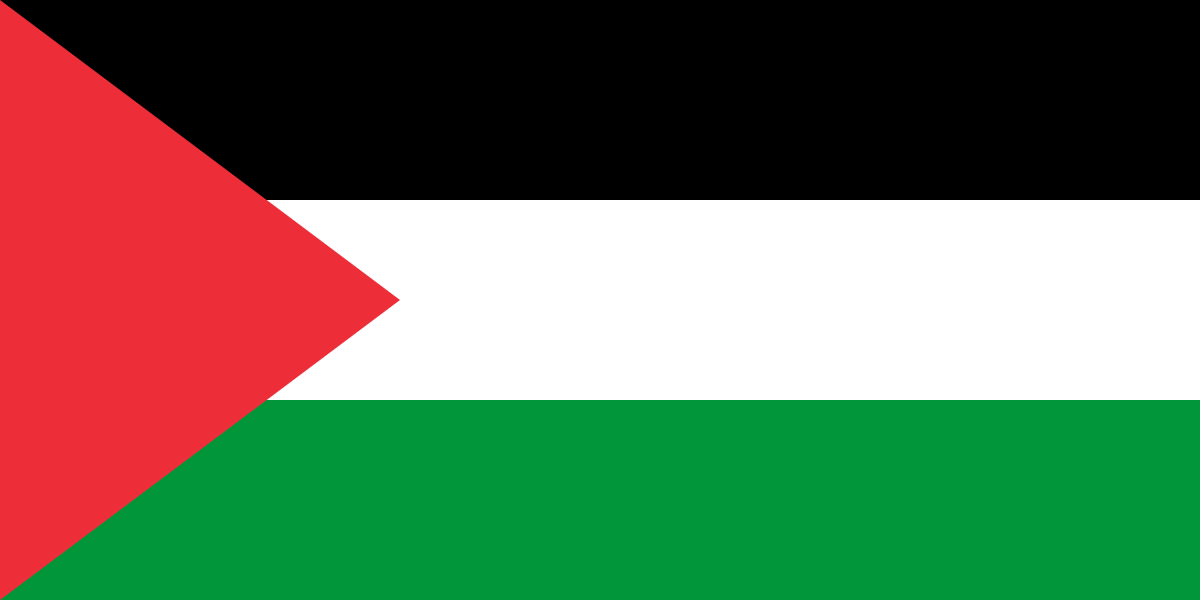
I would like to begin by thanking the Secretary-General for his report (A/65/270) and by commending the Special Adviser to the Secretary-General on Sport for Development and Peace. We also commend the crucial role of the Sport for Development and Peace International Working Group in shaping the global framework of sport for peace and development, as well as other actors for their support for this important work.
Palestine believes that the culture of sport is an immensely positive force for development in any society. In this regard, we fully agree with the UNESCO characterization of sport as a fundamental right for all. Harnessing the positive energy inherent in sport — which demands respect for the human values of respect for all, including opponents, non-violence, teamwork, acceptance of rules and fairness — makes sport a valuable asset in any nation’s efforts towards development and peaceful coexistence. Sport is also an engine of economic development and social integration, which are crucial elements of overall development.
Palestine has invested much sincere effort and energy in this area, for we believe in the positive
potential and the as yet unexplored development dimension of sport. In the past three years, Palestinian sport has truly evolved from being a luxury of the few to an aspiration within reach of all athletes regardless of social, economic or other difficulties.
In that short span of time, Palestine has developed and promoted women’s teams in various sports. Those teams have competed locally and internationally, shifting women’s participation in Palestine from a few exceptions to an acceptable and encouraged area of professional and personal opportunity. In that regard, we would like to express our sincere appreciation for the support extended to Palestinian sport by the international community, particularly by the United Arab Emirates, Qatar and Brazil. Their assistance has been invaluable and a subject of deep appreciation from Palestinian athletes and the Palestinian people.
Also during this period, Palestine has proudly hosted friendly and competitive games with international teams. These games were in fact a testament to the progress that Palestinian sport has achieved and a reflection of our belief in sport as an agent of development and peaceful relations between nations.
While we are profoundly proud of our achievements in sport thus far, we are also deeply troubled by the continuous difficulties our athletes and efforts confront from the occupying Power. Our progress has been slowed, and on some occasions disrupted, by the various obstacles and restrictions needlessly and punitively employed against our athletes and our efforts at development.
Israel, the occupying Power, continues to obstruct the right of Palestinian athletes to move and travel without hindrance. On several occasions, that punitive policy has prevented some of our star athletes from participating in important team practice games in the occupied Palestinian territory and abroad. The latest such occasion was 5 October, when the captain of the Palestinian team, who lives in Gaza, was banned from going to the West Bank for a match. Those restrictions also affect our ability to bring in sports equipment or to develop proper infrastructure, including stadiums.
Such punitive restrictions have moved officials of the Fédération internationale de football and the Union of European Football Associations to express their anger and grave concern at Israel’s continued
obstruction of Palestinian athletes and sports development efforts. We commend those positions and call on all concerned to do their utmost to curb such practices and their negative effect on Palestinian efforts to develop sport in general.
Ms. Lucas (Luxembourg), Vice-President, took the Chair.
Development and occupation cannot possibly coexist. Any development effort, no matter how well planned and executed, is subject to the illogical and punitive whims of the occupation. Occupation is a negative force that shackles the occupied and inhibits them from fulfilling their potential and achieving their goals. However, in line with our commitment to the principles and fundamental values that sport represents, Palestine is determined to press ahead with its efforts to develop this field as an area of boundless potential for Palestine, its development and its national goal — peace.
We wish this important initiative every success in advancing the universal language, culture and values of sport. We also hope that, as part of its State-building efforts, Palestinian sport will continue to receive international support and be the subject of the world’s fraternity.

In accordance with resolution 64/3, of 19 October 2009, I now call on the Observer for the International Olympic Committee.

On behalf of the International Olympic Committee (IOC), I am pleased to support the adoption of draft resolution A/65/L.4, entitled “Sport as a means to promote education, health, development and peace”, and to take part in this important discussion on ways to more effectively use the power of sport to promote development and peace. Allow me to acknowledge the invaluable contributions of the United Nations and the Secretary-General in elevating the role of sport as a tool for development and peace. His annual report (A/65/270), which has been just presented, is living proof of that.
In our capacity as Observer to the United Nations General Assembly, the IOC intends to further strengthen its ties and cooperation with the United Nations and to assist Member States and the United Nations Administration in their endeavours. Allow me
also to thank Mr. Wilfred Lemke, Special Adviser to the Secretary-General on Sport for Development and Peace, for the important part that he is playing in expanding the role of sport in United Nations human development and peacebuilding efforts.
The IOC’s commitment to place sport at the service of humankind is enshrined in its founding document, the Olympic Charter. The Charter defines Olympism as a philosophy of life that seeks to place sport at the service of the harmonious development of humankind, with a view to promoting a peaceful society concerned with the preservation of human dignity.
The sporting movement translates that philosophy into actions in a variety of ways, starting, of course, with its premier event, the Olympic Games. The Games provide a global forum for peaceful competition and interaction in an atmosphere of fair play and mutual respect, showing by example that we can put aside our differences and find common ground. That ideal can be seen in some memorable moments, as exemplified by the actions of the young people who participated in the inaugural Youth Olympic Games in Singapore last month.
Much of the Olympic Movement’s development work occurs far from the media spotlight. Last May, we opened a new youth Olympic development centre in Zambia. That innovative project combines sport with educational programmes, health services and community events. It is a good example of an effective multiparty partnership — in this case between the Government of the Republic of Zambia, the Zambian National Olympic Committee and international and national sports federations.
Many of our efforts are closely aligned with the United Nations Millennium Development Goals (MDGs). For example, the promotion and empowerment of women in and through sport and gender equality are specifically addressed in the Olympic Charter. The IOC has steadily increased the participation and involvement of women in competitions and the organization of the Olympic Games. For the first time, women will participate in every sport on the Olympic programme at the Games in London in 2012.
The IOC formally acknowledged its obligation to environmental sustainability more than 15 years ago by adopting the environment as the third pillar of the
Olympic Movement, along with sport and culture. We work closely with the United Nations Environmental Programme to ensure that we live up to our responsibilities in that area. We work with UNESCO, the Office of the United Nations High Commissioner for Refugees and other partners to provide value-based education to young people and sustenance to refugees. We work with the Joint United Nations Programme on HIV/AIDS, UNICEF, the World Health Organization and the Red Cross Movement to combat HIV and AIDS, malaria and non-communicable diseases.
In many of those initiatives, sport is a catalyst for action. It breaks down barriers between communities. It is a magnet for young people. It helps keep them in school and focused. It gives them mental strength and teaches them leadership skills. They learn the true meaning and value of teamwork and a team spirit.
Sport is not the answer to all the world’s problems. It does not even have the leading role in addressing those problems. We look to the United Nations, Governments and specialized non-governmental organizations to take the lead in promoting development. The IOC salutes the efforts of Governments around the world to promote development, but we also urge them to embrace sport as a partner in those efforts and to give sport the attention, promotion and resources that it needs in order to effectively contribute to national development agendas.
The IOC acknowledges that real progress is possible with effective partnerships, as called for in MDG 8. The Secretary-General’s report offers example after example, from countries around the world, of alliances that use sport in creative ways. The IOC and sport as a whole are doing their best, but more could be done with more consideration of sport as a factor in human development and peace and by factoring it into development agendas at every level.
However, we need comprehensive evaluation and monitoring of sport programmes for human development so that we can learn what works and what does not. We need more research and better monitoring tools, including widely accepted benchmarks and standards.
Sport is a powerful tool for development and peace. The challenge is to make the most of that tool. The International Olympic Committee stands ready to play its part. The IOC assures the Assembly that it will do its best to be its greatest partner.
We have heard the last speaker in the debate on this agenda item.
The General Assembly will now proceed to consider draft resolution A/65/L.4, entitled “Sport as a means to promote education, health, development and peace”.
I should like to announce that, since the draft resolution was submitted, the following countries have become sponsors: Albania, Andorra, Cape Verde, Eritrea, France, Grenada, Haiti, Hungary, Jamaica, Kazakhstan, the Netherlands, Papua New Guinea, Paraguay, the Republic of Moldova, Saint Vincent and the Grenadines, Serbia, South Africa and Togo.
May I take it that the General Assembly decides to adopt draft resolution A/65/L.4?
Draft resolution A/65/L.4 was adopted (resolution 65/4).
May I take it that it is the wish of the Assembly to conclude its consideration of agenda item 11?
It was so decided.
Vote:
65/4
Consensus
14. Global Agenda for Dialogue among Civilizations Report of the Secretary-General (A/65/269) Culture of peace Report of the Secretary-General (A/65/269) Note by the Secretary-General (A/65/299) Mr. Habib (Lebanon) (spoke in Arabic): At the outset, I would like to extend our sincere thanks to the President for organizing this important meeting. I would also like to thank the Secretary-General for his comprehensive report (A/65/269) on the activities related to the declaration of 2010 as the International Year for the Rapprochement of Cultures. That declaration was the logical result of the growing international awareness of the important need for a rapprochement of cultures through dialogue, which is an urgent issue of concern to us all. The meetings and symposia that we have seen take place this year are perhaps the best testament to the importance of diversity as a source of enrichment for humankind and, when exploited through constructive and innovative dialogue, as a fountain of creativity, modernity, progress and advancement. I come from Lebanon, an eastern country that has had a unique social and political experience and a nation that allows for dialogue and coexistence between religions and cultures that is an example of tolerance. Here I would like to recall the statement by the President of Lebanon when he spoke before the Assembly on 24 September. He affirmed that Lebanon will always remain open to dialogue and human and cultural interaction in a rich and creative manner, loyal to its main message, in spite of the challenges that it faces, in the promotion of a State of law and order and the values of democracy, freedom and harmony on which it is based. This year, in accordance with our openness to dialogue, we joined the Group of Friends of the Alliance of Civilizations. We consider the Alliance as an essential forum for dialogue among civilizations. The Alliance guarantees the necessary space for involving civil society, including women and youth, and for exchanging experiences and building strategies in consolidating the culture of peace. Lebanon continues to call for rich human and cultural interaction in a constructive and innovative way. We believe that such dialogue begins with the recognition of others’ identities and the religious and cultural characteristics of each group. We believe that fear, hostility and intimidation have no place in such an effort. In that regard, we welcome the tireless efforts made by the United Nations and its specialized agencies and programmes, particularly UNESCO in the cultural, information and technological fields, with a view to enabling societies, especially women and youth, to overcome ignorance and poverty and achieve the Millennium Development Goals. We also welcome all the symposiums that have been held and all the early warning mechanisms that have been deployed to pre-empt conflicts before they erupt and to deal with root causes through the use of preventive diplomacy and the establishment of regional and international partnerships that work to prevent war and conflict, which have greatly afflicted our world. In the same context, Lebanon has always sent out a message of dialogue, as exemplified during the interactive dialogue that took place in the Security Council last May under the theme “Intercultural dialogue for peace and security” (see S/PV.6322). We do this based on our belief in the importance of dialogue as a choice and a culture, as well as our pledge to abide by the Charter and the International Declaration of Human Rights. We hope that international efforts to promote dialogue among civilizations will succeed in promoting not only a culture of peace but also stability, peace and security in the whole world. The Middle East as a region deserves comprehensive and just peace based on international resolutions, the Arab Peace Initiative in all its aspects, justice and what is right. The time has come for human development. Such development can only start with the promotion of a culture of peace that enhances communication and tolerance among civilizations and promotes mutual respect among them in a responsible and transparent manner. That should involve all stakeholders at the governmental level in identifying priorities and overcoming disputes and differences through dialogue between developed and developing countries in order to rise to the challenges faced by humankind and find solutions to real problems in line with people’s expectations and aspirations.
First of all, the delegation of Kazakhstan would like to express its appreciation to President Deiss for the holding of this joint debate on items 14 and 15 of the agenda, “Global Agenda for Dialogue among Civilizations” and “Culture of Peace”.
We also wish to thank the Secretary-General, Mr. Ban Ki-moon, for the comprehensive report on intercultural, interreligious and intercivilizational dialogue (A/65/269). It provides an overview of activities undertaken by the main United Nations entities engaged in promoting dialogue among civilizations, cultures and religions. Its findings and recommendations take on great significance in our contemporary times, when multilateralism is being strengthened. Yet at the same time, paradoxically, there are forces that cause schisms and unrest in society.
The report, submitted pursuant to resolutions 60/4 and 64/81, covers a wide range of themes, including the International Year for the Rapprochement of Cultures, which was initiated by Kazakhstan and supported by Member States.
We would like also to take note of the detailed information on the Third Forum of the United Nations
Alliance of Civilizations, and the work done so far to carry forward the objectives of the United Nations in fostering global harmony and understanding through outreach and collaboration with faith-based organizations, as well as through communication, awareness-raising and educational activities around the world.
Pursuant to resolution 64/81, in which the Assembly invited the Secretary-General to organize a special activity to celebrate the Year, a special event was organized on 21 April 2010 at United Nations Headquarters by the Department of Economic and Social Affairs. The President of the General Assembly at its sixty-fourth session and the Secretary-General made statements.
At the meeting, different voices were heard, each reflecting on a specific dimension of public action to promote the rapprochement of cultures. The Vice- Minister of Culture of the Republic of Kazakhstan, Mr. Telebekov, presented the unique experience of our country in establishing political and administrative institutions aimed at ensuring communication and understanding among the various cultures that create the mosaic of Kazakhstan.
At Kazakhstan’s suggestion, the United Nations Educational, Scientific and Cultural Organization — UNESCO — developed an action plan for observing the International Year for the Rapprochement of Cultures with a large number of events, forums and conferences convened worldwide. The Assembly designated UNESCO as the lead agency for the International Year, which was launched at UNESCO headquarters in Paris on 18 February 2010. On that occasion, the Director-General of UNESCO convened a high-level panel on peace and dialogue among cultures, which was comprised of prominent political, intellectual and religious personalities from all regions of the world.
The focus on awareness-raising, implicit in the goals of the Year, resulted in worldwide dissemination of information and the organization of several international and regional conferences, meetings and events. To date, over 700 activities are envisaged within the framework of the Year. The variety of projects presented in the fields of arts, education and youth leadership bears witness to the different forms that dialogue and the rapprochement of cultures can assume. Kazakhstan is of the view that regional
organizations play a significant role in strengthening international dialogue.
Acting as a coordinator of the Conference on Interaction and Confidence-Building Measures in Asia (CICA), Kazakhstan has developed the action plan for implementing the CICA Catalogue of Confidence- Building Measures in humanitarian issues, and also organized a series of international conferences on intercultural cooperation and tolerance.
More recently, the Alliance of Civilizations has held a vast array of high-profile events on the themes of multiculturalism and global understanding, both of which have gained high priority on its political agenda.
The contributions of the relevant United Nations entities provided valuable input to the report and are highlighted in its first two sections, which are devoted to the International Year for the Rapprochement of Cultures, which is being celebrated in 2010 under the aegis of UNESCO. The third section is devoted to the Third Forum of the Alliance of Civilizations, held in Rio de Janiero in May 2010.
In addition to the International Year for the Rapprochement of Cultures and the Alliance of Civilizations, the United Nations system has continued to undertake a wide range of educational and communication activities to achieve the Year’s objectives.
Another valuable contribution of the United Nations system to promoting interreligious dialogue consists in collaboration with faith-based organizations and engaging them in its policy and advocacy work. Such initiatives have a double positive effect: they bring together peoples from different faiths to discuss issues they have in common and they help to link those groups as partners with the United Nations and its development objectives.
In that context, President Nursultan Nazarbayev’s initiative to convene congresses of leaders of the world’s traditional religions, held in Kazakhstan, has been thriving since 2003 and has added to international efforts to promote interreligious and intercultural dialogue. I am convinced that Kazakhstan’s forum, which has been widely recognized as an effective platform to discuss the role of religious leaders in fostering peace and other issues, will continue to contribute in an extremely meaningful way towards
developing the worldwide process of the dialogue of civilizations.
I would like to stress that tolerance, trust, tradition and transparency constitute the guiding principles of Kazakhstan’s 2010 chairmanship of the Organization for Security and Cooperation in Europe (OSCE). The key event in that context was the OSCE High-level Conference on Tolerance and Non-Discrimination, held in Astana on 29 and 30 June this year. That forum demonstrated very effectively the importance of sharing experiences with regard to inter-ethnic and interreligious accord, as well as the need to fulfil commitments to promote the OSCE values of tolerance, non-discrimination and respect for diversity. In the wider context, the theme of tolerance will also be highlighted during our 2011 chairmanship of the Organization of the Islamic Conference.
In conclusion, let me express my confidence that our common collective effort at all levels, from the grass-roots to the international, will reduce mistrust and prejudice and enhance genuine dialogue and cooperation among our myriad cultures, thereby fostering mutual understanding and stability in the world.


The discussions of the General Assembly today on the two items relating to the Global Agenda for Dialogue among Civilizations and the Culture of Peace take on particular importance at a time when humankind continues to face growing trends of inequality, occupation, oppression, conflict, violations of human rights and other forms of hatred and racism. Those trends reveal growing manifestations of extremism and defamation towards the cultures and beliefs of others. Recent public tensions resulting from the irresponsible and intolerant campaigns calling for attacks on Islam and Muslims, and foreigners in general, and public reactions towards those campaigns underline the gravity of this problem and its implications. They also provide a strong motive for us to redouble our efforts towards strengthening mechanisms of dialogue and religious and cultural tolerance among all peoples, who all without exception share in the common heritage of humankind.
The United Arab Emirates — which believes that dialogue among civilizations and a culture of peace are key priorities in its global strategy for protecting societies against all forms of violence, extremism and
terrorism — was one of the first countries to support the initiative on dialogue among civilizations launched by Turkey and Spain in 2005, as well as the initiative launched by the Custodian of the Two Holy Mosques, King Abdullah Bin Abdulaziz Al Saud, and all other important endeavours carried out by the United Nations in that regard. The United Arab Emirates also supported the Madrid Declaration of the World Conference on Dialogue in 2008, which called for promoting the principles of peace and dialogue among religions, and the recent ministerial meeting of the Alliance of Civilizations, which was held on the margins of the general debate at the current session of the General Assembly.
The United Arab Emirates has sought to build bridges of confidence and partnerships with the rest of the world through promoting a culture of dialogue, tolerance, openness and constructive cooperation with all countries, and regional and international groups. Those principles have also been reflected in a series of national legislative measures and laws that ensure harmony and peaceful coexistence among ethnic groups and followers of different faiths, and guarantee their freedom to practise their religious rites and ceremonies and express their cultural diversity in the United Arab Emirates. That has contributed to consolidating justice, strengthening the rule of law, and promoting respect for human rights and stability in the United Arab Emirates.
The efforts by the United Arab Emirates were not limited only to the national level, but also extended to the international level, including through the provision of direct and indirect economic, humanitarian and relief assistance to developing countries and countries emerging from conflict and natural disasters. This was done with a view to supporting efforts aimed at achieving national reconciliation, rehabilitation and stability in those countries, and in promoting a culture of peace and respect for human rights. As a member of the Intergovernmental Committee for the Safeguarding of Intangible Cultural Heritage, under the auspices of UNESCO, the United Arab Emirates has worked on enhancing its multifaceted contribution to the protection of the common heritage of mankind.
We attach great importance to the efforts of the United Nations and other Member States to strengthening international peace and security, the rule of law, concepts of tolerance, understanding, multilateralism and solidarity among peoples, and a
culture of peace. We emphasize that in order to achieve all those goals, we need to start with a genuine global partnership that aims at encouraging dialogue among the various cultures and civilizations and at instilling the spirit of tolerance and respect for the sacred sites of other peoples and understanding the sensitive aspects of their cultures, especially in our globalized age, with its modern communication technologies that provide unique and ever greater opportunities for connecting and reaching people.
As we believe that dialogue among civilizations must take various forms, including North-South dialogue, East-West dialogue and other forms of cultural exchange, we affirm that mutual enrichment of any dialogue in that context must be based on equality, objectivity and transparency. Such activities must also include adequate measures to address any acts of violence or discrimination based on religion, race or sex, in order to contain their negative impact on societies. We therefore call for the development of a standardized global approach to deal with acts that constitute a clear and continuing threat to peace, security and stability in the world. Measures to criminalize incitement of violence on religious pretexts, including incitement to abuse or desecrate sanctities of other religions, should also be adopted.
We also emphasize, in that regard, the need to address attempts aimed at defaming religions and at inciting religious hatred in general, by developing local, regional and international strategies based on constructive debates and dialogue among cultures and civilizations and full respect for all beliefs and religions. In that regard, we declare our support, which has been continuous for the past 10 years, for the Global Agenda for Dialogue among Civilizations, adopted by the General Assembly in resolution 56/6. We also affirm our support for the declaration of 2010 as the International Year for the Rapprochement of Cultures, with a view to demonstrating that diversity is a source of enrichment, creativity and innovation for humanity.
This also leads us to realizing the importance of demonstrating a true and serious international determination to address the root causes of emerging conflicts and disputes, especially the causes relating to that oldest of conflicts, namely, the continued Israeli occupation of Palestinian and other Arab territories.
Finally, we hope that our deliberations on the two agenda items will lead to strengthened plans for achieving greater understanding, rapprochement and openness among countries and peoples, especially in containing and addressing the most pressing regional and international issues, including issues of security, peace, disarmament, poverty, unemployment and violations of human rights.


I have the pleasure to convey our thanks to the Secretary- General for the report before us (A/65/629), which details the achievements and activities of United Nations bodies with respect to intercivilizational, intercultural and interreligious dialogue. I should also like to pay tribute to the efforts of UNESCO for having successfully celebrated 2010 as the International Year for the Rapprochement of Cultures. We should like to thank the Director-General of UNESCO for her annual report on the International Decade for a Culture of Peace and Non-Violence for the Children of the World 2001-2010.
The State of Kuwait is happy to participate in this discussion. We would like to reaffirm that the world currently faces great challenges resulting from views and ideologies characterized by extremism and bigotry, held by some groups, entities and individuals in certain countries of the world, which do not respect the cultures of others. Such intolerance has even reached a level where some use ideological and physical violence to impose their views and ideas.
If we want to successfully support a comprehensive and realistic dialogue among the civilizations and peoples of the world, we must share a sincere desire to combat the extremist ideas and actions on the part of some who disparage others’ religions, given that such ideas hamper United Nations efforts to bring about rapprochement. Otherwise, the other side is given new justifications for its attempts to spread its violent ideas and convince others of the correctness of their views.
My delegation salutes resolution 64/81, which states, in paragraph 5, that the right to freedom of expression carries with it duties and responsibilities that may be subject to certain restrictions. We must discourage incitement against religious beliefs, because that has negative consequences for human rights. We believe that in that regard a general evaluation is needed of the efforts of the United Nations and
non-governmental organizations, as well as of efforts and initiatives by regional and international organizations.
To achieve a strong and sound foundation for dialogue among civilizations, we need to unify the efforts and programmes of the various entities in order to promote interreligious and intercultural dialogue among civilizations. That will lead to the spread of the principles of peace, tolerance and respect. We must recall here that a dialogue or alliance among civilizations does not mean a fusion of cultures, creeds and faiths. Civilization is the tent that includes all cultures and religions; the purpose of dialogue among civilizations is to study the roots of differences and to deal with them, while being respectful of our differences.
The State of Kuwait supports the efforts of the United Nations regarding an ongoing dialogue among civilizations. As decreed by our head of State, we have put in place a national plan of action based on our belief in outreach to and interaction among civilizations. We have acceded to the initiative of the Alliance of Civilizations, joined its Group of Friends and participated in all its forums, particularly the third, held in Rio de Janeiro in May. Openness towards other cultures, tolerance and interaction with others have been part of Kuwaiti culture, intellect and ideology from the beginning. That is enshrined in our Constitution, which allows others to practise their religion freely, safely and in peace, and this has attracted people of 120 nationalities and from all cultures and religions to live in our country in stability, tolerance and mutual respect.
A culture of peace and coexistence, based on outreach among civilizations, should be based on strategic principles that give it strength and continuity, and should help civil society, individuals and institutions to achieve their objectives. We cite in that connection Kuwait’s national plan of action, which has set forth four strategic principles to help achieve its aims. First, we should reinforce our culture of peace, moderation and tolerance; secondly, combat extremism, terrorism and violence; build a societal and national consensus based on the principles and values of outreach among civilizations; and fourthly, cooperate with regional and international institutions, thus laying the foundations for understanding of our shared human concerns. Additionally, Kuwait has established an International Centre for Compromise
that calls for moderation in thought and compromise in dealing with others, which are based on the principles of our religion. The Centre has held many conferences and symposiums at the national, regional and international levels.
Various specialized Government departments have set up programmes and forums aimed at every sector of society in order to achieve awareness of moderation and understanding among people. We have held and sponsored many international and regional conferences and forums promoting an attitude of moderation in Islam and how to spread religious tolerance and respect for beliefs and cultural specificities among peoples, as well as how to achieve equality so that we may arrive at a climate of international security in which all civilizations can live in peace.


The Chinese delegation welcomes the report of the Secretary-General on the culture of peace (A/65/269). In our present world, increasing globalization, the spread of information technologies and more frequent exchanges among peoples of different countries have brought civilizations ever closer to each other, creating favourable conditions for dialogue and cooperation among them. In the meantime, peace and development have yet to become a reality. New global challenges keep emerging; clashes between civilizations have intensified; misunderstandings among religions and cultures still exist; and religious and racial discrimination are far from being eliminated.
Against such a background, it has become all the more important to strengthen dialogue and cooperation among civilizations. In recent years, the General Assembly has held a number of high-level meetings on intercultural and interfaith dialogue, which have highlighted the importance and urgency of cultural cooperation and emphasized the intrinsic links between dialogue among civilizations and peace and development. This momentum of cooperation should be maintained. At the same time, we should gain experience and learn lessons from these efforts, while identifying effective ways and best practices for enhancing the understanding, mutual trust and cooperation that can ensure concrete progress in this area.
China believes that the following three points should be observed in conducting dialogue and
cooperation among civilizations. First, we should respect each other and conduct dialogue as equals. Diversity is a basic feature of human civilization, as well as a common asset of human society. There are close to 200 countries in the world. Despite their differences in terms of social systems, levels of development, cultures, traditions and religious beliefs, all have contributed to human progress. It is therefore necessary for all countries to respect and learn from one another and live together in peace. Extremism, the imposition of beliefs or values on others, discrimination based on religious, racial or other grounds, bias, and xenophobia should be firmly rejected.
Secondly, we must work on multiple fronts in order to achieve synergy. Culture and religion touch a wide range of areas and involve complex issues, so there can be no cookie-cutter approach to dialogue and cooperation in this regard. Within the United Nations, multiple initiatives and mechanisms, such as resolution 64/81 on the promotion of interreligious and intercultural dialogue, understanding and cooperation for peace, and the Alliance of Civilizations, have been launched. With their distinct features and advantages, those initiatives and mechanisms should strengthen communication and coordination among themselves. The United Nations should play an important role as a platform for cultural exchange and should enable the various initiatives and mechanisms to complement each other and grow side by side.
Thirdly, we should involve all sectors of society and work for concrete results. Dialogue among different civilizations is ultimately about promoting people-to-people contact. It should thus not be limited to the national level. Rather, civil society, academia and the media should all be mobilized to disseminate the message of a culture of peace to communities and schools so as to bring the whole society on board. It is particularly important to convey a message of tolerance, understanding and respect to the youth so as to build up their capacity to resist religious hatred and discrimination. The media should conscientiously assume their social responsibility by upholding morality and contributing to the creation of an atmosphere of tolerance and understanding in society.
China is a multi-ethnic and multireligious country. The Chinese civilization has been imbued with the concept of harmony throughout history. The Chinese Government adheres to the policy of freedom of
religion, fully respects its citizens’ religious beliefs and safeguards that freedom with the Constitution and other laws. Different religions in China coexist in harmony and enjoy equal status. Religious and non-religious citizens respect each other and live together in harmony. Religious figures in China carry forward fine traditions of patriotism, religious devotion and philanthropy and actively participate in charity work and other public welfare undertakings, thus contributing to social harmony and stability.
China favours cultural diversity and believes that different civilizations should learn from each other and seek common ground, while shelving differences, and should jointly contribute to the prosperity and progress of mankind. China actively supports dialogue and cooperation among civilizations and religions and has hosted major events to that end, such as the Asia- Europe Meeting Interfaith Dialogue and the World Buddhist Forum.
In two weeks’ time, Expo 2010 Shanghai will draw to a close. As the first such global event hosted by a developing country in the history of world expos, it has attracted the participation of 246 countries and international organizations and over 60 million visitors over a period of five months. The Shanghai World Expo offers a platform for countries to demonstrate their cultural achievements and share development experience, giving full expression to the diversity of the world’s civilizations. It has become a showcase of cultural diversity and harmony and an event of happiness and friendship for all. The Chinese Government will further strengthen cultural dialogue and exchanges with other countries with a view to contributing to the creation of a world of lasting peace, common prosperity and harmony.
The Assembly declared the period 2001 to 2010 the International Decade for a Culture of Peace and Non-Violence for the Children of the World (resolution 53/25). Today, as we face the end of the decade, we must frankly recognize that we have not met the goals we set for ourselves.
Cuba considers strict respect for the United Nations Charter and its principles to be the fundamental basis for achieving a culture of peace. Peace is not only the absence of conflicts. Promoting a culture of peace requires the promotion of education at all levels,
sustainable economic and social development and respect for all human rights for all people.
There cannot be a culture of peace unless understanding, tolerance and solidarity are promoted, along with respect for the history, diverse religions and individual character of each nation. Achieving a culture of peace requires respect for cultural diversity.
We watch with concern some doctrines promoting the clash of civilizations, demonizing cultures and religions that are thousands of years old. Any doctrine based on racial or cultural superiority must be firmly rejected. Equally unacceptable is the intention of some to identify certain cultures and religions with terrorism and violence.
To succeed in establishing a culture of peace, clear commitments and concrete actions to promote sustainable development and environmental protection are necessary. Obstacles to the exercise of the right of peoples to self-determination must be also eliminated.
There cannot be a culture of peace as long as the acquisition of territories through war is not recognized as unacceptable and some States act in ways contrary to the United Nations Charter and international law. A culture of peace is not promoted by threatening the sovereignty and independence of other nations. How can a culture of peace be achieved if, on one hand, annual military expenditures increase at a dizzying rate — reaching the chilling figure of $1.531 trillion — while, on the other hand, the number of hungry people reaches the record figure of 925 million — nearly one sixth of the world’s population?
The introduction of the study of different cultures and civilizations in educational curricula would be an excellent contribution to a culture of peace. The teaching of languages, history and the philosophies of civilizations could be also included.
Mass media also have an important role in spreading human values. We must promote ethical conduct and responsibility on the part of the media, so that they contribute to mutual respect and dialogue among civilizations.
Cuba supports the Declaration and Programme of Action on a Culture of Peace and the Global Agenda for Dialogue among Civilizations and its Programme of Action. We also support UNESCO programmes and practical initiatives on this topic.
A better world is possible. As wisely stated in the Constitution of the United Nations Educational, Scientific and Cultural Organization, “since wars begin in the minds of men, it is in the minds of men that the defences of peace must be constructed”. The solution lies in our hands. We must act without further delay so that a culture of peace and the Alliance among Civilizations finally prevail over the culture of violence and war.


Let me begin by thanking the Secretary-General for his report on intercultural, interreligious and intercivilizational dialogue (A/65/269). We are also grateful for the report of the Director-General of UNESCO on the activities carried out during the International Decade for a Culture of Peace and Non-Violence for the Children of the World, 2001-2010 (see A/65/299).
Indonesia welcomes and commends the role of the various United Nations entities in supporting intercultural, interreligious and intercivilizational cooperation worldwide. Indonesia is also deeply appreciative of the work of the Tripartite Forum on Interfaith Cooperation for Peace and the Alliance of Civilizations to promote a culture of peace.
Efforts to promote a culture of peace represent an important part of the interaction among all cultures and civilizations. Dialogue and cooperation among peoples, cultures, religions, faiths and civilizations are essential for the growth of a global culture of peace. There is no doubt that much of the future of humankind depends on peaceful coexistence and cooperation among civilizations, cultures and religions. Unfortunately, religious hatred and intolerance, rather than diminishing, are on the increase.
In the face of the recent polarization among peoples, as faith-based discrimination and racism were seen to be on the rise, we continue to believe that what unites us is much greater than what divides us. In our view, there is always room to nurture and celebrate our common values. It is our responsibility to ensure that the world’s rich cultural diversity is appreciated as the divine blessing that it is.
That diversity is the invaluable collective heritage of humankind, which we ought to celebrate and treasure. In order to turn our diversity to our advantage, we need to scale up efforts to combat racism, racial discrimination, xenophobia and related
intolerance, including discrimination against persons based on their religion and beliefs.
In our much more connected world today, action by a small and distant group can inflict significant damage upon all the international community. As we saw only recently, religious radicalism by a local religious minority leader is capable of causing considerable damage to global interfaith harmony and world peace.
Indonesia would therefore like to see efforts to promote a culture of peace focusing more on the minority elements at strategic social levels, particularly those who lead groups of people. In that connection, we are concerned about the absence of a multilaterally negotiated instrument containing normative standards that can help diffuse religious radicalism. It is an ideal which we should work towards establishing.
Indonesia is firmly committed to promoting a culture of peace. We keenly support initiatives that deal with the challenges of cultural diversity, as they are very much in line with what we are already doing in Indonesia. Dialogue and mutual accommodation among faiths and cultures have featured prominently in Indonesia’s history. That is how we have woven, from the many strands of our ethnic cultures and traditions, the single fabric of our nationhood. In Indonesia, dialogue is a prominent tool for ensuring harmony and peaceful living among the various communal groups and for ensuring stability and promoting development at the national level.
Moreover, we empower the moderates whose voices would otherwise be drowned by the agitation of extremists. In Indonesia, we are also organizing interfaith and intercultural dialogue at the regional, interregional and global levels. We have organized such dialogue in tandem with other Governments, international organizations, civil society and the mass media. Here, at the United Nations, we have consistently supported all resolutions on the agenda item “Culture of peace”.
Indonesia also attaches great significance to the initiatives of Member States to promote respect for diversity, freedom, justice and tolerance. All such existing initiatives in interfaith, intercultural and intercivilizational dialogue have become part of a global network aimed at promoting peace and harmony.
However, it is important to point out that even all those undertakings are not enough if they remain only within conference halls. We must therefore recognize that, indeed, dialogue is not an end in itself. All those dialogues going on all over the world today will amount to nothing if they do not lead to cooperative action at the grass-roots level.
It is our responsibility to ensure that those dialogues lead to the development of communities that work for the welfare of their fellow human beings, while enlightening one another on the need for mutual understanding and mutual appreciation. Dialogue should foster communities that take on a positive role in the life of the nation by encouraging and inspiring the Government to adhere to democratic principles and to promote and protect human rights and individual freedoms, regardless of ethnicity or religion. It should lead to communities that appreciate the unique qualities and perspectives of other peoples.
If all nations can nurture such communities, then we are well on our way to developing a global culture of peace.


At the outset, I would like to extend the gratitude of the Republic of the Philippines to the President for his able leadership of the General Assembly at its sixty-fifth session. As the community of nations moves forward in pursuit of our common goals of lasting peace, progress and prosperity, may I express the firm commitment of the Philippines to work closely with him and our partners in order to achieve our shared vision for ourselves and our posterity.
We meet at a time of great opportunities and many challenges. Technological developments, all made at a breakneck pace, bring the bright promise of our peoples being drawn ever closer together. Yet even as we see different peoples and communities coming together in the spirit of understanding and charity with the message of peace and coexistence, there are those who seek to break the bonds of goodwill that have brought many peoples together. For those dark elements seek to inflict pain and suffering, to foster rancour and resentment, and to force violence and fear upon the world.
It is regrettable that our people have to endure violence in its many malevolent forms. Peoples are broken further apart by those who seek to sow confusion, doubt and suspicion. There are those who
prey on the disenfranchised and the marginalized and surreptitiously use the faith, culture and religion of others to push and justify their own dark agenda. Faith, culture and religion have been turned against themselves and used to drive people to despair and to perform acts of violence.
The Philippines joins other nations in condemning those acts in all their forms and manifestations. The Philippines likewise asserts that such acts should not be associated in any way with any culture, faith or religion.
For the Philippines and, indeed, for the rest of the world, faith, culture and religion rightly give millions of people hope in this world, the will to treat others like themselves, and the impetus to work with others towards a more inclusive and more understanding world. That abiding belief has moved us to harness the world community’s collective strength to further strengthen the foundations of a world respectful of humanity’s diversity.
Civil strife in the southern Philippines brought out the importance of interfaith dialogue in the promotion of understanding, peace, cooperation and development among stakeholders. In that same spirit, Mindanao will once again commemorate its annual Week of Peace, begun in the mid 1990s. Our work continues to this day, with interfaith dialogue and reconciliation remaining key features of the Philippine medium-term development plan.
Seeking to engage the world community in that endeavour, in 2004 the Philippines initiated resolution 59/23, on the promotion of interreligious dialogue. That resolution proved to be a landmark in that it opened the portals of the United Nations to interfaith partnerships and cooperation in the cause of justice and peace.
Since then, we have seen a series of resolutions on interfaith, interreligious and intercivilizational dialogue approved by consensus: resolution 60/10, entitled “Promotion of interreligious dialogue and cooperation for peace”; resolutions 61/221, 62/90 and 63/22, jointly introduced by the Philippines and Pakistan from 2006 to 2008; and resolution 64/81, also jointly presented by the Philippines and Pakistan, on the promotion of interreligious and intercultural cooperation for peace.
The concrete outcomes of those resolutions include the holding by the General Assembly of the High-Level Dialogue on Interreligious and Intercultural Understanding and Cooperation for Peace; the designation of the Office for Economic and Social Council Support and Coordination in the Department of Economic and Social Affairs as the focal unit in the Secretariat to handle, within the United Nations system, all interreligious, intercultural and intercivilizational matters; and the proclamation of 2010 as the International Year for the Rapprochement of Cultures.
A core group of 16 countries, 3 United Nations bodies and the 110-member Committee of Religious Non-Governmental Organizations (NGOs) at the United Nations was formed, leading to the holding in 2005 of the Conference on Interfaith Cooperation for Peace at United Nations Headquarters. That became the troika of the Tripartite Forum on Interfaith Cooperation for Peace, which has now grown to include 55 Governments, 15 United Nations agencies and 110 religious NGOs at the United Nations. It has developed a new paradigm of understanding and cooperation, which is described as faith-fuelled and love-inspired.
Likewise, an informal summit of like-minded world leaders met in 2005 on the sidelines of the General Assembly and adopted a declaration urging efforts for interreligious, intercultural and intercivilizational dialogue and cooperation. We have postponed the similar informal summit scheduled for this year until next year so that it can be immediately preceded by a ministerial meeting.
Beyond these positive developments at the United Nations, five Asia-Pacific Regional Interfaith Dialogues have been held: in Jakarta; Cebu, Philippines; Waitangi, New Zealand; Phnom Penh; and Perth, Australia. Between regions, we have had six interfaith dialogues in the Asia-Europe Meeting: in Bali, Indonesia; Larnaca, Cyprus; Nanjing, China; and in Amsterdam, Seoul and Madrid.
The following have also been held: the third Global Inter-Media Dialogue, in Bali; the World Conference on Dialogue, in Madrid; the sixth general meeting of the World Public Forum “Dialogue of Civilization”, in Rhodes, Greece; the second Alliance of Civilizations Forum, in Istanbul, Turkey; the 2009 Parliament of the World’s Religions, in Melbourne,
Australia; and the third Congress of Leaders of World and Traditional Religions, in Astana.
In a clear demonstration of its commitment to the cause of interfaith dialogue, the Philippines hosted the special Non-Aligned Movement (NAM) ministerial meeting on interfaith dialogue and cooperation for peace in Manila in December 2009. Espoused by 118 member countries of the NAM, it was the first movement of its kind that mainstreamed civil society, particularly the religious and faith organizations, as governmental partners in such vital areas as peace and development.
Those and other efforts have been documented in a book entitled Peace through Interfaith Dialogue: Philippine Diplomacy and the Promotion of Mutual Understanding, Respect and Tolerance. We are pleased to provide copies of this book to the members of the Assembly.
In April 2010, I was honoured to join the special event marking the commemoration of 2010 as the International Year for the Rapprochement of Cultures. Held just ahead of the Review Conference of the Parties to the Treaty on the Non-Proliferation of Nuclear Weapons, which the Philippines chaired, the event was a fitting capstone to what we have worked so hard to achieve all these years.
But our work is not yet done. Sustaining the momentum is vital, as is engaging all stakeholders in the interfaith dialogue process. The push and pull between those who stand together for dialogue, tolerance, understanding and respect, on the one hand, and those who seek the fall of all into the abyss of suspicion, bigotry, confusion and violence, on the other hand, continues. We must continue moving forward together.
For its part, the Philippines will continue to work closely with and consult our partners on the tabling of another draft resolution on the agenda item on the culture of peace. We seek to further expand interfaith dialogue to include, inter alia, dialogue with indigenous peoples. We must ensure that, on the road to greater peace and development, dialogue is as inclusive and broad as possible.
As we welcome the introduction of Jordan’s draft resolution on the holding of World Interfaith Harmony Week (A/65/L.5) as a reminder of our continuing duties, we will consult with our co-sponsors on the best way
forward on the proposal for a decade of interreligious dialogue as we await the report of the Secretary-General on the matter at the sixty-sixth session.
We encourage all Member States to submit their comments on the Secretary-General’s report concerning the issue. We also urge all Member States to participate actively in the efforts to foster interfaith dialogue.
The road ahead of us and the journey forward remain long. However, we are confident that we will reach our destination, with every milestone that we achieve. Fully resolved to turn our vision into reality, we will forge on undeterred, learning from each other, understanding one another and respecting others as we respect ourselves.


I would like to express the gratitude of the Government of Paraguay for the preparation of the Secretary- General’s report on agenda item 15, “Culture of peace” (A/65/269), and his note transmitting the report of the UNESCO Director-General (A/65/299). We are sure they will contribute to our debate today.
The delegation of Paraguay would like to speak once again in support of the culture of peace. We want to resolutely cooperate to achieve the noble objective of the United Nations and its Members: achieving a broad and deep understanding among the various cultures. For that, we have endorsed and will continue to support enthusiastically the initiatives for a dialogue between different peoples, Governments and religions.
Humankind is unique in its origins but diverse in its cultural manifestations. The only way for it to overcome the injustice and violence afflicting it is through dialogue. Dialogue must be based on accepting diversity. In violence, unlike dialogue, there is no acceptance. There is only the elimination of different ideas, or at least an attempt to do so. Dialogue will be dialogue only if we accept — or better yet, tolerate — the cultural and religious differences that identify each community and each nation but that, ultimately, are the inseparable elements that make up humankind.
In order to promote the dialogue between cultures and civilizations, my delegation wishes to propose that the United Nations proclaim 30 July of each year World Friendship Day, to contribute to building a more fraternal global society, thus fostering the culture of peace, respect and mutual acceptance at the international level, without any kind of distinction or discrimination. This initiative, which has been a
tradition in my country for over 50 years, has the institutional support of the Government. It was circulated in document A/64/883 at the previous Assembly session and was announced in the Hall during the general debate of the current session by the Minister for Foreign Affairs of my country as a proposal to renew mutual appreciation and recognition between our peoples (see A/65/PV.23).
Appropriately, our delegation will conduct the relevant consultations with the various countries and regional groups in order to present shortly a draft resolution that proclaims the World Friendship Day. I would like to request all delegations to lend their support to this initiative so that it will meet with success.


We are here today for a joint debate on two interrelated agenda items in order to follow up on the progress of our work on the enhanced promotion of a culture of peace and the Global Agenda for Dialogue among Civilizations through interreligious, intercultural and intercivilizational dialogue and cooperation. Let me thank the Secretary-General and the Director-General of the United Nations Educational, Scientific and Cultural Organization (UNESCO) for all of their efforts to prepare the two thought-provoking reports contained in documents A/65/269 and A/65/299 on these two very significant items on the agenda of the General Assembly.
Cultural diversity as the centrepiece of the two agenda items — “Global Agenda for Dialogue among Civilizations” and “Culture of peace” — is thoroughly discussed and reflected in these two reports as a real and basic fact of today’s regional and international relations. Such a fundamental fact should not be seen as a barrier to our collective endeavour to advance dialogue and understanding.
Respect for cultural diversity at the national and international levels and recognition of the fact that cultural diversity is a source of unity rather than division within the international community will indeed promote peace and security. Thus, cultural diversity is an asset that enriches the common human cultural heritage. Hence, continued cultural domination through policies of cultural hegemony and efforts to eliminate cultural identities through the globalization process will result in major setbacks to the promotion of human rights, international cooperation and the mutual enrichment of the cultural life of humankind.
On the other hand, respect for and understanding of others could be considered key elements in enhancing international cooperation. The practice of listening to others rather than confronting or offending them should be cultivated and promoted as a culture among actors at all levels of international politics. Globalization as a process can pose challenges and create opportunities in this domain.
Repressive measures in the increasingly globalized world could take the form of disinformation through the global media and modern communication technologies. Religious intolerance, including Islamophobia, created as a result of aggressive media policies, seeks to demonize particular cultures and religions and can lead ultimately to hatred and exclusion. This should be prevented through an innovative and alternative plan for international cooperation among all nations.
We believe that diversity is necessary for humankind to flourish. We should resist the perceptions and temptations that set individual against individual, group against group and nation against nation. Above all, ways to eliminate the defamation of religions and discrimination based on religion or belief should be deliberated. Religious intolerance, the spreading of hatred, xenophobia and racial discrimination are but a few examples of issues long faced by the international community. Many of us have voiced our vehement condemnation of the defamation of religions, yet we have continued to witness instances of poisonous actions against certain religions and their sacred books, beliefs and followers. The recent attempt to put the Koran, the most sacred book of each and every one of the more than 1.6 billion Muslims of the world, into a fire was a clear example of such a crime. Such actions should be duly dealt with by States.
This alarming act was also a warning against the rising trend of discriminatory national laws and policies adopted and implemented against any religion. Attempts to stigmatize groups of people — in particular, people of certain ethnicities and religious minorities — on the basis of their religion under various pretexts related to issues of security and illegal immigration are among the major obstacles to our approach to respect cultural diversity.
One way to respond could be to enhance the cultural policies of Member States at the national and regional levels in order to strengthen respect for cultural diversity and intercultural dialogue in practical
terms. The Non-Aligned Movement Centre for Human Rights and Cultural Diversity in Tehran has been established and is actively contributing to the promotion of such an idea.
Besides honouring the events marking the commemoration of 2010 as the International Year for the Rapprochement of Cultures, one of the other practical achievements in the process of promoting cultural diversity as a means of cooperation to enhance peace among different nations is respect for traditional common cultures.
On 23 February, the General Assembly unanimously adopted resolution 64/253, entitled “International Day of Nowruz”. The resolution was the fruit of joint efforts by eight Member States, including the Islamic Republic of Iran. While the resolution reaffirms the purposes and principles of the Charter, in particular the achievements of international cooperation in the economic, social and cultural fields — including, inter alia, resolution 56/6, on the Global Agenda for Dialogue among Civilizations; the Declaration of the Principles of International Cultural Cooperation, and the Universal Declaration on Cultural Diversity, adopted by UNESCO — it also underlines the appeal for greater solidarity on the basis of recognition of cultural diversity, of awareness of the unity of humankind and of the development of intercultural exchanges. It emphasizes the need to achieve an objective understanding of all civilizations and to enhance constructive interaction and cooperative engagement among civilizations by playing a major role in strengthening the ties among peoples based on mutual respect and the ideals of peace and good- neighbourliness. Nowruz traditions and rituals reflect the ancient cultural customs of the civilizations of East and West that have influenced those civilizations through the interchange of human values.
Finally, let me confirm the fact that the promotion of dialogue among civilizations and cultures is a key component of UNESCO’s mission and activities and has led that organization to shoulder a significant portion of that task. With this in mind, my delegation will spare no effort in cooperating at the next meeting of the UNESCO High Panel on Peace and Dialogue among Cultures, which will be convened by the Director-General of UNESCO within the next two months at United Nations Headquarters here in New York to identify new avenues and modalities for future action.


I thank the President for convening this very important debate of the General Assembly this morning. From the attendance here, one can be absolutely sure that peace does not have as large a following in the Assembly as the elections did a few days ago, when there was only standing room here. And of course, as we know, anything that is contentious is bound to lead away from, and not towards, peace. So, judging by the visuals here today, I fear that we have a long way to go in pursuing this matter of introducing the culture of peace.
I am not terribly sure whether, by not including the culture of peace in the Millennium Development Goals, we have done something good for this institution or not. But, surely, this matter is very important.
We start off by citing anything that becomes contentious as a danger to peace, but I think that there is much more to it than that. There will always be divisive policies, ideologies and the belief that might is right to inflict upon others what concerns people about their way of life. I think the greatest hindrance to anything cogent emerging is that, when we sit in this Hall, we all speak of our ways, our countries, our delegations and our groups. If we continue to do that, I am not terribly sure that peace will prevail. There may be outward calm and there may be a lot that is not said out of respect for each others’ feelings, but certainly peace will not prevail in the world or in this Hall, other than in outward appearance.
The Charter of the Organization has enunciated the principles of practising tolerance, living together in peace with one another as good neighbours, uniting our strengths to maintain international peace and security and promoting social progress and better standards of life in larger freedom. I think that the moment the Charter spells out the concept of good neighbours, it seems like an exclusion or preclusion of those beyond our boundaries who consider themselves to be impregnable or invulnerable as sovereign States.
Peace should not be just the extension of good- neighbourly relationships; it should go beyond and exist as a culture. That is what we are saying here today. I find that the Charter is not sufficient. It is in fact deficient in the proclamation of what we are trying to achieve.
In 1999, we reaffirmed our intention to continue to work to achieve peaceful coexistence in line with the United Nations Charter. That was a declaration based
on the principles of multilateral cooperation, respect for life, the promotion and practice of non-violence through education, dialogue, cooperation and commitment to the peaceful settlement of disputes.
Now, as far as the peaceful settlement of disputes is concerned, I am afraid that nowhere in the world — judging from the fact that accidents taking place on narrow streets can be the pretext for small-scale, or even large-scale, rioting — have we really even conceived of a culture that would promote peace instead. And history has proven that no trauma that follows such disputes can be resolved by a peaceful ending.
Some of the greatest changes in history have taken place on the backs of disputes that have changed the way humankind thinks. They have changed the way the Earth is progressing towards a better future. I am afraid that that culture cannot be born out of a lack of dispute when disputes are settled with verbiage that cannot be understood by those who sign the documents. These things will have to be resolved in their own fashion. It is that resolution which leads to change, not the words spelled out in a document.
I know that we have a common set of universal values. Peace is the core message of all religions. It is not war alone that challenges peace, but it is one of the primary indicators of lack of peace. The first introduction of war on this planet was, in fact, at the beginning of the new age that started in the first century, when Judaism was joined first by Christianity, and later with Islam. The monotheistic religions on record have produced more wars and more suffering in history than anything else before them, yet the profession of faith is based upon peace.
So we have to understand that it is peace that we seek. The culture of this peace is not easily definable. If Charles I of England had not abrogated Parliament and sent the Rump Parliament home, the changes that brought democracy and the Commonwealth to England might never have taken place. Yet from that catharsis and that trauma grew a very serious pledge to steer the world towards better peace.
Unfortunately, religion keeps a strong grip on hate. Hate is a very strong weapon in the hands of different faiths, and it is being used mercilessly. The complete killing of the Mayan culture in Central America was based not on a profession of peace and love, but upon hate and the extermination of an entire
culture — not just the extermination of the people, but the burning of their famous libraries, which many now believe to have been the largest repositories of world science, education and history.
Today we see in various parts of the world all sorts of misunderstandings that are again based on faith. We had a recent expression of it here in America, where hate was again put forward in an attempt to create Samuel Huntington’s clash of civilizations. I feel that we are very lucky that due cognizance was taken, and I say this with a great amount of respect for many organizations, not only the American Government but the Organization of the Islamic Conference, which kept a harness on the issue and brought it to its due end.
We need to stand together to decry those who, in the name of faith, extend agendas that are no longer acceptable to the people of this world. Finding common ground is certainly important, but I feel that, more than that, among the great things that are needed, one would be education. A second would be an easily available, honest and sincere approach to justice. To my mind, the third would be the acceptance of a common agenda in all constitutions of the world that profess and express the need for a culture of peace as a preamble and a necessity — not mere lip service, but an understanding of its implications. We should pass it into law.
I would say that, when we co-sponsored interfaith harmony in the General Assembly with the Philippines; when we speak in many ways in the Assembly; and, of late, when I see my colleagues from the Indian desk sitting here, we have gone a long way in trying to promote understanding. That understanding manifested itself beautifully in the recent tennis finals of the most senior tournament in the world today, the US Open, where it was important, I believe, for India and Pakistan to show the world that we could move towards peace as well.
We recognize the growing need to promote harmony in all its manifestations, and we believe that we must take away challenge and replace it with acceptance. We should take away harassment and replace it with tolerance. We should take away hatred and bring it towards understanding. Cooperation, not the clash of civilizations, must be the paradigm for our future on this planet. In order to make this world a better place for our children, we should share the responsibility to highlight and propagate our common
values of peace, tolerance, equality and sharing — which we have forgotten — and a respect for humanity. We should encourage the next generation to use education and exchange not only to adapt to modernity,
but to use modernity and technology to change the world into a better and more peaceful place for all.
The meeting rose at 1.10 p.m.