A/66/PV.87 General Assembly

In accordance with article 10, paragraph 1 (d), of the statute of the Mechanism, the candidates who receive an absolute majority of the votes of the States Members of the United Nations and of the non-member States maintaining permanent observer missions at United Nations Headquarters shall be declared elected.
The consistent practice of the United Nations has been to interpret the words “absolute majority” as meaning a majority of all electors, whether or not they vote or are allowed to vote. The electors in the General Assembly for current purposes are all 193 Member States, together with the one non-member State I mentioned earlier. Accordingly, 98 votes constitute an absolute majority in the Assembly for the purpose of the present election.
Only those candidates whose names appear on the ballot papers are eligible for election. The electors will indicate the candidates for whom they wish to vote by placing crosses against their names on the ballot papers. Each elector may vote in the first ballot for no more than 25 candidates.
If, in the first ballot, the number of candidates obtaining an absolute majority is less than 25, a second ballot will be held and balloting will continue in the same meeting, if and as necessary, until 25 candidates have obtained an absolute majority. In any second or subsequent ballot, each elector may vote for no more than 25 candidates less the number of candidates who have already obtained an absolute majority.
Following the practice in the election of judges of the International Court of Justice, any second and subsequent balloting shall be unrestricted. Votes may accordingly be cast in any second or subsequent ballot for any eligible candidate who has not yet obtained an absolute majority.
If, in the first ballot, more than 25 candidates obtain an absolute majority of votes, a second ballot will be held on all candidates, and balloting will continue at the same meeting, if and as necessary, until 25 candidates, and no more, obtain an absolute
majority. In any such case, each elector may vote, both in the first ballot and in any subsequent ballot, for 25 candidates.
May I take it that the Assembly agrees to the procedures I have just outlined?
It was so decided.
I now give the floor to the observer of the Holy See.

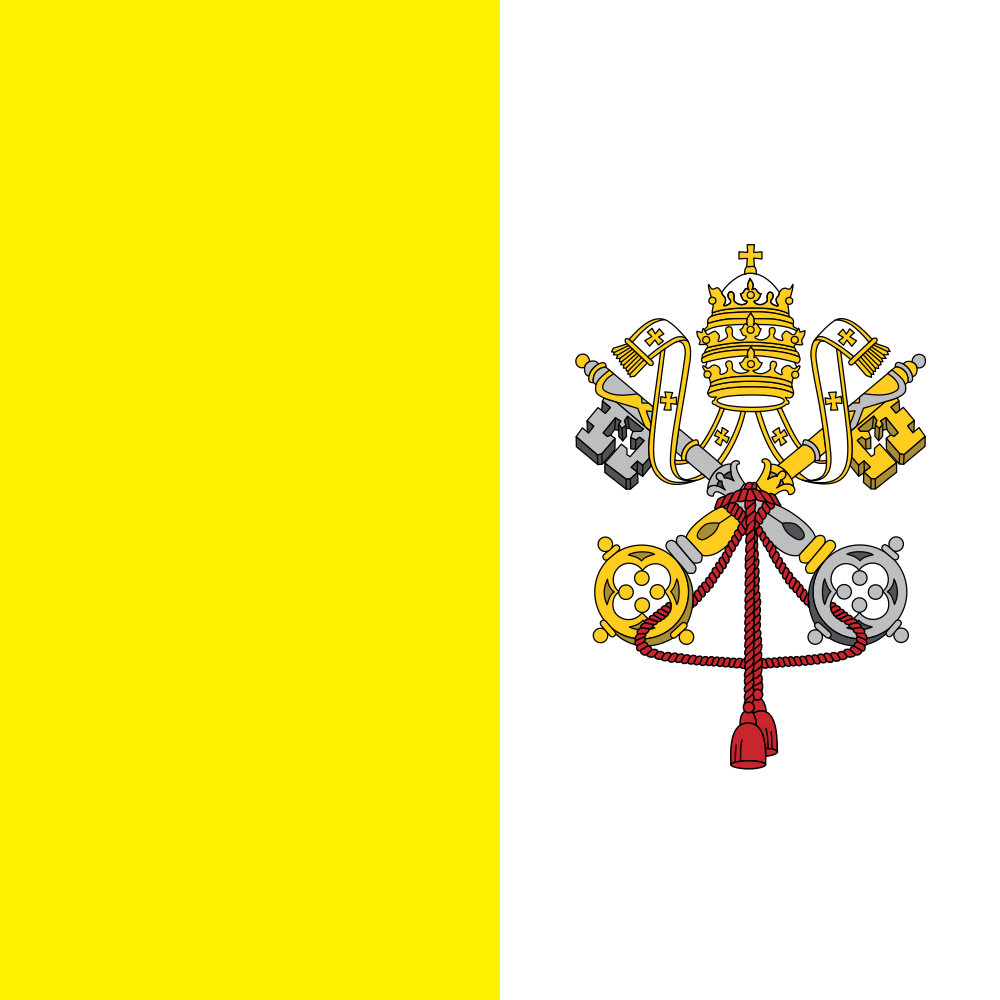
The Holy See continues to follow the Criminal Tribunals for the Former Yugoslavia and Rwanda with great attentiveness, and welcomes the efforts being undertaken to conclude the work of the Tribunals through the creation of the International Residual Mechanism for Criminal Tribunals.
While the Holy See remains an observer State rather than a Member State in the work of the United Nations, we note that the Holy See, in accordance with article 10, paragraph 1 (d), of the statute of the Residual Mechanism, is entitled to participate in the election of judges to the newly established International Residual Mechanism for Criminal Tribunals in the same manner as Member States. However, on this occasion, the Holy See, in accordance with its prior practice during elections to the International Criminal Tribunal for the Former Yugoslavia and the International Criminal Tribunal for Rwanda, in consideration of its specific nature and objectives, has decided to abstain from casting its vote on the individual candidates to the International Residual. In so doing, the Holy See reiterates its best wishes to the candidates and those to be elected to the Residual Mechanism, and renews its hope that their work will help to serve the cause of justice and peace around the world.
I now give the floor to the representative of Uganda.


Like other Member States that have withdrawn candidatures, Uganda has sent a note to the Secretariat that we had thought would have been communicated to the General Assembly. That letter informed the Secretariat of Uganda’s withdrawal of the candidature of Mr. Daniel David Ntanda Nsereko. Nevertheless, Ms. Solomy Balungi Bossa continues to be Uganda’s candidate.
The Secretariat has informed me that Uganda’s notification was not received in time. However, I would ask that members take note of that withdrawal when casting their ballots.
Before we begin the voting process, I should like to remind members that, pursuant to rule 88 of the rules of procedure of the General Assembly, no representative shall interrupt the voting except on a point of order on the actual conduct of the voting.
We shall now begin the voting process. Ballot papers will now be distributed.
Representatives are requested to use only the ballot papers now being distributed. Only those candidates whose names appear on the ballot papers are eligible for election. Representatives will indicate the 25 candidates for whom they wish to vote by placing crosses at the left of their names on the ballot papers. Ballot papers on which more than 25 names are marked will be considered invalid. Votes may only be cast for those whose names appear on the ballot papers.
At the invitation of the Acting President, Mr. Durmić (Bosnia and Herzegovina), Mr. Germán (Guatemala), Ms. Kjartansdóttir (Iceland), Ms. Kakee (Japan), Mr. Dennis (Liberia) and Ms. Ávila (Panama) acted as tellers.
The meeting was suspended at 10.45 a.m. and resumed at 12.25 p.m.
The result of the voting is as follows:
Number of ballot papers: 185 Number of invalid ballots: 1 Number of valid ballots: 184 Abstentions: 1 Number of members voting: 183 Required absolute majority: 98 Number of votes obtained: Mr. Liu Daqun (China) 176 Mr. Lee G. Muthoga (Kenya) 170 Mr. Carmel A. Agius (Malta) 167 Mr. Gberdao Gustave Kam (Burkina Faso) 167 Mr. Seon Ki Park (Republic of Korea) 166 Mr. Patrick Lipton Robinson (Jamaica) 166 Mr. Aydin Sefa Akay (Turkey) 165 Mr. Burton Hall (Bahamas) 162 Mr. Bakone Justice Moloto (South Africa) 162
Mr. Mparany Mamy Richard Rajohnson (Madagascar) 162 Ms. Solomy Balungi Bossa (Uganda) 161 Ms. Florence Arrey (Cameroon) 160 Mr. Theodor Meron (United States of America) 157 Mr. Ivo Nelson de Caires Batista Rosa (Portugal) 157 Mr. Christoph Flügge (Germany) 154 Mr. Vagn Prüsse Joensen (Denmark) 149 Mr. Alphons Orie (Netherlands) 148 Mr. José Ricardo de Prada Solaesa (Spain) 141 Mr. Ben Emmerson (United Kingdom of Great Britain and Northern Ireland) 141 Ms. Prisca Matimbe Nyambe (Zambia) 138 Ms. Graciela Susana Gatti Santana (Uruguay) 128 Mr. Joseph E. Chiondo Masanche (United Republic of Tanzania) 125 Mr. William Hussein Sekule (United Republic of Tanzania) 125 Ms. Michèle Picard (France) 122 Mr. Jean-Claude Antonetti (France) 118 Ms. Aminatta Lois Runeni N’gum (Zimbabwe/Gambia) 117 Ms. Lombe P. Chibesakunda (Zambia) 94 Mr. Juan Antonio Durán Ramírez (El Salvador) 92 Mr. Carlos Ernesto Sánchez Escobar (El Salvador) 88 Mr. Juan Bautista Delgado Cánovas (Spain) 76 Mr. Alfredo Gomez Tedeschi (Uruguay) 72
Since more than 25 candidates obtained an absolute majority of votes, as agreed earlier today, a second ballot shall be held on all candidates until 25 candidates, and not more, obtain an absolute majority.
We shall now proceed with the second round of balloting.
The voting process has now begun and ballot papers are being distributed.
All the candidates whose names appear on the ballot papers are eligible. Once again, I would remind delegations that only the names of 25 candidates should be marked with a cross. Any ballot paper on which more than 25 names are marked will be considered invalid. Votes may only be cast from among those whose names appear on the ballot papers.
At the invitation of the Acting President, Mr. Durmić (Bosnia and Herzegovina), Mr. Germán (Guatemala), Ms. Kjartansdóttir (Iceland), Ms. Kakee (Japan), Mr. Dennis (Liberia) and Ms. Ávila (Panama) acted as tellers.
It is now my intention to suspend the meeting until 3 p.m., when the results of the voting will be announced. Should the General Assembly need to proceed to another ballot to elect judges of the Mechanism, that round of balloting will take place on Tuesday, 20 December at 10 a.m. in the Hall.
The meeting was suspended at 12.40 p.m. and resumed at 3.10 p.m.
The result of the voting is as follows:
Number of ballot papers: 186 Number of invalid ballots: 0 Number of valid ballots: 186 Abstentions: 1 Number of members voting: 185 Required absolute majority: 98 Number of votes obtained: Mr. Liu Daqun (China) 173 Mr. Carmel A. Agius (Malta) 167 Mr. Patrick Lipton Robinson (Jamaica) 166 Mr. Seon Ki Park (Republic of Korea) 164 Mr. Aydin Sefa Akay (Turkey) 163 Mr. Gberdao Gustave Kam (Burkina Faso) 162 Mr. Lee G. Muthoga (Kenya) 162 Ms. Solomy Balungi Bossa (Uganda) 158 Mr. Burton Hall (Bahamas) 158 Ms. Florence Arrey (Cameroon) 156 Mr. Christoph Flügge (Germany) 156 Mr. Bakone Justice Moloto (South Africa) 156 Mr. Theodor Meron (United States of America) 155 Mr. Mparany Mamy Richard Rajohnson (Madagascar) 155 Mr. Ivo Nelson de Caires Batista Rosa (Portugal) 151 Mr. Vagn Prüsse Joensen (Denmark) 147 Mr. Alphons Orie (Netherlands) 143 Mr. Ben Emmerson (United Kingdom of Great Britain and Northern Ireland) 140 Mr. José Ricardo de Prada Solaesa (Spain) 134
Ms. Graciela Susana Gatti Santana (Uruguay) 123 Mr. Joseph E. Chiondo Masanche (United Republic of Tanzania) 121 Mr. William Hussein Sekule (United Republic of Tanzania) 121 Ms. Michèle Picard (France) 119 Ms. Prisca Matimbe Nyambe (Zambia) 118 Mr. Jean-Claude Antonetti (France) 117 Ms. Aminatta Lois Runeni N’gum (Zimbabwe/Gambia) 110 Ms. Lombe P. Chibesakunda (Zambia) 95 Mr. Juan Antonio Durán Ramírez (El Salvador) 74 Mr. Carlos Ernesto Sánchez Escobar (El Salvador) 71 Mr. Juan Bautista Delgado Cánovas (Spain) 67 Mr. Alfredo Gomez Tedeschi (Uruguay) 67
Since more than 25 candidates obtained an absolute majority of votes, as agreed earlier today, a third ballot shall be held on all candidates until 25 candidates, and not more, obtain an absolute majority. However, as I mentioned at the end of this morning’s meeting, the Assembly will proceed to the third round of balloting to elect the judges of the Mechanism on Tuesday, 20 December at 10 a.m. in the Hall.
The meeting was suspended at 3.15 p.m. on 16 December and resumed at 10.30 a.m. on 20 December 2011.

We shall now proceed with the third round of balloting.
I give the floor to the representative of Fiji.


Last Friday, 16 December, the General Assembly conducted two rounds of balloting to fill the 25 positions on the International Residual Mechanism for Criminal Tribunals. That was due to a procedural rule that the Assembly adopted at the beginning of this meeting, according to which the voting had to be repeated if too many candidates received an absolute majority.
I believe that there is broad agreement in the Hall that something needs to be done to avoid a similar situation today. In that spirit, for the purpose of these elections, I would propose that, should a situation arise in which more than 25 candidates once again receive an absolute majority, we should not proceed to another
ballot but, rather, declare elected those 25 who have received the absolute majority and highest number of votes, as we routinely do in many other elections. Also, in the event of a tie for a remaining seat, may I suggest that there should be a restricted ballot limited to those candidates who have received an equal number of votes.
This proposal is particularly relevant today, as the low number of candidates makes it rather likely that such a situation might recur. I urge members to support this proposal in the best interests of our time.
I now give the floor to the representative of Japan.


My delegation has asked for the floor to express its support for the proposal made by the representative of Fiji.
In the light of the statement just made by the representative of Fiji, unless I hear any objection, I shall take it that the Assembly decides that if, in the next ballot, more than 25 candidates obtain an absolute majority of votes, those 25 with the highest number of votes will be considered elected and, in the event of a tie vote for a remaining seat, there will be a restricted ballot limited to those candidates who received an equal number of votes.
It was so decided.
I should like to remind members that, for the purposes of this ballot, the electors in the General Assembly are all 193 Member States, in addition to the one non-Member State, namely, the Holy See. Accordingly, 98 votes constitute an absolute majority in the Assembly.
I should also like to inform the Assembly that the Legal Counsel has informed me of the withdrawal of the candidatures of Mr. Carlos Ernesto Sanchez Escobar of El Salvador and Mr. Juan Antonio Durán Ramírez of El Salvador. In addition, the Government of France has withdrawn the candidature of Ms. Michéle Picard.
The voting process has now begun and ballot papers are being distributed.
Representatives are requested to use only the ballot papers that are now being distributed. Only those candidates whose names appear on the ballot papers are eligible for election. Representatives should
indicate the 25 candidates for whom they wish to vote by placing crosses to the left of the names on the ballot papers. Ballot papers on which more than 25 names are marked will be considered invalid. Votes may only be cast for those whose names appear on the ballot papers.
At the invitation of the President, Mr. Durmić (Bosnia and Herzegovina), Mr. Espinoza (Chile), Ms. Kjartansdóttir (Iceland), Mr. Dennis (Liberia), Mr. Faizal (Maldives) and Ms. Arias (Peru) acted as tellers.
The meeting was suspended at 10.40 a.m. and resumed at 12.20 p.m.
The result of the voting is as follows:
Number of ballot papers: 181 Number of invalid ballots: 0 Number of valid ballots: 181 Abstentions: 1 Number of members voting: 180 Required absolute majority: 98 Number of votes obtained: Mr. Liu Daqun (China) 170 Mr. Gberdao Gustave Kam (Burkina Faso) 166 Mr. Aydin Sefa Akay (Turkey) 165 Mr. Carmel A. Agius (Malta) 164 Mr. Lee G. Muthoga (Kenya) 162 Mr. Mparany Mamy Richard Rajohnson (Madagascar) 162 Mr. Patrick Lipton Robinson (Jamaica) 162 Ms. Florence Arrey (Cameroon) 161 Mr. Burton Hall (Bahamas) 161 Mr. Seon Ki Park (Republic of Korea) 161 Ms. Solomy Balungi Bossa (Uganda) 160 Mr. Christoph Flügge (Germany) 158 Mr. Bakone Justice Moloto (South Africa) 157 Mr. Ivo Nelson de Caires Batista Rosa (Portugal) 154 Mr. Theodor Meron (United States of America) 153 Mr. Vagn Prüsse Joensen (Denmark) 146 Mr. Alphons Orie (Netherlands) 146 Mr. José Ricardo de Prada Solaesa (Spain) 143 Mr. Ben Emmerson (United Kingdom of Great Britain and Northern Ireland) 142 Ms. Prisca Matimbe Nyambe (Zambia) 142 Ms. Graciela Susana Gatti Santana (Uruguay) 136 Mr. Jean-Claude Antonetti (France) 135
Mr. Joseph E. Chiondo Masanche (United Republic of Tanzania) 131 Mr. William Hussein Sekule (United Republic of Tanzania) 130 Ms. Aminatta Lois Runeni N’gum (Zimbabwe/Gambia) 126 Ms. Lombe P. Chibesakunda (Zambia) 103 Mr. Juan Bautista Delgado Cánovas (Spain) 88 Mr. Alfredo Gomez Tedeschi (Uruguay) 73
Having obtained an absolute majority and the highest number of votes, Mr. Carmel A. Agius (Malta), Mr. Aydin Sefa Akay (Turkey), Mr. Jean- Claude Antonetti (France), Ms. Florence Arrey (Cameroon), Ms. Solomy Balungi Bossa (Uganda), Mr. José Ricardo de Prada Solaesa (Spain), Mr. Ben Emmerson (United Kingdom of Great Britain and Northern Ireland), Mr. Christoph Flügge (Germany), Ms. Graciela Susana Gatti Santana (Uruguay), Mr. Burton Hall (Bahamas), Mr. Vagn Prüsse Joensen (Denmark), Mr. Gberdao Gustave Kam (Burkina Faso), Mr. Liu Daqun (China), Mr. Joseph E. Chiondo Masanche (United Republic of Tanzania), Mr. Theodor Meron (United States of America), Mr. Bakone Justice Moloto (South Africa), Mr. Lee G. Muthoga (Kenya), Ms. Aminatta Lois Runeni N’gum (Zimbabwe/Gambia), Ms. Prisca Matimbe Nyambe (Zambia), Mr. Alphons Orie (Netherlands), Mr. Seon Ki Park (Republic of Korea), Mr. Mparany Mamy Richard Rajohnson (Madagascar), Mr. Patrick Lipton Robinson (Jamaica), Mr. Ivo Nelson de Caires Batista Rosa (Portugal) and Mr. William Hussein Sekule (United Republic of Tanzania) were elected judges of the International Residual Mechanism for Criminal Tribunals.
The roster for the International Residual Mechanism for Criminal Tribunals has thus been fully established. I should like to take this opportunity to extend to the judges the congratulations of the General Assembly on their elections. I also wish to thank the tellers for their assistance.
The Assembly has thus concluded its consideration of agenda item 129.
The meeting rose at 12.35 p.m.