A/68/PV.13 General Assembly
In the absence of the President, Ms. Picco (Monaco), Vice-President, took the Chair.
The meeting was called to order at 3.05 p.m.
Address by Mr. Ivo Josipović, President of the Republic of Croatia

The Assembly will now hear an address by the President of the Republic of Croatia.
Mr. Ivo Josipović, President of the Republic of Croatia, was escorted into the General Assembly Hall.
On behalf of the General Assembly, I have the honour to welcome to the United Nations His Excellency Mr. Ivo Josipović, President of the Republic of Croatia, and to invite him to address the Assembly.
President Josipović: I would like first to congratulate the President of the General Assembly on his election to that important position and express my confidence in his leadership. It is also my great pleasure to address the Assembly for the first time as the President of the newest European Union member State.
Our debate this year is focused on an issue of paramount importance for our planet’s future — the post-2015 development agenda. However, before sharing my views on that central issue, I would like to share my thoughts on a broader understanding of sustainability.
*1348662* 13-48662 (E)
It is difficult, if not impossible, to outline sustainable development without touching upon one of its essential prerequisites: peace and security. As a global community, we continue to witness, year after year, a plethora of deadly and prolonged international crises and new and emerging threats and conflicts.
The ongoing security and humanitarian catastrophe in Syria, with all its terrible effects and potential to destabilize the region, is naturally foremost on our minds. We are saddened by the tremendous loss of life as a result of that ongoing conflict. We are particularly appalled and concerned by the findings and conclusions of the report of the United Nations Mission to Investigate Allegations of the Use of Chemical Weapons in the Syrian Arab Republic on the alleged use of chemical weapons in the Ghouta area of Damascus on 21 August 2013 (A/67/997). Croatia condemns in the strongest terms the use of chemical weapons. The international community must ensure that there is no impunity for such crimes and that the perpetrators of those and other crimes are held to account. In that connection, we welcome the United States-Russia Framework for Elimination of Syrian Chemical Weapons of 14 September. The priority must now be to provide for its prompt and full implementation, starting with a process in the Security Council and the soonest possible adoption of a relevant Council resolution.
The United Nations was established at a time when the world was emerging from a period that had witnessed the worst atrocities of the twentieth century. In fact, it was established for the very purpose of ensuring that such atrocities would not happen again. While we can
and often do debate the overall effectiveness of the United Nations in ensuring international peace, it is important that we build on the lessons learned from both past successes and past mistakes.
In that connection, allow me to highlight one such past success. January this year marked the fifteenth anniversary of the end of the mandate of the United Nations Transitional Administration for Eastern Slavonia, Baranja and Western Sirmium in Croatia. It is considered to be one of the most successful peacekeeping operations in United Nations history. The mission was able to peacefully reaffirm the independence, sovereignty and territorial integrity of the Republic of Croatia, and paved the way for normalizing relations and cooperation in the region.
Over the past 20 years Croatia has undertaken a long and demanding journey from being a host nation for a number of United Nations peacekeeping missions on its territory to a peacekeeping contributor. Today, we are determined to continue our participation in many current peacekeeping and peace-support operations and missions around the world. This year also marks the twentieth anniversary of the establishment of the International Tribunal for the Former Yugoslavia (ICTY). It is a well-known fact that Croatia advocated the establishment of the ICTY from the very beginning.
We wholeheartedly supported the strong determination of the international community to finally, once and for all, put an end to the culture of impunity that had for so long accompanied wars and armed conflicts. The establishment of the ad hoc criminal tribunals changed the landscape of international criminal justice and paved the way for a whole new system, with the International Criminal Court at its head. The establishment of the International Criminal Court in 1998 can be regarded as one of the most important civilization achievements in the last century and the beginning of a new era of accountability. That is why we are calling on those countries that have not yet decided to adopt the Rome Statute to do so as soon as possible.
Our own experience teaches us that peace often comes at a high price. Maintaining peace often entails a long-term and comprehensive commitment on the part of the international community. The United Nations recognized that fact in establishing the Peacebuilding Commission (PBC) in 2005. Its aim is to direct and sustain the attention and efforts of the international
community in post-conflict countries. Croatia’s interest and engagement in peacebuilding started some time ago and was further strengthened by our bitter experience in recent history. From the very beginning, Croatia actively participated in and contributed to the work of the Peacebuilding Commission.
In the PBC we have focused on three different, yet mutually reinforcing areas – strengthening security, stimulating socioeconomic prosperity and promoting human rights and gender equality. For example, as the current PBC Chair and in line with the Peacebuilding Commission’s action plan for 2013, Croatia helped organize a joint meeting of the PBC and the Global Compact on the important topic of business for peacebuilding, which was held in June. Earlier today, Croatia, as PBC Chair and in cooperation with UN- Women, organized a high-level ministerial meeting on women’s economic empowerment in peacebuilding. The meeting emphasized the critical role of women in peacebuilding processes and the fact that empowering women in the economy is essential for realizing women’s rights and achieving broader development goals.
In our view, progress in the areas of security, development, the rule of law and human rights must go hand in hand. We would especially like to stress the critical importance that the rule of law plays in post- conflict peacebuilding and, therefore, in achieving lasting peace and sustainable development.
For its part, Croatia continues to follow the path of promoting an open and pluralistic democracy as the best guarantee for safeguarding the human rights of its citizens. We believe that democracy needs to be approached in a holistic manner. Human and minority rights, the rule of law, good governance and the fight against corruption are intrinsic to democratic values. Democracy is not only about civil and political rights; its focus is not only on free and fair elections, but also on economic, social and cultural rights.
Croatia will continue to seek the upholding of human rights standards across the globe. We particularly support the abolition of the death penalty, the implementation of anti-discrimination policies, the effective and full protection of the rights of the child and the realization of the rights of persons with disabilities. We will also spare no effort in raising awareness about the importance of upholding and improving women’s and minority rights. Croatia fully supports the pivotal role of the United Nations and its human
rights mechanisms, in particular the Human Rights Council. For that reason, Croatia has presented its bid for membership in the Human Rights Council for the period of 2017-2019, remaining committed to making an active and substantial contribution to the activities and efforts of that very important United Nations body.
In the area of security, we consider the prevention of the proliferation of weapons of mass destruction, especially proliferation to non-State actors, to be a global security priority. Croatia believes that successful non-proliferation is possible only through a combination of diligent work at the national level and the widest possible international cooperation. We firmly believe that adherence to multilateral non-proliferation treaties, as well as participation in informal non-proliferation initiatives, are an indispensable part of non-proliferation efforts. The most recent events in Syria are a horrible reminder and warning of how important it is that all international agreements on non-proliferation be universally complied with.
Croatia is also very concerned about the issue of the uncontrolled spread of small arms and light weapons and their excessive accumulation. We believe that those weapons present a great risk for the stability and security of many weak and fragile areas around the world. A milestone in that area is the successful completion and opening for signature of the international Arms Trade Treaty, a uniquely drafted document establishing rules and criteria for trade in conventional arms. Croatia, as an original signatory State, would like to add its voice to those requesting urgent and universal adherence to the treaty and its expedited entry into force.
Nowadays we are witnessing all around the world the heavy toll of armed conflicts and wars. In any humanitarian crisis, those paying the highest price for the conflict are civilians, especially women and children. We commend the efforts undertaken by the United Nations and other international donors to help civilians, and we are contributing to them as much as we can.
Having been an aid recipient, we have learned that the donor-recipient relationship can be effective and efficient only if based on an equal partnership, mutual respect and understanding. Development cooperation is a multilevel process through which all sides can learn and grow. Croatia will continue focusing its donor activities on gender and child-sensitive issues, on maternal health and the prevention of mortality in children under 5, as well as on enhancing girls’ education.
In setting the stage for the post-2015 development agenda, we, as a global community, will continue to be confronted with many challenges, some of which I have just mentioned. The United Nations Conference on Sustainable Development (Rio+20) has provided us with important guidance with regard to establishing the goals and multilateral architecture necessary for its implementation. In that sense, we would like to express our satisfaction with the creation of the High-Level Political Forum, which we hope will be a stepping stone in the establishment of a strengthened institutional architecture for sustainable development.
Scientists warn us that soon we will need two planets to keep pace with the consumption-driven growth necessary to sustain our ever-increasing population. While we agree that a transformative shift towards more sustainable development is needed, the question remains how to achieve that shift. Knowledge is the key. The science-policy interface, so often highlighted in the run-up to the Rio+20 Conference and integrated into the vision of “The future we want” (resolution 66/288, annex), stands as a crucial link to those innovative solutions.
To achieve a sustainable future, we need a concurrent base of strong institutions, solidarity, justice and social development, with an approach that is more targeted towards marginalized groups, including women’s empowerment, as well as a strong respect for the environment and innovative growth.
Croatia welcomes the already widely accepted view that education represents one of the main building blocks in every society and is a crucial driver for development. I am proud to represent a country among the States championing the Global Education First Initiative. Croatia is fully committed to supporting the Initiative, and I would like to take this opportunity to call upon others to join our efforts to give life to the Initiative’s goals.
On 1 July, just over two and a half months ago, Croatia became the twenty-eighth member of the European Union (EU). One of the primary reasons that my country strove to become a full member of the European Union was to secure a safe, democratic and stable future for ourselves and for forthcoming generations. Croatia firmly believes that EU enlargement has been one of that organization’s most successful and productive policies. Because of that, we believe that the European project should not and cannot stop at our borders. We firmly believe in the
strategic importance of the EU’s enlargement policy. It must be continued with respect to all countries of the Western Balkans — based on their individual merits — as it is the best option for long-term stability in the region. We strongly support all of the countries in our neighbourhood in their endeavours and believe that their efforts towards future membership of the European Union will be successful.
It is important to understand that reconciliation and cooperation have become a new standard for regional policies, and in that regard, we welcome closer collaboration among all countries of South-Eastern Europe, both bilaterally and in the framework of regional organizations and initiatives.
Before concluding, I would like to address the issue of United Nations reform. We believe that there is a need for true reform of the current United Nations structures and mechanisms if the United Nations is to achieve its ambitious goals and strengthen its capacity to meet new challenges.
The first area is Security Council reform. Croatia commends the persevering commitment of Member States to the ongoing negotiating process and believes that broader understanding of sustainability should find its place in that context as well. However, any reform of the Council must not have a negative impact on its ability to perform its main duties and meet its primary responsibilities. Enlargement of the Council is closely connected with the reform of its working methods, while the continuing veto powers of the permanent five continues to raise numerous questions. That is why such reform must be comprehensive. That having been said, it is Croatia’s position that any enlargement should take place in both the permanent and the non-permanent categories of membership, with one additional non-permanent seat reserved for the group of Eastern European States. That would more properly reflect the reality of international relations in the twenty-first century.
As a member of the Economic and Social Council, we intend to continue advocating a stronger and more efficient role for that main body in its efforts to seek solutions to the most significant social and economic challenges of our time. The General Assembly and the Economic and Social Council should also find ways of working together to support deliberations on the complex matter of sustainable development. Within its broad, overarching mandate, the General Assembly remains the central point for all of our discussions.
Croatia welcomes the focus at this year’s debate on the post-2015 development agenda.
Finally, I would like to stress that we are all aware of the global challenges we face today. As a global community, in looking for sustainable solutions, we made strong commitments at last year’s Rio+20 Conference, and we will need to make new ones as we proceed with the post-2015 development agenda. To achieve all of that, we will need to strengthen old partnerships and create new ones, both between Governments and among Governments and civil society and other key stakeholders. In that respect, it is our belief that the United Nations and its institutions offer the best chance to help meet those expectations. Let us, as its Member States, make the best use of all that it has to offer.
On behalf of the General Assembly, I wish to thank the President of the Republic of Croatia for the statement he has just made.
Mr. Ivo Josipović, President of the Republic of Croatia, was escorted from the General Assembly Hall.
Address by Mr. Christopher J. Loeak, President of the Republic of the Marshall Islands
The Assembly will now hear an address by the President of the Republic of the Marshall Islands.
Mr. Christopher J. Loeak, President of the Republic of the Marshall Islands, was escorted into the General Assembly Hall.
On behalf of the General Assembly, I have the honour to welcome to the United Nations His Excellency Mr. Christopher J. Loeak, President of the Republic of the Marshall Islands, and to invite him to address the Assembly.
President Loeak: It is my honour to convey to the Assembly the warm greeting of “Yokwe” from the Government and people of the Republic of the Marshall Islands.
Every September, world leaders take to the stage of the General Assembly to broadcast our common concerns. But I am concerned that this poetic ritual too often hides the problem of political will. In January, the Secretary-General outlined two key political priorities for leaders: addressing climate change risks and the
growing insecurity within Syria. As autumn sets in, it is evident that efforts are falling short.
This year, leaders of the Pacific Islands Forum expressed strong concern about the use of chemical weapons by the Syrian Government and called for leadership on the part of the members of the Security Council to resolve that threat. While I am optimistic about recent diplomatic developments, the common international voice may come too little and too late for what could have already been prevented. That is only one example of a growing list of the tragic human costs of inaction. How many more mistakes will the world make in distant conference rooms? For how long can we turn a blind eye to realities and headlines?
Pacific nations are now dedicated to changing the pace. This month, Pacific Islands Forum leaders adopted the Majuro Declaration for Climate Leadership. Although many of our States are small, the common responsibility to act falls on all Governments and persons, no matter how different we are.
The Marshall Islands is well on track to achieve the complete solarization of our outer islands — a goal we are meeting with assistance from Japan’s Pacific Environment Community funds and from the European Union, Taiwan, Italy, France and other donor partners. The entire region is also aggressively cutting its emissions through the Pacific New Energy Drive. The message to our partners, the world’s largest emitters, is clear. If we can do it, they can too. Climate change is a risk that demands direct political ownership, and it is high time that other leaders stand alongside the Pacific in showing the statesmanship so urgently needed. Simply repeating well-worn negotiation slogans has not got the world anywhere. It is time for new solutions. I strongly urge my fellow leaders to engage eye to eye at the Secretary-General’s climate summit next year. Never has the need for true statesmanship been as dire.
Global efforts on climate change are falling short, and low-lying island nations, such as mine, are already paying the earliest costs of what is fast becoming a global crisis. In every sense, the world must build for future risks, and we are still setting course based on current conditions, as is often the case. It is the seas that are rising — not the islands that are sinking. I will not concede my own land or my nation; nor will I rest until my fellow world leaders have signed on to act, not just out of economic convenience, but out of a common responsibility of all to strive for upward momentum.
Our Pacific legacy is not as small island States, but as large ocean nations. We are stewards of what is a truly global resource — our oceans and fisheries. Even a casual glance at a map reveals a world of deep and vast blue, and not only scientists but our own local communities see change in our waters. Local and global ocean impacts affect not only every region, but also global food security. I join with other Pacific leaders in urging dedicated treatment of the oceans as a post-2015 United Nations sustainable development goal.
Pacific nations, including the States parties to the Nauru Agreement, are leading the world in changing fishing practice. We are not only leading the world in advancing sustainable fisheries, but at the same time boosting our own economic growth. Perhaps no other effort or region is such a strong textbook example of sustainable development in action. But for all of the expressed plenary sympathies and common international responsibility, existing legal commitments to safeguard fisheries all too often fall victim to the short-term trade interests of our partners. We Pacific leaders will sacrifice neither our resources nor our growth or livelihood for quick returns; our future generations are not for sale. The threat of harmful fisheries sanctions from distant fishing nations — perhaps as punishment for our conservation efforts — is hardly a helping hand either to our regional development or to international food security.
Next year’s international meeting on small island States and development partnerships, to be held in Samoa, will offer our political partners a moment for careful reflection. Is the global thirst for rare earth minerals beneath our waves and is the hunger for our vast fisheries so great as to outstrip our rightful economic development and our conservation efforts? Perhaps it is high time that island leaders set forward our island vision of partnership and collaborate accordingly. We cannot forge progress through political will alone. Here, Pacific Islands Forum leaders have forged a ground-breaking mutual dialogue to enhance and improve effective United Nations partnerships in our region. Those are not isolated words; already, the United Nations, together with our bilateral partners, is playing a valuable role in working with the Marshall Islands to recover from a climate-driven drought and other coastal flooding emergencies.
But we need not wait for disasters. In every sector of basic development and environmental efforts, our door is open for increased collaboration among the
United Nations, our regional resources and bilateral partners. The statements of sympathy in the plenary are all too often not translated into effective, island-tailored results. Our in-country United Nations presence still has a long way to go in truly delivering as one and better addressing pressing threats. I encourage a direct discussion between the United Nations and our region on practical efforts to enhance in-country effectiveness and collaboration. No one people or nation should be passed over.
Even as the United Nations enters into a new discussion in setting the stage for the post-2015 development agenda, improved progress towards the Millennium Development Goals (MDGs) remains no less a priority. I would also like to recognize the contributions that Taiwan has made in helping my country in efforts to achieve the MDGs.
Pacific Islands Forum leaders have, for the first time, recognized the role of the United Nations in authorizing nuclear-weapon testing during the Cold War and welcomed the recommendations of the United Nations Special Rapporteur’s recent report (A/HRC/21/48/Add.1). Nuclear testing in the Marshall Islands is no mere historical event, but an international legacy that will stay with us for generations. While the bulk of the unmet responsibilities still rest with our historical Administering Power, the United States, the United Nations can, for its part, no longer ignore its own role during the Trusteeship era.
I am strongly encouraged by the Secretary- General’s commitment to addressing the ongoing impacts of nuclear testing in the Pacific and look forward to practical steps in that regard.
My Government is gratified to note that — with solid international support and cross- strait cooperation — the Republic of China on Taiwan has increased its meaningful participation in United Nations specialized agencies and mechanisms. We will continue to encourage positive interaction between the two sides of the Taiwan Strait in the international arena.
Too often, despite our own aspirations, we struggle to move inches when urgency demands miles. We wish to inform the Secretary-General that our political will stands ready and that our hands are extended for a durable partnership.
On behalf of the General Assembly, I wish to thank the President
of the Republic of the Marshall Islands for the statement he has just made.
Mr. Christopher J. Loeak, President of the Republic of the Marshall Islands, was escorted from the General Assembly Hall.
Address by Mr. Teodoro Obiang Nguema Mbasogo, President of the Republic of Equatorial Guinea
The Assembly will now hear an address by the President of the Republic of Equatorial Guinea.
Mr. Teodoro Obiang Nguema Mbasogo, President of the Republic of Equatorial Guinea, was escorted into the General Assembly Hall.
On behalf of the General Assembly, I have the honour to welcome to the United Nations His Excellency Mr. Teodoro Obiang Nguema Mbasogo, President of the Republic of Equatorial Guinea, and to invite him to address the Assembly.
President Obiang Nguema Mbasogo (spoke in Spanish): We bring to this sixty-eighth session of the General Assembly the fraternal and friendly greetings of the people of Equatorial Guinea. We also bring our fervent desire for peace and prosperity for all countries in the world at this difficult time, when the international community has to deal with major challenges that are thwarting the aspirations of the peoples for well-being and happiness.
May I also extend my congratulations to Mr. John William Ashe of Antigua and Barbuda on his election to preside over the work of the General Assembly at this session. We wish him all the very best and every success in his difficult task, and we assure him of our support and cooperation. We would also like to thank his predecessor, Mr. Vuk Jeremić, for the excellent work he carried out and the dynamic style with which he presided over the work of the Assembly at its previous session.
This sixty-eighth session is beginning its work on a tragic note, namely, the criminal and barbaric attack against innocent people in Kenya. It was an attack on a supermarket, a mall, which is a peaceful gathering place for people, which reflects the criminality of the perpetrators. Equatorial Guinea strongly condemns the heinous attack against the freedom and dignity of the Kenyan people, which also retards its national
development and violates its freedoms. I convey our condolences and a feeling of solidarity to the Government of Kenya and the families of the victims. We also call on the United Nations to take severe measures against crimes of that nature.
Although the international community has become increasingly conscious of the importance of peace, we still see, unfortunately, that the United Nations has not yet achieved its main objectives, namely, a peaceful and developed world, one ensuring the dignity and well-being of all peoples in the world. Thus, despite the major efforts that have been made over the past 68 years, peace is still as yet an unrealized dream in many parts of the world. The sovereign equality of all States can be seen only in declarations of principles. Economic and social development has not yet been achieved by most States, and the principles of cooperation for mutual benefit are being undermined in international relations.
At the same time, in addition to that disturbing situation, we see an increase in natural disasters, wars, terrorism and acts of violence, which take human lives and force large groups of populations from their homes. Hunger haunts almost three quarters of the world’s population, and there are still major endemic diseases that cause many deaths in less developed countries: they affect in particular the most vulnerable segments of society.
Against the backdrop of that difficult political, economic and sociocultural situation around the world, Equatorial Guinea would like to acknowledge the efforts of the Secretary-General to preserve the noble principles of the Charter of the United Nations and to seek to achieve the goals set forth therein. However, the almost incomprehensible ideological tenor of relations among States creates almost a kind of cold war between those that proclaim themselves moral authorities and a majority that want freedom of action to determine the futures of their peoples.
As far as the Republic of Equatorial Guinea is concerned, questions of the peace and security of States should be given full priority and consideration by the United Nations, since without peace, there can be no development, and without development it would be difficult to ensure human beings’ dignity, integrity and freedom. For that reason, we firmly support the principle of the peaceful settlement of conflicts through negotiation, mediation and arbitration. In that connection, we would like to commend and acknowledge the efforts of Mr. Tomislav Nikolić,
President of the Republic of Serbia, for presiding over the special session of the General Assembly held in April of this year on the peaceful resolution of conflicts in Africa.
Equatorial Guinea’s political, economic and sociocultural situation is positive and encouraging, because our country enjoys productive peace and stability and harmonious political development and is consolidating a genuine national democracy. All of that has allowed us to carry out significant infrastructure work, enabling the people to participate directly in the country’s overall growth. The Government, together with all the political institutions, is carrying out major political reforms, thanks to the agreements reached in the binding national political pact, which was signed with all the country’s political groups and which establishes standards for the political conduct of all stakeholders and their participation in public affairs administration. Happily, the people of Equatorial Guinea are aware of the changes in the areas benefiting them, and they recognize and support them.
At the international level, we are very concerned about the negative effects of the so-called humanitarian interference from the United Nations, which, far from ensuring the human rights and well-being of the peoples affected, is more focused on imposing political systems and democracy based on unacknowledged interests. That interference is being carried out in total disregard of the sacred principles of national sovereignty and the dignity of peoples. Democracy is indeed the ultimate expression of natural law; it is also an act of the people’s sovereign will. We have never seen any country in the world accept democracy when it was imposed on it. And why has it now become the excuse for intervening through force in conflicts within self-governing countries? That represents a provocation against our peoples, who are being deceived in the name of democracy, while the fundamental attributes of independence and national sovereignty are disregarded, provoking civil disorder, which leads to loss of life, social divisiveness and the destruction of basic infrastructure, which is difficult to rebuild. We see, therefore, that everything is easily traced to the neocolonialist activities of certain parties that wish to recover the resources that nature reserved for our countries.
Equatorial Guinea understands and agrees that security and development are an essential whole, and we affirm that peace and security, development and human rights are intrinsically bound together, which is
why we disagree with the argument that indiscriminate destruction can be planned in order to then introduce reconstruction and reconciliation at somebody else’s expense. In that belief and in the face of such hidden and complex plans, I am pleased to declare before this world forum that Equatorial Guinea and its Government are willing to host the next session of the United Nations Standing Advisory Committee on Security Questions in Central Africa, at a suitable date to be agreed on by the parties.
Uncoordinated actions such as those I mentioned, which worsen global insecurity, are being carried out today, while the United Nations — whose role as arbiter and conciliator is being openly flouted by special interests — looks on, powerless. Let us be honest with ourselves, because democracy, as a just and equitable system, should prevail in all the organs of the United Nations system, the epicentre of the international community, aspiring to peace, order and development. We therefore have no alternative but to reform those organs, particularly the Security Council, in order to make them more democratic, so that they can protect the interests of every nation impartially.
Within the framework of efforts to meet the Millennium Development Goals, the level of basic infrastructure that has been created and the policy of promoting social institutions in Equatorial Guinea have resulted in a drop in the number of cases of malaria and in infant and maternal morbidity and mortality; in lower illiteracy rates; better technical and professional training; the increased empowerment of women; the gradual integration of persons with disabilities and a rise in the well-being of the people. Equatorial Guinea is contributing and collaborating actively with its North American partners, Noble Energy, Marathon and Sanaria, with a view to completely eliminating malaria through the development of a vaccine that will be ready for official use in 2017.
In order to work towards the main objective of the theme for this session, which is “The post-2015 development agenda: setting the stage”, Equatorial Guinea has adopted a development programme aimed at reaching the goals of an emerging country by 2020, which is now our priority. We therefore believe that Equatorial Guinea should move up gradually from its status as a least-developed country in order to achieve that new rank in 2020.
While that is the central theme of this session, to which we all must give our support, we also note
that the attention of the General Assembly should be focused on the normalization of relations among States, not only by adopting appropriate standards, but even more by ensuring that our States apply them.
While the African continent and other developing countries strive to move towards sustainable development, they are unfortunately diverted from their efforts and forced to address man-made conflicts that are fuelled by the surreal approaches to freedom, democracy and respect for human rights in Africa that certain Powers are promoting. We are not convinced that the United Nations has adopted a particular model of democracy that is applicable to all States. Africa is more in need of special attention from the international community to ensure its security, since it is now a breeding ground for terrorist operations, mercenaries, pirates and organized crime, due to the fragility of its structures.
The United Nations should not cling to methods and practices that do not resolve conflict or meet the desires of the people — or even worse, are a burden for them. We are referring here to the use of force and embargoes, which always inflict great suffering on the affected peoples and deprive them of their most basic rights. That was not the purpose for which the United Nations was established. We therefore call for the lifting of the embargoes imposed on the Republic of Cuba and the Republic of Zimbabwe, as they harm the lives of their peoples.
With respect to armed conflict, the conflict between the Israelis and the Palestinians has demonstrated the inability of the United Nations to impose solutions during armed hostilities. However, we believe that politically influential countries of the Middle East can and should play a prominent role as arbitrators and mediators between the parties to the conflict. The solutions have already been laid out by the United Nations, and all that is needed is to implement them by ensuring respect for the limits set in 1967, because both countries must coexist and need clearly defined borders.
Regarding the situation in Syria, we regret and condemn the use of chemical weapons and the escalation of violence fuelled by opaque interests that are decimating a people because of alleged internal problems. Wars have always bequeathed a negative balance, and their victims tend to always be innocent people. That is why we ask for an immediate cessation of hostilities and the withdrawal of the countries involved
in the conflict, in order to honour and respect the Syrian people and fulfil the United Nations responsibility to maintain peace and security around the world. The only interventions should be pacification and the destruction of chemical weapons, which the United Nations must demand of the Syrian Government.
Repetition implies concern, and indeed, in its creation and in the framework of its Charter, the United Nations is seriously committed to maintaining peace and security in the world. It is also committed to promoting economic development, moral, human and material welfare, and relations of friendship, trust and cooperation among nations. But far from achieving these goals, we continue to experience the horrors of war on a daily basis, and to allow people to go hungry and nations to continue to live with the threat of instability and espionage.
It is high time for us to stop this global misery in its tracks and look to our past while moving forward in a spirit of solidarity to forge a world that fulfils the hopes of humankind for well-being and happiness.
On behalf of the General Assembly, I wish to thank the President of the Republic of Equatorial Guinea for the statement he has just made.
Teodoro Obiang Nguema Mbasogo, President of the Republic of Equatorial Guinea, was escorted from the General Assembly Hall.
Address by Mr. Hassan Sheikh Mohamud, President of the Federal Republic of Somalia
The Assembly will now hear an address by the President of the Federal Republic of Somalia.
Mr. Hassan Sheikh Mohamud, President of the Federal Republic of Somalia, was escorted into the General Assembly Hall.
On behalf of the General Assembly, I have the honour to welcome to the United Nations His Excellency Mr. Hassan Sheikh Mohamud, President of the Federal Republic of Somalia, and to invite him to address the Assembly.
President Mohamud: It is an honour for me to be here today, as this it is my first time addressing this esteemed and respected body, the General Assembly, as President of Somalia. First, let me congratulate the
President of the General Assembly at its sixty-eighth session.
I would also like to take this opportunity to thank the United Nations for its unwavering support to Somalia. On 10 September 2012, when I was elected President of Somalia, it was the first time that we had had a permanent Government following 22 years without a functioning State. Somalia could not have completed the transition last year without the assistance of the United Nations and all the countries that stood with us during those difficult times.
One of the main purposes of the United Nations is to maintain international peace and security. Therefore, it is imperative that we stand together to ensure that the world is peaceful and stable. Somalia and other countries are still suffering and need the support of friends, allies and all members of this body, who must come together to find ways to overcome all the challenges that exist in this universe.
It is time to reflect on our collective progress and the challenges and opportunities before us in our efforts to ensure that the world is free from conflict. I have no doubt that if we collectively work hard and understand the issue, become self-critical with our strategies and provide all the necessary support and assistance to all countries that are struggling to bring peace and stability, we will prevail in achieving our main purpose in that universe. That struggle must be redoubled.
We strongly condemn the cruel and terrible attack in Nairobi’s Westgate Mall and send our condolences to the Kenyan people and the Government. The Westgate shopping mall attack in Nairobi demonstrates to the world a number of important points.
First, the battle against Al-Qaieda and its offshoots, such as Al-Shabaab in the Horn of Africa, is far from over. Al-Shabaab is indeed a national threat, but its consequences have negative impacts on the region and the entire world, not just for Somalia alone.
Secondly, the fight against Al-Shabaab must be fought on many fronts — military, economic, political and ideological. Military, security and intelligence forces are crucial elements in the battle, but they are only one part of the solution.
Thirdly, Al-Shabaab is down but it has not died. We now need the tools to finish the job, and we call on our friends to remain resolute and to help us end the situation. Our brave Somali forces, the African Union
Mission in Somalia (AMISOM) and Ethiopian forces need help in fighting our enemies inside Somalia, yet that is simply not enough. AMISOM must be reinforced and expanded. The small investment required for those enhancements is insignificant compared with the great expense that will be needed later if the international community does not help finish the job right now. Furthermore, we must not overreact but remain focused on weakening and uprooting the terrorist bases, militarily and ideologically. In doing so, we must not underestimate them, nor should we overestimate them and fall for their childish, irresponsible and useless propaganda.
Those brutal terrorist organizations, wherever they may be — in Nairobi, Mogadishu or elsewhere in the world — have no mercy for humankind. But I reassure the Assembly that we will fight and defeat Al-Shabaab in the deserts and in the towns, on digital and on social media. We will fight them on the airwaves and in the newspapers. We challenge them in schools, colleges and universities, and we will overcome them. We have defeated them militarily on the battlefield, and we must now defeat their poisonous ideology with innovative strategies, cutting-edge technologies, comprehensive education and vigorous communication. That is the commitment that we will fulfil, and I call on our partners to remain strong and stand shoulder to shoulder with Kenya and with Somalia. Only if we remain resolute and together will we prevail.
In just one year, the cornerstones of a new Somalia have been successfully and peacefully laid down. We have made milestone achievements in security, public finance management, reconciliation, political outreach and laying the foundations of good governance with appropriate legislation in place. The federal Government of Somalia has now established the basis of a new public finance management system, which we believe will enable our donors to agree to funding arrangements with the confidence that funds will reach their intended recipients.
That is at the heart of the New Deal compact we signed in Brussels earlier this month. The compact represents a paradigm shift in how the international community engages with Somalia, and I welcome that transformation wholeheartedly. The New Deal will help Somalia preserve its unity and sovereignty and lay a strong foundation, 22 years on, for building reliable, transparent and accountable functioning State
institutions that are respectful of the fundamental rights and freedoms and equality of its citizens.
To succeed, the New Deal must be more than words and frameworks. It must deliver on the ground. There are huge expectations that the compact will revolutionize the service-delivery efforts of the Government. We need to transform the lives of our people, connect with our citizens and enhance their well-being. In the meantime, we have started a campaign to revitalize service delivery in districts and regions throughout Somalia, to provide health care, and to enable access to clean water. We have launched, for the first time, an initiative called “Go to School”. Under its auspices, we are planning to enrol 100,000 students in the schools in the current academic year, and 1 million students will eventually be in school within the coming three years. That is not without challenges, but we commit ourselves and we will prevail.
On the other hand, I would like to present to the Assembly the political progress that we are making in Somalia. We believe that a political solution is the first step in building a stable governance framework in our country. We have begun to lay the foundations for the return of effective, stable and representative governance in Somalia, the cornerstone of lasting peace.
To that end, Somalia should possess a full- fledged constitution reflecting a broad national consensus on how we wish to govern ourselves. We must complete the establishment of our federal system and advance the process of democratization through the development of a multiparty electoral system. Accordingly, our Parliament has already passed legislation establishing an independent Constitutional Review and Implementation Commission, as required by the provisional Constitution. We must move quickly to put in place other critical statutory bodies, including a boundaries and federation commission and a national independent electoral commission, the tasks of which will be to guide our thinking and inform our actions and decisions in order to complete Somalia’s journey to unity, stability and democracy.
In March, my Government signed an agreement with the authorities in Puntland, framing our shared commitment to implementing a federal system of governance, as agreed. On 27 August, we signed an accord that establishes an interim Juba Administration, which also aspires to become a federal member state in accordance with the Constitution. The agreement,
achieved after long months of painstaking negotiations, demonstrates what can be achieved through the combination of Somali political leadership and the steadfast support of our close neighbours.
We have begun similar processes elsewhere in Somalia, establishing interim administrations in the remaining regions to pursue the twin goals of peacebuilding and State-building across many regions in Somalia. Members of Parliament have also played a key role in all of those processes, working with their constituencies and serving as a critical channel of communication between the people of their constituencies and the federal Government.
With the good offices of the Government of Turkey, we have continued our dialogue with the authorities in Somaliland, underscoring our determination to preserve the unity of the country, not by force and coercion, but through dialogue, mutual respect and understanding. Somali unity must be more than a rhetorical device; it must preserve and promote the dignity, equality and legitimate aspirations of all Somali citizens. By adhering to such principles, we are confident that our dialogue with Somaliland will not only continue, but will eventually bear fruit.
Those are major milestones, but enormous challenges still lie ahead. These challenges were clearly articulated by the participants at the Vision 2016 Conference convened on 2 September in Mogadishu, where some of the best minds in the country and from Somali communities living abroad came together to offer their remarkable experience, insights and expertise in charting the way forward for the future of Somalia. At another major gathering just last week in Mogadishu, respected Somali religious leaders and elders from across the country announced their determination to have a future free from the intolerance and extremism that have taken root in recent years.
We are committed to ensuring that, in the course of the daily struggle to rebuild our country, we do not lose sight of the longer-term challenges ahead. We are announcing the Vision 2016 initiative, which is a concerted effort under my leadership to complete the Constitution, organize the federal system and prepare the ground for elections in 2016. We will need direction, determination, discipline and human and financial resources if we are to succeed as we roll out the concrete objectives and benchmarks set forth in the initiative.
Finally, people may ask why Somalia matters at this time, but there is a huge amount at stake right now — the future of our country, the security of the region and the wider world, in the light, in particular, of the war against Al-Qaida in Somalia and the removal of the piracy stranglehold on the Gulf of Aden and the Indian Ocean, which are indeed challenges that we share with the world. The progress that has been made in Somalia on those critical issues over the past years would not have been possible without the courageous support of the member countries of the Intergovernmental Authority on Development, the African Union through its troop- contributing countries, and the ultimate sacrifice made by many brave African soldiers. We pay tribute to them, and we owe it to their memory to ensure that we do not take a single step backwards.
I would equally like to thank the European Union for its leadership in organizing the recent conference in Brussels. I would also like to thank the Member States that not only made the commitment to take part in the meeting, but also showed great generosity in making pledges to help the development and reconstruction of Somalia. We hope that others will do as they have done.
We welcome the new United Nations Assistance Mission in Somalia (UNSOM), with which we are now working to bring peace and stability to the country. UNSOM is doing a great job, and we look forward to addressing all outstanding issues together. UNSOM has shown a commitment to bringing its offices back to Somalia. Tragically, the extremists, who are terrified of progress, were able to kill innocent people in an attack against the United Nations compound in Mogadishu. I offer my sincere condolences to the United Nations and the families of the victims. The United Nations has reacted mindfully and reiterated its support for Somalia. I thank the Organization for that courage and commitment.
War is something we Somalis have experienced too much of in recent years, and we feel particular sadness when we look at Syria and see our brothers embarking on a civil war that will only bring the ruin of the country. It is much easier to start a war than to end one. After two years, the conflict in Syria is already entrenched. Hatred has taken hold of the hearts of too many men and women, while a new generation of children has to endure a childhood full of suffering, with no education.
As a Somali who has lived through the world’s longest, most devastating civil war, I can speak with
bitter experience of the legacies of war. We must not allow the use of chemical weapons against human beings in war or otherwise, let alone against children, women and vulnerable people. The international community must assume its responsibility and send a powerful massage to those who are responsible for the continued conflict in Syria. We must continue to encourage all sides in Syria and their international allies to realize that the only way out of the tragedy is dialogue and negotiation.
Before I conclude, let me reiterate that impunity has no place in the world, but selective justice and targeted trials are against the principles of peace, justice and reconciliation. Regrettably, the trials of African leaders at the International Criminal Court have become politically motivated, in contravention of agreed objectives and principles. As a result, the wounds of conflict remain unhealed and the national unity and cohesion of many African countries is jeopardized.
I would like to conclude by thanking the General Assembly and paying tribute to the dedicated support of its members. Together we can make Somalia strong again. We have planted the seeds of a new Somalia. We wish to see it grow into a tree standing tall in the African bush, with deep roots binding it securely to its region and offering shade and protection to its people as they rebuild their lives.
On behalf of the General Assembly, I wish to thank the President of the Federal Republic of Somalia for the statement he has just made.
Mr. Hassan Sheikh Mohamud, President of the Federal Republic of Somalia, was escorted from the General Assembly Hall.
Address by Mr. Manuel Serifo Nhamadjo, Interim President of the Republic of Guinea-Bissau
The Assembly will now hear an address by the Interim President of the Republic of Guinea-Bissau.
Mr. Manuel Serifo Nhamadjo, Interim President of the Republic of Guinea-Bissau, was escorted into the General Assembly Hall.
On behalf of the General Assembly, I have the honour to welcome to the United Nations His Excellency Mr. Manuel Serifo
Nhamadjo, Interim President of the Republic of Guinea- Bissau, and to invite him to address the Assembly.
President Nhamadjo (spoke in Portuguese; English text provided by the delegation): I would like to begin my statement by congratulating Ambassador John William Ashe on his election as President of the General Assembly at its sixty-eighth session. I would also like to extend our congratulations to his country, Antigua and Barbuda, which is honoured by the selection of one of its sons to preside this year over the most representative world institution.
The President carries on his shoulders the responsibility for guiding the work of the current session of the General Assembly at a time that all consider to be politically very critical for the international community. Indeed, the reality that the international community faces today is that of a world troubled by dangerous global geopolitical tensions and an international financial and economic crisis that is deeper and wider than any we have seen since the 1930s. The intensity of the crisis has thrown millions of people onto the unemployment rolls and created millions of new poor throughout the world.
There are new fears, new dangers and new threats around the world — from transnational terrorism to arms and drug trafficking as well as frightening interfaith tensions that often result in bloodshed. Other dangers include the return of brutal, old-style piracy to the modern age, not only off the coast of Somalia but also in the Gulf of Guinea, threatening important routes through which oil is transported to fuel the world economy, creating insecurity for the international merchant marine and facilitating illicit fishing and all manner of illegal maritime trafficking in arms, human beings and psychotropic substances; persistent outbreaks of ethnic violence that cause enormous human suffering; and unimaginable humanitarian disasters in various areas.
I come from a small country on the westernmost tip of the African coast. We are a poor country, but we have not lost the hope of achieving, in peace, the progress to which we are entitled. Two days ago we celebrated the fortieth anniversary of our national independence, so this is a good time for us to reaffirm the following: during the entire period of armed struggle for national liberation, the people that I represent believed in the United Nations and in international law, and my country
today reiterates, maintains and further reinforces that belief.
We achieved national independence in 1973. It was not given to us by anybody but became possible only as a result of the international solidarity of some and, ultimately, the recognition of all.
To all without exception, I wish, on behalf of Guinea- Bissau, to express our feeling of eternal gratitude, to declare our firm desire to strengthen longstanding ties of friendship and to affirm our willingness, despite all that has transpired, to rebuild the foundations of solidarity that united our peoples in the past.
From this rostrum I ask for the Assembly’s patience and understanding and hope for its solidarity. I believe that expressions of generosity are in no way inconsistent with the cold rationality of relations among sovereign States. I am the Interim President of the Republic of Guinea-Bissau, and that title, as the Assembly is well aware, indicates something particular and exceptional.
Indeed, the political and military events of 12 April 2012 created a new political environment in my country. A military coup had ousted the interim President of the Republic and a self-suspended Prime Minister who had launched an inconclusive campaign to run for the presidency. Faced with that situation, we wondered what to do.
Fortunately, the best option available at the time, in our opinion, ultimately prevailed. We were able to avoid political problems that, had they taken hold, could have thrown the country into a political and military tailspin with consequences that would have been unpredictable and certainly much graver than those we nonetheless had to face and, in some ways, continue to face.
We therefore had to circumscribe the dynamics of the military coup, control its political effects and limit its institutional reach, and, as if that were not enough, we had to deal with two opposing positions that emerged both internally and abroad.
One of them was deeply detrimental to the peaceful return to constitutional normality in my country, but the other was much more realistic and thus more promising in terms of the gradual re-establishment of constitutional order. We had to deal with the first so-called position, which was both curious and dramatic. That position was taken by people who would have preferred to see the worst possible situation in Guinea-Bissau. Why? They were betting on the
degradation of the political situation in my country in order to justify their views, confirm their predictions and operationalize their political concepts of how to resolve the crisis in Guinea-Bissau. Indeed, they made every attempt to apply the formula of “the worse for Guinea-Bissau, the better” — the better to serve their own interests. With such a radical position, they were truly able to touch the deepest sensibilities of a people that is humble but refuses to be humiliated.
We are a true democracy, notwithstanding all our flaws, the violations of the democratic purpose of the State and the many detours taken. We are the first to recognize that. But we must not forget that we are, first, a State born out of centuries of pain and hope and of a hard and victorious struggle for national independence, which has had a strong influence on the determination of the political values to be defended.
In order to enable the second option on the table to go forward, we were able to rely on the realism and prompt solidarity of the Economic Community of West African States (ECOWAS). With the important support of the Security Council, ECOWAS became solely responsible for managing the agreed transition period and created a reduced stabilization military mission that became known as the ECOWAS Mission in Guinea-Bissau.
At the political and institutional levels, the parliament elected by the people of Guinea-Bissau — the National People’s Assembly — remained standing and thus was able to provide the political transition with a legitimate and legitimizing institutional basis. In fact, the Constitution of the Republic was never suspended.
That is the origin of the office of the Interim President of the Republic. It did not come from a military coup. It came, rather, from an elected Parliament and therefore from a political and institutional process. That makes all the difference. I combined the position of Member of Parliament, elected to the position four times in a row, with that of First Vice-President of that body of sovereignty: in other words, all modesty aside, I am a democrat with a mature conviction and never carried out a coup d’état or ordered any such action. Indeed, with the inauguration of the Interim President of the Republic, the political transition process per se began. After some time, Parliament approved the revised transition pact and the corresponding political agreement. Later on it approved the programme and general budget for the State, submitted by a Government with a broad political base, which I, as Interim President of the Republic, had appointed and installed by presidential decree. With those steps, the political transition truly took off. I have signed a presidential decree setting 24 November as the date for the legislative and presidential elections. What remains, which is no small task, is to ensure the availability of funds to carry out an effective, transparent and unquestionable electoral process. To that end, we must create reliable voter registries, something that can be accomplished only through an accurate census or voter registration process. That is where the political transition in Guinea-Bissau stands. Guinea-Bissau is the victim of two dramatically interlinked evils: poverty and political instability. In a society such as that of my country, poverty creates a propensity for political instability. In turn, political instability has an impact on the economic order, reduces the rate of growth and thus increases the poverty rate. The challenge ahead consists precisely of escaping the two traps of poverty and political instability. Overcoming this challenge obviously goes well beyond the goals for this exceptional period of political transition. Therefore, in that regard, we will not go into further detail. In the light of this enormous economic and political liability, which has yet to be resolved, achieving the Millennium Development Goals within a given time frame is truly beyond our means, for the foreseeable future at least. But this recognition does not mean that the Government, civil society and Guinea-Bissau’s bilateral and multilateral development partners in general, including United Nations specialized agencies, have given up on the effort. On the contrary, in education, health, gender-equality policies, the fight against poverty, environmental policies for sustainable development, and other areas, our country has made progress, though moderate and below satisfactory levels. With respect to the outcome document of the United Nations Conference on Sustainable Development, entitled “The future we want” (resolution 66/288, annex), Guinea-Bissau will make every effort to carry out the commitments undertaken. We hope that the more developed countries, our partners, will do their part in the fight against poverty, one of the greatest scourges afflicting States such as Guinea-Bissau, which are very fragile and therefore very vulnerable, and still suffering from the grave consequences of armed conflict. Guinea-Bissau supports the establishment on 24 September of the High-level Political Forum on Sustainable Development. It replaces the Commission on Sustainable Development and will develop the United Nations post-2015 development agenda. As a country of many islands, Guinea-Bissau welcomes the Secretary-General’s initiative to convene the Third International Conference on Small Island Developing States, in Samoa, in September 2014. We take this opportunity to thank the United Nations, and Secretary-General Ban Ki-moon in particular, for their dedication to our country and for appointing former President of Timor-Leste José Ramos- Horta as United Nations Special Representative and Head of the United Nations Integrated Peacebuilding Office in Guinea-Bissau. Mr. Ramos-Horta has made excellent contributions to the political normalization of our country. The State of Guinea-Bissau is not oblivious to the evolution of the international political environment. Guinea-Bissau has never been indifferent to the hopes and suffering of people all over the world. In that regard, we stand firm in solidarity with our brothers in ECOWAS. We wish the people of Mali the best of luck. Mali has just demonstrated its immense maturity by going to the polls during recent general elections with civic pride, marking the end of a period of political transition. That also sent a strong starting signal for national reconciliation and efforts to rebuild the country, which was destroyed by acts of terrorism and unacceptable irredentism. We take this opportunity to congratulate France on its crucial role in safeguarding the integrity of Malian territory, which is the foundation of the country’s sovereignty. We repudiate the terrorist attacks that have taken place in Nigeria and Kenya, spurred by radicalism in the name of religious intolerance. We offer our full support to the sister nations of Nigeria and Kenya, Presidents Goodluck Jonathan and Uhuru Kenyatta, their Governments and the families of all the victims. We hope that neighbouring Guinea undergoes a successful electoral process, paving the path for true national reconciliation in that country. In Egypt and Syria, which has been ravaged by war, we hope that dialogue and diplomacy prevail over force, so that we can avoid sacrificing more human lives. In the Middle East, we continue to defend the Palestinian cause with as much conviction as ever. It is crucial for the Palestinian people in particular, and for political stability and peacebuilding in the Arab world in general, that negotiations between the Palestinian authorities and the State of Israel advance towards the creation of a sovereign Palestinian State, in accordance with the relevant resolutions of the United Nations. As to Europe, we offer a special word of recognition to France, which has never abandoned us and continues very actively to seek better ways of helping Guinea- Bissau overcome a political crisis. We also thank the Kingdom of Spain, whose Ambassador to the United Nations has been instrumental in efforts towards political normalization. Our friend Timor-Leste, a small country within the Community of Portuguese-Speaking Countries (CPLP), has exhibited an admirable spirit of cooperation with Guinea-Bissau, demonstrating that friends do come through in the most difficult of times. The Timorese authorities have understood the very simple fact that supporting an institutional process of political normalization is not the same as supporting a coup d’état. It is, indeed, quite the contrary. We very much thank President Armando Guebuza, current President of the CPLP, for his fair assessment of the political process in Guinea-Bissau, for his encouragement and for appealing to the international community to provide financial support for general elections in Guinea-Bissau. We also take this opportunity to congratulate Murade Murargy, a Mozambican national who currently serves as the Executive Secretary of CPLP, for his dedication to the political normalization process in our country. We hope one day, and perhaps one day soon, to see a full normalization of our relations with the countries of the CPLP, which is in the interests of all our peoples and sovereign States. With respect to Cuba, we call, as we have always done, for an end to the decades-long embargo and for the advancement of the reforms under way in that friendly nation, with which we have so many and such deep ties of friendship and solidarity. With respect to Asia, we wish to express our profound gratitude to the People’s Republic of China for the extent and intensity of its cooperation with our country. The fruits of this cooperation, particularly in the construction of key public buildings, will enter history as indelible symbols of a friendship that dates back to our armed struggle for national liberation. We express the profound gratitude of the people of Guinea-Bissau to Mr. Alassane Ouattara, President of the Republic of Côte d’Ivoire and current President of ECOWAS, and to Mr. Goodluck Jonathan, President of the Federal Republic of Nigeria and President of the International Contact Group on Guinea-Bissau, as well as to all the Heads of State and Government of the member countries of ECOWAS.
Mr. Deng (South Sudan), Vice-President, took the Chair.
On behalf of the General Assembly, I wish to thank the Interim President of the Republic of Guinea-Bissau for the statement he has just made.
Mr. Manuel Serifo Nhamadjo, Interim President of the Republic of Guinea-Bissau, was escorted from the General Assembly Hall.
8. General debate Address by Mr. James Wani Igga, Vice-President of the Republic of South Sudan
The Assembly will now hear an address by the Vice-President of the Republic of South Sudan.
Mr. James Wani Igga, Vice-President of the Republic of South Sudan, was escorted to the rostrum.
I have great pleasure in welcoming His Excellency Mr. James Wani Igga, Vice-President of the Republic of South Sudan, and inviting him to address the General Assembly.

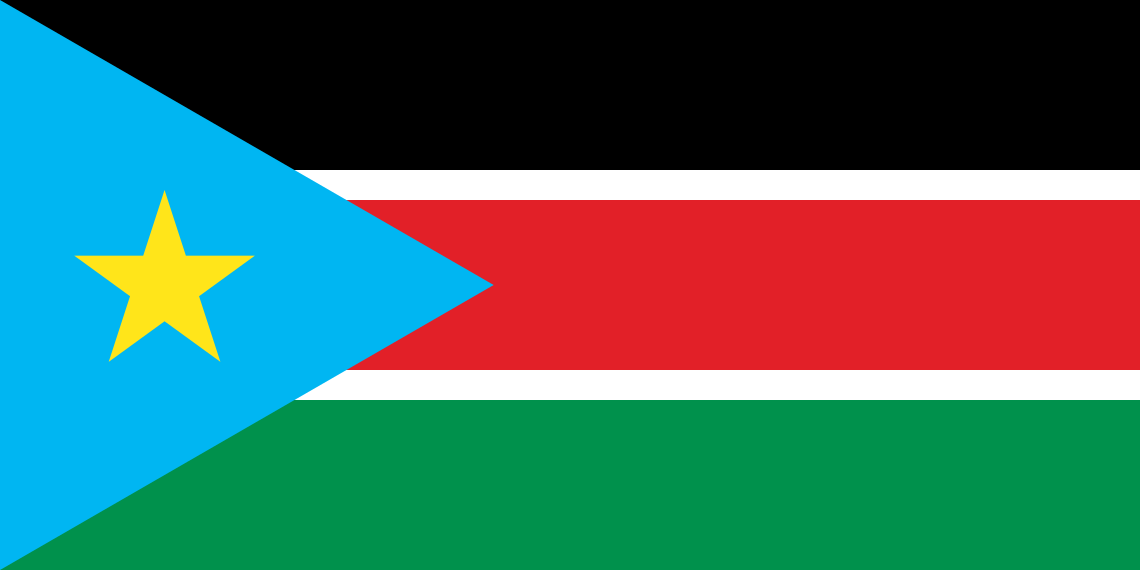
It is a great honour for me to address the Assembly for the first time as Vice-President of the Republic of South Sudan.
First, I would like to express the heartfelt condolences of the Government and the people of South Sudan to the people and the Government of the Republic of Kenya, in particular the families of those affected by the brutal and inhuman act of terror in the Kenyan capital, Nairobi. We condemn all acts of terrorism and pledge our full cooperation and support to all efforts
geared towards ridding the region and indeed the globe of terrorism.
I convey sincere my gratitude, as well as that of President Kiir Mayardit and the people of South Sudan, to the United Nations, in particular the Security Council, the countries of the Intergovernmental Authority on Development, the Troika, and all people of goodwill for diplomatically helping us to bring to an end to the conflict that had devastated our country for decades. We are grateful in particular to the international community for closely monitoring the difficult implementation of the peace accord. Given the complexity of the issues involved, the implementation of the Comprehensive Peace Agreement (CPA) has been relatively successful, although the protocols of the two states of Southern Kordofan and Blue Nile, the case of the contested area of Abyei, and the demarcation of the borders between South Sudan and the Sudan continue to impede the full implementation of the peace accord.
Our country is well endowed with abundant natural resources. Our relations with the Sudan have recently involved unexpected tensions, with intermittent suspensions of oil flow through the Sudan. Inside the South itself, old quarrels dating back to time immemorial have re-emerged among certain communities over cattle-grazing and water points. This became complicated during the last war as guns of various calibre fell into the hands of unauthorized civilians. We are working hard as a Government to entrench peace in all corners of South Sudan. We have established programmes to rehabilitate and integrate former rebel groups into our armed forces and society at large.
We have to build a country literally from scratch, with non-existent physical and social infrastructure. This has given us the worst human development indicators in the world, including high maternal and infant mortality rates and high illiteracy rates among a population of over 8 million.
While we recognize that, as humans and as a Government, we must have made errors of judgment as we sought to fix a war-devastated country, successful steps have also been taken, and we appeal for the goodwill shown to us in those times of difficulty to continue. We are confronted with the test of adherence to human rights as a consequence of malicious action by external hands, rather than of our own making. We commend any objective criticism and we call on the experts on South Sudan also to appreciate the bigger
picture of how well the country is run in our nine other states besides Jonglei.
We are presently running a Government with acceptable standards of competence. A decentralized system of governance is the outcome of a conscious decision taken by South Sudan’s political leadership, as enshrined in the 2011 transitional Constitution, to build a broad-based democracy in the post-conflict setting. We set up the 10 states with popularly elected governors and democratic legislatures as a nucleus of good governance. In 2010, President Kiir Mayardit was democratically and overwhelmingly elected. Our noble struggle was to actualize the ideals and values of true democracy, so cherished by our people.
According to our Constitution, the next elections will be held in 2015. Indeed, on 18 September, our President publicly confirmed the date. The governing party, the Sudan People’s Liberation Movement (SPLM) will hold another general convention in March 2014 to freely elect its structures in preparation for the 2015 national general elections.
Let me turn to the issue of women. Women have suffered discrimination since 1956, with a literacy rate hardly reaching 18 per cent. The SPLM as a ruling party is now raising women’s political participation from the 25 per cent in the current Constitution to a minimum of 35 per cent in the proposed permanent constitution.
In recent years, the National Legislative Assembly, of which I was twice elected Speaker and where I served a total of eight years, enacted a good number of laws, including the Petroleum Revenue Management Act and the Investment Act, among many others, setting out clear rules on how we can efficiently and prudently spend our oil revenues. With the support of our development partners in the region and internationally, we have now embarked on the development of our infrastructure. Numerous infrastructural projects are under way.
In response to the oil shutdown last year, the Government implemented austerity measures. We reduced Government spending by 40 per cent, and at the moment we have considerably increased non-oil revenue collection. We take seriously our responsibility to ensure that public funds are properly utilized and that our spending is rigorously monitored. We are thus determined to uncompromisingly fight practices of maladministration, including corruption.
We deeply regret the loss of the lives of the Indian peacekeepers, the Russian helicopter crew and the
Kenyan and South Sudanese relief workers in Pibor county. We express our condolences to the families and the Governments of those who lost their lives. We wish to assure the international community that such tragic incidents will not be repeated.
Jonglei state, the most populous, with inaccessible terrain, has been of particular concern to us as a Government as well as to the international community. There is no doubt about that. It has serious security and infrastructural impediments. We regret the security impediments in Jonglei and assure the international community of our Government’s determination to transform our army, the Sudan People’s Liberation Army (SPLA), into a professional national army that respects human rights and the rule of law and is committed to the protection of civilians.
The President has declared a general amnesty for the rebel groups, and already two large groups, one under General Bapin and the second under General Johnson Oluny, have responded positively. The President has also ordered the mandatory disarmament of the civilian population and has taken legal steps to punish the perpetrators of human rights violations in Jonglei, including an SPLA Brigade Commander, who is now under arrest together with 13 soldiers who have been sentenced to prison terms that range from three to five years. To date 84 cases of human rights abuses have been tried in the courts of law. We are determined to see that the violations committed by some indisciplined SPLA elements do not go unpunished.
Recently the Government formed a peace and reconciliation committee headed by top religious leaders to promote dialogue with all groups, including rebel groups in Pibor county.
The Government has allowed the United Nations Mission in South Sudan (UNMISS), the Office for the Coordination of Humanitarian Affairs (OCHA) and other humanitarian bodies unhindered access to all parts of the country, including, of course, Jonglei state. Regarding the situation in Pibor county, which has been of particular concern to all of us, we have determined, thanks to UNMISS and OCHA, the number of people who are currently registered for food distribution in various camps for internally displaced persons and villages. If that number is compared with the pre-conflict population of Pibor county, we could now be relatively relieved at the fact that most of those who had been unaccounted for are in fact alive and
receiving much-needed humanitarian assistance from United Nations agencies and other organizations.
Out of the total population of approximately 140,000 in Pibor, for instance, nearly 100,000 people have been identified in the Pibor bush alone, along with another 10,000 in Juba City and 26,000 registered as refugees in neighbouring countries. We appeal from this rostrum for expeditious relief assistance in various forms.
Another urgent security demand is the training of a police force capable of eliminating the high rate of crime we are experiencing in Pibor county and, indeed, the entire country. UNMISS, to which we express our profound appreciation, has helped transform hundreds of former combatants into a police force conscious of the rule of law. UNMISS is doing a very commendable job under its able leadership. The rate of crime caused by the proliferation of small arms has been alarming. While our police force has managed to apprehend many criminals, others are still at large. The Government is committed to erasing this menace. We refute any allegation to the effect that such violations are deliberate and systematic orchestrations.
Our relationship with the Sudan has been a mixture of cooperation and squabbles. Fundamentally, both sides acknowledge that there is no alternative to lasting peace other than harmony and cooperation, given our shared history. That is why President Kiir Mayardit, remarkably, visited Khartoum early this month and held amicable discussions with his counterpart, President Omer Hassan Al-Bashir of the Sudan. They agreed to enhance cooperation on all fronts, including allowing the unhindered flow of oil from South Sudan through the Sudan.
We call on the parties at war in the Sudan to find a durable political solution to the conflict, a situation to which the CPA has provided a workable remedy. We urge the international community to play a positive, stepped-up role in narrowing the gap between both parties. The civil war currently taking place in the Nuba mountains and Blue Nile regions of the Sudan, as well as in Darfur, has created an influx of refugees to South Sudan, and that is a source of concern for us. We appeal for humanitarian access and supplies for those refugees. Given our unique knowledge, acquaintance and position as partners to Khartoum and former comrades-in-arms in the fighting forces in those two regions, in addition to our interest in realizing peace along our northern
border, the Government of South Sudan can play a constructive mediation role if required.
On Abyei, we will continue to cooperate with the Republic of the Sudan to implement the agreement on the final status of Abyei through a referendum, set for October 2013 by the African Union High-Level Implementation Panel. The African Union Peace and Security Council and the United Nations Security Council accepted the proposal as “representing a fair, equitable and workable solution”. The international community must therefore ensure that this proposal is implemented expeditiously.
Our new Government in Juba, energetic and with new faces, is leaner, so as to reduce expenditure, but broader in terms of inclusiveness of other political parties and civil society, even those without party affiliation. The reshuffle has been highly supported and applauded countrywide, with a recent opinion poll carried out by two organizations — CRN and ST — showing 84.7 per cent for the new team and 92 per cent for the choice of the new Vice-President.
While many, including our friends, had doubted our ability to peacefully manage as simple a political exercise as a cabinet reshuffle, the domestic backing is revealing. Our immediate agenda for the new phase, which we are calling phase two, is to improve health care, education, roads, electricity supply and the quality of life. We are determined to uproot impunity and corruption, phenomena which plague post-conflict States, wherever they may be, and which can derail all of our efforts and determination to succeed. Based on its resolve to combat corruption and set a new standard, our Government has erased 16,000 “ghost names” it found on the police payroll. We are carrying out a similar exercise in the military and other organized forces.
In conclusion, I wish to repeat that we remain steadfast in our vision of a country at peace with itself and with its neighbours — a country which is growing in security, the rule of law and human rights and progressing towards justice and prosperity. I offer my sincere thanks to our many partners and friends for their continued support. We look towards the future confident of what we, a people emerging from marginalization and suffering civil strife, can accomplish together.
The Organization has to redouble its efforts to nurture and reinforce its new Member, South Sudan, both economically and in its determination to put an
end to human rights violations. It is important for the United Nations to monitor and promote the complete implementation of the cooperation agreements reached between South Sudan and Sudan to cement harmonious and peaceful coexistence.
On behalf of the General Assembly, I wish to thank the Vice-President of the Republic of South Sudan for the statement he has just made.
Mr. James Wani Igga, Vice-President of the Republic of South Sudan, was escorted from the rostrum.
Address by Mr. Nicolas Tiangaye, Prime Minister, Head of Government, Minister of Finance and the Budget of the Central African Republic
The Assembly will now hear an address by the Prime Minister, Head of Government, Minister of Finance and the Budget of the Central African Republic.
Mr. Nicolas Tiangaye, Prime Minister, Head of Government, Minister of Finance and the Budget of the Central African Republic, was escorted to the rostrum.
I have great pleasure in welcoming His Excellency Mr. Nicolas Tiangaye, Prime Minister, Head of Government, Minister of Finance and the Budget of the Central African Republic, and inviting him to address the General Assembly.


The theme chosen for the sixty-eighth session of the General Assembly is “The post-2015 development agenda: setting the stage”. The attainment of the Millennium Development Goals (MDGs) in the Central African Republic has been compromised as a result of the crisis that we are going through. I shall therefore devote my statement entirely to the situation that prevails in my country.
As national leaders gather here in New York to share their concerns in a world where violence, hate, extreme poverty and armed conflict are ever more present and a miserable generation lives in indescribable suffering, I have the onerous duty of taking the floor as Prime Minister and Head of the Transitional Government of National Unity of the Central African Republic to address, from this lofty rostrum at the United Nations,
the human tragedy afflicting the people of my country, whose suffering seems to have been forgotten by the international community.
At the outset, I and my delegation would like to convey to Mr. John W. Ashe our heartfelt congratulations on his election to serve as President of the General Assembly at its sixty-eighth session. I also wish to acknowledge the remarkable work carried out under the leadership of Mr. Vuk Jeremić, his predecessor. In addition, I wish to express my utmost gratitude to Secretary-General Ban Ki-moon for his energy and pragmatism and, in particular, for the special attention that he continually pays to my country and its people.
I must also pay well-deserved tribute to the Heads of State of the Economic Community of West African States and of the Central African Economic and Monetary Community, who unfailingly come to my country’s aid as it suffers from multiple crises, and to the United Nations, the European Union, the International Organization of la Francophonie and France for their unflagging support to the Central African Republic in these very trying times. Our thanks go, too, to the United States Government, which has been fighting with us side by side against the Lord’s Resistance Army (LRA) of Joseph Kony.
The terrible news of the terrorist attack in Nairobi reached us as we gathered here in New York. My country condemns that and other senseless attacks and expresses its condolences to the afflicted families and to the Kenyan people.
The tragedy affecting the Syrian people for more than two years demands action from the international community. The use of chemical weapons against the civilian population must be strongly condemned. That is why my country supports the actions under way to dismantle the chemical arsenal in Syria, with emphasis on a diplomatic resolution of that crisis.
While Africa has the dubious honour of distinguishing itself by the acts of violence of all sorts that occur there, the continent still gives us grounds for hope. Only a few days ago, Ibrahim Boubacar Keita was elected President of Mali, a country in the throes of a crisis that has undermined its national unity. We convey to him our warmest congratulations and our inexhaustible encouragement in his efforts to restore peace and sow the seeds of democracy in his country.
In the half-century of its independence, the Central African Republic has experienced a series
of cyclical political and military crises, which have led to a succession of political regimes. The decades of recurrent crisis have created constant instability, which has led to the disintegration of the State. The home-grown causes of this situation derive from the fragility of the State, a lack of political dialogue, a failure to abide by commitments in the management of public affairs, a refusal to let go of power, tribalism, nepotism and the politics of exclusion. In addition, there are now phenomena previously unheard of in the Central African Republic — impassioned inter-ethnic and interreligious tensions that remind us of the tragedies suffered by other African countries.
The external causes are due to the collateral effects of the crises in Darfur and Libya, as well as the long conflict in the Sudan, which led to the independence of South Sudan; the conflict in the Democratic Republic of the Congo; the actions of residual groups of former Chadian rebels; and the terrorist activities of Joseph Kony’s LRA in the south-east of the country. The various disturbances have led to the circulation of a large quantity of military weapons of all calibres throughout our country. Those weapons have gravely impaired the security and the humanitarian situation in the Central African Republic and led to serious human rights violations; massacres of civilian populations; kidnappings; summary executions; mass rapes; large-scale pillaging and arson, including the burning of private houses, public buildings and grain silos; the desecration of places of worship; and the degradation of natural resources and wildlife.
The Central African Republic is thus faced with multifaceted challenges that require immediate action to restore the security of people and property throughout the territory. There must be protection of and humanitarian assistance to vulnerable sectors of the population, including internally displaced persons and refugees. State administration must be re-established throughout our territory. We also need to restore social cohesion and national harmony. We must revive our economy, manage public finances and organize general elections. In accordance with the commitments made to the Heads of State and Government of the Economic Community of Central African States (ECCAS), the Government plans to establish conditions for a return to security, peace and constitutional order by 2015.
The goal at the end of the period of peaceful transition, which every citizen in the Central African Republic longs for, is a country where peace and security
are guaranteed in all sectors of political, economic and social life, where disarmament, demobilization and reintegration are successfully managed and where free, transparent and credible elections are held, thereby ensuring the designation of legitimate authorities in the contry.
In compliance with the commitments made in the 11 January 2013 Libreville Agreement and the 18 April 2013 N’Djamena Declaration, under the auspices of the Heads of State of ECCAS, we have established transitional institutions, including the Government of National Unity, in which due regard is paid to geographical and political balance; and the National Transitional Council, a legislative and constituent transitional body. We have adopted a constitutional transitional charter and an organization act relating to the transitional constitutional court. We have also appointed and sworn in the members of the court, and the Head of State of the transition has now taken his oath of office. The last institution, namely, the high communications council, will soon be established. The next elections will be organized by our national authority for elections, which will be established in the days to come.
We are trying to re-establish our defence forces with help from the international community, but that will be possible only if some basic conditions are met. The Head of State and the Government of National Unity are tackling that extremely difficult task.
Following the violence, killings and looting in the Boyrabe and Boeing neighbourhoods in the city of Bangui, measures have been taken to ban former Séléka elements from maintaining order. Now the mission rests solely with the gendarmerie and the police. A ceremony of reconciliation took place between the officers of the Central African Armed Forces and those of the former Séléka rebellion. The Séléka coalition has been dissolved, and we are trying to create a dynamic fusion of the latter with the Central African Armed Forces.
With regard to the encampment of the former Séléka coalition, 15 sites have been established in the provinces in order to bring together the former Séléka rebels for identification and disarmament and to select those who could possibly join the army. While efforts were under way to do that, new outbreaks of violence erupted in certain prefectures of the Central African Republic, at Bossangoa and Bouca, involving armed clashes between former Séléka elements and organized self-defence groups, who claimed to be supporters of the
former President and wanted to regain power. Muslim families were massacred, which led to extremely cruel reprisals by the former Séléka elements against Christian populations and innocent civilians.
Accordingly, the Head of State, in agreement with the Government of National Unity, took 10 measures to strengthen security: the appointment of a Minister of Security from civil society to head the Ministry of Public Security; the arrest and arraignment of persons suspected of crimes, violence and looting in the areas of Bangui concerned and the sentencing of 16 former Séléka members to eight years in prison, by which the Government demonstrated its resolve to combat impunity; the entrusting of all operations to the police and the gendarmerie alone; the placing of the gendarmerie and police under the Ministry of Public Security so that manpower and material resources could be shared to ensure effective security throughout the territory; the dismantling of the former Séléka coalition and the Convention of Patriots for Justice and Peace; the removal of Séléka elements from police stations, private houses and administrative buildings to restore security throughout the territory; the resumption of police service in areas long occupied by former Séléka elements as a corollary to the release of persons arrested by them; the launch of operations to disarm former Séléka elements who refused to be quartered in the barracks assigned to them; the transfer of approximately 1,200 former Séléka members to two sites in the provinces of Sibut and Bossembélé, pending the disarmament, demobilization and reintegration programme; and the initiation by the Head of State of a social dialogue through meetings with various sectors of the population, notably victims of former Séléka elements.
The 5 August 2013 report of the Secretary-General (S/2013/470) on the situation in the Central African Republic paints a very dark and chaotic picture of the humanitarian and security situation that reveals the reality of the daily lives of the Central African people. Moreover, since early August, armed confrontations in the north-west have led to a considerably deteriorated humanitarian situation in that region, where clashes have occurred between former Séléka elements and self-defence groups and groups that support the former President. It is important to note that at present the humanitarian situation is utterly catastrophic. Approximately 4.6 million Central Africans are affected by the crisis, that is, every single person in our country. There are approximately 1.6 million internally
displaced persons who are in dire need of assistance, and approximately 60,000 children are at risk of dying of malnutrition.Approximately 62,000 people sought refuge in neighbouring countries, including and principally 40,500 in the Democratic Republic of the Congo. At least 650,000 children are unable to go to school. More than 484,000, or 10.6 per cent of our population, are facing a very serious situation of food insecurity. Around 3,500 children have been recruited by armed groups. More than 13,700 people on antiretroviral medications are at risk of not being able to follow their treatments because of possible interruption of the supply chain. Less than 20 per cent of the country’s health-care facilities are working. That is the humanitarian situation caused by insecurity.
Given that backdrop, the international community has now undertaken to rush to the assistance of the Central African Republic. Accordingly, 3,652 military and civilian personnel will make up the African-led International Support Mission in the Central African Republic. It will take over from the Mission for the Consolidation of Peace in the Central African Republic, which has been in the country for several years under different designations.
On behalf of my country, I would like to extend my appreciation and thanks to Cameroon, the Congo, Gabon, the Democratic Republic of the Congo and Chad, which, for the time being, are the only countries contributing troops to the force. It is our hope that other African countries will follow their example; I understand that Burundi is getting ready to send a battalion with 450 troops.
I hope to see the international community step up its efforts and continue to be supportive of the Central African Republic as it seeks lasting peace. In that respect, I would note the urgent appeal issued by many States for the greater involvement of the United Nations in resolving the crisis in the Central African Republic. Keeping in mind that the Central African Republic is a crumbling State, that appeal is for us a request for assistance for a people who are at risk and for a gesture of strong solidarity. It is therefore a matter of urgency that the International Support Mission should become operational quickly under the auspices of the African Union, taking over from the former Multinational Force of the Central African Economic and Monetary Community.
Given the degree of the violence and the extent of devastation, the new multinational force needs a clear
and robust mandate from the Security Council in order to provide security, bring peace to the country and protect civilians. It is also the duty of the international community, however, to provide the financial, material and logistic resources needed to meet the many challenges that my country is facing. The challenges are self-evident and enormous. Apart from providing security in the country, organizing elections, restoring the administration, providing judicial, economic and social reform are all part of the road map that was drawn up in Libreville.
Those imperatives are especially topical right now as the rainy season is approaching and our people are in a state of total destitution. The already critical humanitarian situation is worsening, as demonstrated by the vast number of internally displaced persons — between 1.5 million and 1.6 million. The proliferation of arms in Bangui and the deterioration of the humanitarian situation and social atmosphere are likely to jeopardize the success of the transition. Given that avalanche of problems, the Government of National Unity has to set security, humanitarian, budgetary and policy priorities.
If we are to be successful in stabilizing the country and bringing peace, we have to reinvent a new programme of disarmament, demobilization and reintegration and we have to rethink how to reform the security sector, for security is the keystone of the transition and the need for innovative approaches is greater now than ever before. We will not be able to meet those challenges unless we get four kinds of assistance: financial, technical, material and humanitarian. Our partners need to be supportive of our transition, provide urgent budgetary support and help us with their expertise.
The current session of the General Assembly offers me once again an opportunity to beg the international institutions to commit to providing strong support and high-quality expertise in a coordinated, complementary, coherent and transparent way. A failure to carry out the transition will make our country impossible to govern, which would inevitably lead to a gray area at the heart of the African continent.
There are already several foreign armed groups in our country. The Lord’s Resistance Army, which has been present in the south-east of the country since 2008, has killed several hundreds people, raped dozens of women, abducted thousands of children and burned entire villages. The Vakaga region has been penetrated
by traffickers and poachers from neighbouring countries, including the Sudan. If the Central African State collapses, new criminal and terrorist networks could settle in the country and destabilize the entire region. While stability in Central Africa is a major concern of the international community, that concern must go beyond the minimal reactions and half-hearted commitments that are too often features of international support for political transition.
I recall that Ms. Valerie Amos, Under-Secretary- General for Humanitarian Affairs and Emergency Relief Coordinator, and Ms. Kristalina Georgieva, European Commissioner for International Cooperation, Humanitarian Aid and Crisis Response, came to my country in July 2013 and visited the devastated population of the city of Kaga Bandoro. When they returned to Bangui, they told me about the heart- rending scenes they had witnessed. They had met a woman who had lost all hope and who asked why the world had abandoned her country. This survivor cried out in distress, saying, “Do not abandon us.” And her voice is that of millions of others in the Central African Republic who are calling for help.
The crisis in my country may be a national crisis, but the solution, in its four dimensions — military, security, humanitarian and financial — has to be international. There is no short-term alternative to the full involvement of the international community to save the Central African Republic. On 19 September in Bamako, French President François Hollande said that
“when the law is trampled upon, when women and children are being massacred, it is then that the international community must rise up and demonstrate solidarity”.
The time has come for the international community to rise up and save the Central African Republic. It did so for Mali; there is no reason why it should not do so for my country.
The Central African people do not understand this kind of international solidarity, with one rule for one country and another rule for another. Now more than ever, action is needed to help a people in danger. Now more than ever, every means that has already been used elsewhere must be mobilized to avert irreparable harm. The cry of distress from that poor woman from Kaga Bandoro addressed to Ms. Valerie Amos and Ms. Kristalina Georgieva is the same cry of 4.6 million Central Africans to the international community, and it
resonates like a last request to our universal conscience. A human tragedy that calls for urgent action is playing out before our eyes. Every day that passes brings its share of bloodshed, women raped, children kidnapped and millions displaced or exiled.
Now more than ever, therefore, action is needed for my country’s civilian population. If nothing is done now, tomorrow will be too late. And in the face of history, the international community can no longer abjure its political and moral responsibilities.
On behalf of the General Assembly, I wish to thank the Prime Minister, Head of Government, Minister of Finance and the Budget of the Central African Republic for the statement he has just made.
Mr. Nicolas Tiangaye, Prime Minister, Head of Government, Minister of Finance and the Budget of the Central African Republic, was escorted from the rostrum.
Address by Mr. Iurie Leancă, Prime Minister of the Republic of Moldova
The Assembly will now hear an address by the Prime Minister of the Republic of Moldova.
Mr. Iurie Leancă, Prime Minister of the Republic of Moldova, was escorted to the rostrum.
I have great pleasure in welcoming His Excellency Mr. Iurie Leancă, Prime Minister of the Republic of Moldova, and inviting him to address the General Assembly.


I would first like to congratulate Mr. John Ashe of Antigua and Barbuda on his election to the presidency of the General Assembly at its sixty-eighth session and to wish him every success in his post. I am confident that his diligence and perspicacity will contribute to our efforts to address the challenges of today’s world. I would also like to express my appreciation for the work of Mr. Vuk Jeremić in presiding over the Assembly at its sixty-seventh session and my best wishes for his further success in his career. And I pay tribute to the Secretary-General, Mr. Ban Ki-moon, for his tireless work promoting peace and security, human rights and prosperity in a sustainable global environment, as well as for his efforts to make this Organization more transparent and efficient.
Before the key points of my statement, I would like to offer my condolences to the victims of the senseless attack in Kenya.
The United Nations is in the midst of establishing a new post-2015 development agenda that will continue and advance the ambitious commitments laid down in the Millennium Declaration (resolution 55/2). We welcome the inauguration earlier this week of the High- level Political Forum on Sustainable Development as a key step towards the implementation of the outcome document of the 2012 United Nations Conference on Sustainable Development (resolution 66/288, annex). We expect that the high-level dialogue will reinforce and launch the implementation of the three pillars of sustainable development — economic prosperity, social equity and environmental protection — with the firm commitment of Member States to deliver on those priority areas. We recall the huge effort it took for this Organization to agree last year in Rio on the wide-ranging framework for a world working cooperatively towards a sustainable future, and we are hopeful that this effort will yield results sooner rather than later.
(spoke in French)
For the Republic of Moldova, sustainable development is the only way to ensure a decent life for our people. It follows that we must foster economic development and solve our energy security problems while ensuring an ecologically healthy environment. My Government has been working hard to achieve those ends, together with its relevant international partners, particularly the European Union (EU), which gives us a reference point for our national policies. We are convinced that political will, mutual assistance and transparency in every significant issue can bring just as much positive change to emerging and developing economies as to poor ones. We reaffirm that issues such as poverty eradication, human rights and tolerance, access to quality education without gender discrimination, decent jobs for all and the preservation of nature and biodiversity should have special priority on the United Nations development agenda in the years to come.
Cooperation between sectors is also a key issue, which is why international partners and the donor community, including the private sector and civil society, should work hand in hand with the United Nations and Governments in order to mobilize the necessary resources and use them to target specific
results-oriented projects as well as investments in essential areas.
I would also like to touch on the problems of migration and population movement. The United Nations has acknowledged more than once that migration can benefit the development of countries of origin as much as that of countries of destination, if international cooperation is strengthened and suitable policies are put in place. That is certainly the case with the Republic of Moldova, where migration has contributed to our macroeconomic stability in recent years.
At the same time, we are living through a period of considerable change that is likely to influence the demographic, economic, social and security aspects of our population. There is no doubt that investing in human capital is fundamentally a way out of demographic volatility and an indispensable condition for our country’s prosperity, while ensuring respect for human rights. That is how we aim to reduce the interdependence between development and migration flows and to create an environment conducive to community development, including small and medium- size businesses, with financial aid awarded directly from the State budget.
However, I would also like to draw the attention of the Assembly to the positive examples derived from the mobility partnership between the Republic of Moldova and the European Union. That initiative has strengthened the Government’s capacity to formulate and implement migration policies, find shared priorities with the EU and develop innovative and strategic legislative initiatives, based on best practices. We must definitely continue in that spirit, which is the only way to arrive at mutually acceptable solutions for regular and circulating migration that can benefit our citizens, while ensuring that human rights are protected and social security guaranteed.
I would like to mention here one of the most significant achievements of the Assembly, the adoption of the Arms Trade Treaty (ATT), which was made possible after several years of intense debate and negotiation on the regulation of the world’s arms trade.
The Republic of Moldova has signed the ATT, and we hope that the rapid entry into force of the Treaty will make the global arms trade more transparent and legitimate. The ATT could be a great step forward in controlling the proliferation and illicit circulation
of weapons, especially in vulnerable areas and in areas that do not respect the constitutional system of sovereign States.
In addition, the Government is working closely with its European and international partners, in particular with Germany’s Federal Office of Economics and Export Control and the Organization for Security and Cooperation in Europe, to review and amend national legislation on the export control of dual-use goods in order to adopt the best international standards and rely on the best international experience in that field.
As a member of the Human Rights Council, my country has completed the first cycle of the universal periodic review, which is, in our opinion, one of the best exercises for monitoring and evaluating the results of national human rights institutions and mechanisms. At the same time, we agreed to undertake new commitments to meet the challenges involved in implementing the recommendations of the universal periodic review.
The Republic of Moldova continues to advocate for a review of the human rights situation by all countries and States and believes that a robust, apolitical and impartial Human Rights Council should exercise greater authority, especially in cases of serious human rights violations, and should provide guidance on the implementation of the best practices and standards in this area.
My Government is pleased to announce the fourth seminar of Francophone countries, to be held at the beginning of 2014, in Chisinau, our capital, to discuss the results of and lessons learned from the first cycle of the universal periodic review. We hope that the findings of that seminar will contribute to the advancement, strengthening and improvement of the universal periodic review as a unique mechanism for the review of human rights practices in all States members of the International Organization of la Francophonie.
(spoke in English)
The Republic of Moldova is pursuing an intensive and comprehensive reform programme in the political, economic, institutional, legislative, demographic and judicial areas and others. We are firmly committed to building a State based on the rule of law, good governance, transparency and accountability. Through those difficult efforts, we are becoming a stronger nation and a better international partner, and we must keep pushing ahead.
In that connection, we are proud to announce that the Government has embarked on a new course of technological modernization to enable direct public access to Government services. Our aim is to make all such Government services electronically available to all citizens by 2020 at any time, from anywhere, using modern communication technologies and devices such as computers, mobile phones and interactive payment offices. Such a system will combat corruption, reduce unnecessary bureaucracy and ensure true transparency in the relationship between citizens and public officials. The Republic of Moldova is among the leaders in that field, and our efforts have already yielded real benefits for our citizens with the implementation of our electronic catalogue for public services, mobile digital signatures, the Government’s electronic payment portal and many more services.
The ambitious reform agenda of the Government and its foreign policy are both directed towards the fulfilment of our country’s strategic objective — European integration. At this stage, we have concluded the negotiations on the Association Agreement with the EU and its component part, the Deep and Comprehensive Free Trade Area Agreement, and the initialling of the texts is going to take place at the upcoming Eastern Partnership summit to be held in Vilnius in November. All of those actions — the political association with the EU, the economic rapprochement and the perspective of visa-free travel for our citizens — are bringing us closer to our final goal, namely EU integration, and they open new perspectives for political and economic cooperation in the region.
Every year, my delegation brings to the attention of the Assembly the issue of the protracted conflict in the Transnistrian region, which has affected my country ever since independence. As a nation that values national consolidation and unity, that conflict is a constant challenge that undermines our development efforts. The political settlement of the conflict and the reintegration of the country are our strategic priority. We envisage uniting the population from both banks of the Dniester River around shared goals and providing them with a better future. It also means removing one of the most fundamental challenges to our national security, economic development and social cohesion. Ultimately, resolving the Transnistrian conflict means guaranteeing secured national borders and opening a new perspective towards stability and fruitful, bilateral and equitable relations with our neighbours and international partners.
Peace and dialogue are fundamental prerequisites for a political solution to any conflict. Let me emphasize that there have now been more than two decades of peace in the region, and we will spare no effort to preserve that peace. Moldova is fully committed to dialogue through all available channels. But in order to achieve the desired outcome, we desperately need trust within the resolution process and genuine engagement and commitment from the outside. We advocate for the continuation of the confidence-building activities that have been taking place since 2007 with the support of the United Nations Development Programme and the European Union, aimed at bridging the gaps between all stakeholders from both banks and involving local authorities, business communities and civil society.
The vision of the Government of the Republic of Moldova for a final solution to the conflict is unambiguous and inclusive. First, a comprehensive and viable solution must be based on respect for the sovereignty and territorial integrity of the country. We are open to a reasonable compromise on a special status for the region within the Republic of Moldova, which would provide the population from the left bank with a comfortable and guaranteed level of self-governance in various areas of public life. There should be a single constitutional, economic and defence space within the internationally recognized borders of Moldova. At the same time, the Republic of Moldova should remain a functional State that continues to advance on its European path and makes every effort to allow the population and the business communities from both banks to benefit equally from our extensive partnership with the European Union and, hopefully, within the European Union.
On the conflict resolution matter, we will continue with renewed impetus to seek solutions in order to ensure the freedom of movement, improved transportation links and new and real opportunities for businesses on both banks of the Dniester. We will also redouble our efforts to convince our partners to start talks on political and security issues, including the future status of the region within the recognized borders of the Republic of Moldova. Moreover, we will seek to intensify law- enforcement interaction and preserve stability in the security zone, and we reaffirm our stance on the need to transform the current peacekeeping mechanism into an international civilian mission.
Strengthening respect for human rights is of utmost importance to us. The report of the United Nations senior
expert on human rights in the Transnistrian region of the Republic of Moldova, Mr. Thomas Hammarberg, offers a good road map for joint activities in that regard. In addition, I would like to reiterate our long-standing and unwavering call to finalize the withdrawal of the Russian military forces and ammunition from the territory of the Republic of Moldova in accordance with the relevant international commitments.
In conclusion, I would like to express my Government’s conviction that the future of the region will be brighter if we unite our efforts in building a stronger and unified country, open to Europe where it naturally belongs, and to diversity, tolerance and economic and market opportunities. We are optimistic that we can achieve that because there is no better vision that we could embrace for the well-being of our people and the consolidation of our nation.
The Republic of Moldova places peace and real, constructive dialogue above any political goal or ambition. We follow with great concern the continuing violence in the Middle East and abhor the loss of so many lives and futures, which will perhaps irremediably maim the consciousness of a whole generation, not only in the conflict zones but worldwide. The refugee crisis in Syria magnifies the perils of war, Hundreds of thousands of people have been displaced as they try to salvage their lives and find peace. My own country has offered protection to a number of Syrian refugees, and we recognize the significant burden that Syria’s neighbours and other receiving countries, many in Europe, face as they seek to alleviate the Syrian refugees’ suffering, offer them a better chance for survival and affirm their basic human rights. It is time for all sides to take a step back, find a peaceful solution and build a future for their people rather than pursue fleeting, treacherous and, so often, deadly political goals.
In conclusion, I would like to express the hope that during the current session the members of the Assembly will succeed in reaching important decisions on topical issues, such as sustainable development, peace and security, human rights and many others. My delegation is willing and open to making its contribution in a collaborative and constructive way.
On behalf of the General Assembly, I wish to thank the Prime Minister of the Republic of Moldova for the statement he has just made.
Mr. Iurie Leancă, Prime Minister of the Republic of Moldova, was escorted from the rostrum.
Address by Mr. Thomas Motsoahae Thabane, Prime Minister and Head of Government, Minister of Defence, Police and National Security of the Kingdom of Lesotho
The Assembly will now hear an address by the Prime Minister and Head of Government, Minister of Defence, Police and National Security of the Kingdom of Lesotho.
Mr. Thomas Motsoahae Thabane, Prime Minister and Head of Government, Minister of Defence, Police and National Security of the Kingdom of Lesotho, was escorted to the rostrum.
I have great pleasure in welcoming His Excellency Mr. Thomas Motsoahae Thabane, Prime Minister and Head of Government, Minister of Defence, Police and National Security of the Kingdom of Lesotho, and inviting him to address the General Assembly.


At the very outset, allow me to congratulate Mr. Ashe on his well-deserved election to the office of the President of the General Assembly. I assure him of my delegation’s full support and cooperation during his tenure of office. I also wish to commend his predecessor for the exemplary leadership he demonstrated during the previous session.
From the humble beginnings of a fledging organization more than six decades ago to a massive expansion in membership today, the United Nations has undoubtedly stood the test of time. Its worth as an indispensable entity in shaping the world of our time is a matter of common cause. Some of the great strides the United Nations has made span the peaceful settlement of disputes, restoring calm in many countries through peacekeeping, raising awareness of human rights and eradicating diseases. Nevertheless, much still needs to be done.
Much of the world remains mired in poverty and disease, while peace, security and stability continue to be fragile. Economic development continues to be the greatest challenge in our history. As we ushered in a new millennium 13 years ago, we adopted the Millennium Declaration and the Millennium Development Goals (MDGs) in order to focus the world’s attention on ending extreme poverty in all its forms. The 2015 deadline for the achievement of the MDGs is fast approaching, yet it
is clear that not much progress has been made in many countries in achieving the Goals. Alive to that fact, the United Nations is engaged in various processes in preparation for the post-2015 development era. It is in this context that we welcome the theme for this session, “The post-2015 development agenda: setting the stage”.
One of the key outcomes of the United Nations Conference on Sustainable Development (Rio+20) was that we launched a process to develop a set of sustainable development goals (SDGs), which would build upon the MDGs and converge with the post-2015 development agenda. We note the progress that has been made in that regard and hope that the letter and spirit of the Rio+20 outcome document, “The future we want” (resolution 66/288, annex), will be upheld. It is our hope that we will develop SDGs that are simple to implement, while also paying attention to the reality that no one size fits all.
The post-2015 development agenda must be an integral framework that will build upon the successes and failures of the MDGs. We need to reflect on the experiences and lessons learned in implementing the MDGs, the results achieved and opportunities missed. It is time for this body to come together and exercise its collective responsibility to finalize this one shared goal of articulating and shaping a development agenda that is inclusive and people-centred. A new development agenda, premised upon the sovereign equality of all States while recognizing their interdependence and mutually reinforcing roles, should be our goal. To achieve that, a renewed spirit of solidarity, cooperation and mutual accountability must underpin our efforts.
It is equally important, in our view, to pay special attention to the perils of climate change for our physical world, as well as its destruction of ecosystems, all of which result in land degradation and contribute to the decline of agricultural productivity. Agriculture is the mainstay of our small economies. In order to address that challenge, agriculture and food security have to be given the necessary prominence in the envisaged development agenda.
Similarly, sustainable mountain development should be our ideal. To a country such as Lesotho, with over 60 per cent of its land area covered by mountains, sustainable mountain development is imperative for the people to survive. Mountains are valuable water sources with rich biodiversity. As such, international support for conservation programmes and the protection of
mountain ecosystems should be at the forefront of our plans.
The state of peace and security in the world is gradually getting worse. The possession of nuclear weapons and other weapons of mass destruction remains the principal threat to the survival of humankind. The widespread sectarian strife in the Middle East and elsewhere and xenophobia are some of the great challenges to global peace. Sadly, discord remains among Member States on how to overcome those problems.
Of particular concern to my delegation is the situation in Syria, which poses a serious and growing threat to international peace and security. Scores of civilians continue to be the principal victims. Women, children and the elderly are bearing the brunt of the conflict. The use of chemical weapons in Syria is not only abhorrent, but also a crime against humanity. We condemn it in the strongest terms, as it threatens to undermine the norm against the use of chemical weapons universally embraced by the international community. We welcome the partial report of the United Nations chemical weapons inspectors investigating the use of those weapons in Syria, and hope that the culprits will face the might of international law and justice.
The crisis in Syria has the potential to engulf the whole Middle East region, with global ramifications. We call on the international community to find a quick and lasting solution to the conflict. Whether in Syria or anywhere else, perpetrators of crimes against humanity must be held legally accountable for their actions.
History has revealed that human societies can enjoy peaceful, orderly progress only if the rule of law obtains. The conviction that peace and justice are inextricably intertwined has always underpinned the efforts of the United Nations in the area of the maintenance of international peace and security. Indeed, the International Criminal Court (ICC), created in 1998, is a beacon that speaks to that truism. We must use institutions, such as the ICC and other international legal tribunals, as a reflection of the international community’s increasing rejection of impunity and evidence that there is a rising tide in favour of the rule of law. At the same time, we need to ensure that institutions, such as the ICC, are adequately insulated against politicization. Selective prosecutions must be avoided.
A decade has passed since the initiation of the notion of the responsibility to protect. Yet, the operationalization of that concept has not become a reality. The fact that crimes of mass atrocity continue to be committed around the world is a stark reminder that the time for a collective approach to protecting populations from genocide, war crimes, ethnic cleansing and crimes against humanity is now. Most mass atrocities often do not occur spontaneously, but rather as part of a planned process. Over the years, we have learned the important lesson that the Organization cannot stand on the sidelines when challenged to take preventive action. In so doing, we should guard against the misuse and abuse of the norm of the responsibility to protect by infringing on the national sovereignty or altering the legal obligation of Member States to refrain from the use of force except in conformity with the Charter of the United Nations.
From the Horn of Africa and across the Sahel region to the Democratic Republic of the Congo, the African continent is facing a rise in lawlessness and conflicts. As we celebrate the jubilee of the formation of our continental organization, the Organization of African Unity, we are resolved, as leaders of Africa, that Africa must open a new chapter going forward and extricate itself from the conflicts that have so soiled its reputation and compromised its development. We are determined to build a safe, secure and peaceful Africa from here forward.
With the presence of extremist groups and terrorist entities in the Middle East and elsewhere, terrorism continues to pose a serious threat to world peace, security and development. The ugly face of that scourge has once again resurfaced in Kenya. We condemn the barbaric killings of innocent people in the Westgate mall in Nairobi, committed by Al-Shabaab. Our thoughts and prayers are with the families that have lost their loved ones. We all know that solutions to these problems cannot be through military means alone. We have to invest more in creating a holistic and integrated approach that targets, among other things, the improvement of economic development, the promotion of the rule of law, the protection of human rights and fundamental freedoms, and good governance.
In the face of the numerous global challenges existing in the world today, promoting more effective global governance should be at the forefront of the international agenda. We, the membership of the United Nations, should strive for an international Organization
with improved efficiency and effectiveness. In our efforts to reform the United Nations, emphasis needs to be placed on enhancing, inter alia, its accountability and that of all its organs and bodies and the programmes of Member States, irrespective of their size and influence.
It would be remiss of me not to express solidarity with the people of Cuba for having endured sanctions for so many years. We also want to express our unwavering solidarity with the people of Western Sahara, who have languished under the yoke of colonialism for far too long. In the same vein, we express our unwavering support for the people of Palestine. As a small country that was surrounded by apartheid South Africa for almost a century, we understand the pain that others who still languish under that kind of situation feel. Those situations are a challenge that this body can easily remove from our agenda simply by doing what is right. In true brotherly solidarity, we appeal to this body to remove those final vestiges of colonial oppression.
In conclusion, I need not emphasize that our peoples do not necessarily look at this Organization as a
mirror reflecting a divided and troubled world. Rather, they yearn for progress and solutions to the problems besieging their world. They want ideas, leadership and concrete hope for the future. Our actions and decisions should embody themes of peace and development that look far beyond the immediacy of the moment. The challenges that confront us today must be, more than ever before, addressed with the candour and decision that the present global economic and political situation dictates to us all.
On behalf of the General Assembly, I wish to thank the Prime Minister and Head of Government, Minister of Defence, Police and National Security of the Kingdom of Lesotho for the statement he has just made.
Mr. Thomas Motsoahae Thabane, Prime Minister and Head of Government, Minister of Defence, Police and National Security of the Kingdom of Lesotho, was escorted from the rostrum.
The meeting rose at 6.15 p.m.