A/68/PV.49 General Assembly
In the absence of the President, Mr. Tommo Monthe (Cameroon), Vice-President, took the Chair.
The meeting was called to order at 3 p.m.
29. Report of the Security Council Report of the Security Council (A/68/2) Question of equitable representation on and increase in the membership of the Security Council and related matters


I would like to thank the President for his initiative, which aims to regain momentum in Security Council reform. We welcome his decision to establish an advisory group on Security Council reform, and we express the hope that that body will provide useful guidance on the way forward. We hope that his personal leadership will bring the reform process forward. I would also like to thank Ambassador Zahir Tanin, the Chair of intergovernmental negotiations, and express our readiness to cooperate with him on the continuation of those duties.
The world today is different from the world at the time of the establishment of the United Nations. The number of the Member States has multiplied. The number of conflicts where the United Nations should be involved remains big. The world has become more interconnected and interdependent, and we are increasingly facing global challenges that affect all countries and their citizens.
*1355534* 13-55534 (E)
The United Nations is a unique platform in which to exchange information, advance our common agenda and provide a coordinated response to global challenges. The United Nations must live up to the demands of the twenty-first century. In many areas it has shown the capacity to develop in step with the requirements and realities of this new age. Yet the Security Council, which has the primary responsibility for the maintenance of international peace and security, has changed little in the past decades. Therefore, reform of the Council is of crucial importance.
Unfortunately, discussion of Security Council reform has continued on and off for nearly 20 years without producing tangible results. At the 2005 World Summit, our leaders called for an early reform of the Security Council in order to make it more broadly representative, efficient and transparent, thus enhancing its effectiveness and the legitimacy of its decisions. The time has come to put forward concrete proposals and to generate momentum and start real negotiations leading to the achievement of those goals.
Latvia would like to reiterate its position that enlargement of the Security Council membership in both categories, permanent and non-permanent, is necessary to ensure the representativeness of the Council and an equitable geographic distribution of both permanent and non-permanent seats that reflects current political realities. In view of the considerable enlargement of the membership of the Group of Eastern European States over the past decades, we strongly believe that any enlargement of the Council should
include one new non-permanent seat for the Eastern European Group.
However, we feel that in order to advance reform, we should go beyond merely reiterating our positions. The work of the advisory group on Council reform should feed into more detailed debate and into the stage of negotiations. At that stage, it would be necessary to look for the parameters of a possible agreement. For instance, when it comes to the size of the Council’s membership, what would be the numerical maximum that would be acceptable to those countries that favour limited expansion of membership? What would be the numerical minimum acceptable to those countries that favour a greater expansion?
It is essential to achieve agreement on those elements of reform that enjoy the broadest possible support of Member States. For our part, we are ready to contribute constructively to that task.


I would like to thank the President for convening this debate. I will briefly cover both points on our agenda: the report of the Security Council in document A/68/2 and the question of equitable representation on and increase in the membership of the Security Council and related matters.
We take note of the report of the Security Council covering the period from August 2012 to July 2013 and thank the representative of China for introducing it (see A/68/PV.46). We believe it would be inappropriate for us to make further comments on the matter, since we were members of the Council during that period and in fact held the presidency during the month of October 2012. I will limit myself to what we have pointed out every year, which is our wish that the report would offer more analysis in relation to its factual content.
With respect to the issue of equitable representation on the Security Council and increase in its membership, I would like to say first of all that we have taken note of the President’s letter of 22 October to Member States, in which he reported his decision to reappoint Ambassador Zahir Tanin as Chair of the negotiating process, as referred to in decision 67/561, as well as his decision to set up an advisory group composed of six permanent representatives. It should be stressed that the outcome of our negotiations belongs exclusively to the Member States in the Assembly.
After so many years with the long-desired reform of the Security Council at a virtual stalemate, we are
confident that we will now be able to give a renewed impulse to negotiations that will adapt that body, which was created in the mid-twentieth century to maintain international peace and security in the period after the Second World War, to the circumstances of the twenty- first century.
We all understand the nature and depth of the themes that divide us, which doubtless revolve around a dividing line between those who espouse enlarging the Council in both membership categories and those who advocate limiting the expansion only to the category of elected members. Alongside that polemic there are assuredly additional differences in points of view with respect to the number of new members to propose, their distribution among the different regional groups, and their rights and obligations, including the obvious issue as to whether the provision granting the right of veto to the five permanent members should be extended to eventual new permanent members.
On that point, we would like to reiterate our position, namely, that we support an expansion in the number of members in both categories. We think that this expansion can be up to five permanent members and five additional elected members. Thus we would have a Council with 10 permanent members and 15 elected members.We would not insist that the new permanent members have all the prerogatives of the current permanent members, although we would not oppose this. At the same time, we would not insist that the five current permanent members renounce their privileges under the Charter of the United Nations.
That said, we would see the expansion of the Council as a process, subject to new adjustments and adaptations in a reasonable period in order to be able to continue to make changes to the governance of the United Nations system. In the same context, we think it would be appropriate to re-examine the limited mandate that the Charter entrusts to the Council, with a view to expanding its scope. We understand that this idea could seem heretical to many, because it raises the issue of the central role of the Council in maintaining international peace and security, so as to prevent its intruding on the mandates of the principal organs.
But the problem we perceive is that the dividing line between peacekeeping and peacebuilding is not clear. It would be appropriate, then, to redefine the roles of the Security Council, the Peacebuilding Commission, the Economic and Social Council and the General Assembly to see how to distribute the tasks
of promoting the development of countries emerging from conflict situations. That would be part of the general proposition that sustainable development is the best antidote for preventing conflicts. In that same vein, we should be thinking about greater coherence between the work of a reformed Security Council and the reformed forum that in the future will be in charge of the coordination work that at present is undertaken by the G20 in the economic and financial sphere.
In any case, we believe that reform of the United Nations system of governance cannot be postponed any longer, and that addressing Security Council reform is the central point for starting that task.


At the outset my delegation would like to join the others in thanking the President of the General Assembly for convening this meeting. My delegation would like to express its appreciation to the Chinese presidency of the Security Council for introducing the annual report of the Security Council to the General Assembly (A/68/2) (see A/68/ PV.46), and to the United States Mission to the United Nations for preparing the introduction of the draft report. We understand the difficulties in preparing a concise report that goes beyond just enumerating the Council’s activities, and we recognize the Council’s continuing efforts to draft an annual report that fulfils the expectations of the Member States.
Bulgaria appreciates the efforts of the President of the General Assembly to reinvigorate the process of Security Council reform. In that regard, we believe that the appointment of the advisory group could generate renewed impetus in furthering the agreed goal to achieve comprehensive Council reform. Taking into consideration the declared purpose of the advisory group — to produce a basis for the start of the intergovernmental negotiations — we believe that it will reflect ideas put forward in the negotiations so far, including those of particular interest for the countries of Eastern European Group.
We support the continuation of the intergovernmental negotiations on Security Council reform aimed at achieving a broader, more representative, efficient, legitimate and transparent Council in line with the 2005 World Summit Outcome document (resolution 60/1).
We share the view that Security Council reform is long overdue and that maintaining the status quo should not be an option. It is our deep belief that the reforms should be aimed at turning the Security Council into
a more representative and more effective body. Its composition, size and working methods need to reflect today’s realities so that it can be perceived as relevant.
Bulgaria has already declared its support for the enlargement of the Council in its two categories. Our position takes into account the abilities and the willingness of certain countries to contribute to the maintenance of international peace and security. At the same time, Bulgaria believes that further expansion of the Council should involve an adequate and proportional representation of the current regional groups.
Bulgaria continues to uphold its position on the need to allocate at least one additional non-permanent seat in an enlarged Council to the Eastern European Group, given that in the last two decades its size has more than doubled. It is our conviction that the enlarged membership of the Council should contribute to its greater representativeness, while the improvement of the working methods has to bring about the needed efficiency and transparency.
We welcome the letter of the President of the General Assembly of 22 October announcing the reappointment of Ambassador Tanin as Chair of the intergovernmental negotiations. Once again, we would like to pledge our support to his efforts in guiding the reform process.

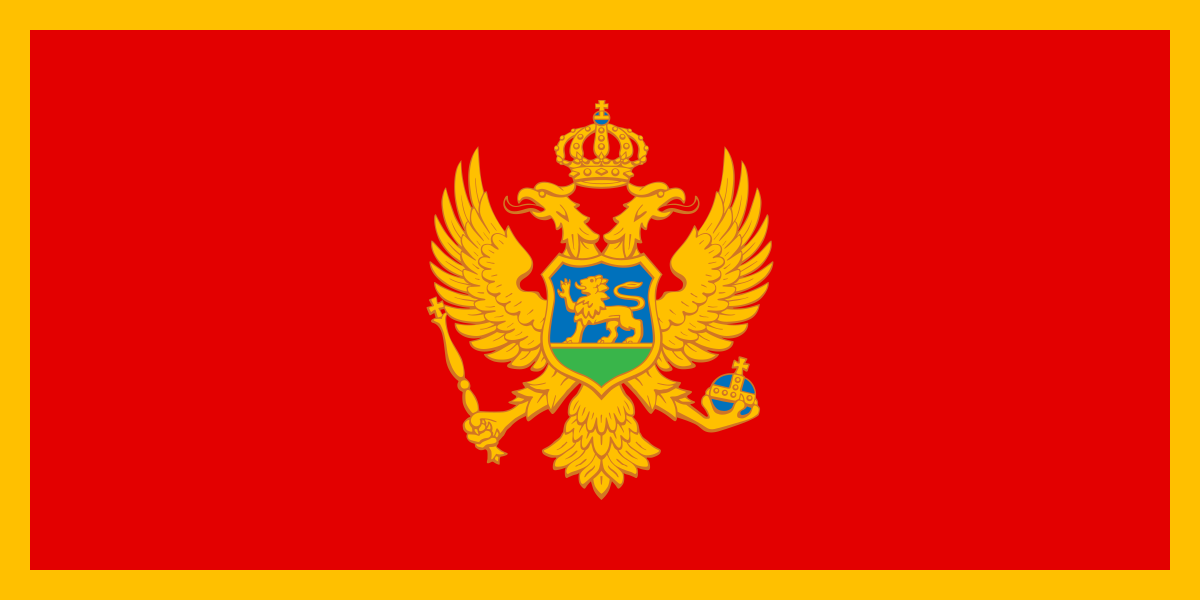
At the outset my delegation would like to thank the Permanent Representative of China for introducing the Security Council’s annual report (A/68/2) (see A/68/PV.46), and the United States delegation for preparing the document. However, I will limit my intervention to agenda item 123, “Question of equitable representation on and increasing the membership of the Security Council and other related matters”.
I would like to thank the President of the General Assembly for his earlier engagement and efforts to advance the Security Council process during the Assembly’s sixty-eighth session. I would also like to congratulate the Permanent Representative of Afghanistan, Ambassador Tanin, on his reappointment as Chair of the intergovernmnetal negotiations.
Security Council reform is an ongoing process that should neither be limited in time nor unnecessarily delayed. But time and again, after too many years and extensive deliberations involving different formats, we find ourselves again in familiar territory. It is very useful and practical for all of us that we got a detailed understanding of each of the five proposals tabled. I
would say that there are really no more unknowns in regard to any of the proposals. On the contrary, we have come to learn and become very familiar with even the smallest particularities.
For such a complex process that the Council reform presents, that is very important. But we have to be cognizant that there comes a point in time when one has to ask if further deliberations on this patient would make any sense, because even though we call our process intergovernmental negotiations, we have not engaged in real, substantive negotiations. What we have done so far is to repeat the same, or slightly modified, rhetoric that has brought us to this point, when we have to say that we have barely moved, in substantial terms, from the starting position.
It is against that backdrop, and in the context of establishing the advisory group, that Montenegro welcomes and supports all proposals and initiatives that are action-oriented and aim at kick-starting genuine negotiations. What is needed is to have an inclusive, transparent and balanced approach, one that will take on board the interests and aspirations of the general membership to the extent possible — not only of the main groups, because a large number of countries, like mine, do not belong nor are associated with any particular group — in order to create the atmosphere and conditions conducive to commencing the long-awaited and much anticipated real negotiations. Moreover, we have to be careful to follow established frameworks and mandates that have been clearly defined. Only in this way can we expect to take positive steps and count on the fruitful collaboration and engagement needed to move forward, instead of creating further divisions and separations that, by their very nature, are a heavy burden to the process.
It is obvious, urgent and important, for the sake of the Security Council, that we should not continue with business as usual. It is up to us, the Member States, together with Ambassador Tanin, to find a new, fresh approach in order to engage in a more constructive and results-oriented way that will bring us closer to the desired reform with the broadest acceptance with respect to all five aspects of the reform. In that context, it could be helpful to strive for common ground for a possible compromise solutions and common denominators on which to build further. One such building block could be the African common position and the historical injustice done to that continent. In that context, and in line with our own interests, principled
position and support, Montenegro reiterates the need to increase the representation of the Eastern European Group in the non-permanent category of membership in an enlarged Security Council so as to reflect the new reality represented by the more than twofold expansion of the Group’s membership.
We constantly have to remind ourselves that negotiating is process of give-and-take and that we all need to demonstrate a high degree of flexibility and pragmatism in order to create an atmosphere of trust and good faith that will allow us to take concrete steps towards accomplishing our end goal. Keeping the big picture of overall reform in sight, we cannot merely focus, as individuals or groups, on our own self-interest and aspirations; we have to take into account those of other people if we truly want to make a breakthrough. And in keeping with our position, it is of the utmost importance that we remain realistic and aware of the fact that some of the existing proposals — if not individually then as part of a bigger incorporated package — are definitely not feasible and could indeed turn out to be counterproductive to the work of the Security Council.
We should not be under any illusion that reaching a package solution on Security Council reform will be an extremely difficult and rather challenging task. I believe that every single Member State has a stake and wants to see the Security Council reformed in a way that will allow it to be more transparent, representative and better suited to coping with global security challenges that are not lacking in today’s world. Let us leave behind old practices and methods that have proven to be insufficient and ineffective. We cannot win by exploiting each other’s weaknesses. Instead, we have to be innovative and explore and combine our strengths and advantages because a reformed and improved Security Council is above all our common goal and a necessity. It is in that spirit that Montenegro reaffirms its strong political will and decided readiness to contribute towards the start of genuine negotiations and concrete actions to that end.


While we all agree on the need for reform, the years that have passed since 2005 have shown the difficulty of achieving a convergence of Member States’ positions to overcome the structural shortcomings of the Security Council vis-à-vis emerging global threats and challenges. Lengthy discussions on Security Council reform urgently need to materialize into action. We need to
accelerate our search for a reform package, as more delay will continue to put the Council at further risk of becoming either inadequate or far too tardy in responding to existing or emerging global challenges and threats to peace.
Georgia is of the opinion that only by reflecting current geopolitical realities can the Security Council enhance its political legitimacy and authority. Therefore, we support the aspiration of countries from the Group of Four, as well as the inclusion of developing countries, to be represented in both the permanent and non-permanent categories of membership in a reformed Security Council. We also encourage the inclusion of smaller States in decision-making. We believe that the basic principle of international law — that is, sovereign equality between nations — should be more explicitly reflected at the core of the international security architecture. That will indeed be a gateway to a more democratic global governance. However, equitable representation should not be an end in and of itself. A meaningful reform should also imply reform of the working methods and decision-making principles of the Security Council.
Georgia is among the countries that have been directly and painfully affected when all the efforts of some Security Council members to find a constructive solution through the Council have fallen by the wayside in the face of a structural deficiency that allowed one party to the conflict to preclude all meaningful measures from being taken by the Council. Those deficiencies allowed for a paradoxical scenario in which, instead of an increased security presence in the aftermath of a full-blown war, the mandate of the United Nations Observer Mission to Georgia was terminated, creating a vacuum in the international security presence. That, in our view, raised some serious questions as to the appropriateness of using the right to veto in relation to the mandates of peacekeeping missions.
In closing, let me express our firm support for the President of the General Assembly in his undertaking to reinvigorate work on the reform of the Security Council as the most important element of United Nations reform. To that end, we would also like to commend the work of the Chair of the intergovernmental negotiations, Ambassador Tanin. Georgia, for its part, stands ready to contribute to the process.


Allow me to start by commending the dedication and commitment of the President of the General Assembly, Ambassador John
Ashe, to advancing the issue of Security Council reform. I would like to congratulate Ambassador Zahir Tanin on his reappointment as Chair of the intergovernmental negotiations. I also believe that this is the proper time and place to recognize the work and the report of the Security Council (A/68/2) and to thank the current President, Ambassador Liu Jieyi, for introducing that report (see A/68/PV.46).
Undoubtedly, the work and responsibilities of the Security Council are enormous, and apparently its workload and the demands on it are increasing. We all have no doubt that permanent and non-permanent members alike dedicate the utmost effort, manpower and brainpower to addressing those complex challenges.
The United Nations is a unique Organization. Its real value lies in its universality, its inclusion of all nations. In two years time, we shall celebrate the seventieth anniversary of its establishment. Three generations of politicians and diplomats have contributed to the creation of a better world that is more stable, secure, democratic and sustainable. And the world has changed. Some issues have been resolved, some still persist, and new ones have appeared. To address those new challenges, the United Nations has to look into the mirror of the twenty-first century and to study the reflection from different angles, points and distances. We must look in the mirror at twilight and at midnight.
Syria should serve as a broken mirror offering a distorted and refracted picture of reality. Two years of the Security Council’s inability to take a meaningful decision are alarming proof of the urgent need to overcome our differences, set aside our disagreements and look for innovative and creative decisions. There is no quick fix, but after 20 years of deliberations it is high time to assume the responsibility that our citizens have entrusted us with. It is time to craft concrete, meaningful proposals and to deliver results.
Slovakia is fully committed to working with all partners to continue negotiations on the issues of modernizing the work, working methods, composition, communications and effectiveness of the Security Council. We shall work and deliberate in good faith, with mutual respect and in an open, inclusive and transparent manner. We are obliged to seek a solution that can garner the widest possible consensus. For the sake of speeding up the discussion, let me just briefly recap the already well-known position of Slovakia. I will just mention a few key issues and then make some suggestions for a way forward.
First, we believe in the necessity of adapting the Council to the geopolitical realities of the twenty- first century. States capable of assuming global responsibility for the maintenance of international peace and security should become eligible to take seats as new permanent members of the Security Council. But membership is not about privilege — it is much more about the responsibility, commitments and obligations that possible members are willing and ready to assume. If we wish to take a step forward, we should not concentrate only on numbers. We should listen to the substantial discussions of contenders on how they see their work and role in the Council in the future and, upon getting in, how they would improve the work they probably criticized when they were out.
Secondly, the equitable geographic distribution of seats within the non-permanent category of Security Council membership must reflect and embrace all regional groups — including the Group of Eastern European States — in an equal and proportional manner.
Thirdly, the ideal goal is to achieve better representation, as well as greater efficiency. Thus, the enlargement must not compromise the ability of the Security Council to function as defined in the Charter. We need a Security Council that is effective and does not shy away from taking difficult decisions — a Council that ensures prompt and effective action when needed. We believe that, in order to ensure that, the enlargement of Council should be moderate and balanced.
Fourthly, Slovakia does not favour extending the right of veto to new permanent members. At the same time, due consideration should be given to the scope and the manner that the veto is applied. Let me recall the relevant proposals made by the High-level Panel on Threats, Challenges and Change (see A/59/565) in the run-up to the 2005 World Summit Outcome (resolution 60/1).
That being said, it is now time to move away from simple repetitions of our positions and start concrete negotiations on the basis of those proposals that have so far garnered the widest support. We feel that the proposals put forward by the Group of Four and the L.69 group enjoy such status. But the only vehicle that can bring us to success is called compromise. Let us look again to some temporary, interim solutions, such as semi-permanent membership with defined criteria and rules, or let us give appropriate attention to new initiatives, such as the code of conduct for the voluntary
limitation of the use of veto. Maybe some others ideas are on the way. To see the forest, we should take a step or two back from the trees.
For the sake of urgency and meaningful agreement in the light of the aforementioned ideas, our position is not carved in stone. Let me assure the President and all partners that Slovakia is open to all constructive proposals and considers them with a maximum degree of flexibility and open-mindedness with the main aim of reaching tangible results that will finally allow us to adapt the Security Council to the realities and needs of the twenty-first century.


At the outset, my delegation would like to associate itself with the statement made by the representative of the Arab Republic of Egypt on behalf of the Non-Aligned Movement (see A/68/PV.46).
Please allow me to express my appreciation to Ambassador John Ashe, President of the General Assembly, for convening this meeting. I would also like to thank Ambassador Liu Jieyi, Permanent Representative of the People’s Republic of China, for introducing the annual report of the Security Council (A/68/2) on behalf of the Security Council (see A/68/ PV.46). At the same time, I sincerely congratulate Ambassador Tanin on his reappointment as Chair of the intergovernmental negotiations on Security Council reform.
Since the inception of the Organization, the functions and duties of the United Nations have been developed and expanded on a large scale. Therefore, it is necessary for the United Nations, including the Security Council, to be adapted or reformed in order to be reliable in meeting the real demands of the current phase of the international affairs of the world.
The 2005 World Summit Outcome (resolution 60/1) indicated that in the new era it is necessary to reform the Security Council for the benefit of Member States as a whole. Since then, many Heads of State and Government have continued to express their views in the general debates of the General Assembly and to confirm the need to reform the Security Council. Furthermore, the General Assembly has also considered reform of the Security Council through the international negotiating process, although there have been different views on reform in recent years. The process of reform is ongoing and we are confident that, through negotiations, an agreement will be reached in the year to come.
The Lao People’s Democratic Republic is of the view that, in order to make the Security Council more representative, democratic, effective, transparent, accessible and legitimate, the Council needs to be reformed in an appropriate manner. However, the reform should be conducted on the basis of the proposals submitted by Member States and by the intergovernmental negotiating process, which will bring mutual benefit for all Member States.
The Lao People’s Democratic Republic always supports the reform of the Security Council and endorses the proposal of the President of the General Assembly to conduct further intergovernmental negotiations on the reform of the Security Council during the sixty- eighth session, including through the establishment of an advisory group. However, we understand that the advisory group does not have a negotiation role; therefore, it aims only to give personal advice in conducting the intergovernmental negotiations.
In conclusion, my delegation would like to assure the President that the Lao People’s Democratic Republic will continue to support his work towards Security Council reform, and we reiterate that reform should be conducted in the process of the intergovernmental negotiations, which will sum up the appropriate proposals and ideas of the entire international community for Council reform. My delegation is confident that, with the President’s wisdom and experience, all the parties concerned will reach an agreement on Security Council reform and it will be successfully achieved in the year to come.


At the outset, I would like to align myself with the statements delivered by the Permanent Representative of Guyana on behalf of the Caribbean Community, the Permanent Representative of Egypt on behalf of the Non-Aligned Movement, and the Permanent Representative of Saint Kitts and Nevis on behalf of the L.69 group (see A/68/PV.46).
Suriname, together with the majority of the United Nations membership, supports early reform of the Security Council, including expansion in both the permanent and non-permanent categories. It is critical to note that the time has come for the intergovernmental negotiating process to finally move forward on the grounds of text-based talks, dialogues and interactions. My delegation therefore warmly welcomes the initiative and commitment of the President of the General Assembly at its sixty-eighth session, Ambassador John Ashe, to assemble an advisory group to advise him and
provide inputs to initiate and to advance the process of text-based talks in the intergovernmental negotiations.
While it is obvious that the reform of the Security Council can be considered a work in progress, that does not mean that the intergovernmental negotiations should be a never-ending process. My delegation therefore strongly believes that the time has come to move from rhetoric to action.
Finally, we also welcome the reappointment of Ambassador Zahir Tanin as Chair of the intergovernmental negotiations. I wish him success in steering this crucial process.


Allow me to express my delegation’s satisfaction for the initiative of President Ashe to convene this meeting of the General Assembly to review the question of equitable representation on and increase in the membership of the Security Council and related matters, as well as the question concerning Security Council reform.
We also welcome the reappointment of Ambassador Zahir Tanin, Permanent Representative of Afghanistan, as Chair of the intergovernmental negotiations on Security Council reform. We are convinced that, given his diplomatic skills and his lengthy experience and historical memory concerning this matter, he is in a special position to continue leading the negotiations, which are extremely complex but which undoubtedly are increasingly urgent in the light of the international reality, in which the need for a new international consensus related to peace and security is increasingly prominent.
No less important is the President’s decision to convene an advisory group of ambassadors with a view to providing suggestions and ideas to advance these important intergovernmental negotiations. As the President himself said, the advisory group has no the power whatsoever to take positions or draw up intergovernmental negotiating documents; it can only suggest possible plans of action for the Assembly’s consideration and subsequent action, which we greatly value.
El Salvador’s position with regard to Security Council reform is widely known, and we have had the honour of taking part in most of the debates on that issue over time. Therefore, it is not my intention yet again to outline our position in this meeting; instead, I can sum it up in our decisive support for the
expansion of Security Council membership in both categories — permanent and non-permanent. Our country favours the aspirations of Brazil, Germany, Japan and India to permanent membership of the Security Council with the right to veto. We also agree that it is important to have regional representation in which Africa could have two permanent seats in the Security Council and Latin America and the Caribbean could have one.
We agree with most delegations that there is a need to reform and improve the working methods of the Security Council in order to foster its transparency and democratization, as well as a growing and more substantive relationship among the Security Council, the General Assembly and the Economic and Social Council, in accordance with the Charter of the United Nations. In that regard, it is important to underscore that, through the implementation of peace operations, issues related to special political missions in the broader context of the implementation of the Security Council’s mandate on the maintenance of international peace and security have gradually led to a de facto change in the relationship of the mandates of the Security Council and the General Assembly, given the evident needs of collective action.
Although this issue is being discussed for the first time in the Special Political and Decolonization Committee (Fourth Committee) and the budget is being discussed in the Administrative and Budgetary Committee — the Fifth Committee — the crux of the matter, in our opinion, lies in the need to resolve conflicts in different parts of the world that by their nature must be approached in an unconventional way. It is precisely that issue that leads us to think about the urgent need to change the paradigm upon which we have been basing our discussions on Security Council reform. Following the same path will undoubtedly lead to the same outcome — a lack of agreement among the Member States with respect to Security Council reform.
For El Salvador, changing the paradigm means changing the logic of putting out fires, which currently defines the Security Council’s action. That could therefore mean acting in a preventative capacity. Of course, preventive action means, among other things, acting as an integrated system, especially among the General Assembly, the Economic and Social Council and all their its subsidiary bodies. That can also apply to the Security Council reform that we are negotiating, because it has to do with a more democratic and
transparent way for the Security Council to function. It also means greater coordination and complementarity of the actions of other bodies fo the system with prevention mandates.
Consequently, the role of the permanent five would be, first of all, to use all their political clout to review the resources allocated to the United Nations to promote the development of peoples before taking punitive decisions and using force to resolve differences. That change of paradigm therefore means going from a competition for planetary resources through the use of force, to planetary cooperation wherein the 7 billion human beings can benefit from the means of dignified living and the opportunity to shape our own destiny in peace and with respect and full cooperation. Believing that the future of humankind can be built on the basis of the current paradigm is not only unrealistic, but also wasteful of all manner of resources on an impossible task.
In conclusion, allow me to reiterate El Salvador’s commitment to building a new paradigm for Security Council reform. Our own history shows that it is possible. It is not an easy task and there are often setbacks, but it is the only way to move in the right direction and to build a new, inclusive society for all.


At the outset, we would like to express our appreciation for the ongoing efforts of Ambassador John Ashe in making the reform of the Security Council one of his priorities at this session. We are also grateful for Ambassador Tanin’s diligent work as Chair of the intergovernmental negotiations on Security Council reform.
We thank the Chinese delegation for introducing the annual report of the Council (A/68/2).
We add our voice to the statements made by the representatives of Egypt on behalf of the Non-Aligned Movement and of Sierra Leone on behalf of the African Group (see A/68/PV.46).
We have taken note of the establishment of an advisory group on the topic of Security Council reform. The advisory group does not express the views of any negotiating groups or States. It is only an advisory group.
Efforts to reform the Council have dragged on for two decades with little result. At this time, the majority of General Assembly members seek structural reform of the Security Council . It has been a source of sadness
and frustration to my delegation that no progress has been made in the five reform categories called for in decision 62/557 — including the expansion of the two categories of membership, the decision-making process, and the abolition of the right of veto — that would make the Council more transparent, democratic and representative of the 193 States Members of the United Nations.
As the Assembly will recall, the African continent has 54 States. Its representation in the Security Council, which is exclusively non-permanent, is not commensurate with that number or with the African matters being discussed in the Council, which represent more than 70 per cent of the items with which the Council is seized. Consequently, the African position must be taken into consideration as reflected in the Sirte Declaration of 1999 and the Ezulwini Consensus of 2005, which call for two permanent seats with the competencies and privileges enjoyed by the current permanent members, and five non-permanent seats. The African position represents the aspirations of the entire continent. It is characterized by flexibility in regard to the veto and calls for abolishing it in the future while asking for the right to exercise the veto as long as it stands.
My delegation supports the Arab position agreed at the 2010 African Union summit, held in Sirte, as well as the position of the Islamic Group represented in the Organization of Islamic Cooperation.
Intergovernmental negotiations on the reform of the Security Council constitute the only forum and machinery adapted to negotiate such reform. They should not be replaced by any other forum or group. Reform should be comprehensive and need not be confined to a specific time frame, and it should enjoy the support of the majority of United Nations Members.


At the outset, on behalf of my delegation, I would like to extend my thanks to the President of the General Assembly for his explanation concerning the advisory group on Security Council reform, under agenda item 123, and for his insistence that the group would have an exclusively advisory role without interference in intergovernmental negotiations (see A/68/PV.46).
We welcome the reappointment of Ambassador Tanin as Chair of intergovernmental negotiations on the reform of the Council. We pledge our commitment and cooperation
with all parties in bringing the mission of Council reform to fruition.
We emphasize the need to expand and reform the permanent and non-permanent categories of Council membership in order to make that organ more up- to-date and effective in maintaining international peace and security, as enshrined in the Charter of the United Nations. Arab representation should be part of that expansion, given the regional, geographic and demographic weight of the Arab States.
The Security Council has adopted a great many resolutions concening Iraq. We therefore attach considerable importance to negotiations to expand Council membership with a view to arriving at a common ground that Members States agree upon. Our support for expanding the membership of the Council is also a response to the increase in the number of States Members of the United Nations since the Council was established.
The Council should be made more transparent, representative and balanced, without affecting its competence and effectiveness. Despite the fact that in past years we have witnessed an increase in the Council’s open meetings and greater participation in the part of non-member States, we hope that when the Council’s consultations touch upon the interests of those non-member States, such practices will begin to include calling upon the particular State whose interests are at stake to attend the closed Council consultations relating to it.
We urge the Council to hold additional informational briefings for non-members. Such briefings, undertaken under Article 31 of the Charter of the United Nations, reflect positively on the Council’s openness and transparency in its work.
My delegation calls for restricting the use of the right of veto to the greatest extent possible, perhaps through the adoption of certain measures that would make it difficult to exercise that right except in line with Chapter VII of the Charter. Moreover, the veto must not be used in cases of genocide or breaches of international humanitarian law.
Most of the conflicts that affect international peace and security are regional in nature. That is why we believe in the important role of regional organizations in promoting the peaceful settlement of such conflicts. We therefore call for activating Chapter VIII of
the Charter, without prejudice to the purview and responsibilities of the Security Council, with a view to protecting and enhancing human rights.


At the outset, let me begin by expressing our appreciation to the President for convening this meeting on such an important issue. I would also like to congratulate Ambassador Zahir Tanin, the Permanent Representative of Afghanistan, on his reappointment as Chair of the intergovernmental negotiations at the sixty-eighth session.
While associating my delegation with the statement of the Non-Aligned Movement delivered yesterday by the Ambassador of Egypt (see A/68/PV.46), allow me to further explain our position on the issue, which is of great importance to my Government.
My delegation has on many occasions expressed its view on the different aspects of the reform of the Security Council. Therefore, I will avoid going into detail at this meeting. I would just recall briefly that it is an established fact that, as a result of the evolution of the international situation and the constant rise of new opportunities for and new challenges to the international community, a drastic revamping of the Council is required. Such a foregone conclusion is based on experience and on the reality that the Security Council, with its current working methods and composition, which are long-outdated, cannot succeed in its very important responsibility of maintaining international peace and security. Fortunately, this is a point on which there is overall agreement among Member States, and we almost all agree that a comprehensive reform of the Council corresponding to the needs and requirements of the day is long overdue.
The size and composition of the Council, like its working methods, are among the most important aspects of Security Council reform. The current composition of the Council is neither regionally balanced nor geopolitically reflective of today’s realities. Therefore, the Council is not representing the realities of the international community. Moreover, we believe that the failure to change the Council’s composition and to adequately improve its working methods and decision-making processes lies at the root of a noticeable decline in international public trust in that important body. As a result, the image and credibility of the Council have suffered in the eyes of the general membership.
In our view, focusing on turning the Security Council into an accountable international body that is responsive to the general membership and public opinion should be the overarching goal, and we should redirect all of our efforts to that end. That is the only way to redress the damage and enhance the credibility of the Council. To that end, there is a pressing need to strive towards strengthening the representative and democratic foundation of the Council. We shall attain that objective only if we continue to stick to a comprehensive reform of the Council, encompassing all five interrelated clusters: the categories of membership, the veto, size and working methods, regional representation, and the relationship between the Security Council and the General Assembly.
Given the importance of that process, I appreciate the attention and leadership of Ambassador Ashe with regard to the reform of the Security Council. Since the beginning of his tenure, he has demonstrated his interest in moving Council reform forward. In his letter of 22 October, he conveyed his intention to continue with the intergovernmental negotiations during the sixty-eighth session, which is a welcome development. We believe that the efforts made over the past six years within the framework of the intergovernmental negotiations are worthy of praise in the context of the long road towards reform of the Council. My delegation welcomes the continued efforts in that regard and is willing to participate in the process, based on text and focused on achieving results. Let me reiterate that Council reform should be firmly membership-driven and advance on a fully comprehensive and transparent basis. Therefore, we look to the negotiations as the only forum for reaching an agreement on that issue.
On the report of the Security Council to the General Assembly (A/68/2), I would refer only to the chronic problem of an encroachment by the Security Council on the work of the other main organs, particularly the Assembly, the Economic and Social Council and even some technical bodies, such as the International Atomic Energy Agency, under the pretext of security. There is also an alarming trend in which the Security Council has been increasingly involved in lawmaking and norm- setting practices. The unnecessary and hasty resort to Chapter VII of the Charter of the United Nations, and the threat or use of sanctions in cases in which no actions have even been necessary, are other issues of concern to the general membership that have hurt the credibility and legitimacy of the Council’s decisions. Those disturbing trends, which run counter to the letter
and the spirit of the Charter should be checked and abandoned.


I have the honour to speak on behalf of the following countries: the Federated States of Micronesia, Fiji, Kiribati, the Republic of the Marshall Islands, Nauru, Palau, Samoa, Solomon Islands, Tonga, Tuvalu, Vanuatu and my own country, Papua New Guinea.
We note that the President, in his statements accepting his election to his post by acclamation (see A/67/PV.87) and at the opening of the general debate of the General Assembly at its sixty-eighth session (see A/68/PV.5), clearly expressed that part of his agenda would also include addressing the ongoing issues pertaining to the reform of the principle organs of the United Nations, including the reform of the Security Council. Already, a number of measures are under way to reform the Council. What is now needed is the re-energizing of the process. In that regard, we count on the President’s leadership and we reiterate our unequivocal support for him.
We commend the appointment of Ambassador Zahir Tanin to again chair the intergovernmental negotiating process. Like many other delegations and as in previous sessions, we again convey our collective support and gratitude to him for the sterling work he has done, Indeed, we look forward to his continued leadership.
The reform of the Security Council remains an important issue on the United Nation’s agenda. It is rooted in the 2005 World Summit Outcome (resolution 60/1) and further elaborated in decision 62/557. If the intergovernmental negotiating process is to be effective, there have to be real and genuine negotiations on all the relevant issues, and more specifically on the five issues covered in decision 62/557, namely, the categories of membership, the veto, regional representation, enlargement and working methods, and the relationship between the General Assembly and the Security Council.
What is quite interesting is that the fifth issue in decision 62/557 — the relationship between the General Assembly and the Security Council — is already operational, given that this debate has included the introduction and discussion of the Security Council’s annual report (A/68/2), introduced by the Permanent Representative of China on behalf of the Chinese presidency of the Council for this month (see A/68/ PV.46). We can also say that the Council’s working
methods, which are part of the fourth item of decision 62/557, are already a part of our debate on Security Council reform. In that regard, I would also refer to the Council’s open debate under the presidency of Azerbaijan in October (see S/PV.7052). Indeed, in both cases, we can all agree that more can be done to address gaps and shortcomings. In fact, some of those have already been pointed out.
The Pacific small island developing States (SIDS) believe that there has to be reform in both categories of membership in the Council, but any reform, including all the components of decision 62/557, must garner the widest possible support from the entire United Nations membership. However, the negotiations must commence forthwith and be guided by decision 62/557. All the issues covered in the decision should be in a document, along with all the viable options mentioned so far. Those options should then be subjected to a series of robust and genuine negotiations in that process. We must avoid another series of discussions, to which we have all become accustomed.
In her recent statement to the Security Council during the open debate on working methods, the Permanent Representative of Singapore made the salient point that
“[t]he reality is that small island States are unlikely to obtain a permanent seat in whatever new configuration might emerge from an overall reform of the Council in the future” (S/PV.7052 (Resumption 1), p. 15).
It is probably equally true to reiterate that many other States may not even have the capacity to serve under any configuration of the Council. However, that should not preclude the possibility that some of the small States may indeed have the capacity to serve. Many of the Pacific small island developing States currently serve in United Nations peacekeeping operations around the world. While Fiji provides the largest numbers, some of our smallest members, such as Palau, are also participants in United Nations peacekeeping operations. Thus, the Pacific SIDS continue to fulfil their obligations under the Charter of the United Nations.
We believe that aspects of the third key issue of decision 62/557, relating to regional representation, present an alternative option where small and very small States might be better catered to in terms of membership on a rotating basis within United Nations regional groups. We see this issue currently emerging
in various regional groups, but on an ad hoc basis. Above all else, the principal reason for the Pacific SIDS to remain in this debate is that, like all the United Nations reform issues we have all committed to, it is a fundamental issue of governance.
We should be collectively proud that the reform process initiated as a result of the World Summit in 2005 has seen the establishment of the Peacebuilding Commission, UN-Women and the Human Rights Council, replacing the Commission on Human Rights. While we recognize that reform of the United Nations Secretariat is still ongoing and much more could be done, the fact is that it is proceeding. The outstanding issue is reform of the Security Council.
While the current Security Council structure has served the global community reasonably well to date, the new geopolitical realities, along with the new and emerging security challenges of the twenty-first century — including the adverse impacts of climate change and its security implications — demand broader participation on the part of Member States in the Council’s membership and deliberations. We acknowledge the commitments supporting the reform process, stated in the past and again during this debate by permanent members of the Security Council. However, it is a fact that neither they nor the President’s advisory group can reform the Council, because it is the full United Nations membership that must effect that reform. Therein lies the challenge for us all.


I would like to extend my thanks and appreciation to the President of the General Assembly at its sixty-eighth session, Mr. John Ashe, for convening this joint debate on the report of the Security Council (A/68/2) and the question of equitable representation on and increase in the membership of the Security Council and related matters. I would also like to thank the current President of the Security Council, Ambassador Liu Jieyi of China, for introducing the Council’s annual report (see A/68/PV.46).
We attach particular importance to today’s debate. Member States have made great efforts to expedite the reform process. However, no tangible progress has been achieved so far. The world today is not the world of the mid-twentieth century. The power structure of the past is no longer consistent with the realities of the present. We are asking for fair representation in the Council, so that it does not merely reflect an old world order
that does not exist anymore. It should be replaced on a basis of equitable representation, suitable for this twenty-first-century world, so that the most important decisions on international peace and security, which inevitably affect all of us, can be adopted by appropriate and forceful majorities truly representative of the community of nations.
The interest of the entire international community in the matter under consideration is obvious. Today’s debate on the question of equitable representation on and increase in the membership of the Security Council and related matters presents an excellent opportunity to identify possible shortcomings in areas requiring improvement and adjustments.
The Security Council has failed to address the situation in the Palestinian and Arab occupied territories, an issue that has been under its consideration for more than six decades. That failure to safeguard international peace and security and achieve fair restitution for those who deserve it has encouraged Israel to persist in escalating its violations of international law, breaching the Palestinian people’s rights and continuing its ongoing quest to change the situation on the ground.
Furthermore, the Syrian crisis continues, with a regime bent on suppressing the will of its people through brute force, killing and displacing millions of people under the watch and in the sight of a Council paralysed by abuse of the veto system. The aspirations of the Syrian people, the will of the international community, represented by the General Assembly and its adopted resolutions, and the unanimous views of members of regional organizations have been ignored and not properly acted on by the Security Council. All of that reaffirms the danger manifest in delays in taking appropriate, timely decisions aimed at achieving peace in our region and the world.
That is why Saudi Arabia calls for profound and comprehensive reform of the Security Council, increasing its membership and abandoning or restricting the use of the veto system, in order to enable the Council to fulfil its obligations concerning the preservation of peace and security in the world. We emphasize the need for comprehensive reform based on universality, equity and regional balance, and addressing all substantive issues related to the questions, among others, of membership, regional representation, the Council’s agenda, and its working methods and decision-making process.
We support an expanded membership of the Council that includes permanent seats for the Arab States, African States and other underrepresented groups. The issue of reform should be addressed in a comprehensive, transparent and balanced manner, and the process should reflect the views of all Member States. The current process, which has continued for several years, is clearly not going anywhere. While we appreciate the efforts of Ambassador Tanin of Afghanistan in leading and coordinating the review process, we believe that new vigour must be injected into it in order to enable us to reach prompt and reasonable conclusions.
Saudi Arabia believes that merging positions and proposals on reform and expansion of the Council should be done after consulting with the State or group of States concerned and with their approval. That would encompass the African common position on rectifying the historical injustice of the continent’s lack of representation on the Council, as well as the Arab position, which requests a permanent seat for the Arab Group in any future expansion of the permanent membership category. There is a clear need for an enhanced and stronger presence of the Arab and Islamic world on the Security Council.
The Council’s annual report includes some very important issues. We welcome the opportunity afforded Member States to examine it in depth before commenting on it. We welcome the decision to have a separate meeting on the topic this year, giving Member States more time to analyse the report’s contents and thus enhancing the quality of discussion. Saudi Arabia strongly believes that transparency and inclusiveness are fundamental to improving the Council’s working methods. Advancing those principles will enhance the Council’s accountability to the general membership; improving its working methods will also enhance its efficiency.
We recognize that the Council has taken significant steps over the years both to improve the effectiveness of its work and to open itself to non-member States. But in the interests of its overall efficiency and effectiveness, the Council should devote more time and effort to the core issues of international peace and security, in accordance with its primary responsibility, and refrain from encroaching on the mandates of other bodies.
Saudi Arabia reiterates the appeal to the permament members to refrain from exercising the right of veto in situations of crimes against humanity, war crimes, genocide or ethnic cleansing, since doing so prevents
the Council from effectively defending fundamental values and principles of humankind.
Saudi Arabia calls for the strengthening of the partnerships between the Council with regional and subregional organizations, including the Gulf Cooperation Council, the League of Arab States and the Organization of Islamic Cooperation. We believe that more frequent interactions between the Council and regional organizations can play an important role in solving critical crises affecting the respective regions.
We respect the decision of the President of the General Assembly to form an advisory group. We understand that the purpose of the group is to serve as an informal group to advise the President on the reform process. However, we would like to express our concern that the advisory group does not have any representation from any member of the League of Arab States or the Organization of Islamic Cooperation, which constitute 11 per cent and 30 per cent, respectively, of the total United Nations membership. We further want to ensure that the advisory group is not intended as a replacement for the intergovernmental negotiations in any respect.
In conclusion, I urge all members to take all possible initiatives to expedite the comprehensive reform process, which would hopefully result in resolving current crises and in maintaining peace and security in the world.


Chile associates itself with the statement made by the representative of Switzerland on behalf of the Accountability, Coherence and Transparency group(see A/68/PV.46), of which Chile is a member. Likewise, Chile also wishes to reiterate its constructive spirit in that intergovernmental process and hopes that we will be able to reach an early consensus with respect to Security Council reform.
Improving the working methods of the Security Council, on the one hand, and expanding its composition, on the other, would not only improve the effectiveness of that organ but would also ensure its principal legitimacy. In that regard, Chile is open to the various initiatives of Member States and of the bodies under the General Assembly seeking to give impetus to the intergovernmental process, which is the only channel available to the General Assembly for Security Council reform.
That is why we express our confidence in the recent initiatives taken by the Presidemt of the General Assembly, Ambassador Ashe. The advisory group
could always provide innovative ideas that could help to establish the conditions to give that exercise political momentum. My delegation is ready to make specific proposals in order to address that challenge, which affects the functioning and overall effectiveness of the system.

We have heard the last speaker for this meeting in the debate on agenda items 29 and 123.
I now call on the representative of Morocco, who wishes to speak in exercise of the right of reply. I would remind representatives that statements in the right of reply are limited to 10 minutes for the first statement and to five minutes for the second statement and should be made by delegations from their seats.


My delegation wishes to exercise its right of reply in response to the statement made by the representative of Algeria (see A/68/PV.47). The representative of Algeria, whose country continues to claim that it is not party to the conflict, finds a way to mention the situation concerning Moroccan Sahara even during the considation of the report of the Security Council and the reform of that important principal organ of the United Nations.
The members of the General Assembly now have proof, if any were needed, that Algeria is the main actor and even the driver in the conflict over the Moroccan Sahara. The representative of Algeria, who seems not to have read the report of the Security Council, said that that document did not reflect the state of informal consultations and cited the case of the Moroccan Sahara. I would enlighten him and refer him to page 38 of the report, where, reflecting the consultations of 30 October, it is stated, among other things, that the Special Representative had said that the situation in the Western Sahara during the reporting period had remained stable and that the ability of the United Nations Mission for the Referendum in Western Sahara (MINURSO) to report on the situation had improved.
The also said that Security Council members expressed appreciation for the efforts of Morocco to improve the living conditions of the Western Saharan
people and expressed unqualified support for MINURSO and the Personal Envoy of the Secretary-General. Most Council members affirmed that a mutually acceptable political solution was the only lasting solution to the conflict. All delegations noted the reforms undertaken by Morocco in the field of human rights, notably the establishment of the National Human Rights Council, including its commissions in Laayoune and Dakhla, and its cooperation with the special procedures of the Human Rights Council.
We also note a falsehood in Algeria’s statement in referring to a draft Security Council resolution that proposed expanding MINURSO’s mandate. That exists only in Algeria’s imagination. No draft resolution submitted for the consideration of Council members mentioned such an expansion.
Furthermore, the representative of Algeria spoke of the Frente Polisario representative being excluded from speaking at the stakeout. I wish to remind him that that platform is reserved for States Members of the United Nations. Imagine the position we would be in if it were open to anyone. The United Nations has its rules and practices. However, not everyone seems willing to respect that discipline. The Algerian proposal is groundless and unreasonable.
The General Assembly has thus concluded this stage of its consideration of agenda items 29 and 123.
Programme of work
I should like to consult members on the convening of a meeting on Thursday, 21 November, in order to give interested delegations that wish to do so the opportunity to continue deliberations on the report of the Security Council.
May I take it that the General Assembly decides to convene a plenary meeting on agenda item 29 on Thursday, 21 November?
It was so decided.
The meeting rose at 4.30 p.m.