A/68/PV.66 General Assembly
The meeting was called to order at 3 p.m.
70. Strengthening of the coordination of humanitarian and disaster relief assistance of the United Nations, including special economic assistance Report of the Secretary-General (A/68/489)

I now give the floor to the representative of Ukraine, who will introduce draft resolution A/68/L.21.


I have the pleasure of introducing draft resolution A/68/L.21, on Chernobyl, on behalf of the initiators of the draft resolution, namely, Belarus, the Russian Federation and my own delegation, I would like to thank the respective delegations for their active and substantive discussions on the text, as well as for their valuable support as sponsors of the draft resolution.
This year we mark the twenty-seventh anniversary of the Chernobyl disaster, and we honour the emergency workers who risked their lives in responding to the accident. More than 300,000 people had to abandon their homes, and millions of people have been living in contaminated areas, traumatized by lingering fears for their health and livelihoods.
In order to deal with the changes brought on by the accident and mitigate its consequences, Member States decided to bring the issue to the General Assembly as a major example of how the international community should address a man-made disaster that was unknown in the past. Furthermore, the General Assembly proclaimed 2006-2016 the Decade of Recovery and Sustainable Development of the Affected Regions. The
United Nations action plan on Chernobyl for the Decade reflects the full commitment of the international community to achieve the aims of the Decade by focusing on social and economic development, the promotion of healthy lifestyles and self-reliance on the part of the community.
The international community has learned a number of important lessons from dealing with the human consequences of the Chernobyl nuclear accident. In 2004, the Secretary-General announced the transfer of responsibility for coordination of Chernobyl activities from the Office for the Coordination of Humanitarian Affairs to the United Nations Development Programme (UNDP). Since then, we have been cooperating closely with UNDP by drawing conclusions and preparing outcomes that can be applied to potential other nuclear disaster situations worldwide. The Secretary-General has called for a follow-up to the recommendations of those studies.
The numerous sources of relevant information also include reports of the Secretary-General on optimizing international efforts to study, mitigate and minimize the consequences of the Chernobyl disaster. The most recent one (A/68/498) was officially released in November this year, and it contributes significantly to the draft resolution.
Twenty-seven years after the Chernobyl tragedy, the Secretary-General has again reiterated the commitment of the United Nations system to stand by those affected by the Chernobyl disaster and to work for greater nuclear safety and sustainable energy worldwide. While fully supporting the United Nations approach to Chernobyl, particularly the focus on the rehabilitation and recovery of the affected communities, we would like to emphasize that Chernobyl is becoming a multidimensional issue.
In our view, the issue of Chernobyl is relevant globally as a vivid example of international teamwork, especially when a new safety confinement element is built over the demolished fourth unit of the Chernobyl nuclear power plant and the old shelter around it. However, we need a new approach for future drafts of resolutions on this topic, and we have already foreseen certain measures in that connection; before the upcoming thirtieth anniversary of the accident, we should, for instance, elaborate a more focused vision of international cooperation on Chernobyl after 2016. Furthermore, that could involve a survey and
the application of experiences and lessons learned in tackling the human consequences of nuclear accidents and in managing in other nuclear disaster situations.
I now call on the representative of Lithuania to introduce draft resolutions A/68/L.22 and A/68/L.24.


It is my pleasure to introduce draft resolution A/68/L.22, entitled “Assistance to the Palestinian people”, submitted by the 28 members of the European Union. The draft resolution was shared with Member States generally. As in previous years, the European Union expects the draft resolution to be adopted by consensus.
The European Union reaffirms its commitment to providing assistance to the Palestinian people. Sustained support from international donors is essential in order to assist the Palestinian State-building efforts, strengthen the Palestinian economy and meet the humanitarian needs of the Palestinian people. Today’s draft resolution on assistance to the Palestinian people embodies the wish of the European Union and the international community as a whole to help them.
The draft resolution has several provisions. First, it stresses the importance of the work done by the United Nations and its agencies, notably in providing humanitarian assistance to the Palestinian people. Secondly, it urges all international actors to provide economic and social assistance to the Palestinians. Thirdly, it also urges Member States to open their markets to exports of Palestinian products on the most favourable terms. Fourthly, it stresses two points, namely, the importance of the work carried out by the humanitarian personnel and organizations in providing assistance to the Palestinian people, and the importance of free humanitarian access to the Palestinian people.
The European Union thanks the delegations that requested to be included in the list of sponsors of the draft text.
On behalf of the European Union and its Member States, I also have the honour to introduce draft resolution A/68/L.24, entitled “Safety and security of humanitarian personnel and protection of United Nations personnel”. This year marks the tenth anniversary of the tragic Baghdad bombing in 2003, in which the Secretary-General’s Special Representative Sergio Vieira de Mello and 20 of his staff lost their lives. Such deliberate attacks against the United Nations are,
unfortunately, continuing. The number of casualties and injuries, as well as the rising number of abductions, continue to cause concern.
United Nations personnel and other humanitarian workers often put their lives at risk to assist those most in need. We believe that we should both recognize their commitment and also support their work and improve their safety and security. The draft resolution submitted for adoption today demonstrates that that concern is shared by all Member States. We stand united on the safety, security and protection of United Nations and humanitarian personnel.
This year’s draft resolution notably commends the approach adopted by the United Nations and other humanitarians to stay and deliver their most critical programmes, even in high-risk environments. The draft resolution further acknowledges that close cooperation with host Governments, which have the primary responsibility for the safety and security of humanitarian workers, as well as increased acceptance by the local population, are integral parts of humanitarian risk- management strategies.
We welcome the fact that this year’s draft resolution is also further strengthened in other important aspects. In addition to several technically and symbolically important linguistic additions, this year’s draft resolution more specifically addresses various categories of humanitarian personnel. That includes the personnel of other humanitarian organizations and locally recruited personnel. Medical staff and facilities are, for the first time, also mentioned in the draft resolution, and attacks against them strongly condemned.
Finally, in accordance with this year’s report of the Secretary-General (A/68/489), the draft resolution reiterates the need to support the ongoing initiatives of the United Nations Department of Safety and Security and the United Nations Security Management System, and encourages them to continue to advance the strategic vision of a modern, professional security management system that enables the United Nations to fulfil its mandate.
In closing, I would like to thank the many delegations that took part in the informal consultations on this year’s draft resolution for their constructive engagement. We also thank the numerous Member States that are sponsoring the draft resolution, and we look forward to its adoption by consensus once again.
I now give the floor to the representative of Sweden, who will introduce draft resolution A/68/L.25.


It is my great pleasure to introduce this year’s draft humanitarian omnibus resolution, entitled “Strengthening of the coordination of emergency humanitarian assistance of the United Nations”, contained in document A/68/L.25. After I have introduced the draft resolution, I will have the honour to deliver a joint statement on behalf of India and Sweden.
The annual adoption of this draft resolution by the General Assembly reaffirms the unique and leading role of the United Nations in coordinating and responding to the growing global humanitarian needs. This year, some new elements have been introduced, and several others have been reinforced in the draft resolution, making it even more relevant and reflective of today’s reality. One new element recognizes that protection is a component of humanitarian response when addressing the affected populations’ needs. Another element reinforced in this year’s draft resolution is the renewed pledge to respect and protect humanitarian personnel, including medical personnel, facilities, transports and activities, and to ensure that the wounded and sick receive, to the fullest extent practicable and with the least possible delay, the medical care and attention required by their condition.
Other issues reinforced in this year’s draft resolution are the importance of capacity-building at all levels, the need to also focus on forgotten and underfunded crises, and the imperative to both broaden the donor base and improve the burden-sharing among existing donor countries.
In this year’s draft resolution, the Assembly also welcomes the Secretary-General’s initiative to convene the World Humanitarian Summit in Istanbul, Turkey, in 2016, aimed at sharing knowledge and best practices and at improving the coordination, capacity and effectiveness of the humanitarian response. The General Assembly would also request the Office for the Coordination of Humanitarian Affairs to ensure an inclusive, consultative and transparent preparatory process leading up to the Summit.
At this point, I would like to draw attention to a minor editorial error in the draft resolution. In the fifteenth preambular paragraph, which starts with the words “Recognizing also,” the first letter of the following five words should be capitalized: “Protection”, “Civilian”,
“Persons”, “Time” and “War”. That was supposed to have been corrected in the latest version of the draft resolution.
I would like to warmly thank all delegations that so actively and constructively participated in this year’s negotiations. I am confident that we will again be adopting this very important draft resolution by consensus.
I would now like to make some remarks on behalf of India and Sweden. Our joint statement is a reflection of our common recognition of the need to strengthen the coordination of emergency humanitarian assistance by the United Nations.
First, India and Sweden would like to thank the Secretary-General for the documentation presented under this agenda item. The Secretary-General’s report (A/68/84) provides a solid overview both of disasters associated with natural hazards and of those resulting from complex emergencies. The challenges remain enormous. As has been the case in recent years, one of the focus areas for strengthening the coordination of United Nations humanitarian assistance is the broadening of partnerships. Our joint statement today is an example of a broadened partnership, but there are many other examples at the global, national and regional levels.
In the lead-up to the World Humanitarian Summit, which the Secretary-General has announced for convening in Istanbul in 2016, the importance of partnerships will grow even stronger. Sweden and India welcome his initiative and look forward to participating actively in the consultation process together with all other stakeholders.
India and Sweden reaffirm that humanitarian principles and international humanitarian law provide the basis for humanitarian assistance. In that regard, I would like to underline that India and Sweden are committed to preserving respect for, and adherence to, the principles of humanity, neutrality, impartiality and independence, contained in the annex to resolution 46/182. At all times, we must also respect the primary role of the affected State in the provision of protection and humanitarian assistance, with due respect for the sovereignty, territorial integrity and national unity of States.
Affected populations are at the centre of all humanitarian action, and we encourage the
international community and the United Nations to continue to enhance their accountability to, and to work closely with, affected people in order to make the process inclusive and encourage a sense of ownership. We welcome the efforts under way to develop accountability mechanisms within the United Nations system, including through the Inter-agency Standing Committee on Post-War and Disaster Reconstruction and Rehabilitation.
In order to reach affected populations, the safe and unhindered access of humanitarian personnel and goods to people is of crucial importance, which is also highlighted in the Secretary-General’s report. Despite examples of good practice and the clear obligations imposed by international humanitarian law, access is frequently delayed, impeded or denied. That is a problem, and it must be recognized as such.
In addition to the numerous acute humanitarian crises, such as that caused by the recent Typhoon Haiyan in the Philippines, India and Sweden commend the United Nations for its efforts to put more emphasis on building resilience and on disaster risk reduction and preparedness, as we believe that prevention is better than treatment. The Sahel is an example of coordinated engagement by the Office for the Coordination of Humanitarian Affairs and the United Nations Development Programme in order to be more strategic and to minimize the gap between humanitarian relief and long-term development. More should be done to fill that gap.
Delivery in-country saves lives, and coordination makes that delivery more effective, especially in a time of increasing international solidarity, where we find more and more new emerging humanitarian actors. India and Sweden sincerely value the coordinating capacities of the United Nations system, through the Emergency Relief Coordinator and the Office for the Coordination of Humanitarian Affairs, and encourage all actors to continue enhancing their support for the Office.
As strong supporters of the Central Emergency Response Fund, our two countries welcome its continued achievements in providing a timely and predictable response to humanitarian emergencies.
In conclusion, I would like to remind everyone that the number of people around the globe in need of humanitarian assistance is still on the rise. India and Sweden recognize the huge challenges ahead. At the
same time, we are confident that, collectively, we will be able to tackle those challenges through enhanced cooperation and by helping the United Nations to become even more effective in its actions and by fostering broader consensus among Member States.
I now invite the representative of Fiji to introduce draft resolution A/68/L.27.


I am honoured to introduce, on behalf of the Group of 77 and China, the draft resolution contained in document A/68/L.27, entitled “International cooperation on humanitarian assistance in the field of natural disasters, from relief to development”. We are pleased to announce that the following countries have joined the list of sponsors: Bosnia and Herzegovina, Denmark, Finland, Germany, Israel, Italy, Japan, Mexico, the Netherlands, Norway, the Russian Federation, Serbia, Slovenia, Spain, Sweden and Turkey.
In introducing this draft resolution, the Group of 77 and China reaffirms the importance of international cooperation in support of the efforts of the affected States in dealing with natural disasters in all their phases, in particular in the preparedness, response and early recovery phases. At the same time, it is recognized that the affected State has the primary responsibility in the initiation, organization, coordination and implementation of humanitarian assistance within its territory. The importance of the humanitarian principles contained in resolution 46/182 is also highlighted in the draft resolution.
The draft resolution also recognizes the clear relationship between emergency response and rehabilitation and development, and it reaffirms that, in order to ensure a smooth transition from relief to rehabilitation and development, emergency assistance must be provided in ways that are supportive of short- and medium-term recovery, leading to long-term development.
Given the fact that the Hyogo Framework for Action is coming to an end in 2015, the draft resolution calls upon Member States, the United Nations system and other relevant humanitarian and development actors to accelerate the full implementation of the Framework, in particular the commitments related to assistance for developing countries that are prone to natural disasters.
The text of this year’s draft resolution contains new elements based on the recommendations of the
Secretary-General’s report (A/68/89). We inserted, for instance, a new paragraph that addresses the issue of disaster risk management by encouraging all stakeholders to improve the identification, mapping and analysis of risks and vulnerabilities, including the local impact of future disaster risk drivers and the development and implementation of appropriate strategies and programmes to address them. The paragraph highlights, in that regard, the importance of sharing expertise and tools and of providing the necessary resources to ensure that effective disaster management plans and capacities are in place in accordance with national priorities for disaster risk management.
Another important area that the draft resolution emphasizes is preparedness by encouraging the United Nations and humanitarian and development organizations to support national, subnational and local Governments and communities in their efforts to develop long-term strategies and multi-year operational plans for preparedness that are embedded within disaster risk reduction and resilience strategies in line with Hyogo Framework for Action.
This year’s draft resolution also encourages Member States to provide dedicated financial contributions to preparedness, response and recovery efforts in a harmonized, flexible and complementary approach that fully utilizes and helps to coordinate humanitarian and development funding options and potential. Moreover, the draft resolution strongly encourages giving appropriate consideration to disaster risk reduction and the building of resilience to disasters within the post-2015 development agenda, and promoting a complementary and coherent approach to that agenda and the post-2015 framework for disaster risk reduction.
Lastly, the draft resolution welcomes the initiative of the Secretary-General to hold the World Humanitarian Summit in Istanbul in 2016, aimed at sharing knowledge and best practices in the humanitarian field to improve the coordination, capacity and effectiveness of humanitarian response, and requests the Office for the Coordination of Humanitarian Affairs to ensure that an inclusive, consultative transparent and preparatory process is put in place.
Let me express the appreciation of our Group for the flexibility and spirit of cooperation and collaboration shown by our partners during the informal consultations,
which enabled us to agree upon the important issues addressed by this draft resolution. Please allow me to express our profound appreciation and sincere gratitude to the able facilitator, the delegation of Algeria, and to Mr. Kamel Chir in particular for his tireless efforts in facilitating the negotiations on the draft resolution. My gratitude also goes to Ms. Lavenia Rokovucago for her assistance.
The text in document A/68/L.27 is the result of a consensus reached through six informal consultations that were convened over the past few days, and includes most of the proposals made during those consultations. The Group has made a concerted effort to include the concerns of all other groups and Member States. The Group also wishes to thank all those Member States that have sponsored this important draft resolution and looks forward to its adoption by consensus once again.
I call on the observer of the European Union.

I have the honour to speak on behalf of the European Union (EU) and its member States. The candidate countries Turkey, the former Yugoslav Republic of Macedonia, Montenegro, Iceland and Serbia; the countries of the Stabilization and Association Process and potential candidates Albania and Bosnia and Herzegovina; as well as the Republic of Moldova and Georgia, align themselves with this statement.
Again this year, the humanitarian community has had to operate in increasingly challenging circumstances. The continued deterioration of the humanitarian situation in and around Syria, the disastrous impact of Typhoon Haiyan in the Philippines, and most recently the complex situation in the Central African Republic led the United Nations to declare those events level 3 emergencies. In addition, we have seen outbreaks of several other new complex emergencies, the continuation of protracted conflicts, as well as new natural disasters and chronic crises. Together, such crises have led to displacements on an unprecedented scale, an ever-increasing number of victims in need of humanitarian assistance and a growing gap between needs and resources. This trend is expected to continue due to a wide range of significant factors, including climate variability, population growth and such demographic changes as rapid urbanization, financial and energy sector pressures and changing geopolitical factors.
That situation puts the international humanitarian system under enormous pressure. It is clear that sustained efforts to increase efficiencies and improve adaptation to new challenges are necessary. Despite continuous progress towards that end, we believe that there is still room to further collectively strengthen the system’s effectiveness. We call for continued implementation of the Inter-Agency Standing Committee’s transformative agenda, focusing on the key aspects of strong humanitarian leadership, strengthened coordination and accountability, particularly to affected populations.
In the field, we need strong humanitarian country teams, which have to be led by experienced resident humanitarian coordinators who provide strategic vision and guidance. We would encourage the continuation of work on more strategic and efficient cluster arrangements, strengthened information management and joint advocacy work. The further strengthening of collaborative action and coordination between the implementing agencies in all situations is also crucial.
To arrive at an effective and targeted response, we need a shared understanding of humanitarian needs, and therefore we urge the United Nations to continue to work towards common and coordinated needs assessments. Humanitarian decision-making needs to be based on reliable data, situational evidence and response analysis. In addition, it is important to ensure a targeted response that integrates the specific needs of boys, girls, women, men and persons with disabilities.
While we need to continue to make the current system work better, we also believe that it is important to adapt this system to a changing world. For that reason, the EU and its member States welcome the commitment of the Secretary-General to making the current humanitarian system more effective. We congratulate Turkey on hosting the World Humanitarian Summit in 2016 and hope that the Summit will contribute to fulfilling our expectations of making the humanitarian system more inclusive and accountable. We also believe that the consultation process leading up to the Summit should be as inclusive as possible of different types of actors of the humanitarian system — not only States, but also the affected populations, as well as civil society and the private sector.
On several of the topics proposed for discussion, the initial thinking at the level of the EU points in a similar direction. We intend to actively contribute to the process
through our own reflection on modernization and by participating actively in the regional consultations.
The EU recognizes that the growing humanitarian community creates new and unique opportunities for humanitarian response. However, it is necessary at the same time to ensure the protection of established humanitarian principles and international humanitarian law, and through these to continue to safeguard the humanitarian space. The EU therefore calls on all those engaged in the provision of humanitarian assistance to respect the fundamental humanitarian principles of humanity, impartiality, neutrality and independence.
The EU and its member States remain at the forefront of the international resilience agenda. One key horizontal priority for the EU is to consolidate the significant progress in making resilience a shared goal of humanitarian and development assistance, and in ensuring that both work together seamlessly. Working on the root causes of a crisis is essential to address chronic situations of vulnerability. The strengthening of disaster resilience through disaster risk reduction, including preparedness, is the primary responsibility of national Governments, supported not only by international development but also by humanitarian partners.
While economic growth and sustainable development may play a positive role in contributing to strengthening prevention and preparedness against natural disasters and other emergencies, let us not forget that there are numerous other factors, such as the rule of the law and good governance, that play a role. At the global level, the coming work on the post- Hyogo framework will be crucial in all these respects. Very often, despite efforts to build preparedness and resilience, countries remain vulnerable to the impact of natural hazards. The United Nations and national Governments must ensure that early recovery work starts soon after a disaster occurs and that humanitarian and development plans are carried out in a mutually supportive way.
Humanitarian needs persist not only as a consequence of increasingly frequent and intense natural disasters, but also because of deadly conflict. Syria is the most dramatic humanitarian situation facing the world today. In that context, access to populations in need is fundamental. From Syria to the Sudan, from Mali to Afghanistan, there are still too many people whom humanitarian assistance cannot reach, or who
are not allowed to receive aid in a safe environment. The European Union urges all parties to conflicts to grant rapid and unimpeded access to the affected population, and re-emphasizes that any arbitrary denial of access constitutes a violation of international humanitarian law. We believe that an improved system of accountability should be developed to deal with cases of such violations.
Humanitarian and medical workers also continue to be systematically targeted, killed, wounded or kidnapped, all of which are equally illegal and unacceptable and which we strongly condemn. Our commitment to ensuring the protection of humanitarian and medical personnel and facilities, both national and international, is fully reflected in our continued efforts to strengthen some of the draft resolutions we are discussing today, including the so-called omnibus humanitarian draft resolution (A/68/L.25) and the draft resolution on the safety and security of humanitarian and United Nations personnel (A/68/L.24).
Collectively, the EU and its member States remain the world’s biggest humanitarian donor. We pursue our objectives in line with the European Consensus on Humanitarian Aid, which is the core document guiding our principled and needs-based humanitarian aid policy. Even in a time of economic crisis in much of Europe, our solidarity with those in need remains intact. Let us reaffirm our commitment to effective and principled humanitarian action that can help to save lives and reduce human suffering in future as well.


I have the honour to deliver this statement on behalf of the Association of Southeast Asian Nations (ASEAN), consisting of Brunei Darussalam, Cambodia, Indonesia, the Lao People’s Democratic Republic, Malaysia, Myanmar, the Philippines, Singapore, Thailand and Viet Nam.
We, the ASEAN member States, would also like to once again express our heartfelt condolences and deepest sympathies to the Government and the people of the Philippines following the devastating impact of Typhoon Haiyan. In addition, ASEAN affirms its solidarity with the Philippines and wishes the Government and its people all the best in their recovery efforts. ASEAN member States have also sought individually to promote and strengthen humanitarian assistance through national and bilateral efforts and initiatives. As such, all of our member States have
helped the Philippines with its recovery efforts, both financially and in kind.
Disaster management is a priority policy for our region. The ASEAN Declaration on Enhancing Cooperation in Disaster Management, adopted during the twenty-third ASEAN Summit in Brunei Darussalam on 9 October, reaffirmed our commitment to enhancing our peoples’ capacity for resilience and self-reliance in mitigating the impact of disasters.
Much has changed in ASEAN’s humanitarian and disaster management landscape since the ASEAN Agreement on Disaster Management and Emergency Response was ratified by all its member States four years ago. With ASEAN at the helm of the 2010-2015 work programme under the Agreement, we have reached many milestones in reducing our vulnerabilities and fostering regional cooperation for effective disaster response. That is apparent in the implementation of projects and activities relating to risk assessment, early warning and monitoring, and prevention and mitigation, as well as recovery.
One of the most significant developments has been the operationalization of the ASEAN Coordinating Centre for Humanitarian Assistance in Disaster Management. As the operational engine of the Agreement on Disaster Management and Emergency Response, the Centre plays an important role in enhancing regional cooperation in disaster management and ensuring ASEAN’s collective response to disasters in the region. Most recently, the Centre played a crucial role in monitoring and providing information on the movement of Typhoon Haiyan. Before the typhoon made landfall, the Centre deployed its team members and ASEAN’s emergency rapid assessment team in order to set up emergency communications channels in Tacloban and assess the situation. In the wake of the typhoon, the Centre facilitated the provision of disaster relief supplies such as ASEAN family kits and generators. The Centre has also responded to a number of significant disasters in the region, such as Typhoon Bopha, which hit Mindanao, in the Philippines, in December 2012, the Aceh earthquake in July of this year, and the massive floods in the Lao People’s Democratic Republic in August.
Initiatives relating to humanitarian assistance and disaster relief under ASEAN-related mechanisms are increasing, in particular those undertaken through the ASEAN Defence Ministers Meeting, the East Asia
Summit and the ASEAN Regional Forum. In that regard, ASEAN reiterates its commitment to enhancing cross-sectoral and multi-stakeholder cooperation both within ASEAN and with its external partners.
Underscoring our efforts to encourage the holding of regular disaster relief exercises aimed at improving our capacity for disaster preparedness and response, a number of such exercises were held in our region this year, most recently the ASEAN regional disaster emergency response exercise, held from 21 to 24 October in Hanoi. Besides ASEAN member States, participants from the East Asia Summit, the United Nations Office for the Coordination of Humanitarian Affairs and other international organizations in Viet Nam also took part.
Also, in June this year, the first Humanitarian Assistance and Disaster Relief and Military Medicine Exercise was held by Brunei Darussalam, under the auspices of the ASEAN Defence Ministers Meeting. This large-scale exercise, involving more than 3,000 personnel, was aimed at enhancing practical cooperation in the area of humanitarian assistance and disaster relief and at building trust and confidence among the militaries of the Meeting. Additionally, ASEAN held the Regional Forum Disaster Relief Exercise in 2013, co-hosted by Thailand and the Republic of Korea, from 7 to 11 May.
ASEAN is also of the view that disaster risk reduction is an essential part of sustainable development as it ensures the preservation of development achievements. We therefore emphasize the need to incorporate disaster risk reduction into the United Nations development agenda, including the post-2015 development agenda. In addition, we note that disaster risk reduction can bring meaningful benefits to all levels of society, including youth, women and persons with disabilities. We therefore encourage their participation in future discussions of disaster risk reduction frameworks. Furthermore, ASEAN underlines the importance of ensuring coherence between discussions on disaster risk reduction within the post-2015 Hyogo framework and those on the sustainable development goals of the post-2015 development agenda.
ASEAN appreciates the continuing support of the United Nations in areas such as the joint ASEAN-United Nations working group on disaster management. In collaboration with the Asia-Pacific Regional Coordination Mechanism, both ASEAN and the United Nations, during the fifth ASEAN-
United Nations Summit in Brunei Darussalam this year, reaffirmed our commitment to implementing the ASEAN-United Nations Strategic Plan of Action on Disaster Management. United Nations agencies present at the second partnership conference of the ASEAN Agreement on Disaster Management and Emergency Response in Da Nang, Viet Nam, held last month, also showed that the United Nations was committed to fostering our partnerships and collaboration in disaster management.
In conclusion, I would like to take this opportunity to express ASEAN’s appreciation of the work carried out by relevant United Nations organizations in the area of humanitarian assistance and disaster relief. I would like again to reiterate that ASEAN will continue to do its best to strengthen and improve our coordination work and to better prepare ourselves for any future humanitarian and disaster relief needs.


I would like to dedicate my statement to international cooperation in the study, mitigation and minimization of the consequences of the Chernobyl disaster. The thirtieth anniversary of the Chernobyl disaster will fall in 866 days. That commemoration will be a good opportunity to look back in order to assess once again the dynamics of the situation in the affected regions and the contribution of international cooperation on Chernobyl.
The Chernobyl power plant accident, which was unprecedented in its scope and severity, has defined the situation in the affected areas for several decades. The affected States have done much to overcome the consequences of Chernobyl. Since 1991, Belarus has dedicated almost $20 billion from the national budget to those activities. Belarus’s strategy for the rehabilitation of the affected regions focuses on restoring their economic potential, introducing advanced technologies in agriculture and forestry, and improving the welfare of the population. The most significant level of attention has been given to a comprehensive approach to preserving the health of the people living in the affected areas, especially children. Despite the progress made in the rehabilitation of the affected areas, much remains to be done. In the long term, the consequences of the Chernobyl disaster will remain relevant to the affected areas.
We appreciate the contributions of the international community, including the United Nations system, to
the rehabilitation and development of the affected regions. The proclamation by the General Assembly of the Decade of Recovery and Sustainable Development of the Affected regions (2006-2016) and the United Nations action plan on Chernobyl to 2016 have demonstrated and reaffirmed United Nations solidarity with the countries most affected by the Chernobyl accident. International cooperation on Chernobyl, aimed at providing socioeconomic development and assistance to the affected areas and ensuring the economic self-sufficiency of the population, as well as outreach on healthy lifestyles, has provided strong support to our efforts at the national level. The United Nations Development Programme, which acts as a coordinator for all of the United Nations agencies and organizations involved in that work, has of course played a particularly important role.
I note that the thirtieth anniversary of the Chernobyl accident will coincide with the completion of the Chernobyl action plan. This means, among other things, that by 2016 we must gain a clear understanding of what further international cooperation will look like in order not only to promote the rehabilitation of Chernobyl-affected areas and but also to preserve the lessons learned in overcoming the consequences of nuclear and other large-scale man-made disasters. Belarus proposes that we now begin reflecting on a possible new conceptual framework for multilateral international cooperation on Chernobyl, with the participation of United Nations organizations and interested States.
Draft resolution A/68/L.21, on international cooperation in minimizing the consequences of the Chernobyl disaster, to be adopted today, will be the starting point for that work. The document will allow us to focus on developing approaches to international cooperation on Chernobyl for the post-2016 period. To that end, Belarus has taken the initiative to host a special event in 2014, with the participation of interested States and relevant United Nations entities, to initiate a substantive discussion on that topic. We hope all of our partners will actively participate in that process and in that event.
I now give the floor to the observer of the Observer State of Palestine.

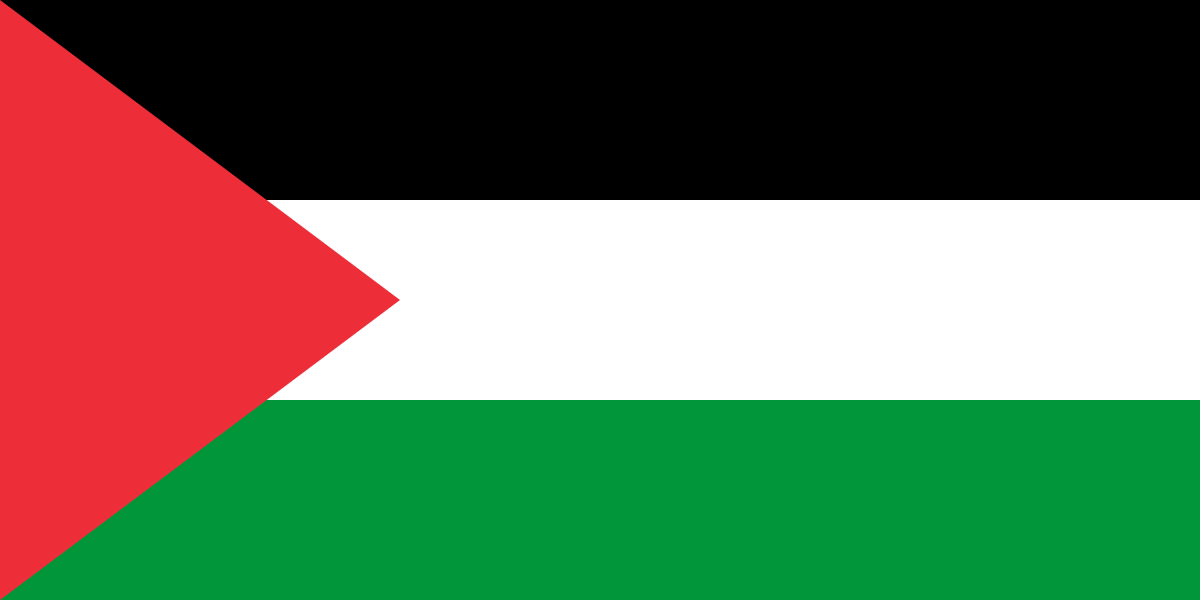
We meet today to consider the issue of strengthening the coordination of humanitarian and disaster relief
assistance, including assistance to the Palestinian people, who have suffered many decades of occupation and denial of the exercise of their inalienable rights. The international community has determined that assistance to the Palestinian people is its collective responsibility and a vital element of the efforts to achieve peace and stability in the region.
On behalf of the State of Palestine and the Palestinian people, I express our profound gratitude and appreciation to all peoples, Governments and international organizations that have provided financial support and other assistance through concrete programmes and projects providing significant development support to the Palestinian people. Such support also fosters the people’s resilience in adverse circumstances, providing hope and assurance that they are not alone and that the world supports them in their quest for a brighter future for their children.
Regrettably, however, the will and efforts of the international community are being undermined by obstacles raised by Israel’s ongoing occupation of Palestinian land, including in East Jerusalem, making the achievement of economic stability and sustainable development in occupied Palestine ever more elusive.
Since 1967, the Palestinian economy has been constrained and held hostage by the occupying Power, which has deliberately and continuously denied the Palestinian people access to resources and capacities. The situation has led to the harsh living conditions and ongoing injustice of the occupation under which the Palestinian people have suffered for over 46 years. At the same time, the international community has remained helpless vis-à-vis Israel, which considers itself to be above the law and continues to violate international law, the Charter of the United Nations and countless resolutions with impunity.
Those violations include, inter alia, the targeting, killing and injuring of Palestinian citizens; the arbitrary detention and imprisonment of thousands of Palestinian civilians, including children; the confiscation of lands; the destruction of infrastructure and property, including agricultural land and water wells; the demolition of homes; severe restrictions on the movement of persons and goods; the exploitation of our natural resources; the denial of access of Palestinians to 40 per cent of the lands of the West Bank and 82 per cent of the groundwater. All of this has undermined the Palestinian economy and prospects for reconstruction and development.
I stress that such illegal Israeli policies and practices are not random; rather, they are part and parcel of a systematic and deliberate colonial policy to ensure control over land and natural resources after the forced displacement of the Palestinian population from their cities, towns and villages. We are now witnessing an intensification of those policies and practices, including the confiscation of ever-greater areas of land to build illegal settlements and the construction of the apartheid annexation wall, particularly in occupied East Jerusalem and the Jordan Valley, which constitutes the largest agricultural area in Palestine.
Despite all of the obstructions and constraints, we have worked over the past decades in earnest and with dedication, hand in hand with the international community, to develop our national institutions, which now function as State institutions, as has been certified by all concerned. We have formulated policies based on modern scientific fundamentals, leading to significant achievements in various economic and social sectors, in implementation of our national plan for reform and development. Such achievements have been made possible in large part by significant international assistance and the will of the Palestinian people, who continue to strive for freedom, independence and a life of dignity, as do all the peoples of the world.
Today, our joint effort is facing a difficult challenge that truly threatens the accomplishments made so far. According to the recent report of the United Nations Conference on Trade and Development regarding the economic development of the occupied Palestinian Territory, gross domestic product (GDP) decreased by 6 per cent, after rising by 10 per cent in the years 2010 and 2011. The unemployment rate has climbed sharply to 28 per cent, resulting in an increase in the poverty rate. The structural problems generated by economic development have been exacerbated by the multiple severe restrictions imposed by Israel on the movement of persons and goods and on access to and the confiscation of land for the purpose of the construction and expansion of Israeli settlements, which has intensified in the past few months
The number of settlers illegally transferred by the occupying Power to the occupied Palestinian territory, including East Jerusalem, has increased to over 540,000 living in 150 settlements and in more than 100 settlement outposts. The number of Israeli military checkpoints and other obstacles to movement rose to 540, leading to the isolation of Palestinians in
numerous Bantustans, their separation from domestic and international markets, and the deepening inability of Palestinian producers to access production materials.
The industrial sector also suffers from the soaring cost of land arising from the artificial shortages created by Israeli practices that prevent any access by Palestinians to over 65 per cent of the land of the West Bank and deprive them of necessary infrastructure, thereby limiting the competitiveness of the industrial sector. Additionally, Israel continues to deny Palestinian farmers access to more than 35 per cent of the area of the Gaza Strip.
The difficulties faced by the Palestinian telecommunications and information technology sector is yet another example of the Israeli occupation’s impact on the Palestinian economy. They prevent Palestinian mobile-phone companies from building transmission towers in more than 65 per cent of the occupied Palestinian territory, forcing them to contract with Israeli companies, which leads to inflation and undermines the ability of the Palestinian companies to compete.
Israel, the occupying Power, also continues its illegal and inhumane blockade of the Gaza Strip, preventing the normal and free movement of persons and goods, including the obstruction of imports and the near-total obstruction of exports. The Gaza Strip’s share of the Palestinian economy has decreased to 25 per cent and its GDP has fallen by up to 40 per cent. Israel also continues to prevent Palestinian fishermen from accessing over 85 per cent of their fishing waters, which has aggravated living conditions in Gaza, where more than 44 per cent of the population suffers from food insecurity. In addition, the Israeli blockade continues to obstruct the implementation of the necessary infrastructure and water and sanitation projects. This not only undermines development efforts, but also leads to the creation of a catastrophic reality on the ground and aggravates the humanitarian crisis in the Gaza Strip.
The high rates of poverty and unemployment, especially among young people, put the Palestinian Government in the awkward situation of facing new financial difficulties as a result of the growing and inevitable need for Government employment and social spending. As a result of the deepening poverty, at least 1.5 million Palestinians face food insecurity, with serious potential health consequences and other
socioeconomic effects. According to 2013 figures from the Palestinian Central Bureau of Statistics, the poverty rate would have been 18 per cent higher than the announced rate of 26 per cent were it not for the social assistance provided by the Palestinian Government to the poorest segments of our population.
In addition to those challenges, there is the current crisis of the accumulation of Government debt to the private sector, which amounts to $570 million. This is compounding the crisis in the private sector, which is already being stifled by Israeli practices and the subsequent and growing inability to create job opportunities. The ultimate result is a gap in financing for the general budget amounting to $700 million in 2013. Furthermore, aid flows are declining and signs of instability are on the rise at the political and economic levels. In the light of the situation under the ongoing Israeli occupation, international assistance to the Palestinian people is absolutely necessary to halt the deterioration of the economic and living conditions in the occupied Palestinian territory.
We reiterate our gratitude to all the donors and countries that continue to extend generous support to the State of Palestine in the education, health, agriculture, industry and other sectors, and to the many United Nations programmes lending vital support to our people, including the United Nations Relief and Works Agency for Palestine Refugees in the Near East, which continues to provide essential assistance to Palestinian refugees. In that regard, we emphasize the importance of the United Nations Development Assistance Framework, which was signed in August 2013, in coordinating and enhancing development support to the Palestinian people and strengthening institutional capacity in line with Palestinian national priorities. Moreover, we reiterate our appreciation for the efforts of the Ad Hoc Liaison Committee for the Coordination of the International Assistance to Palestinians to ensure and coordinate necessary support to Palestine, and we recognize all other regional and international mechanisms in that regard.
We stress that reductions in assistance would directly and detrimentally affect the living conditions of the Palestinian people, and that such assistance will remain insufficient as long as Israel’s occupation and violations persist. They create a threshold that such assistance will never be able to surmount. The only remedy for all this is to end the Israeli occupation and colonial settlement scheme and to enable the
Palestinian people to exercise their inalienable rights, including their rights to self-determination, freedom, independence and genuine sovereignty over the entire territory of the State of Palestine occupied since 1967, with East Jerusalem as its capital.
Allow me to conclude with the words of the late former President of the Republic of South Africa, Nelson Mandela. You, Mr. President, and the Secretary- General represented all of us at his memorial service a few days ago. On the occasion of the International Day of Solidarity with the Palestinian People on 4 December 1997, Mandela, the symbol of international freedom and struggle, said:
(spoke in English)
“The United Nations took a strong stand against apartheid and, over the years, an international consensus was built, which helped to bring an end to this iniquitous system. But we know too well that our freedom is incomplete without the freedom of the Palestinians.”


The Chinese delegation thanks the Secretary-General for his reports submitted under agenda item 70, and takes this opportunity to express its sympathy and support for the Governments and people of countries affected by the humanitarian crises of the past year. We would like to convey our appreciation to the countries, international, regional and subregional organizations, and all other parties that actively participated and supported humanitarian relief activities, and to express our admiration for the hard work and dedication of humanitarian workers. We also appreciate the work carried out by the Office for the Coordination of Humanitarian Affairs and the Central Emergency Response Fund.
In 2013, humanitarian relief assistance continued to be in high demand around the world as a result of natural disasters, armed conflicts and protracted crises. Factors including climate change, population growth, the aftereffects of the financial crisis and fluctuations in food prices have aggravated the situation of developing countries and focused the attention of the world community on the international humanitarian situation. The problems related to insufficient capacity and resources facing developing countries are becoming increasingly pronounced.
The United Nations system and the international community must urgently find ways to further strengthen cooperation and coordination among humanitarian actors to ensure the sustained growth of humanitarian relief resources, improve aid effectiveness, effectively enhance the resilience of recipient countries, and promote a smooth transition from disaster relief to development. Against that backdrop, the international humanitarian system should further increase its efficiency and enhance coordination in order to make humanitarian response faster, more effective and more targeted. It should strengthen its analytical work and capacity-building with a view to mitigating or totally eliminating the negative effects of humanitarian crises. In that connection, I wish to emphasize the following points.
First, international humanitarian assistance must continue to follow the basic principles established by resolution 46/182; respect the sovereignty, territorial integrity and national unity of recipient countries as required by the Charter of the United Nations; avoid politicizing humanitarian issues; and maintain the demilitarization of humanitarian assistance. Practice has shown that only when these principles are observed and only when affected countries play a leading role in humanitarian relief activities can the resources and activities of the affected countries, the United Nations system and other humanitarian actors be effectively coordinated and and integrated, and long- term mechanisms for capacity-building in disaster mitigation, preparedness and relief become component parts of national sustainable development efforts.
Secondly, capacity-building for developing countries should be effectively enhanced by leveraging technological advances and partnership-building. In recent years, technological innovations have improved the means of humanitarian relief, increased the speed and effectiveness of emergency responses, and expanded areas of participation for larger numbers of humanitarian actors. At the same time, many developing countries continue to face severe constraints in terms of finance, technology and development capacities. The international community, acting on the basis of full respect for national conditions, should increase financial and technical assistance to developing countries and share related expertise, technologies and products so as to substantially boost the disaster risk management and general capacities of affected countries in disaster
prevention preparedness, mitigation, resistance and resilience.
Thirdly, the development efforts of developing countries should be strongly supported so as to resolve the root causes of humanitarian crises. In recent years, we have witnessed a large number of humanitarian crises caused by conflicts. Many internal and regional conflicts have grown out of acute economic, social and environmental problems. The international community should endeavour to tackle the root causes of humanitarian crises by fulfilling its commitments and to offer substantial assistance to affected countries in effecting a smooth transition from emergency relief to long-term development.
Fourthly, the unique central role of the United Nations in leading and coordinating humanitarian assistance should continue to be reinforced. Under the leadership of Under-Secretary-General Valerie Amos, the Office for the Coordination of Humanitarian Affairs (OCHA) has played an irreplaceable role in appealing for donations and in organizing and coordinating assistance. China appreciates the work of OCHA and hopes that the United Nations humanitarian system continues to enhance efficiency and transparency, increase the participation of Member States, build and improve cooperation partnerships led by Member States, and take measures to strengthen guarantees for the safety and security of humanitarian workers.
China welcomes the Secretary-General’s proposal, based on his five-year action agenda, to convene the World Humanitarian Summit in 2016 to exchange relevant expertise and best practices. We look forward to receiving further information on the process of preparing for the Summit.
China is among the countries that are most seriously affected by natural disasters. In our disaster prevention, mitigation and relief efforts, we have integrated advanced international ideas and practices, explored our own methods, and accumulated our own lessons learned. As a result, we have gradually built a relief and assistance system led by the Government and enjoying the participation of many parties concerned. At the same time, China is committed to sharing its experiences and successful practices with other members of the international community. Over the past three years, China has held 30 training courses and symposiums on disaster prevention and relief. For the first time, in June China co-hosted with OCHA a
workshop on disaster management and humanitarian relief in developing countries.
In November, the Third Plenary Session of the Eighteenth Communist Party of China’s Central Committee adopted the Decisions on Several Significant Issues Related to Comprehensive and In-Depth Reform, which laid out strategies for my country that included further improvement of our disaster prevention system. Going forward, China will continue to increase input in order to steadily improve and optimize its system for disaster prevention, mitigation and relief, and will take a more active and open approach so as to further expand international cooperation in that area.
International humanitarian assistance has always been an important component of China’s foreign assistance. In recent years, China has provided humanitarian assistance through bilateral and multilateral channels to countries in Asia, Africa, the Middle East and the Caribbean. In addition, China sent aid to the Philippines in the form of cash, medical teams, relief teams, hospital ships and goods in the aftermath of Typhoon Haiyan. With no strings attached, we have provided foreign assistance in the framework of South- South cooperation. In so doing, China has helped numerous developing countries to establish and improve disaster prevention, mitigation and relief mechanisms, strengthen their capacity-building. and build essential infrastructure. China will remain closely attentive to the international humanitarian situation, continue to make donations to the Central Emergency Response Fund and OCHA, and contribute within its capabilities to the international humanitarian cause.


Continuing man-made and other natural disasters and armed conflicts require effective and coordinated action on the part of the international community, placing heavy demands on the United Nations humanitarian machinery. The legal framework of United Nations activities in that sphere was created by the General Assembly in its foundational resolution 46/182 and later related decisions. We are firmly in favour of unswerving respect for the guiding principles of humanitarian assistance laid down in the provisions of the relevant United Nations resolutions. That is the only way to ensure the effectiveness of and increase the trust of Member States in the United Nations humanitarian sector as a reliable and well-functioning mechanism for providing humanitarian assistance and
for defending the flag that symbolizes the effectiveness of the Organization’s humanitarian assistance.
We consider it unacceptable for individual States or the international community to artificially inflame controversy around humanitarian issues and to manipulate humanitarian problems in order to advance political goals, particularly with respect to humanitarian access in armed conflict. That undermines the principles of humanity, neutrality and objectivity that must be observed when providing humanitarian assistance and not only does not help suffering populations, but rather exacerbates their situation.
We highly value the progress the Organization has made in reforming the effective provision of emergency response. We support the Secretary-General’s initiative to convene the World Humanitarian Summit in Istanbul in 2016. In the context of discussions on the further transformation in the humanitarian sphere, we consider it to be of prime importance to ensure that resolution 46/182 remains the foundation for humanitarian response while ensuring full respect for the sovereignty and territorial integrity of States and the underlying humanitarian principles. Only on that basis can the Summit be successful. We believe that the Summit will be an important opportunity for the exchange of humanitarian expertise and best practices among all humanitarian actors, and that its outcomes can influence future United Nations work to improve its emergency response. The process must be open, transparent and inclusive.
We would like to emphasize the leading role of the Governments of affected States in initiating the organization, coordination and provision of humanitarian assistance in their national territories. The role of the international community must be to provide assistance to Governments in overcoming the consequences of disasters. In that connection, strengthening close cooperation between United Nations humanitarian entities and Member States, which will also promote increased confidence in the Organization’s humanitarian work, is important. In our opinion, the foundation of a more effective response lies first and foremost in strengthening humanitarian capacities at the national and local levels. In that regard, we support the efforts within the United Nations system to improve countries’ mechanisms and instruments in the area of disaster risk reduction, including humanitarian preparedness and the development of early warning
systems and emergency response to natural and man- made disasters.
Russia has traditionally been an active participant in global efforts in the area of humanitarian assistance to afflicted countries, and we have continued to increase our contribution to international efforts to mitigate the impact of humanitarian disasters and catastrophes. In 2013 our country provided humanitarian aid and assistance amounting to about $45 million, both on a bilateral basis and within the framework of United Nations emergency relief appeals, to countries such as Kyrgyzstan, Tajikistan, Somalia, Syria and the Philippines, as well as to the Palestinian Authority and others.
The use of military resources is becoming a reality of United Nations emergency response operations today. Nevertheless, it is no accident that the practice of humanitarian assistance was conceived as a strictly civilian activity. We believe it essential to maintain its civilian character, and we support the use of military resources only as a measure of last resort. Overall coordination should be left up to national civil authorities and the United Nations, and specifically the Office for the Coordination of Humanitarian Affairs (OCHA). Our principled position is based on supporting the role of OCHA as a guarantor of the preservation of the civilian character of humanitarian assistance, carried out on the basis of the guidelines set out in the annex to the General Assembly’s fundamental resolution 46/182.
Russia considers the development of international cooperation on the issue of Chernobyl to be extremely important. We are grateful to the United Nations Development Programme (UNDP) for its contribution to strengthening that cooperation, as well as to other organizations, including the World Bank and the International Atomic Energy Agency (IAEA), that are working on implementing the United Nations action plan on Chernobyl to 2016. The Russian Federation has been working constructively with all its partners on the issues relating to dealing with the consequences of the Chernobyl disaster and has actively cooperated with Belarus and Ukraine. We participate in the work of the Chernobyl Forum. Russia’s Ministry for Emergencies has ensured Russian participation in the implementation of projects initiated by UNDP, the IAEA, the World Health Organization and UNICEF aimed at mitigating the negative effects of the Chernobyl disaster. We would like to thank our Ukrainian partners for their work in coordinating negotiations for the successful agreement
on this year’s draft resolution on the Chernobyl issue (A/68/L.21), which outlines the rough guidelines for developing international cooperation in this area in the long term.


We are nearing the end of the year, and looking back it is clear that 2013 has been a year filled with tragedy. We saw hurricanes, earthquakes, drought and hunger, violence and political instability. Too many have perished and too many have suffered. Those crises have had a devastating impact on communities and countries around the world. In a saying some attribute to the Dalai Lama, “No matter what sort of difficulties, how painful experience is, if we lose our hope, that is our real disaster”. Amid the tragedies of 2013, we were offered glimpses into the very best of humanity. Countless individuals courageously stepped forward; nations committed a wealth of resources; and the international community, led by the United Nations, united to assist the victims of tragedies.
This year we saw untold tragedies throughout the world. Just over a month ago, the most powerful typhoon ever recorded hit the Philippines, killing more than 5,000 people and leaving more than 4 million displaced. Today, aid efforts are slowly transitioning from the initial response phase to long-term recovery. With so many people affected, one of the major concerns is how to build resilience and prevent future disasters from causing devastation on such a scale.
In the Central African Republic, the death toll continues to climb as the nation plunges further into extreme poverty. A decade of armed conflict shows no sign of abating, and the nation’s volatile security remains an obstacle to the humanitarian response in some parts of the country. South Sudan, the youngest country in the world is working diligently to establish its sovereign democratic institutions while coping with critical humanitarian challenges.
And in Syria, no one with a conscience can stand by as innocent men, women and children continue to be massacred. This week marked the 1000th day since the beginning of the Syrian civil war. More than 120,000 people have been killed, millions have become refugees and poverty and hunger are on the rise. Israel is horrified by the pain and suffering that the Syrian people have endured. Our hand is extended to the Syrian people and we will continue to offer humanitarian and medical assistance to all those in need regardless of race, religion or gender.
One of the greatest imperatives of Jewish tradition is tikkun olam, the obligation of every person to make the world a better place. Israel has taken that message to heart. It serves as the core of our development agenda, and our close coordination with the United Nations Disaster Assessment and Coordination Team is very important to us. When tragedy strikes, Israel is often first on the ground and first to offer assistance. Ten days after an earthquake devastated the island of Haiti in 2010, 22-year-old Emmanuel Buso was pulled barely alive from the rubble of a building. The first faces he saw were those of the Israeli rescue workers who had flown across the world to save lives. Farmers in Senegal, India and China, young women in South Sudan, cardiac patients in Gaza and Iraq have all received vital assistance from Israeli specialists.
Most recently, Israel sent a team to Bogo City in the Philippines after the devastation caused by Typhoon Haiyan. In addition to 100 tons of humanitarian aid and medical supplies, Israel set up a state-of-the-art field hospital complete with a trauma unit and wards for children, obstetrics and ambulatory care. The hospital treated more than 2,600 patients, including 800 children. Medical professionals conducted dozens of life-saving surgeries and delivered 36 babies. In addition to treating patients, the Israeli team provided training to 36 local nurses and assisted social workers in a community dealing with terrible loss. They also restored a school in disrepair for 2,000 students, making it the first in the area to resume regular activity. The Secretary-General’s report recognizes that innovation and technologies are crucial to the increased reach and impact of humanitarian work. In keeping with that goal, the Israeli team also installed water-purification systems to ensure that typhoon victims had clean drinking water.
Israel’s relief efforts reflect a genuine commitment to healing communities through capacity-building and preparing them for the future with training and vital infrastructure. Israel also recognizes that close coordination between countries and non-governmental organizations (NGOs) is vital when responding to international disasters. From Hurricane Sandy to the Fukushima nuclear incident in Japan, the Israeli NGO IsraAID is the first to raise its hand to help, never shying away from a challenge where human life is at risk.
The greatest hurdle to humanitarian goodwill is the politicization of relief efforts, and unfortunately that is particularly true in the Middle East. It is
regrettable that one delegation today chose to ignore the growing needs around the world and instead focus on political accusations against my country. Contrary to what we heard earlier and to what has been said in other United Nations forums, Israel has a genuine interest in the well-being of its neighbours. Every month, trucks carrying hundreds of thousands of tons of goods — including food, medical equipment and construction materials — pass from Israel into the Gaza Strip. Last week alone, 1,052 trucks carrying over 22,000 tons of goods entered Gaza. As we speak, as of today Israel is notifying United Nations relief organizations of special procedures put in place to urgently facilitate the transportation of humanitarian aid, and in particular cooking gas, into the Gaza Strip to help those affected by recent flooding in the area.
Yet, in exchange for goods and goodwill, Israel is repaid with rockets and terror tunnels. Not long ago, the Israel Defense Forces discovered a 2-kilometre tunnel originating in Gaza and ending just outside an Israeli community. The tunnel was built by Hamas using 500 tons of cement. We can just imagine the number of schools, hospitals and homes that could have been built and the tangible benefits that were sacrificed in the pursuit of hostility.
Unfortunately, it has become clear that those who oppose peace have identified a win-win strategy. First, they victimize Israel by attacking on all fronts. Then, when necessary security measures are taken, they play the victim by crying out about a lack of humanitarian aid. Israel, however, is committed to making peace with the Palestinians. For this reason, we are seriously and genuinely engaged in peace talks, and recognize that any meaningful resolution requires both sides to make painful concessions.
It may be snowing in Israel today, but that is no excuse to freeze time in this Hall. The international community must resist the temptation to overlook Israel’s humanitarian relief efforts. It is time to stop pointing fingers and laying blame only at Israel’s doorstep.
Earlier, we heard a defeatist attitude in this Hall, telling us of a ceiling of development for Palestinians. There is no such ceiling. There is no ceiling to ability. There is no ceiling to entrepreneurship. There is no ceiling to assisting your own people. It seems that there is only a ceiling to courageous action and leadership. While ending the Palestinian-Israeli conflict will surely
play a major part in improving the lives of Palestinians and Israelis alike, it is also time to ask the Palestinians to be accountable for their actions and to promote a culture of education for peace.
The State of Israel recognizes that making peace requires courage. It is time for courageous Palestinian leaders to build their people up instead of tearing Israel down. It is time for the Palestinian leadership to stand up and take responsibility. John F. Kennedy once said that there are risks and costs to action, but they are far less than the long-range risks of comfortable inaction.
I would like to conclude by paying tribute to all the humanitarian workers and United Nations personnel who lost their lives in the service of those in need. Let us always be inspired by their compassion, dedication and kindness, and may their memory remain a blessing.


My delegation welcomes the opportunity to take the floor in this annual debate to recognize the vital work that the Office for the Coordination of Humanitarian Assistance (OCHA) is doing to improve the capacity and performance of humanitarian aid in field.
Twenty-two years ago, we established a model for the coordination of international humanitarian response that has dramatically evolved and, as one of the reports of the Secretary-General before us today observes, requires constant adaptation efforts. My delegation agrees that innovation requires the system to transcend the technological and experimental areas in order to have a decisive impact on the institutional and functional aspects.
While we cannot rely on unique or inflexible models, and since context must be taken into account at all times to define the response to any humanitarian crisis, situation or emergency, Mexico believes that if we are to have a system that functions efficiently, it is necessary to agree on certain indispensable minimum principles and characteristics that we all share. For that reason, for Mexico it is essential to pursue discussions
that allow us to achieve consensus on the humanitarian response system that we want, starting in 2016. The lead-up to the World Humanitarian Summit is an excellent opportunity to make a critical and constructive evaluation of the system under an inclusive, broad and transparent system of consultation and negotiations.
The future of the humanitarian system has been discussed in various forums. In many, there have been recurrent references to new donors, emerging donors and partners from the South. While we recognize the importance of that exercise, which seeks to identify new funding sources and the presence of new players, it is important to note that contributions to humanitarian activities are not only or primarily financial in nature. Mexico believes that we should abandon the current restrictive approach based on donors or humanitarian partners and move to one that values and puts in proper perspective the importance of making success stories known to the wider public, disseminate experiences and spread good practices in the humanitarian sphere. In Latin America and the Caribbean, for example, our intensive intraregional cooperation in disaster response must be taken into account in the exercises of reflection and analysis in the run-up to the World Humanitarian Summit. Based on the principles of dialogue and cooperation among countries of the South, we have established a network of organizations and forums looking to build a coherent and coordinated humanitarian space that is consistent with the needs of the victims.
On the other hand, the difference between effective and timely humanitarian action and late and inappropriate humanitarian action lies, in many cases, in the actors’ knowledge of local conditions and needs. For that reason, the humanitarian system should contribute to the continued development of capacities at the regional, national and local levels. Any humanitarian response will be stronger if it relies on guidance from the country’s authorities and on the involvement of multiple actors from the society in question — in other words, on strengthening local capacity and opening the system to the principal actors from the non-governmental and private sectors, in a framework of clear national and international rules.
Finally, we support an approach based on risk analysis prior to launching a humanitarian response. The Government of Mexico has set for itself the goal of working in prevention and preparedness through technology and early warning systems
with the support of local communities and strategic partnerships with the private sector and the scientific community, without losing sight of the fact that, even before humanitarian disasters occur, they must also address the socioeconomic causes that keep in place vulnerabilities.
I would conclude by noting that the humanitarian crisis situations and emergencies that beset the world require better organized, collaborative and increasingly efficient solutions. The international community has the opportunity to improve its ability to care and respond.


Allow me at the outset to thank the Secretary-General for his comprehensive reports. The reports on international cooperation on humanitarian assistance in the field of natural disasters, from relief to development, and on the Central Emergency Response Fund (CERF) provide a sound framework for further deliberation on issues of strengthening the coordination of United Nations humanitarian and disaster relief assistance.
My delegation wishes to associate itself with the statements delivered by the representative of Fiji, on behalf of the Group of 77 and China, and the representative of Brunei Darussalam, on behalf of the Association of Southeast Asian Nations.
I would also like to take this opportunity to express Malaysia’s appreciation to Ms. Valerie Amos, Under- Secretary-General and Emergency Relief Coordinator, and the United Nations Office for the Coordination of Humanitarian Affairs team for their leadership and unwavering efforts in coordinating the provision of humanitarian assistance to those who need them the most.
Resolution 46/182, on the strengthening of the coordination of humanitarian emergency assistance of the United Nations, adopted on 19 December 1991, was instrumental in establishing the fundamental structure of the coordination of United Nations emergency humanitarian assistance. Malaysia noted the progress made ever since in further improving humanitarian assistance and responses, including in reducing disaster risks and mortality. With the uncertainties caused by climate change, environmental degradation, population growth and rapid unplanned urbanization, disasters all around the world are anticipated to increase and no country is immune from the impact of such global environmental changes. Those uncertainties require us to be constantly alert and further enhance our
preparedness and responses, as well as to build a more inclusive global humanitarian system with stronger cooperation at the global, regional and national levels.
Malaysia welcomes the recommendations contained in the report of the Secretary-General on international cooperation on humanitarian assistance in the field of natural disasters, from relief to development (A/68/89). Malaysia fully supports the recommendations that Member States, the United Nations and humanitarian and development organizations, among others, build up national capacities and increase efforts to strengthen the resilience of people to endure, manage and maintain basic functions and structures, and bounce back from stresses and shocks; to establish partnerships in disaster risk management and work more strategically with a wide array of partners, such as the people affected, civil society, local Governments, the private sector, military actors, academia and the scientific community; and to coordinate their joint country-level efforts to support national disaster risk management processes. Some of the recommendations are in line with Malaysia’s continuous efforts, as Malaysia believes that building resilience over the long term, supported by development programming, is the responsibility of the Government. Malaysia also continuously encourages all Member States to work closely with the private sector, national institutions, academia and the non-governmental sector to ensure the appropriate implementation of plans for disaster risk reduction and building resilience. From the report of the Secretary-General on CERF (A/68/87), Malaysia notes that the Emergency Relief Coordinator allocated grants to 49 countries and territories — the highest amount disbursed in one year in the Fund’s history — due to the pressing needs for life-saving operations in the Syrian Arab Republic and neighbouring countries, and in order to further boost the Fund for other chronic crises in South Sudan, Pakistan and in African and Asian regions. Malaysia takes note of the report’s 19 recommendations to various stakeholders — namely, the Emergency Relief Coordinator, the CERF secretariat, the Office of the Controller, donors, agencies, including clusters-led agencies — to further improve its effectiveness, coordination and utilization of the Fund. Acknowledging that the CERF secretariat plans to implement all recommendations by the second quarter of 2013, Malaysia hopes to learn more about the progress achieved by the CERF secretariat, as well as the challenges it faces at this implementation stage. Let me now turn to the report of the Secretary- General on assistance to the Palestinian people (A/68/76). I wish to reaffirm Malaysia’s commitment to providing assistance to the Palestinian people to meet their needs. Malaysia reiterates its support for the important work done by the United Nations Relief and Works Agency for Palestine Refugees in the Near East (UNRWA) in assisting the Palestinian people in the occupied territories. The regular budget of UNRWA is crucial in order to enable the Agency to implement its activities effectively. Malaysia is concerned about the reported budget shortfall of $353.3 million, as that alarming financial situation has adversely affected the Agency’s ability to carry out its tasks in its various fields of operations, especially in the areas of education, health, social services, youth engagement, microfinance, and infrastructure and camp improvement for 5 million Palestinian refugees. Malaysia supports the continuous efforts of the Agency to mobilize contributions from the international community. In that regard, my delegation notes that UNRWA continues to examine closely its programmes, priorities and needs, and to explore further options to widen the donor base. Concerned that the level of response has stagnated, Malaysia appeals to Member States to continue to support the work of UNRWA by enhancing their contributions to the Agency, as it is crucial to the well-being of the Palestinian refugees. Malaysia has been a strong supporter of the Palestinian cause, and in that regard we have continuously supported the work of UNRWA. My delegation is pleased with the excellent relations between the Government of Malaysia and UNRWA. We warmly welcomed the visit of the Commissioner-General to Malaysia in September, which was a testament to the fact that Malaysia and UNRWA share the common goal of upholding the welfare of Palestinian refugees. In 2012, Malaysia contributed $1.2 million to UNRWA in response to the Agency’s appeal. This year, we are pleased to pledge a contribution of $250,000 to UNRWA to assist the Agency in helping the Palestinian refugees affected by the dire situation in the occupied Palestinian territory. Malaysia believes in the continuous efforts of the United Nations towards the realization of a just, lasting and comprehensive peace in the Middle East. Malaysia’s involvement in humanitarian and disaster relief assistance is based on a three-pronged approach — Government-to-Government, either through bilateral assistance or cooperation in multilateral forums, involvement through non-governmental organizations and people-to-people participation. At the multilateral level, Malaysia is one of the hubs that house the United Nations Humanitarian Response Depot (UNHRD) network at the Subang military base in Selangor, Malaysia, to which the Malaysian Government contributes $1 million annually in the form of a grant to cover the operating cost of the centre. UNHRD is a preparedness tool that supports the strategic stockpiling efforts of the United Nations and international, governmental and non-governmental organizations and that reinforces the capacity of the humanitarian community to respond to emergencies. It also serves its purpose as the first-line response to emergencies by having an efficient mechanism able to provide flexible, sustainable and scalable facilities and services for the timely and cost-effective delivery of items and assistance to humanitarian organizations in the Southeast Asian region. UNHRD was recently utilized in providing assistance to the victims of Typhoon Haiyan, which affected the Philippines, China and Viet Nam. The Government of Malaysia is of the view that dealing with disasters requires not only a holistic and full-spectrum approach at the response stage but also preceding from effective disaster risk reduction strategies. Notwithstanding the above, Malaysia will continue to extend its humanitarian assistance in terms of monetary or in-kind aid or the deployment of humanitarian and emergency relief teams within its means to disaster-affected countries. Malaysia hopes that such assistance would lessen the burden faced by some of the victims and assists them in their hour of need.
Mr. Tommo Monthe (Cameroon), Vice-President, took the Chair.


My delegation welcomes the report of the Secretary-General (A/68/84). We share its analysis of the humanitarian challenge and the recommendations. Switzerland wishes to underscore that it is extremely concerned over the alarming number of people affected by humanitarian crises, including the internally displaced, the majority of which are women and children. In the framework
of our debate, we would like to emphasize three points, namely, first, risk management and reducing vulnerability; secondly, the issues of the protection of and access to victims of armed conflicts; and thirdly, the initiatives of the Secretary-General to organize a world humanitarian summit.
With regard to risk management and reducing vulnerabilities, the recent Typhoon Haiyan in the Philippines reminded us that a large part of the world’s population is still exposed to natural disasters. Given the scale of those disasters, great international solidarity is needed in order to contribute to saving lives and to alleviating suffering. Such disasters also remind us that preventive action anticipating the risks of catastrophes makes it possible to mitigate their impact on populations. It has been shown that prevention pays off. On the one hand, it makes it possible to save lives and, on the other, allows for the better utilization of economic resources.
Despite that evidence, preparedness and the prevention of disasters are still not sufficient. The same is true with respect to available resources. We would like to recall that the comprehensive platform for disaster risk reduction in Geneva has confirmed the relevance and the need to adopt an integrated approach to risks, taking into account the many factors — economic, political, social, cultural, environmental and technical. Firm political leadership and strengthened cooperation with the States affected are essential elements to promote an effective approach to prevention and disaster risk management. Partnerships with non-traditional actors, such as with the private sector, are also oppportunities to strengthen and complement humanitarian assistance. Lastly, humanitarian assistance and development must go hand in hand in order to have a lasting impact on the resilience of communities.
As the Secretary-General’s report rightly points out, the post-2015 development agenda is an opportunity to align the planning and risk-analysis processes with humanitarian assistance and development. Particular attention should be paid to those issues at the Third World Conference on Disaster Risk Reduction, to be held in Sendai, Japan, in 2015, and at the two preparatory meetings in Geneva aimed at the preparation of a future framework to succeed the Hyogo Framework for Action.
Secondly, with regard to access to affected populations in areas affected by armed conflict, Switzerland fully agrees with the Secretary-General in
his analysis. Switzerland wishes to recall that rapid and unimpeded access to the victims is a basic principle of humanitarian international law. It is the responsibility of the parties to the conflict to guarantee access to the victims in order to ensure the safety of affected populations and not to hamper humanitarian assistance activities.
In that regard, it is essential that humanitarian actors be able to negotiate access with all parties to the conflict. In that context, we welcome the study carried out by the Office for the Coordination of Humanitarian Affairs and the Norwegian Refugee Council on the impact of counter-terrorism measures and actions mentioned by the Secretary-General in his report. Those measures should not hamper the efforts of humanitarian actors to gain access and provide assistance to conflict- affected populations or to extend or promote respect for international humanitarian law.
We are also concerned about the heavy burden placed on humanitarian personnel in carrying out their mission, which is to save lives. In particular, we are very concerned about the frequent attacks on and threats to medical institutions and personnel, which prevents the delivery of adequate medical assistance to the wounded and the sick. However, as the Secretary-General rightly notes in his report, humanitarian access should never be imposed by force. A clear distinction must be made between humanitarian actions and security operations. The principles of humanity, neutrality, impartiality and independence must be at the heart of all humanitarian actions regardless of the actors concerned.
Finally, Switzerland welcomes the Secretary- General’s initiative to organize the World Humanitarian Summit, to be held in 2016 in Istanbul. We are confident that the Summit will provide an opportunity to align that agenda and the delivery of humanitarian actions with the challenges of our times. The process that is now under way and will end with the summit is of crucial importance for a successful meeting. We believe that it is essential to rapidly mobilize the main areas of humanitarian expertise. It is a unique opportunity to bring together in an inclusive manner all the various actors concerned in the humanitarian action, that is, Member States, the populations affected, international organizations, the Red Cross and Red Crescent Movements, non-governmental organizations, experts, academia and the private sector.


Thailand aligns itself with the statement delivered by the representatives
of Brunei Darussalam on behalf of the Association of Southeast Asian Nations (ASEAN) and of Fiji on behalf of the Group of 77 and China.
At the outset, Thailand wishes to thank the Secretary-General for his informative reports and useful recommendations for improving coordination in times of crisis. We also express our appreciation to the relevant United Nations agencies, in particular the Office for the Coordination of Humanitarian Affairs, the United Nations Office for Disaster Risk Reduction (UNISDR), the Office of the Emergency Relief Coordinator and the Inter-Agency Standing Committee, for their commendable roles in coordinating humanitarian assistance and disaster relief and developing approaches aimed at achieving more effective humanitarian response and relief.
In our world today, we have witnessed a number of large-scale disasters of previously unimaginable severity. To reduce the impact of natural disasters, States should focus on and invest more in preventive measures and capacity-building in early-warning systems, preparedness, response and relief. Being in Asia and the Pacific, the most disaster-prone region in the world, Thailand considers preventing and preparing for disaster extremely important. For more than two decades, Thailand has been host to the Asian Disaster Preparedness Centre, which promotes disaster risk reduction in the region as well as advocating closer cooperation with other regional institutions.
We believe that when disaster strikes a State, its own Government has primary responsibility. However, the capacity of States to respond and relieve varies. Because of that, appropriate, adequate, timely and well- coordinated regional and international humanitarian responses are essential to supporting national efforts. Thailand therefore remains committed to enhancing international cooperation and partnership, whose efficiency has been proved, as can be seen from our concerted humanitarian efforts in the Philippines, Japan and Haiti, to name just a few, as well as at home in Thailand.
I would like to share some thoughts on the issues we believe to be important to advancing our common efforts in humanitarian and disaster relief assistance.
First, with the theme of the current session of the General Assembly being for “The post-2015 development agenda: setting the stage”, Thailand concurs with the Secretary-General’s recommendation
that risk management and building resilience to disaster should be integrated into that agenda. Disaster risk reduction, disaster management and resilience are intertwined and can contribute to long-term sustainability. In that regard, Thailand, with UNISDR and various other agencies, will host the sixth Asian Ministerial Conference on Disaster Risk Reduction in June 2014. The Conference will provide an opportunity for countries in the Asia-Pacific region to exchange views on disaster risk reduction, and will serve as a platform for dialogue among countries on the post-2015 Hyogo framework.
Secondly, Thailand wishes to emphasize that equitable, predictable and flexible funding for humanitarian assistance is another tool that could help ensure the timely and cost-effective delivery of humanitarian aid. We strongly believe that adequate funding could be made possible through enhanced partnerships and strengthened financial mechanisms. We are deeply concerned that humanitarian funding over the past two years has significantly decreased, as noted in the report of the Secretary-General. In contrast to that, since 2011 Thailand has tripled the amount of its annual standing relief fund to $1 million in order to respond to disaster adequately and rapidly. Last month, the Thai Government contributed $200,000 from the fund, as well as other in-kind donations, to the Government of the Philippines as part of our first batch of emergency assistance to the people affected by Typhoon Haiyan. Thailand reaffirms its support for the Central Emergency Response Fund and will continue its annual contribution of $20,000 to it. We would like to urge Member States that are in a position to do so to make more voluntary contributions to humanitarian funding.
Thirdly, Thailand shares the Secretary-General’s view that civil society and the private sector can play an important role in addressing humanitarian challenges. That view is also reflected in the Asia-Pacific Economic Cooperation (APEC), which encourages its members to implement community-based approaches and public-private partnerships in strengthening disaster resilience and developing disaster risk reduction processes and policies, especially for small and medium-sized enterprises and other vulnerable groups. As an active member of APEC, Thailand will host an APEC seminar on enhancing regional supply-chain resilience to disasters in June 2014, aimed at increasing awareness in the private sector and promoting public-
private partnerships and the effective use of business continuity plans.
Finally, Thailand shares the Secretary-General’s view that effective and efficient coordination between humanitarian and military actors in natural disaster preparedness and response remains a priority for the United Nations and Member States. That is based on our own experience in 2011, when Thailand was severely affected by floods. This year, with the Republic of Korea, we co-hosted the 2013 ASEAN Regional Forum Disaster Relief Exercise, strengthening the partnerships and networks that will improve ASEAN Regional Forum participants’ ability to rapidly provide coordinated and effective civilian-military disaster relief.
Humanitarian assistance has always been close to Thailand’s heart and an established part of our foreign policy. We have strictly upheld international humanitarian law, and we abide by the principles of humanity, neutrality, impartiality and independence. Thailand perceives humanitarian assistance and disaster relief as the noble work of noble people to serve others in desperate need. It therefore is not and never should be a variable factor in any political equation or for any other purpose.
Let me conclude by commending all the men and women on the ground, within and outside the United Nations system, who work devotedly and even risk their lives to provide humanitarian assistance around the world. Thailand reiterates its commitment to working shoulder to shoulder with the international community to enhance humanitarian coordination and efforts to save lives, alleviate suffering and maintain and protect human dignity during emergencies and in their aftermath.


I would like to thank the President for convening this important meeting. My delegation appreciates the proactive leadership and commitment of Emergency Relief Coordinator Valerie Amos to the international humanitarian effort, demonstrated most recently during the unfortunate Super-Typhoon Haiyan.
One of the reports of the Secretary-General (A/68/84) mentions that during 2012 a total of 310 large and small natural disasters took 9,300 lives and affected another 106 million people. The number of internally displaced persons nearly doubled compared to the preceding year. The economic costs escalated to a staggering $138 billion.
While human losses remained higher in developing countries, the industrialized countries suffered more in terms of economic costs. Asia was the hardest- hit continent, including by the floods in my own country, but undoubtedly the most tragic of the natural disasters — Typhoon Bopha in 2012 and, more recently, Super-Typhoon Haiyan in November 2013 — happened in the Philippines.
One of the strongest tropical cyclones ever recorded on our planet, Super-Typhoon Haiyan left behind heart-wrenching scenes of pain, misery, and unbelievable destruction to property and installations. It killed thousands of men, women and children and left nearly 10 million people homeless. The United Nations humanitarian system, particularly the Office for the Coordination of Humanitarian Affairs (OCHA), deserves our appreciation for effectively responding to this great catastrophe and extending humanitarian assistance to the people affected. Pakistan joined the international community in providing financial assistance to the Government of the Philippines. That notwithstanding, the challenge is gigantic and ongoing. The much larger task of rehabilitating the affected communities and reconstructing damaged infrastructure has just begun, and the Philippines requires the long-term assistance of the United Nations and the international community.
Super-Typhoon Haiyan once again underscored that natural disasters constitute one of the greatest challenges to human well-being and development. It highlighted the urgent need for strengthening international coordination in humanitarian relief assistance and the need to make advance preparations. It requires our collective response with greater coordination and precision, as well as more scientific research to better understand the dynamics of climate change and develop new technologies that would minimize the impact of natural calamities.
Pakistan has experienced large-scale natural disasters and major humanitarian challenges in the past few years. The destructive earthquake of 2005 and the massive floods of 2010 and 2011 affected the lives of millions of people. The people of Pakistan face those challenges with great courage and resilience, but that mammoth task could not have been accomplished without the timely and generous assistance of the United Nations system and the international community in effectively responding to that challenge.
The first-hand experience we accumulated in the process of those multiple catastrophes has taught us some valuable lessons, which include, first, establishing the necessary trust between donors, international humanitarian actors and the affected States; secondly, conforming humanitarian assistance with the needs and consent of affected countries; thirdly, tapping into local resources to save funds; fourthly, capacity-building for domestic preparedness; and fifthly, the accountability of all humanitarian actors, especially in the area of delivery on the ground. We must avoid the politicization of the humanitarian relief work; the safety and security of humanitarian actors must be ensured; and enhanced dialogue between OCHA and developing countries, especially among those countries that have experienced humanitarian emergencies, must be promoted. Finally, the reporting mechanisms of the United Nations should remain cognizant of the uniqueness of different situations.
Complex humanitarian emergencies in Syria, the Sahel and other parts of the world require constant international attention and intercession. We call on the international humanitarian community to continue to provide relief to the Palestinian refugees. In Pakistan, we still host more than 3 million registered and undocumented Afghan refugees. We hope that the withdrawal of United States and NATO troops from Afghanistan in 2014 will not lead to a decreased absorptive capacity for the return and rehabilitation of Afghan refugees. Pakistan has extended the stay of the Afghan refugees on our soil until 2015, but we will not be able to absorb fresh inflows.
Here at the United Nations, we have refocused attention on humanitarian access and protection issues and taken steps to make the international humanitarian system more inclusive, interoperational and effective. In that context, we have also supported efforts to make enhanced use of new technologies and innovation for humanitarian action to deal with the ever-increasing caseloads and emergencies.
The humanitarian landscape has rapidly evolved in the past few years as a result of the greater involvement of actors and new assessment tools being developed by OCHA. A proper understanding and the effective adoption of those new developments will require increased dialogue between Member States, especially developing countries, and OCHA, and a parallel dialogue among Member States themselves. We are pleased that OCHA has launched a close
dialogue with all relevant Member States through the ongoing dialogue on humanitarian partnership. We hope that this dialogue will come up with clear and cogent recommendations for the upcoming World Humanitarian Summit scheduled to be held in Istanbul.


Australia welcomes the forthcoming adoption of this year’s draft resolution on strengthening the coordination of the United Nations humanitarian assistance (A/68/L.24) as a further expression of the commitment of Member States to providing effective humanitarian aid for those who need it most.
The numbers of those affected by natural disasters and conflict are increasing exponentially. There are now three system-wide level 3 humanitarian emergencies. We thank the Emergency Relief Coordinator for her commitment to ensuring that the United Nations system responded to the demands of a level 3 emergency in the aftermath of Typhoon Haiyan in the Philippines. We know that the disaster was of an unprecedented scale, and the road ahead for those affected will be long and difficult. Australia will stand by the Philippines, our neighbour and friend, in the challenging days and months ahead, as we did in the immediate humanitarian response. In that spirit, we also look to the United Nations system to ensure well-coordinated humanitarian and development efforts in support of the Government and people of the Philippines.
With more than half the population of the Central African Republic in need of humanitarian assistance, we also welcome the declaration today by the United Nations of a level 3 emergency in that country.
The international humanitarian system, despite its best efforts, is being tested to its very limits. Member States must demonstrate strong leadership and assist the United Nations in delivering help in the most effective and efficient way possible. Last year in this forum, Australia expressed grave concern over the Syrian crisis. At that time, 4 million people were in need of humanitarian assistance in the country. One year on, 9.3 million people in Syria alone are in need of humanitarian assistance; 6.5 million of them are displaced. The immense suffering of the Syrian people is exacerbated by the denial of humanitarian access, particularly in besieged areas. Some 250,000 people are trapped in towns with limited or no access to foods medicines and basic services. Some towns have not received life-saving assistance in almost a year.
In the Security Council, Australia has been working hard, along with Luxembourg, to remove some of the obstacles to the delivery of human assistance throughout Syria. The presidential statement on the Syrian humanitarian situation (S/PRST/2013/15) was an important step forward. We are working with fellow Council members, key Member States and the Office for the Coordination of Humanitarian Affairs to ensure the implementation of that statement’s provisions. Facilitating safe and unimpeded access to those in need, wherever they are, is a responsibility of all Member States, and those who deliver the assistance must be able to do so without risking their own lives.
Australia will continue to insist that humanitarian access must never be arbitrarily denied, and we will continue to advocate for rapid, safe and unimpeded humanitarian access wherever it is needed. We are very pleased that this year’s draft resolution (A/68/L.25) recognizes the protection of affected populations as a fundamental part of humanitarian response, including the importance of respecting and protecting humanitarian and medical personnel.
Sexual and gender-based violence is one of the most atrocious aspects of emergency situations and prolonged crises. Our Foreign Minister is a champion of the initiative on the prevention of sexual violence, and we congratulate the United Kingdom for putting the spotlight on that important issue. Through our aid programme and diplomatic efforts, we are focusing on initiatives to end the culture of impunity and assist survivors.
The draft resolution’s recognition of the need to include people living with disabilities in disaster preparedness and response is also important. One billion people, or 15 per cent of the world’s population, have some form of disability. Their vulnerability becomes even more acute during emergencies. At such times, it is vital to safeguard the dignity and security of persons with disabilities and to ensure that they are free from violence, exploitation and discrimination. The system must do more for the most vulnerable.
Australia welcomes the efforts of the United Nations, under the leadership of the Emergency Response Coordinator, to improve leadership, coordination and accountability in the humanitarian system. Those efforts will continue to be critical to the effective delivery of humanitarian assistance.
Typhoon Haiyan highlighted the importance of effective disaster risk reduction. Disaster risk reduction is key to economic sustainability. We call for an inclusive process to develop a post-2015 disaster risk reduction framework. We look forward to that framework being people-centred, accountable and effective in building risk resilience. For the Asia-Pacific region, the most disaster-prone in the world, that will be vital.
In closing, let me emphasize the importance Australia attaches to the World Humanitarian Summit in 2016 and the need for it to have a strong focus on improving partnerships with emerging donors, civil society, the private sector, the scientific community and militaries. The Summit, to be held in Istanbul, will provide the opportunity to review the state of the global humanitarian system and agree a way forward to ensure that the system is able to meet the challenges of future crises.

We have heard the last speaker in the debate on this item for this meeting.
I shall now give the floor to those representatives who wish to speak in exercise of the right of reply. May I remind members that statements in the exercise of the right of reply are limited to 10 minutes for the first intervention and to five minutes for the second, and should be made by delegations from their seats.


I thank you, Sir, for giving me the floor in exercise of our right to reply to the contents of the statement by the representative of the occupying Power, Israel.
The representative of Israel should not forget that he represents an occupying Power that has occupied the land of another people and that has perpetrated the worst forms of terrorism and oppression against that very people, as attested by the fact that the United Nations adopts dozens of resolutions every year condemning that occupation and those practices. Before speaking of the humanitarian situation in this or that country, the representatives of Israel should educate themselves a little about the extent of the crimes they have perpetrated for so many years against the Palestinians, Syrians and Lebanese.
The reference by the representative of the occupying Power to the assistance provided by Israel to the Syrian people is a pack of lies devoid of any truth, except for the fact that Israel has furnished medical and
non-medical assistance to members of terrorist groups that are targeting Syria from the separation zone in the Syrian occupied Golan. Worse yet, after providing treatment and other forms of succour to terrorists, Israel has returned them to Syrian territories through the separation zone in the Golan. Such actions pose a threat to the international forces in the Golan area and represent a violation of the Disengagement Agreement, since the terrorists are thereby able to continue perpetrating their crimes and killing Syrians on Syrian land.
It would have been more appropriate for the representative of Israel, and indeed for Israel itself, to cease all forms of aggression and terrorism in occupied Arab lands before expressing such concern and horror about what is taking place in the world.

The Syrian representative laid the blame today on a long list of States and actors that in her country’s eyes are responsible for the humanitarian crisis in Syria. It is time for the Syrian delegation to hear and face some basic truths.
Syrian representatives do not need the detective skills of Sherlock Holmes to find clues to the fact that it is their own Government that is directly responsible for the deaths of over 120,000 of their own people. It is their own Government that used chemical weapons on their own people. It is their own Government, which they so proudly represent here, that has a starvation policy intended to break the spirit of anyone who might resist the tyranny of the Al-Assad regime, whether they are men, women or even children. It is that same Government that systematically orders the killing, torture and rape of its own civilians. It is that Government that has a policy to prevent access for medical aid and humanitarian assistance to hundreds of thousands of its own people. One need look no further than the leadership that the Syrian delegation represents to see who is to blame for the heartbreaking situation in Syria.
The representative of Syria has asked to speak again in exercise of the right of reply. I remind her that her second intervention should be limited to five minutes.
I thank you for giving me the floor again, Sir. I have no choice but to respond to the falsehoods and inventions presented by the representative of Israel. In reality, the representative of the Israeli occupying
Power is shedding crocodile tears with regard to the Syrian people and feigning concern over the painful crisis we are enduring.
I would like to briefly remind the representative of Israel that we, the Syrian people, have territories under occupation — the occupied Syrian Golan. This territory and its Syrian inhabitants have been under the yoke of Israeli occupation since 1967. Those Syrians for whose fate the Israeli representative feigns concern have lived under the yoke of Israeli occupation for over 40 years.
My country reserves its right to liberate the Golan and to restore it to our nation using all available means so long as Israel continues to reject peace and all that is needed to achieve it. We encourage the representative of Israel to inform the occupying Power he represents that there is strong international determination to implement the United Nations resolutions to bring an end to the tension in the region, to stop the conflict
and to return the occupied territories to their rightful owners.
Organization of work
I would like to draw the attention of members to the recess date of the current General Assembly session. Members will recall that at its second plenary meeting, on 20 September, the General Assembly decided that the sixty-eighth session would recess on Tuesday, 17 December. However, in view of the work that remains to be completed for this part of the session, I would like to propose that the Assembly postpone the recess date until Friday, 20 December 2013.
If there is no objection, may I take it that the Assembly agrees to postpone the date of recess to Friday 20 December 2013?
It was so decided.
The meeting rose at 6.05 p.m.