A/71/PV.56 General Assembly
The meeting was called to order at 10.15 a.m.
69. Strengthening of the coordination of humanitarian and disaster relief assistance of the United Nations, including special economic assistance Report of the Secretary-General (A/71/395)

This year marks the twenty-fifth anniversary of the adoption of resolution 46/182, entitled
“Strengthening of the coordination of humanitarian emergency assistance of the United Nations”. Its adoption was a landmark development for the United Nations in establishing guiding principles for the coordination of humanitarian assistance and in establishing the United Nations humanitarian architecture.
While this is a moment for commemoration, it regrettably takes place at a time of escalating humanitarian emergencies and needs. Ongoing conflicts and the devastating impacts of climate change, extreme weather and natural disasters are compounding and leading to the suffering of millions of people. The loss of life, homes, infrastructure, livelihoods and food security are having devastating consequences. Across our world, 128.6 million people are affected by conflict, violence and disaster, with almost 93 million people in need of protection and humanitarian assistance. Indeed, as we meet, the United Nations and its partners are launching the largest appeal in history for humanitarian funding, seeking $22.2 billion in 2017 to meet the urgent humanitarian needs of people across the globe. I would urge all Member States to contribute to that appeal.
As we look to address the enormous scale of the challenge facing us, we must strive to find new ways to sustain peace, resolve conflicts, combat climate change, better manage migrant and refugee flows and respond to escalating humanitarian needs. In that context, it is critical that the international community engage in multi-year planning, enhance coordination between the United Nations and other humanitarian actors on the ground, and make the best use of all available tools and resources at its disposal.
Fundamental to that effort is the recognition of the interlinkages between sustainable development, peace and security, human rights and humanitarian action, as well as finding new ways to bring these strands together and develop solutions. To that end, I will convene a high-level dialogue, entitled “Building Sustainable Peace for All: Synergies between the 2030 Agenda for Sustainable Development and Sustaining Peace”. That meeting will be held on 24 January 2017.
The implementation of the 2030 Agenda for Sustainable Development, the Paris Agreement on Climate Change and the Sendai Framework for Disaster Risk Reduction 2015-2030 must, of course, be prioritized for urgent action. At the same time, the New York Declaration for Refugees and Migrants and the commitments made at the World Humanitarian Summit must be seen as complementary to the Sustainable Development Goals (SDGs) and implemented without delay. Long-term solutions are needed to break the cycles of recurrent crises and conflicts that the world is currently caught in. If the SDGs are implemented urgently, effectively and at scale, they will eradicate extreme poverty, advance gender equality and protect our natural environment. Their implementation will meet humanitarian needs, as they will build peaceful and inclusive societies and combat climate change.
At present, more than 65 million people have been forcibly displaced as a result of armed conflict and persecution. Flagrant attacks against civilians, schools, hospitals and humanitarian and medical personnel continue, in violation of international human rights and humanitarian law. I strongly condemn such attacks. Political solutions for those crises must urgently be found.
We must also ramp up our action to address climate change. The science on climate change is unequivocal. We are currently on a pathway to a 3°C to 4°C increase, and the adverse impacts of that reality are undermining the ability of countries to achieve the Sustainable Development Goals. The consequences for humankind will be catastrophic if the current trajectory is not radically altered. As we all know, climate change is increasing the frequency and severity of natural disasters, including droughts, storms and floods with devastating consequences. Developing countries, particularly the least developed countries and the small island developing countries, are acutely vulnerable to the resulting human and economic loss. It is estimated that in 2015, 19.2 million people
were displaced by disasters associated with natural hazards. To put it simply, combating climate change is a humanitarian imperative.
It is only by working together that we will be able to improve humanitarian responses, reduce underlying causes, build resilience and ensure that development gains reach our most vulnerable people — the millions of people relying on us for humanitarian assistance. Collective responsibility and action are needed. I count on all member States to support those efforts.
I now give the floor to the Deputy Minister for Foreign Affairs of Belarus, who will introduce draft resolution A/71/L.28.


It is a great honour for me to present draft resolution A/71/L.28, entitled the “Persistent legacy of the Chernobyl disaster”. I should like, from the very bottom of my heart, to thank all delegations that have actively and constructively contributed to the consultations on the text of the draft resolution. I am pleased to note the positive nature of the draft resolution, reflecting the many well-wishers. We would particularly like to thank those countries sponsoring the draft resolution for their valuable support.
In introducing the draft resolution, we confirm the importance of international cooperation on Chernobyl under United Nations auspices, the aim of which is to surmount the long-term repercussions of the disaster. We also reaffirm the unique and leading role played by the United Nations in the coordination of efforts to meet the needs of the people in the territories affected. It has been 30 years since that enormous nuclear disaster occurred in the Chernobyl nuclear-power plant. However, millions of people in the affected regions of Belarus, Ukraine and Russia continue to reside in the contaminated areas. The area of radioactive fallout covers nearly one quarter of the territory of Belarus, where 20 per cent of our population resides.
Surmounting the repercussions of the Chernobyl disaster has become a top priority for our Government in Belarus. Notwithstanding the great progress in recovering affected regions, much remains to be done. The legacy of Chernobyl will remain relevant for the affected regions in the long term. This year, we have drafted a focused and more concise document, as compared with previous resolutions on the topic.
The thirtieth anniversary of the Chernobyl disaster coincided with the completion of the implementation of the United Nations action plan on Chernobyl to 2016. Therefore, our draft resolution emphasizes the need to continue Chernobyl-oriented cooperation under United Nations auspices after 2016, so as to achieve sustainable development in the regions affected through partnerships, innovation and investment.
The current draft resolution builds upon resolution 68/99 and the Minsk agreements, adopted at the international conference entitled “Chernobyl 30 years later: from an emergency to a revival and sustainable social and economic development of affected territories”, held on 25 April in Minsk. We note with gratitude the contribution of the international community, including the United Nations, to the recovery and development of the affected regions. A major role has, of course, been played by the United Nations Development Programme, which serves as the coordinator for all United Nations bodies and organizations engaged in the Chernobyl efforts.
Given the completion of the 2006-2016 Decade of Recovery and Sustainable Development of the Affected Regions, as proclaimed by the General Assembly (resolution 62/9), draft resolution A/71/L.28 calls on the United Nations Development Programme and the Inter-Agency Task Force on Chernobyl to continue to join the countries affected, in consultation with Member States, in drafting clear parameters for United Nations engagement in efforts for the recovery of the affected territories. The draft resolution underscores the need to monitor the situation in such regions. In order to assess the effectiveness of international assistance, the draft resolution acknowledges the need to enhance networking among specialized national scientific institutions aimed at studying the long-term medical, radiological, radiobiological and other consequences of the Chernobyl disaster.
Belarus has amassed unique experience in the work directed towards the recovery of the affected regions and the revival of socioeconomic activity with a view to setting the stage for ensuring safe residences for people in the affected regions. We should like to stress that we stand ready to safeguard and share the experience that we have gained in surmounting the repercussions of that man-made disaster, so as to ensure subsequent sustainable development.
A key symbolic component of the draft resolution is the proclamation of 26 April as International Chernobyl Disaster Remembrance Day. I hope that the Assembly recalls the fact that, during the commemorative meeting of the General Assembly marking the thirtieth anniversary of the Chernobyl disaster, Adi Roche, the well-known Irish political and social activist for Chernobyl children, spoke from this rostrum on behalf of the Belarus delegation (see A/70/PV.92). She dedicated 30 years of her life to helping children in countries far from her own. The credit for such a noble idea lies with her — the idea of proclaiming 26 April International Chernobyl Remembrance Day. We are very pleased that the idea secured support in the hearts of our partners.
We view the adoption by the General Assembly of the draft resolution on Chernobyl as a confirmation of the steadfast solidarity of the international community with the efforts of the countries affected, as well as a willingness to continue to ensure that the issue of Chernobyl receives due attention. We fully believe that such an important draft resolution will again be adopted by consensus.
I call on the representative of Slovakia to introduce draft resolution A/71/L.34.


I have the honour to introduce, on behalf of the European Union and its member States, the draft resolution entitled “Safety and security of humanitarian personnel and protection of United Nations personnel”, contained in document A/71/L.34.
In 2015, 109 aid workers were killed, 110 injured and 68 kidnapped in the exercise of their humanitarian work. While those figures are somewhat lower than the all-time high reached in 2013, they are still unacceptably high. The operating environment for humanitarian personnel and United Nations personnel has become significantly more dangerous, as demonstrated by the threefold increase in the number of direct attacks against United Nations premises and vehicles. However, the fortunately diminished impact of such attacks against the United Nations also illustrates the progress made in the security management system of the United Nations.
In this year’s draft resolution, we continue to recognize the diverse and multifaceted threats and different exposure that female and male humanitarian personnel, including non-governmental organizations, medical personnel and United Nations and associated
personnel, face in the overall deteriorating global security environment, and commend their courage for continuing to operate in such environments, often at great personal risk. We also strongly reaffirm that all deliberate attacks against civilians, including humanitarian or United Nations personnel, as well as attacks or repressions inflicted on medical personnel or their facilities, are clear violations of international humanitarian law, and that the perpetrators must be held accountable. This year’s draft resolution notably emphasizes the need to promptly, fully and effectively investigate such attacks.
Last but not least, through the draft resolution, we commend and encourage the continued improvements in and professionalization of the United Nations security management system. We commend the work of the United Nations Department for Safety and Security under the guidance of Under-Secretary- General, Mr. Peter Drennan, and welcome the integration of all security personnel of the Secretariat under his leadership. The draft resolution reiterates the strong mandate and additional guidance from the General Assembly for the essential work performed by Department for Safety and Security and the United Nations Security Management System more broadly.
The European Union and its member States firmly believe that it is our duty to acknowledge the commitment of humanitarian and United Nations and associated personnel and to support their work and do everything in our power to further enhance their safety and security.
I wish to warmly thank the many delegations that took part in the consultations, particularly those sponsoring the draft resolution, for their constructive engagement with a view to agreeing on a text that demonstrates our shared concern regarding the safety and security of humanitarian and United Nations personnel. I would also like to thank the valuable support of the Department of Safety and Security and Office for the Coordination of Humanitarian Affairs, which informed our discussions.
The humanitarian draft resolution has been and should remain genuinely consensual as a testimony to our shared humanity. We owe that to the people risking their lives on a daily basis in order to save the lives of others. They need the collective, unequivocal and unqualified support of the entire General Assembly.
I call on the representative of Sweden to introduce draft resolution A/71/L.32.


It is my great pleasure to introduce to the General Assembly the draft resolution entitled “Strengthening of the coordination of emergency humanitarian assistance of the United Nations”, contained in document A/71/L.32.
This year marks the twenty-fifth anniversary of the landmark resolution 46/182. Sweden has facilitated the negotiations on later versions of that resolution ever since its adoption. When the original resolution was adopted 25 years ago ,at 1.30 a.m. on 19 December 1991, spontaneous applause broke out in the Hall. People were seized by a sense of solidarity and of embarking on a new, common endeavour for the greater good of the world’s most vulnerable. Such is the power and potential of the United Nations at its best.
Against the backdrop of an unprecedented global humanitarian crisis, we should try to re-enact the same kind of urgency today as we present an updated and improved incarnation of resolution 46/182. Right now is also the time to remember that the goal of our efforts remains the same as it was on that day 25 years ago, namelt, to effectively come to the aid of desperate fellow men and women affected by crisis. That is why the concept of consensus and of a collaborative approach that goes above and beyond narrow national interests is so critical when it comes to humanitarian affairs.
The annual adoption by the General Assembly of the omnibus humanitarian resolution reaffirms the unique leadership role played by the United Nations in coordinating and responding to global humanitarian needs. Its adoption by consensus sends an important message of our collective dedication to respond to humanitarian needs and uphold international humanitarian law. This year’s draft resolution has a number of significant improvements, reinforcements and adaptations to the humanitarian realities of today. The end result is an ever-improved policy platform for global humanitarian action and assistance. Let me mention three significant developments.
First, this year’s draft resolution highlights the difficult situation faced by the record number of people who have been forcibly displaced by conflict and disasters and the urgent need to ensure protection and durable solutions for such populations.
Secondly, we have further strengthened the framework to prevent, respond to and prosecute acts of sexual and gender-based violence in humanitarian emergencies. We have also reinforced the role of women in humanitarian action, highlighting the importance of including women in decision-making processes at all levels.
Thirdly, this year’s draft resolution provides a stronger platform for humanitarian reform, humanitarian financing and collaborative efficiencies, highlighting the responsibilities of both donors and humanitarian actors. This year’s draft resolution also reflects the interdependency and criticality of partnerships among the various aspects of humanitarian aid. It highlights the importance of local actors, national efforts and linkages with the development sector aimed at meeting long-term humanitarian needs.
By these and other improvements we have taken a collective step towards a stronger, more effective and more inclusive humanitarian response system. We now count on the United Nations and its Member States — that is us — to implement those important changes. I am pleased to note that the number of sponsors has increased significantly compared with previous years, with strong cross-regional support for the important issues and objectives that we have outlined in the omnibus draft resolution.
I would like to take this opportunity to warmly thank and congratulate delegations for their active and constructive engagement with this year’s draft resolution and for supporting it through their sponsorship. I want to express special thanks to all of the humanitarian experts in the Hall for their excellent work, and I address a special word of gratitude to my own expert, Counsellor Ola Sohlström, for his excellent coordination of this draft resolution. We look forward to its formal adoption by consensus later on.
The strengthened draft resolution that I am proud to present here today is a result of the common dedication of many active Member States, small and large, of countries providing humanitarian assistance and those receiving it, of countries prone to disasters and those with lessons on how to avoid them, of countries that have suffered crises that have forced parts of their population to flee and countries generously hosting those who need shelter.
Such broad and diverse ownership demonstrates the truly global nature of humanitarian solidarity. It is
through our collective action and continued support for those reforms that we will succeed in improving the global humanitarian system and ultimately provide relief to those who need it the most.
I now call on the representative of Thailand to introduce draft resolution A/71/L.33.


On behalf of the Group of 77 and China, I have the distinct honour to introduce to the General Assembly the draft resolution entitled “International cooperation on humanitarian assistance in the field of natural disasters, from relief to development”, as contained in document A/71/L.33.
As we introduce the draft resolution again this year, the Group of 77 and China continue to reaffirm the importance of international cooperation in providing assistance to countries and peoples affected by natural disasters, in accordance with resolution 46/182 and the guiding principles for the strengthening of the coordination of the emergency humanitarian assistance provided by the United Nations system, while also recognizing that the States affected have the primary responsibility for the initiation, organization, coordination and implementation of humanitarian assistance within their territories.
New elements have been added to this year’s text so as to reinforce the essence of the draft resolution, in particular to seek strengthened support for capacity- and resilience-building in the affected States and communities, as well as the accelerated implementation of the Sendai Framework for Disaster Risk Reduction 2015-2030. It also seeks to promote inclusive participation and non-discrimination, and to enhance the leadership of those in vulnerable situations, in particular women and persons with disabilities, taking into account the fact that they often are disproportionately affected in humanitarian settings and have less access to humanitarian assistance in response to their differing needs.
In closing, the Group of 77 and China would like to thank the representative of Morocco for successfully coordinating the negotiations on this draft resolution. We also appreciate the constructive spirit and invaluable support shown by all Member States in the interest of arriving at this final text. It is our hope that the draft resolution will be adopted by consensus once again at this seventy-first session of the General Assembly.


The topic of my statement is the growing role played by Russia in the international system of emergency and humanitarian response and the prospects for its development at the present stage.
Humankind in the twenty-first century is encountering major threats of a global nature. The number and scale of natural disasters, earthquakes, floods, tsunamis, volcanic eruptions, hurricanes, droughts, wildfire and other disasters are growing. Climate change worldwide, ecological problems, urbanization and ageing infrastructure exacerbate those negative trends, which, in turn, heightens the scale of the losses and undermines the livelihoods of people in vast swathes of territory. Growing man- made risks cause grave accidents. The introduction of digital technology and modern-day communications into our lives poses additional dangers. The global terrorist threat is gripping more and more regions; armed conflicts are escalating; and extremism is being fuelled. That leads to large flows of migrants and grave humanitarian crises.
Practical experience demonstrates the fact that the repercussions of major disasters could be of such magnitude that even the most developed State would find it difficult to effectively and promptly deal with them alone, hence the issues involved in fine-tuning the international system of emergency humanitarian response take on particular significance. The Russian Federation is open to the world. We are willing to build relations with other States on the basis of trust, respect, equitable partnership and mutual assistance.
Russia acknowledges the need to build a fair international system, namely, a system based upon collective foundations for tackling international issues in line with the norms of international law, with a growing central coordinating role to be played by the United Nations. International cooperation aimed at preventing and overcoming emergencies, fires and disasters in present-day conditions fosters the bringing together of peoples and helps to normalize and harmonize relations among countries. That helps to build good-neighbourly relations and promotes the achievement of the Sustainable Development Goals.
Currently, in Russia, under the guidance of our President, Vladimir Vladimirovich Putin, there is active capacity-building of a unified State system for preventing and overcoming emergencies. Our Ministry
for Emergency Situations is at the head of that system and also deals with the crafting and implementing of State policy aimed at protecting secure and safe livelihoods at the federal, regional and local levels.
Our Ministry for Emergency Situations has, on a standby footing, a multidimensional, multi-purpose fire rescue department as well as others. They can work independently over lengthy periods of time, and they can tackle a host of issues, including rescuing people, extinguishing fires, addressing emergencies and providing assistance to victims. Our Ministry has its own multipurpose aircraft forces that can quickly deliver rescuers, doctors, equipment and humanitarian supplies, not only to all regions throughout the vastness of Russia, but to any part of the world. This enables wildfires to be successfully addressed and for the most complex emergency tasks to be tackled.
At the moment, only the units belonging to Russia’s Ministry for Emergency Situations have been accredited all over the world by the United Nations International Search and Rescue Advisory Group (INSARAG) as search-and-rescue teams that meet the highest international standards. We have also received accreditation from the World Health Organization for our international response through field hospitals and emergency medical brigades.
In recent years, Russian rescuers have carried out more than 450 international operations, including some 300 major, significant initiatives that met the needs of the international humanitarian community. During those operations we worked with rescuers and with specialists in crisis management from almost every country in the world. Millions of people in disaster zones received practical assistance from Russian rescuers. This year alone, the Russian Ministry for Emergency Situations has implemented more than 40 international humanitarian operations, helping over 10 countries in different parts of the world, and millions of people who suffered different forms of disasters received emergency assistance. In recent years, our Ministry has carried out humanitarian and rescue operations in Afghanistan, Israel, Italy, India, Indonesia, Iran, Iraq, Yemen, the Democratic People’s Republic of Korea, Lebanon, Macedonia, Nepal, Pakistan, Portugal and many other countries around the world.
Russia accepts international assistance to eliminate the consequences of devastating earthquakes and catastrophic floods and to fight forest fires on
its territory. This has enabled us to gain valuable experience, draw the necessary conclusions, modernize the Russian rescue forces and adopt their development plan for up to 2020 and beyond.
Furthermore, Russia is a reliable donor to the United Nations Central Emergency Response Fund. Our total annual contribution reaches over $10 million. We provide experts to the United Nations Disaster Assessment and Coordination Team. We sponsor the preparation and participation of experts from developing countries in field missions. Our Ministry for Emergency Situations actively promotes the methodology of INSARAG throughout the Commonwealth of Independent States. We implement capacity-building projects of the World Health Organization in the field of emergency preparedness.
The Russian Federation is becoming one of the largest donors to the United Nations World Food Programme, to the United Nations Development Programme and to the United Nations Office for the Coordination of Humanitarian Affairs. We are robustly engaged with the Office of the United Nations High Commissioner for Refugees as well.
Our Ministry for Emergency Situations is a strategic partner of the International Civil Defence Organization and we play a key role in its strengthening and development. In the last three years alone, Russia, through international organizations, funnelled more than $250 million to address the repercussions of humanitarian crises and to provide emergency food and medical and other aid to victims. We plan to continue this work. The Ministry actively shares best practices in addressing emergency management and prevention with our partners in the Shanghai Cooperation Organization, the BRICS nations, and the Asia-Pacific Economic Cooperation, inter alia.
We support the adoption by the General Assembly of the draft resolution entitled “Persistent legacy of the Chernobyl disaster.” Russia will continue its efforts to achieve socioeconomic development in areas affected by radioactive fallout. We shall continue to lend practical assistance to the victims and to share best practices in the elimination of the repercussions of similar man-made disasters.
President Vladimir Putin, speaking from this rostrum in September 2015, noted the need for the international community to provide comprehensive support for “countries in difficulties” (A/70/PV.13, p.
26). But he stressed that any assistance to sovereign States must not be imposed, it “must be offered rather than imposed, and only in accordance with the Charter of the United Nations” (ibid.). He said that “Russia believes in the huge potential of the United Nations” (ibid., p. 27) and called for leadership by shared values and for efforts to be pooled to tackle the problems we face.
The Russian Federation is willing to actively participate in the efforts to develop an international system of emergency humanitarian response under the auspices of the United Nations. In that regard, we propose that the following areas be addressed.
First, Russia supports the idea of strengthening and enlarging the central coordinating role of the United Nations in international humanitarian activities. At the same time, we must safeguard the core principles of humanity, neutrality, impartiality, independence, respect for sovereignty and the consent of recipient States. Those are universal ideals and bring together all countries worldwide. We believe that the consistent implementation of Sendai Framework for Disaster Risk Reduction 2015-2030 should be a key element for bolstering the international humanitarian system.
Secondly, the Russian Federation proposes the construction of a new economic model for the provision of international humanitarian assistance. We believe that the basis for the model must be that the countries that stoke conflicts must bear the main responsibility, including financial responsibility, for assisting refugees and forcibly displaced persons and for helping all social institutions to resume their operations.
We must also reduce administrative expenditures. Right now the share of these budgetary costs for humanitarian projects of international organizations could reach up to 70 per cent. It turns out that the international donor community largely feeds not starving populations, but rather individual charitable organizations. The need for international humanitarian aid has increased more than sixfold over the past decade. Expenditures to address natural disasters constitute not more than 5 per cent of the international humanitarian budget. All the other needs relate to conflicts and protracted crises, which have fuelled the rise in terrorism and extremism and caused major migration flows. We think that the settlement and prevention of conflicts at an early stage are the main way to reduce the burden on the international humanitarian system.
Thirdly, the Russian Ministry for Emergency Situations proposes that additional measures are taken to improve the quality of international assistance. We must provide targeted assistance and speed up our response, since this directly determines the effectiveness of the assistance. We must ensure the maximum autonomy of the international community’s response units so as to reduce the burden on affected States, which need to integrate international assistance into national efforts to deal with the repercussions of disasters. We must be willing to solve a wide range of humanitarian challenges and to achieve the ultimate goal, which includes saving human lives, rebuilding livelihoods and alleviating human suffering. In that regard, the Ministry deems that work to set uniform minimum standards and international accreditation for response units, beginning with INSARAG and the World Health Organization, is of growing importance. And there are good prospects here.
This year, Russia accredited yet another Siberian search-and-rescue unit and two field hospitals. We plan to persevere in this work in the Far East under United Nations auspices, including by lending assistance in the preparation and conduct of international certification for rescue and medical units of other countries. Our rescuer colleagues are called upon to actively engage in that work.
We must address the growing social demand to meet the basic needs of affected populations. Refugees and internally displaced persons need to be provided with adequate accommodation, including water supply, sanitation and disposal of household waste, and other assistance to meet the needs of people, especially children, women and the elderly. Such approaches will enable the building over the long term, under United Nations auspices, of a sound capacity for an effective international response on the basis of autonomous high-tech modules in different areas that can easily be integrated with one another and with the national efforts of affected States.
Fourthly, the Russian Federation deems it necessary to step up efforts to improve the international normative, legal and contractual frameworks. That would allow the rapid dispatch to disaster areas of United Nations certified international response units and humanitarian supplies. They must cover humanitarian assistance delivered under United Nations auspices, including prompt consent for operational permits for aircraft overflights, visa-free travel of emergency staff and
other specialists, streamlined customs procedures and unimpeded entry of canine teams, equipment and medicines. We propose creating a United Nations special expert group for the elaboration of such documents.
Fifthly, the Russian Ministry for Emergency Situations proposes that assistance be organized for developing countries to train national fire rescue forces and civil-protection services. We need to build their capacity to independently manage their own major emergencies and other disasters, especially at the initial stages. Instead of trying to provide for the millions of refugees in Europe, we need to create opportunities for them to remain in their homes, or at least in those areas where the cultural ambiance and the social and climatic conditions are similar to those they left. It is especially important for developing countries to acknowledge their role. They must not be passive recipients of international aid, but must actively participate in those processes.
We must develop emergency response capacities, but we must also improve the disaster prevention mechanisms. We see great promise in the risk- insurance programmes and in the introduction of new modern mechanisms of warnings and prevention in emergencies, fires and other disasters and to manage risks. We need to give greater attention to awareness- raising in public education, paying special attention to children, to women and to persons working in potentially dangerous sites, so that people are trained to deal with emergencies and disasters and a culture of healthy and safe livelihoods prevails.
Sixthly, Russia deems it necessary to fine-tune the coordination of international assistance. In that regard, the Russian Federation has put forward an initiative whereby the national and regional crises centres taking part in international humanitarian operations would come together in a single global network and work out harmonized operational standards. We believe that such a network would make for more effective cooperation in the exchange and analysis of information, especially in the first days and hours following the outbreak of a major disaster. That would be important in determining international assistance requirements and also in improving the quality and promptness of the decisions taken, in both the countries in need of assistance and those that provide assistance in disaster areas.
In this context, the Russian Ministry for Emergency Situations has built a national network bringing together
more than 90 crisis centres and more than 2,000 organizations engaged in monitoring and forecasting emergencies, wildfires and other disasters. We are building the technical capabilities of Russia’s National Centre for Crisis Management. Its organizational structure is being streamlined. The future global network of crisis centres for the coordination of humanitarian assistance across the Commonwealth of Independent States has established effective working contacts with the emergency services of border States, as well as the coordination centres of countries of the Shanghai Cooperation Organization, the European Union and the Association of Southeast Asian Nations.
The International Monitoring and Coordination Centre of the International Civil Defence Organization and the Emergency Relief Coordination Centre in Geneva of the Office for the Coordination of Humanitarian Affairs (OCHA) were set up and are operating with technical and financial support from Russia. We further need to implement initiatives under the leadership of the United Nations. As an initial practical step, we propose that a working group should be established under OCHA auspices to craft single protocols for the exchange of information, minimum standards and the accreditation of crisis centres, as INSARAG has done, for integration into the global network. The participation of the leading world Powers in the activities of this working group will help to promote the exchange of best practices, to fine-tune the entire system of exchange of best practices, to efficiently allocate roles among the major crisis centres and to further synergize efforts.
In recent years, the role of the Russian Federation has increased considerably in the international system of providing emergency assistance. Russia intends to continue to build its capacity in this sphere and to promote its participation in international humanitarian operations and projects, primarily those carried out under the auspices of the United Nations. We believe that our humanitarian action will help give hope and confidence in the future to ordinary people living on various continents. This will make our world a better, more comfortable, safer and kinder place.
In our opinion, owing to the magnitude of the humanitarian issues currently faced, the coordinating role of the United Nations must be strengthened significantly and the various efforts — including those of all the State institutions and civic associations of the developed and other countries — must be united. We
also need to actively engage all civic institutions and voluntary organizations in those efforts. Only through close international cooperation can we successfully tackle the major global problems we face in international emergency humanitarian response.
I now call on the observer of the European Union.

I have the honour to speak on behalf of the European Union and its member States. The candidate countries Turkey, the former Yugoslav Republic of Macedonia, Montenegro, Serbia and Albania; the country of the Stabilization and Association Process and potential candidate Bosnia and Herzegovina; as well as Ukraine, the Republic of Moldova and Georgia, align themselves with this statement
Today, the scale of human suffering is greater than at any time since the United Nations was founded. Currently, 130 million people are dependent on humanitarian assistance for their protection and survival from conflict and disasters; more than 65 million people have been displaced as they flee violence or persecution — the highest number since the Second World War; half of the displaced are children.
Today, armed conflicts are tearing apart vast parts of the world. Millions of people are exposed to violence and live with less than adequate water, food, shelter and health services. Millions of children are out of school. International humanitarian law is increasingly disregarded by parties to conflicts. Hospitals are being attacked, and patients, doctors, nurses and humanitarian workers targeted, often killed. Natural disasters continue to cause important human and economic losses. Since 2008, an average of 26.4 million people per year have been displaced from their homes by disasters brought on by natural hazards.
Today, humanitarian crises are a global phenomenon. They affect not only a large number of people, but their repercussions are felt way beyond the borders of affected areas. They are also much more protracted, meaning that it is not good enough to bring food, shelter and medical assistance to people; we also need to bring jobs, schools and hope. The gap between humanitarian needs and the resources and capacity of response continues to increase. The world today spends around $25 billion to provide life-saving assistance to millions of people devastated by wars and natural disasters. While this amount is 12 times greater
than 15 years ago, never before has generosity been so insufficient. Over the past few years conflicts and natural disasters have led to fast-growing numbers of people in need, and the funding gap for humanitarian action amounts to an estimated $15 billion.
The European Union and its member States are committed to assuming their part of the shared responsibility of the international community to save lives, alleviate suffering and preserve human dignity. In recent months, States Members of the United Nations have made great progress in Sendai, Addis Ababa, New York, Paris and Istanbul, where the first- ever World Humanitarian Summit was held. Important commitments were made by all relevant stakeholders. Now is the time to turn talk into action and to implement those commitments.
The EU and its member States welcome the powerful vision set out in the Secretary-General’s Agenda for Humanity (A/70/709), which should now progress and deliver concrete results in a number of key areas. We reaffirm our commitment to the humanitarian principles of humanity, neutrality, impartiality and independence and to preventing the politicization and instrumentalization of humanitarian aid. Humanitarian action cannot substitute for political solutions. Respect for international humanitarian law, including safeguarding humanitarian access and combating impunity for violations, should top the international agenda.
Protecting civilians and aid workers is a priority today, more than ever before. The entire international community needs to speak out and systematically condemn violations of international humanitarian law. Serious violations of international humanitarian law cause intolerable human suffering and aggravate humanitarian crises. When principled humanitarian action is respected by all parties to a conflicts, humanitarian workers can operate in even the most tense, dangerous and volatile theatres of war. When international humanitarian law and principled humanitarian action are not respected. then people are abandoned, the notion of protection loses meaning and humanity is flouted.
The EU and its member States will continue to advocate strongly and consistently for respect for international law, including international humanitarian law, refugee law and international human rights law. All parties to armed conflicts must comply with
international humanitarian law, including the principles of distinction, proportionality and precaution, as also reflected in customary international law. And in cases of serious violations of international humanitarian law, accountability is of the greatest importance. Full, prompt, impartial and effective investigations are needed, including through use of the International Criminal Court as a court of last resort.
We must continue our efforts to ensure that aid is more effective and more accountable with respect to the people it is intended to serve. The EU and its member States reiterate their continued commitment to putting people at the centre of their humanitarian action. We must work together to ensure that the humanitarian protection agenda and related action genuinely deliver to those most vulnerable and most in need. Women, children, older persons and people with disabilities are disproportionally vulnerable to the effects of disasters and conflicts. Humanitarian operations must take into account their specific needs and capacities and involve them throughout the response cycle.
Also, humanitarian aid and the humanitarian system overall must become much more efficient through improvements by all actors, including donors and operators. That is not about saving money, but about saving lives with dignity and being more effective. Donors should not simply give more, but give better, through greater flexibility, providing increased predictability and reducing as much as possible the administrative barriers. At the same time, aid organizations should reciprocate with greater transparency and cost-consciousness, by employing the best and most efficient aid modalities and by recognizing the comparative advantages of local, national and international implementing organizations for the delivery of services.
There must be coherence and cooperation among humanitarian and development programming and financing, in accordance with the respective mandates, aiming at common results in reducing need and vulnerability over multiple years and based on a common understanding of the context of each actor’s operational strengths and planning and programming processes.
Last but not least, we need to continue working to reduce humanitarian needs. The best way to deal with growing humanitarian needs is to address the root causes. That requires strong determination at the highest level of global political leadership to prevent
and resolve conflicts. We should not forget that humanitarian aid can never be the solution to a crisis. We urge the international community to work on political solutions to put an end to ongoing conflicts, which is the only way to put an end to the human suffering that follows in their wake.
There is also a need to increase investment in disaster risk reduction, especially in the most vulnerable communities and countries, integrating the latest scientific achievements to improve preparedness and response. We must continue efforts to build resilience, as underlined in the 2030 Agenda for Sustainable Development and the commitments of the Sendai Framework for Disaster Risk Reduction.
The European Union and its member States remain collectively the world’s largest humanitarian donor. Our citizens’ solidarity with those in need has withstood economic hardship in much of Europe. It is again being tested by the migrant and refugee crisis. We remain committed to providing protection to those fleeing persecution at home. We have stepped up humanitarian aid and civil protection resources to match the growing needs of refugees. We will continue to enhance our humanitarian aid to affected populations in third countries, based only on their needs and vulnerabilities. The objective of our humanitarian aid is to save lives and alleviate suffering, wherever it is found. We shall continue doing our part in a principled manner, and we count on others to continue or to start doing the same. The challenges facing the humanitarian community today are enormous. As the General Assembly, we need to contribute to that work through the resolutions we are adopting today — by further strengthening the agreed framework for humanitarian action in the successor draft resolution to 46/182, which was introduced and skilfully facilitated, sometimes under difficult circumstances, by one of our member States, Sweden (A/71/L.32); by strongly recalling the need to ensure the safety and security of humanitarian and United Nations personnel through the draft resolution introduced by Slovakia on behalf of the 28 member States of the European Union (A/71/L.34); and by better addressing the consequences of natural disasters, through the draft resolution introduced by Thailand on behalf of the Group of 77 and China and ably facilitated by Morocco (A/71/L.33). We thank Ola and Omar for their remarkable service. Allow me to emphasize that these and the other humanitarian resolutions adopted by the General Assembly here today have been and should remain genuinely consensual, as a testimony to our shared humanity. Twenty-five years after the adoption of resolution 46/182 by the Assembly, our united voice is as necessary as ever. In that spirit, facilitators have made their utmost effort to secure agreement in good faith and in a transparent manner, resolutions expressing our common views. We must support that effort. We owe it to the people who rely on humanitarian assistance. We owe it to the people who risk their lives on a daily basis in order to save the lives of others. They need the collective, unequivocal and unqualified support of the entire General Assembly.
Mr. Pecsteen de Buytswerve (Belgium), Vice-President, took the Chair.

Before giving the floor to the next speaker, I will give the floor to the representative of Greece on a point of order.


Regarding the way that the representative of the Russian Federation referred to the former Yugoslav Republic of Macedonia, my delegation would like to remind the Assembly that pursuant to Security Council resolution 817 (1993) and the subsequent General Assembly resolution 47/225, dated 27 April 1993, that country will be provisionally referred to for all purposes within the United Nations as the former Yugoslav Republic of Macedonia pending settlement of the difference that has arisen over the name of that State.


I have the honour of delivering this statement on behalf of the 10 member States of the Association of Southeast Asian Nations (ASEAN), namely, Cambodia, Indonesia, the Lao People’s Democratic Republic, Malaysia, Myanmar, the Philippines, Singapore, Thailand, Viet Nam and my own country, Brunei Darussalam.
We would like to thank the Secretary-General for his comprehensive report on the current status of the humanitarian assistance requirements, critical recommendations and the way forward in dealing with the numerous crises facing our world today. We note with concern the growing number of people who require assistance, and now more than ever, those unfortunate victims of circumstance need our help.
The ASEAN region experiences its share of disasters, and therefore disaster management remains a key priority for us. At the recent ASEAN Summit in Laos, ASEAN leaders adopted the Declaration on One ASEAN, One Response: ASEAN Responding to Disasters as One in the Region and Outside the Region. Its purpose is to achieve faster responses, mobilize greater resources and establish stronger coordination, so as to ensure a collective regional response to disasters. With its implementation based on the ASEAN Agreement on Disaster Management and Emergency Response, the Declaration further affirmed the ASEAN Coordinating Centre for Humanitarian Assistance on Disaster Management as the primary ASEAN regional coordinating agency on disaster management and emergency response, and endorsed the ASEAN Emergency Response and Assessment Team as the official emergency response resource of ASEAN.
The One ASEAN, One Response Declaration was recently put into action during the ASEAN Regional Disaster Emergency Response Simulation Exercise, jointly organized by Brunei Darussalam and the ASEAN Humanitarian Assistance Centre, which tested ASEAN communication capacities in coordinating assistance through the ASEAN Standard Operating Procedure for Regional Standby Arrangements and Coordination of Joint Disaster Relief and Emergency Response Operations in a table-top setting. The exercise also included testing the coordination between ASEAN sectoral bodies and the United Nations Office for the Coordination of Humanitarian Affairs (OCHA), which yielded valuable lessons on the inter-operability of the host country and international responders.
With regard to other aspects of ASEAN humanitarian assistance efforts, earlier this year we inaugurated the ASEAN Regional Mine Action Centre in Phnom Penh, which will serve as a regional centre of excellence in sharing expertise and best practices to address the humanitarian aspects of landmines and explosive remnants of war.
Those are just some of the examples that ASEAN has been working on to provide humanitarian assistance and disaster relief to those in need. Since establishing dialogue-partner relations in 2006, ASEAN and the United Nations have cooperated on a wide range of issues, including humanitarian assistance, which features significantly in the Plan of Action to Implement the Joint Declaration on Comprehensive Partnership between ASEAN and the United Nations
(2016-2020), adopted recently. ASEAN has also been actively aligning its disaster risk management efforts with the implementation, monitoring and reporting arrangements of relevant United Nation frameworks, including the Sendai Framework for Disaster Risk Reduction and the Sustainable Development Goals.
At a time when many are suffering from natural and human-induced disasters, ASEAN commends the efforts of the Secretary-General to convene the World Humanitarian Summit in Istanbul on 23 and 24 May, which brought Member States together in discussions on how to save lives, alleviate suffering and make progress on the way forward the Agenda for Humanity. In that vein, ASEAN strives to respond to disasters and adopt a programmatic and inclusive approach to institutionalize resilience by engaging peoples and communities, investing in joint preparedness, enhancing the role of regional organizations and networks and serving as a global nexus for knowledge-sharing and innovation exchange in that field.
In that regard, we look forward to working with the United Nations under the framework of the ASEAN-United Nations Joint Strategic Plan of Action on Disaster Management for 2016-2020 to support the ASEAN vision for disaster and climate-resilient communities, reducing disaster losses and to better respond to humanitarian disasters in a collective manner, as reflected in the Declaration on One ASEAN, One Response.
ASEAN remains committed to ensuring that our national and regional efforts continue to complement and contribute positively to the work of the United Nations, especially OCHA. Moreover, ASEAN will continue to do its best to strengthen and improve our coordination work and better prepare ourselves for any future humanitarian and disaster relief needs.


It is my privilege to deliver a joint statement on behalf of India and Sweden on the issue of humanitarian and disaster relief assistance. In the interest of time, I will read out parts of our joint statement.
India and Sweden have enjoyed a strong partnership on this joint initiative for the past several years, sharing a profound commitment regarding the international humanitarian response system. The magnitude, geographical expanse and frequency of humanitarian crises that require international assistance around the world are unparalleled. Their impacts are being felt far
and wide. The international humanitarian system is falling significantly short of the challenges posed at a time when humanitarian needs have quadrupled in just 10 years.
Humanitarian crises can have multiple causes, ranging from unexpected natural disasters, to armed conflicts that are frequently situations of civil wars associated with terrorism, to outbreaks of pandemics. They all require our common efforts to provide urgent relief for our most vulnerable fellow men and women.
The landmark collective will displayed last year in finalizing the 2030 Agenda for Sustainable Development and the Paris Agreement on Climate Change gives hope that the international community can rise to the challenges that are increasingly interconnected and have implications for us all. The Sendai Framework for Disaster Risk Reduction 2015-2030 is a significant collective effort to work towards the goals of reducing the impact on societies and economies, and building resilience through enhanced international cooperation. The World Humanitarian Summit held earlier this year was another significant initiative.
The United Nations humanitarian agencies, along with many other stakeholders, have been doing commendable work in addressing humanitarian needs in various contexts. However, attempts to address all of the different forms of humanitarian challenges with a single, unified approach would be ineffective and inefficient. The identification of complementarity and greater coordination among the various humanitarian agencies needs careful consideration. Humanitarian response efforts must be context-based and make use of local capacities. There is enormous potential in strengthening local actors, who are often based in civil society. We have witnessed their committed and sometimes heroic contributions to an effective and principled humanitarian response.
It is estimated that there are currently more than 20 million refugees throughout the world, three fourths of whom come from just 11 countries. Seven countries host more than half of all refugees. Nearly 90 per cent of all refugees are hosted in developing countries. That shows that there is a need for some course correction and reforms at the United Nations.
When global humanitarian needs reach unprecedented levels, the international community’s efforts to mobilize adequate resources must be redoubled. We underline the need for increased
flexibility for humanitarian actors to use the funding they receive so that every dollar is spent efficiently and according to humanitarian needs. We urge new donors to join the commendable efforts of existing ones. While adequate funding for the humanitarian response remains a significant challenge, an emphasis on longer- term planning is also necessary to help build resilience in countries where that is needed. Building resilience ultimately leads to a decreased need of large-scale humanitarian responses.
Issues of concern also include those relating to access for and protection of humanitarian workers and the more vulnerable sections of society, including women and children. Those require serious attention. We welcome the draft resolution on the safety and security of humanitarian personnel and protection of United Nations personnel (A/71/L.34), which is before us for adoption today.
In recent times, there have been attempts to blur the categories of those impacted by crises, such as refugees, migrants and internally displaced persons (IDPs). All those are distinct categories because of the reasons why people had to leave their homes. Every international framework drawn up by the international community is also distinct for different categories, especially refugees and migrants. International cooperation is required, in view of the implications of the cross-border mobility of such individuals. IDPs are and must remain the priority of national jurisdiction.
We must recognize that humanitarian crises become acute and unmanageable in situations in which levels of development are relatively lower, with limited capacities to respond, manage and rebuild. Improving development levels invariably leads to crises being easier to manage. Therefore, it is in everyone’s interest — including the providers of assistance, whether for development or for humanitarian relief — to invest in sustainable development at all levels. Stronger partnerships are needed within the United Nations family to approach humanitarian and development challenges coherently.
India has always been forthcoming, within its ability and national circumstance, in offering relief and reconstruction assistance according to the needs and requests of our friends and partners. In recent years, India has assisted in relief efforts in a number of countries, including, for instance, its neighbours that have been affected by natural disasters, such as Nepal, Sri Lanka, Maldives and Afghanistan, and those
further afield, such as the Philippines, Fiji, Yemen and Somalia. Those efforts have ranged from the immediate supply of relief materials to the emergency evacuation of very large numbers of persons of various nationalities from danger zones. Last month, with the United Nations Office for Disaster Risk Reduction, India co-hosted the Asian Ministerial Conference on Disaster Risk Reduction in New Delhi. In August India also hosted the meeting of the Ministers for Disaster Management, involving Brazil, Russia, India, China and South Africa.
Sweden remains one of the world’s largest humanitarian donors, contributing to nearly every humanitarian crisis response across the globe. As a strong advocate for a need-based, non-political humanitarian response system, Sweden is one of the single largest donors of unearmarked, core support to United Nations humanitarian organizations. Sweden is also a key policy contributor to humanitarian affairs and a dedicated advocate for international humanitarian law and unimpeded humanitarian access. As the current Chair of Call to Action on Protection from Gender-based Violence in Emergencies, Sweden promotes increased protection for women, girls, boys and men in humanitarian crises. Sweden is a long-standing contributor to humanitarian reform and a dedicated signatory to the “grand bargain” for humanitarian financing with a view towards more effective, transparent and inclusive humanitarian aid.
As we work towards improving the international humanitarian architecture, the salience of the purposes and principles of the Charter of the United Nations needs to be preserved. For assistance to be effective, it must be provided impartially, with the consent and at the request of the affected country. We therefore reaffirm that the primary responsibility for providing protection and humanitarian assistance in a crisis always lies with the affected State.
India and Sweden reaffirm that humanitarian principles and international humanitarian law provide the basis for humanitarian assistance. The essence of resolution 46/182 is the call for collective efforts by the international community and the United Nations in responding to humanitarian crises. We are committed to preserving and strengthening respect for and adherence to the humanitarian principles of humanity, neutrality, impartiality and independence. The United Nations should continue to play a central role in providing leadership and coordination in the
efforts of the international community to support the strengthening of response capacity in a timely and cost- effective manner.
Let us in the end not overlook the core of what we are talking about: human beings. The essence of humanitarian response is to save their lives, to alleviate their suffering and to maintain their dignity in the face of situations of natural disasters and violence. We call on all States to respect and honour international humanitarian law and humanitarian principles. India and Sweden remain committed to working with all parties to address the world’s humanitarian challenges in an effective and comprehensive manner.
I now give the floor to the Permanent Observer of the Observer State of Palestine.

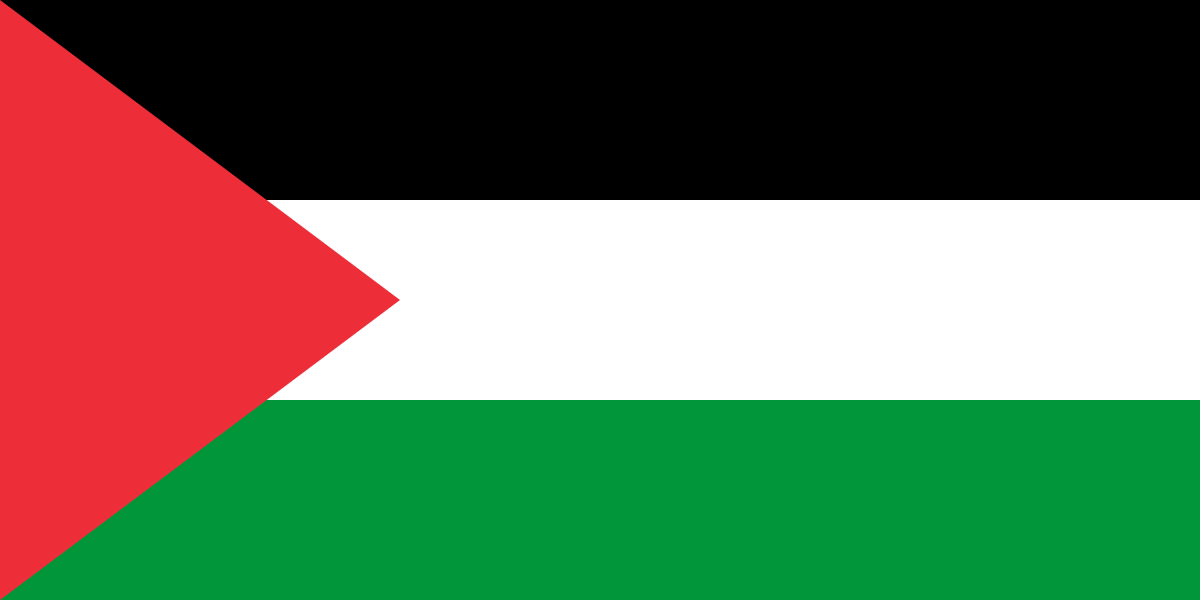
We have taken note of the report of the Secretary-General entitled “Assistance to the Palestinian people” (A/71/87), which covers the period from April 2015 to March 2016. I thank all those who contributed to preparing the report, which sheds light on the quality and quantity of the services and assistance provided by agencies and programmes to the Palestinian people. We agree with most of what the report says about the assistance provided by the United Nations to the Palestinian people, but we reaffirm the need to distinguish between rescue operations for the Palestinian people and activities aimed at the development to which the Palestinian people aspire. The aid in question is purely humanitarian and is aimed at dealing with urgent and imminent situations in a timely manner. Those operations therefore assure a minimum level of what is required for minimum comforts of human life.
The development process, however, is a cumulative process that lays the foundation for stability and humanitarian, social and political development and strives to ensure a stable and sustainable economic future in which quality of life is an objective, rather than a process that simply maintains life support, as is the case today. Development is a process of investing in the future whereby dividends increase with time and the entire society benefits. In that context, we extend our heartfelt thanks to the donors and the United Nations agencies and programmes for their assistance to the Palestinian people in general, and especially to those living under the Israeli occupation.
The Palestinian economy is suffering from deep-rooted structural defects because of the Israeli occupation, which has lasted for more than 50 years, as well as the policies and obstacles imposed by Israel, the occupying Power, that are impeding the development of the Palestinian economy. That is a clear violation of the 2030 Agenda for Sustainable Development:
“States are strongly urged to refrain from promulgating and applying any unilateral economic, financial or trade measures not in accordance with international law and the Charter of the United Nations that impede the full achievement of economic and social development, particularly in developing countries.” (resolution 70/1, para. 30)
We are not able to control the macroeconomic tools — monitoring and fiscal policy — which are the two main tools for managing the macroeconomy so as to reach a point of equilibrium. An example of the structural anomalies from which the already vulnerable Palestinian economy suffers that negatively affects its general performance is what has happened at the land crossings with the Hashemite Kingdom of Jordan during the past few days. Those crossings are completely controlled by Israel. Since 4 November, Israeli customs personnel have been on strike, which has meant that exports from Palestine to the rest of the world have been reduced as much as 90 per cent. That is a huge loss in accounting terms, and the economic losses are even greater.
In 2013, the World Bank evaluated the cost of the Israeli occupation of Area C, which constitutes about 61 per cent of the West Bank territory. That evaluation related to economic sectors, and the World Bank estimated that, if restrictions in Area C were lifted, the gross domestic product would increase by 41 per cent, and the fiscal deficit would be reduced by 60 per cent.
We are determined to establish a Palestinian development plan for the period 2017 to 2022 that will enable us to move from an emergency rescue situation to operations that will really permit development and make us more independent of donor funds. The national plan will accord with the 2030 Agenda for Sustainable Development. To ensure the success of the plan, we call upon the Assembly to work alongside us with a text that takes into account our particular situation as a people under occupation, particularly when the development programme is adopted. It is in that way that we can see
genuine development that will lead to a better future, with no one left behind.
We are determined to overcome all obstacles; that is very clear. For 23 years now, since the peace agreement, we have been able to establish governmental and non-governmental organizations capable of managing a modern State with great efficiency.
The private sector in Palestine has been able to build the model city of Rawabi, and Secretary- General Ban Ki-moon, who visited the town, praised it. We have a banking sector that is recognized for the excellence of its performance and services in our part of the world. We have also ensured good management of our agricultural resources, which have managed to reach European markets. In education, we provide free education services to the end of the secondary level. The illiteracy rate in Palestine is the lowest in the world. During the past three years, the Palestinian Government has increased revenue by 60 per cent and reduced the deficit by more than 40 per cent, despite the reduction of foreign aid by 70 per cent over recent years.
The United Nations Relief and Works Agency for Palestine Refugees in the Near East (UNRWA) plans to carry out a global study with the Economic and Social Commission for Western Asia, covering the Israeli occupation of the West Bank, including East Jerusalem and the Gaza Strip. The study will assess the economic losses caused by the occupation that are being experienced by the Palestinian people. I am sure that, when the study is finished and published, the results will be shocking, and the Assembly will realize that total sum being paid to the Palestinian people is simply the bill for the Israeli occupation.
What we have lost due to the Israeli occupation of the Palestinian people is much greater than what we have been offered by the international community in terms of assistance. If we were really able to access and develop our own economic resources, then we could really benefit from a strong, independent economy and not need all this international assistance.


Each year, we come together in this Hall to note the progress we have made in strengthening coordination in the humanitarian system. Australia welcomes once more the opportunity to add our voice and commitment to the important reforms generated by various forums in 2016, particularly from the World Humanitarian Summit onwards.
We support efforts to better use development approaches to improve resilience and reduce humanitarian need. We also encourage efforts to better support local leadership and context-specific responses wherever possible, including through targeted investments in preparedness. Those efforts have been very effective in reducing loss and damage in our region, such as in the responses to tropical Cyclones Winston and Pam in the Pacific.
The grand bargain to increase cash programming, multi-year collaborative planning and better prioritized needs assessments will drive efficiency and effectiveness, as will greater investments in gender equality and women’s empowerment, disability inclusiveness, innovation and private-sector engagement. But much of this is tinkering with, rather than transforming, the humanitarian system. We must go further in our ambitions for humanitarian reform. We must have a comprehensive approach to sustaining peace by the United Nations system, particularly by addressing the root causes of conflict to reduce humanitarian need. We must invest in sustaining peace, disaster risk reduction, better support for internally displaced persons and host countries and address climate change, if we hope to reduce spiralling humanitarian need.
The year 2016 has been an abhorrent reminder that the cornerstones of international norms and laws are being threatened and disregarded, and civilians are disproportionately paying the price. We must work to protect and uphold international law. Australia stands with Emergency Relief Coordinator Stephen O’Brien in calling on all parties to conflicts to respect and protect affected populations, in the name of restoring basic humanity. All parties are reminded of their obligations to protect civilians under international humanitarian law and human rights law. The arbitrary and wilful denial of humanitarian access is an international disgrace and can constitute a war crime.
We condemn the ever-increasing targeted attacks on humanitarian workers, those already risking their lives to save others. The indiscriminate attacks on civilians, sieges and the use of torture, rape and sexual violence are crimes and must stop. All too often women, children and persons with disabilities are disproportionately victims of those crimes. We condemn those acts in the strongest terms.
History has demonstrated time and again just how difficult it is to prevent cycles of violence in the absence
of justice. We must heed that lesson. Australia is committed to holding to account those most responsible for the crimes I mentioned. The International Criminal Court, as a court of last resort, can have a critical role to play in that regard.
The humanitarian system is being challenged on many fronts. With unprecedented need and finite resources, it is a matter of reform or fail. The World Humanitarian Summit reminded us that people must be at the centre of humanitarian action and that a holistic approach in the humanitarian, development and peacebuilding ecosystem is required to address the unprecedented humanitarian demands we face today. We must ensure that humanitarian and development investments deliver better results to people in order to more effectively support communities.
The international community made significant commitments to address the root causes of crises and displacement through the New York Declaration for Refugees and Migrants and future global compact (resolution 71/1 and annexes), the Paris Agreement on climate change, the 2030 Agenda for Sustainable Development and the Sendai Framework for Disaster Risk Reduction 2015-2030. In a year of massive global displacement, increasing disasters linked to climate change and growing inequality, those frameworks have the potential to address the major challenges we now face.
We should all be able to look back on 2016 as the year we championed a reformed humanitarian system — one with a common humanity at the centre, backed by substantive action and political will. Millions of suffering people depend upon us. We must now deliver on those commitments. Australia stands ready to heed that call, and we ask all Member States to join us.


Humanitarian assistance must be provided at the request and with the consent of the affected State, since the latter plays the main role in coordinating all humanitarian activities in its territory. In that respect, Cuba recognizes the full validity of the guiding principles of humanitarian assistance endorsed by the General Assembly in resolution 46/182. It is the obligation of Member States and the United Nations to ensure that humanitarian assistance is provided in accordance with the principles of humanity, neutrality and impartiality.
We therefore reject the double standards that hide under the noble mantle of humanitarian efforts.
The Charter of the United Nations must be respected, and its purposes and principles must not be violated, distorted, restricted or subjected to conditions when humanitarian assistance is provided. In that regard, we oppose the endorsement of concepts that have not been agreed and are ambiguous in order to justify actions that are contrary to the principles of sovereignty, territorial integrity and non-interference in the internal affairs of States.
To the human and material damage caused by natural disasters, we must add those disasters with direct human causes, such as hunger, poverty and war, which place billions of people in extremely precarious situations throughout the world.
As an urgent matter, we must strengthen international cooperation programmes and transfer resources, technologies and knowledge to developing countries in order to complement their national capacities in the face of humanitarian emergencies. That international cooperation must be carried out in accordance with the principles of the Charter of the United Nations and without preconditions.
Cuba believes that humanitarian assistance in emergency situations must contribute to the sustainable development of the affected State. It must therefore also address the root causes that limit the ability of countries to prevent, mitigate and address the various humanitarian emergencies in their territories, especially those generated by inequality, the unjust international economic order, poverty, underdevelopment and the instigation and maintenance of armed conflicts from outside. It is also important to ensure that responses to humanitarian emergencies do not have a detrimental effect on the commitments made with respect to activities, programmes and resources earmarked for development.
The Cuban Government’s experience and central role in initiating, organizing, coordinating and delivering humanitarian assistance to countries affected by natural disasters are well known. Our experience demonstrates the need for a civil defence system that integrates all of a society’s institutions and resources for the protection of individuals, their assets and the socioeconomic infrastructure. Cuba has been working on updating institutional and normative frameworks for disaster-risk reduction at the local level as part of
improving its national and local early-warning systems and organizing response and recovery actions.
The benefits of our experience are tangible. In spite of the substantial material losses left in the wake of the recent passing of Hurricane Matthew, our country is going about its recovery efforts calmly and proudly, strengthened by the knowledge that we have not had to mourn the loss of a single human life. We are thankful for the solidarity and assistance that we received.
In connection with subparagraph (b) of agenda item 69, my delegation would like to reiterate its unconditional support for the heroic efforts of the Palestinians in their fight to exercise their inalienable right to self-determination. The Palestinian people is the victim of one of the longest-lasting humanitarian emergencies the Organization has known, and therefore requires require particular attention in this debate. It is imperative to redouble efforts to end the injustice committed against that people and to resolve the question of Palestine in all its aspects, including by providing a just solution to the difficult situation of refugees.
Cuba reiterates its willingness to continue to extend its support, in solidarity and with impartiality, to countries affected by natural disasters or other emergencies.


At the outset I wish to extend my thanks and appreciation to the President of the General Assembly for convening this meeting to shed light on United Nations efforts to strengthen its coordination of humanitarian and disaster relief assistance, particularly in the light of the escalating humanitarian needs and suffering.
In recent years the world has witnessed protracted crises, acts of violence, armed conflicts and numerous natural disasters. In 2015, 346 natural disasters were recorded, each causing thousands of victims. Their repercussions affected millions of persons, according to the report (A/71/395) of the Secretary-General on the agenda item before us. The complex conditions gave rise to untold humanitarian suffering and numerous challenges, evident in the unprecedented levels of forced displacements and the growing numbers of persons in need of humanitarian assistance. That situation has overwhelmed the United Nations and all partners concerned in their efforts to deal with developmental and humanitarian challenges, coordinate humanitarian
action and extend assistance, particularly given the lack of requisite funding.
We would like to acknowledge the very important role played by the Central Emergency Response Fund in meeting growing humanitarian needs. We take this opportunity to note that the State of Qatar has contributed to the Fund, which is one of the most successful tools of global humanitarian funding. Given the pressing need to meet the unprecedented level of humanitarian needs, the World Humanitarian Summit, held in Istanbul, took on a unique character. It was an important opportunity to press ahead with finding solutions to humanitarian crises, in the light of the joint responsibilities of States. In that regard, we draw attention to the conclusions of the negotiations leading to the Summit, concerning a new method of work that meets people’s needs as a means to curb risk.
The State of Qatar has always interacted and cooperated with the international community in overcoming all the obstacles to a stable and safe world, a world that benefits from internationally agreed commitments, particularly the Sustainable Development Goals and the principle of leaving no one behind. We wish to emphasize that there is no alternative to cooperation and joint action if humankind is to enjoy the rule of law, respect for human rights and reduced vulnerabilities and risks. In keeping with the principled tenets of our domestic and foreign policies, and given the pressing need to ease the suffering of millions of people, we have been at the forefront of States in promoting international peace and security through our diplomatic efforts and model relations — regionally and internationally — to settle disputes peacefully, particularly in the Arab region.
We are cooperating with United Nations agencies in the Gaza Strip, as we believe in the importance of addressing the humanitarian situation in Gaza and achieving peace. We will continue our humanitarian efforts to rebuild the Gaza Strip and achieve stability there. In that connection, the schools of Sheikh Hamad bin Khalifa Al Thani were recently set up in Hamad city, in southern Gaza. We emphasize the need for integrity and impartiality. We shall remain a truly reliable partner in humanitarian response efforts, with a view to reversing unacceptable trends and improving the livelihoods of people throughout the world.


The United States wishes to reaffirm its strong support
for the United Nations leadership in humanitarian assistance. We will remember 2016 for the renewed commitment to efficient, effective and well-coordinated humanitarian response that Member States and United Nations humanitarian leaders made during the World Humanitarian Summit, the General Assembly high-level meeting on addressing large movements of refugees and migrants and the leaders summit on refugees.
In the New York Declaration for Refugees and Migrants, Member States renewed their commitment to protecting and assisting refugees and vulnerable migrants in a period of unprecedented displacement. We welcome the Declaration’s call for the development of global compacts on refugees and safe, orderly and regular migration. However, as we look back on 2016, we are also haunted by our inability to bring conflict to an end and to reach people in need in places such as Syria, Yemen, the Lake Chad basin and South Sudan. At the end of 2015, a total of 65.3 million people were displaced as a result of violence, conflict or persecution, compared with 59.5 million just 12 months earlier.
In that context, humanitarian assistance that allows us to address basic needs and protection, including mitigating risks associated with human trafficking, has never been more important. Indeed, as the Syrian regime continues to prevent thousands of its citizens from accessing humanitarian assistance, we are reminded of the limitations of our efforts in the absence of respect for international humanitarian law.
The United States welcomes the adoption later today of the omnibus humanitarian draft resolution (A/71/L.32), as well as the draft resolution on the safety and security of United Nations humanitarian personnel (A/71/L.34) and the draft resolution on natural disasters (A/71/L.33), and is pleased to co-sponsor them. The omnibus text represents a positive step forward by strengthening the humanitarian community’s ability to better address the humanitarian assistance needs of more than 100 million people around the globe. It also demonstrates the determination of many Member States to turn words into action, including the commitments made at the World Humanitarian Summit.
The omnibus draft resolution calls on the United Nations to improve humanitarian coordination through the development of prioritized humanitarian response plans, based on needs assessments. It calls for increased transparency, the reduction of duplication in the system and the strengthening of partnerships with
national and local responders. It also advances new ways of working through important language about reducing the humanitarian and development silos, and, for the first time, it stresses the importance of United Nations efforts to combat sexual exploitation and abuse committed by aid workers.
I would like to draw attention to the omnibus draft resolution’s focus on the needs of internally displaced persons (IDPs), who represent over two thirds of those forcibly displaced worldwide. The text renews the call on Governments to uphold their responsibility to provide protection and assistance to IDPs and refugees, critically define durable solutions and further strengthen international response efforts. It also draws our attention to the importance of supporting communities that host IDPs and refugees. The omnibus draft resolution affirms that international humanitarian law provides for the protection of civilians in all armed conflicts, international and non-international. We regret that Syria broke silence after the extensive, inclusive and transparent negotiations had ended — negotiations in which its delegation participated. Serious last-minute obstructionism is inconsistent with the spirit of open debate and compromise, which is a long-standing part of this organ’s working methods, at a time when Syria has already lost its credibility by waging a campaign that includes sieges, the blocking of humanitarian aid, the indiscriminate bombardment of civilian areas and the use of barrel bombs.
We also recognize the vital contribution of the safety and security and natural disasters draft resolutions to the overall framework for the delivery of humanitarian assistance. Risks to the safety and well- being of the brave men and women working on the front line to assist people in need, particularly local and national staff, have continued to increase, and 2016 has been marred by attacks on relief convoys and medical facilities, as well as brutal acts of sexual assault on aid workers.
In that context, United Nations efforts to protect front-line relief workers remain critical, and the focus of draft resolution A/71/L.34 and its addendum 1 on the responsibilities of all parties to armed conflict under international humanitarian law to provide protection has never been more important. Similarly, we renew the commitment of the United States, in close partnership with the international community, including the United Nations system, to working with affected communities and civil society to prepare for, respond to and reduce
the risk of natural disasters through our humanitarian and development assistance. We welcome the adoption of the draft resolution in that regard later today.
The United States looks forward to working with the United Nations and Member States in 2017 to further improve humanitarian planning and assistance, and to work tirelessly to uphold international humanitarian law in all armed conflicts. As we reflect on the immense need for financial support, outlined in the global humanitarian appeal for 2017, we urge all Member States to contribute generously to United Nations humanitarian appeals and agencies, as well as to other key international humanitarian organizations. We thank Secretary-General Ban Ki-moon for his extraordinary leadership on humanitarian affairs during his tenure, and we look forward to supporting António Guterres as he opens a new chapter in the United Nations history of offering hope, protection and assistance to those in need.


Intertwined traditional and non-traditional security threats, protracted and regional conflicts in some places, natural disasters, climate change, food crises, refugee and migrant issues and other global challenges have come to the fore in recent years, resulting in a generally grim international humanitarian situation. It is vital that the international community be united, build consensus, address both the symptoms and underlying causes of problems and take effective measures to respond to that increasingly grave humanitarian situation. In that connection, China would like to emphasize the following points.
First, respect for international law and the norms governing international relations is the basic precondition for effective humanitarian assistance. Such assistance must abide by the Charter of the United Nations, while strictly adhering to the principles of humanity, neutrality and impartiality, and must respect the sovereignty, independence, territorial integrity and national unity of recipient countries. It must comply with international law and the laws of host countries. The international community should make every effort to resolve disputes peacefully through political means, avoid politicizing humanitarian issues and uphold the non-military nature of humanitarian assistance.
Secondly, assisting developing countries in their development is a fundamental way to reduce the need for humanitarian aid. Many problems in the world today
are rooted in poverty and underdevelopment and should be resolved fundamentally by promoting development. While seeking to respond effectively to short-term humanitarian needs, the international community should jointly implement the 2030 Agenda for Sustainable Development to achieve development. Humanitarian resources should not be increased at the expense of resources allocated to development. Developed countries should effectively fulfil their commitments with regard to official development assistance, and should make a point of increasing their support to African countries and least developed countries in the areas of capital, technology and capacity-building so as to help developing countries embark upon a path to lasting peace, stability, development and prosperity.
Thirdly, factors such as climate change and food insecurity have aggravated the risk of natural disasters and our vulnerability to them. At the same time, the rapid development of information and communication technologies has greatly improved our capacity to prevent and respond to catastrophic events. Operating with full respect for the situation and the needs of countries affected by disasters, and using means such as increasing investment in and the transfer of technologies and know-how to developing countries and enhancing their infrastructure construction, the international community should be able to effectively enhance the capacity of countries dealing with disasters to manage disaster risks and to build capacity for preventing, reducing, preparing for and responding to such disasters, as well as working to build resilience.
Fourthly, the efficient operation of the United Nations humanitarian system is an important guarantee of the effective delivery of humanitarian assistance. In accordance with its mandate, the Office for the Coordination of Humanitarian Affairs should continue its important role in coordinating such aid, establishing and improving cooperative partnerships led by Member States, ensuring all countries’ equal participation and increasing developing countries’ representation and voice in international humanitarian affairs. The provision of humanitarian assistance should be based on the actual needs and priorities of recipient Governments and peoples, with a view to promoting synergy at the national, regional and international levels.
China attaches great importance to and takes an active part in international humanitarian assistance. We have provided emergency humanitarian aid to dozens of countries in recent years, and as our capacity
permits, we will continue to participate actively in bilateral and multilateral humanitarian assistance and make new contributions to the cause of international humanitarian affairs. China is a country where natural disasters occur frequently. While continuing to increase its own capacity to cope with disasters, the Chinese Government is actively engaged in international cooperation for disaster reduction. We have established and improved international cooperation mechanisms for disaster reduction and are a major participant in international disaster reduction and assistance programmes. China will continue to work to deepen international cooperation and exchanges to build synergies with the international community, with a view to jointly enhancing our capacities for disaster prevention, reduction and relief.


More than 130 million people around the world today are in urgent need of humanitarian assistance. The scale of the problem is staggering, as the human suffering is greater than at any time since the Second World War. Now more than ever, it is crucial that Member States, non-governmental organizations (NGOs), the private sector and all relevant agencies coordinate an effective humanitarian response so that we can better deliver for people around the globe. This year, world leaders convened in Istanbul at the first-ever World Humanitarian Summit, where they established a way forward for a collective response to future humanitarian challenges. It is now time to implement what we all agreed to.
The year 2016 has been one of devastating humanitarian crises — conflicts, natural disasters, epidemics and sectarian fighting — that have left millions dead and millions more in dire conditions, lacking any way to meet even the most basic of human needs.
As I stand here, Syria continues to bleed. The violence inflicted by the Al-Assad regime, which brutally assaults its own people using conventional and non-conventional weapons, has plunged the country into the worst humanitarian crisis in the history of the Middle East. The carnage has claimed the lives of more than 400,000 people, including tens of thousands of children, and has displaced approximately half of the Syrian population. Nowhere is the situation more grave than in Aleppo, where collapsing infrastructure and a lack of basic provisions, including food, water and medicine, have led to a humanitarian catastrophe of unimaginable scale. With winter approaching, the
situation in devastated Aleppo is getting worse by the day, and urgent action is needed.
In Yemen, a country ravaged by war, we are witnessing the constant deterioration of one of the largest humanitarian crises in the world. Continuous and indiscriminate attacks by the Saudi-led coalition and the Iranian-backed Houthi rebels continue to take a deadly toll on the civilian population. The numbers are staggering. Today, 80 per cent of the population of Yemen — as many as 21 million people — is in need of some form of humanitarian assistance.
In the Central African Republic, a conflict that has dragged on for three years has affected nearly the entire population and has left some 2.3 million people, more than half the population, in urgent need of assistance.
While humankind, unfortunately, continues to cause misery, nature has not rested. Natural disasters continue to put millions of people at risk every year. While we cannot control nature, we can and should do better in preparing for disasters before they happen and in responding quickly and efficiently when they do. The most recent El Niño has affected more than 60 million people all over the world, and many vulnerable groups are among the worst affected, including women, children and people with disabilities. Alarmingly, food insecurity linked to crop failure and drought is expected to peak during 2017. In Haiti, Hurricane Matthew left more than 175,000 people homeless, while the United Nations estimates that at least 1.4 million Haitians are in need of urgent humanitarian assistance. That has also had an effect on the country’s ability to respond to its cholera epidemic, which threatens to worsen after many treatment centres were destroyed in the hurricane.
From early in its existence, Israel has been committed to providing humanitarian aid, whenever and wherever it is needed. In 1958, the State of Israel adopted an official humanitarian aid agenda as a principal element of the country’s international cooperation efforts. Nowadays, Israel is often called on to dispatch aid in the wake of earthquakes, floods, famine and other natural disasters. Following the devastating tropical cyclone that did severe damage in Fiji earlier this year, Israel was among the first countries to dispatch an aid mission to rebuild the remote village of Vuma, destroyed in the storm. This summer, MASHAV, Israel’s international development cooperation agency, provided emergency protective equipment to Cameroon to help fight the spread of a bird-flu epidemic affecting the country. In
April, following a devastating earthquake in Ecuador, MASHAV sent medical aid and supplies to the affected areas. A group of Israeli doctors set up a mobile clinic in Canoa, one of the worst-affected areas in the province of Manabi.
Addressing today’s humanitarian challenges requires coordinated action on the part of Governments, NGOs and other relevant actors. In that regard, Israel commends the important work being done by humanitarian NGOs all over the world. One of them is IsraAID, an Israeli NGO committed to providing lifesaving disaster relief and long-term support. For more than a decade, its teams of professional medics, search-and-rescue squads, post-trauma experts and community mobilizers have been on the front lines of nearly every major humanitarian response in the twenty-first century. Those efforts represent the spirit of our people and the character of our nation.
As we have seen time and time again, economic prosperity and development lead to stability, and stability leads to security. The economic growth and well-being of the Palestinian people are therefore in Israel’s direct interests, and Israel is a committed partner on that path. Despite the onslaught of the terror attacks on Israelis that have been going on for more than a century, and which have increased in the past two years, and despite the constant threats posed to our citizens by rocket attacks from Hamas-controlled Gaza, we have continued with our efforts to improve the well-being of the Palestinian people, in the West Bank, in Judaea and Samaria, and in the Gaza Strip. Today I would therefore like to share with the Assembly some facts that are rarely heard in this Hall.
Israel is cooperating closely with the United Nations in facilitating Gaza’s reconstruction through the Gaza Reconstruction Mechanism. Since October 2014, Israel has enabled the entrance of more than 6 million tons of construction materials into the Gaza Strip. Every day, 800 trucks go through the Kerem Shalom and Erez crossings into the Strip. As we speak, Israel is investing millions of dollars to upgrade that capacity to 1,000 trucks a day. More than 100,000 residential units have been refurbished and hundreds of public projects, including schools, clinics, mosques and parks, are near completion. Israel is also addressing critical energy and water needs in the Gaza Strip. Our Government has approved the construction of a high-voltage electric line that, once operational, will supply Gaza with an additional 100 megawatts of electricity. In the near
term we will also add 10 million cubic metres of water to the Gaza Strip’s water system, effectively doubling the quantity of potable water currently supplied to Gaza
Despite all of those efforts, the full reconstruction of Gaza is constantly hindered by the actions of Hamas, which is internationally recognized as a terror organization. Hamas regularly confiscates, diverts and smuggles resources intended for the humanitarian development needs of Gaza residents and redirects them for its own priorities — digging terror tunnels, building training camps and manufacturing rockets. That is an organization that is known to have exploited humanitarian agencies in order to divert materials for its military buildup, and yet too many United Nations humanitarian agencies — the United Nations Relief and Works Agency for Palestine Refugees in the Near East is one example — shy away from blaming Hamas, and often even from mentioning it by name.
It seems that making political declarations and criticizing only one side is always easier than concentrating on the humanitarian tasks facing us. Israel views with the utmost severity the exploitation of well-intentioned NGOs and international funds as funnels for terror tunnels. It should be clear that, as we work for Gaza’s recovery, there should be zero tolerance for any type of abuse, zero tolerance for terrorism, zero tolerance for terrorism financing and zero tolerance for violence.
This year we witnessed the signing of a major agreement resolving a decade-long dispute over the Palestinian Authority’s debt to the Israel Electric Corporation. It represents nothing less than a breakthrough that will ensure a consistent supply of electricity to the Palestinian population and full payment for future consumption, and that will return responsibility for managing the Palestinian energy market to the Palestinian Authority. That important achievement demonstrates the great potential of direct bilateral dialogue between Israel and the Palestinian Authority without preconditions.
If the Assembly is surprised that it has not yet heard about that achievement accomplished by the two sides, that is because positive news is not part of the anti-Israeli narrative that is sometimes promoted at the United Nations. In fact, any mention of it was intentionally omitted from a resolution adopted here recently. Nevertheless, Israel remains committed to supplying humanitarian aid and assistance to the
Palestinian people. But humanitarian efforts alone will not bring peace and prosperity, either to Israelis or Palestinians. We call on the Palestinian Authority to take a constructive approach and accept our repeated calls to resume direct negotiations.
The Talmud tells us that when someone saves a life, it is as if he had saved an entire world. Let us continue to save life after life, until the whole world becomes a safer, more peaceful place. The cost of taking action is high, but the price for not taking action is even higher. We must continue to form global partnerships in order to address, mitigate and prevent future humanitarian crises around the world.


I am very pleased to be taking part in today’s consideration of this important agenda item. We highly commend the role that has been played by Stephen O’Brien, Under- Secretary-General for Humanitarian Affairs, and his entire team in the efforts in this area, which send a message of support for international humanitarian work. We welcome this review of the resolutions aimed at strengthening the coordination of humanitarian and disaster relief assistance. We have also carefully studied and taken into consideration the report (A/71/395) of the Secretary-General on the subject.
My delegation would like to emphasize the importance of the first World Humanitarian Summit, held in Istanbul in May. It represents a turning point in our collective humanitarian process and a significant basis for enhancing international efforts by coming up with new ways to find solutions to the problems facing the world. In that regard, we would also like to emphasize the significance of the Secretary-General’s report (A/71/353) on the outcome of the World Humanitarian Summit, which underlines the importance of collective efforts in the service of humankind in the phrase “One humanity: shared responsibility”.
We have given serious consideration to the ideas in the Secretary-General’s report (A/71/336) on the Central Emergency Response Fund for 2015, which emphasizes the importance of redoubling and intensifying the international community’s efforts and broadening the Fund’s donor base. Kuwait firmly believes that it is important to respond to those appeals. We have therefore taken initiatives in that regard, including, in 2014, earmarking $1 million as a voluntary contribution, based on our country’s belief in the role
being played by the United Nations in humanitarian affairs and assistance.
I would like to recall that the report (A/71/87) of the Secretary-General on assistance to the Palestinian people stresses the importance of strengthening United Nations assistance to Palestinian institutions and of contributing to the 2016 humanitarian response plan to bolster the programmes to meet the immediate humanitarian needs of the brotherly Palestinian people and for recovery and reconstruction throughout the occupied Palestinian territory. The report also mentions unprecedented losses and damage due to the destruction caused by Israeli occupation and aggression.
We want to reaffirm the need to work collectively in order to achieve lasting, viable, fair and comprehensive peace in the Middle East. We would also like to stress the importance of pursuing meaningful political initiatives to compel Israel to respond to and respect international resolutions on upholding the legitimate rights of the Palestinian people, including by recognizing Palestine as an independent State, with East Jerusalem as its capital, within the pre-1967 borders, in line with the principle of land for peace, the road map and the Arab Peace Initiative.
Kuwait firmly believes in the collective efforts to surmount the challenges facing the world today. The challenges cannot be overcome by one State or one entity alone; they require collective responsibility and efforts. Since independence, we have sought to provide assistance to countries in need, irrespective of geographic, ethnic or religious affiliations. We have continued our humanitarian efforts for stricken countries. Over the past five years, we have provided more than $2 billion for humanitarian assistance alone.
We are proud to be at the top of the 2014-2015 list of contributions to humanitarian assistance as a proportion of a country’s national income, according to international statistics, as well as top of the list of donor countries that are participating in the search for solutions to all the crises plaguing our region, including in Palestine, Syria, Yemen and Iraq. That has put Kuwait at the centre of humanitarian efforts. Indeed, the United Nations has given His Highness the Amir of Kuwait the Global Humanitarian Leadership Award in acknowledgement of Kuwait’s efforts in this area. We have continued to acknowledge the importance of development assistance, providing 2.1 per cent of our national income for that purpose last year — twice the
amount agreed upon. We also allocated $15 billion for the next 15 years as assistance to generate infrastructure projects in developing and least developed countries.
In conclusion, my country’s delegation would like to stress the importance of collective international efforts and of building on those of the United Nations, the suitable forum for addressing international humanitarian needs and crises, which pose a major challenge to the achievement of global peace and security.


During the past decade, the international community has witnessed humanitarian crises of unprecedented scale and complexity, along with an ever-increasing need for immediate responses to emergency situations. The year 2016 is a vivid example of the global humanitarian funding requirements, which surpassed $22 billion, to meet the needs of almost 100 million people, including more than 65 million people who were forced from their homes. Such circumstances require the acceleration of common efforts for a smoother transition from relief to recovery and development, in accordance with the principles of humanity, neutrality, impartiality and interdependence.
Ukraine highly values the work of United Nations humanitarian agencies and partners to improve humanitarian response capacities, strengthen the resilience of affected communities and restore their self-reliance. We emphasize the importance of the relevant reports and resolutions aimed at shaping a global framework for the delivery of emergency relief.
Clear examples of the disastrous events of 2016 are Hurricane Matthew tearing through Haiti, the Bahamas and Cuba; natural disasters in the Asia-Pacific region; and protracted conflicts in Syria, South Sudan and Yemen; as well as extreme weather events fuelled by El Niño. They pointed to the paramount importance of strengthening the funding of efforts to overcome the consequences of such disasters, in particular through the Central Emergency Response Fund (CERF). Given recent developments, there is a need to increase CERF funding to facilitate the delivery of its mandate in providing timely and needs-based humanitarian assistance in line with the commitments pledged during this year’s World Humanitarian Summit in Istanbul.
While Ukraine shares the view that national authorities bear the primary responsibility to provide humanitarian assistance, the serious humanitarian
challenges we have confronted demonstrate that international cooperation is invaluable in situations that exceed national coping capabilities. Therefore, Ukraine calls for continued and enhanced international support, upon request, for the capacity-building efforts of States. To maximize efficiency, humanitarian assistance should address not only the needs, but also the factors that contribute to vulnerability.
We also share the idea of creating a common system that would connect humanitarian aid agencies and bodies around the world at the national, regional and global levels in order to improve communication among them and help them achieve efficiency in delivering help to affected populations on short notice. Such a system would greatly facilitate the work of humanitarian personnel worldwide.
In that regard, we would like to underline the responsibility of Member States to ensure the security of United Nations and humanitarian personnel. Therefore, we fully support the idea of strengthening cooperation between host countries and the United Nations on that matter. It also concerns the promotion of safe and unhindered access of humanitarian personnel to affected populations, in particular in situations of armed conflict
Ukraine, too, has been facing enormous humanitarian challenges because of the Russian aggression. It has resulted in the increase of internally displaced persons in the territory of Ukraine to nearly 1.8 million people. The Government of Ukraine is doing its best in continuing to respond to this challenge, both at the institutional and legislative levels. Coordination mechanisms have been established and new legislation on internally displaced persons (IDPs) and relevant sublegislative acts have been adopted, facilitating IDPs’ access to their pensions, social benefits, medical care, employment and education. We witnessed United Nations humanitarian aid help thousands of Ukrainians from affected areas in the eastern part of the country, providing food, supplies and medical assistance since the beginning of the crisis.
This year also marked the thirtieth anniversary of the nuclear disaster at Chernobyl. That notorious tragedy was the worst nuclear power plant accident in history in terms of cost and casualties. In cooperation with the United Nations Development Programme, serious efforts have been made towards the restoration of affected communities, self-reliance and self-
sufficiency, all based on the development approach. In order to decrease nuclear contamination from the Chernobyl disaster, on 29 November, Ukraine completed the installation of the arched shelter over the Chernobyl nuclear power plant. We would like to thank our international partners that contributed to funding and assisting in finalizing that project.
I would like to end my statement with a famous English proverb: a friend in need is a friend indeed. Let us therefore not leave other countries to face serious challenges alone. We ought to respond to them as a united world.


The humanitarian segment of the General Assembly is usually an opportunity for Member States to reflect on the humanitarian challenges of the preceding year and to express hope for the year to come. Looking back at 2016, it is difficult to be optimistic. As noted by others this morning, the humanitarian need facing the world is greater today than any time since the Second World War. Humanitarian appeals are at an all-time high, as are violations of international humanitarian law.
December is the final month of New Zealand’s current term on the Security Council. If we apply a humanitarian lens, the conflict in Syria has dominated our term. No other ongoing conflict has taken a heavier toll on its civilian population. We were bitterly disappointed at the Security Council’s inability this week to adopt a draft resolution that would have reduced the fighting and allowed desperately needed humanitarian aid to reach the more than 250,000 civilians trapped in Aleppo. The draft resolution — put forward by Egypt, Spain and New Zealand — represented, in our view, a minimum credible response from the Council. Monday’s veto (see S/PV.7825) made clear that military gains trumped preserving the lives of men, women and children. However, we have not given up. New Zealand will continue our work in the Security Council and in the General Assembly to protect Syrian civilians and to find a solution to what has become the gravest and most complex humanitarian catastrophe of our time.
We were deeply disappointed by the politicization of the humanitarian omnibus negotiations. A small number of Member States opposed the inclusion of language that expressed concern at the obstruction of humanitarian aid by parties to armed conflict. Unconstructive negotiation tactics were also employed, such as using the silence procedure to force concessions.
While reaching consensus is important, we believe that we are paying an increasingly high price for such concessions. That is especially true when the issue is as pressing as providing life-saving humanitarian assistance and when there are numerous voices in support and very few in opposition.
In May, the Security Council unanimously adopted resolution 2286 (2016). For the first time, the Council came together to strongly condemn the targeting of hospitals and health-care workers in armed conflict. New Zealand and four other elected members of the Council — Spain, Egypt, Uruguay and Japan — shepherded that landmark resolution. We are proud of the inclusive process that led to its adoption. Key humanitarian stakeholders, such as the International Committee of the Red Cross, Médecins sans Frontières and United Nations agencies, were consulted throughout its negotiations. Resolution 2286 (2016) was adopted by consensus, with more than 80 Member States sponsoring it.
What has become clear in recent months, however, is that resolution 2286 (2016) is being blatantly ignored. In Aleppo, Syria, there are no functioning hospitals left. In Abs, Yemen, a Médecins sans Frontières hospital was destroyed by an airstrike in August. The list goes on. The lack of political will to implement resolution 2286 (2016) is difficult to fathom. We strongly urge all Member States to implement resolution 2286 (2016), and we urge all parties to armed conflicts to fully comply with their obligations under international law. In that regard, the International Criminal Court plays an important role in bringing to justice those responsible for serious violations of international humanitarian law. There is a fundamental principle at stake: those breaching international humanitarian law must be held accountable.
At the same time, our experience on the Security Council has made it clear that greater resources must be invested in conflict prevention. New Zealand is convinced that we must do better than waiting until a conflict has already arisen. We must move away from hearing predictable, rote rehearsals of national positions. That is why New Zealand has tried to implement a culture in which the Council engages early, swiftly and pragmatically in situations of concern.
The Pacific is faced with a different but no less serious set of humanitarian challenges. Up to 10 tropical cyclones can be expected over the next six months,
adding to the impact of Cyclones Pam and Winston over the past two years. Climate change will only increase the risk of such events in future. Pacific island countries spoke clearly at the World Humanitarian Summit earlier this year about how the international community can help them respond to natural disasters. One of their key messages was that national Governments must be empowered and respected when responding to natural disasters. After all, those Governments know their regions and their people best. New Zealand takes that message seriously and puts it into practice by working closely with affected Governments to support, rather than substitute for, nationally led responses.
We will continue to promote responses that are as local as possible and as international as necessary, in the Pacific and elsewhere, to build national response capacity. We are also helping the Pacific to improve economic and community resilience to natural disasters through significant investment in key sectors of the Pacific economy, such as renewable energy and tourism.
While I would have liked to have ended on an optimistic note, I simply cannot. The year 2016 will go down in history as an abysmal year for people living in situations of conflict and disaster and for the humanitarians worldwide who seek to support them. New Zealand will do its part in 2017 to try to make things better. We urge all members to do the same.


The world is facing several unprecedented humanitarian crises today. We are seeing protracted crises, severe natural disasters and a huge number of people displaced by conflicts in many parts of the world. The Global Humanitarian Overview 2017 estimates that $22.2 billion will be required in 2017 to provide humanitarian assistance for 92.8 million people. Against such a backdrop, humanitarian issues have become one of the top agendas this year. In May, the World Humanitarian Summit was held in Istanbul. In September, the high-level plenary meeting on refugees and migrants and the leaders summit on the global refugee crisis were held here in New York.
The World Humanitarian Summit provided an opportunity to rally a wide range of actors to engage in comprehensive discussions on humanitarian issues. Discussions on various topics at the Summit — gender, internally displaced persons and persons with disabilities, to name but a few — are reflected in the draft resolutions, which we hope will be adopted later today. We welcome the fact that the
outcomes of the fruitful and constructive discussions at the Summit are now gradually beginning to be incorporated into intergovernmentally agreed texts.
We also welcome the presentation of the grand bargain document at the Summit in Istanbul. The funding gap for humanitarian assistance has become larger than ever. Therefore, creating efficient ways of implementing assistance and shrinking overall need are of critical importance. We also welcome the fact that many core elements of the grand bargain, such as the importance of reducing duplication and the need to harmonize and simplify reporting requirements, are also incorporated into the draft resolutions.
In September, leaders from around the world gathered in New York to discuss the large movement of refugees and migrants. Both the application of the comprehensive refugee response framework and the discussions on the global compact for safe, orderly and regular migration have now begun. Japan supports the implementation of the comprehensive refugee response framework through funding pilot projects. Japan is also ready to constructively participate in the discussions on the global compact on migration.
Although discussions on humanitarian issues are making progress step by step, the bitter reality on the ground seems unchanged. The number of displaced persons is increasing, and the fundamental rules of international humanitarian law are being neglected — or worse, deliberately violated. Discussions and resolutions mean nothing unless we can also realize some positive changes in the ongoing crises.
What we call humanitarian crises today are greater than the issues that normally fall under the mandates of humanitarian agencies. Because of their complex nature and large scope, most of them are also development challenges as well as concerns of international peace and security. To end ongoing tragedies, the United Nations should address those issues as a whole, in a coordinated manner.
After decades of discussions on the humanitarian development nexus, it has now become common understanding that development actors should also be involved from the onset of a humanitarian crisis. In that regard, we are currently in the phase of discussing how to collaborate with each other on the ground. For our part, Japan has been implementing pilot projects concerning the humanitarian development nexus, in collaboration with the Office of the United Nations High Commissioner for Refugees and the United Nations Development Programme, in nine countries, including Turkey, Uganda and Zambia, and providing assistance totalling approximately $110 million in terms of both humanitarian and development aspects.
Moreover, Member States must insist on every possible occasion that all parties to conflicts should respect international humanitarian law. In particular, attacks against medical facilities for strategic purposes are absolutely unacceptable. In that belief, Japan, together with New Zealand, Egypt, Spain and Uruguay, drafted and led the adoption of Security Council resolution 2286 (2016) in May. Japan once again urges all parties to take concrete actions to protect medical care in situations of armed conflict.
Because we hear and see the devastating reality so often, we tend to become pessimistic about the challenge of humanitarian issues. However, we must also recognize that humankind has been learning from humanitarian crises and has made progress in response to them. The establishment of the United Nations humanitarian agencies after the ravages of the Second World War is a good example. It is important that we never reverse this progress, in honour of those affected by the crises of yesterday and for the sake of those affected by the crises of today and tomorrow.
We have heard the last speaker inscribed on the list of speakers for agenda item 69 and its sub-items (a) to (d) for this meeting. We shall hear the remaining speakers this afternoon at 3 p.m. in the Hall.
The meeting rose at 12.55 p.m.