A/75/PV.10 General Assembly
The meeting was called to order at 9 a.m.
Address by Mr. David W. Panuelo, President and Head of Government of the Federated States of Micronesia

I now give the floor to the representative of the Federated States of Micronesia to introduce an address by the President and Head of Government of the Federated States of Micronesia.


I have the distinct honour to introduce His Excellency Mr. David W. Panuelo, President of the Federated States of Micronesia, and his pre-recorded address.
The Assembly will now hear an address by the President and Head of Government of the Federated States of Micronesia.
A pre-recorded video statement was shown in the General Assembly Hall (annex I and see A/75/592/Add.6).
Address by His Holiness Pope Francis
I now give the floor to the observer of the Observer State of the Holy See to introduce an address by His Holiness Pope Francis.
Archbishop Caccia (Holy See): I have the great honour to introduce the pre-recorded message of His Holiness Pope Francis.
The Assembly will now hear an address by His Holiness Pope Francis.
In accordance with decision 74/562, and without setting a precedent for mandated high-level meetings planned for future high-level weeks, the official records of the General Assembly
will be supplemented by annexes containing pre-recorded statements submitted by Heads of State or other dignitaries, submitted to the President no later than the day on which such statements are delivered in the Assembly Hall. Submissions in this regard should be made to
estatements@un.org.
A pre-recorded video statement was shown in the General Assembly Hall (annex II and see A/75/592/Add.6).
Address by Mr. Mahmoud Abbas, President of the State of Palestine
I now give the floor to the observer of the Observer State of Palestine to introduce an address by the President of the State of Palestine.

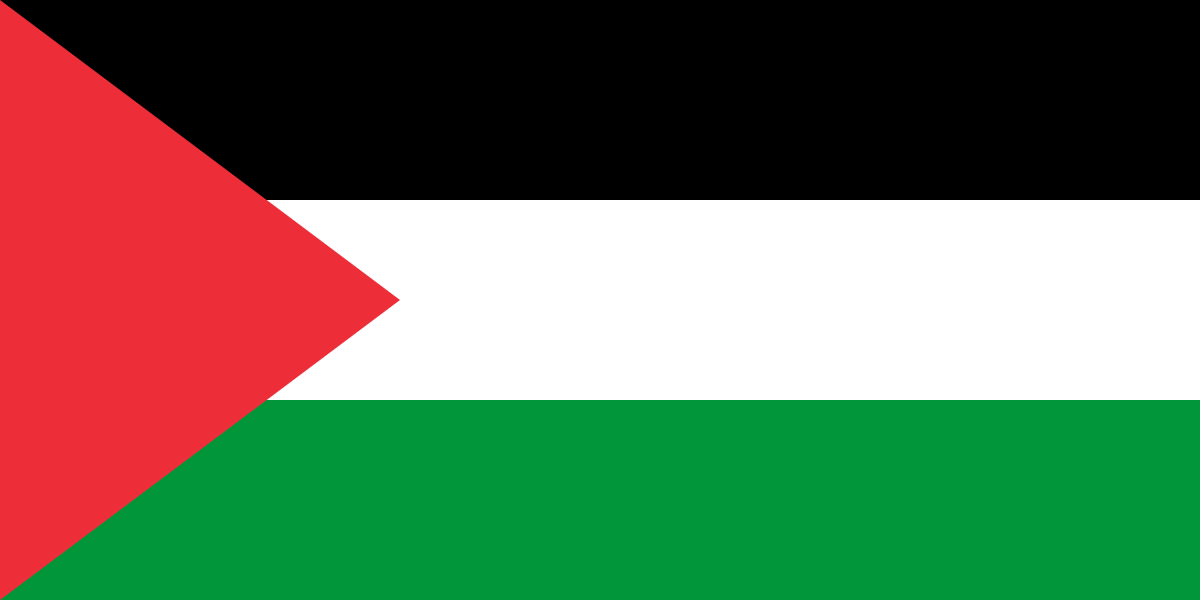
It is my honour to introduce the pre-recorded statement of His Excellency Mr. Mahmoud Abbas, President of the State of Palestine, at the general debate of the seventy-fifth session of the General Assembly.
The Assembly will now hear an address by the President of the State of Palestine.
A pre-recorded video statement was shown in the General Assembly Hall (annex III and see A/75/592/Add.6).
8. General debate Address by Mr. Charles Michel, President of the European Council
I now give the floor to the observer of the European Union to introduce an address by the President of the European Council.

I have the honour to introduce the pre-recorded statement by His Excellency
Mr. Charles Michel, President of the European Council, on the occasion of the general debate of the seventy- fifth session of the General Assembly.
The Assembly will now hear an address by the President of the European Council.
A pre-recorded video statement was shown in the General Assembly Hall (annex IV and see A/75/592/Add.6).
Address by Mr. Mark Rutte, Prime Minister and Minister for General Affairs of the Kingdom of the Netherlands
I now give the floor to the representative of the Netherlands to introduce an address by the Prime Minister and Minister for General Affairs of the Kingdom of the Netherlands.


I have the honour to introduce the pre-recorded statement by His Excellency Mr. Mark Rutte, Prime Minister of the Netherlands.
The Assembly will now hear an address by the Prime Minister and Minister for General Affairs of the Kingdom of the Netherlands.
A pre-recorded video statement was shown in the General Assembly Hall (annex V and see A/75/592/Add.6).
Address by Mr. K. P. Sharma Oli, Prime Minister of Nepal
I now give the floor to the representative of Nepal to introduce an address by the Prime Minister of of Nepal.


I have the distinct honour to introduce the pre-recorded statement by the Right Honourable Prime Minister of Nepal, Mr. K. P. Sharma Oli.
The Assembly will now hear an address by the Prime Minister of Nepal.
A pre-recorded video statement was shown in the General Assembly Hall (annex VI and see A/75/592/Add.6).
Ms. Kadare (Albania), Vice-President, took the Chair.
Address by Mr. Giorgi Gakharia, Prime Minister of Georgia

I now give the floor to the representative of Georgia to introduce an address by the Prime Minister of Georgia.


It is my privilege and distinct honour to introduce the pre-recorded video statement by His Excellency Mr. Giorgi Gakharia, Prime Minister of Georgia.
The Assembly will now hear an address by the Prime Minister of Georgia.
A pre-recorded video statement was shown in the General Assembly Hall (annex VII and see A/75/592/Add.6).
Address by Mr. Andrej Babiš, Prime Minister of the Czech Republic
I now give the floor to the representative of the Czech Republic to introduce an address by the Prime Minister of the Czech Republic.


I have the great honour to introduce the pre-recorded statement by His Excellency Mr. Andrej Babiš, Prime Minister of the Czech Republic.
The Assembly will now hear an address by the Prime Minister of the Czech Republic.
A pre-recorded video statement was shown in the General Assembly Hall (annex VIII and see A/75/592/Add.6).
Address by Mr. Kyriakos Mitsotakis, Prime Minister of the Hellenic Republic
I now give the floor to the representative of Greece to introduce an address by the Prime Minister of the Hellenic Republic.


It is a great honour and privilege to introduce the pre-recorded statement by His Excellency Mr. Kyriakos Mitsotakis, Prime Minister of Greece, on the occasion of the general debate of the seventy-fifth session of the General Assembly.
The Assembly will now hear an address by the Prime Minister of the Hellenic Republic.
A pre-recorded video statement was shown in the General Assembly Hall (annex IX and see A/75/592/ Add.6).
Address by Mr. Andrej Plenković, Prime Minister of the Republic of Croatia
I now give the floor to the representative of Croatia to introduce an address by the Prime Minister of the Republic of Croatia.


It is an honour to introduce His Excellency Mr. Andrej Plenković, Prime Minister of the Republic of Croatia.
The Assembly will now hear an address by the Prime Minister of the Republic of Croatia.
A pre-recorded video statement was shown in the General Assembly Hall (annex X and see A/75/592/Add.6).
Address by Mr. Giuseppe Conte, President of the Council of Ministers of the Republic of Italy
I now give the floor to the representative of Italy to introduce an address by the President of the Council of Ministers of the Republic of Italy.


I have the honour and the pleasure to introduce the pre-recorded statement by His Excellency Mr. Giuseppe Conte, Prime Minister of Italy.
The Assembly will now hear an address by the President of the Council of Ministers of the Republic of Italy.
A pre-recorded video statement was shown in the General Assembly Hall (annex XI and see A/75/592/Add.6).
Address by Mr. Nikol Pashinyan, Prime Minister of the Republic of Armenia
I now give the floor to the representative of Armenia to introduce an address by the Prime Minister of the Republic of Armenia.


I have the distinct honour to introduce the video statement of His Excellency Mr. Nikol Pashinyan, Prime Minister of the Republic of Armenia, addressed to the seventy-fifth session of the General Assembly.
The Assembly will now hear an address by the Prime Minister of the Republic of Armenia.
A pre-recorded video statement was shown in the General Assembly Hall (annex XII and see A/75/592/Add.6).
Address by Mr. Imran Khan, Prime Minister of the Islamic Republic of Pakistan
I now give the floor to the representative of Pakistan to introduce an address by the Prime Minister of the Islamic Republic of Pakistan.


I have the honour and privilege to introduce the pre-recorded address of His Excellency Mr. Imran Khan, Prime Minister of the Islamic Republic of Pakistan, to the seventy-fifth session of the General Assembly.
The Assembly will now hear an address by the Prime Minister of the Islamic Republic of Pakistan.
A pre-recorded video statement was shown in the General Assembly Hall (annex XIII and see A/75/592/Add.6).
Address by Sheikh Sabah Khaled Al-Hamad Al-Sabah, Prime Minister of the State of Kuwait
I now give the floor to the representative of Kuwait to introduce an address by the Prime Minister of the State of Kuwait.


It is my honour to introduce the recorded statement by His Excellency Sheikh Sabah Khaled Al-Hamad Al-Sabah, Prime Minister of the State of Kuwait, to the seventy-fifth session of the General Assembly.
The Assembly will now hear an address by the Prime Minister of the State of Kuwait.
A pre-recorded video statement was shown in the General Assembly Hall (annex XIV and see A/75/592/Add.6).
Mr. Elsonni (Libya), Vice-President, took the Chair.
Address by Mr. Kausea Natano, Prime Minister of Tuvalu
I now give the floor to the
representative of Tuvalu to introduce an address by the
Prime Minister of Tuvalu


I have the honour and the
pleasure to introduce the pre-recorded statement by
His Excellency Mr. Kausea Natano, Prime Minister
of Tuvalu.
The Assembly will now
hear an address by the Prime Minister of Tuvalu. the General Assembly Hall (annex XV and see A/75/592/Add.6). Address by Mr. Pedro Sánchez Pérez-Castejón, President of the Government of Spain
A pre-recorded video statement was shown in
I now give the floor to the representative of Spain to introduce an address by the President of the Government of Spain.


I have the honour to introduce the recorded message of the President of the Government of Spain, Mr. Pedro Sánchez Pérez-Castejón, to this seventy-fifth session of the General Assembly.
The Assembly will now hear an address by the President of the Government of Spain.
A pre-recorded video statement was shown in the General Assembly Hall (annex XVI and see A/75/592/Add.6). Annex I Address by Mr. David W. Panuelo, President and Head of Government of the Federated States of Micronesia Mr. President, Mr. Secretary-General, Excellencies, Distinguished guests, Ladies and Gentlemen, I bring you warm greetings from our beautiful island nation. I am grateful for the privilege to appear before this historical 75th Session of the United Nations General Assembly as President of the Federated States of Micronesia. First, Mr. President, congratulations on your election to head this 75th Session of the General Assembly. Your experience and high standing have made you an ideal choice to provide the critical leadership needed for this position. I also wish to express my appreciation and recognition to our distinguished Secretary-General, António Guterres. Every day the Secretary-General provides diligent service to this Organization. Despite today’s great challenges, the United Nations has emerged as a stronger and more dynamic Organization than at any time since its founding 75 years ago. Micronesia is grateful to the Secretary-General’s unstinting and selfless devotion to the work of this Organization and his unflinching pursuit of the principle of “leaving no one behind.” Mr. President, I begin by paying my respects to the memory of those who have lost their lives due to the COVID-19 Pandemic and other tragedies this year, from the explosion in Beirut and the fires in Australia, to the hurricanes in the United States and cyclones in India and Bangladesh. Micronesia extends peace, friendship, cooperation, and — most importantly — love in our common humanity to all peoples and Nations. We stand in solidarity with our brothers and sisters across the World. All human life is priceless and valuable. Empathy is not weakness. Empathy is courage, and empathy is strength. Through empathy, our global community can overcome any challenge, from COVID-19 to Climate Change. It is crucial, in both times of peace as well as times of calamity, that the international community stand together. An infringement on the rights of one is the same as an infringement on the rights of us all. Whether we call it multilateralism, inclusivity, or simple human decency, we are much more alike than we are different. All human life matters, and our Nation calls upon the global community to embrace solidarity with one another. On the eve of the 75th anniversary of the UNGA, I note that Micronesia itself is a product of multilateralism. Micronesia emerged into nationhood after decades of being a part of the former Trust Territory of the Pacific Islands, which was created as a strategic trusteeship after the Second World War. We are soon to celebrate our 34th anniversary of Independence. Our nation has an Enduring Partnership with the United States of America as codified through our Compact of Free Association, which sets forth important reciprocal agreements between our two nations and a framework for U.S. assistance in our country’s efforts to self-sufficiency. Micronesia has many other crucial friendships including with Japan, the People’s Republic of China, Australia, and many others, all of which have also helped our country, which is remote and in need of international assistance. Micronesia is a peace-loving country, and we have demonstrated that peace is as possible as it is desirable. Mr. President, The Federated States of Micronesia is fortunate and grateful to have an Enduring Partnership with the United States of America, and a Great Friendship with the Peoples Republic of China. I continue to maintain, on behalf of my country, that consistent cooperation amongst ALL nations and peoples is critical to global solidarity. Whether it is the global fight against COVID-19 or Climate Change, or our international efforts to tackle human trafficking and illegal fishing, the Federated States of Micronesia asks our American and Chinese friends to reinforce their cooperation and friendship with each other, in order to achieve what is best for our global community. ALL of us are acutely aware of the renewed, and increasing intensity of competition for access and influence in our Pacific Region. There is little doubt that these activities and efforts have resulted in varying levels of benefits for our Pacific communities; however, they also potentially threaten to fracture long standing alliances within our Pacific Family, and could become counterproductive to our collective desire for Regional solidarity, security, and stability. I call on my fellow Pacific Island Leaders, AND the leadership and citizens of our neighboring Developed and Industrialized Pacific Nations, to remain focused and true to the “collective goals” that UNITE us, and not unilateral interests that may surely DIVIDE us in the long term. My country is committed to doing its part as a sovereign Nation of this organization, to advance the principles of liberty, equality, democracy, the rule of law, and RESPECT for our fellow global citizens. It is my hope, as the President of the Federated States of Micronesia, that the United States of America and the People’s Republic of China JOINTLY champion global causes for global solidarity and cooperation, from Climate Change
to COVID-19. Mr. President, The Federated States of Micronesia is keenly aware that, like all nations of the World, it is simultaneously facing the public health threat of COVID-19, and the longer-term existential threat of Climate Change. Solutions to these two crises require international collaboration. For our vulnerable Nation, COVID-19 is an immediate security threat. While we remain one of very few COVID-19 free countries in the world, we have found through our infrastructure assessments and repatriation simulation exercises that we need to address gaps and weaknesses. Stopping the potential spread of COVID-19 into our country, with the widespread suffering that would result, is our highest priority. Our Nation appreciates the assistance of the UN system, the World Health Organization, and so many generous countries in helping us combat the COVID-19 threat. This disease is of global consequence and can only be addressed through global cooperation, such as we have seen for polio and other diseases. Through global cooperation, COVID-19 can be defeated as well. Micronesia passionately believes that Sustainable Development Goal #17 — Partnerships — is the bedrock upon which all other SDGs can be met. Because all human lives have value and because empathy is strength, once effective vaccines for COVID-19 are developed, Micronesia hopes that they will be shared widely and immediately — accessible and affordable — with all nations and peoples of the world to save human lives. Mr. President, For our Nation, Climate Change is our single greatest long-term security threat. Rising waters threaten to make life in remote atolls impossible. Higher temperatures threaten crops, livestock, and fish. All countries and peoples are in a global war against Climate Change. We have witnessed deadly fires in the US, typhoons in the Caribbean and in the Pacific, and floods in Asia. It is a war that we can win, but we must be much more aggressive in combatting it. The world must transition to sustainable and renewable energy. Coal and natural gas are unsustainable solutions for the environment and are harmful to both economic growth and equality of opportunity. If our World is to fulfill its commitments under the Paris Agreement, all nations must make a unified and global effort. We have seen, through the Montreal Protocol, that 98 per cent of Ozone Depleting Substances have been phased out by the global community. We can succeed if we work together. It is both possible and essential to improve our quality of life while also being responsible stewards of our Planet. For our part in the Federated States of Micronesia, Vice President George and I have submitted proposed legislation to our National Congress that would make renewable energy part of our petroleum corporation’s mandate. Mr. President, To repeat myself: the solutions to both Climate Change and COVID-19 is global solidarity and cooperation. Just as we call upon the Security Council to take Climate Change seriously, we believe that the Security Council must view COVID-19 as a global security threat as well. With respect to the Security Council, one way for the Security Council to succeed is to ensure that its mandates are comprehensive to address new and urgent crises. We believe that the UN Secretary-General ought to appoint a Special Representative for Climate and Security under the Security Council, and that UN efforts should become more inclusive. This belief is reinforced by the Leaders of the Pacific Island Forum, most recently in 2019’s Kainaki II Declaration. In a global community where all lives have value and all voices are equal, it is crucial that the Security Council’s membership include a broader spectrum of greater UN membership, and that the number of permanent members be expanded. Japan, with whom we share a Kizuna or special bond, and Germany — both of whom at one point controlled our islands — are countries that know the importance of multilateralism. In the 75 years since the end of the Second World War, they have dedicated themselves to peace, friendship, cooperation, and love with all peoples and nations. It is Micronesia’s view that Japan, Germany, India, and Brazil ought to become permanent members of the Security Council. Mr. President, Micronesia is of course a Big Ocean State. The ocean is the main source of our sustenance and a major part of our economy. A large portion of our export revenues come from ocean and coastal-based activities such as in fisheries and related services. Our exposure to the Pacific Ocean carries risks beyond climate change. According to a report by the World Economic Forum, by 2050 there may be more plastics than fish in our oceans. This February I signed legislation into public law which bans the importation of Styrofoam and one-time-use plastics into Micronesia. Over the next five years, Micronesia is partnering with the Blue Prosperity Coalition to seek to protect 30 per cent of our ocean’s Exclusive Economic Zone by 2030. Micronesia is thus taking actions today for our ocean’s prosperity tomorrow. I urge all peoples and nations to join our efforts. We cannot allow COVID-19 to halt efforts such as the Post-2020 Biodiversity Framework or the intergovernmental negotiations on the Biodiversity Beyond National Jurisdiction (BBNJ) instrumentation. Micronesia welcomes the work being done by the International Law Commission on the topic of “Sealevel rise in relation to international law”, including the first issues paper released by two of the CoChairs of the Commission’s Study Group, in which they focus on the Law of the Sea elements of the topic. These include the legal implications of sea-level rise for maritime baselines, maritime zones, maritime delimitation, and the status of islands. The Pacific Islands Forum has been instrumental in pushing the international community to address sealevel rise, building on the longstanding work in the Pacific region to delineate all of our maritime zones in accordance with the 1982 United Nations Convention on the Law of the Sea (UNCLOS). Micronesia strongly encourages the Commission to advance its work on this important topic in a comprehensive and expeditious manner. Micronesia strongly believes that rising sea levels should not undermine our country’s maritime baselines and maritime zones. We recently deposited with the UN Secretary-General our maritime charts and lists of geographical coordinates of points identifying these baselines and zones, as required by the UNCLOS. We included with our deposit written observations that Micronesia is not obligated under international law to keep our maritime zones under review and would maintain those zones regardless of climate change-induced sea-level rise. To our knowledge, this is the first example of such observations to ever be included with such deposits. This recognizes that Micronesia’s legal entitlements to the richness of the resources and biodiversity of our maritime spaces must not be reduced under international law because of a phenomenon — i.e., climate change-induced sea-level rise — for which Micronesia has minimal responsibility. Any other result would be a gross legal and moral injustice. Micronesia encourages other States to consider making similar observations with their deposits. Mr. President, Micronesia joins its immediate neighbors, the Republic of Palau, the Republic of the Marshall Islands, the Republic of Nauru, and the Republic of Kiribati, in celebrating the actions of the ECOSOC and the General Assembly to establish a UN Multi-Country Office in the North Pacific. It has taken over 15 years for us to achieve this result. With challenges of a global scale affecting island nations like ours in the Pacific, a UN presence on the ground will be extremely helpful. This important decision reflects the UN’s commitment to address the concerns of even the most vulnerable and smallest of its members. Micronesia is proud to become the host for this office, and extends its gratitude to both the United Nations at large as well as its brothers and sisters in the North Pacific for their support. Mr. President, The Federated States of Micronesia recognizes Secretary-General Guterres’ road map for digital cooperation and the gaps made clear by the COVID-19 Pandemic. A digital inter-dependent World has the potential to advance our social and economic aspirations or leave many of us behind. Through assistance provided from partners such as the World Bank, the Asian Development Bank, the United Nations, and the United States of America, Micronesia is hoping to build an inclusive digital economy, develop human and institutional capacity, protect human rights, promote digital trust, and foster global digital cooperation. I am hopeful that global digital cooperation can help us combat evils such as human trafficking, illegal, unregulated, and unreported fishing, and promote positive efforts such as online education and tele-health programming. There is much work that needs to be done in this area, and the challenges are immense. While we are working hard to democratize knowledge through making internet and cellphone access more accessible and more affordable, there remain significant technical and capacity gaps. Micronesia wishes to strengthen existing partnerships, and develop new ones, in its effort to build a digital future. Mr. President, A better world is not something we ask for. A better world is something we build. We define a better world through consensus, with a foundation of empathy and love for other human beings. We construct a better world by acknowledging that we are who we choose to be, and then choosing to take responsibility for both ourselves and our communities. For the small nations of the world, the United Nations today is more important than ever. Thank you, Mr. President. Annex II Address by His Holiness Pope Francis [Original: Spanish; English translation provided by the delegation] Mr. President, Peace be with all of you! I offer cordial greetings to you, Mr President, and to all the Delegations taking part in this significant Seventy-fifth Session of the United Nations General Assembly. In particular, I greet the Secretary General, Mr António Guterres, the participating Heads of State and Government, and all those who are following the General Debate. The seventy-fifth1 anniversary of the United Nations offers me a fitting occasion to express once again the Holy See’s desire that this Organization increasingly serve as a sign of unity between States and an instrument of service to the entire
human family. In these days, our world continues to be impacted by the COVID-19 pandemic, which has led to the loss of so many lives. This crisis is changing our way of life, calling into question our economic, health and social systems, and exposing our human fragility. The pandemic, indeed, calls us “to seize this time of trial as a time of choosing, a time to choose what matters and what passes away, a time to separate what is necessary from what is not”2. It can represent a concrete opportunity for conversion, for transformation, for rethinking our way of life and our economic and social systems, which are widening the gap between rich and poor based on an unjust distribution of resources. On the other hand, the pandemic can be the occasion for a “defensive retreat” into greater individualism and elitism. We are faced, then, with a choice between two possible paths. One path leads to the consolidation of multilateralism as the expression of a renewed sense of global co-responsibility, a solidarity grounded in justice and the attainment of peace and unity within the human family, which is God’s plan for our world. The other path emphasizes self-sufficiency, nationalism, protectionism, individualism and isolation; it excludes the poor, the vulnerable and those dwelling on the peripheries of life. That path would certainly be detrimental to the whole community, causing self-inflicted wounds on everyone. It must not prevail. The pandemic has highlighted the urgent need to promote public health and to make every person’s right to basic medical care a reality.3 For this reason, I renew my appeal to political leaders and the private sector to spare no effort to ensure access to COVID-19 vaccines and to the essential technologies needed to care for the sick. If anyone should be given preference, let it be the poorest, the most vulnerable, those who so often experience discrimination because they have neither power nor economic resources. The current crisis has also demonstrated that solidarity must not be an empty word or promise. It has also shown us the importance of avoiding every 1 Address to the General Assembly of the United Nations, 25 September 2015; BENEDICT XVI, Address to the General Assembly of the United Nations, 18 April 2008. 2 Meditation during the Extraordinary Moment of Prayer in the Time of Pandemic, 27 March 2020. 3 Universal Declaration of Human Rights, Article 25.1. temptation to exceed our natural limits. “We have the freedom needed to limit and direct technology; we can put it at the service of another type of progress, one which is healthier, more human, more social, more integral”.4 This also needs to be taken into careful consideration in discussions on the complex issue of artificial
intelligence (AI). Along these same lines, I think of the effects of the pandemic on employment, a sector already destabilized by a labour market driven by increasing uncertainty and widespread robotization. There is an urgent need to find new forms of work truly capable of fulfilling our human potential and affirming our dignity. In order to ensure dignified employment, there must be a change in the prevailing economic paradigm, which seeks only to expand companies’ profits. Offering jobs to more people should be one of the main objectives of every business, one of the criteria for the success of productive activity. Technological progress is valuable and necessary, provided that it serves to make people’s work more dignified and safe, less burdensome and stressful. All this calls for a change of direction. To achieve this, we already possess the necessary cultural and technological resources, and social awareness. This change of direction will require, however, a more robust ethical framework capable of overcoming “today’s widespread and quietly growing culture of waste”.5 At the origin of this “throwaway culture” is a gross lack of respect for human dignity, the promotion of ideologies with reductive understandings of the human person, a denial of the universality of fundamental human rights, and a craving for absolute power and control that is widespread in today’s society. Let us name this for what it is: an attack against humanity itself. It is in fact painful to see the number of fundamental human rights that in our day continue to be violated with impunity. The list of such violations is indeed lengthy, and offers us a frightening picture of a humanity abused, wounded, deprived of dignity, freedom and hope for the future. As part of this picture, religious believers continue to endure every kind of persecution, including genocide, because of their beliefs. We Christians too are victims of this: how many of our brothers and sisters throughout the world are suffering, forced at times to flee from their ancestral lands, cut off from their rich history and culture. We should also admit that humanitarian crises have become the status quo, in which people’s right to life, liberty and personal security are not protected. Indeed, as shown by conflicts worldwide, the use of explosive weapons, especially in populated areas, is having a dramatic long-term humanitarian impact. Conventional weapons are becoming less and less “conventional” and more and more “weapons of mass destruction”, wreaking havoc on cities, schools, hospitals, religious sites, infrastructures and basic services needed by the population. What is more, great numbers of people are being forced to leave their homes. Refugees, migrants and the internally displaced frequently find themselves abandoned in their countries of origin, transit and destination, deprived of any chance to better their situation in life and that of their families. Worse still, thousands are intercepted at sea and forcibly returned to detention camps, where they meet with torture and abuse. Many of these become victims of human trafficking, sexual slavery or forced labour, exploited in degrading jobs and denied a just wage. This is intolerable, yet intentionally ignored by many! 4 Encyclical Letter Laudato Si’, 112. 5 Address to the General Assembly of the United Nations Organization, 25 September 2015. The numerous and significant international efforts to respond to these crises begin with great promise — here I think of the two Global Compacts on Refugees and on Migration — yet many lack the necessary political support to prove successful. Others fail because individual states shirk their responsibilities and commitments. All the same, the current crisis offers an opportunity for the United Nations to help build a more fraternal and compassionate society. This includes reconsidering the role of economic and financial institutions, like that of Bretton-Woods, which must respond to the rapidly growing inequality between the super-rich and the permanently poor. An economic model that encourages subsidiarity, supports economic development at the local level and invests in education and infrastructure benefiting local communities, will lay the foundation not only for economic success but also for the renewal of the larger community and nation. Here I would renew my appeal that “in light of the present circumstances… all nations be enabled to meet the greatest needs of the moment through the reduction, if not the forgiveness, of the debt burdening the balance sheets of the poorest nations”.6 The international community ought to make every effort to put an end to economic injustices. “When multilateral credit organizations provide advice to various nations, it is important to keep in mind the lofty concepts of fiscal justice, the public budgets responsible for their indebtedness and, above all, an effective promotion of the poorest, which makes them protagonists in the social network”.7 We have a responsibility to offer development assistance to poor nations and debt relief to highly indebted nations. “A new ethics presupposes being aware of the need for everyone to work together to close tax shelters, avoid evasions and money laundering that rob society, as well as to speak to nations about the importance of defending justice and the common good over the interests of the most powerful companies
and multinationals”.8 Now is a fitting time to renew the architecture of international finance.9 Mr. President, Five years ago, I had the opportunity to address the General Assembly in person on its seventieth anniversary. My visit took place at a time marked by truly dynamic multilateralism. It was a moment of great hope and promise for the international community, on the eve of the adoption of the 2030 Agenda for Sustainable Development. Some months later, the Paris Agreement on Climate Change was
also adopted. Yet we must honestly admit that, even though some progress has been made, the international community has shown itself largely incapable of honouring the promises made five years ago. I can only reiterate that “we must avoid every temptation to fall into a declarationist nominalism which would assuage our consciences. We 6 Urbi et Orbi Message, 12 April 2020. 7 Address to the Participants in the Seminar “New Forms of Solidarity”, 5 February 2020. 8 Ibid. 9 Cf. ibid. need to ensure that our institutions are truly effective in the struggle against all
these scourges”.10 I think of the alarming situation in the Amazon and its indigenous peoples. Here we see that the environmental crisis is inseparably linked to a social crisis, and that caring for the environment calls for an integrated approach to combatting poverty and exclusion.11 To be sure, the growth of an integral ecological sensitivity and the desire for action is a positive step. “We must not place the burden on the next generations to take on the problems caused by the previous ones… We must seriously ask ourselves if there is the political will to allocate with honesty, responsibility and courage, more human, financial and technological resources to mitigate the negative effects of climate change, as well as to help the poorest and most vulnerable populations who suffer from them the most.”12 The Holy See will continue to play its part. As a concrete sign of the Holy See’s commitment to care for our common home, I recently ratified the Kigali Amendment to the Montreal Protocol.13 Mr. President, We cannot fail to acknowledge the devastating effects of the COVID-19 crisis on children, including unaccompanied young migrants and refugees. Violence against children, including the horrible scourge of child abuse and pornography, has also dramatically increased. Millions of children are presently unable to return to school. In many parts of the world, this situation risks leading to an increase in child labour, exploitation, abuse and malnutrition. Sad to say, some countries and international institutions are also promoting abortion as one of the so-called “essential services” provided in the humanitarian response to the pandemic. It is troubling to see how simple and convenient it has become for some to deny the existence of a human life as a solution to problems that can and must be solved for both the mother and her unborn child. I urge civil authorities to be especially attentive to children who are denied their fundamental rights and dignity, particularly their right to life and to schooling. I cannot help but think of the appeal of that courageous young woman, Malala Yousafzai, who speaking five years ago in the General Assembly, reminded us that “one child, one teacher, one book and one pen can change the world”. The first teachers of every child are his or her mother and father, the family, which the Universal Declaration of Human Rights describes as the “natural and fundamental group unit of society”.14 All too often, the family is the victim of forms of ideological colonialism that weaken it and end up producing in many of its members, especially the most vulnerable, the young and the elderly, a feeling of being orphaned and lacking roots. The breakdown of the family is reflected in the 10 Address to the General Assembly of the United Nations Organization, 25 September 2015. 11 Encyclical Letter Laudato Si’, 139. 12 Message to the Participants in the Twenty-Fifth Session of the Conference of States Parties to the United Nations Framework Convention on Climate Change, 1 December 2019. 13 Message to the Thirty-first Meeting of the Parties to the Montreal Protocol, 7 November 2019. 14 Universal Declaration of Human Rights, Article 16.3. social fragmentation that hinders our efforts to confront common enemies. It is time that we reassess and recommit ourselves to achieving our goals. One such goal is the advancement of women. This year marks the twentyfifth anniversary of the Beijing Conference on Women. At every level of society, women now play an important role, offering their singular contribution and courageously promoting the common good. Many women, however, continue to be left behind: victims of slavery, trafficking, violence, exploitation and degrading treatment. To them, and to those who forced to live apart from their families, I express my fraternal closeness. At the same time, I appeal once more for greater determination and commitment in the fight against those heinous practices that debase not only women, but all humanity, which by its silence and lack of effective action becomes an accomplice in them. Mr. President, We must ask ourselves if the principal threats to peace and security — poverty, epidemics, terrorism and so many others — can be effectively be countered when the arms race, including nuclear weapons, continues to squander precious resources that could better be used to benefit the integral development of peoples and protect the natural environment. We need to break with the present climate of distrust. At present, we are witnessing an erosion of multilateralism, which is all the more serious in light of the development of new forms of military technology,15 such as lethal autonomous weapons systems (LAWS) which irreversibly alter the nature of warfare, detaching it further from human agency. We need to dismantle the perverse logic that links personal and national security to the possession of weaponry. This logic serves only to increase the profits of the arms industry, while fostering a climate of distrust and fear between persons and peoples. Nuclear deterrence, in particular, creates an ethos of fear based on the threat of mutual annihilation; in this way, it ends up poisoning relationships between peoples and obstructing dialogue.16 That is why it is so important to support the principal international legal instruments on nuclear disarmament, nonproliferation and prohibition. The Holy See trusts that the forthcoming Review Conference of the Parties to the Treaty on the Non-Proliferation of Nuclear Weapons (NPT) will result in concrete action in accordance with our joint intention “to achieve at the earliest possible date the cessation of the nuclear arms race and to undertake effective measures in the direction of nuclear disarmament”.17 In addition, our strife-ridden world needs the United Nations to become an ever more effective international workshop for peace. This means that the members of the Security Council, especially the Permanent Members, must act with greater unity and determination. In this regard, the recent adoption of a global cease-fire during the present crisis is a very noble step, one that demands good will on the part of all for its continued implementation. Here I would also reiterate the importance of relaxing international sanctions that make it difficult for states to provide adequate support for their citizens. 15 Address on Nuclear Weapons, Atomic Bomb Hypocenter Park, Nagasaki, 24 November 2019. 16 Ibid. 17 Treaty on the Non-Proliferation of Nuclear Weapons, Preamble. Mr. President, We never emerge from a crisis just as we were. We come out either better or worse. This is why, at this critical juncture, it is our duty to rethink the future of our common home and our common project. A complex task lies before us, one that requires a frank and coherent dialogue aimed at strengthening multilateralism and cooperation between states. The present crisis has further demonstrated the limits of our self-sufficiency as well as our common vulnerability. It has forced us to think clearly about how we want to emerge from this: either better or worse. The pandemic has shown us that we cannot live without one another, or worse still, pitted against one another. The United Nations was established to bring nations together, to be a bridge between peoples. Let us make good use of this institution in order to transform the challenge that lies before us into an opportunity to build together, once more, the future we all desire. God bless you all! Thank you, Mr. President. Annex III Address by Mr. Mahmoud Abbas, President of the State of Palestine [Original: Arabic; English translation provided by the delegation] In the name of God, the Merciful, H.E. Mr. Volkan Bozkir, President of the General Assembly H.E. Mr. António Guterres, Secretary General Ladies and Gentlemen, Heads and Members of delegations, I wondered while preparing this statement what more could I tell you, after all that I have said in previous statements, about the perpetual tragedy and suffering being endured by my people — which the world is witness to daily — and about their legitimate aspirations — which are yet to be fulfilled — to freedom, independence and human dignity, as enjoyed by the peoples of the world. Until when, ladies and gentlemen, will the question of Palestine remain without a just solution as enshrined in United Nations resolutions? Until when will the Palestinian people remain under Israeli occupation and will the question of millions of Palestine refugees remain without a just solution in accordance with what the United Nations has determined over 70 years ago? Ladies and Gentlemen, The Palestinian people have been present in their homeland, Palestine, the land of their ancestors, for over 6000 years, and they will continue living on this land, steadfast in the face of occupation, aggression and the disappointments and betrayals, until the fulfilment of their rights. Despite all they have endured and continue to endure, despite the unjust blockade that targets our national decision, we will not kneel or surrender and we will not deviate from our fundamental positions, and we shall overcome, God willing. We have accepted the rule of international law and UN resolutions, and we have done so in spite of the historic injustice that we have borne from 1917 to the present day, and even though these resolutions only acknowledged as Palestinian the territories occupied in 1967. Yet, the Israeli occupying Power, with the support of the present US administration, wants to substitute this basis for a just solution with the US ‘Deal of the Century’ and the planned annexation of over 33% of the land of the State of Palestine, in addition to the annexation of occupied East Jerusalem, including Al-Aqsa Mosque and the Church of the Holy Sepulchre. We have rejected this deal, as did the international community, as it contravenes international law and UN resolutions, which recognized, inter alia, the existence of the State of Palestine in 2012 as part of the international order. We have always sought a just, comprehensive and lasting peace, and we have agreed to all the initiatives presented to us. I have personally dedicated my life to achieving this desired peace, notably since 1988, followed by the Madrid Conference and the Oslo Accords in 1993, and to this very day. We accepted and remained committed to the Arab Peace Initiative, as it provides for peace, security and coexistence once the occupation ends. We did all of this for peace. What did Israel, the occupying Power, do in return? It violated all agreements signed with us, undermined the two-State solution through its oppressive practices of killing and maiming, arrests, home demolitions, asphyxiating our economy, and systematically acting to alter the character and identity of occupied Jerusalem, attacking its Muslim and Christian holy sites, notably Al-Aqsa Mosque, and pursuing its settler colonialism on our land and against our people, ignoring the Arab Peace Initiative for peace and actively attempting now to kill another opportunity for peace through reckless unilateral measures. Finally, it announces normalization agreements with both the UAE and Bahrain, in violation of the Arab Peace Initiative, and the terms of reference of a comprehensive, lasting and just solution in accordance with international law. The Palestine Liberation Organization has not given a mandate to anyone to speak or negotiate on behalf of the Palestinian people and the only path to lasting, comprehensive and just peace in our region requires ending the occupation and securing the independence of the State of Palestine on the 1967 borders with East Jerusalem as its capital. In this regard, I call on the Secretary-General of the United Nations to undertake, in cooperation with the Quartet and the Security Council, preparations to convene an international conference with full authority and with the participation of all concerned parties, early next year, to engage in a genuine peace process, based on international law, UN resolutions and the relevant terms of reference, leading to an end the occupation and the achievement by the Palestinian people of their freedom and independence within their State, with East Jerusalem as its capital, on the 1967 borders, and resolving all final status issues, notably the question of the refugees, based on resolution 194. Ladies and Gentlemen, Those who believe the Palestinian people can coexist with the occupation or be subdued by pressure and diktats are under an illusion, as are those who are being misled to believe that they can circumvent our people, who bear this struggle and are its only address. Let everyone know there will be no peace, no security, no stability and no coexistence in our region while this occupation continues and a just, comprehensive solution to the question of Palestine, the core of the conflict,
remains denied. In Palestine, ladies and gentlemen, there is a living nation, creative, civilized, peace-loving, aspiring passionately to freedom. A nation that has been able — despite the occupation that besieges our lives — to build an active and modern society, that believes in democracy and the rule of law and has been able to preserve its national existence and identity despite all the political and philosophical differences between its diverse components. Here we are, despite all the obstacles that you know too well, preparing ourselves to hold parliamentary elections, followed by presidential elections, with the participation of all factions and political parties. We will continue creating life and hope under the flag of national unity and democracy. We will continue resisting all attempts and plans to erase us, and we will secure our rightful and natural place among nations and exercise the rights granted to us by international legitimacy, including our right to resist this occupation in accordance with international law. We will continue building the institutions of our State and consolidating them on the basis of the rule of law. We will continue combating international terrorism, as we have done for years past. We will remain faithful to peace, justice, human and national dignity under all circumstances. I salute the great Palestinian people that bravely pursues the struggle for freedom and independence. I salute our martyrs, prisoners and wounded. I salute Jerusalem and our people who remain steadfast in its holy sites. I salute our people in the besieged Gaza Strip. I salute our people in the refugee camps everywhere. I salute all those who stand with us and with our rights from all countries, nations
and organizations. Peace be upon you. Annex IV Address by Mr. Charles Michel, President of the European Council [Original: English and French; English translation provided by the Mister President, Mister Secretary-General, dear Heads of Delegations, Ladies and Gentlemen, I speak to you today on behalf of the European Union. A union founded, like the United Nations, on peaceful cooperation, human rights and fundamental freedoms. We are therefore an unwavering supporter of the United Nations. And of the international organisations to which we join forces for human progress. This is precisely how we are working with the WHO to defeat COVID-19. Like the whole world, Europe has been hard hit by the pandemic. In the European Union, more than 142,000 people have lost their lives. I salute their memory, and all the COVID-19 victims worldwide. I also pay tribute to all the healthcare professionals that have safeguarded the fabric of our societies. The crisis caused by the pandemic is unprecedented. It has exacerbated the weaknesses of fragile countries, regions and populations. It has also revealed the fragility of countries that thought they were strong. It has thrown us all into the same sudden battle, against the same common enemy. The European Union, for its part, has been at the forefront of international cooperation which has raised nearly €16 billion to finance the research and the deployment of vaccines, tests and treatments. And we are mobilized, alongside all the players involved, to ensure that these vaccines and treatments are universally accessible and affordable. Each nation and each leader has the duty to reflect on the best way to contribute to our common objective. This is true in the fight against the current crisis, as in all global challenges. Kofi Annan said: “To become a good citizen, start in your own community!” It is in this vein that I want to explain why the European Union wants to become stronger and strategically autonomous, alongside an open market. Stronger not only for itself. But also to better contribute to a better world. The crisis has made this goal even more essential. It has awakened a new collective responsibility, to build back better and greener… Ladies and Gentlemen, Before the crisis, Europe had already embarked on a path of fundamental transformation. For example, by deciding to become the first carbon-neutral continent by 2050. Or by adopting an ambitious digital agenda, in line with our
fundamental values. This pandemic has increased our determination to transform our economies and societies tenfold. €540 billion euros have been mobilized for urgent measures from the outset. Then, in July, the European Council decided to mobilise ambitious and unprecedented financial resources: more than €1.8 trillion for the coming years, including €750 billion raised via the issuance of European Union bonds, unprecedented in its nature and size. With this historic decision, we have come together, united and strong, to better assume our responsibilities. delegation] Responsibility begins by seeing things as they are, and not as we would like them to be. In today’s world, the abuse of force, both military and economic, too often supplants argumentation and negotiation. Respect for treaties, a basic principle of international law, comes to be considered optional even by those who, until recently, were its historical guarantors. All this in the name of partisan interests. More than ever, the European Union is defending the rules-based international order and cooperation based on universal values. The European Union wants to be stronger, more autonomous, and firmer, to defend a fairer world. And it is in this spirit that we lead the implementation of the Paris Agreements. And that we have already integrated the objectives of the 2030 Agenda into our system of
economic governance. We are now developing these values and this open model with greater awareness of our strength, with more realism, and perhaps less naivety. We have faith in the virtues of free and open economies, never in protectionism. But access to our large market — the second largest economic zone in the world, and the first in terms of international trade — will no longer be sold off. From now on, we will better enforce the level playing field, in a market open to those who respect its standards. Whether they leave our Union or want to move closer to it. The European Union is also committed to advancing overall tax fairness, in particular in the digital sector. Large-scale activities carried out in this area can no longer escape fair taxation. The European Union is committed, alongside the OECD and the G20, to international cooperation to correct this injustice. Ladies and Gentlemen, The European Union is an actor for peace and progress, which wants to mobilise its influence and strength to make others more robust as well. We support the six partners of the Western Balkans in their transformation and integration. We have reaffirmed their European perspective. And we have just decided to open accession negotiations with two more countries among them: Albania and the Republic of North Macedonia. Through the Eastern Partnership, we are developing our relations with six countries in our neighbourhood. Notably with a view to strengthening institutions and the rule of law. In Belarus, the last presidential election was falsified. We do not accept the results. And we condemn the violent repression of the opposition and of peaceful demonstrations. Repression and intimidation must stop, and all those responsible must be held accountable and sanctioned. We stand with the Belarusian people who must be free, without any external coercion, to choose their own future. Inclusive national dialogue, with OSCE facilitation, is the only realistic path forward. Fighting impunity also means demanding an independent and credible investigation when the Russian opposition leader Navalny is the victim of an assassination attempt with chemical weapons. The European Union is also on the side of the Venezuelan people. That is why we are working with the International Contact Group for a peaceful and negotiated solution that must include free, credible and fair elections. The relationship between Europe and Africa will, I am sure, be the backbone of a fairer and stronger world. Together, we represent some 80 nations and 1.7 billion citizens in this Assembly, the vast majority of whom are among the youngest on the planet. Our two continents have never been so interdependent, for better or for worse. To acknowledge this is neither sterile Afro-pessimism nor naive Afro-optimism. It is to recognize that this interdependence is also a calling. It is to recognize that a strong Europe needs a strong Africa, and vice versa. The potential is huge. Investing, innovating, developing infrastructure, promoting education, supporting health systems: this is the key to forging a mutually beneficial partnership. Let us get inspired by the power of the African concept of Ubuntu: the way of thinking that my humanity is inextricably linked to yours, our destinies are linked, and our individual actions succeed only if they make sense for the common good. This principle of Ubuntu is also the reason for my renewed call to settle the question of debts of the poorest countries, in a spirit of solidarity that also takes into account the effects of the pandemic. The European Union is concerned about tensions in the Eastern Mediterranean. Unilateral actions and violations of international law must absolutely stop. Together with our Member States, we are undertaking intensive diplomatic efforts to defuse tensions and to promote dialogue. In this spirit, I have proposed the organization of a multilateral conference on the Eastern Mediterranean, in conjunction with the United Nations. Many actors have already responded positively and are ready to discuss the modalities, the agenda and the timetable. Maritime delimitations, security, energy issues, and migration are some of the topics that I believe should be addressed. We also support the efforts of the United Nations, and where involved, regional organizations, like in Libya or Syria. The Iran Nuclear Deal remains key for global non-proliferation and regional security. It is therefore essential to preserve the JCPOA and for all parties to fully implement it. The agreement endorsed by UN Security Council Resolution 2231 (2015) remains in place and for us there is no doubt that the sanctions lifting commitments under the agreement continue to apply. While we strongly support the preservation of the Iran deal, we continue to firmly address other concerns, such as the domestic and the regional situation. We also welcome the start of intra-Afghan negotiations and will support a lasting peace. In a tormented region, the issue of peace between Palestinians and Israelis is timelier than ever. We must continue to support the legitimate aspirations of both parties. And we remain firmly committed to the two-state solution. We will spare no effort with our international partners, including the Quartet, to facilitate the return of Israelis and Palestinians to the negotiating table, to find a negotiated solution within internationally agreed parameters. For our commitment to international law and UN resolutions is unwavering. At the same time, we welcome Israel’s rapprochement with countries in the region as a positive development for peace and stability in the Middle East. Ladies and Gentlemen, Since I became President of the European Council, I have often been asked a question that is both simple and brutal: “In the new rivalry between the United States and China, which side is the European Union on?” My answer is the following... We are deeply connected with the United States. We share ideals, values and a mutual affection that have been strengthened through the trials of history. They remain embodied today in a vital transatlantic alliance. This does not prevent us from occasionally having divergent approaches or interests. We do not share the values on which the political and economic system in China is based. And we will not stop promoting respect for universal human rights. Including those of minorities such as the Uighurs. Or in Hong Kong, where international commitments guaranteeing the rule of law and democracy are
being questioned. China is a crucial partner in addressing common challenges, such as global warming, COVID-19 or debt relief in Africa. And China is also an important trade partner. Yet we are determined to rebalance this relationship towards greater reciprocity and fairer competition. A spirit that we are also cultivating with ASEAN members, with which we will continue to deepen our relationship. Ladies and Gentlemen, We stand on the side of the fundamental values of democracy, human rights, the rule of law and cooperation. It’s our compass to pursue our interests. The European Union is an autonomous force, master of our choices, master of our destiny. Finally, on behalf of the European Union, I want to reaffirm this essential conviction: there can be no progress without progress in women’s empowerment. Discrimination against women remains one of the major obstacles to development. We must fight this relentlessly. Equality between men and women, as well as the protection of diversity, particularly sexual diversity, remains one of the major challenges of our time. The European Union will continue to be a driving force for multilateralism and the rules-based international order. Our support for the UN remains as strong as ever, and we will continue to support the implementation of the Secretary General’s reforms. Because we need a strengthened and effective multilateral system. This requires an even stronger UN to deliver results that advance world peace. Europe, stronger and more resolute, will be at your side to make the world a better and fairer place to live. Thank you. Annex V Address by Mr. Mark Rutte, Prime Minister and Minister for General Affairs of the Kingdom of the Netherlands Mr President, Secretary-General, Your Excellencies, ladies and gentlemen, [PM] For me, the General Assembly in New York is the ultimate UN experience. All the delegations gathered in that imposing hall during the General Debate. The whole world coming together. There’s nothing like it. But this year, everything is different. For the first time in history we’re having a virtual Assembly. It feels a bit surreal, and it’s far from ideal, but it’s important — despite the restrictions — that we share our views on the international situation. Especially this year. Because this is the year of coronavirus. The impact on our health, our economies and our societies has been enormous. Almost every country in the world, including the European and Caribbean parts of the Kingdom of the Netherlands, has been hit hard. The poorest countries hardest of all. Existing problems have been magnified by the pandemic. And this has forced us to face facts: in times of crisis we have to work together. Look out for each other. Support one another. Not only our families, neighbours and compatriots, but also other countries and peoples, regardless of the borders between us. Because we’re all in this together. The UN is setting the right example. Not least by setting up the UN COVID-19 Response and Recovery Fund, initiated by Secretary-General Guterres. The Netherlands fully supports the Fund, and so far we’re its biggest donor. The World Bank and the IMF are also helping the countries most affected. These are fine examples of international solidarity that bode well for the future. But if we’re truly going to defeat this virus we’ll have to do even more to enhance international cooperation. It starts with supporting the World Health Organization, which plays a
crucial role. We must provide the resources it needs. It also means countries need to give the Organization full cooperation and show transparency. In some cases this has been lacking. At the same time, the WHO has also attracted criticism. The Netherlands agrees that — once the crisis is under control — we should evaluate the situation and look at how we can enhance its powers. So that we’re well-equipped to deal with — or better still prevent — any future pandemic. Critical evaluation and continuous efforts to improve are key elements of multilateral cooperation. But unfortunately, as we mark the UN’s 75th anniversary, we’re also seeing another trend. The multilateral world order, which has given us so much in the decades since World War Two, is under great pressure. And we need to turn this tide. Step one is for all countries to take responsibility for the proper functioning of the multilateral system. Take a constructive approach. Stand up for your own interests, but don’t lose sight of the common interest. And last but not least, honour the agreements we’ve made and respect international law, including human rights.
When it comes to multilateralism, you can’t pick and choose. Step two is to critically assess the system itself. Because there’s work to be done there too. We can’t tackle today’s challenges with yesterday’s structures. It’s essential that we improve, reform and modernise our global institutions. And the UN is no exception. During our recent membership of the UN Security Council, the Netherlands worked hard on practical UN reforms in the area of peacekeeping. And we fully support the broad reform agenda of SecretaryGeneral Guterres. Together we need to ensure that the UN — now 75 years old — remains fit for purpose, well-equipped and young at heart. That it’s ready for the next 75 years. Because the new generations, who are already making their voices heard, must be able to count on a solid global system of multilateral cooperation. The Kingdom of the Netherlands will keep working towards that end, in every way possible. By providing financial resources, for example: we are one of the ten biggest donors to the multilateral system and we try to play a constructive role. But also by sharing our expertise in areas like climate adaptation. A topic that’s in the very DNA of our Kingdom, which is made up of a low- lying delta by the North Sea and several small islands in the Caribbean. In January 2021, we will be hosting the Climate Adaptation Summit to help the world prepare better for the effects of climate change. Another contribution we make is providing a base for the international
legal order. My home town of The Hague is host to the International Court of Justice and the International Criminal Court, for example. We must continue supporting these crucial institutions. Even though it’s become harder and harder in recent years to achieve accountability, due mainly to resistance from a small number of countries. But we won’t let that stop us. We will find other ways. Like the international mechanism for collecting and analysing evidence of the most serious crimes committed in Syria. Or the step the Netherlands recently took, holding Syria formally responsible for human rights violations. And for our country in particular, the establishment of special court proceedings to try those accused of downing flight MH17 was a major milestone. Because justice must be served. And because justice is a central pillar of our multilateral world order. We work in all these areas, in the full conviction that international cooperation brings us progress. And although the current crisis forces us to keep our distance, now more than ever we need to come closer together. Thank you. Annex VI Address by Mr. K. P. Sharma Oli, Prime Minister of Nepal Mr. President Excellencies the Heads of State and Government,
Mr. Secretary General, Distinguished delegates: I extend warm greetings to you all from Nepal, the land of Gautam Buddha and Sagarmatha, also known as the Mount Everest. I join with other leaders in expressing our profound grief and agony on the loss of lives around the world due to COVID-19, including in my own country. I congratulate you, Mr. President, and other members of the Bureau on your election and assure you of Nepal’s full support. The outgoing President deserves our appreciation for successfully steering the 74th Session of the Assembly. We commend the Secretary General, Mr. Antonio Guterres, for his tireless efforts to enable the UN deliver at this difficult time. Mr. President, We are passing through an extraordinary time. The COVID-19 pandemic is confronting us as a crisis of epic proportion. Be it the magnitude of public health crisis, impact on livelihoods and societies or global economic recession, the fallouts of the pandemic have been colossal. We support the efforts of the United Nations, World Health Organization and the World Bank Group in leading the global response to the pandemic. In particular, we commend the UN Secretary General for launching the Comprehensive Response to COVID-19. What matters most in the ongoing health crisis is an easy, smooth and affordable access by all to anti-COVID vaccines after they are developed; sharing of knowledge and experiences; and provision of timely supply of medical equipment and medicines. Protecting lives of the people both from disease and hunger is the supreme duty of the Governments. While we have deployed all our efforts and resources to that end, international solidarity becomes equally important. It is worrisome that the crisis is unfolding against the backdrop of an already uncertain international order. Geo-political tensions are resurfacing. Peace and stability still remain an unfulfilled aspiration in many parts of the world. Challenges such as arms race, climate change, and disasters impede the prospects of peace and sustainable development. The invisible virus has only made the severity of these maladies visible. This has further aggravated the trade tensions, global inequality, financial uncertainty, and debt crisis. Multilateral cooperation has been an obvious casualty in the face of unilateral tendencies and protectionist policies. The theme of ‘the future we want, and the UN we need’ resonates very well with the present situation. It is unthinkable to talk about degrading the value of multilateralism at a time when its relevancy becomes more pronounced than ever. Larger global good, not the parochial national interest, should underpin multilateralism and the
rules-based order. This historic 75th anniversary of the United Nations is a time to muster stronger political will for an enhanced international cooperation and solidarity and envision a future that is safer, more equitable and just. Only a collaborative, democratic, science-based and coordinated global partnership will help us face the difficult months and years ahead. Mr. President, As we embark on the decade of action and delivery to implement the Agenda 2030, the current crisis has pushed us to the brink of losing the gains made in achieving the SDGs. The countries like LDCs, LLDCs and SIDs are facing limitation of resources, social protection, and requisite health infrastructures. The distress has been further compounded by the halt in tourism, remittances and disruptions on supply chains and trade. Poverty is increasing, mostly in developing countries, for the first time in the last twenty years. The current crisis threatens hard-earned achievements in key areas, pushing our plan to graduate from the LDC status in peril. In order to prevent inequalities from deepening, timely realization of SDGs should be the fulcrum of our actions, compass of our aspiration, and the signpost of our recovery efforts. We must reach to those who are at the bottom. Excellencies The Secretary-General’s opening statement rightly highlights the current challenges facing the world and provides a way-forward. Nepal is deeply concerned about the worsening humanitarian situations in Libya, Syria and Yemen. Protracted conflicts inflict painful miseries to the innocent civilians. Nepal calls for peaceful resolution of all such conflicts, led and owned by the people of the respective countries. We would like to see peace and stability in the Middle East with a twostate solution for Israel and Palestine, living side by side in peace and security with secure and recognized international borders based on relevant United Nations resolutions. Effective and sustainable peacebuilding efforts must ensure inclusive national leadership and ownership. As a major troop and police-contributing country and a member of the Peacebuilding Commission, Nepal has unfailingly responded to the UN’s call for deployment without any caveat. With over six-decades of partnership in UN peace operations, Nepal’s commitment to international peace and stability is stronger than ever. We consider the troops and police-contributing countries should have greater share of decision- making positions both in headquarters and in the field missions. The safety, security and dignity of peacekeepers are vitally important as we increasingly engage in complex multi-dimensional peace operations. Predictable, adequate and sustained resources are equally fundamental for the success of peace operations. The global community needs to unite against the transnational problems such as terrorism, organized crime, illicit financial flows, human and drug trafficking. Nepal condemns terrorism in all its forms and manifestations; or other activities inflicting pain and suffering to the innocent people. We call for an early conclusion of a comprehensive convention
against terrorism. Mr. President, In 2019, the world military expenditure amounted to $1.9 trillion. Even a fraction of those resources could bring respite to the millions of people suffering from poverty, hunger, and deprivation. The arms race, weaponization of outer space, and cyber warfare inflict a huge cost on humanity. We all know what is more important at present — nuclear weapons or accessible vaccine against COVID-19! The world needs more masks, not muskets; more protective equipment, not destructive weapons; and more social spending to save lives, not military spending to destroy lives. Even when disarmament related processes including the NPT Review Conference are postponed due to the pandemic, the concerned parties must continue to fulfill their treaty obligations to make the world safer. We reiterate our call for a general and complete disarmament of all weapons of mass destruction. Regional approaches to disarmament complement the global initiatives. As the host country to the UN Regional Center for Peace and Disarmament in Asia and the Pacific, we underline the need to strengthen such regional approaches including the ‘Kathmandu Process’. Mr. President, Climate crisis continues to pose an existential threat. The silence of the large emitters should not lead to the failure of responsibilities. Nepal has dedicated more than 60 percent of its territory to the service of ecosystem. Our forests and mountains work as environmental purifiers. Our mountains contribute to the climate and ecosystem of oceans through hundreds of snow-fed rivers streaming down to the oceans. Nepal’s Himalayas function as natural climate stabilizer. They contribute to maintain natural cooling system as they lie in the hottest zone of the planet between the tropic of Cancer and Capricorn. Apart from this, they contribute to the natural recharge system ensuring continuous supply of fresh water essential for living beings. There is an organic link between mountains and oceans in maintaining the natural climate cycle. In this sense, Nepal’s mountains are not only our assets, but they are of global significance in view of their vital contribution to the maintenance of health of the planet. Our economic activities and mode of power generation are the most climate friendly. It is an unpleasant irony that we substantially contribute to sustaining ecosystem and emit negligibly, yet we bear the severest brunt of climate change. Global warming has eroded the health of our high mountains and ecosystems. Global pollution and climate change have contributed to the fast melting of ice which must be a matter of serious concern for all of us. This may lead to the outburst of glacial lakes resulting in huge loss of lives and properties downstream. We call for full and effective implementation of the Paris Agreement, robust climate action and easy access to climate financing. We are concerned about the deteriorating health of overall ocean ecosystem due to the excessive human activities. We must preserve the common heritage of mankind. Prudent behaviour on the part of all stakeholders, specially the coastal states is critically important to maintain ocean ecosystem. Nepal appreciates the progress achieved so far in the BBNJ process and looks forward to its successful conclusion. Excellencies, Global trading system has been pushed into peril. Reform of WTO has become urgent to ensure level playing field and rebuild trust. The WTO should launch a renewed and revitalized global trading framework that enables the LDCs and LLDCs benefit equitably. Aid for Trade has to be channeled for export competitiveness and resilience. Progress in technology has been a major drive for development and change. Addressing digital divide and capacity constraints of LDCs is crucial for realizing a fair share of benefits of e-commerce and technology dividend. They must have an easy and affordable access to technology. Mr. President, Nepal’s commitment to human rights is total and unwavering. Nepal’s democratic constitution guarantees the universally recognized human rights and fundamental freedoms and other principles such as multiparty democratic polity, pluralism, independent judiciary, separation of power, rule of law, proportional representation, periodic elections and social and economic justice. Nepal does not condone impunity in serious violations of human rights. We are fully committed to concluding the ongoing transitional justice process in line with our commitment. Concerns of the victims will be addressed. The year 2020 also marks the 25th anniversary of the Fourth World Conference on Women. While we have made significant strides in ensuring rights and empowerment of women; we are also committed to address the gaps and challenges. Currently, as a member of the Human Rights Council, Nepal continues to contribute constructively to promote human rights with an objective approach in a holistic manner. With a view to contributing further, Nepal has presented its candidature for the re-election to the Human Rights Council for the term of 2021-2023. We count on the valuable support of all UN member States to our candidature. Nepal attaches high priority to the safety, security and well-being of the migrant workers. Providing adequate safeguard from exclusion, xenophobia and discrimination against migrant workers must be a common agenda of all at this difficult time. Wider ownership and implementation of Global Compact for Safe, Orderly and Regular Migration is essential to make migration work for all. Nepal has hosted thousands of refugees for decades on a humanitarian ground. Refugees’ right to return to their homeland in safety and dignity must be honoured by all. Mr. President, In my address to the 73rd UN General Assembly, I had outlined the monumental political transformation in Nepal and its consolidation through a democratic constitution written by the people’s representatives. Having resolved the fundamental political issues, we are now focused in bringing economic transformation envisioned around the national aspiration of ‘Prosperous Nepal, Happy Nepali’. This aspiration takes a cue from the 2030 Agenda, and the notion of comprehensive democracy that looks after not only political rights and freedoms of the people but also takes care of the economic, social and cultural rights and wellbeing. We have created an investment friendly atmosphere with overall improvement in good governance. We need international support measures in the form of technical, technological, financial and investment. Despite resource constraints, we have significantly increased investment in rural infrastructures and social sector. The hazardous mode of river-crossing through tuins has been replaced
by bridges. We provide monthly social security payments to the elderly, single women, persons with disability and the destitute. We have launched the provision of health insurance for elderly people further expanding its coverage. Children from Dalits and marginalized communities in backward areas are provided with monthly scholarships at all schools. Basic education is made free for all with the provision of books and educational materials. We have achieved nearly universal enrollment and gender parity of children in school, and significantly reduced girls drop out. We have turned the country free from open-defecation. This way, we have started new era of decent way of life. By extending social care and protection, we have made our cities free from street-children, street-people and beggars. We have healed the wounds of earthquakes. We have reconstructed residential houses, schools, colleges, hospitals and heritage sites. We have also relocated people to safe areas. All these achievements reflect the wider enjoyment of social and economic rights by our people. Mr. President, The Charter of the United Nations, non-alignment, the five principles of peaceful coexistence, international law and norms of world peace guide Nepal’s foreign policy. We believe in ‘amity with all and enmity with none’. Guided by these principles, the Government of Nepal is firmly committed to safeguarding Nepal’s sovereignty, territorial integrity and maintaining friendly relations with its neighbours and all other countries in the world. We support an inclusive and fair international order founded on equality, mutual respect and justice. As a believer in regional economic cooperation, we are playing our due role under the frameworks of SAARC, BIMSTEC and ACD. Mr. President, The United Nations has an unparalleled scope, legitimacy and
normative impact. Nepal reposes enduring faith in multilateralism with United Nations
at the centre. We underline the need to reform the UN Security Council to make it more representative, transparent, democratic, and accountable. The principle of sovereign equality must remain at the core of all reform initiatives. We also underscore the importance of the ongoing processes of GA Revitalization and Review of Peacebuilding Architecture. Reform must aim at making the UN more efficient, effective and transparent that complement national efforts to bringing positive change in peoples’ lives thereby ensuring equal dignity of all peoples. We support the reform measures initiated by the Secretary-General and expect that the UN would make significant positive impacts on the neediest countries. Compared to 1945, the founding year of the United Nations, the world has emerged with better knowledge, more advanced technology and many other advances in different fields. However, challenges of global scale still persist. This provides greater scope and reason for global partnership. Contrary to this, it is unfortunate that we witness in some quarters lesser desire to work under the multilateral framework. We, the Member States, must shoulder the responsibility to strengthen the UN and pursue the path of multilateral cooperation. There is no alternative to this. Just as the United Nations was created in the devastation wrought by the Second World War to lead the world on the path of peace, security and development, why not we think in the same vein a more prosperous and healthy world in the wake of the invisible yet equally powerful enemy of COVID-19? To conclude, Mr. President, the founders of the United Nations chose peace over war, cooperation over collision, development over deprivation and human dignity over denigration. At this historic 75th anniversary of our Organization, let us recommit to uphold those values and work together in a spirit of cooperation and solidarity to lead the humanity to peace and prosperity. Thank you! Annex VII Address by Mr. Giorgi Gakharia, Prime Minister of Georgia [Original: Georgian; English translation provided by the delegation] Mr. President, Mr. Secretary-General, Esteemed Colleagues, Ladies and Gentlemen, It is a great honor to have this opportunity to address you and share what our country, Georgia, has to say looking back at the past year. This year, the United Nations is celebrating its 75th anniversary and, for the first time in its history, the General Assembly is being held remotely. This format is unusual and, one might even say, historic because the reason behind it unites us all: today, the whole world is fighting against a common invisible enemy, the COVID-19 pandemic. Human lives, irrespective of the region or level of living, are facing a common threat and the fight against this threat has eclipsed some of the challenges that have been on the UN agenda for decades; though, in some cases, it has brought some of the problems further to the fore. All of us, states of different capacities, have found ourselves facing a completely new and more complex challenge. Despite the difficulties, we have succeeded in dealing with the onslaught of the pandemic in Georgia, as seen and unanimously acknowledged by the whole world. Thanks to proactive decisions in the fight against COVID-19, the selfless efforts of the authorities, doctors and epidemiologists, and, most importantly, our citizens’ high social responsibility, as well as correct management, we have kept Georgia on the list of green zones. I am proud that despite the pandemic, the 112th Session of the Executive Council of the World Tourism Organization was held in our country just a few days ago. I would like to thank our friend countries — the United States, the European Union, and international financial institutions whose assistance proved to be of paramount importance in tackling the first wave of the pandemic. Of course, the calamity is still here and the virus continues to attack us but the knowledge accumulated by us allows us to manage the situation consistently and share Georgia’s successful experience with everyone. Beyond this new challenge, for years Georgia has been facing a different, even more difficult one: the occupation of our territories. It is universally known that in 2008, Russia carried out open, large-scale military aggression against Georgia, containing which became possible as a result of the unwavering support of the international community, primarily the United States and the European Union. Here, at the UN Headquarters, everyone is well aware that 20 per cent of Georgia’s integral territories — Abkhazia and the Tskhinvali Region — are occupied by Russia. Even today, as the whole world wages war on the coronavirus pandemic, the Russian Federation continues the process of illegal borderization and provocations in the occupied territories; hybrid warfare tools are being used extensively, including disinformation attacks on the main facility of the national infrastructure for pandemic control — the Richard Lugar Center for Public Health Research. Unfortunately, Russia has yet to fulfill the August 12, 2008 Ceasefire Agreement brokered by the European Union; it continues to disregard Georgia’s territorial integrity and sovereignty and the fundamental norms and principles of international law. With illegal military training exercises and borderization, the installation of barbed wire fences and other artificial barriers, the occupation is taking a heavy toll primarily on the conflict-affected population, which is in a state of humanitarian crisis: they are deprived of access to their own homes and lands, forced to live in a reality in which passages are closed and families are further torn apart on a daily basis, with their freedom of movement, property rights, education rights, and access to basic medical services taken away. Local residents have been kidnapped, tortured, and killed. We must remind you the names of our fellow citizens: Giga Otkhozoria, Archil Tatunashvili, and Davit Basharuli, whose lives were cut short by representatives of the occupation regime. Georgia will never accept occupation! On behalf of every Georgian citizen, I call on the international community to adequately assess Russia’s illegal actions so that we, through our joint efforts, may force it to comply with international norms and fulfill assumed obligations, including the August 12 agreement. We urge Russia to adopt a constructive position within the framework of the Geneva International Discussions, where, with the participation of the UN, OSCE, the European Union, and the United States of America, we discuss the security and humanitarian issues related to Abkhazia and the Tskhinvali Region, such as Russia’s non-use of force against Georgia, the withdrawal of troops, the creation of international security mechanisms, and the return of IDPs and refugees to their homes. For their part, Georgia’s authorities are sparing no effort to assist their fellow citizens in need as much as it is possible, even under the conditions of closed occupation lines. The policy chosen by the Government of Georgia seeks to achieve peace through dialogue and resolve the conflict peacefully. This involves ensuring the implementation of the 12 August 2008 Ceasefire Agreement on the one hand, and reconciliation, confidence-building, and restoration of relations between the war- torn communities on the other. The Georgian Government’s peace initiative A Step to a Better Future clearly demonstrates that Georgia is interested in dialogue with the residents of Abkhazia and Tskhinvali regions. We are concerned about their fate, and we take an interest in improving the social and economic conditions on the ground, as well as in restoring direct ties between the communities on either side of the boundary line. Our goal is to develop said regions and improve the living conditions of their residents, to share with them every benefit and achievement available to us, including life in a peaceful, free, democratic, and corruptionfree society as well as the opportunities offered by our ever closer relations with the European Union, such as free trade and
visa-free travel. I address our fellow citizens on the other side of the occupation lines: Georgia is willing and able to share all this with you. Together, we can secure a better future for you and your children, while also preserving the unique culture and identity constituting our common heritage. At this point, I would like to express deep gratitude to all our partners and friends for continuously standing by our side, for supporting Georgia’s sovereignty, territorial integrity, and the policy of non-recognition. It is important to us that just a few weeks ago, under the conditions of the global pandemic, an unprecedented number of countries voiced support for the humanitarian resolution initiated by Georgia and 54 states concerning the status of internally displaced persons and refugees from Abkhazia, Georgia, and the Tskhinvali region/South Ossetia, Georgia, which confirms their right to a dignified return to their ancestral homes. Colleagues, The Georgian nation is a strong and freedom-loving one. Georgia has an ancient history, and our country is a future-oriented democracy. Today, Georgia is positioning itself in the world as a country with one of the highest democratic standards in the region, and one that is never complacent with achievements and always strives for development. We have always been — and remain to this day — a nation committed to Western values, which naturally harmonized Western and Eastern cultures and civilizations on Georgian soil. We have implemented a historic constitutional reform resulting in Georgia’s switchover to European parliamentary governance in 2020, and the parliamentary elections scheduled for 2024 will be held in line with a fully proportional electoral system. Said constitutional amendment will create a brand new analogue characteristic of Western parliamentary democratic systems, which will further accelerate our country’s democratic development. With these changes, the ruling political team has succeeded in what many political forces have declared throughout our state’s 30-year-long history but have never actually dared to implement. The Georgian Government does and will do everything to ensure a free, impartial, transparent, and democratic environment for these crucially important elections amid the pandemic, where all Georgian citizens will have the opportunity to express their political will freely, against the backdrop of maximal attendance from international observers. Colleagues, Georgia is part of European civilization, which is why the path of our country’s development remains unchanged, aiming at European and Euro-Atlantic integration, which is enshrined in the country’s Constitution and is not subject to revision. Georgia has signed an Association Agreement with the European Union, with visa-free travel and a Free Trade Agreement also being in force. All this enables us to strengthen our European institutions, develop higheststandard infrastructure, empower small and medium-sized businesses, foster the adoption of modern technologies, and stand by Europe in dealing with challenges. Georgia has been participating in international peacekeeping missions in various countries for years. Our soldiers are steadfastly keeping guard over global peace and stability. The Georgian Armed Forces are exemplary in the fulfillment of their duties at all locations. Thirty-two of them have fallen while accomplishing this honorable and difficult mission. Today, we are an important player in ensuring global security as Georgia’s security is inseparable from global security; therefore, our contribution to the strengthening of EuroAtlantic security is directly reflected on the strength and protection of our country. Colleagues, Georgia’s transformation into a developed economy is our main goal, and we boast some impressive achievements on this path. For the time being, however, we are focused on leading our country out of the pandemic-induced global economic crisis as quickly as possible and with minimal losses. Our hopes in this regard are nourished by the fact that Georgia is a land of new opportunities, a place capable of offering that which is not offered elsewhere, including its strategic location with cultural and linguistic barriers simply nonexistent, with minimal taxes and every opportunity present for business development. Georgia holds one of the leading positions in the world in terms of the ease of doing business. Georgia is presently positioned as a multifunctional regional hub of education, medicine, logistics, tourism, and business in general, yet we are not complacent and keep pressing on. Today, in the 21st century, we are introducing Georgia to the world as a gateway of progress, knowledge, and culture linking Europe to Asia and vice versa, a gateway with Western values that has stood for centuries on the crossroads of ancient civilizations. Our main value is the people, for whom tolerance — the core Western value — is an integral part of their identity. Colleagues, Unfortunately, as we celebrate the 75th anniversary of the United Nations, we continue to live in a world where the key principles of international law enshrined in the UN Charter are violated on a daily basis. Today, I would like to reaffirm our unwavering commitment to the UN Charter for the benefit of ensuring international peace and security. It has been voiced repeatedly here that all UN member states are equal, and the pandemic has made this clear; it showed us that in the face of common adversity, we must unite and use the unique capabilities of each state. Unfortunately, COVID-19 is not the only international challenge. There are many others, such as armed conflicts, poverty, climate change, natural and technogenic disasters, terrorism and international crime, proliferation of weapons of mass destruction, and many others. Georgia’s millennia-old history has taught us the importance of unity. Our country’s coat of arms reads Strength is in Unity! And it is in this unity that we have been standing by our strategic partners over the years; this unity has enabled us to overcome the first wave of COVID-19, our invisible foe. And it is with this unity that we must defeat the global pandemic because no country can deal with this challenge on its own. Only thus can we face our future generations — who will assess this period as one of the most difficult ones — with dignity. Therefore, we must find our strength and, despite the difficulties involved, turn this grave crisis into an opportunity for development. Thank you very much!
Annex VIII Address by Mr. Andrej Babiš, Prime Minister of the Czech Republic Mr. President, Excellencies, Ladies and Gentlemen, This year is different, and so is this session. The 75th anniversary of the founding of the United Nations is an opportunity for world leaders to talk about the future. But, before I do that, allow me to look back. 75 years ago, the tragedies of the Second World War led to creating a new global system based on the UN Charter. The UN as such, the only truly universal international organisation, stands as the pillar of the post-war international order. I am very proud that Czechoslovakia, and subsequently the Czech Republic of today, was among its fifty original founders. Moreover, it was a Czechoslovak diplomat, Mr Ján Papánek, who was in the group of 14 experts that finalized the text of the UN Charter. Respecting the UN Charter by all States is a prerequisite of a rules based international system, which is crucial for our peaceful coexistence on the planet. The world has changed since 1945. Today we are facing an extraordinary pandemic situation, which has become a stress-test for our ability to cooperate in a coordinated, multilateral manner. It is exactly at times of such challenges that we need to be able to reach a high degree of mutual understanding. We should not pretend that everything works perfectly. There are systemic limitations and weaknesses to our global system. It is clear that a substantial reform is necessary. That is why I see the current health crisis as an opportunity — an opportunity to put forward ambitious reforms that will allow us to “build back better”. The Czech Republic remains a strong supporter of the UN Secretary-General in his reforms towards a more effective, transparent and responsible UN. We are in favour of an open discussion on a revision of the multilateral health architecture. This revision needs to be based on a fair and objective evaluation of the international response to the pandemic. Unfortunately, and I say it with regret, the response we have seen by the World Health Organization has failed to exercise global health leadership. It did not act resolutely after the pandemic outbreak in Wuhan, China, and had a very limited success — to put it softly — in helping countries prevent, protect against, and respond to disease events. The WHO has failed even in the fields it is usually praised for — in the application of its epidemiological expertise and medical know-how in order to help governments tackle virus outbreaks. Confusing recommendations by the WHO regarding wearing facemask is only one example of its questionable role during the past months. To put it shortly, we have been again reminded of the necessity of a reform of international mechanisms to fight pandemic situations. It will not be an easy task and it deserves a lot of attention from experts as well as us, top politicians. But I declare that the Czech Republic supports such a reform and will actively contribute to it. Let me mention one example of a concrete need for a better-coordinated action: We are witnessing a proliferation of initiatives regarding access to the COVID-19 vaccine. We call for a coordinating role of the UN in this matter in order to ensure that these initiatives are complementary, not clashing with one another. History shows that crises and competition are engines of progress. I agree. I myself was a successful businessman and I understand business opportunities. But sometimes business considerations are not the most important. There are times when all stakeholders must conduct research and development especially carefully and responsibly. Research and innovation are of great importance and not only in the context of the search for a vaccine and medical treatment of COVID-19. This pandemic, which so badly needs efficient crisis management both at national and international level, shows us how essential it is to increase our investment in scientific research, technology development and innovation to prepare better for addressing future crises faster and much more efficiently. Equally important is multilateral cooperation in data sharing and in mobility of researchers. The Czech Republic has contributed to the global effort to fight the virus in a coordinated way. Just one example: Czech researchers have focused on application of nanotechnology in constructing facemasks. The technology, developed in the Czech Republic, has been used in other parts of the world. And of course Czech scientists have been actively collaborating with their colleagues from abroad (from Israel, Germany or the U.S.) not only in the nanotechnology field. But as we are in the global arena, let me revert to more universal issues. The pandemic has accelerated three major global trends that undermine effective multilateralism: 1) global geopolitical confrontation, 2) increasing political and economic fragmentation, 3) a clash between personal freedoms and technological surveillance, including the tendency for a faster introduction of artificial intelligence into the health sector. The COVID-19 crisis is not only a huge health crisis, but has profound economic consequences. The Czech Republic has an extremely open, globally highly integrated economy and as such we have always been in favour of a strong, rules based international trade system. The capacity and ability of global economic institutions will be further tested to address large-scale economic problems. However, one thing is clear — we need a stronger and more effective WTO with updated rules and their enforcement. Achieving a credible reform of the WTO will require engagement of all member states and political capital investment by world leaders. The Czech Republic, mainly through the EU, will make every effort to enforce the existing international trade rules in the shadow of rising global trade tensions and protectionist measures. Our ambition is as open international trade as possible. As mentioned before, in the light of the COVID-19 pandemic and its socio- economic implications, Europe will have to redefine its role in the world. The political decisions the EU is now making to deal with the crisis will shape the future of the European project and the role of the EU as a global player in the coming years. However, as we have already heard today, every crisis is an opportunity. Within the EU we have agreed on the unprecedented European Recovery Plan that should help EU member states in facing the current crisis, which is economically comparable to the one in the 1930s. Just like 90 years ago, the best way out of a crisis is to invest through it. We have to use vast amounts of money to make Europe more sustainable and innovative. If we want to succeed on a global scale, Europe has to establish itself as a tech industry leader, which is a very difficult task in the face of the current competition, especially from the US and Chinese companies. Nevertheless, where there is a will there is a way. Europe has shown it can be a global leader in many specific areas like in tackling climate change. The global pandemic has overshadowed many global issues that have not disappeared. Europe will eventually have to deal with illegal migration, Brexit or extensive foreign and security challenges. The European continent as such has to accept more responsibility, particularly in the area of its defense policy, in order to become a more strategically autonomous security player capable of taking a more independent action, especially in its own neighborhood. We need decision-making structures that can act swiftly in crisis and the necessary civilian and operational capabilities to carry out these decisions. But our healthy future is not only about the economy or crisis management. It is also about information. The Czech Republic, like many other countries not merely in Europe, has had its own unfortunate experience with cyber-attacks against our hospitals. These acts simply make the effects of the pandemic worse. We call on all countries to work together through the UN to protect hospitals and other critical civilian infrastructure from future cyber-attacks. There is no better time than now to show that the international community will not tolerate aggressive cyber behaviour and that it is ready to work in a coordinated manner to become more resilient. The coronavirus pandemic has truly shaken our world. Unfortunately, it is not the only global political problem of today. Wars and fighting are going on. The Czech Republic, together with a majority of Member States, has endorsed the Secretary General’s call for a global ceasefire. This is the time for peace. Promotion of international peace, rule of law and peaceful settlement of disputes are our key foreign policy objectives. Effective conflict prevention and mediation are the essential tools. We are concerned about the instability in the Sahel region. The international community must continue its joint effort to assist this region. Our main goal is to empower our local partners. The Czech Republic is an active member of the Small Group in the Global Coalition against Daesh and also in the emerging Coalition for the Sahel. Our security activities focus on the EU Training Mission in Mali where we have the second largest contingent. We have also established a new national programme with a total budget of €12 million to address root causes of migration in African countries of origin and transit, as well as to support socio-economic development of this region. The Czech Republic has an extensive and long-term engagement in stabilization assistance to unsteady areas of the Middle East. Currently, we participate, for example, in training missions in Iraq, providing assistance to refugees in the region and their host countries (approximately $6 million in 2020), and most recently we provided humanitarian assistance to Lebanon following the explosion in the port of Beirut. We therefore welcome the recent agreement to normalize bilateral relations between the State of Israel and the United Arab Emirates. We hope this historic diplomatic achievement will enhance peace and stability in the Middle East. The Czech Republic wishes for more realism to be introduced into the way this issue is perceived within the UN. Let me mention one more topic of concern — Belarus. I strongly believe that every society should be able to decide on its future by free and democratic elections. Independent media and civil society are crucial as they provide real-time information, document election frauds and brutality of security forces. An intra-Belarusian dialogue is the only way of resolving the crisis. Its logical outcome should be
new elections. The Czech Republic has its own experience with political transformation and democratization. We are sincerely proud of what we have managed to achieve not only in the context of the current crisis, but also, and in the first place, of the way we have become a prosperous, safe and innovative society in the thirty years since the Velvet Revolution. Now we belong to the democratic world, we are responsible members of NATO, the EU, and other international organizations. In every respect, we are a
successful country. We have witnessed some very encouraging success stories even in fighting against the most recent invisible enemy we all need to fight. From the outset, the government of the Czech Republic had the ambition to help our businesses in their struggles while taking swift measures to advise our citizens on how to protect themselves and to repatriate home those stranded abroad. Based on a number of deaths due to COVID-19 per 1 million people we belong to the top countries in Europe. We have not won yet. None of our countries has defeated the virus. The development is rather dynamic and the number of new cases rises every day. The upcoming months will be very hard. Nevertheless, I am sure we will overcome the COVID-19 pandemic, just like we will overcome other global issues we are facing today. We, the Czech Republic, are ready to work with all of you, the UN Member States, making our world safer, cleaner and more prosperous. Thank you for your attention and I wish you good health, endless energy and positive motivation for our joint effort. Annex IX Address by Mr. Kyriakos Mitsotakis, Prime Minister of the Hellenic Republic Secretary-General Guterres, fellow delegates, Ladies and Gentlemen, I am sorry that circumstance dictates that we cannot be together for this, the 75th anniversary of the founding of the United Nations. Since we met last, our world has changed beyond all recognition. COVID-19 has raised questions about globalisation that up until now were confined to risk-management workshops. Questions we never imagined we would face, let alone need to answer. How we live. How we work. How we interact with
one another. The cost has been without modern precedent. Lives lost to the disease. Lives shattered by the economic consequences. Lives upended by the impact of
societal change. The pandemic has even given birth to a new norm, where we no longer hug, shake hands or high-five. Where an elbow bump defines the limits of our physical connection. Where our faces may be hidden, but our humanity remains intact. I refuse to believe, however, that all these new norms will define a new world. Rather I look on with respect and awe at how our doctors and nurses, our scientists, and our experts have responded. Because I believe that their actions demonstrate that there is no problem, no matter how complicated, that we
cannot solve. We may be separated by a new invisible threat to our health, our prosperity and our freedom, but as this virtual broadcast demonstrates, we are still very much connected. And we are, I believe, increasingly united. Connected by the power of innovation. United by a newfound determination to work together for the improvement of our global family of nations. If, as now seems possible, we can develop complex vaccines in a matter of a year, or perhaps eighteen months, why I would ask can we not work together to solve some of the other great global challenges of our age? Aristotle wrote that “Nature has never done anything uselessly.” In other words, nature forces us to innovate. Choice doesn’t come into it. Aristotle lived internationaln an era where human activity did not have the capacity to massively impact our natural environment. But his words remain prescient. Because if COVID-19 has taught us anything at all, it is that we cannot afford to wait for the next crisis before we take pre-emptive action. On climate change. On biodiversity. On global health. On tackling the root causes of migration. On development. Ultimately, the sustainability of humankind. That is why the values and principles at the heart of the United Nations matter as much today as they did when Greece signed the UN Charter in 1945. Those values — of peace and security, equality, human rights and self-determination — and those principles — of justice and the rule of law — are at the core of what it means to be Greek. After all, this year not only marks the 75th anniversary of the founding of the UN but the 2500th anniversary of Greece’s victory at the battle of Salamis. A victory that helped to pave the way for the foundation of classical Greece and the birth of democracy and the rule of law. And today it is that democracy and that rule of law that underpin the values and principles at the heart of the United Nations. The challenges we face in 2020 may be different from those of the post-war years, but in many respects they are just as significant, just as momentous. We face an unprecedented and truly global public health crisis — the first of modern times. The world’s major economies are in contraction. Our vital biodiversity system appears on the brink of collapse, with a million species on the edge
of extinction. Transnational issues threaten our individual, regional, and collective security. And malign actors pose an insidious and growing threat to our way of life, to multilateralism and to the proper functioning of international law. And yet, in the twelve months since we last met the way Greece and the Greek people have responded to theses challenge has proved to me that there is a way through this uncertainty. Let me be absolutely clear with you. Years of austerity had left Greece vulnerable to a pandemic. Coronavirus threatened to overwhelm our health service. And yet we proved that agility, flexibility and new technology can empower people and achieve results that once seemed impossible. We prioritized competence, utilizing facts and data rather than relying on ideology. Harnessing the best in innovation and technology; and putting trusted experts at the center of our decision-making and communication. It worked. Against all odds, Greece was extremely successful in dealing with the first wave
of the pandemic. However, now the second wave of the COVID-19 epidemic is ante portas. We need to learn to live with the virus until we have the scientific tools to eradicate it. It will take perseverance, agile policies that protect the most vulnerable, continued trust in the experts and individual responsibility to succeed. But I am convinced that we can do it. The other great geopolitical challenge we face concerns Turkey. At the General Assembly last year, I had made a point of extending the hand of friendship and co-operation to President Erdogan. I even talked of my willingness to act as a bridge-builder for Turkey in Europe. Sadly, where Greece put trust, dialogue and understanding at the heart of a values-based foreign policy, Turkey responded with escalation, provocation, disinformation, and aggression. Where Greece chose the path of dialogue in good faith, Turkey chose the path of intransigence. Be in no doubt, Turkey’s actions undermine international law and threaten the security and stability of the broader region of the Eastern Mediterranean and of all EU member states. The European Union made it absolutely clear that unilateral actions will not be left unanswered when they threaten sovereign rights of
member states. However, in spite of the recent events, I remain an optimist. Everybody understands that this constant escalation of tension cannot continue. And I refuse to believe that partnership between near neighbors is not possible. Look at the recent agreement struck between Israel and the UAE. Both friends of Greece, now friends with each other. Years of suspicion and animosity have been replaced by co-operation and mutual understanding. So, let’s meet, let’s talk, and let’s seek a mutually acceptable solution. Let’s give diplomacy a chance. If, after all, we still cannot agree, then we should trust the wisdom of the international court at The Hague. The beginning of exploratory talks between our two sides, which was announced two days ago, is a step in the right direction. If President Erdogan really believes the United Nations stands as a beacon of hope and a bastion of global co- operation, then I would urge him to act in accordance with its values. Ladies and Gentlemen, What then of the challenges I highlighted at the start of these remarks? Challenges like climate change, biodiversity, sustainable development, and migration. Challenges that need action today, not discussion tomorrow. Action that is shifting Greece towards the use of renewable energy as we speak. We are phasing out our use of lignite — or brown coal — in our power stations. By 2028 it will be a thing of the past. By the time we meet again next year in New York, many of Greece’s single use plastics will have been banned. The terrible fire at the Moria camp, on Lesbos, earlier this month, has highlighted the huge challenge posed by mass migration, in particular on Europe’s southern borders. Greece cannot manage this issue alone. We’ve received invaluable support from the UNHCR and the IOM, but we need to be honest. Whilst our migrant numbers are down, our coastguard is still saving thousands of desperate men, women and children in the waters of the Mediterranean every year. This is a collective failure of the international community and we must all share the blame for that failure. That is why we must do more together to tackle the root causes of migration: poverty, deprivation, economic uncertainty, exploitation, violence and war. Unless we tackle these inequalities, the problem will never be
fully resolved. Ladies and Gentlemen, What this last year has proved to me is that competence and values are
essential partners. Success is measured not through the delivery of one at the expense of the other, but through the deployment of both: competence and all that comes with the reliable delivery of results; and values, the framework for how we interact with tolerance
and compassion. As a result, we have seen the emergence of a new national self-confidence, and a renewed sense of pride in Greece. We are no longer viewed through the prism of bailouts and austerity. Greeks have rejected the empty promises, the exploitation and the divisiveness of populism. In another 75 years, when our children’s children speak here at the United Nations, I for one believe that they will be describing a better world. A world where quantum technology has revolutionised healthcare and our own biology. A world where fossil fuels are just that, a thing of the past. A world where equality, opportunity and morality guide our leaders. We have the raw ingredients in front of us today. We harness more collective intelligence and knowledge than we ever have in human history. But we must promote the values and the competence to guide that resource, to deploy it for the betterment of our world. After all, we only have one! I, for one, believe we can do just that. Thank you for listening. Annex X Address by Mr. Andrej Plenković, Prime Minister of the Republic of Croatia Mr President, Excellencies All protocol observed, The year 2020 will go in history as the year of crises and the year
of anniversaries. Crises were many, starting with the COVID-19 pandemic and consequent global economic downturn. They showed us clearly that reaffirming our collective commitment to multilateralism is more relevant than ever. Anniversaries are many as well. We celebrate 75 years of the United Nations, 25 years of Fourth World Conference on Women but also of the Dayton-Paris
Peace Agreement. All these milestones in our collective history remind us how much we can achieve through joint action; how much it takes to make the world a better place. Let me first address the most pressing issue of our time. The COVID-19 crisis represents a major stress test for the functioning of multilateralism, both regional and global, but also for bilateral co-operation
among nations. Never in the history of our Organization had we had the General Assembly high level debate like this one. We need no further evidence of the “new normal”, of pivotal changes in our lives, than this one. We are learning how to live with the pandemic and its consequences. Response to this crisis should not lead to increased mistrust and isolationism in the international community. On the contrary, it should forge our readiness to work together, in true spirit of solidarity and mutual support. To win the battle against the pandemic requires responsible and inclusive governance, close cooperation and pooling of our resources in order to strengthen our stressed health systems, save lives, jobs and livelihoods. Synergies at regional, international, and global levels are essential to cope with the medical and socio-economic effects of the crisis. This is an important lesson and we need to raise our awareness and preparedness in the coming months until a successful, effective vaccine is developed. The vaccine must be available to as many as possible and we should spare no effort to make it so. Croatia welcomes the General Assembly resolution on a ‘Comprehensive and coordinated response to the COVID-19 pandemic’, adopted in this Assembly with an overwhelming support. This resolution clearly demonstrates the need for a global joint approach in addressing the impacts and consequences of the pandemic. Mobilizing the political will and financial resources is the most effective response against the pandemic. The European Union demonstrated this in the best way in July, through its European Council conclusions. Croatia recognizes the pivotal role of the World Health Organization. We emphasize in particular the importance to elevate the vaccine against COVID 19 to the status of a global public good. We need to continue the review of WHO performance as well as inclusive conversation about the strengthening of the WHO and its financing and potential steps of reform. Mr President, The economic recovery from the crisis and the strengthening of our healthcare systems was in the focus of the Croatian Presidency of the Council of the European Union in the first half of 2020. Today, almost three months after the end of our Presidency, while the COVID-19 pandemic is still ongoing, the motto of our Presidency — “A strong Europe in a world of challenges” — proved to be well chosen and relevant as ever. Let me add that in addition to the COVID-19 crisis, Croatia is dealing with the consequences of a devastating earthquake that hit Zagreb on 22 March. I use the opportunity to thank all world leaders who sent us words of solidarity and extended their support. The unprecedented circumstances we live in represent a unique opportunity for us to rethink the global role of multilateralism and strengthen the importance of orderly globalization and a rules-based international order. While protecting the well-being of our citizens, it is all the more important that, at a challenging time like this, we continue to respect and uphold the protection of human rights and fundamental freedoms, as well as the international law and the rule of law. Croatia recognizes that a human rights-based approach is the only way forward to guarantee a response where no one is left behind. Mr President, No organization is better placed than the United Nations for global delivery of the goals of international cooperation; therefore, we must support our Organization, financially and politically. To deliver on its commitment of solidarity Croatia participates in the “Team Europe”, a global response package worth 36 billion euros. This will help support partner countries in their fight against COVID-19. We firmly support the United Nations’ Global Humanitarian Response Plan (GHRP) and its programs as a coordinated approach to finding multilateral solutions in this crisis. Croatia contributed 400.000 euros to the UN COVID-19 Response and Recovery Multi-Partner Trust Fund. In addition, we are supporting the WHO efforts with a 600.000
euros contribution. Mr President, The outbreak of the COVID-19 pandemic has significantly changed the work and activities of all the governments around the world. Croatia being a well-known tourist destination, is carefully accomplishing a proper balance between the health of our citizens and the opening of tourist season in order to preserve jobs and to help the tourist industry and our economy. Our common work on the full implementation of the 2030 Agenda for Sustainable Development, the Paris Climate Agreement and internationally agreed biodiversity goals will be crucial to face the inevitable systemic shocks in the future. The EU has already committed to transform its economy and society to become the first climate-neutral continent by 2050. We see sustainable, climate-neutral growth as an essential element of the future not just of Europe, but of the entire world. We also must preserve multilateralism in trade in order to keep global value chains unobstructed, ensure the effective trade of goods and services, and in particular the medical products. Smart digitalization proved to be one of the backbones of the functioning of our societies during the height of the pandemic, as many businesses and services, including in the public sector, switched predominantly or entirely to the
digital sphere. We need a secure digital infrastructure as well as an eco-friendly Internet, since the ICT industry uses already over 10% of all electricity — which is more than the energy produced by all world’s nuclear power plants together — and this share is growing at an exponential rate. Therefore, to make the digital economy sustainable and avoid that it poses new challenges in the future, we need additional investments in this area, while favouring the use of renewable energies, as well as an adequate legal framework regulating this ever more important field. Unfortunately, the COVID-19 pandemic has also opened the door for the spread of another insidious but less obvious pandemic. The emergence and convergence of different groups and phenomena that thrive on fake news, trolling, deliberate disinformation, media illiteracy and general ignorance is a cause for serious concern. Particularly appalling have been the cyber-attacks against the health institutions fighting the pandemic. Unfortunately, there is no quick fix. There can be no curative vaccine against fake news. In this respect, we welcome the growing responsible approach by major tech companies and media outlets. Yet, much more needs to be done, and both public and private actors need to cooperate in this endeavour in order to allow societies to build resilience against hybrid threats and cyber-attacks. We must also not forget about the threats and dangers such as terrorism and proliferation of weapons of mass destruction, but also corruption and trafficking of illegal drugs. These topics must not escape our attention. Mr President, Another important anniversary we commemorate this year is the field of arms control, and that is the 50th anniversary of the Treaty on the Non-Proliferation of Nuclear Weapons (NPT), our valued multilateral instrument for preventing nuclear proliferation and achieving nuclear disarmament. Due to the COVID-19 pandemic, we had to postpone the 2020 NPT Conference to a later date. Considering that the 2015 Review conference failed to reach a consensus on a substantive final declaration, it is of high importance to have a successful Conference this time, hopefully no later than April next year. It is also essential not to ignore the threat posed by the illegal trade and misuse of small arms and light weapons. Croatia holds the 2020 Plenary Chair of the Wassenaar Arrangement, the first worldwide mechanism on export controls for conventional weapons and sensitive dual-use goods and technologies. We shall continue to advocate the increasing importance of effective multilateral action on tackling illegal arms transfer and build-up. I am proud that for the first time ever Croatia has a candidate for the judge of the International Court of Justice. In the upcoming elections this fall, our candidate is Mrs Maja Seršić, Professor of International Law and Vice-Dean for International Cooperation of the University of Zagreb’s Faculty of Law. Besides her proven professional qualities, we believe that her election would also be important for achieving a better gender balance and a fairer participation of States within the Court’s composition. In my speech on Monday, on the occasion of the UN 75th anniversary, I stressed the need for United Nations reform. We need the UN fit for the 21st century. For that we have to continue with its reforms and in this endeavour no stone should be left unturned, including the UN Charter. Our Organization has to maintain its core values and principles on which it has been founded, but it must also reflect realties and needs of our times. In addition, we are convinced that our shared values will be better preserved and advanced through the close cooperation between the United Nations and other multilateral organizations such as the Council of Europe and the OSCE as well
as NATO. Changes at the global stage are becoming more rapid and deeper. They affect us all by posing challenges that require a global response. For this, we will have to invest more in solidarity and partnerships. We understand that new geopolitical confrontations will frame the period
to come. Against this background we should invest more in dialogue while at the same time reaffirming our allegiance towards multilateral solutions, observance of international law and established norms. In a globalized world we need a multilateralism that will be to the benefit of all and not just to some. The pandemic could exacerbate further existing regional conflicts and global security challenges. Therefore, Croatia fully supports Secretary General’s call for a global cease-fire. Mr President, As I mentioned earlier, some of this year’s anniversaries refer to
South-East Europe. 25 years ago, the Dayton-Paris Peace Agreement was signed. It put an end to the bloodiest war in Europe since the Second World War, the one in Bosnia
and Herzegovina. Meanwhile, this part of Europe has profoundly changed for the better, but some problems still prevail and merit our full attention. Croatia, as one of the parties to the agreement, considers that the Dayton-Paris Peace Agreement anniversary should be used to reflect on its achievements, but also on the contemporary situation in Bosnia and Herzegovina with a view to putting this important country firmly on its European path. Croatia, being a neighbour and a friend of this country, has a keen interest in stability and prosperity of Bosnia and Herzegovina, all its constituent peoples and all tis citizens. Full equality of Croats, as one of three constituent peoples in Bosnia and Herzegovina, and their well-being, remains our high priority. Especially their legitimate representation in the institutions through adequate electoral law preventing any electoral engineering. 20 years ago was held the Zagreb Summit. It confirmed the European perspective of South-East Europe for the first time and opened the way to EU membership of the countries of the region. In May this year, Croatia hosted the second Zagreb Summit at which the EU reaffirmed its unequivocal support for the European perspective of the countries of the Western Balkans. The European perspective of the Western Balkan states has been a key driver for political and economic reforms in the region and has significantly contributed to peace, democracy, prosperity and security in Europe. Looking back, much has been achieved, much has changed for the better. Looking ahead, for the stability of the region, sincere reconciliation is essential. This can only be built on truth and grounded in facts, in conjunction with finding all remaining missing people and rendering justice for all the victims. Mr President, Today many of our citizens look with anxiousness to the future. Uncertainties are many, from unpredictability of markets, to the perils of global climate change, which will be the challenge of this century. In view of the fact that the oceans play a central role in regulating the Earth’s climate, we cannot ignore that the past five years hold the highest record for global ocean temperatures. As a consequence, while the sea level has not changed over the last two millennia, it has already risen about twenty centimetres since 1900 and it is accelerating at an alarming rate, threatening many of our coastal areas and cities. Ocean plastic pollution is also unfolding at an alarming rate. Between 8 to 14 million tons of plastics end in the world’s oceans and seas every year. We can no longer stand by, shrug our shoulders and close our eyes to that
grim reality. Yet this is only one of the many side effects of global warming that ring the alarm bells for our planet and it if we do not act now the damage will
become irreparable. Our citizens are counting on us, the world leaders, to deliver on the promises of a better tomorrow for them and their children. Let us therefore unite as nations and assume our responsibility to create a healthier, equal and more sustainable world for the generations to come. Thank you Annex XI Address by Mr. Giuseppe Conte, President of the Council of Ministers of the Republic of Italy [Original: Italian; English translation provided by the delegation] Mr President, Mr Secretary-General, Distinguished Delegates, Ladies and Gentlemen, 75 years ago, from the ashes of a global conflict that devastated nations and peoples, the birth of the Organization of the United Nations marked a new beginning for world history, founded on the shared values of freedom, peace and democracy. Today we are faced with an equally dramatic reality, albeit caused by different, unprecedented evils. An invisible enemy has upended our lives and consolidated habits. It has caused victims and suffocated the world economy, forcing us to suspend our social relations and limit our freedoms. The COVID-19 pandemic has indiscriminately plagued every region and people of the world, putting humanity, once again, to the test. This tragedy has changed us, but has also offered us the opportunity for a “new beginning” — that is up to us to seize: after these months of suffering, we look each other in the eye differently, calling on a new sense of reciprocity and renewed spirit of solidarity. Italy was the first Country in Europe and in the West to have faced the emergency on a large-scale. Our Country has become the symbol of a collective effort — a human effort, before being a health or political one, later serving to benefit the entire international community. In the most traumatic weeks of the emergency, Italy was able to see first-hand the support and friendship of the world community. Many were the demonstrations of solidarity and assistance and many, I wish to underscore, were the testaments to the strength, resilience and courage of my fellow citizens to whom, even in this General Assembly, I feel a duty to say “thank you” for the extraordinary responsibility you have shown. Our Country has overcome, with determination, the most acute phase of the health emergency, building on the experience gained directly on the ground, on the front line, in hospital corridors and research laboratories. Efforts that we today wish to share in a reinvigorated multilateral system, with the United Nations at its core, to turn into reality the idea of a world fit to tackle the challenges posed by the pandemic. From the very start, we proposed the constitution of an international alliance in the fight against COVID-19. This initiative has enabled us to mobilize, in record timing, more than €40 billion as the global response of the European Union to the crisis, in particular, to guarantee equal and universal access to a vaccine, diagnostics and therapeutics. Italy considers these to be global public goods, with the objective of leaving no one behind. We have endeavored in all of the main international fora and settings of world governance for a multilateral response in both the health and economic sectors, in the form of extraordinary measures. The lesson that our national community has learned from this difficult experience is in all of its complexity — one very simple thing: that health is a common, inalienable good, and as such, it must be guaranteed for every woman and every man on the Planet. Today I am proud not only that Italy, with its scientists, researchers and businesses, has taken on the mantle of some of the most advanced projects on vaccine research. I am particularly proud to say that our contribution and research will be a collective heritage — the vaccine will be made available to all peoples. We cannot afford to look to the future of our Planet and of our children with selfishness, ignoring the fact that healthcare risks becoming a luxury in too many parts of the world. The hope of soon beating this pandemic should not coincide with the wish to return to our old notion of “normal”. We should want more, imagine and reinvent a different world — because our previous reality was not the best possible one; it was perfectible. The challenge for each and every one of us is to improve who we are: it is the life lesson that the pandemic has written on our agendas. Ignoring it, while turning the page without confronting it, would be an unforgiveable mistake. The European Union understood the scope of the challenge: to rethink our world, make it more sustainable, greener, more digital, more inclusive. The “Next EU Generation”, together with the measures of the European Central Bank, represents a historic opportunity to look to Europe as an indispensable guidepost of our global partnership for a new future. Last week’s announcement by the President of the European Commission, Ursula von der Leyen, of a “Global Health Summit” to be held in Italy in 2021 — precisely during Italy’s G20 Presidency — is a testament to our determined commitment to deliver. It will be a time for coordination but also a tangible demonstration of renewed multilateral cohesion, based on the pursuit of collective well-being. A decisive step toward the crucial role of international cooperation, in which we place our
strongest hopes. It is in this spirit that Italy now advances an approach inspired by the “ethics of vulnerability”, which calls on all members of the international community to assume their share of collective responsibility for “global public goods”, such as fundamental human rights, health, education, sustainability, social and institutional resilience. Mr President, We are well aware of the responsibility that, with the G20 Presidency, our Country will be vested with to lead global efforts. We especially cannot ignore the particular moment in history our global community is living, to which our work in this august Assembly will be added. We firmly believe that the upcoming G20 in Italy can be an opportunity for a collective renewal, a time to solidify that sense of community that every nation nourished in the darkest hours of the pandemic. We can leverage the synergy and brother- and sisterhood necessary to transform the tragedy of what happened into an opportunity for rebirth and regeneration. We can imagine, together, a New Humanism that puts people front and center. Italy’s agenda will focus on: People, Planet and Prosperity. We call them the three Ps. We wish to seize opportunities for change by fighting injustice and inequity, because a more equitable and inclusive society is not only more just; it is also more prosperous and, globally, more democratic. Particular attention will be given to the “empowerment” of women, on small and medium enterprises, on precarious workers. Access to digital technology, which for too long has been a source of inequity, should become a driver for inclusive growth, offering opportunities to all. These efforts fall within the two pillars of Agenda 2030 and the Paris Agreement. We will be promoting sustainable, inclusive and resilient growth. The pandemic has opened new horizons for strategies to fight climate change and for environmental protection. We will need to work together so that our renewed ambitions regarding climate change are not disconnected from the promotion of investments and policies for socioeconomic recovery. The European “Green Deal” is now more than ever necessary to win this challenge of the green transition. Safeguarding biodiversity, protecting the oceans, and reversing soil erosion represent essential variables in combating climate change. For this reason, they must all come together as part of the same, shared narrative. The momentous appointments of the “High-level Event on Climate Action” and the “Summit on Biodiversity”, will see us hard at work, at the sidelines of this Ministerial Week, to ensure a
sustainable recovery. Our partnership with the United Kingdom in organizing the 26th Conference of the Parties to the UN Framework Convention on Climate Change will reaffirm Italy’s role in this sphere. We will be particularly focused on increasing youth involvement in the debate on fighting climate change: the building of their world, the world of tomorrow, begins today. For this reason, we will be organizing — in the framework of the CoP26 — next year’s “Youth4 Climate” in Italy. We wish to give a voice to youths and their proposals, understand their needs, build on the call that echoed in the past year throughout city squares across the globe. It is not simply about inclusivity and intergenerational justice — principles, which are, among others, enshrined in the Paris Agreement. For us, it is a moral imperative. In this spirit, Italy supports its Partner Countries, and in particular, those that need it the most, in building together a future resilient to climate change and efficient in its use of resources. The society we want to rebuild in the aftermath of the pandemic must prioritize the promotion and protection of human dignity, in all of its forms, without distinction, without exclusion. To this end, Italy will continue to place at the center of its foreign policy action the protection of inalienable human rights in every international forum, starting with the mandate it is currently fulfilling — as tangible proof of our active commitment — in the Human Rights Council. Our distinctive initiatives in this field are traditionally directed toward abolishing capital punishment. This year, an eighth resolution for a universal moratorium against the death penalty will be submitted to the General Assembly. I recall that the death penalty was abolished for the first time in world history in 1786, by the Grand Duchy of Tuscany. This sensitivity is part of our historic tradition. Indeed the first draft resolution for a universal moratorium was put forward precisely by Italy in 2007. This battle — I was saying — is our cultural heritage and national civic identity. It is our hope that the resolution rally an ever-greater consensus. However, we will not be able to pursue the goal of a society founded on the respect of human rights if we do not prioritize the rights of women. The health crisis has shed an even brighter light on the vulnerability, discrimination, abuse and violence, which women still today endure throughout the world. By the same token, however, the crisis and emergency have also shined a light on their strength and their invaluable, irreplaceable role. This year we are celebrating an important anniversary: 25 years have passed since the fourth Beijing World Conference. This should be an opportunity to take stock of the successes, but also to forge ahead with more work that must be done to hold true to our shared commitments to realizing full, effective gender equality. Mr President, In many parts of the world, the pandemic has descended upon situations of conflict and severe crises, with potentially devastating consequences. This is why we have immediately supported the Appeal, launched by Secretary-General Guterres in March for a “Global Ceasefire”. Italy firmly believes that matters of peace and security should be tackled by way of prevention, mediation and consolidation of peace. Situations of conflict require a multi-dimensional approach comprising development, politics, culture, justice and human rights. We must give back primacy to politics, politics with a capital P, diplomacy, dialogue and — allow me to underscore, compelled by my legal background — international law over military options. We should do so not only to fulfill our natural aspirations toward peace, but because history — the most recent even more so than earlier chapters — shows that the recourse to arms is not sustainable nor lasting. We thus stand without fail beside the United Nations in the promotion of stabilization processes, by investing all of our political capital, as well as by making a determined, concrete contribution to the SecretaryGeneral’s peacekeeping initiatives. This action responds to the widespread instability that, unfortunately, continues to afflict the entirety of the Greater Mediterranean, stretching east to Afghanistan and increasingly affecting directly the Sahel and the Horn of Africa in the south. Across this vast and complex region, Italy will continue to make a proactive and multidimensional contribution to peace, security and development. Today we can look with hope to the timid but encouraging developments in the peace process in Libya. Its chances of success are tied to two factors: the respect of the Libyan people’s ownership of an inclusive solution and the essential mediation role of the UN. We must stop external interferences and meddling. The ceasefire, despite its fragility, has finally reopened a space for intra- Libyan dialogue and the recent talks in Montreux send a strong signal that we must heed and protect. There is no better way to sustain peace than to show its advantages to the very peoples touched by the conflict. For this reason, the next step to take in Libya will be to allow for a resumption of oil production, throughout the Country, promoting an equitable management of resources to the benefit of the entire, and I mean entire, Libyan population. The humanitarian initiatives that, through the invaluable work of UN agencies and Italy’s strong support, touch every part of the Country, must continue to be supported as they complement the path toward a political solution — the only solution that can guarantee lasting peace and stability for Libya. Just over two weeks ago, I visited Lebanon, to personally bear testament to Italy’s solidarity to a people that — in the midst of a severe economic, political and health crisis — found itself grappling with the horrible tragedy that struck Beirut on 4 August. I also wished to encourage its institutions to continue to take heed of the Lebanese people’s demand for reforms that can no longer wait. Italy immediately took to the front line in the collective effort, led by the United Nations, to overcome the current emergency and support future reconstruction. Italy will continue to do so, contributing to the stabilization efforts conducted by the UNIFIL mission currently under Italian command. Among the negative effects the pandemic has caused in crisis areas is the worsening of the already dire vulnerabilities of migrants. Irregular migration flows are a global challenge, and as such, can be overcome only through a multilateral response of the international community. What is needed is action structured around the principles of solidarity and accountability, and founded on partnerships with the Countries of origin, transit and destination of flows. We thus need collective action against the networks of traffickers of human beings. At the same time, we must nurture a long-term vision that starts with tracing back to the root causes of these movements. Italy, as a Country of entry into the European Union, is once again on the front line to support a change in perspective leading to a multilevel European governance based on genuine solidarity, and the development of secure channels for legal migration. Mr President, We must ensure that the Organization fulfill its mandate in the best way possible, realizing the founding principles of its Charter, which are still today a vital point of reference for the international community, by rallying our efforts around the process of reform of the United Nations Security Council. We must make this process more democratic, more effective and more representative of the entire UN Membership. The invisible enemy of today has yet to be defeated and is still causing victims and uncertainties. The pandemic has cast a light on our weaknesses, but also on our strength as an international community. It has taught us that only together can we turn this dark page. It is, once again, time to embark on a new journey. It is time for courage; time for vision, as it was 75 years ago. Let us all, therefore, renew our commitment to work together to build the future of our children. Thank you. Annex XII Address by Mr. Nikol Pashinyan, Prime Minister of the Republic of Armenia Mr. President of the General Assembly, Excellencies, Ladies and gentlemen, This year we are celebrating the 75th anniversary of the foundation of the United Nations, which was born out of the ashes of the Second World War. We remember the sacrifice of our grandparents, their tribulations for peace and the future of humankind. Today is the first time ever the UN General Assembly is being held in a virtual format. No matter how uncomfortable and undesirable it is, the meeting in this format proves the determination of humankind to continue cooperation, it shows our dedication and commitment to the UN and multilateral cooperation. Indeed, the pandemic has an unprecedented impact on all aspects of human life. Addressing global challenges requires recommitment of all states to effective multilateralism and international cooperation with the central role of the
United Nations. We appreciate the primary role of the UN, in particular the World Health Organization and the UNDP, in the global response to COVID-19. We are grateful to all our partner countries who supported Armenia and on our part, we extended our share of help to our friends. This collective effort is an important manifestation of international solidarity. In the spirit of our collective pledge to leave no one behind, we share the conviction that equitable access to all essential health technologies and products to combat the virus is a global priority, and no one, including those living in conflict areas, should be denied or be limited in access to remedies to mitigate the impact of COVID-19. Likewise, vaccines against COVID-19 are a global public good and should be accessible and affordable to all peoples without any discrimination. I want to once again stress Armenia’s unequivocal support to the Secretary- General’s appeal for a global ceasefire and UN Security Council Resolution 2532 (2020) on COVID-19, demanding general and immediate cessation of hostilities in all situations. Ladies and gentlemen, While global efforts were directed at coping with COVID-19, we have been witnessing deplorable attempts to destabilize peace and security in our region. This July Azerbaijan ventured yet another act of aggression. The armed forces of Azerbaijan initiated a military offensive in the borderline Tavush region of Armenia. As Armenia had called for an immediate de-escalation and agreed to end hostilities of hours after their outbreak, Azerbaijan continued targeting civilian population and infrastructure, and attacking Armenia’s borderline areas by employing artillery, heavy weaponry, UAV’s, and large infantry units. Moreover, the Azerbaijani authorities had also escalated their war threats, which crossed all the imaginable boundaries of a civilized world. Azerbaijan’s Ministry of Defense even threatened to launch a missile strike at the Nuclear Power Plant in Armenia, which is tantamount to a threat of “nuclear terrorism”. The July battles shattered the myth of Azerbaijan’s military superiority and validated the obvious that there is no military solution to the Nagorno-Karabakh conflict. It is long overdue for the Azerbaijani leadership to acknowledge this fact and renounce the use of force and threat of force in the context of the conflict resolution. Armenia reaffirms its commitment to the exclusively peaceful settlement of the Nagorno Karabakh conflict. The right of self-determination of the people of Nagorno-Karabakh is a basis of the peace process, which is recognized by the international community and the international mediators, the OSCE Minsk Group Co-Chairs, in particular. By virtue of this right, the people of Nagorno-Karabakh should be able to determine their status without limitation. To this end, their elected authorities should be able to take part in the negotiations. The aspirations and needs of people living in the conflict zone should become the priority of the
negotiation agenda. Ensuring comprehensive security of the people of Artsakh who have been exposed to existential physical security threats is another key priority for Armenia. Freedom, democracy and respect for basic human rights are integral requisites of an environment conducive to achieving a lasting and comprehensive settlement of the conflict. Only legitimately elected governments can genuinely express the interests of their people and move towards a compromise. The authorities of Azerbaijan have been consistently using the conflict for legitimizing their long grip on power. For decades, Armenia and the Armenians have been useful enemies for the leadership of Azerbaijan to justify low living standards, the absence of democracy and systematic violations of human rights in their country. The ceasefire must be strengthened by concrete actions on the ground. Renouncing bellicose rhetoric and hate speech, expanding OSCE monitors on the line of contact and the borders, establishing an investigative mechanism into ceasefire violations and setting up direct communication lines between commanders on the ground are essential in this regard. Ladies and gentlemen, During the July escalation, calls from the international community were mostly about the respect of the ceasefire, dialogue and restraint. Turkey, however, much in line with its destabilizing policies of power projection in its other neighboring regions, including the East Mediterranean, North Africa and the Middle East, spared no effort to fuel tensions in the South Caucasus, as well. With its unilateral support to Azerbaijan and the expansion of military presence there, Turkey undermines efforts to peace and stability in the region, as well as the efforts of the OSCE Minsk Group Co-Chairs to this end. Turkey directly threatens Armenia and puts on show aggressive military posturing by way of provocative joint military drills with Azerbaijan in close vicinity of Armenia and Nagorno-Karabakh. Turkey builds its policies in our region on traditions of kinship, on exploiting conflicts, on the justification of the Armenian Genocide and on the impunity for that crime. Turkey poses a security threat to Armenia and the region. In this context, Armenia will continue to actively engage in regional and international efforts to maintain peace and security through dialogue and cooperation. Excellencies, Despite the challenges we have been facing this year, Armenia continues its engagement with international operations of preserving international peace and security. Armenian peacekeepers serving in Lebanon, Mali, Kosovo, and Afghanistan have contributed to the security and stability there. We are ready to expand our participation in peacekeeping operations under the auspices of the UN. Ladies and gentlemen, Armenia prioritizes the effective implementation of the 2030 Agenda for Sustainable Development. On July 10, 2020, Armenia presented its Second Voluntary National Review (VNR) of the Sustainable Development Goals. The theme of this year’s High-Level Political forum — Accelerated action and transformative pathways — perfectly reflects Armenia’s national priorities and policies of the past two years since the non-violent Velvet Revolution in 2018. Powered with the strong popular mandate, our Government is very determined to advance ambitious reforms, aimed at building a competitive and inclusive democratic society with strong institutions. The reform agenda embraces every area of public life and puts a strong emphasis on human rights, the rule of law, combating corruption, independent judiciary and improved public administration. We pursue large-scale economic and social development and rely on technological, environmental and educational high standards. This week our Government launched the Armenia Transformation Strategy 2050 with 16 mega goals, based on a bold vision for modernity and progress. Ladies and gentlemen, On the 75th Anniversary of the United Nations, we are compelled to recognize the many existing challenges to human dignity and human rights. As a member of the Human Rights Council, Armenia will continue to strongly contribute to international cooperation for the protection and promotion of all human rights. Both in its domestic policies and the foreign policy agenda, Armenia underlines the important priority of promoting equal rights and active participation of women and youth in political and public life. The protection of women’s rights in conflict zones and their participation in all stages of conflict resolution are critical. Practical implementation of the provisions of UN Security Council Resolution 1325 (2000) is amongst the important priorities of
our Government. Prevention of genocides has been an unwavering priority of Armenia. As a nation to have endured its horrors, we have a moral responsibility before humanity to preserve the memory of the victims of genocides and to contribute to the efforts of the international community to prevent the recurrence of horrendous crimes. We appreciate the strong international support expressed also in the Human Rights Council to Armenia’s efforts to advance an effective international prevention agenda. Armenia promotes platforms for inclusive dialogue among governments, parliaments, international organizations, academia and civil society on the genocide prevention agenda. The “Global Forum against the Crime of Genocide” held in Armenia, has become one such regular platform for dialogue. Excellencies, The 75th anniversary of the United Nations is a fitting occasion to reaffirm the strength of its three interconnected pillars of peace, development and human rights. The ongoing conflicts, persistence of radicalism and intolerance, transnational and global challenges continuously reveal our collective vulnerabilities and interdependence. As ever, we need effective multilateralism and therefore a strong and reformed United Nations for a better future, peace and security for generations to come. Thank you! Annex XIII Address by Mr. Imran Khan, Prime Minister of the Islamic Republic of Pakistan Mr. President, Secretary-General Guterres, Excellencies, Ladies
and Gentlemen, I am honoured to address the United Nations General Assembly once again. I congratulate His Excellency Mr. Volkan Bozkir on his election as the President of the seventy-fifth session of the General Assembly. We also appreciate the skilful leadership of the outgoing President, His Excellency Tijjani Muhammad-Bande, especially during the COVID-19 crisis. We commend the leadership of Secretary-General António Guterres in these turbulent times. Mr. President, Since my government assumed office, our consistent effort has been to fundamentally transform Pakistan. We envisage ‘Naya Pakistan’ to be modelled on the principles of the State of Madinah, established by our Holy Prophet (PBUH). A just and humane society where all Government policies are directed at lifting our citizens out of poverty and creating a just and equitable dispensation. To achieve this goal, we need to have peace and stability. Thus our foreign policy aims to have peace with our neighbours and settle disputes through dialogue. Mr. President, The 75th Anniversary of the United Nations is an extremely important milestone as this is the only body in the world that can help us achieve our goal of peace and stability in our neighbourhood. This is also a time for us to reflect whether as the United Nations we have been able to realize the promise we collectively made to our peoples. Today, the foundations of ‘world order’– non-use of or threat of unilateral force, self-determination of peoples, the sovereign equality and territorial integrity of States, non-interference in their internal affairs, international cooperation — all these ideals are being systematically eroded. International agreements are being flouted and set aside. Renewed great-power rivalries are leading to a new arms race. Conflicts are proliferating and intensifying. Military occupation and illegal annexations are suppressing the right of human beings to self-determination. According to respected Professor Noam Chomsky, mankind is at even a greater risk than it was before the First and Secnd World Wars in the last century because of the increased threat of nuclear war, Climate Change, and sadly the rise of authoritarian regimes. We must come together to prevent such a catastrophe. We believe the driving force in international relations must be cooperation, in accordance with principles of international law, and not confrontation and force. We all must emphatically reaffirm our support for multilateralism. Mr. President, The COVID-19 pandemic has illustrated the oneness of humanity. In our interconnected world, no one is safe unless everyone is safe. Locking down to control the pandemic has triggered the worst recession since the GreatDepression in the last Century. This has hit the poorest countries the hardest as well as the poor in all the countries. In Pakistan, we realized very early on that if we imposed a strict lockdown, the type that several affluent countries had imposed, we would have more people dying of hunger than the virus. Therefore, we adopted a policy of ‘smart lockdown.’ While concentrating on the virus hot-spots we opened up our agricultural sector immediately and then followed it up with the construction sector,which employed most of the people. At the same time, and this is despite financial constraints, my government deployed an unprecedented $8 billion for our health services; plussupport the poorest and most vulnerable households with direct cash payments through Ehsaas programme; and subsidies to small businesses. Even though our ‘smart lockdown’ was heavily criticized in the beginning, but thanks to Almighty Allah’s Grace, we have not only managed to control the virus, stabilize our economy, but most importantly, we have been able to protect the poorest segment of the society from the worst fall out of the lock down. Today, Pakistan’s response is cited among the success stories in controlling and responding to the pandemic. However, we are still not out of the woods, like no country is out of the woods today. Mr. President, It was obvious from the outset that developing countries would need fiscal space to respond to, and recover from, the COVID-19 crisis. Debt relief is one of the best ways to create that fiscal space for developing countries. Therefore, in early April, I called for a “Global Initiative on Debt Relief”. We appreciate the G-20’s official debt suspension initiative and the emergency and rapid financing offered by the IMF, World Bank, Asian Development Bank and UN Agencies. This, however, is not enough. The IMF has estimated that developing countries will need over $2.5 trillion to respond and recover from the crisis. The official debt suspension will need to be extended and expanded. Additional debt relief measures will also be needed. Multilateral Development Banks should ensure adequate financial inflows. Rich countries have generated over ten trillion dollars to finance their own response and recovery. They should support the creation of at least $500 billion in new Special Drawing Rights for the developing world. Mr. President, In my address to the General Assembly last year, I had highlighted the tremendous damage that illicit financial flows from developing countries to rich countries and offshore tax havens cause. This leads to the impoverishment of the developing nations. Money that could be used towards human development is siphoned off by corrupt elites.The loss of foreign exchange causes currency depreciation that in turn leads to inflation and poverty. The quest for getting back these stolen resources is nearly impossible, given the cumbersome procedures. Moreover, the powerful money launderers have access to the best lawyers. And sadly, because they are the beneficiaries, there is a lack of political will in the rich countries to curb this criminal activity. Mr. President, If this phenomena is unaddressed, it will continue to accentuate the inequality between the rich and the poor nations, and eventually will spark off a far bigger global crisis than the present migration issue poses. The rich states cannot hold forth on human rights and justice when they provide sanctuary to money launderers’ and their lootedwealth and protection of their person. There are robust anti-Money Laundering and anti-Terrorist Financing regimes. I call upon this Assembly to take the lead in efforts to build a global framework to stem the illicit financial flows and ensure speedy repatriation of stolen wealth. It is important to realize that the aid that flows from rich countries to the developing world is miniscule compared to the massive out-flows by our
corrupt elites. Mr. President, This year, I must again reiterate the threat posed to mankind due to Climate Change. Unprecedented fires in Australia, Siberia, California, Brazil; unprecedented flooding in various parts of the world; and record temperatures even in the Arctic Circle. This should make us all worried for our future generations. Commitments made through the Paris Agreement must be fulfilled, in particular the commitment to mobilize $100 billion annually as climate finance. Pakistan’s contribution to carbon emissions is minimal, but it is one of those countries most affected by climate change. Yet, we have decided to take the lead as we consider addressing climate change a universal responsibility. We have launched an extremely ambitious programme to plant 10 billion trees in next three years as our contribution to mitigating the effects of climate change. Mr. President, The pandemic was an opportunity to bring humanity together. Unfortunately, it has instead fanned nationalism, increased global tensions, and given rise to racial and religious hatred and violence against vulnerable minorities in several places. These trends have also accentuated ‘Islamophobia’. Muslims continue to be targeted with impunity in many countries. Our shrines are being destroyed; our Prophet (Peace Be Upon Him) insulted; the Holy Quran burnt — and all this in the name of freedom of speech. Incidents in Europe, including republication of blasphemous sketches by Charlie Hebdo, are recent examples. We stress that wilful provocations and incitement to hate and violence must be universally outlawed. This Assembly should declare an “International Day to Combat Islamophobia” and build aresilientcoalition to fight this scourge — scourge that splits humanity. Mr. President, The one country in the world today where, the state sponsors Islamophobia, is India. The reason behind this is RSS ideology that unfortunately rules India today. This extremist ideology was founded in 1920s. The RSS founding fathers were inspired by the Nazis and they adopted the concepts of racial purity and supremacy. While the Nazis hate was directed at the Jews, the RSS directs it towards the Muslims and to a lesser extent towardsthe Christians. They believe that India is exclusive for Hindus and others are not equal citizens. Thesecularism of Gandhi and Nehru has been replaced by the dream of creating a Hindu Rashtra by subjugating, even cleansing India’s 200 million Muslims and other minorities. In 1992, the RSS destroyed Babri Mosque; in 2002, some 2000 Muslims were slaughtered in Gujarat, and this was under the watch of Chief Minister Modi; and in 2007, over 50 Muslims were burnt alive by RSS arsonists aboard the Samjhota Express Train. In Assam, around two million Muslims face the prospects of being arbitrarily stripped of their nationality through the adoption of discriminatory laws. There are reports of large concentration camps being filledwith by Muslim Indian citizens. Muslims were falsely blamed, vilified and victimized for spreading the Corona virus. They were denied medical attention on many occasions, their businesses
were boycotted. Cow vigilantes attack and kill Muslims with impunity. Last February, Muslims faced targeted killings, with police complicity inNew Delhi. Mass registrations in the past have often been a precursor to genocide, e.g. the Nuremburg Laws in Germany in 1935 and then in 1982 inMyanmar. The Hindutva ideology is set to marginalize almost 300 million human beings — Muslims, Christians and Sikhs. This is unprecedented in history and does not augur well for the future of India as we all know that marginalization of human beings leads to radicalization. Mr. President, For over 72 years, India has illegally occupied Jammu and Kashmir against the wishes of the Kashmiri people, and in blatant violation of the resolutions of the Security Council and indeed its own commitments. On 5th August last year, India illegally and unilaterally sought to change the status of the occupied territories and deployed additional troops, bringing the total number to 900,000, to impose a military siege on 8 million Kashmiris. All Kashmiri political leaders were incarcerated; about 13,000 Kashmiri youth were abducted and thousands tortured; a complete curfew was imposed, accompanied by a total communications blackout. Indian occupation forces have used brute force including pellet guns against peaceful protestors; imposed collective punishments, including the destruction of entire neighbourhoods, and extra-judicially murdered hundreds of innocent young Kashmiris in fake “encounters”, refusing even to hand over their bodies for burial. The Kashmiri media, and those daring to raise their voice, are being systematically harassed and intimidated through the use of draconian laws. All of this is well documented in the reports of the United Nations High Commissioner for Human Rights, communications from the Special Rapporteurs of Human Rights Council, statements from human rights and civil society organizations. The international community must investigate these grave violations and prosecute the Indian civil and military personnel involved in state terrorism and serious crimes against humanity, being perpetrated, with complete impunity. Mr. President, The objective of this brutal campaign is to impose what the RSS-BJP regime has itself called the ‘Final Solution’ for Jammu and Kashmir. To this end, the military siege is being followed by moves to change the demographic structure of the occupied territory. This is an attempt to obliterate the distinct Kashmiri identity in order to affect the outcome of a plebiscite envisaged in the UN Security Council resolutions. This action is in violation of the UN Charter, Council resolutions and international law, particularly the 4th Geneva Convention. Changing demographic structure of occupied territory is a war crime. Mr. President, The brave Kashmiri people will never submit to Indian occupation and oppression. Their struggle is indigenous. They are fighting for a just cause and generation after generation have laid down their lives to rid themselves of
Indian occupation. The government and people of Pakistan are committed to standing by and supporting their Kashmiri brothers and sisters in their legitimate struggle for self-determination. Mr. President, In order to divert attention from its illegal actions and atrocities in Indian Occupied Jammu and Kashmir, India is playing a dangerous game of upping the military ante against Pakistan in a nuclearized strategicenvironment. Despite constant Indian provocations and ceasefire violations along the Line of Control and the Working Boundary targeting innocent civilians, Pakistan has exercised maximum restraint. We have consistently sensitized the world community about a ‘false flag’ operation and another illconceived misadventure by India. My parents, Mr. President, were born in the colonial India and I was the first generation that grew up in an independent Pakistan. I want to make it clear that any attempt by the fascist totalitarian RSS-led Indian government to aggress against Pakistan will be met by a nation that will fight for its freedom to the end. Mr. President, There will be no durable peace and stability in South Asia until the Jammu and Kashmir dispute is resolved on the basis of international legitimacy. Kashmir has been rightly described as a “nuclear flash point”. The Security Council must prevent a disastrous conflict and secure the implementation of its own resolutions as it did in the case of East Timor. The Council has considered the situation in Jammu and Kashmir three times in the past year. It must take appropriate enforcement actions. It must also take steps to protect the Kashmiris from an impending genocide by India. Pakistan has always called for a peaceful solution. To this end, India must rescind the measures it has instituted since 5 August 2019, end its military siege and other gross human rights violations, and agree to resolve the Jammu & Kashmir dispute in accordance with the relevant UN Security Council resolutions and the wishes of the Kashmiri people. Mr. President, Pakistan’s desire for peace in our region is also manifest in our efforts to promote a political solution in Afghanistan. I have consistently maintained over the past two decades that there is no military solution to thedecades-oldconflict in Afghanistan. The only way forward was and is a political settlement which involves the full spectrum of Afghanistan’s political actors. Pakistan fully facilitated the process that culminated in the U.S.-Taliban Peace Agreement on 29 February 2020. Pakistan is deeply gratified that it has fulfilled its part of the responsibility. The Afghan leaders must now seize this historic opportunity to achieve reconciliation and restore peace in their war-torn country. Through the Intra-Afghan Negotiations that commenced on 12 September, they must work out an inclusive, broad-based and comprehensive political settlement. The process must be Afghan-led and Afghan-owned, and without any interference or outside influence. Early return of Afghan refugees must be a part of the politicalsolution. After almost two decades of war, it is imperative not to allow “spoilers” — within and outside Afghanistan — to subvert the peace process. Peace and stability in Afghanistan will open new opportunities for development and regional connectivity.New vistas of cooperation could emerge with Central Asia and beyond. Mr. President, Palestine remains a ‘festering wound’. A just and lasting settlement is indispensable, for the Middle East and the world. Illegal annexations of Palestinian territory, the building of illegal settlements and the imposition of inhuman living conditions on the Palestinian people especially in Gaza cannot bring peace to a troubled region. Pakistan continues to support a two-state solution — in line with UN General Assembly and Security Council resolutions, within the internationally agreed parameters, pre-1967 borders, and Al-Quds Al-Sharif as the Capital of a united, contiguous and independent Palestinian state. Mr. President, The United Nations remains the best legitimate avenue for collective action — in managing international conflicts, fostering peace and security, promoting equitable development and addressing global problems. I urge the Secretary-General to take the lead in preventing global conflicts. He should convene Summit-level meetings to address regional hot spots and resolve outstanding disputes. The United Nations should be made fully responsive to the challenges of our times. A comprehensive reform of the United Nations, including the Security Council, is essential to promote greater democracy, accountability, transparency
and efficiency. Pakistan will continue to participate actively in this process and endeavour, with other Member States, to build a world where conflict is outlawed and equitable prosperity for all pursued in conditions of peace and security. I thank you. Annex XIV Address by Sheikh Sabah Khaled Al-Hamad Al-Sabah, Prime Minister of the State of Kuwait [Original: Arabic; English translation provided by the delegation] In the Holy name of Allah, The Most Gracious, The Most Merciful Your Excellency Mr. Volkan Bozkir President of the United Nations’ General Assembly, Your Excellency Mr. Antonio Guterres UN Secretary General, Your Highnesses, Excellencies, Heads of delegations, Ladies and Gentlemen, Assalamu Alaikum Warahmatullahi Wabarakatuh. Firstly, it gives me great pleasure to congratulate Your Excellency on your election as president of the 75th session of the United Nations General Assembly, and to affirm our full support in any which way that might facilitate your tasks and the full implementation of the responsibilities that rest on your shoulders. I would also like to take this opportunity to express our sincere appreciation for the outstanding efforts and great skill and professionalism of your predecessor His Excellency Mr. Tijjani Muhammad-Bande during his presidency of the
previous session. Mr. President, The 75th session comes at a compelling and unprecedented time fraught with danger which has relentlessly beset all aspects of modern life, crossing borders without restrictions, loudly resonating disease and death, not recognizing geographical borders, dismissing the various ethnic, political and social determinants that were formed and shaped by historical experiences of mankind. The suffering that COVID-19 has incurred on human life has been accompanied by the woes of those who have lost loved ones and have raised their voices in prayer to spare the afflicted. Hence, we convey our deepest sympathy and heartfelt condolences to the peoples and countries of the world for this great loss. We pray to the Almighty, who praised the patient in hardship and misfortune, that His mercy enshrines the souls of the deceased, speeds up the recovery of the infected and relieve humanity of this calamity. Mr. President, Ladies and Gentlemen, The severe impact of the pandemic on various basic and vital domains and aspects of daily life is alarming, it consequently resulted in the terrifying upsurge in the number of victims between 960,000 deaths, and over 30 million registered cases, in addition to the deepest recessions recorded hitting the world since the aftermath of the second world war, which was accompanied by the most widespread cases of revenues collapse since 1870, and the increased risk of more than 100 million people falling into abject poverty; all this has revealed to the world the importance of bolstering the economic, health, social and environmental systems in place, in a way that the inevitability of multilateral action has been put to the test; viable sustainability and continuity or shutdown and stagnation. In this regard, we highly value the extraordinary and significant roles undertaken by the United Nations and its Secretary General Mr. Antonio Guterres by harnessing all means and measures in order to address this pandemic through accelerating action to provide vaccines, diagnostic tools and treatment for everyone everywhere, with special consideration and top priority given to those groups most affected and most vulnerable such as women, children and the elderly. Countries and societies that suffer from humanitarian crises and refugee crises as a result of armed conflicts, have not been absent from the conscience of this long-standing organization, having called upon its Secretary General to silence the guns and suppress the cannons. On 23 March 2020 he launched an appeal for a ceasefire around the world, describing it as an opportune occasion to overcome the causes of conflict, and to make room for tireless efforts to stop the malady of war and close ranks in order to fight the global battle against this pandemic, while concentrating on recovery from its destructive effects, as well as striving to focus on the stages of recovery from its devastating impact and build a more equal world through which the much sought after integration between education and employment are achieved. Sustainable development, social protection based on improving comprehensive health systems and strengthening the role of women and gender equality in rights and opportunities, all lead to the main purposes for which the United Nations was founded; that is to say preserving international peace and security and sparing future generations from the scourge of war. Mr. President, In light of the continued suffering that the world is experiencing to tackle the repercussions of COVID-19, and the overwhelming state of anticipation for the announcement of an awaited solution be it a certified vaccine or approved treatment that would lift the world out of this international crisis and stop the deluge of deterioration, restoring hope to people by resuming their usual way of life and dispelling the feelings of panic and trepidation that have consumed them at the outset of the year. All this gives cause for thought at the state of many regions around the world; this pandemic has contributed to widening the scope of the crises they endure, and has increased the challenges burdening its peoples, which unfortunately our Arab and Middle East region bare the brunt of, despite the availability of written solutions and described therapeutic methods epitomized in the abundant amount of international references constituting the resolutions and outputs of the Security Council and the General Assembly. However, the long-standing challenge inherent in implementation and serious tackling of its provisions has remained an insurmountable obstacle to moving forward and achieving the desired progress. The State of Kuwait, in assuming its responsibilities by supporting the efforts of the International community to fight this pandemic has contributed 290 million dollars, stressing its commitment to cooperate in support of international efforts to accelerate the process of manufacturing the vaccine and making it available in a fair way for countries most in need. In addition, it has announced its readiness to host critical cases of UN personnel infected with the COVID-19 virus while working in the field in Central and West Asia, to receive medical care in Kuwaiti hospitals. Mr. President, Ladies and Gentlemen The Palestinian cause still occupies a central historical and pivotal position in our Arab and Islamic worlds. We stress our principled and firm position in supporting the choices of the Palestinian people to obtain their legitimate rights, as well as the importance of continuing efforts to re-launch negotiations within a specific timeline to reach a just and comprehensive peace according to the terms of reference of the peace process, international legitimacy resolutions and the Arab Peace Initiative; ending the Israeli occupation and establishing an independent Palestinian State with East Jerusalem as its capital on pre-4 June 1967 borders. We value, in this context, all international efforts to resolve this pivotal issue. Mr. President, The ongoing crisis in brotherly Yemen, and the serious threats it poses to regional security and stability indicates the reality of how relevant Security Council resolutions and outputs are being handled, with the importance of adhering to the implementation of the Stockholm Agreement. In this respect, we firmly reassert our position that the political solution is the only solution to this crisis based on the three terms of reference agreed upon; the Gulf Initiative and its executive mechanism, the outcomes of the Yemeni National Dialogue Conference and Security Council resolutions mainly resolution 2216 (2015). We reemphasize our support for all efforts made by the the Secretary General’s Special Envoy of to Yemen aimed at resuming the political process in order to reach a political solution that could bring an end to this crisis. We call on all parties to respond positively and agree to the proposals put forward. At the same time, we welcome the constructive roles played by the brotherly Kingdom of Saudi Arabia to initialize the implementation of the Riyadh Agreement, while we renew our condemnation of all attacks on Saudi territories, reaffirming our support for all measures taken by the Kingdom of Saudi Arabia to preserve its security and stability. We also urge for rapid action to be taken to tackle the oil tanker “Safer” to avert an imminent environmental catastrophe. The developments of the Syrian crisis, which has entered its tenth year, with all the human suffering it sustains, stand as true witness to the loss of international consensus and the increased foreign interference that was a major reason for prolonging this bloody conflict. We appreciate the small body of the constitutional committee resuming its work and convening its third round of talks in Geneva at the end of last August, and look forward to it continuing its work towards realizing the hopes and aspirations of the brotherly Syrian people by reaching a political settlement in accordance with the relevant security council resolutions, specifically resolution 2254 (2015) and the 2012 Geneva (1) Communiqué, stressing our firm position that there is no military solution to resolve this tragedy other than sitting at the negotiation table, which is the only way to bring an end to the humanitarian plight, we call upon all parties to engage positivity in these negotiations and we value the tireless efforts exerted by the UN Secretary-General’s Special Envoy to Syria. Mr. President, Another issue of concern to us in our Arab region is Libya’s continued state of severe constitutional division for over six years, whose critical indications have aggravated the security and stability of the country and region. We urge all Libyan parties to exercise restraint and allow peaceful solutions based on dialogue to take precedence over violence. In this context, we welcome the positive results achieved during the dialogue sessions between the delegations of the parliament and the supreme council of state through reaching an continued understanding towards drawing up a roadmap to unify the state’s sovereign institutions in accordance with Security Council resolutions, including resolution 2510 (2020), and the related outcomes of regional and international conferences. We laud the constructive role of the brotherly Kingdom of Morocco in hosting these recent sessions, hoping that these efforts will lead to a comprehensive political settlement that guarantees security, stability and unity of Libya and meets the aspirations of its brotherly people. Mr. President, From the principled premises of consolidating rules of good neighborliness set out in the United Nations charter, we re-appeal to the Islamic Republic of Iran to take serious measures towards confidence building to commence dialogue built on respect for the sovereignty of states, non- interference in their internal affairs and to ease tension in the Gulf and preserve the safety of maritime navigation. This will contribute to building relations based on cooperation and mutual respect reflecting the future aspirations of all countries in the region for a life of security and stability bringing about prosperity and development for their peoples. We also call on Iran to cooperate with the International community to ease tensions and escalation in
the region. Mr. President, Terrorism and violent extremism are amongst the most menacing and dangerous challenges that threaten the world order at its core, as the Middle East region in particular, has suffered from an upsurge in subversive operations executed by terrorist organizations predominantly, known as Daesh, which has taken Islam as a cover for its destructive intentions. It has been a direct reason calling for the importance of intensifying efforts to combat this real threat in all forms and manifestations, and working to dry up its sources, eradicate its funding resources and activate international and regional agreements concerned with countering terrorism. In light of the exacerbating events witnessed by many countries in our region of the devastating threat in Yemen, Libya, Syria, Somalia and Afghanistan, Iraq’s experience has been recorded as the most cataclysmic as a result of the crimes committed by Da’esh, which owing to the great role of the international community through the cooperation between the Security Council and the Iraqi government had a tangible impact on clearing Iraqi territory from that terrorist entity. We emphasize the importance of continued support of the efforts of the Iraqi government for reconstruction and enforcing stability on all its territories. In this context, we also express our satisfaction with the results of the Afghani peace talks, that the sisterly State of Qatar commendably hosted, we praise its role and efforts in this regard, and convey our appreciation for the responsible spirit shown by the participating Afghan parties to achieve the desired peace and security. Mr. President, Ladies and Gentlemen, The adoption of the 2030 agenda for sustainable development goals, which is in its fifth year, illustrates the most lofty human plan striving for a better future, which came as an extended complementary effort for the success achieved under the Millennium Development Goals, in a way that humankind was the main focus of formulating its foundations and drawing its desired results, presenting itself as an opportunity to remind that the fulfillment of international obligations and solidarity at the global level will represent the real starting point for accomplishing those goals aimed at eradicating poverty in its various forms and ensuring all human beings obtain their equal rights in dignity, education, health, political participation, youth and women empowerment, and addressing the impact of climate change within the framework of the Paris Agreement, describing the continuation of environmental degradation as one of the biggest obstacles to realizing those goals, according to the principle of shared responsibility, taking into account the difference in responsibilities and burden bearing. Although the United Nations announced in January 2020 that the current decade will be ushered to become a decade for expediting the implementation of the plan, however the effects and repercussions of this pandemic is of comprehensive scope, rendering this approach difficult to uphold in a way that it becomes necessary to preserve the progress made in the field of development. Sustainable development depends on the inevitability of activating multilateral international action and raising global cooperation and solidarity according to the rule of common destiny, by restoring balance in financial and trade systems and effectively providing vital global public goods, guided by sustainability standards in taking decisions while bearing in mind the circumstances and conditions in developing countries. Finally, I can only renew our adherence to multilateralism and to the principles and objectives of the United Nations Charter to ensure the development and strengthening of international governance and guarantee the fulfillment of its noble mission of maintaining international peace and security and serving all humanity. Annex XV Address by Mr. Kausea Natano, Prime Minister of Tuvalu Mr. President, Distinguished members of the General Assembly, Ladies and Gentlemen, Introduction On behalf of the Government of Tuvalu, I congratulate you on your election as President of the 75th United Nations General Assembly. Tuvalu has full confidence in your leadership. Let me also take this opportunity to thank the president of our 74th session, Professor Mohammed-Bande for a successful session under his leadership, despite the challengesto the work of the general assembly due to the COVID-19 pandemic. I also want to express Tuvalu’s solidarity with all countries in the fight against the COVID-19 pandemic. Mr. President, Theme of UNGA75: Multilateralism We acknowledge the international cooperation and solidarity that is underway to respond to the COVID-19 pandemic. My country has benefitted from these assistances and I wish to thank our bilateral and multilateral development partners who are continuing to help us through these difficult times. The social and economic impacts of the pandemic will be felt for many years to come. Recovering will be a long and costly process, especially for the most vulnerable. Global solidarity, effective international cooperation and political commitment are critical to sustain our response to recover and to build back better. We therefore congratulate you for the priority you have given to multilateralism in the theme of our 75th UNGA, “The future we want, the United Nations we need: reaffirming our collective commitment to multilateralism — confronting the COVID-19 through effective multilateral action”. Mr. President, The COVID-19 Challenge The advent of COVID-19 pandemic has exacerbated our social and economic vulnerabilities and costs of development as a SIDS and an LDC. It came at the time when my country was still trying to recover from the aftermaths of tropical cyclone Tino in January and tropical cyclone Harold in April of this year. While Tuvalu is still COVID-19 free, the ripple effects of this deadliest virus has come at a huge cost to our economy. Unemployment in our fisheries and tourism sectors has soared and remittances dropped significantly. Food security was affected as supply chains were disrupted. We have to reallocate domestic resources to roll out economic stimulus assistance and limited social protection payments. Concretizing the Multilateral response in a UN we need and a future we want. Central to our global recovery is a vaccine to save lives and stop transmission. We acknowledged the important work on developing a vaccine for the COVID-19 and welcome the efforts to ensure that it is available and affordable to the most vulnerable. In this respect I applaud the important work by the COVAX Facility Advance Market Commitment to accelerate the development and manufacture of COVID-19 vaccines and to guarantee fair and equitable access for every country in the world. COVID-19 has significantly disrupted economies and societies right across the world. Indeed, COVID-19 has reshaped the contours of the normal way of things, placing us on a “new normal”. Therefore, we must not only think outside the box, but we must also work outside the box. The UN members must work collaboratively together to build back better countries and economies that: (i) are inclusive and leave no one behind; (ii) protect the health and wellbeing of all; (iii) preserve our natural and marine environment; (iv) are low emissions and climate smart; and (v) build our resilience to future crisis Mr. President, Our United Nations has in place systems and processes that should and can place us well to face both health and economic crisis. We have the 2030 Agenda for sustainable development and the SDGs. We have the Paris Agreement. We have the SAMOA Pathway for SIDS. We have the Istanbul Plan of Action for LDCs. We have the resources and the technology that we need. But it requires strong political commitment and immediate and ambitious action. As we enter the Decade of Action, the world is off tracked to achieving the SDGs by 2030. We need to recommit ourselves to these mandates and build a genuine and durable partnerships we need to achieve them. The digital economy is essential to support transformation to sustainable development. Many countries are yet to realise the full economic potential of a digital economy which in many ways will ensure the development and self-sufficiency of people at all levels. At the centre of our development is people. Substantial advances in human capacity are needed through improvements of education and healthcare. This should result in productive societies with higher income and better standard of living. Responsible consumption and production will allow us to do more with fewer resources. We need to adopt a circular economy approach and reduce demand on depleting global resources. While COVID-19 is our immediate crisis, climate change remained the single greatest threat to the livelihoods, security and wellbeing of the Pacific and its peoples in the long run. Pacific Islands Forum Leaders last year reaffirmed this commitment in the Kainaki II Declaration for Urgent Climate Change Action Now. The shared prosperity and security of our Blue Pacific can only safely exist if the international community pursues efforts to limit global warming to 1.5 ℃. The transformation and investment response to the COVID-19 pandemic must also serve to build our resilience to the impacts of climate change. If we failed this, then we are putting additional debt into our already exhausted capacities, which can further exacerbate climate crises going forward. Decarbonization remains central to our effort to combat the impacts of climate change, and help build the resilient of small and vulnerable economies and societies. We need clean and affordable energy for all through energy efficiency, more renewables and electrification. The Paris Agreement’s 2020 commitments to update NDCs and to develop low emissions development strategies remain critical. They should be synergized with covid19 recovery efforts that accelerate transition to decarbonization and build resilience. Investing in building resilience to natural disaster is important for our region. In 2019, our Pacific Islands Forum Leaders endorsed the establishment of the Pacific Resilience Facility whose purpose is to finance small disasters resilience projects in our local communities. The facility will be initially capitalized by donor funding after which the fund will be self-sustained providing small grants to fund projectsto enhance resilience. The facility replicates the number of successful national trust funds in some of our Pacific Island countries. The facility invites interested development partners to contribute to and to form the basis of development partnership on resilient building with our pacific region. COVID-19 exposed the vulnerability of our food security systems. For atoll nations like Tuvalu, agriculture is difficult with rising sea levels. For the last few years, with the assistance of our development partners, we have invested on new agricultural food production systems that are more resilient to climate change and sea level rise. We acknowledge the recent work of the Peacebuilding Fund in this area and would encourage further assistance to scale up of this initiative to develop food security on atoll nations. Access to grant financing and debt relief initiatives are crucial aspect of overcoming poverty and fulfillment of the 2030 Agenda and the SDGs. It is critical to provide fiscal space for the LDCs and SIDS to recover from the pandemic. Mr. President, The COVID-19 pandemic is a global problem that needs a global response. We believed that we need a UN that is networked, inclusive, with effective multilateralism that would aid efforts for a recovery and the continued implementation of the SDGs. It is regrettable however that the Republic of China (Taiwan), with its exemplary response to the pandemic continues to be kept out of the UN system. Taiwan has managed the pandemic well and has reached a level comparable to OECD countries on several SDG indicators. Taiwan is in a much better position than most to help the international community build back better. Tuvalu strongly supports the ROC’s readmission into the UN as a founding member of the UN, and its active participation in UN specialized agencies including the WHO and ICAO. It is also regrettable that the people of Cuba continued to face the economic burden of the long unilateral economic embargo. Keeping these measures in place robbed Cuba of the international collaborations and assistance to recover and build back better. It neglected the human rights and the spirit of cooperation espoused in the 2030 Agenda for Sustainable Development. Mr. President, Tuvalu remains committed to multilateralism. Working together as a global family with the full respect of human rights, together we can build a future that is responsive and resilient to health, economic and environment crises. I thank you Mr. President Annex XVI Address by Mr. Pedro Sánchez Pérez-Castejón, President of the Government of Spain [Original: Spanish; English translation provided by the delegation] Mr. President, Mr. Secretary-General, Ladies and Gentlemen, Heads of State and Government, Ambassadors and Ambassadors, Delegates and Delegates. Benito Pérez Galdós was an outstanding Spanish writer, from the Canary Islands, and we are commemorating the centenary of his death this very year. On a certain occasion, he regretfully observed that “it is sad to observe that only adversity makes men brothers.” It is sad, but we see it all the time: we human beings only behave as brothers and sisters when we feel threatened by the same misfortune. COVID-19 is the great crisis of our generation. And this emergency-more than a thousand treaties or speeches— has made us suddenly realize that we belong to a single world. We had already been seriously forewarned. Ebola, a virus that was identified for the first time in a river in the Democratic Republic of the Congo, spread throughout several African countries and later jumped to Europe. Already a variant of the influenza virus A suffered a mutation and jumped from a pig to a human in the state of Veracruz, Mexico, leading to what was later known as the swine flu, causing tens of thousands of deaths in several continents. Now, this very year, an outbreak initially located in a market in Wuhan brought the entire world to a standstill for months, and has plunged humankind into the worst crisis of this century. The health, economic and social consequences of COVID-19 are only comparable to what humankind suffered during the 1918 Influenza Pandemic, the Great Depression, or the Second World War. The virus is affecting all of humanity, regardless of ideology, borders or fortunes. But poverty is working hand in hand with the virus. Poverty has proven to be the factor that can aggravate or diminish anything. The pandemic has exacerbated difficulties and inequalities. The pandemic has widened the injustice and vulnerability gap. In Eswatini, that small country in southern Africa, one thousand women contracted HIV every single day of last year. Schools, safe and exclusive spaces were created for young women and adolescent girls. Eswatini was winning the fight against AIDS ten years ahead of schedule. But a pandemic not only widens gaps—it stops progress. It stops hope. The virus does not care about technology. But when societies have been forced to react against the pandemic, when they have reduced personal contacts, even when they have resorted to confinement, when they have sought to keep on with their work, with their education, with their leisure activities, with their social lives... It is then that digitalization has proven to be the most effective alternative for maintaining social activity. Nor does the virus infect selectively by gender. But when it has hit large numbers of people, once again women have taken on the essential burden of caregiving. Nor, lastly, does the virus take into consideration the environment or climate change. But this terrible health emergency has made us realize the true meaning of the term climate emergency: a threat against which the only vaccine is humanity’s united response. These four factors, together with this most pressing health emergency, are the challenges we are facing: The challenge of the climate emergency; The challenge of technological progress and the fourth industrial revolution linked to digitalization. The challenge of overcoming excruciating inequalities and poverty; The challenge of full equality between women and men and the eradication of any form of discrimination based on gender, race or origin. The first of these challenges concerns the climate emergency. And if we look at a picture of our world, we will be excited to see that the ozone hole is slowly healing, thanks to the Montreal Protocol, which bound governments to drastically reduce their CFC emissions. This is a real, tangible example that proves that where there’s a will, there’s a way. Yet another success story is that of the Antarctic Treaty, which protects all of the Earth’s territory south of parallel 60 against any interference, ensuring that it may only be used for scientific purposes. And we can achieve the Sustainable Development Goals regarding climate, life below water, and terrestrial ecosystems if we set our minds to it. This Assembly is the appropriate forum to reflect on the impact of the pandemic on the Sustainable Development Goals and on the Decade of Action. The 2021 High-Level Political Forum should be held, exceptionally, at the Heads of State and Government level, to agree upon urgent measures that will enable us to achieve the Goals we set for ourselves five years ago We cannot let down our guard or be complacent, because everything still remains to be done. So far this year, two million hectares have gone up in flames in California. An island of plastic three times the size of France is floating in the Pacific Ocean and destroying our marine ecosystems. And desertification and drought are severely threatening the livelihoods of more than 1.2 billion people all around the world, producing intolerable migration flows. And, above all, we know that we have very little time left to prevent the climate crisis from becoming irreversible. This is why it makes no sense for any public official to disregard the Paris Agreement and its commitments for action. The second challenge is linked to the fourth industrial revolution and to digitalization. The past two centuries have seen the global income multiply by more than 20, in contrast with the stagnation of the world’s economy in previous centuries. Since then, a series of industrial revolutions has led to a shift in work activity from agriculture to industry and then to services, and to an increase in productivity and consumption, which in turn have increased well-being and life expectancy, albeit in a painfully unequal manner. The fourth industrial revolution we are witnessing is of unprecedented scope and speed, and may change every sphere of life for better or for worse. It may provide more leisure or generate more unemployment; it may foster human knowledge or lead to the control and manipulation of people; it may promote the progress of all humankind or intensify inequalities. The following figure illustrates this contrast: 40% of the European Union’s GDP is soon expected to stem from digital activities. Meanwhile, in Africa barely four out of every ten people have internet access. Digitalization also offers huge potential for emission reduction and for curbing the climate emergency. Artificial intelligence applied to big data and the internet of things facilitate more efficient logistics and transportation, emissions reduction, less aggressive mining and agriculture, the use of renewable energy, and a more
circular economy. The third challenge involves reducing inequalities. I represent a progressive government that has championed the eradication of child poverty and the reduction of inequalities within our borders. But beyond the specific leanings of each government, we must remember that even those who defend certain degrees of inequality distinguish between what they call “constructive inequality” and “oppressive inequality”. Poverty is an intolerable and oppressive form of inequality, which not only constitutes blatant injustice, but is also an impediment to social progress. And this inequality exists within each country, as well as between countries. Studies have shown that differences in mean per capita incomes between countries account for more than 85 per cent of global inequality. Therefore, to address inequality we must take action within each country, but also, above all, we must narrow the gap between different countries’ incomes. The fourth major challenge is achieving full, total, absolute equal rights for women. The progress already made is incalculable. In education, in civil rights, in labour rights... We can see young women leading movements against climate change, we can see other young women dressed in white conquering the streets in the East, and young black women leading demonstrations in the West. Inspired by other women who obtain academic qualifications living in the desert, who own small businesses in their villages, who lead countries, or take pictures of black holes. Women who are in those positions thanks to the sacrifices made by other women in the past, such as Rosa Parks, Marie Curie, Marsha P. Johnson and Domitila Barrios. But it is impossible to ignore how far away we are from achieving Sustainable Development Goal Five, because female genital mutilation is still taking place, we are witnessing a spike in misogynistic violence, and the gender gap remains
wide open. Seventy-five years after the Charter of the United Nations was signed in San Francisco, as leaders of the world’s different peoples, we have more reasons than ever for stepping up to this platform of peace and progress with answers and actions. Last Monday we unanimously adopted a declaration to commemorate this anniversary of the United Nations. It is a text that looks ahead to the future; let us realize its vision. Let us turn good intentions into specific measures. We need to save this planet, our only home. We need to align the digitalization of the economy throughout the world. We need to eradicate poverty and reduce oppressive social inequalities. We also need to put an end to inequality between men and women, and to all forms of inequality based on beliefs, sexual orientation and gender identity. Multilateralism And we can only achieve this if we act united. The pandemic that we are enduring, and all that has happened in these past months, reminds us of the practical and moral imperative to act in unity. This is totally contrary to the positions of those who, for some time now, have been questioning the multilateral system and eroding its foundations. How can we ask the World Health Organization to lead the response to the pandemic effectively if its resources keep dwindling? How can we champion an open, interconnected world, where citizens are free and have a greater quality of life, if we demonize immigration and backtrack on international trade rules? How can we advance in the defence of human rights and in the protection of world heritage if we turn our backs on the initiatives created for this purpose? There is no doubt that the system represented by the United Nations needs reforms and updates. But the only acceptable solution is that of improving it. Because we know only too well where regression to nationalism and protectionism will lead us: to inequality, to heightened tension and, ultimately, to confrontation. A world divided by distrust and conflict, or a global, more just, and safer world: this is the choice we are facing. The interdependence of nations is an undisputed fact, and the pandemic has served as a reminder. But it is not enough to invoke unity of action as an abstract, empty principle. We need to believe in unity. Unity enables us to advance together. Unity averts conflicts. Unity saves lives. Unity, and unity alone, can save the planet. And we must act. We must take further steps. And we must take them now. On specific issues, with specific decisions. The urgency of the current moment shows us that there is only one way to strengthen multilateralism: by defending Global Public Goods along the five main lines that must guide the rebuilding of the multilateral architecture: Firstly, we must strengthen the global health system. It is time to equip the World Health Organization with new tools, following the expert opinions of the independent evaluation committee; to sign a Global Compact for Health, based on the 2030 Agenda; and to lead a socioeconomic recovery that bolsters national capacities for tackling new pandemics, achieving universal health coverage. At the same time, we must guarantee equitable access to COVID-19 vaccines. This is not only the most effective option from a medical standpoint; it is also an absolute and non-negotiable moral imperative. Secondly, we must step up our climate-ambition commitments. Once again, we are left with no real choice: the current emergency demands that we act boldly to reach a global agreement that will safeguard the protection of biodiversity by 2030, and this agreement must encompass energy and ecological transitions towards a sustainable model of production. Thirdly, we must reinforce the multilateral system so as to maintain international peace and security. Wars shackle entire generations in poverty and distress. There is no security without development, nor development without security. And we cannot look the other way, we cannot simply ignore the multiple conflicts that continue to blight the lives of millions of people, and hope for partial solutions. The fate of such people is also our own. We must promote the negotiations between Palestinians and Israelis to reach a just peace agreement respecting the two-state solution. We must support a negotiated way out of the conflict in Libya. Urgent action is required to restore peace and security in the Sahel. A just, lasting and mutually acceptable political solution must be found to the Western Sahara conflict, in accordance with Security Council resolutions and within the framework of provisions pursuant to the Purposes and Principles of the UN Charter We will continue to support UN efforts in those places where they are successful, such as Sudan; but also in those areas in which it needs the unanimous backing of the international community, such as in the fight against the weapons proliferation or in the application of the Joint Comprehensive Plan of Action. Of particular interest to Spain is the status of Gibraltar following the United Kingdom’s withdrawal from the European Union. On this matter, we are called to comply with United Nations doctrine on Gibraltar, with which Spain is fully aligned. We wish to work towards developing an area of social and economic prosperity that encompasses the entire area of Gibraltar and Campo de Gibraltar. Fourthly, we must work harder than ever to defend democracy and human rights, promoting the protection of individuals, organizations, communities and networks at the international and local levels. Democracy is much more than merely a form of government: it is a way of life, furnished with values for humanity as a whole, making no distinction between people on the basis of their origin or condition, and requiring all our efforts and good example to successfully combat those who oppose it. Fifthly and finally, we must commit to financial multilateralism. International financial institutions are called to play a critical role in overcoming this global crisis, contributing to the development of green and digital technology, particularly in the health, education and communications sectors. Certain regions, such as Latin America and the Caribbean, are submerged in the deepest economic crisis they have known since World War Two. This is why I convened a High-Level Conference in June: to call on the international financial institutions to extend support to the region. A country’s income level cannot be the sole criterion by which it is accorded access to international financing instruments. We must rethink the system so that the most vulnerable nations classified as middle- income countries can also receive the international support necessary to reactivate their economies. Similarly, it is crucial that we speed up the reform process of the World Trade Organization, reviewing the rules that will enable us to strengthen global production and distribution chains without resorting to closing any borders. Closing remarks Right at this moment, in every corner of the globe, there is a young person staring at the screen of their cell phone. In the backstreets of Naples, at a fish auction in Istanbul, in Mexico City’s Zocalo square, in the equatorial Amazon, or at a market in India. These young people have seen their parents working non-stop, day-in, day-out, year after year, without any change. In Villa El Salvador, on the outskirts of Lima, in Tangier, in Popasna. In Villa El Salvador, on the outskirts of Lima, in Tangier, in Popasna. All over the world. Perhaps they wonder why their parents work so hard if nothing around them ever changes. If nothing around them ever gets any better. If there is nothing that transforms and improves their lives. If there is no glimmer of hope in sight. In most parts of the world, when young people look around them, they can see no life opportunities. Instead, they see that the doors to progress and personal advancement are closing; they are seeing the environment deteriorating before their very eyes. Exactly when did we decide that the expression “to change the world” had lost all sense and meaning? I wonder if any of those millions of young people are watching us right now on their mobile phones. I wonder what they are thinking of us, if so. There is another virus spreading across the world right now: its symptoms are disappointment, ennui, distrust and indifference. And these symptoms are suffered by all of these young people listening to us — or who, regrettably, are not listening to us — from every corner of the globe. We infect them with this virus every time we allow a new dispute to come between us; every time we renege on an agreement; every time we turn our backs on our commitments and responsibilities to other countries. Whether due to inaction or omission, we have allowed disaffection and distrust of government to spread across the globe. Whether due to indifference or cowardice, we have ignored threats and realities that seriously affect the physical, political and moral health of the planet today. We are witnessing the resurgence of exclusionary and xenophobic nationalisms, of autarkic delusions, of blatant authoritarianisms. We are seeing the rise of leaderships based on demagogy, lies and the fuelling of hate. In the face of such insidious developments, I would like to call on the international community. To appeal to them to understand this historic moment; an appeal stemming from the urgency of these times in which we are living and from fervent convictions. For the sake of young people, we are morally obliged to act. To act for all, but especially for those who are listening to us in disbelief and indifference. We cannot condemn young people, for the first time in two centuries, to a world that is worse than before, a world that is more unjust, more hopeless, to a future of resignation with no alternatives. We cannot and must not leave the future of our young people in the hands of those intent on putting up yet again the physical and ideological borders we worked so hard to tear down. We must be proactive. It is essential to understand that many of the ideas that have determined the social order and the economic development of the world during the past decades have ceased to be viable. The health emergency that we are enduring, the climate emergency, the successive crises and recessions, clearly reflect the depletion and failure of that model. We cannot continue to aspire to rampant, unnatural growth. We cannot build a world based on the destruction of guaranteed public services or of the environment in which we live. We cannot continue to nurture the fiction of a progress that only means greater injustice and inequality for millions of human beings. We cannot continue to tell young people that all it takes to realize their dreams is hard work unless we make equal opportunities a reality. President, dear friends. Today, those who are here together in this virtual space have the historic, moral, urgent and unavoidable duty to act in unity to offer the world a new horizon of growth and progress. Today, we have a duty to offer young people hope. This is our greatest responsibility, especially to those young people who are not listening to us today. We have lost their attention because they do not believe we have anything to offer. And it is these young people who will judge us. Thank you very much.
The meeting rose at 1.55 p.m.
Wassalamu Alaikum Warahmatullahi Wabarakatuh.
TUVALU MO TE ATUA