A/75/PV.23 General Assembly
The meeting was called to order at 10 a.m.
93. Report of the International Atomic Energy Agency Note by the Secretary-General (A/75/303)

In accordance with General Assembly decision 75/506, of 13 October 2020, I now introduce the pre-recorded statement of Mr. Rafael Mariano Grossi, Director General of the International Atomic Energy Agency, to introduce the report of the Agency for the year 2019.
A pre-recorded video statement was shown in the General Assembly Hall (see A/75/843).
I now give the floor to the representative of Canada to introduce draft resolution A/75/L.9.


I am pleased and honoured to introduce to the General Assembly draft resolution A/75/L.9, entitled “Report of the International Atomic Energy Agency”, in Canada’s capacity as Chair of the International Atomic Energy Agency (IAEA) Board of Governors for the period from September 2020 to September 2021.
Canada’s tenure as Chair of the IAEA is a reflection of our unyielding support to the Agency and a testament to both the priority afforded by the Government of Canada to the non-proliferation of nuclear weapons and the shared responsibility of nuclear security.
Following consultations held in Vienna on 13 October, this year’s draft resolution was unanimously approved for transmission to the General Assembly. This year’s text welcomes the resolution on the approval of the appointment of Mr. Rafael Mariano Grossi as Director General of the Agency from 3 December 2019 to 2 December 2023, and expresses appreciation for the leadership of the Director General and the professionalization of the staff of the Agency during the coronavirus disease pandemic.
As in previous years, the draft resolution reaffirms the strong support of Member States for the indispensable role of the Agency in encouraging and assisting the development and practical application of atomic energy for peaceful uses — in technology transfer to development countries and in nuclear safety, verification and security.
(spoke in French)
The draft resolution before the Assembly today emanates from a requirement in the IAEA statute as well as a cooperation agreement signed by the United Nations and the Agency in 1957. Following the usual practice, the text of the draft resolution takes note of the resolutions adopted and decisions taken by the IAEA General Conference at its sixty-fourth regular session and reiterates the strong support of Member States for the Agency and its mandated activities.
We hope that the General Assembly will adopt the draft resolution without a vote, thereby stressing the importance the international community attaches to the IAEA and the wide scope of its work.
I now give the floor to the observer of the European Union.

I have the honour to speak on behalf of the European Union (EU). The candidate countries Turkey, the Republic of North Macedonia, Montenegro, Serbia and Albania; the country of the Stabilization and Association Process and potential candidate Bosnia and Herzegovina; the European Free Trade Association country and member of the European Economic Area Liechtenstein, as well as the Republic of Moldova, align themselves with this statement.
We are very pleased to support the draft resolution (A/75/L.9) on the report (see A/75/303) of the International Atomic Energy Agency (IAEA), a report that again reaffirms the indispensable role of the Agency with regard to the non-proliferation of nuclear weapons and assisting the development and practical application of atomic energy for peaceful uses, as well as in technology transfer and nuclear verification, safety and security.
We note with satisfaction the strong cross- regional support expressed for the Agency’s work and underline the importance of respecting the authority and integrity of international organizations such as the IAEA, which are fulfilling their duties in the service of the international community in a very professional, objective and impartial manner.
The EU commends IAEA Director General Grossi for leading the secretariat’s response to the coronavirus disease (COVID-19) pandemic. In these difficult times of COVID-19, we highly appreciate the secretariat’s quick action and thank the staff for ensuring the continued implementation of IAEA activities, in particular in the area of safeguards.
The EU considers the empowerment of women and gender mainstreaming to be important objectives, and we welcome the Director General’s commitment in that regard. We hope that the new Marie Skłodowska- Curie Fellowship Programme will contribute to the emergence of a new generation of female leaders in nuclear sciences, technologies and non-proliferation around the world, and we note that a number of EU member States are contributing to the programme.
The EU remains fully committed to nuclear non-proliferation and disarmament. Ahead of the next Review Conference of the Parties to the Treaty
on the Non-Proliferation of Nuclear Weapons (NPT), we reiterate our firm support for the full, complete and effective implementation of the NPT as the cornerstone of the global nuclear non-proliferation regime, the essential foundation for the pursuit of nuclear disarmament in accordance with its article VI and an important element in the development of nuclear applications for peaceful purposes. We will continue to promote its universalization and enhance its implementation across all three pillars.
The EU also reaffirms its full support for the establishment of a zone free of nuclear and all other weapons of mass destruction and their delivery systems in the Middle East, and is funding a dedicated United Nations Institute for Disarmament Research project for that purpose.
The IAEA safeguards system is a fundamental component of the nuclear non-proliferation regime and plays an indispensable role in the implementation of the NPT. We underline the primary responsibility of the Security Council in cases of non-compliance. We recall the serious proliferation challenges that continue to be a threat to international security and the need to find peaceful and diplomatic solutions to them.
The EU reaffirms its resolute commitment to, and continued support for, the Joint Comprehensive Plan of Action (JCPOA), unanimously endorsed by Security Council resolution 2231 (2015). We deeply regret the withdrawal of the United States from the JCPOA and the reimposed sanctions, and we call on all countries to refrain from taking actions that impede the implementation of the agreement. The EU continues to uphold its JCPOA commitments, including on the lifting of sanctions. We remain gravely concerned about Iran’s continued accumulation of low-enriched uranium, now more than tenfold in excess of the JCPOA limit, and the fact that its maximum enrichment level is above the limit set by the JCPOA. We also remain very concerned about the continued enrichment at Fordow and the expansion of Iran’s centrifuge research and development activities, as such activities significantly increase Iran’s enrichment capacity.
All the activities mentioned are inconsistent with the JCPOA and have severe proliferation implications. We strongly urge Iran to refrain from any further actions that are inconsistent with its JCPOA commitments and to return to full JCPOA implementation without delay. We support the efforts of JCPOA participants in
addressing these issues within the JCPOA, including through the Joint Commission. The EU welcomes the IAEA’s updates on the implementation in Iran of the NPT Safeguards Agreement and Additional Protocol, and the efforts undertaken to clarify all open questions.
The EU remains gravely concerned by the continued development of the nuclear programme of the Democratic People’s Republic of Korea and urges it to embark upon a credible path towards complete, verifiable and irreversible denuclearization by taking concrete steps in that direction. Until then, the EU will continue to strictly enforce existing sanctions. We encourage the Democratic People’s Republic of Korea to engage in meaningful discussions with all relevant parties as the international community works towards lasting peace and security on the Korean peninsula. The EU urges the Democratic People’s Republic of Korea to comply with all relevant Security Council resolutions, to return to the NPT and to IAEA safeguards at an early date and to sign and ratify the Comprehensive Nuclear- Test-Ban Treaty.
The EU urges the Syrian Arab Republic to cooperate promptly and transparently with the Agency to resolve all outstanding issues, including through the conclusion and implementation of an additional protocol as soon as possible.
The EU continues to call for the universalization of comprehensive safeguards agreements, together with the additional protocols, without delay. We urge the remaining States, especially those that are already building a nuclear power plant or a research reactor, to amend their small quantities protocols or to apply their comprehensive safeguards agreement in full. The EU strongly supports the continued improvement in the effectiveness and efficiency of safeguards implementation through State-level approaches. Furthermore, we actively support the Agency’s safeguards system through the European Commission’s Safeguards Support Programme, the Instrument for Nuclear Safety Cooperation and through EU member States’ own support programmes.
The EU and its Member States attach the utmost importance to the worldwide implementation and continuous improvement of nuclear safety. Over the past decades, we have established and further developed an advanced, legally binding and enforceable nuclear legal and regulatory framework applicable in all EU member States. We stand ready to share our experience during
the eighth Review Meeting of the Contracting Parties to the Convention on Nuclear Safety. The EU has also continued to provide its expertise via so-called stress tests in a number of neighbouring countries with a view to building a more robust, sustainable and transparent nuclear safety framework worldwide. We support the implementation of the Joint Convention on the Safety of Spent Fuel Management and on the Safety of Radioactive Waste Management, and invite all the States Members of the United Nations to demonstrate their commitment to developing and implementing disposal as a safe solution for radioactive waste management.
The EU stresses the need to continue strengthening nuclear security worldwide in order to prevent nuclear terrorism and the misuse of nuclear and radioactive material. To that end, we highlight the importance of becoming party to and fully implementing the relevant treaties, the amended Convention on the Physical Protection of Nuclear Material and the International Convention for the Suppression of Acts of Nuclear Terrorism, and underline the importance of Security Council resolutions 1540 (2004) and 2325 (2016). The EU strongly supports the central role of the IAEA in improving the global nuclear security framework by strengthening international cooperation, offering advisory services and providing direct assistance to Member States. We welcome the outcomes of the 2020 International Conference on Nuclear Security, including the related ministerial declaration. We further call on IAEA member States to ensure the availability of sufficient resources for IAEA nuclear security activities. Together with its member States, the EU remains a major donor to the IAEA Nuclear Security Fund. Our funding has helped the Agency assist countries to upgrade and ensure the physical protection of selected facilities and to improve their national regulatory infrastructure. In the context of the EU strategy against the proliferation of weapons of mass destruction, we also support other international initiatives that contribute to strengthening nuclear security. For the 2014-2020 period, the EU has allocated more than €145 million to the EU’s regional chemical, biological, radiological and nuclear centres of excellence initiative.
The EU highlights the benefits of multilateral approaches to the nuclear fuel cycle and ensuring that high standards of safety, security and safeguards are implemented to protect our collective non-proliferation interests. The EU has provided around €25 million for the establishment of the IAEA Low Enriched Uranium
Bank. We note with satisfaction that the Bank became operational in October 2019, with the successful delivery of low-enriched uranium by France and Kazakhstan, and we look forward to the successful operation of the Bank for the benefit of all IAEA member States.
Finally, the EU strongly supports the Agency’s activities to raise awareness on all aspects of peaceful uses of nuclear science and technologies. We positively note its continuous engagement in the global dialogue on the 2030 Agenda for Sustainable Development, the Sustainable Development Goals (SDGs) and the role it plays in climate-change adaptation and mitigation. Nuclear technologies can make life-changing contributions to the health and well-being of people around the world, in line with the SDGs. In that context, the IAEA’s assistance to Member States to combat zoonotic disease outbreaks needs to continue. Again, we commend the work of the IAEA in addressing the current COVID-19 pandemic and encourage further close cooperation with the World Health Organization, the Food and Agriculture Organization of the United Nations and other relevant international organizations.
The EU continues to be a strong supporter of the IAEA’s Technical Cooperation Programme, to which it is the second-largest contributor. The EU also supports the peaceful use of nuclear energy and technology through the provision of technical expertise and an average annual contribution of €20 million.


At the outset, I wish to once again express our warmest congratulations to Mr. Rafael Grossi on his election to the position of Director General of the International Atomic Energy Agency (IAEA). Egypt stands ready to cooperate with him in support of all the Agency’s activities.
We also express our appreciation to the IAEA secretariat, which, under the leadership of the Director General, has made colossal efforts to address unprecedented challenges during the (COVID-19) pandemic, including by supporting more than 120 countries in confronting the disease. This is one of the success stories on how international organizations deal with international crises.
Egypt supports the General Assembly’s unanimous adoption of the annual report of the International Atomic Energy Agency for 2019 (see A/75/303) and its adoption of draft resolution A/75/L.9, of which Egypt is a co-sponsor. We welcome the efforts of the IAEA secretariat in preparing the report as well as those of
Canada, which, as the Chair of the IAEA Board of Governors, guided the drafting of the draft resolution.
Egypt is one of the founding members of the IAEA. It is also one of the first countries to have used nuclear energy for peaceful purposes, when it installed nuclear reactors. Accordingly, we attach great importance to the IAEA’s activities in the field of the peaceful uses of nuclear energy and in promoting international cooperation and technical support while upholding guarantees, safeguards, verification and nuclear safety.
Egypt continues to support the Agency and its Secretariat in all fields of its work, particularly at a time when it is preparing to start up the El Dabaa nuclear power plant for the production of electricity. Egypt calls once again for an increase in the efforts to ensure that the IAEA has the necessary funding and resources to fulfil its mandate in the field of technical cooperation and strike a balance among the three pillars of its work, in line with its Statute.
We also strive to strengthen the role of the IAEA in terms of nuclear technology transfer and promote the role of peaceful uses of nuclear energy, especially in the area of nuclear applications. This would serve to meet the goals that were set when the Agency was created and to reject the notion that the IAEA is a specialized agency only for nuclear verification.
We underscore the importance of guaranteeing the continuity and stability of the IAEA’s activities for the peaceful uses of nuclear energy in all its forms, particularly in developing countries. The peaceful use of nuclear energy is an inalienable sovereign right. As a member of the IAEA Board of Governors, Egypt is continuing its efforts to support the Agency and its activities on technical cooperation and nuclear safety and security.
We attach particular importance to the interests of African countries and of the States members of the Group of 77 and China in strengthening the development role that the IAEA can play and in preventing the abuse of nuclear safety considerations that might be a pretext for restricting the peaceful uses of nuclear energy. We would support the voluntary nature of contributions to the IAEA Nuclear Security Fund because responsibility for nuclear safety is incumbent upon the State concerned.
Egypt emphasizes that the IAEA is the technically competent and internationally mandated body to issue reports that verify States’ respect for their commitments
on non-proliferation of nuclear weapons. Egypt affirms that, in line with the IAEA Statute, the Agency plays a key role in promoting efforts aimed at nuclear disarmament and the verification of the elimination of nuclear weapons. It therefore plays an important role in keeping international peace and security and in the implementation of all commitments set forth in the Treaty on the Non-Proliferation of Nuclear Weapons (NPT), including the Treaty’s article VI.
Egypt attaches great importance to the IAEA’s activities for the implementation of the safeguards and for enabling it to impartially verify if nuclear material is used for non-peaceful purposes. This is in line with the comprehensive safeguards agreements that form the legal basis of the IAEA’s work in accordance with article III of the NPT. We must therefore ensure that these agreements are universalized. We also stress that the development of the IAEA safeguards system should not lead to additional commitments that go beyond the contractual commitments and sovereign decisions made by member States.
In conclusion, Egypt aspires to achieving progress in the implementation of the mandate attributed to the IAEA, in accordance with the resolution on applying IAEA safeguards in the Middle East. The objective is to create a zone free from nuclear weapons and other weapons of mass destruction in that region with the aim also to take related executive measures. This approach is even more important especially in the light of the important development of holding the first session of the Conference on the Establishment of a Middle East Zone Free of Nuclear Weapons and other Weapons of Mass Destruction, during the period from 18 to 22 November 2019 presided by the Hashemite Kingdom of Jordan, in which the IAEA secretariat participated as an international organization invited by the General Assembly in order to contribute to the work of that important conference. The session yielded positive results.


On behalf of the delegation of the Republic of Belarus, I would like to thank Mr. Rafael Grassi for his briefing on the report of the International Atomic Energy Agency (IAEA) on its activities in 2019 (see A/75/303), as well as the information he provided on the work being carried out in the current challenging environment.
We are convinced that sustainable development and the well-being of present and future generations
are inextricably linked to nuclear technology. The coronavirus disease (COVID-19) pandemic further confirms this point. It is now clear to everyone that, without nuclear science and technology, it would not be possible to address this great challenge of our times. We also believe that the IAEA’s efforts aimed at building the capacity of States to detect COVID-19 infections deserve our full approval and support.
There is also a growing demand around the world for nuclear technology to be used for energy generation. We are convinced that nuclear power has the potential to provide reliable and affordable low-carbon energy production. We highly value the technical and advisory support from the Agency in creating a national nuclear sector in Belarus and in ensuring the highest standards of nuclear safety.
Belarus has hosted seven IAEA missions directly associated with the construction of nuclear power plants. We believe that the results of those missions have been very useful, and we are fully implementing the recommendations that we received. Our experience demonstrates the need to develop a tool kit for the Agency to support countries that are developing nuclear power plants.
The IAEA’s Technical Cooperation Programme is as important and relevant as ever. It makes a great contribution to the development of national institutional capacity and of human resources, not only in the areas of nuclear power and nuclear safety and security but also, inter alia, to fight cancer, support food security and protect the environment.
Belarus fully supports the IAEA safeguards system and attaches great importance to its further strengthening and improvement. This work should continue to be carried out in strict compliance with international treaties in force for the benefit of peace and security, taking into account the interests of member States of the Agency.
Belarus fully supports the activities of the IAEA and is pleased to be one of the sponsors of the draft resolution before the General Assembly on the 2019 IAEA report (A/75/L.9).

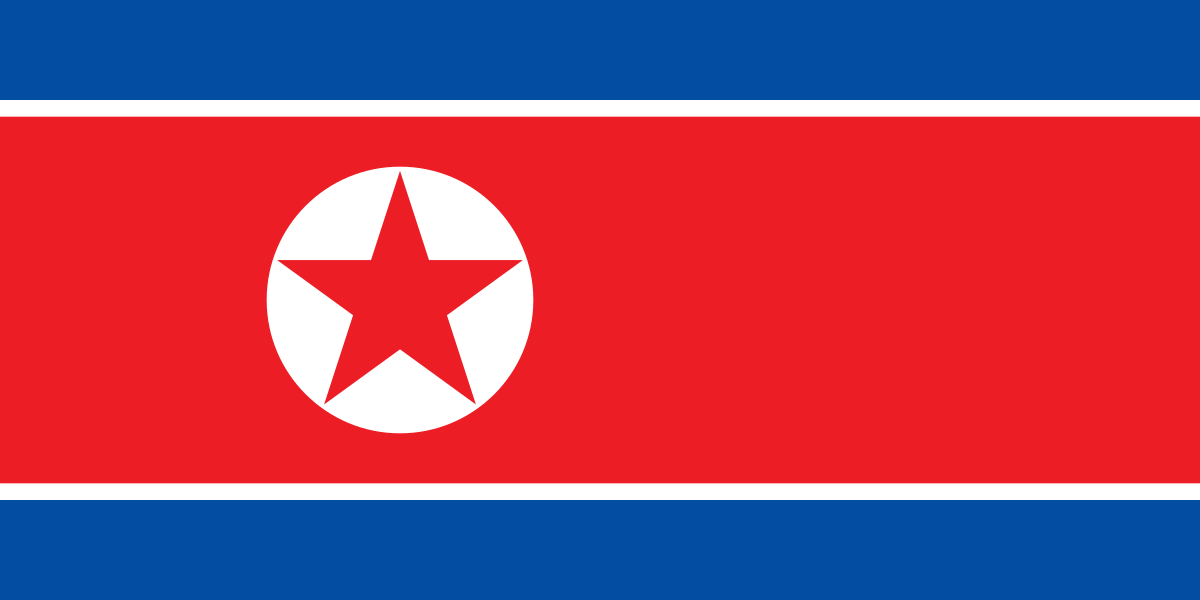
The delegation of the Democratic People’s Republic of Korea categorically rejects the 2019 report of the International Atomic Energy Agency (IAEA)
(see A/75/303), which contains distorted information about my country.
Since it is not a member of the IAEA, my country does not care about what is discussed at the Agency’s meetings, let alone what appears in its annual reports. However, we cannot overlook the fact that the IAEA makes absurd remarks about the Democratic People’s Republic of Korea in the context of the United Nations and unreasonably associates misleading information with it.
Content that touches upon the Democratic People’s Republic of Korea in the report is of no value at all, as it is completely laden with guesswork and fabrication. It is motivated by nefarious political purposes and a desire to give credence to false information by forces hostile to my country. Its lack of basic impartiality in its activities as an international organization has rendered the IAEA nothing more than a political tool of Western countries.
This is our impression of the IAEA at the present, just as it was more than 20 years ago. Recently, the IAEA has sought every opportunity to let loose a barrage of inappropriate remarks that the Agency is fully ready to resume the verification of my country’s nuclear programme and calls for the Democratic People’s Republic of Korea’s cooperation with it. We left the IAEA long ago and have not forgotten its despicable acts of siding with hostile forces for purposes of putting pressure on us and raising suspicions about the peaceful nature of my country’s nuclear facilities in the early 1990s.
I would like to make it clear once again that the Democratic People’s Republic of Korea will never have any business with the IAEA as long as it refuses to make impartiality the lifeline of its activities and as long as it remains hostage to forces hostile to my country.


At the outset, I would like to express the appreciation of the United Arab Emirates for the International Atomic Energy Agency (IAEA). I would also like to take this opportunity to express our appreciation and thanks to the Director General of the Agency, Mr. Grossi, who has led the IAEA’s work against the backdrop of the coronavirus pandemic (COVID-19).
The United Arab Emirates emphasizes the central role played by the IAEA in strengthening the
peaceful uses of nuclear technology and in helping Member States to benefit from nuclear energy and its applications. My country welcomes the Agency’s colossal efforts to create platforms for the exchange of scientific knowledge, expertise and technical skills among Member States in the areas of safety, nuclear security and non-proliferation. In this regard, we welcome the IAEA’s response to the challenges of the COVID-19 pandemic, which has involved the provision of support to several States.
The United Arab Emirates operationalized its first Barakah nuclear power plant on 1 August, with the support of its international partners, including the IAEA. It is the first nuclear power plant in the Arab world, and it allows my country to use nuclear energy for peaceful purposes. Accordingly, we are fully committed to transparency and non-proliferation and wish to underscore our country’s commitment to the highest standards of safety and quality in implementing its national programme, in accordance with the directives of the IAEA and international best practices. The Barakah nuclear power plant is a source of clean energy and supports sustainable development goals.
The partnership between the United Arab Emirates and the IAEA allowed our country to develop its programme in accordance with the highest standards of nuclear safety and security, safeguards and transparency.
The United Arab Emirates stresses the importance of the IAEA verification measures and of full compliance with the comprehensive safeguards system and the additional protocol, which is an important tool for building confidence in the peaceful purposes of nuclear programmes at the international level.
Technical cooperation with the IAEA is an essential means to help Member States benefit from the peaceful application of nuclear technology. My country continues its close cooperation with the IAEA through technical cooperation to develop our infrastructure and promote capacity-building of nuclear energy in all sectors. With the support of the IAEA, the United Arab Emirates has created programmes for advanced nuclear medicine, including the increased safety of the use of radiation in the medical arena. We have also taken initiatives to encourage and educate young people in our country with respect to sciences and nuclear applications. We also continue to promote the participation of women in the nuclear sector.
In conclusion, the United Arab Emirates emphasizes its continued and strong partnership with the IAEA through a responsible approach to developing a national nuclear-energy programme and the peaceful uses of nuclear energy. My country appreciates the work of the IAEA Secretariat and its achievements as indicated in the 2019 annual report (see A/75/303).


At the outset, I would like to thank the Director General of the International Atomic Energy Agency (IAEA) for his briefing on the 2019 report of the Agency (see A/75/303).
The peaceful uses of nuclear energy play a significant role in the scientific, technological and socioeconomic advancement of developing countries. In this context, as enshrined in the Treaty on the Non-Proliferation of Nuclear Weapons (NPT) and the Statute of the IAEA, nuclear knowledge-sharing and the transfer of nuclear technology to interested developing countries are imperative. Based on its Statute, the IAEA is responsible for assisting its member States in research on and development and practical application of nuclear energy for peaceful uses. We reiterate that one of the main responsibilities of the IAEA is to “foster the exchange of scientific and technical information on peaceful uses of atomic energy... [and] [t]o encourage the exchange and training of scientists and experts in the field of peaceful uses of atomic energy [among member States]” (Statute of the IAEA, article III,
paras. 3 and 4).
Iran has made considerable investments in establishing needed nuclear infrastructure and achieved significant progress in the civil application of nuclear science in the electrical, medical, agricultural and industrial fields. Furthermore, Iran underscores that safeguards related to verification activities as an additional IAEA statutory mandate should be carried out in support of the Agency’s primary responsibility of promoting the application of nuclear science and technology throughout the world. In this context, we emphasize that the design and implementation of required safeguards must comply with the inalienable rights of NPT States parties without hampering their economic or technological development.
Along the same lines, efforts to enhance the implementation of safeguards need to ensure that these inalienable rights and the national sovereignty of NPT States parties are respected. In this context, concerns
related to nuclear proliferation should not in any way restrict these rights. Accordingly, one cannot but reject the systematic attempts applied under the pretext of promoting non-proliferation and contrary to the letter and spirit of the Treaty to restrict the application of nuclear energy for peaceful purposes.
The Joint Comprehensive Plan of Action (JCPOA) is considered to be an important achievement of multilateral diplomacy that enjoys the strong support of the international community. The unilateral withdrawal of the United States in May 2018, the reimposition of illegal sanctions against Iran and the significant non-performance by the United States of its obligations under the JCPOA and Security Council resolution 2231 (2015) have effectively impeded the Islamic Republic of Iran from enjoying its rights enshrined in that Security Council resolution. It goes without saying that the responsibility for such mockery of international law lies with the United States and any other country that aligns itself with the approach adopted by the United States.
The Agency and the Islamic Republic of Iran are working closely with each other in different fields. It is noteworthy that, at the global level, Iran alone receives 22 per cent of the total number of inspections of the IAEA. Some 432 inspections and 33 complementary accesses were also conducted in Iran in 2019. Furthermore, the Agency has been able to carry out its verification activities in Iran despite the difficult situation caused by the coronavirus disease (COVID-19) pandemic. With this transparency and extensive cooperation, Iran and the Agency have agreed to work in good faith to resolve safeguards-related questions. However, within the framework of the safeguards obligations of States under the Comprehensive Safeguards Agreement and the Additional Protocol, the Agency’s impartiality, independence and professionalism should not be compromised under any circumstances.
In this context, it is of the utmost importance to consider the available information on the nuclear activities of Saudi Arabia. If Saudi Arabia is seeking a peaceful nuclear programme, it should act in a very transparent manner and allow the Agency’s inspectors to verify its activities. Another problem in our region is caused by the Israeli regime, which, as a non-party to the NPT, has continuously and adamantly refused to adhere to the IAEA safeguards. The Agency needs to take an unbiased and professional approach towards this regime.


Today’s debate is an important occasion to reflect upon the critical role played by the International Atomic Energy Agency (IAEA) in supporting its member States in their pursuit of nuclear power in a safe and secure manner, in highlighting the nuclear applications in various sectors like food, agriculture, health, water management and the environment, and in providing technical assistance to member States.
India congratulates Mr. Rafael Grossi on his appointment as the Director General of the Agency. We thank him for the report on Agency’s activities in 2019 (see A/75/303). This report remains an important publication for understanding the crucial work being performed by the Agency. We also congratulate Guinea and Samoa for joining the IAEA membership.
India appreciates the spirit of the Agency in ensuring business continuity even during tough lockdown conditions witnessed during the coronavirus disease (COVID-19) pandemic. We had the privilege of hosting four IAEA teams during this period. India also acknowledges the IAEA’s assistance to member States for the use of reverse transcription polymerase chain reaction, which came at an important juncture and helped many countries in addressing the pandemic crisis. India’s Department of Atomic Energy has also been actively participating in national and international efforts to counter, track, study and strategize on the COVID-19 pandemic impact.
Nuclear power remains an important option for meeting the challenges of increased energy demand, address concerns about climate change, redress volatile fossil fuel prices and ensure security of the energy supply. I would like to emphasize the need for continuation of the IAEA’s support for member States embarking on or expanding their nuclear energy programmes and, most importantly, support for member States in enhancing their capacities.
India attaches great importance to the Agency’s work in different fields of nuclear science. We contribute regularly to these activities through participation in technical meetings and coordinated research projects. We also value our partnership with the IAEA in capacity-building, through the Agency’s technical cooperation programme, by seconding experts and by offering training slots in reputed institutions in India for experts from member States. Let me take
this opportunity to reiterate that India will continue to provide its support to the Agency’s programmes.
India’s collaboration with the IAEA has continued to be significant during the last year. We had the privilege of organizing several international events, technical meetings, workshops and training programmes together with the IAEA in this period. We also hosted an important meeting to address the challenges faced by member States in using radiation-detection instruments on determining minimum detectable quantities and alarm thresholds. I am pleased to share that India has joined the Agency’s Response and Assistance Network, which offers assistance to member States to mitigate the consequences of nuclear or radiological emergencies. India’s emergency preparedness and response capabilities will now be available to all partner countries during an emergency. This is a reflection of our support for strengthening the international framework for nuclear and radiological emergency preparedness and response.
On the domestic front, we have again demonstrated our commitment to the IAEA by placing three more facilities under IAEA safeguards since December 2019, taking our total tally of facilities under such safeguards to 29. Despite the pandemic conditions, we have also successfully achieved criticality of our first native pressurized heavy-water reactor, at Kakrapar, on 22 July 2020. This reactor is a forerunner for another 15 reactors.
India has made enormous progress in the utilization of radiation technologies for the common good of its people. In the spirit of our own philosophy of Vasudhaiva Kutumbakam — The World is One Family — we are eager to share our knowledge and expertise in this area with every member of the global family. The process has already set in through increased interactions, expanding cooperation agreements, and actual collaborations in all areas where nuclear technologies can make a positive impact on the quality of human life. We are determined to take this collaboration to higher levels.
India acknowledges the dynamic role played by the IAEA in guiding the peaceful uses of nuclear energy and in ensuring safety and security and looks forward to the Agency’s continued and vital support for providing an atmosphere conducive to the growth of nuclear science and technology. India has reaffirmed its support for the work done by the IAEA by co-sponsoring the draft resolution on this year’s report of the IAEA (A/75/L.9).


Mexico welcomes the convening of today’s debate on the 2019 report of the International Atomic Energy Agency (IAEA) (see A/75/303).
In the international context in which we find ourselves, it is essential to defend effective multilateralism, support for the work of the United Nations, the progressive codification of the rules of international law and respect for established standards and agreements. There is no doubt that at this time, more than ever before, cooperation between our Organization and the specialized agencies is indispensable for achieving coherent and robust responses to current challenges. For these reasons, we commend the work of the IAEA and its invaluable role in the machinery that makes up the nuclear disarmament and non-proliferation regime.
It is very difficult to imagine how this regime would function without the IAEA and its nuclear verification activities, which are a palpable sign of compliance with the provisions of the Treaty on the Non-Proliferation of Nuclear Weapons (NPT) as regards the pillars of peaceful uses of nuclear energy and non-proliferation. It is also a crucial element in the validity of other contributions to international peace and security, such as the nuclear-weapon-free zones.
Mexico is fully committed to compliance with the Treaty for the Prohibition of Nuclear Weapons in Latin America and the Caribbean — the Treaty of Tlatelolco — and to the full implementation of the Treaty on the Prohibition of Nuclear Weapons, which will enter into force in January 2021, and will continue to fight for the entry into force of the Comprehensive Nuclear-Test-Ban Treaty. This framework of treaties complements and strengthens the nuclear non-proliferation and disarmament regime established by the NPT and remains its cornerstone.
Mexico reiterates its commitment to the implementation of all commitments and obligations under the NPT. While we regret the postponement of the tenth Review Conference of the Parties to the NPT owing to the pandemic, we see this grace period as an invaluable opportunity to continue dialogue on the full realization of the NPT’s three pillars: disarmament, non-proliferation and the use of nuclear energy for exclusively peaceful purposes, under the surveillance of the International Atomic Energy Agency.
We have taken due note of the report on the Agency’s activities in 2019 and are pleased to acknowledge the very fruitful efforts of the IAEA Secretariat, as well as those of the sixty-third General Conference, which I had the honour to chair, and which adopted resolutions on nuclear and radiological safety, nuclear security, the implementation of the NPT Safeguards Agreement between the Agency and the Democratic People’s Republic of Korea and the application of the Agency’s safeguards in the Middle East, among other aspects of great relevance to the work of the United Nations General Assembly and Security Council.
We welcome the appointment of Rafael Mariano Grossi as the new Director General of the Agency, the first Latin American to hold that position. I reiterate Mexico’s great satisfaction at having such an experienced and capable diplomat as Director General Grossi at the head of the organization, as the adoption of draft resolution A/75/L.9 by the General Assembly today coincides with his arrival at the Director General’s Office.
Similarly, it is very fitting that the General Assembly should reaffirm the support warranted by the role of the IAEA in promoting development. The practical application of nuclear science and technology in achieving the Sustainable Development Goals of the 2030 Agenda for Sustainable Development encompasses a broad thematic agenda, from safeguarding human health to combating insect pests and climate change.
In the case of my country, Mexico, technical cooperation with the International Atomic Energy Agency has benefited its people in many ways, especially with regard to programmes for treating cancer, eradicating dengue and methods for improving agriculture, as well as programmes focused on the safety of nuclear facilities and materials within the country.
The importance of the Agency’s Technical Cooperation Programme, through which projects to address such problems are implemented, as well as of the Agency itself, has been made abundantly clear in 2020, thanks to the leadership of Director General Grossi and his ability to promptly respond to the coronavirus disease pandemic in providing solutions and support for the countries in greatest need, in coordination with the World Health Organization.
Preserving the “Atoms for peace and development” initiative has paid off. We must continue to support and strengthen the International Atomic Energy Agency
in all its activities, which are linked to the goals of the United Nations system. The work of the IAEA demonstrates the importance of multilateral agencies as the appropriate tool for providing solutions to global problems.
We reiterate that a safer and more peaceful world must be based on international law, cooperation and solidarity. We hope that all Members of the United Nations are committed to this goal.


Singapore is pleased to continue its co-sponsorship of this year’s draft resolution A/75/L.9, entitled “Report of the International Atomic Energy Agency (IAEA)”. We commend IAEA Director General Rafael Grossi for his efforts to continue the Agency’s important work in safeguards verification, capacity-building and providing assistance for Member States, despite the challenges posed by the coronavirus disease.
The IAEA plays a central role in maintaining nuclear safety and security and ensuring that nuclear material is not diverted to non-peaceful uses. Its technical competence, professionalism and impartiality have earned the Agency a high degree of trust from Member States. Singapore will continue to fully support the Director General and the IAEA’s work in these areas.
Allow me to make three brief points.
First, as new technologies emerge, such as for transportable nuclear power plants, small and medium- sized or modular reactors and advanced nuclear power reactors, the IAEA must be well positioned to help Member States take advantage of those technologies for development, while implementing high standards of nuclear safety and security. It is also essential for States parties to fulfil their obligations under international legal instruments, such as the Convention on Nuclear Safety and the amended Convention on the Physical Protection of Nuclear Material to ensure the safe, secure and peaceful uses of nuclear energy.
Secondly, as the sole competent authority responsible for verifying States’ fulfilment of their safeguards obligations, the IAEA’s work is a critical pillar for international confidence that nuclear material is used for peaceful applications. We commend the IAEA’s efforts in finding alternative ways to continue conducting safeguards verification effectively, even during the pandemic.
Thirdly, technical cooperation remains an integral part of the IAEA’s work. Despite the pandemic, the IAEA has continued to assist Member States, including in building valuable capacities to detect viral pathogens. The Zoonotic Disease Integrated Action initiative, which focuses on the early detection of zoonotic disease pathogens, will add to those efforts.
Singapore will continue to play an active and constructive role to support the Agency. We look forward to continuing our strong cooperation with the Agency, including by renewing Singapore’s third- country training programme with the IAEA. We thank the IAEA for its continued support to strengthen the capabilities of the Association of Southeast Asian Nations (ASEAN) to handle radiation and nuclear technologies and their associated materials and activities in a safe and secure manner. We look forward to furthering our collaboration through the ASEAN- IAEA practical arrangements, which were concluded last year.
Above all, Singapore will continue to work with all Member States to build a culture of trust, collaboration and open dialogue towards a safer, more secure and better future for all.


At the outset, Malaysia would like to express its appreciation to the Director General of the International Atomic Energy Agency (IAEA), Mr. Rafael Mariano Grossi, for his annual statement on the sixty-fourth report (see A/75/303) of the IAEA.
Malaysia notes with appreciation the Agency’s activities in various areas highlighted in the report, despite the challenging circumstances caused by the coronavirus disease pandemic. Malaysia reaffirms its continued support for the IAEA’s mandated role to promote the safe, secure and peaceful uses of nuclear technology. Malaysia strongly believes in the balanced and effective implementation of the three pillars of the Treaty on the Non-Proliferation of Nuclear Weapons — nuclear disarmament, nuclear non-proliferation and the peaceful uses of nuclear energy.
In this regard, Malaysia recognizes the indispensable role of the IAEA in promoting the peaceful uses of nuclear energy and technology. We also recognize the Agency as the sole competent authority mandated to verify the compliance of States with safeguards obligations.
Malaysia welcomes draft resolution A/75/L.9 on the report of the IAEA, as it reaffirms the importance of supporting the Agency in its role in the development and application of atomic energy for peaceful purposes. Malaysia is pleased to serve as a current member of the Board of Governors of the IAEA. Cooperation between Malaysia and the IAEA in various areas has been fruitful and encouraging.
We reiterate our commitment to building further cooperation with the IAEA, other States and interested partners towards realizing our mutual goals and interests. Malaysia hopes that the IAEA will continue to play its important role in facilitating access to the peaceful use of nuclear energy and technology for States, while ensuring that the highest levels of nuclear safety, security and safeguards are observed.
On that note, Malaysia is pleased to co-sponsor draft resolution A/75/L.9 on the report of the IAEA. We reiterate once again our strong support for the Agency and its mandated activities.


First of all, allow me to thank Director General Rafael Mariano Grossi for his comprehensive presentation of the report of the International Atomic Energy Agency (IAEA) (see A/75/303), as well as the delegation of Canada for presenting draft resolution A/75/L.9, co-sponsored by Argentina, through which the General Assembly will adopt the report.
Argentina recently celebrated the seventieth anniversary of its first nuclear activities. Over the past seven decades, the country has developed a nuclear programme mastering the various steps of the nuclear fuel cycle, while establishing itself as a reliable exporter that, in the framework of its State policy on nuclear energy and its applications, invests in the research, development and innovation of nuclear technology for peaceful uses.
We welcome the professionalism with which the Agency’s secretariat, inspectors and the entire staff under the leadership of Director General Rafael Mariano Grossi, have carried out their duties in the face of the current coronavirus disease (COVID-19) pandemic. That commitment has enabled the Agency to continue to fulfil its main statutory responsibilities, despite the difficulties caused by the circumstances. At the same time, we can be thankful to the IAEA for providing assistance in the area of equipment and protection kits for the rapid detection of COVID-19. Such assistance
has contributed significantly to strengthening national capacities to respond to the current pandemic affecting us all.
The Agency plays a fundamental role in promoting the peaceful uses of nuclear technology, which is one of the paths that Argentina has chosen to advance its national scientific and technological development. Nuclear energy is crucial to achieving a future of sustainability and energy security and the work of the IAEA in that regard should be recognized and appreciated by the international community. With a range of technological and nuclear energy projects under way, my country aspires to be a relevant actor in that process.
Our nuclear sector attaches vital importance to the implementation of the international safeguards system. The effectiveness of the IAEA’s verification system for nuclear activities is essential to preventing nuclear proliferation and is a central pillar on which the international community has worked for decades to prevent the misuse of nuclear materials and technologies. We reiterate the importance of ensuring that safeguards implementation activities are efficient, effective and technically sound, thereby also ensuring their non-discriminatory nature. Similarly, the Argentine Republic insists on the need for the safeguards regime and its guarantees to be developed in a climate of cooperation and dialogue.
We emphasize the importance of the quadripartite agreement that Argentina has with the Federative Republic of Brazil and the Brazilian-Argentine Agency for Accounting and Control of Nuclear Materials (ABACC), which will celebrate the thirtieth anniversary of its establishment in 2021. Argentina once again highlights the constructive role and significance of ABACC and the bilateral inspection system, both in the implementation of safeguards and in building trust with Brazil in that area in the current context of the pandemic, Argentina congratulates ABACC for the additional effort made to comply with the inspections regime and the level of cooperation achieved between ABACC and the IAEA.
Argentina’s commitment to the highest standards of nuclear safety continues to be one of the pillars of its nuclear policy, and the Nuclear Regulatory Authority is the independent technical and regulatory body designated by law to monitor such activities, including the proper inspection of the construction of nuclear
reactors. Argentina seeks to continue the expansion of its fleet of nuclear power plants, while complying with the highest safety standards and the principles of the Vienna Declaration on Nuclear Safety and is working towards hosting an Integrated Regulatory Review Service mission in 2021.
The Argentine nuclear sector continues to work towards the seventh review meeting of the Joint Convention on the Safety of Spent Fuel Management and on the Safety of Radioactive Waste Management, and the eighth review meeting of the contracting parties to the Convention on Nuclear Safety, both of which have been rescheduled for 2021. The Argentine Republic reiterates once again its support for the central role that the Agency plays in strengthening the nuclear security framework at the global level and the guidelines provided in the ministerial declaration at the International Conference on Nuclear Security, held in February.
We acknowledge the importance of the entry into force of the Amendment to the Convention on the Physical Protection of Nuclear Material and the review process under way, which will lead up to the 2021 Review Conference of the Parties to the Treaty on the Non-Proliferation of Nuclear Weapons. We emphasize that nuclear security falls under the sovereign power of each State. On that basis, we support the need to harmonize binding and non-binding measures in order to move forward in a harmonious, gradual and permanent manner.
Argentina believes that international cooperation is essential to expand the benefits of nuclear energy and its peaceful applications and that it is key to achieving development goals for the benefit of the people. In that regard, Argentina actively participates in and aspires to become a focal point for training activities in the region. Our country frequently hosts training, education and human resources development activities related to peaceful uses of nuclear energy under the auspices of the IAEA.
We will continue to work and contribute resources to the Agency’s Technical Cooperation Programme, to which we provide our experience and training and capacity-building facilities. They have already benefited technicians and professionals from our region and other parts of the world. Accordingly, we welcome the renewal of the Regional Cooperation Agreement for the Promotion of Nuclear Science and Technology in
Latin America and the Caribbean, which has proven to be a valuable instrument for improving the quality of life of the countries of the region.


We are grateful for the submission of the 2019 annual report of the International Atomic Energy Agency (IAEA) (see A/75/303) and draft resolution A/75/L.9.
Out the outset, we acknowledge the work of the Agency in support of its States members in confronting the challenges related to the coronavirus disease pandemic. We highlight the leadership and organizational resilience demonstrated by the Agency’s technical secretariat in the midst of the pandemic. Cuba also recognizes and supports its important work and contribution to peace and sustainable development.
The implementation of the IAEA safeguards verification system is essential in the implementation of the Treaty on the Non-Proliferation of Nuclear Weapons, including by verifying the peaceful nature of nuclear energy programmes. The IAEA ensures the promotion of the development and use of nuclear energy and its applications for peaceful purposes to the benefit of humankind, particularly in priority areas such as health care, food security, environmental protection and water resource management, which is especially important for developing countries.
Cuba attaches particular importance to the development of nuclear applications, the technical cooperation of the IAEA and technology transfer to developing countries. In that regard, it is essential that the Agency’s efforts be prioritized and redoubled so as to increase the resources of the Technical Cooperation Programme, with the 2030 Agenda for Sustainable Development as its main focus.
Cuba is proud to hold the presidency of the Regional Cooperation Agreement for the Promotion of Nuclear Science and Technology in Latin America and the Caribbean (ARCAL) for the term ending in 2021. As such, we are demonstrating our commitment to continue working to strengthen existing cooperation ties, create new alliances and work towards the development of nuclear applications for peaceful use in our region. Under our presidency, 15 countries have deposited their instrument of acceptance to the second ARCAL extension agreement for the period from 2020 to 2025, which ratifies the sustained commitment of Latin America and the Caribbean to the Convention.
We will continue to support the inalienable right of all States to develop the research, production and use of nuclear energy for peaceful purposes, without any form of discrimination or conditions. We demand the immediate abolition of all limitations and restriction on exports to developing countries of materials, equipment and technologies for peaceful nuclear activities.
The IAEA is the framework for the adoption of international nuclear-security standards, which must be the result of multilateral, transparent and inclusive negotiations, with the participation of all States. We reiterate that the effective management of nuclear security does not allow for exclusion or selectivity. The entry into force of the Amendment to the Convention on the Physical Protection of Nuclear Material must lead to the enhanced protection of nuclear facilities and materials and facilitate cooperation among States to prevent and combat crimes involving the use of radioactive and nuclear materials. We reiterate that nuclear disarmament and non-proliferation are mutually reinforcing and that the only guarantee against the use of nuclear weapons is their total elimination in an irreversible, transparent and verified manner. We once again stress the importance of the establishment of a zone free of nuclear weapons and other weapons of mass destruction in the Middle East, and we support the Conference on the Establishment of a Zone Free of Nuclear Weapons and Other Weapons of Mass Destruction in the Middle East. We reject the decision by the United States Government to withdraw from the Joint Comprehensive Plan of Action and to reimpose unilateral sanctions on Iran. That decision is unjustified, contrary to international law and in violation of the rules of coexistence among States and — by distancing us from the objective of establishing a nuclear-weapon-free zone in the Middle East — could therefore have serious consequences for stability and security.
Mr. Kpayedo (Togo), Vice-President, took the Chair.


First of all, I would like to thank Mr. Rafael Mariano Grossi for his presentation of the sixty-fourth report of the International Atomic Energy Agency (IAEA) (see A/75/303) and commend him on his work and leadership in a year marked by challenges and severe constraints. The Principality of Monaco reiterates its full confidence in the Director General’s continuation
of his work, which promises to be no less challenging in the months and years ahead.
The presentation by the Director General highlighted the benefits that the entire international community reaps from the shared development of the peaceful uses of nuclear technology. He recalled that the development and application of that technology represent the success of the Treaty on the Non-Proliferation of Nuclear Weapons (NPT). The development of civil nuclear cooperation is indeed one of the fundamental objectives of the NPT, in accordance with its article IV.
Thanks to those efforts, the international community recognizes the major role played by nuclear technologies in the service of human development and pursuing the Sustainable Development Goals. In many areas, that technology will play a decisive role in improving the well-being of the greatest number of people and Monaco attaches particular importance to health care and environmental protection, which are areas of concern to us all and of great consequence.
With regard to the medical field, the added value of nuclear technologies is undeniable and should play a primary role in the field of medicine of the future. Such techniques already play a major role in the treatment and diagnosis of many diseases. In the future, they will allow us to perform examinations and respond with innovative and personalized follow-up treatments, use new approaches involving diagnoses paired with targeted radionuclide therapies and adapt certain treatments according to the radiosensitivity of the individual patient.
Convinced of the added value of such technologies, the Principality launched a new medical service last September that takes advantage of what we call “full digital care”, thanks to a new nuclear cardiology unit and two of the latest-model PET scanners with unparalleled imaging capability. Monaco has also historically supported the IAEA Programme of Action for Cancer Therapy, which it will continue to fund. The IAEA is demonstrating the importance of its work and its expertise is essential for supporting the development of that kind of personalized and individual medical treatment.
It is also imperative that we recall here our commitments with regard to the Paris Agreement on Climate Change. Accordingly, nuclear applications are playing a major role in monitoring climate change and human societies’ adaptation to the latter, thanks
in particular to new agricultural and hydrological technologies. Expectations run high in those areas.
At the IAEA Environmental Laboratories, which Monaco hosts on its soil, researchers are using nuclear and isotopic technologies to study how climate change affects the environment — in the oceans, in fresh water, in the mountains and at sea level — gather data on its impact and identify the sources of contamination and of the emission of greenhouse gases. Those data can and must enable leaders to make science-based decisions with a view towards mitigating and adapting to the effects of climate change. We are particularly proud today of the appointment of Mrs. Florence Descroix- Comanducci, a Monegasque national, as the Director of the Environmental Laboratories.
To site just one example of a priority area for the Principality, on 8 June — World Oceans Day — the IAEA published a new study showing a dizzying spike in microplastic pollution in the tropical eastern Pacific Ocean, which provided crucial data for understanding future ocean scenarios. Such studies can help political decision-makers to implement a suitable solution.
Almost a hundred years ago, Marie Curie, double Nobel laureate in chemistry and physics and pioneer in the study of the atom, said,
“Nothing in life is to be feared, it is only to be understood. Now is the time to understand more so that we may fear less”.
Science is our ally. It is a weapon against scepticism and disinformation. It is the ladder that enables us to understand the scale of events. It is a framework and guide leading us to appropriate and sustainable actions. It provides us with solutions. Let us therefore support and use science.


My delegation would like to thank Ambassador Rafael Mariano Grossi, Director General of the International Atomic Energy Agency (IAEA), for his statement and the Agency’s 2019 comprehensive annual report (see A/75/303).
Indonesia takes note of the developments and activities of the Agency during the reporting period. In this difficult time, we commend the IAEA for continuing its work, while contributing to the global efforts to fight against the coronavirus disease pandemic. We welcome the Agency’s assistance to Member States, including Indonesia, in strengthening the capacity of their national laboratories to respond to
the pandemic. We appreciate the provision of reverse transcription polymerase chain reaction equipment by the IAEA to increase the testing capacity in Indonesia. We also welcome the launching of the Zoonotic Disease Integrated Action initiative to strengthen global preparedness and capabilities to detect and respond to future pandemics.
Indonesia appreciates the Agency’s continuous efforts to provide the necessary support for Member States in promoting the peaceful uses of nuclear energy. We encourage the Agency to pursue its programme of work in a balanced manner, with a view to meeting the needs of Member States and ensuring its contribution to the development of nuclear science and technology to support socioeconomic development. Indonesia is of the view that nuclear security efforts must be pursued in a comprehensive manner. Measures to strengthen nuclear security must not hamper international cooperation in the area of peaceful nuclear activities or undermine the established priorities of the Agency’s Technical Cooperation Programme.
Indonesia is committed to continue developing and strengthening its nuclear security infrastructure. In cooperation with the Agency’s Integrated Nuclear Security Support Plan, we continue to strengthen our national capacity and enhance security in our nuclear and radiation facilities. Our national detection capabilities are being enhanced through the installation of radiation portal monitors and the radiation monitoring system at Indonesia’s entry points and borders.
Furthermore, as a State party to the International Convention on Nuclear Safety, Indonesia is committed to maintaining a high level of safety by establishing fundamental safety principles in the operation of our research reactors. Indonesia also remains committed to further strengthening the implementation of IAEA safeguard standards, including through the Asia-Pacific Safeguards Network of which Indonesia is currently the Chair.
Indonesia welcomes the Agency’s work and contribution to the attainment of the Sustainable Development Goals, including through its Technical Cooperation Programme. We are working closely with the Agency, not only as a beneficiary but also as a provider of technical cooperation to other members. The signing of a practical arrangement in 2018 has provided a framework for Indonesia and the IAEA to further
strengthen and enhance technical cooperation among developing countries and South-South cooperation.
Indonesia has been working closely with the IAEA to promote the use of nuclear science and technology for development. In the agricultural sector, the application of nuclear technology has played an important role in strengthening our national food security, including by increasing the production of rice and soybean.
In the health sector, Indonesia has been collaborating with the Agency in the development of cancer therapy and radiopharmaceuticals. Since 2010, the Agency has sent integrated missions of the Programme of Action for Cancer Therapy to Indonesia to improve the diagnosis and treatment of cancer through nuclear technology. We have successfully produced radiopharmaceuticals for bone pain, palliative care for cancer patients and the diagnosis and therapy of neuroblastoma.
Indonesia also supports the application of nuclear technology to address environmental problems. We welcome the Agency’s initiative to collectively address global plastic pollution through the Nuclear Technology for Controlling Plastic Pollution programme.
Finally, we welcome draft resolution A/75/L.9 on the report of the International Atomic Energy Agency, which, inter alia, takes notes of the decisions and resolutions adopted by the General Conference of the IAEA at its sixty-fourth regular session. Indonesia is pleased to co-sponsor the draft resolution and supports its adoption by consensus.
In conclusion, let me reaffirm Indonesia’s strong commitment to supporting the work of the IAEA. We look forward to further strengthening cooperation with the Agency to promote the use of nuclear energy for peaceful purposes.


I wish to express South Africa’s sincere appreciation to the Director General of the International Atomic Energy Agency (IAEA), Ambassador Rafael Grossi, for his detailed presentation of the Agency’s 2019 report (see A/75/303) and for providing valuable updates on the Agency’s activities in 2020.
South Africa reaffirms its strong support for the IAEA and we underscore the fundamental importance of the Agency’s mission and mandate. We are particularly pleased with the Agency’s work in the field of the peaceful uses of nuclear energy, sciences and technology, through its Technical Cooperation
Programme. We note that there has been a significant increase in member States’ requests for support from the Agency in that important area, through which it addresses socioeconomic development and contributes to the achievement of the Sustainable Development Goals.
That has played a particularly positive role on the African continent. IAEA programmes in African countries have assisted member States in a wide range of critical areas, including food safety and security, by improving and sustaining healthy crops and animal health; improving human health by supporting cancer control; fighting insect-borne threats such as malaria; and improving water management.
A key area of growth on the African continent is also nuclear energy. Here, we have noted the support given by the IAEA to several African countries that have decided to embark on the path to introduce nuclear energy. In that regard, the Agency has provided support for the establishment of nuclear infrastructure and capabilities for nuclear power plants, including training and capacity-building in crucial areas of nuclear safety and security.
In South Africa, we also continue to benefit from the support provided by the Agency. One of the highlights is the establishment of Africa’s first Vector Mosquito Rearing Facility in our national health laboratories. That facility will use the Agency’s successful sterile insect technique, targeting mosquitoes with the aim of eliminating malaria within our borders by 2023. Another area of support for South Africa is in preparing Africa’s only working nuclear power plant — the Koeberg power station, located near Cape Town — for its long-term operation. The Agency will also support South Africa in preparing to build further nuclear power plants as part of our energy plan for the next decade.
We congratulate the IAEA on its assistance to member States in all parts of the world in dealing with the coronavirus disease. The Agency provided member States with equipment, materials and capacity-building for the rapid detection and diagnosis of the virus. In that regard, we note that support has been provided to 126 member States, which translates into support for 281 laboratories and institutions. That support was mainly provided by using the Veterinary Diagnostic Laboratory Network, established nearly a decade ago to enhance States’ capacity to detect and diagnose zoonotic diseases. The above examples illustrate in
a concrete manner the meaning of the IAEA’s motto, “Atoms for Peace and Development”. That mandate is derived directly from the third pillar of the Treaty on the Non-Proliferation of Nuclear Weapons (NPT), which guarantees access to and the full and peaceful use of nuclear energy and technology for the advancement of humankind.
South Africa remains the only country in the world to voluntarily dismantle its highly developed domestic nuclear weapons programme. In that regard, the IAEA verified the dismantlement of the weapons that South Africa had developed. Since then, the IAEA has consistently verified the peaceful nature of South Africa’s current nuclear programme. We have consistently received broader conclusions in support of our full compliance with our legal obligations.
We believe that the safeguards system should continuously be strengthened and support the universalization of the Additional Protocol and the strengthening of the small quantities protocol, as decided by the Board of Governors of the IAEA. We are concerned that some member States are developing increasingly advanced nuclear programmes, without upgrading the safeguards regimes. In our view, a strong safeguards regime will also contribute to making progress towards nuclear disarmament because nuclear disarmament and nuclear non-proliferation are mutually reinforcing.
We further call on all those members of the IAEA that are outside the NPT to join without delay and upgrade their safeguards agreements. That will build confidence in the nature of their respective nuclear programmes, thereby contributing to global peace and security.
In conclusion, my delegation supports draft resolution A/75/L.9, introduced by Canada. We are pleased that it reaffirms the General Assembly’s strong support for the indispensable role of the Agency in encouraging and assisting the development and practical application of atomic energy for peaceful uses in technology transfer to developing countries and in nuclear safety, verification and security. South Africa will also join as a co-sponsor of the resolution.


I would like to begin by expressing our highest respect to Director General Grossi for his strong leadership in guiding the agency in exercising its full authority, while combating the coronavirus disease (COVID-19) pandemic.
The peaceful uses of nuclear energy are an important cornerstone for global socioeconomic growth and contribute to the achievement of the Sustainable Development Goals. Japan therefore continues to support the International Atomic Energy Agency (IAEA), technically, financially and with its personnel, through contributions to the Peaceful Uses Initiative and cooperation projects. In particular, Japan strongly supports the Director General’s new initiatives, including the improvement of member States’ capabilities to defeat COVID-19.
IAEA safeguards are the fundamental instrument for ensuring nuclear non-proliferation. Japan strongly supports the work of the IAEA to make the safeguards more efficient and effective. Japan also welcomes the IAEA secretariat’s efforts to continue its safeguards activities. The role of the IAEA is critically important in addressing the key problems faced by the international non-proliferation regime. Moreover, Japan will continue to advance nuclear security worldwide in cooperation with the IAEA.
As no single State can ensure global nuclear security, Japan stresses the important role of legal frameworks, such as the Amendment to the Convention on the Physical Protection of Nuclear Material (CPPNM) and the International Convention on the Suppression of Acts of Nuclear Terrorism. Japan continues to make efforts to promote the universalization of those Conventions, including through contributions to the 2021 CPPNM Review Conference.
I would like to take this opportunity to touch on some of the most pressing issues facing the international non-proliferation regime today. With regard to North Korea’s nuclear issue, Japan is deeply concerned about North Korea’s continued development of nuclear and ballistic missile capabilities.
Japan reaffirms its strong commitment to working with the international community to achieve the complete, verifiable and irreversible dismantlement of all of North Korea’s nuclear weapons and other weapons of mass destruction and ballistic missiles of all ranges, as well as related programmes and facilities, in accordance with relevant Security Council resolutions. Japan also emphasizes the critical importance for all Member States to fully implement relevant Security Council resolutions.
As a continued supporter of the Joint Comprehensive Plan of Action (JCPOA), Japan is deeply concerned about
the measures being taken by Iran that may undermine the JCPOA. Japan strongly urges Iran to comply with, and immediately return to its commitments under, the JCPOA. Japan calls upon Iran to fully cooperate with the IAEA, in accordance with all its nuclear obligations.
This year marks the fiftieth anniversary of the entry into force of the Treaty on the Non-Proliferation of Nuclear Weapons (NPT), which serves as the cornerstone of the international regime for nuclear disarmament, non-proliferation and the peaceful uses of nuclear energy. The postponement of the tenth NPT Review Conference by no means undermines the urgency of the issues regarding nuclear weapons. Japan continues to strive to achieve a meaningful outcome of the tenth Review Conference.
In conclusion, I would like to reiterate, on behalf of my Government, Japan’s firm commitment to continue to provide its maximum support for the IAEA to further promote the peaceful uses of nuclear energy and strengthen the nuclear non-proliferation regime.


First of all, I would like to thank the Director General of the International Atomic Energy Agency (IAEA), Ambassador Rafael Grossi, for his briefing and work as the first Latin American at the helm of the IAEA, in 2020 — a year that has been upended by the coronavirus disease pandemic.
I would also like to thank Canada for introducing draft resolution A/75/L.9 and congratulate it on its election as Chair of the Agency’s Board of Governors.
Ecuador co-sponsored the draft resolution as another sign of our country’s commitment to the IAEA and its efforts to ensure the use of nuclear energy for exclusively peaceful purposes and non-proliferation, in line with the Treaty on the Non-Proliferation of Nuclear Weapons. We hope that the Review Conference will be held in August 2021.
As a result, in our joint statement with Malaysia and 15 other countries on 22 May to mark the fiftieth anniversary of the Non-Proliferation Treaty, we recalled the effective role of the IAEA in the implementation of the Treaty. Today, we also recall the importance of continuing efforts relating to disarmament and the elimination of nuclear weapons as we are deeply concerned about their catastrophic humanitarian consequences. The mere existence of such weapons is a threat to the survival of humankind.
Ecuador values and supports the right of all States to employ nuclear energy for peaceful purposes. The IAEA report (see A/75/303) mentions Ecuador as it addresses the organization’s efforts relating to the Programme of Action for Cancer Therapy and to non-destructive testing methods, which are critical for ensuring the structural integrity of buildings, especially after natural disasters.
In this first year of the Decade of Action, we stress the importance of the use of nuclear energy for peaceful purposes in achieving the Sustainable Development Goals of the 2030 Agenda for Sustainable Development. As a primary producer of tropical fruits, Ecuador has successfully employed nuclear techniques, with the assistance of the IAEA and in cooperation with the Food and Agriculture Organization of the United Nations, in order to add non-traditional fruits to its exports by controlling specific insect pests with environmentally friendly methods, such as the sterile insect technique.
More recently, I would like to highlight the IAEA’s Technical Cooperation Programme and its valuable support, inter alia, in providing equipment and kits to detect COVID-19, as part of global and national efforts to address and control the spread of the virus.
Lastly, I would like to end my statement by reiterating my country’s full and unwavering support for the work of the IAEA, which it helped to establish and which is proving to be ever more crucial to peace and security and sustainable development.


We appreciate today’s briefing on the report of the work of the International Atomic Energy Agency (IAEA) in 2019 (see A/75/303). We also congratulate Mr. Rafael Mariano Grossi on his work as Director General of the Agency. El Salvador welcomes the fact that, for the first time, a representative of the Latin American and Caribbean region is at the helm of the IAEA.
We would like to underscore our gratitude for the work conducted in my country in close cooperation with the International Atomic Energy Agency. We underscore the important role the Agency plays in promoting the exclusively peaceful use of nuclear energy and in enhancing the access of its member States to nuclear technology.
Given that all Agency efforts seek to establish mechanisms that enable the provision of assistance and the sharing of information and good practices in
the area of safety and nuclear non-proliferation, my country strongly believes that in spite of the challenges to the work of multilateral organizations posed by the coronavirus disease (COVID-19) pandemic, it is important to continue the momentum towards the achievement of our common goals.
We therefore welcome the decisions adopted by the IAEA General Conference at its sixty-fourth session held in September. We believe that the outcome of this year’s Conference will strengthen the Agency’s work in various nuclear applications, technical cooperation and the effectiveness of the safeguards regime.
We would also like to underscore the leadership of the Director General and his team in response to the COVID-19 pandemic.
My country acknowledges the sovereign right of countries to exploit and use nuclear technologies for peaceful means, as established in article IV of the Treaty on the Non-Proliferation of Nuclear Weapons. We reiterate our commitment to working to achieve general and complete disarmament as the only way to ensure international peace, security and stability. We must continue to promote the use of nuclear science and technology exclusively for peaceful purposes so as to prevent the proliferation of nuclear weapons and contribute to sustainable development and global peace.
We welcome the Zoonotic Disease Integrated Action initiative of the Director General to strengthen our countries’ capacities to address in a timely way the threats posed by outbreaks of zoonotic diseases. We also welcome the Marie Skłodowska-Curie Fellowship Programme, which will help train women in the area of nuclear science and technology. That programme is being promoted by the relevant authorities in El Salvador and we hope that some of our fellow citizens will benefit from it.
The Agency’s Technical Cooperation Programme is a key factor in the economic and social development of El Salvador. That is why we signed in 2019 the Second Country Programme Framework for the period 2019-2023, which focuses on human health and nutrition, radiation safety, food and agriculture, water and environment, and energy. We also made it known that El Salvador endorsed the second extension agreement of the Regional Cooperation Agreement for the Promotion of Nuclear Science and Technology in Latin America and the Caribbean, which helped
strengthen regional capabilities in the area of nuclear science and technology.
In particular, we would like to reiterate our gratitude to the Director General and the Agency for assisting us with reverse transcription polymerase chain reaction kits as part of the COVID-19 pandemic response, thanks to the generosity of a group of countries and their valuable contributions to the project. That highlights the importance of countries working in tandem with the IAEA so that nuclear energy can be exploited in addressing such priorities as the coverage and quality of health care, food production and supply, the effective prevention and reduction of the negative impacts of climate change and the mitigation of natural disasters — all of which would help us achieve genuine sustainable human development.
Lastly, I wish to reiterate our call to work to ensure that nuclear energy is used exclusively for peaceful purposes. In that regard, nuclear energy is a tool to help us attain the 2030 Agenda for Sustainable Development and its Sustainable Development Goals and prevent the catastrophic humanitarian consequences that would arise from the use of nuclear weapons.


At the outset, let me join others in congratulating Mr. Grossi on his election and for his briefing on the report (see A/75/303).
Lithuania fully aligns itself with the statement delivered earlier today on behalf of the European Union.
In my national capacity, I would like to make the following points. Lithuania remains committed to and supports global efforts to strengthen nuclear safety, security and non-proliferation worldwide. We have always encouraged countries embarking on nuclear power programmes to proceed in a safe, secure and sustainable way, with the utmost responsibility to cover all stages of the life cycle of nuclear installations — from the proper selection and assessment of sites to the decommissioning and final management of spent fuel and all radioactive waste.
In that regard, Lithuania strongly condemns the irresponsible decision of our direct neighbour Belarus in implementing the nuclear power plant project in the immediate proximity of Vilnius — the Lithuanian capital and by far its largest city — without the proper evaluation of population distribution and density and without conducting the proper consultative process.
While embarking on its first nuclear power plant project, Belarus has violated the Convention on Environmental Impact Assessment in a Transboundary Context (Espoo Convention) and the Convention on Access to Information, Public Participation in Decision-Making and Access to Justice in Environmental Matters (Aarhus Convention). It has failed to comply with international obligations with regard to environment impact assessment in a transboundary context and public rights in governmental decision-making processes.
Furthermore, International Atomic Energy Agency’s (IAEA) review missions have identified numerous recommendations for strengthening nuclear safety and provided advice on their timely implementation. The stress-test exercise, led by the European Nuclear Safety Regulators Group, has also provided a number of recommendations, which are direct lessons drawn from past nuclear accidents. Unfortunately, Belarus has failed to implement those recommendations.
Incidents that occurred during the construction phase were unreported or denied and confirmed by authorities only after public and international pressure. The situation was further aggravated when, on 3 November, Belarus connected the first of the two units of the nuclear power plant to the grid and produced electricity despite unresolved nuclear safety issues. Those actions pose an unacceptable threat to national security, the environment and the public health of Belarus and neighbouring countries.
In the presence of the whole United Nations family, we again urge Belarus to suspend the launch of the nuclear power plant and implement without delay all the recommendations of international experts, while ensuring compliance with the highest international environmental and nuclear safety standards.
Lithuania considers the International Atomic Energy Agency to be the key nuclear safety guardian, setting standards and providing valuable expertise to its members. However, we observe with regret the faulty practices of Belarus — misusing the IAEA brand and its review services for manipulative communication with the public and adopting a rhetorical and selective approach towards nuclear safety.
We believe that such behaviour undermines public support for the peaceful uses of nuclear energy. Therefore, we are convinced that the role of the Agency in ensuring nuclear safety worldwide should
be strengthened, along with Agency standards and the use of Agency services, in order to ensure a more binding character.


The Republic of Korea remains a firm supporter of the mandate of the International Atomic Energy Agency (IAEA) to accelerate and enlarge the contributions of atomic energy to peace, health and prosperity. We welcome the IAEA annual report for 2019 (A/75/303), which illustrates how the Agency contributes to the work of the United Nations in providing solutions to global challenges.
We take note of the Agency’s proactive efforts to contribute to the achievement of the Sustainable Development Goals through nuclear technology. We welcome the notable achievements in the field of nuclear power and the renovation of the Nuclear Applications Laboratories in Seibersdorf. As a donor country, we look forward to productive plans for the next phase.
With regard to radiation and nuclear safety, the Republic of Korea attaches great importance to the Agency’s role in ensuring a robust and agile safety framework, whose importance was highlighted by the difficult circumstances caused by the coronavirus disease.
Turning now to safety conventions, it is vital to adopt the highest standards of safety in order to protect human health and the environment. We urge all Member States that have not done so to join the Convention on Nuclear Safety and the Joint Convention on the Safety of Spent Fuel Management and on the Safety of Radioactive Waste Management.
As a party to those conventions, we are adopting new technologies to enhance the safety of nuclear power plants, for example by developing advanced reactors with a passive safety system and accident- tolerant fuels to prevent severe accidents. We are also working to incorporate artificial intelligence and big data technologies into the nuclear industry that go beyond conventional concepts of nuclear safety.
On nuclear security, we underline the central role of the Agency in strengthening the global nuclear security framework. In that regard, we welcome the success of the IAEA International Conference on Nuclear Security 2020 and appreciate its contribution to encouraging nuclear security efforts. We also appreciate the Agency’s efforts to promote universal
adherence to the Amendment to the Convention on the Physical Protection of Nuclear Material and look forward to further ratifications as we approach the 2021 Review Conference of the Parties to the Treaty on the Non-Proliferation of Nuclear Weapons (NPT). We will continue to contribute to the Nuclear Security Fund to support the diverse activities of the IAEA.
With regard to nuclear verification, this year marks the fifth anniversary of the entry into force of the Treaty on the Non-Proliferation of Nuclear Weapons. For five decades, the IAEA safeguards system has underpinned the non-proliferation regime by providing credible assurances on the peaceful nature of nuclear activities. We will continue to provide strong support to the IAEA’s verification work worldwide, including by contributing to the Safeguards Member State Support Programme. In light of the importance of the Treaty, the Republic of Korea will contribute to making the NPT Review Conference next year a success.
My delegation would like to take this opportunity to commend the IAEA for its thorough, professional and impartial monitoring and verification of Iran’s implementation of its nuclear-related commitments.
We also extend our support to the IAEA in its ongoing efforts to maintain and enhance its readiness to play an essential role in verifying the Democratic People’s Republic of Korea’s nuclear programme, in accordance with its mandate, if a political agreement is reached among the relevant parties.
With the above remarks, the Republic of Korea takes note of the annual report for 2019, reiterates its steadfast support for the IAEA and its mandate and is pleased to join the other co-sponsors of the draft resolution on the report of the IAEA (A/75/L.9).


We join others in thanking the Director-General Grossi of the International Atomic Energy Agency (IAEA) for his presentation of the annual report (see A/75/303). We also co-sponsored the relevant draft resolution presented by Canada (A/75/L.9).
Ukraine applauds the IAEA’s swift reaction to the challenge of the coronavirus disease, as seen by the launch of the ambitious technical cooperation project during the early stages of the pandemic. We recognize the Agency’s prominent role in addressing the challenge by providing extensive and effective support to more than 120 countries and territories. We also
wish to mention the extrabudgetary and other voluntary contributions to that end.
Since its establishment in 1961, the IAEA safeguards system has undergone significant changes to meet the requirements specified in the Agency’s statute. To date, the balance between conceptual development and practical safeguards implementation has been achieved with the help of a State-level concept. From our own experience, Ukraine is confident that the system effectively underpins the Treaty on the Non-Proliferation of Nuclear Weapons (NPT) and contributes to international peace and security.
Against that backdrop, we see major implications for the IAEA safeguards mechanism deriving from the inability of a certain Member State to meet its obligations under the NPT.
We must recall here that, for the seventh year in a row, the Ukrainian peninsula of Crimea and the city of Sevastopol remain occupied by a nuclear-weapon State — the Russian Federation. In addition, Russia is continuing its military aggression in certain areas of the Donetsk and Luhansk regions of Ukraine. As a result, the occupying Power has made it impossible for IAEA inspectors to access the locations where nuclear and radioactive materials are stored, both in Crimea and Eastern Ukraine.
That is why, in terms of safeguards challenges, the case of the Russian aggression against Ukraine inevitably leads to the necessity of reassessing the qualitative component of the State-level concept in order to consider the political repercussions. The complexity of the issue is compounded by the fact that Ukraine has been invaded by a nuclear-weapon State. Moreover, the ongoing transformation of Crimea into a huge military base may indicate the possibility of deploying nuclear capabilities on the occupied peninsula, thereby undermining the non-nuclear-weapon status of Ukraine.
To date, based on all technically credible safeguards information, the Agency has not found any indication of a proliferation concern in Ukraine, including in the occupied territories. Still, there are no metrics to help provide an answer to the question of how effective the IAEA safeguards are with regard to the nuclear material located in the occupied territories in Ukraine or in any other country. What is obvious is that the deterrence level will remain low until the safeguards system addresses the vulnerabilities stemming from the aggressor’s behaviour.
Next year will mark the thirty-fifth anniversary of the Chernobyl tragedy. As we continue working to restore the territories affected by the accident and to decommission the Chernobyl nuclear power plant, it is imperative for that issue to remain high on the Agency’s agenda. In that connection, Ukraine reiterates its interest in continuing constructive cooperation with the IAEA, both at the national level and in the format of regional technical cooperation projects. We also note with appreciation that the IAEA Technical Cooperation Programme is keeping pace, in particular by applying nuclear techniques in the area of human health.
In that regard, Ukraine fully supports efforts to respond to the growing global cancer crisis by further developing the Programme of Action for Cancer Therapy. Ukraine has developed a national technical cooperation project dedicated to tackling paediatric cancer and is looking forward to fruitful cooperation with the Agency to that end.
Ukraine is seriously concerned by a number of recent radioactive incidents with transboundary implications. In addition to the incident of a release of ruthenium-106 in 2017 and an undefined radioactive explosion near the city of Archangelsk in the Russian Federation in 2019, another case involving the detection of ruthenium and caesium occurred this year. Those incidents obviously point to the problem of States’ non-compliance with international nuclear safety obligations. The international community should not allow the violator to take any further malicious steps. There is a clear need and a right time to draw the relevant conclusions from such events.
In conclusion, let me reaffirm Ukraine’s continued support for the work of the IAEA and our conviction regarding the important role played by the Agency in the area of international peace and security.


China congratulates Mr. Rafael Mariano Grossi on his election as the Director-General of the International Atomic Energy Agency (IAEA). We thank him for his report on the work of the Agency (see A/75/303).
Over the past year, the Agency has conducted many successful initiatives to promote the peaceful uses of nuclear energy and the application of nuclear technology, safeguard the international nuclear non-proliferation regime and strengthen global nuclear safety and security in accordance with its statutory mandate.
During the coronavirus disease (COVID-19) pandemic, the Agency, under the leadership of the Director-General, has been actively assisting Member States in combating the disease by leveraging the unique advantages of nuclear energy. China appreciates all such efforts.
The development of nuclear energy and the application of nuclear technology are vital to diversifying energy supplies, protecting the environment and tackling climate change. They are also instrumental in ensuring stable energy supplies and promoting economic recovery in the context of COVID-19. However, grave challenges remain in the area of nuclear non-proliferation and nuclear security and we cannot afford to overlook the threat of nuclear terrorism. Much remains to be done on the Agency’s important and challenging agenda.
The tenth Review Conference of the Parties to the Treaty on the Non-Proliferation of Nuclear Weapons will be held next year. Strengthening the Agency’s work in all its mandated areas will also help bring about a positive outcome at the Review Conference. In that regard, China would like to propose the following.
First, in order to promote the inclusive sharing of nuclear energy benefits, we encourage the Agency to continue increasing input to support Member States in their development and application of nuclear energy and nuclear technology and to provide greater technical and financial support for developing countries to help them achieve the objectives of the 2030 Agenda for Sustainable Development.
China also supports the Agency, as mandated, in applying, as mandated, in contributing positively to capacity-building for all States, especially developing countries, in combating COVID-19 by leveraging is technological advantages. Meanwhile, the international community should come together to reject the politicization of international cooperation for the peaceful uses of nuclear energy by certain countries with the intention of triggering a race among major States and serving their own geopolitical interests.
Secondly, we must ensure the safe, secure and peaceful use and development of nuclear energy. The Agency should continue improving the safeguards system on the basis of impartiality and objectivity. The universality of the Comprehensive Safeguards Agreements and Additional Protocol should be continuously promoted and the effectiveness and
efficiency of the safeguards system should be further enhanced. The Agency should also continue to develop nuclear safety standards and nuclear security guidelines and should facilitate experience-sharing by relevant countries in order to strengthen the nuclear safety and security capacity of all Member States.
Thirdly, in order to facilitate the political and diplomatic settlement of hotspot nuclear issues, the Agency should continue to play a constructive role in that regard, as mandated, in an impartial and objective manner. China appreciates the Agency’s efforts in verifying and monitoring Iran’s implementation of the Joint Comprehensive Plan of Action pursuant to Security Council resolution 2231 (2015), as well as its engagement with Iran to address safeguards issues through dialogue and cooperation.
The Chinese Government firmly supports the efforts of the Director-General and the Secretariat in combating COVID-19 and has pledged, at the earliest opportunity, a donation of testing equipment and medical supplies worth $2 million.
By consistently taking a sensible, coordinated and balanced approach to nuclear security and adhering to the principle of safety first, China has been actively promoting the safe and efficient development of nuclear energy. China is ready to further intensify all- round cooperation with the Agency so that the peaceful uses of nuclear energy can better serve humankind. We also stand ready to work with the international community to uphold the vision of a community with a shared future for humankind, foster greater unity and cooperation and work tirelessly to deliver on our lofty joint commitment, namely our “Atoms for Peace and Development” mandate.


The draft resolution on the report of the International Atomic Energy Agency (IAEA) (A/75/L.9) is fully consistent with the partnership between the Philippines and the IAEA.
The Philippines commends the Director-General of the IAEA, Mr. Rafael Mariano Grossi, who has worked tirelessly since assuming his post in December 2019, despite the challenges of the coronavirus disease (COVID-19) pandemic. We underscore the indispensable role of the Agency in encouraging and assisting the development and practical application of atomic energy for peaceful uses, the transfer of technology to developing countries and the verification and maintenance of nuclear safety.
This year, the IAEA’s work facilitated the augmentation of the technical capacities of Member States to deal with COVID-19. The IAEA’s assistance package, which contains equipment and materials for a nuclear-derived technique, has supported the efforts of the Philippines to address the impacts of the pandemic.
As highlighted during the pandemic, one beneficial application of nuclear energy in medicine and health is the detection of zoonotic diseases that have potentially catastrophic impacts on human health and society. The Philippines supports the IAEA’s Zoonotic Disease Integrated Action project, which aims to strengthen capabilities in surveillance, early detection and intervention against emerging or re-emerging zoonotic diseases.
The Philippines is pleased to play a role in the IAEA’s COVID-19 response. As the Rapporteur of the Technical Assistance and Cooperation Committee in November last year, the Philippines facilitated the approval of the Agency’s Technical Cooperation Programme for 2020-2021, which includes a project dedicated to emergency response. Through its Technical Cooperation Programme, the IAEA makes a significant contribution, from a broader perspective, to the achievement of the key sustainable development priorities of each country, including relevant nationally identified targets under the Sustainable Development Goals.
The Philippines expresses its appreciation for the IAEA’s continued support for its move to establish a nuclear power programme. The issuance of an executive order on 24 July this year created our nuclear energy programme’s inter-agency committee, which was tasked with studying the adoption of a national position on a nuclear energy programme in accordance with pertinent IAEA guidelines and standards.
During the pandemic, the relevance of the IAEA has become all the more pronounced, given the parallel and ever-increasing importance of dealing with nuclear non-proliferation and disarmament issues from a technical and scientific perspective. We recognize the challenges faced by the Agency, including the steady increase in the amount of nuclear material in circulation, the number of nuclear facilities under IAEA safeguards and the continuing pressure on the Agency’s budget.
The Philippines will therefore continue to offer its full support, wherever it can, for addressing the various
issues confronted by the Agency and pursuing collective efforts for the peaceful uses of nuclear energy.


I wish to join other speakers this morning in welcoming the appointment of Mr. Rafael Mariano Rossi as Director-General of the International Atomic Energy Agency (IAEA). I would like to thank him for presenting the report of the Agency for 2019 (see A/75/303).
We take note of the agency’s continued efforts to pursue the objectives of accelerating and enlarging the contribution of atomic energy to peace, medicine and prosperity throughout the world. We acknowledge the flexibility of the Agency, as enshrined in its statute, to address the evolving needs of Member States and help them achieve their national development goals. We remember the contribution of the former Director- General, the late Mr. Yukiya Amano, to the Agency and its work.
Bangladesh considers nuclear energy as a safe, environmentally friendly and economically viable source of power generation to meet the increasing demand for electricity. We believe nuclear energy unlocks our development potential through enhanced productivity and sustained growth. However, our initiative for nuclear power generation is relatively recent. Our aim is to generate at least 4,000 megawatts of electricity from nuclear resources by 2030, which will represent 10 per cent of our total targeted electricity generation by that time.
We consider nuclear security as a vital subject and recognize that the right to the peaceful use of nuclear energy comes with the responsibility to ensure nuclear safety and security. The IAEA plays a wide-ranging role in that regard. On the one hand, it has a central role in ensuring nuclear safety and security globally. On the other, with its “Atoms for Peace and Development” mandate, it helps Member States to build capacity through its Technical Cooperation Programme.
Bangladesh appreciates the IAEA’s assistance in strengthening local infrastructure and training our officials. With the support of the IAEA, we are following the highest Agency standards in constructing the Rooppur nuclear power plant — the first in the country.
The Bangladesh Atomic Energy Regulatory Authority has taken a number of steps to strengthen regulatory infrastructure with regard to safety, security and safeguards. Prime Minister Sheikh Hasina envisions transforming Bangladesh into a middle-income country by 2021 and a developed one by 2041. In our journey
forward, we greatly value our partnership with the IAEA. We concluded the IAEA Safeguards Agreement in 1982 and its Additional Protocol in 2001.
In 2018, we signed our country programme framework for 2018-2023 with the Agency, with a focus on food; agriculture; water, soil and the environment; human health; nuclear power; nuclear and radiation safety and security; development of nuclear knowledge; and industrial applications. Our technical cooperation projects on improving food security, stress-tolerant crop varieties and cancer management have proved immensely beneficial to the lives and livelihood of our people.
The IAEA has long remained our main partner for the promotion of safe and secure applications of nuclear science and technology for peaceful purposes by way of technical cooperation programmes, including under the Regional Cooperative Agreement (RCA). We have received sustained cooperation for developing capacity in the application of nuclear science and techniques in sectors such as nuclear infrastructure and research, livestock, agriculture, health, industry and water management, inter alia.
In addition, Bangladesh has benefited from the IAEA’s RCA framework, which continues to promote regional capabilities and expertise in different thematic areas, including research reactors and radioactive waste management, nuclear safety and radiation protection. We look forward to availing ourselves of future opportunities in the field of nuclear science and technology in order to respond to evolving needs and demands on the ground.
Bangladesh also looks forward to further enhancing its engagement with the IAEA in the coming days with a view to collectively enhancing global nuclear security and safety and promoting the application of nuclear science and technologies for peaceful purposes. We consider those objectives to be of utmost importance in realizing a number of relevant Sustainable Development Goals, particularly for developing, graduating and least developed countries.
We wish to thank the IAEA and its secretariat for its excellent cooperation with Bangladesh and we look forward to continuing our partnership with the IAEA in that same cooperative spirit.


I would like to extend the warm regards of my delegation to the President of the
General Assembly and to commend him on his able leadership of the General Assembly at its seventy-fifth session during this difficult period of the coronavirus disease (COVID-19) pandemic.
The delegation of Nigeria has taken note of the annual report (see A/75/303) of the International Atomic Energy Agency (IAEA) for 2019, as transmitted by the Secretary-General in his note (A/75/303), for which we thank him.
My delegation welcomes the introductory remarks made by Director-General Rafael Grossi on the report of the International Atomic Energy Agency. We thank him for his excellent leadership of the Agency during these difficult times, in particular the introduction of various flagship programmes since he took office, such as the remarkable Marie Skłodowska-Curie Fellowship, which offers scholarships in nuclear science to women and young girls; the Zoonotic Disease Integrated Action initiative; and the efficient implementation of the interregional Technical Cooperation Programme, through which COVID-19 detection equipment has been provided to more than 120 Member States, among others.
The report before us demonstrates the work of the Agency in all aspects of its mandate. Nigeria particularly appreciates the value of the peaceful uses of nuclear energy for the socioeconomic development of countries. Nigeria also notes that, in line with its mandate and pursuant to article II of its statute, the IAEA has continued to support Member States, especially in the developing regions of the world, towards the use of nuclear energy in a peaceful manner for purposes related to human health and well-being, such as cancer control; soil and water management; the detection of zoonotic diseases through nuclear or nuclear-derived techniques; and power generation.
My delegation welcomes the promotion of the annual report detailing the work of the IAEA in delivering support to Member States through the Technical Cooperation Programme. We welcome the efforts of the Director-General aimed at strengthening the Technical Cooperation Programme itself.
The Agency’s work in the area of nuclear safety and nuclear security and, equally importantly, in the area of safeguards and verification, contributes significantly to international peace. Nigeria supports those aspects of the Agency’s work and reiterates its continued support for its Director-General and staff
in that regard. Nigeria therefore welcomes the report and supports the recommended actions therein, and requests that the Secretary-General continue his efforts to strengthen cooperation between the United Nations and the IAEA within the framework of the agreement governing their relationship.


My country’s delegation welcomes the General Assembly’s consideration of the annual report of the International Atomic Energy Agency (IAEA) (see A/75/303) during the International Week of Science and Peace. The event, which takes place during the week of 11 November every year, has been held around the world for over three decades to raise awareness of the relationship between science and technology and the maintenance of international peace and security.
The IAEA is an excellent example of that relationship, as the State of Kuwait firmly believes in the pioneering and pivotal role of the Agency in promoting and harnessing the peaceful uses of atomic energy for achieving peace and prosperity, as well as promoting health. The Agency also contributes to strengthening the system of nuclear security and safety and the application of safeguards in all Member States, pursuant to the motto “Atoms for peace and development”, and highlighting the interlinkages between science and technology and the maintenance of international peace and security.
The State of Kuwait is currently a member of the IAEA Board of Governors, for the fifth time since joining the Agency in 1964. As in the past, we will continue to take advantage of our membership and seek to enhance the Agency’s technical and professional work in order to fulfil the aspirations of Member States to achieving the Sustainable Development Goals and responding to international priorities and important issues.
The world is currently grappling with an enemy that does not recognize history, geography, race or climate. It is a renewed and transnational enemy that has no regard for political, economic or social systems. That enemy constitutes a universal and existential threat to all humankind. We are gathered here today in extremely sensitive and dangerous health conditions, while taking exceptional and unprecedented measures following the outbreak of the coronavirus disease pandemic, the repercussions of which cast a shadow over our daily lives.
My delegation, therefore, welcomes the General Assembly’s decision to hold a special session at the level of Heads of States and Governments early next month to confront the pandemic.
The State of Kuwait will continue to support all initiatives to combat this pandemic and to alleviate its effects on people’s lives, as we did recently with the Zoonotic Disease Integrated Action initiative, which is aimed at strengthening world preparedness to address pandemics in the future by using nuclear technology. The State of Kuwait will appropriate some of its financial contributions to support that initiative.
We have taken due note of the 2019 annual report of the International Atomic Energy Agency, which highlights cooperation between the State of Kuwait and the Agency in several areas, including the IAEA Low Enriched Uranium Bank, to which we have contributed $10 million. We would also like to mention our contribution to modernize the Yukiya Amano Laboratories. On the bilateral level, we note the third Country Programme Framework for 2020-2025, as well as the practical arrangements signed between the IAEA and the Kuwait Institute for Scientific Research to support cooperation on environmental monitoring and protection. The Environment and Life Sciences Research Center of the Kuwait Institute for Scientific Research has been designated as a centre of cooperation with the Agency on the use of nuclear technology and isotopes to study and advance the marine and coastal sciences, which bears witness to the scope of the ongoing cooperation between the State of Kuwait and the Agency.
The Treaty on the Non-Proliferation of Nuclear Weapons (NPT) guarantees the right of all States to produce, develop and use atomic energy for peaceful purposes. The NPT also seeks to limit the proliferation of nuclear weapons and totally eliminate nuclear arsenals. It remains the cornerstone of the non-proliferation regime and international efforts to that end. Our world today faces various challenges and tensions in that regard, but dialogue and the peaceful resolution of disputes remain the best way to resolve such challenges.
We therefore call on the Democratic People’s Republic of Korea to comply with international treaties and the relevant resolutions of the Security Council to bring about stability and achieve the desired objectives with regard to the Korean peninsula. We also call on
the Islamic Republic of Iran to fully cooperate with the IAEA in order to comply with its nuclear commitments under the Joint Comprehensive Plan of Action and with the relevant Security Council resolution 2231 (2015). We also call upon it to ratify and implement the additional protocol.
The State of Kuwait, like other Arab countries, underscores its adherence to the goal of creating a zone free of nuclear weapons and weapons of mass destruction in the Middle East, which would have a direct impact on the stability of the entire region. The nuclear-weapon-freeze zones that have been established around the world have always assured Member States of the non-use or threat of use of nuclear weapons. Those zones also provide assurances to all their States and to the international community of the intention to use nuclear energy for peaceful purposes.
The State of Kuwait welcomed the convening of the first Conference on the Establishment of a Middle East Zone Free of Nuclear Weapons and Other Weapons of Mass Destruction, which took place last year and was presided over by the sisterly Hashemite Kingdom of Jordan. We hope to see the second such conference held next year.
We reiterate the importance of ensuring that Israel accedes to the NPT, as it is the only State in the region that is not party to the Treaty. It should place all its nuclear installations under the IAEA’s comprehensive safeguards regime.


The International Atomic Energy Agency is a unique instrument for international cooperation on the peaceful use of nuclear energy and a robust oversight mechanism for the fulfilment by States of their obligations in the area of nuclear non-proliferation. The Agency’s work in terms of helping to establish a sustainable infrastructure and ensure States’ access to the benefits of the peaceful use of nuclear energy is important. That work merits the support of the United Nations. International trust in the IAEA safeguards regime is a fundamental criteria for supporting and strengthening mechanisms for the non-proliferation of nuclear weapons. We support efforts under the voluntary additional protocol to the comprehensive safeguards agreement. We also believe that further developing the safeguards system is in the interests of strengthening the nuclear non-proliferation regime with the understanding that it is based on the basic principles
of verification, impartiality, technical foundation and transparency. An impartial and impartial objective approach to nuclear verification is a key element in supporting the legitimacy of the IAEA safeguards system and the nuclear non-proliferation regime as a whole.
The Russian Federation fully supports the IAEA’s work. We advocate for broad access by States that meet their nuclear non-proliferation obligations to the benefits of the peaceful use of nuclear energy and the strengthening of international cooperation in that area. As a donor State, Russia makes voluntary contributions to the International Project on Innovative Nuclear Reactors and Fuel Cycles, the Technical Cooperation Fund and the Nuclear Security Fund. We also provide assistance to the IAEA’s work on nuclear and radiation security, the safe transport of nuclear and radioactive materials, the safe treatment of radioactive waste and nuclear emergency preparation and response. The Russian Federation remains ready to provide the Agency and partner countries with all forms of support to develop the necessary nuclear energy infrastructure.
The IAEA should play a central role in international cooperation on physical nuclear security as the most representative and technically competent organization in that area. At the same time, we believe that responsibility for ensuring physical nuclear security on its territory lies with the State itself, which should define the best ways of achieving that. We also believe the broad participation of States in the Convention on the Physical Protection of Nuclear Material and Nuclear Facilities and the International Convention for the Suppression of Acts of Nuclear Terrorism to be important. We stress the importance of IAEA member States treating the Agency with respect. It is also necessary to refrain from artificially inserting issues that are outside the scope of its Statute into the agenda of the Agency’s decision-making bodies and its activities in general.
The Russian Federation commends the work of the Agency during the reporting period and reaffirms its fundamental support for draft resolution A/75/L.9, on the report of the Agency. We are confident that the Agency’s efforts will continue and further increase in the interests of developing peaceful nuclear energy and nuclear technologies throughout the world, while also improving and strengthening the nuclear non-proliferation regime.
With regard to remarks made by the representative of Ukraine, it is clear to all that it has no relation to the topic under consideration today and is simply an act of provocation. It is yet another example of anti-Russian propaganda, and I therefore do not think it necessary to respond. I will only say that the Russian Federation strictly complies with the 1994 Memorandum on Security Assurances in Connection with Ukraine’s Accession to the Treaty on the Non-Proliferation of Nuclear Weapons and its obligations to respect the sovereignty of Ukraine, while fully meeting its obligations not to use or threaten to use nuclear weapons against non-nuclear-weapon States, including Ukraine. We also comply with all our obligations under the NPT, the IAEA Safeguards Agreement and its Additional Protocol.
Deliberate attempts to deny that undermines international trust in the IAEA safeguards and the non-proliferation regime owing to political machinations. Our position on the matter raised by Ukraine is reflected in the relevant IAEA document, INFCIRC/876, of June 2015.


Australia thanks the International Atomic Energy Agency (IAEA) for submitting its report (see A/75/3030) and Canada for introducing draft resolution A/75/L.9, which we are pleased to co-sponsor. As a founding member of the IAEA and a long-standing member of the Agency’s Board of Governors, Australia strongly supports the Agency’s roles, namely, advancing our collective interests in the peaceful uses of nuclear technology and safeguarding against the proliferation of nuclear weapons. That work remains vital as the international community faces fresh challenges associated with the coronavirus disease. We look forward to the rescheduled Review Conference of the Parties to the Treaty on the Non-Proliferation of Nuclear Weapons as an important opportunity to strengthen the implementation of the Treaty, including through the essential role played by the IAEA.
As co-Chair of the Group of Friends for Women in Nuclear in Vienna, Australia commends the Agency’s efforts to increase representation and diversity in the IAEA and to strengthen the role of women in the nuclear sector.
We welcome the participation of the IAEA at the International Youth Nuclear Congress, hosted by Australian in March this year. The conference focused
on the important theme “Diversity in nuclear”. We welcome the Agency’s remote monitoring systems and remote data-transmission infrastructure, as highlighted in the report — innovations that appear even more important in the context of the coronavirus disease (COVID-19).
Australia also commends the Agency’s continued safeguards implementation and its subsequent maintenance throughout the COVID-19 pandemic. Strict adherence to IAEA safeguards obligations is a critical element of the global nuclear non-proliferation architecture. To that end, the IAEA must be able to conduct its important safeguards work, including the analysis of all safeguards-relevant material. We emphasize Australia’s strong and continued support for the professional work of the IAEA Director General and staff as they seek to implement the Islamic Republic of Iran’s Comprehensive Safeguards Agreement and Additional Protocol. Australia sees the additional protocol as the contemporary standard for verification, which we should all aim to universalize.
Australia notes with concern that no IAEA verification access has been provided to sites in the Democratic People’s Republic of Korea. Australia urges the Democratic People’s Republic of Korea to return to full compliance with the Treaty on the Non-Proliferation of Nuclear Weapons, permit the early return to IAEA safeguards inspections and sign and ratify the Comprehensive Nuclear-Test-Ban Treaty. The international community must continue to implement United Nations sanctions on the Democratic People’s Republic of Korea until it takes clear steps to comply with all relevant Security Council resolutions by abandoning not only its nuclear weapons and existing programmes, but also its weapons of mass destruction and ballistic missile programmes in a complete, verifiable and irreversible manner.
Australia strongly supports the IAEA’s work on the peaceful uses of nuclear technology and its key role in coordinating and assisting Member States to enhance nuclear safety and security. As noted in the report, we are pleased to have 41 research contracts and agreements with the Agency and a collaborating centre. With regard to the pandemic, we appreciate the Agency’s technical cooperation programme facilitating access to nuclear techniques for the rapid and effective diagnosis of COVID-19. For its part, Australia is at the vanguard of COVID-19 research, making a world-class nuclear science infrastructure available to scientists
seeking to understand the virus and develop vaccines and treatments.
Australia commends the Agency’s continued support for minimizing high enriched uranium in civilian use. Australia has been producing molybdenum-99 exclusively for low enriched uranium for 15 years, proving that it is technically and economically feasible to do so. We urge all Member States in the process of converting their high enriched uranium-based methods to continue to eliminate an unnecessary nuclear proliferation and security risk.


The Syrian Arab Republic believes that it is important for the International Atomic Energy Agency (IAEA) to fulfil its mandate in line with its statute. Nuclear non-proliferation is one of the fundamental pillars and national priorities of my country, Syria, in word and deed. My country was among the first to adhere to the Treaty on the Non-Proliferation of Nuclear Weapons (NPT), in 1968, ahead of many European Union member States that today claim to be committed to the non-proliferation regime, while some of those European States — in addition to Turkey, which is a member of NATO — have nuclear weapons on their territories, in flagrant violation of articles I and II of the NPT.
My country, Syria, signed a Safeguards Agreement with the Agency in 1992. In 2003, Syria submitted a draft resolution to the Security Council on the establishment of a Middle East zone free of nuclear weapons and other weapons of mass destruction. The credibility of our country’s commitment to and engagement on nuclear non-proliferation cannot therefore be questioned, particularly in light of the fact that the draft resolution was in line with the purposes and principles of the IAEA. But the United States objected to the draft resolution and threatened to use the veto.
The Security Council and the IAEA have not condemned Israel’s flagrant aggression against my country in 2007. They also have not condemned Israel’s lack of cooperation with the Agency or its refusal to allow its inspectors to reveal and investigate the possible source of radioactive effects of the use of missiles and materials by Israel in destroying and contaminating the Deir ez-Zor installation. Israel’s continued refusal to cooperate with the IAEA and its development of nuclear military capabilities outside any international safeguards regime, as well as its disregard
of all calls to establish a nuclear-weapon-free zone in the Middle East, which undermines the credibility of the non-proliferation regime and the universal nature of the NPT, threaten the stability and safety of the peoples and States of the Middle East region. All these are very serious issues that are proved, documented and known to the IAEA.
The obligations of Member States under the statute of the Agency would have required the United States to report to the Agency information in its possession before the installation was destroyed by Israeli forces, not eight months later. The same applies to Israel, which not only stopped short of providing information to the Agency — correct or otherwise — but also conducted an aggravated military aggression against the sovereignty of Syrian territories by overflying the neighbouring country of Turkey. That was not addressed by the IAEA in accordance with its mandate. The Agency failed also to take necessary measures, under its terms of reference and responsibilities, with respect to Israel’s non-compliance with its international commitments.
Most of the Agency’s conclusions concerning the Deir ez-Zor installation were based on satellite imagery provided by the United States Central Intelligence Agency. That really calls into question the credibility of the information provided to the Agency, particularly given that it was provided by a State with a hostile agenda against my country, Syria, as Member States may recall, and considering the related precedents set by the catastrophic and misleading Iraqi file, which led to the invasion and destruction of Iraq’s infrastructure and the spread of terrorism in Iraq and throughout the region.
Syria has cooperated positively and constructively with the IAEA on the status of the Deir ez-Zor installation, which was attacked by Israeli warplanes from Turkish airspace. Following that attack, my country allowed Agency inspectors to visit the installation in June 2008, granting them free access to its perimeter so that they could collect environmental samples. Syria also answered all requests for information and showed maximum flexibility and seriousness in addressing all pending issues. In October 2011, Syria reached an agreement with the Agency on an action plan designed to resolve all outstanding issues. Regrettably, some States — the United States in particular — exerted pressure not to allow the plan to be implemented and resorted to political blackmail, as subsequently revealed by the WikiLeaks documents. Hence, the United States,
and not Syria, is responsible for the failure to implement the action plan.
The Agency’s annual reports on safeguards implementation have shown Syria’s full commitment to meeting its obligations under the comprehensive safeguards agreement and the NPT. Moreover, Syria has met all inspection requests in a timely manner. Israel’s admission of its responsibility for the attack on Syria after a decade of denial requires that the Agency must immediately dispatch an inspection team to Israel. Any discussion on the issue is useless until the aggressor entity cooperates with the Agency.

We have heard the last speaker in the debate on agenda item 93.
The Assembly will now take a decision on draft resolution A/75/L.9, entitled “Report of the International Atomic Energy Agency”. I now give the floor to the representative of the Secretariat.

I should like to announce that, since the submission of the draft resolution, and in addition to those delegations listed in the document, the following countries have also become sponsors of A/75/L.9: Argentina, Armenia, the Plurinational State of Bolivia, Croatia, the Democratic Republic of the Congo, Ecuador, Finland, France, Germany, Greece, Indonesia, Ireland, Latvia, Lithuania, Malaysia, Nigeria, Palau, the Philippines, Singapore, Tunisia, Ukraine and Uruguay.
May I take it that it is the wish of the General Assembly to adopt draft resolution A/75/L.9?
Draft resolution A/75/L.9 was adopted (resolution 75/6).
Vote:
75/6
Consensus
Five delegations have asked to speak in exercise of the right of reply. May I remind them that statements made in exercise of the right of reply are limited to 10 minutes for the first intervention and to five minutes for the second intervention, and should be made by delegations from their seats. Before giving the floor for explanations of position on the resolution just adopted, may I remind delegations that statements made in exercise of the right of reply are limited to 10 minutes and should be made by delegations from their seats.


My country has asked to take the floor to exercise its right of reply to respond to the accusations made by the representative of Iran. In its statements, Iran simply repeats its well-known practices, while the international community is threatened by Iran’s lack of respect for its international obligations and the increase in its level of enriched uranium, which is 10 ten times higher than the acceptable level. We call on Iran to act like a normal State and to deal with other States and United Nations agencies in a transparent way.
Belarus would like to exercise its right of reply to respond to the statement made by the Lithuanian delegation. We note the specialized international platform for nuclear security information. The accusation made with regard to the lack of safety of the new Belarusian nuclear power plant is biased and has no relevance to the agenda item under discussion today. From the very beginning of the implementation of its national nuclear energy programme, Belarus has been open and responsible in its cooperation with the International Atomic Energy Agency (IAEA), the European Union (EU) and other international partners. We continue to take all necessary measures to ensure the highest level of safety and security of our nuclear power plants. We apply the entire toolkit proposed by the IAEA to assess all such sites and ensure their security. Belarus has voluntarily carried out a stress test of its nuclear power plant in accordance with EU specifications and has a partner review under the aegis of the European Commission and the EU regulatory bodies on nuclear security. To date, the Belarus nuclear power plant is the only existing or projected nuclear power plant in the European region that has gone through a verification process under the most recent and strictest European standards. A team of European regulators, including Lithuanian specialists, did not highlight any shortcomings in the safety of the Belarusian nuclear power plant.
We note that the first reactor unit is at the energy launch stage, which sets out a regime for the reactor unit to work at different power levels. During the tests, it was highlighted that we needed to change some of the measuring equipment and work to replace that equipment is under way in line with all the technical regulations. All technical systems are functioning normally.
Belarus intends to continue an open and professional level of cooperation with all interested countries and partners on nuclear security in general and to ensure
the safe and sustainable operation of the Belarusian nuclear power plant in particular.
Since the Russian representative mentioned the issue of the Budapest Memorandum, let me state the following.
It is well known that in 1994 the State signatories of the Memorandum, with the Russian Federation in first place, agreed to “reaffirm their commitment to Ukraine... to respect the independence and sovereignty and the existing borders of Ukraine”, as well as to “reaffirm their obligation to refrain from the threat or use of force against the territorial integrity or political independence of Ukraine”. It is also well known that the General Assembly has recognized Russia as an occupying Power in Ukraine on a number of occasions and in a number of General Assembly resolutions. The Assembly has also included in its agenda the item entitled “The situation in the temporarily occupied territories of Ukraine”, meaning temporarily occupied by Russia.
As a result of the Russian occupation of Crimea and the invasion of the east of Ukraine, 14,000 people have been killed, almost 30,000 people wounded and 1.5 million people displaced. Therefore, the answer to the question “Is Russia committed to the Budapest Memorandum, the Charter of the United Nations or any other internationally legally binding document?” is quite obvious: “Only in its own upside-down world”.
With regard to the more specific issue of nuclear facilities and control over the nuclear facilities located in the Crimean peninsula, I would like to remind the Assembly of the following. Owing to the external aggression, the competent State authorities of Ukraine lost control over the nuclear facilities and materials located in the Crimean peninsula and in the temporarily occupied territories of Donetsk and Luhansk regions.
Nonetheless, imprudent attempts by Russia to take control of the nuclear facilities and materials located in the Crimean peninsula contravene international law and the Statute of the International Atomic Energy Agency (IAEA). All nuclear facilities, installations and materials located in the territory of the Autonomous Republic of Crimea and Sevastopol are the property of Ukraine. Their legal status and the procedures for their operation, use and maintenance are specified by Ukrainian laws.
The illegal actions of the aggressor State do not have consequences for the legal status of the Autonomous Republic of Crimea and the city of Sevastopol, which are an integral part of Ukraine, including in accordance with resolution 68/262, on the territorial integrity of Ukraine. Any attempts by the Russian Federation, under the agreement of 1985 between the IAEA and the USSR, to extend its jurisdiction over the nuclear facilities and material in the Autonomous Republic of Crimea and the city of Sevastopol are therefore null and void.
The IAEA annual report for 2019, as well as every annual report since the start of the Russian aggression against Ukraine, has made it very clear that no actions by the IAEA will imply a resolutionecognition of Russian authority over Crimea.
With reference to resolution 68/262, entitled “Territorial integrity of Ukraine”, which I have already mentioned, Ukraine recognizes the guidance of the United Nations Legal Counsel provided to the legal advisers of the United Nations system, which stated that, inter alia, the treaties to which Ukraine is a party remain applicable to the entire territory of Ukraine, including Crimea. Therefore, Ukraine welcomes the Agency’s firm position in continuing to implement safeguards in Ukraine, in accordance with Ukraine’s Comprehensive Safeguards Agreement and Additional Protocol.
Consequently, all facilities and nuclear material in Crimea continue to be covered by the Comprehensive Safeguards Agreement and Additional Protocol between Ukraine and the Agency, as stated by the Director of the Office of Legal Affairs of the IAEA secretariat on 10 June 2015.

I would like to exercise my right of reply with regard to the groundless allegations raised by the delegation of Saudi Arabia against Iran.
Iran’s nuclear activities are totally transparent and we are fully cooperating with the International Atomic Energy Agency (IAEA). The most recent report and statement of the Director General, including the one that was just delivered at this meeting on Iran’s cooperation with the Agency, is sufficient proof to reject those allegations.
I would like to remind the Saudi delegation that it is only the IAEA that has the competence to evaluate the activities of its member States, not countries such
as Saudi Arabia, whose ill intentions with respect to Iran have never allowed it to accept the facts. Moreover, what we have stated about Saudi Arabia’s nuclear programme is in line with the requests made by other member States, as well as the IAEA secretariat, for the implementation of comprehensive safeguards agreements by those countries that wish to have a nuclear programme for peaceful purposes.
Saudi Arabia is an example in that regard. It is not implementing the Comprehensive Safeguards Agreement completely and, in that regard, unless it rescinds its current small quantity programme, it is not providing the IAEA with enough authority to permit verification.
The failure to implement the IAEA safeguards at a time when Saudi nuclear capabilities appear ready to launch an ambitious programme could allow the Saudis to hide certain nuclear activities without them being subject to IAEA inspections. Concerns about the leaked nuclear activities of Saudi Arabia and its covert nuclear sites necessitate broad support for collective international efforts to hold the Saudis responsible for their behaviour.
Therefore, the international community should call upon Riyadh to immediately bring into force the Comprehensive Safeguards Agreement in full. Halting nuclear assistance to Saudi Arabia is the only way to alleviate such concerns about that country. Otherwise, the lack of transparency in Saudi Arabia’s activities will surely undercut the whole safeguards regime.

I am taking the floor to exercise the right of reply to the statement just made by the representative of Belarus.
Each country has the right to develop nuclear power as long as international obligations with respect to nuclear safety are properly addressed and national decisions take account of the broader context of possible transboundary implications.
Our concerns are related to the implementation of recommendations provided by international experts during the missions of the International Atomic Energy Agency (IAEA) to Belarus.
Unfortunately, certain recommendations related to nuclear infrastructure with respect to appropriate service and emergency preparedness have not yet been properly addressed by Belarus. However, the commissioning of the first unit of the nuclear power
plant has already started. The issues raised by Lithuania are related to nuclear safety and a responsible approach to the implementation of the project, ranging from site selection to decommissioning. The implementation of IAEA safety standards must be transparent, responsible and non-selective.
We urge the international community to continuously support and promote the implementation of the highest nuclear and environmental standards for that and all other similar nuclear facilities around the world.
We have
heard the last speaker in explanation of vote after
the vote.
May I take it that it is the wish of the General
Assembly to conclude its consideration of agenda
item 93?
It was so decided.
The meeting rose at 1.10 p.m.