S/PV.9353 Security Council
Provisional
The meeting was called to order at 3.05 p.m.
Adoption of the agenda
The agenda was adopted.
Reports of the Secretary-General on the Sudan and South Sudan Report of the Secretary-General on the situation in South Sudan (S/2023/433)

In accordance with rule 37 of the Council’s provisional rules of procedure, I invite the representative of South Sudan to participate in this meeting.
In accordance with rule 39 of the Council’s provisional rules of procedure, I invite the following briefers to participate in this meeting: Mr. Nicholas Haysom, Special Representative of the Secretary- General for South Sudan and Head of the United Nations Mission in South Sudan; Mr. Charles Tai Gituai, interim Chairperson of the reconstituted Joint Monitoring and Evaluation Commission; and Mr. Marco Impagliazzo, President of the Community of Sant’Egidio.
The Security Council will now begin its consideration of the item on its agenda.
I wish to draw the attention of Council members to document S/2023/433, which contains the report of the Secretary-General on the situation in South Sudan.
I now give the floor to Mr. Haysom.
Mr. Haysom: I thank you, Madam, for the opportunity to address the Security Council today on the situation in South Sudan.
I acknowledge the presence of the interim Chairperson of the reconstituted Joint Monitoring and Evaluation Commission, Mr. Charles Gituai, and the President of the Community of Sant’Egidio, Mr. Marco Impagliazzo, who will respectively brief in detail on the status of the implementation of the Revitalized Agreement on the Resolution of the Conflict in the Republic of South Sudan and engagements with the non-signatory parties.
For my part, I would like to begin by noting that the crisis in the Sudan has implications for the implementation of the Revitalized Agreement in South Sudan. The impacts of that conflict are unfurling along multiple fronts. Since mid-April, over 117,000 women,
men and children have crossed over into South Sudan from the Sudan along the border areas, 93 per cent of whom are South Sudanese returnees. I want to commend the Government of South Sudan for its open border policy to all those who are fleeing the conflict, with or without travel documents. The absorption capacity of the Government and humanitarians in South Sudan, however, is under strain, with limited local resources and bottlenecks of arrivals in South Sudan’s border towns, notably in Renk.
The economic impacts of the conflict cast a shadow on an already fragile country context. The sudden interruption of imports from the Sudan has resulted in essential commodities being out of reach for ordinary people in South Sudan. Crude oil exports from South Sudan through Port Sudan are an economic lifeline that, if interrupted — as recently threatened — could have devastating effects on the South Sudanese economy.
On the political side, the conflict in the Sudan reduces the much-needed bandwidth, both domestic and international, to focus attention on South Sudan during this critical phase of its transition. While the efforts of President Kiir Mayardit and the Intergovernmental Authority on Development (IGAD) to end the conflict in the Sudan remain commendable, the timeline of the peace process in South Sudan should not be allowed to become the opportunity cost of those efforts.
In South Sudan, those factors are exacerbating the existing triggers and drivers of conflict, complicating an already tenuous security situation across the country. For example, reports of northern migratory cattle herders refusing to return to the Sudan are concerning. The absence of local agreements governing the movement of cattle outside the drive season heightens the risk of clashes between northern pastoralists and South Sudanese agrarian communities.
Furthermore, there is increased competition over scarce resources in areas of new displacements, resulting in an escalation of tensions among communities, often with a tribal overtone in an environment marked by prevailing economic hardship, pre-existing communal tensions and the presence of firearms. Recently, the developments in Upper Nile state underscored just how combustible those factors can become in a short period of time, with a simple trigger rapidly igniting underlying drivers in a deadly sequence of events, as has happened in Renk and Malakal over access to water points.
Concerningly, among those events, one of our United Nations police officers was held against his will by 30 internally displaced persons (IDPs) for several hours. Moreover, on 7 June, a 14-year-old Shilluk resident of the protection of civilian sites was stabbed to death, and a Nuer man was subsequently beaten to death, sparking deadly clashes between armed youth militias. The United Nations Mission in South Sudan (UNMISS) has verified that at least 14 IDPs were killed and 28 injured, including one woman. At the request of the State authorities, humanitarian partners have temporarily suspended the movement to Malakal of new arrivals from the Sudan currently in Renk but continue to facilitate the voluntary movement of people to their chosen destination or other destinations across South Sudan.
In the aftermath of that latest event, I visited Malakal to observe the dynamics on the ground myself. We are reviewing our integrated response with both uniformed and civilian responses, as well as the effectiveness of our coordination with South Sudan’s security services. As matters stand, approximately 6,000 to 7,000 Nuer have now left the protection-of-civilians site, with only the Shilluk community remaining at what is now a mono-ethnic site. Humanitarians are adapting their response plans to support both communities, inside and outside the camp. And far from receding, the threats to the site have only increased. UNMISS’s prevention plan includes the deployment of intensified patrols and more than 600 peacekeepers on the ground. We will be reinvigorating cordon-and-search operations to find and remove firearms from the camp, which has been designated a weapon-free zone. We are supporting community leaders in fulfilling their responsibility to de-escalate and take ownership of conflict-resolution efforts. That is backed by engagements with national and local political leaders, who set the overall tone for intercommunal tolerance and peaceful disarmament. We also appreciate the support that has been extended by the Governor of Upper Nile, the South Sudan People’s Defence Forces, the South Sudan National Police Service and the National Security Service in restoring relative calm and preventing reinforcements in the form of armed youths from Malakal town.
The flare-up of tensions in Malakal only adds to the much wider patchwork of intercommunal and subnational conflicts that the Mission is grappling with. With the recent publication of the quarterly UNMISS briefing on violence affecting civilians, we
expressed our alarm at the reappearance of extrajudicial killings in Warrap and Lakes states and engaged the Government in addressing those serious violations of human rights. We further urged the Government to publicly release the findings of the ad hoc investigation committees established by the President. Meanwhile, the renewed UNMISS mandate requires us to undertake additional protection-of-civilians tasks, which must be commensurate with our capabilities and resources in a context where our protection mandate is operationalized based on a Mission-wide, cross- cutting responsibility using the full range of tools at our disposal. In that regard, our intention is to extend the force’s footprint across the country, while still retaining reserves for addressing intercommunal, subnational and pre-electoral contingencies. I note that we await the outcomes of the ongoing military and police capability study, which will respond to our question of whether we are fit for purpose. Despite our geographic constraints, I note that a recent independent perception survey shows that the South Sudanese still support and trust in the stabilizing presence offered by UNMISS.
After four years of incessant rainfall, some parts of South Sudan are now bracing for a drought. The prolonged dry season and late rains will impact crops, fuelling further insecurity and vulnerability. Criminal activity targeting food items is on the rise. In one incident in Bor alone, seven metric tons of food were stolen. In Jonglei, the World Food Programme (WFP) has had to pause the prepositioning of food for the third time this year. Attacks on humanitarian personnel and assets are unacceptable. Humanitarians must be able to safely deliver life-saving supplies to those in need. UNMISS continues to provide WFP convoys with force protection, and we are collaborating on further enhancing our coordination and operations. With needs increasing and resources dwindling, humanitarian partners have made the difficult decision to divert resources from ongoing responses to address emerging critical needs, including those of the newly arrived vulnerable returnees and refugees from the Sudan. I commend the Emergency Relief Coordinator for allocating $8 million from emergency funds, and I am asking donors and the broader international community to provide their support. The 2023 humanitarian response plan for reaching an estimated 6.8 million vulnerable people with urgent vital support is less than 30 per cent funded. On a more positive note, I am pleased to be able to inform the Council about progress on the Nile River corridor initiative. Our engagement
with the Government has resulted in an agreement to reduce the number of checkpoints from more than 30 to six. UNMISS will continue to support the Government to ensure that.
Now is not the time to take our eyes off the ball in South Sudan. What we can learn from the Sudan is how quickly hard-won peace gains can unravel. That underscores the need for the full and timely implementation of the Revitalized Agreement. We have been informed by a recent IGAD communiqué that the political impasse over the removal of the Minister of Defence and Veteran Affairs has apparently been resolved, but not acknowledged as such. We urge the parties to avoid taking unilateral measures. We also request that efforts be redoubled in support of constitution-making and election preparations. In our estimation, the constitution-making process is 10 months behind schedule, election planning is nine months behind, and several aspects of the transitional security arrangements remain pending. As it stands today, South Sudan is not ready to roll out an electoral process. We have heard that directly from Government members, political parties and civil society, all of which recognize that there is a new urgency to deal with those priorities.
However, we also believe that with a united effort among all parties and the appropriate political will, it may be possible for South Sudan to make up the gap. To that effect, I welcome the initiative of the Government to form a joint task force with the United Nations, IGAD and the African Union to advance the constitution-making and electoral processes, which held its first meeting a few weeks ago. I further urge the relevant stakeholders to double down on enacting a national elections law in Parliament and to support the National Elections Commission so that the South Sudanese people can begin to decide the form and content of their new constitutional and electoral system. However, no electoral process can be credible or successful without adequate civic and political space for all citizens to participate in it, and a great deal needs to be done in that regard. I welcome the engagement of civil society in quarterly dialogues with the UNMISS leadership on the requirements for expanding civic and political space and addressing the nature of their participation in it, as well as our engagement with the leadership of political parties in the Political Parties Council. Both groups have underscored the need for urgency if the elections are to be held next year.
In conclusion, the challenges are many, but I am hopeful that with cooperation, partnership and sustained leadership, a positive change in the lives of the South Sudanese can be achieved.
I thank Mr. Haysom for his briefing
I now give the floor to Mr. Gituai.
Mr. Gituai: At the outset, let me congratulate you, Madam President, and the United Arab Emirates on your election as a non-permanent member of the Security Council for the 2022–2023 term and on your second presidency of the Council, this time for this month of June. I would also like to thank you for inviting the reconstituted Joint Monitoring and Evaluation Commission (RJMEC) to address the Council. The RJMEC is the official oversight body responsible for overseeing, monitoring and evaluating the status of the implementation of the 2018 Revitalized Agreement on the Resolution of the Conflict in the Republic of South Sudan and among other things, it is mandated to submit reports to and brief the Council on a quarterly basis.
Over the past five years of the implementation of the Revitalized Agreement, South Sudan has enjoyed its longest period of relative peace and stability since it became independent in 2011. However, the pace of its implementation has been slow, and much of what was expected to be implemented by the end of the 36 months stipulated for the transitional period has not been achieved. The agreement has therefore been extended for 24 months, from February 2023 to February 2025, in order to enable the completion of the unification of forces, the drafting of the final version of the constitution and the holding of credible, free and fair elections in December 2024. My briefing to the Council will therefore briefly highlight our assessment of the South Sudan peace process and the RJMEC’s ongoing efforts in support of its implementation. I will conclude with some recommendations.
Overall, key achievements in the implementation of the Agreement include the following.
In terms of governance, the executive and legislative arms of the Revitalized Transitional Government of National Unity have been established and operationalized at both the national and state levels. The dispute over the number of states was resolved, and the Revitalized Agreement was incorporated into the Transitional Constitution. In addition, some crucial legal, judicial and institutional reforms are ongoing.
On the transitional security arrangements, the training and graduation of approximately 55,000 of 83,000 troops of phase I of the necessary unified forces is complete. Those troops remain in their training areas awaiting deployment to their respective units. However, phase II and the disarmament, demobilization and reintegration process have yet to commence.
On humanitarian affairs, the opening of key humanitarian corridors has facilitated the return of some South Sudanese refugees and internally displaced persons. Some economic reforms have been implemented, encouraging greater transparency and accountability, but that too remains a work in progress.
On transitional justice, progress is being made in the drafting of the bills for the establishment of the Commission for Truth, Reconciliation and Healing and the Compensation and Reparation Authority. Once established, those institutions will drive forward the much-needed process for reconciliation and healing in South Sudan.
In terms of the permanent constitution, the law to govern its making has been enacted, and steps are being taken to operationalize it. I would like to underscore that the Agreement states that elections at the end of the transitional period should be held under the permanent constitution.
The main challenges that have slowed down the progress in the implementation of the Revitalized Agreement include the trust deficit among the parties, the lack of adequate resources, capacity gaps, persistent levels of intercommunal violence in the states, negative activities of the holdout groups and natural calamities such as floods. Most recently, additional strain has been placed on humanitarian and other resources in South Sudan by the influx of refugees and returnees from the conflict in the Republic of the Sudan.
Elections are due in December 2024, which is around 18 months from now. In order to conduct free, fair and credible elections, the following critical benchmarks need to be attained as per the Revitalized Agreement: the completion of the unification and redeployment of forces, in order to provide election-related security; the reconstitution and operationalization of the institutions tasked with the preparation and conduct of elections, namely, the Political Parties Council and the National Elections Commission; the making of a people-led and -owned permanent constitution, to guide the conduct of elections; judicial reforms to enhance the capacity and
independence of the judicial institutions to deal with election-related disputes; and the improvement of the overall political and civic space in which multi-party elections are conducted.
At this critical juncture of the extended period of the Revitalized Agreement, the Revitalized Transitional Government of National Unity requires more support from the Council and the international community for it to be able to complete the implementation of the critical pending tasks of the Agreement. Without predictable and adequate funding, our assessment is that South Sudan will continue to struggle to adhere to the implementation schedule of the Agreement. In RJMEC’s view, the international community can support the South Sudanese efforts, especially by directly funding the constitution-making process, disarmament, demobilization and reintegration and the preparation and conduct of elections.
With regard to RJMEC’s efforts in support of the implementation of the Revitalized Agreement, RJMEC continues to monitor, evaluate and oversee the mandate and tasks of the Revitalized Transitional Government of National Unity, including the adherence by the parties to the agreed timelines and implementation schedule, in accordance with chapter VII of the Revitalized Agreement. RJMEC’s objective and impartial reports and all the inclusive stakeholders’ monthly plenary meetings continue to inspire confidence in the peace process and encourage the parties to stay the course of peace.
Our regular quarterly evaluation reports to the Revitalized Transitional Government of National Unity, the Intergovernmental Authority on Development, the African Union Peace and Security Council and the Security Council help to create focus and unity of purpose and inform policy decision-making on South Sudan and the implementation of the Agreement. RJMEC continues to oversee the work of all the Agreement institutions and mechanisms, break deadlocks among the parties and regularly engage with the parties to the Agreement, key peace partners and other South Sudanese stakeholders in a bid to build consensus and expedite progress.
In conclusion, I would like to underscore that the Revitalized Agreement on the Resolution of the Conflict in the Republic of South Sudan legitimizes the Transitional Government of National Unity in South Sudan and remains the most plausible blueprint for a
peaceful transition and in building enduring peace in the Republic of South Sudan. With the prospects of elections looming only 18 months away, there is a need to focus our collective efforts on South Sudan at this critical time and ensure that the Agreement be implemented in letter and spirit. In that regard, I would like to appeal to the Council to remain seized of the peace process in South Sudan and to engage with the Revitalized Transitional Government of National Unity to expedite the implementation of the peace agreement and to ensure the conduct of the elections as scheduled, as well as to consider visiting Juba at this critical time of election preparations and to stand in solidarity with the people of South Sudan.
I thank Mr. Gituai for his briefing.
I now give the floor to Mr. Impagliazzo.
Mr. Impagliazzo: For more than 50 years, the community of Sant’Egidio has been a distinct international actor and a community close to vulnerable people and dedicated to peace, interreligious dialogue and humanitarian aid. It has also been able to conduct international mediation and facilitation in different parts of the world, from the General Peace Agreement for Mozambique, signed in Rome in 1992, to Burundi, and from Guatemala to Kosovo and Mindanao. Indeed, we believe that war is the mother of all poverty. Today I address the Security Council about the crisis in South Sudan.
First of all, I want to thank the United Arab Emirates presidency for inviting us to brief about our work before the Council. Sant’Egidio has been following with care and concern the situation in South Sudan since the 1990s, well before its independence. Several times, Mr. John Garang, the founding father of the country, visited our headquarters in Rome to seek avenues for dialogue in the midst of a struggle for independence. Our initiative, called the Rome initiative, was born in the aftermath of the signing of the Revitalized Agreement on the Resolution of the Conflict in the Republic of South Sudan in the complicated phase of creating the Government of National Unity. Several political and military entities had rejected the Agreement, and it was necessary to bring them in.
Pope Francis has personally intervened since his memorable spiritual retreat in the Vatican, enabling the creation of the precondition for convening in Rome the non-signatories to the Revitalized Agreement, with
a full mandate from President Salva Kiir Mayardit to negotiate with them. The Rome initiative led to mutual recognition between the Government and the non-signatory opposition and created a negotiating framework for political engagement. Despite the forced interruptions due to the coronavirus disease pandemic, the dialogue has reduced the level of violence in the country and created new hope for peace.
The Rome initiative allowed representatives of the South Sudan Opposition Movements Alliance, the alliance of non-signatories, to be trained for their future inclusion into the Ceasefire and Transitional Security Arrangements Monitoring and Verification Mechanism. The process is more inclusive now, and it is moving further in that direction. The Rome initiative represents a political dialogue complementary to and in harmony with international institutions. Sant’Egidio is committed to continuing on that path with the intention of creating grounds favourable to eradicating violence.
At this juncture, I must mention the important contribution made by civil society representatives and leaders of the country’s Christians and various religious denominations. That participation will only increase in the coming stages and is a decisive impetus in calling government and opposition leaders to their responsibility to the South Sudanese people in their suffering.
Finally, I would like to thank those who have supported and are supporting that effort with active participation and a constant exchange of information and guidance. I thank the United Nations Mission in South Sudan, through Special Representative Nicholas Haysom; the countries of the region; the Intergovernmental Authority on Development for its efforts in obtaining the Revitalized Agreement; the institution’s board for its implementation and, in particular, the reconstituted Joint Monitoring and Evaluation Commission, the Ceasefire and Transitional Security Arrangements Monitoring and Verification Mechanism; the troika — the United States, United Kingdom and Norway; the Swiss Confederation, Canada, Italy and Japan; and international organizations, such as the World Food Programme and the International Committee of the Red Cross.
I thank Mr. Impagliazzo for his briefing.
I shall now give the floor to those members of the Council who wish to make statements.


I thank Special Representative Haysom, Ambassador Gituai and Mr. Impagliazzo for their comprehensive briefings today.
The United States is alarmed about the 8 June reports of deadly intercommunal violence in the Malakal protection of civilians site. We condemn the reported attacks and offer our deep condolences to the families affected by the violence.
We commend the Governor of Upper Nile state and state authorities working in coordination with the United Nations Mission in South Sudan (UNMISS) on strengthening security measures, including securing the perimeter of the Malakal protection of civilians site. While we also commend UNMISS for its rapid deployment of peacekeepers to quell the violence, we are concerned that the Mission had not adopted measures to address potential violence in advance, despite early signals of tensions between the two communities. We look forward to the results of the independent assessment by 15 October on UNMISS’ implementation of its protection of civilians mandate and where we need to help the Mission to address gaps.
We are gravely concerned about the welfare of civilians and internally displaced residents, who remain in a vulnerable and life-threatening situation in and around the Malakal camp. We are also alarmed by reports of armed groups moving towards the protection of civilians site and by rumours concerning the presence of small arms inside the camp.
We urge UNMISS, in close coordination with state authorities, but unilaterally if it must, consistent with its mandate, to restore calm and security and ensure the protection of civilians and internally displaced persons inside and outside the camp, especially vulnerable populations. We further urge South Sudanese transitional authorities to prevent such movement by armed groups towards the protection of civilians site.
The influx of civilians from continued fighting in the Sudan has further deteriorated South Sudan’s already declining humanitarian situation and caused greater strain on the protection of civilians site. More than 100,000 individuals have crossed the border from the Sudan into South Sudan, with the expectation that 180,000 more will cross over the next three months, according to the emergency response plan of the Office of the United Nations High Commissioner for Refugees and the International Organization for Migration.
Coupled with a cost-of-living crisis, consecutive years of flash floods that have damaged viable land for cultivation and livelihoods, and a continued outbreak of waterborne and other diseases in several states, the crisis has placed a further strain on social cohesion. The immediate implementation of the Transitional Government’s commitments is the best way to ensure the effects of the Sudan crisis can be mitigated in South Sudan.
Despite the challenges the country faces, South Sudanese officials need to make progress on implementing the road map and political transition. We again stress that the only way for the Transitional Government of South Sudan to achieve a successful transition to a permanent Government is to create and maintain a stable environment in which civilians are protected.
South Sudan’s transitional leaders must deliver the results to which they committed in the Revitalized Agreement for the Resolution of Conflict in South Sudan and address immediate issues, such as the ongoing violence in Upper Nile state and the dire humanitarian situation.
The United States remains committed to the cause of peace and to the people of South Sudan.


I thank Special Representative of the Secretary-General Haysom, Mr. Gituai and Mr. Impagliazzo for their briefings today.
Malta fully supports efforts towards a peaceful and stable transitional process in South Sudan, with the Revitalized Agreement for the Resolution of the Conflict in South Sudan and its accompanying road map at the centre. We reiterate our call for the timely implementation of all pending tasks and for the transitional period to be completed without further delay. We welcome the recent graduation of troops for the necessary unified forces. At the same time, we also underline the need for them to be sufficiently trained and deployed to regions in the country that face increasing outbreaks of violence.
We are concerned about the implications from the ongoing political impasse and encourage parties to continue to honour their commitments, as envisaged in the Revitalized Agreement. While we support the Agreement’s verification bodies, including the reconstituted Joint Monitoring and Evaluation Commission, we reiterate our call for constructive
engagement. It is only through an inclusive civic space that the electoral and constitutional processes can be achieved by the end of 2024. We highlight the importance of the National Elections Act to be passed, and the reconstitution of the Political Parties Council and the National Elections Commission to follow — all necessary conditions for the conduct of free, fair and credible elections.
Furthermore, Malta supports calls for the reinforcement of the 35 per cent quota for women, as prescribed by the peace agreement, and urges their full, equal and meaningful participation in all processes, including the Constitution’s drafting. Today we were pleased to hear voices from civil society and other associations, such as the Community of Sant’Egidio, which can spearhead a sustained and lasting peace. We welcome the efforts being made by the authorities of South Sudan in hosting more than 100,000 people who seek refuge from the conflict in the Sudan. We also commend the role that President Salva Kiir Mayardit has displayed within the mission of the Intergovernmental Authority on Development towards mediating a ceasefire in the Sudan.
Malta is deeply concerned about the recruitment and radicalization of youth. With children often being the first victims of conflict and grave violations still being registered, we support child-protection measures and welcome, in that context, child protection training conducted by the United Nations Mission in South Sudan (UNMISS). We also underline the role that youth have to play in shaping a lasting peace.
As vulnerability to violence is present in Upper Nile and Jonglei states, we deplore the violent scenes at the Malakal protection of civilians site in the Upper Nile state on 28 May. We call for calm and underline the role of local leaders in encouraging their communities to refrain from violence.
Malta condemns all acts of sexual and gender- based violence. We support the deployment of United Nations police officers in high-risk areas and the work of UNMISS in conducting capacity-building activities, underlining the need for accountability and the protection and rehabilitation of survivors.
With 76 per cent of South Sudan’s population in need of humanitarian assistance, climate shocks and flooding continue to precipitate instability. We are supportive of life-saving and needs-based humanitarian assistance, including through key European Union-funded projects amounting to €81 million this year alone.
Malta strongly condemns all attacks against humanitarian personnel and convoys and reiterates that perpetrators must be held accountable. We commend the use of patrols by UNMISS to ensure the protection and safety of humanitarian workers.
To conclude, Malta reiterates its support to Special Representative of the Secretary-General Haysom and UNMISS, with a reinforced mandate since last March’s renewal, but with the same determination that has driven its work. As UNMISS continues to assist the Government in its primary responsibility to protect civilians, we urge all parties to cease all violence and to solidify a transition that places the destinies of the people of South Sudan at the front and centre.


I have the honour to make this statement on behalf of the African members of the Security Council, namely Gabon, Ghana and my country, Mozambique (A3).
The A3 would like to thank the Special Representative of the Secretary-General and Head of the United Nations Mission in South Sudan (UNMISS), Mr. Nicholas Haysom, for his very enlightening briefing. We would also like to thank Mr. Charles Tai Gituai, interim Chairperson of the reconstituted Joint Monitoring and Evaluation Commission, and Mr. Marco Impagliazzo, President of the Community of Sant’Egidio, for their briefing and their dedication to the cause of world peace. We welcome the participation in this meeting of our brother, His Excellency Ambassador Akuei Bona Malwal, Permanent Representative of South Sudan.
(spoke in English)
It is the firm belief of the A3 that South Sudan has been making important progress towards the consolidation of the State and the rule of law, particularly regarding the constitutional and electoral process. The inaugural meeting of the joint task force for the constitution-making and electoral processes, held on 1 June, is a clear testament in that regard. While we acknowledge the country’s efforts, we stress the importance of all parties working collectively to overcome their political differences and sustain the progress achieved.
The A3 welcomes the engagement of the members of the quartet — comprising UNMISS, the African Union Mission in South Sudan, the Special Envoy of the Intergovernmental Authority on Development
(IGAD) and the reconstituted Joint Monitoring and Evaluation Commission — in supporting the efforts of the South Sudan stakeholders, particularly in addressing the current political deadlock. We call on the parties to honour their commitments and expedite the implementation of the Revitalized Agreement on the Resolution of the Conflict in the Republic of South Sudan, including completing the outstanding tasks required before the end of the transitional period. The A3 strongly believes that the firm commitment of all parties will pave the way for the consolidation of political stability towards the lasting peace and sustainable development that the South Sudanese people are eager to see.
The A3 notes with appreciation the reduction in incidents of intercommunal violence at the subnational level, particularly in Jonglei state. Nevertheless, we remain concerned over the persistence of vulnerability to violence in some regions of the country, mostly communal and cattle-related. That vulnerability is further exacerbated by climate shocks that continue to have a negative impact on the security situation of some communities, causing severe disruptions of livelihoods, protracted displacement and human insecurity, especially with the convergence of cattle herders in the same areas. Initiatives to promote dialogue between communities and cattle herders, focusing on sharing of resources and peaceful coexistence, are powerful tools that need to be further leveraged. We urge the international community to support such efforts.
The A3 encourages UNMISS to continue taking measures to protect civilians, mitigate violence and support peace dialogues within the scope of its mandate, engaging local and traditional leaders to de-escalate tensions and facilitate conflict resolution. Furthermore, we encourage UNMISS to expand its technical assistance and support to accountability mechanisms and strengthen the criminal justice chain, aligning accountability support with dialogue and reconciliation processes across South Sudan.
The A3 reiterates the need to reinforce capacity- building for relevant South Sudanese authorities, particularly in logistical, financial and judicial matters, for an enhanced protection-of-civilian response. We take this opportunity to reiterate that attacks on civilians are unacceptable. We condemn in the strongest terms such heinous acts.
The spillover effects of the current military confrontations in the Sudan remain a matter of great concern. The influx of South Sudanese returnees, Sudanese refugees and third-country nationals, combined with the reduction in the flow of goods and fuel from the Sudan, places further pressure on vulnerable communities and exacerbates the already dire humanitarian situation.
Due to efforts of the Government and humanitarian workers, the people in South Sudan have been receiving humanitarian assistance, despite the attacks targeting humanitarian convoys, and we commend all such efforts. The A3 strongly condemns attacks on humanitarian workers and calls on all parties to respect international humanitarian law and give unhindered access to humanitarian organizations.
Gabon, Ghana and Mozambique encourage UNMISS to continue its efforts in supporting South Sudanese authorities to create conditions to facilitate humanitarian assistance to the people in need. While welcoming the African Union and IGAD’s post-conflict needs assessment for South Sudan, the A3 reiterates its call for the international community to step up its financial support for humanitarian assistance, which remains severely underfunded.
(spoke in French)
Children, the most vulnerable group in conflict situations, are paying a heavy price for the persistence of violence in the country. In this respect, we recognize the Government of South Sudan’s efforts aimed at implementing measures to prevent and combat violations of children’s rights. Given the complexity of the challenges facing the country and the current regional dynamics, we encourage close collaboration between UNMISS, IGAD and the African Union, as well as other United Nations missions and agencies, in order to address these challenges together, using a holistic approach.
In conclusion, Gabon, Ghana and Mozambique express their deep gratitude to the troop- and police-contributing countries for their commitment to and sacrifices in South Sudan. We commend IGAD, the African Union, the Community of Sant’Egidio and all other committed actors for their efforts aimed at helping the people and the Government of South Sudan overcome their difficulties and pave the way for lasting peace in the country.


I thank Special Representative Nicholas Haysom, Mr. Charles Tai Gituai and Mr. Marco Impagliazzo for their briefings. I welcome the Permanent Representative of South Sudan to today’s meeting.
Recently, South Sudan has continued to promote the implementation of the Revitalized Agreement for the Resolution of Conflict in South Sudan, steadily advanced the Constitution-making and electoral processes, reached an agreement on the sharing ratio of unified forces and taken substantive steps in the legislative work in such areas as national security, fiscal administration and finance. This progress deserves our recognition.
China encourages all parties to continue to work with a greater sense of urgency, act in line with the Revitalized Agreement and the extended road map, accelerate work in key areas and create favourable conditions for the political transition. Facing the tensions and differences in the implementation of the Agreement, all parties should prioritize the country’s long-term development in the interests of the people and find solutions through dialogue and consultation so as to maintain overall stability and unity.
South Sudan is the youngest country in the world. The international community should be more patient, as needed, with the country’s political process and, in particular, respect South Sudan’s sovereignty and ownership, and it should avoid external pressure and interference that could aggravate tensions.
China supports regional organizations in playing their important roles. We welcome establishment of a joint task force by the United Nations, the African Union and the Intergovernmental Authority on Development, at the request of the South Sudanese Government. We look forward to close communication between the task force and South Sudan to advance such key processes as Constitution-making and general elections.
The reporting period witnessed reduced intercommunal violence in South Sudan. The efforts of the Government of South Sudan to that end should be recognized. That having been said, in the Upper Nile and Jonglei States and other places, where attacks on internally displaced persons camps and humanitarian vehicles have occurred from time to time, the security situation remains fragile. China encourages the South Sudanese Government to strengthen conflict prevention
and promote national reconciliation. At the same time, enhancing the Government’s security capacity is key to improving the security situation.
South Sudan has repeatedly stressed that the Security Council’s arms embargo imposed on it has had a serious negative impact on the maintenance of national security. Countries of the region have also repeatedly called for the lifting of unjustified sanctions against South Sudan. The Security Council should listen carefully to the voices of South Sudan and the international community and lift the relevant sanctions without delay.
The economy and people’s livelihoods are important factors affecting South Sudan’s peace and stability. Recently, South Sudan has been experiencing dire economic conditions, with a drastic devaluation of its currency, high inflation and a severe food shortage. As of now, 4 million people are displaced, and 9 million are in need of humanitarian assistance. The conflict in the Sudan has also exacerbated the humanitarian crisis in South Sudan.
The international community, especially developed countries, should help the people of South Sudan address their daily difficulties and increase humanitarian and development support with no political strings attached. The International Monetary Fund and other international financial institutions should continue to increase their financial support to South Sudan.
China has always attached great importance to the difficulties faced by South Sudan and actively provided assistance within its capacity. Recently, China has provided emergency food aid, including rice, to the country, benefiting 10 States and three administrative areas in South Sudan and supporting returnees and refugees affected by the conflict in the Sudan. Chinese peacekeepers have repaired two bridges and 40 kilometres of roads in Western Bahr El Ghazal, and provided interconnectivity to 30,000 local residents. China stands ready to continue to work with the international community and provide constructive support for peace and development in South Sudan.


I thank Mr. Nicholas Haysom, Mr. Charles Tai Gituai and Mr. Marco Impagliazzo for their briefings. I acknowledge the presence of the Permanent Representative of South Sudan at today’s meeting.
The situation facing South Sudan is definitely one of the most complex in terms of humanitarian, political and human rights challenges.
First, we are concerned about the humanitarian situation in the country, which has worsened since the beginning of the conflict in the Sudan, in particular with the displacement of refugees, adding to the nearly 2.2 million internally displaced persons in the country. This depletes available resources, creates tensions and has caused a serious humanitarian crisis in the areas surrounding the Sudan.
We condemn the attacks on humanitarian convoys. Protection must be strengthened so that work can be carried out to provide assistance to the most vulnerable, and to demand free access for humanitarian aid, in accordance with international humanitarian law.
Secondly, on the political aspects, we are concerned about the slow implementation of the Revitalized Agreement for the Resolution of Conflict in South Sudan and the delays in meeting the targets agreed in August 2022. For the political transition to finally be achieved, it is necessary for all parties to commit to the peace process and its implementation. In that regard, we call for there to be no new political deadlocks that could be perceived as a violation of the Revitalized Agreement and could hinder the mutual confidence-building measures between the parties.
As we have been saying in our statements, women’s participation is fundamental in the electoral processes and in the transition to peace, in accordance with the provisions of resolution 1325 (2020). In that connection, we encourage the Government to redouble its efforts to reach the 35 per cent minimum quota for women in the transitional institutions and executive bodies, and we highlight the role played by the United Nations Mission in South Sudan (UNMISS) in training women towards that goal.
My delegation also considers it necessary to preserve the civic space where dialogue can prevail, without restrictions on freedom of opinion and expression, and to open more avenues for journalists, human rights defenders, humanitarian personnel and media correspondents to carry out their work.
Turning to the human rights situation, we are concerned about the data in the Secretary-General’s report (S/2023/433), with regard to the acts of violence that have increased by 36 per cent, many of which
targeting women and children, including acts of sexual violence. We condemn the 39 grave violations verified by the United Nations country task force on monitoring and reporting, which include killings, maimings, the recruitment and use children in conflict, abduction and rape. Ecuador, as a signatory of the Paris Principles and the Vancouver Principles and as Vice-Chair of the Working Group on Children and Armed Conflict, is deeply committed to implementing lasting solutions to prevent child recruitment and to protect the rights of children and young people in conflict settings. Furthermore, the 22 extrajudicial executions of persons accused of intercommunal violence must be investigated. Indeed, all those crimes must be investigated and punished.
We welcome all efforts to promote dialogue and the search for a ceasefire in the Sudan, especially by neighbouring countries and the President of South Sudan. We encourage the Government of South Sudan to continue the efforts to crystallize peacebuilding hand in hand with the Peacebuilding Commission in order to mobilize international support and achieve sustainable peace.
Finally, we congratulate UNMISS on its work carried out in a complex internal context with increasing humanitarian demands. We highlight the cross-cutting nature of the gender agenda in its report and appeal for any restrictions that could jeopardize the fulfilment of its mandate to be avoided.


I thank Special Representative of the Secretary-General Haysom for his update and underline our support for the United Nations Mission in South Sudan (UNMISS). I also thank Mr. Charles Tai Gituai and Mr. Marco Impagliazzo for their informative briefings. Let me also thank the Community of Sant’Egidio for the work they do in different countries. We welcome the presence of South Sudan at this meeting.
Albania welcomes the Secretary-General’s report (S/2023/433) and shares his concerns about the challenging situation in South Sudan, which has been worsened by the ongoing fighting in the Sudan, leading to an influx of weapons, refugees and interruptions of cross-border trade.
I will briefly touch upon three areas.
First, we are concerned by the delayed progress in the implementation of the Revitalized Agreement on the Resolution of the Conflict in the Republic
of South Sudan and the road map. We welcome the advancements in the constitution-making and electoral processes, but further efforts are required to expedite the progress and facilitate the transition to a permanent government. We call on the transitional Government to focus on advancing outstanding reforms, including passing and enacting the National Elections Act, and to turn deployment plans for the necessary unified forces into concrete action. The Government must also work with UNMISS to effectively prepare for peaceful and inclusive elections, ensuring the meaningful participation of women and civil society.
Secondly, the protection of civilians remains a strong concern. That is further hampered by ongoing subnational violence across South Sudan. Regions such as Upper Nile and Jonglei have witnessed significant violence, mass displacement and high levels of sexual violence. Similarly, we express deep concerns about the recent ethnic clashes in the Malakal protection of civilians site. We urge the Government to intensify its efforts in tackling the ongoing violence, prevent further escalations and ensure accountability.
To that end, the influx of refugees from the Sudan, including South Sudanese returnees, raises concerns about the risk of further intercommunal violence and ethnic clashes. The Government must work to address the root causes, mitigate tensions and collaborate with UNMISS to scale up the protection of civilians.
Thirdly, the dire humanitarian situation, including food insecurity, requires our attention. Criminality and road ambushes targeting humanitarian and commercial convoys have affected more than 460,000 people. We call on the Government to facilitate safe and unimpeded access for humanitarian partners to deliver critical aid across South Sudan. We strongly condemn violence against humanitarian personnel and assets and call for full accountability for those crimes.
In conclusion, the electoral and constitutional processes are crucial elements to building a stable and peaceful South Sudan. We cannot allow the spillover effects of the crisis in the Sudan to impact the transition process. The Government must redouble its efforts, implement the outstanding benchmarks of the peace agreement and work closely with UNMISS to lay the groundwork for free, fair and democratic elections.


I would like to thank Special Representative Nicholas Haysom; Mr. Charles Tai Gituai, interim Chairperson
of the reconstituted Joint Monitoring and Evaluation Commission; and Mr. Marco Impagliazzo, President of the Community of Sant’Egidio, for their briefings. I welcome the representative of South Sudan to this meeting.
We are concerned by the delay in implementing the road map. Preparing for the elections to be held in South Sudan at the end of 2024 requires in particular a legislative and constitutional framework, the establishment of institutions and the allocation of budgetary resources. The United Nations has been mandated to provide its technical assistance to complement the efforts of the authorities. We also encourage the authorities to preserve the conditions for democratic debate.
France is concerned about the impact of the conflict in the Sudan on the stability of South Sudan. The conflict has already worsened the humanitarian situation, with more than 100,000 refugees returning to South Sudan.
France and the European Union stand in solidarity with the countries in the region. The European Union will provide €81 million in humanitarian assistance to South Sudan in 2023. France has mobilized €41.3 million to address the humanitarian crisis in the Sudan and its regional impact.
We also recognize South Sudan’s mediation efforts. However, we regret the Sudan’s attempt to undermine peace efforts in the region.
The regional context must not divert attention from South Sudan and its political transition. France welcomes the region’s efforts to support that process. On 24 May, the European Union member States approved €5.8 million in funding for the monitoring mechanisms of the Intergovernmental Authority on Development.
We also support the work of the United Nations Mission in South Sudan, which continues to perform essential functions with regard to the protection of civilians and capacity-building in South Sudan. France is playing its part by supporting reintegration projects with its embassy on the ground and by providing expertise in the management of weapons and ammunition stocks. The South Sudanese authorities should take full advantage of the support of the United Nations, the region and the international community to speed up the implementation of the political transition. That is essential in a context where regional instability is exacerbating existing vulnerabilities.


We thank the Special Representative of the Secretary-General, Mr. Nicholas Haysom, and the interim Chairperson of the reconstituted Joint Monitoring and Evaluation Commission, Mr. Charles Tai Gituai, for their briefings. We are also grateful to Mr. Marco Impagliazzo, President of the Community of Sant’Egidio, for his report, and we welcome the participation in today’s meeting of Mr. Akuei Bona Malwal, Permanent Representative of South Sudan to the United Nations.
South Sudan is currently going through a difficult time. The conflict in its neighbour the Sudan is having a palpable impact on the situation, leading to various serious problems. The number of refugees and South Sudanese returnees is nearing 90,000 and is putting an additional heavy burden on the country. Against that background, we welcome the political and diplomatic efforts that President Salva Kiir Mayardit has made since the start of the confrontation in the Sudan. Juba, along with the other capitals in the region, is well aware of the complicated political dynamics in the country, and that is an essential factor in the quest for a path to resolving the issue.
Despite the situation’s complexity, the Government has been able to make progress in its State-building process and in implementing its commitments under the Revitalized Agreement on the Resolution of the Conflict in the Republic of South Sudan and the associated road map. We note the productive work of Parliament, the launch of the preparations for the elections to be held in December 2024 and the work done on the Constitution. We agree on the need to accelerate those processes and to abide by the previously agreed timelines. However, all of that demands broader support for Juba. We continue to view as a priority the targeted efforts of the South Sudanese authorities to form a unified armed force of South Sudan as a guarantor for the further advancement of the peace process and the successful holding of the general elections. We note that phase I of establishing a unified army has been completed and agreement reached on the mid-level command structure and a budget for the deployment of military graduates. However, the launch of phase II remains stalled.
We are concerned about the reports of continued outbreaks of violence in some peripheral areas of South Sudan, with localized clashes and intercommunal armed conflicts that have provoked fresh flows of refugees and displaced civilians. The clashes among
the various opposition groups are also worrisome. We strongly condemn all violations of the peace agreement and acts of violence against civilians, including humanitarian workers. We take note of the response measures undertaken by the Government. We commend the mediation efforts of the African Union and States members of the Intergovernmental Authority on Development and look forward to the continuation of the important work of the Community of Sant’Egidio to bring new groups back to a path of dialogue. We urge all non-signatories to the peace agreement to join the peace process. We support the work of the United Nations Mission in South Sudan (UNMISS), which is contributing significantly to stabilizing the situation and implementing the peace agreement. We call for the close coordination of efforts by UNMISS and the local authorities in order to successfully resolve the intercommunal conflicts. We urge the Mission to pay greater attention to stabilizing the situation and assisting the South Sudanese authorities in fulfilling their commitments under the transitional period.
The Security Council sanctions regime imposed on South Sudan has noticeably complicated the deployment of unified armed forces units and has made strengthening State security structures more challenging. The parameters of the arms embargo are being relaxed, but that is not enough. We believe firmly that we should take more decisive steps towards easing those restrictions, in line with Juba’s request, which is echoed by the African Union. We are categorically opposed to the use of Security Council sanctions as a means of exerting pressure or interfering in the internal affairs of South Sudan, as well as to attempts to complement such sanctions with illegal and unilateral restrictive measures.


I thank the Special Representative of the Secretary-General and Head of the United Nations Mission in South Sudan (UNMISS), Mr. Nicholas Haysom, the interim Chairperson of the reconstituted Joint Monitoring and Evaluation Commission, Mr. Charles Tai Gituai, and the President of the Community of Sant’Egidio, Mr. Marco Impagliazzo, for their insightful briefings. Japan takes note of the recent report of the Secretary-General on UNMISS (S/2023/433), which describes the progress and challenges in South Sudan and highlights the relevance of the Mission’s mandate. Japan would like to thank all UNMISS personnel for their service in protecting civilians and mitigating violence in a challenging
environment. As a troop-contributing country, we are committed to our continued deployments to UNMISS. I would like to make four points concerning the long-term peace and security and stability of South Sudan, which are closely linked to UNMISS’s mandate.
First, implementing the Revitalized Agreement on the Resolution of the Conflict in the Republic of South Sudan remains crucial. Its implementation should be in line with the timelines established in the road map adopted as a basis for sustained peace in South Sudan. In that regard, we commend the progress that has been made, such as the approval of the 2023 bill amending the 2012 national elections act and the ongoing preparations for the deployment of the necessary unified forces. However, we are concerned about the fact that the implementation of other aspects has been delayed. Japan calls on all stakeholders to cooperate with South Sudan on the comprehensive implementation of the agreement in order to ensure that general elections can be held in December 2024.
Secondly, we have seen a reduction in incidents of intercommunal violence at the subnational level. However, we are concerned about the possibility that the situation will be aggravated by the influx of returnees and refugees from the Sudan. In that regard, we welcome President Salva Kiir Mayardit’s engagement with the leaders of the region to resolve the conflict. Japan emphasizes the necessity of greater international coordination and continued collaboration.
Thirdly, the speedy deployment of the necessary unified forces should be arranged with due consideration of the strategic defence and security review. Other essential tasks include the unification of the command structure and the development of weapons and armaments management.
Lastly, we welcome the fact that the South Sudanese Government is cooperating with the United Nations, the African Union, the Intergovernmental Authority on Development and related organizations in various areas. However, numerous violations of the status-of-forces agreement continue, as well as attacks on humanitarian- assistance operations. We are particularly concerned about undue restrictions and taxation by the Government. Greater cooperation with UNMISS is needed to ensure that the Mission can fully implement its mandate.
In conclusion, Japan stands by the Government and the people of South Sudan in their endeavour to steadily implement the Revitalized Agreement on the Resolution
of the Conflict in the Republic of South Sudan. We also firmly support UNMISS, as well as humanitarian players, in that regard.


I thank Special Representative of the Secretary-General Haysom, Mr. Gituai and Mr. Impagliazzo for their briefings. I also welcome the presence of the Permanent Representative of South Sudan at this meeting today.
As we have heard, fighting across the border in the Sudan has exacerbated the already critical humanitarian situation in South Sudan. Approximately 120,000 people have been registered crossing the border, moving to areas already faced with significant humanitarian needs and aggravating political and intercommunal tensions. The United Kingdom welcomes the Government of South Sudan’s provision of transport for people returning home and other refugees. We encourage all efforts to maintain the safety and security of all returnees, refugees and host communities. We commend the United Nations system and humanitarian partners for their swift response to the crisis, and we urge an agile strategy and careful risk management for the evolving context.
The United Kingdom is particularly concerned about the recent intercommunal fighting in the Malakal protection of civilians camp, resulting in the reported killing of 13 people and burning of 4,000 homes. We welcome the response by the peacekeepers of the United Nations Mission in South Sudan to de-escalate the tensions and their wider efforts to protect civilians across South Sudan. In order to prevent further tragedies from occurring, we urgently need to find solutions to the tensions in Malakal and address the root causes of South Sudan’s fragility.
The United Kingdom reiterates its call on the South Sudanese Government to do all it can to stop subnational violence, provide basic services for its people and deliver meaningful progress on the Revitalized Agreement on the Resolution of the Conflict in the Republic of South Sudan. We welcome the recent establishment of a joint electoral and constitution-making task force, co-chaired by Special Representative of the Secretary-General Haysom. However, as we have heard, electoral and constitution-making processes are now more than nine months behind schedule, with the National Elections Act and National Constitutional Review Commission still awaiting reconstitution. Legislation alone will not deliver sustainable peace in South Sudan. Laws need to be enacted, and the institutions they create need to be financed. There needs to be a peace dividend.
The United Kingdom remains committed to the people of South Sudan and their journey towards peace and stability. We call on the Government of South Sudan to expedite the journey by stopping the violence, ending corruption and delivering justice, essential services and free and fair elections for its people.


I begin by thanking Special Representative Haysom, Mr. Gituai and Mr. Impagliazzo for their knowledgeable insights. I also thank the United Nations Mission in South Sudan (UNMISS), the reconstituted Joint Monitoring and Evaluation Commission and the Community of Sant’Egidio for their valuable work. I acknowledge the presence of Ambassador Bona Malwal and welcome the delegation of South Sudan to this meeting.
Like other members of the Security Council, Brazil remains concerned about the effects on South Sudan of the ongoing hostilities in the Sudan. We regret that heavy fighting north of the border has led thousands of people to leave their homes, separate from their families and flee the Sudan, many of them to South Sudan. We are worried about the pressure on scarce resources in South Sudan, particularly in Upper Nile state and Renk county. We are especially concerned about the situation in parts of South Sudan that lack food and clean water. We worry that the kind of fighting over resources that we saw in Malakal could spread and even raise ethnic tensions elsewhere. In that context, Brazil fully supports the tireless work that UNMISS, the Office of the United Nations High Commissioner for Refugees (UNHCR) and the Office for the Coordination for Humanitarian Affairs (OCHA) have done in South Sudan since the outbreak of the conflict in the Sudan. We deem it crucial that the international community provide the additional funds that the Secretary-General, UNHCR and OCHA have requested in recent appeals. Additional and flexible funding for food security and humanitarian assistance in South Sudan is pivotal to preventing conflicts. We condemn the attacks that have killed humanitarian actors in the line of duty and express our condolences to their families and loved ones. We call on South Sudan to redouble its efforts to provide safety for those essential workers and ensure that perpetrators are brought to justice.
Persistent violence in Abyei, Upper Nile, Jonglei and elsewhere makes it clear that the current peacekeeping efforts would benefit from additional peacebuilding initiatives. We have already expressed our appreciation for the growing involvement of South Sudan with the
Peacebuilding Commission. Nevertheless, South Sudan and the international community can do more to support additional efforts in peacebuilding. The Community of Sant’Egidio’s briefing today shows yet again the critical role that dialogue and conciliation play in the pathway to sustain peace. We believe that conflict-resolution tools inherent to peacebuilding are valuable to South Sudanese civilians, especially women, girls and boys who live outside and far away from Juba. Widespread teaching, learning and use of such instruments would lead to virtuous cycles that sustain peace and prevent new waves of violence.


I would like to begin by thanking Special Representative Haysom and the interim Chairperson of the reconstituted Joint Monitoring and Evaluation Commission, Mr. Gituai, for their briefings. We also thank our partner, the Community of Sant’Egidio, and appreciate its efforts towards facilitating an inclusive dialogue for lasting peace in South Sudan. I also welcome the presence of the Permanent Representative of South Sudan.
First of all, I would like to commend the solidarity demonstrated by South Sudan towards the women and men fleeing the devastating conflict in the Sudan and the Government’s efforts to support a peaceful solution to the conflict. The consequences of the conflict are putting increased pressure on social cohesion, the political situation and the humanitarian needs and necessary response to that situation in South Sudan. That is why, at the high-level event on the crisis in the Sudan and the region, held in Geneva yesterday, we announced additional funding to support the humanitarian response.
While the international community’s attention is focused on the Sudan, efforts must be redoubled to achieve the key benchmarks of the transition that will determine the future of South Sudan. Switzerland reiterates its commitment to supporting the Government and the people of South Sudan during the transition.
Let me underscore three aspects.
First, with regard to the political process, we strongly encourage the parties to respect the deadlines set out in the road map and to set up without delay the bodies that have been planned. The adoption of the electoral law and the establishment of the joint task force to support the constitution-making and electoral processes are encouraging steps. The drafting of a
new constitution must be done in an inclusive way, by taking into account the voices of all, including those of women and young people. In collaboration with the United Nations Mission in South Sudan (UNMISS) and other partners, Switzerland helped to sponsor a debate on constitutional governance, organized by the University of Juba. For such debates, which can encourage acceptance of a new constitution, to occur, a free political and civic space, in which the freedoms of expression, assembly and press are guaranteed, is imperative.
Secondly, in terms of international law, the protection of civilians remains critical to ensuring the success of the political transition. Despite the decrease in intercommunal and subnational violence, we are concerned about the dramatic increase in human rights violations and violent incidents affecting the population. In that regard, we express our deep concern about the renewed violence at the protection of civilians site in Malakal. We call on all parties to promote conflict prevention while equally taking into account the impact that the conflict in the Sudan could have on the social fabric, above all in border regions. We stress the importance of promoting accountability in order to break the cycles of violence. We therefore welcome UNMISS’s support to the Government in deploying ad hoc and mobile courts to strengthen the rule of law.
Thirdly, we remain deeply concerned about the deteriorating humanitarian situation, which is affecting more than three quarters of the population. To date, the humanitarian response plan for 2023 is funded only to 30 per cent. The international community must do more to meet those fundamental needs. In that context, attacks on humanitarian personnel and convoys are unacceptable and illegal and must cease immediately. We call on all the parties to respect international humanitarian law and to allow and facilitate the safe, rapid and unhindered passage of humanitarian aid. We commend UNMISS for providing protective escorts to humanitarian partners, enabling food to be distributed before the onset of the rainy season.
I would like to take this opportunity to reiterate our full support to the Special Representative and UNMISS. Its new mandate underlines the importance of taking account of the negative effects of climate change and affirms the necessity of protecting civilians and fully implementing the road map. The coming months will require all actors to work together to meet the needs and expectations of the population. To that end, Switzerland
recently renewed its partnership with the reconstituted Joint Monitoring and Evaluation Commission and the Ceasefire and Transitional Security Arrangements Monitoring and Verification Mechanism, which are key instruments for moving the transition forward.
I shall now make a statement in my capacity as the representative of the United Arab Emirates.
At the outset, I thank Mr. Nicholas Haysom, Special Representative of the Secretary-General, and Mr. Gituai for their valuable briefings. We welcome Mr. Impagliazzo’s statement, which illustrates the importance of supporting political initiatives and efforts that foster dialogue and mutual understanding among people of different religions and cultures for achieving peace. We hope that the Rome peace talks result in solutions to South Sudan’s current challenges and reaffirm our commitment to supporting those noble endeavours. I also welcome the participation of the representative of South Sudan in today’s meeting.
As we all know, the path to peace begins when the parties show their willingness to engage in meaningful dialogue to overcome differences and lay the foundations for peace. That is particularly essential when discussing the situation in South Sudan and is what I would like to emphasize in my statement. First and foremost, intercommunal dialogue must be strengthened to end the cycle of violence and establish a culture of peace at the grassroots level. We therefore believe that the efforts of the United Nations Mission in South Sudan (UNMISS) are essential when engaging with local and traditional leaders and establishing a platform to discuss issues, de-escalate tensions and reaffirm the commitment of local communities to the values of peaceful coexistence.
We also believe that continued dialogue and engagement among all stakeholders, including women and young people, is vital to rebuilding confidence among the parties and making further progress in implementing the Revitalized Agreement for the Resolution of Conflict in South Sudan. I would like to point to the positive steps taken by South Sudan in that regard, such as the approval of the amendment to the National Elections Act and the submission of a number of important bills, as well as the approval of the national budget for the deployment of the necessary unified forces. We stress that this trajectory should continue taking into account the road map and the deadlines it specifies. We also emphasize that upholding the national interest takes priority over all other considerations.
In order to consolidate peace, we must continue to address the grave security challenges in South Sudan, especially in the light of the recent events in Upper Nile state, particularly the city of Malakal. The country is still witnessing the targeting and killing of civilians and humanitarian workers and attacks on humanitarian and commercial convoys. That is hindering the ability of aid to reach those in need and the refugees who are arriving in South Sudan in the face of regional tensions. In that context, we commend the role of UNMISS in supporting and strengthening the Government’s ability to protect civilians and in taking proactive measures, including troop deployments, in line with the Mission’s mandate. We also appreciate its commitment to ensuring the protection of humanitarian workers and facilitating humanitarian access.
In conclusion, we look forward to seeing diplomatic efforts continue at the regional level, with the steadfast support of the international community in helping South Sudan overcome its challenges. Regional organizations, including the African Union and the Intergovernmental Authority on Development, have demonstrated their leadership role in supporting the country’s stability. That includes launching a post- conflict needs assessment and supporting the adoption of the Constitution and the electoral process as part of the trilateral task force in order to meet the aspirations of the people of South Sudan.
I now resume my functions as President of the Council.
I give the floor to the representative of South Sudan.

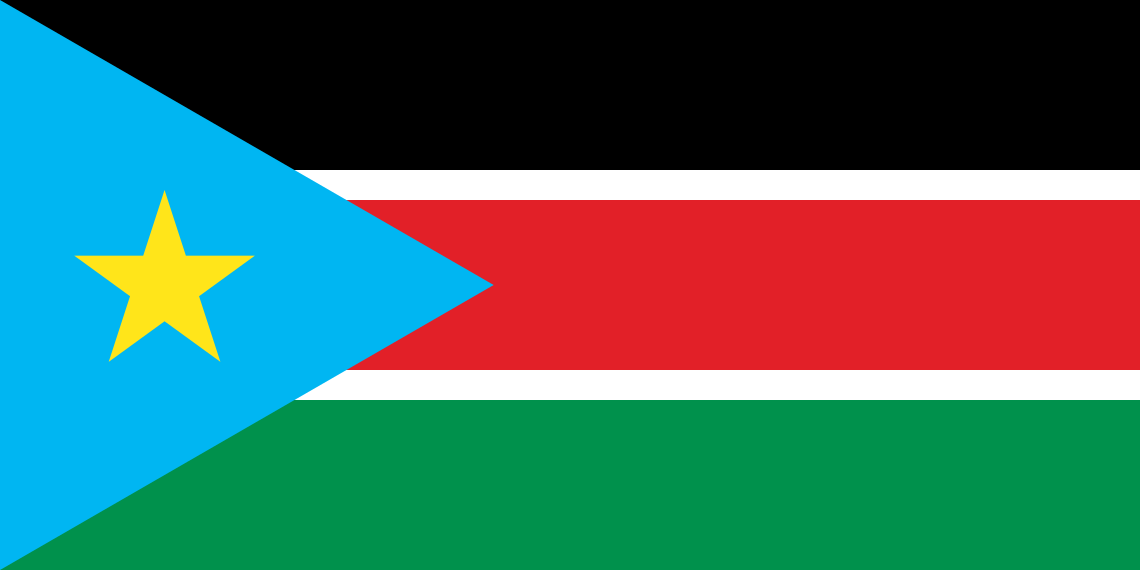
As this is my first time addressing the Security Council since your country assumed the presidency for this month, I would like to congratulate you and your delegation, Madam President, on your leadership of the Council and its work. I would also like to welcome and thank Mr. Haysom, the Special Representative of the Secretary-General, Mr. Charles Tai Gituai, the interim Chairperson of the reconstituted Joint Monitoring and Evaluation Commission, and Mr. Marco Impagliazzo, President of the Community of Sant’Egidio, for their insightful briefings. We hope they will contribute positively towards our shared goal for sustainable peace and security in South Sudan. I would also like to thank the Ambassador of Mozambique and the other African members of the Council for their comprehensive and welcome statement.
My delegation has taken note of the Secretary- General’s report on the situation in South Sudan (S/2023/433) submitted pursuant to resolution 2677 (2023), which requested the Secretary-General to report on the implementation of the Mission’s mandate every 90 days. Throughout the reporting period, South Sudan experienced relative peace and security across the country. The revitalized Government is committed to ensuring that the country is completely peaceful and that the lives of common citizens are returning to normalcy. To that end, Juba continues to extend an olive branch to those who are still outside of the Revitalized Agreement on the Resolution of the Conflict in the Republic of South Sudan. We call on all peace-loving partners to join us in consolidating what has been achieved and to work collaboratively to involve those who are still outside the Revitalized Agreement in order to arrive at a state of affairs that will enable the country to enjoy lasting peace. We acknowledge the significant delays in meeting the agreed benchmarks and remain committed to expediting the pending tasks necessary for the successful implementation of the Revitalized Agreement. We therefore want to assure the international community that despite the challenges we are facing, we are committed to doing all we can to make meaningful progress towards our goals.
In his report, the Secretary-General reminded the Security Council of the impact and devastation of the floods that have followed four years of incessant rainfall and the implications that has for the peacekeepers’ work, especially in Bentiu, where the dikes need to be further enhanced. Conversely, the poor rainfall this year in some parts of the country leads us to expect a poor harvest, which is likely to result in cases of starvation and possible internal displacement and migration, probably creating security-related instabilities and communal tensions.
We recognize the threat caused by floods, drought and climate-related shocks to the stability and the security of our nation, as we have witnessed in the conflicts across the country between cattle herders and farmers. We urge the international community and the United Nations Mission in South Sudan (UNMISS) to join South Sudan, through initiatives that will prioritize conflict prevention and early warning, and invest in sustainable development through an agreed mechanism for mitigation and adaptation that leaves no one behind.
Since the inception of the conflict in the Republic of the Sudan, South Sudan has experienced a migration of refugees and returnees from the Sudan. Given the
quick turn of events, we were caught flat-footed, and no emergency preparations were readily available. Given South Sudan’s already difficult humanitarian situation and economic challenges, we do not have the immediate financial capacity to be able to remedy the dire situation. While we are thankful for the efforts made thus far, we are appealing to the international community to redouble its efforts and commitment to help the displaced.
The Government of South Sudan wishes to express its deepest appreciation to UNMISS, the Intergovernmental Authority on Development (IGAD) and those countries that are assisting in the implementation of the road map. We urge those partners and friends that have yet to join in support of the implementation of the road map to do so, to allow the parties to effectively and positively implement the road map and allow for the successful conduct of the general elections, as provided for in the Revitalized Agreement.
South Sudan is grateful for the ongoing support of UNMISS, the African Union, IGAD, the reconstituted Joint Monitoring and Evaluation Commission, the Com
munity of Sant’Egidio and other related organizations and mechanisms within the Revitalized Agreement, as well as the troop- and police-contributing countries that are helping to ensure our continued progress towards a brighter future. We assure the international community of our continued commitment to implementing the Re vitalized Agreement and achieving lasting peace and stability in South Sudan.
In conclusion, notwithstanding the challenges the Revitalized Agreement faces in its implementation, the parties are committed to its full implementation. We strongly call on the international community, regional partners and friends of South Sudan not to give up on South Sudan.
There are no more names inscribed on the list of speakers.
I now invite Council members to informal consultations to continue our discussion on the subject.
The meeting rose at 4.45 p.m.