S/PV.9420 Security Council
Provisional
The meeting was called to order at 10.25 a.m.
Adoption of the agenda
The agenda was adopted.
Reports of the Secretary-General on the Sudan and South Sudan Report of the Secretary-General on the situation in South Sudan (S/2023/657)

In accordance with rule 37 of the Council’s provisional rules of procedure, I invite the representative of South Sudan to participate in this meeting.
In accordance with rule 39 of the Council’s provisional rules of procedure, I invite the following briefers to participate in this meeting: Mr. Nicholas Haysom, Special Representative of the Secretary- General for South Sudan and Head of the United Nations Mission in South Sudan; Ms. Edem Wosornu, Director of Operations and Advocacy, Office for the Coordination of Humanitarian Affairs; and Ms. Racheal Juan, civil society representative.
The Security Council will now begin its consideration of the item on its agenda.
I wish to draw the attention of Council members to document S/2023/657, which contains the report of the Secretary-General on the situation in South Sudan.
I now give the floor to Mr. Haysom.
Mr. Haysom: I thank you, Madam President, for the opportunity to brief the Security Council.
With 15 months remaining until the elections that are scheduled to end the transitional period, time is of the essence for South Sudan. The country anticipates holding its first elections in December 2024. However, key institutions and legal frameworks have yet to be put in place and critical questions remain unanswered. Resolving those questions requires no material resources, only the political will to reach compromise and consensus is what is needed. Such questions include the type of elections to be held, voter registration requirements, how electoral boundaries will be determined, the nature of the participation of refugees and internally displaced persons, the allocation of security responsibilities and how electoral-related disputes will be managed.
One particularly important issue is the stalled constitution-making process, to be carried out in an environment that respects freedom of expression, association and peaceful assembly and encourages civic engagement. The process is 12 months behind schedule, according to the road map of the Revitalized Agreement on the Resolution of the Conflict in the Republic of South Sudan. The need to recalibrate or resolve priorities within the remaining time of the transitional period is now urgent. However, that sense of urgency needs to come from the parties to the Revitalized Agreement, not from the international community.
Since my previous briefing (see S/PV.9353) there has been modest progress in some areas. They include the passage of the National Elections Act; the establishment of a joint task force between the Revitalized Transitional Government of National Unity and the trilateral group of the African Union, the Intergovernmental Authority on Development (IGAD) and the United Nations to coordinate support to the implementation of the constitution-making and electoral processes; the commencement of electoral security planning, which needs retention; initial election budgetary discussions have taken place; and a recent agreement on the deployment of the first batch of the newly graduated necessary unified forces has been reached.
While in the assessment of the United Nations Mission in South Sudan (UNMISS) the delays on key decisions can be attributed to foot-dragging by the signatories, we have also noted a lack of capacity in establishing the required institutions and in the complexities of electoral planning. However, in his Martyrs’ Day statement, President Kiir made a clear commitment that South Sudan will not return to war, that the path forward includes holding elections in December 2024 and that all the parties must work to emerge from perpetual transitional Government status. He has committed to holding the elections on time. A level playing field is therefore now required for a credible, inclusive and peaceful election. The situation currently privileges one party above others, and I note that campaigning has begun in some states. That reinforces the urgent need to establish the Political Parties Council as the body responsible for registering parties so that they all have equal opportunity, access and rights, by law, to mobilize support.
Relatedly, I want to caution that unilateralism and brinkmanship are toxic to the practice of post-conflict
unity coalition governance, which requires compromise, mutual trust and confidence-building. I recognize the collective responsibility of the political class, as a whole and in general, including the opposition parties, in progressively unlocking the blockages in the road map. Some of them were outlined by the Sudan People’s Liberation Movement in Opposition in a statement issued this week. We would also acknowledge, however, that a pre-eminent responsibility rests on the ruling party — to resist unilateral interpretations of the peace agreement and to make full use of available public resources and decision-making committees to advance the implementation of the agreement.
Looking ahead, further steps that must be taken by the country’s political leadership include passing priority elections-related legislation in Parliament; allocating a national budget for elections; reconstituting and resourcing key electoral institutions — the National Constitutional Review Commission, the National Elections Commission and the Political Parties Council; and completing essential benchmarks in the road map, especially related to the transitional security arrangements.
Despite all those challenges, an independent perception survey commissioned by UNMISS showed that there remains significant popular demand for elections. Civil society organizations across the nation have expressed to UNMISS their desire for elections, but not without reservations about the overall status of the implementation of the peace agreement. They have identified a role for themselves in monitoring and supporting its implementation and in conducting civic education campaigns. But to do that, they need a secure environment, as well as resources to partner in expanding civic and political space.
I note that during a recent political parties forum in Wau, supported by UNMISS and its partners, stakeholders across the political spectrum reaffirmed their commitment to a more open political space, including through local mechanisms to support freedom of expression, association, assembly and movement. A stable security environment is essential for creating a conducive environment, both for elections and for future sustainable development. The reconstituted Joint Monitoring and Evaluation Commission has reported that since the graduation of the first phase of the necessary unified forces in January, little progress has been registered. However, positively, UNMISS takes note that, this week, the Joint Defence Board has called
for graduated personnel of the necessary unified forces to return to their training centres within seven days for onward deployment and has summoned recruits for phase 2 of the integration process.
In summary, the importance of sustaining the country’s overall stabilization, through continued international engagement and support to the implementation of key road map benchmarks, including electoral preparations, must be underlined. For our part, UNMISS has been mandated by the Council to support an enabling environment for South Sudan to carry out its first national elections since independence. We are currently seeking, including within our existing resources, to support a two-phase approach to assist South Sudan in preparing for its elections.
In the first phase, the United Nations will focus on capacity-building for standing up key institutions and expanding civic and political space. The second phase, support to the electoral process itself, will be contingent on Member States’ support and progress during the first phase, when and if a national electoral framework matures.
Against that backdrop, the ceasefire is largely holding across the country. There has been a substantial reduction in conflict between the signatories since the signing of the Revitalized Peace Agreement in 2018. But intercommunal and subnational violence remains an overall impediment to peace consolidation, as does sporadic fighting between the government forces and non-signatories, absent the latter’s integration into the peace process.
While I am confident that the Mission’s more robust posture has contributed to a limited decrease in violence in South Sudan, the expanded protection-of- civilians mandate in resolution 2677 (2023), coupled with a reduced aviation operability and a static budget, has put our mobility enhancement under strain. In that context, the Mission requested an external review of our protection-of-civilians capacity, which has validated the need for increased capability requirements.
UNMISS, nevertheless, continues to strengthen its approach towards the protection of civilians, including an enhanced coordination mechanism for whole-of- mission responses to early-warning indicators. We are also expanding our uniformed presence across the country by adding six additional operating bases.
The impact of the crisis in the Sudan, along the political, economic, humanitarian and security
dimensions, continues to loom. The situation has exacerbated existing conflict drivers in South Sudan, such as competition over limited resources. South Sudan needs additional support from international donors for support to the Sudan crisis, but I also call for the unity Government to allocate national budget funding to meet its own humanitarian and public service needs and restart support for the onward transportation of people who have crossed into South Sudan. I note that an overall squeeze in humanitarian funding continues, and reductions in anticipated food distribution have already sparked tensions and protests in the camp for internally displaced persons in Bentiu.
While I will defer detailed briefing on the humanitarian situation to my colleague from the Office for the Coordination of Humanitarian Affairs, it must be said that, after four years of recurrent flooding and drought, the impact of climate change has been unrelenting. That has a significant bearing on the security environment, given that the majority of South Sudan’s population relies on climate-sensitive sectors for their livelihoods, such as agriculture, pastoral activities, fishing and forestry.
That suggests that addressing humanitarian needs alone is insufficient. We are increasingly emphasizing coordinated approaches across the peace, humanitarian and development nexus, focusing on enhancing community resilience to conflict-, climate- and food-related shocks, finding durable solutions to displacement and strengthening community violence reduction, including through project platforms such as the reconciliation, stabilization and resilience trust fund, and building institutions in proper alignment with the United Nations Sustainable Development Cooperation Framework.
In all those efforts, I wish to thank our partners — IGAD, the troika, the European Union and its member States, the reconstituted Joint Monitoring and Evaluation Commission, the African Union and the United Nations country team as a whole.
The inspirational success and popularity of South Sudan’s national basketball team, the Bright Stars, illustrates how the people of that country yearn for their nation-building moment. It is time for the political class and signatory parties to marry that dream with reality, and for the international community and the United Nations to stay the course towards that objective.
I thank Mr. Haysom for his briefing.
I now give the floor to Ms. Wosornu.
Ms. Wosornu: I thank you, Madam President, for this opportunity to address the Security Council on the humanitarian situation in South Sudan. I am grateful to brief members, alongside Special Representative of the Secretary-General Haysom, whom I also thank for his comments on the humanitarian situation.
Since our last briefing to the Council (see S/PV.9274), the humanitarian situation in South Sudan has continued to encounter major challenges. The conflict in neighbouring Sudan has deeply complicated the humanitarian picture. The Special Representative of the Secretary-General has touched on it. I will go into further detail, as he noted.
At the beginning of the year, more than 9.4 million people in South Sudan, or 76 per cent of the population, required humanitarian assistance owing to various factors, including subnational violence, physical and other access constraints and climatic shocks, such as flooding and drought-like conditions.
However, as of 5 September, more than 260,000 people had arrived in South Sudan seeking protection and safety. The majority — more than 91 per cent — are South Sudanese nationals fleeing violence in their neighbour, the Sudan. Many describe a perilous and challenging journey southward, including being subjected to harassment, physical violence and yet again, particularly in the case of women and girls, sexual violence. Most made the journey with little or no assistance along the way. I do want to commend the Government of South Sudan for its efforts in supporting those arriving from the Sudan. The Government has collaborated with humanitarian workers, including through assistance with transportation — albeit not enough — for people as they make their onward journeys. We urge the Government to continue strengthening that critical support, including the provision of basic services at crossing points and in areas of return.
The massive influx of returnees and refugees comes against a backdrop of funding challenges. That has imposed a huge burden on support systems and services that are already stretched, leaving insufficient capacity to meet the wide range of needs. For example, as the Special Representative said, the lack of funding has hampered transport services in their efforts to move approximately 500 people on a daily basis. The release of $33 million — $18 million from the Central Emergency Response Fund and $15 million from the
South Sudan Humanitarian Fund — has enabled those and other important services to continue. But that is only a temporary fix. It was originally envisaged that the emergency response plan for the South Sudan crisis would assist 180,000 people over three months at a cost of $96 million. However, with 600,000 people expected by the end of this year, a revision was necessary. The response plan now requires $356 million between May and December if vital support services are to continue, an issue I will address later in my statement. I would like to convey our deepest gratitude to the donors without whose support that could not have been sustained.
The crisis in the Sudan is also having a deeply damaging impact on South Sudan’s trade and economy, with serious knock-on effects. They include the disruption in cross-border trade between the Sudan, South Sudan and other countries, leading to increases in food prices of between 20 and 75 per cent. That affects the 8 million people in South Sudan — 64 per cent of the population — who are already food insecure. Furthermore, rising market prices have increased the overall cost of the humanitarian response, putting further pressure on limited resources and reducing our ability to adequately respond to the needs. Nearly 740,000 pregnant and breastfeeding women will have acute malnutrition this year, compared to 675,000 in 2022 and half a million in 2021. Nearly 80 per cent of the 1.9 million displaced people are female-headed households that are food insecure and are facing unstable livelihoods and acute malnutrition. We have also seen the rise in food insecurity increase gender- based violence. The interconnectedness of the Sudan and South Sudan’s economies and supply chains highlights the need for coordinated efforts to address the economic consequences of the conflict and ensure access to essential commodities for the people affected.
To meet the needs of the most vulnerable people across South Sudan, the humanitarian community needs unimpeded humanitarian access. That means that issues related to the safety and security of humanitarian workers, physical access and bureaucratic impediments should not limit our ability to reach people in need. However, 34 humanitarian access incidents were reported across the country in July alone, compared to a total of 33 incidents at the same time in 2022. Furthermore, physical access continues to present major constraints. For example, in Unity state, the gradual deterioration of roads due to rainfall affected the delivery of humanitarian supplies to the 900,000 people in need. The movement of returnees in various
locations, particularly in Koch, Leer, Mayendit and Payinjiar counties, has also been affected. We are grateful to the United Nations Mission in South Sudan for its efforts to mitigate some of those issues. In addition, the unresolved status of Abyei also continues to present challenges, especially as humanitarian access to the northern part of the box has been difficult since the Sudan crisis began, impacting at least a quarter of a million people.
Under the wider yearly humanitarian response plan for South Sudan in 2023, $1.7 billion is required to meet the needs of 6.8 million of the most vulnerable people in the country. Again, while we deeply appreciate the generosity of donors, particularly in these challenging economic times, the plan has received only $782 million, 46 per cent of the funding requirements. I particularly appreciate the call on 13 September from a few key donors for partnerships in addressing humanitarian needs in South Sudan. The humanitarian community will continue its work alongside the Government of South Sudan to meet the needs of its people and reprioritize activities to focus on those most in need. Despite the underfunding, I am pleased to note that approximately 4 million of the 6.8 million women, girls, men and boys in need across South Sudan received some form of humanitarian assistance in the first six months of 2023. We urgently need the international community to step up and support the humanitarian response and to invest in longer-term solutions for sustainability.
The people of South Sudan want to move beyond humanitarian support, stand on their own two feet and thrive and flourish as an independent nation. We hear that consistently from people in Wau, Malakal and Bentiu. Farmers want to farm again. People want to re-establish careers and businesses. The Special Representative mentioned the basketball team as an example. Everyone, including displaced women and young people, wants to be able to provide for themselves and their families. They are working to help themselves. Despite the challenges, about 62 dynamic South Sudanese civil-society organizations, including local women-led organizations, are working diligently for their communities. They are providing front-line emergency life-saving services and informing their own humanitarian priorities.
The humanitarian community in South Sudan is working closely with the Government and the people of South Sudan on some of their initiatives to support self-reliance. The initiatives include collaborating
more closely across the humanitarian, peace and development sectors and working with local leaders and communities to move decision-making closer to the people affected. It also includes the Inter-Agency Standing Committee Flagship Initiative, which is a pilot approach launched this year. That approach is designed to put communities and organizations affected at the forefront in driving humanitarian priorities and delivering the humanitarian response.
I will conclude by saying that we have a responsibility to support the aspirations of the South Sudanese to fend for themselves and live a peaceful and dignified life. It is our hope that with the steadfast support and investment of the international community, South Sudan will make the progress it deserves. We count on the international community’s support in addressing the drivers of humanitarian issues, such as conflict — including what is currently happening in its neighbour the Sudan — and natural disasters, which are undermining peace, development and stability and increasing humanitarian needs.
I thank Ms. Wosornu for her briefing.
I now give the floor to Ms. Juan.
Ms. Juan: I am very honoured to be given the opportunity to brief the Security Council today on developments in my country, South Sudan, and I would like to thank the United Nations for its commitment to supporting peace in my country.
As a young South Sudanese woman, I have grown up against the backdrop of a country at war. For most of my life, and the lives of many other young people, who make up more than 70 per cent of our population, we have become all too familiar with the violence that surrounds us — the violence of weapons, sexual violence and violence induced by climate change. It may be easy to resign oneself to accepting the status quo, but I choose not to. Allow me to outline three key issues that could contribute to putting South Sudan on a trajectory towards sustainable peace.
First, there is the widening of the civic space. I am saddened that young people and civil-society actors still cannot speak openly without fear. That is not conducive to building the nation we want to see. Widening the civic space is important, especially as we look to advance key processes of the road map on the implementation of the Revitalized Agreement on the Resolution of the Conflict in the Republic of South Sudan. Both ideas and
criticism are necessary for building our country. I call on Council members to prioritize the need for ensuring the protection of civic space and civil-society actors in their engagement with South Sudan’s political leaders.
My second point concerns community-led peace initiatives. As the Advocacy and Peace Coordinator at the South Sudan Council of Churches, which is an ecumenical body with a mandate to seek and promote peace, I have been privy to the positive impacts of church-led community peacebuilding and conflict resolution efforts. I have facilitated local peace talks and witnessed defining peace agreements between communities beginning a journey towards reconciliation and to healing trauma. However, those efforts must be sustained. I urge the Security Council to increase the funds allocated to peacebuilding initiatives, particularly for community peace initiatives.
Thirdly, inclusion is a principle that should be prioritized as South Sudan seeks to complete the pending tasks of the road map. I am impressed by the incredible contributions of South Sudanese women in uniting our nation, but I am dismayed by the untapped potential of our youth. Women and young people continue to be excluded in decision-making and nation-building spaces. I acknowledge the 35 per cent affirmative-action quota for women’s engagement, but numbers alone are not enough. What we need is the active and meaningful participation of women and young people in all processes. I strongly encourage the inclusion of civil society, women, youth and faith-based institutions in the implementation of the road map. I would particularly like to emphasize the need for their inclusion in the ongoing process of the joint task force for the elections.
If we are to achieve the sustainable peace that we desire as a country, South Sudan needs the Council’s support. In February, South Sudan was privileged to host the ecumenical peace pilgrimage, including Catholic, Episcopal and Presbyterian leaders led by His Holiness Pope Francis. It was a visit where South Sudanese national leaders were reminded of their responsibility to their people first. One of the ways in which we have paired our efforts with the work of the international community is through our partnership with the Community of Sant’Egidio. The partnership has facilitated the Rome initiative — a political dialogue between the transitional Government and the non-signatories to the peace agreement — while
including the voices of young people and women in conversations happening in the mediation room.
In conclusion, I call for Council members’ support to promote and achieve sustainable peace in South Sudan. I urge them to keep supporting humanitarian, peacebuilding and development efforts. Please do not give up on my people or my country. I am confident that South Sudan will eventually attain the peace that we so long for.
I thank Ms. Juan for her briefing.
I shall now give the floor to those members of the Council who wish to make statements.


I thank Special Representative Haysom and Ms. Wosornu for their comprehensive briefings today. I also thank Ms. Juan for her insights on South Sudan. The United States reaffirms its appreciation for the dedication and commitment of the United Nations Mission in South Sudan (UNMISS), including its peacekeeping troops and police and civilian staff, together with its humanitarian partners, who serve to protect civilians in South Sudan, deliver assistance and mitigate conflict in many volatile areas.
As we heard from our briefers today, the fighting in Sudan continues to have a severe impact on South Sudan’s resources, humanitarian needs, security and infrastructure, owing to the fact that more than a quarter of a million returnees and refugees are seeking refuge in border towns and camps for internally displaced persons (IDPs), including the UNMISS protection-of-civilians site. An additional 26,000 displaced South Sudanese have fled violence and food insecurity in Ethiopia’s refugee camps, further straining resources and food supplies. Rising tensions between new arrivals and residents are contributing to the violence, as evidenced by clashes at the Malakal protection-of-civilians site and IDP camps. The United States remains gravely concerned about the congestion and overcrowding in border towns such as Renk and in the IDP camps, as well as the lack of adequate shelter and medical aid for the displaced. In that regard, we strongly urge UNMISS, the Revitalized Transitional Government of National Unity and humanitarian partners to strengthen their efforts to provide returnees and displaced persons with the sufficient shelter, food, medical and relocation services. We also urge the parties to continue to provide assistance and services to host communities and those less recently displaced
to ensure a balanced approach that takes account of the needs of all groups.
Turning to the political transition, the United States remains disappointed with the lack of progress by the Transitional Government’s implementation of the 2018 Revitalized Agreement on the Resolution of the Conflict in the Republic of South Sudan and the 2022 road map. With only 15 months remaining until the December 2024 elections, it is not clear that South Sudan will be prepared to hold elections under conditions consistent with President Kiir Mayardit’s commitments. An open political space for a genuine campaign free of intimidation and violence does not exist. The Transitional Government has failed to detail the budget revenue that it will dedicate to electoral administrative tasks, and needed legislation has not been adopted.
We look forward to the 15 October release of the report of the Secretary-General, which will provide the United Nations assessment of the factors that have caused the delays in the implementation of the peace agreement. We also deplore the fact that sexual violence remains an ongoing issue that must be addressed. This reporting period highlighted 18 cases of conflict- related sexual violence, the victims of which included 12 women, eight girls and one man. The United States strongly condemns any form of gender-based violence. We call on the Government to take immediate steps to strengthen rule-of-law institutions and increase survivors’ access to services.
In conclusion, the Transitional Government must seize this opportunity to give the South Sudanese people a hopeful future. The people of South Sudan deserve to live without violence, feel safe and contribute to the betterment of their country. We reiterate our call on transitional leaders to expand the civic space and create conditions under which all political parties, civil society, internally displaced persons and South Sudanese citizens, including women, young people and the displaced, can be fully, equally and meaningfully included in the peace process that will shape South Sudan’s future. The United States remains committed to the cause of peace and to the people of South Sudan.


I thank Mr. Nicholas Haysom, Special Representative of the Secretary-General and Head of the United Nations Mission in South Sudan (UNMISS). I would also like to thank Ms. Edem Wosornu, Director of Operations of the Office for the Coordination of Humanitarian
Affairs, and civil-society representative Ms. Racheal Juan for their presentations.
My delegation is very concerned about the refugee crisis in South Sudan, which remains the largest such crisis in Africa, with more than 2.3 million refugees in neighbouring countries. We deplore the continued attacks on humanitarian convoys and restrictions on humanitarian personnel and reiterate our call for rapid and unhindered humanitarian access to be guaranteed throughout the country at all times.
Turning to the political aspects, while we welcome the statements of support for the elections, that support must be complemented by tangible progress on national legislation. Political will and decisiveness are needed if progress is to be made in those critical areas. We are concerned about the possibility that delays in achieving the objectives that have to be reached in the lead-up to the holding of elections could subject the country to serious political instability, with possible outbreaks of violence. In that regard, we support the meetings held in mid-August under the leadership of UNMISS and aimed at promoting democratic governance, sustainable peacebuilding, peaceful coexistence and the expansion of political and civic space. We should emphasize the women participants’ involvement in those events and recall the commitments undertaken in the Revitalized Agreement on the Resolution of the Conflict in the Republic of South Sudan on gender provisions. Women’s participation is key in electoral processes and the transition process towards peace. Greater efforts must therefore be made to ensure their inclusion and that of a gender perspective in the discussions. I also want to reiterate that it is especially necessary to preserve dialogue itself, without restrictions on freedom of thought or opinion. It is also essential to open more avenues enabling journalists, media correspondents, human rights defenders and humanitarian workers to carry out their work.
The sexual violence, murders and kidnappings that we are seeing are alarming and must be punished. We continue to support the work of UNMISS and all efforts to reduce violence perpetrated by the military through an appropriate accountability mechanism. Finally, I should point out that illicit trafficking in weapons worsens the situation of the civilian population and threatens security in other countries in the region, causing fragile areas to deteriorate further. It is time to silence the guns in South Sudan and pave the way for a civilian democratic transition in the country.


I thank Special Representative of the Secretary-General Haysom, Director Wosornu and Ms. Juan for their briefings today.
This September marks five years since the South Sudanese parties came together to sign the Revitalized Agreement on the Resolution of the Conflict in the Republic of South Sudan. The United Kingdom welcomes the progress that has been achieved since then and the fact that disputes are now largely resolved through political dialogue rather than conflict. Nevertheless, we remain concerned about the fact that progress is too slow and too limited. The past five years have been characterized by missed deadlines and multiple extensions. We therefore call on South Sudan’s leaders to demonstrate the political will to deliver the free and fair elections that the South Sudanese people deserve.
The United Kingdom welcomes the recent establishment of an election security committee and the presentation of the National Elections Act to Parliament. However, as Special Representative of the Secretary-General Haysom highlighted, in addition to adopting the necessary legislation and reconstituting the relevant electoral bodies, there are fundamental decisions and logistical preparations that require urgent attention. We call on the South Sudanese authorities to create the necessary political and civic space to allow for free and credible elections.
As the horrifying violence continues across the border in the Sudan, more than 260,000 people have now been registered as arriving in South Sudan, adding to what were already unprecedented levels of humanitarian need there. The United Kingdom commends the Government of South Sudan on its provision of transportation and the United Nations system and humanitarian partners on their response to the crisis. We urge the South Sudanese Government to create a more enabling environment for humanitarian action and to commit to longer-term, more durable solutions that address the increasing humanitarian needs. In conclusion, at this important time in South Sudan’s history, we urge South Sudan’s leadership to deliver on the outstanding tasks in order to make democratic elections a reality.


I have the honour of delivering this statement on behalf of the three African members of the Security Council (A3).
I thank the Special Representative of the Secretary- General and Head of the United Nations Mission in South Sudan (UNMISS), Mr. Nicholas Haysom, for his comprehensive briefing. We our deeply grateful to Ms. Eden Wosornu, Director of the Operations and Advocacy Division of the Office for the Coordination of Humanitarian Affairs. We express our appreciation to Ms. Racheal Juan, the civil-society representative, for her important remarks.
Since its independence, South Sudan has made significant progress in consolidating its institutions.
The security situation in South Sudan remains fragile. The Secretary-General’s report (S/2023/657) indicates that intercommunal violence persists in the Greater Upper Nile, Greater Equatoria and Greater Bahr El Ghazal regions. The violence continues to cause fatalities, injuries and the displacement of thousands of people.
Additionally, the conflict in the Sudan has had a bearing on the security situation in South Sudan. That is largely due to the influx of returnees and refugees leading to the competition for the already scarce resources, which has been one of the drivers of the intercommunal violence that we are witnessing.
Taking that reality into account, we welcome the approach of the Government of South Sudan of engaging local and traditional leaders to de-escalate tensions and facilitate conflict resolution. Community-based solutions are likely to be more effective in inducing positive change at a local level, thus contributing to a more sustainable peacebuilding process.
Considering the negative effects of those conflicts on civilians, we encourage UNMISS to continue implementing its mandate to protect civilians, mitigate violence and support peace dialogues, thus ensuring complementarity with the South Sudanese authorities.
This could be one of the most memorable moments in the history of South Sudan: the preparation of its first electoral process. Although the challenges are daunting, we encourage South Sudan to persevere in its commitment to holding free, fair, transparent and inclusive elections in December 2024. To achieve that goal, we urge all stakeholders to engage constructively in this process, prioritizing the interests of the people of South Sudan, who yearn for peace and stability in the country.
We reiterate our call on the parties to honour their commitments and expedite the implementation of the Revitalized Agreement on the Resolution of the Conflict in the Republic of South Sudan, including the completion of the outstanding tasks required prior to the end of the transitional period.
Mindful of the complexity of the challenges faced by South Sudan and the current regional dynamics, we encourage close cooperation between UNMISS and other relevant actors, such as the Intergovernmental Authority on Development, the African Union, and other United Nations missions and entities in order to address those challenges holistically.
Regrettably, the humanitarian situation in South Sudan continues to deteriorate. The pressure caused by the influx of refugees and returnees from the Sudan and the internal displacement resulting from intercommunal violence make it more challenging to manage the humanitarian crisis that the country has been experiencing for years.
We note that, according to the Secretary-General’s report, as at 31 August, at least 249,403 people have crossed the border between the Sudan and South Sudan since April. While we admire the South Sudanese people for their humanism towards the people of the Sudan, we cannot overlook the effects that this high number of refugees and returnees can have on the already fragile social fabric of some communities in South Sudan.
Moreover, climate shocks have further exacerbated the vulnerability of the populations. Although it is challenging to harmonize our views on this matter, the reality is that in South Sudan climate shocks are leading to insecurity, conflicts and displacement, which worsens an already fragile situation.
It is imperative that the humanitarian response to the Sudan is coordinated with neighbouring countries such as South Sudan, Chad and the Central African Republic.
It is also fundamental to ensure the safety of humanitarian actors, at all times. In that connection, the A3 strongly condemns attacks against humanitarian personnel. We welcome their commitment, despite the security situation. We call on all parties to respect international humanitarian law and continue to grant unhindered access to humanitarian organizations, whether they are local or international.
We encourage UNMISS to continue to support the South Sudanese authorities in their efforts to facilitate humanitarian assistance to the people in need.
In conclusion, we reiterate the A3’s full support to South Sudan and its people in their efforts towards peace, stability prosperity and nation-building.


I would like to thank Mr. Haysom, Special Representative of the Secretary- General, Ms. Wosornu, Director of the Office for the Coordination of Humanitarian Affairs, and Ms. Juan for their briefings.
South Sudan has reached a decisive point. The tasks set forth by the Revitalized Agreement on the Resolution of the Conflict in the Republic of South Sudan should remain at the core. Those include constitution-making and preparations for elections in December 2024. We are concerned that the National Elections Act has not yet fully passed.
Free, fair and credible elections require an inclusive civic space. We urge women’s full, equal, and meaningful participation in constitution-making and election processes. We commend the efforts of the Ministry of Gender, Child and Social Welfare to implement the Protocol to the African Charter on Human and Peoples’ Rights on the Rights of Women in Africa. Malta welcomes the establishment of the Government’s trilateral joint task force, a solid platform that aims to scale up implementation of those tasks. It also addresses issues such as voter registration and the inclusion of the displaced population in the country. We also underline the timely deployment of the recently graduated necessary unified forces.
Malta remains deeply concerned about the continued outbreaks of intercommunal violence in South Sudan, particularly in the Upper Nile and Greater Equatoria regions. We commend the United Nations Mission in South Sudan (UNMISS) for stepping up security at the Malakal protection-of-civilians site.
Violations of international humanitarian law and abuses of human rights must stop and be condemned. Those include extrajudicial executions and sexual and gender-based violence. We support the deployment of mobile courts, facilitated by UNMISS, as part of a broader strategy in ensuring a survivor-centred and gender-responsive transitional justice process.
The extensive recruitment of children by armed groups and forces remains of utmost concern. All
parties must immediately end and prevent all violations against children, and the comprehensive action plan must be fully implemented. We support the engagement of UNMISS on this front, including the conduct of child protection training.
An alarming 76 per cent of the population in South Sudan needs humanitarian assistance. That marks a sharp increase of another half a million people when compared to last year. The conflict in the Sudan is also exacerbating South Sudan’s humanitarian needs. We remain committed to diversified funding that reaches those most in need. To that end, the European Union (EU) has launched a series of projects this year, amounting to €82 million. Those are in addition to €108 million secured last month through the EU’s multi-annual indicative programme for South Sudan.
Despite increasing humanitarian needs, the situation in the country remains one of the most dangerous for humanitarian aid workers. Malta strongly condemns all attacks against humanitarian personnel. We also thank UNMISS for providing force protection and logistical support to ensure conducive conditions for the rapid, safe and unimpeded delivery of assistance.
The link between climate, peace and security in South Sudan is also strong. Climate-induced disasters, irregular rainfall and flooding impact already scarce natural resources and exacerbate food and water insecurity. Those conditions fuel further displacement and farmer-herder tensions. Malta continues to support the analysis of risks associated with climate change in the implementation of the mandate of UNMISS. We also emphasize the need for comprehensive risk assessments and risk management strategies, including through engagement with local communities.
In conclusion, Malta once again expresses its support to Special Representative of the Secretary- General Haysom and UNMISS. We also reiterate our call on South Sudan to reinvigorate its political will and commitment towards a peaceful, secure and prosperous future.


I thank Special Representative of the Secretary-General Haysom, Director Wosornu and Ms. Juan for their briefings and welcome the participation of the Permanent Representative of South Sudan in today’s meeting.
In the light of the report of the Secretary- General (S/2023/657), I would like to highlight the following points.
First, the political transition of South Sudan is at a critical stage. China supports South Sudan in working with the United Nations Mission in South Sudan (UNMISS) to jointly promote the implementation of the Revitalized Agreement on the Resolution of the Conflict in the Republic of South Sudan and its joint task force with the African Union and the Intergovernmental Authority on Development to facilitate the constitution-making and the preparation for general elections.
China welcomes the recent positive gesture shown by South Sudan’s leaders with regard to political transition and elections and calls on all parties to consolidate consensus, address disputes properly and based on the Revitalized Agreement and extended road map and step up work in key areas, thereby continuously creating favourable conditions for the holding of elections.
At the same time, as the youngest country in the world, South Sudan is faced with many difficulties and challenges in national governance. The international community should maintain the necessary patience, respect the sovereignty and ownership of South Sudan and provide support in its political process and election preparations.
The Secretary-General’s report highlights that the security situation in many places in South Sudan is dire. Intercommunal violence and conflicts between farmers and herders still sporadically occur. Improving the security capacity-building of South Sudan is the priority. The Council should lift its arms embargo on South Sudan at an early date to remove its negative impact on security capacity-building.
Secondly, South Sudan is faced with multiple challenges in areas such as food, security, diseases, floods and violent conflicts. Its humanitarian situation is dire. Armed conflicts in the Sudan and the huge influx of refugees have exacerbated the humanitarian difficulties. Meanwhile, the humanitarian funding for South Sudan is seriously inadequate, which is concerning. In yesterday’s Council meeting on humanitarian issues (see S/PV.9418), many countries called on traditional donors, especially developed countries, to honour their assistance commitments to ease the humanitarian difficulties in developing countries. The international community should listen carefully to those calls and help South Sudan to address its humanitarian challenges.
The development and management of South Sudan’s oil resources have an impact on its economy and livelihoods and should be decided by the people and the Government of South Sudan. Countries outside the region should not interfere or intervene.
Thirdly, under the leadership of Special Representative of the Secretary-General Haysom, UNMISS has overcome difficulties and made significant contributions in the implementation of the Revitalized Agreement, the protection of civilians and supporting humanitarian operations. As a major troop-contributing country to UNMISS, China is ready to continue to make unrelenting efforts to that end. At the same time, some countries in recent years have continued to push for the expansion of the mandate of UNMISS, some of which clearly goes beyond the capacities of the Mission and has had an impact on the mutual trust with the host country. In particular, in the relevant mandate, too much emphasis has been placed on the use of force as a priority method to protect civilians, which has led to controversies. UNMISS, in delivering its mandate should fully consider the realities on the ground and focus on its core mandate.
In the upcoming review, the United Nations Secretariat should comprehensively and objectively review the protection of civilian mandate so as to set out the right direction for the work of UNMISS.


I thank Special Representative of the Secretary-General Haysom, Director of Operations and Advocacy of the Office for the Coordination of Humanitarian Affairs (OCHA) Ms. Wosornu, and civil society representative Ms. Juan for their insightful briefings.
Japan takes note of the recent report of the Secretary-General (S/2023/657) on the United Nations Mission in South Sudan (UNMISS), which describes progress and challenges in South Sudan and highlights the relevance of the mandate of the Mission.
Japan would like to thank all UNMISS personnel for their service in protecting civilians and mitigating violence in a challenging environment. As a troop- contributing country, we are committed to our continued deployment to UNMISS.
I would like to make the following two points concerning the long-term peace, security and stability of South Sudan, which are closely linked to the mandate of UNMISS.
First, it remains crucial to implement the Revitalized Agreement on the Resolution of the Conflict in the Republic of South Sudan. The implementation should be in line with the timelines established in the adopted road map as the basis for sustained peace in South Sudan. In the light of that, we are concerned that the implementation of the Agreement has been delayed, as we heard from the Special Representative of the Secretary-General, and, moreover, no significant progress has been made during the reporting period. We are particularly concerned about the impact of the delays on the upcoming national election scheduled for December 2024. Elections are supposed to consolidate the people and give legitimacy to the Government. However, if the election were held with inadequate preparation and insufficient credibility, it could become a catalyst for national division. Therefore, it is necessary to ensure an adequate civic and political space for all citizens. Given that the remaining time is running out, the Transitional Government should urgently address that point.
Secondly, the humanitarian crisis in South Sudan remains at an extremely dangerous level, as we heard from the OCHA representative. At the same time, the emergence of new conflicts in the region and other parts of the world and the repeated extensions of the Agreement without major progress in its implementation have led to a decline in the international community’s interest in and assistance to South Sudan compared to previous years. In order for South Sudan to overcome this difficult situation, it is imperative to regain renewed attention from the world. In that regard, the transitional Government needs to achieve more tangible, concrete and significant results quickly, steadily and continuously, while the international community needs to recognize that South Sudan is approaching an extremely critical time.
In conclusion, Japan stands by the transitional Government and the people of South Sudan in their endeavours to steadily implement the agreement and to realize their aspirations for a dignified life. We strongly support UNMISS and the humanitarian players that are tirelessly working for South Sudan.


We thank the Special Representative of the Secretary-General, Mr. Nicholas Haysom, and the Director of Operations and Advocacy in the Office for the Coordination of Humanitarian Affairs, Ms. Edem Wosornu, for their briefings. We also listened to the
briefing by the representative of South Sudanese civil society. We welcome the participation in today’s meeting of Mr. Akuei Bona Malwal, Permanent Representative of South Sudan to the United Nations.
We share the Secretary-General’s concern about the humanitarian situation in South Sudan. The country is experiencing major repercussions from the conflict in the Sudan. The number of refugees and South Sudanese returnees has already exceeded 250,000. Their influx has significantly exacerbated the already difficult humanitarian situation in the northern states and has become a major challenge for the country as a whole. We note the efforts by the United Nations Mission in South Sudan (UNMISS), humanitarian workers and the Government of South Sudan to overcome that challenge in a context of limited resources. Moreover, Juba is making an important contribution to the efforts to address the situation in its neighbouring country of the Sudan.
Despite the difficult humanitarian situation, the South Sudanese political process is moving forward incrementally. The Revitalized Agreement on the Resolution of the Conflict in the Republic of South Sudan continues to be implemented, albeit to a limited extent. We note the efforts made by the South Sudanese authorities to implement provisions on issues related to State-building, the drafting of a permanent Constitution and fully launching the work of the transitional parliament and the national human rights council.
We note the intention of the Revitalized Transitional Government of National Unity to hold the first general elections in the country’s history. We consider it important to increase support for Juba in that area, without any preconditions. In that regard, we welcome the launching of the tripartite task force of the African Union, the Intergovernmental Authority on Development (IGAD) and UNMISS and the establishment of an electoral security committee.
We believe that the provisions the Agreement and its road map must be implemented. We note the delays in implementing the agreed timetable. The establishment of the National Constitutional Review Commission is six months behind schedule and that of the Political Parties Council is 11 months behind. There has been no progress in the establishment of a high- level standing committee on the implementation of the road map. Despite those delays, it is very important that the ceasefire in the country holds. However, we cannot fail to note the incoming reports of ongoing outbreaks
of violence in a number of peripheral regions of the Republic of South Sudan, as well as local clashes and intercommunal armed conflict. We strongly condemn any violations of the peace agreement and acts of violence against civilians, including humanitarian workers active in the country.
We support national and international steps to stabilize the situation and the work of the peacekeeping mission. We call on the peacekeepers to pay greater attention to combating intercommunal violence and coordinating humanitarian assistance to Juba. We note the proposal by the Head of the Mission to support the electoral process. We believe that the Blue Helmets should have all the resources necessary, both to carry out their protection-of-civilians mandate and to provide technical assistance in organizing the elections. We look forward to further negotiations between the South Sudanese authorities and the non-signatories to the Agreement through the Community of Sant’Egidio.
We believe that the Government’s focused efforts to form a unified armed force as a guarantor of further progress in the peace process and the successful holding of elections remain a priority. We welcome the progress in that area as well. We call on the South Sudanese parties to intensify their efforts to establish a unified command structure for the army.
At the same time, we are convinced that the sanctions regime imposed on the Republic of South Sudan complicates the deployment of joint armed forces units and the strengthening of State security structures. More decisive steps are needed to review those restrictions, in accordance with Juba’s request, which has received support from the African Union and IGAD. We categorically oppose the use of Security Council sanctions to exert pressure and interfere in the internal affairs of the country, just as we oppose supplementing them with illegal unilateral restrictive measures.


I too would like to thank Special Representative Nicholas Haysom, Director Edem Wosornu and Racheal Juan for their briefings. I also welcome the participation of the Permanent Representative of South Sudan in this meeting.
On the political front, the lack of progress in drafting a permanent Constitution and preparing for the elections in South Sudan is worrisome. The general elections are the final step of the transition period provided for in the Revitalized Agreement on
the Resolution of the Conflict in the Republic of South Sudan. Preparing for the elections is first and foremost the responsibility of the signatories to the Revitalized Agreement, namely, all the political forces in South Sudan, without exception. That process must include civil society, including women and young people. We are counting on the United Nations to provide an assessment of the preparations for the elections in the Secretary-General’s report in October. The support of partners will be forthcoming only if the authorities create the conditions for debate and credible democratic elections.
On the situation in the region, we share the concern of many others here today about the impact of the conflict in the Sudan on the stability of South Sudan. We welcome South Sudan’s hosting of refugees, with the support of the United Nations. France and the European Union stand in solidarity with the countries of the region. The European Union has provided €81 million in humanitarian assistance to South Sudan in 2023. We also recognize South Sudan’s mediation efforts in the crisis in the Sudan, within the framework of the quartet of the Intergovernmental Authority on Development (IGAD) and the ministerial mechanism of neighbouring States, initiated by Egypt. We encourage all international actors to pool their efforts to achieve a lasting ceasefire, the establishment of humanitarian corridors and the resumption of a political process.
South Sudan must demonstrate the political will to complete its transition, which is now due to end in February 2025. We support the work of the African Union and IGAD and call on the region to maintain its focus on South Sudan as decisive deadlines approach for the country. We also support the work of the United Nations Mission in South Sudan, which is essential in the protection of civilians and capacity-building in South Sudan. France is playing its part by supporting concrete reintegration projects and training in weapons- stockpile management. But those partnerships will be effective only if the South Sudanese authorities take advantage of them in order to move beyond the status quo, by speeding up the implementation of the political transition and taking action to combat impunity for human rights violations.


At the outset, I would like to thank Special Representative Mr. Nicholas Haysom and Director of Operations and Advocacy Ms. Edem Wosornu for their valuable briefings. We also appreciate the statement
delivered by Ms. Racheal Juan. I welcome the presence of the Permanent Representative of South Sudan in today’s meeting.
This month marks five years since the signing of the Revitalized Agreement on the Resolution of the Conflict in South Sudan, and our meeting is taking place at a time when the country and the region are experiencing serious security and humanitarian challenges. We therefore believe this is an important opportunity to reiterate the need for the signatory parties to be committed to fully implementing the Agreement and making tangible progress towards lasting peace. The Secretary-General notes in his report (S/2023/657) that little progress has been made in that implementation, and it is therefore important that the parties continue to work together in the coming months to overcome their differences and resolve the main issues outstanding in the peace agreement, in accordance with the road map and its timeline. That includes the start of phase II of the deployment of the necessary unified forces. Political will and commitment to dialogue remain essential to achieving those objectives.
It would be remiss of me not to mention the important role played by regional and international partners in supporting South Sudan. We hope that the efforts of the recently established Government-trilateral joint task force aimed at supporting the constitution-making and electoral processes will help the parties make progress in completing them. Alongside those efforts, it is also vital to address the security challenges that are impeding the establishment of lasting peace and stability in South Sudan, especially the cycle of violence among the various communities. That requires understanding and addressing the root causes of violence, including competition over limited resources, while also promoting dialogue and peaceful coexistence among the communities. In that context, we encourage the United Nations Mission in South Sudan (UNMISS) to continue its communication with local communities, facilitate dialogue and promote confidence-building, as we saw recently in Central Equatoria.
We continue to value the ongoing efforts of UNMISS to protect civilians in an integrated and coordinated manner, including by working alongside the Government to de-escalate tensions and enhance security at the Malakal protection-of-civilians site. As appropriate, we encourage UNMISS to coordinate with humanitarian organizations to ensure the safe delivery of relief assistance and civilians’ ability to
access it safely. We are also deeply concerned about the harsh reality that many women and girls are dealing with due to sexual violence. As Special Representative of the Secretary-General Pramila Patten confirmed during her visit to South Sudan earlier this week, those heinous crimes are unacceptable, and their perpetrators must be held accountable. It is important for UNMISS to continue to fulfil its mandate to protect women and children, prevent sexual violence and support victims.
We are encouraged by the growing interest in addressing climate change in South Sudan, as evidenced by the current discussions at the community level and the initiatives announced by the Government of South Sudan during the Africa Climate Summit, held this month. The initiatives are aimed at increasing the production of renewable energy and using smart agriculture systems to reduce the damaging effects of climate change. According to the United Nations Environment Programme, South Sudan is among the five most climate-vulnerable countries in the world. We also welcome the Secretary-General’s inclusion in his report of an analysis on climate and peace and security in South Sudan, in line with resolution 2677 (2023). We hope those efforts will combine to help to strengthen resilience in the face of the extreme weather patterns that have so far led to the internal displacement of 2 million people in South Sudan, in addition to exacerbating community tensions resulting from competition for resources.
In conclusion, we reaffirm that ensuring sustainable efforts aimed at enhancing security and stability in South Sudan requires addressing immediate challenges while also focusing on enabling long-term recovery in areas such as economic revitalization. In that context, we believe that holding the first National Economic Conference and implementing its recommendations are some of the steps that will help to reduce humanitarian needs and promote development in South Sudan.


I thank Special Representative Nicholas Haysom, Ms. Edem Wosornu, Director of Operations and Advocacy in the Office for the Coordination of Humanitarian Affairs, and Ms. Racheal Juan for their briefings. I also welcome Ambassador Malwal and the South Sudanese delegation to today’s meeting.
We are concerned about the fact that the conflict in the Sudan has led to a deteriorating security situation in South Sudan. The surge in the levels of violence in Lakes, Unity, Upper Nile and Warrap states is particularly
troubling. In that context, the crucial role of the United Nations Mission in South Sudan (UNMISS) becomes even more important in improving security all over South Sudan. The peacekeeping operation is responsible for implementing a complex, multidimensional mandate. It deploys its peacekeepers across a number of areas where violence remains a source of concern and thereby provides stability throughout the country. The Council’s continued support for UNMISS should therefore be firm and clear.
We believe that efficient deployment of the South Sudanese necessary unified forces will be particularly important, given that intercommunal tensions are unfortunately still common in many South Sudanese states. Brazil encourages South Sudan to prioritize the first phase of the deployment of the necessary unified forces and adequate training of their second phase, which is crucial, including as a way to enable the forces to become a major asset in peacebuilding. On that vital aspect, we commend the institutional strides that South Sudan has made in making peacebuilding a national priority. We trust that its increasing involvement with the Peacebuilding Commission will facilitate a security-sector transformation that sustains peace across South Sudan.
The unforeseen influx of returnees and refugees who have fled the conflict north of the border, coupled with poor infrastructure in many places, is a serious challenge for South Sudan. The late arrival of the rainy season has increased the need for humanitarian assistance even further. We commend UNMISS for creating conditions conducive to the safe delivery of aid in many areas. We strongly deplore the frequent attacks on humanitarian personnel. Such assaults and crimes underline the dangerous conditions faced by essential workers.
The forthcoming general elections will be a defining moment for South Sudan. Like other Council members, we encourage the South Sudanese authorities to take all appropriate measures to draft, negotiate and adopt the legal frameworks necessary for free, fair and credible national elections. The world in general, and the Council in particular, will be following those elections with close attention, interest and hope. We also commend the establishment of the Government- trilateral joint task force aimed at supporting the constitution-making and electoral processes. We encourage South Sudan to take full advantage of the
assistance provided by UNMISS, the African Union and the Intergovernmental Authority on Development.
The people of South Sudan deserve a safe, democratic and prosperous future. The international community must continue to do its best to help the South Sudanese people in that challenging but crucial and urgent goal.


I would like to join my colleagues in thanking Mr. Nicholas Haysom, Special Representative of the Secretary-General, and Ms. Edem Wosornu, Director of Operations and Advocacy at the Office for the Coordination of Humanitarian Affairs, for their briefings. I welcome the presence here today of the Permanent Representative of South Sudan. We would also like to thank Ms. Racheal Juan for her remarks on behalf of the South Sudan Council of Churches — a much-appreciated and long-standing partner of Switzerland — and to express our gratitude for her efforts to promote an inclusive dialogue, which is so useful and essential for her country.
South Sudan is in a critical phase of peacebuilding, as we have heard, and at a decisive moment in its history, with the first general elections since it gained independence in sight. I would like to emphasize three aspects that we consider essential in that regard.
First, despite some progress, key stages of the political transition have yet to be completed. It is important to ensure that the deadlines set out in the road map are met and the necessary legal frameworks and relevant bodies, such as the National Constitutional Review Commission, put in place without delay. As the Chair of the National Elections Commission pointed out last week, political will and a spirit of compromise are essential if progress is to be made. In addition, as Ms. Juan also said, a free political and civic space, guaranteeing freedom of expression, assembly and the press, is fundamental. We commend the United Nations Mission in South Sudan (UNMISS) for facilitating round tables and radio programmes to provide that space. We encourage the Mission to continue to amplify the voices and contributions of the women who are so actively involved in the transition process.
Secondly, security and stability are essential conditions for the success of the political transition and the holding of free and fair elections. We remain concerned about the persistence of subnational violence, extrajudicial executions, sexual and gender-based
violence and the high number of serious violations of children’s rights. It is imperative to strengthen the protection of civilians, and we look forward to the assessment of the implementation of the UNMISS protection-of-civilians mandate, while recalling that the primary responsibility for the protection of civilians falls to the Government. The work of UNMISS in strengthening the rule of law is also to be commended.
We are also deeply concerned about the deteriorating humanitarian situation and condemn the repeated attacks on humanitarian personnel and convoys. All the parties must respect international humanitarian law. Safe, rapid and unhindered passage for humanitarian relief must be authorized and facilitated. As Ms. Wosornu emphasized, the conflict in the Sudan is putting further pressure on humanitarian needs, particularly in border areas, but also on the economy and social cohesion. International partners must do more to meet those needs. We welcome the solidarity shown by South Sudan with those fleeing the conflict, as well as the Government’s efforts to support a peaceful resolution of the conflict in the Sudan.
Thirdly, there is a clear link between climate change and security in South Sudan. Flooding, particularly in Jonglei, Unity and Lakes states, and droughts in Central Equatoria are increasing food insecurity, competition for natural resources and community tensions. The Informal Expert Group on Climate and Security has discussed those factors in depth, as well as possible preventive measures. As part of that preventive approach, Switzerland is supporting the Food and Agriculture Organization of the United Nations, which maps migration routes and coordinates the management of natural resources in order to strengthen communities’ resilience to climate shocks. In that respect, we welcome UNMISS’s commitment to raising the issue of climate change in community dialogues, as it did in Bor in June. That not only makes it possible to identify preventive measures but also to build confidence.
Time is running out. The coming months will require joint efforts on the part of all players to complete the tasks needed to achieve a lasting peace. As we have heard today, the people of South Sudan aspire to a normal life, with the opportunity to do everything from playing on a basketball team to pursuing a professional career. Switzerland reiterates its full support for UNMISS and its continued commitment to supporting the Government and people of South Sudan.
I shall now make a statement in my capacity as the representative of Albania.
I join others in thanking Mr. Nicholas Haysom, Special Representative of the Secretary-General, and Ms. Edem Wosornu, Director of Operations and Advocacy at the Office for the Coordination of Humanitarian Affairs, for their informative briefings. I thank Ms. Racheal Juan for giving us a clear picture of the challenges on the ground — from the ongoing violence to the shrinking civic space. We also welcome the participation of the representative of South Sudan in this meeting.
As the Secretary-General has highlighted, South Sudan is at a defining moment in its history, with its first-ever general election since its independence on the horizon. We commend the United Nations Mission in South Sudan (UNMISS) for its leadership and the electoral assistance provided to South Sudan. However, the limited progress on the implementation of the road map is concerning. Many provisions necessary for elections, including a permanent Constitution, are still outstanding. We encourage the transitional Government of South Sudan to focus on advancing the electoral process by establishing the necessary legal frameworks. We welcome the formation of the joint task force of the Government and the trilateral group, which is a positive step towards strengthening national ownership. However, as we heard today, civic space is shrinking. The Government must ensure an inclusive civic and political space to hold free, fair and credible elections. Gender provisions must be implemented, as required by the Revitalized Agreement on the Resolution of the Conflict in the Republic of South Sudan, while also ensuring the full, equal and meaningful participation of women and young people.
The implications of the conflict in South Sudan’s neighbour, the Sudan, cannot be overstated. South Sudan has seen an influx of weapons and received around 260,000 refugees, putting further strains on its already fragile and protracted humanitarian crisis. We are deeply concerned about the possibility that those factors are contributing to rising tensions and violence. It is imperative that South Sudanese leaders not lose focus where addressing their own challenges is concerned. While we welcome the Government’s announcement that it is advancing the transitional security arrangements, that needs to be translated into action. Forces must be deployed with adequate resources, command-and-control structures resolved
and phase II enacted. Those are all critical if South Sudan is to hold safe and credible elections. Intercommunal violence and sexual violence are still persisting in parts of the country, and the lack of protection for civilians and humanitarian workers remains a key concern. We remind the Government that it bears the primary responsibility to protect, and we urge for accountability measures to fight impunity.
South Sudan remains among the most climate-vulnerable countries in the world, as was also stressed in the joint media stakeout on climate and peace and security held before today’s meeting. Climate-induced shocks, tensions over resources and increased humanitarian needs have led to displacement, with women and girls the most vulnerable. We commend UNMISS for supporting South Sudan in addressing the complex challenges it is facing, from climate resilience to the rule of law. During this important phase, South Sudan’s progress towards holding credible elections in 2024 hinges on ensuring a resolute surge in political determination and unwavering commitment. The people of South Sudan rightly deserve the opportunity to express their will at the ballot box.
I now resume my functions as President of the Council.
I give the floor to the representative of South Sudan.

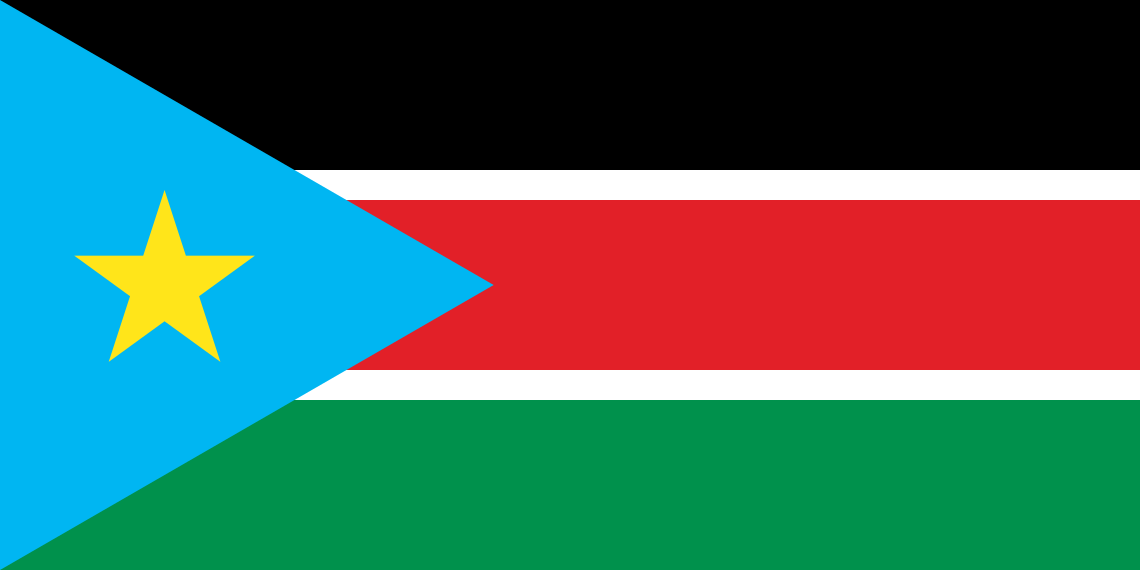
As this is the first time I have taken the floor since Albania assumed the presidency of the Security Council for this month, I would like to congratulate you, Madam President, and your delegation, and to assure you of my delegation’s support. On the same note, allow me to recognize the presence of our briefers, Mr. Nicholas Haysom, Ms. Edem Wosornu and our sister, Racheal Juan, from Juba. We thank them for their briefings.
My delegation takes note of the report of the Secretary-General on situation in South Sudan (S/2023/657), submitted pursuant to resolution 2677 (2023).
Despite the slow implementation of the Revitalized Agreement on the Resolution of the Conflict in the Republic of South Sudan, the parties to the Agreement remain committed to its full and logical conclusion in both letter and spirit, with the implementation of the road map as a priority that will allow for general elections to be held on time in December 2024.
The humanitarian situation in South Sudan is dire and has been caused by conditions beyond the Government’s control, as has been mentioned several times today in this Chamber. The conflict in the Sudan has directly affected markets, especially in the northern states, which have close cross-border trade and commerce with the Sudan. Furthermore, the influx of refugees and returnees in the hundreds and thousands and the fact that there are limited resources to attend to their immediate needs continue to be a challenge. South Sudan, with its limited capacity, cannot afford to address those challenges alone. Therefore, through the Council, we call on the international community to continue its efforts to help those in need.
The negative impact of climate change also continues to cause devastation, suffering and insecurity in South Sudan. As Council members are aware, over the past four years, parts of my country have been under water, which resulted in displacement and loss of property, animals and livelihoods. The delay of the rainy season this year will have a direct impact on food security, while regions that have traditionally served as the country’s bread basket and have not undergone floods have been hit by floods. Therefore, climate change has become a major destabilizing factor.
In conclusion, the United Nations Mission in South Sudan has been a close partner with the Government and the people of South Sudan. That has been demonstrated by the close working relations and the support that the Mission has extended towards the implementation of the Revitalized Agreement. It is a working relationship that we will endeavour to widen and deepen for the common good and interests of the people and the country.
The meeting rose at 12.05 p.m.