A/54/PV.64 General Assembly
In the absence of the President, Mr. Jusys (Lithuania), Vice-President, took the Chair.
The meeting was called to order at 10.15 a.m.
39. Support by the United Nations system of the efforts of Governments to promote and consolidate new or restored democracies Report of the Secretary-General (A/54/492) Draft resolutions (A/54/L.23, A/54/L.33) Amendments (A/54/L.46)

I call on the representative of Romania to introduce draft resolutions A/54/L.23 and A/54/L.33.


It gives me distinct pleasure to address the General Assembly for the first time and on an issue of worldwide interest at a time of global change. We are working together at the United Nations, with a common vision and in a spirit of partnership, to promote democratic values and consolidate democracy throughout the world at the dawn of a new millennium.
Today there is an almost universal recognition that the national interests of every country are best served by the
growth of democracy on a global scale. Indeed, democracy favours and fosters political and social stability and economic growth.
Lately, a comprehensive notion of democratization has been emerging: democratization seen as a process — a goal to be achieved — rather than a “one size fits all” model to be imposed.
There is a set of universal values and principles, but each society works within its own context and its unique history and culture.
Many debates have pointed out the so-called democratic peace — democracies rarely go to war against each other — as well as to linkages between democracy and development, including the question of whether a democratic government promotes economic growth more effectively. The concept of good governance is also very much related to democracy.
Recent studies show that in this decade the number of democracies has almost doubled, while the number of armed conflicts has declined. It has been argued that properly balanced development that benefits all groups of society and fosters inclusive democracy is the best form of conflict prevention, offering better chances for escaping poverty.
The experience of countries that consider themselves new or restored democracies, some of them making the transition from totalitarian rule or from centrally planned
Another lesson learned was that sharing democratic values, such as political pluralism, separation of powers, parliamentary democracy, market economy and human rights, is by itself not enough to build a functioning democracy. A coherent network of institutions to serve and implement those values was absolutely necessary. This indissoluble linkage between values and institutions represents the substance of good governance.
We consider that by its scope and legitimacy, the United Nations is well placed to assist interested Governments in their efforts aimed at fostering democratic values and building democratic institutions.
It is in this spirit that the Romanian delegation, together with 44 other sponsors, has submitted a draft resolution on a Code of Democratic Conduct for consideration and adoption at this session of the General Assembly.
In addition to the sponsors listed in document A/54/L.23, the following countries also indicated their wish to co-sponsor the draft resolution: Argentina, Belgium, Bulgaria, Finland, Japan, Luxembourg, Nigeria, Paraguay, Poland, San Marino, Sweden and the United Kingdom of Great Britain and Northern Ireland.
The text before the Assembly embodies principles that are widely accepted and spells out practical modalities for carrying them out. They are aimed at consolidating democratic processes through the promotion of pluralism; the promotion and protection of and respect for all human rights and fundamental freedoms; the strengthening of the rule of law; developing genuine and periodic elections; creating and improving the legal framework and necessary mechanisms for enabling the participation of all members of civil society in the development of democracy; good governance; promoting a sustainable economic environment; and enhancing social cohesion and solidarity.
It is our view that the adoption of such a Code would fit naturally into the ongoing efforts to build upon a system- wide agenda for democratization aiming at enhancing the United Nations capacity to meet the new challenges with
In the last decade, Romania has come a long way, from dictatorship to democracy, from isolation to integration with Europe and the rest of the world. On the basis of its own experience, my country remains committed to the consolidation of new or restored democracies. We recognize the growing trend indicating that the process of democratization is a global phenomenon and accept that all democracies, both old and new, have much to learn from each other.
The Romanian delegation highly appreciates the report of the Secretary-General and congratulates his staff on the excellent work done. The report looks generally at the efforts of the United Nations in this field and reviews the overall process of democratization and the role that the International Conferences of New or Restored Democracies have played in this global process.
We attach special significance to the activities carried out by the follow-up mechanism to the Third Conference, which held a meeting in Bucharest last May. This innovative mechanism — which brought together Governments, the United Nations system, academia and civil society organizations in an open and transparent way — continued to advance concrete projects, as described in the report, and to plan for the Fourth Conference, to be held in Benin from 4 to 6 December 2000.
We support the idea put forward in the report that, 12 years after the holding of the First Conference of New or Restored Democracies in Manila, and with Africa completing the cycle of conferences to be held on the four continents, it is timely to assess the overall impact of the movement on the process of global democratization. In this respect, we commend the specific recommendations contained in the report.
As it did last year, Romania, the current chair of the international conferences of new or restored democracies, has the honour to submit at this session another draft resolution under agenda item 39, contained in document A/54/L.33. I am pleased to introduce this draft on behalf of the 53 sponsors listed in the document. The following countries have also expressed the wish to co-sponsor the draft resolution: Argentina, Belgium, Chile, Croatia, Germany, Japan, Norway, Portugal and San Marino.
In the operative part, the General Assembly would welcome the report and recommendations contained therein and would express appreciation for the work done by the follow-up mechanism.
In a special paragraph, Member States and the relevant specialized agencies and bodies of the United Nations, as well as non-governmental organizations, are invited to collaborate in the holding of the Fourth Conference, to take place in Benin in December 2000.
On behalf of the sponsors, I wish to express our hope that this draft resolution will be adopted by consensus.
I now give the floor to the representative of Algeria to introduce the amendments to draft resolution A/54/L.23 contained in document A/54/L.46.


I have the honour to speak on behalf of China, Cuba, Egypt, Iraq, the Lao People's Democratic Republic, the Libyan Arab Jamahiriya, Malaysia, Pakistan, Singapore, the Sudan, the Syrian Arab Republic, Viet Nam and Algeria to introduce document A/54/L.46.
This is the first time that two draft resolutions have been introduced under this agenda item as long as the item has been discussed in the General Assembly. The new draft resolution contained in document A/54/L.23 has given rise to controversy because its sponsors are asking the General Assembly to endorse a set of rules on a very sensitive issue that were drafted outside the United Nations. Those rules have at no time been discussed or studied at the United Nations.
Above all, it has been the procedure followed and the approach taken by the sponsors that have caused problems, particularly since they did not agree, despite our request, to hold consultations or discussions on the matter. All our efforts remained a dead letter and received no response, even though the very spirit of the draft resolution has to do with democracy.
The sponsors of the amendments would like to reaffirm here in the Assembly their strong, total and
I will not go into all the details of the amendments proposed by the group of countries I have mentioned and will confine myself to pointing out that the only substantive amendment refers to the operative paragraph, which would request the Secretary-General to seek the views of Member States on this issue at the fifty-fifth session. The other amendments proposed are essentially based on the Charter of the United Nations and the Vienna Declaration on human rights. Furthermore, I wish to recall that at this stage none — I repeat, none — of the amendments proposed in document A/54/L.46 relate to the Code of Democratic Conduct.
If the General Assembly accepts this precedent by adopting the Code, in the future nothing will prevent other codes drafted outside the United Nations on other questions, such as disarmament, from being proposed for adoption.
It is for all these reasons that the sponsors, including my country, deemed it useful to submit these amendments. We are convinced that the amendments will enjoy the broadest support, and we hope that in future Member States will respect the rules and procedures that govern our Organization so that we will not be faced with this type of situation again.


Ukraine shares the prevalent belief that the global process of democratization will lead to the establishment of a world system in which peace and security, prosperity and sustainable economic development will be effectively guaranteed. Such a system should be based on the universal principles enshrined in the Charter of the United Nations and the Universal Declaration of Human Rights.
The full potential of the democratic process will be achieved only through joint action by the international community that is undertaken with a sense of common purpose and partnership.
Clearly, national actions also remain paramount. Ukraine, which has been dedicated to the principles of democracy from the very first year of its independence, cannot and will not renege on its responsibilities in the
The genuinely free and democratic elections to the Verkhovna Rada, or Parliament, of Ukraine and the three presidential elections that have taken place in Ukraine since 1991 underline the fact that we have achieved a great deal in this endeavour.
The most recent presidential election in Ukraine was held only two weeks ago, on 15 November. For countries with established democratic traditions, such elections are important but rather ordinary phenomena. For Ukraine, whose modern history has seen only three presidential elections, this phenomenon lends a democratic perspective to the entire process of the transformation of the economy and society.
As the results of that presidential election indicate, a new and important step has been taken towards the development of democracy and the further strengthening of State sovereignty. The presidential election was another confirmation of the high level of political activity in Ukrainian society and of its commitment to a democratic way of life.
Numerous representatives of Ukrainian non- governmental organizations, political parties and foreign observers contributed to transparency in the elections. On the basis of their observation of the conduct of the ballot, the observers stated that there were no irregularities which could have affected its results. At the same time, international observers noted certain shortcomings of the election campaign, which will be carefully studied in order to avoid them in future elections.
That presidential election greatly contributed to further structuring political life in Ukraine and to strengthening the foundation of the civil society that is taking shape in our country. The results of the presidential election also attest to the fact that Ukraine has successfully passed through a critical stage of its modern history and confirm that it has chosen independence, the course of democratic reform and the creation of a market economy. The election affirmed once again the irreversibility of our democratic choice.
In the process of transforming its society, Ukraine still faces very difficult challenges. The Ukrainian people realize that an effective response to those challenges depends
Our delegation commends the activities of the United Nations system in support of the efforts of Governments to promote and consolidate new or restored democracies. We fully share the views expressed in the report of the Secretary-General (A/54/492) and the recommendations contained therein.
We are confident that all Member States will gain through shared experiences and “lessons learned” in their efforts to promote and consolidate new or restored democracies. In the spirit of recommendation 2 of the Secretary-General's report, Ukraine is ready to continue sharing its own experiences in settling inter-ethnic tensions and promoting tolerance towards national minorities. One of the areas in which such experiences could be useful to other nations is the treatment of a very delicate issue related to the return to Ukraine of Crimean Tartars deported during the Soviet totalitarian regime. Today the Crimean Tartars in Ukraine enjoy all the rights afforded by a democratic society and live in peace alongside the other peoples that inhabit our multinational country.
May I also take this opportunity to draw the attention of the General Assembly to the proposal of the President of Ukraine made during the recent summit in Istanbul, held on 19 November, to establish in Ukraine an analytical centre to study the problems of inter-ethnic relations. I am confident that the activities of such a centre would be beneficial to many new or restored democracies.
The process of democratization is a prevailing trend in the development of world civilization on the threshold of the new millennium. I would like to confirm that Ukraine is strongly committed to the principles of democracy and is ready to continue its cooperation with the United Nations in supporting the efforts of Governments to promote and consolidate new or restored democracies.


The search for a real democratic society is a never-ending process. Democracy is a normative theory. The ideal, fully accomplished democratic process has not yet been realized. However, the resolution on the promotion of the right to democracy, adopted this year in the Commission on Human Rights, sets forth some fundamental requirements for a democratic society, some of which include freedom of opinion, expression, thought, conscience and religion; freedom to seek, receive and impart information through the media; the rule of law; transparent and accountable government; universal and equal suffrage; and periodic and free elections.
The link between democracy and human rights is self-evident. A functioning democratic society remains the best guarantee that all human rights are respected. Transparent and accountable governmental institutions, whether national, regional or local, are a prerogative for
My Government especially welcomes the fact that the present draft resolution and the Code of Democratic Conduct come from an effort by new or restored democracies themselves. The ownership of the process that has thus been established is a guarantee of continued efforts to see the ideas implemented in practice. Norway strongly supports the group of new or restored democracies that have brought forward the draft resolution under consideration. We believe that the upcoming Fourth International Conference of New or Restored Democracies, which will be held in Benin in December 2000, will contribute to the continued strengthening of the democratic process, especially in Africa.
Throughout the 1990s, Norwegian development assistance policy has been focused on democracy as an important dimension for sustaining social development. We have supported general and presidential elections, as well as local and regional elections in a number of developing countries. We have helped build capacity and support functions for national assemblies. Support has also been given to mass media, women’s organizations and the trade union movement in order to strengthen civil society. We cannot build democracy through such assistance, but we can make a contribution to enabling countries to do so themselves.
One particular challenge in our common efforts to build and strengthen democracy is to mobilize the people in countries where participation in the democratic process is deteriorating, where the institutional framework may be in place but does not function in a way that inspires confidence. In order to achieve a viable working democracy, people must believe that it is worthwhile. Democracy must prove that it serves the common good and that it is responsive to the will of the people. It must allow real participation in which all are equal and in which there are no privileges.
One of the greatest threats to democracy is apathy and the feeling of futility. Strengthening democracy is therefore
Our efforts, through the provision of development assistance, will be focused on enabling people to understand that democracy is a means to a better life. Civil society must be strengthened so that people can be put in a position to influence developments that affect them at the national and local level. Voters must have confidence that their votes count.
In our common efforts to promote democracy, we must, on the one hand, stand firmly by our principles and, on the other, maintain a humble attitude. We must not depart from the principle that democracy involves diversity and choices, equality and respect for the individual. At the same time, we must bear in mind that there are different ways of organizing democracy. Unless allowance is made for local factors and culture, it is difficult for democracy to take root. Democracy cannot be imposed from without; it must be part of a process that is nourished from within. We must accept that this takes time.


As I address the General Assembly on the issue of new or restored democracies, my mind goes back to the events of 10 years ago, when the first winds of change began to blow across my homeland, Mongolia, and when, defying the winter cold, crowds gathered in the streets to attend the first-ever rallies for democracy. That was in December 1989. At that time, we in Mongolia knew little about democracy. We were profoundly unfamiliar with the concept of human rights, and our knowledge about the world around us was utterly biased. Today, as we look back, we can see that what we have achieved in Mongolia over the past decade in building the institutions of democracy, promoting human rights and fundamental freedoms, unleashing private initiative and developing our external relations has constituted a major advance towards a self- governing democratic society, a private-sector-led
For all of us in Mongolia, the past 10 years have been a demanding yet rewarding decade of learning — and unlearning — which has greatly broadened our understanding of the policies we should be pursuing to ensure a better life for all of us in Mongolia. That decade as a whole was marked by significant progress in our drive to simultaneously reform the nation's political and economic systems. As a citizen of Mongolia, I feel proud that my country has shown such a robust commitment to change; it is a privilege for me to have this opportunity to deliver this address on democracy at the United Nations as we mark and celebrate the tenth anniversary of the victory of democracy in Mongolia.
In recent years, in the area of political reform we have introduced and have been able to sustain a vibrant multi- party democracy. Democratic institutions have been solidly installed. Through periodic free and fair elections, through a free press and media and through various non- governmental organizations, the people are exercising their sovereign right of participation in national decision-making. The stability and viability of Mongolia's democratic institutions and the solidity of the culture of popular participation have passed the test of time in three parliamentary and three presidential elections since 1990, all of them held in a free and fair manner.
The new Constitution of Mongolia, incorporating and reflecting these fundamental changes, was adopted in January 1992. It guarantees human rights and fundamental freedoms, including freedom of speech, freedom of the press, equality before the law and the independence of the judiciary. The Constitutional Court has emerged as a strong defender of democracy and human rights. Informed civil society is emerging and local self-governance is being strengthened. National debate on various policy issues has become a normal feature of the democratic process, thus introducing transparency in policy-making.
One of the most valuable achievements of democratization has been the change in the people's attitudes and ways of thinking. Political freedom and democracy have empowered the people and have released their entrepreneurial and creative energy, thus facilitating their active participation in the economic, social and political processes. We firmly believe that the feeling of being able to influence decisions that directly affect one's life is one of the sweetest rewards of democracy.
We firmly believe that transparency and accountability, better public management and a robust civil society are the essential ingredients of sustained development. The ongoing public-sector reform envisages the enactment of a bill on public-sector financing and management, anti-corruption policies, continued legal reform, improved law enforcement and further decentralization.
All in all, it can be concluded that the main political and legal foundation has been put in place for consolidating democratic transformation in Mongolia. Here, I wish to emphasize that our accomplishments of today were made possible with the unreserved support and assistance of the international community. On behalf of the Government of Mongolia I would like to express our sincere appreciation to the organizations of the United Nations system and to multilateral and bilateral donors for their support of our efforts to build a democratic society. By embarking on the road of democracy and pursuing an open, multi-pillared foreign policy, my country has acquired new partners, among both established and emerging democracies.
Still, 10 years later, as we assess our achievements from the perspective of what has been delivered in terms of reducing poverty, creating jobs and ensuring better living standards for the population, we feel that there is still a long way to go for us to fulfil the promise of democracy. At the Third International Conference of New or Restored Democracies on Democracy and Development, held at Bucharest, Romania, two years ago, the representatives of new or restored democracies noted that a democratic system of government is the best model to ensure a framework of liberties for lasting solutions to the political, economic and social problems that our societies face. We fully endorse that statement, which, in
If the promise of democracy were to be gauged in terms of its contribution to all these, we indeed have a lot more to do. As our experience suggests, the greatest challenge that committed leaders of a developing country with a transitional economy and a new democracy face is to manage the tension that exists between democracy, seen and perceived as meaning a better life, and the harsh reality of financial constraints, lack of resources, structural inefficiencies and bad practices that need time to be fully addressed and resolved. In that sense, the tenth anniversary of the democratic movement in Mongolia, to be observed on 10 December, represents an important opportunity for us to take stock of past experience and draw lessons with a view to formulating a better vision for the future.
Since the first International Conference of New or Restored Democracies, held at Manila back in 1988, democracy has emerged as a major international trend. Many States and their peoples have embarked upon a process of democratization for the first time. Others have moved to restore their democratic roots. Hence, gaining a growing number of adherents across cultural, social and economic lines, democracy is increasingly being recognized as an appropriate response to a wide range of human concerns, and as an ingredient for both sustainable development and lasting peace.
The globalization of economic activity and communications and continued and evolving threats to security, progress and development have generated a host of multifaceted challenges to both new and established democracies at the dawn of the new millennium. Here, I fully concur with the Secretary-General's conclusion, contained in his report (A/54/492), that while assistance to new or restored democracies should continue and increase in scope and magnitude, debate about the measures to be taken by established democracies to address those challenges in the coming decades should not be neglected.
The international conferences of new or restored democracies, as open forums with an active participation of Governments, intergovernmental bodies, academia and non- governmental organizations, are a fitting assembly in which to share experiences and lessons learned, as well as to explore innovative approaches in meeting the existing and emerging challenges to democracy. In this respect, we
Mongolia wishes to commend the efforts made by the Government of Romania since the Third International Conference of New or Restored Democracies to implement its important recommendations, including the creation of a follow-up mechanism and the elaboration of a code of democratic conduct. We believe that today's deliberations will help command effective support on the part of the international community for the Code of Democratic Conduct, which represents a basic set of democratic norms for Governments. It will, in our view, also contribute to the affirmation of a culture of democracy.
The Government of Mongolia commends the manifold assistance provided by the United Nations to new or restored democracies, ranging from support for promoting a culture of democracy, through electoral assistance, to institution- and capacity-building for democratization. In Mongolia, for one, the programme on decentralization and democracy support is being actively implemented in cooperation with the United Nations Development Programme. With its impartiality and universal legitimacy as well as its Charter-based purpose of promoting human rights and fundamental freedoms for all, the United Nations is, in our view, uniquely placed to provide such assistance at the request of Member States.
In conclusion, I wish to emphasize the importance of holding an open dialogue, such as we are having today, on challenges faced by countries in their efforts to develop, restore and consolidate democracy. Two years


For almost a decade now, concepts and principles of democracy have been spreading on a wide, global scale and have had a direct impact on the lives of many peoples around the world that were languishing under oppressive regimes. With the expanding circle of States that have adopted democratic systems of government, especially among the developing nations, the new or restored democratic States have emerged as active players. Thus, the First International Conference of New or Restored Democracies was convened in Manila in 1988, followed by the Managua and Bucharest Conferences. Now we look forward to the convening of the Fourth International Conference, in Cotonou, in December 2000. What distinguishes all these Conferences is that they are not limited exclusively to certain States or to certain themes. Attendance is open to all elements of civil society, and the discussion covers all aspects of democracy as a form of human thought as well as a multifaceted system of government based on the freedom of the individual and society.
Of course, the United Nations welcomed those International Conferences, as shown by the resolutions adopted by the General Assembly, that called on the United Nations system to support Governments that were promoting and consolidating new or restored democracies in the areas of human rights, mobilization of civil society, assistance in elections, support for free and independent media and promotion of the rule of law. All this support has been achieved through programmes, conferences and workshops sponsored by the United Nations and its agencies, as shown in the report of the Secretary-General, which we warmly welcome. We hope that the United Nations support will increase and expand, given its significant impact, especially when a democratic system is new or recently restored. This stage, of course, is fraught with risks and potential setbacks, especially in developing countries, due to the lack of essential conditions for pursuing a democratic course, foremost among them the existence of an economic system that meets the basic living and cultural needs of a society, in addition to the rule of law and the existence of a civil society that is robust with political and professional activities.
In this context, I would like to highlight the Forum on Emerging Democracies held in Sana'a on 30 June last. Sixteen States, along with representatives of political parties, the media, intellectuals, scholars and trade unionists participated in that Forum. Also, the Sana'a Declaration, which was adopted on 30 June 1999 at the end of the Forum, covered most of the components of the Code of Democratic Conduct. The Sana'a Declaration was annexed to an official document (A/54/321) of the United Nations under this same agenda item.
On this occasion, I am pleased to quote an excerpt from the statement made by Mr. Abdul-Qader Ba- Jammal, Deputy Prime Minister and Minister for Foreign Affairs of Yemen, before the General Assembly at this session.
“I wish to reaffirm here the announcement of President Ali Abdullah Saleh that the Republic of Yemen would like to host the International Conference of New or Restored Democracies to be held in Asia in 2003.” (A/54/PV.19, p. 22)
Our Foreign Minister went on to say that the Republic of Yemen has linked its national unity inextricably to the democratic process. It has also adopted the democratic approach as a constant process towards comprehensive development. The Government and the civil society of Yemen are working closely and strenuously to make democracy an irreversibly solid trend of national policy and an evolutionary process, so that democracy will ultimately become the focal point of political, social and economic life in Yemen.


It is a pleasure for me to be here this morning to address this important topic. As Secretary of State Albright has said, democracy is always and everywhere a work in progress. Over the past 10 years the global growth of democracy
Cooperation among people and Governments is essential if human rights, the rule of law, conflict resolution, political and social stability and economic growth are to continue to flourish. Only by drawing strength from each other's strengths, engaging in open dialogue and confronting challenges together can we sustain and solidify democratic practices throughout our world.
The United States therefore commends the Government of Romania for introducing the draft resolution under consideration today. This draft resolution is a tangible follow-up to the Third International Conference of New or Restored Democracies, held in Bucharest in 1997, and this draft resolution provides a timely and useful framework for putting the Conference's recommendations into practice.
Meetings and proclamations about democracy are of little lasting value unless concrete actions are taken to empower people to choose their own destinies through multi-party elections and other democratic practices. My Government therefore looks forward to contributing actively and substantively to the Fourth International Conference next year in Cotonou, Benin, on the important theme of “Democracy, Peace, Security and Development”. We anticipate that the Benin Conference will advance the goals arising from the Conference in Bucharest and the earlier conferences of new or restored democracies.
The United States also commends the leadership shown by Romania in formulating the Code of Democratic Conduct and bringing it before the General Assembly. This instrument compellingly reaffirms fundamental principles of freedom and human rights for all peoples, principles the United States has taken the lead in supporting in this era of transition to democracy. The vast majority of the instrument's comprehensive definitions and standards will prove valuable not only to emerging nations, but also to well-established democracies, as they seek to address the challenges of democratization and strengthen hard-won gains in the years ahead.
The United States delegation looks forward to working with the sponsors and other interested delegations to finalize a text that will contribute substantially to the ongoing evolution of democratic norms. We wish to bolster
The draft resolutions introduced by Romania fit neatly into a growing and important phenomenon. Since the 1970s the number of electoral democracies has leapt, by one estimation, from 30 to more than 110. That is worth repeating: the number of electoral democracies has leapt, by one estimation, from 30 to more than 110. At the same time, we are seeing increasing efforts by the international community to support and provide guidance to new, restored and emerging democracies. To cite just a few examples from the past year: first, the founding statement of the New Delhi conference of the World-wide Movement for Democracy; secondly, the resolution entitled “Promotion of the right to democracy” adopted overwhelmingly by the United Nations Human Rights Commission; and thirdly, the Sana'a Declaration issued by the Forum on Emerging Democracies. In the coming year, there will be other important developments in this area, including the community of democracies ministerial meeting in Warsaw, Poland, to be held in June, and the December Conference of the New or Restored Democracies in Cotonou, Benin.
Genuine democracy is not a function of a single election or a single document. It depends on many factors, such as the development of a strong civil society, an informed citizenry, a free press, a loyal opposition and respect for human rights and the rule of law. Without fear of justifiable contradiction, I declare to this Assembly that democratic Governments represent the best means of fostering political stability, economic progress and peaceful cooperation among nations.
In closing, let me say that the United States is proud to support the movement of new or restored democracies. We continue to work with our partners in the United Nations and in other international organizations to help transform democratic principles into reality for people throughout the world. Human beings, beyond the majestic mountains, across the serene valleys and broad plains and also in the overcrowded metropolises, all swell with pride, and people of every hue and conviction embrace this mighty movement in support of democratic freedoms, this


Over half a century ago, when India became independent, there were those outside who wondered whether a country so huge, so ethnically diverse, which had more languages and religions than some continents have, and whose distinct regional cultures and traditions traced themselves independently to the roots of Indian civilization could long stay on the democratic path which we had chosen, particularly because extremely difficult choices would have to be made as we tackled the enormous challenge of development. In India, however, there was consensus that, precisely because at one level we were so diverse, only a system of governance that respected plurality would work for us. By definition, we could only be a democracy in political form and flourish by cultivating and nourishing the democratic ethos in spirit.
There is a seminal lesson, we believe, in our experience. It is in States that seem unwieldy or difficult to govern that democracy is most needed. The tempters and the Cassandras might say that a strong autocratic hand is needed to hold fragile and complex societies together. They are wrong — authoritarian structures crumble; democracies grow and thrive.
We know from our experience that democratic developing countries have special problems. Again by definition, a democracy cannot impose totalitarian solutions on its citizens. As a result, over the first 30-odd years of our independent life, our economy did not grow as spectacularly as did those of others where draconian regimes could carry through policies that had a serious social and political impact on their citizens, but produced remarkable figures of growth. Our initial progress was elephantine, not tigerish — a pace constrained by the imperatives of the democratic system when the foundation is being laid. And now, the foundations having been collectively laid, our economy is taking off. We recognize the calibrated policy initiatives required to encourage this.
The moral of this story, too, from our experience as an established democracy — and not irrelevant for our partners in the new or restored democracies — is that democracy cannot be treated as a fad to be tried and tossed away if it produces no instant results. Democracy is and must be a way of settled national life; unless it is accepted completely and unequivocally, it will not work.
Earlier this year, when only one vote in our Parliament led to the fall of the last Government and to yet another
We are glad that, even though there has been the occasional lamentable backsliding, democracy is the one norm on which there is almost universal consensus. The strength of the Inter-Parliamentary Union is a good barometer of democratic progress and we are particularly delighted that, this year, the Deputy Chairman of the Upper House of our Parliament, Mrs. Najma Heptullah, was unanimously elected President of the Union, the first woman in its 110-year history to hold this post.
Turning to the role the United Nations can play in supporting the new or restored democracies, monitoring human rights and providing electoral assistance through workshops and seminars only scratch the surface. What is required is assistance through a needs-based approach, drawing on the recommendations of the Third International Conference of New or Restored Democracies, held in Bucharest in 1997, which defined the following imperatives facing them: the consolidation of democracy; security and peace; economic freedom in a globalizing world; social order and justice; and integration into the global order. It is in these areas that the United Nations can and should play a supportive role.
The Secretary-General reports that, after the democratic transformations of the 1970s and 1980s, the consolidation of the democratic process is a matter of prime concern. The continuation of global democratization, the Secretary-General says, is not necessarily assured. Recent events have shown how true this is. While we can rejoice with Nigeria and Indonesia in their triumphant return to democracy, military coups have taken place elsewhere. Countries which are themselves mature democracies and claim to promote democratic ideals everywhere should not be seen to be closet sympathizers of those who overthrow democracy or to be soft in reaction to any challenge thrown down to democratic norms. Countries where democracy has not taken root will watch anxiously to see how the powerful
The Secretary-General has welcomed the decision of the Summit of the Organization of African Unity, held in Algiers in July this year, that leaders of military regimes would no longer be accepted at its summits. The heads of Government of the Commonwealth, meeting at Durban in November, welcomed back Nigeria, but decided to suspend from their councils another member whose Government had been overthrown by the military. They called for the restoration of civilian democratic rule without delay and for the observance of the rule of law in that country. These are decisions that will help to encourage global democratization and the consolidation of democracy. The world must not provide legitimacy to those who usurp or undermine democracy.
We welcome the Ashkabad declaration of the Central Asian Republics, as well as the Budapest Declaration of the Council of Europe. Threats posed by terrorism, aggressive nationalism and challenges to the territorial integrity of democratic States have been underscored in both these Declarations. The Declaration and Programme on Education for Democratic Citizenship of the Council of Europe clearly notes that education is an important tool in strengthening an individual's awareness of his or her rights and responsibilities, as well as to develop a capacity to exercise these rights and respect the rights of others. These elements are crucial not only to new and restored democracies, but also to the continued consolidation of the democratic process worldwide.
The Vienna Declaration and Programme of Action examined in detail the linkages between democracy, development and human rights. The fact that these are mutually reinforcing requires constant reminders. Democracy cannot flourish without economic and social development and a broad-based economic and social development can take place in any country only with the full participation of its people in the political, social and cultural process. As Professor Amartya Sen has argued in his latest book, development is freedom.
It is our considered view that governance is only one aspect in the consolidation of democracy. Democratic governance implies governance through the will of the citizen, exercised through independent constitutional mechanisms, and therefore it is the will of the people that defines the political institutions, the economic and social manifestos, the targets and the instruments. But reaching democratically set targets needs resources. Resources are
We note with particular interest, therefore, that in one of his recommendations the Secretary-General says that, while paying the closest attention to the needs of the new and restored democracies,
“debate about the measures to be taken by established democracies to address the multifaceted challenges of globalization and threats to security, progress and development in the coming decades should not be neglected.”(A/54/492, para. 36)
It is with precisely this objective in mind that a group of established democracies decided earlier this year to start a new initiative, which we call the “community of democracies”, drawing all democracies together in a celebration of our common belief and commitment, which we wish to translate into a heritage to succeeding generations, and to address our common challenges. We see this initiative as complementing the efforts of the new and restored democracies and as consolidating the democratic ideal worldwide.


Sometimes left unmentioned in discussing today's globalized, wired and interconnected post-cold-war world is the wave of democratization that in the past decade has helped make sure that freedom rings in more countries than at any other time in history. If this is a sign that democracy and freedom, whether hard-fought or otherwise, are on the verge of being taken for granted, then indeed we have much work ahead of us.
Even though today thoughts and ideas can be freely spread across the globe at the press of a button, even though today the fruits of one's labours can be transported quickly and efficiently across the oceans, we must not give in to complacency or make any less effort to help others realize democratic progress. For democracy sustains civil society, liberates the entrepreneurial spirit and lifts development to peaks of innovation and
It is with the objective of universal realization that the First International Conference of Newly Restored Democracies, which was originally conceived by the late Secretary of Foreign Affairs Raul Manglapus and fully supported by then President Corazon Aquino, was convened in Manila in 1988. We knew then that the new democracies themselves had to take a firm hand in promoting respect for democratic principles and in fostering the dissemination and a broader understanding of democracy and the indissoluble link between democracy, peace and development.
At our second Conference, held in Managua in 1994, we took another important step when we adopted the Managua Declaration and Plan of Action, which addressed issues relating to the political and reconciliation processes within national societies, human rights and the right of all nations to development, economic reforms, structural adjustment programmes and other problems facing democratic States.
Recognizing that democracy, good governance and participation are of crucial importance for the conduct of Governments in service to their people, the Third International Conference of New or Restored Democracies was held in Bucharest in 1997. There, subsequently, we drew up the draft resolution entitled “Code of Democratic Conduct”, of which my delegation is a sponsor. The draft resolution expresses appreciation to the United Nations system and seeks further support from it in the efforts of Governments to promote and consolidate new or restored democracies.
The Philippines also hosted the World Conference on Governance, held in Manila from 31 May to 4 June 1999, in cooperation with United Nations agencies and other international organizations. The meeting underscored the need to examine the conventional wisdom that governance is government. Focus was placed on four issues of governance: transparency, ethics and anti-corruption values; judicial reforms; civil reforms and human resource reform; and poverty redressal and services delivery. It also adopted in 1999 Manila Declaration on Governance, which recognizes the primacy of good governance for empowering people, developing communities and building nations.
To achieve the evolving universality of democratization, the Philippine Government is looking
The new global democratic world order is in the process of gaining recognition and rapid evolution. Yet there are substantial problems facing the old as well as the new democracies. There are still a number of things to do, and the draft resolution on the Code of Democratic Conduct is a significant progressive step towards the embodiment of national governance validated by international standards. The Code, which stemmed from the political document adopted by the Third International Conference, held in Romania, as well as from other internationally accepted documents, contains provisions aimed at a basic set of norms of democratic conduct for Governments in the exercise of power. These include free, fair and competitive elections; separation of powers; respect for human rights and fundamental freedoms; strengthening the rule of law and the application of practices of good governance and fundamental freedoms; increasing the participation of civil society in the development of democracy; creating an economic environment favourable to democracy; and enhancing social cohesion and solidarity, among others.
Globalization has become an inescapable reality of our times. We have been able to reach this stage of globalization because much of the world has adhered to democratic ideals and has not closed its mind or feared the interaction necessary for globalization. But the benefits of globalization are not experienced uniformly around the world. I am confident that none of us will lose sight of the importance of ensuring that the blessings of globalization fall on everyone, rich or poor, or of the significant role globalization plays in our common efforts to strengthen and spread democracy.
Another problem facing our efforts, though a far more insidious one, is the threat to democratic institutions brought by international terrorists and international organized crime. Terrorism thrives on fear and sustains itself by warping noble ideas and misrepresenting the truth. Because of the peculiar and furtive nature of terrorism and organized crime, democratic institutions
Finally, my delegation would like to thank the Secretary-General for his report. We support his proposals, particularly those aimed at contributing to the Benin 2000 Conference and the future assistance to be given by the United Nations system to Governments to promote new or restored democracies. I urge all Member States to reflect more actively on the direction of the democratic movement as we enter the new millennium.


Hungary welcomes the interest shown in the process on new or restored democracies and the follow-up activities engaged in since the Third International Conference on this question. We would like to thank the Government of Romania for its pre-eminent role in coordinating these activities.
Over the last decade, important events have occurred in the world which have considerably strengthened the global process of democratization. This march of democracy continues today, and it has enlarged the family of democratic nations through its new additions, where the ideals of democracy have triumphed. Perhaps one day, in order to reflect this evolution, we will see the United Nations Charter fill a rather peculiar gap by including the term “democracy”.
With regard to the Euro-Atlantic area, the region of Central and Eastern Europe, where my country is located, played a crucial role, without any exaggeration, in the upheavals of 10 years ago and in the fundamental change of the world's political landscape for democracy. It is worth pointing out that it is precisely in this part of Europe that the old continent — I daresay, the entire world — was divided in two 50 years ago under dramatic circumstances. Here we saw the iron curtain descend on Europe, that line of separation which subsequently hung for several decades and embodied multi-faceted confrontation — ideological, political, military and economic confrontation — between totalitarian and democratic systems.
In the spring of 1989, just 10 years ago, Hungary dismantled the barbed-wire fences along its frontiers with Austria and, a few months later, opened up the border, thus enabling the free and unimpeded departure to the West of
The last decade has led to radical transformations on the world scene, and particularly in Eastern Europe. Free democratic elections are regularly held in most countries of this region; democratic change of government is becoming a reality; and institutions function according to their constitutional roles. In short, today the state of law is becoming an intrinsic part of these countries, and it is irresistibly gaining ground there.
As we stressed when speaking on this agenda item last year, we must say that in addition to the global dynamic of democratization, in some places the phenomenon of the police state or the authoritarian regime, oppression, or overt or more covert attempts to mar democracy still persists. As the Secretary-General pointed out in his latest report on the work of the Organization, more than 60 per cent of the countries in the world today have some form of democratic government. This means — let us add this point — that a certain number of them do not yet have it. Hence, the need to continue efforts to promote democratic governance and to respect the political conditions of each country so that popular participation in public management finally will extend to all countries of the world.
The experience through which Hungary and many other countries lived during these last 10 years has not been easy, either economically or socially. We have gone through an unprecedented transition which has no equal in international relations. Why? one might ask. Because, in an incredibly short space of time, we had to change a single-party system and a centralized economy which were firmly entrenched to a system of parliamentary democracy and market economy based on ideals of social justice, a change of scenario for which no script existed.
In addition, in the case of certain countries, this change involved a transformation in an unfavourable international situation, when their immediate neighbours were suffering the effects of wars, nationalist demagogy, material devastation and economic sanctions. Furthermore,
In this respect, Hungary has gained much from international experience, more specifically from the negotiations to join the European Union, which, in fact, are a long series of in-depth studies about the situation of each of the countries that want to be admitted to this European body, studies which cover a huge range of questions, from human rights, the environment, education and employment to social affairs and the campaign against corruption and drugs. We learned rather quickly that the design for society called “democracy” is not a perfect structure in which things all fit together with perfect ease. This design is far from being paternalistic, and it requires that every man and woman show a spirit of enterprise and participation at all levels of society. Nevertheless, as a country that has had to confront all of these challenges and difficulties, we wish to proclaim from this rostrum that the benefits of and the prospects offered by this transition are definitely worth the effort, because of the solidity of our democratic system, social stability, rapid economic development and constructive cooperation with our democratic neighbours.
Hungary is pleased again this year to co-sponsor draft resolutions A/54/L.23 and A/54/L.33, which have just been introduced by the Secretary of State from the Ministry of Foreign Affairs of Romania, because these drafts translate the universal message of the importance of democratic governance, signalling the end of a bi-polar world during this period of dizzying globalization at the threshold of a new millennium.
We are confident that following the subsequent consultations, we will all be able to find common ground concerning the Code of Democratic Conduct. We welcome the decision of the Government of Benin to organize the Fourth International Conference of New or Restored Democracies next year in Cotonou. We are confident of success in the work awaiting us — after Asia, America and Europe — this time in Africa, that great continent which now is truly committed to the great march towards democracy.

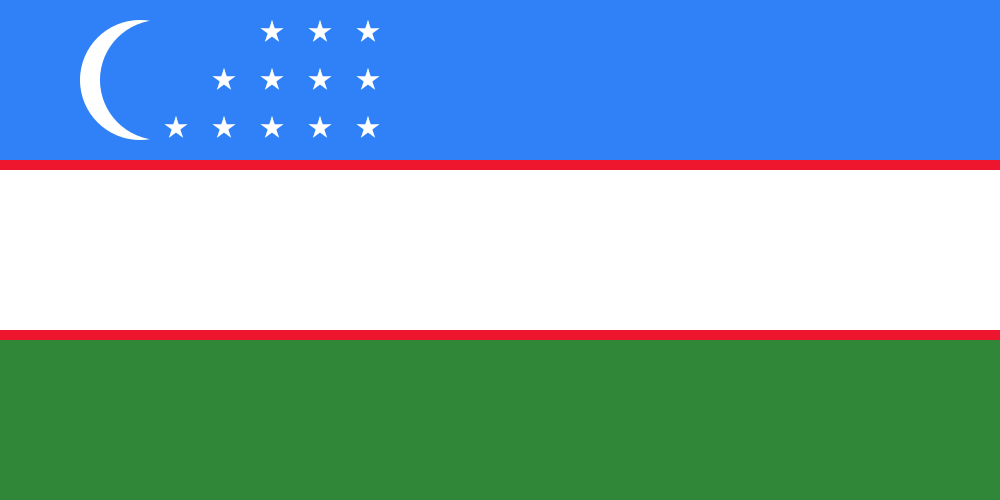
The last decade of the twentieth century will go down in the history of mankind as an era of profound political changes. Colonialism, apartheid and the concept of world communism belong in the past. Most countries which have regained their independence proclaim their commitment to
Since it gained independence on 1 September 1991, the Republic of Uzbekistan has determined the priority directions for the development of a democratic, free society, one in which human interests and human rights are preeminent. The Constitution of the Republic of Uzbekistan serves as the legal guarantee for the democratic development of our country.
In this connection, I am pleased to note the active participation and cooperation by the United Nations in creating and improving the democratic institutions and structures of Uzbekistan. Specific examples of this interaction are the creation, with the assistance of the United Nations, of the institution of the Ombudsman of the parliament of the Republic of Uzbekistan to deal with human rights and the creation of the National Centre on Human Rights. It is very significant that, in May 2000, at the very beginning of the third millennium, Uzbekistan will be commemorating the fifth anniversary of the office of the Ombudsman, an organ which in a very short period has had a significant impact on the socio-political processes in our society. In May next year, the Government of the Republic of Uzbekistan is planning to hold an international conference on the development of this institution and is counting on assistance from the United Nations Development Programme (UNDP).
In the process of continuing democratic reforms, the Government of the Republic of Uzbekistan attaches great importance to the programme entitled “Democratization, Human Rights and Governance” in Uzbekistan, which is being carried out within the framework of cooperation with UNDP and the democratic institutions of the Republic. In the opinion of the Government, the first stage of this programme has yielded very fruitful results and has attained its goal: broad knowledge in society of the heritage and experience of world democracy and how it can be applied in Uzbekistan's conditions. We hope that very soon the drafting and implementing of the second stage of the programme will start, and we call upon the senior officials of UNDP to lend us every assistance.
Uzbekistan has a clear understanding that the prospects for developing democracy in our country are directly linked to stability throughout the whole Central Asian region. Unfortunately, there have been increasing outbreaks by certain forces that advocate religious and political terrorism and extremism. Taking cover behind the idea of creating a Muslim State in the territory of
It is extremely clear to us that the sole goal of these forces is to overthrow the legally elected Government and to forcibly change the State structure of the Republic of Uzbekistan. However, the people of Uzbekistan has made its choice, and it will not swerve from the path of democratic reforms that it has chosen and will not allow any attacks on its independence and freedom. We sincerely hope and trust that the United Nations and the international community will demonstrate solidarity with the people of Uzbekistan and will strongly condemn the destructive activities of these forces.
I take this opportunity to inform the Assembly that on 5 November an inter-religious political forum-dialogue took place in Tashkent, entitled “Religion and Democracy”, in which prominent academics and representatives of various religious denominations and international non-governmental organizations took part. Participants in the forum adopted the Tashkent Resolution, containing an appeal to the United Nations to proclaim 2002 the year of interreligious solidarity in combatting international terrorism and extremism. May I express the hope that the Assembly will support this initiative
Today, the Republic of Uzbekistan is about to hold its second free elections. Deputies to the parliament will be elected on 5 December and the presidential elections will be held on 9 January 2000. We hope that as a result of the elections democratic reforms will be successfully continued and will be given new life. Bearing in mind the unquestioned authority of the United Nations in encouraging democratic reform in Member countries, the Republic has sent an invitation to representatives of the Organization to participate in these upcoming elections as observers.
Recognizing the role of the United Nations in the process of democratization in new and restored democracies, Uzbekistan traditionally joins in sponsoring the draft resolution entitled “Support by the United Nations system of the efforts of Governments to promote and consolidate new or restored democracies” which we hope will be adopted today by the Assembly, by consensus as usual.
Uzbekistan, a country with a restored democracy, participates actively in international forums devoted to a more in-depth understanding of the role of democracy in
In conclusion, I should like to quote an excerpt from a book entitled Uzbekistan on the Threshold of the Twenty-first Century: Guarantees for Stability, Conditions of Security and Progress by the President of the Republic of Uzbekistan, His Excellency Mr. Islam A. Karimov:
“We have every reason to be convinced that we will attain the supreme goals of building a democratic State with responsible government, an open civil society and a free-market economy. The basis for this conviction lies in our rich history and great culture, which has made an invaluable contribution to world civilization; in our natural and intellectual potential; in the high spiritual and moral values of our people; in their enterprise, open thinking and desire to take their rightful place in the world society.”


I have the honour to speak on behalf of the European Union on agenda item 39, entitled “Support by the United Nations system of the efforts of Governments to promote and consolidate new or restored democracies”. The Central and Eastern European countries associated with the European Union — Bulgaria, the Czech Republic, Estonia, Hungary, Latvia, Lithuania, Poland, Romania, Slovakia and Slovenia — and the associated countries of Cyprus and Malta align themselves with this statement. No system of governance can claim perfection. Contemporary forms of democracy are no exception. Yet democracy is today unchallenged as the best form of governance. There are no serious alternatives available. By providing appropriate mechanisms for the regular change of Governments, democracy protects the capacity, reliability and integrity of core State institutions. Experience has shown that only democracy has been able to uphold the rule of law, as well as to ensure respect for all human rights and fundamental freedoms, especially the By making Governments accountable to citizens, democracy makes Governments more responsive to popular concerns and provides incentives for transparency in decision-making. Democracy, by ensuring greater popular participation, also has a positive impact on development and on human security. Democracy makes it possible for national development goals to reflect the aspirations and priorities of society and enables society to develop and make use of its full potential for sustainable development. Democracy generally correlates with lower levels of internal violence, and democracies very rarely go to war against each other. Democratization has become both the objective of and the instrument for resolving conflicts. Indeed, the European Union subscribes to the view that democracy, human rights, peace and development are all interdependent and mutually reinforcing. Nowadays almost every Government calls itself democratic and most countries have adopted several features of formal democracy, in particular the holding of elections. Yet not all Governments live up to democratic standards, such as the accountability of rulers, political and civic pluralism, the rule of law and respect for human rights, and therefore fail to provide for everyone the freedom and conditions necessary to participate fully in the political process. The new or restored democracies have a key role to play in bringing about such a common understanding of democracy and of the minimum conditions and principles of democracy that have to be met. In this context, the European Union welcomes the initiative to draw together existing international standards into a Code of Democratic Conduct and supports its adoption by the General Assembly. In the course of the last three decades, an ever- increasing number of countries — including countries that are now members of the European Union — have embraced democracy as their preferred form of governance. Today, in a clear majority of the world's nations the people have the opportunity periodically and freely to express their will concerning the Government of their countries, notably through the conduct of periodic, free and fair elections. One manifestation of this positive global trend is the series of international conferences of new or restored democracies, which is attracting increasing interest. While in 1988 at Manila a total of 13 Governments participated in the first Conference, the Conference in Managua in 1994 attracted increased interest, and some 80 Governments attended the most recent Conference, held in Bucharest in 1997. The European Union welcomes the role of the United Nations system in providing support to the conference processes, and in this context pledges its own support for the efforts of the Government of Benin, which has undertaken to organize the Conference at Cotonou towards the end of the year 2000. We welcome the increasingly important role played by the group of new or restored democracies here at the United Nations, as reflected in the strong support in the General Assembly for resolutions on democratization. The European Union believes that the consolidation of new or restored democracies must be at the forefront of our joint endeavours. This consolidation process must make democracy so stable and so deeply institutionalized and legitimate that all significant political actors, both in power and in opposition, fully embrace democratic procedures of governance. The United Nations system has an impressive record of assisting democratization processes around the world, whether as part of peacekeeping or peace-building efforts, in the form of electoral assistance or through its governance programmes. The European Union is supporting many of these activities and will continue to work closely with the United Nations in this field. I would like to commend in particular the work of the Electoral Assistance Division as focal point for all requests made of the United Nations in the field of electoral assistance. The United Nations Development Programme is substantially contributing to democratization through national capacity- and institution-building and in the field of strengthening governance. The Office of the United Nations High Commissioner for Human Rights promotes the rule of law and democracy-related activities through, inter alia, technical cooperation projects, human rights field presences and system-wide activities. The European Union welcomed the holding of the first genuinely multi-party elections in Indonesia and the formation of a democratic Government. The European Union considers these developments a basis for further change, leading to a civic society based on democratic principles, the rule of law and international human rights standards, including those concerning minorities. The European Union also welcomes the continuing democratization process in Nigeria, which has been supported by overall improvements in the human rights situation. Today the world speaks out against any change of democratic government by undemocratic means, such as coups d'état. In this context, the European Union remains concerned by the military coup in Pakistan and requests a speedy restoration of democratic civilian rule. Let me conclude by recalling that as we all know from our own histories, the establishment and strengthening of democracy is not an easy task. It requires not only sustained efforts on the part of the entire society as well as wise leadership, but also international assistance. The European Union will continue to strongly support the efforts of the movement of the new and restored democracies as well as the United Nations.
Mr. Alimov (Tajikistan), Vice-President, took the Chair.


Almost exactly two months ago, the Prime Minister and head of Government of the Republic of Niger spoke before the Assembly about the transition process that my country has embarked upon to restore a durable and stable democracy.
That was on 30 September. The people of Niger had recently adopted by referendum the Constitution of 18 July,
I am pleased to announce today that the timetable drawn up by the Independent National Electoral Commission, which was announced in this very Hall by the Prime Minister, has been fully respected. The presidential and legislative elections were held as scheduled on 17 October and 24 November 1999, to the great satisfaction of the people of Niger and of national and international observers.
The President of the Republic and the 83 members of Parliament, all freely elected in conditions of absolute transparency, fairness and neutrality, will soon officially take up their duties.
Clearly, democracy is not limited to the holding of a series of elections. That is why we ardently hope that the United Nations and our other customary external partners will continue to work with us to help us lay the foundations of a true democracy. We hope to receive from all the necessary support in order to help us consolidate our gains and to allow Niger to join the family of democratic nations in the twenty-first century.
In our view, this shows clearly the importance of the draft resolution that we are considering today, entitled “Support by the United Nations system of the efforts of Governments to promote and consolidate new or restored democracies”.
In this regard, my delegation welcomes the concise report of the Secretary-General (A/54/492), which contains very useful information, inter alia on the follow- up mechanism to the Third International Conference of New or Restored Democracies, held in Bucharest in September 1997.
Within the framework of the follow-up mechanism to this important Conference, my delegation also welcomes the publication of the Code of Democratic Conduct as an official document of the General Assembly. Allow me warmly to thank the Romanian Government for the extremely valuable role it played in the adoption of that document.
My delegation also supports the recommendations made by the Secretary-General in his report, namely those relating to the steps that well-established democracies must take in order to tackle the many challenges of
This provides ample justification for the theme of the Fourth Conference, to be hosted by Benin in December 2000, entitled “Democracy, Peace, Security and Development”. My Government would like to take this opportunity to congratulate our sister Republic of Benin on its decision to host the next Conference. Indeed, after Asia, Latin America and Europe, it is the first time that an African country will host this important Conference.
I wish to express the hope that the Conference will have a very successful outcome. My Government will work closely with our brothers in Benin so that this great meeting can lead to concrete measures aimed at consolidating new democratic institutions in Africa and in the world. Intensive preparations are already under way, both at the level of the United Nations and in the host country, which are very promising.
Niger has just convinced the international community of the now-irreversible nature of the democratic process that is under way and of its firm commitment to set up durable democratic institutions. In this context, my Government will organize in Niamey, from 6 to 9 December, a workshop on the theme “Army and democracy in Africa”. We invite all interested States to participate in this workshop, which will bring together representatives of the Government, political parties, universities, trade unions and other structures of civil society.
Along the same lines, we have submitted for the consideration of the international community a pilot project that aims to put an end to illicit trafficking in small arms and light weapons, whose proliferation poses a serious threat to peace and security and also undermines the rule of law.
I would like here to reiterate my country's sincerest thanks to all of the States that have expressed an interest in this project, namely, France, Japan and the Federal Republic of Germany.
As is well known, democracy and development are inextricably linked, because any democratic process is by definition fragile if it is not based on sustainable development. Indeed, poverty is one of the most serious threats to democracy. That is why the United Nations, within the framework of its support for Governments to promote and consolidate new or restored democracies, must focus on the fight against poverty, the promotion of
In conclusion, I should like to stress that my delegation co-sponsored draft resolution A/54/L.33 because we endorse all of its provisions and wholeheartedly support its political message, especially given the fact that the principal institutions whose mission is to provide assistance to poor countries are currently experiencing a drastic decline in official development assistance and are consequently beginning a process of restructuring which, if we are not careful, could distort the very substance of the mission for which they were created.
We therefore earnestly hope that the General Assembly will adopt the draft resolution by consensus. In doing so, it will give a strong and encouraging signal to democracy — a signal of its unwavering dedication to the rule of law and its definitive condemnation of current or future dictatorships.


I am pleased to express the thanks of the Central American Governments for the report of the Secretary-General on activities carried out by the United Nations in support of the various democratization processes currently under way. The support that this Organization has provided is leading towards the welcome consolidation of emerging democracies that require appropriate support and follow-up.
The Central American countries welcome the fact that the United Nations has set itself the task of increasing its ability duly to respond to the requests of Member States, with the aim of strengthening their efforts to build stable and lasting democracies. The setting in motion of a cycle of international conferences on new or restored democracies has been of great benefit in strengthening such democracies and has provided a steady and positive impetus to the democratization process, which is being carefully examined through a follow-up mechanism created by those conferences and currently under the skilful chairmanship of the Government of Romania.
It is very reassuring to look back on the tenacity of the various democratization processes, despite the difficulties and hardships encountered along the way. It is also stimulating to assess the positive affects generated by these international conferences, which began in 1988 in Manila with the participation of 13 States. Happily, when
The implementation of the recommendations resulting from the conferences and the follow-up pursued through the mechanisms created for that purpose have been vital for the positive development of democratic processes and have served as the basis for the preparation of the next International Conference, which is to take place in Cotonou, Benin, in December 2000.
We view the building of democracy as a formative process during which new or restored democracies have had to overcome very difficult obstacles. For that reason, we should examine the initial challenges that made conditions difficult in many cases, including in three Central American countries. Peacemaking and the complex processes of transition required a great deal of dedication and perseverance. Peace required consolidation, and we had to work very hard in order to change mentalities and put into practice a culture of peace, tolerance and non-violence. The process of transition towards democracy is being accompanied by changes in State structures, together with administrative transformation, economic reorientation and the modernization of public administration. At the same time, we have re-established individual and political rights, fostered pluralism, citizen participation, freedom of expression and civic education.
The lack of a democratic tradition makes new and restored democracies fragile and vulnerable and requires the constant promotion of appropriate education for democracy through the dissemination of democratic values among populations. All of these changes have of course been accompanied by the adaptation of legal orders, constitutional reform or the adoption of new constitutions so as to lay the foundations for a State based on the rule of law.
Following such structural changes and changes in mentality, emerging democracies have to face other challenges, such as the issue of governance. This leads to dialogue among the different political groups, the armed forces, trade unions, the private sector, religious authorities, ethnic groups and other sectors of civil society. The internal
Ensuring the primacy of civil power over military power has also proved essential. This makes it possible to break the traditional pattern of military governments, which were also authoritarian or totalitarian. The support of the international community has guaranteed stability for civil and democratic Governments. This has led our Governments to rethink their national planning policies and to reformulate their foreign policies so as to respond to the new requirements. In recent years, we have been faced with new challenges that require all of our attention if we are to consolidate the achievements and the progress made in our democratic processes. I should like to stress, among other issues, the strengthening of the rule of law, an aspect that is closely linked to the credibility of our State and Government institutions. The confidence and security that can be instilled in our citizens through the professional and transparent management of public administration will help reaffirm our efforts to establish solid and lasting democracies.
The fight against administrative corruption, the search for efficiency and the proper investment of public funds should create a climate conducive to democratization. It is also important to revitalize the participation of civil society in the decision-making processes and to ensure non-discrimination among the different sectors that make up society.
Along with these challenges, changes have taken place at the international level as a result of the new patterns and trends in international relations in the economic and commercial sphere.
The globalization of world economies has given rise to the creation of economic blocs in various parts of the world. New or restored democracies must not be marginalized in this process or in the growing trend towards opening markets and dynamic technological development promoted by developed countries with an acknowledged democratic tradition. New or restored democracies need: fair treatment with respect to the debts they inherited from anti-democratic governments; preferential access to major world markets; concessionary credit policies by international financial institutions; cooperation in the economic, technological and educational spheres; and the advantages to be gained from aid and assistance programmes by international
The national and international situation challenges us to bolster the constitutional systems and democratic institutions that we have been building with great tenacity; in this way we shall continue to preserve peaceful coexistence in our societies.
Democracy must be accompanied by the comprehensive and sustainable development of our countries, in a way that reconciles technological progress, economic growth and social well-being with environmental protection and conservation in order to ensure peace and security.
There are enemies posing an imminent danger to the consolidation of democracy; we must face the challenge of fighting them. Those enemies include international crime such as drug trafficking, terrorism, all forms of the smuggling of human beings and trafficking in weapons, stolen vehicles, et cetera. Then, on the domestic scene, we must not forget the fight against poverty and destitution, the improvement of health and education systems, and strict respect for human rights.
All of those factors are closely linked to the establishment of the draft Code of Democratic Conduct that has been formulated in the context of the work of the International Conferences of New or Restored Democracies. The effective implementation of the Code, whose substance is broad but necessary and praiseworthy, would meet the basic goals for strengthening our fragile democracies and would enable us to take the proper path towards consolidating this process, which is a crucial task for our peoples. The draft Code of Democratic Conduct calls on Governments to establish minimum requirements that would meet key needs for achieving democratization.
In one way or another, we in new or restored democracies, with all our limitations and shortcomings but with strong will and commitment, have been working to address all the items set out in the draft Code. We believe that this mechanism will be the right way to consider the achievements, the deadlocks, the difficulties and the progress in the efforts we have made. As an important step towards self-evaluation, it will help us learn from our mistakes and will stimulate the setting of new goals in the difficult but positive process of building the more just democratic societies that we all desire.
We confidently hope that the at the coming conference of new or restored democracies, to be held at Cotonou,


My delegation is pleased to address the General Assembly on the agenda item entitled “Support by the United Nations system of the efforts of Governments to promote and consolidate new or restored democracies”. We view this as crucial for the United Nations, since it is part of the great purpose of promoting democracy. The importance of this matter is on the increase because in recent years we have witnessed growing democratization touching some countries whose populations had never before experienced democracy and others, such as Chile, that had lost it for a time.
My delegation is a sponsor of the two draft resolutions before the Assembly on this item: draft resolution A/54/L.33, which is the traditional text similar to the one adopted by consensus last year; and a new text, draft resolution A/54/L.23 on a Code of Democratic Conduct, which was painstakingly prepared by members of the follow-up mechanism of the International Conference of New or Restored Democracies, led by Romania. We congratulate them on their work.
In the process of establishing or restoring a democratic system, the international community must support the particular transition model that the country in question has accepted to set up democratic institutions and promote full respect for human rights. Democracy and respect for human rights go hand in hand; neither can exist without the other. That is the first challenge that every people must meet as it establishes or restores democracy: it must try to ensure that justice is done vis-à- vis the human rights abuses committed by the former non- democratic regime. To achieve this, the populations of many States that had had non-democratic regimes have sought a way to bring about democratization through a transition process that makes it possible to consolidate democracy while at the same time combining the two objectives of reconciliation and justice.
Chile regained its democracy nearly 10 years ago. We strictly respect human rights. We attach great importance to national reconciliation and have addressed the dilemma of justice for past human rights violations in our country. This has led to considerable tension.
It seems understandable that the international community should try to render justice in countries lacking the rule of law or where the most basic human rights continue to be violated. But in a democratic State enjoying the rule of law, the task of rendering justice must be undertaken by the country itself and by its institutions.
It is unacceptable to Chile that other countries should claim jurisdiction, directly interfering in this process, which succeeds only in obstructing the process of internal reconciliation and in making a mockery of the process of democratic transition, the basis of which was carefully negotiated and established in a sovereign manner. Such jurisdictional interference, moreover, is untimely and shows a lack of respect for a State based on the rule of law and for its democracy.
My delegation wishes in conclusion to reaffirm Chile's commitment to democracy. In that connection, let me note that we are joining other countries in a new initiative regarding the establishment of a community of democracies.


Bangladesh considers the agenda item entitled “Support by the United Nations system of the efforts of Governments to promote and consolidate new or restored democracies” one of the more important items before the General Assembly at its fifty- fourth session. Bangladesh believes that the United Nations system can play an effective role in the global democratization process and its promotion and consolidation. In fact, the peoples of the world are now increasingly looking to the world body for support and cooperation in this process.
We commend the Secretary-General for his report on this subject (A/53/492) — the fifth since the fiftieth session — which gives us, like the previous ones, a good overview of the activities and efforts of the United Nations system in this field and reviews the overall process of
The changes in the international arena provide us with a powerful impetus for the global process of democratization. Bangladesh strongly believes that only democratization can help States in effectively addressing the problems and potentials of today's world. We also believe that democracy and development are inseparable. The First International Conference of Newly Restored Democracies, held in the Philippines in 1988, encouraged many countries of the world to strive for the realization of their people's aspirations for freedom, justice and democracy. The Declaration and Plan of Action endorsed by the Second International Conference, in Nicaragua in 1994, urged the United Nations system's more active involvement in the process. The final document of the Third International Conference, held in Bucharest in September 1997, underlined the role of the United Nations in helping countries meet the challenges they face. We are encouraged to note that the number of participating countries increased from 13 in Manila to 80 in Bucharest. I am confident that our discussion today will assist the world body in defining further its role in supporting the global democratization process.
In Bangladesh, serious and sincere efforts are being made to put in place and strengthen institutions and laws that will reinforce democracy and promote good governance. With a view to promoting social cohesion and integration and ensuring the well-being and participation of the people, Bangladesh is engaged in decentralization of power to local bodies. In this context, the Government, led by Prime Minister Sheikh Hasina, has taken the initiative to bring democracy to the grass roots, and the Bangladesh National Parliament has passed bills to introduce decentralization of the central authority, resulting in the transfer of more powers to democratically elected local bodies, such as union, thana/upazila and district councils.
Bangladesh believes in the centrality of the right to development within the human rights regime. Social development has remained the main focus of our
We firmly believe that the United Nations should improve its capacity to respond effectively to the requests of Member States in their efforts to democratize. We are pleased to note that the Advisory Committee on Coordination (ACC), in the context of the 1995 and 1998 reviews undertaken by the United Nations on ways and mechanisms of support, designated focal points for contributing to the preparation of the report of the Secretary-General on new or restored democracies. This arrangement should be further institutionalized and made more system-wide. We believe it would be worthwhile to conduct a periodic evaluation of the work of the United Nations in the field of democratization. This would help streamline future Secretariat support for the follow-up mechanism in place since the Bucharest Conference. The United Nations Web site on democratization should also be further developed.
My delegation is happy to note that the follow-up process of the implementation of the recommendations adopted in Bucharest has commenced in the right direction. It will be very relevant to link this up with the implementation of the declaration and programme of action on a culture of peace, in which democracy has been given a very special focus. We are also happy to note that the Fourth International Conference, the first in the new millennium, will take place on the African continent, in Benin. We are confident that the Benin Conference will be able to engage the wisdom and sagacity of African leaders in order to ensure their interaction with other world leaders in order to speed up and widen the process of democratization, which is fast becoming a global phenomenon.


We wanted to join in this debate on new or restored democracies because Argentina considers the lessons learned from this process important. The follow-up mechanism provides valuable aid to countries that are restoring democracy or are taking the democratic path for the first time.
On 10 December 1983, my country ended more than a half century of alternating between illegitimate and
In recent years, Latin America and the Caribbean have accelerated their march towards the full restoration of democracy after several decades in which there was no possibility of living under a system that guaranteed freedom and the independence of political institutions. The change has come quickly and has been significant. The peace process in Central America is an eloquent example of this.
Inter-American institutions have also been changed in accordance with this progress. The Charter of the Organization of American States (OAS) was amended to stipulate the incompatibility of authoritarianism with participation in the OAS.
Along with Bolivia and Chile, the four member countries of the Southern Cone Common Market (MERCOSUR) — Argentina, Brazil, Paraguay and Uruguay — reaffirmed that democratic principles and institutions, combined with respect for human rights and social justice, are crucial in order to allow the full development of societies. In this connection, these countries have endorsed instruments that make participation in the system dependent on the existence of a valid democracy.
Although the currents of democratic change of the last two decades have affected the entire world, there are, unfortunately, quite a few cases in which serious conflicts of every kind and situations of extreme poverty hinder the full development of independent political institutions or undermine the progress achieved.
We think it is significant that, on the eve of a new millennium, the fourth Conference will take place in Benin. We welcome the initiative to host that meeting, and we encourage the international community to give it its full support.
In a climate of growing marginalization, human insecurity and inequality, we need to reverse these trends by promoting Governments that refuse to resort to conflict as a means of overcoming problems. In addition, we need to put an end to persistent global poverty, the exclusion of the poorest and serious human rights violations.
Thus, we wonder if this is not the moment to strengthen the relationship between this follow-up mechanism for the new or restored democracies and other important United Nations bodies, so that this experience can be of concrete assistance to countries that are emerging from conflicts or that have just entered the community of nations.
To conclude, we reiterate our belief that pluralistic and open democratic systems are the best way to channel the popular will. The modern approach to development is based not only on public freedoms but also on the responsibilities of States to strengthen their democratic systems, both internally and vis-à-vis the international community. For this reason, we have co-sponsored the draft resolutions introduced here today.


As the new millennium dawns, we are challenged to ponder and reflect on the human dramas — the tragedies and wasted opportunities, intermingled with the many and momentous triumphs of the human spirit — which have been the hallmarks of the century to which I am sure we all bid farewell with a sigh of relief. For this is a century that has spawned some of the most destructive and hated “isms” and ideologies that the genius of the human mind could ever have engineered: Nazism, fascism, totalitarianism, apartheid and many others.
The dawn of the new millennium also beckons us to sharpen our creative imaginations about the future and its boundless opportunities and possibilities. We have survived the ravages of the post-cold-war era and the depredations of the so-called new world order — somewhat bloodied and severely chastened by our lack of perspicacity about the consequences of one of the most cataclysmic happenings in history: the collapse of communism and the end of the cold war.
Of course, lest I be misunderstood, the new world order has not been all blood, civil wars, the chaotic break- up of nations and the equally chaotic and at times violent birth of new ones. It has given us freedom in many places, from Eastern Europe to southern Africa. Democracy, the multi-party version, is no longer considered or disparaged by the so-called progressives, if they still exist, as a reactionary concept. It has become the popular mode of civilized governance all over the world. Governing people
Democracy equals freedom and peace and, in our view, is the only system of governance in or under which sustainable development can take place. But democracy needs concerted nurturing if it is to survive and thrive and create an environment in which sustainable development can take place. The reality is that the overwhelming majority of the new or restored democracies are victims of dire economic circumstances. Their survival will depend to a large extent on the response of the international community to their appeal for assistance and on their ability to satisfy the economic aspirations of their poverty-stricken peoples.
The United Nations electoral assistance programme has played a vital role in buttressing the efforts of the fragile democracies whenever the need for such assistance has been felt. Even the annual adoption of a resolution in this Assembly on United Nations electoral assistance is a welcome demonstration of support for the fledgling democracies.
The conferences of new or restored democracies which have taken place over the past 12 years, with the active encouragement and support of the United Nations, have gone a long way in helping sustain interest in the plight of these democracies. The African continent, whose nations have been very active in the past few years in the search for democratic political dispensations, will have the honour of hosting the next conference in the Republic of Benin in December 2000.
Africa needs the support of the international community if its struggling nations are to stay the course of democratization. Their determination to stay the course cannot be doubted. In Algiers a few months ago, African leaders reaffirmed their momentous decision — first taken at their summit in Harare, Zimbabwe, in 1997 — to the effect that coups are no longer to be tolerated among members of the Organization of African Unity. Indeed, those who overthrow Governments by force will henceforth be condemned to eternal isolation.
Much has been achieved in the democratization process. What we need now is to consolidate, to ensure that our achievements are not wasted. The new or restored democracies will survive only if they can be given the wherewithal to deepen their roots. Otherwise, they will fall victim to instability and military usurpation.
Democracy is a profound aspiration of all peoples. It is a common heritage of the history of humanity, a heritage that each of us is duty-bound to protect and defend everywhere and at all times.
Almost 10 years ago, the people of Benin freely chose democracy as the basis of its politics. Ten years of practice, sanctioned by the peaceful holding of several legislative and presidential elections by which power has been transferred, allow us today to aver that democracy is a demanding, difficult and costly challenge. It requires patient, arduous and sustained apprenticeship. It is also, however, the sole political system that allows each citizen to express his or her political views freely and without fear. It thus offers a framework in which to discuss ideas that promote compromise, tolerance and respect for and acceptance of others, all of which tend to foster concord and a sense of belonging to a unitary society.
Democracy therefore requires the existence of institutions and structures that can enforce the law and establish socio-economic conditions conducive to the full development of the citizen. The regular functioning of these institutions and the organization of the periodic elections that give democracy its vitality require the mobilization of sizable financial resources that are often beyond the budgetary capacities of developing countries. That is why the international community must help the countries concerned in their commitment to the democratic process by providing them, inter alia, with the necessary assistance in training electoral personnel to conduct transparent elections with the necessary skill to minimize contestable results.
I feel it important to recall, however, that, whatever its attractions, no political system can withstand a continual decline in socio-economic conditions. The citizens of our country support the process of democratization because they hope that it will establish conditions leading to improved standards of living. There is a risk, however, that if this hope is dashed, we will witness a return to the demons of the past: dictatorship, civil wars and so on. Clearly, unless the democratization process is accompanied by tangible improvements in the quality of life, it is to be feared that
That is why the international community must give special attention to solutions that will strengthen young democracies economically and socially. In this respect, my delegation appeals yet again for an increase in the already appreciable support being provided to the new or restored democracies.
Benin welcomes the outcome of the Third International Conference of New or Restored Democracies, held in Bucharest in September 1997. I take this opportunity to express once again to every State Member of the United Nations the gratitude of my Government for the unanimous support for Benin's candidacy to host the Fourth International Conference on this issue.
Following the Conferences in Manila, the Philippines, in Asia; Managua, Nicaragua, in Central America; and Bucharest, Romania, in Europe, this Conference will be the first such to be held in Africa. My delegation believes that the Conference belongs to all Africa and, in this respect, appeals to the entire international community for total support, which could be taken as a new sign of encouragement for the promotion of the democratic ideal in Africa.
To that end, my country welcomes the agreement recently signed with the United Nations Development Programme in the context of the partial financing of this event, to which the people of Benin look forward as another opportunity to celebrate democracy. Benin also thanks all bilateral and multilateral partners for their future contributions to our Government in the convening of this Conference. The success of the Cotonou Conference, scheduled to take place from 4 to 6 December 2000, will doubtless do credit to the international community's efforts to consolidate democratic culture throughout the world.
I therefore appeal for the broadest possible participation in this great rally for democracy. We hope that the draft resolution on this item will be adopted by consensus.


The delegation of the Republic of Belarus welcomes consideration at this session of the General Assembly of the item on support by the United Nations system of the efforts of Governments to promote and consolidate new
The delegation of the Republic of Belarus participated actively in the Bucharest Conference. We consider extremely important the fact that one result of our work was the proposal to draft the Code of Democratic Conduct that is the basis of a draft resolution before the Assembly today. The provisions of this Code, which provide a foundation for the widely recognized norms of democracy and human rights — free and fair elections, the division of authority, strengthening the role of law, the participation of civil society in the development of democracy and the creation of appropriate economic conditions — are fully endorsed by the Government of the Republic of Belarus. This was recently reaffirmed by the President of Belarus, Alyaksandr Lukashenka, at the Istanbul Summit of the Organization for Security and Cooperation in Europe.
The Code of Democratic Conduct is particularly important for Belarus at a time when our State is beginning to prepare to hold parliamentary and presidential elections. The President and Government of my country are determined to conduct these elections in full keeping with the generally recognized norms of democracy and respect for fundamental human rights. The Code of Democratic Conduct will provide clear guidelines for our State in this context.
Vote:
54/36
Consensus
I wish to inform members that action on draft resolution A/54/L.23 and the amendments thereto, contained in document A/54/L.46, will be taken at a later date to be announced.
The Assembly will now take a decision on draft resolution A/54/L.33, entitled “Support by the United Nations system of the efforts of Governments to promote and consolidate new or restored democracies”.
Before proceeding to take action on the draft resolution, I should like to announce that since its introduction, the following countries have become sponsors of draft resolution A/54/L.33: Austria, Belarus, Cameroon, Denmark, Finland, Guinea-Bissau, Guyana, Ireland, Israel, Kyrgyzstan, Luxembourg, Monaco, Senegal, South Africa, Sweden, Thailand, the United Kingdom of Great Britain and Northern Ireland and Yemen.
May I take it that the Assembly decides to adopt draft resolution A/54/L.33?
Draft resolution A/54/L.33 was adopted (resolution 54/36).
We have thus concluded this stage of our consideration of agenda item 39.
The meeting rose at 1.10 p.m.