A/62/PV.25 General Assembly
It was so decided.

Statements will therefore be limited to explanations of vote.
The positions of delegations regarding the recommendation of the Fifth Committee have been made clear in the Committee and are reflected in the relevant official records.
May I remind members that under paragraph 7 of decision 34/401, the General Assembly agreed that,
“When the same draft resolution is considered in a Main Committee and in plenary meeting, a delegation should, as far as possible, explain its vote only once, i.e., either in the Committee or in plenary meeting, unless that delegation’s vote in plenary meeting is different from its vote in the Committee.”
May I remind delegations that, also in accordance with General Assembly decision 34/401, explanations of vote are limited to 10 minutes.
Before we begin to take action on the recommendation contained in the report of the Fifth Committee, I should like to advise representatives that we are going to proceed to take a decision in the same manner as was done in the Fifth Committee.
The Assembly will now take a decision on the draft resolution, recommended by the Fifth Committee in paragraph 6 of its report. The Committee adopted the draft resolution, entitled “Scale of assessments for the apportionment of the expenses of the United Nations: requests under Article 19 of the Charter”, without a vote. May I take it that the Assembly wishes to do the same?
The draft resolution was adopted (resolution 62/1). The Acting President: The Assembly has thus concluded this stage of its consideration of agenda item 132.
74. Report of the International Criminal Tribunal for the Prosecution of Persons Responsible for Genocide and Other Serious Violations of International Humanitarian Law Committed in the Territory of Rwanda and Rwandan Citizens Responsible for Genocide and Other Such Violations Committed in the Territory of Neighbouring States between 1 January and 31 December 1994 Note by the Secretary-General transmitting the twelfth annual report of the International Criminal Tribunal for Rwanda (A/62/284) Report of the International Tribunal for the Prosecution of Persons Responsible for Serious Violations of International Humanitarian Law Committed in the Territory of the Former Yugoslavia since 1991 Note by the Secretary-General transmitting the fourteenth annual report of the International Tribunal for the Former Yugoslavia (A/62/172) The Acting President: May I take it that the Assembly takes note of the twelfth annual report of the International Criminal Tribunal for Rwanda?
It was so decided.
May I take it that the Assembly takes note of the fourteenth annual report of the International Tribunal for the Former Yugoslavia?
It was so decided.
I now call on Mr. Dennis Byron, President of the International Criminal Tribunal for Rwanda.
Mr. Byron: I am greatly honoured to address the members of the General Assembly. Today, as President of the International Criminal Tribunal for Rwanda (ICTR), I am presenting the twelfth annual report of the Tribunal of its activities from 1 July 2006 to 30 June 2007 (see A/62/284).
I would like to take this opportunity to extend my most sincere congratulations to President Kerim on his election as President of the General Assembly.
The report demonstrates that the Tribunal’s Trial Chambers continued to vigorously work at full capacity. They rendered judgements involving five accused and more than 250 interlocutory and pretrial decisions. Trials involving five other accused have been completed and await judgement. In addition, trials involving 22 accused are in progress. According to our projections, judgements concerning five of them will be delivered early next year. As of today, the cases of the six remaining detainees are at the pretrial stage. They will be ready to commence in early 2008, as soon as Trial Chamber and courtroom capacity permits.
The Appeals Chamber heard and disposed of an increased number of cases between July 2006 and June
2007. Judgements on appeal were delivered concerning six individuals, bringing the total number of persons whose appeals are completed to 19. During the reporting period, over 100 interlocutory decisions and pretrial orders and decisions were delivered. Four accused have pending appeals. As a result of the 10 anticipated judgements to be delivered by early next year, the workload of the Appeals Chamber will progressively and substantially increase.
The efforts of the Prosecutor, Mr. Hassan Jallow, continued to be focused on securing the arrest of the accused still at large, notably Félicien Kabuga. The three organs of the Tribunal have been constantly sensitizing the international community on the importance of this issue. The Prosecutor, in particular, has conducted diplomatic missions to several States and has deployed investigators to track the fugitives. Following a report submitted by the three principals of the Tribunal, INTERPOL’s 19th African Regional Conference passed, in July 2007, a resolution calling on all National Central Bureaus to provide assistance in arresting the remaining fugitives. By October 2007, three of them had been arrested in coordination with INTERPOL. On behalf of the Tribunal, I would like to thank INTERPOL and the national law enforcement agencies of the countries in which the fugitives were arrested for their efforts.
During the reporting period, the Registry, headed by Mr. Adama Dieng, continued to play a crucial role in the work of the Tribunal by providing administrative and judicial support to all its trials. The continuous diplomatic efforts of the Office of the Registrar led to successful cooperation and assistance of Members States with the Tribunal, including the relocation of acquitted persons. Moreover, the Registry worked successfully to enhance the public image of and interest in the work of the Tribunal by carrying out a diverse range of public relations activities in Rwanda. The Outreach Programme also greatly contributed to capacity-building in Rwanda by organizing visits to the seat of the Tribunal and training sessions and by producing documentaries and other publications.
I assure the Assembly that all sections of the Tribunal are coordinating their efforts to achieve its mandate and to complete its work at the earliest date possible.
In addition, the Tribunal continues to coordinate its efforts with those of the International Criminal
Tribunal for the Former Yugoslavia and the United Nations Office of Legal Affairs in addressing the residual mechanisms that are needed to achieve its work and promote its legacy.
However, the continued assistance and cooperation of Member States is paramount for the successful accomplishment of our vital mission. It is critical for securing the arrest of the 15 accused still at large. The nations represented here today must recognize the risks posed to achieving international justice if they remain fugitives. It is clear that the Tribunal’s mandate, as defined by the Security Council, may require that some of the remaining fugitives be considered as candidates for trial at the Tribunal itself. The date of their arrest and transfer to the Tribunal may impact on the ability of the Tribunal to effect a timely completion of all trials at first instance. The referral of cases, the serving of sentences for convicted persons, the relocation of acquitted persons and convicted persons who have served their sentences are all issues that require the assistance of Member States and need to be urgently addressed as the Tribunal moves forward. Currently there are six pending referral cases before the Tribunal.
Strengthening the Rwandan judicial capacity is a key component of the Tribunal’s mandate to bring about justice, stability and reconciliation in the region. As fully described in the annual report, the Tribunal provides support in Rwanda to the judicial sector, civil society and academic institutions through its capacity- building and the Outreach Programme.
These and many other activities were made possible by the gracious financial assistance of the European Commission and the Tribunal’s Voluntary Trust Fund, established in response to resolution 49/251 of 20 July 1995 to support essential work programmes that are not adequately funded by the assessed budget. I invite Member States to replenish the Fund and sustain these projects, which defend the Tribunal’s legacy and meet the completion milestones set out by the Security Council.
The successful completion of trials will be realized thanks to the highly dedicated work of Tribunal staff. However, I should emphasize the fact that the Registry continues to be faced with challenges related to the retention of staff. Staff departures are on the rise. Unless something is done to slow this trend, there is the likelihood that this could negatively impact
on the completion strategy. The vacancy rate is continuously increasing. By the end of September 2007, it had reached 20 percent for professional staff and above, as staff members continue to leave the Tribunal for more stable jobs. This situation is aggravated by the difficulties in recruiting new staff as the Tribunal moves closer to completion. The Tribunal calls upon Member States to come up with a mechanism that addresses their concern in order to ensure that adequate resources are made available to the Tribunal for the successful and timely completion of its work.
The twelfth annual report shows that a high level of performance has been achieved and that the workload of the Tribunal is under control. It also demonstrates the Tribunal’s unwavering commitment to its mandate to bring about justice and reconciliation in Rwanda and in the region, while upholding due process.
At this juncture, I would like to pay special tribute to all judges of the Tribunal, with special emphasis on the ad litem judges, who have continued to contribute greatly to the Tribunal’s achievements.
Since the beginning of its trial proceedings, in January 1997, the Tribunal has arrested 75 individuals out of the 90 indicted persons, including the former Prime Minister, Jean Kambanda, and 14 other members of his interim Government of Rwanda, as well as many senior political and military leaders, journalists, intellectuals, religious and youth leaders and businessmen. Judgements against 33 of those individuals have been delivered in first instance: 28 were sentenced to prison terms ranging from five years to life, while 5 persons were acquitted. During the next 15 months, the Tribunal will be moving to the rapid completion of the trials of the remaining 42 persons who have already been arrested and to the arrest and trial of some or all of the 15 fugitives. But I am sure that all members will agree with me that 15 months constitutes a daunting challenge.
I must recall that, in the founding resolution of the ICTR (Security Council resolution 955 (1994)), the Security Council explained that the motive for setting up the Tribunal was to bring peace to the Great Lakes region and to deter the concept of impunity for mass atrocity. It is significant that for those political purposes, a judicial institution was established. At first glance, the Tribunal might be judged as a success or a
failure by certain political criteria. But there are legal criteria by which it must be judged as a court. It will be held to have succeeded or failed by the credibility and fairness of its trial process. More important, I submit that the explicit political purpose in its creation may best be served by its success as a court and by the fairness of its process.
While the Tribunal has introduced measures to speed up trials, it is critically important to ensure that essential fair-trial rights are not prejudiced, so that no reasonable onlooker will be able to regard the process or the end result as unfair. Nonetheless, the political impact of the Tribunal’s work has already extended beyond the number of persons prosecuted and judgements rendered. Through the trial proceedings and judgements, it has established an essential record of the grave violations of international humanitarian law committed in Rwanda in 1994. It has built an impressive and unprecedented body of jurisprudence of both substantive international criminal law and procedure. Its leading decisions and judgements are already providing essential guidance for national and international courts designed to enforce international humanitarian law, such as the Special Court for Sierra Leone or the International Criminal Court. It has influenced and will continue to influence legal and constitutional reforms in Rwanda and the Great Lakes region.
One of the fundamental and lasting contributions of the Tribunal is the bringing of justice to the peoples of Rwanda and the Great Lakes region. Justice is an essential element of peace and reconciliation. There will be no lasting peace if there is no credible international justice perspective that unites, on a higher level, the peoples of Rwanda and the Great Lakes region, who have suffered from the heinous crimes committed in 1994. That is still as true today as it was 12 years ago, when the late Judge Laity Kama presented the first annual report of the Tribunal to this body, in which he stressed, “If justice is not done, there may be no end to hatred” (A/51/PV.78, p. 5).
I want to take this opportunity to thank the members of the General Assembly for their dedicated support for the Tribunal over the years. That support has been instrumental in furthering the common practice worldwide of fighting against the impunity of those responsible for war crimes, crimes against humanity and genocide.
I stand before the Assembly to reiterate our unwavering commitment to the mandate given to the Tribunal, to the implementation of its completion strategy and to bringing to justice those persons who were most responsible for the genocide and the violations of international humanitarian law in Rwanda in 1994. Our work will not be completed until we establish the guilt or innocence of the accused, bring justice to victims of the massive crimes that were committed and establish a record of facts that can aid reconciliation in Rwanda. I respectfully request the continued assistance of all Member States as we pursue our commitment to completing the trials and to guaranteeing the triumph of international justice and the fight against impunity.
I now call on Judge Fausto Pocar, President of the International Criminal Tribunal for the Former Yugoslavia.
Mr. Pocar: I am honoured to appear before members today for the second time as President of the International Criminal Tribunal for the Former Yugoslavia, to present to the General Assembly the fourteenth annual report of the Tribunal (see A/62/172).
Before I begin my address, I would like to congratulate President Kerim on his recent election as President of the General Assembly. Let me also express my deep gratitude to the members of the Assembly for the crucial support that they have given the Tribunal since its inception. I wish to acknowledge that without that support, the International Tribunal would not represent, as it does today, a beacon in the development and enforcement of international justice and a mechanism for advancing the rule of law in the region of the former Yugoslavia.
In my address today, I would like to consider for a moment the impact of the work of the Tribunal on what was, at the time of its establishment, an as yet untested belief in the idea that international criminal law was not only enforceable but capable of contributing to the restoration of international peace and security. When, in the wake of reports of untold atrocities arising from the conflict in the former Yugoslavia, the Security Council determined in its wisdom to create an international criminal tribunal, it did so without precedent and with little real assurance of whether such an international tribunal could succeed.
The Tribunal has not only demonstrated that international criminal law is, in fact, an enforceable body of law, but has also acted as a catalyst for the proliferation of other ad hoc international or mixed tribunals administering international criminal justice, in relation to Rwanda, Sierra Leone, Cambodia, East Timor, Lebanon and, of course, for the establishment of the permanent International Criminal Court. The influence of the Tribunal’s achievements on the decision to establish these other bodies and the importance of its substantive and procedural jurisprudence to the success of these institutions has been profound. At the more practical level, the International Tribunal has also supported these institutions through loans and transfers of our experienced staff and through training workshops. The message proclaimed by the Tribunal and now by all of the successor institutions is clear — there will be no impunity where there is international will.
In reporting on the progress of the Tribunal, I must draw the attention of the Assembly to the fact that the International Tribunal is also an example in terms of efficiency. By way of illustration, the most current figures show that the Tribunal has indicted a total of 161 accused persons, with trial and appeal proceedings completed to date against 109 of those persons, if one also considers the appeal judgment to be delivered tomorrow in the Halilović case. Currently, proceedings in seven cases concerning eight persons are pending on appeal. Additionally, appeals in a case concerning three persons are expected. Further, 25 accused in seven cases are in trial proceedings. Only 12 accused are awaiting trial and, unfortunately, four fugitives remain at large. In fact, taking into account that most cases are heard at both first instance and on appeal, the International Tribunal has issued more than three times the number of judicial decisions than all the other international criminal courts and tribunals taken together. In other words, the efficiency of the Tribunal remains unparalleled today.
Currently, the International Tribunal is operating at unprecedented speed, with seven trials running simultaneously in its three courtrooms. To conduct these trials, a number of Tribunal’s ad litem judges sit on two cases simultaneously, either as full judges or as reserve judges. Accordingly, many judges sit from early in the morning into the evening. In addition, several of the permanent judges are preparing for new trials while finishing judgement in another case and,
where possible, starting new trials while working on an outstanding judgement. All of the International Tribunal’s trial judges, permanent and ad litem, are working at maximum capacity.
Likewise, the appeals judges have had an exceptionally productive year, rendering a record 11 judgments, both in International Criminal Tribunal for the Former Yugoslavia (ICTY) and International Criminal Tribunal for Rwanda (ICTR) cases, including seven judgments in the last six months. That is in addition to hundreds of interlocutory decisions, over decisions on review and reconsideration, and two contempt decisions issued.
As President of the International Tribunal, I have been heartened by the commitment and dedication shown by all of the judges of the Tribunal to meeting the objectives of the completion strategy without sacrificing due process and to retaining the crucial support of the international community. I am confident that the General Assembly will share my appreciation.
In addition to the judgements it issues, the Tribunal has remained focused on ensuring that the countries on whose soil the conflicts were fought are benefiting as much as possible from its work. Indeed, through its ability to refer the cases of mid- to low- level accused to the courts of the region, pursuant to rule 11 bis of its rules of procedure and evidence, the International Tribunal is helping to establish those courts as the national leaders in the domestic prosecution of war crimes cases.
As part of their commitment to ensuring that the courts of the region have the capacity to prosecute war crimes cases in accordance with international standards, the judges of the International Tribunal have welcomed members of courts of the region to the International Tribunal on several occasions to participate in round table discussions and workshops and have also travelled to the region themselves to participate in local conferences, where they have been able to share their experiences and exchange expertise on a range of subjects.
Such meetings have led to a growing partnership between judges of the International Tribunal and judges of the domestic courts and in that spirit the International Tribunal recently amended its rules of procedure and evidence to allow local judicial authorities to directly petition the Tribunal’s judges for access to protected information held by the Tribunal
and relevant to local proceedings. The importance of opening up the materials of the International Tribunal to those courts is critical to preserving the legacy of the Tribunal through their continued prosecution of war crimes cases.
In addition, the Prosecutor has developed parallel cooperative relationships with prosecutors of the region through training sessions, conferences and seminars aimed at furthering the rule of law. The Office of the Prosecutor has also been instrumental in providing relevant materials to the authorities in the region and in granting direct access to its electronic databases, where appropriate, to facilitate the prosecution by local prosecutors of alleged war criminals not indicted by the International Tribunal.
While the judges and the Prosecutor have worked with the relevant judicial and prosecutorial authorities, the Registry has, through the Tribunal’s outreach programme, also continued its outreach efforts towards local populations to disseminate awareness of the work of the Tribunal and provide information and access to its judgements and decisions. This work has been instrumental in gaining the support of people from the region for the work of the Tribunal and in furthering domestic prosecution of war crimes cases.
As the International Tribunal comes closer to completing its mandate, the importance of ensuring local judicial capacity becomes all the more pressing. It is these local courts that will carry on what I consider to be the real legacy of the International Tribunal — our contribution to ending impunity. In that respect, the international community must ensure that local courts can avail themselves of the resources necessary to ensure the integrity of the prosecutions of persons accused of serious violations of international humanitarian law. In particular, I note the need for additional training of prison staff and for ensuring the provision of conditions of detention that conform to international human rights standards.
As the completion strategy’s final dates loom, the International Tribunal has also focused its attention on other issues of importance to its legacy. In conjunction with the ICTR, the Tribunal has identified the 12 residual issues that will remain following the completion of cases currently pending on its docket. Those issues concern important matters such as outstanding fugitives, witness protection, enforcement
and commutation of sentences, requests for review of judgements and archives.
Currently, the Tribunal is working with the Security Council Working Group on the ad hoc international tribunals to ensure that residual mechanisms are in place to deal with all of these matters and to guarantee the continued integrity of the Tribunal’s work. In that respect, a final paper on legacy issues was submitted in September of this year. The Tribunal will continue its work with the Working Group in the coming months.
The timely completion of the mandate of the Tribunal has always been tied to the issue of cooperation of the States in the region, including in respect of the arrest of outstanding fugitives. During the reporting period, two of the International Tribunal’s six long-standing fugitives were arrested and transferred to The Hague: Zdravko Tolimir from Bosnia and Herzegovina in May 2007, and Vlastimir Dordevič from Montenegro on 17 June 2007. Those arrests were made with the cooperation of Governments in the region: Serbia and the Republika Srpska, an entity of Bosnia and Herzegovina, assisted in the apprehension of Tolimir and Serbia and Montenegro assisted with the arrest of Vlastimir Dordevič.
While the International Tribunal is appreciative of the cooperation of those States in the arrests of those two fugitives, it remains frustrated with the continued failure of the international community to arrest the remaining fugitives. We do not believe that nobody knows where these fugitives are and consider the continued failure to effect their arrests, particularly those of Radovan Karadžić and Ratko Mladić, to be an affront to justice and the rule of law over impunity. Indeed, that failure stands in contradiction to the very principles that were proclaimed by the international community and upon which the establishment of the Tribunal was based. Accordingly, I again urge all States to abide by their international obligations to effect the arrest of all of these fugitives immediately. Without their arrest and trial, the mission of the International Tribunal will not be completed.
Another issue that involves State cooperation is the relocation of witnesses and the enforcement of the International Tribunal’s sentences. During the reporting period, the Registry managed to secure two additional agreements on the relocation of sensitive witnesses and
two enforcement-of-sentence agreements, with Belgium and the Ukraine, the latter being the first East European State to enter into such an agreement. While this represents progress, the Tribunal calls on all States which have not yet entered into any such agreements to do so in order that the burden of international justice can be better shared.
I would now like to turn to another issue of pressing concern to me as President of the International Tribunal, that is, the retention of the International Tribunal’s qualified and talented staff and of the International Tribunal’s judges. The International Tribunal’s efficiency results directly from the commitment and dedication of the individuals who carry out its activities. The judges and staff employed by the International Tribunal are motivated by the ideal of serving the cause of international justice and by their desire to bring justice to the victims of the conflict. However, working at the Tribunal is not without its pressures, related to the need to speed up our work to meet completion strategy dates, the constant assessments and reassessments of our methodologies to maintain and increase current efficiency levels, the question of the continuing support of the international community and of course, pressures about the future.
We all know that the Tribunal will complete its work in the near future and that those who have dedicated many years of service to it will have to seek new career opportunities. Member States have assisted us with improving conditions and further training opportunities for our staff and we look forward to their continued support for further measures as we approach the downsizing phase of the Tribunal. We will continue to work with the United Nations Secretariat to develop measures which may further increase the career prospects for our staff as we close. It is with concern that I note that, already, talented members of staff are leaving the Tribunal for more attractive employment in other institutions dedicated to the cause of international justice, including taking up offers from other United Nations bodies. I urge the General Assembly not to overlook the impact of staff departures on the timely completion of the International Tribunal’s work. Member States’ support for suitable staff retention policies is critical.
I must also express to the General Assembly my concern about the retention of the Tribunal’s judges. Members of the Assembly are aware of the long-
standing issue of the conditions and service of the International Tribunal’s judges and, in particular, the discrimination suffered by ICTY judges in the assessment of their pension entitlements vis-à-vis the judges of the International Court of Justice. Unfortunately, a failure to resolve this issue in a favourable manner is likely to result in the departure of some of the Tribunal’s most experienced judges, who will feel compelled to leave the Tribunal to secure pension entitlements in their national jurisdictions. This is not a situation that would sit comfortably with the timely and efficient completion of the Tribunal’s work. I invite members of the Assembly to look closely at this issue and its likely broader implications before making a binding decision on these matters.
The noteworthy achievements of the International Tribunal thus far have been possible because of the unwavering support of members of the Assembly. With their assistance, the International Tribunal has demonstrated to the world that fighting impunity while upholding due process norms is possible.
However, I must reiterate that the Assembly’s continued support will be more vital than ever in these last few years of the Tribunal’s mandate. I call upon all Member States to assist us in meeting our commitment to seeing the work of the Tribunal successfully through to the end. This is not only necessary to ensure that the historic work of the Tribunal is complete; it is essential to the cause of international justice and as a means of addressing threats to international peace and security and of promoting human rights.
With each successful prosecution, the International Tribunal is shoring up the foundations of a still nascent international system of criminal justice comprising a growing number of international judicial institutions acting together in a coordinated partnership with domestic jurisdictions. The International Tribunal’s pioneering role and its unprecedented body of practice and case law will be its most significant achievement and the continuation of its work by local prosecutions of war criminals in the region its real legacy.
I now have the honour of giving the floor to His Excellency Mr. Ivo Sanader, Prime Minister of the Republic of Croatia.


It is a great privilege for me to participate in the deliberations at this session of the General Assembly dedicated to the International
Criminal Tribunal for the Former Yugoslavia (ICTY). I listened with the utmost interest to the introduction by the President of the ICTY, Judge Fausto Pocar, of the Tribunal’s annual report (A/62/172). We highly appreciate Judge Pocar’s work. I am also pleased that the Tribunal appreciates its cooperation with Croatia.
I want to emphasize that the Republic of Croatia was one of the proponents of the establishment of the ICTY — not only as a country directly affected by the war, but also as a country committed to establishing an international institution devoted to the implementation of criminal adjudication for the purpose of international justice. Now, 14 years later, we note with satisfaction that a number of the goals of the Tribunal’s mandate and mission have been achieved. Some of the major perpetrators have been prosecuted, peace has been restored and confidence is growing. However, there is still room for improvement. It is only through proper analysis of the work of the ICTY that we can draw precious lessons for the future. And it is with a view to the future that we have to be thorough and critical in evaluating its work.
The role of the ICTY, and the messages that it sends through its practice, are of extreme importance today, when humanity is being continuously challenged. By properly and justly prosecuting those responsible for war crimes and atrocities committed in the past in places such as Vukovar, Srebrenica and Rwanda, we also discourage those who are willing or aiming to do — or who are already doing — the same things today in places such as Darfur.
We strongly believe that one of the aims of reform of the United Nations system should be to enhance the indispensable role of United Nations institutions in the prevention of gross human rights violations and in the protection and promotion of humanitarian law and of the rule of law in general. Strict adherence to humanitarian law and the rule of law at the national and international levels is essential for a more peaceful and just world, for human security and for trustful cooperation among peoples and nations. The prosecution of war crimes and of the gravest breaches of humanitarian law must be fully ensured.
That brings into focus the role and the responsibilities of existing institutions, including the Hague Tribunal. In many cases, the Tribunal has been a vehicle for justice and for asserting the values of
humanity. However, no institution should be immune from criticism. Proper analysis of the Tribunal’s work does not challenge its independence; rather, it is the only way to learn from experience, for the benefit of international justice.
Ensuring a just outcome of prosecution is the only way to discourage those who might consider repeating such crimes, today or in the future. Just punishment offers a measure of respect for the victims. Just punishment is the best deterrent. Just punishment also serves truth and opens the way for lasting peace, security and reconciliation.
With that in mind, I have come here to express to the Assembly the dismay of the people of Croatia over the recent first-instance ruling in the Vukovar hospital case, concerning the massacre of patients at Ovcara farm. In my letter of 28 September 2007 (A/62/378, annex), I informed United Nations Member States accordingly.
Vukovar is a Danube River town located on the eastern border of Croatia. Like the inhabitants of any town in any other part of the world, its people wanted nothing more than to live peacefully and to work to build a prosperous future. But in 1991, during the aggression against Croatia, Vukovar was attacked with great force by the so-called Yugoslav People’s Army (JNA). That attack had been planned in great detail, with lines of command clearly established by the military and political leadership of Milosevic’s regime in Belgrade. During the attack, the JNA had both de jure and de facto command and control over all Serb forces, including territorial defence forces and paramilitary units. Tens of thousands of troops participated in the aggression and the siege directed against Vukovar.
Hundreds of tanks pounded the town for months, razing it to the ground. The 52 mass graves later discovered in the Vukovar area attest to the severity of the onslaught. Gunboats and combat aeroplanes were used indiscriminately by the JNA. Families were expelled from their homes by the thousands in what would later become known as a pattern of ethnic cleansing. The survivors of the Vukovar siege were displaced and sought refuge in 570 locations around the world.
Vukovar is the place where the worst war crimes in the territory of the Republic of Croatia were committed during the Serb aggression by Milosevic’s
regime. On 20 November 1991, after Serb forces had occupied the city, 261 patients from the Vukovar hospital were taken to Ovcara farm, where they were tortured and killed in cold blood. Out of 200 exhumed crime victims, 190 have been identified; 61 victims are still missing. The documents on the bodies of the identified persons undoubtedly confirmed that they were the people who had been taken from the Vukovar hospital. Those documents have been delivered to the ICTY, and the Ovcara massacre was included by the prosecution in the indictment against Slobodan Milosevic in 2001.
The crime committed at Ovcara farm, because of its horrifying nature, its utter cruelty and the helplessness of its victims, occupies a special place among the crimes committed in the modern world. On 27 September 2007, 16 years later, the Trial Chamber of the ICTY issued a judgement concerning three former senior officers of the JNA. Mile Mrksic was sentenced to 20 years’ imprisonment and Veselin Sljivancanin to 5 years’ imprisonment, while Miroslav Radic was acquitted.
That judgement has caused consternation in Croatia and throughout the world. It defies the well- known and documented facts relevant to the establishment of responsibility. The Tribunal treated the Ovcara massacre as an isolated case, rather than as part of a systematic policy whose chain of command led to the JNA’s military headquarters and to the then political leadership in Belgrade. Although all three indictees had been involved in numerous war crimes in Vukovar and Eastern Slavonia, the prosecution restricted its indictments to the best-known and most- documented Ovcara massacre. The prosecution might have expected that the horrible crimes committed in Ovcara would be sufficient for the maximum sentences to be imposed, but that did not happen.
Without a doubt, the mistreatment and killing of the patients from the Vukovar hospital were the result of premeditated unlawful actions by the occupying Power. Therefore, we have the right to ask why the Geneva Conventions, whose principles were incorporated into the Statute of the ICTY, were ignored in determining the guilt of these JNA officers? The Ovcara crime was not an isolated incident. War crimes do not begin at the scene of the crime; nor are they committed only as a result of circumstances existing in the battlefield. These crimes were preceded by policies that had created the conditions for future violence, with
the goal of ethnically cleansing that Croatian territory and the expelling the non-Serb population.
That is supported by the fact that, ever since late August 1991, mass graves have appeared, not only in the territory of Eastern Slavonia, but also in other parts of Croatia that have experienced aggression, such as Banovina, Western Slavonia and Lika. So far, 143 mass graves have been discovered and their contents exhumed. Those mass graves contained, for the most part, the remains of ordinary citizens who remained in their homes following the occupation, as well as those of prisoners of war.
At the time of the Vukovar massacre the world was shocked. Sixteen years later a new shock followed. Croatia is deeply hurt by the injustice done to the Croatian people in Vukovar by demeaning this undeniable, inhumane and deliberate crime in the first- instance sentence. In this respect, Croatia is not alone: the sentence provoked many negative reactions from international human rights groups and prominent individuals, Government officials and parliamentarians, including the European Union-Croatia Joint Parliamentary Committee. The victims of this atrocity are sorely missed by their families and by the Croatian people. Let me be clear. I am bringing back the most painful memories of those days because I strongly believe they must serve as a reminder for the world today: never again!
This is where the responsibility of the ICTY is so evident, as nothing encourages crime more then impunity. And it is precisely for this reason that the International Criminal Tribunal for the Former Yugoslavia was established in 1993.
Croatia expects that upon the Prosecutor’s appeal, the ICTY Appeals Chamber will carefully re-examine this verdict and act in accordance with the clear mandate assigned to it by the Security Council. We ask for justice for all victims in Vukovar and elsewhere. This is of paramount importance for the future of international criminal justice.
It is of paramount importance because all crimes are individual. They must not be related to any nation. Fairness, truth and justice should help to close the pages of recent history in South-Eastern Europe. Croatia is ready to lead the way in this endeavour. We hope that today’s post-Milosevic democratically oriented political forces and leadership in Serbia are choosing the same direction. That would further
strengthen regional confidence and cooperation and ensure lasting peace and stability in the region. One of the preconditions for this is the extradition of two of the most infamous indicted war criminals Karadžić and Mladić, as well as Hadžić, indicted for war crimes committed in Vukovar and Eastern Slavonia. In that way, justice would be fully served.
The indictment against Milosevic came too late after the horrible crimes committed in Croatia to serve as a deterrent for new crimes, not only in Croatia, but also in Bosnia and Herzegovina and in Kosovo. His death made it impossible for his sentence to clearly outline the development of a political policy that used aggression and the systematic application of war crimes and which represents the framework within which all other individual crimes in the territory of the former Yugoslavia have been committed, regardless of their perpetrators.
Moreover, no indictments have ever been filed against Veljko Kadijevic and Blagoje Adzic, leaders of the JNA, who were instrumental in implementing such policies through military means, and at the very least through command responsibility — but also likely through participation in a joint criminal enterprise responsible for numerous war crimes.
Improvement is also possible in some other areas, and in this respect Croatia reaffirms its commitment, as a responsible and credible member of the international community, to continue to fully cooperate with the Tribunal and its readiness to offer help and assistance in order to enable the Tribunal to fulfil the tasks I have described.
The Croatian judiciary has shown its maturity in fairly and freely trying even the most sensitive cases. As a result, the ICTY demonstrated its trust in the Croatian judiciary by transferring the cases of the Croatian officers Ademi and Norac to the Croatian court. Within the framework of the ICTY’s completion strategy, which we fully support, Croatia stands ready to take over all the remaining cases involving Croatian citizens.
The issue of punishment for war crimes relates to responsibility in a broader sense. It relates to the responsibility of the international community to ensure effectiveness in preventing conflict and protecting and promoting human rights, humanitarian law and the rule of law in general. It relates also to the present state of affairs in the world. Let us look around us. Evidence of
inhumanity, violence and human suffering is only too visible.
My message from this rostrum is clear and forthright: everybody, everywhere, should have no doubt that any and all crimes against humanity will not be allowed to go unpunished. That is our common responsibility. Only then can we create a better world for posterity. Croatia considers the United Nations to be an indispensable instrument in our common struggle for such a future — a future that will bring hope to new generations and a more peaceful and just world.
The world must be a better place tomorrow. This is our responsibility today. Vukovar’s victims deserve justice.


I have the honour to speak on behalf of the European Union (EU). The candidate country the former Yugoslav Republic of Macedonia, the countries of the Stabilization and Association Process and potential candidates Albania and Montenegro, as well as Ukraine, the Republic of Moldova and Armenia align themselves with this declaration.
The European Union is strongly supportive of the International Criminal Tribunal for the Former Yugoslavia (ICTY) and the International Criminal Tribunal for Rwanda (ICTR). The Tribunals are making an invaluable contribution towards the attainment of our shared goal of ending impunity for those who perpetrate genocide, crimes against humanity and war crimes. They have played a key role in the development of international criminal law by building up an extensive jurisprudence, not least in relation to the crime of genocide. One such important contribution from the case law of the ICTR is the finding that acts of rape and sexual violence committed with intent to destroy a protected group as such can constitute genocide. And by bringing to justice the perpetrators of these most shocking crimes, the Tribunals have helped to strengthen the rule of law and promote long-term stability and reconciliation in the Balkans and in Rwanda.
The European Union welcomes the ongoing efforts by the ICTY and the ICTR to fulfil their completion strategies and continues to urge both Tribunals to build on the progress already made. At the same time, the EU urges States to fulfil their obligations under Security Council resolutions 1503 (2003) and 1534 (2004) in order to enable the
Tribunals to speedily complete their work. In particular, the EU calls on all those involved to redouble their efforts to expedite the arrest and surrender of the remaining fugitive indictees. In the context of the ICTY, the EU remains absolutely committed to seeing Ratko Mladić and Radovan Karadžić face international justice.
The European Union has adopted two Common Positions in order to support the effective implementation of the mandate of the ICTY by imposing an assets freeze on indicted fugitives and a travel ban on persons assisting ICTY indictees to evade justice. Cooperation with the Tribunal is also addressed in the context of the Stabilization and Association Process (SAP). Full cooperation with the International Criminal Tribunal for the Former Yugoslavia (ICTY) is a condition imposed on the Stabilisation and Association Process (SAP) countries, namely Croatia, the former Yugoslav Republic of Macedonia, Bosnia and Herzegovina, Montenegro, Serbia and Albania, for their moving forward in the process. Since 2003, the SAP countries have been asked to align themselves with the Common Positions. When the Tribunal ends its mandate, those countries will have the main responsibility for bringing justice to the victims of the conflicts. It is therefore important that the judiciary and the police of the countries of the region cooperate with a view to dismantling the support network of possible fugitives. Governments should not intervene in the work of domestic prosecution.
The European Union welcomes Serbia’s recent efforts to improve cooperation with the ICTY. Nonetheless, the European Union continues to believe that full cooperation between Serbia and the Tribunal is a fundamental requirement for its conclusion of the SAP.
Let me also briefly address some issues related to the International Criminal Tribunal for Rwanda (ICTR). The European Union welcomes the achievements of the ICTR since we last discussed this issue a year ago. In his address to the Security Council on 18 June 2007, Judge Dennis Byron, President of the ICTR, recalled that the total number of cases completed in the first instance is now 27, involving 33 accused. The major challenge in terms of ongoing trials remains four multi-accused cases, involving 17 accused.
Concerning convicted persons, six of them are currently incarcerated in Mali, while the other convicted persons remain at the facility in Arusha. In addition, the Tribunal has concluded enforcement of sentence agreements with Benin, Swaziland, France, Italy and Sweden. The European Union strongly encourages States to conclude agreements on the relocation of witnesses and the enforcement of sentences with both Tribunals.
The strengthening of the Rwandan judicial system and the improvement of its capacity to prosecute cases transferred from the Tribunal is also a goal that the European Union fully supports. It is fully in line with Security Council resolution 1503 (2003). The Tribunal provides support to local judiciary and prosecutors in the region, as further described in the completion strategy.
The European Union also welcomes the Tribunal’s outreach programme and its work through various initiatives, namely the ICTR Outreach Programme, awareness-raising programmes within Rwanda, efforts to strengthen relations with academic institutions in Rwanda and to develop media there, and the development of active cooperation with and assistance to Rwandan civil society organizations.
The ICTR faces two particular challenges — fugitive indictees and the proposed transfer of cases to Rwanda. There are currently 17 fugitive indictees, including Félicien Kabuga. The European Union urges all States to fulfil their obligations with respect to the arrest and surrender of outstanding indictees. With regard to the transfer of cases, the European Union welcomes Rwanda’s efforts to strengthen its judicial system and build capacity to prosecute cases transferred by the ICTR. The final decision on transfer is, of course, a question for the ICTR judges.
To conclude, the Tribunals cannot succeed without the firm commitment of States to cooperate in accordance with their legal obligations. It is vital that this commitment be strengthened and sustained as the Tribunals approach the final stages of their work. This work will not be finished before Radovan Karadžić, Ratko Mladić and Félicien Kabuga are brought before the ICTY and the ICTR respectively. The European Union therefore reiterates its strong call to all Member States to live up to their international obligations by arresting and transferring the accused at large to The Hague and Arusha without delay. Continuing delays in
transfer also put in jeopardy the timely implementation of the completion strategies.
The international community must not send the message that perpetrators of the most serious international crimes of genocide, war crimes and crimes against humanity can go unpunished. Impunity is simply not an option.


I have the honour to speak on behalf of Australia, New Zealand and Canada (CANZ) today.
Allow me to begin by paying tribute to the International Criminal Tribunals for the former Yugoslavia and Rwanda. Their work has contributed to ensuring greater accountability for those who commit war crimes, crimes against humanity and genocide. In so doing, they have developed a body of jurisprudence on multiple questions of international criminal law that is unprecedented. The two International Criminal Tribunals paved the way for other international criminal tribunals, including the International Criminal Court.
Both tribunals are scheduled to end their pending trials in the next two years. CANZ is encouraged by the attention being given by each Tribunal to its completion strategy, and we welcome the reappointments of the Prosecutors, Hassan Jallow and Carla Del Ponte, who will continue to lend their expertise and knowledge of the courts as they complete their work.
CANZ fully supports the implementation of the completion strategies of both Tribunals. We also welcome efforts to refer cases involving intermediate and lower-ranking accused to national jurisdictions, as part of the Tribunals’ completion strategies. In this regard, we would note that all referred cases should be conducted in full compliance with the highest standards of due process. We encourage the international community to help strengthen national justice systems, where required, in support of the overall completion strategy. With respect to national justice systems, we especially welcome Rwanda’s decision to formally abolish the death penalty. This important decision will further enhance the development of human rights.
In order for the Tribunals to complete their work, however, it is imperative that all remaining indictees be surrendered. We note with satisfaction that this past
year has seen the arrest and transfer of Vlastimir Dordevič and Zdravko Tolimir to the International Criminal Tribunal for the Former Yugoslavia (ICTY). More must be done, however, including the immediate surrender of Radovan Karadžić, Ratko Mladić and Félicien Kabuga. States that continue to provide protection to these fugitives from international justice undermine not only our common fight against impunity, but also their own commitment to the rule of law.
(spoke in French)
As the Tribunals begin implementing their completion strategies, increasing attention will need to be paid to so-called legacy issues — the important, practical and sometimes complex actions that need to be taken on the judicial level and others, activities that will need to be carried out once the last indictee has been tried. In that regard, we note with appreciation the plans for a study on the future of the archives of the Tribunals. Canada, Australia and New Zealand encourage the Tribunals to make tackling those issues a priority and to work in close cooperation with other international criminal courts, such as the Special Court for Sierra Leone, in order to share ideas and experience.
Australia, New Zealand and Canada are strong supporters of the International Criminal Tribunal for the Former Yugoslavia and International Criminal Tribunal for Rwanda and will continue to lend them assistance as they lead the way towards enhanced accountability for international crimes. We call on all States to assist the Tribunals and to support their efforts to complete their work within the agreed time frames.
The Tribunals have accomplished a great deal, but they cannot do it without our support.


Allow me to begin by expressing Norway’s continuing support and full recognition of the achievements and the high standards of the International Criminal Tribunals for Rwanda and the former Yugoslavia, as reflected in the Tribunals’ well-reasoned judgements and the annual reports before us. We would like to thank the Presidents of the Tribunals for their detailed and informative reports, which reflect the progress made during the period under review.
As we have consistently held, the work of the Tribunals contributes to bringing justice to the victims of the massive crimes that were committed. It will leave a legacy of international jurisprudence that can guide future courts, deter the future commission of those grave crimes and prevent impunity for potential perpetrators. As such, they are contributing to the development of international criminal justice and the fight against impunity for mass atrocities in general.
We commend both Tribunals for their commitment to meeting the completion strategy, while ensuring that due process standards and fundamental legal principles are fully respected.
According to the report of the International Criminal Tribunal for the Former Yugoslavia, the Tribunal has concluded proceedings against 106 of the 161 who have been charged to date. For the first time in the Tribunal’s history, the three Trial Chambers operated at full capacity and ran seven trials simultaneously, three of which involved 18 accused persons. In addition, the Appeals Chamber issued a record number of decisions, including 11 judgements in the past year, seven of which were in the past six months.
To date, the International Criminal Tribunal for Rwanda has concluded proceedings against 33 accused persons. In addition, trials involving 22 accused in various cases are in progress. Eight detainees are awaiting trial. The Appeals Chamber has issued a large number of decisions, including four appeal judgements in respect of six persons.
The report of the International Criminal Tribunal for Rwanda stresses that the success of the completion strategy will continue to depend on the assistance and cooperation of States. We fully agree. We appeal to all States to demonstrate — not just in words, but also in practice — their full cooperation with the Tribunals. As the work of the Tribunal nears completion, it is crucial that States give it their unreserved support. It is of the utmost importance that all States honour their financial commitments and pay their assessed contributions on time.
Furthermore, Member States must fulfil their obligation to arrest and transfer fugitives to the Tribunals without delay. We compliment the Prosecutors on their efforts to secure the arrest of the remaining fugitives, and we urge the States involved to cooperate fully with the Tribunals.
It is not acceptable that perpetrators of serious international crimes evade legal proceedings. The main mission of the Tribunals will not be fulfilled unless the highest-ranking indictees are brought to justice.
Norway has an agreement with the International Criminal Tribunal for the Former Yugoslavia regarding the enforcement of sentences and cooperates closely with the International Criminal Tribunal for Rwanda in several fields. There is a pressing need for more States to enter into agreements regarding the enforcement of judgements. It is unreasonable that only a few Member States should shoulder that important responsibility.
We strongly support the Tribunals’ external activities and their involvement and cooperation with local judiciaries. As stated in the report of the International Criminal Tribunal for the Former Yugoslavia, an active engagement with local judiciaries will help to ensure that local courts have the capacity to continue the Tribunal’s work in the future.
All States must honour their international obligation to cooperate with regard to requests for full and effective assistance to the Tribunals. That applies with regard to witnesses, financial and material support and practical assistance in the enforcement of sentences. All States should demonstrate their commitment to the Tribunals by means of active and concrete actions.
Norway will stand by its long-term commitment to the successful completion of the mandates assigned to the two Tribunals by the Security Council.

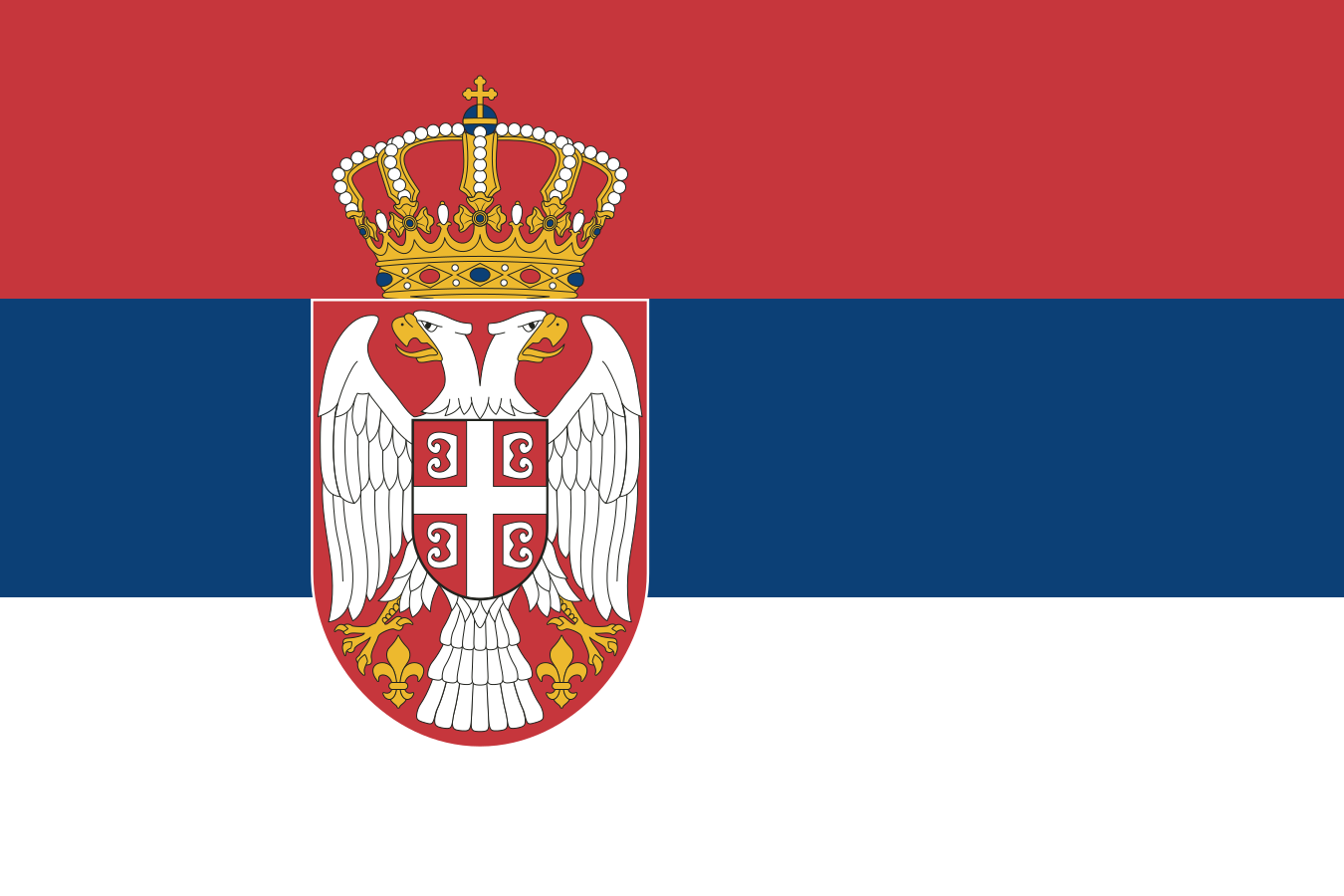
At the outset, I would like to give my respects to the President of the International Criminal Court for the Former Yugoslavia, Judge Fausto Pocar. Special tribute should also go to the Chief Prosecutor, Mrs. Del Ponte, who is today reporting to the European Union ministers in Luxembourg. We highly appreciate their efforts and contributions to strengthening international law and moral standards in bringing to justice perpetrators of the most serious violations of humanitarian law and the law of the conduct of war in the tragic conflicts in the territory of the former Yugoslavia.
We welcome the recognition, in the report, of the cooperation by the relevant Serbian authorities with the Prosecutor’s Office, and I can assure you that in the future that cooperation will be maintained and expanded. Only through joint efforts can we solve the
outstanding cases of apprehending the remaining fugitives, notably Ratko Mladić and others.
There were disagreements and objections by the Prosecutor’s Office, particularly regarding the level of cooperation on the part of our relevant authorities. At some points, we were critical of the proceedings of the Tribunal. However, the contribution of the Tribunal is, overall, positive, and lasting and evident. Effectively prosecuting persons responsible for war crimes and bringing them to justice is an imperative and has been a prerequisite for the reconciliation process and for peaceful life in the territory of the former Yugoslavia. The only way to accomplish that is for every national community to disassociate itself, through the legal judiciary process, from the grave crimes that were committed in the past. That is an indispensable part of the process of joining in European integration and shared values.
Successful completion of our cooperation with the ICTY is one of the objectives of the Serbian Government, reflecting the general consensus that it is in Serbia’s interest to take all requisite measures to complete that cooperation swiftly and effectively. There should be no doubt that we are committed to fulfilling our international obligations in that regard.
I would like to point out that, just a few days ago, the Serbian National Security Council decided to offer €1 million for information leading to the location and subsequent arrest of Ratko Mladić. As for the other Hague indictees, €250,000 is being offered for information concerning Stojan Zupljanin and Goran Hadzić.
We fully support the completion strategy of the ICTY, as defined in Security Council resolutions 1503 (2003) and 1534 (2004). The basic prerequisite for the success of the strategy is undoubtedly the capacity of domestic courts to process, in accordance with international legal standards, cases that have been transferred by the ICTY. The referral of the cases from the Tribunal to national jurisdictions has helped in many ways to achieve a full level of trust between the Governments of the Balkan region and international institutions. Similarly, the referral of such legal cases to national jurisdictions further facilitates full cooperation with the ICTY.
I can assure the Assembly that, as a result of substantial reforms, our national judiciary is now able to legally process the most complicated cases. Let me
bring to the attention of Members that two important cases are currently being heard regarding crimes committed in Croatia and Kosovo: the notorious Ovcara case and the Suva Reka case, respectively.
The Prime Minister of Serbia, in a letter dated 25 July 2007, informed the Secretary-General of Serbia’s intention to launch in the region an initiative to transfer persons convicted by the ICTY to the countries of their citizenship. Serbia has officially called upon the representatives of the Government of Bosnia and Herzegovina and of the Government of Croatia to support that initiative.
We are all aware that there is no statute of limitation for war crimes, and national judiciaries, including that of Serbia, are obliged to process such cases in the future. International experience reminds us that bringing to justice those who have committed war crimes remains an enduring legal and moral obligation.


I wish to thank Judge Dennis Byron, President of the International Criminal Tribunal for Rwanda (ICTR), for presenting the twelfth annual report on the work of the Tribunal.
As we come towards the end of the mandate of the Tribunal, it becomes ever more critical for the United Nations to focus its attention on the legacy and residual issues of the Tribunal. Key among those issues are the court’s documents and materials. The Government and the people of Rwanda would like those documents — which tell the story of our painful history — to be transferred after 2008 to Rwanda, where they could form an important basis for an international educational and research centre on genocide prevention. We look forward to an early decision in that regard by the Security Council, as well as to support from the international community aimed at the establishment of the centre.
While we welcome the Tribunal’s training programmes for the Rwandan judiciary, those efforts must be accelerated significantly in view of the completion strategy. We therefore call upon the Tribunal to take further steps in that respect in collaboration with the Government. We also welcome the outreach activities, although much work remains to be done to disseminate information about the Tribunal’s work to the areas and villages that were most affected by the genocide.
Rwanda has welcomed the transfer of cases to national jurisdictions, principally Rwanda. Significant progress has been made with respect to the referral of cases. The Rwanda Government is committed to continuing its preparations to that end. An organic law has been promulgated to govern all legal matters pertaining to the referral of cases to Rwanda. Other arrangements have been undertaken to ensure that all the requirements outlined under rule 11 bis are met. Our partnership with the Office of the Prosecutor has enabled us to make significant progress in these areas.
Rwanda has stated many times, before the General Assembly and the Security Council, that the transfer of cases to our country is essential, so that justice is seen to be done where the crimes have been committed. It would also complement and reinforce ongoing Government policies aimed at reconciliation, which is central to the mandate of the ICTR. In addition, in practical terms, holding the trials would be less costly and more efficient, since the evidence and the witnesses are mostly within the country.
The death penalty is no longer an issue of concern with respect to the transfer of trials, since the Rwandan parliament recently adopted legislation abolishing that practice.
Of equal importance is the question of transferring convicts to serve sentences in Rwanda. We believe that ICTR convicts must serve their sentences in Rwanda, where they committed the crimes and where they should be seen serving their sentences. Continued delay in this area is causing substantial damage to the process and to the reputation of the ICTR. We urge those concerned to take urgent measures to remedy that situation.
Rwanda appreciates the efforts made by the German authorities in apprehending Augustin Ngirabatware on 17 September 2007.
However, on the issue of fugitives still at large, particularly Félicien Kabuga and other key masterminds of the genocide, we once again appeal to Member States to work closely with one another to ensure that these indictees do not escape justice. The completion strategy is not an exit strategy for our collective commitment to bring to justice the authors and planners of the genocide. There is fairly good information about the whereabouts of many of the fugitives, but there is still little progress in arresting them. We believe that measures should be undertaken
to ensure that all States cooperate in apprehending and handing over these fugitives for trial and that those that fail to do so are brought to account.
I would like to conclude by expressing our profound appreciation to the international community and to specific countries for their continued support of the Tribunal through both assessed and voluntary contributions. As we enter the last leg of the Tribunal’s work, we urge Member States to continue their commitment to ensuring that the Tribunal is adequately resourced to conduct its work efficiently and effectively through the full, timely and unconditional disbursement of assessed contributions.
We also thank the Tribunal President and his team for their work in ensuring the implementation of the completion strategy.


At the outset, I would like to thank the President of the International Tribunal for the Prosecution of Persons Responsible for Serious Violations of International Humanitarian Law Committed in the Territory of the Former Yugoslavia since 1991, Judge Fausto Pocar, for the fourteenth annual report of the Tribunal (A/62/172). The Government of Bosnia and Herzegovina has studied the report by the President of the Tribunal with due attention.
Allow me to express our appreciation for the Tribunal’s recognition of the efforts made by the authorities of Bosnia and Herzegovina at all levels in order to achieve satisfactory cooperation with the Tribunal, especially at the operational level. I would like to take this opportunity to reiterate my country’s firm commitment to continued full cooperation with the Tribunal, a commitment confirmed and proved by the extensive efforts and additional measures undertaken on the ground aimed at targeting fugitive support networks, thus further diminishing the manoeuvring space for those indictees who remain at large.
It is very important to mention the cooperation between the War Crimes Chamber of the State Court of Bosnia and Herzegovina, established in March 2005, and the Office of the State Prosecutor of Bosnia and Herzegovina. That cooperation has made significant progress in processing a number of war crimes cases, five of which have been transferred from the Tribunal. We are very pleased to find very positive remarks in
paragraph 86 of the report regarding the activities of our aforementioned national judiciary bodies.
Bosnia and Herzegovina will continue to support the work of the Tribunal and to fully cooperate with the Office of the Prosecutor. Bosnia and Herzegovina is of the position that the Tribunal should continue its work until the trials of all persons indicted for war crimes are completed by the Tribunal, especially the cases of Radovan Karadzić and Ratko Mladić, who are still at large.


My delegation wishes to thank Judge Pocar of the International Criminal Tribunal for the Former Yugoslavia and Judge Byron of the International Criminal Tribunal for Rwanda for their statements presenting the respective reports of the Tribunals.
My delegation commends the Tribunals for the steps they are taking to ensure that they achieve their completion strategies. In particular, we welcome the measures taken to increase the efficiency of the Tribunals in processing trials by holding a high number of trials simultaneously, making amendments to the rules of procedure for the purpose of expediting proceedings and making optimal use of ad litem judges.
The completion strategies are time-bound, and therefore, notwithstanding the steps that the Tribunals are taking to increase efficiency, there are cases that, due to the passage of time and an inability to effect arrests, will have to be referred to national jurisdictions. Therefore, referrals to national jurisdictions are central to achieving the completion strategies, in accordance with Security Council resolution 1534 (2004). To that end, we commend the various countries that have accepted cases from the Tribunals. We are, however, particularly keen to see the countries where the crimes were committed assume the responsibility of accepting referrals from the Tribunals. We therefore welcome all efforts to provide technical assistance to those countries, to enable them to reform their justice and prison systems to absorb the cases from the Tribunals. We strongly believe that justice sector reform is a critical element of post-conflict reconstruction and that it contributes to security sector reform.
In the case of both Tribunals, there are indicted persons still at large, and some of them are particularly high-level accused or are alleged to have committed
crimes that should be dealt with at an international level. It is important that those fugitives ultimately be brought to justice, and we call for full cooperation with the Tribunals to arrest them and surrender them for trial. My delegation calls for cooperation between States and the two Tribunals.
The fact that the Tribunals are working towards completing their work means that we must ensure that they continue to receive sufficient resources to enable them to complete their work and their mandates. As States, we must continue to extend cooperation with respect to travel of witnesses; the pursuit and bringing to justice of fugitives; the arrest and transfer of accused; and the resettlement of individuals who are acquitted by the Tribunals.
Furthermore, we need to address the issue of the legacy that will be left by the Tribunals and ensure that we preserve their achievements. The Tribunals were established by the Security Council, consistent with its responsibility to maintain international peace and security. Therefore, as we consider their legacy and achievements, we must measure them by the extent of their contribution to the maintenance of international peace and security.
It has been said that there can be no peace without justice. We believe the Tribunals have immensely contributed to stability and peace, both in Rwanda and in the former Yugoslavia. There will, however, continue to be ongoing work to consolidate those achievements and to ensure the preservation of the legacy of the Tribunals. That work includes ensuring that the passage of time does not result in impunity for any fugitives. It is important that the archives of the Tribunals be preserved and stored in places where future generations can have access to them and can take lesson from the work of both Tribunals.


We thank the leadership of both Tribunals for their annual reports on the work of those bodies.
We note the active work of the International Criminal Tribunal for Rwanda in the last year. We welcome the transfer of the cases of those accused by the Tribunal to national judicial bodies, which, we believe, will ensure the timely implementation of the completion strategy within Security Council deadlines. In that regard, we believe that it is important to step up efforts to develop the Rwandan judicial system,
including strengthening its capabilities for the judicial prosecution of individuals whose cases have been transferred to it by the Tribunal.
The International Tribunal for the Former Yugoslavia has also achieved a certain acceleration and enhancement in the effectiveness of its adjudication in the last year, in particular by introducing amendments to its rules of procedure and evidence. We note the arrest and transfer to the Tribunal of Zdravko Tolimir and Vlastimir Dordevič, which we hope will also serve as a positive element for the timely completion of the Tribunal’s work. We believe that more active efforts should be devoted to transferring the cases of the accused for consideration by the courts of States of the former Yugoslavia. We note the Tribunal’s work on protecting witnesses for Tribunal cases. We call on other international bodies to assist the Tribunal in that task.
The Russian Federation maintains its position of principle that the work of both Tribunals should be completed within the completion strategy time frame. It is our view that the fact that the Tribunals do not have Félicien Kabuga, Ratko Mladić, Radovan Karadžić or other accused cannot be considered as justification for an unlimited extension of the work of those bodies.
We believe that at this stage, the substantively final phase of the work of the Tribunals, they should focus a portion of their efforts on thinking through the options for settling the organizational aspects of completing their work, including, in particular, maintaining the archives and judges’ pensions. It is our view that that process will be effective and will in fact provide for the timely resolution of current Tribunal tasks without engaging in additional financial expenditures for United Nations Member States.


I have the honour to speak on behalf of the African Group. The African Group is grateful to you, Mr. President, for convening this joint debate on the reports of the two International Criminal Tribunals established for the prosecution of persons responsible for serious violations of international humanitarian law committed in Rwanda and neighbouring States and in the territory of the former Yugoslavia.
We thank the Presidents and Prosecutors of the two Tribunals for the comprehensive reports that they have presented on the ongoing activities of the two
Tribunals in the discharge of their respective mandates and for their invaluable contribution to the fight against impunity for serious violations of international humanitarian law. The increased efficiency demonstrated by the two Tribunals is a clear testimony to their commitment to the cause of international restorative justice and to their completion strategy.
The African Group considers that the progress achieved in the implementation of their completion strategies was made possible owing to the following major factors: the efficiency displayed by the Tribunals’ leadership in adjusting their mandate by focusing on the prosecution and trial of the most senior leaders suspected of being most responsible for crimes within their area of jurisdiction; the transferring of cases involving persons of lower- to mid-levels of responsibility to national jurisdictions in accordance with the completion strategy endorsed by the Security Council in its resolution 1503 (2003); the cooperation of Members States, be it in the form of efforts to localize, arrest and transfer the indictees to the Tribunals, in protecting witness, in hosting persons serving their sentences, or in organizing the prosecution of cases referred to their national jurisdiction; and the generous contributions of Member States and donors who have financially supported the activities of the Tribunals in their core elements but also in elements funded with voluntary contributions as Outreach Programmes. In that respect, the work of the International Tribunals constitutes an historical example of multilateral cooperation for the administration of international justice and for the enforcement of international law.
The African Group expresses its high appreciation to all Member States that are supporting the activities of the Tribunals, and urge those concerned to give the full desired support and assistance to the Tribunals for the arrest and transfer of the remaining fugitives in order to enable the Tribunals to fulfil their mandate according to their completion strategy.
The African Group calls upon the Governments with which the International Criminal Tribunal for Rwanda is currently conducting negotiations for the referral of cases to their national jurisdictions to cooperate actively with the Tribunal. The African Group welcomes the dedication shown by the African Commission on Human and Peoples’ Rights in offering to monitor all cases transferred to African countries.
The African Group urges the international community to assist the African countries who accept to host persons serving their sentences to improve their penitentiary facilities.
The proceedings of the two International Tribunals demonstrate the strong resolve of the international community to strengthen the rule of law in the regions affected by mass atrocities. The African Group welcomes the efforts undertaken through training and assistance for the development of domestic jurisdictions. They are of utmost importance for the legacy of the Tribunals as regards their jurisprudence, which will inevitably not only enrich the law practice in the regions concerned, but are also of great value for the international judicial practice as a whole.
The African Group further welcomes the steps undertaken by the two Tribunals to efficiently manage their archives, especially the project initiated for the
preparation and organization of the Tribunals’ records with the goal of meeting future preservation and access requirements.
In conclusion, the African Group encourages the two International Tribunals to maintain the dynamic of their activities in order to bring justice to the victims. Only thus can they achieve their rightful aspiration to legitimacy to the greatest extent possible, and also further the promotion of national reconciliation and lasting peace in the countries concerned, as well as contribute to the enhancement of the authority of international humanitarian law as a paramount pillar of human dignity.
We have heard the last speaker in the debate on these agenda items. May I take it that it is the wish of the General Assembly to conclude its consideration of agenda items 74 and 75?
It was so decided.
The meeting rose at 12.15 p.m.