A/64/PV.100 General Assembly

I give the floor to the representative of Guatemala.


The delegation of Guatemala wishes to express its thanks to the President of the General
Assembly for having convened this high-level meeting pursuant to resolution 64/179. We also thank the delegations of Italy and Mexico for their efforts in fighting transnational organized crime and in organizing the celebration of the tenth anniversary of the entry into force of the Palermo Convention.
We are convinced that transnational organized crime has become a worldwide threat. The fight against it must therefore be organized with an equally global scope. The United Nations is thus the ideal organization to take the lead in this fight.
Given the overlap between the issues tackled by the United Nations Office on Drugs and Crime (UNODC) and the main challenges facing the Government of Guatemala, which are also the focus of our priority policies, Guatemala and the UNODC agreed to explore how to strengthen our cooperation on critical areas and security matters, including security and development, the fight against organized crime, the reform of the justice sector and prison system, the fight against drug trafficking, the monitoring of drug plantations and the development of alternative livelihoods, and the fight against corruption and crime.
As a result, our national integrated programme on strengthening the rule of law, security and justice in Guatemala was negotiated and approved. It was signed by the Government of Guatemala and the UNODC on 17 March, along with a memorandum of understanding to set up a national programme office in Guatemala responsible for the implementation of the integrated programme and a specialized centre of excellence on the United Nations Convention against Transnational Organized Crime and its three Protocols.
As part of that strategy for the subregion, the UNODC foresees the establishment of centres of excellence in each Central American country so that they can cooperate at the expert level among themselves and with other countries that could benefit from the expertise of the centres on an array of security issues. The aim of the centres of excellence is to strengthen the rule of law and international cooperation against organized crime through scientific research and analysis. The main areas of concentration will be, first, scientific research, trend analysis and support for regional expertise; secondly, capacity-building through training and the provision of technical expertise; and thirdly, exchange of information and cooperation.
The setting up of centres of excellence will contribute to improving data collection, producing detailed assessments of the situation and the challenges faced by the region, analyzing trends in each of the respective areas of research and activity in Central America and the Caribbean, and developing technical assistance programmes to combat and prevent organized crime in close cooperation with law enforcement agencies, State investigative bodies and security forces — such as police, customs officers, prosecutors and forensic teams — as well as training institutes and academies with perspectives and leadership on crime prevention.
The UNODC is setting up the centres of excellence as part of an efficient and comprehensive cooperation programme that is an integral part of the UNODC-Central American Integration System strategy for Central America. In that regard, the centres will strengthen efforts provided for in the context of the regional programme and our own national integrated programmes.
The aim is to set up three centres this year. One will be located in Panama as part of the UNODC’s regional programme office and will focus on maritime security. A second centre will be in El Salvador at the Office of the Attorney General in San Salvador. Its mandate will be in the area of urban crime prevention. A third will be located in Guatemala and will focus on organized crime.
It is anticipated that the Guatemala centre will have three operational pillars. The first will involve scientific analysis and research on the phenomenon that is the subject of its mandate; assessment of risk factors that serve to foster the criminal activities of transnational organized crime, such as illicit trafficking in drugs and narcotics, trafficking and smuggling in migrants and the manufacture of and illicit trafficking in fire arms, parts, components and ammunition. The second pillar will entail academic and practical training for public servants and national experts, with a view to their becoming expert trainers at the national and regional levels. The third pillar will involve the exchange of information and cooperation, the promotion of coordination through the exchange of information among countries of the Central American subregion and through South-South cooperation, and the facilitation of strategic partnerships with other international cooperation agencies and regional bodies
with a view to promoting operational consistency in the efforts being made in the region in this area.
At the international level, the aim is to contribute to building national capacities that contribute to increased operational efficacy, strengthening agreements in line with the needs and priorities established by the Government of Guatemala and improving the quality and impact of national projects, programmes and activities in the framework of the Palermo Convention and its Protocols.
In conclusion, I would like to point out that this initiative complements another initiative that was undertaken by the Government of Guatemala and the United Nations three years ago, namely, the establishment of the International Commission against Impunity in Guatemala (CICIG), which has already left a significant legacy of achievements in our country.
I would also like to refer to our national agreement for the advancement of security and justice, which was put in place last year by the Congress, the Supreme Court of Justice, the Public Prosecutor and the Government of President Álvaro Colom Caballeros. That agreement is mandated to support the implementation of CICIGs mission.
I now give the floor to the Permanent Representative of Kazakhstan.


First of all, I would like to thank the President of the General Assembly for convening this very important and extremely timely meeting. It is indeed extremely important and timely to discuss all issues stemming from transnational organized crime in a thorough manner.
Transnational organized crime is considered to be one of the major threats to the international security system, affecting the social, economic and political development of countries worldwide. This year, we celebrate the fifteenth anniversary of the launch of the Global Action Plan against Transnational Organized Crime and the tenth anniversary of the adoption of the United Nations Convention against Transnational Organized Crime and its Protocols.
The United Nations Convention against Transnational Organized Crime and its Protocols provide a solid legal basis for international cooperation in the battle against organized crime. These instruments include a comprehensive framework for mutual legal assistance, extradition, law enforcement
cooperation, technical assistance and training. Regrettably, participation in these international instruments is still far from universal. Our collective response to organized crime can only be effective if we consolidate and strengthen the international treaty framework through universal participation and implementation.
Kazakhstan again urges all countries to join the Convention against Transnational Organized Crime and its Protocols, thereby strengthening efforts against this global threat. I am proud to say that, on 31 July 2008, my country acceded to the United Nations Convention against Transnational Organized Crime and its three Protocols.
Kazakhstan, along with the international community and through cooperation with specialized United Nations bodies and regional organizations, makes every effort to decrease the threat posed by the world crime problem. The range of problems linked to transnational crime has expanded in the past decade. Among them are human trafficking, terrorism, drug trafficking, cybercrime, the illegal arms trade and money-laundering. Human rights violations and poverty create a fertile ground for spreading all kinds of transnational crime. All those factors place a heavy burden on all States of the world.
Today, I would like to dwell on two serious problems that are of great concern in my country and are a substantial part of transnational organized crime, namely, illicit drug trafficking and human trafficking. Our country makes every effort to fight against illicit drug trafficking on its territory and at the regional level. The scale of drug abuse in Kazakhstan and other countries of the Central Asian region has been growing despite the fact that our countries are neither producers nor countries of destination.
I would like to report that, in December 2009, the Central Asian Regional Information and Coordination Centre was launched in Almaty, Kazakhstan. This body is cooperating closely with the United Nations Office on Drugs and Crime by helping to organize and coordinate joint international operations on fighting illicit drug trafficking and by conducting analysis of and exchanging information on drug flows from Afghanistan passing through the countries of the Commonwealth of Independent States.
Kazakhstan is also affected by the problem of human trafficking. In that regard, we strongly support
the initiative to create a single mechanism aimed at increasing awareness of the issue at all levels, galvanizing the process of the implementation of the framework conventions and agreements, and bringing together the efforts of all stakeholders.
I would like to draw attention to the United Nations global plan of action on preventing trafficking in persons, prosecuting traffickers and protecting and assisting victims of trafficking, which is currently being considered by Member States. As a member of the Group of Friends United against Human Trafficking, which consists of 20 like-minded States that advocate for the global fight against trafficking in persons, we strongly support the draft plan of action recently presented by the facilitators. We believe that the plan should be considered swiftly and successfully, so that it can be adopted before the end of the sixty- fourth session of the General Assembly. In that regard, we urge Member States to make every possible effort to adopt the draft plan as soon as possible.
Kazakhstan applauds the work that has been undertaken by the United Nations and its agencies in promoting strong respect for the basic principles of international justice. We also acknowledge the important work done by the United Nations Office on Drugs and Crime through its assistance to capacity- building programmes.
A great number of measures have been taken, but we believe more steps are necessary to achieve any serious progress in the fight against transnational crime. Our country will continue to provide its support, cooperation and commitment to prevent and fight crime and uphold criminal justice.
I now give the floor to the representative of Armenia.


I would like to begin by thanking the President for organizing this essential debate. This meeting reflects the urgency of the need for a coherent response by the international community to transnational organized crime. Armenia fully aligns itself with the statement made by Ambassador Yañez-Barnuevo of Spain on behalf of the European Union. We would also like to make some remarks in our national capacity.
The fight against transnational organized crime is high on my Government’s agenda, since Armenia is located in close proximity to trafficking routes that
continue to constitute a serious threat to security, public health and the safety and well-being of our citizenry, often undermining socio-economic and political stability and sustainable development. As such, my Government has taken some decisive steps to combat the problem.
Armenia is a party to the United Nations Convention against Transnational Organized Crime and two of its Protocols. We would like to take the opportunity afforded by this tenth anniversary of the adoption of the Convention to reiterate the importance of its universal ratification. Armenia looks forward to the fifth Conference of the Parties to the Convention, in October, and supports the establishment of an effective review mechanism to strengthen international cooperation on this serious matter.
Armenia has also enhanced its relevant national legislation and increased mutual legal assistance and information sharing. Some of the important legislative changes of the past few years address such issues as cybercrime, drug addiction and illegal drug trafficking. In addition, the 2009 to 2010 comprehensive programme to fight against money-laundering, which my Government successfully implemented, created an effective system of cooperation among various Government actors.
Pursuant to the anti-corruption strategy of the Republic of Armenia for the period 2009 to 2012, my country continues to strengthen its cooperation with international and regional organizations to combat transnational organized crime while striving to increase the capacities of Armenian law enforcement bodies. We have also taken steps to harmonize our legal framework on this issue with international standards.
The fight against trafficking in human beings is also one of Armenia’s priorities. In order to comply with international standards, various activities have been carried out, such as improving our legislative and institutional frameworks, assessing the trafficking problem in Armenia and abroad and protecting victims of trafficking.
The sophistication of today’s transnational criminal networks and their links to other threats, such as terrorism, require that we constantly update our ways of combating organized crime and better coordinate our joint efforts. The United Nations and this type of high-level meeting provide an excellent forum to enhance our understanding of the threat,
develop responses and learn from each other’s experiences. We must continue to work with the relevant United Nations bodies, regional organizations and other interested parties, such as INTERPOL, as well as with members of civil society, which have made a significant contribution towards the fight against transnational organized crime, in order to effectively face the challenge before us.
We realize that in today’s globalized world, success is possible only through enhanced international cooperation. Allow me to reiterate once again Armenia’s readiness to be a committed member of the international community in its fight against transnational organized crime.
I now call on the observer of the Observer State of the Holy See.

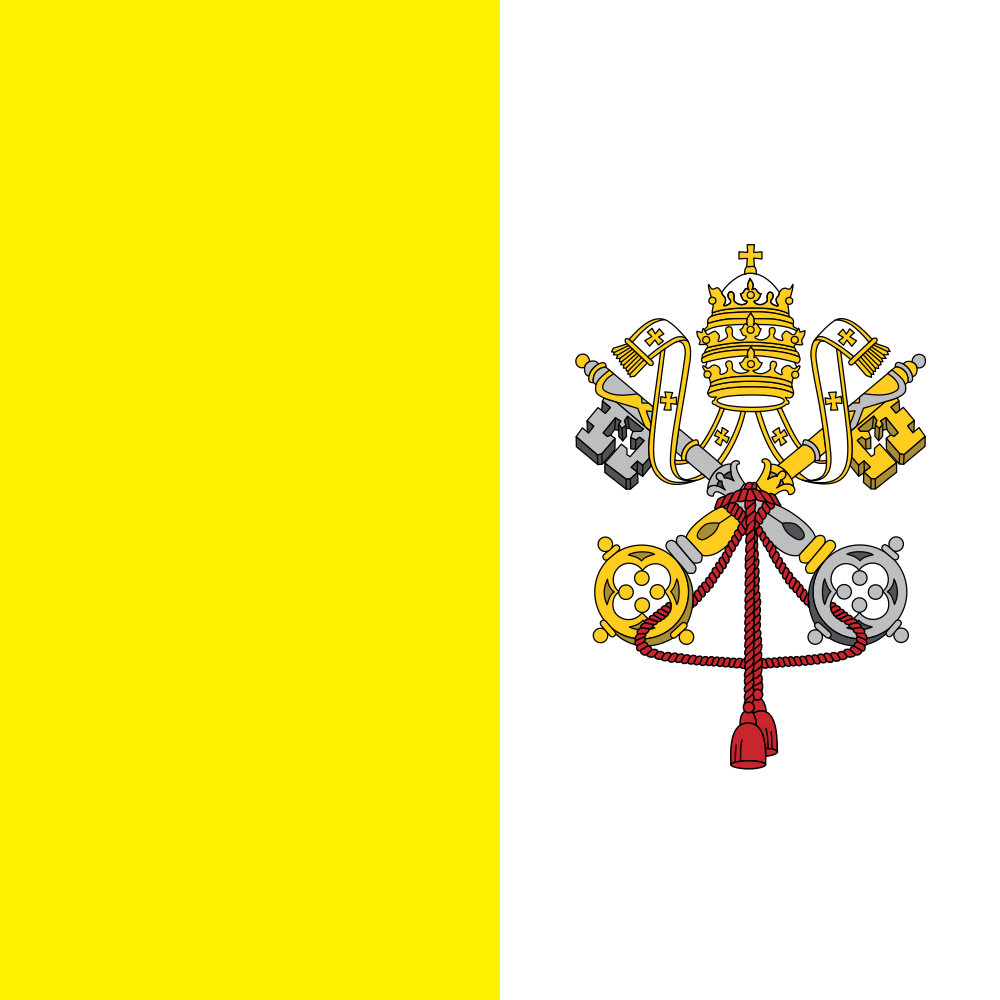
I have the pleasure to make this statement today on behalf of the Permanent Observer of the Holy See, Archbishop Celestino Migliore.
At the outset, my delegation would like to thank the President of the General Assembly for organizing this useful discussion on transnational organized crime. One result of the interconnected world is the ever-growing interconnected nature of crime. While the ability to communicate and trade with people in all corners of the world has promoted global solidarity and commerce, it has also led to an escalation in crime across national boundaries. This dynamic presents new challenges to legal and judicial mechanisms as they attempt to hold criminals accountable and protect their citizens.
The Naples Declaration and the Palermo Convention constitute substantial efforts by the international community to establish cooperation in order to prevent criminal activity and prosecute perpetrators. These agreements recognized the increasingly indisputable observation that, as crime becomes international, the response also must become international.
Today, millions of people are victims of trafficking — of whom over 70 per cent, almost all women and girls — are trafficked for the purpose of sexual exploitation. This reality is both tragic and inexcusable. The transnational trafficking of women and children for sexual exploitation is based on a balance between the supply of victims from sending
countries and the demand in receiving countries. The trafficking process begins with the demand.
Highlighting victims’ rights needs to go along with addressing the problem of demand and, with it, the insidious degradation of human dignity that always accompanies the scourge of trafficking in persons. In fact, rather than effectively addressing the demand, more and more laws are passed which seek to legitimize this dehumanizing work. Even the very global sporting and social events that are meant to foster greater respect and harmony among people around the world have become instead opportunities for the greater exploitation and trafficking of women and girls.
Similarly, the global drug trade continues to have devastating affects on individuals, families and communities around the world. In areas of production, the demand for illegal drugs fuels organized gangs, drug cartels and terrorists. These criminal organizations use the financing from this illegal activity to spread fear and violence so as to secure their pursuit of greed and power. The activities of these individuals and organizations must be addressed urgently by all legitimate means possible in order to allow communities to live in peace and prosperity, rather than in fear of crime and hostility.
To address this problem, the international community must not only focus on the areas of production but also address the ever present demand for illegal drugs. This demand, driven heavily by the developed world, demonstrates that, in order to address drug production abroad, efforts must be taken at home. Drug use not only affects the international community, but also has immediate detrimental effects on the physical, social and spiritual lives of individuals and their families. Thus, it is also necessary to focus on these individuals in order to find ways to prevent drug abuse in the first place and to rehabilitate drug abusers so that they can contribute more fully to the common good.
If we wish to engage in a sustained process to stop and reverse these two major areas of international crime, peoples and cultures will have to find common ground that can underpin human relations everywhere on the basis of our shared humanity. There remains a profound need to uphold the inherent dignity and worth of every human being, with special attention to the most vulnerable in society. In that vein, we should
focus our efforts on addressing, and even criminalizing, the devastating demand for prostitution, which dehumanizes women and girls and fuels illegal trafficking around the world.
Likewise, a people-centred approach to the international drug trade must recognize that the consumers of this illegal activity must be held accountable and also provided rehabilitation. Criminal accountability is only one factor in addressing this problem, as personal, social and spiritual rehabilitation are necessary for drug abusers and the communities devastated by the producing and smuggling of drugs. Also, efforts by Governments and civil society to restore the health of individuals and communities must continue to be encouraged, since all people have a claim to social and economic development.
This debate helps to shed light on the need to address international crime in a way that recognizes the growing international nature of crime but also allows the Assembly to recognize that this response requires national efforts to address the individual and societal causes for such activity. While it is imperative to hold criminals who disrupt the common good accountable for their actions, so too is it necessary to recognize the rights and dignity of victims and offenders in order to remedy the harm caused by crime.
In accordance with General Assembly resolution 47/4, of 16 October 1992, I now call on the representative of the Observer of the International Organization for Migration.

I have the pleasure to deliver this statement on behalf of the Permanent Observer. The International Organization for Migration (IOM) appreciates the opportunity to participate in today’s high-level meeting on transnational organized crime and welcomes the prioritization of this issue on the United Nations agenda.
One of the greatest challenges in transnational crime prevention today remains the fight against human trafficking and the smuggling of people. The issue of human trafficking has increasingly taken centre stage at the global level as a major human rights issue. Its importance has also been noted here at the United Nations, where numerous events and initiatives are taking place, including the current discussions on a United Nations global plan of action on preventing
trafficking in persons, prosecuting traffickers and protecting and assisting victims of trafficking.
Over the past two years, IOM has intensified its efforts in the fight against human trafficking, building on its 15 years of experience in supporting States and civil society actors in the areas of prevention, prosecution and, above all, the protection of victims. One of our major achievements has been the growing dissemination and actual use of the IOM handbook on direct assistance for victims of trafficking. The handbook was the outcome of IOM’s experience in assisting over 20,000 trafficked persons in some 100 countries around the world. It provides the guidance and advice necessary to effectively deliver a full range of assistance to victims of trafficking, from the point of initial contact and screening up to the effective social reintegration of the individuals concerned.
IOM would like to take this opportunity to recall that, while trafficking in persons is a serious crime that requires a rights-based approach to address, it is not a stand-alone phenomenon. Rather, as is the case for addressing transnational security and terrorism issues, it requires a comprehensive approach within the broader context of managing migration.
Finding the right balance between facilitating and controlling migration is a key challenge for all countries in attempting to make international mobility safe. With migration management intersecting strongly with human trafficking, security and terrorism issues due to its cross-border dimensions, IOM regularly collaborates with Governments to establish modern border-management systems, improve the integrity of travel documents, including their issuance systems, as
well as to advance identity management, information exchange, training and intergovernmental dialogue and integration. To that end, IOM works on strengthening the investigations and analysis functions of migration departments and ministries, and on upgrading the complementing policy, legal and regulatory frameworks in the migration sector.
However, it is also important to recognize the risks of linking too closely migration and security and terrorism issues, as policy prescriptions might be misguided, or could even backfire, by increasing tensions and xenophobia and compromising social cohesion. In addition, entry for potential migrants might also be deterred, thus depriving countries of the economic benefits of migration or reducing legitimate avenues for persons seeking international protection.
In conclusion, regardless of the topic, whether it is fighting trafficking in persons, overall migration management or the specific link to security issues, I should like to highlight that support cannot be limited to bilateral technical cooperation, but is necessary on the levels of regional and cross-regional collaboration and cooperation, including interagency cooperation.
We have heard the last speaker for this meeting.
The General Assembly has thus concluded its special high-level meeting on transnational organized crime. The Assembly has thus concluded this stage of its consideration of agenda item 104.
The meeting rose at 3.50 p.m.