A/64/PV.15 General Assembly


I would like, at the outset, to thank the Secretary-General for his concise and valuable report on the work of the Organization (A/64/1).
The past year has been a gruelling one for the world and for the United Nations. The global financial and economic crisis has affected the well-being of millions of people, threatening to set back the development efforts of the international community by several years. At a time of dwindling national resources, the crisis is putting unprecedented strain on our multilateral system, raising questions about the effectiveness of our Organization in dealing with some of its manifestations. But the primary lesson of the recent turmoil is hardly that we should now turn inward or fall back on our individual means. Quite the opposite, the need to cooperate within the existing framework of international institutions is now greater than ever. As the Secretary-General rightly observes in paragraph 4 of his report, this is the “ultimate multilateral moment”.
The world community must do its utmost to prevent the financial crisis from turning into a real development emergency. Extraordinary efforts will be needed to prevent the financial crisis from reversing the hard-won gains made towards achieving the Millennium Development Goals in areas like primary education, maternal health and the fight against hunger. I take this opportunity to compliment the Secretary- General for the initiative he is taking in introducing the Global Impact and Vulnerability Alert System.
One of the risks associated with the current global crisis is that it may undermine confidence in the international system, including the United Nations, at a time when we can least afford it. To prevent this from happening, we need, among other things, stronger and more representative international institutions, sound global regulatory frameworks and greater surveillance and supervision in the area of international finance. But more is required in order to fashion the new multilateralism that the Secretary-General has called for in his report. We must also accelerate progress on a comprehensive United Nations reform. Key to this effort is the urgent need to improve the working methods of the Security Council and to widen its membership. A Security Council that is more representative of the world we live in, including the developing countries, will carry greater weight and authority.
As small States comprise a large share of the United Nations membership, any enlargement must also ensure that the interests of small States are fully taken into account. The promotion of greater accountability and efficiency in the work of the Organization, as well
as measures to render the wider United Nations system more coherent, coordinated and responsive, is another important facet of the reform process.
This includes strengthening the so-called gender architecture, long characterized by fragmentation and the lack of accountability. Iceland welcomes the General Assembly’s unanimous decision to create a new and consolidated United Nations gender entity to be headed by an Under-Secretary-General and urges the Secretary-General to move forward on that decision as expeditiously as possible.
However, to redeem the full potential of the United Nations we need more than structural improvements. We should also reform the way our Organization reacts to global challenges of the highest order. The genocides of the twentieth century show that too often the international community has failed to prevent or respond adequately to mass atrocities. By moving to operationalize the concept of the responsibility to protect, the Organization can now take deliberate steps to shore up the protection of basic human rights and the rule of law. My delegation hopes that the current session of the General Assembly will work constructively towards that end.
An extended economic crisis exacerbates the risks of conflict and the impacts of poor food security and health care, and deteriorating living conditions in different parts of the world threaten to undermine the upholding of human rights. For that reason, Iceland fully subscribes to the Secretary-General’s view that, at this time, it is imperative for the United Nations to make a special effort to promote respect for human rights.
To ensure prosperity and peace for future generations, it is also essential that we take measures to safeguard the earth’s ecosystem. While climate change may, as the Secretary-General has said, be the defining challenge of our generation, the interlinkages between climate and other aspects of our ecosystem, including land use, energy and oceans, should also be recognized. No country is shielded from the impact of climate change, and an effective solution to the problem will require the active cooperation of each and every Member of the United Nations. We must join hands and work to conclude a legally binding agreement in Copenhagen. At the same time, a gradual but fundamental reorientation of energy policy should be seen as essential for preventing future climate changes. Member States should work, among other
things, to increase the share of renewable energy resources used in meeting world energy demand, aided not least by the International Renewable Energy Agency established in January of this year.
In connection with climate change, we must also consider the state of the oceans, which are essential to sustaining the world’s social and economic development. A host of man-made environmental hazards, including pollution, overfishing and climate change, are threatening the productivity of our oceans. If we are to eradicate poverty and hunger, reduce child mortality and combat disease, we must also prevent and reverse the degradation of the oceans. Regrettably, there is currently no systematic effort to keep the state of the world’s oceans under continuing review. That is why world leaders decided at the Johannesburg Summit seven years ago to launch a regular process under the United Nations for global reporting and assessment of the state of the marine environment, including socio-economic aspects. As the start-up phase of this valuable initiative has now been completed, Iceland supports the initiation of the first fully integrated assessment of the regular process to be completed by the year 2014.
As the Secretary-General’s report makes clear, the tasks before us have rarely been more demanding or diverse. This should not be a source of discouragement. Let us instead make the best possible use of the opportunity afforded by this “ultimate multilateral moment” to ensure a fruitful and productive session of the United Nations General Assembly.


The Bolivarian Republic of Venezuela warmly welcomes the Secretary-General, Mr. Ban Ki-moon, and gratefully appreciates his introduction of his report on the work of the Organization (A/64/1). That report is part of the Secretary-General’s obligation to give an annual report to the General Assembly on the Organization’s activities, in accordance with Article 98 of the United Nations Charter. The Secretary-General’s report provides an opportunity at today’s debate to address key topics on our agenda this year.
The Bolivarian Republic of Venezuela agrees fully with the Secretary-General’s observation that we are in a time of crisis — economic and financial crisis, food crisis and climate crisis — and that only by strengthening multilateralism will we be able to meet
the challenges before us. This multifaceted global crisis has revealed the exhaustion of the savage capitalism that is gripping the world under the rubric “neo-liberalism”.
Venezuela appreciates the success of the high- level Conference on the World Financial and Economic Crisis and Its Impact on Development and hopes for a fruitful follow-up. The Conference was particularly important for the work of the General Assembly and demonstrated the need to reform and transform the world economic and financial architecture in order to correct the imbalances provoked by speculative financial capital.
My delegation endorses the statements made by various organizations and Member States to the effect that the General Assembly is the principal organ of the Organization and must maintain its independence from the other organs. We must therefore reverse the Security Council’s tendency to involve itself in topics outside its field of competence, as that weakens the central role of the General Assembly within this multilateral institution.
On several occasions, Venezuela has stressed the need to move ahead more expeditiously and resolutely in reforming the United Nations. We are convinced that only by ensuring the democratization of the Organization, greater transparency in its methods and its genuine accountability to Member States will fertile ground be laid in which the United Nations can flourish.
Venezuela welcomes the decision of the General Assembly to pursue intergovernmental negotiations on Security Council reform at the sixty-fourth session. That is fundamental if the Organization is to restore its credibility before the world and no longer be seen as an institution held hostage to hegemonic interests. The Organization must, of course, have a starring role in addressing the problems that beset all humankind. It is precisely by correcting its deficiencies and by faithfully adhering to the United Nations Charter that it will be able to present itself to the people of the world as a model of justice, equity and genuine commitment to international peace, security and development.
We must reform the Security Council forthwith, expand its membership, eliminate the veto and improve its working methods, including in particular direct and universal participation of the General Assembly, by secret ballot, in the selection of the Secretary-General.
The Secretariat must fulfil its mandates from the General Assembly and prioritize those related to the comprehensive development of peoples and the fight against poverty in order to attain a world of abundant justice, equality and solidarity.
My delegation welcomes the comments made by various Member States to the effect that the General Assembly must remain the principal forum for debate within the Organization. We must therefore prevent the Security Council from involving itself in issues that are outside its competencies but within the purview of the General Assembly.
My delegation notes the progress made towards achieving the Millennium Development Goals (MDGs), as described in the Secretary-General’s report, and in particular the increased global investment in the fight against HIV/AIDS, tuberculosis and malaria.
The crisis of capitalism has, however, multiplied its negative effects throughout the world, in particular in developing countries. All forecasts indicate that injustice and inequality will become more pronounced and that many countries will be unable to meet the MDGs. For that reason, we note with concern that, although we stand at the threshold of the 2010 MDG review, no projects or actions have been proposed towards the achievement of the Goals.
My delegation has been particularly struck by the fact that the Secretary-General’s report contains a section on genocide prevention and the responsibility to protect. This is a conflation of two distinct topics — genocide and the responsibility to protect. We are told that the Special Advisers to the Secretary-General have a mandate to work on both concepts, including, clearly, the responsibility to protect. We are concerned, however, that initiatives are being implemented on which the General Assembly has not yet reached consensus.
The Bolivarian Republic of Venezuela will always raise its voice to defend the principles of the United Nations Charter and of international law, including respect for the sovereignty and territorial integrity of States, non-interference in internal affairs, and the promotion of and protection of all human rights to be preserved intact.


I thank the Secretary-General and the Secretariat for all of
their efforts in preparing the report on the work of the Organization (A/64/1). Allow me to take this opportunity to share with the Assembly my country’s views on some of the main agenda items addressed in the report, which also comprise the main challenges ahead.
At the outset, I should say that we are all facing this precipice together in the same ship and that multilateralism is the only safe way to forge ahead towards a safer world. Unilateralism is the main adversary of a multilateral and integrated approach and will thwart our attempts to develop a common understanding of the global public good. That is why the interlinkage between global, regional and national objectives should be drawn in a completely unbiased and well-balanced manner that leaves no room for further unilateralism or polarization.
In this sense, the existing global multilateral architecture must be renovated so that it can properly address the challenges of the twenty-first century. Lessons learned from the twentieth century should not be repeated but should serve as hazard lights and guiding torches, allowing a new global multilateral architecture to flourish. Yes, the United Nations can and should be the hub of this new world if it is able to restructure the global architecture to ensure that justice prevails over prejudice and if the world’s peoples are to enjoy the rule of law rather than the rule of might — a world free from threats, aggression, discrimination, hatred and poverty. To that end, the balance between the principal organs of the United Nations should be restored and the role and authority of the General Assembly reaffirmed in ways that promote multilateralism.
There is general agreement that the international community must be vigilant not to let the horror of the mass killings and genocide of the past be repeated in the future. This should in no way prejudice the established principles of the Charter of the United Nations, particularly respect for the sovereignty, territorial integrity and political independence of States, as well as non-intervention in their internal affairs. We should also be highly alert to this humanitarian notion being misused and abused to undermine the foundational principles of Charter-based international law, in particular the prohibition of the threat or use of force, as set forth in Article 2.4 of the Charter.
After all, we should remember that the inaction of the international community in the face of grave mass atrocities in the previous decade was not the result of the absence of concepts or a normative framework; rather, it was the consequence of the failure of the Security Council — in fact, of certain member States — to act when action was needed.
The Islamic Republic of Iran believes that the notion of responsibility to protect needs to be further discussed and clearly defined and refined. The Assembly’s debate of this item at the sixty-third session showed that there are still many questions and concerns surrounding the concept that need to be addressed. The General Assembly is the competent organ of the United Nations to continue the debate on the concept and to address the concerns and questions of many delegations concerning it and its implications.
It should be repeatedly emphasized that multilateralism and multilateral solutions agreed in accordance with the Charter provide the only sustainable method of addressing disarmament and international security issues. At the top of the United Nations agenda are the continued existence of nuclear weapons and their possible use or threat of use as a matter of grave concern and a threat to international peace and security. Therefore, nuclear disarmament remains the highest priority. However, we regret to see the slow pace of progress towards nuclear disarmament, as well as the lack of progress by nuclear-weapon States towards the total elimination of their nuclear arsenals. In fact, reductions in deployment and in the operational status of nuclear weapons cannot substitute for irreversible, verifiable and transparent cuts in and the total elimination of nuclear weapons. It is now up to the Conference on Disarmament to establish an ad hoc committee on nuclear disarmament to follow through.
The 2010 Review Conference of the Parties to the Treaty on the Non-Proliferation of Nuclear Weapons (NPT) should play a crucial role in a balanced approach towards nuclear disarmament, nuclear non-proliferation and the peaceful uses of nuclear energy. Meanwhile, we wish to reaffirm that the choices and decisions of each country with respect to the peaceful use of nuclear energy should be respected. There should be no interference in a State’s policies or arrangements for the peaceful use of nuclear energy, including its fuel-cycle policies.
With respect to paragraph 116 of the report of the Secretary-General, we would like to emphasize that, as a result of Iran’s proactive cooperation and full transparency in the implementation of the workplan agreed between Iran and the International Atomic Energy Agency (IAEA) in the summer of 2007, all outstanding safeguards implementation issues have been resolved and closed. Naturally, pursuant to the modality agreed to in the workplan, the implementation of safeguards in Iran must become normalized. We reiterate that Iran’s nuclear programme is and has always been undertaken for peaceful purposes and in full conformity with the provisions of the NPT. Therefore, the concern expressed in paragraph 116 is without foundation.
Establishing a nuclear-weapon-free zone in the Middle East is yet another priority that cannot be addressed due to the non-adherence of the Israeli regime to the NPT and its ongoing development and stockpiling of nuclear weapons. The necessary steps should be taken in different international forums, including the NPT Review Conference and IAEA, for the immediate establishment of such a zone.
With regard to the Millennium Development Goals (MDGs), we share the concerns expressed by the Secretary-General in his report on the slow pace of progress in their overall attainment. The full impact of the financial and economic crisis on their achievement has yet to be unveiled. However, it is quite obvious that negative economic growth, diminished resources, fewer trade opportunities for the developing countries, possible reductions in aid flows and protectionist tendencies will slow or reverse the progress that has so far been achieved. We know from past experience that whenever political will is complemented by adequate financial resources and commitments, progress has become attainable. Otherwise, and despite all the good will and wishful thinking, we may unfortunately miss the 2015 deadline for the achievement of the MDGs.
As the defining challenge of our generation, climate change inflicts serious damage on the vital socio-economic infrastructure of countries and erodes their progress in development. While developing countries are committed to the Convention and the Bali Action Plan, concerted ambitious commitments and measures must be undertaken by developed countries to address the needs of developing countries in all four major components of the Action Plan, namely, mitigation, adaptation, finance and technology. That is
a basic requirement for the success of the Copenhagen Conference.
In the same vein, investing in sustainable forest management will create 10 million new green jobs, providing long-term employment opportunities for the rural sector and fostering pro-poor sustainable development in many developing countries. In addition, such an investment would also make a major contribution to climate change mitigation and adaptation efforts, biodiversity conservation, and combating deforestation and desertification.
The President took the Chair.
Finally, one major regional impact of climate change that has emerged in recent years as a huge challenge to many countries, including in my region, is dust storms and sandstorms. Dust storms and sandstorms are among the most serious and hard-to- beat challenges that have arisen in recent years. They inflict substantial damage on the socio-economic situation of many countries, impair the normal life and health of the people, erode agricultural lands and pollute water resources throughout arid regions. It is a region-wide problem that, in addition to the firm national determination of all countries involved, requires regional and global cooperation and interaction to combat this challenge. The post-Kyoto arrangements will have to look at the dust storm and sandstorm issue closely in order to identify the root causes of the problem and eradicate it.


Allow me, Mr. President, to reiterate my delegation’s congratulations to you and your Bureau on your election to lead our work, and to wish you every success in that important task. You can count on our cooperation and support in achieving a fruitful outcome to your work.
The report of the Secretary-General (A/64/1) reflects the efforts of the United Nations to fulfil its objectives. The work of the Secretary-General and his team, reflected in the results achieved by the Organization, deserves the recognition of the Member States.
There are many notable elements in the report. I would like to refer first to the chapter on delivering results for people most in need. Despite the hard work to achieve the Millennium Development Goals, we note with concern, as the report states, that although
the overall poverty rates in the developing world will still continue to fall, they will do so at a slower pace as a result of the world economic crisis.
Furthermore, we are not encouraged by forecasts for the crisis’s impact on food security, progress in primary and secondary education, the struggle for gender equality and women’s empowerment, child mortality and developments in health care, in particular expanding coverage for the poorest and most vulnerable people. The economic crisis has been and remains a tough test of the goals agreed at the Millennium Summit.
Given the context of the crisis and the global economic recession, the international community must step up its efforts in jointly supporting those most in need and adopting additional measures that will make it possible to achieve the Millennium Development Goals, which must be reaffirmed as a central priority of our Organization.
In that regard, we welcome the proposal in paragraph 33 of the report regarding the development of a comprehensive response of the United Nations through the creation of a global impact and vulnerability alert system. That tool would allow us to closely follow the effects of global crises on the poor and most vulnerable. Member States should support the development, establishment and system-wide implementation of that important initiative, and of national development plans and strategies.
For its part, the chapter on securing global goods addresses topics that the Colombian State also considers to be essential and priorities on the world agenda. Climate change, global health, the fight against terrorism and disarmament must indeed be matters of particular importance to the United Nations. As President Alvaro Uribe Vélez recently said in his address to the General Assembly (see A/64/PV.4), Colombia has made significant progress in developing biofuels without affecting food security; implementing environmentally friendly mass transport systems; protecting its water sources and conserving biodiversity, the latter at the world level; and developing clean energy. All those initiatives help to combat climate change.
The conservation of our jungle of 578,000 square kilometres, over 51 per cent of the territory, is also a significant contribution in that regard. The Family Forest Wardens programme implemented in Colombia
is monitored by the United Nations and has received its highest approval. Through that programme, more than 90,000 rural families have become involved in the collective work of tending the jungle and preventing the destruction that follows upon the cultivation of crops used to produce illicit drugs.
We welcome and note with hope United Nations activities to promote awareness and the political commitment of all Member States, accompanied by concrete action, to address climate change. We trust that the Copenhagen Conference will produce substantial progress in that field.
With regard to health care, Colombia is implementing policies that have made it possible to expand coverage, in particular for the least protected, with tangible results. In March 2009, 90 per cent of the population — over 40 million Colombians — belonged to a health-care programme. Over half of those had access to State-subsidized support, which benefits the unemployed and people working in the informal sectors, those living in poverty, indigenous people and the displaced, among others. The major objective for social security health care is to achieve universal coverage by 2010.
On the other hand, Colombia has supported and will continue to support the various initiatives of the international community to combat terrorism and the danger that related crimes, such as arms trafficking, money-laundering and the trade in illicit drugs, pose to the stability of all States. We highly value the United Nations Global Counter-Terrorism Strategy, a plan with concrete steps to address that scourge, in full respect for and observance of human rights.
It is also important to underscore the efforts of the Secretariat to institutionalize the United Nations Counter-Terrorism Implementation Task Force, which would make it possible to coordinate and streamline the entire system. Likewise, we urge all Member States to revive efforts to conclude and to adopt the comprehensive convention on terrorism.
It is well known that my country has adopted strict measures against the production and trafficking of illicit drugs. We call on the international community to shoulder its share of responsibility in that process by discouraging the permissive consumption of illicit drugs. Each gram illicitly consumed fuels violence, arms trafficking, death, damage to the jungle and water pollution.
Colombia joins the recent appeal of heads of State, world leaders and the Secretary-General for disarmament. The context is conducive to progress towards nuclear disarmament and non-proliferation. That will should give rise to more resolute action with regard to the illicit trade in small arms and light weapons. It should also promote greater cooperation in combating anti-personnel mines. In a few weeks, the Second Review Conference of the Ottawa Convention will take place in Cartagena de Indias, Colombia. We hope that the current resolve in favour of disarmament will be reflected in full support for and broad participation in the Cartagena Conference on anti- personnel mines.
My delegation would also like to highlight the effort of the Secretariat and the Organization towards creating a stronger United Nations, as the report suggests. Actions to change the system should produce the strengthened instruments and resources that the Organization requires to fulfil its mandate. The steps taken by the Secretary-General in that regard, described in the report, constitute support for the Organization’s efficient work. System-wide coherence, intergovernmental machinery that ensures the participation of civil society, and cooperation with regional organizations must be part of that process.
Complementary to that are the activities of Member States towards the revitalization of the General Assembly and Security Council reform. Those measures, carried out in a harmonious and coordinated way, can contribute to the strengthening and the flexibility that the Organization needs in order to adapt to the responsibilities entrusted to it and to the challenges of multilateralism in the twenty-first century.
The international community needs multilateralism to be ever more vigorous, genuine and dynamic. In a world increasingly interconnected and interdependent, no nation can confront alone the tremendous challenges imposed by the new world realities. We share one destiny. The United Nations is indispensable to building that shared future and to ensuring that the aspirations and hopes of future generations are fully realized.
114. Follow-up to the outcome of the Millennium Summit Draft resolution (A/64/L.1) The President (spoke in Arabic): We shall now proceed to consider draft resolution A/64/L.1. We will adopt this resolution without a vote, by consensus. I give the floor to the representative of the Secretariat.
Vote:
64/1
Consensus


Since this is the first time that I am taking the floor on behalf of my delegation at the sixty-fourth session, please allow me to congratulate you, Sir, on your election as President of the General Assembly and to assure you of our
delegation’s support in ensuring the success of this session. My delegation also wishes to thank the Secretary-General for his report on the work of the Organization at the sixty-third session (A/64/1).
Today the world is facing multiple challenges — underdevelopment, poverty and hunger, the global food and financial crises and the scourges of war and terrorism, to name but a few. I believe that it is only through a strong commitment to multilateralism through the United Nations that we in the international community can address those crises in order to create a better life for those we represent. The Secretary- General’s report highlights many of these areas.
The eradication of dehumanizing poverty and hunger must remain central to the work of the United Nations. The Organization must continue to work harder to unite the world in working towards the total eradication of poverty and to put an end to the suffering of the world’s poor and marginalized.
Developing countries did not cause the economic and financial crisis, but they are severely affected by it, and this is especially true for Africa. South Africa shares the concern expressed by the Secretary-General about the grave impact of the current financial and economic crisis on the poor and the most vulnerable, especially in Africa. It is a fact that the crisis has severely affected Africa’s growth rate and thereby its capacity to address poverty and to achieve internationally agreed development goals, including the Millennium Development Goals (MDGs).
The report correctly states that Africa has indeed achieved impressive rates of growth over the past decade, which has allowed the continent to progressively move towards achieving sustainable development, which in turn has contributed to the peace, security and stability that we see on the continent. However, a confluence of crises, such as the global food and financial crises, has had a severe impact on Africa and is likely to reverse these positive developments. Those crises have contributed to a substantial increase in unemployment and a slowdown in trade resulting in lower export earnings, ultimately affecting the livelihoods of the people of the continent.
Therefore, the United Nations must play a significant role in finding solutions to the global economic crisis. In this regard, we concur with the Secretary-General that the international community must implement its renewed commitments made at the
General Assembly high-level meeting on Africa’s development needs held last September.
Similarly, the impact of climate change on Africa is devastating and will severely undermine development and poverty eradication efforts. In Copenhagen we must reach a binding, inclusive, fair and effective global agreement on this critical challenge. The agreement must recognize that solving the climate change problem cannot be separated from the struggle to eradicate poverty. Developed countries bear the greatest responsibility for climate change and its impact. Our goal should be to significantly reduce emissions across the globe without constraining development in the countries of the South.
We have noted with concern the impact that the global downturn has had on women and children especially. In this regard, the Secretary-General’s assessment of the implementation of the MDGs relating to child and maternal mortality is grim, and we agree with his conclusion that those areas require urgent attention from the entire international community in order to stop and reverse the worsening of the situation.
We are pleased that the United Nations has worked to strengthen its support for Africa’s development agenda. However, this work is not yet complete. Our delegation is of the opinion that we need to further enhance cooperation between the United Nations and the African Union and various other regional organizations in Africa, such as the Southern African Development Community. We therefore will work hard with other States Members of the United Nations to ensure that the African Union’s participation at the United Nations will allow for this enhanced cooperation.
Cooperation between the United Nations and the African Union is even more essential with regard to peace and security. We are pleased to note that the Secretary-General states in his report that the relationship between the two organizations is a steadily expanding strategic one. South Africa will continue its work during this session, within both the General Assembly and the Security Council, to further enhance that relationship. In this regard, we look forward to the Secretary-General’s bold report on the financing of peacekeeping operations undertaken by the African Union, including the use of assessed contributions.
We agree with previous speakers that it is essential for us to move forward on the reform of this Organization, especially the Security Council. South Africa will continue to participate in the intergovernmental negotiations on the reform of the Security Council to ensure that the historic injustice against Africa is corrected and that the Council’s membership is increased in both categories. It is also essential that the Council’s working methods be improved.
With regard to disarmament and non-proliferation, South Africa remains committed to the goals of disarmament, non-proliferation and arms control, including the illicit trade in small arms, and will continue actively to pursue and promote the importance of the multilateral approach in this regard during this session. We appreciate the recent pronouncements by some nuclear-weapon States of their intentions to reduce their nuclear arsenals. We should take up this new momentum and utilize the opportunity of the 2010 Review Conference of the Parties to the Treaty on the Non-Proliferation of Nuclear Weapons to recommit ourselves to the full implementation of obligations under the Treaty.
Finally, I wish to reiterate my delegation’s commitment to the full and effective implementation of the outcomes of the United Nations Durban Review Conference and the World Conference against Racism, Racial Discrimination, Xenophobia and Related Intolerance. In our continued commitment to fight to rid the world of the scourge of racism, we will continue to advocate the set of values our continent is known for. It is with this in mind that our delegation will present a draft resolution to this Assembly calling for the celebration of an international Nelson Mandela day every 18 July.
We will also submit a draft resolution in the coming days on the 2010 World Cup of the Fédération internationale de football association, which our country is proud to be hosting on behalf of Africa. The draft resolution celebrates the fact that it is the first time that this prestigious event will be hosted by our continent, Africa, and acknowledges the broad appeal of football in promoting peace and development. My delegation humbly calls for the Assembly’s support for these two draft resolutions.

I now call on the observer of the Observer State of the Holy See.

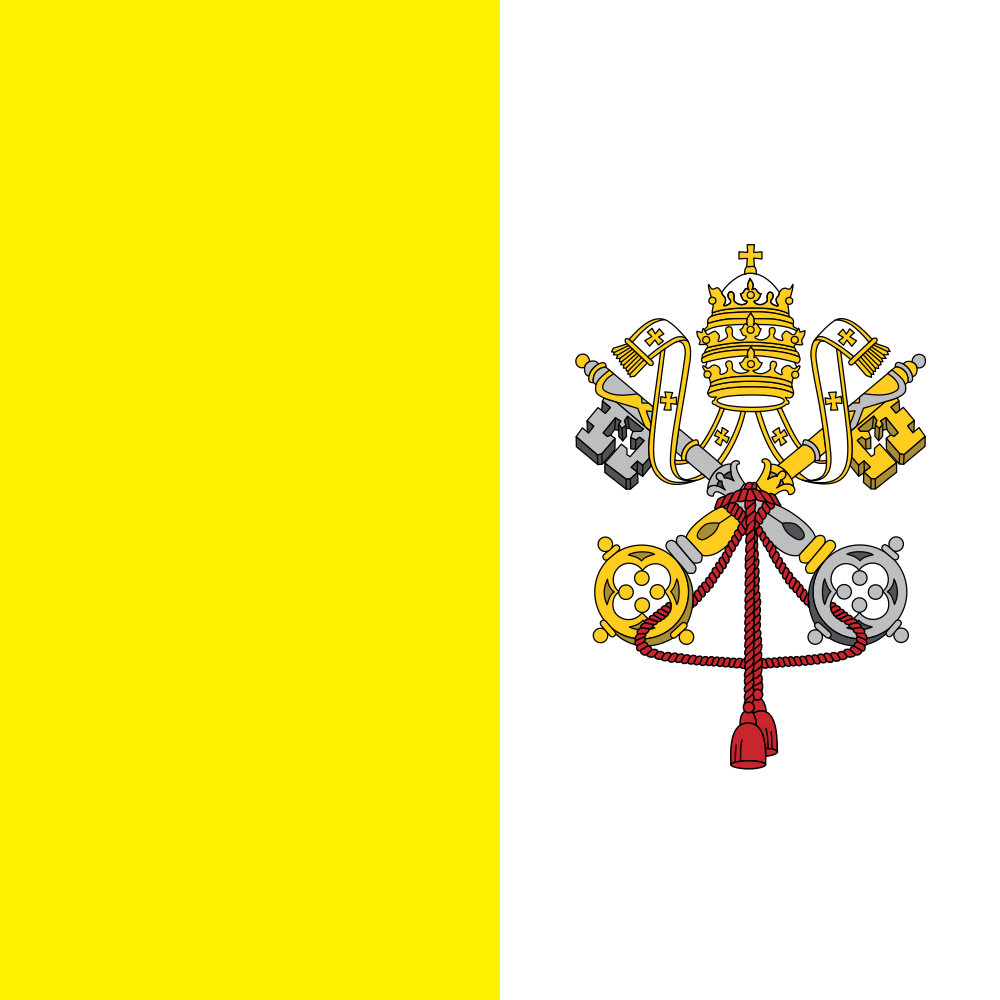
I make the following statement on behalf of the Permanent Observer of the Holy See, Archbishop Celestino Migliore.
My delegation wishes to thank the Secretary- General for his report on the work of the organization (A/64/1) and its clear call for the membership to restore hope and solidarity so that the sixty-fourth session of the General Assembly becomes a point of renewal for this Organization.
This past year the global community became more aware of the fragility of prosperity and growth. The world was hit by an economic crisis that has led to their security and the ability to provide even the basic necessities for their families. This crisis raised a number of questions about the causes and consequences of the economic downturn and created even more questions as to what the future will hold. Therefore, as we begin this sixty-fourth session of the General Assembly, one year after the deepening of the financial crisis, we do so with a new sense of purpose to learn from the mistakes and renew our commitment to the need for cooperation.
One area for a renewed sense of commitment to addressing the world’s problems is in working to lift the burdens placed upon so many in this world due to lack of economic resources. On numerous occasions, my delegation has pointed to the need for greater global solidarity in order to tackle the moral implications that currently face the world and to give a renewed priority to the poor. We welcome the Secretary-General’s recognition of the moral grounds underlying the need to give priority to the most vulnerable in this endeavour.
For such an effort, my delegation stresses the urgency of the need for the United Nations and developed countries to come together to give assistance to the many nations that are unable to respond to the financial crisis and that continue to face security and development challenges. For some of the countries lagging behind the rest of the world, the precarious, drifting economic situation was not created but rather exacerbated by the current financial crisis. Development aid will be effective only to the extent that local governments and civil society confront the situation with the impetus generated by the sense of responsibility needed to address chronic political, administrative and social malfunctioning.
My delegation welcomes the Secretary-General’s calls for an increased commitment to peacebuilding and peacekeeping, for these are the vital cornerstones upon which the United Nations was created. All this will be achieved only in the context of a renewed commitment to responsible sovereignty at both the national and international levels.
The upcoming Copenhagen Conference on Climate Change will test the ability of the international community to work together on a problem that has both global and local consequences. At the heart of the climate-change debate is the moral and ethical need for individuals, companies and States to recognize their responsibility to use the world’s resources in a sustainable manner. With this responsibility comes the duty of all States and international corporations that have somehow disproportionately used and abused global resources to shoulder their fair share in solving the problem.
In the light of the agreement to work towards a legally binding instrument on the import, export and transfer of conventional arms, the Convention on Cluster Munitions and the recent consensus among major nuclear Powers to reduce nuclear stockpiles, there has been an increasing commitment by some States to address this fundamental issue. However, the ongoing proliferation of nuclear arms and the desire by some States to continue to spend disproportionate amounts of money on weapons suggest that further efforts are needed if we are to make serious progress in controlling and unilaterally disarming these instruments of destruction.
Our efforts to renew the work of the United Nations will remain unfulfilled unless the international organizations and individual States are able to incorporate the voices of civil society into all aspects of the work of the Organization. Civil society partners are critical players in delivering humanitarian relief, promoting the rule of law and bringing to light gross violations of human rights.
In this regard, faith-based organizations play a vital role in providing insight into the local needs of communities, delivering care and fostering solidarity both locally and internationally for the needs of people around the world. My delegation welcomes the Secretary-General’s recognition of the critical role of civil society actors, and we hope to work with the delegations to further include civil society organizations in providing lifesaving care to those in need.
Widespread corruption, health pandemics, persistent maternal mortality in some regions of the world, economic crisis, terrorism, food security, climate change and migration all illustrate that in an increasingly globalized world, national solutions are only one part of the formula for contributing to peace and justice. These global problems call for an international response, and it is therefore imperative that the United Nations and other international organizations look inward and outward in order to make the necessary reforms to respond to the challenges of this interconnected world.
In commending the Secretary-General’s leadership, my delegation looks forward to working with you, Mr. President, and the membership in the next year to help create an Organization guided by duty, morality and solidarity with those in need.
May I take it that the General Assembly takes note of the report of the Secretary- General on the work of the Organization contained in document A/64/1?
It was so decided.
The Assembly has thus concluded this stage of its consideration of agenda item 107.

In connection with draft resolution A/64/L.1, entitled “High-level United Nations Conference on South-South Cooperation”, I wish to put on record the following statement of financial implications on behalf of the Secretary- General, in accordance with rule 153 of the rules of procedure of the General Assembly.
Under the terms of operative paragraph 1 of the draft resolution, the General Assembly would decide:
“that the High-level United Nations Conference on South-South Cooperation:
“(a) Will be held at Nairobi from 1 to 3 December 2009;
“(b) Will be held at the highest possible level;
“(c) Will have the overarching theme ‘Promotion of South-South cooperation for development’;
“(d) Will consist of plenary meetings and interactive multi-stakeholder round tables on the following sub-themes;
“(i) Strengthening the role of the United Nations system in supporting South-South and triangular cooperation;
“(ii) South-South and triangular cooperation for development: complementarities, specificities, challenges and opportunities;
“(e) Will result in an intergovernmentally agreed outcome;
“(f) Will also result in summaries by the Chairperson”
and, under operative paragraph 12, would decide
“to postpone the sixteenth session of the High- level Committee on South-South Cooperation from 2 to 5 June 2009 to one convenient day in January 2010”.
The High-level Conference on South-South Cooperation — which I shall refer to as the Conference hereafter — had already been included in the calendar of meetings for 2009 on the understanding that the Conference would be held in New York, in accordance with the headquarters principle embodied in General Assembly resolution 40/243, and no later than the first half of 2009, according to Assembly resolution 62/209 of 19 December 2007. Had the Conference been held at the established headquarters of its body, i.e., New York, in the first half of 2009, as decided in resolution 62/209, the required conference services would have been provided from the existing conference service capacities, without programme budget implications.
The aforementioned understanding, reached at the time of drafting the calendar of meetings for 2009, is no longer valid, as the venue would be changed from New York to Nairobi, from 1 to 3 December 2009.
According to paragraph 5 of resolution 40/243, United Nations bodies may hold sessions away from their established headquarters when a Government issuing an invitation for a session to be held within its territory has agreed to defray, after consultation with the Secretary-General as to their nature and possible extent, the actual additional costs directly or indirectly involved. Therefore, the offer by the Government of Kenya to host the High-level United Nations Conference on South-South Cooperation requires the Government of Kenya to reimburse to the United Nations the actual additional costs directly or indirectly involved as a result of the change of venue of the Conference from New York to Nairobi.
Consequently, the related programme budget implications set out in this oral statement include only the estimated direct costs of providing the required level of conference services as if the Conference were still to be held in New York — which I shall hereafter refer to as “the New York cost” — while the Government of Kenya would defray any difference between the New York cost and the actual costs incurred by the United Nations in order to provide the required conference services and other related incidental support services, including, inter alia, protocol services, sound engineering, safety and security and webcasting services.
It is estimated that the Conference would require meeting services for 13 meetings, with interpretation in all six official languages and document services for 76 pages of documentation in all six official languages. The costs of providing such services in New York are estimated at $333,000, including $163,600 for meeting services and $169,400 for documentation services. Since the Conference has already been included in the calendar of meetings for 2009, those costs in New York could be met from within the approved appropriation under Section 2, General Assembly Affairs and Economic and Social Council Affairs and Conference Management for the biennium 2008-2009.
As regards the postponement of the sixteenth session of the High-level Committee on South-South Cooperation from 2 to 5 June 2009 to one convenient day in January 2010, it is determined that no additional resources would be required, on the understanding that the specific date of the meetings of the sixteenth session of the High-level Committee would be decided in consultation with the Secretariat.
In summary, should the General Assembly adopt the draft resolution, there would be no programme budget implications for the programme budget for the biennium 2008-2009, on the condition that the Government of Kenya would defray the actual additional costs directly or indirectly involved, in accordance with resolution 40/243.
The Assembly will now take a decision on draft resolution A/64/L.1, entitled “High- level United Nations Conference on South-South Cooperation”. I should like to announce that, since the introduction of the draft resolution, the following countries have become sponsors: Kenya, Mexico, Saint Lucia, Suriname and Thailand.
May I take it that the Assembly decides to adopt draft resolution A/64/L.1?
Draft resolution A/64/L.1 was adopted (resolution 64/1).
I shall now call on those representatives who wish to speak in explanation of position on the resolution just adopted.


Following the adoption of resolution 64/1, I have the honour to deliver this statement on behalf of the States members of the Group of 77 and China (G-77).
We greatly value South-South cooperation and look forward to a successful outcome of the Conference to be held from 1 to 3 December 2009 in Nairobi. I wish to take this opportunity to express the Group’s gratitude to the Government of Kenya for its generous offer to host the Conference. The Group also wishes to express its appreciation to our dear friend and colleague His Excellency Mr. Nassir Abdulaziz Al-Nasser, President of the High-level Committee on South-South Cooperation and Permanent Representative of the State of Qatar to the United Nations; Mr. Raymond Landveld of Suriname, facilitator; Mr. Nor Eddine Benfreha of Algeria, G-77 coordinator; and all delegations for their support and commitment in this important process.
I wish to stress the G-77’s conceptual framework for and principles of South-South cooperation as set out in the Yamoussoukro Consensus and reaffirmed at the recent 33rd Annual Meeting of Ministers for Foreign Affairs of the G-77, held here in New York on 25 September 2009.
South-South cooperation is a common endeavour of peoples and countries of the South and must be pursued as an expression of South-South solidarity and a strategy for the economic independence and self- reliance of the South, based on their common objectives and solidarity. South-South cooperation and its agenda must be driven by the countries of the South.
We also maintain that South-South cooperation must not be seen as a replacement for North-South cooperation. Strengthening South-South cooperation must not be a measure for coping with the receding interest of the developed world in assisting developing countries. In addition, cooperation between countries of the South must not be analysed and evaluated using the same standards as those used for North-South relations.
Furthermore, we maintain that financial contributions from other developing countries should not be seen as official development assistance from those countries to other countries of the South. They are merely expressions of solidarity and cooperation born of shared experiences and sympathies. South- South cooperation is a development agenda based on premises, conditions and objectives that are specific to the historical and political context of developing countries and to their needs and expectations.
South-South cooperation deserves its own separate and independent promotion.
South-South cooperation respects national sovereignty in the context of shared responsibility, and it strives for strengthened multilateralism in the promotion of an action-oriented approach to development challenges.
South-South cooperation also promotes the exchange of best practices and support among developing countries in the common pursuit of their broad development objectives, and not just in the traditional economic and technical areas. South-South cooperation is based on the collective self-reliance of developing countries. The modalities and mechanisms for promoting South-South cooperation are based on bilateral, subregional, regional and interregional cooperation and integration, as well as on multilateral cooperation.
In conclusion, I wish to reiterate our commitment to, and support for, this process. We shall continue to work towards the successful outcome of the High-level
Conference on South-South Cooperation, as well as to engage in a constructive dialogue with all our partners.
I give the floor to the representative of Qatar, who will speak in his capacity as President of the High-level Committee on South- South Cooperation.
Mr. Al-Nasser (Qatar), President of the High- level Committee on South-South Cooperation (spoke in Arabic): It is a source of great satisfaction for me that the General Assembly has adopted resolution 64/1, on the High-level Conference on South-South Cooperation, which is to be held at the highest level at Kenya’s capital of Nairobi from 1 to 3 December 2009. The resolution sets out the Conference’s timing, objectives, methods and organizational arrangements. I am very grateful to the Government of Kenya for its generous offer to host the Conference in Nairobi. I am confident that it will live up to the expectations of Member States.
I am also certain that the Conference will be among the most important milestones in promoting and enhancing South-South cooperation. South-South cooperation is a component of triangular cooperation, which also includes cooperation between the countries of the North and the South on the economic, financial and technical levels. This nexus of cooperation cannot be broken, as its components are interdependent and complementary to one another.
The adoption of the resolution was the culmination of the tireless efforts that I have exerted in my capacity as President of the High-level Committee on South-South Cooperation. In that undertaking, I enjoyed the support of the President of the General Assembly, who will now launch negotiations on the draft outcome of the Conference. I am grateful for the sincere desire of Member States to hold the Conference no later than the end of the current year, so that it can coincide with the thirtieth anniversary of the Buenos Aires Plan of Action for Promoting and Implementing Technical Cooperation among Developing Countries.
I am also grateful to the delegation of Mexico, which supported one of the options raised during our meeting last August, subsequently building upon it until Member States were able to reach a consensus formula on the substance of standards that are important to all, in the North and South alike. That took place in the context of a series of conferences, decisions and outcome documents related to the
promotion of cooperation among developing countries. They include the Doha Declaration on Financing for Development, the Havana Programme of Action, which was adopted during the South Summit, the Marrakesh Framework for the Implementation of South-South Cooperation and the Doha Plan of Action, which was adopted by the second South Summit.
As members are aware, the Conference is intended to evaluate the progress made in South-South cooperation, reaffirm goals and commitments to enhance that cooperation, exchange best practices and lessons learned and identify obstacles and constraints and the necessary measures and initiatives to overcome them, including significant measures for implementing the recommendations and obligations emanating from previous conferences, as well as to address new challenges and emerging issues. The Conference is also intended to provide an opportunity for decision makers to take advantage of the momentum in South-South cooperation, which can serve to strengthen their development strategies to achieve internationally agreed development goals, including the Millennium Development Goals.
As is clear from the text of the resolution, it is proposed that the Conference be convened under the theme of “Promotion of South-South cooperation for development”. The Conference will consist of plenary sessions and round tables on the following sub-themes: strengthening the role of the United Nations system in supporting South-South and triangular cooperation; and South-South and triangular cooperation for development. The Conference will result in an intergovernmentally agreed outcome.
I wish to express my deep gratitude to the Special Unit for South-South Cooperation for its efforts to provide substantive and technical support to the preparatory process for the Conference, as called for by the resolution.
In order to ensure that the Conference comes to a successful conclusion, I appeal to Member States, the United Nations and its specialized agencies and programmes, international organizations, regional commissions, international financial institutions, civil society organizations and representatives of the private sector to contribute to the preparations and to establish the conditions necessary for its success. I also urge them to participate in it, in accordance with the rules of procedure of the General Assembly.
I also call upon Member States to provide financial assistance to developing and least developed countries, through the United Nations Fund for South- South Cooperation, to enable them to participate in the Conference. I would also like to take this opportunity to encourage Member States to provide voluntary contributions to support the Government of Kenya in successfully preparing for the Conference, especially in the light of the current difficult global economic and financial conditions.
I also hope that the outcome of the Conference will include a declaration and plan of action agreed upon by Governments to strengthen and enhance the future of South-South cooperation and to make such cooperation pivotal in assisting countries of the South to achieve sustained economic growth and combat the scourges of unemployment, poverty and other development challenges that affect the interests of the international community as a whole.


The delegation of Cuba would like to express its gratitude for the hospitality of the Government of Kenya and for the efforts made by the Government of Qatar through its presidency of the High-level Committee on South-South Cooperation, as well as those of Suriname as facilitator of the process.
The delegation of Cuba joined the consensus on resolution 64/1, which was adopted today and which decides to convene the High-level United Nations Conference on South-South Cooperation. That is an illustration of the importance we attach to the Conference.
Everyone is aware of Cuba’s position throughout the negotiations, which became unnecessarily difficult. The main goal of the Group of 77 and China was to submit a procedural draft resolution that set aside substantive issues for consideration during negotiations on the Conference’s outcome document. It is for that reason that we would like to express our views with regard to the reference in the resolution to the Doha Declaration on Financing for Development. That reference is intended to establish a link between the so- called principles of aid effectiveness and South-South cooperation — a goal championed by developed countries during the process.
South-South cooperation constitutes a step forward in the economic and political paradigms of developing countries — this can be seen from the
efforts we undertake on our own initiative in favour of development, through the mobilization of resources that exist in the South. Through South-South cooperation, our countries — with their diverse economic, social, cultural and geographical structures, as well their diverse endowment with natural resources, among other things — have found opportunities to work in an economically complementary fashion, and a way to promote the exchange of ideas, experience, know-how, technical advances, capacities and practical results, without any conditionality or interference in the internal affairs of other States, and on the basis of solidarity and mutual respect.
As various United Nations resolutions reflect, South-South cooperation is not a substitute for but a complement to North-South cooperation. If there exists a genuine interest in helping the countries of the South to achieve their sustainable development goals, then we wonder: why do the countries of the North continue to fail to meet their commitment to give 0.7 per cent of GDP as part of official development assistance? Why is there an effort to focus attention on the so-called principles for making “effective” use of aid? This is part of the tired discourse of the donors, seeking to impose their conditions and to interfere in decisions that should be taken by the countries of the South alone. Cuba rejects the attempt to use these “principles” as a foundation for South-South cooperation — cooperation in which our countries engage on the basis of solidarity and respect.
Cuba does not consider the specific mention of the Doha Declaration on Financing for Development necessary in a procedural resolution. In the same way, we will reject any attempt to prejudice the final document of the Conference with elements that have no relation to the principles relevant to South-South cooperation.
I should like to conclude by reiterating the unequivocal commitment of the Cuban delegation to the holding of the Conference on South-South Cooperation. Together with the rest of the countries of the South which share in such cooperation, Cuba has a great deal to contribute to the Conference, stemming from the experiences and initiatives carried out by our country across the economic, social, technical and cultural fields. We hope that the Conference will contribute to financing intraregional and interregional agreements on cooperation, and that it will be a step
forward towards achieving the goals of eradicating hunger, eliminating poverty, providing access, as a basic right, to education and health to all citizens, as well as closing the gap that separates the countries of the North and the South.


My delegation associates itself with the statement made by the representative of the Sudan on behalf of the Group of 77 and China. We express our gratitude to the delegations of Kenya, Qatar, Suriname and Algeria for their efforts.
Resolution 64/1, entitled “High-Level United Nations Conference on South-South Cooperation”, is the result of broad consultations and negotiations to achieve consensus. However, my delegation should like to explain its position and its understanding regarding certain points contained in the resolution we have just adopted.
Nicaragua does not accept and will never accept any type of conditionality applicable to South-South cooperation. Nor will it accept the imposition of guidelines that are not in line with the basic principles of South-South cooperation. In this sense, the only reason my delegation joined the consensus on citing the Doha Declaration on Financing for Development is the linkage with triangular cooperation that appears in that document. We do not see our acceptance of that reference as extending to other points covered in that document.
In our view, the notion of aid effectiveness and its principles are not applicable to South-South cooperation, which has its own fundamental principles. The intention on the part of developed countries to include it in this context is yet another attempt to elude their responsibilities with respect to meeting their official development assistance commitments and to impose conditionalities on cooperation that is based on solidarity among the countries of the South.
It is offensive to see how developed countries — in particular, those that do not meet the guideline of 0.7 per cent of GDP for official development assistance — are trying to impose a series of rules that run counter to the very basis of South-South cooperation. That is something that we will simply not allow.
Today, more than ever, the people of Nicaragua enjoy, among other things, free health care and
education. Our sons and daughters benefit from a school feeding programme that the Food and Agriculture Organization of the United Nations has held up as one of the four best in the world. And this is thanks to South-South cooperation — disinterested and unconditional aid from countries of the South.
In this context, Nicaragua reaffirms the principles of South-South cooperation — in particular, solidarity, complementarity, fair treatment, equal sovereignty of States, self-determination of peoples and non-interference in the internal affairs of States. All of those principles are contained in the various documents of the Group of 77 and China relating to South-South cooperation, including the Buenos Aires Plan of Action and the Havana Programme of Action.
Similarly, we underline the strictly complementary nature of South-South cooperation with regard to North-South cooperation. When the idea of a United Nations conference on South-South cooperation arose, the point was to find a way in which the United Nations could support developing countries with concerted actions and measures to strengthen and improve cooperation among ourselves. We hope that this goal will be met through an action-oriented final document that will be based on the guidelines for South-South cooperation and will enable developing countries to strengthen our cooperative trade and reach our national development objectives.


After a long negotiation process on modalities, Switzerland expresses its gratitude to all the delegations that participated, to the President of the High-Level Committee for South-South Cooperation and to the distinguished facilitator from the Republic of Suriname for their tireless efforts.
As the importance of South-South cooperation, as a complement to North-South cooperation, has grown enormously in recent years, we find it timely for the General Assembly to consider constructively what has been achieved so far, the lessons learned and what recommendations can be made for future action.
We believe in the potential complementarity between South-South and North-South cooperation, including through triangular cooperation, and we hope synergies can be developed between them. For this to happen, it is important to clarify the complementarities and commonalities between South-South and North- South cooperation. If traditional donors are to increase
emphasis on South-South cooperation, it is essential that we understand its functioning, its potential impact on national capacities and its accountability mechanisms.
As there is only a short time left before the start of the Conference, we hope that the preparation process will be efficient. The presentation of a workplan, so that we can harmonize agendas with other processes, would be most welcome.
Finally, I should like to thank, again, the Government of Kenya for agreeing to host this important Conference and for the patience it has shown throughout the process so far. Thirty years after Buenos Aires, South-South cooperation deserves a successful international conference to celebrate its achievements to date and to contribute to effective and better integrated South-South cooperation.


I take this opportunity to express appreciation to you, Sir, as well as to your predecessor, His Excellency Mr. Miguel d’Escoto Brockmann, for your spirited efforts to ensure that the High-level United Nations Conference on South-South Cooperation takes place as agreed in resolutions 62/209 and 63/233. I also wish to thank His Excellency Mr. Nassir Abdulaziz Al-Nasser, Permanent Representative of the State of Qatar, in his capacity as President of the High-level Committee on South-South Cooperation, for his enthusiasm and tireless efforts in this regard.
The Government of Kenya welcomes the adoption of resolution 64/1 and strongly believes in South-South cooperation as a viable mechanism for promoting the development of countries of the South, including through sharing of experiences, promotion of trade, transfer of appropriate and affordable technology, and investment. We underscore the complementary role of South-South cooperation to the traditional North-South cooperation. The important role played by development partners in promoting South-South cooperation cannot be overemphasized. Equally important is the role of the United Nations in nurturing and promoting South-South cooperation.
It is within the context of the above understanding that Kenya offered to host the Conference as part of our contribution to what we consider a noble objective. I wish, however, to observe that negotiations on the modalities of the resolution introduced some anxious moments. For instance, there
were times when Kenya was tempted to reconsider altogether its decision to host the Conference. However, thanks to the encouragement and determination shown by many delegations, we decided to stay the course.
In the midst of global and national challenges, I have the confidence that the adoption of resolution 64/1 on the High-level United Nations Conference on South-South Cooperation this afternoon provides all delegations a momentous opportunity to show the world that there is no crisis or issue that can shake the unity and focus of the United Nations. This is the spirit that should guide us as we proceed forward.
With less than two months to go before the early December 2009 date for the Conference, the Kenya delegation calls upon all Member States, the United Nations system and other stakeholders to fully cooperate and support the final preparatory processes with a view to ensuring a successful conference.
The adoption of this resolution brings a high sense of urgency to all stakeholders. Each one of us has a responsibility that we must discharge efficiently and effectively. As this is a United Nations conference, the Kenya delegation has full trust and confidence, Sir, in your leadership and guidance. The Kenya Government is ready to do its part. Furthermore, my delegation calls upon all delegations to demonstrate a high sense of commitment, cooperation and diligence in the negotiation of the outcome document and other related issues, so that the Conference will reflect our common endeavour for successful South-South cooperation.
To conclude, I express our appreciation to all delegations for accepting the offer of Kenya to host the Conference. I take this early opportunity to welcome all Member States to Nairobi. We shall soon be sharing with you information regarding the logistics and facilitation for the Conference.
On behalf of the General Assembly, I thank Kenya and its Government for kindly offering to host this important Conference and for their continued support. The Conference will undoubtedly be very successful.
The General Assembly has thus concluded this stage of its consideration of agenda item 114.
The meeting rose at 4.55 p.m.