A/66/PV.22 General Assembly

I have great pleasure in welcoming His Excellency Mr. Pakalitha Bethuel Mosisili, Prime Minister and Minister for Defence of the Kingdom of Lesotho, and inviting him to address the General Assembly.


At the very outset, allow me to congratulate Mr. Al-Nasser on his well-deserved election to the office of President of the General Assembly at its sixty-sixth session. I assure him of my delegation’s full support during his tenure. Let me also pay fitting tribute to his predecessor, Mr. Joseph Deiss, for the commendable manner in which he led the work of the General Assembly during the sixty-fifth session.
Mr. Ban Ki-moon also deserves our heart congratulations on his reappointment as Secretary- General. His unanimous re-election was a true reflection of the confidence that all Member States have in him.
I also wish to express my profound joy at witnessing the Republic of South Sudan join the ranks of the Members of the United Nations. We welcome this new Member and extend our hand in friendship.
This sixty-sixth session of the General Assembly once again provides us with an opportunity to reflect on the overall situation in the world. The world continues to experience numerous challenges. The target date for the attainment of the Millennium Development Goals is fast approaching, yet the world continues to be overwhelmed by unending hurdles on the path towards their achievement.
Despite globalization, the least developed countries are yet to be fully integrated into global markets. Rapid environmental degradation, compounded by the effects of climate change, continues to adversely affect ecosystems, agriculture, water resources and energy supplies. HIV and AIDS have not relented in decimating whole nations. The promotion of the principles of democracy and good governance, the protection of fundamental human rights, and the abuse of power in international relations continue to present challenges.
As if this were not enough, terrorism continues to torment us. Along with the other challenges, this is a fight that we collectively must win. Terrorism is a
transnational problem that cannot be left to one State alone to confront. All Member States must cooperate in addressing and eliminating this menace. The biggest challenge that we face in the post-Cold War era is to ensure that terrorists do not lay their hands on weapons of mass destruction.
In this regard, we reiterate our call for the total elimination of all nuclear weapons. We urge the nuclear weapon States to remain faithful to their commitments under the Treaty on the Non-Proliferation of Nuclear Weapons (NPT). We further call on those Member States that have not joined the NPT to do so without further delay. However, it would be illogical to ask non-nuclear States to shun the proliferation of nuclear weapons, while States that possess them continue to perfect new generations of such weapons and to threaten their use at the slightest opportunity.
Some States Members of this global Organization continue to experience either internal or external conflicts of significant proportions. The international community has not been consistent in its approach to the management of these conflicts. In some countries, the international community, acting through the Security Council, has been swift and decisive in intervening militarily. In other countries, the same international community has preferred mediation, and in yet still others it has turned a blind eye, at best leaving the mantle to some of its members to unilaterally threaten the imposition of sanctions.
It is against this background that we welcome the theme of our general debate, “The role of mediation in the settlement of disputes by peaceful means”. Indeed, the relevance and appropriateness of this theme at the present juncture in international relations is beyond doubt. In addressing this theme, we start from the premise that the peaceful settlement of disputes through mediation lies at the heart of the work of the United Nations. However, the United Nations has not sufficiently used mediation as a tool for conflict resolution.
The United Nations is charged with the maintenance of international peace and order through the Security Council. Consequently, the Council is expected to take a leading role in the settlement of disputes through mediation. In so doing, the Council must adopt the multilateral approach. Such an approach is the only way to guarantee transparency, impartiality
and ownership of the process by the general membership of the United Nations. Mediation must have as its priority the peaceful settlement of disputes, the reconciliation of the parties and the future sustainability of peace and stability. Peace that is imposed without consulting all parties to conflicts cannot be sustainable. Bias and abuse of military power to influence the outcome of mediation in conflicts will quickly erode the credibility of the United Nations as an honest mediator and will reinforce perceptions of ulterior motives.
The Kingdom of Lesotho is a strong believer in the principle of subsidiarity. It is common knowledge that the primary role in the maintenance of international peace and security reposes in the Security Council. However, cooperation and coordination between the Council and regional organizations, in terms of Chapter VIII of the United Nations Charter, is key to resolving conflicts speedily. The United Nations must empower and support the efforts of regional structures and organizations, which in all cases have a comparative advantage in mediating.
However, the Security Council can better discharge this function only if it is more representative of the membership of the United Nations. A more representative Security Council will take into account all our aspirations, and its decisions will command legitimacy. Consequently, we continue to call for the early and comprehensive reform of the Security Council in order to make it more representative of the Member States. It is simply baffling, if not appalling, to see how this all-important issue of Security Council reform is being deliberately stymied.
The settlement of conflicts through mediation has been put to the test, and its successes are well recorded in the annals of history. The peaceful settlement through mediation of the conflict in the Republic of Kenya in 2007 is a typical example. It should be recalled that, in Kenya, a group of eminent persons from Africa worked together with the United Nations to broker a peaceful solution to the political stalemate that resulted from the disputed parliamentary and presidential elections of 2007. That solution resulted in the formation of an all-inclusive and stable Government.
Secondly, a specific subregional mediation by the Southern Africa Development Community yielded fruitful results in Zimbabwe, as did that of the African
Union (AU) in Burundi. Furthermore, we witnessed a successfully mediated solution bring an end to Africa’s longest civil war in the Sudan.
The world rejoiced together with the people of South Sudan in July 2011 upon their attainment of independence as a sovereign nation. The remarkable mediation efforts of the African Union, with the support of the entire international community, helped in consolidating peace in South Sudan. Indeed, the mediation efforts are continuing in that sister country to ensure the maintenance of peace in the post-conflict period.
It is our humble but considered opinion that, where mediation has been given a chance, lives have been saved. The cost in resources, be they financial or human, has been minimal, and the destruction of infrastructure avoided. Above all, reconciliation between the warring factions has been realized.
Strangely, and despite having mediation at its disposal, the Security Council has at times preferred military intervention. I may also add that, at times, some members of the international community have unilaterally engaged in military interventions. Whenever military intervention has been preferred, it has not enjoyed the support of the general membership of the United Nations. Needless to say, the impact of military intervention in conflicts is catastrophic for innocent civilians, and it destroys infrastructure and the economies of countries.
In this regard, Libya may be used as a case study. The African Union developed a comprehensive road map that would have led to a peaceful settlement of the Libyan crisis by the Libyan people themselves. Sadly, we witnessed the deliberate marginalization of the AU in the resolution of that crisis. Military intervention was hastily adopted as an option, and the results of this kind of intervention are a matter of record for all to see, and indeed will be with us for a long time to come.
Nevertheless, the opportunity for all stakeholders to work together on consolidating peace in Libya has not eluded us. The African Union road map for peace remains as relevant today as it was at the beginning of the conflict. The United Nations and the African Union must work together to bring about the consolidation of peace, national reconciliation and the establishment of an all-inclusive Government in Libya. The United Nations, and not just a few countries with vested interests, should take the lead in the reconstruction of
that country. This transparent and unbiased approach alone can ensure that there is no relapse into conflict in Libya.
We must employ all assets at our disposal so as to fully exploit mediation as a tool for conflict prevention and resolution. The good offices of the Secretary- General in conflict prevention and resolution are an instrument that may be very effective in mediating conflicts. Those offices must be strengthened and given the human and other resources necessary to undertake mediation early enough to prevent conflicts and to deal effectively with those that are ongoing. In that regard, we encourage the mediation efforts of the Secretary- General towards the realization of a free and independent Western Sahara.
By the same token, we are convinced that the solution to the settlement of the question of Palestine will be attained through genuine mediation. The stalemate in the negotiations is a source of grave concern to my country. We urge all the parties involved to resuscitate the negotiations between the State of Palestine and Israel without any further delay.
Similarly, we must explore the possibility of a mediated solution to the problem between the Republic of Cuba and the United States of America. The international community has been unanimous in its call for the lifting of the economic and commercial embargo imposed upon Cuba, yet the problem persists. Indeed, Cuba, like all Member States, is entitled to freedom of international trade and navigation.
I conclude by pointing out that the crises we face today provide us with an opportunity for introspection and to chart the way forward. The obstacles that lie ahead of us are not insurmountable. We must build a more robust multilateral organization that is responsive to the modern-day needs of our peoples. A United Nations that is able to work with its partners, including regional and subregional organizations, and all of its Member States will surely achieve much success in all of its endeavours. With renewed political will and determination, let us commit ourselves to the principles of mediation, as enshrined in the United Nations Charter, and to the peaceful settlement of all disputes and conflicts.
On behalf of the General Assembly, I wish to thank the Prime Minister and Minister for Defence of the Kingdom of Lesotho for the statement he has just made.
Mr. Pakalitha Bethuel Mosisili, Prime Minister and Minister for Defence of the Kingdom of Lesotho, was escorted from the rostrum.
Address by Mr. Igor Lukšić, Prime Minister of Montenegro The Acting President: The Assembly will now hear an address by the Prime Minister of Montenegro.
Mr. Igor Lukšić, Prime Minister of Montenegro, was escorted to the rostrum.
I have great pleasure in welcoming His Excellency Mr. Igor Lukšić, Prime Minister of Montenegro, and inviting him to address the General Assembly.

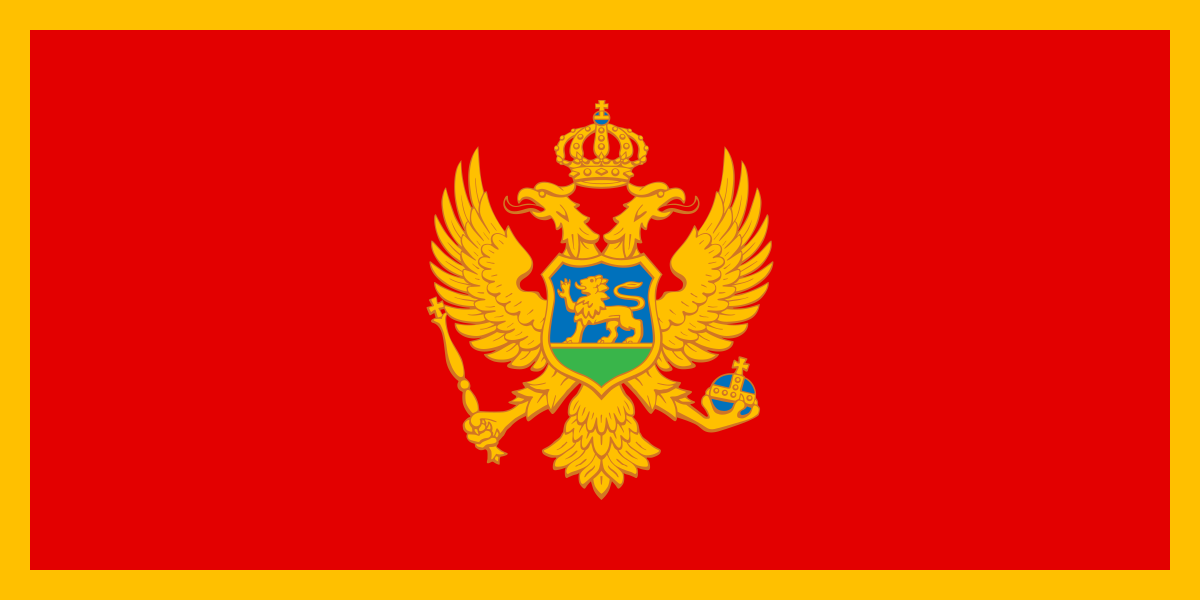
It is truly an honour for me to address the Assembly at this global forum on behalf of Montenegro and to reiterate our commitment to the principles and purposes of the United Nations and its Charter.
I hereby wish to congratulate Mr. Nassir Abdulaziz Al-Nasser on his election as President of the General Assembly at its sixty-sixth session, and to pledge the full support of the Montenegrin delegation as he carries out his demanding task. I also wish to thank Mr. Joseph Deiss for his valuable contribution and for strengthening the central role of the United Nations in the global system during his presidency of the General Assembly.
I would like to congratulate Secretary-General Ban Ki-moon on his reappointment, which I am certain will result in the continuation of the reforms undertaken to build a more efficient and coherent United Nations system, and thus a safer and more prosperous world.
Two months ago, Montenegro was replaced by South Sudan as the youngest Member of our Organization. I wish to congratulate South Sudan on its independence and its full-fledged membership in this body. I truly believe that this milestone will contribute to security and serve as a good starting point for the development of good-neighbourly relations.
We also support the democratization processes in North Africa, as well as the actions taken by the United Nations and the African Union in Côte d’Ivoire, Somalia, the Congo and other parts of Africa to further the overall progress of the entire continent.
In the context of regional cooperation, Montenegro has contributed to overall stability in South-East Europe by chairing the most important regional initiatives, which has been a unique and rather challenging experience for our Administration. Montenegro is committed to further developing mutual understanding and to strengthening all forms of cooperation in the future. Our success and that of the countries of our region is the success of Europe, too.
There is full consensus on the issue of European Union integration in Montenegro. We are aware of the fact that this process requires continuous contributions from all stakeholders in our society. I am convinced that we will have enough will, enthusiasm, capacity and energy to tackle it during the forthcoming period.
I hope and believe that persistent and committed work on the implementation of overall internal reforms, based on the seven key recommendations underlined by the European Commission and accompanied by a policy of good-neighbourly relations and regional and international cooperation, represent a solid foundation for the European Commission to recommend, in its progress report to the European Council, that European Union (EU) accession talks be opened with Montenegro.
We are taking firm steps forward on the Euro-Atlantic path and are currently preparing our second Annual National Programme as part of the NATO membership process. The progress of the Western Balkan countries towards European and Euro- Atlantic integration is a key factor for regional stability and lays the groundwork for long-term economic prosperity.
As a United Nations Member State and a reliable international partner, Montenegro is committed to the maintenance of international peace and security. Consistent with its capacities, Montenegro actively participates in United Nations peacekeeping missions in Liberia and Cyprus, while also keeping in mind the regional security aspects.
Through our participation in the NATO-led International Security Assistance Force, we directly contribute to the efforts of the international community to ensure lasting peace in Afghanistan, while at the same time supporting global efforts in the fight against terrorism. Through the EU ATALANTA mission, we have joined the fight against piracy, the consequences
of which have also been suffered by Montenegrin sailors.
Nevertheless, in order to prevent new conflicts that have the potential to cause humanitarian disasters and put additional pressure on the already-burdened peacekeeping mission contingents, it is necessary to strengthen preventive diplomacy and mediation activities in cases of potential and initiated conflict. The further development of United Nations capacities in this domain will contribute to the timely and peaceful resolution of conflicts before their complexities lead to serious international repercussions.
In that regard, Montenegro strongly supports the peaceful resolution of all existing conflicts, especially those in the wider region of the Middle East and North Africa. Priority should be given to the urgent signing of a peace agreement between Israel and Palestine, which is in their mutual interest. Only if both sides refrain from violent actions will room be created for confidence-building and a comprehensive solution to the Middle East issue, making Israel a safe country, to the benefit of both internationally recognized sides and meeting the prerequisites for Palestine to establish a stable State.
Montenegro also supports all the Security Council resolutions and actions taken by the international community aimed at stopping human rights violations and fulfilling the legitimate aspirations of populations, especially in Libya and Syria.
Montenegro supports the principles of the universality of human rights and the inadmissibility of violating them or resolutions promoting their protection and enhancement. We also support the Office of the High Commissioner for Human Rights and the Human Rights Council, to which we have announced our candidature for the period 2013-2015. Experience that Montenegro gained in its turbulent past, when it provided shelter to refugees, can serve as a basis for achieving long-lasting political compromises aimed at securing peace in the region. In our view, the Universal Periodic Review is an important instrument for assessing the status of human rights in the world.
I wish to emphasize our support of the work of the International Criminal Tribunal for the Former Yugoslavia, and the importance of all of the
international tribunals, especially when it comes to systematic violations of fundamental human rights and freedoms. They not only serve as an example and guide for national courts, but they also function as a clear deterrent to and inescapable destination for individuals who ignore the rules established by the Geneva Conventions.
Montenegro, as an ethnically, culturally and religiously diverse society, is an active member of the Group of Friends of the United Nations Alliance of Civilizations and is committed to the fundamental principles of integration, the strengthening of civil society, tolerance and the fight against all forms of discrimination, xenophobia and related intolerance. We are determined and committed to preserving the fundamental values that civil society is based upon, no matter what the challenges are and no matter what the challenges that we, as a society and a State, will have to face in the future.
Let me also briefly point out our current economic developments. The fact that we are a small and open economy, and therefore vulnerable to changes in the global economic market, resulted in the global economic and financial crisis stalling Montenegro’s economic progress. Nevertheless, with the implementation of our anti-crisis economic policy we have lessened the impact of the global crisis and stopped the downward trend in the Montenegrin economy.
That crisis confirmed the soundness of the basic principles of our economic policy — focusing on further stabilization of public finances, improving the business environment and structural reforms, so as to establish a stable, dynamic and competitive economy in the long term and to improve the quality of life of all citizens of Montenegro. Despite being fully aware that, if we are to mount an adequate response to the crisis, we will have to make some difficult and unpopular cuts in order to create a new, sound basis for strengthening the economy, we also know that actions taken by one stakeholder alone, no matter how successful, are insufficient. We all have to play a positive role in order to strike the right balance among success, sustainability, social responsibility and solidarity in this complex process.
Accordingly, we must not stop progress towards achieving the Millennium Development Goals, the realization of which creates the basis for the further
development of human rights and fundamental freedoms throughout the world. The fight against poverty and diseases, gender equality, protection of mothers and children, education, environmental protection and sustainable development represent the main prerequisites for progress and prosperity for our societies and are high on our Government’s agenda.
Montenegro supports pragmatic reform in the United Nations. As a small country, it is especially interested in strengthening the authority and role of the General Assembly — and other main United Nations bodies — and in improving its efficiency of operation. Increasing representation in the Security Council — including granting a seat to the Group of Eastern European States in the category of non-permanent member — would result in a functional strengthening of that body, improving its efficiency, accountability and credibility, in accordance with the United Nations Charter. A modern reform process, open to Member States individually or to groups of countries, must be based on a broad consensus on all five key aspects of Security Council reform. I am sure that there is a way to make a bridge between those goals and other entities, such as the Group of 20, for instance.
In its further democratization, its improved efficiency, its strengthened judiciary and administrative system, its fight against corruption and organized crime and its fostering of an inclusive society, Montenegro and the resident and non-resident United Nations agencies are working together to achieve the strategic goals of our common policy. The United Nations Development programme Resident Representative and the One United Nations programme have given an opportunity both to United Nations agencies and State partners in the process to create and monitor programme activities directly and on equal footing, and to adapt programme activities to the development needs of our country.
At the same time, the One United Nations programme is an opportunity for gradual reform in the operations of the United Nations system, creating a simultaneous and well-coordinated approach that will result, among other things, in avoiding overlaps between United Nations agencies and in achieving more efficient results in the implementation of national priorities.
Montenegro supports nuclear non-proliferation and objects to further expansion of the number of
countries that possess nuclear weapons. Moreover, we support all agreements of the nuclear Powers on mutual reduction of their nuclear capacities, creating a safer world for existing and future generations. In that context, I wish to thank the Secretary-General for the appeal he sent late last month, requesting all countries that have nuclear technology to adhere to the Comprehensive Nuclear-Test-Ban Treaty. I wish to emphasize that Montenegro ratified the Convention on Cluster Munitions and that within less than a year it destroyed all reserves of that type of weapons, thus confirming again its commitment to the principles of non-proliferation.
Montenegro is an environmentally conscious State. That is a bedrock principle of our Constitution. Based on that commitment, we have an additional incentive to find solutions that are compatible with our sustainable development policy. Our strategy for development in Montenegro is to achieve synergy between growth and employment, on the one hand, and social equality, the environment and natural resources, on the other.
The United Nations Conference on Sustainable Development, which will take place in Rio de Janeiro in 2012, represents an important opportunity to promote international cooperation in the area of sustainable development and an opportunity to make a comprehensive evaluation of the progress made in the past two decades. Montenegro, as a member of the United Nations Commission on Sustainable Development from 2011 to 2014, is committed to contributing to the success of that Conference with its constructive actions.
Montenegro is especially sensitive to climate change issues. There are numerous potential negative effects of climate change on Montenegro. A rise in sea level and temperature would diminish biological diversity. I therefore believe that the fight against climate change requires a global, coordinated and decisive international agreement, based on the principles defined in the United Nations Framework Convention on Climate Change and its Kyoto Protocol. The Framework Convention represents a key multilateral forum for global action in the area of climate change, and the sixteenth Conference of the Parties in Cancún confirms that a multilateral approach to climate change management under United Nations auspices can give concrete results.
Allow me to reiterate once again how honoured I am to participate in the general debate of this global forum on behalf of Montenegro and, together with the representatives of 192 countries, to contribute directly to the promotion of our mutual understanding and peaceful coexistence, to the benefit of all of our nations.
On behalf of the General Assembly I wish to thank the Prime Minister of Montenegro for the statement he has just made.
Mr. Igor Lukšić, Prime Minister of Montenegro, was escorted from the rostrum.
Address by Ms. Iveta Radičová, Prime Minister of the Slovak Republic The Acting President: The Assembly will now hear an address by the Prime Minister of the Slovak Republic.
Ms. Iveta Radičová, Prime Minister of the Slovak Republic, was escorted to the rostrum.
I have great pleasure in welcoming Her Excellency Ms. Iveta Radičová, Prime Minister of the Slovak Republic, and inviting her to address the Assembly.


It is a distinct honour and pleasure for me to address the General Assembly at the outset of its sixty-sixth session. This forum provides us with an unparalleled opportunity to strengthen, through dialogue, our concerted efforts in the quest for solutions to the mounting challenges that the international community faces today. We, the leaders of the United Nations, are expected to offer guidance and find solutions.
I am convinced that, given the extensive diplomatic experience of the President of the Assembly, and under his able leadership, we will be able to make this session a successful one. I wish him every success in his demanding duties and assure him of my delegation’s full support and assistance. I also wish to express my delegation’s appreciation and gratitude for the exquisite work of his predecessor, Mr. Joseph Deiss, who so skilfully guided our proceedings during the sixty-fifth session.
Let me also join others in paying tribute to the remarkable work of the newly reappointed Secretary- General, His Excellency Mr. Ban Ki-moon. We deeply
value his eminent personal and diplomatic qualities and look forward to working with him during his next tenure.
Slovakia warmly welcomes the Republic of South Sudan as a new member of the United Nations family. We wish South Sudan every success and, above all, peace, security and prosperity for its people.
Her Excellency Ms. Dilma Rousseff, President of the Federative Republic of Brazil, opened her speech with these words:
“For the very first time in the history of the United Nations, a female voice is opening the general debate. It is the voice of democracy and equality.” (A/66/PV.11)
President Rousseff expressed in two words the main challenge for the coming years: courage and sincerity. This challenge is accurate at a time of economic and debt crisis. We have to say openly that we still do not have adequate solutions. We are facing common risks in economy, governance and politics.
Citizens all over the world expect leadership and a mutual synergy of economy and politics. The majority of the world’s population expects economic growth, prosperity and a better quality of life. Those living in poverty — the millions of people without jobs, without water and without food — expect real answers, quick action and results from political leaders.
What can such a small country as Slovakia do to address these challenges? First, it has to do its own homework in stabilizing the economy. That means ensuring our pension system’s sustainability through deep reforms, and enacting a fiscal responsibility law that will ensure that fiscal policy is responsible to future generations and counter-cyclical. It means labour market reforms that support the creation of the new jobs the country badly needs, especially for some of its vulnerable groups. It means lowering the administrative burden and decreasing barriers to entrepreneurship, improving the predictability of the legal environment, and ensuring a wider use of e-Government services. Of course, it means measures to tackle corruption and to increase transparency, for example through a legal act ensuring that any contract concerning the use of public funds is valid only if published on the internet.
The Slovak Republic is a small country, but it is a part of the eurozone, which is in deep economic trouble. Courage and sincerity are most needed most these days in Europe. The financial crisis and its negative influence upon the entire European banking sector have clearly shown that the eurozone was not prepared for a crisis. The chaos in addressing these issues only deepened the general distrust and worsened the subsequent economic recession. The majority of European Union countries did not use the good economic times to consolidate their budgets. Therefore, in many cases, the consequences of the recession shifted public debt into dangerous territory.
We need courage in the eurozone to return to the old principles that established the European Union, which are necessary for successful international cooperation and integration. We need stricter European and national fiscal rules. We need to institute default controls, and we need new rules for the careful management of the financial sector.
We need sincerity. We have to be honest with our citizens, because we have to be very careful that the response to forcing technical solutions to the debt crisis is not the escalation of nationalism and populism. There is a chance that we will save the eurozone economically, but at the same time we must minimize the risk of losing the project of European integration politically and devaluing it in the eyes of our voters.
It is not just Europe; every region in the world is struggling today with serious economic difficulties. We live in a global, interdependent reality in which we cannot afford to ignore anybody’s problems. In this regard, we believe that, as a member of the Economic and Social Council, that body has the capacity to contribute more significantly to our joint efforts. If it is to do that, we feel that it is urgent to adjust its mandate and enhance its ability to react more swiftly to the economic and social needs of the world.
In times of dire financial restrictions in our own national budgets, we, as the United Nations, also need to learn to do more with fewer resources. We welcome every effort that the Secretary-General is making to utilize the available resources with maximum effectiveness and efficiency.
Peace and security are ever harder to maintain in these harsh crisis times. One of Slovakia’s priorities in the fight against international terrorism remains the endeavour to move forward the negotiations on the
comprehensive convention on international terrorism. With regard to the United Nations Global Counter- Terrorism Strategy, Slovakia will continue its implementation through concrete projects, as we have by co-organizing a special event on implementing the United Nations Global Counter-Terrorism Strategy in Central Asia, held in Bratislava in December 2010. Respect for international law, human rights and the rule of law should be an integral part of the fight against international terrorism.
Peacekeeping missions are among the most visible and successful activities of the United Nations and the true expression of the commitment to maintaining peace and security around the globe. The Slovak Republic has been an active contributor to the United Nations forces in Cyprus since 2001, and is involved in the Middle East. In recent decades, we have witnessed an unprecedented proliferation of United Nations peacekeeping missions. They have become increasingly in-demand, their mandates are widening and their management is becoming more complex. Slovakia therefore supports every measure aimed at increasing their effectiveness and efficiency given our truly constrained budgets.
Peace is not merely the absence of war. Peace means safety in all areas of people’s lives, economic prosperity, social stability, respect for human rights and fundamental freedoms, access to health care and education, protection of the environment, and access to water and food. There is no chance of lasting peace without sustainable development. That is an area in which we must still do a great deal of work and make concerted efforts. Aid from Slovakia — a small country — has since 2003 been aimed at the most troubled regions of the world. Recently, Slovakia has been providing development and humanitarian aid in the context of 41 projects to help starving children in Kenya, deliver food and water in Ethiopia; provide humanitarian help in South Sudan; assist Pakistan following the terrible floods there; help refugees, from Libya to Tunisia; and also to provide technical assistance for countries in the western Balkans and in the Middle East. Slovakia is also helping to secure the democratization process in Afghanistan through 13 new projects.
We need to focus on eliminating the primary causes of conflicts, not just deal hastily with their grave consequences, which, sadly, often occur only after too many lives have been destroyed. No effort
should be spared in exploring all political and diplomatic options to stop conflicts at their roots. Mediation has proved to yield tangible results. I want to stress the important role of women in these processes, as it is often underestimated.
Slovakia is a firm supporter of effective multilateralism, with the United Nations playing a central role. Concentrated efforts help create just and lasting solutions.
This will be yet another challenging session for all of us. It calls for a renewed, shared commitment to the fundamental principles and purposes of the United Nations Charter. We cannot afford to lose the ability to understand one another’s needs because of our own domestic problems. In these hard times, I wish all of us enough strength to find necessary, mutually advantageous solutions.
On behalf of the General Assembly, I wish to thank the Prime Minister of the Slovak Republic for the statement she has just made.
Ms. Iveta Radičová, Prime Minister of the Slovak Republic, was escorted from the rostrum. Address by Mr. Manmohan Singh, Prime Minister of the Republic of India The Acting President: The Assembly will now hear an address by the Prime Minister of the Republic of India.
Mr. Manmohan Singh, Prime Minister of the Republic of India, was escorted to the rostrum.
I have great pleasure in welcoming His Excellency Mr. Manmohan Singh, Prime Minister of the Republic of India, and inviting him to address the Assembly.


Allow me at the outset to congratulate Mr. Al-Nasser on his election to the presidency of the General Assembly. I wish to assure him of India’s full cooperation in the conduct of the sixty-sixth session of the Assembly.
It is also my great pleasure to welcome in our midst the new State of South Sudan.
We meet during this session of the General Assembly at a time of great uncertainty and profound change. Until a few years ago, the world had taken for granted the benefits of globalization and global
interdependence. Today we are being called upon to cope with the negative dimensions of those very phenomena. Economic, social and political events in different parts of the world have coalesced, and their adverse impact is now being felt across countries and continents.
The world economy is in trouble. The shoots of recovery which were visible after the economic and financial crisis of 2008 have yet to blossom. In many respects, the crisis has deepened even further.
The traditional engines of the global economy, including the United States, Europe and Japan, which are also the sources of global economic and financial stability, are today faced with continued economic slowdown. Recessionary trends in those countries are affecting confidence in world financial and capital markets. These developments are bound to have a negative impact on developing countries, which also have to bear the additional burden of inflationary pressures.
There has been unprecedented social and political upheaval in West Asia, the Gulf and North Africa. The peoples of those regions are demanding the right to shape their own future. Energy and food prices are once again spiralling and introducing fresh instability, especially for developing countries.
The Palestinian question remains unresolved and a source of great instability and violence. India is steadfast in its support for the Palestinian people’s struggle for a sovereign, independent, viable and united State of Palestine, with East Jerusalem as its capital, living within secure and recognizable borders side by side and at peace with Israel. We look forward to welcoming Palestine as an equal Member of the United Nations.
Terrorism continues to rear its ugly head and take a grievous toll of innocent lives. New threats to international security have emerged. At a time when the world needs more international commerce, the sea lanes of communication across the Indian Ocean are under siege. Acts of piracy are being carried out with impunity from lands that are beyond the writ of any functioning State or international accountability.
Iniquitous growth, inadequate job and education opportunities and the denial of basic human freedoms are leading to a growing radicalization of the youth, intolerance and extremism.
We have no choice but to meet these challenges head-on. We will succeed if we adopt a cooperative rather than a confrontational approach. We will succeed if we embrace once again the principles on which the United Nations was founded: internationalism and multilateralism. More importantly, we will succeed if our efforts have legitimacy and are pursued not just within the framework of the law but also in the spirit of the law.
The observance of the rule of law is as important in international affairs as it is within countries. Societies cannot be reordered from outside through military force. People in all countries have the right to choose their own destiny and decide their own future.
The international community has a role to play in assisting in the processes of transition and institution- building, but the idea that prescriptions should be imposed from outside is fraught with danger.
Action taken under the authority of the United Nations must respect the unity, territorial integrity, sovereignty and independence of individual States. Correspondingly, governments are duty-bound to their citizens to create conditions that enable them to freely determine their pathways to development. This is the essence of democracy and fundamental human freedoms.
There are many other things that we can do. We must address the issue of the deficit in global governance. We need a stronger and more effective United Nations. We need a United Nations that is sensitive to the aspirations of everyone, rich or poor, big or small. For this, the United Nations and its principal organs, the General Assembly and the Security Council, must be revitalized and reformed.
The reform and expansion of the Security Council are essential if it is to reflect contemporary reality. Such an outcome will enhance the Council’s credibility and effectiveness in dealing with global issues. Early reform of the Security Council must be pursued with renewed vigour and urgently enacted.
We should not allow the global economic slowdown to become a pretext for building walls around ourselves through protectionism or erecting barriers to the movement of people, services and capital. Effective ways and means must be deployed to promote the coordination of the macroeconomic policies of the major economies. The reform of the
governance systems of international financial institutions should be pursued with speed and efficiency.
The development agenda must be brought firmly back to centre stage in United Nations priorities. We need a much more determined effort to ensure balanced, inclusive and sustainable development for the benefit of vast sections of humanity. Each of us can contribute to this task, but we can achieve far more if we act in partnership.
In the past few decades, India has lifted tens of millions of its people out of abject poverty. We are in a position to feed our population better, educate them better and widen their economic choices. However, we still have a very long way to go.
We wish to accelerate the pace of India’s transformation in partnership with the international community. A fast-growing India can expand the boundaries of the global economy. A democratic, plural and secular India can contribute to tolerance and peaceful coexistence among nations.
Developing countries need investment, technology and market access for their products. They need assistance in the areas of education, health, women’s empowerment and agriculture. During the recently held fourth United Nations Conference on the Least Developed Countries Conference in Istanbul in May 2011, India strengthened its partnership with the least developed countries through significantly enhanced lines of credit and assistance in capacity- building.
We should pay particular attention to Africa. Africa’s richest resources are not its minerals but its people. We must empower them and open the doors for them to human advances through technology, education and skills development.
At the second India-Africa Forum Summit in Addis Ababa earlier this year, India offered lines of credit worth $5 billion and an additional $700 million in grant assistance for human resource development, technology transfer and building new institutions.
The United Nations should lead efforts in the area of food security. We need more cooperation in agricultural technologies, water conservation, land usage and productivity, and stability in commodity prices.
Developing countries need a peaceful external environment in which to grow. The fight against terrorism must be unrelenting. There cannot be selective approaches in dealing with terrorist groups or the infrastructure of terrorism. Terrorism has to be fought across all fronts. In South Asia there are encouraging signs of cooperation in the area of security, as exemplified in India’s cooperation with Bangladesh. Such cooperation is adding to the security of both our countries.
However, the recent assassination of Mr. Burhanuddin Rabbani in Kabul is a chilling reminder of the designs of the enemies of peace in Afghanistan. It is essential that the process of nation- building and reconciliation in that country succeed. This is vital for ensuring peace and security in the region. India will play its part in helping the people of Afghanistan build a better future for themselves, just as we are doing in other countries in South Asia. We will do so because prosperity and stability in our region are indivisible.
We wish to see an open, inclusive and transparent architecture of regional cooperation in the Asia-Pacific region and peaceful settlement of disputes. I call upon the United Nations to evolve a comprehensive and effective response to the problem of piracy in the Red Sea and off the coast of Somalia. As a littoral State of the Indian Ocean, India is ready to work with other countries in that regard. Simultaneously, the international community should continue with efforts to restore stability in Somalia. We have joined international efforts to provide humanitarian assistance to the countries afflicted with severe famine and drought in the Horn of Africa, specifically Somalia, Kenya and Djibouti.
Nuclear proliferation continues to be a threat to international security. The action plan put forward by former Prime Minister Rajiv Gandhi for a nuclear- weapon-free and non-violent world provides, even today, a concrete road map for achieving nuclear disarmament in a time-bound, universal, non-discriminatory, phased and verifiable manner. I commend the United Nations for its efforts in focusing world attention on nuclear safety. Our plans for utilizing nuclear power to meet our energy needs hinge on full satisfaction of our concerns about the safety of nuclear energy. We have undertaken a thorough review of the safety of our nuclear plants.
The perspectives I have outlined to the Assembly are those that have guided our actions in the Security Council since India became a non-permanent member of the Council in January. There are still millions of people living in poverty across the world. Their plight has worsened, through no fault of theirs, due to the global economic and financial crisis of recent years. The actions of Governments around the world are therefore under close scrutiny. It is vitally important that through our actions and deeds we renew the people’s faith in the Charter and objectives of the United Nations. I am confident that we can do this through acts of statesmanship, foresight and collective effort. India stands ready to play its part in this noble endeavour.
On behalf of the General Assembly, I wish to thank the Prime Minister of the Republic of India for the statement he has just made.
Mr. Manmohan Singh, Prime Minister of the Republic of India, was escorted from the rostrum.
Address by Mr. Carlos Gomes Júnior, Prime Minister of the Republic of Guinea-Bissau The Acting President: The Assembly will now hear an address by the Prime Minister of the Republic of Guinea-Bissau.
Mr. Carlos Gomes Júnior, Prime Minister of the Republic of Guinea-Bissau, was escorted to the rostrum.
I have great pleasure in welcoming His Excellency Mr. Carlos Gomes Júnior, Prime Minister of the Republic of Guinea-Bissau, and inviting him to address the General Assembly.


I would first like to congratulate Ambassador Nassir Abdulaziz Al-Nasser on his election to the presidency of the General Assembly at its sixty-sixth session, and to express our most sincere wishes for his success in fulfilling his mandate. Similarly, I would like to convey to Mr. Joseph Deiss Guinea-Bissau’s appreciation for the spirit of engagement and dedication he brought to his successful conduct of the work of the sixty-fifth session.
Let me also reiterate my congratulations to the Secretary-General, His Excellency Mr. Ban Ki-Moon, on his recent reappointment, the fruit of the excellent
work he has done to help consolidate peace and development around the world.
And I would like to take this happy occasion to salute the Republic of South Sudan on having joined the United Nations, becoming the Organization’s most recent full Member.
Today, 24 September, Guinea-Bissau celebrates the thirty-eighth anniversary of its independence. That historic achievement was the Guinean people’s first major victory, and from this rostrum I pay the homage that is owed to our country’s freedom fighters, whose courage and determination enabled us to attain the status of a free and independent State.
As our national authorities have stated and has been unanimously recognized by the international community, defence and security sector reforms are urgent priorities for us, since their implementation can strengthen peace and stability in our country and thus create the conditions needed for sustainable development. With the signing of the Tripartite Agreement Protocol or Memorandum of Understanding between the Economic Community of West African States (ECOWAS), the Community of Portuguese- speaking Countries and the Government of Guinea- Bissau, which will take place at the margins of this session of the Assembly, we will be able to make a major qualitative leap in the implementation of defence and security forces reform, as well as in effectively implementing the programmes contained in the ECOWAS road map.
In that regard, Guinea-Bissau’s commitment to mobilizing resources to sustain the reforms has led to a decision to create a special pension fund, into which we will have deposited $200,000 of the $500,000 we pledged to the fund by December 2011, as proof of our firm commitment to contributing 10 per cent of the total resources required. We therefore expect to hold a high-level meeting with our development partners this year, in order to obtain the financial and technical resources required to implement the reforms, and we appeal to all our partners to participate in and commit to the meeting.
Drug trafficking and organized crime are a current subject of discussion in the Organization, and, as is well known, the West African region to which we belong cited as a hub and Guinea-Bissau is also often singled out as a transit point for illicit drugs. In full awareness of this reality and recognizing our known
problems, we are proud to say that we were one of the first countries to request the good offices of the United Nations, through the United Nations Office on Drugs and Crime (UNODC), to help us deal with the issue with determination and effectiveness.
In order to combat drug trafficking and organized crime, the Government, through its Council of Ministers, has adopted two important instruments, a political declaration and a plan of action, which include large-scale actions in the following three areas: strengthening the legal system, strengthening the criminal justice system, and combating drug use and HIV/AIDS. Alongside such measures at the national level, the Government is seeking to sign bilateral agreements to strengthen the fight against drug trafficking, keeping in mind that, without strategic cooperation between the countries of origin, transit and consumption of drugs, there can be no effective fight against drug trafficking.
Therefore, from this rostrum, we reiterate our appeal, as we have many times before, for help in controlling our maritime borders. We address this appeal to countries that are better prepared than we are to do so. We are making a formal request for the support of the United States and the European Union and its member States, since we cannot single- handedly fight drug trafficking, which, as we all know, is increasingly powerful and sophisticated.
We are approaching the deadline for achieving the Millennium Development Goals, but despite ongoing efforts, Guinea-Bissau continues to face challenges with regard to basic sanitation, supplies of drinking water and energy, and the provision of primary health services, to cite only the most pressing issues. The high rate of poverty that still prevails in our country has forced the Government to adopt an ambitious agenda for the future, embodied in our national poverty reduction strategy document and based on the pillars of stability, peace, economic growth and poverty reduction. That document defines the main challenges and recommends priorities for the next five years. As a result of serious and rigorous implementation of this strategy, the Government that I have the honour to lead has already successfully reversed this negative trend.
The current economic situation is clearly improving, the result of progress made in the last two and a half years in strengthening public policy and
improving macroeconomic performance, as our partners, especially the International Monetary Fund and the World Bank, will testify. As a result of our excellent macroeconomic performance, the country reached the completion point of the Heavily Indebted Poor Countries Initiative, thus achieving forgiveness of about 90 per cent of its external debt and the recent re-evaluation of the growth rate of its gross domestic product, which is now fixed at 5.3 per cent, which is higher than originally predicted. We have all the conditions needed to maintain and accelerate this trend during the next year.
To that end, in addition to relying on our own resources, which can now be devoted to poverty reduction programmes, the Government will organize a round table of donors in the first quarter of 2012 to mobilize the necessary financial resources for the implementation of those programmes. In that context, we appeal once more for the participation of and contributions by all traditional donors that are interested in our country and that wish to support national efforts aimed at overcoming our current weaknesses.
Let me once again welcome the establishment of UN-Women, an entity that reflects the firm commitment of our Organization to the struggle for gender equality and to ensuring that women have the conditions necessary for a more representative and active participation in the process of transformation that is under way in our societies.
In the same context, my country is taking measures to uphold the dignity of women, including measures to promote their empowerment and the affirmation of their autonomy. I welcome the steps taken recently by the Guinean Parliament, which approved the criminalization of female genital mutilation and increased penalties for trafficking in minors.
Guinea-Bissau’s status and credibility in the international arena depends largely on its ability to define and implement a foreign policy that takes into account the great universal values of democracy, freedom and human rights, which are our values as well.
In our diplomatic efforts, we have to be consistent with our historical commitments and, above all, faithful to all who selflessly helped us in the struggle for the affirmation of our dignity.
From that perspective, we welcome the decision of the Palestinian Authority to submit a request for the recognition of the State of Palestine as a full Member of the United Nations. We encourage a constructive dialogue on the basis of the possibility of peaceful coexistence and mutually advantageous cooperation between countries and peoples.
This session of the Assembly is taking place at a time when major changes are occurring in the Arab world. These changes call for greater political and social rights, as well as values such as freedom and democracy, and, for that very reason, the Arabs have our sympathy and solidarity. We regret, however, the cases where transition incurs high costs in terms of human lives.
With regard to Libya, Guinea-Bissau fully supports the position of the African Union and expresses its full readiness to cooperate and to strengthen the increasingly friendly relations and cooperation with the legitimate representatives of the Libyan people.
We urge the United States Government to draw on the values that define that great nation and to resume its relationship with Cuba, ending the embargo that has lasted for more than five decades and freeing the Cubans still being held in its prisons.
The responsibilities of the United Nations are increasing, and the globalization of the decisions that it is called upon to take is becoming increasingly urgent.
The historical reasons that led to the establishment of the Security Council are no longer current. The demographic representation of the different regions of the world, the emergence of new countries and new geopolitical configurations oblige us to accept as natural the reform of the Security Council. We deem it legitimate to want the decisions of the Security Council to be made more inclusive and participatory through giving our continent both permanent and non-permanent seats, as is the wish of the African Union, because of the large representation of the African continent.
Under the auspices of the President of the Republic, Mr. Malam Bacai Sanhá, the National Assembly launched a process of national reconciliation involving all the forces of the nation. That important initiative has contributed to the establishment of the
climate of peace and understanding that now prevails in the country.
To conclude, I take this opportunity to thank all friends and partners of Guinea-Bissau for their support and solidarity and to assure them that we will spare no effort in consolidating peace and building a more just society to create better living conditions for the Guinean people.
On behalf of the General Assembly, I wish to thank the Prime Minister of the Republic of Guinea-Bissau for the statement he has just made.
Mr. Carlos Gomes Júnior, Prime Minister of the Republic of Guinea-Bissau, was escorted from the rostrum.
Address by Mr. Willy Telavi, Prime Minister of the Republic of Tuvalu The Acting President: The Assembly will now hear an address by the Prime Minister of the Republic of Tuvalu.
Mr. Willy Telavi, Prime Minister of the Republic of Tuvalu, was escorted to the rostrum.
I have great pleasure in welcoming His Excellency Mr. Willy Telavi, Prime Minister of the Republic of Tuvalu, and inviting him to address the Assembly.


As this is the first time I have stood at this rostrum as Prime Minister of Tuvalu and participated in the general debate of the General Assembly, I am delighted to convey the warmest greetings and best wishes of my people and my Government, and I am honoured to speak today on their behalf. Let me first extend my special thanks and sincere appreciation to the Government of the United States of America, as the host country, for the warm hospitality and special protocols accorded to my delegation since our arrival.
Ten years ago, Tuvalu established and opened its Permanent Mission to the United Nations here in New York, with a mandate to engage more closely with nations of the global family. Despite our limited resources as one of the smallest Member States, our presence is a simple testimony of our hope and trust in collaboration with Member States in the pursuit of our destiny. This further reflects our continued
commitment to uphold the maintenance of international peace and security, development and human rights as fundamental pillars of the United Nations, as enshrined in its Charter.
Tuvalu warmly welcomes and fully supports the four main areas of focus of Mr. Al-Nasser’s presidency, including the peaceful settlement of disputes, United Nations reform and revitalization, improving disaster prevention and response, and sustainable development and global prosperity, which he clearly identified during the opening of the session. In particular, the theme that he proposed for the general debate — “The role of mediation in the settlement of disputes by peaceful means” — is timely, considering what is happening around the world today.
In this context, I wish to express our belated tribute and respect to the people and the Government of the United States in commemoration of the recent tenth anniversary of the events of 11 September 2001. Tuvalu strongly condemns such terrorist acts and all similar incidents worldwide, and our prayers are with those who have lost their loved ones. Tuvalu further salutes those who have lost their lives for the cause of justice and peace.
As a peace-loving nation, Tuvalu fully supports the role of the United Nations in the maintenance of peace and security across the globe. However, at the same time, the integrity and sovereignty of countries should be respected at all costs. Tuvalu firmly believes that military and violent action should not be used as a means for the settlement of disputes. Instead, the parties concerned should be encouraged to discuss and understand the root causes of their differences and try to listen to each other in a more peaceful manner.
Today the world is undergoing profound changes without any boundaries through the unprecedented impacts of globalization and other related global events, which have critical implications for Tuvalu. This has been further exacerbated by the continued severe impact of the global financial and economic crisis, which has had an enormous and critical negative effect on Tuvalu’s economy. In particular, the Tuvalu Trust Fund, which is the main source of revenue to stabilize our recurrent budget, has been severely affected. As a consequence, my Government has no other option apart from streamlining and containing its national recurrent budget to a sustainable level so as to
enable the provision of basic services to its people during these difficult times.
In this regard, I humbly call upon the international community and development partners to urgently fulfil their commitments to assist the least developed countries (LDCs), including Tuvalu, through the implementation of the Istanbul Programme of Action, adopted at the fourth United Nations Conference on the Least Developed Countries, held in Turkey earlier this year. The Istanbul Programme of Action is a living document that needs to be implemented vigorously and collectively by LDCs and the international community during the next 10 years. In that regard, I am pleased to confirm that the main thrusts of that Programme of Action will be integrated and mainstreamed in the Tuvalu National Sustainable Development Strategy, during the Fourth United Nations Conference on the Least Developed Countries scheduled for next month.
Furthermore, as a least developed country, Tuvalu is most vulnerable to global economic shocks, the impacts of climate change and outbreaks of disease, including non-communicable diseases. Tuvalu continues to call on and appeal to the United Nations to take those vulnerabilities seriously into consideration when addressing the question of the graduation of LDCs. Despite the ambitious target of the Istanbul Programme of Action for 50 per cent of LDCs to be graduated within the next decade, Tuvalu firmly believes that its economic and environmental vulnerability, coupled with its continuous dependence on official development assistance, cannot be totally ignored. In that context, the graduation criteria need to be reviewed to reflect and recognize our vulnerability.
Last month, Tuvalu published its second Millennium Development Goals (MDGs) Progress Report covering the period from 2010 to 2011, which highlights the progress we have made to date towards achieving those goals. Despite the ongoing impact of recent global crises, which Tuvalu continues to face, it is encouraging to note that five of the MDGs are likely to be achieved and three will have mixed results by 2015. As alluded to earlier, while we have made progress in achieving the MDGs, such progress can be reversed overnight because of our particular economic and environmental vulnerability.
The ongoing process and inter-governmental negotiations at the United Nations to revitalize and
reform the General Assembly and the Security Council respectively are fully supported. However, while we recognize the importance of the reforms being undertaken by those United Nations bodies in order to update their mandates, we are concerned that the time taken to conclude such undertakings is far too long. In that regard, we look forward to a more realistic timetable to complete those negotiations in the near future, once and for all.
Our collective efforts to strengthen and maintain peace across the globe will be meaningless, if the United Nations continues to turn blind eyes and deaf ears to Taiwan’s contribution and efforts toward those common goals. Furthermore, Taiwan’s continued contribution to the international community as one of the committed development partners cannot be overemphasized. In that regard, Tuvalu strongly urges the United Nations to recognize those contributions without any reservations. In particular, Tuvalu calls upon the United Nations subsidiary bodies, especially the World Health Organization and the International Civil Aviation Organization, to allow Taiwan to participate fully and meaningfully in their meetings and activities, including in United Nations meetings on climate change.
Climate change is a priority global issue of the twenty-first century and beyond and therefore requires a global solution. Climate change impacts countries unequally and not all countries possess the same capacity and resilience to adapt and respond to such impacts. For a small island developing State like Tuvalu, climate change is without a doubt a security issue that threatens our survival. At the end of this year parties to the United Nations Framework Convention on Climate Change will be meeting in Durban to advance our work on climate change. It will be a critical meeting, as time is fast running out for highly vulnerable countries like Tuvalu. My country believes the meeting in Durban must deliver key outcomes.
First, we must adopt amendments to the Kyoto Protocol, so as to allow for a second commitment period. It will be necessary to adopt a decision that includes provisional entry into force of those amendments to avoid any gap between the first and second commitment periods. That is necessary in order to ensure that the clean development mechanism continues without any complications and that the mechanism continues to provide financing for the Adaptation Fund.
Secondly, we must make rapid progress in developing an international mechanism to address loss and damage. For highly vulnerable countries like Tuvalu, that is vitally important. We need an international mechanism to spread the burden of rebuilding after major weather catastrophes. Thirdly, we must re-focus our work on reducing emissions from deforestation and forest degradation. To properly reduce global deforestation we must put in place appropriate measures that effectively address its causes. We must look at this from the demand side and explore all means of regulating the trade in products that is driving deforestation.
Finally, we believe that all major emitting countries must take more decisive action to reduce their emissions. The current pledging system found in the Cancún Agreements is inadequate. We will be seeking a mandate in Durban to commence negotiations on a new, legally binding agreement for those major emitting countries that have not taken commitments under the Kyoto Protocol. That agreement should complement the Kyoto Protocol, but not replace it.
As we make progress towards the Rio+20 Conference next year, we must ensure that there is a focused section dealing with the needs of small island developing States. In considering the theme of the green economy, we must explore carefully how we can redirect the current international trading system to properly reflect the needs of small island economies. We need accessible and affordable technologies that take advantage of renewable energy and energy efficiency, we need help to protect our blue economies and our oceans, and we need to explore new preferential trade arrangements to overcome our size disadvantage.
In conclusion, let me reiterate the severe impact of the recent financial and economic crisis and other ongoing global crises, which continue to affect my country’s economy and its overall social and economic development. As a small island developing State and a least developed country, vulnerable to such crises and dependent on overseas development assistance, Tuvalu appeals to the international community to urgently honour and fulfil their commitments and obligations outlined in the Istanbul Programme of Action and other international platforms. We firmly believe that with our continued cooperation and strong partnerships at all
levels, we can successfully overcome those problems for the sake of our people and humankind.
On behalf of the General Assembly, I wish to thank the Prime Minister of Tuvalu for the statement he has just made.
Mr. Willy Telavi, Prime Minister of Tuvalu, was escorted from the rostrum.
Address by Mr. Ralph Gonsalves, Prime Minister of Saint Vincent and the Grenadines The Acting President: The Assembly will now hear an address by the Prime Minister of Saint Vincent and the Grenadines.
Mr. Ralph Gonsalves, Prime Minister of Saint Vincent and the Grenadines, was escorted to the rostrum.
I have great pleasure in welcoming His Excellency Mr. Ralph Gonsalves, Prime Minister of Saint Vincent and the Grenadines, and inviting him to address the General Assembly.


I am pleased to add my voice to the unanimous acclaim of His Excellency Mr. Nassir Abdulaziz Al-Nasser as President of the General Assembly for this, our sixty-sixth session. A skilful and seasoned diplomat, he has played an integral role in establishing the State of Qatar as a central and crucial actor in international diplomacy. I have no doubt that he will approach his new responsibilities with similar dedication, even-handedness and compassion.
In recent months the winds of change have encircled the globe, reaching and reshaping the unlikeliest corners of our planet, for good and for ill. Those winds have swept the nation of South Sudan into these hallowed halls as a welcome and esteemed new member of our global family. They are blowing away the flimsy impediments to Palestinian statehood, and breathing fresh air into stagnant negotiating processes. The winds of change have howled across the sands of the Middle East and North Africa, reshaping long-held geopolitical assumptions.
The grim economic storm clouds that formed ominously on our global horizon three years ago have yet to dissipate, and, indeed, seem to be multiplying. Natural disasters, climate change, and the accompanying non-metaphorical winds of hurricanes
and tropical storms have buffeted my multi-island nation and my region yet again, upending our fragile economies and causing painful developmental setbacks.
The United Nations finds itself in the eye of these increasingly turbulent geopolitical and socio-economic storms. The role that we collectively play in response to these howling gales will determine the contours of the post-crisis world and the relevance of this institution in that world. Will the international community shield the vulnerable from these winds? Will we harness their power for positive change? Or will we become little more than unnecessary weather forecasters, watching and warning about which way the winds blow, but never acting for the benefit of our peoples’ humanization?
The President has wisely selected “The role of mediation in the settlement of disputes” as the theme of this general debate. That theme could not be more apt or timely. Too often, the difficult work of mediation, negotiation and peaceful resolution of disputes is prematurely abandoned in the search for a quick fix of militarism, brinkmanship or ill-advised unilateral action. The very drafters of hard-fought Security Council resolutions often cast aside the letter and spirit of those documents before their ink has dried, and the frenzied pursuit of a military solution to every dispute is sometimes sickeningly palpable.
All too frequently, the loudest champions of expensive and unnecessary military action are those leaders of military Powers who sometimes seek to shore up sagging local political fortunes with bullets, bombs and the bodies of faceless foreigners in faraway lands. History has never been kind to such nakedly political crusades, and those who have sown the wind have invariably reaped the whirlwind of their bloody campaigns, long after the triumphalist glow has faded. Neocolonialist and imperialist adventures, however disguised, will never triumph before the bar of history over a people’s right to self-determination and the inalienable embrace of sovereignty.
The ongoing global economic and financial crisis is a devastating storm that has shown no signs of abating. Economies the world over remain in peril, and none is immune from the widening and deepening fallout of this systemic crisis of ill-regulated financial institutions and the movement of capital. The effects of the international global and financial meltdown are
now being felt well beyond the bottom lines of multinational corporations. The macroeconomic and developmental consequences of this economic tornado are now painfully apparent, as is the terrible impact on the lives of individuals.
The economic crisis has spurred rising global unemployment and poverty, and has engendered a feeling of hopelessness, especially among young people. The continuing fallout of the economic upheaval can be felt in streets and cities around the world and is a major contributor to the global unrest that has pitted disgruntled youths and others in violent opposition to Government forces, from Tottenham to Tripoli. Social unrest elsewhere beckons, in dozens of countries where neither the socio-economic conditions nor the political institutions can contain the enormous pressures much longer.
Well into our third year of the international economic crisis, we can now declare that the tepid and timid responses of wealthy developed nations have failed to heal the global economy. The uncoordinated lurches from stimulus to austerity and back typify the confusion of the self-appointed premier forums of our international economic cooperation. The recovery that they prematurely declared was false and fleeting, and their counsel of patience and predictions of long-term recovery are cold comfort to the suffering peoples of countries that did not contribute to the crisis.
In small, vulnerable and highly indebted middle- income economies such as ours, the economic debacle threatens to have debilitating and ongoing consequences. We cannot afford to wait for the promise of incremental or cyclical up-ticks in the global economy. Small States need the fiscal and policy space to creatively spur development in ways that comply not with the checklists of discredited economic theorists, but with real-world particularities and people-centred policies. The international financial institutions have yet to sufficiently grasp this simple fact.
The General Assembly must reassert its role in the response to the international economic crisis. In the early days of the global economic deterioration, Saint Vincent and the Grenadines played a leading role in the United Nations Conference on the World Financial and Economic Crisis and its Impact on Development. Under the President’s leadership, the Assembly must now meaningfully follow up on the unfulfilled recommendations and mechanisms spelled out at that
Conference. The Caribbean region has a vested interest in this most urgent of matters.
This year, Saint Vincent and the Grenadines was the subject of a United Nations resolution (65/136) that called upon the international community to provide assistance in the wake of Hurricane Tomas, which caused millions of dollars of damage in our region. While we are extremely grateful to the many countries that contributed generously to the emergency response, our national and regional recovery is far from complete. In the light of the welcome call by the President of the General Assembly to focus on disaster prevention and response during the current session, I remind the international community of our continuing recovery efforts and the ongoing vulnerability of small island developing States during the still active 2011 Atlantic hurricane season.
I remain baffled by the intransigence of major emitters and developed nations that refuse to shoulder the burden for arresting the climate changes that are linked to the excesses of their own wasteful policies. As Hurricanes Irene and Katia crept northward to typically untouched cities in the United States and the United Kingdom, we in the Caribbean felt saddened at the extensive damage and tragic loss of life, which is an annual occurrence in our region. We can only hope that our now-common experiences can engender a level of solidarity and constructive engagement that will lead to binding and meaningful emissions reduction targets and the fulfilment of commitments on adaptation financing for vulnerable small island developing States. Time is running out on the very existence of many countries in the face of rising oceans and increasingly intense storms.
I am heartened that the President of the General Assembly has decided to place special emphasis on sustainable development and global prosperity during the current session. But the citizens of the world, and indeed many of its Governments, have lost faith in endless self-important summits that produce little in the way of tangible results. The archives of the United Nations are filled with grandiloquent declarations and outcome documents from summits whose commitments were forgotten even before representatives had boarded their planes to return home from their exotic venues.
Next year, the issue of development returns to Latin America for the United Nations Conference on Sustainable Development (Rio+20) in Brazil. Rio+20
will take place one decade after Mexico’s heralded Monterrey Consensus, in which developed countries committed themselves to the target of devoting 0.7 per cent of their gross national income to official development assistance to developing countries. Today, even accepting the liberal definitions and creative accounting used by some States to measure development assistance, developed countries are contributing only 0.32 per cent of their gross national income to official development assistance — less than half of the Monterrey target. We just have to make this better. We must do it right. It is just not good for us to be taken for a ride all of these years with all of these promises. It must come to an end sometime, and the world is changing. Let us get it right. It is our responsibility. Please.
In that regard, our dreams remain constantly unfulfilled. I am reminded of the poetic inquiry of Langston Hughes, an authentic voice of America, who asked simply this:
“What happens to a dream deferred? Does it dry up like a raisin in the sun? Or fester like a sore — And then run? Does it stink like rotten meat? Or crust and sugar over — like a syrupy sweet? Maybe it just sags like a heavy load. Or does it explode?”
Recent events in the streets of major cities around the world have probably answered Langston Hughes’ queries. Talk is cheap. We must get some action.
It should be a source of alarm and international embarrassment that the composition of the Security Council is an ossified relic of the Second World War, seemingly immune to the modern realities of new countries and new global Powers. It is an outrageous act of international irresponsibility that such an outmoded and increasingly illegitimate body is allowed to decisively insert itself into local and regional conflicts. Saint Vincent and the Grenadines is adamant that the Security Council must be reformed, and that the reform must be underpinned by the expansion of the Council in the permanent and non-permanent categories alike, with full regard for the legitimate aspirations of Africa and the necessary accommodations for small island developing States,
which have valuable and creative perspectives on peacebuilding and conflict resolution.
The International Year for People of African Descent, which was declared with much fanfare, is almost at an end. I am grateful to the United Nations, which has hosted a number of events to raise awareness of the challenges facing people of African descent and foster discussions on potential solutions to tackle those challenges.
Racial discrimination was justified and itself became the justification for a brutal, exploitative and dehumanizing system. That system was perfected during the transatlantic slave trade and ingrained over the course of colonial domination. The structure of the modern world is still firmly rooted in a past of slavers and colonialist exploitation. Today, every single country of the world with a population of majority African descent is still trapped in the periphery of our global economic and developmental systems. The peoples of African descent remain disadvantaged, individually and systemically, by the entrenched and unyielding cycle of discrimination. Indeed, many of the wars that the United Nations struggles mightily to quell or avoid are rooted in the ignorant and avaricious cartography of the European colonizers.
The people of Saint Vincent and the Grenadines have a long and proud history of resistance to slavery, bigotry and genocide, dating back to the heroic resistance of the Garifuna people against British aggression in the late 1700s. While we celebrate the noble heroism of the famous and the faceless alike who resisted racist colonial hegemony, we must continue to confront the legacy of this barbarism and continuing injustice. The wounds of that era are deep, the crimes against humanity are clear and the necessity for apology and reparations is undeniable; we cannot duck those. When we speak this year about the peoples of African descent, we must highlight what is happening in the Horn of Africa and in Haiti.
The collective voices of the international community are rising to a crescendo in support of full Palestinian statehood. Saint Vincent and the Grenadines echoes the relevant portions of yesterday’s Group of 77 ministerial declaration, which welcomed the State of Palestine’s application for full membership in the United Nations. The State of Palestine has brought its case to this world Assembly in keeping with the finest traditions of multilateralism. No one should
call the Palestinian acts unilateral. They come here to the multilateral body. We have no doubt that its action and the solidarity of the international community will resuscitate the moribund negotiating process between the Palestinian and Israeli States.
As I reflect on the sweeping geopolitical changes being wrought in our global village, I am compelled to raise the fact that there is no practical, legal or logical justification for the seeming indifference of the United Nations to the meaningful participation of Taiwan in our important work. Surely, in the context of an ever- expanding and inclusive United Nations, the 23 million citizens of Taiwan can, at the very least, be allowed to meaningfully participate in the specialized agencies of the Organization — and that should extend beyond the World Trade Organization and the World Health Assembly.
Mr. Al-Nasser assumes the presidency amid a cyclone of international turbulence and change. We may not be able to direct those winds, but we can, and must, adjust our sails to harness the energy and the potential of this moment, while riding out the storms of uncertainty and upheaval. Former United States President Abraham Lincoln once said, in a different context:
“The dogmas of the quiet past are inadequate to the stormy present. The occasion is piled high with difficulty, and we must rise with the occasion. As our case is new, so we must think anew and act anew.”
Our stormy present requires similar resolve, creativity and action. Let us rise to the occasion and fulfil the immense potential of this peaceful global Assembly. Into those swirling winds of change, let us raise the flag of inclusiveness, equality, peace, justice and development for all the peoples of the world to see. May Almighty God continue to bless us all.
On behalf of the General Assembly, I wish to thank the Prime Minister of Saint Vincent and the Grenadines for the statement he has just made.
Mr. Ralph Gonsalves, Prime Minister of Saint Vincent and the Grenadines, was escorted from the rostrum.
Address by Mr. Baburam Bhattarai, Prime Minister of the Federal Democratic Republic of Nepal The Acting President: The Assembly will now hear an address by the Prime Minister of the Federal Democratic Republic of Nepal.
Mr. Baburam Bhattarai, Prime Minister of the Federal Democratic Republic of Nepal, was escorted to the rostrum.
I have great pleasure in welcoming His Excellency Mr. Baburam Bhattarai, Prime Minister of the Federal Democratic Republic of Nepal, and inviting him to address the General Assembly.


Let me begin by congratulating the President on his election to the presidency of the General Assembly at its sixty-sixth session. Let me also express our sincere appreciation to His Excellency Mr. Ban Ki-moon, Secretary-General of the United Nations, for the strong commitment and dedication with which he has been serving the United Nations. We wish him further success in his second term.
Nepal warmly welcomes the Republic of South Sudan as the newest member of the United Nations.
It is a distinct honour and privilege for me to bring to the General Assembly the voice of the voiceless of the world. I have brought with me greetings from the nearly 30 million toiling, but proud, people of Nepal, who have recently liberated themselves from an age-old feudal monarchy and autocracy. Nepal is the enchanting land of Mount Everest, the top of the world. It is the birthplace of Gautam Buddha, the apostle of peace. It possesses an unbelievable variety of natural beauty and diversity.
In recent years, a momentous transformation has taken place in Nepal. After a long and persistent struggle, the feudalistic and autocratic monarchy has been abolished. We have entered into a new historic era with the creation of the new Federal Democratic Republic of Nepal. Today, the new State apparatus strives to take into account the multi-ethnic, multilingual and multicultural diversity of the country. The abolition of all discrimination and oppression on the basis of class, gender, nationality, region and caste and the creation of an inclusive democratic system and a just society are at the heart of all our decades-long
struggles. Thanks to the ultimate sacrifice of the thousands of martyrs of the historic people’s war of 1996 to 2006, the people’s movement of 2006, the Madheshi movement and many other oppressed people’s movements, we have come this far to lay the foundation of a new Nepal.
We must consolidate those historic gains and institutionalize them in order to establish sustainable peace, justice and prosperity for all. My Government is fully committed to doing that with the conclusion of the peace process and the writing of a new constitution through the Constituent Assembly at the earliest. The constitution will not only guarantee fundamental democratic norms and values, but it will also ensure that our multiparty democracy is inclusive, participatory and life-changing for all, especially the oppressed labouring masses and marginalized people. It is rightly said that the highest measure of democracy is neither the extent of freedom nor the extent of equality; rather, it is the highest measure of participation. We want to institutionalize a genuinely participatory democracy for all, particularly those who are downtrodden.
In that context, I would like to remind the Assembly of the poignant words expressed from this rostrum in 2008 by the Chairman of my party, the Unified Communist Party of Nepal-Maoist, and the then Prime Minister, Comrade Prachanda, about the landless peasants, the downtrodden women, the so- called untouchable dalits and the millions of exploited masses of Nepal, who aspire to liberation from all forms of oppression and exploitation.
Nepal’s home-driven peace process and historic transformation are unique and could be a good example for drawing lessons. We believe that transformation has to be holistic in order to have a long-lasting impact at the grass-roots level. Transformation in the political, social and economic fields has to be brought about holistically. It is attainable with dedication, dialogue and consensus-building among stakeholders. As in any other country, transitional pains and delays exist. However, we are united in our vision, and we intend to complete the transition process with the consensus and cooperation of all political parties and stakeholders. We are confident that, with international goodwill and cooperation, we will achieve it at the earliest.
Nepal’s foreign policy is based on the fundamental principles of the United Nations Charter,
non-alignment and panchsheel and the promotion of regional cooperation through the South Asian Association for Regional Cooperation. We would like to be a vibrant bridge between our two neighbours, India and China, and beyond. At a time when humankind is so much in need of peace and when we all strive for it, we particularly appeal for the development of Lumbini, the birthplace of Buddha, as the fountain of world peace through effective international support and cooperation. The International Committee for the Development of Lumbini needs to be reactivated at the earliest.
I extend sincere thanks to the United Nations, especially the United Nations Mission in Nepal, for providing invaluable support and assistance throughout our peace process. We are hopeful that we will continue to receive the goodwill and support of the international community in our efforts to institutionalize lasting peace, equity and prosperity in the country. The United Nations upholds the noble vision of peace and security, development, justice and human rights for all. But if we look around the world, we have a long way to go to achieve this. We still face conflicts, deprivation and demeaning poverty all around us. How can we achieve sustainable peace in the world when there is so much inequity, deprivation and marginalization around us? We have to deal with their root causes. How can one justify the spending of $1.5 trillion on war weapons every year while more than 2 billion people across the globe lack the basic necessities of food, medicine, et cetera?
In that context, I appeal to the United Nations to come forward with a far-reaching and comprehensive development package. We need a new Marshall Plan for the rebuilding and reconstruction of post-conflict countries. Lip service and symbolic support are not enough. It is now time for a bold, visionary step to deal with the complex problems of today that would be the most cost-effective approach to deal with global problems and ensure sustainable peace.
The principles and purposes of the Organization as enshrined in the Charter of the United Nations represent the highest ideals of the global community. Yet we live in an age of paradox. The gap between the poor and the rich is ever-widening. Today, the level of inequality between States is the highest of any time in the past. Least developed countries (LDCs) — or, as I would prefer to call them, underdeveloped countries —
are facing the full force of the negative side of globalization that is its deep structural constraints.
Growing joblessness is a major challenge for all of us. In this integrated world, the grinding poverty of the masses, who number in the billions, is a recipe for disaster. Islands of prosperity amid a sea of poverty are unsustainable, morally indefensible and economically undesirable. In a globalized and interconnected world, our destiny is inextricably intertwined. When my house is on fire, your house cannot be safe, and vice versa.
The recurrence of economic and financial crises, fuel and food crises and the deeper structural crises have vindicated the need to seriously review the current economic paradigm. I believe that now is the right time for deeper soul-searching and the creation of a new, just and scientific economic order. The new global economic order needs to deal with the current global volatility and the growing marginalization of poor and weaker economies. The financial, capital- driven globalization process is increasingly exposing its inherent structural deficiencies and its incompatibility. Unless the interest of labour, the basic source of human wealth, is duly integrated in this process, we may soon face the globalization of unrest and upheaval. The United Nations should act as the principal forum to examine that in a coherent, inclusive and holistic manner.
Least developed countries face severe structural constraints on their development efforts. Their vulnerabilities have been further aggravated by multiple crises. Despite some good progress in achieving individual goals, LDCs as a group are mostly off-track in meeting the internationally agreed upon development goals, including those contained in the Millennium Declaration (resolution 55/2). A rights- based approach to development is a must.
It is quite disheartening that even today about 75 per cent of LDC populations live in abject poverty and hunger. This situation is unacceptable and must come to an end sooner rather than later. Business as usual will not be a solution to deep-rooted problems. The historically structured process of “development of underdevelopment” needs to be structurally addressed.
The Istanbul Declaration and Programme of Action must be implemented in their entirety and in an effective and timely manner. In particular, financing for development should be ensured as per the commitment that has been made. Duty-free, quota-free
market access and supply-side capacity must be ensured to LDCs. Investment, technology transfer and private sector development should be promoted in LDCs. They are essential to achieving the legitimate aspirations of LDCs. A renewed and strengthened global partnership is critical to their implementation. We do not want to see another missed opportunity for LDCs.
Nepal, in its capacity as Chair of the LDCs, will make every effort, in cooperation with our fellow LDCs, to ensure that the issues and concerns of LDCs remain high on the priority list of the United Nations development agenda. Similarly, the special difficulties of landlocked developing countries should be recognized. Freedom of transit should be ensured to them as a matter of right, together with the scaling up of support for trade facilitation and infrastructure development.
Labour migration is a global phenomenon. We must protect the rights of all migrant workers and their family members to ensure that globalization is fair to all. As Nepal’s economy is increasingly dependent on remittances, that issue is very crucial for us.
Clearly, climate change has emerged as one of the greatest challenges of the twenty-first century. Global warming has precipitated the melting of the snow in the Nepal Himalayas, a source of fresh water for over 1 billion people who live in South Asia. We have therefore taken the initiative of promoting the sustainable mountain agenda in order to highlight their special vulnerabilities and fragilities. Industrialized countries should bear greater responsibility for that.
There is an urgent need to make progress in climate negotiations and to ensure enhanced and predictable financing. The United Nations Conference on Sustainable Development summit scheduled for next year is critical to defining a more sustainable development path and to eradicating poverty for LDCs. The sustainable development agenda should encompass all ecological considerations, including the crucial issue of sustainable mountain development.
Nepal reiterates its call for the general and complete disarmament of all weapons of mass destruction in a time-bound manner. Nepal strongly believes that regional mechanisms complement efforts to promote the global disarmament agenda. The United Nations Regional Centre for Peace and Disarmament in Asia and the Pacific, located in Kathmandu, could be
instrumental in revitalizing the Kathmandu process to facilitate dialogue and deliberations on confidence- building in the region.
Nepal unequivocally condemns terrorism in all its forms and manifestations and calls for an expeditious conclusion of the negotiations on a comprehensive convention on international terrorism. We should differentiate between terrorism and struggles for freedom.
Nepal’s commitment to human rights is deep and unflinching. We are fully aware that the protection and promotion of all human rights, including the right to development and fundamental freedoms, strengthens the sustainability of peace and progress. We have established an independent constitutional body — the National Human Rights Commission — as a watchdog institution. We are committed to building and strengthening that specialized national institution as a true custodian of human rights.
The General Assembly, which is the only universally representative body at the global level, needs to be given commensurate power and authority to truly work as a world parliament. It should not remain toothless. Similarly, Nepal supports the expansion in the membership of the Security Council in both categories. Reform must address all interrelated issues, such as representation, as well as transparency and accountability in the working methods of the Security Council. The role and contributions of smaller States in the maintenance of international peace and security must be duly acknowledged.
We underline the crucial role of the United Nations in promoting international cooperation for development. Its role in shaping the policy debate on, and establishing global norms in, economic and financial matters must be strengthened. Nepal welcomes all efforts aimed at promoting system-wide coherence, including the operationalization of UN-Women.
Nepal’s participation in United Nations peacekeeping is long-standing and consistent. We remain steadfast in our commitment to international peace and security. Nepal has already provided more than 80,000 peacekeepers, with 62 of our soldiers having laid down their lives in the line of duty. We would therefore like to call for equitable representation at the leadership level.
In recent times, we have witnessed an outpouring of popular sentiment calling for change and freedom around the world. We believe that this is a sign of a new beginning, where people are asserting themselves as the masters of their own destinies. We applaud these changes. We should support them based on the fundamental principles of the United Nations. However, no one should hijack the agenda of democracy for partisan ends.
The long-drawn-out peace process in the Middle East is a matter of serious concern for us all. We must find a comprehensive and just solution to these problems. It is our principled position that we support a fully independent and sovereign Palestinian State based on United Nations resolutions. We look forward to its materialization at the earliest date.
Finally, let me reiterate that the United Nations principles must be holistic and should be pursued in a balanced manner. The United Nations should not only be the custodian of its noble principles; it must deliver on its promises. Let it not be a mere umbrella for the big Powers. In today’s globalized world, the United Nations has more responsibility than ever before for creating an inclusive and just global order. Let it not falter in its historic duties.
Let the United Nations serve the larger interests of the poor and the weakest segment of the international community. Let the economic transformation of the least developed countries with a rights-based approach be at the top of the United Nations agenda. Let the United Nations not fail the aspirations of millions of people for freedom, equality and prosperity. Let its vision be translated into a visible change in the lives of oppressed people. Last but not least, let us keep in mind that either we all reach the goal of global peace and prosperity together, or nobody will.
On behalf of the General Assembly, I wish to thank the Prime Minister of the Federal Democratic Republic of Nepal for the statement he has just made.
Mr. Baburam Bhattarai, Prime Minister of the Republic of Nepal, was escorted from the rostrum.
Address by Mr. Navinchandra Ramgoolam, Prime Minister, Minister of Defence, Home Affairs and External Communications, Minister of Civil Service and Administrative Reforms of the Republic of Mauritius The Acting President: The Assembly will now hear an address by the Prime Minister, Minister of Defence, Home Affairs and External Communications, Minister of Civil Service and Administrative Reforms of the Republic of Mauritius
Mr. Navinchandra Ramgoolam, Prime Minister, Minister of Defence, Home Affairs and External Communications, Minister of Civil Service and Administrative Reforms of the Republic of Mauritius, was escorted to the rostrum.
On behalf of the General Assembly, I have great pleasure in welcoming His Excellency Mr. Navinchandra Ramgoolam, Prime Minister, Minister of Defence, Home Affairs and External Communications, Minister of Civil Service and Administrative Reforms of the Republic of Mauritius, and inviting him to address the General Assembly.


The primary purpose of the United Nations is to maintain peace and security, as set out in the very first Article of its Charter. This remains the top priority of the international community and of the United Nations.
However, 66 years after the adoption of the Charter, our definition of peace and security differs from what it was in the immediate aftermath of the Second World War. Our concerns today are wider than the mere suppression of aggression or similar breaches of peace. We are now equally concerned about the threats to peace and security resulting from factors other than armed aggression. Tensions exist, within nations and among nations, as a result of unequal access to resources, the lack of food security, or existential threats because of the inability to address climate change issues. Insecurity also results from the absence of an adequate international mechanism for the redress of grievances and the peaceful settlement of disputes.
I propose to deal with four of the constitutive elements of present-day security that the international community and the United Nations should address,
namely, the elements of economic, environmental, human and legal security.
When peoples and nations feel inextricably mired in poverty and face bleak prospects for development, they are insecure about their future. That economic insecurity may ultimately threaten global peace. The current economic turmoil is deepening the despair of those who live in need and is spreading despondency, even in relatively affluent countries. The world economy has yet to recover from the crisis of 2008.
Today, Europe and North America struggle with budget deficits, unsustainable debts and high unemployment. At the same time, the recent political turmoil across the Middle East could mean that oil and food prices will continue to rise. As developed economies grapple with these serious challenges, the developing world finds itself negatively impacted by economic and financial crises resulting from failures in which it had absolutely no part.
While the ability of established developed countries to deal with economic and financial problems is in question, the world is witnessing the rapid rise of a number of emerging economies. As the economic centre of gravity shifts eastward and creates new opportunities, we must ensure that those formidable global challenges do not create economic insecurity for those who feel left behind and that they do not lead to other threats to international security.
It is imperative that we manage these transformations judiciously and with pragmatism. In that context, I must stress the particular economic vulnerabilities of small island developing States (SIDS). The economies of SIDS remain highly volatile because of their open economies, small economic size, narrow resource base, disadvantages in economies of scale, high export concentration, dependency on imports and high vulnerability to energy- and food- price shocks.
We reiterate that SIDS need to be granted preferential treatment as part of a global strategy to ensure economic security. Regrettably, SIDS have been denied the formal recognition of their specific vulnerabilities that would entitle them to special consideration. My delegation fully supports the implementation of the Barbados Plan of Action and the Mauritius Strategy for the Further Implementation of the Programme of Action for the Sustainable Development of Small Island Developing States.
As there are increasing concerns over issues such as employment, food security, climate change and access to water, it is a matter of regret that trade talks that could give a boost to international trade, and therefore to economic security, are stalled.
On a broader note, I must say that talks on trade and other economic issues, to the extent that they take place at all, are held in sectoral and often restricted forums. While the specialized nature of these negotiations, or of the scope of the matters being addressed by standard-setting organizations, may require dedicated sectoral frameworks, it is imperative that the international community ensures that those frameworks are legitimate ones, with universal membership. It is also imperative that, as an apex body, the United Nations have a holistic view on global economic, financial, trade and development issues.
During the 1970s, the United Nations played a significant role in shaping the conceptual framework for a new international economic order. The United Nations has adopted a number of landmark resolutions that have laid the normative foundation for a more equitable economic order. The United Nations still has a role to play in shaping the world economic order to ensure economic security, in accordance with its mandate under the Charter. The United Nations is the only international organization with not just the necessary legitimacy and universality but also the responsibility to have an overview of global economic development. In doing so, the United Nations will ensure policy coordination among forums for various sectors, set principles and guidelines for sector-specific negotiations, and assume its ultimate responsibility for the economic security of all nations.
To reaffirm its responsibility with respect to economic security, the United Nations must not only undergo reforms in its institutions and working methods, it must also re-balance its focus on political and economic issues. In this regard, the Economic and Social Council must be given the prominence it was intended to have as one of the principal organs of the United Nations. And in assuming its responsibility with respect to economic security, a reformed and revitalized United Nations will have to work more closely with regional cooperative institutions, which are the pillars of international cooperation.
The high food prices of 2007 and 2008 and the global economic crisis led millions of people into food
insecurity and raised the total number of people who go hungry to more than 1 billion. Commodity prices remain high and the risk of repeated crises is real. With the projected increase in world population to 9.1 billion by 2050, and the rising costs of production, there is a risk of persistent price volatility. That will be exacerbated by the effects of climate change. The international community must therefore seriously address the issue of food insecurity around the world.
Economic security also entails working towards a more inclusive national society without discrimination, eliminating inequalities and fostering wider participation on the part of all sections of the community in national development and governance.
Two days ago, at our 14th meeting, we gathered to commemorate the tenth anniversary of the adoption of the Durban Declaration and Programme of Action. We welcome the progress achieved in the fight against racism, racial discrimination, xenophobia and related intolerance since 2001. We nonetheless recognize that in spite of these efforts, many people continue to be victims of these despicable practices.
We commend the United Nations on the success of the High-level Meeting of the General Assembly on Youth (see A/65/PVs.111 and 112) and the adoption of the outcome document (resolution 65/312). Development and security will require greater participation by young people in the formulation of strategies and policies.
In that same spirit, we welcome the establishment of UN-Women and its overarching vision of a world in which societies are free of gender-based discrimination and where women and men have equal opportunities, respect and consideration. A more inclusive world, where women’s intellectual and economic potential is fully realized, will promote economic security.
In June of next year, world leaders will meet in Rio de Janeiro to renew their political commitment to sustainable development and, hopefully, to adopt concrete measures that will contribute to greater economic security. But before we can move ahead, we will also have to consider why so many past commitments have not been honoured. We look forward to the oceans receiving the attention that they deserve at Rio, as part of the broader economic agenda. Small island States in particular are relying on the international community to give due attention to the sustainability of the oceans in the context of the United
Nations Conference on Sustainable Development (Rio+20) and beyond. The sustainability of oceans is crucial to the security and, in some cases, the very survival of many small island States.
Humanity as a whole is now increasingly concerned about its environmental security, probably more than it has ever been in its history. For some small island nations, this concern is, in fact, an existential one. In recent decades the United Nations has brought to the fore the concept of sustainable development and the measures required to promote such development. The preparatory work under way for Rio+20 has highlighted the serious gaps we still face in this area. The disruptions resulting from climate change pose a real threat to global security.
Climate change is real. Extreme weather phenomena such as super-storms, floods, droughts and heat-waves are already upon us. Climate change is affecting us in our daily life, and it threatens the very survival of many small islands. Mauritius is already experiencing the adverse effects of climate change. Air temperature has risen by 0.6° to 1.1°C in different microclimates over recent decades. The sea level is rising at the rate of 1.2 millimetres per year in the south-west Indian Ocean. Our annual rainfall has decreased by 8 per cent compared to the 1950s. Extreme weather conditions such as flooding are becoming more frequent.
Without international cooperation and concerted action, the impact of climate change will be devastating for all our nations. My delegation firmly believes that the United Nations Framework Convention on Climate Change is the primary international, intergovernmental forum for negotiating the global response to climate change. Small island nations are economically vulnerable, and their vulnerability is exacerbated by the dramatic consequences of climate change. Small island States rely on the international community for their security.
Mauritius is committed to the concept of the green economy. We recognize that it is not a one-size- fits-all notion. Countries need to reflect their own national priorities and realities in their implementation of it.
My Government has been pursuing a sustainable development strategy. The Maurice Ile Durable project, which we adopted in 2008, is taking shape, and a whole range of measures have already been
implemented. We propose to increase the share of renewable energy in the generation of power from the present 18 per cent to 35 per cent by 2025, by making more intensive use of biofuels and wave, solar and wind energy. To that end in May last year I set up a full-fledged ministry with responsibility for sustainable development. We are engaged in a national consultation process to formulate strategies and policies that have public support and are designed to protect the environment, deliver social justice and create a sustainable economy.
Climate has impacted the water cycle both directly and indirectly, and will continue to do so, by affecting precipitation and evaporation cycles as well as water availability and patterns of water consumption. Many regions of the world are already experiencing reduced rainfall. As climate change intensifies and water scarcity becomes more acute, the threat of tensions among different nations and different users may increase. The international community must therefore work together to address this pressing issue. Environmental security must be a priority of the United Nations in promoting global security.
As well as dealing with the existential threat that climate change poses for some nations, people around the world continue to be concerned about their own security. I will mention four such concerns.
Disarmament is a major component of international security strategy. The threat to humanity posed by the continued existence of nuclear and other weapons of mass destruction is a universal concern. Our failure to resolve the issue of disarmament continues to undermine global development and security. A significant reduction in the production of conventional weapons and eventually a world free of nuclear weapons are goals that will be achieved only over time, and that will require patience and perseverance. As a matter of fact, the international political environment is now probably more conducive to the realization of these goals than it has ever been.
Terrorism continues to be a threat to security. Recent events have reminded us that acts of terrorism can be perpetrated by extremists from all points on the political spectrum, and that terrorism is equally capable of breeding in both poor and rich countries. The international community needs to follow up on the United Nations Global Counter-Terrorism Strategy and enhance international cooperation in that regard.
The World Drug Report 2011 again shows that drug trafficking and consumption remain significant. Narco-trafficking and drug money in organized crime and terrorist activities are a threat to stability and security at the national and regional levels. As we celebrate the fiftieth anniversary of the 1961 Single Convention on Narcotic Drugs, let us recommit our efforts to fight drug trafficking as part of the global strategy to ensure human security.
We are 30 years into the fight against HIV/AIDS, which is an ever-present threat to human security. I am convinced that we have achieved more in the 10 years since the special session of the General Assembly on HIV/AIDS than we did in the previous two decades. It is heartening that the High-level Meeting on HIV/AIDS held in June renewed the political commitment of Governments to halting and reversing the spread of HIV/AIDS and to ensuring that, by 2015, no child is born with HIV (see resolution 65/277, annex).
Mauritius fully adheres to the UNAIDS vision of uniting for universal access. The National AIDS Secretariat, which I set up in May 2007, pursues its work to achieve zero new infections, zero discrimination and zero AIDS-related deaths in Mauritius.
Article 2 of the United Nations Charter provides that all Members shall settle their disputes by peaceful means. Article 33 spells out the means and ways of doing so. In the same spirit, the Charter provides in Chapter XIV for the establishment of the International Court of Justice.
However, recourse to international adjudication for the peaceful settlement of disputes between States has, historically, required the consent of the States concerned. In recent times, a number of bilateral or multilateral agreements have provided for the prior commitment of States to submit to arbitration or adjudication. We welcome that development.
Security requires the appropriate legal framework for the redress of grievances or the settlement of disputes. The international community has yet to set up adequate machinery for the peaceful settlement of disputes that is available to all States.
The General Assembly has decided to convene a high-level meeting during the sixty-seventh session on the rule of law. We welcome that decision, but we want
to stress that the debate on the rule of law must apply at both the national and international level. We would therefore look forward to the Assembly discussing the rule of law as it applies to inter-State relations as part of the forthcoming debates.
Allow me to give as an example the difficulties that my own country has experienced in resolving a dispute with the former colonial Power, the United Kingdom, relating to decolonization. The Chagos Archipelago, which is part of Mauritian territory, was excised from Mauritius prior to independence, in total disregard of resolutions 1514 (XV) and 2066 (XX) and the principles of international law, and was declared the so-called British Indian Ocean Territory. The United Kingdom has failed to engage in any meaningful discussions with us on the matter.
When the Government of Mauritius consequently announced in 2004 that it would refer the dispute to the International Court of Justice, the United Kingdom immediately amended its declaration, under Article 36 of the Court’s Statute, to reject the jurisdiction of the Court with respect to certain disputes with a member or former member of the Commonwealth. That illustrates the kind of difficulties that a State may face in settling a claim under international law. The States involved in the dispute may refuse to negotiate in good faith and seek to ensure that no international tribunal can determine the law applicable to the dispute.
We call on the United Nations to keep under review the whole issue of the settlement of disputes, including by judicial means, and to set standards of conduct for all States with respect to negotiation, conciliation, mediation or other forms of non-judicial and peaceful settlement of disputes or, alternatively, to the submission of the dispute to adjudication.
In that context, Mauritius is particularly pleased to welcome the decision of the President of the General Assembly to adopt as the theme of its current session the role of mediation in settling international disputes. We affirm our full support in advancing that cause.
Greater legal security also requires better global governance. In that respect, the United Nations must lead by example. The United Nations must recognize that the world has changed since 1945. Current efforts to adopt reforms in relation to the Security Council, the revitalization of the General Assembly and the working methods of our Organization must be given the sincere and strong support that is required.
My delegation continues to believe that comprehensive reform of the Security Council should include reform in the membership of both the permanent and the non-permanent categories. Africa should no longer be deprived of its right to permanent representation on the Council. My delegation fully supports the African common position enshrined in the Ezulwini Consensus and the Sirte Declaration.
We equally believe that Latin America also fully deserves permanent representation on the Council. Mauritius further reiterates its support for India’s rightful aspiration to a permanent seat in a reformed Security Council.
We also look forward to a more all-inclusive United Nations system that can effectively address issues of international security, with the admission of Palestine as a Member State. The United Nations and the international community have a duty to restore to the Palestinian people their dignity and their right to statehood and security. Mauritius supports the application for full membership of the United Nations, submitted to the Secretary-General yesterday by the President of the State of Palestine (A/66/371, annex), and the legitimate aspiration of the Palestinian people to take their rightful place in the international community. We welcome the statement by President Abbas at the 19th meeting that Palestine extends its hands to the Israeli Government and the Israeli people for peacemaking and for building cooperative relations between the States of Palestine and Israel.
We are also pleased to welcome the emergence of South Sudan as an independent and a sovereign State and its admission to the United Nations.
Before I conclude, I wish to say a few words about matters of interest to our region.
As a coastal State of the Indian Ocean, Mauritius is concerned by piracy, which poses a threat to global commerce. It hinders economic development and has become a major security issue in the region and beyond. We welcome the response of the international community to that serious threat. Cognizant of the problems that arise in connection with the prosecution and detention of pirates, Mauritius has offered to assist with the prosecution and detention of pirates. Mauritius and the European Union signed an agreement in July this year to enhance our capacity to contribute to the international effort under way in that regard.
If the international response to the famine in Somalia is not commensurate with the immense and immediate needs of the people, we fear that the problem of piracy will only worsen.
The continued unlawful occupation of the Chagos Archipelago by the United Kingdom is a matter of concern for the region. Mauritius welcomes the support of the African Union and of the Non-Aligned Movement for the territorial integrity of our country. The purported declaration of a marine protected area around the Chagos Archipelago by the United Kingdom, in breach of the United Nations Convention on the Law of the Sea, is another cause for concern. That is why, in December of last year, Mauritius commenced arbitration proceedings against the United Kingdom under the 1982 Convention on the Law of the Sea.
As regards Tromelin, Mauritius and France made progress with an agreement on joint management, without prejudice to our sovereignty. However, we need to continue our dialogue for at the end of the day, the territorial integrity of Mauritius will not be complete without the return of Tromelin.
As a member of the Southern African Development Community (SADC) and current Chair of the Indian Ocean Commission, Mauritius welcomes the signing last week of an agreement between leading stakeholders on a road map for the restoration of democracy in our neighbouring State of Madagascar. That agreement was reached following the relentless efforts of SADC and the Indian Ocean Commission to bring the parties together. Implementation of the road map requires the holding of national and local elections, for which significant resources need to be mobilized. We call on the United Nations and the international community to extend all their support for the successful implementation of the road map.
(spoke in French)
The lack of security on the economic, environmental, legal or even, in some cases, existential fronts calls for a review of the mandated obligations of the United Nations. While the initial concerns of the founding fathers about threats to international security remain valid, the international community today is just as concerned by other threats to its security and other challenges to be tackled.
I would add that, in updating this concept of security and, by extension, in redefining the role of the United Nations, the international community must also foster dialogue among cultures and civilizations. We welcome the Secretary-General’s initiative to create the Alliance of Civilizations, whose mission is to improve understanding and relations among nations and peoples of different cultures and religions and to assist efforts to halt the forces that fuel divisions and extremism.
Tensions are often caused by ignorance, by fear of others and by feelings of justice denied. Thus it is crucial not only to maintain dialogue among nations and peoples, but also to promote the understanding of cultures and civilizations.
On behalf of the General Assembly, I wish to thank the Prime Minister, Minister of Defence, Home Affairs and External Communications, Minister of Civil Service and Administrative Reforms of the Republic of Mauritius for the statement he has just made.
Mr. Navinchandra Ramgoolam, Prime Minister, Minister of Defence, Home Affairs and External Communications, Minister of Civil Service and Administrative Reforms of the Republic of Mauritius, was escorted from the rostrum.
Address by Mr. Sali Berisha, Prime Minister of the Republic of Albania The Acting President: The Assembly will now hear an address by the Prime Minister of the Republic of Albania.
Mr. Sali Berisha, Prime Minister of the Republic of Albania, was escorted to the rostrum.
I have great pleasure in welcoming His Excellency Mr. Sali Berisha, Prime Minister of the Republic of Albania, and inviting him to address the General Assembly.


First, I would like to extend my heartfelt congratulations to the President of the General Assembly on his election. I wish him every success in leading the work of the Assembly at its sixty-sixth session. I would like to express my gratitude to his predecessor for his invaluable contribution. May I also take this opportunity to extend special thanks to Secretary-General Ban Ki-moon for his excellent organization of this session and for his wise and determined leadership at the helm of the
United Nations over the past few years. I wish him the utmost success over the four years ahead.
Our world today is experiencing major and complex crises that threaten the peace and stability of several regions and our planet as a whole. However, this year’s spring was a great and historic one for Africa and the entire world. More than 125 million oppressed people stood up with courage, determination and sacrifice and overthrew tyrannical regimes in five countries in Africa and opened the gates of freedom for their nations.
As a representative of a country that only 20 years ago brought down the Hoxhaist dictatorship — the worst that Albania and Europe had ever known — I would like to cordially welcome and salute the representatives of Egypt, Tunisia, Libya, South Sudan and Ivory Coast who are present at this Assembly session. Today, we pay tribute to the thousands of citizens of those countries who with great courage and legendary bravery lost their lives in order to liberate their countries from ruthless tyrannies and who made their countries, the African continent and the entire world more free and more just than ever. With their sacrifices, however, those who fought and fell in the name of freedom have delivered a sacred message to the very hearts and minds of all oppressed people on our planet: Be not afraid!
On the twentieth anniversary of the fall of the communist dictatorship, despite the unquestionable difficulties inherent in building a democracy based on market values, Albania has continuously affirmed that for the individual, our society and our nation as a whole freedom is the greatest of all assets and riches.
Twenty years ago, Albania was one of the three poorest countries in the world, plagued by extreme poverty and chronic starvation. Today, Albania belongs to the group of countries with middle to upper income levels. Formerly a totally hyper-collectivized country, today it has the smallest public sector in Europe, with more than 84 per cent of its gross domestic product (GDP) coming from the private sector.
Twenty years ago, human rights and freedoms were forbidden under the country’s Constitution. Today, Albania is a country with a functional democracy, freedom of speech and free elections and in which there is full respect for minority rights and religious tolerance par excellence.
Albania was the most isolated country in the world. Now, it is a member of the North Atlantic Treaty alliance and makes its contribution to peace and stability in the region and beyond, while remaining firmly focused on its path towards European Union integration. Today, Albanians travel freely throughout Europe, while the number of foreign citizens who have visited Albania for tourism and other purposes has increased, from 300,000 in 2004 to 3.5 million last year.
Recently, during this period of major European and global financial crises, Albania’s economy remained one of the few in the world that did not experience a recession. The United Nations Conference on Trade and Development estimates that global foreign direct investment decreased by 37 per cent from 2007 to 2010, while the same source confirms that in Albania it grew by 316 per cent from 2006 to 2010.
Mr. Fassi Fihri (Morocco), Vice-President, took the Chair.
Over the past few years, Albanian exports have grown by 300 per cent. Unemployment has decreased, and so has poverty, by a margin of some 30 per cent. Our economic model is based entirely on economic freedom. Last year, that freedom suffered a major setback worldwide, whereas in my country it increased by 16 per cent.
The Albanian economy is not detached from the global economy. In fact, the opposite is true: being a small economy, it is linked to and affected by it. That is why I believe that four main factors determine its performance.
The first factor is a small government and public sector. Albania’s public administration and public sector are at least 50 per cent smaller than those of any other similarly sized country in the region and beyond. Furthermore, I am pleased to state that my Government ranks among the top 10 Governments with the lowest level of interference in the economy.
Secondly, Albania is a country of flat-rate taxes. At 10 per cent, its fiscal burden is the lowest in Europe. The increase in fiscal freedoms and the successful fight against corruption allowed our country to double its budgetary revenue from customs and taxes in four years’ time.
Thirdly, we invested heavily in infrastructure to stimulate growth. My Government has spent 8 per cent to 10 per cent of our GDP on road infrastructure alone, three years in a row. A total of 8,000 km of new roads have been constructed, more than in the entire history of the country. Within the next two years, Albania will have a new and modern road infrastructure that will allow our citizens as well as foreign visitors to reach our capital, Tirana, from any part of the country in 60 per cent less time than previously required.
Fourthly, we have made it easier to open a business or expand an existing one by putting in place an efficient digital one-stop-shopping system for business registrations, licences and permits, and by drastically reducing bureaucratic procedures.
Yet the debt and the euro crisis are hanging like the sword of Damocles over our national currency, the lek, and our economy. I take this opportunity to call upon the countries of the eurozone to take into consideration the effects of the crisis on our economy and others that are closely linked to the euro.
The greatest desire and fondest dream of all Albanians is to see Albania become a developed country. I know that the road ahead of us is not smooth; it may be bumpy at times, but it is also the one that will take us higher and higher. I am convinced that it is a righteous and a sure path of hope by which the dream of a fully developed Albania will come true.
To achieve that dream, the Government of Albania is committed to sustainable development. Developing countries and emerging markets such as that of Albania face countless difficulties, but they also have the advantage of learning from the mistakes of developed countries and being able to avoid them. With that in mind, we are determined to turn Albania into a small superpower of renewable energy in the region. With its rich water resources, Albania resembles a small Norway on the Balkan peninsula. My Government has already signed with the private sector a concessional contract for the construction of 220 of the 450 hydropower stations that are to be built. Companies from all over Europe and the rest of the world are already engaged in that process.
Additionally, major natural wind platforms exist throughout the country, and the Government has given and is giving licenses for the production of thousands of megawatts of electricity by wind parks. Albania is also one of the sunniest places in Europe, and the
Government is determined to exploit solar as well as geothermal energy.
I believe that in addition to the major efforts necessary to achieve an international legal framework to prevent global warming and lower greenhouse-gas emissions, we must speedily reach an agreement stipulating that a percentage of the aid that generous donors are offering to support this cause be used for the purpose of supporting private-sector companies that are focused on renewable energy projects. Such funds could be used to cover the cost of the loan interest incurred in realizing renewable energy projects. I am sure that they will increase manifold the production of renewable energy in the very near future.
To combat climate change and improve environmental conditions, forestation is also very important. The United Nations Billion Tree Campaign has been met with a successful response by many countries and deserves credit as a first important step. However, our potential is much greater.
The Government of Albania has started an ambitious programme aimed at taking advantage of our country’s potential in terms of fruit trees. We intend to plant, in the next eight years, some 50 million olive trees and around 200 million nut trees of different varieties. The project, which started two years ago, is subsidized by public funds. I am pleased to inform the Assembly that this project is moving rapidly ahead and that it has given rise to a real and unprecedented tree- planting passion on the part of my fellow citizens. Albania will welcome any and all help from the United Nations and its Member States to successfully complete this project.
Albania fully supports the Open Government Partnership initiated by the President of the United States, Barack Obama, and the President of Brazil, Dilma Rousseff; that is why we have joined the initiative. Our efforts towards an open Government have as a primary objective the project entitled “Albania in the digital age”. In a short time, we have expanded access to the Internet to all our schools and have started offering free Internet service to every citizen in all post offices throughout the country.
A total of 2.1 million Albanians have availed themselves of this opportunity and have surfed the Internet, many of them for the first time in their lives. This has helped increase the percentage of the population in Albania using the Internet from a mere
4.8 per cent in early 2006 to 60 per cent today — roughly two thirds of the population. Free Internet service will continue to be available in all post offices and in some additional offices to be opened for that purpose. Moreover, the Government is fully committed to making super-broadband Internet available over the next two years and to guaranteeing one-stop-shopping services to citizens throughout the country.
We believe that the digital age is above all the age of transparency. Based on this belief, Albania two years ago became the first country in the world with a 100 per cent electronic procurement system certified by the United Nations. That system has led to a sixfold increase in participating public bids, reducing procurement costs by 27 per cent. Today Albania is a country featuring e-tax, e-customs, e-university admissions, and e-business registration and e-civil status registry. The Government intends to offer all those services and others in a one-stop-shop context in the very near future.
E-government and transparency strengthen democracy, and our law also guarantees free access for our citizens to all acts, decisions and public expenditures of the Government. In order to strengthen the role of civil society, my Government has for the past two years had a specific budgetary provision in that respect that is entirely administered by an independent board of civil society.
Albania has excellent relations with its immediate neighbours and, in general, with the countries of the region. We would like to develop and consolidate further relations with the Republic of Serbia as well. I am very pleased to inform the Assembly that the Government of Kosovo possesses an equally strong will in the area of good-neighbourly relations and has shown assiduous commitment and seriousness in the process of negotiations in Brussels. The International Court of Justice decided in July last year in The Hague that Kosovo’s declaration of independence was in full compliance with international law.
The Republic of Kosovo has been recognized by more than 80 States, and I take this opportunity to call upon the rest of the States Members of the United Nations to recognize the independent republic of Kosovo, which has become, in fact, an important factor for peace, stability and cooperation in our region. I also call upon Serbia, which went through the General Assembly to ask the opinion of the International Court
of Justice, to adapt its position in line with the decision of the Court, thus demonstrating that it accepts and respects international law in its entirety and not only those parts that serve its cause.
In accordance with President Ahtisaari’s package, and in close cooperation with the European Union Rule of Law Mission in Kosovo (EULEX), the International Security Force in Kosovo (KFOR) and other international institutions present in the country, the republic of Kosovo has put in place and implemented the highest standards in the region and beyond as regards the freedoms and rights of minorities.
The most worrying problems for the Serbs in Kosovo today are the tensions created and orchestrated for nationalistic purposes. Serbian cultural heritage in Kosovo is today more secure than ever. It is a precious cultural heritage not only for the Serbs in Kosovo but also for Albanians and all other citizens of Kosovo, as well as for Serbia, the entire region and the whole of Europe. I would like to reassure the representatives of the Member States that the only threat Serbs in Kosovo face is that of being exploited to serve the purposes of a bitter past that must not ever return.
Meanwhile, inter-ethnic relations in all areas where Serbs and Albanians live together in the same communities are very good. However, the parallel structures funded by Belgrade in the three Serbian homogeneous communes in northern Mitrovica, where no other ethnic groups reside, have turned them into a safe haven for organized crime and smuggling and trafficking of all sorts.
The Government of the republic of Kosovo is determined to implement the rule of law in those communes and engage in effective border and customs control, in full compliance with the agreement reached in Brussels and the Ahtisaari document. Those efforts, however, have met strong resistance from criminal groups and organized gangs that, with weapons and other means, are doing all in their power to block the rule of law. We have supported and will continue to support the Government of Kosovo, EULEX and KFOR in their efforts to strengthen law and order in all the territory of the republic of Kosovo so that peace and stability will prevail.
I also call on Serbia to do its best to remove the obstacles to the flow of goods across its border with Kosovo, and to respect the agreement signed this month in Brussels, which forbids the embargo and
provides for freedom of export and import for both countries. We believe that respect for the actual borders in the Balkans is a fundamental condition for lasting peace and stability. Belgrade’s efforts to keep parallel structures of authority in place in those three communes demonstrate that it still believes in reshaping borders in our region based on the failed and long-outdated idea of ethnically clean countries and the concept of Greater Serbia.
The Republic of Serbia, in accordance with international law, has arrested the butcher of the Balkans and, albeit too late, his lieutenants as well, and has received the due appreciation of the international community for doing so. However, I invite Serbia to cooperate in the search for and return of the remains of 1,500 men, women, children and elderly who were abducted from their homes and massacred in the territory of Serbia only because they were Albanians. It is very important to cleanse one’s country of those who have committed crimes against humanity, but it is also important not to hide or cover over the graves of their victims.
Here yesterday, President Tadić characterized as true the accusations raised by Mr. Dick Marty regarding the alleged traffic in organs and mass killings committed by Albanians in the territory of Albania. Regarding that report, I would like to state here the stance of the Albanian Government. Dick Marty’s report — as acknowledged by the Chief Prosecutor of Serbia, Vladimir Vukčević, who has stated that his own report is fully included in Marty’s report — is in fact a cut-and-paste of the Vukčević’s report. Every person who reads that report sees that it raises many allegations that are not at all based on facts or the truth but rather motivated by sinister intention.
The Dick Marty report — or rather let us call it the Dick Marty/Vukčević report — does not produce even a single fact. I must clarify that in fact it synthesizes Carla Del Ponte’s memoir, which seem to have derived from the same unique source. In the thousands of pages of transcripts of the interrogation of Slobodan Milošević and his accusations against Albanians, there is not a single word of accusation on his part about organ trafficking or mass graves in my country. The purpose of the report is to divert attention from the decision of the International Court of Justice in favour of the independence of Kosovo.
Nevertheless, the Government of Albania has officially asked its delegation in the Council of Europe to vote to endorse the report for the sole purpose of opening the door to a thorough international investigation. My Government sent an invitation to EULEX, and we welcome the fact the EULEX accepted it. I assure everyone here that my country will fully cooperate fully with EULEX and its task force so that the truth about such inventions will be made known. When I read them for the first time in Carla Del Ponte’s memoir, they reminded me of Agatha Christie. I want the EULEX team to come and clarify everything about those fictions.
Despite all this, our region has made extraordinary progress, and efforts to cooperate in building a common future in the European Union are prevailing every day. My country is doing its best and is investing heavily in infrastructure to create new links, new roads and new lines of communication with all our neighbours. I believe that the time has come when Albanians and Serbs will try to start archiving the past and looking for a common future in the best interests of their nations.
From this rostrum, President Abbas made his request to the General Assembly for Palestine’s membership of the United Nations as an independent State. While my Government fully supports the idea of an independent Palestine, I believe that unilateral action will not be helpful. That is why I call on our Palestinian friends to support the statement made yesterday by the Quartet, in which it drew a clear road map for action to address this fundamental question of our time.
On behalf of the General Assembly, I wish to thank the Prime Minister of the Republic of Albania for the statement he has just made.
Mr. Sali Berisha, Prime Minister of the Republic of Albania, was escorted from the rostrum.
Address by Mr. Nikola Gruevski, Prime Minister of the former Yugoslav Republic of Macedonia The Acting President (spoke in French): The Assembly will now hear an address by the Prime Minister of the former Yugoslav Republic of Macedonia.
Mr. Nikola Gruevski, Prime Minister of the former Yugoslav Republic of Macedonia, was escorted to the rostrum.
I have great pleasure in welcoming His Excellency Mr. Nikola Gruevski, Prime Minister of the former Yugoslav Republic of Macedonia, and inviting him to address the General Assembly.


It is my special honour and privilege to address this important forum and to share with the Assembly the positions of the Republic of Macedonia regarding current issues on the United Nations agenda.
First, allow me to congratulate His Excellency Ambassador Nassir Abdulaziz Al-Nasser on his election to the prestigious position of President of the General Assembly at its sixty-sixth session, and to congratulate the previous President, Mr. Joseph Deiss, on his remarkably successful presidency at the sixty- fifth session. I also take this opportunity to congratulate Secretary-General Ban Ki-moon on his reappointment, confident that he will continue to work devotedly to realize the noble objectives of the United Nations.
The Republic of Macedonia recently celebrated the twentieth anniversary of its independence. We have faced many challenges and temptations, including achieving a peaceful declaration of independence, the introduction of a new political system with due respect for democratic values and human rights and freedoms, transforming our economic system and then dealing with many social problems, establishing ourselves as a responsible and active member of the international community, and shouldering the additional burden of various requirements and conditions.
Throughout this time, the Republic of Macedonia has had the United Nations as a partner. Based on lessons learned over the past 20 years, my country is particularly conscious of the value of mediation in the peaceful settlement of conflicts. Macedonia welcomes the timely and wise decision to make the role of mediation in the settlement of disputes by peaceful means the focus of this year’s debate.
The majority of conflicts do not happen overnight; they are predictable and offer realistic
opportunities for effective diplomatic efforts to prevent them. Such cases offer the chance of incurring the lowest cost in every way. While we affirm the sovereignty of States, we must take into consideration that there are moments when a State or States need mediation services, with impartiality and willingness on the part of the mediators to understand the thrust of the issues and to help all parties concerned resolve their problems in a mutually acceptable and satisfactory manner before they can escalate in an unwanted direction.
The Millennium Development Goals remain the parameters we need to evaluate our success. Regardless of the serious consequences of the global economic crisis, our commitment to achieving the Millennium Development Goals must not weaken. The greatest crises occur as a result of a lack of vision and dedication. Turning a blind eye to problems or finding excuses to justify a lack of action to achieve our goals will only increase the price to be paid in future; and that will not be calculated merely in dollars or euros, but also in the most valuable and priceless asset: human lives.
One challenge that requires an immediate and long-term solution is the issue of climate change. It is alarming that, precisely as a result of climate change caused by human activity, entire nations and States face uncertainty on a daily basis. Although the Republic of Macedonia has experienced the adverse effects of climate change in a less dramatic way, it wishes to express its solidarity with the countries that are most exposed to the phenomenon.
In recent times, we have witnessed numerous conflicts and the disturbance of peace and security in various regions of the world. The democratic awakening, especially the so-called Arab Spring, has shown us once more that democracy cannot be imposed; it can be derived only from the people’s rejection of dictatorships and regimes that are in conflict with the popular interest, and from respect for basic human rights, universal freedoms and the rule of law.
Old and frozen conflicts remain a global challenge. The problem of the abuse of programmes intended for the peaceful use of nuclear energy has not yet been solved. Terrorism and extreme hunger caused by conflicts are only two of the numerous challenges to which it is imperative that we find immediate solutions
aimed at improving security at the global and regional levels.
Human beings must be the focus of our attention, especially in national policy and, of course, in multilateral actions. There is no greater value than human life, human dignity and the right to individual development, prosperity and happiness. Humankind requires action that transforms our declarations and good intentions into deeds. When we ask for that moral imperative from the United Nations, we are practicing what we preach. The Republic of Macedonia will continue to be an active participant in the realization of our common objectives.
There are many words I could use to describe my country, and each and every one would fit perfectly in its own manner. But to begin with, I choose only one, and I am convinced that it describes the essence of my country and my people and accurately illustrates all the efforts and strength we have summoned in order to overcome the challenges of our recent history. It clearly describes the patience with which we have faced every obstacle imposed on us, and which we have overcome and continue to overcome, at the economic and institutional level, simply by asserting our own identity and self-recognition. These obstacles have been imposed not because of anything we have done, but simply because of who we are and the fact that we exist. That word is “responsibility”.
Macedonia has acted responsibly. Our country’s independence was won through a history that cannot be called merciful. It rests on the great sacrifice of many lives and broken dreams. Yet our past is not the only reason why we act responsibly. We Macedonians believe that we have a European future and that we can leave a great legacy for generations to come. That is precisely why today we in Macedonia are trying to create a broad base of support and to unify all of our strength and potential around the bold idea of Macedonia as a regional leader in economic reform, education, investment, technology and innovation; in protection of the environment and of human rights and freedoms; and in all areas of modern life. Knowing the great awareness and responsibility of my people — and citing the example of country’s response to the global economic crisis, when our solidarity was not shaken and we came through it all without major problems — I am convinced that our unity will succeed.
When speaking of Macedonia, however, we cannot fail to mention another great characteristic that has remained with us over thousands of years. As our inheritance from ancient times, this characteristic has helped us to retain our cosmopolitanism — the ideal that has enabled us to maintain a functional multiculturalism. Side by side, throughout the centuries, different cultures, religions and nations have coexisted in my country. While many Europeans deem that astonishing and unique, for us Macedonians that has been the situation for centuries. We aim for incorporation into the dominant culture, without any assimilation or disintegration. Unlike many others who, afraid for their own national myth, try to suppress differences, we are proud of them and consider them our treasure.
Our system is not perfect, and we have many issues to resolve. Macedonia is on the verge of a great transformation, which will not happen overnight. We, like every other nation in the world, have the right to an identity and to unite around our own national myth. In our myth, there is a place for Macedonians, Albanians, Turks, Roma, Serbs, Vlachs, Bosniaks and others. There is a place for all who accept the virtues of non-violence, justice, coexistence and cultural competitiveness. Chauvinism has never been dominant among our people. The constitutional amendments of 1993 and the change in our flag showed our goodwill, openness and cooperativeness. However, our sense of responsibility and our maturity should not be considered as weaknesses, nor should they be a reason for continuous abuse from anyone, because we have dignity and pride. We know who we are and how we will live. We are Macedonians, we speak Macedonian, and our country’s name is the Republic of Macedonia.
As Prime Minister of the Republic of Macedonia, I would be remiss if I were to neglect the issue of our name and identity and our southern neighbour’s objection to both. I mention this not only because of my position and obligation to the people of the Republic of Macedonia, but also because it relates in many ways directly to the issue of the peaceful resolution of conflict and the role that mediation plays.
We do not like being in the position of having our name and identity opposed by one country, and we certainly did not ask for it. But reality is often cold, hard and brutal. The fact is that our southern neighbour objects to both our name and identity; its objection has become our problem, and a dispute has arisen that is
unique in the world. It is imposed on the basis of the need of one country, our neighbour, to monopolize two names, and its strategic determination that we should not exist as we feel ourselves to be.
Imagine the state that my citizens find themselves in — blackmailed, with their development and prospects jeopardized, blocked by our southern neighbour from joining euro-Atlantic institutions, just because of what we are and what we feel like. I personally, and literally all of the citizens of my country, cannot believe that we have been put in a situation where we have to resolve a dispute that was artificially created and absurd. I believe that it is also utterly incomprehensible to all present. I would ask participants in this meeting to imagine, just for a moment, that they are in our shoes, to consider how they would feel if someone demanded they not be French, German, British, American, Russian, Chinese, Nigerian, Japanese, Argentine, Uruguayan or Kenyan, for instance. That is the only thing I ask, the only thing I plead for. I ask for support to end this, to allow us to be what we are. We hurt no one and inflict damage on no one. We have understanding, tolerance and respect for our neighbours and friends and for everyone. We have respect for the neighbour with which we are having this dispute and an understanding of its fears. We have no pretensions, nor do we have any intention of monopolizing the name Macedonia.
Please help us to be proud and dignified and to avoid a solution that would break us. We seek a solution that will not harm our spirit and a name that will recognize our commitment, desire and determination for coexistence, community, individuality and identity as well as our sense of belonging to the world — this world that we are building, whose virtues we are establishing and whose future we are fighting for. Macedonians are a peaceful people and are working, with mediation, to resolve the dispute with our neighbour in a peaceful manner.
In a speech to the Parliament of the Republic of Macedonia on 31 August 2001, our late President, Boris Trajkovski, said:
“We demand that the international community recognize us by our name — the Republic of Macedonia — and not by a fictional derivative. It is high time that the world recognizes us by what we call ourselves, just like any other country and its citizens. Otherwise,
how do you expect us to believe in your values, principles and intentions if you deny our basic right, the right to identity?”
Fortunately, 131 countries around the world have made a choice to recognize us by what we call ourselves — the Republic of Macedonia — and for that we thank them. We thank them for their principled position and consistency in the values of protection of the rights and principles established by the United Nations itself. Unfortunately, the rules of the world are such that we cannot be called by what we call ourselves in this very body. Nor can we join organizations we have worked hard to become members of, and, in the case of NATO and the European Union, have earned a right to be a part of. This, frankly, is wrong. There is no other word for it. What others choose to do about it — their behaviour — is entirely up to them.
It is a great honour and great privilege to address this body. All of us are leaders of our people and all of us represent them to the best of our abilities. But we must recommit ourselves as leaders to our own peoples first, and to the peoples of this world second. If we do that, we can survive, we can succeed and we can build a better world for ourselves, our children, our grandchildren and for future generations, which, ultimately is what each and every one of us wants.
On behalf of the General Assembly, I wish to thank the Prime Minister of the former Yugoslav Republic of Macedonia for the statement he has just made.
Mr. Nikola Gruevski, Prime Minister of the former Yugoslav Republic of Macedonia, was escorted from the rostrum. Address by Mr. Winston Baldwin Spencer, Prime Minister and Minister for Foreign Affairs of Antigua and Barbuda The Acting President (spoke in French): The Assembly will now hear an address by the Prime Minister and Minister for Foreign Affairs of Antigua and Barbuda.
Mr. Winston Baldwin Spencer, Prime Minister and Minister for Foreign Affairs of Antigua and Barbuda, was escorted to the rostrum.
I have great pleasure in welcoming His Excellency
Mr. Winston Baldwin Spencer, Prime Minister and Minister for Foreign Affairs of Antigua and Barbuda, and inviting him to address the Assembly.


Let me at the outset commend Mr. Al-Nasser on his unanimous election as President of the General Assembly at its sixty-sixth session. I hereby pledge to him my delegation’s full support for his efforts to successfully move forward the agenda of this session. I wish also to commend his predecessor, Mr. Joseph Deiss, President of the General Assembly at its sixty-fifth session, for his stewardship.
I would be somewhat remiss if I did not commend Secretary-General Ban Ki-moon for his leadership of our treasured Organization. I am pleased to lend my voice to those of other Heads of State and Government who have commended him on his reappointment for a second five-year term beginning 1 January 2012 and to wish him every success in his bold quest to develop an Organization that is both effective and efficient and can bring about meaningful change in the complex world in which we live.
Mr. Al-Nasser’s choice of the theme for the general debate, namely, “The role of mediation in the settlement of disputes by peaceful means”, could not have been more timely or appropriate. Mediation is one of the cornerstones of the Organization. While it is true that mediation should not be the only tool available to the international community to mitigate conflicts, there is nevertheless a growing interest in mediation and its use as a promising and cost-effective tool in the peaceful settlement of disputes, conflict prevention and resolution.
In addition, we, as a community of nations, have on many occasions recognized the useful role that mediation can play in preventing disputes from escalating into conflicts and conflicts from escalating further, as well as in advancing the resolution of conflicts and thus preventing and reducing human suffering and creating conditions conducive to lasting peace and sustainable development, and in this regard, recognizing that peace and development are mutually reinforcing.
In the general debate of the sixty-fifth session, I as well as others called for lasting peace in the Middle East (see A/65/PV.20). I also issued a call for implementation of the two-State solution, which would have Israel and Palestine living side by side in peace
and security. Neither of these notions is new; sadly, neither is anywhere close to realization, Given the current state of affairs, it should come as no surprise to anyone that the Palestinian people would seek a different option — full membership in our Organization or, failing that, a vote by the General Assembly that would elevate the status of Palestine from non-voting observer entity to Observer State, a status equal to that of the Holy See.
As we have said in previous debates, we remain fully supportive of the aspirations of the Palestinian people and of the idea of a two-State solution, which would allow the Palestinian people the right to govern themselves and reach their potential in a sovereign and contiguous State. It was against this backdrop that we decided to join with others that have already done so and grant recognition to the State of Palestine. As we did then and do now, we believe that recognition of the State of Palestine will contribute to the quest for a negotiated solution to the Israeli-Palestinian conflict and to the creation of lasting peace and stability in the region, and ultimately result in a viable Palestine and a secure Israel, based on the 1967 lines, with mutually agreed swaps to ensure that secure, recognized borders exist for both sides.
Many of today’s conflicts are fuelled by the illegal trade in small arms and light weapons. Those small weapons of mass destruction have had a devastating impact on the countries of our region over the past decade, and have been directly implicated in the associated rise in crime and violence involving the use of firearms. Needless to say, those weapons have had a significant adverse impact on security and socio- economic and human development in our countries.
In their 2007 annual reports, both the United Nations Office on Drugs and Crime and the World Bank identified our region as having higher murder rates than any other region in the world. They also stated that small arms and light weapons were used in more than 70 per cent of those murders. We never sought that dubious designation, which was anything but welcome.
This is why, at our most recent summit in July 2011, my fellow Heads of State of the Caribbean Community adopted a Declaration on Small Arms and Light Weapons in which, inter alia, we agreed
“to accord the highest national and regional priority to matters related to combating and
eradicating the illicit trade in small arms and light weapons and their ammunition” [and] “to intensify and sustain engagement in the United Nations effort for the conclusion of a legally binding Arms Trade Treaty”.
I call on all States Members of our Organization to join our region in this worthy endeavour.
The very existence of many developing countries as viable States is at stake. The world financial and economic crisis continues to threaten debt sustainability in our countries through its impact on the real economy and the increase in borrowing we had to undertake in order to mitigate the negative impacts of the crisis.
The recent gyrations in the major stock markets of the world do not inspire hope for lasting global economic recovery any time soon. Now more than ever, if we are to overcome the current crisis we need a new mechanism for restructuring and resolving sovereign debt that takes into account the multiple dimensions of debt sustainability.
This seemingly unending economic crisis has affected our countries not only in economic terms, but also through the presence of barriers to trade, as well as the financing embedded in some of the anti-crisis measures adopted by some developed countries. More importantly, the crisis has impacted our social development, which in turn has led and continues to lead to a major loss of jobs and difficulties in financing social programmes that address poverty or the provision of basic amenities. All those factors threaten our efforts to attain the internationally agreed development goals, including the Millennium Development Goals.
While my country has made good progress with the United States on our online gaming dispute, we urge the United States to remain committed to reaching a mutually agreed outcome that will bring value to our economy and is implementable by the United States.
With so much at stake, we will soldier on in our quest to seek market access openings in key sectors and other innovative incentives that could include but would not be limited to financial and technical support, forensics, equipment and training for dealing with drug trafficking and for the creation of decent jobs for the people of Antigua and Barbuda.
Mine is not the only country in the Caribbean that has experienced trade-related difficulties with the United States. A far more pernicious economic, commercial and financial blockade has been imposed by the United States of America on Cuba, and although the overwhelming majority of membership of the United Nations has repeatedly called for that blockade to be lifted, it continues unabated. As a country committed to the norms of the multilateral trading system and the freedom of trade and navigation, and as a nation that rejects the extraterritorial application of another country’s national law, we call on the United States to immediately and unconditionally lift its economic blockade against the people of Cuba.
On 19 September, almost 11 years to the day since the World Health Assembly endorsed the landmark Global Strategy for the Prevention and Control of Non-communicable Diseases to reduce the toll of premature deaths due to non-communicable diseases (NCDs), the General Assembly adopted a Political Declaration (resolution 66/2) that, among other things, calls for the launch of a global NCD campaign.
While there is much to be lauded in the Declaration, we are nevertheless disappointed that some of our original expectations, including a clear goal for the launching of the global NCD campaign with a corresponding road map, may not have been fully developed. However, we believe that, if rigorously implemented, the Declaration will contribute to the attainment of the Millennium Development Goals. Let it be known that we will do our utmost to ensure that the momentum generated at that meeting is not lost.
Two days ago, we held a one day High-level Meeting to commemorate the tenth anniversary of the adoption of the Durban Declaration and Programme of Action — the internationally recognized blueprint for action to fight racism that was adopted by consensus at the 2001 World Conference against Racism, Racial Discrimination, Xenophobia and Related Intolerance, held in Durban, South Africa. To this day, the Declaration remains an innovative and action-oriented agenda to combat all forms of racism and racial discrimination.
This tenth anniversary is a chance to strengthen political commitment to fighting racism and racial discrimination. It is also an opportune time to revisit
the issue of reparations for slavery, which is central to any discussion about racism, colonialism and poverty. Antigua and Barbuda has long argued that the legacy of slavery, segregation and racial violence against peoples of African descent has severely impaired our advancement as nations, communities and individuals across the economic, social and political spectrums. In obtaining redress for the injustices suffered by African slaves and their descendants, today’s Caribbean and African peoples would advance immeasurably the process of genuine healing.
Those who choose to differ have argued that, unlike victims of the Holocaust or those who have been interned during wars and have subsequently received remunerations, neither the victims nor the perpetrators of slavery are alive today, and that it is unfair to hold the descendants of slave-owners responsible for the actions of their ancestors.
On this we strongly disagree. However, no one should disagree that racism and other legacies of slavery continue to shape the lives of people of African descent. Thus, reparations must be directed towards repairing the damage inflicted by slavery and racism. That is why we call on former slave States to begin the reconciliation process by issuing formal apologies for the crimes committed by those nations or their citizens over the 400 years of the African slave trade. To help counter the lingering damage inflicted on generations of peoples of African descent by generations of slave trading and colonialism, we call on those very States to back up their apologies with new commitments to the economic development of the nations that have suffered from that human tragedy.
The United Nations has declared 2011 to be the International Year for People of African Descent. Throughout the year, nations and communities of the African diaspora have undertaken a number of initiatives aimed at the realization of the full enjoyment of economic, cultural, social, civil and political rights; participation and integration in all political, economic, social and cultural aspects of society; the promotion of a greater knowledge of and respect for their diverse heritage and culture, with pronounced emphasis on encouraging multilateralism and development approaches; and the creation of a global Afro-centric movement.
The time has come for peoples of the African diaspora to begin helping themselves. A key part of
that process is the first African Diaspora Summit, to be held in South Africa in mid-2012. The Summit and its preparatory process will provide a platform for the African diaspora to put in place economic policies aimed at ensuring sustained economic cooperation among public and private stakeholders, so as to promote development, entrepreneurship and business opportunities in diasporan regions.
By 31 October, our planet will reach a milestone of sorts. Somewhere on the Earth’s surface, the planet’s 7-billionth inhabitant will be born. Seven billion people! If nothing else, that milestone will serve to reaffirm our determination as the international community to implement sound development policies and promote the inherent right and dignity of each person. Coming amid the preparations for the 2012 United Nations Conference on Sustainable Development in Rio de Janeiro, a world of 7 billion inhabitants reminds us of the critical need to pay attention to population dynamics if we are to understand the needs of our people, proactively plan to avoid development pitfalls, and develop forward- looking policies that promote the health and dignity of every human being on Earth, while at the same time safeguarding the planet we call our home.
By making the necessary investments to develop quality human capital, with equally strong measures to promote gender equality with the active promotion of women and youth participation in all spheres of life, we will create the enabling conditions for transforming the economies of developing countries in order to eradicate poverty and achieve the internationally agreed Millennium Development Goals. Policies responsive to the needs of our population not only contribute to dynamic, growing economies but are a prerequisite for addressing the huge challenges related to access to food, energy, water and sanitation, climate change, fast-paced urbanization and migration. It is not enough to merely respond to anticipated challenges; we must take innovative and proactive approaches to seize the opportunities presented by a world of 7 billion people.
As the countries of Latin American and Caribbean region reflect on and respond to those global challenges, we have determined that our own destinies are interwoven and that, as developing countries, we must unite and coordinate our efforts in a systematic, structured and deliberative way. We have done just that
with the creation of the Community of Latin American and Caribbean States.
Antigua and Barbuda fully endorses and supports the objectives and ideals of the Community and wishes to acknowledge the efforts of countries such as Mexico, Venezuela, Brazil, Cuba and our sister CARICOM member States for bringing the organization into being.
As we prepare for an important Summit in Caracas, Venezuela, in December, we intend to lay the foundation of a dynamic, responsive and meaningful community of nations that share a common history and that have a great deal to gain in our coming together in this way to reshape the agenda, thereby creating a greater balance in the pursuit of happiness, prosperity, peace and democracy in our hemisphere.
Within my own subregion, the eight small developing countries that make up the Organization of Eastern Caribbean States (OECS) have a common currency union, the Eastern Caribbean Currency Union (ECCU). We have been adversely affected by the global financial and economic crisis and we are faced with a protracted recovery. The impact of the global crisis was manifested in steep declines in our tourist arrivals and expenditures, direct foreign investment and remittances. Our real gross domestic product (GDP) fell by 5.7 per cent in 2009 and is estimated to have declined by a further 2.2 per cent in 2010, influenced by declines in value added in construction, manufacturing, agriculture, wholesale and retail, transport and financial intermediation. The crisis has also had a marked impact on our fiscal positions, with an accompanying increase in public-sector debt.
Despite those challenges, there is a positive side. Our countries have strong liberal democratic systems and the rule of law is upheld. We also have a stable currency that has been pegged to the United States dollar at a rate of 2.7 Eastern Caribbean dollars to $1 since 1976. That has been responsible for comparatively low inflation and confidence in the monetary system. In response to the global and regional economic and financial crises, ECCU members have crafted a very strong response to those challenges. We have upgraded our current economic integration arrangements to an economic union status and a new treaty to that effect, the revised Treaty of Basseterre establishing an OECS Economic Union, was ratified in January 2011.
We have put in place a number of institutional arrangements, which have served us well in addressing the effects of the crisis over the past two years. We adopted the ECCU Eight Point Stabilisation and Growth Programme in 2009, aimed at stabilizing and transforming the ECCU economies. As part of the financial programming, we have set fiscal targets, which have been approved by the Monetary Council and published. The targets are intended to move our countries on a path towards achieving a debt-to-GDP ratio of 60 per cent by 2020.
My region remains deeply concerned that AIDS has claimed 30 million lives and orphaned 16 million children since it was first discovered in 1981. My region remains committed to intensifying national efforts to create enabling legal, social and policy frameworks to eliminate stigma, discrimination and violence related to HIV and to promote non-discriminatory access to HIV prevention, treatment, care and support.
As a small developing nation, we can easily identify with the President’s call for enhancing South- South and triangular cooperation. This, after all, was perhaps his signature issue during his tenure as Chairman of the Committee on South-South Cooperation. His choice of improving disaster prevention and response also resonates with us. The increase in the frequency and intensity of natural and man-made disasters and the devastation wrought by them on vulnerable countries such as my own leave us with no choice but to develop ways to build our capacities so that we are better prepared to withstand these disasters.
In addition to his main theme for this session, we also support the President’s call to focus on United Nations reform and revitalization so as to ensure that our Organization remains relevant, efficient and effective and is able to adapt to meeting the ever- changing global challenges.
His fourth focal area of sustainable development and global prosperity is perhaps the one with the most scope for collective action. The United Nations Conference on Sustainable Development in June 2012 will certainly provide a forum for the international community to, among other things, recommit to sustainable development, the eradication of poverty and achieving the Millennium Development Goals by ensuring the balance among the economic, social and
environmental aspects of sustainable development, with the human being at the centre of our efforts.
We can no longer ask whether we can, but we need to give an account of exactly how we will meet the enormous political, economic, humanitarian and environmental challenges our planet faces. The global economic crisis continues to shake the pillars of our economic system: banks, businesses, Governments, private sectors and even our own families. Now more than ever, we need a more efficient, effective and focused United Nations that is both transparent and accountable to help us address the extraordinary array of geopolitical and humanitarian challenges: famine in Somalia, the continued crisis in Haiti, the aftershocks of the Arab Spring, ongoing conflicts in some countries and difficult transitions in others, in addition to the deeper political, economic and environmental transformations that are reshaping our world.
In an increasingly uncertain world, the world’s people are looking to us here, in this great Hall of the United Nations, for answers. We are their best hope for building a safe, secure and just world. We cannot afford to disappoint. We know that rescuing the planet will require us to invest in people, particularly women and youth. It will require us to re-emphasize the prevention of conflicts and natural disasters alike, and it will require us to devote new efforts to assist nations in transition from war to peace, autocracy to democracy, poverty to prosperity.
Let us show the people of the world that we are indeed up to these enormous tasks. Then, and only then, will we be able to say: “Yes, we did!”
On behalf of the General Assembly, I wish to thank the Prime Minister and Minister for Foreign Affairs of Antigua and Barbuda for the statement he has just made.
Mr. Winston Baldwin Spencer, Prime Minister and Minister for Foreign Affairs of Antigua and Barbuda, was escorted from the rostrum.
Address by Sheikh Hasina, Prime Minister of the People’s Republic of Bangladesh The Acting President (spoke in French): The Assembly will now hear an address by the Prime Minister of the People’s Republic of Bangladesh.
Sheikh Hasina, Prime Minister of the People’s Republic of Bangladesh, was escorted to the rostrum.
I have great pleasure in welcoming Her Excellency Sheikh Hasina, Prime Minister of the People’s Republic of Bangladesh, and inviting her to address the General Assembly.
Sheikh Hasina (Bangladesh) (spoke in Bangla; English text provided by the delegation): I warmly congratulate Mr. Al-Nasser on his well-deserved election as President of the General Assembly at its sixty-sixth session. I am confident that under his able and dynamic stewardship, we will achieve our goals. I thank former President Joseph Deiss for the success of the sixty-fifth session of the General Assembly. I also thank Secretary-General Ban Ki-moon for the wise selection of the theme “The role of mediation in the settlement of disputes by peaceful means” for this year’s general debate.
I take this opportunity to welcome South Sudan as the 193rd Member of the United Nations and warmly congratulate the people of the newest State on attaining their freedom and independence.
I believe that peace is the basis for development. I also believe that peace prevails when justice prevails. Therefore, justice at home and abroad is important for ensuring the peaceful mediation and settlement of disputes. My father and the father of my nation, Bangabandhu Sheikh Mujibur Rahman, who espoused the principles of “friendship towards all, malice towards none” and “peaceful settlement of disputes”, also believed in this, and declared it from this rostrum 37 years ago.
Thus, justice for peace found its place in my Government’s domestic and foreign policy and has contributed to strengthening Bangladesh’s secular, democratic and progressive ideals. A strong foundation in the rule of law has also helped in the peaceful settlement of disputes with our neighbours and formed the basis of our participation in United Nations peacekeeping operations. Emphasis on peaceful negotiations has also enabled Bangladesh to maintain an annual gross domestic product growth rate of 6 per cent, create thousands of jobs, reduce poverty and expand social safety net schemes to the poor, disadvantaged, elderly and deprived women.
The role of the United Nations has changed since its establishment. The maintenance of international peace and security now includes the new challenges of intra-State ethnic strife, terrorism, transnational crimes, climate change, poverty, energy and water security, as well as the widening gap between the rich and the poor. However, the successes of the United Nations have reinforced the belief that, in the twenty-first century, it remains the most legitimate and universally accepted international body with the ability to harness the global collective will necessary for the peaceful settlement of disputes through mediation.
Bangladesh therefore commends the Secretary- General’s report on enhancing mediation and its support activities (S/2009/189) for promoting the better use of the United Nations mediation mandate, and co-sponsored resolution 65/283 on strengthening the role of mediation in the peaceful settlement of disputes, conflict prevention and resolution.
To demonstrate its strong commitment to conflict resolution, Bangladesh has partnered in many United Nations endeavours for peace, democracy and development. Our contribution to United Nations peacekeeping of 102,294 peacekeepers in 52 missions and 36 countries has sadly led to the loss of the lives of 103 brave Bangladeshis. Our involvement also includes the first all-women United Nations police unit in Haiti.
As Non-Aligned Movement Coordinator in the Peacebuilding Commission, Bangladesh is always advocating in favour of peacebuilding, development and preventive diplomacy in post-conflict societies. Unfortunately, we remain woefully underrepresented at the planning and strategy-making levels of the Department of Peacekeeping Operations, which should be promptly redressed. As a member of the Human Rights Council and the Economic and Social Council, we conscientiously promote democracy, secularism, justice and the rule of law, and equal rights for women, children, minorities and other vulnerable groups. As a member of the executive bodies of the United Nations Development Programme (UNDP), the United Nations Population Fund, UNICEF, UNESCO and the Food and Agriculture Organization, we are committed to setting global norms and standards in development practices.
Since I believe that justice brings peace, in 1997, during my previous term as Prime Minister, I mediated the Chittagong Hill Tracts Peace Accord for the marginalized communities of the Hill Tracts region.
The Accord, which was signed after intense discussions, ended a 20-year conflict that cost over 20,000 lives. During the same term, I mediated the signing of the 30-year Ganges Water Sharing Treaty with neighbouring India. During my current term, this month we mediated and signed memoranda of understanding with India on our border demarcation, an issue that had been pending for the past 64 years, causing obstructions in the everyday life of my people. I am committed to settling all our problems with neighbouring India through discussion.
During my current term and soon after forming the Government, one of the most dangerous challenges that I have faced was the mutiny of our border forces, which took 72 lives. Yet, that time, too, I chose a mediated settlement, thereby avoiding possible further loss of life. As a result, I came to believe that there can be no peace without justice. We have established an independent International Crimes Tribunal to try those responsible for war crimes committed during our liberation war in 1971. Their eventual punishment will strengthen our democracy and show that the State is capable of just retribution.
As a State party to the Rome Statute of the International Criminal Court, we believe in the Statute’s mandate of bringing perpetrators to justice. I am fully committed to battling terrorism in all its forms, having personally suffered from acts of terror. Here, I recall with profound sadness the brutal assassination of my father, the first President of Bangladesh, Bangabandhu Sheikh Mujibur Rahman, and 18 of my immediate family members, including my mother and three brothers, on 15 August 1975. I also recall the grenade attack on me and my followers at a peace rally on 21 August 2004, which left 24 dead and nearly 500 injured. I miraculously escaped but with permanent loss of hearing.
I often think of all the victims of terrorism, especially those of the 11 September 2001 attacks in New York, as well as attacks that have taken place elsewhere in the world. Indeed, if peace is to prevail, these terrorists must be brought to justice.
Our Government has a zero-tolerance policy towards terrorism. Our aim is to break the nexus between terrorism, extremism and radicalization and eliminate all of them from Bangladesh, a State party to all United Nations counter-terrorism conventions. At the same time, we are strengthening our democratic
institutions, such as the commissions on elections, anti-corruption, human rights, information, as well as our judiciary, legislature and law enforcement agencies, which are tools for eliminating terrorism and extremism.
Since justice begets peace and peace is vital for development, our policies are attuned to ensuring peoples’ rights. In pursuing the Millennium Development Goals (MDGs), we are also fulfilling our people’s aspirations. The United Nations Award for MDG 4 on reducing child mortality, which I received last year, is a case in point. We are also on track to achieve MDG 1 on poverty alleviation, MDG 2 on universal primary education, MDG 3 on gender equality and MDG 5 on reducing maternal mortality. Our poverty reduction strategy is in tandem with the Millennium Development Goals and intends to raise 12 million people out of poverty by 2015.
For development, we have integrated women’s education into our State policy. There is a saying that goes, “If you educate a boy, you educate a person; if you educate a girl, you educate a family and a whole nation”. Therefore, during our first term from 1996 to 2001, we adopted a national women’s development policy that has been revised during our current term to make it more relevant. The policy provides for the empowerment of women, their participation in decision-making, their protection, and gender equality. Education for girls is free up to the twelfth grade, and steps are on their way to ensure their free tuition until graduation.
Following the 2008 general elections, women’s participation in politics increased with their election to 12,828 reserved seats in local Government bodies and 64 members in the national Parliament. We also have five women Cabinet ministers in charge of agriculture, home, foreign affairs, women’s and children’s affairs, and labour. The Opposition Leader, the Deputy Leader, a Whip and, of course, the Prime Minister are all women. For the first time in our history, two women Members of Parliament have been made Chairs of Parliamentary Standing Committees. Women now occupy high positions in the Supreme Court, in civil, police and armed services, and in United Nations peacekeeping missions. Female business ventures also receive support from the Small and Medium Enterprise Foundation.
To achieve our election pledge of a digital Bangladesh and to make Bangladesh a middle-income country by 2021, the golden jubilee year of our independence, we are expanding the reach of information and communications technology throughout the country. UNDP Administrator Helen Clark was with us this year to witness the launching of e-connectivity through our 4,500 information and service centres, which provide Internet access to millions of rural people. We have also set up an e-centre for rural communities, which connects 8,500 post offices, a high-tech park, e-governance capabilities and an e-infrastructure-building process.
I believe in that health for all is an essential precondition for development. Primary health-care services are delivered through 11,000 community health centres in rural areas, with each providing services to 6,000 people. My Government has also recently started raising awareness about autism and developmental disorders in children. Last July, we launched the Global Autism Public Health Initiative in Dhaka to help those disadvantaged with such disorders.
However, to pursue those efforts and to develop socio-economic security, least developed countries (LDCs), such as Bangladesh, need international support. The support must come from granting us market access, removing trade barriers, the fulfilment of overseas development aid and combating climate change. The commitments made in Istanbul this May on agriculture, energy, infrastructure, water and migration would also strengthen the economic stability of LDCs. It is now time for development partners to implement the commitments made in Monterrey, Paris and Brussels before the conclusion of the Doha Development Round. Support must continue to enable LDCs to fulfil their Millennium Development Goals.
Such support is especially important for Bangladesh under the extra tension of climate change. A metre rise in the sea level due to global warming would inundate a fifth of our landmass, displacing over 30 million people. That would be the largest humanitarian crisis in history. In order not to lose time, we have prepared a 134-point adaptation and mitigation plan that includes river dredging, afforestation of 20 per cent of the land, increasing food production with crop varieties adapted to climate change, et cetera. We also established the Climate Change Trust Fund with $300 million from our own
funds and the Bangladesh Climate Change Resilience Fund with $110 million from donors.
Bangla is spoken by over 300 million people worldwide. I earnestly appeal to Member States to back my proposal to declare Bangla one of the official languages of the United Nations. I also seek their support for Bangladesh’s annual flagship resolution on a culture of peace, which I launched in 2000, when I was Prime Minister for the first time.
Throughout my half-century in politics, I have always been a crusader of peace. I believe that peace is achievable by eliminating injustices, which includes Repression, the absence of the rule of law, inequality, economic disparity, deprivation, poverty, the suppression of self-determination, the denial of secularism and multi-ethnicity, the negligence of equal rights for women and the marginalized, and the lack of transparency and accountability of Governments. Those types of injustices, according to the Uppsala Conflict Data Programme, led to the loss of more than 5 million lives from 1964 to 2011. I believe that such deaths could have been avoided by strengthening the mediation instruments of the United Nations and by placing people at the centre of peace and development.
In fact, my life experiences have inspired me to come up with a new peace model, based on the empowerment of people. It is a multidimensional plan that champions democracy and places people’s empowerment at the centre, with six mutually reinforcing peace multipliers. They are: first, the eradication of poverty and hunger; secondly, the reduction of inequality; thirdly, the mitigation of deprivation; fourthly, the inclusion of excluded persons; fifthly, the acceleration of human development; and sixthly, the elimination of terrorism.
I call it the people’s empowerment model. It reaffirms that all people should be treated equally, and emphasizes the empowerment of people and the enhancement of human capabilities for the realization of peace.
Prosperity is achievable with the removal of injustice and disempowerment in an environment of peace. That is possible by individual nations through sincere implementation of what is right, sometimes under the guidance of the United Nations. Let us all try to test that model of people’s empowerment, which I believe has the potential to transform our world of
7 billion people into one where our future generations may prosper and live in happiness.
May Bangladesh live forever. Long live the United Nations.
On behalf of the General Assembly, I wish to thank the Prime Minister of the People’s Republic of Bangladesh for the statement she has just made.
Sheikh Hasina, Prime Minister of the People’s Republic of Bangladesh, was escorted from the rostrum.
Address by Mr. Freundel Stuart, Prime Minister and Minister for National Security of Barbados The Acting President (spoke in French): The Assembly will now hear an address by the Prime Minister and Minister for National Security of Barbados.
Mr. Freundel Stuart, Prime Minister and Minister for National Security of Barbados, was escorted to the rostrum.
I have great pleasure in welcoming His Excellency Mr. Freundel Stuart, Prime Minister and Minister for National Security of Barbados, and inviting him to address the General Assembly.


I am pleased to convey my greetings to the President and to offer him the congratulations of my Government and the delegation of Barbados on his election as President of the General Assembly at this sixty-sixth session. Those of us who are familiar with the very high standards to which he routinely subscribes confidently expect him to steer the deliberations of this session with his accustomed calm and skill. It is appropriate that I also commend his predecessor in office, Mr. Joseph Deiss, for the aplomb with which he guided the deliberations of the sixty- fifth session of this Assembly.
I am also pleased to congratulate Mr. Ban Ki-moon on his reappointment as Secretary-General. I acknowledge the sterling work that he has done over the past five years, and wish him a successful second term.
I am especially delighted to extend congratulations to the Government and people of the
Republic of South Sudan on their achievement of independence. On behalf of the Government and people of Barbados, I reiterate our support and solidarity on South Sudan’s admission to the United Nations as its 193rd Member.
It is with genuine pleasure that I address the Assembly today in my capacity as Prime Minister of Barbados. The untimely death 11 months ago of my predecessor in office placed on my shoulders the primary responsibility of pursuing the ideals to which Barbados is committed both at home and abroad.
Some 45 years ago, our first Prime Minister, in his maiden address to this Assembly, articulated our position in the following terms:
“The people of Barbados do not draw a dividing line between their internal affairs and their foreign policy. They strive in their domestic arrangements to create a just society for themselves. In their Constitution they affirm respect for the rule of law; they also declare their intention to establish and maintain the kind of society which enables each citizen, to the full extent of his capacity, to play his part in national life … In thus charting our domestic course, we can have no interest in a foreign policy that contradicts our national goals … [W]e are exponents, not of the diplomacy of power, but of the diplomacy of peace and prosperity.” (A/PV.1487, paras. 75-78)
Much, of course, has changed since then. The world we know today is vastly different from the world of 1966, yet we continue to keep faith with the vision of the father of our independence. My task in addressing the General Assembly on matters of foreign policy is therefore, paradoxically, at once easy and difficult. It is easy because we still adhere to our foundational principles; it is difficult because we now have to apply them in a world that has grown much more complex, much more volatile and much more dangerous.
If we need further proof that we live in an interconnected world, the present economic downturn provides a painful reminder. When large economies such as those of the United States and Europe are reeling, one may well imagine the toll that the worst crisis since the Great Depression is taking on small vulnerable societies like those that populate the Caribbean Sea and the Pacific Ocean.
We in Barbados have chosen to withstand the economic storms that assail us by relying on the good judgment of our people to come together in times of peril. My Government has partnered with the business community and the trade union movement to ensure that layoffs and wage demands alike are kept to an absolute minimum so that the gain and the pain are shared equitably. We are committed to protecting the most vulnerable among us because it is our settled conviction that a nation is more than just an economy; it is also a society.
The cruel irony of the current downturn is that it might have been avoided if corporations had restrained their greed and Government oversight and regulation at the international, regional and national levels had been more vigorous and rigorous. This highlights the urgent need for a new architecture of global finance that will render unlikely the prospect of our lurching from one crisis to another, and lay the groundwork for a smooth and balanced economic recovery that avoids the massive social dislocations we are now witnessing. Recovery that comes at the expense of the poorest and most vulnerable in our societies is not only unenlightened economics, but also very dangerous politics.
We in Barbados have welcomed the rise of the global economy in the past two decades, since it has the potential for creating prosperity for all nations. But it will realize its potential only if the increasingly volatile flows of international capital are governed by fair and transparent rules. In laying down an orderly framework for global financial and economic transactions, we urge that the international community apply the principle enunciated by Aristotle upwards of 2,000 years ago that there should be equality between equals and proportionality between unequals.
Barbados believes that the path to prosperity lies in open economies, open societies and open Governments, and is constantly positioning itself to compete as a fully compliant, transparent, rules- governed global entrepreneurial and financial centre.
Yet, to our dismay, we find that the rich and powerful keep changing the rules to their advantage and to our disadvantage. It is a violation both of fair play and of common sense to move the goalposts while the game is in progress. Let it be clearly understood that, on this issue, it is not charity we seek; it is justice we demand.
However, none of the nations represented in this Assembly will enjoy sustainable prosperity if we continue to abuse the environment which we hold in sacred trust for future generations. It is an inconvenient truth that the success of humankind’s development goals will depend on the ability of our planet to sustain our consumption and production activities. We must be cautious, therefore, about how we use fossil fuels, about carbon emission levels and about the unregulated treatment of waste. The planet has now begun to protest through dramatic changes in climate and the prospect of sea-level rise. The very existence of small island States like those in the Caribbean and the Pacific could be imperilled if current trends are not halted or reversed.
Barbados has been an active participant in the environmental movement since the 1992 United Nations Conference on Environment and Development in Rio. We are proud to have hosted the first Global Conference on the Sustainable Development of Small Island States in 1994 and continue to work with other small island developing States to update and improve the Barbados Programme of Action and the Mauritius Strategy for its further implementation. We continue to work also towards the success of the 2012 United Nations Conference on Sustainable Development.
I am deeply honoured to have been asked to serve on the Secretary-General’s High-Level Panel on Global Sustainability. That our task is challenging no one will deny, required as we are to formulate a blueprint for economic growth and prosperity that focuses on the eradication of poverty, while ensuring greater equality and inclusion and reducing the devastating impact of human activities on ecosystems and the environment. The work of the Panel is progressing smoothly, and I assure the Assembly that my colleagues and I have readily accepted the challenge.
Without peace and security, it is difficult to create and maintain the social conditions that constitute a prerequisite for economic progress and prosperity. The protracted conflict in the Middle East between Israel and the Palestinians has become a disturbing anomaly in a world where so many other disputes have been peacefully resolved. It is an anomaly because everyone knows what the solution is. It is disturbing because the only thing preventing a resolution of the issue is an unhappy convergence of dysfunctional political currents at the domestic level.
The State of Israel has a right to exist, and the people of Israel have a right to live in security and to do so with the full and undisputed recognition of the rest of the world. On the other hand, the Palestinians are entitled also to enjoy the fruits of prosperity within their own sovereign State. Much else in this conflict may be negotiable. Surely, those two postulates are not. The Holy Land has for centuries been the locus of humanity’s hopes. It is high time that it now become a symbol, not of humanity’s divisions, but of humanity’s unity. This state of affairs will ensue only when the disgracefully long wait of the Palestinians for a homeland is brought to an end.
In a similar vein, the Government and the people of Barbados fully embrace Cuba as an important partner in the Caribbean region and, since 1972, have committed themselves to a policy of constructive engagement with its Government and people. Barbados respects the sovereign rights of Cuba and supports unequivocally its full integration into our hemisphere. Barbados does not believe that actions such as the decades-long economic embargo aimed at isolating Cuba, or any other measures that create greater hardship for the Cuban people, will facilitate the full integration which we consider to be both desirable and necessary. My delegation thinks, therefore, that the economic embargo against Cuba has long outlived its usefulness and should be lifted.
Barbados remains committed also to supporting the development and the advancement of the people of Haiti. For my delegation, the reconstruction of Haiti, including the rebuilding of its democratic institutions, continues to be a high priority. We fully support the call made in July by the Heads of State and Government of the Caribbean Community for the international community to fulfil its pledges to finance the reconstruction of Haiti following the devastation of the earthquake that occurred in January 2010.
Terrorism, whether emanating from States or from non-State actors, is an attack on what we have always known to be the core values of the Organization. I speak of the rule of law; the protection of civilians; mutual respect between people of different faiths and cultures; and the peaceful resolution of conflict.
It is the view of my delegation that the United Nations must be the foremost form of collective security against terrorism, convinced as we are that
while terrorism may arise out of conditions of insecurity and deprivation, it should never be accepted or justified in the pursuit of any cause whatsoever.
Barbados therefore continues to be an active and committed partner in global efforts to combat terrorism and other transnational criminal activities. We have experienced first-hand the deleterious effects on our societies of the illicit trade in small arms and light weapons. At their Summit in July 2011, CARICOM Heads of Government committed themselves to accord the highest national and regional priority to combating and eradicating the illicit trade in small arms and light weapons and their ammunition.
We have a vested interest, therefore, in the success of the United Nations Conference on the Arms Trade Treaty, to be held in 2012. We will continue to work with other Member States to achieve the ultimate objective of a legally binding, robust and comprehensive Arms Trade Treaty which imposes the highest possible standards for the transfer of conventional arms, including small arms, light weapons and ammunition.
Much has changed since the formation of the United Nations in 1945. Some of the global challenges we face today, such as the pandemics of HIV/AIDS and non-communicable diseases, climate change, the growth of the illicit drug trade, transnational crime and the proliferation of weapons of mass destruction, are new. Others, including extreme poverty, genocide, terrorism and civil conflict, are old. Yet the need for the United Nations remains as pressing today as it was at the time of its formation. While the United Nations is an organization of sovereign States, it exists to serve the needs of all the peoples of the world.
We need to be constantly reminded, therefore, that even if he can vote to choose his Government, a young man living with AIDS who faces daily discrimination is not truly free. Even if she earns a comfortable living, a woman who lives in fear of daily violence and has no say in how her country is run is not truly free. Even if he enjoys freedom of speech and assembly, a young man dying of hunger is not truly free. Freedom to live in dignity, freedom from fear and freedom from want are inextricably connected. Indeed, all people, wherever they can be found, have the right to security and to development.
As Member States, we must recommit ourselves, therefore, to realizing the ideals of the Organization,
bearing in mind that commitment to the pragmatic and the possible must sometimes be our steppingstone to the realization of the ideal. That approach, Barbados is convinced, is an infallible way of giving effect to the determination of the founders of the United Nations “to save succeeding generations from the scourge of war” and “to promote social progress and better standards of life in larger freedom”.
On behalf of the General Assembly, I wish to thank the Prime Minister and Minister for National Security of Barbados for the statement he has just made.
Mr. Freundel Stuart, Prime Minister and Minister for National Security of Barbados, was escorted from the rostrum. Address by Mr. Mahmoud Jibreel, Chairman of the National Transitional Council Executive Office of Libya The Acting President (spoke in Arabic): The Assembly will now hear an address by the Chairman of the National Transitional Council Executive Office of Libya.
Mr. Mahmoud Jibreel, Chairman of the National Transitional Council Executive Office of Libya, was escorted to the rostrum.
I have great pleasure in welcoming His Excellency Mr. Mahmoud Jibreel, Chairman of the National Transitional Council Executive Office of Libya, and inviting him to address the Assembly on behalf of a new, free Libya.


At the outset, allow me to thank most sincerely the Ambassador of sisterly Qatar on his election to the presidency of the General Assembly at its sixty-sixth session. I should like also to thank Secretary-General Mr. Ban Ki-moon on his reappointment to a second term as Secretary-General.
I stand before the Assembly today feeling sadness and awe at the loss of the more than 30,000 martyrs who sacrificed their lives for my country. Their sacred blood was shed to write a new history for the new Libya. By the same token, I bow before the mothers who now know that their sons’ sacrifice was just and rightful. Had the same events been repeated, mothers, fathers, sons and daughters would have done the same,
in order to write the new history. From this rostrum, let me salute all the martyrs whose blood was shed, and all the mothers and fathers in Libya. I also salute the thousands of wounded in hospitals both inside and outside Libya.
Two years ago, in this very Hall and on this very spot, Muammar Al-Qadhafi stood before the Assembly and tore up the Charter of the United Nations. That was a pathetic, theatrical move that disdainfully flouted international values. Even though we might have some reservations about the rules that govern the work of international organizations, they should not be judged in such a manner or treated in such a theatrical way, which is harmful to the people of Libya, to the Secretary-General of the United Nations, to the President of the General Assembly and indeed to the entire Organization.
I stand before the Assembly today to show the world that a new Libya is being born, a Libya that looks ahead with a vision of development and self- realization, a Libya that wants to heal its wounds, overcome its pain and reach out to the entire world. This new Libya wants to rebuild and to reform its history.
The vision of the new Libya is that of a civil, democratic State governed by a clear, unambiguous constitution that sets forth rights and obligations, that does not discriminate between male and female, one faction and another, one political belief and another, between east and west, nor along racial or ethnic lines.
All Libyans are the sons and daughters of this nation, a nation that is now determined to heal its wounds and move on after 42 years away from the international community. It seeks to be an active party, like other countries of the world, one that can contribute to a human civilization.
We do not claim to have a magic wand, as Muammar Al-Qadhafi did when he looked at himself in the mirror and suddenly discovered that he was an almighty prophet with a solution to every problem on Earth, except for Libya’s.
After 42 years, one fifth of Libya’s people live in poverty, and the country’s educational and health systems and services are the worst in the region. Infrastructure is falling to pieces, and youth unemployment is over 30 per cent. Those are the
solutions bequeathed to us by Muammar Al-Qadhafi. Libya is witness to that.
The new Libya of which I speak did not arise from a vacuum. It has been watered by the blood shed since 17 February of this year, when Libyan youth decided to turn a new page in Libyan history. The entire Libyan people — young and old, women and children — paid the ultimate price. All the sons and daughters of Libya have written this page. No one can claim to lead this revolution or own it; only the Libyan people can claim that.
In the very first week of March of this year, a parallel action was launched alongside the act of revolutionary youth in all cities of Libya. A group of people, including myself, was working day and night to provide political support and to interpret the just cause of the Libyan people on Libyan soil, to interpret the prevailing oppression and dictatorship and the lack of any development for the past 42 years. Friendly, sisterly countries responded to that call. They reached out to the hands that had reached out to them. The world helped us to shed injustice.
On behalf of the Libyan people, I wish here to thank all friendly States, all sisterly States and all regional organizations. I wish to thank in particular the United Nations for Security Council resolutions 1970 (2011) and 1973 (2011), which were a determining factor in eliminating injustice and protecting civilians and preventing any further massacres in my country.
On the basis of such continuous diplomatic efforts, I can say today that that mission has been accomplished. Now we have a new mission. Let us make another attempt. Let us reach out to those who need technical assistance. Let all funds be unfrozen so that, having freed themselves from tyranny, the Libyan people can now rebuild.
Libya today is at the crossroads of realities on the ground, expectations and rightful dues. The facts can be summarized quite briefly. The land is not yet fully liberated. There are still some fronts to be liberated. It is our right within Libya to liberate our own land, and we hope to do just that sometime soon.
Our infrastructure has been destroyed. There are many wounded and martyred in all Libyan cities. More than 63 schools have been destroyed. There are more than 50,000 injured. Amputees number more than 1,700. They await help and succour so that they can
once again effectively contribute to rebuilding their country.
The social fabric needs healing, having been torn by Al-Qadhafi. He tried to turn some tribes and communities against each other and some regions against others.
The economy is broken down. Oil sits, needing to pumped and exported. Although production is being resumed, we believe that more assistance is required in that regard.
Funds and assets have been frozen. The announced lifting of the freeze certainly does not rise to the level of what is required in order to enable reconstruction and rehabilitation of the country. State institutions need to be re-established and rebuilt, particularly because the country has been deprived of any real institutions for over 42 years. Libya is a State that had no law or institutions. Social and political demands are jostling each other, not just in terms of participation but also of setting priorities.
First and foremost, we must agree on the rules and principles of participation. In addition, as the Assembly knows, there are many expectations, from our people within and from members of the international community without. As the Assembly considers how soon the transitional period will begin and how the transitional Government will be created, it is calling for respect for human rights and for respect for foreign workers, asking that we deal with them in accordance with international norms. The Assembly calls for us to include everyone, without exclusion, to build institutions at the required speed, to achieve national reconciliation and end the arming and militarization of our streets and towns, and to maintain the unity of the homeland. The international community is also asking us to include it in reconstruction.
That is a great deal by any standard. Nevertheless, a people that was able to bring down its regime and face political initiatives from all sides could not accept that its situation was at a standstill. The Transitional National Council has always rejected compromise solutions. Through their will, the Libyan youth and Libyan people proved that those calculations were wrong, proving that they can win the battle and face all the challenges, despite all the doubts and problems that I just mentioned.
National unity without a unified land or without national reconciliation is an illusion. Achieving security and national reconciliation are urgent imperatives for any Government, whether interim or transitional. No political participation is possible without rules, rights and obligations. Therefore, it is of the utmost importance to put a draft constitution to the Libyan people for referendum. We want the rules of political participation to be fair and to govern the dialogue and competition, giving rights to all, without excluding any individual or group.
The assets freeze on our funds must be fully lifted as soon as possible. Let me appeal to the Assembly from this rostrum and to the Security Council to adopt the historic resolution to lift the freeze soon. The regime has fallen, even though we have not yet liberated the entire homeland.
We seek the help of the United Nations, the unconditional help of friendly and sisterly countries. We believe it to be a legitimate and undeniable right of all States to enjoy sovereignty, whatever the nature or size of assistance that is sought and needed.
The Libya that we want is a State of law, an oasis for human development in the Middle East. We believe that Libya, through geography, history and its geostrategic importance in the world, is a cultural link between North, South, East and West. Libya must resume that role, a role that has been denied to it for more than 40 years now.
I believe that development solutions that Libya may propose could help find unprecedented solutions to the phenomenon of illegal migration from the southern part of the African continent to Europe. We believe that the twenty-first century will be ruled to a large extent by demography, and we believe that Africa has the greatest capacities in terms of geography and human resources. We believe that hundreds of millions of young Africans will be driven by poverty and unemployment to move northward. Libya can be the gateway to development, instead of being the obstacle to migration from South to North.
African labour, skills and competencies that satisfy the needs of the European economies can contribute to European economic growth, particularly in the light of the fact that in the next 30 years Europe will be facing a much smaller, ageing population. In 2050, the population of Europe will have diminished by 72 million; Africa’s population will be nearly
2 billion. We believe that all this can contribute to European economic well-being and development through an agreement between Libyan capital and European technology.
On the political front, Libya must be a civilian democratic State that gives full opportunities and participation to all its sons and daughters. Women must have a major role in the reconstruction of such a State. Women in Libya, about 50 per cent of the population, enjoy a very high level of education, because many continue their education beyond high school. We believe that women have a genuine role to play in rebuilding and developing Libya.
As for foreign policy, we need a vision that radically reviews Muammar Al-Qadhafi’s foreign policy, which was designed to sow fear, terrorism and blackmail in many regions of the world. Rare is the region of the world that escaped suffering from Muammar Al-Qadhafi’s practices and plots to destabilize them through terrorism. Our new foreign policy must be based on mutual respect and respect for mutual interests, and on non-intervention in the internal affairs of others, just as we do not accept that others intervene in our affairs. International instruments, conventions, treaties, norms, values and ethical principles must be respected. These are the terms of reference for all relationships today.
Rebuilding Libya into a civilian democratic State is an important matter, not only for Libya but, in our view, for the entire region as well. Libya is capable of becoming, and has the opportunity to become, a model of democracy and successful development. The negative effects of the separation of a country’s politics from its economy have brought many problems and difficulties to this region.
The time has come for a vision of development that puts young people and women at the very top of its list of priorities — not just because they make up 67 per cent of the population of the Arab world, but because the future belongs to them. It is they who started and led this revolution and the other revolutions of the Arab Spring. We therefore need a new vision that responds to the dreams of youth, a vision that the international community must support; otherwise, the region will only be subjected to successive waves of instability.
Supporting Libya in this development paradigm is no less important and critical than protecting
innocent civilians. The international community, whom we thank, did this in implementing Security Council resolution 1973 (2011). In this context, we are proposing a clear initiative, which could be termed “building the new Libya”, to which our brothers and friends contribute. However, the United Nations must play a pioneering and leading role here, one through which its specialized development agencies can provide expertise and technical assistance. We must give those agencies precedence over private companies in order to avoid any possibility of corruption or lack of transparency and fairness.
Mr. Archondo (Plurinational State of Bolivia), Vice-President, took the Chair.
We believe that roads are made by the feet that walk on them. The Libyan people have now begun their march towards rewriting their history. We have great hopes in this international Organization, which has travelled hand in hand with us. It was a trustworthy, reliable friend — as was, indeed, the entire international community — and prevented an imminent massacre in my country by intervening at the right time to save civilians. That makes a reality of the Arab League’s call for an intervention, and we thank the League for that. Just as the United Nations was a faithful friend at that time, we believe it can now be a trusted and supportive partner in the rebuilding of my country. This is the major battle, for which we appeal to the Assembly for assistance — political, economic, financial and technical.
On behalf of the General Assembly, I wish to thank the Chairman of the National Transitional Council Executive Office of Libya for the statement he has just made.
Mr. Mahmoud Jibreel, Chairman of the National Transitional Council Executive Office of Libya, was escorted from the rostrum.
Address by Mr. Lawrence Gonzi, Prime Minister of the Republic of Malta The Acting President (spoke in Spanish): The Assembly will now hear an address by the Prime Minister of Malta.
Mr. Lawrence Gonzi, Prime Minister of the Republic of Malta, was escorted to the rostrum.
I have great pleasure in welcoming His Excellency Mr. Lawrence Gonzi, Prime Minister of the Republic of Malta, and inviting him to address the General Assembly.


I heartily congratulate the President on his unanimous election to preside over the General Assembly at its sixty-sixth session. I wish him every success and assure him that Malta, which enjoys excellent relations and increasing cooperation with his country, Qatar, will extend its full support and collaboration in the tasks ahead of him. I would also like to pay tribute to his predecessor, Mr. Joseph Deiss, for his leadership and effective role over the last 12 months.
I would also like to convey my warm and sincere congratulations to His Excellency Ban Ki-moon on his re-election to serve our Organization as its Secretary- General for another term. My Government would like to put on record its appreciation for his firm and capable leadership.
Just two months ago this Assembly admitted by acclamation the Republic of South Sudan as the 193rd Member of the United Nations. Malta is proud to have been one of the Member States co-sponsoring the resolution that ushered the new nation-State of the Republic of South Sudan into the world community of nations (resolution 65/308).
Throughout the 12 months that have passed since we last gathered here in this Assembly, we have all been witness to the continuing upheavals and crises resulting from the strife, poverty and social inequalities that unfortunately persist in many parts of the world. This situation has been compounded by food insecurity, which in turn is exacerbated by the drought and famine that threaten the survival of millions of people, particularly in Somalia and the rest of the Horn of Africa.
Malta has long recognized the difficulties facing countries in the Horn of Africa and has directed most of its development and humanitarian aid to them through development projects. The participation of Maltese non-governmental organizations (NGOs) in implementing those projects has been pivotal in enabling Malta to help relieve some of the most pressing needs. My Government has also answered the call of the United Nations for financial contributions to assist in alleviating the sufferings of people in the Horn
of Africa. This we did through the Central Emergency Response Fund.
It is a matter of concern, however, that only four years remain to meet the goals that we unanimously agreed, in the Millennium Declaration of 2000 (resolution 55/2), to achieve by 2015. We acknowledge, of course, that progress has been made in some critical areas, notwithstanding continuing adversities. But we are still not there.
Within its limited means, Malta has been able to financially assist and support NGOs and interested individuals to carry out projects in developing and least developed countries. Over the past 19 months, these projects have included building schools, clinics, centres for persons with disabilities, social housing, and extensions at hospitals in various countries in Africa, as well as in Central and South America.
My Government continues to ask the membership of this Organization to consider the case for assistance in dealing with the influx of illegal immigrants who are continuing to reach Malta as a result of the situation in Libya and North Africa. We continue to call for international solidarity and burden-sharing in dealing with this phenomenon. It is also our hope that the European Union’s Asylum Support Office, which opened in Malta in June, will contribute to the task of streamlining asylum policies in the European Union and its member States and improve cooperation among the authorities. In that context, may I express the appreciation of the Government of Malta for the assistance we have received so far from a number of European States and the United States of America in the resettlement process.
The Mediterranean, which links Europe, Africa and the Middle East, has not been spared the many challenges and difficulties facing other parts of the world. It is, however, also seeing the birth of hope in the form of a new political and social reality as a result of the sacrifices being made by the peoples of Tunisia, Egypt, Libya and Syria as they strive to take back the political leadership of their countries. Malta salutes these brave people.
As we heard a few minutes ago from His Excellency Mr. Jibreel, who spoke on behalf of Libya, these are turbulent times for Libya, a crucial and momentous point in the history of the Libyan people. During this time, Malta, which over the course of its history has earned the title “nurse of the
Mediterranean”, has also been serving as a safe harbour, where thousands have found refuge and assistance.
As a Member of this esteemed Organization, of the European Union and of the international contact group on Libya, my Government has provided, over the past several months, a humanitarian hub for the evacuation of nearly 20,000 people, medical assistance and relief efforts by intergovernmental and non-governmental organizations, including such United Nations agencies as the World Food Programme. Malta is proud of this role, which it continues to play in alleviating hardships, particularly those of the Libyan people, to this very day.
As a result of the courage, vision and tenacity of its people, Libya is today on the threshold of assuming its place in the community of free and democratic nations. The approach taken by the Libyan National Transitional Council (NTC) over these recent, highly charged weeks has undoubtedly enhanced its standing and legitimacy. We welcome the NTC’s determination to ensure that justice, and not vengeance, will be pursued by these brave people. It is important that the process of national reconciliation take hold as soon as possible and that it be underpinned by the fullest respect for the human rights and fundamental freedoms of all segments of the population.
Allow me, at this juncture, to take this opportunity to join others in welcoming the delegation of Libya as the new and rightful representatives of Libya to the United Nations and in this Assembly.
The next few months will be a major challenge for the international community and the people of Libya alike. At this defining moment the Libyan people deserve the fullest international solidarity on the political, economic and financial fronts. My Government supports United Nations leadership in the international community’s programme of action and endorses the three fundamental principles under which the United Nations intends to operate: Libyan national ownership, rapid response and delivery and, lastly, effective coordination. Close coordination, in particular with the European Union, which we believe to be a key player in post-conflict assistance and support, will be especially crucial in this scenario.
Egypt and Tunisia also deserve every encouragement as they embark on the reforms ahead. Democratic transition processes need to be sustained,
including from the economic perspective. A holistic approach is a crucial element in maximizing international endeavours, not least to stimulate economic growth. Democracy stands a better chance of flourishing if there is economic development and tangible improvement in living standards enjoyed by the entire population.
At a time when people in the Middle East, North Africa and beyond have embarked on a new path towards freedom, dignity and prosperity, we must also invest our efforts and determination to fulfil the long- sought aspirations of the Palestinian people. The dramatic developments unfolding in the Arab world make progress on the Israeli-Palestinian track even more urgent than before.
Malta was heartened by, and welcomed, the speech of President Obama last May, in which he laid out the foundation for future negotiations and outlined a comprehensive vision for peace between Israelis and Palestinians. The resumption of meaningful and sustainable negotiations seemed, at the time, to be within reach.
Unfortunately, that was not to be. The time frames set by the international community for the establishment of a Palestinian State are now with us. A political stalemate persists, despite the fact that from an institutional perspective, the preparations for statehood have been successfully completed. The situation on the ground further complicates matters and undermines the resumption of negotiations and the goal of two viable States living side by side in peace.
No effort should be spared to break the deadlock in the Israeli-Palestinian talks. Getting Israelis and Palestinians back to the negotiating table with the political will necessary to embark on meaningful and sustainable negotiations must remain the overriding goal. Agreement on parameters for negotiations would clearly be a step in the right direction. In this regard, Malta fully stands behind the efforts of the European Union, particularly those of its High Representative for Foreign Affairs and Security Policy, to make this happen.
My Government strongly believes that the elements set out in the conclusions adopted by the Foreign Affairs Council of the European Union in December 2009, December 2010 and May 2011 provide balanced parameters for the resumption of negotiations.
Two weeks ago, the New York community and the American people were joined by the international community in commemorating the victims of one of the most heinous crimes committed in recent history. We all remember with sadness and sorrow that fateful day of 11 September 2001, when the hand of evil carried out a terrorist attack on the World Trade Centre in downtown New York. The 10 years that have passed since that tragic event, when nearly 3,000 innocent people met their deaths and thousands more were wounded, have not erased the scars or the pain.
Terrorism continues to respect no frontiers. Many States have been and continue to be the victims of deadly attacks by terrorists. In Afghanistan, Iraq, India, Pakistan, Russia, Spain, Indonesia, the United Kingdom and China, terrorism has struck with intensity and brutality. Only one month ago, another reprehensible and deadly attack was carried out, on the United Nations complex in Nigeria. Malta strongly condemns those cowardly and horrible acts and pledges to continue to work with other Member States to ensure that such criminal acts are not only condemned in absolute terms, but also suppressed.
The events unfolding in North Africa highlight that we must continue to promote and protect human rights across the world. That is a responsibility that our present generation bears on behalf of future generations. It was in that spirit that, in my address to the sixty-fourth session of the Assembly in 2009 (see A/64/PV.6), I proposed the drafting of a universal declaration of human responsibilities, as the second part of a diptych to be formed with the Universal Declaration of Human Rights. Such a declaration would be open for signature to any Member State wishing to subscribe to it.
We have been encouraged to move forward in presenting such a draft declaration by a number of Member States that share with us a belief in the growing need to embrace responsibilities and duties in the international setting. In the light of that positive response, my Government intends to call an international gathering in 2012, at the official level but with the presence of experts, to examine the draft declaration that will have been prepared and finalize it in such a way that it can be opened for signature in 2012. Malta strongly believes that such a declaration would strengthen the solidarity that our rapidly changing world demands.
In conclusion, allow me to state that the environmental sustainability of our planet is one of the priorities of my Government. Malta is working towards a successful outcome at next year’s United Nations Conference on Sustainable Development in the hope that it will build further on the commitments agreed at the 1992 United Nations Conference on Environment and Development. In that context, since 1988, when Malta put the protection of climate for present and future generations on the political agenda of the Organization, my Government has worked to support and endorse efforts that address climate change. Malta has also made a contribution to the Special Climate Change Fund.
The coming 12 months under the presidency of Ambassador Al-Nasser offer the membership of the Organization challenging and exciting times. The agenda of the Assembly is long and demanding. We recognize that the President’s task will not be at all easy, and we assure him of our full support.
Malta will also continue to shoulder its international responsibilities with vigour, commitment and determination. We stand ready to work with other Member States to make the Organization stronger and better able to tackle the global challenges facing mankind.
On behalf of the General Assembly, I wish to thank the Prime Minister of the Republic of Malta for the statement he has just made.
Mr. Lawrence Gonzi, Prime Minister of the Republic of Malta, was escorted from the rostrum.
I now call on His Excellency Mr. Mohamed Kamel Ali Amr, Minister for Foreign Affairs of Egypt, who will speak also on behalf of the Non-Aligned Movement.


I am pleased to congratulate the brotherly State of Qatar and Ambassador Nassir Abdulaziz Al-Nasser personally on his election as President of the General Assembly at its sixty-six session. I am confident that Mr. Al-Nasser’s wise leadership of the Assembly’s proceedings will help us fulfil our ambitions and aspirations. I also congratulate Secretary-General Ban Ki-Moon on his re-election to his second term as he continues to strive to realize the purposes and principles of the Charter.
I proudly stand before the Assembly today representing Egypt in a new era and with a new face as it leaves behind a fading era for one whose features are just emerging, and as it embarks on a new phase regarded by all Egyptians as auspicious and full of promise. The Egyptian people came out en masse on 25 January calling for democratic reforms and strengthened respect for human rights, fundamental freedoms and social justice. The Egyptian people wanted to plant the seeds of a brighter future deep in the land of reality, for their sake and for the benefit of their future generations.
The people obtained what they sought. They were able to impose their word and enforce their will. They were backed by the understanding and support of the Egyptian armed forces, which truly exemplify genuine patriotism and unity with the people of our nation. The stance of our armed forces will be remembered by history. It is consistent with their doctrine that they are guardians of the nation, not of a specific political regime, and with an institution that is first and foremost loyal to the people, who for their part rallied around their armed forces and expressed their appreciation.
That ideal situation was made possible by circumstances that can rarely be repeated and that enabled the Egyptians to alter the face of their country in a historic and wonderful way. Egyptians wanted to rapidly catch up with other countries that had made great strides in achieving political pluralism and the alternation of power, in upholding and applying the rule of law, in relentlessly fighting corruption in its various forms, and in providing equal opportunities to their youth to fulfil their ambitions and aspirations to decent lives.
I am addressing the Assembly today as Egypt moves forward, determined to complete the transitional phase that arose from that remarkable transformative change. Over the past few months, and indeed since the revolution took place, Egypt has witnessed a new internal dynamic and a wide national debate involving all segments of society and covering all issues on the national agenda. Foremost on that agenda are the drafting of a new constitution and the organization of the upcoming legislative and presidential elections. Those steps will increase the prospects of success of the transitional phase and launch a sound political process commensurate with the aspirations of the people and Egypt’s unique standing in the region and
worldwide. It is a process that will culminate in the handing of power to an elected civilian authority.
Egypt is honoured to have held the chairmanship of the Non-Aligned Movement since July 2009. The start of this session of the General Assembly coincides with the commemoration of the fiftieth year since the first summit of the Movement took place, and to celebrate its significant contributions to enhancing our international efforts to preserve international peace and security and achieve development for the peoples of the world in a changing international environment and in the face of multiple challenges. The commemoration comes after a series of important events organized by the Movement to promote the greater involvement of developing countries in the governance of international institutions and to ensure fair participation in the process of international norms-setting and decision- making in the political, economic and social fields.
On that basis and to that end, the Egyptian chairmanship of the Movement has undertaken numerous activities to strengthen the Movement’s capacity to respond effectively to new and ongoing international changes. The Movement has also played a vital role in coordinating the positions of its member States on various issues on the international agenda, including those related to disarmament, collective security, the reform of the United Nations, and the promotion of international ideals and values of democracy and respect for human rights.
During its chairmanship of the Movement, Egypt has sought to reinforce the Joint Coordinating Committee of the Group of 77 and China. In the light of an international work agenda loaded with issues, ideas and initiatives, we resolved to restore the issue of development in its various dimensions as the top priority of the United Nations, and together we adopted a number of important initiatives in the fields of food security, the empowerment of women and the fight against human trafficking. We will pursue those efforts until we hand over the chairmanship of the Movement in the summer of 2012 to the country chairing it next.
I reiterate here today the support of the Non-Aligned Movement for the historic struggle of the brotherly Palestinian people to regain their legitimate rights, for the efforts made towards declaring the establishment of the independent State of Palestine, with East Jerusalem as its capital, and for its admission as a full Member of the United Nations. I also call on
the countries that have not yet recognized the State of Palestine to do so as a contribution to the pursuit of a just, lasting and comprehensive settlement of the Middle East conflict based on the two-State solution.
The Non-Aligned Movement believes that there is a pressing need for a comprehensive and substantial reform of the United Nations in order to strengthen its ability to respond positively to international challenges, to meet to the aspirations of peoples, and to address the radical changes that have altered the shape and composition of the international community so that the United Nations may become a true reflection of the realities of today’s world.
Such reform will not be achieved unless the Security Council is reformed and becomes more representative, more transparent and more reflective of the democratic nature of global action. Inevitably, major steps must be taken to end the monopoly of permanent members over the decision-making process in the Council and to put an end to the historical injustice inflicted on Africa as a result of its non-representation in the permanent membership category, as well as its inadequate representation in the non-permanent membership category, despite Member States’ growing support for the African position. In the same context, States members of the Non-Aligned Movement demand that efforts be continued to revitalize the role of the General Assembly and to strengthen the role of the Economic and Social Council.
The States members of the Non-Aligned Movement also reaffirm the need for the international community to support the work of developing countries to implement their development plans aimed at achieving the Millennium Development Goals, through an enabling international climate that bolsters efforts to realize comprehensive economic and social development, and the fulfilment by all developed countries of their financing for development commitments. It must also support their efforts to achieve more balanced international economic relations and to establish a fairer international trade system that takes into account the development needs of developing countries.
We feel nothing but deep sorrow every time we realize that, for decades, grave historic injustice has been inflicted on a people while, to date, the entire world has failed to end it. The just question of
Palestine endures after two entire decades of fruitless negotiations without the desired settlement. To this day, the Palestinian people remain deprived of their legitimate fundamental rights, including their rights to freedom, independence and to establish their own sovereign State on the basis of the 1967 borders, with East Jerusalem as its capital.
That is the very State for which the Palestinian President yesterday submitted a request for membership of the United Nations (A/66/371, annex), after serious and just efforts towards a final settlement had stalled and any chance of achieving significant progress in the negotiating process had dwindled, in particular since the other party insists on keeping the negotiating process open forever. Yesterday, we saw the Quartet fail yet again to come up with a balanced vision to achieve the goal that we all know and approve of, yet differ on how to realize.
It is utterly absurd to carry on talking about a peace process, while Israel continues, in all comfort and complete disregard for the objections of the countries of the world, to construct settlements on the Palestinian territories in the West Bank, altering the features of occupied East Jerusalem, using violence against civilians and continuing its blockade of Gaza, in violation of the provisions of international law.
Regrettably, anyone with a sense of justice following the situation will see in Israel’s actions the embodiment of its continuing refusal to admit that the only way to achieve its security is by reaching a just settlement with the Palestinians through serious negotiations based on clear parameters and terms of reference and a specific time frame. What is urgently needed now is to intensify all our efforts in order to put an end to the conflict.
Egypt has been and will remain committed to the goal of achieving the just and comprehensive peace that it initiated in the Middle East, and will continue to actively support it. Egypt will continue its efforts to end the Israeli occupation of the occupied Palestinian territories and to resolve all final-status issues within a specific, agreed and internationally guaranteed time frame. Egypt will also maintain its efforts to capitalize on the successes achieved in Cairo through the signing of the Palestinian reconciliation agreement, thereby strengthening Palestinian unity and efforts to achieve peace.
Egypt welcomes the presence of the Republic of South Sudan among us today as a State Member of the United Nations. We hope that that nascent State will play a tangible role in regional stability, and that it will make steady progress on the road to development and institution-building. At the same time, we commend the Sudan for its commitment to implementing the Comprehensive Peace Agreement and to respecting the will of the people of the South for an independent State.
However, even though last year witnessed significant cooperation between the two sides, outstanding issues remain unsettled. They should be resolved within a framework of cooperation and goodwill, which requires the formation of a genuine partnership to examine how to address such issues. It is no secret that the Sudan and South Sudan still look forward to the support of the international community for their development and reconstruction efforts so that the Sudan can achieve stability and development throughout its territory, within the context of its unity and territorial integrity, and so that South Sudan can build its State and institutions. On that basis, I reiterate Egypt’s resolve to continue supporting both countries at all levels.
On behalf of Egypt, I would also like to pay a deserved tribute to the revolution of the sisterly State of Tunisia, which expedited dawn of the Arab Spring. I also express our solidarity with the brotherly people of Libya, and congratulate the National Transitional Council on its assumption of the seat of Libya at the United Nations. I salute its efforts to restore stability and internal peace. I would also like to express Egypt’s readiness to provide any support that may contribute to the country’s reconstruction efforts and help it to get through this critical period.
As for the brotherly State of Yemen, Egypt supports all ongoing efforts to achieve stability and to meet the expectations of its people, in accordance with mechanisms to be agreed by the people of Yemen themselves. If the status quo remains unchanged, that will undoubtedly have grave and negative implications for the security and stability of the region.
Many Egyptians are following with great concern the serious developments in the brotherly State of Syria and the resulting loss of lives and the suffering endured by our brothers and sisters there. Today, I would like to reiterate the position previously expressed by Egypt
that the only solution to the crisis in Syria lies in ending the violence and engaging in a serious dialogue among all parties in a climate of political openness.
Meanwhile, I cannot fail to mention the Arab Gulf region today and must emphasize that the security and stability of the brotherly Arab States of the Gulf are of particular strategic importance to Egypt. Given the deep historical, societal, cultural, political and security ties that bond us with our brothers and sisters in those countries, they are granted very high priority and attention in Egypt’s foreign policy. Egypt will always strive to achieve the stability of that vital region of the world.
The issues of disarmament and nuclear non-proliferation remain of great importance to Egypt. In cooperation with our international partners, we will continue to urge nuclear States to undertake their responsibilities, as stipulated in the Treaty on the Non-Proliferation of Nuclear Weapons (NPT), in order to safeguard the credibility of that legal instrument and its ensuing indivisible principles. Furthermore, Egypt will spare no effort in pursuing the goal of realizing the universality of the NPT, especially in the Middle East, where all countries have acceded to the Treaty, with the exception of Israel, which is thus delaying the creation of a nuclear-weapon-free zone in the region.
That is why Egypt attaches great importance to the implementation of the four action plans adopted at the 2010 Review Conference of the Parties to the NPT, and especially the plan relating to the Middle East and endorsing the holding of a conference on the Middle East next year. In reality, we are concerned that a facilitator has not yet been appointed or a host country selected, even though more than 16 months have elapsed since the Review Conference ended.
In that context, I reiterate Egypt’s firm position that the right to the peaceful uses of nuclear energy must be linked to full compliance with international commitments under the Treaty, which entails the full cooperation of all Member States with the International Atomic Energy Agency, and avoiding any escalation in order to promote non-proliferation efforts in the region.
Africa has always held a privileged position and unique priority status on the Egyptian foreign policy agenda. Egypt was a consistent and effective partner of the peoples of the continent in their struggle to gain independence in the 1950s and 1960s. This partnership continued during the reconstruction period that
followed independence. Egypt will increasingly work to activate and deepen its various cooperation mechanisms and frameworks with other African countries and strive to propel them towards a new dawn, thereby contributing to the realization of the hopes and aspirations of our peoples for more development and increased prosperity.
Egypt expects the United Nations to maintain its efforts to support the various components of the African peace and security architecture and to build the institutional capacity of the continent in conflict resolution, peacekeeping, peacebuilding and reconstruction. Those efforts should complement its support for the development aspirations and attempts of the African countries to achieve the Millennium Development Goals, in the light of the interlinkages between peace, security and development challenges in Africa.
Egypt is following with concern the ever- deteriorating situation in Somalia and calls for concerted regional and international efforts to put an end to the sufferings of the brotherly people of that country and to enable them to achieve peace and success in their capacity-building process. Egypt once again invites external parties to refrain from negatively interfering in the internal affairs of Somalia and to contribute instead to efforts to improve the humanitarian situation and achieve stability.
In this regard, Egypt has effectively contributed to international efforts to address the problem of drought in the Horn of Africa, eradicate hunger and provide food to the affected populations. Egypt also contributes to the fight to exterminate piracy along the coast of Somalia, given the strategic importance of the waters south of the Red and Arabian Seas, especially in relation to Egypt’s national security and to the safety of navigation in the Suez Canal.
The ability of the United Nations to assume its responsibilities depends on our collective will. What is required is resolve based on a robust determination to strengthen our joint international efforts to enable the Organization to deal more effectively with the various international and regional issues and problems that we face. That requires collective hard work to reinforce the principles of democracy within multilateralism and to promote dialogue and understanding as the sole means for achieving our goals, thereby advancing the
ideals of humanity and achieving the ambitions of our peoples for freedom, justice, peace and security.
Address by Mr. Pedro Passos Coelho, Prime Minister of the Republic of Portugal The Acting President (spoke in Spanish): The Assembly will now hear an address by the Prime Minister of the Republic of Portugal.
Mr. Pedro Passos Coelho, Prime Minister of the Republic of Portugal, was escorted to the rostrum.
I have great pleasure in welcoming His Excellency Mr. Pedro Passos Coelho, Prime Minister of the Republic of Portugal, and inviting him to address the General Assembly.


I am taking the floor for the first time, and I would like to reiterate our thanks to the President for his dynamism and stress the importance of the role of his country, Qatar, in international diplomacy. I would also like to thank Secretary-General Ban Ki-moon and warmly congratulate him on his new mandate. He can rest assured of Portugal’s full and continued support.
Recognizing the presence in our midst of the representatives of the Republic of South Sudan, I want to express our best wishes to the authorities of that new State in building a peaceful and prosperous future.
Allow me also to reiterate our warmest congratulations to the delegation of the Libyan National Transitional Council. The Libyan people have displayed exemplary courage and tenacity in defending their freedom and right to democratically chart their own destiny without fear. The new Libya can continue to count on Portugal.
Ten years have passed since the terrorist attacks of 11 September 2001. I want to pay tribute, here in New York, to the people and authorities of the United States, and to praise their courage and determination in facing and overcoming this tragedy. Upholding our spirit of solidarity, we remain fully engaged in fighting the scourge of terrorism and in reaching an agreement on a United Nations global counter-terrorism treaty as soon as possible.
Camões, the Portuguese poet of the sixteenth- century maritime discoveries, said that “the world is made of change, assuming always new qualities”. Identifying the world of change and its new qualities is an ongoing challenge that we have to face and respond to. We live in a historic time of change and multiple and intertwined challenges, qualities and opportunities.
In our ever-changing world, we now face a massive challenge that requires an urgent collective answer: the relaunching of growth and employment. The economic and financial crisis, which started in the last decade, underscores the reality of interdependence at the global level. Overcoming this crisis in a sustainable and structured way is a challenge that we must meet collectively.
To that end, we must correct macroeconomic inequalities, strengthen monetary security and rebalance world trade. Economic growth is a multiplier for employment at the national and regional levels, and depends for the most part on economic coordination on a global scale. Governments, international organizations, the private sector and social partners ought to cooperate in a wide-ranging effort to restore the confidence of our citizens and companies. Prosperity is more than ever an objective that, if jointly shared, can be reached by us all.
In the context of the preparations of the report of the Secretary-General on global economic governance to be submitted to the General Assembly, Portugal has advocated greater coordination and complementarity between the United Nations, the Group of 20 and relevant regional groupings. We have done so because we believe it indispensable to promote the involvement of emerging economies, the private sector and civil society and to enhance their respective roles in global economic governance.
The European Union is preparing the foundations of its economic Government, which is part of the European integration process. The economic pillar of the economic and monetary union is also making good progress. That is good news not only for Europe, but also for the rest of the world. Portugal is committed to this endeavour and to meeting the obligations undertaken in its economic adjustment programme.
The Portuguese Government and people are making unprecedented efforts to meet their commitments to the International Monetary Fund and the European Union. As has been widely recognized,
we are moving quickly and resolutely to consolidate our public debt and to implement structural reforms designed to modernize the economy and promote economic growth and employment. We view the crisis as an opportunity to adapt our economic model and to strengthen the Portuguese economy.
Last year we asked the General Assembly to show its trust in us with regard to our election to the Security Council. This year I want to express our gratitude for the confidence placed in my country, and to reiterate Portugal’s firm commitment and attachment to the values and objectives of the United Nations, as well as to the principles that motivated our candidacy. We consider the institutional complementarity between the General Assembly and the Security Council to be of the utmost importance, and we believe that the Council should be more effective and more representative. In the context of United Nations reform, we need change; we need to see Brazil and India given permanent seats on the Council, and Africa should also be included in this enlargement.
In this ever-changing world, the indispensable role of the United Nations is reflected in the tireless and courageous work of thousands of its staff members and collaborators. Men and women in military and police uniforms play a fundamental role in peace operations to protect civilians, prevent the escalation of conflict and create the necessary space and time for political negotiations to bear fruit.
The Portuguese are deeply proud of participating in this common effort. Our presence in the field represents one of our main contributions to the functioning of an effective multilateralism. Portuguese Blue Helmets are deployed in Timor-Leste and Lebanon, and make up one of the largest European contingents in United Nations peacekeeping operations. They are highly professional military and police officers who make their country and the United Nations proud.
The year 2011 started not with winter but with spring. The world, as the poet would say, has found a new quality, an opportunity for change created by the courage of the Arab peoples who have come together to make their voices heard loud and clear, defending, sometimes at the cost of their own lives, the universal values and aspirations that embody our community of nations. Democracy and human rights are not relative
values dependent on geography, ethnicity, faith or economic development.
Libya is opening a new chapter in its history — a new era of change and reconstruction. The meeting held here earlier this week confirmed the commitment of the international community, led by the United Nations, to supporting the new authorities as they lay the groundwork for a democratic, stable, united and prosperous Libya. This was the welcome spirit that inspired the Security Council’s unanimous adoption of resolution 2009 (2011), establishing the United Nations Support Mission in Libya. We are determined, both in the Council and in the Committee established pursuant to resolution 1970 (2011) concerning the Libyan Arab Jamahiriya, which we chair, to continue contributing to the successful transition in Libya.
We would also like to see success in the Middle East peace process. Sixty years have passed and there is no time left for advances and retreats, the status quo, or unilateral actions that are prejudicial to negotiations. The recipes, principles, concrete formulas and road maps are all well known. We do not have to reinvent the wheel. Peace may be difficult, but it is within the reach of Palestine, which already embodies all the characteristics of a State, to which the European Union has greatly contributed. Peace in this time of change is also within Israel’s reach in the framework of a stable relationship and, above all else, security.
The recognition of a new State naturally falls to the responsibility of each State Member of this Organization. Portugal has backed the concept that the European Union, through its High Representative, in the context of the Quartet and in coordination with other members of the European Union in the Security Council, has a constructive and decisive role to play in this process, which is at a crossroads. Europe can speak with one voice to build bridges and facilitate compromise. It should be clear that, just as the creation of a Palestinian State is a promise that must be honoured, so, too, the security of Israel must be firmly guaranteed by the international community.
The President of the Palestinian Authority decided to present to the Security Council a request for Palestine’s admission to the United Nations as a State. This step must be the result and logical outcome of negotiations. We therefore understand the request to be an expression of interest that will be fulfilled with the
signing of a peace agreement ending one of the longest conflicts of our era.
Until then, we are open to supporting an enhanced status for Palestine in the United Nations. This would be an important step towards the creation of a new State, and represent an additional commitment by the Palestinians to the negotiation process, reinforcing the confidence needed for a definitive and global peace agreement to be reached. Portugal has a unique sensibility in its dialogue with the Middle East. We will use that sensibility and our close relationships to assist in finding the only result that is of interest to us all: peace.
The groundbreaking transformation we are witnessing in the Arab world has created new opportunities, first for the peoples of the region, but also for countries such as Portugal that have a deep and historic affinity with the southern shore of the Mediterranean and the Gulf region. We are building a common future that involves a new European neighbourhood policy and a renewed union for the Mediterranean. Our ambition is for a new economic and commercial relationship, with reinforced exchanges in the social field and a new democratic solidarity, shared in a spirit of mutual respect and advantage.
Portugal went through its democratic transition in 1974. We know how important the support and encouragement of external partners were to us. We are ready and available to share that experience now as a sign of our support and solidarity. An important element of that experience was the contribution and full participation, on an equal footing, of Portuguese women to the post-revolutionary political process.
We should remain united in our support for the transition processes and reforms under way in the Middle East and North Africa, and respond in a coordinated manner to the needs identified by our partners. I naturally think of Egypt and Tunisia, which are preparing to undertake free and democratic elections. I am confident that these two countries will know how to meet expectations.
We note with profound regret, however, that many innocent people in the region are paying too high a price for their legitimate aspirations. The disintegration of the situation in Syria is unacceptable and unsustainable. We welcome the action taken by the Human Rights Council, but we believe that the
Security Council should also take a position in this regard. And we urge the Syrian Government to end the violence and the repression of the legitimate democratic aspirations of its people.
The democratic transition under way in the Middle East only makes the impasse on the Iranian nuclear issue more evident. It is imperative that Tehran understand that it is time to change and to cooperate and that this is in its best interests.
In the face of current global challenges, we need a strong and efficient United Nations that is able to cooperate closely with other regional and international organizations, whose scope of action has deepened and broadened over recent years. Such cooperation can be deepened with the European Union, which only recently gained a new legitimacy in the United Nations with the adoption of resolution 65/276, which we welcome. But such cooperation should also be developed with other organizations, such as the African Union, the League of Arab States and the Community of Portuguese-speaking Countries. That community of eight nations on four continents, united by a language spoken by more than 240 million people and counting, has a strong vocation to strengthen multilateralism in the service of peace, security and democracy.
I would also like to commend the efforts of the Alliance of Civilizations, a United Nations initiative that, under the leadership of a former Portuguese Head of State, Jorge Sampaio, has contributed greatly to improving relations among societies and communities of different backgrounds and to promoting a culture of dialogue, tolerance and mutual understanding at the global level.
The United Nations is us all of us. We all have the responsibility and duty to preserve global peace and security and to defend human rights in accordance with the Charter. The promotion and protection of human rights, as I have already mentioned, is one of the priorities of Portugal’s foreign policy, in line with the other values expressed in the United Nations Charter. We take an active position in this field, denouncing situations where civil and political rights are being violated and recognizing the social aspirations of the neediest and most vulnerable
populations of our planet, as reflected in our initiatives on economic, social and cultural rights.
I would also like to emphasize the importance we attach to the promotion and protection of the rights of the child, as well as the human rights of women, including their participation in political decision- making. That position is the outgrowth of a broad consensus about and great interest in human rights in our country. It is no coincidence that the United Nations High Commissioner for Refugees and two other important United Nations human rights officials — the Special Representative of the Secretary-General for Violence against Children and the Special Rapporteur on the human right to safe drinking water and sanitation, both of them women — are Portuguese.
It is in that spirit that we decided to present our candidature for the Human Rights Council for the biennium 2015-2017. We participated actively in the creation of that organ, of which we have not yet been a member. We are convinced that our participation in that body would serve as a bulwark in the defence of our shared principles.
Allow me to conclude by reiterating and emphasizing Portugal’s commitment to international law and to the peaceful resolution of conflicts, values that guide our actions in and out of the Security Council, the other organs of the United Nations, international organizations and our bilateral relations.
On behalf of the General Assembly, I wish to thank the Prime Minister of the Republic of Portugal for the statement he has just made.
Mr. Pedro Passos Coelho, Prime Minister of the Republic of Portugal, was escorted from the rostrum.
The meeting rose at 3:15 p.m.