A/70/PV.73 General Assembly
The meeting was called to order at 10.10 a.m.
28. Social development (a) Implementation of the outcome of the World Summit for Social Development and of the twenty- fourth special session of the General Assembly Report of the Secretary-General (A/70/173)

The General Assembly will now begin its high-level meeting on the occasion of the twentieth anniversary of the World Summit for Social Development, in accordance with resolution 69/143, of 18 December 2014. I warmly welcome all members to this high-level meeting, which is being held in order to celebrate the progress made so far since the Summit and to further strengthen the role of social development beyond 2015.
I welcome this high-level plenary discussion to commemorate the twentieth anniversary of the World Summit for Social Development. I am glad we have among us the inspiring and driving force behind the Social Summit in Copenhagen, Juan Somavía. The Copenhagen Summit became one of the largest policy- focused gatherings of that time, attended by over 14,000 participants, including representatives from 186 countries, with 117 of them represented by their Heads of State or Government.
*1541980* 15-41980 (E)
At the Summit, Member States adopted the Copenhagen Declaration on Social Development and Programme of Action, a global social contract that put people at the centre of development. In doing so, Member States agreed to advance social development through 10 commitments, ranging from eradicating poverty and reducing inequality to promoting social integration based on the enhancement and protection of human rights. They agreed also to promote international peace and security, accelerate development in Africa and the least developed countries and to mobilize resources for achieving social progress. And they put forward economic development, social development and environmental protection as interdependent and mutually reinforcing components of sustainable development, while also proposing a holistic approach to development practice by acknowledging sustainability as the overarching development framework.
The Millennium Development Goals (MDGs) and the Monterrey Consensus, agreed just six and eight years later, respectively, became important vehicles through which to pursue the objectives of the World Social Summit, in particular poverty eradication. However, the Goals did not fully capture the integrity and breadth of the 1995 Social Summit. Despite the phenomenal progress achieved in some areas in the 15 years since the MDGs were adopted, it is clear that a more comprehensive approach that encompasses the three dimensions of sustainable development and focuses on addressing root causes is needed.
Thankfully, that new approach is at the heart of the recently adopted 2030 Agenda for Sustainable
Development (resolution 70/1). Crucially, poverty eradication remains at the very core, as it has since the Social Summit in Copenhagen. But what we have learned from the 1995 Summit are not only the ideas and inspiration that led us to the Sustainable Development Goals, but also that this time around we must not lose momentum. Representatives from Governments, the scientific community, the private sector, civil society and various parts of the United Nations system must therefore come together and begin the hard work of unified implementation. We must dedicate ourselves to 15 years of targeted and transformative action. During the seventieth session in particular, we must demonstrate that the shift towards a low-carbon, climate-resilient, peaceful and prosperous world, with all-inclusive growth that is both socially and environmentally sustainable, is not only feasible, but already happening; it is not just a possibility, but an inevitability. We owe a lot of this understanding to those who brought the initiative to the Social Summit 20 years ago. I hope we can have a discussion that covers both the fine development that took place over the past 20 years, but also the next steps that have to be taken to fulfil the ambitions we established 20 years ago.
Before proceeding further, I would like to remind members that statements delivered in their national capacity should be limited to five minutes. When made on behalf of a group, statements should not exceed seven minutes.


I have the honour to deliver the following statement on behalf of the Group of 77 and China (G-77).
At the outset, please allow me to extend our warmest gratitude to the President of the General Assembly for convening this meeting to commemorate the World Summit for Social Development.
Twenty years ago, we unanimously agreed that, to overcome profound social problems, especially poverty, unemployment and social exclusion, which affect every country, the international system would need to address both their underlying and structural causes. Already then, the G-77 and China understood the importance of a people-centred approach to development, with an emphasis on poverty eradication, employment generation and social integration that could steer our economies to meet human needs more effectively.
Subsequent to Copenhagen, Member States further committed to the Millennium Development Goals
(MDGs), which in the main were aimed at addressing the social needs of the people of the world. This year not only marks the twentieth anniversary of the Social Development Summit, but also the deadline we set ourselves to halve poverty throughout the world. In that regard, it is crucial that we assess how far we are from achieving the targets and goals we agreed to.
It is regrettable that social exclusion continues to be a challenge in many parts of the world, by virtue of growing inequalities, thereby negatively affecting women, youth, older persons and persons with disabilities, among others. It is crucial that national Governments strengthen their efforts to establish policies that promote and protect the needs of marginalized people. In that regard, the G-77 and China remains fully committed to the implementation and the promotion of the Copenhagen Declaration and Programme of Action, especially in the crucial transition to the 2030 Agenda for Sustainable Development (resolution 70/1).
With our primary focus on poverty eradication in all its forms and dimensions, the Group of 77 and China would like to emphasize that the adoption of the 2030 Agenda for Sustainable Development offers a unique opportunity to end poverty and to transform the world to better meet the needs of the hundreds of millions of people living in poverty and deprivation across the globe. It also offers an opportunity to empower women, youth, older persons, persons with disabilities, indigenous people, migrants, refugees and displaced persons, persons affected by conflict and the most vulnerable groups, so as to reach their full potential and contribute to a sustainable and prosperous future, and thus contribute to the goals of sustainable development. The eradication of poverty in all its forms and dimensions and taking forward the unfinished business of the MDGs remains a priority for our Group.
The G-77 and China is deeply concerned about the constraints on our fight against poverty that have arisen from current global crises, in particular the emerging refugee crisis, which has given rise to further barriers for many from achieving social inclusion and development, as well as leading to the exacerbation of poverty. We must be committed to fulfilling our obligations in conformity with international law through further collective and corrective actions to remove all obstacles that are incompatible with the dignity and worth of the human person. That includes ensuring the full realization of the rights of people to self-determination, in particular those living under colonial and foreign
occupation, which continues to adversely affect their economic and social development.
With all of those challenges, the G-77 and China underscores the crucial role of international cooperation, including South-South, North-South and triangular cooperation, in realizing the internationally agreed development goals and promoting the goals of social development. In that regard, the Group stresses that the international community and development partners have an important role to play in collaborating with and supporting developing countries in implementing their social development agendas, while recognizing at all times the crucial principle of the need to respect the territorial integrity and political independence of States.
The G-77 and China notes that, since the proclamation of the International Year of the Family in 1994, the international community has undertaken a range of activities and commitments in support of its objectives. The observance of the twentieth anniversary of the International Year of the Family, in 2014, provided a useful opportunity to strengthen national family-oriented policies and programmes and to share good practices in areas such as family poverty eradication, work-family balance, intergenerational solidarity, social exclusion and domestic violence.
As population ageing continues, with its positive effects and its challenges, we must prepare to better respond to this new reality, including in the context of our efforts to eradicate poverty. We note the importance of strengthening the implementation of current arrangements at the national and international levels to protect the human rights of older persons. We also encourage Member States to continue discussions to explore all alternative measures to improve the protection of the human rights of older persons. In that regard, we welcome the regional developments regarding the strengthening of the legal framework for the protection and promotion of the rights of older persons, in particular the recent draft protocol to the African Charter on Human and Peoples’ Rights on the rights of older persons in Africa, as well as the Inter-American Convention on Protecting the Human Rights of Older Persons.
This year, the G-77 did not present for consideration the draft resolutions dealing with the implementation of the outcome of the World Summit for Social Development and the twenty-fourth special session
ofthe General Assembly. However, as a Group, we are cognizant of the fact that these issues remain critical and important in the developing world.
In conclusion, our Group remains firm in its commitment to fully implement the Copenhagen Programme of Action and encourages others to do so to ensure poverty eradication in all its forms and dimensions through employment creation and reduced inequalities.

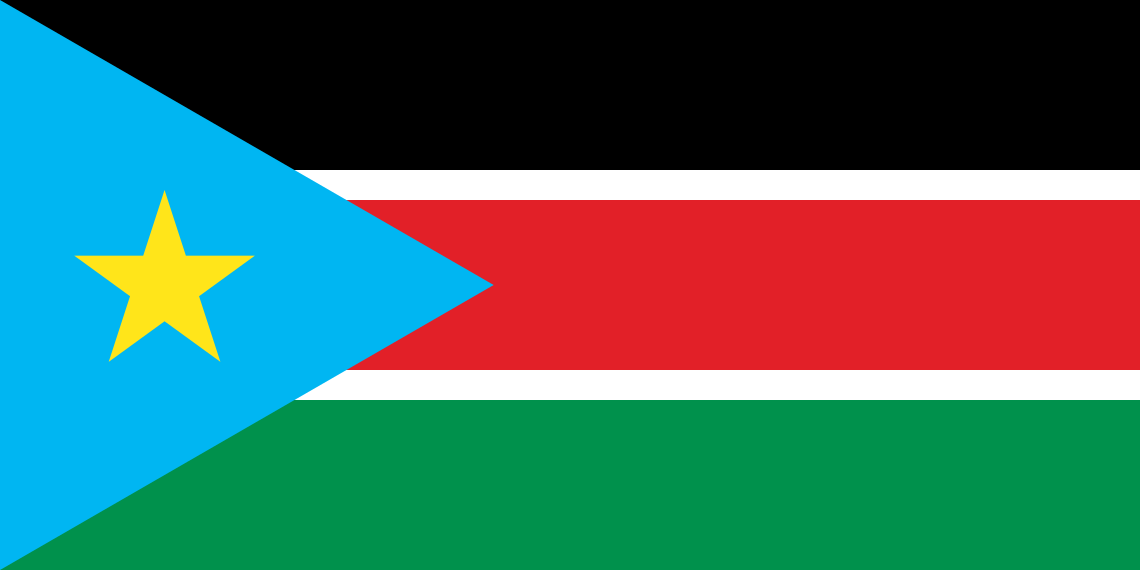
I have the honour to deliver this statement on behalf of the Group of African States. The African Group aligns itself with the statement just delivered by the representative of South Africa on behalf of the Group of 77 and China.
The African Group thanks the President of the General Assembly for holding this high-level plenary meeting of the General Assembly in commemoration of the twentieth anniversary of the World Summit for Social Development.
The African Group would like to seize this opportunity to express its profound satisfaction with the successful conclusion of the United Nations summit for the adoption of the post-2015 development agenda. That was a clear demonstration of the commitment of the international community to take the transformative steps that are needed to move the world onto a resilient and sustainable path in order to realize the future we want. The Group furthermore welcomes the endorsement by the General Assembly of the Addis Ababa Action Agenda, which is an integral part of the 2030 Agenda for Sustainable Development (resolution 70/1). We are convinced that the full implementation of the Addis Ababa Action Agenda is critical for the realization of the Sustainable Development Goals and targets.
At the World Summit for Social Development, the importance of social integration to create a society for all where no one is left behind was recognized. Social inclusion is critical to the achievement of poverty eradication, full employment and decent work for all. Also important is the advancement of social progress for all people regardless of their backgrounds.
The African Group reaffirms the centrality and the indispensability of the institution of the family in Africa and its crucial role in the continent’s political, cultural and socioeconomic development. The African Group applauds the celebration at the United Nations in
2014 of the twentieth anniversary of the International Year of the Family as a way to make concrete efforts to improve family well-being, in particular through policies to tackle family poverty, ensure a work- family balance and support intergenerational relations and solidarity. The protocol to the African Charter on Human and Peoples’ Rights on the rights of older persons in Africa calls on States parties to identify, promote and strengthen traditional support systems, including medical home-based care, to enhance the ability of families and communities to care for older family members and to foster and strengthen intergenerational dialogue and solidarity within their families and communities. Despite that, Africa faces many challenges in the protection and support of the African family owing to widespread poverty and a lack of work-family balance and intergenerational solidarity, which was for generations have been a key characteristic of the family in Africa.
With regard to youth development and empowerment, we recognize the fact that the demographics of the continent make that a major challenge. More than 40 per cent of the population of Africa is below 15 years of age. While Africa is experiencing positive economic growth, progress is slow in the creation of productive employment and decent work, with youth facing both unemployment and underemployment. To address those issues, a number of African countries have developed national youth employment policies and action plans.
The Group recognizes the positive contribution of migrants to inclusive growth and sustainable development. The Group underscores that international migration, which involves youth in search of greener pastures, needs Africa’s cooperation with the international community to ensure safe, orderly and regular migration, with full respect for human rights and the humane treatment of migrants, regardless of their status, of refugees and of displaced persons. There is therefore a need to invest in youth and ensure that the large population of youth is mobilized and equipped to help drive Africa’s integration, peace and development agenda based on inclusive growth and sustainable development. In that regard, the African Group will continue to support the Secretary-General’s Special Envoy on Youth and reaffirms its willingness to work with him in order to increase attention to youth issues.
Past evaluations on the progress achieved by African States towards the implementation of the African Union Plan of Action on the Decade of People
with Disabilities (2010-2019) reveal that an insignificant proportion of the millions of persons with disabilities on the continent has access to care, rehabilitation and education services. Also, many persons with severe disabilities, particularly in rural areas, do not survive due to a lack of supportive services and resources. The economic empowerment and full participation of persons with disabilities can be achieved only through employment and livelihoods and through access, on an equal basis with others, to education, health care, housing and public infrastructure. We call on Member States and the international community to work together for disability-inclusive development and to intensify efforts aimed at promoting and protecting the rights of persons with disabilities in the implementation of the post-2015 development agenda. The African Group endorses the position of the Secretary-General, as set out in his latest report (A/68/95) on that issue concerning the incorporation of the rights, well-being and perspectives of persons with disabilities into the global development frameworks.
With regard to the elderly, the African Union Policy Framework and Plan of Action on Ageing in Africa, adopted in 2002, binds all African Union member States to develop policies on ageing. The African Union recognizes the need for advocacy to improve the adaptation and enactment of the policy at national levels and encourage appropriate consultations with older people in those processes. Furthermore, the protocol to the African Charter on Human and Peoples’ Rights on the rights of older persons in Africa lays down the obligations and duties of States parties in promoting and protecting the rights of older persons.
Many older persons in developing countries are unable to meet their basic expenses and struggle with rising living costs, health-care costs and inadequate nutrition. The Group wishes to give the assurance that it will continue to be actively engaged in all multilateral processes relating to the promotion and the protection of the rights of older persons.
Development has not made a significant impact on the lives of the majority of the population in many African countries, especially marginalized and vulnerable groups. Many countries in Africa continue to face social development difficulties. Although there has been improved economic growth in the region since 2012, it has not created decent and productive jobs at a pace that is equal with the growth in population. Levels of poverty and structural unemployment remain high.
The effects of the global financial and economic crises, the instability of food and energy prices, the continuing burden of the HIV/AIDS epidemic and the emergence of the Ebola virus, as well as geopolitical instability in some countries, environmental disasters and issues of governance, have worsened inequalities, vulnerabilities and exclusion in the region.
In conclusion, the Group stresses that addressing inequality requires broadening the scope of the global partnership for development and that the international trade agenda must support measures aimed at equalizing opportunities for participating in global markets. There is a need to mobilize financial and technological assistance to strengthen developing countries’ scientific, technological and innovative capabilities to move towards more sustainable patterns of consumption and production. We also underscore the need to improve policy coordination across countries in the areas of migration and foreign direct investment. The African Group believes that Member States should renew their commitments to further advance social development by intensifying their efforts to implement the Copenhagen Declaration and Programme of Action, in line with the implementation of the post-2015 sustainable development agenda.


I have the honour to speak on behalf of the States members of the Community of Latin American and Caribbean States (CELAC).
CELAC welcomes the decision of the General Assembly to devote this high-level plenary meeting to commemorating the twentieth anniversary of the World Summit for Social Development and to celebrating the progress made so far and further strengthening the role of social development beyond 2015.
We underscore the importance of the World Summit for Social Development, held in Copenhagen from 6 to 12 March 1995, and welcome the commemoration of the twentieth anniversary of the World Summit that took place during the fifty-third session of the Commission for Social Development and in the Economic and Social Council. After two decades, the Copenhagen Declaration and Programme of Action continue to be an integral point of reference in the field of social development for the international community, as well as at the country level. CELAC members reiterate their strong commitment to achieving social inclusion and integration as one of the three basic and interdependent
dimensions of social development, together with hunger and poverty eradication, as well as the right to full and productive employment and dignified and decent work for all. We reiterate that hunger and poverty in all their dimensions are among of the worst forms of human rights violations. The task of eradicating them is therefore an ethical, political, social and economic challenge for us all.
We are certain that full social inclusion and integration require a renewed commitment on the part of Governments and societies, as an essential requirement for achieving the goal of equitable, inclusive, democratic, multi-ethnic and multicultural societies based on the universal recognition of all human rights, including the right to development, and effective civil, political and economic participation at the national and international levels, in an environment of freedom, inclusiveness, tolerance and respect for diversity.
Our delegations agree that broad additional measures are needed to promote inclusive development strategies designed to achieve a more equitable distribution of the benefits of economic growth and to improve access to basic universal services. In that regard, the social inclusion and integration of persons still living in poverty and those who are marginalized should include addressing the coverage of basic human needs, such as nutrition, universal access to health care, access to drinking water and sanitation, housing, access to quality and inclusive education, as well as full employment and decent work and gender equality, by means of integrated development strategies to improve the quality of life. We believe that the provision of basic social services in those areas must take into consideration the principles of equity, quality and accessibility, and should be considered as a way of fighting poverty and exclusion and promoting social integration.
We will do our utmost to take concrete steps to meet the most pressing needs of humankind, such as by eradicating poverty and inequality and by addressing environmental degradation, including the consequences of climate change, vulnerability to disasters and the loss of biodiversity that is threatening our countries.
Although there is a lot still to be done, CELAC countries have unprecedented experience in the implementation of programmes designed specifically to promote social inclusion and to empower and
encourage the participation of persons living in vulnerable situations. Those programmes have had very positive outcomes. We have shown with our programmes, frequently implemented through South- South and triangular cooperation, that even with limited resources much can be achieved if the political will is there. CELAC has always promoted the rights and dignity of women and girls, indigenous peoples, people of African descent, young people, the elderly, migrants, persons with disabilities and all those in vulnerable or marginalized groups, who are often left out when it comes to benefiting from national and international development gains and who continue to be subject to discrimination and social exclusion.
In that regard, we reaffirm our commitment to promoting our States’ inclusive growth, social progress and inclusion and sustainable development by formulating and implementing national plans, policies and programmes with quantifiable targets and timetables, aimed at ensuring our peoples’ universal enjoyment and exercise of human, civil, political, economic, social and cultural rights, while giving priority to those living in extreme poverty, indigenous peoples, people of African descent, women, children, persons with disabilities, the elderly, migrants and all in vulnerable or marginalized situations or groups.
Young people represent a large percentage of our populations, and it is therefore crucial that they receive sufficient educational opportunities and training to ensure their full inclusion in our societies and their ability to find dignified and decent work. CELAC believes it is vital to work to promote young people’s participation in education programmes at every level, for it is only through education that our countries will be able to build more inclusive and prosperous societies.
The members of CELAC also actively promote full social, political, economic and cultural inclusion and integration for persons with disabilities. We recognize that the Convention on the Rights of Persons with Disabilities is a fundamental instrument for human rights and development.
The CELAC countries actively promote the inclusion of the elderly through expanded social strategies. We believe the international community should pay more attention to the issue of ageing populations, including by promoting and protecting older people’s human rights, and that we should also strengthen implementation of the Madrid International
Plan of Action on Ageing at all levels. In that regard, we would like to highlight the adoption in June of the Inter-American Convention on Protecting the Human Rights of Older Persons. This regional convention is the first legally binding international instrument designed to effectively promote and protect the human rights of the elderly.
The 2030 Agenda for Sustainable Development commits us to working to achieve opportunities and progress for all through clear, specific objectives that respect varying national realities, capacities and levels of development. Our implementation and follow-up must be an unequivocal expression of our commitment to achieving sustainable and inclusive development for our countries. The entire international community’s commitment to addressing our challenges is equally important to expressing the Agenda’s universal nature and to meeting the individual needs of all in order to ensure that none are left behind.
I will now make a statement in my national capacity. My delegation aligns itself with the statement delivered by the representative of South Africa on behalf of the Group of 77 and China, and with my own statement on behalf of CELAC.
Twenty years ago at the World Summit for Social Development in Copenhagen, we recognized, among other things, that eradicating poverty was key to development. This year in particular, which marks the Summit’s twentieth anniversary, we would like to emphasize the full relevance of the Copenhagen Declaration on Social Development and Programme of Action. While we celebrate the progress that has been made in reducing poverty, promoting full and productive employment and fostering social integration, we also believe that the implementation of those commitments has been uneven, and that is why we have not made more progress in eradicating poverty and achieving other social development goals.
Defeating poverty is a moral imperative for humankind. Ecuador believes that, in our fight to reduce poverty, we must come up with processes capable of overcoming inequities. We must move beyond human subsistence goals, which can be measured through market consumption criteria, to fairer goals that take into account our people’s full and collective enjoyment of a life of dignity. The best strategies for reducing poverty are narrowing social distances and overcoming economic, territorial, environmental and cultural gaps.
That is why we are committed to a development agenda that places human beings above capital. My country is concerned about the fact that, all over the world, social interests continue to be subordinate to the interests of big capital. That is what we find when we take stock of the Millennium Development Goals, and even in the failure to meet the commitments of the Copenhagen World Summit for Social Development. The orthodox financial institutions’ traditional recipes and neoliberal doctrines that consider social investment to be an expense still prevail.
We have been working for a number of years in Ecuador on a multidimensional alternative concept to the traditional view of development, known as sumak kawsay — “living well” — involving a life lived with dignity, at one with nature, ourselves and other humans, while also satisfying our basic needs. Ecuador has made a priority of investing resources in social development. Based on that, we have made historic and unprecedented investments in health care, education and early childhood, among other things, while prioritizing collective action and restoring the value of the public good.
In 2013, in support of regional and global efforts to promote the inclusion in society and labour of people with disabilities, we proposed the appointment of a special envoy for disability and accessibility. Ecuador supports the Secretary-General’s decision to endorse that proposal. We will continue to support initiatives within the United Nations system aimed at strengthening efforts in this area. There can be no social development in a society that excludes or ignores the rights of persons with disabilities.
Lastly, we are pleased that, among other examples of progress, the 2030 Agenda for Sustainable Development addresses every aspect of poverty eradication, and that the Sustainable Development Goals emphasize targets relating to equity in every area — social, economic, gender, ethnic, age and territorial. We hope that this will enable us to improve the distribution of income and wealth both within and between societies. We believe it is important, in the framework of the new road map established in the 2030 Agenda, to continue to promote social development and to intensify our efforts to implement the Copenhagen Declaration and Programme of Action.
I now give the floor to the observer of the European Union.

I have the honour to speak on behalf of the European Union (EU) and its member States. The candidate countries Turkey, the former Yugoslav Republic of Macedonia, Montenegro, Serbia and Albania; the country of the Stabilization and Association Process and potential candidate Bosnia and Herzegovina; as well as Ukraine, the Republic of Moldova, Armenia and Georgia, align themselves with this statement.
“We are deeply convinced that economic development, social development and environmental protection are interdependent and mutually reinforcing components of sustainable development, which is the framework for our efforts to achieve a higher quality of life for all people .... [S]ocial development is central to the needs and aspirations of people throughout the world and to the responsibilities of Governments and all sectors of civil society.” (A/CONF.166/9, annex I, paras. 6 and 7)
Those quotes from the Copenhagen Declaration and Programme of Action demonstrate that, to date, it constitutes one of the most comprehensive action plans we have for achieving social development. As the Secretary-General put it in one of his recent reports, the Summit’s uniqueness also lies in the political will shown by Governments to comprehensively tackle social challenges, while recognizing that social development cannot be pursued as a sectoral initiative or in piecemeal fashion, but rather that it requires orienting values, objectives and priorities towards the well-being of all. We remain grateful for the Government of Chile’s initiative in conceiving the Summit, approved by the General Assembly, and for its holding in 1995 in Copenhagen under the auspices of the Government of Denmark.
The twentieth anniversary of the Summit comes at a critical time. Despite progress, people and planet still face formidable challenges. In view of the remaining gaps — including poverty, employment creation, skills development, decent work, social protection and labour rights — there is no question about the continuing relevance and validity of the Copenhagen Summit and its outcome document.
Now, almost 20 years since the World Summit for Social Development, the world stands on the cusp of transformation. The 2030 Agenda for Sustainable Development (resolution 70/1), adopted just a few months ago, constitutes a new universal paradigm for
poverty eradication and sustainable development, and the EU and its member States are fully committed to its effective implementation in the years to come. The 2030 Agenda puts decent work and social protection among its key priorities, and we consider investment in social protection systems to be strategically important in order to effectively activate and enable those who can participate in the labour market, protect those excluded from the labour market, and prepare individuals for potential risks.
The EU founding treaty notes the determination of the member States to “promote economic and social progress for their peoples, taking into account the principle of sustainable development”. While we have made considerable progress, the challenges faced in continuing our work and in implementing the 2030 Agenda should not be underestimated and are reflected in the challenges faced in many other areas of the world.
Looking at the situation inside Europe, we acknowledge that while the economic situation across Europe has improved, serious challenges remain, in particular in the areas of employment and social policy. Risks and challenges are particularly acute regarding youth and long-term unemployment, poverty, inequality, social cohesion and social inclusion. The EU has the ambition to ensure that economic progress goes hand in hand with improving people’s lives. The yearly European cycle of economic policy coordination, called the European Semester, and its tools for monitoring could provide inspiration for the implementation of the new 2030 Agenda. In addition, the mid-term review of our integrated strategy for growth and jobs, the Europe 2020 strategy, will also take into account the 2030 Agenda. The EU will do its utmost to have the new Agenda effectively implemented. We look forward to working with partner countries and organizations around the world towards a fairer and better society.
In closing, looking back at the Copenhagen Declaration and in the light of current challenges, it is important to remind ourselves “that social development is central to the needs and aspirations of people throughout the world” (A/CONF.166/9, annex 1, para. 7) but also
“that there is no question that social development and social justice cannot be attained in the absence of peace and security or in the absence of respect for all human rights and fundamental freedoms” (ibid., para. 5).


I have the honour to deliver this statement on behalf of the Group of Friends of the Family in New York.
This high-level plenary meeting is a timely event as we celebrate the twentieth anniversary of the World Summit for Social Development and the adoption of the 2030 Agenda for Sustainable Development (resolution 70/1). At the World Summit for Social Development held 20 years ago in Copenhagen, the States Members of the United Nations reached an agreement to put people at the centre of development. The Copenhagen Declaration and Programme of Action highlighted the family as one of the main features of an enabling environment based on a people-centred approach to sustainable development. Both documents also recognize the family as the basic unit of society and acknowledge that it plays a role in social development and, as such, should be strengthened.
Social relations and institutions underpin any effort to create more equitable and sustainable societies. We believe that the family is one of the basic societal institutions that play an important role in achieving such social goals as poverty and inequality reduction and the enhancement of the well-being of society. The Group believes that the family plays a key role in social development and is a strong force for social cohesion and integration. Healthy family is an important factor in the balance of the social system and sustainable development of any society. The family is one of the main actors and the primary agent of socialization. It is a key factor in helping its members to integrate into society. Parents actively foster and assess children’s talents, opinions and skills.
The Group of Friends of the Family emphasizes that the family has the primary responsibility for nurturing and protecting children. Children should grow up in a family environment that promotes the full and harmonious development of their personalities in an atmosphere of happiness, love and understanding. A healthy family environment cannot be achieved without States and society being completely engaged in the task of protecting the family. The family is also the main guardian and protector of women, the elderly and the disabled. The family unit is the centre of education for children and youth, for good and for bad. The powerful influence of a positive and supportive parental role in the education of a young person or a child cannot be substituted by any other offering. As we address gender equality and women’s empowerment, family is the agent
of change that can resolve and end discrimination and encourage women’s education. The family, as a model for gender complementarity, could be used to teach the world the value of each gender.
It is very disappointing to witness attempts to withdraw the theme of the family from the United Nations agenda because of a few controversial issues. Although such issues do not have any legal reference in international human rights law, they are regrettably supported and pushed forward by some United Nations entities and Member States. Despite that, our Group will always be committed to promoting the family within the United Nations system. It was also disappointing that the historic resolution on the International Year of the Family was not introduced this year. We express our full support for the resolution to be presented next year.
The Universal Declaration of Human Rights states that the family is a natural and fundamental group unit of society and is entitled to protection by society and the State. In that regard, the Group considers that it is the responsibility of States and the United Nations system to provide all possible support to the institution of the family, especially families with children, in order to protect and strengthen the institution of the traditional family.
Based on the aforementioned family rights and responsibilities, Member States are obliged to create family-friendly policies to support the family, assess such policies and programmes on a regular basis, and make their input on family well- being. The further development of such family- oriented policies — concentrated mainly on health, education, housing and care arrangements and with an intergenerational focus — has gained ground since such policies are considered to be an integral part of overall development efforts in the light of the role of the family in poverty eradication. We emphasize that family issues should be given due attention by all, in accordance with national laws, traditions and religious backgrounds. All cultures and traditions respect the family as the main unit of society and the guardian of the rights of the child.
In conclusion, we believe that the joint efforts of Member States and United Nations entities, as well as public-private partnerships at the national level — including non-governmental institutions, such as non-governmental organizations and the media — will be essential to promoting the role of the
family and improving family culture in society. That all calls for a systematic focus on the role of the family in the context of the implementation of the 2030 Agenda for Sustainable Development.
I now wish to give a statement in my national capacity.
Egypt aligns itself with the statements made the representatives of South Africa on behalf of the Group of 77 and China and South Sudan on behalf of the Group of African States, and with the statement of the Group of Friends of the Family.
Egypt has put social development at the top of its priorities. Egypt’s Constitution gives priority to social development as it responds to the needs and rights of all social groups, including the elderly, women, children, youth and persons with disabilities. Our Constitution stresses the responsibility of the State to ensure social solidarity, social justice and the equality of all citizens before the law in rights, duties and opportunities without discrimination on any basis, including disability. It also stresses gender equality in all civil, political, economic, social and cultural rights, and equal opportunities for all citizens. In the transition from the Millennium Development Goals to the Sustainable Development Goals, it is high time to strengthen social development during the implementation of the 2030 Sustainable Development Agenda.
It is very disappointing to witness attempts to remove the theme of the family from the United Nations agenda because of a few controversial issues. Egypt, however, will always be committed to promoting family values within the United Nations system, as demonstrated by its introduction of a resolution on the protection of the family during the twenty-ninth session of the Human Rights Council, and looks forward to the report to be submitted to the Council at its thirty-first session on the impact of the fulfilment of States’ obligations under international human rights law regarding the protection of the family, the realization of the right to an adequate standard of living for family members, and in particular the role of the family in poverty eradication and fostering sustainable development. In that regard, Egypt emphasizes that family issues should be given special attention by all Member States in accordance with their national laws, traditions and religious backgrounds. All cultures and traditions respect the family as the main unit of the society and guardian of the rights of the child. One half of the global population is under the age of 25, 1.2 billion of whom are between the ages of 15 and 24. For that reason, Egypt is fully convinced that young people are the linchpin of any future sustainable development. Out of that conviction, Egypt has developed a targeted strategy to address youth unemployment. The strategy focuses on building entrepreneurial capacity for young men and women, along with facilitating their access to labour market information and career counselling services. Public employment services have improved their ability to provide career education counselling and job placement for young people. My delegation would like to seize this opportunity to express its appreciation for the tremendous efforts of the Secretary-General’s Envoy on Youth and the Department of Economic and Social Affairs, through its Division for Social Policy and Development, in enhancing youth participation at the national, regional and international levels and in advocacy with young people, fostering multi-stakeholder partnerships and harmonizing youth programmes within the United Nations. Egypt is pursuing the establishment of a national council for older persons. The Egyptian National Council for Disability Affairs is drafting a new disability law in the light of the new gains that people with disabilities have made through the Convention on the Rights of Persons with Disabilities and our Constitution in order to mainstream disability issues as an integral part of its national strategy of sustainable development. In conclusion, social development cannot be smoothly achieved while terrorism is expanding all over the globe. We continue to follow with concern the negative effects of occupation on the social development of the Palestinian peoples in the occupied Arab territories. Egypt is convinced that the inclusion of the social dimension in the 2030 Agenda for Sustainable Development should be properly put in place, in accordance with national priorities.
Ms. Mejía Vélez (Colombia), Vice-President, took the Chair.


It is my pleasure to deliver this statement on behalf of the States members of the Gulf Cooperation Council (GCC).
At the outset, I would like to thank the President of the General Assembly for convening this high-level meeting on the occasion of the twentieth anniversary of the World Summit for Social Development, at which the leaders of the world set an agenda that places human beings at the heart of the development agenda, where they belong.
The achievements realized over the past two decades in social development, following the adoption of the Copenhagen Declaration and Programme of Action, deserve commendation and appreciation and call on the international community to meet the challenges that obstruct efforts for social development. Since the adoption of the social development agenda in 1995, GCC member States have striven to draft policies and plans to foster social development in order to build a prosperous society capable of meeting the needs of this and future generations. They have continued to develop their national strategies, establish effective institutions and support civil-society organizations with a view to ensuring economic, social and human development in which everyone can participate efficiently and effectively. On the basis of our strong belief in the importance of investing in human resources, particularly young people, who are the sole guarantors of the future, members of the GCC have also paid special attention to improving education and equal opportunity to all to receive high-quality education and gain experience.
GCC members have also supported countries and regions in conflict by providing development assistance with a view to reducing the number of children who lack basic education, particularly those living in conflict areas. The contributions of the GCC extend beyond its geographic borders. We have become one of the largest contributors of development assistance, exceeding the 0.7 per cent of gross national income set by the United Nations. We have also contributed to the United Nations Development Programme in all fields, most recently with the launching of the Digital Good platform for humanitarian assistance at the regular session of the General Assembly. The Kingdom of Saudi Arabia has borne the entire $500,000 cost of the project and has provided $500,000 more as an additional contribution.
Undoubtedly, the changes we are seeing today represent not only new challenges but also new opportunities to build the capabilities of young people and promote their contributions in all fields of life. That is why GCC members have launched many initiatives
and made huge investments in educating and training young people and providing them with every opportunity to gain high-quality education and play an important role in development. They have also encouraged civil-society institutions to play an important role in the field of social development by supporting youth education projects, information technology training, literacy programmes for women and the rehabilitation of schools and social centres. GCC member States understand that empowering women would greatly contribute to the realization of social development goals and have therefore developed national strategies and policies that focus on empowering women in all fields, including education, health care, economic and political participation and decision-making.
GCC members attach special importance to the promotion and protection of and respect for the family as the main natural unit of any healthy society. We provide every type of support to families and have worked continuously to create an enabling environment, as we firmly believe that our objectives and needs cannot be achieved without a healthy family as one of the main pillars of sustainable development. We will continue to make such efforts with a view to furthering and strengthening the role and status of the family.
GCC members also accord special importance to the elderly and have enacted national legislation to ensure their rights to relevant social care, housing and health care, as well as programmes to educate those who provide care for the elderly. We have laid down an integrated data-and-information base that serves our national strategies and plans for that sector of the population. We have also ensured free access to all older persons in the fields of work, education, health services, public services and information and communication technologies, in view of their long, rich and useful experience.
With a view to empowering disabled persons, GCC member States have also enacted legislation that guarantees and ensures their rights, access to education, health care, work opportunities, housing and public and private services, with the aim of enabling them to further their abilities and participate in society.
In conclusion, we reiterate our great interest in social development and will pursue concerted efforts at the national, regional and international levels with a view to providing a decent life for all.


It is an honour for me to take the floor while you preside over the General Assembly, Madam President.
(spoke in English)
Italy aligns itself with the statement delivered by the observer of the European Union, and I would like to add the following remarks in our national capacity.
We are here today to commemorate the twentieth anniversary of the World Summit for Social Development, held in Copenhagen in 1995, and to take stock of the implementation of its outcome. We warmly thank the President of the General Assembly for having organized this much-needed event.
Much has already been said about the crucial importance of the 1995 World Summit, the Copenhagen Declaration on Social Development and Programme of Action, in particular its current broad implementation; we cannot but agree. The concept of social development, with its peculiar broad range of themes and interconnections, is and will remain key to achieving a more equal, sustainable and eventually successful world and societies, where elements such as peace, democracy, respect for human rights, poverty eradication, full employment, tolerance, integration, solidarity, gender equality and social justice are established as the points of focus at every moment and everywhere in the world.
In that regard, taking into account that multiple challenges still lie ahead of us 20 years after the Copenhagen Declaration, we believe that the person-centred approach and intergenerational responsibility are concepts that are pivotal to the achievement of those objectives. In fact, only with the former — namely, shrinking the scale of our lens and focusing on persons, viewing them as individuals rather than as mere numbers — can we better understand and tackle their needs and requests, especially for those belonging to the most disadvantaged or vulnerable groups. I am thinking, for example, of disabled persons, to whose needs the forthcoming meeting of the Commission for Social Development will pay special attention, and to whom Italy assigns high priority, as shown by our commitment to the topic at the latest session of the Third Committee.
Furthermore, only with intergenerational responsibility can we steer our action towards a more comprehensive and wise dimension, hammering out durable and
sustainable solutions and leaving a better world to our children. That could not be stated in louder terms than through the adoption of the 2030 Agenda for Sustainable Development (resolution 70/1), whose new take on development marries the principles and goals of the World Summit perfectly and, we trust, will greatly help to achieve them.
We need to take an integrated approach to the challenge of development, in particular by endeavouring to identify the links between its social, economic and environmental dimensions, as acknowledged by the Secretary-General in his report (see A/70/173). Each one of us — adopting the person-centred approach — should assume responsibility in order to provide a concrete follow-up to the objectives of the World Summit. Italy will not fail to do so.


At the outset, please allow me to extend my deepest appreciation to the President of the General Assembly for convening this important and timely meeting to commemorate the World Summit for Social Development. Our delegation associates itself with the statement delivered by the representative of South Africa on behalf of the Group of 77 and China, and the statement delivered by the representative of Egypt on behalf of the Group of Friends of the Family.
It was in March 1995 that world leaders gathered in Copenhagen to discuss the means to overcome the issues and challenges of social development confronting humankind. At that Summit, leaders agreed on a document that to this day we consider to be the most comprehensive action plan for the achievement of social development, based on three key objectives: poverty eradication, the promotion of full and productive employment, and the fostering of social integration. The seminal summit in Copenhagen paved the way for social processes that would bring change within and among countries.
Moving fast forward to 2015, two months ago the world adopted the 2030 Agenda for Sustainable Development (resolution 70/1). In the Agenda, social development is a pillar along with economic development and environmental protection, which together will drive human transformation in the next 15 years. Clearly, the Agenda’s aim to end poverty, eradicate inequalities, build a sustainable planet and ensure a prosperous future require that social justice and well-being be sustained in the long term. In 20 days we will be starting the implementation of the Agenda. We
must set our focus and give priorities and opportunities to all groups in society. Women, children, youth, older persons, including persons with disabilities, and other vulnerable groups are indispensable to the implementation and achievement of the 2030 Agenda for Sustainable Development.
At the World Summit for Social Development, the President of the Republic of Indonesia remarked on Indonesia’s strong commitment to alleviating poverty through human development and social inclusion by strengthening economic development in rural areas; providing decent work and employment opportunities; providing adequate attention to the principles of gender equality and the empowerment of women; and providing quality education for every citizen. In reaffirming our commitment to the Copenhagen Declaration on Social Development and its Programme of Action, particularly the goal of eradicating poverty in the world, Indonesia is committed to pro-poor, pro-job, pro-growth and pro-environment policies. Those commitments are staples of our development strategy and are reflected in the national medium-term development plan, the objectives of which are to promote growth, eradicate poverty, realize the potential of all citizens, and empower the people.
With regard to the empowerment of people, the Government of Indonesia recognizes that all groups bring their unique contribution to development. In that regard, since 2007 the Government of Indonesia has launched several programmes aimed at empowering the most marginalized at the grass-roots level by restoring their dignity and confidence, improving health and the quality of education, developing their skills, improving their livelihoods, and facilitating greater access to economic opportunities and basic services. The Government has been engaging with civil society, the private sector and youth organizations to reach wider communities, especially those that live in rural and remote areas; facilitating and advocating policy changes at the national and subnational levels; mobilizing financial resources and donor engagement; and documenting lessons learned and best practices.
Two other major breakthrough programmes that promote social inclusion have been implemented by Indonesia since 2014. The first is the redirection and reallocation of fuel subsidies to productive activities. Fewer fuel subsidies means more roads and bridges to be built, more job opportunities, and better health and education, as well as the strengthening of other social
development programmes. The second programme is the 2014 Village Law, which entitles villages to extra funds from the central Government. The law is intended to enable villages to become stronger, resilient, advanced, democratic and self-sufficient. It also reflects the importance of the empowerment and active participation of individuals as agents of their own positive change and to ensure that the projects and policies implemented are suitable for them.
We have learned about our successes and shortcomings while implementing the Copenhagen Declaration and Programme of Action, as well as the Millennium Developments Goals. While we are now setting our goals, targets, ways and means of fulfiling our national, regional and global commitments in line with the goals and targets of the 2030 Agenda for Sustainable Development, the Copenhagen Declaration and Programme of Action remain as relevant as ever, particularly in the areas of poverty eradication, full and productive employment and decent work for all, and social integration.
To conclude, please allow me once again to reaffirm Indonesia’s commitment to the fulfilment and implementation of the Copenhagen Declaration and Programme of Action, as well as the 2030 Agenda for Sustainable Development. We believe that strengthening human capacity and resilience is the foundation necessary to achieve socially, economically and environmentally sustainable development for all.


At the outset, allow me to thank the President for convening this high-level meeting to commemorate the twentieth anniversary of the World Summit for Social Development.
Today’s commemoration is of particular importance, especially as it coincides with the commemoration this year of the seventieth anniversary of the foundation of the United Nations, as well as the adoption in September of the 2030 Agenda for Sustainable Development (resolution 70/1). This is therefore an opportunity to reaffirm our collective commitment to achieving the noble goals of the Charter of the United Nations and meeting the aspirations of the peoples of the world.
An evaluation of the Millennium Development Goals shows that tangible progress was made between 1990 and 2015. In 2015, enormous progress has been made towards the achievement of the Goals, which is a testament to the value of a unifying programme
intended to serve humankind. However, despite that progress, poverty continues to affect too many people. Social integration and the goal of full employment still pose major challenges. The yawning gaps between the world’s regions and even within certain States constitute a source of legitimate concern. That should not, however, be synonymous with failure. On the contrary, we share the responsibility for meeting these challenges, which is a collective duty and common responsibility that we cannot shirk.
To that end, the heads of States Members of the United Nations have adopted a new programme for sustainable development to end poverty, combat inequality and injustice, and address climate change by 2030. Morocco takes that commitment very seriously and gives it the highest priority, as we are convinced that the fight against poverty, injustice and climate issues represent a struggle for justice and peace in the world. Morocco is committed to an extensive process of political, economic, social and religious reform in the framework of a real momentum for change at all levels to strengthen the foundations of the rule of law and democracy and to allow for the expansion of spaces for freedom and increased access to education, health care, employment and social protection.
The national initiative for human development launched by His Majesty King Mohammed VI, which celebrates its tenth anniversary this year, has helped to combat poverty, marginalization and exclusion and to reduce interregional disparities. It is a veritable social project insofar as its objective is to promote social development in the country by promoting the reintegration of the poorest populations into the productive fabric, relying on the foundation of the universal values of respect human dignity, firm confidence in oneself and the future, the participation of all in the decision-making process, good governance and the sustainability of the initiatives and projects launched. On that basis, we have opted for a parallel approach to economic development and human development. That initiative allowed Morocco to achieve in 2013 the first Millennium Development Goal, leading international organizations to rank Morocco third among the top five countries of the world to have adopted the best programmes and public utility initiatives.
Morocco’s manifest commitment to the social development process is part of the United Nations policy adopted in that sphere and is in alignment with
United Nations principles in the area of economic, social and cultural rights. Morocco has also focused its social development efforts regionally, in particular with regard to the African continent. Morocco continues to work to strengthen efficient South-South cooperation with the goal of laying the foundation for regional and subregional integration, creating a favourable space for trade, investment and co-development. The projects launched on the occasion of royal visits to many brotherly African countries in the framework of agricultural development, fertilizers, fisheries, medicine, electrification and cement illustrate Morocco’s unique model of South-South and triangular cooperation, which favours partnerships that mobilize funding and generate growth and employment. Similarly, the participation of the Moroccan private sector and civil society has been strongly encouraged. As a result of that policy, Morocco has become the second-largest African investor in Africa and the largest in Central and West Africa.
In conclusion, allow me to stress the following points. Whatever the relevance of the plan for sustainable development, its credibility will depend on our ability to find the necessary financial resources for it. That is why international cooperation must be in step with the new international reality. It must overcome the legacy of the past, geopolitical calculations and prohibitive conditions attached to the obtainment of support.
The issue of peace and security, a condition sine qua non of sustainable development, must rank among our priorities because there can be no peace and security without development and respect for human rights, just as there can be no development without peace and security. That is why conflict prevention and the combat against violence, extremism and terrorism require international mobilization and a vigorous, coordinated and sustainable response. The tragedy experienced by migrants, in particular in the Mediterranean, is rightly seen as a manifestation of the instability and insecurity besetting many countries. Morocco remains in favour of a solution that takes into account the dignity of migrants and the need to guarantee their fundamental rights, tackle the root causes of the phenomenon and to move beyond an approach based solely on security.
There is no single model for designing and measuring development, because beyond the universal values that we share, every region and every country has its own characteristics and its own development model. It will therefore be a matter of understanding how to
trigger transformation within societies, while making their civilizational, cultural, religious, economic and social assets, human capital, resources and intangible capital the driving force of their development, the guarantor of their prosperity and well-being, and the foundation for stability and social peace.
Given its geographical position and strategic choices, the Kingdom of Morocco is involved in all issues and contributes to the resolution of global issues. Be it a question of immigration, human rights, climate change, sustainable development or counter-terrorism, Morocco responds in a tangible manner, making a qualitative contribution to international efforts to confront new and unprecedented global challenges.


First of all, I would like to thank the President for convening this high- level plenary meeting — a timely event given our celebration of the twentieth anniversary of the World Summit for Social Development and the adoption of the 2030 Agenda for Sustainable Development (resolution 70/1). I would also like to express my gratitude to the Secretary-General for his report on the implementation of the outcome of the World Summit for Social Development and of the twenty-fourth special session of the General Assembly (A/70/173), in accordance with resolution 69/143.
Bangladesh aligns itself with the statement made by the representative of South Africa on behalf of the Group of 77 and China.
At the World Summit for Social Development, States Members of the United Nations reached an agreement to put people at the centre of development. The Summit provided an opportunity to the world community to focus its attention, at the highest political level, on the nature and roots of social trends. The Copenhagen Declaration on Social Development and Programme of Action represent a unique consensus on the three objectives of social development, namely, eradicating poverty, promoting full and productive employment and fostering social integration.
During the past two decades, the world has made much progress in the social sector, in particular with regard to poverty reduction. But progress has been uneven across regions and within countries. Major global trends — such as climate change, recurring economic, food and energy crises, and refugee movements — demonstrate that achievements in reducing poverty, creating employment and promoting
social inclusion can be quickly weakened or reversed by economic shocks, natural disasters or political conflicts. Countries are required to design and implement policies and strategies for social integration that should promote gender equality and the empowerment of women, and also to address the specific needs of social groups such as young people, persons with disabilities, migrants and indigenous peoples.
Bangladesh stresses the importance of effectively enforcing labour laws with regard to migrant workers, inter alia, those related to their remuneration, working and health conditions, safe working conditions and their right to freedom of association. We believe that proper attention should be given to the education of girls and the empowerment of women. Women, who represent half of the world’s total population, should be integrated into mainstream economic activities.
We call for the United Nations system to continue to support the national efforts of Member States to achieve inclusive social development in a coherent and coordinated manner. Bangladesh underlines the fact that the fulfilment of all official development assistance commitments is crucial, including the commitment of many developed countries to achieving the target of 0.7 per cent of gross national income for official development assistance to developing countries. In particular, the least developed countries will need special attention and adequate resource flow to boost their social development.
Bangladesh has made commendable progress with respect to most of the social indicators in the past two decades. It has sustained a gross domestic product growth rate of over 6 per cent in recent years, which has played a positive role in eradicating poverty. Our robust growth has been accompanied by corresponding improvement in several social indicators, such as an increase in life expectancy and a lower fertility rate, despite having one of the highest rates of population density in the world. The population living below the poverty line is 24.8 per cent in 2015; it was 56.7 per cent in 1991. In 1990, 66 per cent of children under age 5 were underweight; that rate decreased to 33 per cent in 2014. Significant progress has been made in increasing equitable access to education. The net primary school enrolment ratio in Bangladesh is 97.7 per cent. Bangladesh has already achieved gender parity in primary and secondary enrolment. The proportion of the population with access to safe drinking water and improved sanitation is 98 per cent and 56 per
cent, respectively, the highest among all South Asian countries.
Bangladesh is considered to be the champion with regard to achievement of the Millennium Development Goals, made possible by commitment at the highest political level. For that reason, the Honourable Prime Minister of Bangladesh, Her Excellency Sheikh Hasina, received the United Nations Champions of the Earth Award for her remarkable achievements with regard to the Millennium Development Goals, particularly with regard to the reduction of the child mortality rate in Bangladesh in 2010.
I would like to conclude my statement by urging all stakeholders to renew their commitments to further advancing social development by intensifying their efforts to implement the Copenhagen Declaration and Programme of Action within the context of the 2030 Agenda for Sustainable Development. We believe that the role of the Commission for Social Development should be strengthened as a potential platform for follow-up on the social dimension of the Sustainable Development Goals.


On this auspicious day in which we commemorate the World Summit for Social Development, my delegation extends its warmest gratitude to the President for convening this meeting.
My delegation associates itself with the statements delivered by the representative of South Africa on behalf of the Group of 77 and China, and the representative of South Sudan on behalf of the Group of African States.
It is a pleasure for me to speak at this commemoration, which marks 20 years since world leaders gathered in Copenhagen and collectively agreed on the need to put people at the centre of development. It was in Copenhagen that world leaders pledged to make the conquest of poverty, the goal of full employment and the fostering of stable, safe and just societies their overriding objectives. On that foundation, we formulated the Millennium Development Goals that would guide us towards social inclusion and just and fair societies in which human rights are promoted and protected, and development is enhanced.
Although the world has witnessed the commitment and political will of nations to address profound societal problems, particularly poverty, unemployment and social exclusion, through the Millennium Development Goals, there are manifest gaps and challenges that
will need a more ambitious agenda with clear targets that would enable us to measure progress and achieve even greater progress. That necessitated the adoption of the transformative 2030 Agenda for Sustainable Development (resolution 70/1), which sets 17 Goals and 169 targets to complete that work. The Sustainable Development Goals will guide nations to achieve prosperity, secure the planet’s sustainability for future generations, and unlock resources for investments in education, health, equitable growth and the sustainable use of resources, while promoting and protecting human rights, including the right to development. Having had the honour to chair during that important process, I am confident that if we all fully commit to implementing the Goals, all persons — especially those living in vulnerable situations, such as women, young people, older persons, indigenous peoples and migrants — will have long, healthy lives of dignity and prosperity.
In its efforts to achieve inclusive and sustainable development, the Government of Kenya has made progress in implementing national programmes that continue to expand the participation of women, young people, persons with disabilities and the elderly, and to protect the poor and vulnerable. We have made significant progress, especially in achieving full, universal primary education, and we are on track for the same achievement in secondary education. That has been made possible by Kenya’s promulgation of its progressive Constitution for 2030, which guarantees the right to a free and compulsory basic education to every child and makes the State responsible for ensuring that young people have access to appropriate education and training. Kenya has made great strides in reducing child mortality and combating HIV/AIDS, malaria and other diseases, and has set the pace globally on establishing open data and exploiting information communication technologies, all in the cause of social development and the promotion and protection of human rights.
In order to tackle inequality and unemployment, the Government has allocated resources for implementing social programmes that target the most vulnerable sectors of our population. We have launched credit access initiatives such as funds for youth enterprise development and small and micro-enterprises that target young people, women and persons with disabilities. Such schemes ensure access to affordable credit facilities for entrepreneurship at zero interest in order to spur enterprise, encourage job creation and promote growth.
The rights of persons with disabilities have been given constitutional safeguards aimed at minimizing the barriers to equality of opportunity in all aspects of social, cultural, economic and political life. The Government has introduced an indicator on disability mainstreaming in public services and has prioritized expanded accessibility to built environments and information. Achievements in this area now include a fund to provide the disabled with funds and equipment to set up their own businesses and a cash transfer programme for providing appropriate social security for those unable to support themselves and their dependents. These are also accompanied by free health insurance for all those registered as living with a disability.
The Government of Kenya upholds the rights, welfare and dignity of older persons and values their active contribution to society. It has established a consolidated fund for a cash-transfer programme for older persons who are also poor and vulnerable, and has set up a social protection fund designed to provide access to credit and cash transfers on flexible terms to poor and vulnerable households with individuals over 65 years of age. The elderly are entitled to essential services through an established health and ageing programme aimed at addressing their health concerns.
Like most developing countries, Kenya continues to experience a number of challenges in its efforts to meet some of the Millennium Development Goals, such as eradicating extreme poverty and hunger, achieving environmental sustainability and improving maternal health. Achieving full employment and decent work for all is still our biggest challenge, while unemployment and underemployment are still major obstacles to our full utilization of our human resource capabilities. Such challenges can be addressed only through a revitalized global partnership, and Kenya therefore reiterates its commitment to prioritizing the needs of the poorest and most vulnerable so that indeed no one is left behind.
We recognize that implementing the Sustainable Development Goals will require multi-stakeholder partnerships, voluntary contributions and domestic mobilization, and that developing countries such as Kenya will continue to need cooperation and support in achieving those goals. It will be possible to eradicate extreme poverty in our lifetime — of that we are convinced — but cooperation on the part of the international community and development partners will be crucial.
Kenya would like to add its voice to the emphasis given by the Group of African States to the issue of migrants. We also underscore that the international community must promote and guarantee safe, orderly and regular migration, accompanied by full respect for human rights and humane treatment of migrants, regardless of their status or country of origin.
In conclusion, we would also like to emphasize that global terrorism, violent extremism and the radicalization of young people are emerging as the greatest threats to peace and security in many, if not all, of our countries. We will not achieve the ambitious and progressive goals of the sustainable development platform as long as parts of Europe, Africa and the Middle East are embroiled in conflicts that have displaced millions of people. We need to come together as a world to find lasting solutions whereby the millions of refugees can return to their homes and their children have a chance to survive, thrive and live in peace.


I would like to thank the President for convening this high-level meeting to celebrate the twentieth anniversary of the World Summit for Social Development. Fittingly, this year, which also marked the seventieth anniversary of the United Nations, all Member States committed to a new framework for sustainable development that is meant to eradicate poverty, combat inequality and promote socially inclusive and environmentally sound policies while fully promoting and protecting the human rights of all.
The Copenhagen Summit was a landmark in the international community’s approach to development. It consolidated the notion that development entails more than economic growth and must have people at its core. It recognized the importance of eradicating poverty, promoting decent and productive work and fostering social inclusion as three key priorities in the promotion of social development. In many aspects, it paved the way for the 2030 Agenda for Sustainable Development (resolution 70/1), since social development is now considered one of the three pillars of sustainable development. One very important element addressed in Copenhagen, and reflected in the 2030 Agenda, is the idea that no one should be left behind. That is particularly relevant from the perspective of social development, since it encompasses issues and groups that require our special attention, such as young people, older persons and persons with disabilities.
Young Brazilians account for more than 25 per cent of our population. Government efforts to improve social development cannot succeed if they do not meet the basic needs of the young — health services, education, decent work and the right to freedom from fear and discrimination. In October 2014, Brazil signed the Iberoamerican Convention on Rights of Youth, so far the only legally binding international instrument specifically focused on young people’s rights. Brazil has been a member of the lbero-American Youth Organization since 2010. We recognize the work of the Secretary-General’s Envoy on Youth and welcome other United Nations initiatives aimed at fostering young people’s participation. However, the legal framework for promoting and protecting young people’s human rights is inadequate. The World Programme of Action for Youth remains the only globally agreed-on framework on the issue, and Brazil supports negotiating a treaty on it so that we can make our political commitments legally binding.
As we are all aware, the rapid increase of the elderly as a percentage of the world’s population is one of the most significant demographic trends of the day. By 2050, almost 30 per cent of the world’s population will be 60 or older, an indication of how urgent it is that the international community give attention to realizing the rights of older persons. Brazil recognizes the importance of the Madrid International Plan of Action on Ageing and welcomes the work of the Human Rights Council’s Independent Expert on the enjoyment of all human rights by older persons and the inclusion of older persons in the 2030 Agenda. Nevertheless, explicit references to ageing and the rights of older persons in core international human rights treaties remain few and far between. Consolidating the human rights of older persons in a specific and legally binding document would address their regulation, strengthen their monitoring and realization and foster national policies aimed at better defining States’ responsibilities in the area. A first and significant step towards an international legally binding framework was the adoption on 15 June of the Inter-American Convention on Protecting the Human Rights of Older Persons, which Brazil was one of the first countries to sign. It is an important achievement for our inter-American human rights system, and we hope this regional process will help to create momentum for negotiating a universally applicable convention within the United Nations system.
The full realization of the rights of persons with disabilities is a priority for Brazil, as reflected in the constitutional status that the Convention on the Rights of Persons with Disabilities enjoys in our domestic legal system and in our participation in the Bureau of the Conference of States Parties to the Convention for the biennium 2015-2016. Disabilities disproportionately affect vulnerable populations. Data collected by the World Health Organization and the World Bank shows that disabilities are more prevalent in lower-income countries than in wealthier nations. Disabilities are also more prevalent among those in the poorest wealth quintile and among women and older persons. Children from poorer households and ethnic minority groups are at a significantly higher risk for disabilities. Conversely, the data also shows that persons with disabilities are more likely to be poor. In that regard, one of the great achievements of the 2030 Agenda for Sustainable Development is its inclusion of persons with disabilities. Addressing the concerns of Governments and civil society, the Sustainable Development Goals underscore the needs of persons with disabilities in goals related to education, employment and urbanization.
Over the past decade, Brazil has experienced an unprecedented decline in inequality, thanks to a framework of social protection measures such as minimum wage adjustments above inflation, conditional cash-transfer programmes, expanded social protection systems, investments in vocational and skills training and the promotion of decent work. This was achieved, in great part, through an inclusive definition of the families that the programmes targeted. Our national experience demonstrated that had we not targeted all forms of families — including single-parent, same-sex, no-children and no-parent — we would not have rescued 36 million Brazilians from poverty. Quite the opposite: we would have deepened the vulnerabilities and compounded discrimination they already suffered from.
In conclusion, I would like to reaffirm Brazil’s commitment to the Copenhagen Declaration and the Programme of Action of the World Summit for Social Development, which recognized the need to put people at the centre of development. The principles, goals and commitments enshrined in Copenhagen 20 years ago will continue to guide us in our policies at both the national and international levels.


China would like to thank the President for convening this meeting.
China associates itself with the statement made by the representative of South Africa on behalf of the Group of 77 and China.
The Copenhagen Declaration and Programme of Action adopted by the World Summit for Social Development 20 years ago remain the programmatic documents that have guided global social development efforts since. As such, they are of great historical and continued significance. Over the past 20 years, the international community has achieved many positive results in the area of social development. The global population living in extreme poverty has fallen, and some countries and regions have seen ongoing improvement in social development generally.
However, at the end of 2014 more than 1 billion people were still living below the poverty line and more than 201 million, including 73 million young people, were unemployed. Old and new problems, such as regional conflicts, climate change and emerging public health crises, have become intertwined, posing formidable challenges to social development. It is therefore important that countries demonstrate a sense of historical responsibility and forward-looking vision in their joint response to the current challenges. In that regard, China would like to share the following observations.
First, countries should work to implement the core tasks of social development in a comprehensive, balanced manner, based on their national circumstances. There are no universally applicable policy initiatives in the area of social development. Countries differ in their conditions, development levels and social policy priorities. The Copenhagen Declaration and Programme of Action identified poverty eradication, full employment and social integration as the three core goals of social development. In formulating and implementing social development policies, countries should work to achieve those goals in a comprehensive, balanced manner and ensure equality for their peoples in their enjoyment of the opportunities and fruits of development.
Secondly, countries should build sound social security systems aimed at effectively protecting the rights and interests of vulnerable groups. A well- developed social security system is important for the
positive and healthey development of society. Today, the poor, the elderly and persons with disabilities frequently find that their situation is deteriorating, while the problem of youth unemployment is particularly severe. Countries should embrace the principle of people-centred development, address the protection of vulnerable groups from a development perspective, build sound social security systems and promote social integration.
Thirdly, the international community should strengthen cooperation in social development and increase support to developing countries. Although countries differ in terms of their levels and capacity for development, they all participate in, contribute to and benefit from the global effort to improve social development. The international community should pay greater attention to eliminating inequality among countries and increasing assistance to developing countries, especially African nations and least- developed countries, so as to build their ability for social development and to effectively improve their capacity to implement the 2030 Agenda for Sustainable Development.
Over the 30 or more years that have elapsed since China began undertaking reforms and opening up, we have chosen a path of social development in line with our national conditions, possessing Chinese characteristics. Last month, the fifth plenum of the eighteenth Congress of the Chinese Communist Party adopted the Central Committee’s proposal for formulating our thirteenth five-year plan for national economic and social development. Going forward, the Chinese Government is committed to innovative, coordinated, green and open development that is shared by all, and to engaging in significant social reforms aimed at laying down a solid foundation for building a prosperous society by the year 2020, including accountability for the reduction of poverty and comprehensive medical insurance for major illnesses for urban and rural residents. China will also work hard to implement the various initiatives announced by President Xi Jinping at the United Nations Sustainable Development Summit (see A/70/PV.7, p. 12), focusing on the 10 major cooperative projects between China and Africa, and to positively contribute to cooperation with the efforts of the countries of Africa to implement the 2030 Agenda for Sustainable Development.


We align ourselves with the statement delivered by the representative of South Africa on behalf of the Group of 77 and China.
It is indeed appropriate that 20 years after the world adopted the Copenhagen Declaration and 15 years after the General Assembly’s twenty-fourth special session, we are taking note of the progress that has been made in the area of social development, and particularly so given that we have just adopted the transformative 2030 Agenda for Sustainable Development (resolution 70/1). Both the Copenhagen Declaration and the 2030 Agenda place people at the centre of development. Both documents also recognize that poverty eradication should be the overarching objective of all our efforts. It is also imperative that we base those efforts on the principles of social justice and equity.
Globalization and technology have brought about considerable benefits to global society. However, the lack of equity in global processes continues to worsen inequality among and between countries, including through a widening digital divide. In that regard, we must emphasize that market reforms and structural adjustment programmes should focus on all people.
The Indian model of governance has had a profound impact on our country’s social sector. Our approach is through promoting sustainable and inclusive growth for the welfare and well-being of all our people, leaving none behind. The motto of the Government is sabka saath, sabka vikas — “together with all, development for all”. The Government accords the greatest possible importance to the issues of education for all, gender equality, women’s empowerment, skill development and a digital India. We also focus strongly on rural women, older persons and people with disabilities.
While developing countries continue to address poverty eradication, the developed world must also honour its commitments on development assistance, particularly to least-developed countries. For effective national action, it is essential to have an enabling international environment.
In conclusion, I would like to reaffirm our commitment to the implementation of the Copenhagen Declaration and the outcomes of the General Assembly’s twenty-fourth special session by pursuing people-centred policies of social justice and social development for all.


We would first like to thank the President for organizing today’s meeting.
Our delegation associates itself with the statement delivered by the representative of Egypt on behalf of the Group of Friends of the Family.
In 2015 we are marking a milestone event, the twentieth anniversary of the World Summit for Social Development. It is symbolic that this year also saw the adoption of a sustainable development agenda that lays the groundwork for formulating global policy in that area for the next 15 years. My delegation is pleased that the 2030 Agenda for Sustainable Development (resolution 70/1) includes an appropriate consideration of social issues.
Despite the 20 years that have passed since their adoption, the Copenhagen Declaration and Programme of Action have not lost their relevance. That is clearly demonstrated by the fact that key components of the Copenhagen decisions are woven into the framework of the new Agenda for Sustainable Development, in particular in the 2030 Agenda’s Goals on poverty eradication, full employment, gender equality, education and health services and strengthening international cooperation in those areas.
We support the Secretary-General’s message that no one should be left behind in the implementation of the Agenda for Sustainable Development. In particular, we should give special attention to programmes aimed at ensuring that disabled persons have equality with other individuals when it comes to the full exercise of their rights and freedoms. States must expand their capacities for creating accessible environments as well as meeting other provisions of the Convention on the Rights of Persons with Disabilities. The ageing of populations is also a major challenge. The growing numbers of older persons requires expanding the scope of the support they receive and the Madrid International Plan of Action on Ageing provides us with an effective benchmark in that area.
Regarding young people’s issues, we should be guided by the provisions of the World Programme of Action for Youth. Much of the future of humankind depends on the effective upbringing and education of young people on the values of civic responsibility, tolerance, peaceful ideals and friendship among peoples. We note the key significance of policies aimed at strengthening and solidarity among generations,
including those aimed at making a priority of awareness of traditional family and moral values. We believe that the strength and well-being of families is one of the principal prerequisites for a stable society and long- term sustainable development.
The United Nations and its Commission on Social Development should play a major role in the work of implementing these tasks. It is the Commission, as an effective mechanism for developing common approaches in the area of social policy, that should be the leading forum for sharing experience and best practices for implementing the social elements of sustainable development, including addressing the problems of ageing populations, ensuring equal opportunities for disabled persons, improving the situation of young people and strengthening the role of the family. For our part, in our commitment to the spirit of the decisions of the Copenhagen World Summit for Social Development, we will continue to work to promote a multilateral dialogue on the full range of social issues.


Chile aligns itself with the statements delivered by the representatives of South Africa, on behalf of the Group of 77 and China, and of Ecuador, on behalf of the Community of Latin American and Caribbean States.
I would like to thank the President for convening our commemoration of the twentieth anniversary of the World Summit for Social Development, held in Copenhagen in March 1995, which coincides with the end of the implementation of the Millennium Development Goals, adopted in 2000. Today we are remembering and reaffirming the commitment that the international community made 20 years ago at that historic Summit, whose preparatory committee was chaired by Ambassador Juan Somavía of Chile.
Throughout its history, Chile has sought to build a social order that combines democracy and social justice. In the 1990s, our country was beginning to consolidate its democracy and re-engage with the world. Promoting the World Summit was a way for us to recognize and echo the enormous solidarity the international community showed us during our years under dictatorship, by launching discussion of a matter that was of global concern. The Copenhagen Summit was a milestone in that for the first time it brought together some 117 Heads of State and Government in a discussion of the priorities of social development around the world. Its main drivers were the alarming
indicators of growing inequality, extreme poverty and the marginalization of various sectors of society when it came to development. At the Summit, it was agreed that achieving a strong social policy required social spending and an appropriate institutional framework; the conclusion was that to overcome the social problems the world was experiencing and the challenges that lay ahead, it was above all essential to increase and prioritize social spending within individual States’ budgets and to create and strengthen institutions to establish them as a guiding star for social policies.
In the belief that overcoming poverty is the first crucial test of a country’s political will to build a future for humankind based on cooperation and equality, in 1995 Chile propounded the importance of building a State of equity, founded on basic justice and equal opportunities; in other words, a State that would focus its efforts on social investment, care effectively for its most vulnerable groups and provide opportunities for education and employment.
However, such a State of equity is possible only if it is based on a new type of cooperation. That cooperation should be characterized by a willingness to understand and to set aside definitively the idea of confrontation between rich and poor countries. It should also be characterized by the priority of technical assistance and the promotion of horizontal, South-South and triangular cooperation and agreement among the parties.
This past September, at the Summit of Heads of State and Government convened to adopt the 2030 Agenda for Sustainable Development (resolution 70/1), Chile reaffirmed the commitment made at the Copenhagen Summit to continue to work together with regard to that Summit’s values and objectives. They remain important and are fully reflected in the recently adopted Agenda. We thus reiterated the urgent need to integrate the three pillars of sustainable development: social integration, inclusive economic growth and environmental sustainability. Today, just days from the target date for achieving the Millennium Development Goals and the start of the implementation of the 2030 Agenda, we aspire to carry out structural reforms of the international system, with a view to fostering greater social inclusion and environmental awareness in development strategies, while steadily modifying the norms governing financial flows, investment and indebtedness to make those norms more transparent and fair for all.
The following goals are particularly important to my country: first, the eradication of poverty in all its forms, while understanding that poverty is a multidimensional phenomenon that is both complex and dynamic; secondly, ensuring equitable access to quality education and promoting life-long learning opportunities for all, while guaranteeing access, quality, inclusion and funding; thirdly, achieving gender equality and empowering all women and girls through the implementation of a new gender agenda, to be based on the rights, equality and the autonomy of women, as well as on the prevention and eradication of gender violence; fourthly, the promotion of inclusive and sustainable economic growth, full employment and decent work for all, where the benefits would be experienced by all; fifthly, the promotion of peaceful, effective and inclusive societies that are accountable at all levels, in order to achieve sustainable development. In that regard, we would give priority to ensuring access to justice by all, fighting corruption and putting an end to all types of violence.
Lastly, but no less important, we highlight and recognize the fundamental role played by organized civil society both at the 1995 World Summit for Social Development and in the efforts to define the 2030 Agenda for Sustainable Development, which has strengthened both historical processes. Civil society’s active participation ensures constructive dialogue among Member States, the United Nations system and all the relevant actors of the system to promote constructive, focused and coherent cooperation that is consistent with global agreements.


My delegation aligns itself with the statement made by the representative of Ecuador on behalf of the Community of Latin American and Caribbean States and with the statement made by the representative of South Africa on behalf of the Group of 77 and China.
I would like to thank the President and his team for providing this important opportunity to take stock of how far we have come in the 20 years since the Copenhagen Summit for Sustainable Development, when countries agreed to eradicate poverty, achieve full productive employment and decent work for all and promote social integration.
While today we can point to significant progress in the implementation of the Copenhagen Declaration and the Programme of Action, we also need to recognize that
there is still a long way to go in terms of implementing everything that was envisaged back then and that major challenges remain to the proper implementation of the social dimension of sustainable development. Taking stock of the implementation of the Declaration and the Programme of Action, we see that our actions should be geared towards promoting and achieving social development in the framework of a new sustainable development agenda, while recognizing synergies and the interrelationship and the complementarity among the different dimensions of sustainable development, without reducing our level of commitment and ambition regarding the social pillar.
Since poverty is due to many factors and not just to low personal income, the 2030 Agenda for Sustainable Development (resolution 70/1) establishes that its eradication is the biggest challenge facing the world and constitutes a vital prerequisite for sustainable development. That involves the need to adopt transformative, long-term policies that tackle the chronic causes of poverty and make progress irreversible. Economic growth is necessary but not sufficient to achieve our development goals. Growing inequality, both within and between States, hampers progress towards poverty eradication and achieving the social development goals. Full productive employment and decent work for all is a goal that requires the promotion of labour formalization, the bolstering of social dialogue and the development of focused policies that address the specificities of the various sectors of the population, such as women, youth, the elderly and persons with disabilities, among others. In understanding the dynamics of the current labour market we should not give in to resignation because of labour instability and the deterioration of workers’ conditions. On the contrary, we must establish a climate conducive to promoting the well-being of all workers in an environment that promotes economic growth and development.
Attention to the needs and social inclusion of vulnerable marginalized groups is vital to achieving sustainable development. At Copenhagen we committed to promoting social integration based on non-discrimination, tolerance, respect for diversity, equal opportunities, solidarity, security and the participation of all people. Therefore, in the 2030 Agenda for Sustainable Development we promised that no one would be left behind. That means that all kinds of families — indigenous groups, people of African
descent, farmers, lesbian, gay, bisexual, transgender and intersex groups and all members of society — are a living part of development. This Agenda belongs to them and is geared towards benefiting them without distinction or discrimination. There can be no first- or second-class citizens. There is a commitment to include everyone in the strategies undertaken to fulfil this new engagement on development.
Furthermore, the availability of timely, comprehensive and disaggregated information from States is necessary for greater consistency at the national and international levels in the formulation and the implementation of policies leading to the achievement of balanced results in the field of social development. That is why international cooperation is necessary for the bolstering of national statistical capacities in the collection, the disaggregation and the analysis of data. Strengthening those capacities at both the national and local levels is an essential part of the success of the process of achieving social development with equity.
Twenty years on, progress and challenges that lie ahead must be analysed with a view to reframing not just how we should think about social development, but also what paths we should follow. In view of that, this meeting to commemorate the Copenhagen summit opens a debate that we expect will be built on at the next session of the Commission for Social Development, whose priority theme is the reframing and bolstering of social development in the contemporary world. There we must develop substantive discussions and highlight tangible actions that will allow us to boost the effective and balanced implementation of the social dimension of sustainable development.


First, I would like to begin by saying that Paraguay aligns itself with the statement made by the representatives of South Africa on behalf of the Group of 77 and China, and Ecuador on behalf of the Community of Latin American and Caribbean States.
The World Summit for Social Development, whose twentieth anniversary we are celebrating today, embodied States’ willingness to prioritize poverty eradication, the promotion of full employment and decent work and the goal of social integration on national and international agendas. The commemoration of the Summit in this Hall is both symbolic and necessary and helps us to recall the significance of decisions that have contributed to improving the quality of life
of people around the world. This year, it so happens that we are marking both the seventieth anniversary of the United Nations and the twentieth anniversary of the World Summit for Social Development. In so doing, we have taken a very important step in the right direction by adopting the 2030 Agenda for Sustainable Development (resolution 70/1), whose Goals are tailored to the challenges of our time. Today, the Republic of Paraguay reaffirms its commitment to the three pillars of the Summit and welcomes the upcoming entry into force of a new development agenda that offers a unique opportunity to end poverty in all its dimensions.
While we have tools and important instruments to promote social development and considerable progress has been made throughout the world, reality shows that today, unfortunately, the gap caused by social and economic inequalities is widening both between and within countries. The people of Paraguay is also a victim of that inequality. Despite sustained economic growth in Paraguay in recent years, the main challenge for our Government still lies in ensuring that such growth is inclusive and reaches all sectors of the population, especially women, young people, children, the vulnerable and marginalized elderly, persons with disabilities, indigenous peoples and persons living in rural areas.
I wish to emphasize that Paraguay has been making gradual progress in achieving rights-based social policies. Over the past 15 years, it has gradually increased social investment, particularly in health care and education. In addition, over the past decade Paraguay has made tremendous progress in reducing poverty and extreme poverty through the sustained implementation of various social programmes targeting vulnerable groups and individuals. Eradicating poverty is a national priority for our Government and is crucial to achieving a socially cohesive country without inequalities.
I underscore the value that Paraguay, as a landlocked developing country, attaches to international cooperation as a tool for supporting national development strategies and programmes. That is why we call on our cooperation partners to continue committing resources to developing countries in order to support their national efforts to achieve inclusive social development that will help to improve the standard of living for their peoples.
In conclusion, we believe that achieving social development in our countries is essential to ensuring
that inclusive, equitable and sustainable development becomes a reality throughout the world. We know that, in order to do so, we must ensure that the fight against inequality is a priority. We cannot allow inequality between and within countries to continue to grow because it could jeopardize the progress that has already been made in reducing poverty. Twenty years after the Copenhagen Summit, all of us who wish for a more stable and prosperous world must reaffirm in deeds our commitment to putting people at the centre of development and to leaving no one behind.


My delegation aligns itself with the statements made by the representatives of South Africa on behalf of the Group of 77 and China, and Egypt on behalf of the Group of Friends of the Family.
Our world has undergone dramatic changes since the 1995 World Summit for Social Development. However, it is notable that in the face of all the changes and although progress towards fulfilling the Copenhagen commitments continues to be uneven, the Declaration on Social Development and its Programme of Action remain valid and relevant. They continue to represent a global consensus on eradicating poverty, promoting full and productive employment, and fostering social integration as three key objectives of social development.
As also noted in the report of the Secretary-General (A/70/173), rising inequalities within and between countries, persistently high unemployment rates, particularly among young people, social tensions and conflicts, environmental degradation and the negative impact of climate change are among the complex and interrelated challenges across economic, social and environmental fields that call for a more holistic, coherent, and integrated policy response.
Building on the lessons learned from the implementation of the World Summit for Social Development, as well as the Millennium Development Goals, it is high time to ensure that the three components of social development are fully integrated into the post-2015 sustainable development agenda and the Sustainable Development Goals (SDGs). The recognition by world leaders that eradicating poverty is the greatest global challenge and an indispensable requirement for sustainable development is expressive enough. It is also encouraging to note that nine out of 17 SDGs have strong relevance to social development.
We are hopeful that fulfilling the Goals will improve the overall situation for the elderly, youth, persons with disabilities and the role of the family around the globe. Addressing inequality among and within countries, as outlined in SDG 10, is absolutely essential in realizing such hope.
The imposition of indiscriminate and cruel sanctions, as well as illegal unilateral sanctions against developing countries that have had strong negative impacts on their social development achievements, is a clear example at hand. In fact, for the affected countries, the external environment has not been conducive but rather detrimental. Individuals, especially those belonging to the social groups mentioned, are most vulnerable to such harmful and inhumane measures. They are bearing the brunt of the harm that sanctions impose. This utterly contravenes the promises made by developed countries to support developing countries in their efforts to attain social development goals including those contained in the 1995 Summit outcome document (A/CONF.166/9). They need to be held accountable for the harm and suffering that their policies induce.
Undoubtedly, conflicts have the most destructive impact on the social achievements of affected countries. Conflicts and the ensuing destabilization of Governments as the main sponsors of and actors in the social development field have consequences beyond imagination on the social development gains of countries. Supporting, financing and arming terrorist groups and sending them to countries that are targeted for destabilization is becoming an additional menace, with inconceivable ramifications for the social development of targeted countries and beyond.
The Islamic Republic of Iran attaches the greatest importance to ensuring the social development of its citizens. That is evident in the constant improvement of the country’s Human Development Index over the past four decades. Meanwhile, the special needs of the specific groups identified by the World Summit for Social Development receive exceptional attention from the Government.
The Islamic Republic of Iran gives high priority to ensuring that its senior citizens enjoy the many rights and privileges accorded to them either through cultural and religious values or by law. The role played by the family, volunteers, communities, older persons’ organizations and other community-based organizations in providing support and informal care to the elderly
is indispensable. Meanwhile, a number of services are offered to them by the Government, including the provision of income security, especially for those living in rural and remote areas, the eradication of illiteracy among the elderly and their free access to social and public services, recreation and treatment facilities.
My Government is fully committed to protecting and promoting the institution of the family. Family is an integral part of all national development plans. At both the policymaking and execution levels, special attention is paid to the protection and promotion of the institution of the family. The participation of civil- society and pro-family non-governmental organizations at the policy and implementation levels is encouraged and supported by the Government. The achievements of our young generation against the backdrop of illegal and unjustified sanctions and all other odds have been outstanding and inspiring. Their empowerment and the extensive investment of the Government in the education and health sectors have paid off, and Iran is proudly mastering the cutting-edge disciplines of science and technology. Our Government is, however, cognizant of the fact that more should be done, especially on the employment front.
To conclude, the Government has also placed high priority on empowering persons with disabilities including through education and vocational training. The Government also offers incentives to entrepreneurs to provide proper job opportunities for persons with disabilities.


At the outset, I thank President Mogens Lykketoft for convening today’s meeting. Kazakhstan, along with other partners, was deeply engaged in the Open Working Group that crafted the Sustainable Development Goals (SDGs) to serve as a truly global compass for progress and prosperity. It is clear that the success of the SDGs will depend on the commitment of each Member State.
Kazakhstan is therefore determined to join international efforts to promote peace and stability, eliminate global poverty and inequalities, eradicate severe diseases and mitigate the impact of climate change. Our bid for a non-permanent seat on the Security Council is based on the four pillars of nuclear, food, energy and water security. For that reason, Africa and the small island developing States and developing countries in general are high priorities for Kazakhstan. The new paradigm and transformational shift will need
enormous resources. President Nursultan Nazarbayev of Kazakhstan has proposed that each State consider allocating 1 per cent of its defence budget annually to the United Nations Development Programme Trust Fund for Sustainable Social Development.
Kazakhstan’s economy is being adversely affected by external factors caused by the collapse of world markets that resulted in an overall global economic slowdown. Notwithstanding the risks, new opportunities have been created. As my President announced in his most recent state of the nation address on 30 November, despite the global crisis Kazakhstan will, for the first time, utilize a proactive anti-crisis strategy comprising many approaches. They are the Second Five-Year Plan of Innovative Industrial Development, the State programme for infrastructure development called Nurly Zhol — Bright Path — and the 100 Concrete Steps to implement five institutional reforms, which all aim to eliminate administrative barriers for small and medium-sized businesses and to improve governance, education and health care.
Despite the current challenges, the Government’s social spending has almost tripled in real terms. In 2016, by optimizing budget expenditures, we intend to improve education and health-care systems and increase the salaries of public health-care and social protection workers and civil servants. Monthly scholarship payments and social benefits will increase and solidarity pensions will keep pace ahead of inflation. The most vulnerable groups will have upgraded minimum subsistence norms, with intensive investments in human capital.
The second Road Map for Employment ensures, with increased funding, the stability of the labour market. At the same time, the expansion of micro-loans for entrepreneurial development will be a major focus of our investment policy. With support from our international partners, our training centres will become models in providing technical and vocational education for the entire country. As a responsible Member State, Kazakhstan will remain strongly committed to overall social protection and building resilience nationally and regionally. I do not list Kazakhstan’s development programmes simply to record our indisputable achievements; I do so as an invitation to Member States, especially to the developing countries, with which we are ready to share our experience.
Kazakhstan invites all Member States to participate in the international exhibition EXPO-2017,
under the theme “Future Energy”, to be held in Astana from 10 June to 10 September 2017. The event’s main goal is to highlight equal and fair access to energy sources, mainly for the developing and least developed countries, with an emphasis on inclusiveness, social justice, gender equality and poverty eradication.
In conclusion, I have the honour to inform the Assembly that on 30 November, Kazakhstan became a full-fledged member of the World Trade Organization. This will allow us to deepen interaction with our traditional markets and seize opportunities for establishing mutually beneficial cooperation with new partners.


My delegation aligns itself with the statement made by the Permanent Representative of South Africa on behalf of the Group of 77 and China.
Let me begin by thanking President Mogens Lykketoft for convening this high-level meeting to commemorate the twentieth anniversary of the World Summit for Social Development. It is indeed appropriate and pertinent that we avail ourselves of this opportunity to reaffirm the strongest commitment to the Copenhagen Declaration and Programme of Action. The 1995 Copenhagen Summit was the very first United Nations conference on social development, but the vision and principles of the Summit remain highly relevant and continue to inspire many other international commitments, including the Millennium Development Goals (MDGs) and the outcome document of the United Nations Conference on Sustainable Development, “The future we want” (resolution 66/288, annex). Most recently, our leaders unanimously agreed to place social development at the heart of the 2030 Agenda for Sustainable Development (resolution 70/1).
We have come a long way towards fulfilling the Copenhagen Declaration and Programme of Action and realizing the MDGs. We have, for instance, helped hundreds of millions of people become free of extreme poverty and to meet their most basic needs, including for employment, health care, education, water and sanitation. Respect for all human rights and fundamental freedoms, including the right to development, has been promoted and strengthened. Respect for equality and equity between women and men has been recognized, although not fully. The participation and leadership roles of women in political, civil, economic and cultural rights and development have been much improved, ensured and broadened by various policies and
programmes. The framework for international, regional and subregional cooperation for social development, in a spirit of partnership through the United Nations and other multilateral institutions, has been improved. These are solid foundations for the implementation of the 2030 Agenda for Sustainable Development, which is the key to promoting social progress, justice and well-being in a truly transformative manner.
It is a fact that a number of challenges, new and old, are keeping us from achieving social development for all. Inequality, both within and among nations, is on the rise. Vulnerabilities are becoming more acute, particularly in the face of conflict and violence, global economic fluctuations, disasters and climate change. Women, children, the poor, the elderly, people with disabilities and minorities are bearing the brunt. All this reminds us of the need to take even bolder, more determined and concrete actions to address these challenges.
The past two decades also gave us many valuable lessons. A few stand out as being especially relevant in the follow-up to the Copenhagen Summit and in the implementation of the 2030 Agenda, which Viet Nam wishes to underline.
First, poverty eradication continues to be the greatest global development challenge and is therefore identified as an overarching Goal of the 2030 Agenda. What we have achieved to date is momentous, but much remains to be done, which will require a more comprehensive approach. In Viet Nam, the poverty rate was cut from 58 per cent in 1993 to 8.4 per cent in 2014. For the next period, 2016-2020, Viet Nam will move from one dimension of poverty measurement to a multidimensional approach. Our new poverty-reduction programme will look not only at income, but also at living conditions, health care, education, housing, water and sanitation, and access to information.
Secondly, social policies must be part of overall development policies rather than tools to address the negative impacts of socioeconomic development and crisis. In order to sustain the gains and reach the remaining percentile of social development, we must help the people, especially vulnerable groups, to strengthen their resilience and ability to withstand external shocks and recover from other possible mishaps. Also, Governments should provide social protection at all times to ensure that every person has basic income security and access to essential health
care throughout the life cycle. Viet Nam is taking determined steps in that direction by implementing its social protection strategy until 2020.
Thirdly, as was affirmed in Copenhagen, all efforts to achieve social development should be people-centred. The people are both beneficiaries and the driving force of development. It is crucial to listen to the voices of people, including at the grass-roots level, in the design of major development policies and programmes. Along these lines, Viet Nam endeavours to ensure that the people know, the people discuss, the people implement, the people monitor and the people benefit.
Last but not least, global partnership is indispensable to achieving social development. The international community should strengthen cooperation, including in the fulfilment of development assistance commitments, enhancing capacity-building and technology transfer, and creating favourable conditions for developing countries in formulating and implementing social development policies.
On this twentieth anniversary of the Copenhagen World Summit for Social Development, let us all confirm and reaffirm our commitment to the Copenhagen Declaration and Programme of Action and to working together for the successful implementation of the 2030 Agenda for Sustainable Development.


Allow me first to align myself with the statement made by the observer of the European Union (EU) earlier this morning on behalf of the EU member States.
As the Permanent Representative of Denmark, I feel especially honoured and privileged to speak here today at this meeting on the implementation of the outcome of the World Summit for Social Development, which took place 20 years ago. When the Summit took place in Copenhagen, it was the most significant international conference ever to take place in Denmark, and in fact it was also the largest gathering of Heads of State and Government ever to take place anywhere in the world. I had the privilege, as a somewhat younger diplomat, to participate in the planning and implementation myself, and I can testify to the excitement, the expectations and the extraordinary sense of commitment that was felt in the whole of the conference centre. Denmark was extremely proud to host the Summit. Solidarity and inclusive social development have been defining elements of the development of Danish society as we know it today. It has for more than 50 years been a
defining aspect of our engagement with the poorest countries in the world and it will remain so. Denmark remains among the few countries that provide at least 0.7 per cent of its gross national income in official development assistance.
The main topics of the 1995 World Summit for Social Development were the eradication of poverty, the achievement of full employment for all and the enhancement of social integration. In reflecting on the importance of the Summit and the relevance of its Programme of Action today, allow me to quote from the summit statement of the late President Nelson Mandela of South Africa: “We are gathered here to answer one question: how does humanity cooperate to build a better life for all?” That question remains as relevant and pertinent today as it was 20 years ago. It was that question that we set out to answer in the 1995 Programme of Action, the adoption of the Millennium Development Goals in 2000, the outcome document of the United Nations Conference on Sustainable Development — “The future we want” (resolution 66/288, annex) — and just a few months ago in the historic 2030 Agenda for Sustainable Development (resolution 70/1), adopted at the summit in September 2015.
As part of the 2030 Agenda, the social dimension is solidly reflected as one of the three overarching dimensions, the other two being, as we know, the economic and environmental dimensions. That is of course significant, as social development is now fully recognized as an integral part of sustainable development. Although already recognized in 1995 in Copenhagen, we now have it in the Agenda. If the ambitious 2030 Agenda is to be achieved, it is crucial that we really leave no one behind. That goes for unemployed young people, older persons with low or no income, persons with disabilities, indigenous peoples and any other group at risk of marginalization. Today, we still see in many societies that people are being marginalized or are at risk of marginalization solely because of their gender, ethnicity, sexuality or other factors. We need to ensure that such groups are not left behind, that they are included, and that their human rights are respected and protected.
Creating and ensuring equal opportunities for all citizens is not a simple task, but it is possible. Clearly it is the responsibility of Governments, but it is equally clear that the 2030 Agenda will require Governments to partner with the right range of States and stakeholders,
including the private and social sectors, to get the job done. Allow me to give one example of what that can mean in real life.
The Specialists is a social company in Denmark that makes use of the specific needs, resources and skills that people with autism and similar challenges have. The employees work as business consultants on such tasks as software testing, programming and data entry for the public and private sectors. The company is a leading participant in a global movement to create jobs for people with autism and similar challenges, who otherwise often face exclusion. Today there are branches of The Specialists operating in 11 countries besides Denmark. It is examples like this that we have to build in order to continue the positive developments towards more inclusive job markets, as in this instance, and more inclusive societies overall.
We have come a long way in implementing the Copenhagen Declaration on Social Development and Programme of Action, but clearly we are still short of achieving social development for all. We need to continue the fight against extreme poverty, the exclusion of groups and countries, and the suppression of individuals’ human rights. With the 2030 Agenda, we have the platform. It is both necessary and ambitious. Let us get to work. I assure the Assembly of Denmark’s continued strong engagement in the fight for a better life for all.


At the outset, allow me to thank the President of the General Assembly for convening this meeting to commemorate the twentieth anniversary of the World Summit for Social Development.
The Philippines associates itself with the statement delivered by the representative of South Africa on behalf of the Group of 77 and China.
It has been 20 years since the World Summit for Social Development, and as we transition from the Millennium Development Goals to the 2030 Agenda for Sustainable Development (resolution 70/1), this is a good opportunity to take stock and reflect on what we have achieved, and to renew our commitment to the work that still needs to be done. The eradication of poverty, the promotion of employment and social integration are as relevant today as they were 20 years ago, when the world’s leaders congregated in Copenhagen to reach a new consensus on the need to put people at the centre of development. As we embark on the implementation
of the 2030 Agenda for Sustainable Development, we continue to put people — especially the most vulnerable, such as women, children, indigenous people and persons with disabilities — at the core of development.
The Philippines, once known as the “sick man of Asia”, is today one of the fastest-growing economies in Asia. But the progress we have achieved will be meaningful to the Filipino people only if the benefits of economic growth are felt by all, especially the poor. To make a real difference in their lives, we must be able to provide opportunities for individuals and families to prosper, whether through education, employment or entrepreneurship. Inclusive and equitable growth is our governance platform.
Towards that end, one of the flagship projects in the Philippines for social development is the conditional cash transfer programme called the Pantawid Pamilyang Pilipino Programme. It is a programme that targets families that are most vulnerable to poverty. The programme has two objectives. The first is to provide social assistance, giving monetary support to extremely poor families to meet basic and immediate needs. The second is to promote social development, breaking the intergenerational poverty cycle by investing in the health and education of poor children. As of August, there were almost 5 million households benefiting from the programme, of which almost 600,000 are indigenous households and more than 220,000 have at least one person with a disability. The World Bank recently hailed the programme as one of the largest and best-targeted social safety-net programmes in the world. High compliance rates of more than 95 per cent have been recorded for school attendance of children; health visits of children and pregnant women; and for attendance at family development sessions.
Complementing the Pantawid Pamilyang Pilipino Programme is our Modified Conditional Cash Transfer Programme, which is designed to reach out to families in need of special protection, including itinerant indigenous families, as well as indigenous peoples in geographically isolated and disadvantaged areas. The programme seeks to facilitate their access to health, education and other basic services through direct grants and other support-service interventions. As of June, there were more than 218,000 active registered households, of which more than 168,000 are indigenous peoples’ households.
As a number of the beneficiary households are set to graduate and move from subsistence to self-sufficiency, assistance will be provided through the Sustainable Livelihood Programme to more than 170,000 targeted families through support for micro-enterprises. Over another 210,000 beneficiaries will receive skills and technical vocational training to prepare them for future jobs.
Likewise, the Philippines Department of Social Welfare and Development is set to implement the provision of the senior citizens law or Republic Act 9994, or the Expanded Senior Citizens Act of 2010, mandating a monthly pension for all poor senior citizens nationwide. The pension programme will target more than 1 million senior citizens aged 60 years old and above. The Department of Social Welfare and Development will also increase support for the Supplementary Feeding Programme to help provide nutritious meals to more than 2 million children under 5 years old in day care. With an increased budget allocation in the proposed 2016 national budget, these programmes will be able to broaden their coverage and thereby help more poor families.
The Philippines has mobilized additional resources to implement national action plans on health through the Sin Tax Reform Act of 2012. The policy’s effectiveness in the generation of additional revenue from the sale of liquor and cigarettes to fund public health programmes has been tremendously positive. As of October, the measure has generated more than $3 billion in incremental revenues, far exceeding Government projections. That revenue enabled the national Government to subsidize the health insurance premiums of almost 15 million poor primary members in 2014, up from only 5.2 million registered primary members in 2012.
The Philippines reaffirms its commitment to continuing to prioritize the welfare of its people in order to enable them to participate in all significant political, economic and social processes so that each may do his part to build a more inclusive, equitable and sustainable society. Every citizen can be an agent of change and a force for good in his or her country by respecting the law, paying taxes, raising a proper family and helping those in need. It will mean rising together, even if we have to carry the poor among us until they are not poor anymore.
The meeting rose at 1 p.m.