A/76/PV.51 General Assembly
In the absence of the President, Mr. Blanco Conde (Dominican Republic), Vice-President, took the Chair.
The meeting was called to order at 3 p.m.
75. Strengthening of the coordination of humanitarian and disaster relief assistance of the United Nations, including special economic assistance Report of the Secretary-General (A/76/334) (a) Strengthening of the coordination of emergency humanitarian assistance of the United Nations Reports of the Secretary-General (A/76/74, A/76/320 and A/76/376) Draft resolutions (A/76/L.23, A/76/L.24, A/76/L.26 and A/76/L.27) (b) Assistance to the Palestinian people Report of the Secretary-General (A/76/78)


I am well aware of the fact that I am the first to speak after the break, which reminds me of a time when I was still a handball player. The coach would always bring on the best players after the break, so I am honoured to be here addressing the Assembly this afternoon.
The Kingdom of the Netherlands fully aligns itself with the statement delivered by the observer of the European Union (EU) (see A/76/PV.50).
This morning, EU Ambassador Gonzato described the haunting challenges of today. It is key to support the humanitarian community and maintain international consensus on the key normative frameworks of the United Nations for humanitarian action. Let us make sure that we do everything in our power to get back on track with conscious and collective efforts.
The Netherlands is committed to not losing focus in those collective efforts to get back on track. In that vein, I would like to highlight two topics, namely, the importance of a victim-centred approach to sexual exploitation, abuse and harassment and the role of mental health and psychosocial support to help people and communities get back on track.
First, the Netherlands appreciates the Secretary- General’s leadership in addressing sexual exploitation, abuse and harassment. Progress is noted in the adoption of standards and collaborative action in fielding specialized staff and outreach to communities. However, inter-agency collaboration in securing safe and accessible complaint mechanisms, timely and transparent investigations and, in particular, redress for victims and survivors of sexual exploitation, abuse and harassment is not on par with United Nations principles and values. The widely reported sex-for-jobs scandal during the Ebola response is sad proof.
Addressing the needs of people, particularly those in vulnerable and dependent situations, is at the
heart of humanitarian action. Implementing a victim- centred approach means that we value and respect the communities we work in. It also means that we manage the biggest risks in humanitarian work, namely, long-lasting damage to the people we are meant to protect. Protection from sexual exploitation, abuse and harassment requires stepping up leadership, action and accountability to beneficiaries.
Secondly, I wish to welcome the recognition, in the humanitarian omnibus draft resolution (A/76/L.23) to be adopted today, of the importance of mental health and psychosocial support as a cross-sectoral theme of humanitarian efforts. Mental health is just as important as physical health for people affected by crises in order to be able to withstand the adversities they meet.
Physical needs have to be addressed. Mental health and psychosocial support can never solve a lack of food, shelter, water or medicine, but the non-tangible mental effects of living in a crisis need to be recognized and addressed as well if we want individuals, families and communities to be able to cope, recover and get back on track. That should not be an afterthought. Rather, it should be included in all phases of emergency response, including preparedness, staff training, duty of care and monitoring and learning what works and what does not.
The adoption of a mental health and psychosocial support-inclusive draft resolution today is an important step, but we have many more steps to take. Let us take those steps and be sure to stay on track in ensuring access to mental health and psychosocial support across the globe, in particular to people affected by emergencies.


The delegation of Ukraine aligns itself with the statements delivered by the observer of the European Union (EU) and by the representative of Slovenia on behalf of the EU (see A/76/PV.50). I would like to make the following remarks in my national capacity.
In recent years, we have witnessed a rapid increase in humanitarian needs globally, caused mainly by armed conflicts, climate change and, most recently, the coronavirus disease (COVID-19) pandemic. According to the United Nations Office for the Coordination of Humanitarian Affairs, next year nearly 274 million people around the world will need humanitarian assistance and rely on life-saving aid from the United Nations to survive. Compared with this year, that figure will increase by another 17 per cent.
That is why we should pay attention in particular to systematic work to build a common sustainability system in the field of health, at both the national and global levels, and to make humanitarian responses more complex. One of the lessons we have learned from the COVID-19 crisis is that in times of crisis, human rights challenges become even more acute and come to the fore.
Therefore, in our view, the following actions should be prioritized: the prevention of gender-based violence; post-COVID-19 economic development that is mindful of vulnerable groups, such as people living in poverty, women, older people, people with disabilities, internally displaced persons and children; zero tolerance for conflict-related sexual violence; the protection of civilians in armed conflict; and compensation policies for civilians affected by conflict.
As we have done over the past seven years, we are compelled to draw attention to the humanitarian crisis in the temporarily occupied territories of Ukraine caused by the ongoing armed aggression by the Russian Federation. Since the aggression began in 2014, the civilian population living in the temporarily occupied territories of Ukraine has borne a heavy burden and is experiencing the most harmful consequences of the actions of the Russian Federation’s occupying administrations.
Due to the blocking of checkpoints by those administrations, which are criminally justified by measures to prevent the spread of COVID-19, the citizens of Ukraine living in the temporarily occupied territories of Donbas are unable to gain access to basic requirements and services. Those include, in particular, social welfare and pension benefits; educational, medical, administrative and banking services; and vaccination against COVID-19 with vaccines approved by the World Health Organization.
At the same time, the epidemic situation in those territories remains extremely challenging, as do food- security conditions. That is why the Government of Ukraine calls on the United Nations and international humanitarian organizations to strengthen the monitoring of the medical services, if any, provided to people living in the occupied territories and to report all violations of the human rights to life and health by the occupying authorities. In the meantime, we are grateful that this year, just as in the previous seven years, the humanitarian community has assisted a large number
of people in need in the territories currently beyond the control of the Government of Ukraine.
The Ukrainian Government is taking the necessary measures to minimize the humanitarian consequences of the external aggression and to simplify the relevant administrative procedures. In particular, it approved a strategy for the economic development of the Donetsk and Luhansk regions and a strategy for the integration of internally displaced persons (IDPs). The Ukrainian authorities are also providing compensation for housing destroyed as a result of the Russian armed aggression, modernizing checkpoints with unified standards, providing temporary housing for IDPs, and implementing a preferential mortgage loans programme for housing.
Last year we introduced a special programme for the reintegration of youth from the temporarily occupied territories, focusing on delivering on their right to high-quality higher education. This year we have also created relevant preparatory courses with scholarships. There has been further progress in digitalization and online access to services for IDPs and residents of the temporarily occupied territories.
A national strategy for the protection of civilians in armed conflict was recently drafted, reflecting Ukraine’s commitment to adopting the international standards set by the United Nations and the European Union. At the same time, in order to solve the full range of humanitarian challenges due to the foreign aggression, the Government of Ukraine needs to further expand cooperation with United Nations agencies and other international humanitarian organizations.
That relates to two main areas, namely, a holistic humanitarian response in the temporarily occupied territories and the implementation of development projects in the territories controlled by the Government of Ukraine. Those projects aim to successfully integrate IDPs into host communities and meet their economic, cultural and social needs. In that regard, there is a clear need for further broad support by international partners for the United Nations humanitarian response plan for Ukraine for 2022.
In conclusion, let me underscore that only a united global response to the significant deterioration of the humanitarian situation in the world will allow us to overcome the current unprecedented challenges we all face. It is in that context that we look forward to the Assembly’s adoption by consensus of the relevant
draft resolutions (A/76/L.23, A/76/L.24, A/76/L.26 and A/76/L.27), which Ukraine had the honour to co-sponsor.


Every year, Member States gather here in the General Assembly Hall to review the global humanitarian picture, reflect on the year that has been and look ahead to future challenges. However, having sat here a year ago and having listened to Member States today, there are a number of recurring themes that are, sadly, all too familiar.
Those include escalating and unprecedented levels of need, more crises in more places and lasting longer than before and demand for humanitarian assistance increasingly outstripping resources. As conflict, climate change and the coronavirus disease (COVID-19) continue to drive and dominate humanitarian crises, it is patently clear that we are heading in the wrong direction. We need to see a shift in the way we work, building new partnerships and developing tools to better address and anticipate humanitarian crises. The United Kingdom’s approach going into 2022 will focus on three pillars, namely, prioritization, protection and prevention.
First, we need to prioritize the delivery of effective humanitarian assistance to people in greatest need. That means ensuring that responses better reflect the needs and voices of affected populations, as well as promoting humanitarian responses that are accountable, data- driven and cost-effective.
Secondly, we need to protect the safety, dignity and rights of individuals in situations of conflict and crisis, especially women and girls, who are disproportionately impacted by gender-based violence and abuse. We will protect and champion humanitarian principles, norms and standards while calling out those belligerents disregarding international humanitarian law and preventing populations from accessing the critical assistance they need.
Finally, we need to prevent today’s problems from turning into tomorrow’s crises. The United Kingdom will push for a shift among multilateral, development, peacebuilding and humanitarian partners, including international financial institutions, to better prevent, anticipate and prepare for new crises and rebuild resilience in protracted and recurrent ones. That will include increasing investments in monitoring and early- warning systems and prearranged finance to anticipate
and act ahead of shocks and, in so doing, reduce the scale and impact of humanitarian crises.
Innovation, data and technology are at the heart of tackling those issues and acting early. The United Kingdom will continue to lead in that area, using our world-class capabilities to ensure that aid agencies are able to plan and prepare for disasters, improving the chances of saving lives and reducing suffering.
As we continue to face the combined effects of conflict, climate change and COVID-19, we need to see a holistic multilateral response. That means harnessing big data and artificial intelligence, as well as the expertise of the private sector. It means aiming the power of climate finance at the most fragile contexts. It means that the United Nations must make full use of all the levers at its disposal, with development, peace and political actors all playing their role in preventing crises.
Since 2015, the United Kingdom has provided more than $14.5 billion in humanitarian funding to support the world’s most vulnerable people. We are protecting our life-saving humanitarian spend at more than $1 billion per year. But with needs rapidly outstripping available resources, it is vital that we find new means to meet challenges and use funding in smarter, more efficient ways. By focusing on prioritization, protection and prevention, we will be able to fund more nimble and flexible responses to humanitarian crises. The United Kingdom is investing in earlier interventions to prevent further suffering, reduce growing humanitarian needs and ensure that funding goes further. We call on all Member States gathered here today to do the same.


The United States is pleased to co-sponsor the humanitarian draft resolutions on the strengthening of the coordination of humanitarian and disaster relief assistance of the United Nations (A/76/L.23), the White Helmets Commission (A/76/L.24), the safety and security of humanitarian personnel and protection of United Nations personnel (A/76/L.26) and international cooperation on humanitarian assistance in the field of natural disasters (A/76/L.27). We reaffirm the vital function of the United Nations in responding to humanitarian needs around the globe.
We remain deeply concerned by the unprecedented rise in humanitarian needs. Last week, the United Nations released the Global Humanitarian Overview 2022. The figures are stark and, sadly, engender a sense of déjà vu. More than a quarter of a billion people
are expected to need humanitarian assistance and protection — a significant increase from a year ago, which was already the highest on record.
This year, to date, donors have given almost $18 billion to humanitarian plans. That is very generous, but it amounts to less than half of plans’ financial requirements. We can and we must do more. The United States remains the single largest humanitarian donor, giving nearly $13 billion in humanitarian assistance in the fiscal year 2021. Earlier this week, we also announced our intent to contribute to the Central Emergency Response Fund in 2022.
We continue to play our part in countering the pandemic and prioritizing global health security. Since the outbreak of the coronavirus disease (COVID-19), the United States Government has appropriated more than $16.2 billion in emergency health, humanitarian, economic and development assistance to help Governments, international organizations and non-governmental organizations fight the pandemic. That funding is helping to save lives in more than 120 countries. We call on all our fellow Member States to join us in that solemn commitment by doing their share in supporting the humanitarian response.
As the Administrator of the United States Agency for International Development, Ms. Samantha Power, has emphasized, while more funding from donors is urgently needed, a new approach is essential if we are going to go beyond the all-too familiar calls for more resources, adapt to today’s changing humanitarian landscape, more effectively and efficiently alleviate suffering and address root causes. Our approach must enhance humanitarian diplomacy.
Conflicts account for more than 80 per cent of global humanitarian needs. The often-protracted battles in areas such as Ethiopia, Yemen, Syria, Somalia, South Sudan and Afghanistan overwhelmingly drive humanitarian needs. The parties in fragile or conflict- affected areas too often fail to meet the needs of people and choose violence over peace or respect for human rights and pluralism. The answer to those conflicts is political.
As President Biden has said, we must engage in relentless diplomacy. We need to engage more effectively in diplomatic negotiations regionally, at the United Nations and bilaterally to bring parties together to end conflicts. We must continue encouraging all parties to conflicts and our partners to support inclusive
United Nations-led peace processes. The appointment of United States Special Envoys West, Lenderking and Feltman and acting Special Envoy Godfrey demonstrate our commitment to peace and stability in Afghanistan, Yemen, Ethiopia and the Horn of Africa and Syria.
The United States remains concerned over the continued obstruction of humanitarian access by parties to conflict and attacks on humanitarian workers and other forms of interference that hinder them from reaching those in need, including in Ethiopia, Yemen and Syria. We must support all tools available to promote accountability, consistent with international law, for those responsible for unlawful attacks on medical and humanitarian personnel. Maintaining the safety of humanitarian personnel and unhindered humanitarian access is critical to keeping people alive.
The United States is proud to co-sponsor the draft resolution on the safety and security of humanitarian personnel and the protection of United Nations personnel. That resolution sends an important message of solidarity to the many courageous people who risk their lives to deliver humanitarian assistance to millions of people across the world. We also recognize and support the vital role of local humanitarian actors who risk their lives on the front lines of humanitarian crises to deliver life-saving aid, often in the most dangerous and hard-to-reach environments.
The United States is also proud to co-sponsor the draft resolutions under consideration today that focus on the coordination of humanitarian assistance, the Argentine White Helmets Commission and natural disasters. Those draft resolutions rightly emphasize the importance of partnerships in enhancing our collective response to humanitarian crises.
We must more effectively address obstacles that hinder us from scaling up partnerships vital to expanding humanitarian access and ending conflicts. That includes strengthening partnerships with multilateral and regional financial institutions.
We cannot continue to allow the burdens and risks of dealing with the fallout of conflicts to fall almost entirely to humanitarian organizations. In many crises, humanitarian organizations are not only providing life-saving humanitarian assistance; they are also having to compensate for broken health systems and social safety nets. As Secretary-General Guterres has underscored, we must continue to better align humanitarian, development and peace efforts to
achieve shared goals and make our foreign-aid dollars stretch further and reach more people in need.
A key component of humanitarian work is to protect and assist people in crisis. However, both humanitarian institutions and States have fallen short in preventing and addressing sexual exploitation and abuse. We must prioritize and strengthen our collective efforts to implement prevention and risk-mitigation strategies, support survivors, enhance reporting mechanisms and ensure that perpetrators face the full measure of accountability for sexual exploitation, harassment and abuse of their positions in power. The United States takes that responsibility and those objectives very seriously.
The United States takes this opportunity to reaffirm that resolutions are non-binding documents that do not create or affect rights or obligations under international law. Regarding our position on the Sendai Framework for Disaster Risk Reduction 2015-2030 and technology transfer, we refer to our general statements delivered on 5 and 18 November to the Second and Third Committees, respectively, of the General Assembly at its seventy-sixth session.
Finally, the United States will continue to work towards significant progress on advancing management reforms across United Nations agencies that enhance efficiency, performance and accountability in order to improve humanitarian outcomes for affected populations. With the number and severity of complex humanitarian crises outpacing global capacity to respond, the United States seeks significantly improved coordination within the humanitarian system and joint needs assessment and joint analyses that inform and improve prioritized humanitarian response plans and appeals. The United States expects all United Nations agencies engaged in humanitarian assistance to make significant advances in those areas.
The United States is unequivocally committed to humanitarianism, multilateralism, international cooperation and ensuring that assistance reaches those most in need, including vulnerable populations affected by conflict, the climate crisis and COVID-19.
I thank the President of the General Assembly for the opportunity to share our priorities.


Mexico welcomes the presentation of the draft resolutions on humanitarian and disaster relief assistance provided by
the United Nations (A/76/L.23, A/76/L.24, A/76/L.26 and A/76/L.27). We also acknowledge the efforts of the facilitators throughout the negotiation process.
Mexico takes this opportunity to speak on the draft resolution entitled “Strengthening of the coordination of emergency humanitarian assistance of the United Nations” (A/76/L.23). Thanks to the efforts of Sweden in its capacity as facilitator, the General Assembly is able, in this text, to declare its stance on the humanitarian effects of the coronavirus pandemic, including in relation to mental health, psychosocial well-being and access to vaccines against the novel coronavirus.
We also commend the strengthening of the gender perspective in humanitarian assistance and in all disaster risk reduction activities. That is no casual inclusion, but rather a demonstration of the Assembly’s focus on those who are particularly affected in humanitarian contexts.
However, we deeply regret the fact that the General Assembly failed to reach consensus on the inclusion of a paragraph on the humanitarian impact of armed conflict on children. We note that such obstructionism occurred repeatedly and despite multiple arguments supported by data-based evidence.
Not all humanitarian situations are linked to situations of armed conflict, but all armed conflicts have a major humanitarian impact on civilians. Worryingly, the language in question focused on the humanitarian context of grave violations perpetrated against children in armed conflict.
In other words, interests outside the best interests of the child, a principle enshrined in international human rights law, were imposed. The responsibility of Member States is to safeguard children’s rights, not to seek arguments that refute the principles of international law. The welfare of the more than 19 million children living in armed conflict depends upon it.
We urge Member States to engage constructively to find collective solutions on the basis of expert recommendations developed by actors on the ground. We hope that in future negotiations on such a landmark draft resolution, we will be able to meet our obligations to children and young people, including those who, unfortunately, continue to suffer from the humanitarian impacts of armed conflict.


At the outset, New Zealand would like to thank the facilitators of the draft resolutions (A/76/L.23, A/76/L.24, A/76/L.26 and
A/76/L.27) for their diligent work to find consensus under trying circumstances. New Zealand is pleased to co-sponsor the humanitarian draft resolutions up for adoption.
In previous humanitarian debates of the General Assembly, New Zealand has lamented the rise in global humanitarian needs, the toll that conflict was having on civilians, and flagrant violations of international humanitarian law. Regrettably, little has changed. Humanitarian needs are greater than ever. They continue to be driven by a lack of political will to prevent and end armed conflicts and a lack of respect for the rules of war expressly designed to limit human suffering.
The coronavirus disease continues to exacerbate the global humanitarian situation. It has forced humanitarian actors to find innovative approaches to responses and to further localization. We must not lose sight of those advances and continue to innovate and to strengthen anticipatory action to save lives.
The increase in food insecurity this year is deeply worrying. That 142 million people are facing food crises should motivate us all to uphold human dignity, find political solutions to conflict and commit to lasting, inclusive peace.
In ongoing armed conflicts, we see devastating impacts from the use of explosive weapons in populated areas. At all times, measures must be taken to avoid incidental harm to civilians. If the risk to civilians cannot be sufficiently mitigated, then the use of such weapons in towns and cities must be avoided.
New Zealand remains deeply concerned by the continuous disregard for the legal protections afforded to humanitarian personnel, including medical workers. We strongly condemn all acts of violence, attacks and threats against humanitarian personnel and attacks on hospitals and health facilities.
Climate change also continues to be a humanitarian issue, driving the increase in global need. As an island nation in the Pacific, New Zealand is acutely aware of the threat of climate change. For the Pacific, the impacts are being felt right now — from rising seas to greater intensity and frequency of extreme weather events such as cyclones, flooding and drought.
We should not be measured only by how we respond to the impacts of climate change, but by how sincerely we tackle its root causes. That is why New Zealand champions the objective of the Paris Agreement on
Climate Change for the world to become carbon-neutral in the second half of this century.
New Zealand continues to stress that the sexual and reproductive rights of women and girls in humanitarian settings must be upheld in humanitarian crises. All people, including those in humanitarian settings, have the right to sexual and reproductive health. Sexual and reproductive health care must be available from the onset of a crisis. New Zealand strongly advocates for sexual and reproductive health and rights for women and girls in all their diversity because gender equality and women’s empowerment simply cannot be achieved without it.
We also stress the need for the involvement of people with disabilities in humanitarian decision-making processes. In particular, we point to the role of women and youth with disabilities and the need to strengthen opportunities for them to exercise leadership and decision-making capabilities.
The global humanitarian outlook for 2022 is bleak, with more people than ever in need of life-saving assistance. The humanitarian system must continue to evolve and innovate to remain relevant, strengthen effectiveness and deliver for people in vulnerable situations. We owe it to those affected by conflict and disaster to collectively deliver on our shared commitment to sustainable peace for humankind.


Two years on, the coronavirus disease (COVID-19) continues to cast a long shadow. Too many people are still without access to vaccines, and the threat of new variants is ever present. The continuing impact on incomes and livelihoods is pushing many people in crisis to the brink.
Furthermore, many protracted crises show no signs of abating. In some places, conflict is growing, complicated and exacerbated by climate-induced hazards and the pandemic’s impacts. Australia’s neighbours are particularly vulnerable to disasters, with more than four in five people affected by natural hazards living in the Indo-Pacific. With repeated shocks, many people are unable to build up the reserves that would have previously enabled them to survive a crisis.
Against that challenging backdrop, our key objectives become ever more important. We must continue to stand by those who need our support, leave
no one behind and protect hard-won gains, particularly for women and girls and people with disabilities.
Australia believes that collaboration and cooperation are critical to achieving those objectives. With so much instability and change, it is now more essential than ever that we work together and remain accountable to the standards that underpin our work, including by upholding international law, providing humanitarian assistance impartially and neutrally, preserving humanitarian space from conflict and politics, and combating sexual and gender-based violence.
However, Australia acknowledges that humanitarian assistance alone is not the solution. We must find political solutions, hold warring parties accountable for violations of international humanitarian law and ensure humanitarian access. Australia is increasingly focused on how best to support a shift in the humanitarian system towards earlier humanitarian action in order to save lives, protect assets and safeguard development gains.
We must also progress our work across the humanitarian, development and peace nexus, empower local actors — including women-led organizations — and ensure that women’s sexual and reproductive health rights are respected and that those services made available, accessible and affordable to all.
With the COVID-19 pandemic entering its third year, Australia will continue to be part of the global drive for equitable access to life-saving vaccines. We have committed to sharing 60 million vaccine doses with countries in the Pacific and South-East Asia by 2022. We have already delivered 10 million of those doses. We are also providing end-to-end support, helping countries with health-worker training, cold- chain equipment, public information campaigns and technical advice to policymakers and regulators.
On top of that, Australia is contributing AU$ 130 million to the COVID-19 Vaccine Global Access Facility Advance Market Commitment, which is helping to procure and distribute vaccine doses to 92 eligible low- and middle-income countries.
As we face the grim prospect of humanitarian needs that are larger than ever in 2022, we can take heart from some of the positive changes of the past year. With overseas travel restrictions continuing to hamper mobility, Australia has increasingly relied on local actors to deliver assistance. That has promoted new
spaces for local leadership and a growing influence of local actors in setting priorities and making decisions.
Australia is pleased to be hosting the Asia-Pacific Ministerial Conference on Disaster Risk Reduction in September 2022, in partnership with the United Nations Office for Disaster Risk Reduction. The conference provides an important opportunity to review risk-reduction efforts, to share and learn about innovative and practical solutions and for countries and organizations to make new commitments. Diversity and inclusion, along with science and technology, will be priorities, with a particular spotlight on local action and the island and coastal communities of our region.
Finally, I would like to convey Australia’s sincere appreciation for the humanitarian work of the United Nations and for all the staff who stay and deliver in such incredibly difficult environments.


First of all, I wish to thank the Secretary-General for his reports (A/76/334, A/76/74, A/76/320 and A/76/376), in particular for providing the General Assembly with an overview of key trends in the areas of humanitarian assistance and recommendations to Member States and humanitarian organizations.
In recent years and as we speak, global humanitarian needs are significantly increasing due to the continued spread of the coronavirus disease (COVID-19), conflicts, climate change and frequent natural disasters. We support the important role of the United Nations in coordinating and responding to growing global humanitarian needs.
The humanitarian assistance provided by the United Nations is one of the most tangible impacts of the Organization’s existence, felt by millions of people on the ground around the world. However, we are particularly worried by disturbing trends, which range from rising displacement to a higher humanitarian funding gap, despite the unprecedented generosity of donors contributing $19.11 billion in 2020.
It is clear that the several ongoing humanitarian emergencies in various parts of the world reflect the need for closer coordination and cooperation between Member States on humanitarian assistance. It has become more crucial to intensify our efforts to alleviate the suffering of millions around the world.
In February, the Myanmar military perpetrated an illegal coup against the democratically elected civilian Government. That illegal act by the military triggered
the start of the current human-made economic and humanitarian catastrophe in Myanmar. Soon after the coup, the junta forces unleashed their campaign of terror upon the civilian population, which is resisting their illegal military rule.
The systematic and widespread atrocities being committed by the military junta have left more than 1,300 civilians dead. According to the United Nations High Commissioner for Refugees, as of 6 December, more than 280,000 people have been internally displaced since the coup, in addition to more than 330,000 existing internally displaced persons.
The number of people in need of humanitarian assistance has increased from 1 million in 2020 to 3 million today. The United Nations Development Programme estimates that nearly half of Myanmar’s population will be living under the poverty line by next year due to the combined impacts of the military coup and COVID-19. The World Food Programme (WFP) estimates that 2.6 million people will require food assistance in the next six months. It is worrying to note that only 57 per cent of the total requirements under the 2021 humanitarian response plan for Myanmar has been received so far.
Myanmar is facing a serious humanitarian crisis. The tragedy is happening before our very eyes. Access to vulnerable people who are in need of urgent humanitarian assistance and protection remains extremely limited by the military. There could be no safe or unimpeded humanitarian access in the country whatsoever if the military continues to hold power. It is imperative that we all work to find ways, including through cross-border assistance, to ensure that humanitarian assistance reaches the people in need.
Despite the enormous humanitarian crisis, the military junta continues to commit grave violations of international human rights and humanitarian law. This week alone, the military has burned 11 people to death, including five minors, in Sangiang and rammed vehicles into peaceful protesters in Yangon while they were exercising their fundamental right to peaceful assembly. The junta forces have been attacking education and health-care facilities and personnel and aid workers who do not bow to their illegal rule. Arbitrary detentions also continue.
In the face of rising resistance from civil-defence forces, the military turns to their usual tactic: punishing civilian populations, including the mass burning of
civilian houses and properties, leaving an increasing number of civilians displaced, as demonstrated by the recent events in Chin state.
One of the most serious violations of humanitarian law by the military is the blocking of humanitarian access to people in need of assistance in defiance of numerous calls by the United Nations, including the Security Council. The military has been imposing a policy of severe scrutiny on humanitarian personnel and supplies. Bureaucratic procedures have been weaponized to control humanitarian spaces and the movement of humanitarian actors.
At present, Myanmar is facing a unique situation in terms of the provision of humanitarian assistance. Therefore, I wish to express our sincere thanks to United Nations agencies, including the WFP and the United Nations Office for the Coordination of Humanitarian Affairs, for their best efforts in coordinating and providing humanitarian assistance, as well as rapidly responding to the COVID-19 pandemic. We will continue to support the efforts of the United Nations and the international community in responding to global humanitarian needs.
In conclusion, we, the people of Myanmar, are still counting on the United Nations at this profoundly difficult time. To bring peace and stability and to provide humanitarian assistance to those in need must start with the end of military rule. I appeal once again for an urgent unified international and regional response to help put Myanmar back on the path to democracy. I wish to stress that a lack of decisive and timely action from the international community will further exacerbate the high risks to the safety of the people of Myanmar and lead to a full-blown conflict in Myanmar.


At the outset, we would like to thank the delegations of Argentina, Bangladesh, the European Union and Sweden for facilitating the humanitarian draft resolutions under consideration by the General Assembly today (A/76/L.23, A/76/L.24, A/76/L.26 and A/76/L.27).
The continued failure to address the major root causes of humanitarian situations by preventing violence, persecution and human rights violations continues to drive thousands of people away from their homes, incurring heavy humanitarian and financial costs.
The rising trend in forced displacement, which now exceeds 84 million people around the world, is alarming. The danger of hunger, famine, food insecurity and disease are no less likely compared with the previous year. The coronavirus disease (COVID-19) pandemic has made the global humanitarian situation worse. More people have been driven into poverty, deprivation, isolation and dependency, especially those in conflict situations, such as refugees, migrants and internally displaced persons. We are deeply concerned about the fate of millions of innocent people in Syria, Afghanistan, Myanmar and many other places.
Vulnerable groups, including women and girls, people with disabilities, older people and those with mental-health needs, are heavily affected by worsening conditions. At the same time, respect for international law and international humanitarian law is decline. The humanitarian system is overwhelmed and overstretched.
In view of that grim outlook, the international community has clear responsibilities based on the humanitarian principles of humanity, neutrality, impartiality and independence. Most urgently, the international community must take bold steps to ensure fair and equitable access to and distribution of vaccines against COVID-19. That is significant, especially for populations in conflict settings and those subject to other forms of displacement.
Our actions in addressing humanitarian needs should go beyond emergency humanitarian assistance and also focus on a multi-year agenda for change and transformation. In doing so, emerging trends and risks must be duly taken into account.
The World Humanitarian Summit was a significant opportunity to discuss a new way of thinking in the humanitarian system. We should continue our deliberations on innovative solutions and increase the effectiveness and efficiency of our actions. In that regard, we support United Nations efforts to explore opportunities in terms of using new technologies and data in the humanitarian system. We also need to make use of the existing tools, in particular accountability mechanisms, to better collect data and report on violations.
Turkey has a human-centred focus in the conduct of its international diplomacy. We have traditionally maintained a strong humanitarian approach and continue to provide shelter for the victims of
persecution, oppression, violence and terrorism who take refuge within our borders.
According to the Global Humanitarian Assistance Report 2021, Turkey remained the most generous country in the world in 2020 in terms of the proportion of gross national income spent on international humanitarian assistance. Turkey also ranked the second-largest donor country in the world in 2020, providing more than $8 billion in official international humanitarian aid.
We deliver humanitarian assistance in various parts of the world, with the participation of a wide network of humanitarian and development partners. Our agencies, including the Disaster and Emergency Management Authority, the Turkish Cooperation and Coordination Agency and the Turkish Red Crescent, as well as humanitarian non-governmental organizations, reach millions of people impacted by human-made crises and natural disasters all around the world.
As a proud member of its Advisory Commission since its inception, Turkey is also a consistent supporter and contributor to the United Nations Relief and Works Agency for Palestine Refugees in the Near East. In addition, Turkey currently hosts and addresses the needs of 20 per cent of the total refugee population worldwide. That makes Turkey the largest refugee host country in the world. We have also mobilized our resources to protect the 4 million refugees and migrants in Turkey against COVID-19.
Of those refugees, 3.6 million are Syrians under temporary protection in Turkey. They have access to the same health services as Turkish citizens all across the country for free. While daily economic life is disrupted, we continue to provide monthly allowances to those vulnerable people through cash assistance programmes. Through those policies, we strive to increase the resilience of refugees and reduce their vulnerability while providing dignified living conditions, with a special focus on women and children.
In Syria, we provide care and protection to people who are right across our border, including victims of brutal violence and indiscriminate attacks. In the north-west of the country, the 4 million civilians squeezed into a narrow area along our borders depend on the cross-border humanitarian operations delivered from Turkey. Through those aid mechanisms, in addition to life-saving humanitarian assistance, more than 1.1 million doses of COVID-19 vaccines and more than 165,000 doses of childhood vaccines have
reached Syrians who desperately need them, including Syrian children.
While implementing our comprehensive humanitarian programmes, we are working closely with United Nations humanitarian personnel and other partners in the field in order to reach millions of people. We very much value our partnership and we commend their bravery and commitment.


We thank the Secretary- General for supplying the Assembly with the informative reports on the strengthening of the coordination of humanitarian and disaster relief assistance of the United Nations, including special economic assistance (A/76/334, A/76/74, A/76/320 and A/76/376).
On 23 November, the cabinet of the Federal Government of Somalia declared a state of emergency in the country due to devastating drought, as echoed by President Mohamed Abdullahi Mohamed Farmajo during his televised debate. The drought emergency affects more than 4,279,000 people in Somalia, accounting for nearly 36 per cent of the population. In 66 of the 74 districts, approximately 208,664 people have been displaced as a result of the drought emergency, with figures rapidly increasing across the nation amid another forecast for below-average rainfall in early 2022.
The drought emergency continues to expose vulnerabilities to hazardous risks that have led to the loss of human life and livestock; further insecurity; severe health impacts; and the compounding of existing risk factors such as the coronavirus disease. Furthermore, by the end of the year, 1.2 million children under the age of 5 are expected to be acutely malnourished, with more than 200,000 of them severely malnourished.
The National Drought Response Committee has been heavily engaged in strengthening the coordination and collaboration of a joint response to the drought emergency between the Somali Government and key stakeholders, including humanitarian partners and the Somali private sector, to increase the harmonization of effective response efforts. Despite financial constraints, the Somali Government has managed to pledge $1 million. Government ministers have also agreed to a 20 per cent cut in their monthly salaries until further notice.
We commend the Assembly for its efforts on current and previous resolutions relating to the strengthening
of the coordination of humanitarian and disaster relief aid of the United Nations, including special economic assistance and development. Somalia’s private sector has pledged $2 million to aid those efforts. The Somali diaspora continues to be actively engaged in fundraising efforts, and there is also ongoing communication with traditional and non-traditional donors.
In that regard, we are happy to announce that with the support of the Government of Sweden, the Swedish International Development Cooperation Agency and the World Bank, Somalia’s national emergency operations centre is in the process of being officially operationalized and will be the national coordinating hub of all emergency and disaster response and preparedness activities. Those activities are critical to the realization of the principles enshrined in the Charter of the United Nations. In order to properly manage recurring humanitarian emergencies, the General Assembly must continue to support the development of sustainable institutions that create and implement effective policies according to internationally established standards.
When discussing humanitarian crises, young people are most at risk due to an amalgamation of issues — ranging from a lack of nutrition leading to premature death to prolonged absence from education — stemming from the ramification of those crises. Additionally, as stated in the report of the Secretary-General, flooding in Somalia affected nearly 1.6 million, killing 35 people and displacing 900,000 last year (see A/76/376).
Cyclone Gati is estimated to be the strongest storm on record in Somalia, affecting more than 120,000 people, displacing 42,000 and creating conditions conducive to the further breeding of desert locusts.
That triple threat of cocktail calamities serves as a stark reminder that climate change adversely affects countries in different ways and has complex and interlinked implications, exacerbating existing vulnerabilities.
Somalia acknowledges the United Nations system and humanitarian organizations for their efforts in coordinating and providing humanitarian assistance, as well as rapidly responding to the coronavirus disease (COVID-19). Somalia pays tribute to humanitarian and medical personnel for their dedication on the front lines. Somalia firmly supports the United Nations in
coordinating international humanitarian assistance and global cooperation to combat COVID-19.
In conclusion, while no country is immune to national disasters, no country is destined to suffer them alone.


Israel is proud to co-sponsor several of the draft resolutions under this agenda item (A/76/L.24 and A/76/L.27). We commend the efforts and actions of the personnel of the United Nations humanitarian response system, who work under difficult and often unpredictable and even impossible circumstances.
Over the decades, Israel has delivered assistance to more than 140 countries, saving thousands of lives. We do so even for citizens of countries that sadly do not yet recognize Israel. Often, Israel, with its Home Front Command unit, is among the first on the scene in the wake of earthquakes, floods, famine and other natural disasters. MASHAV, Israel’s Agency for International Development Cooperation, leads our efforts in assistance and development aid worldwide.
Just several months ago, when a powerful earthquake struck Haiti, Israeli teams were dispatched to help supply clean water, energy and medical supplies to help save thousands of lives. Israeli teams were no strangers to Haiti, being among the first on the ground after that country’s devastating earthquake in 2010.
MASHAV also organizes courses each year for participants from developing countries. While many of the courses focus on agriculture and education, others bolster disaster preparedness and teach participants how to foster resilience. They include courses in public health and on how to build medical systems for mass casualty events. Furthermore, MASHAV mainstreams gender equality and women’s empowerment throughout all of those activities.
Israel takes to heart its responsibility as a member of the global community. In the spirit of the draft resolutions under consideration today, we pledge to continue our mission to bring relief to people in need around the world.
As for the remarks made by the Iranian delegation (see A/76/PV.50), it is ironic that Iran — which violates humanitarian and human rights law left and right — would choose to attack Israel, a world leader in humanitarian assistance. The international community must act now with resolve to stop the Iranian threat and
the humanitarian carnage that the Iranian regime always leaves in its wake wherever it tries to spread its malign influence, from the Red Sea to the Mediterranean.


One million Afghan children are at risk of starvation in the coming months, with similar situations in Yemen, Ethiopia, Madagascar, Haiti and numerous other places. There are 45 million people in grave danger of starvation, yet hunger can be stopped, and humankind can dedicate itself to making that happen.
The draft resolutions under consideration today by the Assembly show us that we have the assessments, the means and the road map. We must not be hindered by a lack of commitment. Let us do it today; let us do it now.
There will be no peace nor sustainable development as long as hunger continues to plague millions. Let us decide that it is the primary role of the United Nations to fight hunger now, wherever it exists. Let us do what is necessary to preserve those millions of lives, wherever it is required. Let us get them the food they need.

I now give the floor to the observer of the Observer State of Palestine.

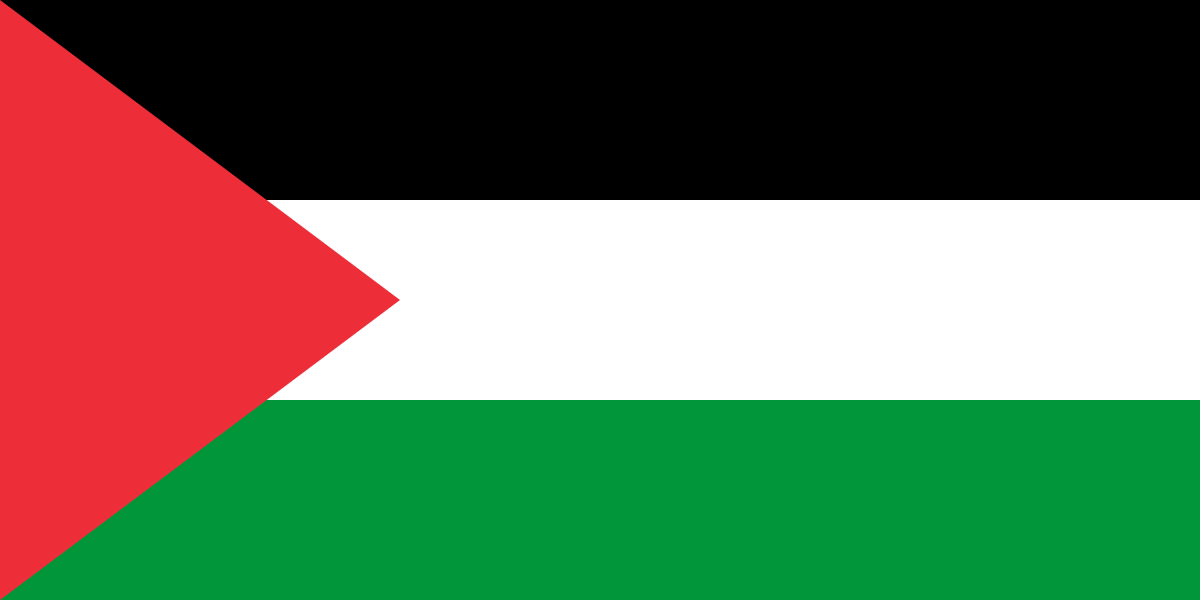
I am honoured to deliver this statement on behalf of the State of Palestine on this very important agenda item on the strengthening of the coordination of humanitarian and disaster relief assistance of the United Nations, including special economic assistance, in particular with regard to sub-item (b) on assistance to the Palestinian people. In that connection, I wish to renew our appreciation to the Secretary-General and his team for the report entitled “Assistance to the Palestinian people” (A/76/78).
Since the first day of the prolonged Israeli occupation, an endless list of violations has included, inter alia, the confiscation of land; the destruction of infrastructure and property, as well as agricultural land and water wells; the demolition of homes; severe restrictions on the movement of persons and goods; the exploitation of natural resources; and the obstruction of Palestinian access to 63 per cent of West Bank, which contains the majority of agricultural land and water sources. Moreover, Israel’s use of 75 per cent of the amount of sustainable groundwater from the coastal aquifer each year leaves very little water available to Gaza. All of those violations undermine the
Palestinian economy and prospects for its rehabilitation and development.
It is unquestionable that the long list of Israeli violations is a result of the inaction and lack of accountability for its gross violations of international law, the Charter of the United Nations and countless resolutions, with more than 800 General Assembly and 80 Security Council resolutions still unimplemented.
The latest report of the Economic and Social Council indicates that the ongoing coronavirus disease pandemic has stricken the already weakened Palestinian economy and compounded the dire economic conditions in the occupied Palestinian territory (A/76/94). The latest report of the United Nations Conference on Trade and Development also reveals that the Palestinian economy contracted by 11.5 per cent in 2020, which is the second-largest contraction since the establishment of the Palestinian National Authority in 1994. Gross domestic product (GDP) per capita in the West Bank also fell by 13.4 per cent in 2020 and, in 2019, registered the lowest growth rate since 2003.
Furthermore, the report of the Economic and Social Council indicates that customs tax and value added tax collected by Israel, the occupying Power, for the Palestinian National Authority represented up to 75 per cent of Palestinian revenues, and that the fiscal stalemate with Israel over clearance revenues weighed heavily on the Palestinian economy. In that regard, we call on the international community to compel Israel, the occupying Power, to end its repeated practice of withholding the taxes and customs revenues due to the Palestinian people. Such a practice constitutes a flagrant violation of international law and the Geneva Convention’s prohibition of the pillaging of the occupied people’s resources. It is clear that the impact of that fiscal loss, the falling GDP per capita, declining trends in foreign aid and persistent extreme levels of unemployment, as well as the persistent fiscal deficit, point to widening and deepening poverty.
We reaffirm our deep appreciation and gratitude to all of the United Nations agencies and programmes that continue to provide vital assistance to the Palestinian people. We also recognize all donors and express our deepest gratitude for their support and assistance.
We fully acknowledge the importance of the consensus position of the General Assembly on the draft resolution entitled “Assistance to the Palestinian
people”, presented and co-sponsored annually by the European Union, and we reaffirm our appreciation in that regard. That support is helping to mitigate the serious challenges being faced by our Government and people in the context of over half a century under Israeli occupation. The situation, long deemed as unsustainable as it is unjust, requires not only urgent humanitarian remedies but equally urgent diplomatic, political and legal mechanisms available to States to compel Israel, the occupying Power, to cease its war crimes and human rights violations and end its regime of prolonged colonial occupation and apartheid policies.
It is high time to take action in order to bring an end to all of the violations perpetrated by Israel against the Palestinian people and to pave a way forward to achieve a just solution based on international law and the relevant resolutions, including Security Council resolution 2334 (2016). We strongly believe that, with the support of the international community and through the resilience of the Palestinian people, we can strive to fulfil our national aspirations and rights in an independent, sovereign State of Palestine with East Jerusalem as its capital.
I give the floor to the observer of the International Committee of the Red Cross.

When the coronavirus disease (COVID-19) pandemic hit two years ago, millions of people faced sudden lockdowns, closed borders, restrictions of movement, the inability to see and visit loved ones, a scarcity of goods, the collapse or near-collapse of health systems, job losses, economic hardship and political and financial instability. Many of those are still a reality for millions of people affected by armed conflict and other situations of violence — a reality that the once-in-a-century public health emergency has not created, but merely magnified.
Paradoxically, wars have not abated, and we are witnessing more conflicts playing out in densely populated urban zones, causing widespread casualties and destruction and disrupting livelihoods and essential services for increasingly large numbers of people. In that challenging context, the International Committee of the Red Cross (ICRC) would like to provide three key messages to States.
First, we cannot afford to allow systems to collapse. Collective action to better protect and support essential
services in conflict-affected areas is a humanitarian imperative. The pandemic brought that into sharp focus, but that imperative is not new. Over the years, humanitarian actors — including the ICRC — have stepped up to support health, water and sanitation systems that are simply too important and too big to fail. Humanitarian action is not only the delivery of emergency assistance and protection in acute crises; it is also activities that are necessary to ensure that populations can meet their basic needs and have access to essential services in protracted conflicts. We will continue trying to prevent disastrous humanitarian consequences for millions of people, but we need help.
We need redoubled efforts to ensure respect for international humanitarian law and to implement General Assembly and Security Council resolutions intended to protect and support essential services, notably Security Council resolutions 2286 (2016), on the protection of the medical mission, and 2573 (2021), on the protection of objects indispensable to the survival of the civilian population.
Moreover, we need others to step in earlier and reliably in fragile and conflict-affected settings. Development actors have a major role to play in enhancing and upscaling the impact of humanitarian action and preventing the collapse of essential services and systems. The ICRC stands ready to continue engaging with those actors, in the spirit of complementarity, as they forge ways to stay and deliver in crisis settings. We will also continue working closely with others to strengthen climate adaptation in places enduring conflict, notably through systemic investments.
Secondly, we cannot leave people behind. Everywhere we work, we see entire areas that are hard to get to and populations facing exclusion or neglect. Whether it is people living in protracted displacement situations, those in detention, those living in remote areas or under the control of non-State armed groups or people facing stigma, ensuring no one is left behind is an ethical imperative and a hallmark of our common humanity. Hard-to-reach areas are where we should be and act. Striving to reach the populations living in those areas and doing our utmost to ensure their protection is an untouchable priority for the ICRC.
We need States to prevent patterns of exclusion and neglect and to find long-term solutions to address those situations as soon as they arise. In that spirit, the ICRC calls for equitable access to vaccines during the
COVID-19 pandemic, within and between countries, and encourages States to seize the opportunity to strengthen health-care delivery in last-mile areas. We also urge all States to continue to work collectively to facilitate and support rapid and unimpeded humanitarian access to populations in armed conflict.
Thirdly, we need space to be able to operate. While there may be different views on what humanitarian space is, there can be little doubt about what happens when there is no humanitarian space. Too often, humanitarian efforts are constrained by sanctions and counter-terrorism legislation. The ICRC condemns acts of terrorism. Such acts negate the basic principle of humanity.
However, we ask for well-crafted and standing humanitarian carve-outs in sanctions and counter- terrorism resolutions and national legislation in order to be able to deliver on our humanitarian mandate and support populations in need. Similarly, we engage with State and non-State actors, recognized and de-facto authorities, not in order to support them or give them legitimacy, but because they are in control of the fate of civilian populations. Those actors have responsibilities and obligations towards civilians, and we have been mandated by States to engage with all duty-holders.
We urge States to build well-framed humanitarian exemptions into sanctions regimes and counter- terrorism measures in compliance with international humanitarian law, so that impartial and humanitarian action is supported and facilitated — not obstructed or criminalized — including in areas controlled by non-State armed groups designated as terrorists or listed under sanctions regimes. Let us not create an era of conditional humanitarianism, for that would threaten humanitarianism itself.
If we fail to safeguard essential services, to protect impartial humanitarian spaces or to defend those in conflict settings and those living through other situations of violence — even now, during a global pandemic and a climate crisis — how will history judge us? All of us, including those living through conflict, yearn for a safer and more secure future, but that future is in jeopardy if we do not act now.
I now give the floor to the observer of the International Federation of Red Cross and Red Crescent Societies.

I thank you, Sir, for giving me the opportunity to address the General Assembly on behalf of the International Federation of Red Cross and Red Crescent Societies and its 192 national societies.
Throughout the year, we have seen world leaders stand at this very rostrum to bring to our attention the dire and compounding consequences of the coronavirus disease (COVID-19) pandemic, the climate crisis and other humanitarian emergencies. Those overlapping and multiplying crises have innumerable wide-reaching and long-term socioeconomic impacts and have exacerbated pre-existing inequities.
It is already clear that COVID-19 has reversed the development gains made in past decades. While some countries might be able to reverse the trend with a strong economic recovery, countries where economic recovery is slow could see continued high levels of poverty for years to come.
We have also heard so many times that we are all in this crisis together and that we are united by our pledge to leave no one behind. Unfortunately, there is far too much rhetoric and far too little action on this. Our Red Cross and Red Crescent staff and volunteers, many of whom work on the front lines, are painfully aware of how certain communities are disproportionately affected by and made more vulnerable to climate change, the pandemic and their secondary impacts.
From the outset, the humanitarian crisis caused by COVID-19 has been defined by profound and persistent inequities, both in terms of who is most at risk and of how the world has responded. Migrants, refugees and persons living in countries with underresourced health systems or in fragile settings are among the least likely to receive the medical, financial and social support that they need.
According to our research, the livelihoods of women were more significantly impacted by the pandemic. Additionally, women were still expected to provide care in their households, including care for people with COVID-19, putting them at a higher risk of infection. Lockdowns and the resulting social isolation removed many of their protections, exposing women to sexual and gender-based violence.
COVID-19 has not happened in isolation. The destructive consequences of this pandemic have revealed
how existing and new crises collide, compounding vulnerabilities. While dealing with COVID-19, many communities around the world continue to suffer from the impacts of climate change. The IFRC estimates that of the 132 extreme weather events that occurred in 2020, 92 overlapped with the COVID-19 pandemic. Those overlapping crises disproportionately affect people in the most vulnerable situations, who suffer the brunt of the climate crisis while dealing with the direct health impacts of COVID-19 or coping with measures to curb its spread.
In addition, the dual crises of COVID-19 and climate change continue to exacerbate mental-health needs and strain health systems. From our operational experience, we know that early and sustained access to mental health and psychosocial support services for people affected by overlapping crises is essential. But to provide those services in a timely and effective manner, we need flexible funding and sustainable investments in public, local and community-based mental health and psychosocial support that meet a range of mental-health needs.
Such events are no longer the exception. Major crises such as climate disasters and pandemics will continue to increase in frequency. Allow me to share three points in that regard.
First, ensuring equitable access to COVID-19 vaccines and essential health services is both a humanitarian imperative and the only way to end the pandemic. Equitable vaccination is a moral imperative, and we must work together in our shared humanity to ensure that everyone gets a vaccine and that high- risk and vulnerable people are prioritized. Ending the pandemic is not just about delivering more vaccines; it is about ensuring that countries have the infrastructure and human resources necessary to get the vaccines into people’s arms, with their full acceptance. We need health infrastructure that enables equitable prevention and treatment, including for those diseases that are already vaccine-preventable and future health emergencies.
Secondly, disease outbreaks begin and end in communities. From our responses to HIV, Ebola, H1N1 and COVID-19, we know that trust and community mobilization are critical in times of global crisis and that we must involve local communities as co-developers from the very beginning and throughout the response. Our 192 Red Cross and Red Crescent Societies are a part of their communities before, during and after
crises. They are uniquely placed to understand and address context-specific barriers and opportunities for meeting the needs of hard-to-reach communities.
Thirdly, COVID-19 has demonstrated the adaptability of humanitarian action without international deployments, owing to lockdowns and mitigation measures. COVID-19 further reinforced the distinct advantage of local organizations, including national Red Cross and Red Crescent Societies, that can respond quickly to the unprecedented challenges of a crisis that encompasses health, economic, human rights and social crises. Our shared responsibility should be to mobilize resources so that local actors can reach last-mile communities and those most affected by the pandemic.
The IFRC and our National Red Cross and Red Crescent Societies are steadfast in our dedication to work alongside Governments and communities to build resilient social-protection systems, enhance the resilience of vulnerable communities to shocks and support and empower local investment and participation.
We have heard the last speaker in the debate on this item.
We shall now proceed to consider draft resolutions A/76/L.23, A/76/L.24, A/76/L.25, A/76/L.26 and A/76/L.27. Delegations wishing to make a statement in explanation of vote before the voting on any or all of the draft resolutions are invited to do so now in one intervention.
The Assembly will now take a decision on draft resolution A/76/L.23, entitled “Strengthening of the coordination of emergency humanitarian assistance of the United Nations”.
I give the floor to the representative of the Secretariat.

I should like to announce that since the submission of the draft resolution and in addition to the delegations listed in A/76/L.23, the following countries have also become co-sponsors of the draft resolution: Afghanistan, Albania, Andorra, Angola, Bangladesh, the Plurinational State of Bolivia, Bosnia and Herzegovina, Burkina Faso, Chad, Colombia, Costa Rica, Ecuador, the Gambia, Ghana, India, Indonesia, Kenya, Madagascar, Malawi, Maldives, Monaco, Nigeria, North Macedonia, Palau,
Panama, Philippines, Qatar, the Republic of Moldova, San Marino, Serbia, Tuvalu, Ukraine and Uruguay.
May I take it that the Assembly decides to adopt draft resolution A/76/L.23?
Vote:
76/124
Consensus
Draft resolution A/76/L.23 was adopted (resolution 76/124).
The Assembly will now take a decision on draft resolution A/76/L.24, entitled “White Helmets Commission: participation of volunteers in the activities of the United Nations in the field of humanitarian relief, rehabilitation and technical cooperation for development”.
I now give the floor to the representative of the Secretariat.
I should like to announce that since the submission of the draft resolution and in addition to the delegations listed in A/76/L.24, the following countries have also become co-sponsors of the draft resolution: Albania, Andorra, Bahrain, Belarus, Burkina Faso, the Central African Republic, Cyprus, Egypt, the Gambia, Ghana, Indonesia, Italy, Jamaica, Jordan, Kazakhstan, Lebanon, Mauritius, Mongolia, Nigeria, North Macedonia, Palau, the Philippines, Saint Lucia, San Marino, Serbia, Seychelles, South Sudan, Timor-Leste, Togo, Tunisia, Turkey and Ukraine.
May I take it that the Assembly wishes to adopt draft resolution A/76/L.24?
Draft resolution A/76/L.24 was adopted (resolution 76/125).
Vote:
76/125
Consensus
The Assembly will now take a decision on draft resolution A/76/L.25, entitled “Assistance to the Palestinian people”.
I now give the floor to the representative of the Secretariat.
I should like to announce that since the submission of the draft resolution and in addition to the delegations listed in A/76/L.25, the following countries have also become co-sponsors of the draft resolution: Andorra, the Gambia, Monaco, San Marino and Serbia.
May I take it that the Assembly wishes to adopt draft resolution A/76/L.25?
Draft resolution A/76/L.25 was adopted (resolution 76/126).
The Assembly will now take a decision on draft resolution A/76/L.26, entitled “Safety and security of humanitarian personnel and protection of United Nations personnel”.
I now give the floor to the representative of the Secretariat.
Vote:
76/126
Consensus
I should like to announce that since the submission of the draft resolution and in addition to the delegations listed in A/76/L.26, the following countries have also become co-sponsors of the draft resolution: the Gambia, Guatemala, Jordan, Palau, Papua New Guinea, Rwanda, San Marino, Serbia, South Sudan, Tunisia and Ukraine.
May I take it that the Assembly wishes to adopt draft resolution A/76/L.26?
Draft resolution A/76/L.26 was adopted (resolution 76/127).
The Assembly will now take a decision on draft resolution A/76/L.27, entitled “International cooperation on humanitarian assistance in the field of natural disasters, from relief to development”.
I now give the floor to the representative of the Secretariat.
I should like to announce that since the submission of the draft resolution and in addition to the delegations listed in A/76/L.27, the following countries have also become co-sponsors of the draft resolution: Albania, Andorra, Armenia, Australia, Belgium, Bosnia and Herzegovina, Bulgaria, Canada, Croatia, Denmark, Finland, France, Germany, Greece, Iceland, Ireland, Israel, Italy, Japan, Malta, Mexico, Monaco, Montenegro, the Netherlands, New Zealand, Norway, Palau, Poland, Portugal, the Republic of Moldova, Romania, the Russian Federation, San Marino, Serbia, Slovenia, Sweden, Switzerland, Turkey, Ukraine, the United Kingdom and the United States.
Vote:
76/127
Consensus
May I take it that the Assembly decides to adopt draft resolution A/76/L.27?
Draft resolution A/76/L.27 was adopted (resolution 76/128).
Before giving the floor for explanations of position after the voting, may I remind delegations that explanations are limited to 10 minutes and should be made by delegations from their seats.


It is an honour for me to deliver this statement on behalf of the members of the Gulf Cooperation Council (GCC): the United Arab Emirates, the Kingdom of Saudi Arabia, the Sultanate of Oman, Kuwait, Qatar and my country, Bahrain.
The States members of the GCC would like to express their thanks and appreciation to the delegation of Sweden for having submitted draft resolution A/76/L.23. The delegations of the GCC States joined the consensus on this draft resolution, entitled “Strengthening of the coordination of emergency humanitarian assistance of the United Nations” based on the importance of the relevant issue.
Concerning sexual and reproductive health issues as well as sexual rights, in particular given the content of paragraphs 62 and 63 of the draft resolution, our States consider these issues in line with our national legislation and the religious and cultural values of our society.


Our delegation joined the consensus on the adoption of resolution 76/127, entitled “Safety and security of humanitarian personnel and protection of United Nations personnel”.
Our position on the International Criminal Court (ICC) remains the same. We are firmly convinced that the work of that body continues to be ineffective and excessively one-sided. For that reason, Russia withdrew its signature in 2016 from the Rome Statute after it became clear that the ICC had not lived up to the hopes placed in it and had not become an authoritative and independent international legal body.
On that basis, our delegation disassociates itself from the thirty-second preambular paragraph and
operative paragraph 8 of the resolution and does not consider itself bound by its provisions.
Vote:
76/128
Consensus


Egypt shares the growing concern of the international community over the exacerbation of humanitarian crises in some regions of the world owing to armed conflict, instability, natural disasters and health crises.
My country’s delegation would like to thank the delegation of the Kingdom of Sweden for having submitted resolution 76/124, entitled “Strengthening of the coordination of emergency humanitarian assistance of the United Nations”, under agenda item 75(a).
Egypt joined the consensus on the adoption of the resolution. However, my country’s delegation reiterates that operative paragraphs 62 and 63 of the resolution on the sexual and reproductive health must be in accordance with national laws and legislation as well as the religious and cultural values of a society.


The Philippines dissociates itself from preambular paragraph 32 and operative paragraph 8 of resolution 76/127, entitled “Safety and security of humanitarian personnel and protection of United Nations personnel”, and all other paragraphs in other resolutions making reference to the International Criminal Court (ICC).
The Philippines withdrew from the Rome Statute effective 17 March 2019. It is our principled stand against those who politicize human rights and disregard our country’s independent and well-functioning organs and agencies.
Notwithstanding our withdrawal from the Rome Statute, the Philippines reaffirms its commitment to protecting humanitarian and United Nations personnel and to apply the full force of the law against persons who attack them.
The Rome Statute is anchored in the principle of complementarity, not substitution. It recognizes that States have the first responsibility and right to prosecute international crimes and that the ICC may exercise jurisdiction only where national legal systems fail or are unable to do so. Since we are able and willing and our courts are fully functioning, we do not accept the ICC as a substitute for our national courts.


Hungary wishes to deliver an explanation of position with regard to resolution 76/128, entitled “International cooperation on humanitarian
assistance in the field of natural disasters, from relief to development”.
Hungary remains concerned about the increasing impact of natural disasters, resulting in loss of life worldwide, food insecurity, water- and sanitation-related challenges, shelter and infrastructure losses as well as displacement. For those reasons, Hungary joined the consensus on the resolution.
At the same time, we would like to take this opportunity to put on record our position concerning the thirteenth preambular paragraph, which makes reference to the Global Compact for Safe, Orderly and Regular Migration. We would like to recall that Hungary did not endorse the Compact and does not participate in its implementation. Therefore, we cannot accept any reference to the Compact in international documents.
In that respect, Hungary would like to disassociate itself from the thirteenth preambular paragraph of the resolution.
We have heard the last speaker in explanation of position.
Before giving the floor to speakers in the exercise of the right of reply, may I remind members that statements in the exercise of the right of reply are limited to 10 minutes for the first intervention and to five minutes for the second intervention and should be made by delegations from their seats.
False accusations were made by Ukraine against my country that are devoid of any common sense. Unfortunately, they form the whole basis of Kyiv’s domestic and foreign policy. We do not want to waste any time on further addressing those lies. Instead, we would note the following.
The number of violations of the ceasefire regime by Ukraine since the 2020 signing of the additional measures to strengthen that cessation of hostilities has approached 90,000. The Special Monitoring Mission of the Organization for Security and Cooperation in Europe has noted that 75 per cent of the incidents that claimed victims among the civilian population and an absolute majority of violations against civilian infrastructure objects since the beginning of this year have taken place on the territory of the Luhansk and Donetsk people’s republics.
Of course, there is nothing here to comment on, and, as we understand it, the importance of documenting those violations was voiced by our Ukrainian colleague himself — how self-critical of him.
Given the total blockade of the population of Donbas in November, a decree was issued by the President of the Russian Federation on the provision of humanitarian assistance to the peoples of the separate areas of the Donetsk and Luhansk oblasts of Ukraine, dictated by concerns over human rights and the principles and norms of international humanitarian law, and was adopted as an exceptional measure until a political settlement has been achieved to the situation. Russia will continue to provide humanitarian assistance to the residents of Ukraine, taking into account the significant number of Russian citizens who live there.
We underscore that in accordance with paragraph 11 of the package of measures for the implementation of the Minsk agreements, Donbas, within the context of the legislation on special status, will have the right to engage in transborder cooperation with regions of the Russian Federation, and Kiev must do everything to facilitate that.
Russia’s actions do not contravene the Minsk agreements, unlike the steps taken by the Ukrainian authorities and those countries that instead of humanitarian assistance are considering sending forces for direct military and technical support to Ukraine.


Today the representative of the Israeli regime made baseless and unfounded allegations against my country. The dissemination of false and fabricated accusations against the countries of the region, particularly the Islamic Republic of Iran, has long been a standard practice of Israel’s, with the exclusive purpose of cancelling its crimes and brutality against innocent Palestinian people.
Nevertheless, it is quite evident that no amount of disinformation and manufactured crises can cover up the regime’s criminal nature as well as the expansionist and warmongering policies that it has pursued over the course of the past 70 years.
Israel, in flagrant violation of international law and with total disregard for all relevant United Nations resolutions, continues to violate the fundamental rights and dignity of the Palestinian people and other Arabs living under its occupation. As a result, Palestinians are
deprived of their land and property, possibly evicted and subjected to violence, terror and intimidation. Meanwhile, the right of the Palestinian people to self- determination has been totally negated under the title of “one Jewish State”.
Worse still, under the current challenging circumstances and as the international community focuses on mitigating the serious effects and consequences of the coronavirus disease pandemic, the Israeli regime continues to exploit this period to accelerate its illegal settlement activities and annexation scams and to further strengthen its military occupation. Simultaneously, the inhuman and suffocating blockade on the Gaza Strip continues to deepen the severity of the humanitarian crisis and inflict misery on the Palestinian civilian population there.
At the regional level, the continued occupation of the territories of the occupied Syrian Golan as well as part of Lebanon and frequent encroachments into the countries of the region have seriously endangered peace and security in the region and beyond.
The Israeli regime’s entire history is replete with aggression against its neighbours and other countries of the Middle East. Given such a dark track record, the hysterical attempts by the Israeli regime to seek international sympathy and favour by claiming that it is, in fact, the one that is under threat are nothing but manipulative propaganda.


So as not to be deluded by some of the humanitarian claims stated by
the Turkish representative, it is important to note that a humanitarian provider does not use water as a weapon against more than a million civilians in Al-Hasakah province in Syria. A humanitarian provider does not provide terrorist groups with endless and resourceful support. The largest humanitarian refugee hub does not use those refugees as a threat whenever its Government is at a political juncture.
I would say to my colleague that the most humanitarian action that should be taken is to withdraw the occupation forces from my country.

In the statement that has just been delivered by my delegation, we spoke of the unparalleled — I repeat, unparalleled — humanitarian assistance, protection and care that my country, Turkey, continues to provide to 9 million Syrians, approximately 4 million of whom are under temporary protection in Turkey and the rest are inside Syria.
The hallucinatory statements, on the other hand, that we have just heard, especially in a humanitarian debate, is an affront to the millions of Syrians who have suffered countless crimes of each and every sort at the hands of the regime. Therefore, I will not honour those delusional accusations with a response.
The General Assembly has thus concluded this stage of its consideration of agenda item 75 and its sub-items.
The meeting rose at 4.55 p.m.