S/PV.9980 Security Council
Provisional
Adoption of the agenda
The agenda was adopted.
Reports of the Secretary-General on the Sudan and South Sudan Report of the Secretary-General on the situation in South Sudan (S/2025/504)

In accordance with rule 37 of the Council’s provisional rules of procedure, I invite the representative of South Sudan to participate in this meeting.
In accordance with rule 39 of the Council’s provisional rules of procedure, I invite the following to participate in this meeting: Ms. Martha Ama Akyaa Pobee, Assistant Secretary-General for Africa in the Departments of Political and Peacebuilding Affairs and Peace Operations; Mr. George Aggrey Owinow, Interim Chairperson of the reconstituted Joint Monitoring and Evaluation Commission; and Mr. Murithi Mutiga, Programme Director for Africa of the International Crisis Group.
The Security Council will now begin its consideration of the item on its agenda.
I wish to draw the attention of Council members to document S/2025/504, which contains the report of the Secretary-General on the situation in South Sudan.
I now give the floor to Ms. Pobee.
Ms. Pobee: I thank you, Mr. President, for the opportunity to provide a briefing on the situation in South Sudan as outlined in the Secretary-General’s report submitted to the Security Council (S/2025/504).
Since our previous briefing to the Council (see S/PV.9947), as emphasized in the report of the Secretary-General, there has been a continued erosion of the gains previously made in the peace process, including of the trust and confidence built among the parties to the Revitalized Agreement on the Resolution of the Conflict in the Republic of South Sudan. There has been an escalation of political and subnational violence and stagnation in the implementation of the peace agreement. Since March, military offensives, primarily involving the South Sudan’s People Defence Force against the Sudan People’s Liberation Movement in Opposition (SPLM-IO) and including aerial bombardments and ground operations, have continued. They have undermined chapter II of the peace agreement and have resulted in deaths, displacements and the destruction of civilian infrastructure, including hospitals and schools.
The international community, including the United Nations, the African Union (AU) and the Intergovernmental Authority on Development (IGAD), have repeatedly called for a cessation of hostilities, de-escalation and a return to dialogue. However, these calls have not yielded any concrete response. Instead, a pattern of violations and unilateral actions persists and continues to undermine the ability of the Government of National Unity to implement the Agreement. There is a concern that the current military posture and ongoing operations will spur more violence and exacerbate intercommunal conflict. If this trend continues, it will likely lead to a shift in conflict dynamics, from subnational and community-based violence to a more complex landscape shaped by ethnic divisions involving signatory parties and other actors, including those from neighbouring countries. The ongoing spread of mis- and disinformation on social media risks further inflaming political and intercommunal tensions. This would ultimately undermine the cohesion and peaceful coexistence that must form the very foundation of this young nation.
We also note that President Salva Kiir Mayardit has formed a high-level ad hoc committee on the implementation of the Revitalized Agreement, with some 31 appointees, to ensure the implementation of key benchmarks, including elections, across all chapters of the Agreement except chapter II. We encourage all parties to engage in constructive dialogue and confidence-building measures to foster a more inclusive and collaborative process, including the SPLM-IO led by Riek Machar.
We welcome the commencement of the Revitalized Transitional National Legislative Assembly session on 16 July, after a six-month recess. However, the Council of Ministers, the central executive forum tasked with driving the implementation of the peace agreement, has yet to convene since March. This situation underscores the urgent need for the parties to re-engage through the institutional mechanisms and decision-making bodies established under the Agreement. We call for the revival of multiparty Government bodies and processes, which remain critical components of a pluralistic and functioning power-sharing Government. We commend the sustained engagement of civil society, particularly women and youth, who continue to advocate and call a return to the Revitalized Agreement. We take note of the recent adoption of the five-year strategic plan of the Judiciary of South Sudan, which focuses on judicial independence, access to justice, accountability and gender mainstreaming. While this is an important step forward, it is equally important to recall that it must be followed by the full range of actions necessary to achieve these goals. Similarly, the technical bodies of the electoral and constitution-making processes continue vital preparatory work, with support from the United Nations Mission in South Sudan (UNMISS) and other partners, despite a lack of Government funding.
As we have consistently emphasized before the Council, our role is not to impose external timelines or conditions — it is to assist the parties to the Revitalized Agreement in implementing the provisions of the Agreement, which they themselves reached by consensus. In that regard, UNMISS has continued to provide impartial technical and logistical support to the transitional Government in the implementation of key tasks under the peace agreement.
As we reaffirm the importance of resolving political differences through dialogue and preventing a return to large-scale conflict, we also emphasize the need for inclusive, credible and representative governance within the unity Government, both in its structure and functioning.
We welcome the efforts of the African Union and IGAD, including the recent visits of the African Union Peace and Security Council and IGAD’s Executive Secretary to Juba. We look forward to these regional entities supporting the parties in redoubling efforts for the inclusive implementation of the peace agreement.
The shared message of the AU, IGAD and the United Nations, as well as the broader international community, is one and the same. We call on the parties to
The humanitarian situation in South Sudan is alarming. Funding cuts are leaving millions without life-saving assistance. Halfway through 2025, the humanitarian needs and response plan is only 28.5 per cent funded. Between April and July, some 7.7 million people faced high levels of acute food insecurity, including 83,000 who are at risk of catastrophic conditions. Access challenges are growing, and the protection for civilians is worsening. Access incidents affecting humanitarian operations are nearly double those of one year ago. Violence against aid workers, poor infrastructure and administrative obstacles continue to impede relief efforts.
Meeting South Sudan’s humanitarian and development needs is challenging but achievable. Government leadership in natural resource management and stronger public financial management are vital. A better alignment of budgets and expenditures for essential services, including health, education and humanitarian support, can reduce suffering, build resilience and advance peace.
South Sudan is at a turning point. The Revitalized Peace Agreement remains the only viable framework to break the cycle of violence in South Sudan and advance the transition towards the country’s first democratic elections, to which the people have aspired for so long and which they deserve.
We urge the Council to give its full support to the people of South Sudan. We hope that the Council will impress on all actors and stakeholders, including South Sudan’s political leadership, the imperative of respecting both the letter and spirit of the peace agreement. They must act in good faith, refocus on the implementation of the Agreement and lay the groundwork for credible and peaceful elections in December 2026. Failing that, the risk of a relapse into widespread violence will only grow, against the background of an already unstable region. It is therefore our shared responsibility to work in close coordination and synergy to help the South Sudanese parties to avoid such an outcome. The people of South Sudan are counting on us.
I thank Ms. Pobee for her briefing.
I now give the floor to Mr. Owinow.
Mr. Owinow: I congratulate you, Mr. President, on assuming the presidency of the Security Council for this month. I would also like to thank you for inviting the reconstituted Joint Monitoring and Evaluation Commission (RJMEC) to address the Council.
This is my first address to the Council since I assumed office in March as the Interim Chairperson of the RJMEC. The Commission is an official oversight body responsible for monitoring and evaluating the status of implementation of the 2018 Revitalized Agreement on the Resolution of the Conflict in the Republic of South Sudan. It is mandated under Article 7, paragraph 10, of the Revitalized Agreement, to submit status of implementation reports quarterly, followed by detailed briefings to the Security Council and other bodies.
When RJMEC last briefed the Council in February (see S/PV.9855), my predecessor informed the Council that, in spite of the slow pace of implementation of the Revitalized Agreement, the permanent ceasefire was holding, and efforts were under way to expedite the implementation of the outstanding critical election-related tasks. He also informed the Council that the parties had agreed by consensus to extend the transitional period from 22 February 2025 to 22 February 2027, with elections scheduled for December 2026.
On 3 and 4 March, a number of militias allegedly affiliated with the SPLM-IO, locally known as the White Army, attacked an SSPDF garrison in Nasir, overran it, killed many soldiers and, on 7 March, the garrison’s commanding officer — a general — was also killed. This incident triggered a serious political and security crisis, which was followed by the arrest and detention in Juba of several senior SPLM-IO political leaders, including national ministers and members of parliament, as well as the SPLM-IO Chief of Defence Forces and other military commanders.
In the days that followed, His Excellency Mr. Riek Machar, the First Vice-President and a major peace partner under the Revitalized Agreement, was put under house arrest, where he remains to date. The permanent ceasefire has since been severely violated repeatedly, with the SSPDF conducting aerial bombardments of areas occupied by the SPLM-IO, including cantonment areas and training centres. There have also been reports of violent armed clashes between SSPDF and SPLM- IO, including with their affiliated groups and forces in different parts of the country. The Uganda Peoples’ Defence Forces, under a bilateral arrangement, also deployed into the country — a move contested by some parties to the Revitalized Agreement.
Taken together, the clashes, the deployment of the Uganda Peoples’ Defence Forces, the house arrest of the First Vice-President and the detention of several senior SPLM-IO officials have created widespread fear, subsequently forcing many senior opposition figures into self-exile, including His Excellency Mr. Riek Machar and his deputy, the Right Honourable Oyet Nathaniel Pierino, who is the Acting Chair of the SPLM-IO and who was recently dismissed from the position of First Deputy Speaker of the Revitalized Transitional National Legislative Assembly.
This situation, coupled with numerous unilateral dismissals and appointments of officials at the national and State levels, undertaken by the Government in breach of the letter and spirit of the responsibility-sharing arrangements under the Revitalized Agreement on the Resolution of the Conflict in the Republic of South Sudan, has rendered the implementation of the Revitalized Agreement virtually untenable, requiring serious interventions. There is very little progress in terms of the implementation of the critical pending tasks and the preparation for the conduct of elections as scheduled for December 2026.
The current situation in and trajectory of the country, if not urgently addressed, risk reversing all that has been gained and may lead to a collapse of the Revitalized Agreement, which could return the country back to an armed conflict. RJMEC and its partners, the African Union Mission in South Sudan, the Intergovernmental Authority on Development (IGAD) and the United Nations Mission in South Sudan, have repeatedly called for constructive dialogue, the de-escalation of tensions, addressing the issue of detainees and the return to full and inclusive implementation of the Revitalized Agreement.
This clarion call for peace has been repeated by the region, the continent and international partners and friends of South Sudan since the outbreak of the crisis. However, all efforts in this regard have not yet yielded a breakthrough. Instead, the violations of the Revitalized Agreement continue, resulting in disruptions of humanitarian activities, including health facilities, and an increasing number of
In view of the aforementioned, RJMEC recommends the following to the Council.
First, it should endorse the call by the IGAD summit and the Peace and Security Council of the African Union to the South Sudanese Government to de-escalate tensions, address the issue of the First Vice-President and all the other detainees, embrace dialogue and return to full and inclusive implementation of the Revitalized Agreement and adhere to its letter and spirit.
Secondly, it should consider undertaking an urgent high-level diplomatic mission to Juba to assess the situation and directly engage the parties to the Revitalized Agreement.
Thirdly, it should support the regional efforts towards assisting the parties to commence dialogue and expedite the implementation of the critical pending tasks towards the establishment of a permanent constitution and the conduct of elections in a timely manner.
Fourthly, it should call upon the SSPDF and SPLM-IO commands to cease all hostilities and to urgently restore full adherence to the permanent ceasefire and transitional security arrangements and refrain from acts of violence.
Finally, it should consider all possible measures to hold peace spoilers and/or violators of the Revitalized Agreement accountable.
In conclusion, RJMEC would like to thank you, Mr. President, for convening this Security Council meeting on South Sudan. We also commend the African Union Peace and Security Council, which recently visited Juba. I have also had the privilege of briefing the different regional Heads of State and Government, including the Chairperson of IGAD in Djibouti last week, and my assessment is that the region, continent and the international community do not want to see South Sudan relapse into armed conflict again.
RJMEC would like to remind the Security Council that the Revitalized Agreement, in spite of all its challenges, has restored relative peace across the country, with numerous peace dividends, since its signing in September 2018 and remains a blueprint for the building of a lasting peace and stability in the country. It will be tragic if the gains of the Revitalized Agreement to date are lost beyond restoration. RJMEC therefore appeals to the Council to bring its leverage to bear in order to salvage the implementation of the Revitalized Peace Agreement and to remain seized of the situation in South Sudan.
I thank Mr. Owinow for his briefing.
I now give the floor to Mr. Mutiga.
Mr. Mutiga: I am honoured to address the Security Council today on behalf of the International Crisis Group. Our organization, now commemorating its thirtieth anniversary, is committed to the prevention, mitigation and resolution of deadly conflict. It is in the spirit of this conflict mitigation mandate that I address the Council today.
This is a perilous moment for South Sudan. The country is experiencing one of its worst humanitarian crises since gaining independence, aggravated by both internal unrest and regional instability. Approximately 9.3 million people are in dire
The United Nations Mission in South Sudan (UNMISS) is working to prevent a return to civil war and to promote lasting peace. But two significant developments highlight the need for more urgent preventive diplomacy by regional and global partners.
First, the 2018 peace accord, which brought an end to the previous civil war, appears to be collapsing. The terms of that settlement required President Salva Kiir to work in concord with his rival First Vice President Riek Machar and others to achieve a set of objectives, including unifying the security forces, forging a new constitution and laying the ground for the country’s first elections. That accord was effectively terminated when President Kiir placed the former Vice President under house arrest on 26 March. Trust runs low among the chief belligerents in the most recent civil war and also within the President’s own camp, amid an undeclared succession battle.
Secondly, the devastating civil war in neighbouring Sudan has radiated instability into its southern neighbour and much of the region. It has driven more than 1.2 million people into South Sudan, further straining already limited resources and services. South Sudan has also lost most of its oil revenues, as fighting has disrupted flows to Port Sudan and therefore its ability to reach global markets. A severe humanitarian funding shortfall threatens to cut off life-saving aid to millions of vulnerable individuals.
Against this backdrop, the security situation has deteriorated sharply. The army, backed by Ugandan forces and allied militias, has sustained a military campaign against opposition strongholds in the Equatoria and Upper Nile regions of South Sudan since March. Human security suffers in other ways too. Many people struggle with climatic stresses. An estimated 95 per cent of the population are vulnerable to climate shocks. Those environmental pressures feed into South Sudan’s ongoing humanitarian crises. For all those reasons, the operating environment for UNMISS and humanitarian partners remains perilous.
Regional and global partners ought to take urgent action to collaborate effectively in addressing the situation in South Sudan. The immediate priority should be to prevent any escalation of violence. Member States with close ties to South Sudan, such as Uganda, Kenya, Ethiopia, South Africa and Tanzania, should call for a pause in military actions to create an opportunity for dialogue between the Government and opposition groups. The Security Council should complement and amplify those messages.
Resolving Riek Machar’s situation is delicate but critical. Ideally, President Kiir should be encouraged to allow Machar to return to his previous role as First Vice-President in line with the 2018 peace agreement. Other options carry significant risks. Keeping the former Vice-President indefinitely confined in Juba is rankling his political base. Forcing him into exile would do the same. His prolonged detention in South Africa in 2016, following the collapse of a 2015 peace deal, fuelled an insurgency that came at a forbidding cost to civilians. Juba has denied access to multiple envoys seeking to reach Machar since his house arrest, including former Kenyan Prime Minister Raila Odinga and a delegation from the African Union. Negotiations regarding the Vice-President’s detention should be integrated into broader discussions about South Sudan’s future, including issues related to succession. Member States with historical, close ties to South Sudan should unite to create a rescue plan aimed at preventing wider infighting or State collapse. This plan could involve establishing a forum for South Sudanese elites to manage existing political tensions over South Sudan’s stalled transition, as these tensions, especially
The United Nations, with its extensive presence across South Sudan, should support these diplomatic efforts and take proactive measures to protect civilians by providing safe havens if ethnic violence escalates. Member States should provide adequate funding to address the urgent humanitarian needs exacerbated by climate shocks, the spillover of the war in the Sudan and rising violence in multiple states within South Sudan, while also supporting the political processes backed by UNMISS.
We would also encourage the Security Council to support the peacekeeping mission’s efforts to prioritize gender considerations across its good offices, protection activities and reporting. The 2024 UNMISS mandate now includes the strongest United Nations position on climate issues to date, and the Mission should continue this work by calling for a better understanding of how climate stresses affect peace and security. The direct participation of civil society representatives in Council meetings, especially of women working to mitigate and resolve conflict in South Sudan, will be essential in this endeavour.
The people of South Sudan deserve a future marked by peace, stability and self-reliance. We bear a collective responsibility to help them to finally realize the promise of their independence.
I thank Mr. Mutiga for his briefing.
I shall now give the floor to those members of the Council who wish to make statements.


I thank Assistant Secretary-General Martha Pobee, Chairperson George Aggrey Owinow and Programme Director Murithi Mutiga for their briefings.
It is deeply disappointing that the transitional Government of South Sudan has yet to deliver the peace and stability that the people of South Sudan deserve. Despite significant international efforts to support South Sudan’s post-conflict recovery, stabilization and reconstruction, South Sudan’s leaders have failed to demonstrate the political will to meet their commitments under the Revitalized Agreement on the Resolution of the Conflict in the Republic of South Sudan, including those related to integrating the armed forces, using public revenue transparently and appropriately, creating civic space and renouncing violence as a tool for political competition. South Sudan’s leaders from all parties share responsibility for these failures.
Most recently, the actions of the South Sudanese leadership have signalled a de facto abandonment of the 2018 peace agreement on which the transitional Government is based. We cannot pretend that the Agreement is being implemented, while First Vice-President Machar is under house arrest, others from his party are in detention and military strikes by the South Sudan People’s Defence Forces are continuing against other South Sudanese. Nor should the South Sudanese people be expected to do so. Generations of South Sudanese citizens remain trapped in a cycle of conflict, acute need and disenfranchisement due to the lack of political will on the part of their leaders to change a system that affords them power. The most recent violence in Upper Nile state, Jonglei state and other parts of South Sudan highlight the devastating consequences of this failure to break that cycle.
This conflict is worsening an already dire humanitarian situation. More than 70 per cent of South Sudan’s population now requires humanitarian assistance. Yet humanitarian services provided by the international community have been systematically hindered by both the most recent conflict and by decades of violence against humanitarian workers, as well as by predation and corruption. These unilateral actions by the transitional Government are in clear violation of the 2018 peace agreement, undermining unity, threatening to return the country to another civil war, depriving the South Sudanese people of their homes and livelihoods and denying the country peace and prosperity. We therefore strongly urge all parties to immediately cease hostilities, release all unjustly detained political prisoners and recommit to the principles of dialogue so as to prevent further violence.
Lastly, the United States reiterates its call for the transitional Government to engage in good-faith dialogue with the United Nations Mission in South Sudan in order to ensure that the Mission can fully implement its mandates without any hindrances or obstructions. We thank the men and women serving in the Mission.


I thank Assistant Secretary-General Pobee for her briefing, and we think that she could not have been clearer in her remarks. We also thank the Interim Chairperson of the reconstituted Joint Monitoring and Evaluation Commission, Mr. Owinow, and the International Crisis Group Director, Mr. Mutiga, for their insightful briefings.
Pakistan stands firmly with the people of South Sudan in their quest for peace, stability and development. Yet the Secretary-General’s report (S/2025/504) is sobering. The political and security situation is sliding backwards at a time when it needs to move forward. And, as noted by Assistant Secretary-General Pobee, the repeated calls from the African Union, the Intergovernmental Authority on Development and others for a cessation of hostilities, a de-escalation and a return to dialogue must be heeded. Her warning about the risk of relapse merits serious attention. The Revitalized Agreement on the Resolution of the Conflict in the Republic of South Sudan remains the anchor of peace. Its derailment through the detention of the First Vice-President and other leaders of the Sudan People’s Liberation Movement-Army in Opposition is jeopardizing the fragile gains made since 2018. We echo the African Union’s call for the immediate release of all detained political figures.
Trust and inclusion are essential for any transition and for building durable peace. Preparations for elections in December 2026 are a ray of hope. The reconstituted National Elections Commission, civic education drives and Government funding commitments are welcome. Yet credible polls will require not only international support — financial, technical and political — but also an environment of trust and inclusivity.
The humanitarian situation remains dire, at the same time. Armed conflict, climate shocks, cholera outbreaks and the spillover from the Sudan have left millions vulnerable. With more than 1.4 million people at risk of flooding, the funding gaps must be urgently bridged. In South Sudan today, indifference could be as deadly as violence.
As one of the largest troop contributors, Pakistan stresses that, as other missions, UNMISS must be fully resourced, adequately equipped and politically supported. The current shortfalls in troops — extending to more than 3,000 — deployment delays and logistical hurdles must be addressed. Full respect for the status-of-forces agreement is essential for the Mission to deliver its mandate effectively.
South Sudan’s path could be difficult, but not impossible. With genuine political commitment from its leaders, national ownership of the peace process, based on trust and inclusion, and sustained international solidarity, the promise of peace, stability and prosperity can be fulfilled.


I have the honour to deliver this statement on behalf of the three African members of the Security Council plus (A3+), namely Algeria, Guyana, Sierra Leone and my own country, Somalia.
We thank Assistant Secretary-General Pobee and Interim Chairperson for the reconstituted Joint Monitoring and Evaluation Commission, Mr. George Aggrey Owinow, for their comprehensive briefings. We take note of the statement by Mr. Mutiga, Programme Director for Africa, International Crisis Group. We also welcome the participation of the representative of South Sudan in today’s meeting.
The A3+ acknowledges the recent steps taken by the Government of South Sudan in addressing the challenges facing the country, including its engagement with the United Nations Mission in South Sudan (UNMISS), the African Union (AU), the Intergovernmental Authority on Development (IGAD) and other partners. We welcome the recent visit of the AU Peace and Security Council to Juba, led by Algeria.
Despite these efforts, we remain concerned about growing tensions within the transitional Government, particularly the continued detention of First Vice-President Riek Machar and other political leaders. These developments risk undermining the progress achieved under the Revitalized Agreement on the Resolution of the Conflict in the Republic of South Sudan by the transitional Government and the prospects for a peaceful and credible election. We reiterate our call for their immediate and unconditional release. We urge all parties to resolve their differences through inclusive political dialogue and to uphold the commitments of the Revitalized Peace Agreement.
South Sudan stands at a critical juncture. The leadership must ensure that the revised electoral road map for the election rescheduled to take place in December 2026 stays on track. This milestone will only be possible if the necessary political will and resources are dedicated to supporting the institutions responsible for delivering credible elections, including through the necessary assistance of the international community. In this context, the A3+ welcomes the African Union Commission’s efforts to prioritize electoral support through the AU Peace Fund. We further urge the international community and Member States to support South Sudan in its efforts to organize credible, transparent and inclusive elections in 2026.
With regard to the security situation in South Sudan, the A3+ is alarmed by the surge in violence in Upper Nile, Jonglei, the Equatorias and Warrap. Reported aerial bombardments, intercommunal clashes and ground offensives in civilian areas have
We also call for the advancement of the implementation of chapter II of the Revitalized Peace Agreement, in view of the need for the full deployment of the necessary unified forces. This is essential for both the smooth running of the elections and the broader peace process.
UNMISS’s role in patrolling, mediating and supporting local peace dialogues remains vital, and we call for its unhindered freedom of movement, in accordance with the status-of-forces agreement.
Accountability for human rights violations, including the recruitment and the use of children, extrajudicial killings and conflict-related sexual violence, must be ensured. In this regard, it is essential to strengthen the human rights component of UNMISS.
On the economic and humanitarian front, we recognize the Government’s engagement with the International Monetary Fund to strengthen macroeconomic stability and implement financial management reforms. However, persistent inflation, currency depreciation and salary arrears continue to erode livelihoods.
We also note with concern the humanitarian situation, with nearly 7.7 million people facing acute food insecurity, a cholera outbreak and recurring floods, which further compound vulnerabilities. We have taken note of the efforts to coordinate with humanitarian actors and urge the removal of all access impediments.
We further call on international partners to urgently support the Government’s response to both internal and regional crises, including the increasing number of returnees and displaced people from the neighbouring Sudan. The international community must demonstrate commitment to scale up funding for the 2025 humanitarian response plan and support the integration of climate resilience into peacebuilding and recovery strategies.
The A3+ wishes to underscore that an African-led approach, grounded in partnership, inclusivity and respect for South Sudan’s sovereignty, unity and territorial integrity, offers the most sustainable path to peace. We urge all stakeholders to coordinate with regional mechanisms and ensure their actions reinforce the success and sustainability of the peace process.
South Sudan’s long-term stability rests on the will of its people, and all efforts must align with their aspirations. We commend the AU, IGAD, and the members of the AU High-level Ad Hoc Committee for South Sudan for their prompt engagement and commitment to reviving the Revitalized Agreement. The A3+ remains committed to supporting South Sudan’s journey towards lasting peace and prosperity.


I thank Assistant Secretary-General Pobee, Ambassador Owinow and Director Mutiga for their comprehensive briefings. I also welcome the participation of the representative of South Sudan in today’s meeting.
Just last month, South Sudan marked the fourteenth anniversary of its independence — a milestone of the nation’s hard-won freedom and the promise of lasting peace. Yet we meet today faced with the sobering reality that this promise is slipping away, as violence persists and political friction deepens with repeated election delays. With this in mind, I would like to highlight three points.
First, we call on all parties to refrain from hostilities and fully uphold the security provisions of the Revitalized Agreement on the Resolution of the Conflict in the Republic of South Sudan. Prolonged armed clashes between the South Sudan
Secondly, what we seek goes beyond silencing the guns — it is, at its core, the restoration of political trust among the parties as the foundation for building sustainable peace. We note the recent positive developments, including the transitional Government’s announcement that elections will be held in December next year and the resumption of the National Assembly after a six-month recess. However, meaningful political progress is only possible when key parties to the Revitalized Agreement can come together at the same table. We are therefore deeply concerned about the continued house arrest of the First Vice-President, and we call for full respect of the Agreement’s power-sharing provisions to restore the transitional Government in its original and legitimate form. Efforts must also be redoubled to lay the institutional foundations for credible elections — finalizing a permanent constitution and ensuring the transparent, timely and adequate allocation of financial resources to electoral bodies through the adoption of the 2025/26 budget.
Thirdly, we must never forget that it is civilians who bear the deepest suffering in times of conflict. We express grave concern about the dire humanitarian situation, exacerbated by ongoing armed violence and a lack of humanitarian aid, notably massive displacement, high levels of food insecurity and the most severe cholera outbreak in the country’s history. Equally troubling are the attack on the Médecins sans frontières hospital in Jonglei in May and the recent repeated abductions of humanitarian workers amid the urgent need for unfettered humanitarian access. Those responsible must be held fully accountable. Taking this opportunity, we call for stronger international support for humanitarian and broader peacebuilding efforts. For our part, Korea has advanced various projects with United Nations funds and programmes, including the Peacebuilding Fund, to promote peacebuilding, protect survivors of conflict-related sexual violence and enhance food security in climate-vulnerable communities in South Sudan. We also echo the joint statement on climate, peace and security delivered this morning, which calls for addressing the interlinked challenges of climate change and conflict affecting South Sudan.
As a troop-contributing country to the United Nations Mission in South Sudan, Korean peacekeepers, the Hanbit Unit, have worked to create conditions conducive to the delivery of humanitarian aid and foster more habitable environments. In addition, the Hanbit Unit has implemented capacity-building programmes for local communities, thereby supporting their efforts towards sustaining peace. The people of South Sudan deserve more than anniversaries marked by uncertainty and renewed conflict. At this critical juncture, Korea will continue to stand by the South Sudanese people to help to restore and safeguard their hard-won progress in the spirit of the Revitalized Agreement.


I wish to begin by thanking today’s briefers, Assistant Secretary-General Pobee, Mr. Owinow and Mr. Mutiga. I also welcome the representative of South Sudan to the meeting.
Today I will make the following three points.
First, as we have said before, the path to stability in South Sudan lies in a return to dialogue and the implementation of the Revitalized Agreement on the Resolution of the Conflict in the Republic of South Sudan. We call for the release of detained opposition figures, including First Vice-President Machar, the restoration of the transitional Government of National Unity and a renewed commitment by all signatories to cease hostilities, rebuild trust and take concrete steps towards peaceful, inclusive and credible elections. We commend the African Union, the Intergovernmental Authority on Development, the United Nations Mission in South Sudan (UNMISS) and all regional and international actors for their efforts to preserve the integrity of the peace process and urge them to sustain and intensify their engagement.
Secondly, the protection of civilians must remain the absolute priority. We condemn in the strongest terms the widespread human rights violations and abuses, including the alarming rise in conflict-related sexual violence, with survivors as young as 10. Our position is clear: there can be no tolerance or impunity for these acts. Those responsible, regardless of affiliation or rank, must be brought to justice. Preventing sexual and gender-based violence must be a clear, enforceable and non-negotiable priority for all parties. We call for the immediate end of all hostilities. All military operations — aerial, ground and riverine — that claim civilian lives and destroy essential infrastructure must cease.
Thirdly, every delay in aid delivery, every attack on a relief worker and every destroyed clinic or warehouse translates directly into lives lost. Such acts are unacceptable and unlawful and must end. All parties must allow safe, rapid and unimpeded access to those in need. Humanitarian personnel, as well as assets and facilities, must be protected at all times. Those who obstruct or target them must face justice.
In conclusion, Slovenia again reiterates its full support for UNMISS and its continued commitment to support the people of South Sudan. We commend the Mission for its work to protect civilians, advance the peace process and facilitate humanitarian delivery under exceptionally challenging conditions.


I thank Assistant Secretary-General Pobee, Interim Chairperson Owinow and Mr. Mutiga for their briefings.
I will make three points.
First, the United Kingdom remains concerned about the continued violence across South Sudan, which has led to widespread suffering. As highlighted in the Secretary-General’s report (S/2025/504), military offensives and intercommunal clashes continue to devastate communities. We condemn these repeated attacks,
Secondly, as we heard today, the political situation continues to deteriorate. The ongoing house arrest of First Vice-President Machar undermines the core principles of the 2018 Revitalized Agreement on the Resolution of the Conflict in the Republic of South Sudan and is a serious obstacle to reconciliation. Meanwhile, persistent reshuffles have caused further destabilization, and Government institutions are not operating as they should. The United Kingdom echoes the African Union’s call for the immediate release of all political detainees, including the First Vice-President. This is necessary for credible and inclusive dialogue. We also encourage renewed political engagement with regional efforts to advance peace in South Sudan.
Thirdly, the United Kingdom remains deeply concerned about the ongoing acute humanitarian crisis in South Sudan, with more than 7.7 million people facing severe food insecurity and a cholera outbreak that has claimed more than 1,400 lives. These conditions are being exacerbated by spillover from the conflict in the Sudan and by the effects of climate change. The situation in South Sudan is a clear example of the linkages between climate, peace and security. We commend the United Nations Mission in South Sudan for its tireless work in addressing these climate-related risks, as well as its broader efforts to enable the delivery of aid and protect civilians.
In this respect, the United Kingdom calls on South Sudan’s leadership to ensure safe and unhindered humanitarian access to all civilians in need, irrespective of political affiliation or ethnicity. With respect to broader efforts to build resilience and secure lasting peace, we also urge South Sudan’s leadership to take meaningful steps to address the growing impacts of climate change as a key driver of fragility and instability.


I thank Assistant Secretary-General Pobee and Interim Chairperson Owinow for their briefings. I also listened carefully to the statement delivered by the civil society representative. I welcome the participation of the Deputy Permanent Representative of South Sudan in today’s meeting.
The peace process, the security situation and the economic and humanitarian situation in South Sudan still face some risks and challenges. The international community should increase its support and work together to help the country overcome its difficulties.
In the light of the Secretary-General’s report (S/2025/504), I would like to make the following points.
First, it is imperative to advance the political transition in an orderly manner. South Sudan is the youngest country in the world, and its political process will not be completed overnight. China welcomes President Mayardit’s reaffirmation of his pledge to not return the country to war and the recent process developed by the Government of South Sudan in preparing for the general elections and encourages it to keep this positive momentum. We note that the signatories to the Revitalized Agreement on the Resolution of the Conflict in the Republic of South Sudan have repeatedly emphasized their commitment to upholding the Agreement and call on all political factions to bridge their differences through dialogue, accelerate the implementation of the arrangements under the Agreement and stay committed to a political settlement as the only path to peace.
In response to the current difficulties, the United Nations Mission in South Sudan (UNMISS), the African Union (AU) and the Intergovernmental Authority on Development (IGAD) are actively engaged in mediation. China welcomes the
Secondly, maintaining peace and stability in the country is a top priority. The unstable security situation in Upper Nile state and elsewhere in the country is concerning. China calls on all parties in South Sudan to exercise calm and restraint, cease hostilities and avoid any spillover of conflict to civilians and civilian facilities. We encourage the Government of South Sudan, with the support of UNMISS, to continue to take positive steps to reduce intercommunal violence and promote peace and reconciliation. At the same time, it should speed up the deployment of the necessary unified forces and more effectively fulfil its primary responsibility to protect civilians.
As the conflict in the Sudan drags on and continues to spill over, the cross-border movement of armed personnel and the illicit proliferation of small arms and light weapons are becoming increasingly prominent. The international community should support South Sudan in enhancing border control and security capacity-building. The AU Peace and Security Council has issued multiple communiqués calling for the lifting of the arms embargo on South Sudan. Members in the region have also put forward feasible phased proposals. The Council should listen in earnest to the strong appeals of the countries concerned in particular, and African countries in general, and adjust or lift the unreasonable sanctions at an early date.
Thirdly, the fundamental solution is to address the economic and livelihood difficulties. South Sudan is currently suffering from high inflation and a weak economy. Due to the rainy season, floods, epidemics and food insecurity, among others, continue to worsen, and the number of displaced persons continues to rise, exacerbating the humanitarian crisis. In the short term, United Nations agencies should enhance coordination with the Government of South Sudan and improve the forward-looking and targeted nature of their humanitarian operations so as to ensure that assistance reaches those in need in a timely manner. In the long term, the international community should increase financial and technical support, among others, to help the country achieve economic diversification and sustainable development so as to address, at the root, the shortcomings of a single industrial structure and the lack of internal driving force for growth, and to strengthen the foundations of peace through development.
Since the beginning of the year, China has supported the resumption of oil production and transportation in South Sudan and provided multiple batches of assistance in the form of food and supplies to the affected populations in Eastern Equatoria state and other places, thereby effectively alleviating the humanitarian situation on the ground. China will continue to do its best to support South Sudan in improving its economy and its people’s livelihoods.
China welcomes the good mutual trust and cooperation between UNMISS and the Government of South Sudan and appreciates the great deal of effective work carried out by the Mission under the leadership of Special Representative Haysom despite the difficult situation. As a major troop-contributing country to UNMISS, China will — as always — support the Mission in discharging its mandate. China is ready to continue to work with the international community to play a constructive role in the realization of peace and stability, development and prosperity in South Sudan at an early date.
As we have just heard, the situation in South Sudan remains very precarious owing to a combination of internal and external factors.
I would like to underscore four points.
First, the Revitalized Agreement on the Resolution of the Conflict in the Republic of South Sudan remains the only political framework offering prospects for the peaceful development of the country. Any measures that run counter to the Revitalized Agreement only serve to fuel tensions. We take note of the African Union’s repeated calls for a cessation of hostilities and the release of First Vice President Riek Machar, which we echo. France notes the efforts of the South Sudanese transitional Government to modernize its financial system and administration. However, the most significant progress in implementing the Revitalized Agreement has not yet been achieved. The deployment of the necessary unified forces is a priority, as is the drafting of a constitution. The goal remains to prepare for free, fair and transparent elections that would enable the political transition promised to the South Sudanese people.
Secondly, France calls for full compliance with the arms embargo, which was renewed by the Council in May (see S/PV.9928). South Sudan is located in a region affected by numerous crises that are exacerbating its own security situation, in particular the conflict in neighboring Sudan. France calls on all States to act in accordance with the objectives of the Revitalized Agreement and to refrain from any action that would contribute to fuelling tensions in the country or to fuelling the fighting in the Sudan from South Sudan.
Thirdly, France reiterates its support for the United Nations Mission in South Sudan (UNMISS) and the Special Representative of the Secretary-General for South Sudan, Mr. Nicholas Haysom. Obstacles to the freedom of movement of its contingents are increasing, in violation of the status-of-forces agreement, and are hindering the implementation of its mandate. All South Sudanese actors must cooperate with UNMISS, which plays an essential role in ensuring the stability of the country and its people.
Finally, the international community must continue to support the people of South Sudan, who are facing forced displacement, violence, flooding, food insecurity and epidemics. France condemns the repeated attacks against humanitarian personnel, who must be protected in accordance with international humanitarian law. Safe and unhindered humanitarian access to populations in need must be guaranteed.


Let me thank the briefers for their insightful interventions. I also welcome the representative of South Sudan to the Chamber.
South Sudan’s potential relapse into large-scale conflict remains a significant concern. The ongoing violence targeting civilians, coupled with the threat of escalation, is deeply alarming, in particular in the context of severe and widespread acute food insecurity and a deadly cholera outbreak.
Denmark urges all parties to prioritize the well-being of the South Sudanese and calls for an immediate cessation of all hostilities. We commend the diplomatic efforts of regional organizations, including the recent visit to Juba of the Peace and Security Council of the African Union and the Intergovernmental Authority on Development. We strongly encourage full engagement by the authorities in South Sudan with those initiatives.
I will focus on three points.
Secondly, the United Nations Mission in South Sudan (UNMISS) remains a cornerstone of peace and stability efforts, especially in supporting the implementation of the peace agreement. We commend its ongoing commitment, especially in its work to protect civilians and its support for civil society organizations. We call on all parties to fully cooperate with UNMISS so it can carry out the tasks assigned by the Council. We also support UNMISS’s efforts in facilitating dialogue between communities, given the significant presence of intercommunal violence.
As highlighted in the stakeout by the joint pledge holders on climate, peace and security ahead of this meeting, the adverse effects of climate change, including extreme flooding, are triggering significant displacement and conflicts over land and resources. Denmark remains committed to supporting the continued integration of climate, peace and security considerations into the Mission’s operations, in alignment with its mandate.
We support UNMISS’s monitoring of human rights violations. We are alarmed by the sharp increase in violations, including conflict-related sexual violence, which have reached the highest number in a single quarter since 2020. We reiterate our call for holding the perpetrators accountable and recall the obligation of all actors to comply with international humanitarian law and human rights law. The transitional justice institutions envisaged for South Sudan, including the hybrid court, must be established and must become operational to prosecute those bearing the greatest responsibility for atrocities.
Thirdly, the latest Integrated Food Security Phase Classification report reveals that more than half the population, 7.7 million people, faces acute food insecurity. Reductions in humanitarian funding are having a devastating impact, undermining efforts to meet urgent needs. At the same time, persistent insecurity and conflicts continue to severely restrict humanitarian access, especially in opposition-held areas. In South Sudan and across the world, we condemn the targeting and killing of humanitarian personnel and demand full accountability for such attacks.
The ongoing conflict in neighbouring Sudan continues to drive thousands of people across borders in search of safety, placing additional strain on South Sudan. We remain deeply concerned about the negative interlinkages between violent conflicts in the two countries, and their possible ramifications should be monitored closely.
In conclusion, Denmark reiterates its commitment to supporting UNMISS and the people of South Sudan as they strive to secure a future anchored in peace, stability and sustainable development. We call on all stakeholders — local, national and regional — to redouble their efforts in support of a peaceful transition.


We are grateful to Assistant Secretary-General, Ms. Martha Pobee, and the Interim Chairperson of the reconstituted Joint Monitoring and Evaluation Commission, Mr. George Aggrey Owinow. We also listened to the statement by Mr. Murithi Mutiga. We welcome the participation of the representative of South Sudan in today’s meeting.
The tensions in South Sudan are creating grounds for major instability in neighbouring countries. We are also seriously concerned about the reports that South Sudan may be used as a launchpad for support for one side of the conflict in neighbouring Sudan. We trust that the sovereignty of the Republic of South Sudan will not be challenged and that relations between the two brotherly countries will be established in a spirit of partnership and good neighbourliness. That is particularly important given the economic interdependence of the Sudan and South Sudan.
At the same time, we are not inclined to overdramatize what is happening in South Sudan. We cannot agree with the exceedingly alarmist assessments of the situation in the country. We have no doubt that Juba is perfectly aware that using force to defuse the current tensions would be futile. Back in the spring, President Salva Kiir Mayardit gave assurances that he would not allow the country to relapse into civil war. These words are being translated into steps by the authorities to bolster security in the capital and other states. In this connection, the pressing task for all Council members is to support Juba’s efforts to buttress State institutions, including administrative and security bodies, as a key ingredient of stability.
Of prime importance is the African community’s mediation support for the steps that South Sudan has taken. In this regard, we note the constructive role of the African Union and member States of the Intergovernmental Authority on Development. With the support of countries of the continent, the South Sudanese parties are capable of demonstrating political wisdom, curbing further escalations of armed confrontation and reverting to the rationale for the Revitalized Agreement on the Resolution of the Conflict in the Republic of South Sudan. We trust that the parties to the process will strive to end the armed confrontation and fully implement the provisions of that document, including adherence to the new timeline for the transition period and to the formation of unified armed forces as a guarantee of advancing the peace process.
We cannot agree with the claims being bandied about by some Western delegations that “political violence” is rife in South Sudan. To frame the issue in those terms amounts to a blatant exaggeration and is intended only to whip up an unfavourable, highly charged atmosphere. It appears that not everyone likes Juba being able to take sovereign decisions in the political sphere and in relation to the administration of justice, despite the dictates being imposed on it from the outside. In our opinion, such views often serve as tools for exerting pressure on the incumbent Government and are an attempt to interfere in the internal affairs of a sovereign State, whose chosen path we all once supported.
An important factor in the country’s progress towards peace is the work of the United Nations Mission in South Sudan. We trust that it will continue to effectively support the implementation of the Revitalized Peace Agreement. Russia supports its endeavours, in particular its peacekeeping component and its tasks of ensuring stability and providing humanitarian assistance. We reiterate that the use of force against United Nations peacekeepers is unacceptable, and we firmly condemn any acts of violence against the Blue Helmets, the personnel of humanitarian organizations and the civilian population. That notwithstanding, it is important that the Mission’s work does not entail foisting unrealistic solutions and dubious schemes for overcoming political difficulties on the South Sudanese. The best that the Council and the United Nations can do for South Sudan is not to deny it the right to take its own decisions about the future of the country and its people. This point directly concerns the prospect of holding national elections in the Republic of South Sudan.


We thank Assistant Secretary-General Pobee for her important update on the situation in the country, as well as Mr. Owinow, the Interim Chairperson of the reconstituted Joint Monitoring and Evaluation Commission, and Mr. Mutiga of the International Crisis Group for their briefings. I also welcome the representative of South Sudan to the Chamber.
Greece shares the deep concern expressed by the Secretary-General in his latest report (S/2025/504) and by the briefers today about the deteriorating situation in South Sudan. As we have heard, there is now an urgent need to return to a ceasefire, de-escalation and dialogue between the parties in order to prevent the crisis from escalating from the subcommunal to the national and regional levels. Allow me to highlight three points.
First, we stress that the 2018 Revitalized Peace Agreement represents the only viable political framework for achieving sustainable and lasting peace in the country. Greece calls on all parties to urgently recommit to it fully, reinvigorate its mechanisms and resume the political transition, as agreed, without delay. We encourage the South Sudanese leadership in particular to build upon the gains achieved and make progress on transitional justice, the constitutional process and preparations for elections. A swift end to the continued house arrest of key political figures, including First Vice-President Riek Machar, will be of paramount importance, and we encourage the authorities to take the necessary steps to this end. Moreover, expanding the political and civic space in the country and respect for all political leaders and forces will create trust and prove the best way of further implementing the peace agreement.
We commend and support the active role of the Intergovernmental Authority on Development and of the African Union in their engagement and mediation efforts, and we stand ready to also support them in the Council. Echoing the joint climate, peace and security pledge statement that was delivered before the start of our meeting, we highlight the devastating impact of climate-induced flooding as an additional factor of concern, exacerbating fragile economic and social conditions in the country.
Secondly, stability in South Sudan is inseparable from the overall stability of the region, and the spillover of the Sudanese crisis is weighing heavily on the domestic security situation. The forced return of hundreds of thousands of South Sudanese refugees, who fled to the Sudan during the civil war of the last decade, is creating a major humanitarian crisis, as these populations settle into communities that remain fragile, under-resourced and often without direct access to humanitarian aid. We therefore express our strong support for initiatives for mobilizing the reception and reintegration of, and sustainable livelihood programmes for, returnees in order to mitigate humanitarian risks and social instability. Supporting local youth-focused initiatives with adequate funding is critical in addressing violence at the local level.
Thirdly, the situation of children in South Sudan is particularly concerning. We note the fact that more than 2.3 million children under five are now at risk of acute malnutrition. At the same time, the United Nations Mission in South Sudan (UNMISS) has documented and verified numerous new cases of grave violations being committed against children in several states of the country by all parties to the conflict. We therefore join those who are calling upon the Government to strengthen
Greece reaffirms its steadfast support for the work of Special Representative of the Secretary-General Haysom and the presence of UNMISS in the country. Its role in facilitating the peace process and human rights monitoring, and enabling humanitarian access in accordance with its mandate remains irreplaceable. Ensuring the safety and security of the Mission’s personnel and their ability to access areas across the country to carry out their mandated tasks effectively is vital and must be respected. We stand ready to engage with fellow Council members on initiatives that will prevent South Sudan from sliding back into another cycle of civil unrest and that will help revitalize the peace process.
I shall now make a statement in my capacity as the representative of Panama.
We appreciate the briefings by Martha Pobee, Assistant Secretary-General for Africa, Ambassador General George Aggrey Owinow, Interim Chairperson of the reconstituted Joint Monitoring and Evaluation Commission, and Mr. Murithi Mutiga, Program Director for Africa at the International Crisis Group. I also acknowledge the presence of the representative of South Sudan, who honours us with his participation.
Panama watches with profound concern as the agreements reached following the signing of the 2018 Revitalized Agreement on the Resolution of the Conflict in the Republic of South Sudan continue to fray. Political tensions, institutional fragility, mounting political violence and systematic human rights violations are threatening to return the country to open conflict. In this connection, we are concerned about the detention of First Vice-President Riek Machar without due process, which is indicative of political manipulation hindering reconciliation and undermining the necessary progress on the path towards strengthening institutions and fostering democracy. Clashes between the South Sudan People’s Defence Forces and armed groups, such as the Sudan People’s Liberation Movement-Army in Opposition and the National Salvation Front, have escalated in various regions of the country, causing serious humanitarian consequences and, as a result, civilian protection repercussions. The violence has left hundreds of civilians dead, generated mass displacements and forced the closure of schools and health centres. There is also an alarming humanitarian crisis. More than 75 per cent of the population requires humanitarian assistance, and millions are facing acute food insecurity and a severe cholera outbreak, while the international response remains severely underfunded owing to increasingly limited resource capacity. In parallel, the country is facing multiple unprecedented climate risks. Recent floods have affected millions of people, while recurrent droughts and environmental degradation are intensifying food insecurity and intercommunal conflicts over resources such as land and water.
Against that backdrop, Panama underscores the need to strengthen regional cooperation to implement early-warning systems, promote climate resilience and link peacebuilding with sustainable adaptation strategies. We reiterate that unrestricted respect for human rights is a fundamental, non-negotiable principle that must guide any national and international response. Reports documenting the persistence of extrajudicial executions, attacks on humanitarian and educational facilities, mass displacement, sexual violence against women and girls and increasing restrictions on civic space are worrisome. These abuses not only violate the South Sudanese State’s commitments under international law but also undermine any possibility for sustainable peace.
Panama reiterates its urgent call on the Government of South Sudan and all armed actors to respect international humanitarian law, guarantee unrestricted humanitarian access and immediately cease all forms of violence against the civilian population.
Regarding the political process, Panama underscores the need to ensure safe, free, inclusive and credible elections. There can be no legitimate process if restrictions on fundamental freedoms persist and if the participation of women-led organizations, youth and community leaders is limited or if they are excluded from the decision-making space. Inclusion and extensive dialogue are essential conditions for any lasting democratic transition. We highlight the important role played by the United Nations Mission in South Sudan. Its support for local civil society actors, in particular community-based organizations, strengthens the community’s social fabric. Its work to protect civilians and support constitutional processes must continue to be supported by the Council.
South Sudan is facing multiple political, humanitarian and climate challenges. However, there are still windows of opportunity. With political will, sustained international commitment and respect for human rights, peace can be achieved. Panama reiterates its solidarity with the South Sudanese people in their search for dignity, security and justice, and it reaffirms its conviction that only through an inclusive process, based on the rule of law and respect for human rights, can the desired lasting peace be consolidated.
I resume my functions as President of the Council.
I now give the floor to the representative of South Sudan.

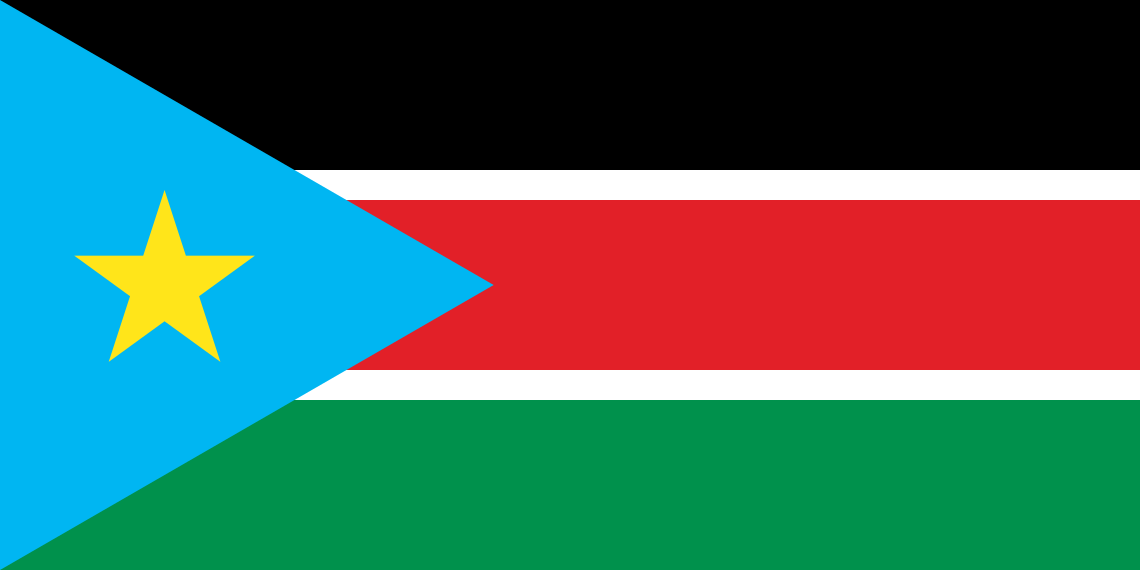
At the outset, allow me to congratulate Panama on its presidency of the Security Council for the month of August. I commend your leadership in that regard, Mr. President. I also acknowledge the briefers for their statements and wish to affirm that their observations and comments have been well noted.
South Sudan takes note of the Security Council briefing on the situation in our country and the Secretary-General’s 90-day report (S/2025/504). We would like to emphasize that we remain committed to peace, stability and cooperation with the international community. To demonstrate that, we would like to state the following points.
First, South Sudan values its partnership with the United Nations and reaffirms its readiness to continue cooperating with the United Nations Mission in South Sudan (UNMISS) to advance peace, stability and development in our country. In doing so, we expect that the Mission will remain neutral and impartial in its reporting and activities, ensuring that all accounts reflect the full picture, including positive developments and progress made. Balanced reporting fosters trust, builds confidence and supports the spirit of cooperation among South Sudan, UNMISS and the wider international community.
Secondly, we underscore that South Sudan’s sovereignty and independence must be respected. The recent detention of certain high-profile opposition leaders is not politically motivated — it is a matter of criminal accountability for actions directly linked to the incitement of violence and engagement in unlawful activities. Calls for
Thirdly, South Sudan’s success in its endeavour requires enhanced international support, not only in peace implementation and electoral preparations but also in responding to humanitarian emergencies, including economic constraints, and mitigating the negative impact of the arms embargo. These measures continue to place heavy burdens on our security sector reforms, limiting our ability to consolidate peace.
Fourthly, South Sudan values the continued support of the Intergovernmental Authority on Development, the African Union and the United Nations. We encourage all partners to support inclusive dialogue among political leaders and to reinforce national ownership of the peace process, rather than external pressure that risks deepening divisions.
Finally, South Sudan remains committed to ensuring that any obstacles — real or perceived — to UNMISS operations are addressed in good faith and without delay. We confirm that the presence of any such situations could be attributed either to our efforts to ensure the safety of the Mission’s assets and/or personnel or merely to a lack of information-sharing or capacity of the individuals involved — it is never a policy of the Government of the Republic of South Sudan to hinder the UNMISS mandate.
Together, with respect, cooperation and a shared vision for peace, we can deliver on the promise of a stable and prosperous South Sudan.
There are no more names inscribed on the list of speakers.
I now invite Council members to informal consultations to continue our discussion on the subject.
The meeting rose at 11.40 a.m.