A/58/PV.39 General Assembly
The meeting was called to order at 3 p.m.
40. Strengthening of the coordination of humanitarian and disaster relief assistance of the United Nations, including special economic assistance Report of the Secretary-General (A/58/344) (a) Strengthening of the coordination of emergency humanitarian assistance of the United Nations Reports of the Secretary-General (A/58/89, A/58/434) (b) Special economic assistance to individual countries or regions Reports of the Secretary-General (A/58/133, A/58/224, A/58/225, A/58/273, A/58/280, A/58/285, A/58/286, A/58/358) (c) Strengthening of international cooperation and coordination of efforts to study, mitigate and minimize the consequences of the Chernobyl disaster Report of the Secretary-General (A/58/332) (d) Participation of volunteers, “White Helmets”, in the activities of the United Nations in the field of humanitarian relief, rehabilitation and technical cooperation for development Report of the Secretary-General (A/58/320) (e) Assistance to the Palestinian people Report of the Secretary-General (A/58/88 and A/58/88/Corr.1)

In accordance with General Assembly resolution 49/2 of 19 October 1994, I now call on the Observer of the International Federation of the Red Cross and Red Crescent Societies. I take it that the meeting will allow the speaker to be heard in silence.

The International Federation of Red Cross and Red Crescent Societies (IFRC) and its worldwide network draw on the debate and the resolutions which flow from it as the basis of our work with Governments, international organizations, non-governmental organizations and all other actors. Needless to say, we listen to, coordinate and work with many United Nations partners, especially the Office for the Coordination of Humanitarian Affairs, the World Food Programme, UNICEF, the Office of the United Nations High Commissioner for Refugees, the United Nations Development Programme, the United Nations
Population Fund (UNFPA) and other United Nations partners.
I am very pleased to present to the Assembly several issues that are of particular relevance to our work and, indeed, the work of Governments, United Nations bodies and all other stakeholders.
On international coordination — as our President said during the high-level segment of the Economic and Social Council in July this year — we believe that our debate must promote a holistic approach to the issues now confronting the international community. However, our experience shows that instead of a properly integrated approach to the programming, delivery and distribution of humanitarian assistance, there is often a patchwork of decisions based on considerations which have more to do with donor priorities than the needs of the vulnerable people.
We are pleased, however, that bodies such as the Inter-Agency Standing Committee (IASC), in which the IFRC is a standing invitee, is addressing these issues and has shown a resolve to improve both coordination and the collaborative approach to response. Next year, for example, the IASC is expected to give high priority to the development of guidelines for humanitarian action in order to reduce vulnerability and protect livelihoods. The IFRC will play a significant part in that exercise, bringing to the table the experience it can draw from its global network at both the national and community levels.
With respect to linking relief to development, one of our key objectives in this debate is the acceptance by all States and other partners that emergency relief operations must be planned and undertaken with a long-term perspective. Only then will it be possible to link relief with development.
For many years, one of our key messages to the Assembly and other United Nations bodies has been that too little has been done to address local capacity- building in relief work. Through the IASC, we hope to bring more focused international attention to this area. The arrival of Mr. Jan Egeland as Emergency Relief Coordinator and Under-Secretary-General for Humanitarian Affairs is an important element in this equation, and we look forward to working with him in a strong and cooperative partnership.
We also appreciate the determination of Mr. Egeland and his colleagues to focus — within
IASC — more actively on natural disasters. The IFRC has the lead, together with the Office for the Coordination of Humanitarian Affairs, of an IASC taskforce on preparedness and response to natural disasters. The work is aimed at enhancing inter-agency coordination and efficiency in the area of natural disasters.
The development of this holistic approach through work in the IASC and other bodies parallels a new and welcome understanding on the part of donors that being a donor is not enough — there is an overriding requirement to be a good donor. That is why the IFRC recently took part in the Good Donorship Conference in Stockholm, hosted by the Government of Sweden. It is also why we strongly support work in the IASC to set up its own inter-agency link with the good donorship implementation group, created as an outcome of the Stockholm Conference. The IFRC sees many parallels between this work and other work on humanitarian financing and accountability and looks forward to contributing to the discussions, both as an international organization and as a body capable of protecting the interests and concerns of beneficiaries.
This concern for beneficiaries is not, of course, new for us. Our network, and its base of some 95 million members and trained volunteers around the world, is widely recognized for its front-line work during disasters and health emergencies and in daily life as the promoter of respect for humanitarian values. We are continually strengthening our ability to put that expertise to work so that it directly impacts on the way assistance is programmed, delivered and distributed. We were therefore particularly pleased to be associated with the launch early this year of Humanitarian Accountability Partnership International. HAPI, as it is increasingly known, was the outcome of the Humanitarian Accountability Project hosted at the headquarters of the IFRC in Geneva. Its basic objective is to strengthen accountability towards those affected by crisis situations and to facilitate improved performance within the humanitarian sector.
The IFRC has also brought forward the concerns of beneficiaries in many other contexts over the years. This year, for example, the World Disasters Report — the world’s flagship publication on disasters issues, published by the International Federation — focused on ethics in aid. Among the key messages of the World Disaster Report this year is the inequity which often accompanies assistance programming because of the
broad failure of some donors to act on the basis of sheer needs. That is one of the reasons why the IFRC devotes so much of its attention to the issues of what are commonly known as forgotten disasters. We are very pleased that Mr. Egeland is making forgotten emergencies a high priority and that he will be working with the media to that end.
It is also vitally important to recall in this debate that responding after the disaster has struck is not enough. Programmes, including at the national level in countries prone to disasters, must incorporate disaster risk reduction as a policy and programme highlight. That has been our priority for decades, and it has achieved the support of States, as was shown in the plan of action adopted at the twenty-seventh International Conference of the Red Cross and Red Crescent in 1999. But adopting plans of action is clearly not enough. There must be a willingness on the part of States to translate their commitments into policies and programmes. The IFRC will be seeking to build that willingness at the forthcoming twenty-eighth International Conference, at which Governments and national Red Cross and Red Crescent leaders will meet together in Geneva to decide on the Agenda for Humanitarian Action.
It is important to state here the three main foundations of that agenda, for they show our determination to go forward with this theme over the long term.
The first of those pillars endorses the concept and framework for international disaster response laws and for implementing appropriate legal, policy and operational measures to facilitate and expedite effective responses to disasters. This pillar of the foundation — international law relating to disaster response — relates very specifically to a contribution the IFRC is making to the strengthening of humanitarian coordination. Resolution 57/150, adopted after the debate on this item in 2002, affirms the Assembly’s interest in the way this project is developing, and my delegation plans to deliver a substantive report on the issue in time for consideration in 2004. It will be able to encompass the conclusions reached by States and national societies at the International Conference of the Red Cross and Red Crescent in December this year. Without wishing to prejudge the outcome, I can say that, through consultations with a very wide range of interested parties and stakeholders, we have learned that they
welcome the way the exercise is leading towards significant strengthening of coordination.
In accordance with resolution 48/265 of 24 August 1994, I now call on the Observer for the Sovereign Military Order of Malta.

Thank you very much, Mr. President, for giving me the floor on behalf of the Sovereign Military Order of Malta. I am also grateful to you for your good work in directing the deliberations of this session.
The Sovereign Military Order of Malta has been closely following the initiatives of the United Nations aimed at providing emergency humanitarian assistance to countries affected by natural disasters and/or armed conflicts. The Order participates in activities aimed at alleviating the suffering of civilians in affected areas.
We especially share the anxiety of the United Nations with regard to the protection of its personnel and strongly condemn the unprovoked attacks in Baghdad in August 2003. The improvement of security conditions for personnel must be among the highest priorities. Allow me to add that the Sovereign Military Order of Malta is deeply concerned about the protection of its own humanitarian personnel when it participates in United Nations peacekeeping operations. Allow me, as a Permanent Observer, to observe that adequate measures for the protection of all humanitarian personnel could be included in the Security Council mandates.
The Order of Malta considers that, given its humanitarian principles, its neutrality, its impartiality and its independence, it has the credentials to continue its activities and, to the extent possible, improve its effectiveness in humanitarian aid that covers refugees, returnees and internally displaced persons.
There is no doubt that natural disasters cause grave humanitarian crises and that a significant portion of humanitarian assistance activities have as their goal to provide immediate relief to the victims. We are not denying that immediate help is imperative, but, as part of a more comprehensive position, we must include mitigation, prevention and reconstruction. In other words, we must not limit assistance to the immediate consequences of a catastrophic event.
The Order is convinced of this fact and has demonstrated its long-term commitment in many different contexts, from El Salvador to Iraq. In El
Salvador, the Order of Malta responded to the devastating earthquakes of 2001 by providing water- supply treatment plants and participating in the reconstruction work of the Departments of San Vicente, La Paz and Cuscatlan. More recently, in Iraq, the Order has been active in the northern towns of Erbil, Mosul, Makhmur and Kirkuk, by cooperating in programmes to rebuild social infrastructure.
To conclude, allow me to express the Sovereign Military Order of Malta’s satisfaction at the appointment of Mr. Jan Egeland as the new Emergency Relief Coordinator and to reiterate the Order’s commitment to continue to respond to the challenges that humanitarian work presents.
In accordance with Assembly resolution 45/6 of 16 October 1990, I now call on the Observer for the International Committee of the Red Cross.

The International Committee of the Red Cross (ICRC) wishes to thank you, Mr. President, for giving it the opportunity to speak on the subject of humanitarian coordination, which it considers of vital importance in the conduct of humanitarian operations in complex situations.
The ICRC cannot but begin by noting, with extreme sadness and equal concern, that the current year has been profoundly tragic for the international community. While it was still grieving the deaths of three of its own personnel in Afghanistan and Iraq, the ICRC was appalled by the brutal attack perpetrated on the United Nations headquarters in Baghdad on 19 August. The ICRC strongly condemned this act of terror that targets civilians and wishes to reiterate here its heartfelt sympathy to the victims and their families and colleagues.
The complexity prevalent in most humanitarian crises, together with the sheer dimensions of the human suffering resulting from the numerous ongoing conflicts in the world, represent challenges that go far beyond the capacity of any single humanitarian organization. In this regard, the ICRC is deeply distressed to observe the heavy toll that continues to be paid by civilians, especially by the most vulnerable among them, including women and children.
Disease and starvation, displacement and separation, continue to wreck havoc on families and
communities. In an attempt to address these vast needs, an increasing number of humanitarian actors, with different mandates, areas of expertise and resources are present in humanitarian crises. Consequently, it is only natural that coordination has come to form an intrinsic part of humanitarian efforts, in order for such efforts to gain in overall effectiveness.
For the ICRC, the central aim of humanitarian coordination consists in seeking the greatest possible complementarity among all actors, flowing from their respective mandates, expertise and operating principles and procedures. Towards that end, the ICRC participates in coordination efforts through regular dialogue and mutual consultation, both at headquarters and in the field, on thematic issues and on operational questions. As a standing invitee of the Inter-Agency Standing Committee (IASC), the ICRC, together with the International Federation of Red Cross and Red Crescent Societies, participates in various coordination mechanisms and structures put in place by the IASC itself and by the Office for the Coordination of Humanitarian Affairs (OCHA), sharing experiences and information and thereby contributing to the common goal of rendering humanitarian action more effective.
Another example, at the bilateral level, would be fruitful exchanges with the Office of the United Nations High Commissioner for Refugees (UNHCR) within the framework of the UNHCR 2004 process and the Agenda for Protection. In parallel, the ICRC participated actively in the preparation of the internally displaced persons (IDP) response matrix by OCHA’s IDP unit. It also held a senior level meeting with the World Food Programme to actively explore possibilities of strengthening cooperation between the two organizations with regard to food assistance.
The International Committee of the Red Cross seizes this opportunity to thank Mr. Oshima for the cooperation extended to our institution and to express its best wishes to Mr. Egeland in the execution of his difficult and complex task.
While on the subject of humanitarian coordination, the ICRC wishes to stress its firm conviction that, in order to both ensure the security of humanitarian personnel and indeed render possible humanitarian operations for all victims of a conflict, political and military action ought to be kept imperatively distinct from humanitarian action. Were
the perceptions of humanitarian action as strictly neutral and independent to be altered by a blurring of the distinction between such action and political initiatives or military operations, the consequence would inevitably be greatly impeded access to victims and high security risks for humanitarian workers. In this perspective, coordination also signifies concerted efforts by all concerned to safeguard this vital humanitarian space and thereby protect humanitarian workers and victims alike.
In conclusion, the ICRC wishes to reaffirm its commitment to the spirit and practice of humanitarian coordination. The ICRC remains equally determined to fulfil the international mandate conferred on it by the Geneva Conventions and their Additional Protocols in relation to the protection and assistance of all victims of armed conflict.
In accordance with the decision taken by the General Assembly at its thirty-second plenary meeting on 15 October 2003, I now call on the Observer of the Holy See.
Archbishop Migliore (Holy See): On behalf of my delegation, I wish to thank the Secretary-General for the useful reports prepared under this item. My delegation also wishes to convey its appreciation to the United Nations for its commendable initiatives undertaken to reduce the impact of natural hazards on human society, through a coordination of efforts by the international community, with particular attention to developing countries. The rigors of natural phenomena cannot be prevented, but their impact can be reduced and even avoided when capacities of vulnerable countries are strengthened and enhanced. In this regard, my delegation acknowledges the importance of strengthening the coordination of the United Nations emergency humanitarian assistance, so vital if relief assistance is to transcend the emergency phase and pass into long-term development strategy.
The world has advanced to such a degree that it is often possible to foresee natural disasters, thereby helping reduce harm to people and damage to property. Strengthened by transparent and accountable systems, the international community can now accomplish much in relief and long-term reconstruction. For this reason, my delegation supports the efforts of the Office for the Coordination of Humanitarian Affairs, it welcomes the comprehensive approach of the Consolidated Appeals Process, the participation of the United Nations funds
and agencies, the preventive approach of the International Strategy for Disaster Reduction, the lead of the Economic and Social Council humanitarian segment and the valiant United Nations and other humanitarian personnel.
Needless to say, the scale of emergencies worldwide makes the task of offering effective and prompt assistance seem overwhelming. Our initiatives, projects and efforts may never be enough. Emergencies are so numerous, intense and varied that the Secretary- General has quite fittingly noted that because of the severity and suddenness of these overwhelming emergencies, others are reduced to forgotten or “silent” ones. This situation worsens when assistance is coloured by partiality and incoherent policies, not to mention when crises are ignored or even put aside because of misrule and misguided politics.
The vastness of the problem and the countless numbers of children and individuals in urgent need of help should not paralyse us in inaction. The sad fact that the contributions from donor countries and agencies are often insufficient to meet many worldwide needs should not lead us to hopelessness. Rather, these contributions should be praised and encouraged. Simple gestures of giving, oftentimes combined with rapidity of response and coordination, will make a difference and bear fruit.
My delegation is pleased to mention that the Holy See has taken an active role in this regard. More than 30 years ago, it established the Pontifical Council Cor Unum to harmonize and encourage the activities of church organizations, associations, non-governmental organizations and other groups involved in the field of social and charitable assistance to people in countries hit by natural disasters and wars. In particular, the Pontifical Council has been engaged in intensifying its humanitarian action for victims of almost all types of natural disasters, especially in developing countries. Moreover, within its means, it has contributed in concrete ways to assisting people in moments of disaster.
Besides the Pontifical Council, the Catholic Church in particular countries has organized its relief efforts through agencies such as Caritas Internationalis and Catholic Relief Services. These organizations generously commit themselves to humanitarian work in the area of natural disaster reduction and rehabilitation. The commitment of Church organizations and
associations has become increasingly essential and important in contributing to the development and reconstruction of various societies.
In general, there is a clear and determined awareness that it is possible to prevent and reduce the impact of natural disasters. However, numerous disasters continue to strike peoples in different parts of the world, while chronic emergencies resulting from armed conflicts, extreme poverty and ethnic clashes have given rise to an enormous displacement of peoples throughout the world.
The international community should not let these victims of tragic events and conflicts succumb to the agony they have been enduring in the aftermath of such natural and manmade disasters. It is necessary to have the will, converted into concerted action, to intensify assistance for peoples still struggling in the battle for existence and survival. For this assistance to be effective, it must have the support of the entire family of nations.
My delegation therefore wishes to encourage the United Nations Office for the Coordination of Humanitarian Affairs and other humanitarian agencies to continue their laudable efforts in responding promptly and effectively to the plight of all victims of disasters and emergencies throughout the world.
We have heard the last speaker in the debate on agenda item 40 and sub-items (a) to (e).
One representative and one observer have requested to exercise the right of reply. May I remind members that statements in the exercise of the right of reply are limited to ten minutes for the first intervention and to five minutes for the second intervention, and should be made by delegations from their seats.


I would like to respond to the statement made by the Azerbaijani delegation, in which several references to my country were made.
The use of the problem of refugees as a propaganda tool is best illustrated by the fact that Azerbaijan continues to speak about 1 million refugees during the current session of the General Assembly. In that regard, may I draw the Assembly’s attention to the report of the Office of the United Nations High Commissioner for Refugees contained in document A/57/12. It is clearly indicated, on page 41 of the
English version of that report, that the total number of the Azeri population of concern to the Office of the United Nations High Commissioner for Refugees (UNHCR) is 587,310. It is apparently not so easy to give up such as impressive number as 1 million, but it is time for the delegation of Azerbaijan to realize that it cannot mislead the international community endlessly with false, propagandistic numbers.
One can only wonder how it is possible that a country so rich in oil and with foreign investment totalling in the billions of dollars has for so many years not been able to resolve the social and humanitarian problems of refugees and internally displaced persons (IDP) or at least to ease the poor conditions in which those people live. It is apparent that the Government of Azerbaijan is indeed not interested in resolving the issue of refugees. Had that been the case, a solution would have been found long ago. It is at least hypocritical that the Government of Azerbaijan has chosen to exploit the suffering of its own people as a propaganda tool, making a show of keeping those people in tent camps near Baku for years and making them the tragic subjects of its propagandistic campaign.
We are dealing here with just another manifestation of unsophisticated warfare against Armenia and its population. Unfortunately, Armenia was the first country in Eastern Europe to face an inflow of refugees after the pogroms and massacres against the Armenian population in Azerbaijan that took place from 1988 to 1990 and forced a community of half a million Armenians to flee that country, leaving behind their houses, apartments and properties. Those people were sheltered in Armenia, which was itself severely devastated by the earthquake of 1988 that affected one third of the country and left half a million people homeless and internally displaced. Meanwhile, in the same period of time, the authorities of Armenia provided the Azeri population of Armenia with all the necessary conditions to receive compensation for the property they left in Armenia, withdraw their deposits from banks and leave for Azerbaijan in safety and security.
Regardless of the numbers and nationalities of refugees and IDPs, the fact of their existence alone should be a matter of great concern for all of us. That is the reason that my Government, instead of speculating about the tragic destiny of that people, developed and is successfully implementing a comprehensive
rehabilitation programme for refugees and IDPs. We are doing our best to integrate them into our society.
I would like to take this opportunity to note that Armenia, whose border areas have also suffered owing to the conflict in the region, has somehow remained excluded from the rehabilitation programmes carried out by United Nations agencies, despite the fact that similar programmes have been under way for several years in the neighbouring country.
We hope that, after concluding its presidential elections, Azerbaijan will put an end to its unchanged rhetoric and try instead to engage in constructive dialogue to find a peaceful solution to the Nagorno- Karabakh conflict.

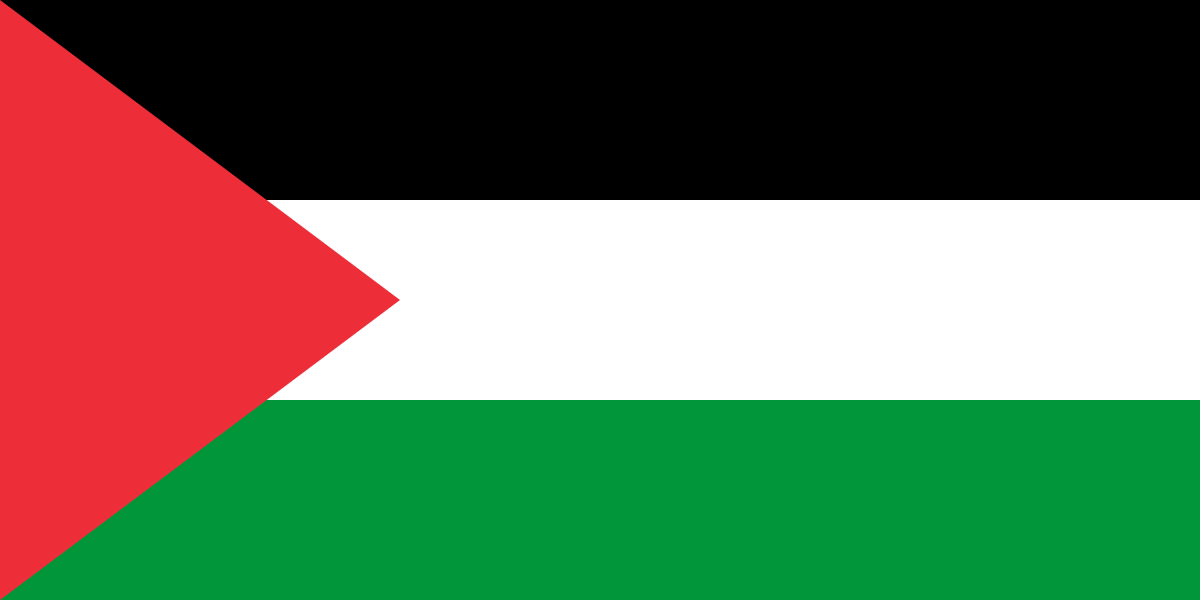
The least we can say about the statement made by the representative of Israel with regard to this item during this morning’s meeting is that it was full of mistakes and distortions of fact and replete with flagrant lies. Because of the limited time allotted, we shall not go into detail concerning that statement.
However, according to the claims of the representative of Israel, the cause of the Palestinian crisis is terrorism and corruption on the part of Palestinians. The fact is that the main cause for the deterioration of the situation in occupied Palestine, the suffering of the Palestinian people and the strangling economic crisis afflicting our people is the continuation of the ugly occupation of our land and Israel’s, the occupying Power, escalation of its bloody expansionist racist campaign against our people, institutions and elected leaders.
I would merely like to indicate that the occupying Power yesterday arbitrarily bombed the Gaza Strip, leading to the killing of 11 Palestinian civilians, including two children, and the wounding of scores of Palestinians and the destruction of many houses. That criminal act is yet another in a series of war crimes by Israel’s occupying forces, crimes akin to crimes against humanity. That criminal act has even led to objections by some Israeli Government officials because of its horrendous nature. Israel covers up such crimes by saying that they are simply security measures. Now they are saying that they are steps taken against terrorism.
In that regard, my delegation would like to reaffirm what we stated yesterday during the resumed
tenth emergency special session of the General Assembly. The Palestinian leadership has a crystal clear position of principle in that respect. Let it be clear that it is Israel’s policies and actions that have led to suicide bombings, and not the other way around. That deplored phenomenon has emerged 27 years after the occupation and after our people have lost hope in a better future. Israel is responsible for ruining the lives of three generations of Palestinians, as well as for tearing the fabric of our society and for the morbid phenomena that have afflicted our society, including suicide bombings. Israel must understand that there will be no security solution to that phenomenon under any circumstances. While all parties must act to end the phenomenon, we should not allow Israel, the occupying Power, to exploit the war against international terrorism or its civilian victims in order to provide cover for its illegal policies and practices of continued occupation, settler colonialism, expansionism and rejection of peace.
With regard to Israel’s assertions of corruption, I would simply like to say that financial matters are purely internal Palestinian matters. Before talking about corruption, Israel should return to Palestinians the money it took from them. That money belongs to the Palestinian Authority, not to Israel. Palestine’s Minister for Finance is commended by the international community for his integrity and honour. We cannot allow Israel, which is the source of corruption and a fundamental reason for Palestine’s economic deterioration, to make allegations about corruption.
May I again remind members that statements in exercise of the right of reply are limited to 10 minutes for the first intervention and to five minutes for the second intervention and should be made by representatives from their seats.


It had not been our intention to take the floor, but the groundless claims made by the Armenian representative have forced us to exercise our right of reply.
We regret — although we had somewhat expected — the inadequate reaction of Armenia to our statement on the agenda item under discussion. Another attempt on the part of Armenia to dissociate itself from its immoral and vicious deeds has failed. The Armenian representative has failed once again to make even one substantiated argument in his remarks, which comes as no surprise, at least to us.
We have no intention of engaging in a useless, irrelevant and counterproductive exchange with the Armenian representative, but we would nevertheless like to draw the attention of delegations to the following facts, with respect to whose substance the representative of Armenia could hardly accuse Azerbaijan of engaging in speculation.
Armenia is an aggressor State. It has violated the United Nations Charter and continues to undermine the fundamental norms and principles of international law, which constitute the basis of the whole system of international relations.
Armenia has violated the territorial integrity and sovereignty of another State Member of the United Nations, the Republic of Azerbaijan, and continues to occupy almost one-fifth of the territory of that State.
Armenia continues blatantly to ignore the will of the international community and that of the Security Council, which, in its resolutions 822 (1993), 853 (1993), 874 (1993) and 884 (1993), demanded the unconditional, immediate and complete withdrawal of Armenian occupying forces from the occupied territories of Azerbaijan. Ten years have passed since then, and the aggressor, enjoying an environment of impunity, continues with that unlawful and ugly practice and continues to occupy Nagorny Karabakh and several other regions of Azerbaijan.
Armenia continues its almost-10-year blockade of Azerbaijan’s Autonomous Republic of Nakhchivan, thereby causing enormous suffering to the civilian population of that part of Azerbaijan. It is also misleading the world with its mythical claims regarding the blockade.
Armenia is responsible, and should be brought to justice, for the ethnic cleansing it has committed in all the Azerbaijani-populated areas within its territory, accompanied by indiscriminate pogroms and the killing of hundreds of innocent women and children.
Armenia, as a result of its criminal policy, has orchestrated and carried out the eviction of almost 1 million Azerbaijanis from Armenia and from the occupied Azerbaijani territories inside and outside of the Nagorny Karabakh region of Azerbaijan.
It is my intention once again to draw the attention of the United Nations and the international community to the dire fate of the innocent civilian population
affected, which was the subject of Azerbaijan’s intervention today.
Armenia has erased all traces of any Azerbaijani presence in the occupied territories and continues its practice of destruction and desecration of cultural and religious monuments in those territories. It continues also with the illegal resettlement of citizens of Armenia and other States on the occupied territories of Azerbaijan.
Armenia, having committed all those crimes, continues to find it appropriate to justify its repugnant policies and to mislead the Assembly. The only way Armenia can be saved from ostracism is for it to get back on the track of normal civilized behaviour; to respect — at last — international law, including the United Nations Charter; and to start to behave as a responsible member of the family of nations.


I asked to take the floor in exercise of the right of reply in order to set the record straight with regard to the current counter-terrorist operations being carried out by Israel in Gaza in exercise of the basic right of all States to self-defence.
Since the beginning of this month, over two dozen Kassam artillery rockets have been fired by Palestinian terrorists at cities in sovereign Israeli territory — 10 such rockets in the past 48 hours. Since the Palestinian Authority is doing nothing to curtail these flagrant acts of terrorism in its own midst, Israel was forced to take action to stop those attacks.
Israel’s response was measured, focused on legitimate terrorist targets and carried out in such a way as to minimize as much as possible any harm to the civilian population, which the Palestinian terrorists have exploited as shields for their extensive terrorist infrastructure. Israel struck with precision munitions against the following legitimate terrorist targets.
Its first target was a clandestine Hamas arms factory in Sajaiyeh, in which explosive charges and arms were manufactured. That target had to be attacked twice due to the number of weapons found in the factory.
Its second target was a warehouse on the outskirts of Gaza in which weapons and explosives belonging to Hamas were stockpiled. The secondary explosions following the attack indicated that the warehouse was filled with ammunition.
Its third target was a pick-up truck transporting two terrorists — Khaled al-Masri and Iyad al-Hilu of Hamas, who were responsible for the infrastructure manufacturing the Kassam rockets, along with mortar shells and explosives used in terrorist attacks.
Finally, it targeted a vehicle travelling near Nuseirat carrying a terrorist cell that was fleeing from an intercepted attempt to infiltrate Israel near Kibbutz Nahal Oz and to carry out a spectacular terrorist attack. The strikes against those targets were carried out, as I stated previously, with precision munitions. Military surveillance footage just released shows that no civilians were visible in the target area at the time of those operations. The footage shows that at least eight terrorists were killed in those pinpoint operations, while no civilian casualties were apparent.
The aim of those operations was simple: to impair Hamas’ capability to carry out acts of terrorism. Let there be no doubt: Israel deeply regrets the inadvertent loss of innocent life during its counter-terrorist efforts. However, as long as the terrorists choose purposely to position themselves and their infrastructure in the midst of the civilian population, shielding themselves behind civilians, and as long as the Palestinian leadership does nothing to prevent the terrorists from doing so, it must bear sole responsibility for these unfortunate civilian casualties.
I would remind the Assembly that all of these terrorist targets are located in the Gaza Strip, an area in which the Palestinian Authority has full security control. There is no excuse for the Palestinian Authority’s complacency regarding and complicity with these terrorists. These terror groups should have been dismantled long ago by the Palestinian Authority in accordance with international law and with the commitments that the Palestinian leadership repeatedly took upon itself, from the Declaration of Principles in 1993 to this year’s road map.
Having no alternative, Israel must do what the Palestinian Authority is obligated, but refuses, to do: fight Palestinian terrorism. Israel must protect the lives of its citizens.
I ask for your indulgence, Mr. President, in taking the floor a second time.
The representative of Azerbaijan made many absurd allegations, but I will limit my second response
to two major issues. First, his reference to so-called aggression by the Republic of Armenia against his country was, again, totally misleading. We have repeatedly stated — and this is well known — that the situation to which he referred was a forced reaction to Azerbaijan’s own decision to use military force to suppress the legitimate and just quest of the people of Nagorny Karabakh to peacefully exercise their right to self-determination, which is guaranteed by international law and the United Nations Charter.
Azerbaijan’s claims of territorial integrity are also historically, legally and politically deficient, since Nagorny Karabakh has never been a part of Azerbaijan, except during the era of the Soviet Union, when it was within its administrative borders. Consequently, during the break-up of the Soviet Union the people of Nagorny Karabakh exercised their right of self- determination, peacefully and in accordance with Soviet and international law. Those facts are well- known and have been documented, so I would suggest that my Azerbaijani colleague once again review his facts. The people of Nagorny Karabakh have the legitimate credentials to pursue a just solution to the conflict. Armenia is determined in its endeavours to take every measure to ensure a peaceful negotiated outcome, which would ensure the right of the Karabakh people to live freely and securely in their homeland.
I would like briefly to summarize my earlier intervention. First, Armenia is to blame for the emergency humanitarian situation in Azerbaijan. It is because of Armenia’s aggression and policy of ethnic cleansing that hundreds of thousands of innocent civilians were brutally evicted from their homes. Secondly, Armenia has grossly violated the Charter and international law. It has violated the sovereignty and territorial integrity of a sovereign Member State, Azerbaijan, and should therefore be brought to justice. The international community should put an end to impunity for the aggressor, as well as to the policy of double standards and a selective approach.
I could, of course, go on with this list, but I believe that those comments are sufficient for now. My advice to Armenia would be that, instead of giving cynical advice and counting the money and oil resources of others, instead of wasting the time and resources of this body in exercise of the right of reply, it would be better off practising common sense and decency and respecting the norms and principles of
international law and the rules of this house, and get out of the occupied Azerbaijani territories.
It is highly regrettable that, regardless of the issue under discussion in the Assembly — in this case humanitarian assistance — the Israeli representative is able to present us only with a standard-issue statement. He delivers it “anywhere, any time”, always on terrorism, which is highly questionable and very insulting to the General Assembly.
Moreover, we regret that the Israeli representative forgot to mention that nearly 100 Palestinian civilians, including children, were wounded in the Israeli attacks against Gaza yesterday, which killed 12 civilians, including a doctor who rushed to assist the victims. Those are the facts.
In my first reply I addressed the issues raised in the Palestinian Observer’s reply. However, since the Palestinian Observer has, in replying, provided me with the opportunity to address the Assembly for five more minutes, I would like to refer to the issue of suicide bombers, which the Palestinian Observer brought up in her first reply.
The morally abhorrent and patently false claim that suicide terrorism is caused by Israel must be rejected out of hand. Less than 2 weeks ago, 21 Israelis were killed by a female Palestinian suicide terrorist. Hanadi Jaradat, a 29-year-old lawyer from Jenin, who carried out the attack, was the sixth such female suicide bomber in the past two years. Several other female bombers have been apprehended when about to blow themselves up, including one who was hiding a bomb under a maternity dress and another who was only 15 years old.
While the media has expressed surprise at Palestinian women acting as suicide bombers, it should surprise no one who has followed developments in the Palestinian Authority. Yasser Arafat’s Palestinian Authority — not Israel — has regularly targeted women in its promotion and glorification of suicide terrorism. Immediately after the first bombing by a woman — Wafa Idris — on 27 January 2002, the Palestinian Authority undertook a very public campaign to indoctrinate Palestinian women to see themselves as potential suicide bombers. After the bombing, the Palestinian Authority immediately depicted her as a heroine and her murders as acts to be
emulated. Within days, the Palestinian Authority held a demonstration in her honour, with young girls carrying posters with Idris’ pictures and the words, “The Fatah movement” — that is, Arafat’s movement — “eulogizes with great pride the heroic martyr Wafa Idris”.
The Palestinian Authority, seeing that women could more easily get past Israeli security, immediately created an operational framework for terrorist activity by women. The Palestinian Authority named this new brigade in honour of Wafa Idris. All of that promotion led to a string of unsuccessful suicide bombing attempts by women and, eventually, to a bombing in a Jerusalem supermarket on 29 March 2002 by Ayat al- Akhras, a 17-year-old girl, who killed two Israeli civilians and injured about two dozen others. The Palestinian Authority — not Israel — then turned those two successful killers into symbols for Palestinian girls. Palestinian Authority girls’ summer camps, for example, were named after Idris and Akhras, both last year and this year.
Sadly, this campaign to turn female suicide bombers into role models is succeeding. In an interview on Palestinian Authority television after the first two suicide bombings by women, young Palestinian girls discussed their feelings about suicide terrorism. Typical of the statements was one made by a girl name Sabrine, who stated, “Of course I support blowing up. It is our right. Maybe no one will sympathize with us when they hear that children blow themselves up, but that is called heroism”.
Women whose social standing is problematic, including women who have acquired a so-called bad reputation due to assumed promiscuity or extra-marital relationships, have often been convinced to take part in suicide operations as a means of rehabilitating their names. The strength of this type of persuasion can best be understood in the relevant cultural framework: a society in which women are often considered to embody the honour of the family. Any hint of impropriety, no matter how minor, can have serious consequences for the women involved, even prompting male family members to murder her in so-called honour killings.
So, in steps Yasser Arafat and his Fatah Tanzim terrorist group. They recently embarked on a campaign to recruit as suicide terrorists those young women who find themselves in acute emotional distress due to such
social stigmatization. This method of coercion is characterized by the seduction of young women into illicit relationships or, failing that, the arrangement of their rape. Subsequently, overwhelming emotional pressure is brought to bear on the women in order to convince them to end their lives in an admirable manner, since public revelation of their impropriety will constitute an intolerable disgrace to the honour of their families.
The General Assembly has thus concluded this stage of its consideration of agenda item 40, sub-items (a) to (e). I would like to remind Members that sub-item (f), entitled “Emergency international assistance for peace, normalcy and reconstruction of war-stricken Afghanistan”, will be considered together with agenda item 28, “The situation in Afghanistan and its implications for international peace and security”, on Friday, 5 December 2003.
41. Follow-up to the outcome of the special session on children The report of the Secretary-General (A/58/333)


I have the honour to address the General Assembly on behalf of the countries of the Rio Group: Argentina, Bolivia, Brazil, Chile, Colombia, Costa Rica, Dominican Republic, Ecuador, El Salvador, Guatemala, Honduras, Mexico, Nicaragua, Panama, Paraguay, Uruguay, Venezuela and my country, Peru.
The important role of the Rio Group during the process that concluded with the special session of the General Assembly on children in May 2002 was the result of commitments assumed by our countries long before the beginning of the special session, with the ratification of the Convention on the Rights of the Child. That Convention constitutes the basis of our work in favour of our children and adolescents, with a focus on human rights. The task of our Governments benefited from the valuable participation of representatives of civil society, in particular non- governmental organizations and other actors involved in promoting and protecting the rights of children and adolescents. That has enabled us to take action aimed at achieving sustainable human development, focused on the best interests of the child and grounded in the
principles of democracy, equality and non- discrimination, among other things.
At the international level, the special session on children, among other factors, has strengthened our capacities and has motivated our nations to continue to develop processes and to implement action for change to benefit children and adolescents, based on a shared regional vision.
The special session enabled the international community to renew its political commitment to children and adolescents. It also established a group of priorities through the adoption of the Plan of Action, which contained commitments for the twenty-first century. Through that document, the product of the special session, we established four priorities: to promote healthy lives, to provide quality education to all children, to protect children from abuse, exploitation and violence, and to combat HIV/AIDS.
Achieving those goals, as well as the commitments undertaken in 1990 and the initiatives of the Millennium Declaration, Agenda 21, the Monterrey Conference and the Johannesburg Summit, requires coordinated action by all involved national and international actors.
At the regional level, the Rio Group believes that the well-being of children and adolescents should be considered a main objective of the development process. That was declared at the seventeenth Summit of the Rio Group, held in Cusco, Peru in May 2002. The outcome of that Summit was the Cusco Consensus, in which we established a strategic agenda for action, giving high priority to the effective reduction of poverty and the fight against malnutrition and hunger; that work that must begin with children. In that regard, the Rio Group renewed its commitment to promoting the fulfilment of the goals agreed at the special session of the General Assembly in 2002. The Rio Group has the political will at the highest level of member Governments to promote and protect the rights of children and adolescents, taking into consideration their specific needs according to their age, including the right to sexual and reproductive health and the responsibilities of both male and female adolescents.
In that regard, the countries of the Rio Group have made great efforts to achieve one of the goals set out in the document entitled “A world fit for children”, referring to the development and strengthening of national and regional plans. It should be pointed out
that many of our countries have now prepared national plans based on social investment in children and adolescents. Some of those plans are now at the implementation stage, and we recognize the valuable support of UNICEF in this undertaking.
In that connection, it should be underlined that such social investment is often seriously hindered by the difficult economic situation prevailing in our region. This has had a negative impact on various social groups, in particular on vulnerable social groups such as children and adolescents, affecting the provision of services such as health and education. This situation has hindered the fulfilment of our objectives, such as the goal of using a minimum of 20 per cent of national budget resources for basic social services. Nevertheless, most of our countries have been able to reduce the infant mortality rate and the mortality rate of children under 5 years of age to eradicate some preventable diseases, to increase primary school enrolment and graduation rates and to reduce illiteracy.
The countries of the Rio Group are proud to have multicultural and multi-ethnic populations. For that reason, we attach special importance to investing in children and adolescents, in particular in areas of marginalized or minority populations, such as indigenous populations and those of African descent. In that regard, we are coordinating action to combat discrimination and high rates of poverty and social exclusion. At the same time, we reaffirm the need to implement public policies that include ethnicity and other dimensions such as gender, age and poverty.
I cannot conclude without referring to the difficult situation of children in armed conflict. As the Secretary-General states in his report (A/58/333), the fight to ensure the protection of the rights and well- being of the children exposed to armed conflicts has reached a decisive moment. Several normative instruments and commitments exist; but it is now necessary to take coordinated steps to fully implement them, with a view to establishing an effective regime of protection for children affected by war. In that regard, we support the Secretary-General’s initiative to establish an integrated surveillance and information network to provide objective, periodic and accurate reports of violations against children.
In conclusion, I would like to renew the commitment of our Governments to continue to work
on behalf of children and adolescents, as they are the most important human and social asset for which we have a present and future responsibility.


I have the honour to take the floor on behalf of the European Union. The acceding countries of Cyprus, the Czech Republic, Estonia, Hungary, Latvia, Lithuania, Malta, Poland, Slovakia and Slovenia, the associated countries of Bulgaria, Romania and Turkey, and the European Free Trade Association country member of the European Economic Area, Norway, have aligned themselves with this statement.
At the General Assembly’s special session on children, the international community committed itself to a set of specific goals for children and young people. Its outcome document is our undertaking to work together in order to build a world fit for children. A little more than one year later, it is time for us to reflect on our actions and to assess their impact to ensure that the Plan of Action does not remain mere words.
Creating a world fit for children is about creating an enabling environment that impacts the everyday lives of children and their families. That must be reflected in all strategies at the international, regional, national and local levels. The Plan of Action adopted at the special session on children focused on four priority action areas: promoting healthy lives, providing quality education, protecting children from abuse and violence and combating HIV/AIDS. Those goals are fully consistent with the Millennium Development Goals, the achievement of which is of central importance to children. The Goals are ambitious, but attainable.
At the international level we can benefit from the clear standard provided by the Convention on the Rights of the Child and its Optional Protocols. Another important aspect in implementing, at the international and regional levels, the goals set forth in the Plan of Action entitled “A world fit for children”, is to integrate a rights-based approach into the work of regional and global organizations such as UNICEF and other relevant bodies of the United Nations system. The European Union welcomes the fact that that approach is now firmly entrenched in their mandates and programmes, and considers it particularly important that they continue to follow that path. Further efforts to fully mainstream the rights-based approach are also needed in the concrete implementation of programmes at the national level.
The adoption and carrying out of national plans of action for children is a crucial step towards putting in place mechanisms for meaningful implementation, monitoring and review. Most important, it is the only follow-up action defined in “A world fit for children” to be completed by the end of 2003. For the European Union, this element is high on national agendas and is a part of policy- and decision-making in all areas. Mechanisms to monitor compliance with the Convention on the Rights of the Child have already been put in place. In fact, ombudsmen for children or other similar institutions exist in a great number of European countries. The European Union reaffirms its commitment to give high priority to that objective, and encourages all States to do the same by translating international goals into specific time-bound and measurable national targets based on local needs and situations.
In all those follow-up processes it is fundamental to actively involve, and work in cooperation with, civil society actors, including non-governmental organizations and children and their families. Children and adolescents are resourceful citizens capable of building a better future for all. We must respect their right to express themselves and to participate in all matters affecting them. In particular, we believe that further action is needed at the national level to take children’s views and interests into account.
The European Union underscores the importance it attaches to ensuring that children live healthy lives. We note general comment 4 of the Committee on the Rights of the Child, regarding adolescent health and development. We also reiterate that sexual and reproductive health care and education are elements in the fight against poverty, and hence in reaching the goals and targets set by “A world fit for children”. We therefore encourage all Governments to follow up their commitments to effectively address, for all persons of appropriate age, the promotion of their reproductive and sexual health. The goal of healthy lives for all children also encompasses such other aspects as child mortality, disease, malnutrition, healthy environments and mental health. In that respect, all States should ensure that all children have access to sustainable health systems and social services, as well as to adequate education, information and counselling that guarantees them the opportunity to participate in decisions affecting their health.
In “A world fit for children”, all States agreed to ensure that all children have access to complete primary education that is free, compulsory and of good quality. The same opportunity should be made equally available to all children exposed to difficult situations. On several occasions, the European Union has stressed the crucial role that education must play in developing more extensive and far-reaching actions concerning children. We therefore urge all States to take all necessary measures to eliminate obstacles to the full realization of the right to education, with particular emphasis on the education of girls. Indeed, educating girls is a key factor to reducing poverty, hunger, under- age-5 mortality and maternal mortality, as well as in fighting major diseases. If the goals of the special session’s Plan of Action are to be met, the international community must rapidly move towards the goal of universal primary education by ensuring every girl her right to education.
Millions of children are still suffering from war, violence, exploitation, neglect and all forms of abuse and discrimination. Violence against children can take many forms, such as trafficking, child labour, sexual exploitation and abduction, physical and psychological violence and torture. It can occur everywhere, and it is difficult to tackle because it is often hidden. Girls, children belonging to minorities, indigenous children and children with disabilities are more likely than others to suffer from multiple kinds of discrimination. We urge all States to adopt a zero-tolerance approach, to take all necessary measures to combat such practices and to ensure the investigation, prosecution and punishment of perpetrators while safeguarding the rights and interests of child victims at all stages of proceedings.
The urgent need to adopt policies and programmes to respond to the needs of millions of children orphaned, or directly and indirectly affected by HIV/AIDS, has not yet been effectively addressed. In that respect, girls are in a particularly difficult situation, as they often face economic, legal and social constraints that impede effective risk-reduction. Efforts must therefore be intensified. Girls need to be empowered, while boys need to be more involved.
The European Union reaffirms its commitment to combating HIV/AIDS, tuberculosis and malaria with a view to their eradication. It welcomes the rapid start-up of the activities of the Global Fund to Fight HIV/AIDS, Tuberculosis and Malaria and affirms its determination
to enable this multilateral instrument to bring high- quality affordable prevention, care and treatment to the most needy, in particular children in the developing countries. Prevention must include efforts to increase access to contraceptives and sexual health information.
The real implementation of plans for a world fit for children has just begun. The Secretary-General’s report highlights positive steps already taken by many countries in all regions of the world. The progress achieved so far is a good start, but much more remains to be done. All relevant actors — Governments, civil society, non-governmental organizations, children and their families and the international community as a whole — need to move ahead, from plans and policies to actions and results.


The Secretary- General’s report contained in document A/58/333 provides a useful basis for our discussion on the progress made in the implementation of the commitments we made to our children last year at the General Assembly’s special session on children. We thank the Secretary-General for the report and concur with the recommendations contained therein. Furthermore, we commend the United Nations Children’s Fund (UNICEF) for its tireless efforts and continued commitment to promote the rights and welfare of our children.
This year is particularly significant because of the first time-bound goals and targets based on the plan of action entitled “A world fit for children” (resolution S-27/2). In this respect, I would like to express our appreciation for the timely and appropriate discussion focused on the progress made and problems encountered in realizing the commitments made at the special session on children.
Not only did the special session on children provide us the occasion to review the progress made since 1990, it also availed us of the opportunity to further commit ourselves to make this world a better place for our children. On our part, the rights of the child are enshrined in our constitution as the guiding principle when it comes to issues pertaining to children.
Following the special session on children, there has been a considerable amount of awareness-raising in Namibia. For example, as a follow-up to the campaign for the “Say Yes for children” pledge, 28 September was declared as the Day of the Namibian Child. The
Day of the African Child, commemorated on 16 June, continues to serve as an important platform for children to raise issues pertaining to their advancement and development. Furthermore, the Government, in conjunction with the United Nations Population Fund (UNFPA), is conducting a series of nation-wide workshops on the sexual and reproductive health of adolescents.
We attach great importance to the health and education of our children. The education and health sector accounts for around forty per cent of our annual national budget. Primary health care is free, while curative health care is heavily subsidized by the Government. In addition, the treatment programme to prevent mother-to-child transmission has been piloted in two main hospitals in the country, and plans are under way to expand it to other hospitals.
In the area of education, the early childhood development policy is under review to include HIV/AIDS components.
Primary education is free and compulsory in Namibia, in accordance with the national constitution. Each year the Government, under the auspices of the Namibia Institute For Education Development, reviews and amends the syllabus for all grades in order to ensure quality education for children. The challenge for us is to provide a universal sustainable quality education.
Regarding the promotion and protection of the well-being of children, Parliament recently passed the Combating of Domestic Violence Act. The Act does not define violence solely as physical assaults, but includes economic, emotional, psychological and physiological violence. Furthermore, the Government is in the process of drafting two acts of legislation for the protection of children, namely, the Children’s Status Bill and the Child Care and Protection Bill. In this field, there are 15 Women and Child Protection Units across the country. They are there to protect battered women and children and are administered by the Namibian police.
Although much progress has been made, the impact of these achievements remain uneven. Major challenges continue to face our Government in implementing the plan of action that was adopted at the special session on children.
The HIV/AIDS pandemic continues to reverse our hard-earned social and economic gains. It is one of the major public health problems in Namibia. HIV/AIDS is also resulting in an increased number of households headed by children. In redressing this situation, the Namibian Government is directing more attention towards improved support for child-headed households, through identifying foster parents and providing financial assistance to them and ensuring that all orphans and other vulnerable children are registered without any impediments. Orphans in Namibia also receive free education. The Government is currently finalizing the Orphans and Other Vulnerable Children Trust Fund, which will cover all essential needs for these children.
Furthermore, poverty remains not only a major obstacle in realizing many of the commitments we made to our children but also a cause of many other social evils such as an increase in violence against and abuse of children. In this respect, girls, more than boys, are increasingly becoming victims.
Another obstacle in realizing the commitments we made to our children is food insecurity. Namibia is a drought-prone country, and therefore many of our children, especially in the remote areas, suffer from hunger and related illnesses. As a result, the Government coordinates relief programmes, which include, among others, feeding schemes for school children in some schools. The Government assumes the central role in reaching the most vulnerable citizens when executing its activities.
Finally, the Namibian Government remains fully committed to the implementation of the Plan of Action. We are convinced that the effective implementation of the Plan of Action requires concerted efforts on all levels. Thus, we call on the donor countries to honour their commitment to providing additional resources.


Switzerland has always considered the special session of the General Assembly devoted to children to be an important opportunity for the international community to reaffirm in one voice its commitment to children. Furthermore, we participated actively in the negotiations that made possible the adoption of the outcome document, “A world fit for children” (resolution S-27/2, annex).
“A world fit for children” contains an ambitious Plan of Action. While identifying priorities, it
considers in a detailed and comprehensive way the many challenges that must be faced daily by children in the world, particularly in the areas of education, health, economic and sexual exploitation and armed conflict. The principles of non-discrimination; the best interests of children; the right to life, to survival and to development; and respect for children’s opinions underlie the entire Plan of Action. Undoubtedly, some of the commitments reached during the negotiations fall short of international standards in this area, particularly in the fields of access to reproductive care, juvenile justice and child labour. That said, each State remains bound by its international obligations, and their implementation complements that of the Plan of Action.
There are many measures that will enable us to fulfil the objectives and strategies defined during the special session — ratifying international instruments that protect children and integrate them into the domestic legal system; intensifying international cooperation to fight transboundary crime, such as the trafficking in children and child pornography on the Internet; and awareness-raising campaigns, to cite only a few. Moreover, identifying national priorities — including at the sectoral level — is necessary, given that persistent challenges are not always the same in all regions of the world.
In that connection, we thank the Secretary- General for his report on follow-up to the United Nations special session on children (A/58/333), which my country read with great interest. We share the opinions expressed by the Secretary-General in his report and, like him, consider that much remains to be done in this area, including in our own country. In order to bring that about — and without diminishing the primary responsibility of States — constructive cooperation with international organizations, non- governmental organizations, the private sector, civil society as a whole and, above all, children themselves is necessary.
Switzerland hereby informs the Assembly that it will shortly hold informal consultations on a procedural draft resolution on follow-up to the special session. The draft resolution — which will be a text of the General Assembly presidency — will be elaborated in close cooperation with the member countries of the Executive Board of the United Nations Children’s Fund. We consider it particularly important to plan the convening of a high-level plenary meeting in 2006,
when “A world fit for children” requests the Secretary- General to submit an initial detailed report on progress achieved. We welcome in advance the valuable cooperation of all States in that regard.


Mr. President, we are immensely pleased to see you preside over this important meeting.
Today, millions of children are suffering as a result of infant mortality, child trafficking — often leading to prostitution — and exploitive child labour. Those deprived, neglected, exploited and abused children continue to call the collective conscience of humanity to action. Their plight is a grim reminder of failure of the international community. However, the worst exploitation of children — both as victims and as child soldiers — is witnessed in situations of armed conflict. Despite growing awareness and increased focus on children’s protection and rehabilitation, their sufferings have not ended. For efforts to succeed, we must address the root causes. We believe that the just, peaceful and amicable resolution of long-standing conflicts in the Middle East, South Asia, Africa, Central Asia and elsewhere is essential.
The twenty-seventh special session of the General Assembly, on children, was convened last year to take stock of the abysmal and disheartening situation of the children in the world. Its outcome, the annex to resolution S-27/2, “A world fit for children”, was a forward-looking, focused and results-oriented document that painstakingly carved out our shared agenda — one that can be fulfilled only through sustained and collective efforts. Such efforts require international assistance for developing countries through debt relief measures, increased development assistance, enhanced investment, the removal of trade barriers and measures to bridge the digital divide.
Pakistan took an active part in the special session. “A world fit for children” provided us with a great challenge that Pakistan, its people and governments have accepted. Immediately after the special session, Pakistan organized a national conference on children. All stakeholders, including the Government, civil society, international organizations, children and media from all over Pakistan, participated. Their views and recommendations are being incorporated into the national plan of action for children.
For Pakistan, another follow-up to the special session was the establishment of a national child
commission with an equal partnership among the federal and provincial governments, the corporate sector, civil society, media representatives and, most important of all, children themselves. Four important subcommittees have been set up, and that structure will be replicated in the provinces.
The Government is working on good governance, participatory democracy and economic revival. Pakistan is also putting in place a comprehensive reform programme that protects the vulnerable, including children, and is a fundamental element of Pakistan’s human security agenda. Accordingly, the national perspective plan for 2002 to 2012 concentrates on education, infant mortality, child labour and the review of legislation in line with our international obligations.
Following are a number of Pakistan’s relevant initiatives and achievements.
First, free secondary education — especially for girls — has been provided. School enrolment is set to reach 100 per cent by 2010, while the female literacy rate is set to increase from 39 per cent presently to 67 per cent by 2011.
Secondly, juvenile courts have been set up, and capital punishment for juveniles has been abolished. The policy of granting amnesty in minor cases has been continued. Prosecution has also been withdrawn in cases where trails have been delayed due to no fault of the juvenile accused. Special arrangements for the education of juveniles in prison have been made.
Thirdly, greater access to proper nutrition and health facilities is being ensured. Focus remains on immunization campaigns, provision of iodized salt and improvements with respect to low birth weight. National immunization campaigns now cover over 90 per cent of infants and children. Polio has almost been eradicated. Infant mortality has been brought down to under 95 per 1,000.
Access to safe water is now available to more than 93 per cent of urban and 78 per cent of the rural population.
To improve the nutritional status of girl children in primary schools, the Tawana Pakistan project has been launched, which seeks to provide meals, micronutrients and medicine to girls in primary schools.
To eliminate child labour by 2005, a national policy and plan of action have been approved. A fund has been established for the education of working children with an initial outlay of 100 million rupees — around $1.8 million. Special free classes in the morning and evening have been arranged for working children, and stipends are being paid to their families as compensation and incentive.
We are well aware that the future will judge nations by the well-being of their children. It is our conviction that depriving children — whether of freedom, growth or education — in truth deprives nations of their sense of morality. It is in this spirit that we join the global voice for a qualitative change in the lives of our children. Our child-action road map acknowledges the principle of the best interests of the child, which is reflected in our laws, policies, programmes and resource allocation. Despite difficulties, we are determined to make our country and, in turn, the world fit for children.


I wish to begin by recording our appreciation to the Secretary-General for his report (A/58/333) outlining the progress, as well as the constraints, in meeting the goals of the Declaration and Plan of Action adopted at the special session of the General Assembly on children held in May 2002.
My delegation is pleased that the Secretary- General has reported that good progress has been made in terms of the commitment of Governments to incorporate the goals of the Plan of Action into their national policies, plans and programmes. However, we note with a certain amount of sadness that there has been little change in the major statistical indicators for the four goals envisaged by the Plan of Action. Eleven million children under the age of 5 still die each year. Pneumonia, diarrhoea, malaria and HIV/AIDS remain leading causes of death among children. Over 100 million children still do not have access to education; 180 million children are still engaged in the worst forms of child labour.
The results of this review, although issued only slightly more than a year since the special session, are sufficient to remind us that, unless we pay serious attention to the problems faced by developing countries in meeting their commitment, nothing much will change in the statistical indicators, even for the next 10 years. The situation affecting children in these countries in the four identified areas may even
deteriorate. We certainly have a daunting task ahead of us. We must not forget that the World Summit for Children was held in 1990. Twelve years later we found it necessary to call for a special session, as the situation affecting children remained a cause for concern. It is obvious that the collective pledges and commitments made to improve the situation need to be translated into concrete action at the national, regional and international levels. For this, adequate resources, expertise and assistance need to be available to all concerned.
At the special session, the international community committed itself to taking action for the improvement and development of all children, particularly those in developing countries. Member States have collectively acknowledged the imperatives of international cooperation and a multidimensional approach to assist developing countries to implement the Plan of Action. We reminded ourselves of the pledges made at the various landmark international meetings and summits, including through documents such as the Millennium Declaration, the Monterrey Consensus and the Johannesburg Plan of Implementation. We therefore need to remind ourselves again of those commitments and of the actions required to realize the goals set by the special session on children.
My delegation commends the relevant United Nations development agencies for their invaluable support and commitment in gearing their activities to assist and support Member States in implementing the policies, plans and programmes proposed by the Plan of Action. We urge the relevant United Nations agencies to continue their efforts in assisting developing countries to establish and strengthen their national capacity and institutions for the promotion and protection of the rights of children. They could also explore the possibility of working in tandem with regional organizations, where appropriate, to assist Member States achieve the goals set at the special session.
Malaysia began the implementation of its Second National Plan of Action for Children prior to the special session of the General Assembly on children convened in 2002. Our Plan of Action, spanning the period from 2001 to 2020, has been formulated in conformity with the provisions of the Convention on the Rights of the Child. Designed as part of the national policy to ensure the promotion and the
protection of children, aimed at steering the country to achieve the status of a developed nation by the year 2020, the National Plan of Action has incorporated all four elements and goals envisaged at the special session on children.
My delegation is pleased to share with the Assembly the action undertaken by Malaysia on the four priority areas addressed at the special session on children. First, with regard providing quality education, in Malaysia education is given the highest priority in the national agenda: 20.6 per cent of the total development allocation under the Eighth Malaysia Plan is allocated for education. The national education policy is geared towards providing basic education for a minimum of nine years. There is equal access to educational opportunities for both girls and boys, with the proportion of enrolment of the two genders being almost equal — 50.4 per cent boys and 49.6 per cent girls — except at the tertiary level, where there is higher enrolment of girls than boys. Educational facilities have been put in place in all schools throughout the country for the disabled. With this development, the Government has now made primary education compulsory for all.
Secondly, with regard to promoting healthy lives, Malaysia has developed the health sector and continuously upgrades medical facilities and programmes in the country. This has led to, among other things, a steady decline in maternal and neonatal mortality, which currently stand at 0.2 and 5 per 1,000 respectively. To ensure that every child can enjoy optimal health, community clinics have been set up throughout the country. These health centres provide immunization, normal-development assessment and other related medical care for children. Malaysia has also given special attention to disabled children in line with the concept of total rehabilitation, which entails a multidisciplinary approach. The Department of Social Welfare, through institutional services, with the Ministry of Health providing technical input, provides rehabilitation services for disabled children.
Thirdly, in the context of protecting children against abuse, exploitation and violence, Malaysia has enacted its Child Act 2001, formulated in line with the provisions of the Convention on the Rights of the Child. The act sets out provisions for the care and protection of children. A court for children has been established. In dealing with problems of child abuse, Malaysia has developed mechanisms for child
protection, care and rehabilitation through the setting up of intersectoral Suspected Child Abuse and Neglect (SCAN) teams at district and state hospitals. A milestone in preventive measures is the establishment of child protection teams, which set out multiple programmes run by the community and for the community. Among other things, they run parental education activities and serve as counselling centres. Malaysia has also taken measures to combat the commercial sexual exploitation and trafficking of children. Since effective measures to combat such crimes requires regional and international cooperation, the relevant authorities in Malaysia have developed close cooperation with their counterparts, particularly among countries of the Association of Southeast Asian Nations (ASEAN).
Fourthly, in combating HIV/AIDS, Malaysia has given very serious attention to measures to combat HIV/AIDS, although the reported number of cases of HIV infection is low, in proportion to our population. The Government has taken a comprehensive and integrated approach in dealing with this problem; it includes preventive measures, care, support and treatment for those infected and affected by HIV/AIDS. The Government works closely with Non- Governmental Organizations (NGOs) in this regard, in particular the Malaysian AIDS Council, an umbrella organization headed by Datin Paduka Marina Mahathir.
Fully recognizing that the future of a country depends to a great extent on the advancement and protection of its children, Malaysia has pledged in its Vision 2020 that every child born should be brought up in a healthy environment; provided with all necessary protection against diseases; receive proper nurturing, care and affection; receive general and higher education as far as possible; learn appropriate skills in the necessary fields; and be imbued with cultural and human values.
Malaysia is prepared to cooperate with the United Nations, in particular the United Nations Children’s Fund, to offer information on the experiences we have gained in the implementation of the Declaration and Plan of Action of the special session. We hope that the sharing and dissemination of information on our respective experiences will assist Member States in moving towards the goals in the four areas envisioned at the special session on children.


The delegation of Uruguay aligns itself with the statement made by Peru on behalf of the Rio Group.
The Declaration and Plan of Action annexed to resolution S-27/2, entitled “A world fit for children” and adopted at the twenty-seventh special session of the General Assembly, represent a commitment by the international community to consider boys, girls and adolescents as a priority development goal. They contain recommendations to States to help them implement the mechanisms necessary to provide children with a quality education and protect them from abuse, exploitation and violence, and to combat HIV/AIDS.
It is now time to review the progress achieved towards the first goal set forth in that document, which is the elaboration and strengthening of national and regional plans of action targeted at children, and to transform international objectives into national objectives based on local needs and situations, a goal that should be achieved by the end of this year.
For Uruguay, the Convention on the Rights of the Child is the basis and principal normative framework that guides national strategies related to children. Uruguay has also ratified the two Optional Protocols to the Convention, on the involvement of children in armed conflict, and on the sale of children, child prostitution and child pornography.
Uruguay has increased public spending for this sector of the population and has obtained good results, such as in the field of health, for example, where the rate of infant mortality has declined, and in the field of education, where universal education has been introduced from the age of four years.
However, together with progress in policies for the provision and expansion of comprehensive services for children, Uruguay is encountering a series of difficulties as a result of the prolonged economic crisis from which it has been suffering for nearly five years now, which has affected the most vulnerable sectors of society and has led to such problems as an increased incidence of poverty among children and child labour.
In order to combat these and other evils that affect our children and to promote the effective enjoyment of their rights, Uruguay has been developing a comprehensive programme for at-risk children, youth and families. This programme depends on and is
coordinated by the secretariat of the office of the President of the Republic and is thus a reflection of the Government’s determination to take leadership in this field. In addition to national counterpart funding in the amount of $4.5 million, the programme will be financed through a loan from the Inter-American Development Bank in the amount of $40 million, repayable over 25 years with a five-year grace period.
The programme is notable for its participatory and intersectoral design, which was developed jointly by the State, civil society and various young people’s groups which are potential beneficiaries. Its objective is to improve the living conditions and the social integration of boys, girls and youth who are in situations of social risk, as well as of their families. To that end, we will work to provide comprehensive care and greater access to quality services for the entire family group, giving priority to preventive action that will have a sustainable impact over the long term. The programme consists, inter alia, of major components that include comprehensive projects for prevention and care for children by age group, with special models for the prevention of teenage pregnancy and for the needs of street children and victims of child abuse and sexual abuse.
In that connection, I wish to draw attention to the increase in resources and the introduction of new methodologies for the Child and Family Health Centres that provide services to households with children aged up to four. For children aged 4 to 12 years, the goal is to strengthen the links between the family, school and community, by encouraging healthy lifestyles and promoting, for example, recreational activities and sports as vehicles for socialization and integration.
In the case of children aged 13 to 17 years, efforts will focus on, among other things, reintegrating them into the formal educational system in order to permit them to acquire and develop skills that will prepare them for later inclusion in the labour market.
Another important aspect of the programme relates to the teaching and widespread dissemination of the rights of the child, in which the goal is to ensure the widest possible dissemination and to promote greater awareness within society at large of the specific conditions of the population to which the programme is targeted and to publicize the contributions made by children and youth themselves to the programme. This
programme is national in scope and is expected to operate for five years.
Apart from the elaboration of this programme, Uruguay has embarked on a number of other initiatives aimed at implementing the recommendations contained in the document entitled “A world fit for children” (resolution S-27/2, annex) and at addressing the problems that affect our children and young people.
In order to combat the problems of teenage pregnancy and sexually transmitted diseases, including HIV/AIDS, we have decided to implement a single national sex education programme as part of the school curriculum and health service, which includes the compulsory training of teachers, instructors and health professionals.
The plan also places emphasis on the importance of the family unit, on educational and health care establishments, as well as on extended social circles such as friends, sporting groups, religious organizations and other groups that can influence the teaching of children and youth.
Parliament is also considering draft legislation for the establishment of a national council on guidance and assistance for graduates of the National Youth Institute, with the aim of continuing training, care and assistance to these young people.
Another initiative is the so-called “Blue Line”, a toll-free telephone line whereby children and adolescent victims of abuse or violence of any kind can look for help and counselling.
It should be noted that all of these actions on behalf of children are being undertaken with the valuable support and tireless work of civil society in Uruguay, especially the national networks of non- governmental organizations and children’s organizations. The latter include, for example, “Gurises Unidos”, an organization that works with street children. Their General Coordinator chaired the caucus of Latin American and Caribbean non-governmental organizations during the special session.
These and other plans and projects represent a major challenge for Uruguay. In order to achieve their full implementation, the national authorities are making strenuous efforts in the knowledge that placing children first, eradicating poverty by investing in children, not allowing any child to be left behind, and guaranteeing children the protection, care, health and
education that they deserve will enable them to develop into upright individuals and responsible citizens, capable of living in a society that is truly democratic, egalitarian, free of discrimination, with peace and social justice, and a society in which one can respect and enjoy all human rights and fundamental freedoms.


The Chinese delegation wishes to thank the Secretariat for the report submitted by the Secretary-General. I would like to take this opportunity to describe China’s progress made as a follow-up to the United Nations special session on children. The Chinese Government promulgated in May 2001 a national programme of action for child development in China, which laid out the goals of decreasing the mortality rates of infants, children under five years of age and their mothers; reducing malnutrition in children under 5, and promoting the early development of children, increasing their access to school and raising their educational levels.
In order to reach the goals put forward by the United Nations special session on children, Governmental agencies have formulated a series of plans at all levels. The relevant Government departments and organizations have been given specific responsibilities for implementation and have reinforced their efforts by mapping out detailed plans and defining key areas and difficult issues.
The National working committee on women and children, a central Government department responsible for work with children, is made up of 24 Government departments and five non-governmental organizations. Since 2001, the working committee on women and children has further strengthened its functions with increased staff and funds in all provinces, prefectures and counties.
These committees are responsible for promoting and coordinating the implementation of the national programme of action by Government departments and non-governmental organizations, and for monitoring and evaluating its implementation process. At present, a national-level monitoring and statistical indicator system has been established, and the training of provincial monitoring and statistical personnel has begun.
China has promulgated a series of laws concerning the survival, protection and development of women and children. In addition to the Constitution,
there are, for example, laws on education, the protection of minors, maternal and childcare and adoption, as well as numerous corresponding regulations and policy measures which together form a fairly complete legal framework for the protection of the rights and interests of children.
As the largest non-governmental organization in China, the All China Women’s Federation has closely followed issues relating to children such as the rights of the child, and the protection, education, health, participation and development of children.
Since the special session on children, the Federation has attached even greater importance to the role of those working with children at the grass-roots level. To further improve the training of these workers, workshops on women and children have been organized at various levels and vigorous efforts have been made to utilize international resources and introduce good international practices.
Steps have been taken to create a favourable external environment and opportunities for children’s participation, and related efforts have been made in various areas, including awareness-raising, to help bring about a better understanding of girls.
China is the developing country with the largest population in the world, and the Chinese Government and all sectors of its society have made unremitting efforts to bring about a world fit for children. Although major achievements have been registered, there are still difficulties and challenges ahead. We will, as always, abide by the principle of “children first”, and we will continue to promote the survival, protection, development and participation of children and to strive to build a better future for them.


On behalf of my delegation, I would like first of all to extend our appreciation to you, Sir, for your resolute efforts to ensure the successful work of this body. I would like also to commend the Secretary-General for his report entitled “Follow-up to the United Nations special session on children”.
A year ago, world leaders and heads of State, non-governmental organizations (NGOs), children’s advocates and young people themselves gathered here, on the occasion of the twenty-eighth special session of the General Assembly, to decide the future of the children and adolescents of the world. The outcome of
that special session, “A world fit for children”, is an essential document which outlines goals, strategies and actions towards the creation of a liveable world for children.
In order to ensure the realization of a world fit for children, we must reaffirm our commitment to the implementation of the outcome of the special session. A year or so later, it is also important that we use this opportunity to share our experiences in the implementation of the outcome document.
The Declaration and Plan of Action entitled “A world fit for children” form the basis for the Indonesian Government to advance national development planning for children and child-rights- based programmes. The Government is currently finalizing the National Programme for Children in Indonesia 2015. That programme addresses the key issues of child health and nutrition, children and HIV, early childhood care and development, basic nine-year education, and child protection.
As far as child health is concerned, the Indonesian Government has introduced specific policies focusing on the promotion of community nutrition education, family nutrition improvement, food fortification, and implementation of food and nutrition surveillance systems. The Government has also translated its vision into the Healthy Indonesia 2010 programme, using a life-cycle approach to address specific health and nutrition issues.
As a child is closely linked to his or her mother, ensuring the health of mothers and reducing maternal mortality is essential. The Government has since 2001 initiated various programmes and initiatives for that purpose, including the National Safe Motherhood Programme and the Making Pregnancy Safer Strategy.
Despite the fact that the number of HIV/AIDS cases among children remains low, the Indonesian Government has taken proactive measures to prevent the spread of the epidemic, especially among children, through, for example, mother-to-child transmission. The Government’s commitment to combating the disease is reflected in the new National Strategy to Combat HIV/AIDS 2003-2007.
We believe that the quality of the care received by a child in its first years of life are of fundamental importance to its development. A child’s first years make up the formative period, when children undergo
great leaps in physical, social, intellectual and emotional development. Under the current National Development Plan, the Government is looking into the possibility of cooperating with local educational institutions to provide training for teachers and facilitators of early childhood education. We also promote social awareness of early childhood care and development among parents in order to sensitize them to the idea of structured early-stimulation programmes.
As regards providing children with education, we focus on enhancing access to, and improving the quality of, education. At this stage, Indonesia has already achieved a 95 per cent net enrolment of children aged seven to 12 years of age in primary schools. We are continuing our efforts to provide nine years of quality basic education to all children.
We also pay particular attention to the issues of child labour, child trafficking and sexually exploited children, and to the emerging issues of children’s involvement in the use, production and distribution of illicit drugs. We recognize these problems and continue our efforts to strengthen coordination and collaboration among the relevant institutions, including through the involvement of civil society, to address the problem.
The Government of Indonesia is currently working to increase understanding of child-protection issues by developing a profile of Indonesian children, which draws from available statistics and academic research. Mapping, rapid assessments and other studies are being carried out by institutions with the assistance of a number of donor agencies.
Indonesia also continues to emphasize the importance of international cooperation in addressing issues concerning the promotion of the well-being of children and the protection of their rights. International cooperation is essential in particular to the strengthening of national capacity-building, in order effectively to implement the outcome document of the special session on children.
Before I conclude, let me add a few words regarding the Bali Consensus — the outcome of the sixth East Asia and the Pacific Ministerial Consultation on Children — which was mentioned in the Secretary- General’s report.
The Bali Consensus contains commitments on building partnerships with and for children and young people. The document lists focus areas for regional
cooperation, recommends effective partnerships, and identifies goals and principles of action. The Consensus emphasizes partnerships as an integral part of realizing the Millennium Development Goals and the 2002 “A world fit for children” Plan of Action.
The Consensus argues that we should involve all sectors of society in our partnerships, including children and young people; families; Governments; parliamentarians; NGOs; community-based organizations; the private sector; civil society; religious, spiritual, cultural, indigenous, and traditional leaders; the mass media; regional and international organizations; and donor partners.
In our efforts to improve the lives of children in the East Asia and Pacific region, the Consensus has identified four focus areas for cooperation. These include: HIV/AIDS; trafficking and the commercial sexual exploitation of children; maternal and neonatal mortality; and child malnutrition. The first two issues are new and complicated challenges to the countries in the region. The last two issues, on the other hand, are relatively longstanding and tend to be intractable.
In fulfilling our policy commitments to children in our region, we have agreed that all policies and actions that affect children and young people must be guided by the spirit and principles of the Convention on the Rights of the Child. We have also agreed to ensure peace and stability and to reduce poverty in order to guarantee the fulfilment of the rights of all children and young people; improve the quality, accessibility and equity of education in order to achieve our goals; and promote the active and meaningful participation and empowerment of women, children and young people in all activities that affect their lives, including involvement in the achievement of the Millennium Development Goals and in the implementation of the outcome document “A World Fit for Children”.
It is our hope that the international community and the United Nations will maintain their support for our regional efforts as we strive to create a world fit for generations to come.


I would like to express Viet Nam’s high appreciation and sincere thanks to the Secretary-General for his comprehensive report on follow-up to the special session on children (A/58/333). It sums up the global endeavour in favour of the interests of children.
The specific goals are set forth in the Declaration and Plan of Action entitled “A world fit for children” (resolution S-27/2, annex): to promote healthy lives; to provide quality education; to protect children against abuse, exploitation and violence; and to combat HIV/AIDS. This is actually the least we could do for our children, who we all agree are not only the future but also the masters of the country and the world.
We are pleased to note that as many as 140 countries have taken concrete actions to translate those commitments into action and to integrate them into their existing national plans and policies. Special care has been given to children by intensifying programmes for vaccines and immunization, for the eradication of polio and malaria and for improving nutrition. Progress has been made: more than 80 per cent of school-aged children are enrolled in school globally, and the quality of basic education has improved dramatically.
However, it is sad to know that while progress has been made, children around the world continue to suffer. Nearly 200 million children under five years of age are malnourished, 11 million of whom die each year. More than 100 million children still have no access to education; 250 million children have to work for a living, of which 180 million are engaged in the worst forms of child labour. Forty million suffer from abuse and neglect, while thousands more are infected with HIV/AIDS. We are also particularly concerned over the alarming issue of the sexual exploitation and illegal trafficking of children. It is therefore high time for the international community to cooperate and take resolute measures to prevent and put an end to such situations.
In Viet Nam, it is a national tradition, as well as a consistent policy of the State, to provide children with the best in protection, care and education. As early as 1991, immediately after the 1990 World Summit for Children, a national programme of action for the protection and care of children was promulgated. Its objectives for the period 1991 to 2000 have successfully been achieved. Now, the whole nation, from its centre to the grass-roots level, is mobilized to implement the 2001-2010 national programme of action, which defines specific goals for nutrition, health care, primary education, clean water and environment, culture, leisure and recreation for children. In short, it will ensure the children’s fundamental rights and cater for all their needs.
Under the guiding spirit of “A world fit for children”, as stated in the Declaration and Programme of Action of the special session on children, our Government’s budget for the social sector increased considerably — by 30 per cent — for the period 1995 to 2000 and is on the increase. As a result, children now have much better access to health care, education and protection. The picture is bright. The mortality rate of children under five was reduced to 42 per 1,000 — compared to the target of 50 of 1,000; 93.3 per cent of children from 1 to 6 years of age have been immunized against six basic diseases — the target was 90 per cent; 100 per cent of diseases related to vitamin A deficiency have been eliminated; the malnutrition rate was reduced from 51.5 per cent in 1990 to 33.1 per cent in 2000; in 2000, polio was thoroughly eradicated; 100 per cent of provinces and cities succeeded in eradicating illiteracy and universalizing primary education; 93 per cent of 6-year-old children go to school, compared to the target of 90 percent.
It is obvious that achievements have been recorded in the field of the promotion and protection of the rights of the child in Viet Nam. However, we are fully aware that much remains to be done to meet the challenges. We would like to express our most sincere thanks to the many international organizations, particularly UNICEF, and friends around the world who have provided us with generous support and assistance. Viet Nam is ready to share, as well as to learn from the experiences of others so that we can work together to fulfil our goal of creating a world fit for children.
We all had our childhood, which may have been full of happiness or sorrow and sadness. However it was, our obligations and responsibilities are to ensure by all means that our children, our future, will enjoy a life filled with laughter, fun and joy.


The special session of the General Assembly on children, held in May 2002, provided a unique opportunity to pledge our renewed commitment to build a safe and happy world for our children. The outcome document, entitled “A world fit for children” (resolution S-27/2, annex), provided a comprehensive work programme to ensure for every child a decent, secure and fulfilling life. Bangladesh was privileged to be actively involved with the process both as a facilitator and as a Vice-Chairman of the Preparatory Committee. Earlier, in 1990, at the World
Summit for Children, world leaders committed themselves to the specific goals of children’s survival and development and protection of their rights.
As we pause to reflect on our achievements, we must ask ourselves whether our children are better off today than they were a decade ago. If they are not, then we must rededicate ourselves with renewed vigour and sincerity in addressing their special concerns. The overall situation of children in many parts of the world remains critical. Children continue to be the most vulnerable victims of poverty, armed conflict, trafficking, displacement, HIV/AIDS and many forms of discrimination and abuse, including sexual exploitation. Other equally formidable challenges, such as illiteracy, hunger, malnutrition and a high incidence of child mortality, physical and mental disabilities, persist and threaten the very survival and the development of millions of children worldwide. It certainly is a sad commentary on our times.
While we note that the global situation of children remains far from ideal, we must nonetheless recognize the forward movement, however little it may have been, that has taken place in parts of the world.
In translating our international commitments at the national level, Bangladesh has adopted a national plan of action for children. The survival of children, their protection against killer diseases and education are important priorities of the plan, which focuses on the girl child. The decade 2001 to 2010 has been declared the Decade of the Rights of the Child in Bangladesh.
Bangladesh is committed to the four major priority concerns, as specified in the outcome document of the special session, “A world fit for children”: promoting healthy lives; providing quality education; protecting children from abuse, exploitation and violence; and combating HIV/AIDS.
In our national budget, allocations have been significantly increased for education and primary health care. To be more specific, the highest allocation of resources has been placed with the education sector. We have achieved a commendable record in school enrolment, which now stands at 93.3 per cent. Primary education has been made compulsory for all, and free for girls up to the twelfth grade. Girl children are also awarded stipends and scholarships. These special incentives have brought parity in girls’ enrolment, with a positive impact on the age of marriage and on the
health of women and children. Innovative ideas in the area of informal education, including our food-for- education programme and microcredit programmes, have also facilitated the well-being of children, particularly the girl child.
Remarkable progress has been made in reducing child mortality and malnutrition through an extended immunization programme. Progress has also been achieved in reducing iodine deficiency disorders. Vitamin A supplementation, oral rehydration therapy and programmes on safe motherhood have also saved millions of children’s lives.
Within its limited resources, Bangladesh is striving hard to provide access to safe drinking water for its population, including children. However, the magnitude of the arsenic problem remains a critical concern. We hope relevant international bodies, including the United Nations Children’s Fund (UNICEF) and the World Health Organization, will be forthcoming in assisting us in this regard.
Although Bangladesh figures among the low- prevalence countries affected by HIV/AIDS, as a precautionary measure we have adopted a national policy on HIV/AIDS with a focus on children infected and affected by HIV/AIDS. Special programmes have also been undertaken for children with disabilities. The Government runs 64 integrated schools for visually impaired children; these are found in all district headquarters of the country. Programmes have also been undertaken for abandoned and street children.
Significant achievements have been made in phasing out child labour from the garment industry with the active support of the International Labour Organization (ILO) and UNICEF.
Our success in all these areas should not give us reason for complacency. Among the issues that would need our urgent attention in sustaining our gains is poverty eradication. Our national efforts in that regard need to be supplemented by active and sustained international cooperation. Similarly, the Government and civil society must act in partnership in promoting the growth and the development of our children.
Bangladesh is fully committed to the protection and the promotion of human rights of children. We were one of the first countries to sign and ratify the Convention on the Rights of the Child. We are also one
of the first few countries that has ratified the two Optional Protocols to the Convention.
At the regional level, we have signed the South Asian Association for Regional Cooperation (SAARC) Convention on Regional Arrangements for the Promotion of Child Welfare in South Asia. Bangladesh played a pioneering role in the adoption of the SAARC Convention on Preventing and Combating the Trafficking in Women and Children for Prostitution.
The elimination of trafficking in persons, especially children, has been accorded particular priority in Bangladesh. A national advisory committee has been established to combat trafficking. Stringent legislative acts aimed at protecting women and children, in particular girls, from all forms of abuse, exploitation, violence and discrimination have been enacted.
However, we are aware that legal reforms and legislation alone are not enough, unless they are effectively followed and implemented. We, nonetheless, are making our best endeavours to provide for children’s development against a social backdrop where values of pluralism, democracy, human rights, family tradition and cultural norms are pervasive. Such a society, we believe, is the best school for a child’s upbringing.
There are some other areas of concern on which we must focus further. Our experiences reveal that the trauma of armed conflict spares none, but that the worst affected by far are children. The international community, including the United Nations, must aim at reinforcing international action concerning children in armed conflict and in refugee situations.
We must work closely in support of children in a consistent fashion. Children deserve to be at the very heart of our development agenda. They must be a central focus of international cooperation. We must be able to mobilize adequate international resources to supplement national efforts aimed at promoting the growth and development of our children. As we meet here today, a deep sense of realization dawns on us that much still remains to be done in transforming our commitments into concrete actions that will lead to a better world for our children.
In conclusion, I would like to recall what our Prime Minister Begum Khaleda Zia stated at the special session on children in May last year:
“Our children are our greatest asset, the source of our joy and the future of our nations, our countries and the world. ...
“...
“... The Assembly finds Bangladesh at the forefront of efforts to give our children the best possible first start in life. I am confident that all of us gathered here will also do the same”. (A/S-27/PV.2, pp. 1-2)


Slovenia associates itself with and fully endorses the statement made earlier by the Italian presidency of the European Union. Since the rights of the child are a very important part of Slovenia’s domestic and foreign policy agendas, we should like in our national capacity to highlight a number of issues regarding the implementation of the outcome of the special session on children.
Last year, States Members of the United Nations adopted “A world fit for children” (resolution S-27/2, annex), which includes a Declaration and a Plan of Action. It is definitely an ambitious agenda that requires comprehensive action. It may be too early to review overall implementation of the outcome, yet today’s discussion is important for sharing experiences and practices — especially at the national level — and for ensuring that the political attention devoted to the subject is as strong as it was one year ago.
“A world fit for children” is an important supplement to the Millennium Declaration, since it accommodates the implementation of relevant Millennium Development Goals for the best interests of children. From the human rights perspective, “A world fit for children” emphasizes clearly that the focus of international action should be guided by the Convention on the Rights of the Child and its two Optional Protocols as the ultimate references in protecting and promoting the rights and well-being of children. It is our hope that that can be reaffirmed by universal ratification of the Convention in the near future. Since economic and social development and the protection of human rights — including the rights of the child — are interlinked and inseparable, we warmly welcome the rights-based approach to development cooperation programmes, which has been implemented by the United Nations Children’s Fund and other United Nations agencies.
Allow me to highlight a number of activities that are taking place in Slovenia as immediate follow-up measures to the special session, all being implemented in strong partnerships between relevant governmental institutions and civil society organizations, especially the Slovenian National Committee for UNICEF. As a first step, the outcome document “A world fit for children” has been translated into the Slovenian language and has also been published in a modified form that is easily understandable by young children. It is being widely distributed to all kindergartens, schools and other educational institutions.
Slovenia’s Ministry of Labour, Family and Social Affairs, together with the National Committee for UNICEF, is preparing a national plan of action for children for the period 2003 to 2013, to be adopted by the national Parliament next spring. It includes all issues and areas affecting the lives of children and adolescents in modern society and emphasizes Slovenia’s international obligations as a future member of the European Union. According to the plan, the new institution of an ombudsman for children is to be established, either as an independent body or within the framework of the existing office of the human rights ombudsman. In addition, a special governmental office will be created to more effectively coordinate various intersectoral activities related to children’s well-being. Implementation of the national plan of action will be monitored by the so-called child observatory, given the importance of active participation by children in decision-making that affects their lives.
All priority areas of the outcome document “A world fit for children” are equally important, and equal attention should be devoted to all of them. But there is one area of particular concern for Slovenia and its foreign policy agenda: protection from abuse, exploitation and violence, with an emphasis on children in armed conflict. In the past two years, we have witnessed important developments in that field in addition to the document “A world fit for children”: the entry into force of the Optional Protocol to the Convention on the Rights of the Child on the involvement of children in armed conflict, the adoption of relevant Security Council resolutions and the establishment of the International Criminal Court.
In addition to global efforts, regional and inter- regional action is needed. Slovenia highly appreciates being a member of the Human Security Network, a group of like-minded countries from all regions of the
world. The protection of children in armed conflict is one of the priorities of the Network’s agenda, and Slovenia warmly welcomes that.
It is not possible to build sustainable peace unless children are provided with rehabilitation and faith in the future. Several years ago, mindful of the importance of children for the prosperity of post- conflict societies, Slovenia decided to establish an institution to assist war-affected children: the “Together” Centre for the Psycho-social Well-being of Children. The basic principle of the centre is to strengthen local structures in the childcare field and to develop new mechanisms for children’s protection and empowerment that will remain in the region even after international assistance has been withdrawn. The centre has expanded its activities to all post-conflict areas of South-Eastern Europe and outside the region. In close cooperation with Slovenia, Austria and Jordan, the centre and its other partners have already initiated various rehabilitation programmes for Iraq.
In conclusion, I should like to express our appreciation to the Secretary-General for his report (A/58/333), which identifies many positive results that have already been achieved. Yet there is still much to be done to fully implement the provisions of “A world fit for children”, so let us demonstrate the necessary political will and commitment in that respect. Finally, our gratitude goes to UNICEF and its marvellous staff who are working in the field to make our words and “A world fit for children” a reality.


A little over a year ago, world leaders gathered in New York to reaffirm their commitment to building a world truly fit for children. The twenty-seventh special session of the General Assembly was notable not only for the levels of political will manifested and the adoption of a set of time-bound goals to improve the state of the world’s children, but also for the participation of children themselves, for the first time, in the work of the General Assembly. Their presence in New York reminded us of the importance of the task at hand, and the impact of their attendance should stay with us as we examine the measures that we have already undertaken and those that remain as we commit ourselves to building a world fit for them and succeeding generations.
My delegation thanks the Secretary-General for presenting the comprehensive report we have before us.
The report shows that there have been mixed results thus far in implementing the Declaration and Plan of Action adopted at the special session, and that, unfortunately, there has been a lack of consistent and systematic follow-up to this point. My delegation trusts that our consideration of this item at this session will provide a new impetus to the critical follow-up process.
The Secretary-General’s report offers a timely reminder that all of the actions undertaken by the international community ultimately have an impact on the world’s children. Accordingly, the commitments we undertook at the major conferences and summits of the 1990s and in more recent times are about children, whether we realized it at the time or not. The outcomes of the World Summit for Social Development and its five-year review; the Fourth World Conference on Women and its five-year review; the International Conference on Financing for Development; and the World Summit for Sustainable Development have committed us to a series of actions that will truly test our commitment to creating social and economic development, eradicating poverty, preventing environmental degradation, and ultimately preserving our world for future generations. These commitments are perhaps best captured in the Millennium Development Goals, and we call on all States to reaffirm their commitment to implementing these Goals.
In that context, my delegation wishes to reiterate the importance of international cooperation and assistance in meeting these Goals. We have set ourselves a truly ambitious agenda, which no State can achieve alone. Accordingly, resource mobilization at the national and particularly the international level, through official development assistance, debt relief and international assistance, is critical to ensuring that all States are able to meet their obligations, particularly those that affect the daily lives and future of the world’s children.
The Bahamas is a young nation, both in terms of its political independence and in terms of its population. According to the most recent national census, 35 per cent of the population is under the age of 18. Thus it is an imperative that actions be undertaken to safeguard the well- being of that segment of our population. We recognize that our future development and prosperity depend on our children, and it is with this reality in mind that the Bahamas
Government has sought to translate its commitment to children into a series of significant national actions.
As an archipelagic State, the Bahamas faces peculiar difficulties in the delivery of social and other services to the populations of each of its 22 inhabited islands. Notwithstanding those difficulties, however, the Government of the Bahamas has committed itself to providing social and other services to the entire population of the country — a commitment that has necessitated duplication of infrastructure in each of the islands and the allocation of scarce resources in this regard.
The Convention on the Rights of the Child remains the overarching framework for the Bahamas as it seeks to safeguard the well-being of the nation’s children and to meet its obligations in each of the designated areas of promoting healthy lives; providing quality education; protecting children against abuse, exploitation and violence; and combating HIV/AIDS.
The Bahamas recognizes that the health of a nation is the wealth of a nation, and that, without a healthy population, no development and progress can be achieved. Accordingly, the Government of the Bahamas has devoted considerable resources to providing universal access to health care in each of our islands. We are pleased that we have been able to secure a dramatic reduction in infant mortality rates over the last decade, and the Ministry of Health is working, in partnership with other Government agencies, to continue to reduce those rates. Considerable focus has also been placed on the importance of immunization in halting the spread of preventable childhood diseases. Accordingly, immunization rates stand at 90 per cent for children under the age of five, and efforts are continuing to increase this figure.
Equal emphasis is placed on the importance of educating our children, to enable them to take their places as productive members of society and to contribute to the development of the nation. Accordingly, the Government of the Bahamas devotes the single largest share of the national budget to providing universal access to education for all up to the age of 16. Free primary and secondary education is available to all Bahamians on a non-discriminatory basis. The Government has also provided free pre- school education at many of its public schools. The Bahamas seeks to provide a well-rounded quality
education, including technical and vocational training and access to information technology, to its children, to provide the best possible start for our young people and to provide them with the tools they need to make their way in the world.
The sad reality of violence against, and abuse and exploitation of, children is one that none of us in the international community has been able fully to prevent. The Bahamas is, however, fully committed to eradicating any practices that would harm our children and prevent them from enjoying their full human rights. The Bahamas has a legislative framework in place that seeks to protect children, augmented by the work of Government agencies with a mandate to investigate instances of abuse and violence, and to intervene when necessary.
The Government is constantly reviewing that framework in an effort to ensure that the nation’s children are not vulnerable to those that would seek to do them harm and to meet its international obligations in this regard. When we put our children at risk, we put our future at risk, and we will take every step necessary to ensure that this does not happen.
As is well known, the HIV/AIDS pandemic has ravaged the world and threatens the development prospects of many nations. The Caribbean region is the second-worst-affected region in the world, and the Bahamas has not been exempted from this. The Bahamas Government has waged an intensive campaign against the pandemic, through the provision of care, treatment and prevention programmes, coupled with awareness-raising and education activities.
Children are perhaps the most innocent victims of this disease, and the Bahamas has sought to limit its impact on our children. Accordingly, the Bahamas has sought to increase access to antiretroviral drugs, particularly for HIV-positive pregnant women, and has recorded a reduction in the rate of mother-to-child transmission to 3 per cent in 2002. The Bahamas has also taken action with respect to the increasing numbers of HIV orphans. While we cherish the extended family that continues to characterize our nation, the Government has also taken steps to intervene where that extended family cannot, to provide care and support for these children. Our commitment to combating HIV/AIDS, and particularly its impact on children, will not wane.
While national action will ultimately prove the most effective in protecting the world’s children and in safeguarding their well-being, my delegation also wishes to stress the importance of regional and international action. In that context, my delegation wishes to pay tribute to the work of the United Nations Children’s Fund (UNICEF) and of other specialized agencies in the United Nations system for the sterling work they have undertaken in pursuit of the goals contained in “A world fit for children”. We look forward to continuing to work in fruitful partnership with those agencies in that regard.
The view has been expressed in some quarters that the United Nations has become nothing more than a talk shop from which concrete action rarely emanates. In fulfilling our obligations to the world’s children, let us put the lie to this assertion. The world’s future depends on the actions we take today to safeguard the welfare and well-being of our children. Let us not fail them, and ourselves, and reaffirm our commitment to building a world that is truly fit for children.


The twenty-seventh special session of the General Assembly, on children, reaffirmed our strong commitment to building a world fit for children. By adopting its outcome documents we committed ourselves to finishing the agenda of the 1990 World Summit for Children and to achieving the goals and objectives for the better protection of children’s rights set out in the Millennium Declaration. Much has been done since then and good progress has been achieved, but as the Secretary-General rightly stated in his report on the follow-up to the United Nations special session on children (A/58/333), the real work has just started.
In this light, my delegation would like to emphasize that strong international cooperation and effective implementation of international legal standards for the protection of the well-being of children by each and every State is a sine qua non towards full promotion and protection of the rights of children.
As a party to the Convention on the Rights of the Child and its two Optional Protocols; the International Labour Organization Worst Forms of Child Labour Convention and the United Nations Convention against Transnational Organized Crime and its two supplementing Protocols, Croatia attaches great
importance to the protection of children’s rights and calls upon the States that have not yet ratified those instruments to do so.
In an effort to ensure full implementation of the Declaration and Plan of Action of the twenty-seventh special session of the General Assembly on children, my Government has undertaken various initiatives aimed at further strengthening children’s human rights.
In July 2003 the Croatian Government adopted a revised National Programme of Action for children, containing, inter alia, a chapter on priority activities for the well-being of children for the period 2003-2005. The principles and priorities outlined in this chapter were drawn up from the agreed international time- bound goals and translated into practice, taking into account the specific needs of children at the local and national levels. National non-governmental organizations and children and young people were involved in the process of developing the programme, as well as in its implementation.
National mechanisms for the protection and promotion of children’s rights have been further strengthened by the adoption of a children’s ombudsman’s law and the consequent appointment of an ombudsman. An Ombudsman’s office was established as an autonomous and non-partisan institution that will monitor the implementation of the Convention on the Rights of the Child and other international instruments ratified by the Republic of Croatia in the field of children’s rights.
The office will also coordinate the work of everyone involved in the protection of children’s rights, including those who are responsible for the protection of children against all forms of violence. In addition, the office will inform the public of the situation of children’s rights, promote and protect, inter alia, the rights of children with special needs and consider requests related to the protection of children’s rights and interests put forward by any institution or individual.
In Croatia, special attention has been devoted to, and child rights issues were incorporated in other policies created to enhance the human rights of some of the most vulnerable members of society. For example, the National Family Policy adopted by the Government in January 2003 proposes measures for the promotion of health care for children, especially measures for the protection of infants. It also puts forward measures for
the improvement of health care for women, particularly during pregnancy and child birth, preventive activities focused on maintaining and improving the health of girls and educational programmes for medical personnel working in the field of family health care.
The National Plan for the Suppression of Trafficking in Persons, that is being implemented successfully, envisages measures for the creation of an adequate legislative framework for instituting proceedings and providing for sanctions against perpetrators who provide assistance and protection to trafficked persons, especially women and children who are victims of trafficking, as well as measures aimed at the prevention of trafficking in human beings.
To ensure better legal protection for the victims of domestic violence, regardless of their age and sex, the Croatian Parliament earlier this year adopted a Law on the Protection against Domestic Violence. The Law defines actions that qualify as domestic violence, stipulates various legal sanctions for perpetrators and provides protective measures against the perpetrator, such as obligatory psycho-therapeutic and psychiatric treatment when necessary, issuing restraining orders, prohibiting harassment or stalking of a person or exposing a person to violence, as well as a measure mandating immediate eviction of a violent member from a family household.
The Penal Code of the Republic of Croatia contains key laws covering the area of violence against children, in particular sexual violence. In its chapter VI, the law defines criminal acts against family and youth and provides sanctions against those committing various acts that are harmful to children and minors.
Although significant progress has been made in Croatia in the area of the promotion and protection of the rights of the child, the Croatian Government remains committed to working further to create a child- friendly environment and supports every initiative that effectively contributes to the full achievement of international legal standards for the protection of the well-being of children and to the realization of the Declaration and Plan of Action of the twenty-seventh special session of the General Assembly on children.


The issue of the rights of children occupies a special place of interest and importance to the Syrian Government. This can be seen through carefully implemented national plans that have been followed up by the highest
political authority in Syria. The President of the Republic has personally given this issue a great deal of attention and has followed up on the projects and activities that provide services to children, either in the countryside or in the cities. In this vein, a higher Committee for Children was established in 1999, in which all Governmental and non-governmental organizations participate in following up on all issues concerning children, including the implementation of the Convention on the Rights of the Child, ratified by Syria in 1993, and the implementation of the twenty- seventh special session of the General Assembly on children, held in 2002.
On the regional level, Syria effectively participates in all Arab conferences concerning issues relating to children. An Arab plan of action on children will be adopted at a high-level conference that will be held early next year. At the international level, Syria this year joined the Optional Protocols to the Convention on the Rights of the Child, which deal with the Involvement of Children in Armed Conflict and the Sale of Children, Child Prostitution and Child Pornography.
Syria also acceded in 2001 to the International Labour Organization (ILO) Convention No. 138 concerning Minimum Age for Admission to Employment. The minimum age for employment in Syria has been raised to 15 years of age. Moreover, Syria acceded to ILO Convention No. 182 concerning the Prohibition and Immediate Action for the Elimination of the Worst Forms of Child Labour. It also cooperates with many international agencies in combating child labour, including the United Nations Children’s Fund (UNICEF).
Syria submitted its periodic national report this summer after its accession to the Convention on the Rights of the Child and it will carefully consider all the recommendations made by the Committee on the Rights of the Child. After discussion of the report, the High Commissioner for Human Rights in Geneva decided, in cooperation with the Syrian Government, to hold a workshop in Damascus from 22 to 24 October 2003 to discuss all issues regarding children and to shed light on the achievements of the Government in that regard. Syria takes pride in its achievements so far with regard to implementation of the objectives of the World Summit for Children of 1990, particularly in education and health care, and following-up the
implementation of the outcome of the special session of the General Assembly on children in 2002.
Given the shortage of time, we would like to mention just a few of these achievements. Our national health strategy relies on expanding the sphere of primary health care to reach the countryside and to achieve equality between urban and rural areas. Health care and compulsory education are available to all citizens free of charge. Females comprise 48 per cent of all students in pre-college levels. In the education sector, the Ministry of Education is working on developing a curriculum for students that will introduce the concept of the rights of children.
The “Healthy Village” programme in Syria is a pioneer programme that considers the well-being of the human being a development objective and a means to improve the quality of life of citizens. The programme pays great attention to the development of the child and the enablement of women and to improving the environment and the workplace in order to increase the income of all sectors of society. Many international and non-governmental organizations contribute actively to that programme.
Despite these achievements, the Syrian Government cannot reach all children in Syria, since thousands of those children have been living under Israeli occupation in the Syrian Golan since 1967. Those children suffer from the daily coercive actions of the occupying forces; for example, the closure of educational institutions, the prohibition of Syrian books and curricula, and the imposition of Israeli curricula and Israeli citizenship in an attempt to erase the national identity of the younger generation. Also, we must not forget to mention the thousands of families that have been displaced and whose property has been confiscated since the Israeli occupation of the Syrian Golan.
My delegation has carefully reviewed the Secretary-General’s report on the follow-up to the outcome of the special session of the General Assembly on children and we express our appreciation of the efforts made in the preparation of such an important document. It is the first report to describe the progress achieved at both the regional and global levels in the follow-up to the special session on children, and in particular the measures taken in the implementation of the four main objectives of the Plan of Action entitled “A world fit for children”. We would like to
state that the next report on the issue should be a little more detailed, particularly when addressing the issues of protecting children from violence, abuse and exploitation, in particular children in armed conflict and under foreign occupation. The final outcome of the special session of the General Assembly on children specifically mentioned such children. Children in the occupied Palestinian territories suffer daily at the hands of Israel owing to the continued repressive measures of the Israeli occupation forces, which the entire world can see on television screens everyday. The international community must put an end to all practices that violate the rights of children.
We would also like to stress the importance of paragraph 74 of the report concerning the study being prepared on violence against children. We believe that this study should be more factual when describing the violence that children are exposed to during armed conflict and under foreign occupation, so that the report will be more reliable and more objective. We look forward to progress in this study.
Finally, we would like to stress the importance of addressing children’s issues without selectivity or double standards, if we are to prepare a sound generation for the future. Human beings are both a goal and a means of development, and as such should be part and parcel of the social development process.
In spite of all the achievements of the past decade in the field of caring for children, we stress that there is need for more work and intensified efforts to attain a better standard of living for all children. We believe that we have a strong foundation to go forward towards reaching our objectives as embodied in the Convention on the Rights of the Child and the outcome of the General Assembly’s special session on children.


During the 1990 World Summit for Children and the special session of the General Assembly on children in 2002, many commitments were made to improve the standard of living of all children throughout the world, to increase their chances for and materials necessary for survival, to improve health and sanitation services, to combat curable diseases and reduce their spread, create new opportunities for education, increase available food and keep children out of danger.
However, for most of the children in the world, these commitments will never become a reality. We cannot share the enthusiasm in the Secretary-General’s
report. How can we share it when, as this report and other United Nations reports indicate, 3.1 million HIV/AIDS victims are under 15 years of age; only 1 per cent of persons affected by HIV/AIDS in Africa have access to retroviral medication and some 6,000 young people between 15-24 years of age are infected by this terrible disease each day? How can we be optimistic when 250 million children must work in order to survive, and almost 180 million must take up the worst forms of child labour; when 1.2 million children are enslaved each year and some other 2 million are exploited by prostitution and pornography; and approximately 40 million children suffer from mistreatment and abandonment? How can we refer to successful plans when 500 million children still live in extreme poverty; 100 million are not in school and many more receive inadequate education; some 150 million children in the developing world are malnourished and 11 million children under 5 years of age die each year from preventable diseases? The preparation of national plans of action, the harmonization of laws and policies, proper national management of public affairs and implementation of programmes on children are still insufficient for there to be a world fit for children, in which the children of some four-fifths of humanity could enjoy a proper life.
What chances for success can these policies or domestic activities have, when developing countries are witnessing a decrease in the amount of official development aid they receive and are losing approximately $100 billion dollars that had been pledged by the industrialized countries? What kind of material support can national activities of the third- world countries receive when their most competitive export products cannot enter the markets of the developed countries because of the protectionist measures the developed countries impose, including farm subsidies at an amount of more than $300 billion dollars?
What conditions exist for developing countries to pursue their own plans when the already precarious investment flows to those countries continue to decrease; when they are net exporters of capital; when they are impeded from accessing advanced technologies; and when they continue to expend $350 billion annually — which represents approximately 20 per cent of their exports — solely to pay for a foreign debt servicing that UNICEF once said had the face of a child?
Without the adoption by industrialized countries of a philosophy based on solidarity that makes it possible for them to meet their international cooperation commitments, the efforts of developing countries will be useless in solving the serious problems of childhood. Likewise, in order to address those problems one must effectively implement the Convention on the Rights of the Child, the governing international instrument in the promotion of the rights of the child, which provides an indispensable framework to confront those challenges. Similarly, we must work with the two Optional Protocols to the Convention — one on the sale of children, child prostitution and child pornography, which my country has already ratified, and the other on the involvement of children in armed conflict, which Cuba has signed and is currently evaluating with a view to its ratification.
With regard to the need to promote an international climate of peace, it is unfortunate that developing countries — and especially the most powerful nations — are doing little to address or solve the main causes of armed conflicts and other conflicts stemming from the vestiges of colonialism, widespread poverty, increasing inequalities within and outside countries, social and political crises, the manipulation of ethnic, cultural and religious differences, and foreign occupation and domination.
For over four decades, Cuba has been subjected to an iron-fisted, economic, commercial and financial blockade. That blockade has been tightened in the past year, and its extra-territorial application has been expanded. That has created serious impediments to access to educational materials and to the acquisition of technologies, raw materials, reagents, diagnostic instruments and necessary medical equipment and medication, including vital medicines necessary to ensure the survival of children with cancer.
As part of its hostile policy against Cuba, the country blockading us is also attempting to place us on a list of violating countries and to impose illegal sanctions against us on the basis of Cuba’s supposed support for the trafficking in women and children. That country, which has no moral authority to refer to Cuba, has 400,000 children involved in prostitution and is host to the trafficking of 50,000 women and girls annually, mostly for the purposes of prostitution. Those baseless accusations are politically motivated and are an attempt to tarnish the results achieved by Cuba with
regard to women and children, which have been internationally recognized as exemplary achievements.
Cuba has made remarkable progress in caring for children, despite its scarce resources and the fact that it is a country affected by a genocidal blockade. Cuba’s comprehensive policy for the development of children is based on social assistance programmes that are premised on equality of opportunity and social justice with regard to the distribution of resources and Cuba’s comprehensive delivery of childhood services. That policy has made it possible for Cuba to surpass every benchmark and goal set by the 1990 and 2002 meetings on children.
The mortality rate for children under one year of age in my country is 6.5 per 1,000 live births. One hundred per cent of our children are immunized against 13 preventable diseases. One hundred per cent of pregnant women receive obstetric care, and 99 per cent of births take place in hospitals. Every child and young person has free access to a classroom and teacher. Primary school enrolment is at 100 per cent, with a rate of 95 per cent at the secondary school level. There is one teacher for every 42 inhabitants and 20 students per classroom in primary schools. We are working so that very soon there will be no more than 15 students per classroom in secondary schools.
In order to improve and expand education, there are programmes under way to equip every instructional centre with the computers necessary to provide education. To date, 46,290 computers have been installed in schools at the pre-school, primary and secondary levels, including in every rural school. Two thousand, three hundred and sixty-eight schools have been equipped with electric solar panels in order to take advantage of computers, including at 93 schools where there is a single student. We have begun transmission at a new educational television channel, and we will soon introduce a second channel for the same purpose.
Unless we make way for solidarity, end selfishness and put in place a more just, sustainable and equitable international economic order, it will be very difficult for “A world fit for children” to become a reality for the majority of the world’s children.


At the outset, I wish to thank the Secretary-General for his report (A/58/333), which has provided us with a sound basis for our discussion today.
The special session on children, which took place in May 2002, has done much to promote the cause of children. The outcome document adopted by the General Assembly, entitled “A world fit for children”, provides us with a platform to build upon in ensuring that no child is left behind. The Secretary-General’s report shows that the progress made to date represents a good start, but that tremendous challenges lie ahead. The Secretary-General also stressed in his report that investing effectively in children is a powerful force to achieve true sustainable development. We fully subscribe to that view.
May I apprise the Assembly of my country’s investment in its most valuable resource, our children, by focusing on four main priorities that are incorporated in our national action plan.
First, with regard to providing quality education for all, the Government of Myanmar attaches great importance to education, and is currently implementing a 30-year, long-term national education promotion programme to ensure that all children of school-going age can attend school. The primary school enrolment rate for the 2002-2003 academic year was 93.07 per cent. Over 7.5 million students are currently enrolled in over 40,000 basic primary schools — which is to say, primary- and secondary-level schools —throughout the country. Nearly 900,000 students are enrolled in the country’s 154 universities and colleges this year. The Government has allocated 39 billion kyats to the Ministry of Education for this academic year alone. E- education, which was launched in Myanmar on 1 January 2001, is gathering momentum, and every year more e-education learning centres, e-education resource centres and multi-media class rooms are being established at both the basic education level and at the university and college levels.
Secondly, with regard to promoting healthy lives, the national plan of action is being implemented by the relevant ministries, United Nations agencies and national and international non-governmental organizations. As a result of the various programmes undertaken, there has been a marked drop in the infant mortality and the under-five mortality rates. The immunization coverage of six major diseases for infants under one year of age and vitamin A supplementation for children under five years of age have also increased significantly.
Thirdly, with regard to protecting children against abuse, exploitation and violence, Myanmar acceded to the Convention on the Rights of the Child in 1991. In order to further promote the rights of children, Myanmar promulgated its child law in 1993. A series of national-level plans have been implemented to achieve the goals pertaining to the survival, protection and development of children. Those efforts are under the supervision of the National Committee on the Rights of the Child.
Child affairs in Myanmar are under the purview of the Ministry of Social Welfare, Relief and Resettlement. Apart from playing a coordinating role, the Ministry’s Department of Social Welfare also operates early child care and development centres and cares for orphans and abandoned children at its 20 training centres and 143 centres run by voluntary organizations. Rehabilitation programmes for abandoned and abused children and for juvenile delinquents are also being carried out by the Social Welfare Department.
The Government of Myanmar has undertaken effective measures to combat the global phenomenon of human trafficking, particularly trafficking in women and children. Myanmar has put in place a national action plan for the prevention of trafficking in persons. The action plan is comprehensive in nature and encompasses strategies aimed at prevention, enforcement and prosecution, protection and repatriation, return and reintegration. Creating awareness through training programmes and the media are part of the preventive strategy. Effective enforcement measures are being carried out, and human traffickers are liable under the penal code of Myanmar. Jail sentences ranging from seven to 14 years have been meted out to offenders. Myanmar is now in the process of enacting a separate anti-human- trafficking law that will further serve as an effective deterrent.
Last but not least, with regard to combating HIV/AIDS, as part of its HIV/AIDS preventive strategy, Myanmar is educating its future leaders, the children. Our School-based Healthy Life Skills HIV/AIDS Prevention Education Project (SHAPE) has brought life-skills-based education on HIV/AIDS and sexually transmitted diseases (STD) to over 1 million school children in Myanmar, ranging in ages from seven through 15. SHAPE has been integrated into the national curriculum, and the project is been steadily
expanded to cover all schools in the country. National and international non-governmental organizations continue to play an active role in HIV/AIDS prevention and care, conducting community-level peer-education projects for young people and life-skills-based HIV/AIDS/STD training programmes. A new project in that area was launched in May of this year. The 2003- 2005 adolescent reproductive health awareness project, which is funded by the United Nations Population Fund in collaboration with international and local non- governmental organizations, was launched to improve reproductive health information, education and services for young people.
Children’s rights are human rights, and my delegation places special importance on promoting the rights of children everywhere. The recent Ministerial Declaration of the Meeting of the Ministers for Foreign Affairs of the Non-Aligned Movement, of which Myanmar is a founding member, reaffirmed the Movement’s
“concern over the intolerable persistence of adverse social and economic conditions faced by children on account of poverty, use of children in armed conflict, including abduction of children for training as child mercenaries and in terrorism, mass killing of children in communal and sectarian violence, child labour, particularly the worst forms of child labour, the continued exploitation and trafficking of children for pornography, prostitution and drug trafficking, the sale of children and their organs, the increasing number of children affected by HIV/AIDS, as well as the suffering of refugee and displaced children especially in Africa. Urgent steps, including through international co- operation, must be undertaken to address these problems.” (A/58/420, annex, para. 45)
Myanmar fully shares those concerns.
The Foreign Ministers also reaffirmed the Non- Aligned Movement’s long-standing and principled position that all human rights are universal, inalienable, indivisible, interdependent and interrelated. The Foreign Ministers also stressed “the importance of addressing the international human rights agenda in a fair and balanced manner” (ibid, para. 41). They also expressed their concern
“over the continued exploitation of human rights for political purposes, including selective targeting of individual countries for extraneous considerations, which are detrimental to the promotion and protection of all human rights for all.” (supra)
Children are our future and our most valuable investment. It is particularly important to stress that politicizing this issue, which we all hold most dear, would be a disservice to the cause of children.
In conclusion, I wish to reiterate that Myanmar will continue its serious efforts to achieve the goals set out by the special session on children to create a world fit for children.
Programme of work
I would like to make an announcement regarding some changes to the programme of work of the General Assembly contained in document A/INF/58/4/Rev.l.
On Friday, 31 October 2003, in the morning, the General Assembly will consider as the second item agenda item 108, “Crime prevention and criminal justice”, in order to take action on the draft United Nations Convention against Corruption, recommended by the Ad Hoc Committee for the Negotiation of a Convention against Corruption in a report to be circulated as document A/58/422.
On Monday, 3 November 2003, the General Assembly will consider as the first item agenda item 23, “Sport for peace and development”, and its sub- items (a) and (b) in the morning rather than in the afternoon. After the adjournment of the morning meeting, the President of the International Olympic Committee will make a statement at an informal segment.
On Monday, 17 November 2003, in the morning, the General Assembly will take up agenda item 16 (a), “Election of forty-three members of the United Nations Commission on International Trade Law”.
The meeting rose at 6.50 p.m.