A/65/PV.117 General Assembly


Allow me to begin by stating that Slovakia fully associates itself with the statement made by the European Union and the statement delivered by the Netherlands on behalf of the cross-regional group of 42 Member States. My delegation would also like to make a few national comments on this important occasion.
We share the frustration and dissatisfaction of many delegations with the current state of affairs in the Conference on Disarmament, which has serious consequences for that multilateral forum in terms of its credibility and relevance in addressing the current security needs of us all. The time has come to revitalize and reinforce multilateral efforts so as to meet today’s security challenges with common and united global solutions.
The Slovak Republic continues to see the Conference on Disarmament as the single multilateral negotiating forum for disarmament matters. We believe that this body is a key element of the disarmament machinery as a whole. What we need is to revitalize it and revive its potential. The Conference on Disarmament is so important that we cannot afford to let its inactivity and deadlock to continue. We understand that patience is needed, but we believe that after more than a decade of stalemate, action is imperative.
The Conference on Disarmament has the responsibility of conducting multilateral disarmament negotiations. This responsibility lies primarily with the members of the Conference. Slovakia stands ready to
work with a view to bringing the deadlock in the Conference to an end and to taking multilateral disarmament negotiations forward.
We share the view that, should the Conference on Disarmament not be able to start substantive work, we need to seek other ways and devise steps to overcome this stalemate.
Slovakia joined the call on both the President of the General Assembly and the Secretary-General requesting a General Assembly plenary debate on follow-up to the high-level meeting, which, in our view, offers an opportunity to address the pressing issue of the disarmament machinery. The central issue we want to address is how the Conference on Disarmament can resume its functions and realize its potential in meeting the expectations of the wider international community.
Slovakia supports the immediate commencement of negotiations on a treaty that would address the issue of a fissile-material ban. Indeed, we consider such a treaty as an indispensable step towards achieving our final goal of a world free of nuclear weapons.
In building our future global security environment, we need to look beyond individual steps and focus on the final goal. We believe that we can achieve that goal through a framework of mutually reinforcing and guaranteed instruments. Such an approach would provide a perspective on, and thus allow for progress in, multilateral disarmament negotiations.
Restricting ourselves to a single approach that does not allow for any flexibility will not, even if it sets a high standard, move us forward. A uniform programme of work tailored to suit every occasion is unlikely to help us to move towards nuclear disarmament.
We need an open mind and an approach that underlines and stresses the ultimate goal. It should also ensure that progress is made in developing an appropriate framework of relevant instruments for its achievement.


I associate New Zealand with the statement made earlier by the Netherlands on behalf of a number of States and reiterate New Zealand’s deep commitment to the cause of multilateral disarmament. We have always been an active and committed participant in discussions on
these issues in the Conference on Disarmament and other multilateral settings, because we believe that achieving effective and balanced multilateral solutions to disarmament challenges is essential to our collective security.
For all who share those concerns, the ongoing deadlock in the Conference on Disarmament cannot fail to be of grave concern. It has been 15 years since the Conference was last able to fulfil its mandate as the United Nations disarmament negotiating body. Over that time, the Conference has failed to generate a single substantive output, but meanwhile, beyond its walls, disarmament issues have not stood still.
This situation is unsustainable. It is unsustainable for us to continue portraying the Conference on Disarmament as the primary multilateral negotiating forum on disarmament, when every significant disarmament negotiation of the past 15 years has either run aground in the Conference or has bypassed it altogether.
It is unsustainable to expect those States deeply committed to multilateral disarmament to continue allowing their most pressing objectives and priorities — including steps vital to the effective implementation of the Action Plan of last year’s Review Conference of the Parties to the Treaty on the Non-Proliferation of Nuclear Weapons — to be held hostage indefinitely to the procedural failings of the Conference on Disarmament. And it is unsustainable to expect States to continue to invest time, energy and resources in a body that repeatedly, year after year, cannot even agree on its annual programme of work.
Make no mistake, the Conference on Disarmament faces a serious crisis. Its credibility, and possibly even its continued existence, are on the line. The current deadlock risks consigning the role of the Conference on multilateral disarmament to reproach, to ridicule, and, ultimately, to irrelevance. If that is to be averted, something fundamental must change.
With those concerns in mind, we welcomed the Secretary-General’s decision to convene a high-level meeting here in New York last September. We also welcomed the efforts of our Geneva colleagues to analyse the root causes of the deadlock and consider possible solutions. These efforts are commendable, but they have yet to deliver any agreement on a viable course of action, or even the prospect of such agreement.
We have heard a range of options proposed over the past two days for breaking this deadlock. Like other delegations, New Zealand would welcome a decision to proceed with a balanced and meaningful programme of work agreed within existing structures and procedures. Despite everything, we would like to hope that this still might be possible with a more flexible and pragmatic approach by some States. In particular, we stress that there is no future in tying ourselves in procedural knots by treating the programme of work as though it sets an overriding mandate for the work of the Conference on Disarmament. It does not, and treating it as such has been a major factor in preventing the Conference from fulfilling its mandate.
However, we have seen little evidence that such a breakthrough is likely any time soon. To those who urge patience, claiming that the international environmental has yet to be conducive to progress, I simply ask: when do we expect it to be better? And how long are we prepared to leave priority disarmament objectives on hold while we wait for the stars to achieve some imaginary, and unlikely, alignment?
In the absence of progress, or even the prospect of progress, on a way forward, we must ask whether more flexible working methods and rules of procedure might better serve our collective interests. Nor can we escape questions about the utility and role of the Conference on Disarmament, which is not an end in itself, and about possible alternative avenues for advancing priority disarmament objectives.
I hope that it is evident that now, right now, there is considerable frustration — even an element of desperation — in my delegation’s attitude towards multilateral disarmament matters. We are running out of excuses and out of time if we are to convince ourselves, let alone the global community, that the Conference on Disarmament can still play a meaningful role in international disarmament negotiations.
New Zealand retains an open mind as to how we might best get down to business on substantive disarmament negotiations, whether through existing arrangements, fine-tuning Conference on Disarmament working methods, or exploring alternative avenues for pursuing priority disarmament objectives. But that conversation must begin now, and it must be in earnest.
The next six months could prove decisive for the long-term credibility, relevance and effectiveness of the United Nations disarmament machinery. After all the energy and urgency directed towards this issue over the past year, it would be deeply disappointing if next January we were to find ourselves back in the Conference on Disarmament without having made any progress and without having demonstrated the will to break through the current deadlock. As in the past, New Zealand will join any and all delegations in trying to chart a way out of the current impasse, and we hope that today’s discussions might mark the beginning of a process to do just that.


At the outset, Thailand would like to express its appreciation to President Deiss and the Secretary-General for convening this important plenary meeting.
Thailand associates itself with the statements made by the representatives of Egypt on behalf of the Non-Aligned Movement and of Portugal on behalf of the informal group of observer States to the Conference on Disarmament.
Disarmament is a complex issue with complicated political factors and diverse security concerns. Achieving disarmament therefore requires strong political will, continued determination, flexibility and the concerted effort and commitment of all countries.
Since disarmament is an issue of international concern, the Conference on Disarmament was created to serve as a key forum to negotiate multilateral disarmament treaties. It is regrettable, however, that there has been no progress in the Conference’s substantive work since the conclusion of negotiations on the Comprehensive Nuclear-Test-Ban Treaty in 1996, and substantive work and critical issues on its agenda have been left unresolved. The persistent lack of progress in the work of the Conference has raised questions about the relevance of the Conference in addressing today’s fast-evolving security challenges.
Efforts have been made to break the stalemate in the Conference on Disarmament, the most notable of which was the convening of the High-level Meeting on Revitalizing the Work of the Conference on Disarmament last September. At that Meeting, strong political commitment was expressed by United Nations Member States, members and non-members of the Conference, to move forward multilateral disarmament
negotiations. However, the Conference concluded the second part of its 2011 session still unable to adopt a programme of work. We are therefore gathered here today to send a clear and strong message that this stagnation must not be allowed to continue.
If the Conference is to maintain its authoritative status as the sole multilateral disarmament negotiating body, and if the international community is to be able to count on the Conference to address global security challenges, States members of the Conference should revive the forum from its long inactivity and work towards the commencement of its substantive work on the core issues. Meanwhile, we also hope that the Conference will intensify its efforts to address the concerns of its members equally, so that it can finally overcome the present stalemate and reach a consensus on its programme of work.
Despite the lack of progress in the work of the Conference on Disarmament, its core issues remain relevant to the international security landscape. In this context, Thailand wishes to engage more in the work of the Conference. We are eager to work with its member States to contribute to its activities and help reinvigorate our collective efforts in the field of disarmament.
As disarmament involves the security of all countries, they should have the right to participate in the discussion and negotiating process on an equal basis and in an inclusive manner. Thailand therefore reiterates the call of the informal group of observer States for the Conference to address the issue of expansion of its membership, which was clearly expressed in the Chairman’s summary of the High- level Meeting.
Meanwhile, we wish to reiterate that the call for discussions on the issue of expansion should not be misinterpreted as distracting the Conference on Disarmament from its substantive work. We support expansion of membership in order to enhance the effectiveness of the Conference’s work, not just for the sake of a larger membership. We are certain that the issue of expansion can be pursued in parallel with the Conference’s substantive work and therefore represents one possible undertaking to revitalize the work of the Conference on Disarmament.


I want to thank the President of the General Assembly through you, Sir, for having organized this meeting to
follow up on the High-level Meeting on Revitalizing the Work of the Conference on Disarmament held last September.
Luxembourg aligns itself fully with the statement made two days ago on behalf of the European Union and endorses the joint statement made by the representative of the Netherlands. Allow me to make a few remarks in my national capacity.
Luxembourg attaches great importance to multilateral efforts in the field of disarmament and has consistently supported all efforts to limit nuclear weapons and reduce the risk of nuclear proliferation. We commend the Secretary-General for having made disarmament one of his priorities and for his personal involvement in the debate.
All of us here know the progress made in the past two years in the field of disarmament and non-proliferation, such as the success of the 2010 Review Conference of the Parties to the Treaty on the Non-Proliferation of Nuclear Weapons, the adoption of Security Council resolution 1887 (2009) on nuclear non-proliferation and disarmament, the New START treaty and the Washington, D.C., Summit on Nuclear Security.
Still, despite the impetus provided by those major events and the political initiatives launched last September, no progress has been made in the international community’s only multilateral forum since the 2009 adoption of the programme of work of the Conference on Disarmament. We must regain that momentum and move from talking to taking concrete steps to unblock the impasse that has paralysed the Conference for more than a decade.
Those who are serious about progress in international disarmament can no longer accept the absence of substantive negotiations in the Conference on Disarmament. In Geneva and New York, many States have demonstrated their political will to unlock the international disarmament machinery. We must all shoulder our responsibilities in international security and return to the negotiating table to implement the programme of work adopted in 2009.
The first priority in our view remains the immediate launching of negotiations on an international, multilateral, non-discriminatory and verifiable fissile material cut-off treaty. As the Secretary-General recalled last September, broad
agreement exists on this point. We join others in a solemn call for consensus. The creation of a group of scientific experts mandated to consider the technical aspects of a cut-off treaty could be a confidence- building measure that would facilitate the launch of negotiations. Luxembourg also attaches great importance to increasing the involvement of civil society in the Conference on Disarmament.
Beyond such short-term measures, deeper consideration of the modus operandi of the Conference on Disarmament is needed. The consensus rule must be reinterpreted, while adjustments to the rules of procedure would contribute to improving is functioning.
We hope that the various options proposed in this debate to unblock the Conference on Disarmament will be considered as soon as possible and lead to substantive and fruitful discussions in Geneva. It is important to keep in mind our ultimate objectives and to remain ambitious. What we all want is a safer world, and to that end we must redouble our efforts to work towards a world without nuclear weapons.

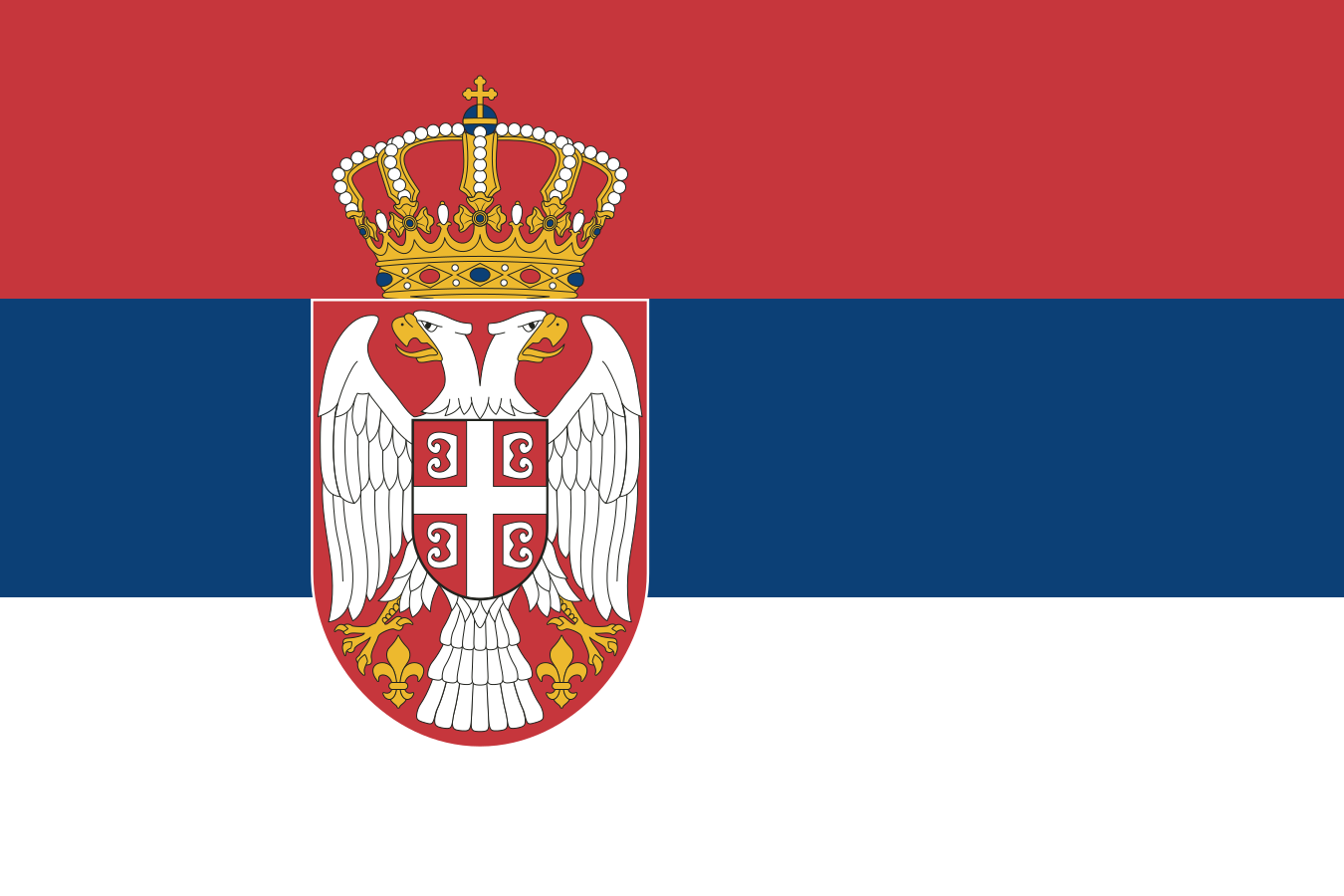
Serbia aligns itself with the statements made by the observer of the European Union and the representative of Portugal on behalf of the informal group of observer States to the Conference on Disarmament. I would like, however, to make a few additional remarks on this matter from my country’s perspective.
Serbia co-sponsored resolution 65/93 on the follow-up to the High-level Meeting held on 24 September 2010 on revitalizing the work of the Conference on Disarmament and taking forward multilateral disarmament negotiations, and was among the countries that initiated the plenary debate in the General Assembly on these important issues in the belief that it would provide an important additional stimulus to breaking the long-standing deadlock of the Conference.
Productive multilateralism in the areas of arms control, non-proliferation and disarmament is not only necessary but also attainable if we all work in a spirit of cooperation, compromise and flexibility, as well as strategic foresight. Political will is a first step, but it must be translated into concrete action. 1t is our strong conviction that this is the only way forward in a world of increasing interdependence and complexity in which common challenges require common solutions.
Serbia believes that the most appropriate way to reaffirm the significance of the Conference on Disarmament as an indispensable element of the multilateral disarmament machinery is to make it more efficient and effective. Intensified efforts are required to overcome existing differences and enable the Conference to resume its original function as the world’s sole multilateral disarmament negotiating body. Serbia expects all States members of the Conference to demonstrate clear political will to engage, seriously and without delay, in substantive discussions on the core issues on its agenda in order to make a credible contribution to international peace and security.
While acknowledging that the specific national security interests of Member States are often reflected in the work of the Conference, we expect all of them to work towards finding a compromise solution that, while not detrimental to those interests, will make it possible for us to overcome the ongoing stalemate and create the conditions required to bring the necessary dynamism to the work of the Conference.
In pledging its support for this debate, Serbia was also guided by the need to regulate the status of the States observers to the Conference and to start negotiations on the questions contained in the action plan adopted at the 2010 Review Conference of the Parties to the Treaty on the Non-Proliferation of Nuclear Weapons. The continued deadlock in the work of the Conference is a serious stumbling block to the implementation of the measures provided for by the action plan. Nonetheless, the success of the last year’s High-level Meeting makes it incumbent on us to invest new effort into achieving the goals of the plan.
The results achieved within the Conference on Disarmament — of whose work Serbia, as an observer State, has been a staunch supporter — have universal importance. It is therefore essential to ensure that the Conference’s work reflects the complexity of the risks and challenges that all members of the United Nations face in a changing international security environment. Bearing that in mind, it will not be possible to revitalize the work of the Conference without addressing the question of its membership expansion. For Serbia, this is an issue of great importance, especially in light of our repeatedly expressed interest in becoming a member of the Conference.
The danger of the proliferation of weapons of mass destruction and their means of delivery presents the greatest challenge to international peace and security today. The Conference on Disarmament faces many obligations which it has to address. It will be able to achieve its goals if it can begin to tackle these obligations in an effective way as the sole multilateral negotiating forum in the field of disarmament. There is no doubt that continuing the current state of stagnation in the work of the Conference will serve only to amplify requests that appropriate solutions be arrived at urgently.
In conclusion, let me point out that Serbia believes that this debate will be an important step forward in revitalizing the work of the Conference and expanding its membership.


Nigeria welcomes the convening of this follow-up debate to the High-level Meeting on Revitalizing the Work of the Conference on Disarmament and Taking Forward Multilateral Disarmament Negotiations.
At the outset, I wish to align myself with the statement made by the representative of Egypt on behalf of the Non-Aligned Movement, as well as the statement made by the representative of the Netherlands on behalf of 40 other cross-regional Member States. I would also, however, like to make the following statement in my national capacity.
Nigeria commends the President for convening this debate, which provides an opportunity to assess the progress made since the adoption of resolution 65/93 on revitalizing the work of the Conference on Disarmament and taking forward multilateral disarmament negotiations, and to move beyond mere deliberations and rhetoric to action without further delay.
It is regrettable that for more than a decade the multilateral disarmament machinery, and the Conference in particular, have not met the international community’s expectations, as expressed in the Outcome Document of the first special session on disarmament in 1978 (resolution(S-10/2) and in the decisions and recommendations contained in numerous resolutions, as well as in the outcome document of the Review Conference of the Parties to the Treaty on the Non-Proliferation of Nuclear Weapons (NPT/CONF. 2010/50 (Vol. I)). Nigeria notes that the Conference has not fulfilled its mandate to address the pressing
security challenges facing the international community through effective multilateral arms control, disarmament and non-proliferation instruments.
The convening of this plenary is a demonstration of our collective resolve to realize the vision of a world without nuclear weapons, and indeed a global society where the huge resources committed to the development, production and possession of nuclear and similar weapons of mass destruction are deployed for global good, growth and development. This is a token of the debt we owe to future generations and humankind as a whole.
In the margins of the 2011 substantive session of the United Nations Disarmament Commission (UNDC), Nigeria joined more than 40 like-minded United Nations Member States in calling for the convening of today’s meeting. The moral impetus was the need to demonstrate the dangers that our failure to act today portend for tomorrow, including the fact that that we will then be left trying to persuade future generations of the need for disarmament. We must therefore seize both the momentum and the opportunity presented to us by this High-level Meeting to further reaffirm our commitment to promoting the ethos of multilateralism in disarmament and non-proliferation negotiations.
Nigeria is convinced that functioning multilateral security institutions are a vital component of global security, and we find the stalemate in the Conference on Disarmament unacceptable. The lack of progress for several years on new multilateral disarmament instruments has unquestionably affected our shared security in the twenty-first century and weakened the multilateral disarmament system.
Nigeria also notes the many concerns raised by Member States concerning the uninspiring Conference negotiations in Geneva. The Assembly will of course recall the increasing unease on the part of several member States over what was considered to be a deliberate ploy to slow down the process. This opinion was expressed and well documented on the occasion of President Deiss’ visit to Geneva in March 2011, as well as by the Secretary-General and members of his Advisory Board on Disarmament Matters.
As an extension of this problem, the UNDC has also failed to promote recommendations to move the process in the envisaged direction. Despite what initially appeared to be the fair intentions of member
States in April, Nigeria notes the rather painful inability of the three groups to produce concrete recommendations and/or reach a landmark consensus on the issues presented for consideration. In our estimation, this failure served as a clear reminder of the enormous challenges we collectively face in the wider multilateral disarmament machinery.
Nigeria calls on nuclear-weapon States to consider, as a top priority, the total elimination of their nuclear arsenals in accordance with relevant multilateral legal obligations. This approach will be understood as a measure of their readiness to implement their unequivocal undertakings in the year 2000 and at the 2010 Non-Proliferation Treaty Review Conference to accomplish the total elimination of nuclear weapons.
Our inability to overcome this crisis is causing us to lose precious time. We should spare no effort to break the impasse as we approach the year 2012. Nigeria is supportive of the Conference on Disarmament as the sole multilateral negotiating body on disarmament. We also believe in the relevance of the United Nations Disarmament Commission as the only specialized deliberative body within the United Nations multilateral disarmament machinery. It is hoped that the Conference on Disarmament will advance the agenda of nuclear disarmament, including, inter alia, negotiations on a nuclear weapons convention, negative security assurances and the anticipated fissile materiel cut-off treaty.
In this regard, our deliberations should provide us with a suitable platform to address, in a transparent and inclusive manner, all possible future options for taking multilateral disarmament negotiations forward in an effective manner and in an outcome-oriented spirit.
In conclusion, Nigeria will continue to constructively engage Member States in this endeavour, with a view to assisting the President of the General Assembly and the Secretary-General to attain the lofty goals of multilateral disarmament negotiations.


It is with real interest that my delegation is participating in this important debate. We align ourselves with the statement made by the representative of Egypt on behalf of the Non-Aligned Movement.
The Kingdom of Morocco is fully convinced that the creation of a nuclear-weapon-free world necessarily will require the effective efforts of the United Nations disarmament machinery, in particular the Conference on Disarmament. We find it difficult to admit that, whereas multilateral initiatives thrive successfully at the margins of the Conference on Disarmament, Member States find themselves incapable of agreeing even on a programme of work for the Conference. It is imperative to unblock this anachronistic situation. I would therefore like to share the following considerations with the Assembly.
First, it is frustrating and counterproductive to constantly bring the discussion within the Conference on Disarmament back to the starting point. After more than 30 years of discussions and negotiations, that forum has amassed a large number of proposals and ideas likely to move its work towards the attainment of its objectives.
Secondly, it is equally unacceptable to claim that the Conference on Disarmament operates in isolation. Let us be clear — no body or instrument could be capable of guaranteeing effective progress in disarmament in the absence of real political will and a favourable international context.
Thirdly, the rule of consensus was adopted to rally the maximum support behind decisions by making it possible for each Member State to influence the decision-making process. It must be stressed, however, that consensus should not be used as a blocking tool. While we respect the legitimate, sovereign right of member States to accept or reject proposed decisions, they must give proof of flexibility and responsibility.
Fourthly, the Conference on Disarmament, which has proven itself to be effective and successful in the past, is still the appropriate framework to move negotiations on disarmament forward. To that end, that body is called upon to adopt a comprehensive, integrated and pragmatic approach. In an era of globalization, the security of a country or a region is more than ever closely linked to the security of the rest of the world. Similarly, international security cannot be preserved or strengthened without taking legitimate national or regional security considerations on board; hence, the great importance of adopting an approach that takes national, regional and global security into account.
Fifthly and lastly, my country reiterates its attachment to the United Nations disarmament mechanisms. To that end, we call for caution with respect to the temptation to launch negotiations outside the Conference on Disarmament and other multilateral forums. While such a step could accelerate negotiations, it could risk leading to results that would not be recognized by several countries and of accentuating dissension in the international community concerning disarmament and non-proliferation, which, on the contrary, call for the broadest consensus possible.
I now come to the essential elements of this consensus, which my delegation would describe as follows. The first component of consensus is responsibility, both shared and differentiated. Morocco believes that nuclear-weapon States have a particular responsibility in nuclear disarmament and non-proliferation. Practical steps are required to give new impetus to multilateral nuclear disarmament efforts. Essentially two actions would be involved. First, nuclear-weapon States would be invited to accept the establishment of a long-term framework that could guarantee confidence in this effort. Secondly, we would have to launch the process of implementing the 1995 resolution on the Middle East. In that regard, it is crucial to ensure the success of the 2012 international conference on the Middle East, which will have to be based on the action plan adopted by the Review Conference of the Parties to the Treaty on the Non-Proliferation of Nuclear Weapons.
The second component of consensus is the parallel negotiation of a treaty banning the production of fissile material for nuclear weapons and an instrument for negative security assurances, which would constitute a major advance and a confidence- building measure that would give impetus to nuclear disarmament.
The third component is the re-establishment and preservation of the Conference on Disarmament in its primary role as the sole multilateral negotiating body on disarmament.
The fourth component of consensus is the strengthening of nuclear non-proliferation, security and safety, in scrupulous respect for the norms established by the competent international bodies, which could benefit from the support and expertise of regional and international initiatives. These standards should
develop in response to the new global challenges. It is of paramount important to provide the International Atomic Energy Agency with the means to enable it to fully carry out its mandate.
The fifth and final component of consensus consists in the promotion of the peaceful uses of nuclear energy by strengthening technical cooperation, whose financing should no longer be voluntary.
My delegation has followed with interest the presentation of certain proposals on the revitalization of nuclear disarmament efforts, both at today’s debate and at the meeting held on 24 September 2010. My delegation remains ready to consider them in a spirit flexibility, compromise and commitment.
Achieving peace through disarmament would benefit all humankind. We should spare no effort to realize a world free of nuclear weapons and less disposed to the arms race at the expense of the need to fight against poverty, epidemics and the degradation of our environment.


The delegation of Ecuador would like to start by affirming its endorsement of the statement made by the representative of Egypt on behalf of the Movement of Non-Aligned Countries.
The situation that currently prevails in the Conference on Disarmament is most certainly of concern to all States. In that regard, bold efforts will be needed to find a solution. It is necessary to bear in mind that such efforts must be governed, inter alia, by the principles of inclusion and multilateralism and that any other way to overcome that situation must arise from discussion and negotiation among all States.
In that context, my delegation wonders why the same concern and interest are not shown with regard to all elements of the Conference on Disarmament’s programme of work, in which only one seems to have priority. For Ecuador, a fissile material cut-off treaty is as important as an agreement on nuclear weapons or negative security assurances. That is the reasoned position of a country that does not possess nuclear weapons as it believes that they are dreadful and that, like the vast majority of States, advocates a world without them. However, to date, the international community has not been able to envisage any instrument whereby nuclear States guarantee that they will refrain from using nuclear weapons against those
States without them while the process to completely eliminate such weapons is concluded. That systematic refusal is an example of the scant political will towards States fulfilling their commitments and obligations in the area of nuclear disarmament and non-proliferation.
In that regard, the stagnation in the Conference on Disarmament also reflects that lack of political will. Besides the legal implications regarding their implementation, the nuclear disarmament and nuclear non-proliferation processes must be seen as interlinked. However, it would seem that within the Conference of Disarmament the sole interest and concern is to make progress on nuclear proliferation matters, relegating or, worse still, marginalizing any possibility of progress on nuclear disarmament.
The solution to the stagnation that the Conference of Disarmament is experiencing would seem to stem not from its structure or its procedures. States will see themselves in that same situation in any other forum with a new structure or new procedures, since its causes are political. Hence, the efforts that I mentioned at the beginning of my statement must be directed at bringing the positions within the Conference on Disarmament closer together by means of clear and transparent communication that reflects the will of parties to start talks seeking to begin negotiations on all outstanding matters, that is, an agreement on nuclear weapons, negative security assurances, the prevention of an arms race in outer space and a fissile material cut-off treaty, which, in my delegation’s view, must deal with present and future stockpiles. Ecuador believes it appropriate and necessary to convene the fourth special session of the General Assembly devoted to disarmament.
Finally, it is necessary to analyse to what extent doing away with consensus would help to bring about the desired universal agreements, since there is a risk of the various viewpoints on the effects and consequences of the outcome of the negotiations causing the lack of participation and accession of some of the actors concerned. That would seriously undermine the required effectiveness of agreements of such scope, sensitivity and significance.


At the outset, like other speakers, I would like to commend both the Secretary-General and the President of the General Assembly for convening this debate dedicated to revitalizing the Conference on Disarmament. Let me
also express my delegation’s appreciation to the Advisory Board on Disarmament Matters, which, at the request of the Secretary-General, met in Geneva for an in-depth analysis of the Conference on Disarmament’s current stalemate.
Romania supports the statement delivered by the Acting Head of the Delegation of the European Union to the United Nations. Since Romania was one of the signatories of the letter requesting this plenary meeting to be convened (A/65/836, annex), we also support the statement made by the representative of the Netherlands on behalf of the signatory countries. It is my privilege to also present some brief remarks in my national capacity.
Signing the letter asking for this debate and our presence here are clear signals of the importance that my country attaches to enhancing the multilateral disarmament agenda. Romania shares the conviction that, in today’s world, peace and security must be addressed from a global perspective. Disarmament and arms control are the keystones of any global security architecture. However, an efficient multilateral security system and effective multilateral disarmament machinery must be built on cooperation and a common understanding of our global challenges and threats.
Since the beginning of 2010, we have witnessed positive premises for a global multilateral agenda. The signing of START II and the first Nuclear Security Summit in Washington, D.C., gave us hope that the vision of complete nuclear disarmament could be achieved. The successful outcome of the 2010 Review Conference of the Parties to the Treaty on the Non-Proliferation of Nuclear Weapons and its Final Document called for enhanced action in the international disarmament and non-proliferation regime, including for the Geneva disarmament community.
We also shared the international community’s expectations that last year’s High-level Meeting, held here in New York, should have given impetus to concrete and important developments for the Conference on Disarmament in Geneva to remain in tune with the current international environment. So far, the Conference on Disarmament has not met our expectations, but we must join efforts on further steps taking us in that direction.
Romania strongly supports the Conference on Disarmament as a major framework for nuclear issues,
acknowledging its value to international peace and to strengthening world security. Its negotiating role must be preserved and reinforced. We share the conviction that the Conference should move forward and resume its role as a negotiating forum. The long-term deadlock poses a serious problem and has to come to an end.
For many years, we have witnessed continuous efforts to overcome the stalemate. We have been called upon to address the problem now. We are aware that in a forum of dialogue and negotiations with 65 members whose decisions are taken by consensus it is difficult to gain universal support. But it should not be impossible to at least agree on a programme of work. Although the current deadlock should not be exaggerated, we must be aware that States may turn to other ways and means of negotiating international disarmament agreements outside the Conference. Romania has stated many times that this scenario is in nobody’s interest.
As the representative of Austria said in Geneva on 9 June, in a statement that the Romanian delegation supported, we do not have too many options within our grasp. On the one hand, we must examine the working methods of the Conference on Disarmament, including its procedures and operational principles. On the other hand, we must also seek other measures that can help us overcome this stalemate in the Conference, which has gone on too long.
Romania is committed to serious involvement in the work of the Conference aimed at achieving the resumption of its mandate as a negotiating body and building on the programme of work (CD/1864) adopted by consensus in May 2009. In our view, one of the key issues for an irreversible nuclear disarmament process is the negotiations in the Conference on a fissile material cut-off treaty. The security concerns of all must be addressed through the negotiation process. That is the essence and value of multilateral diplomacy. The engagement in those negotiations of the whole Conference membership is crucial to the disarmament agenda.
Let me conclude by reiterating that Romania still shares the conviction that the political support lent to the Conference on Disarmament on 24 September 2010, as well as our valuable contributions in this debate, are capable of giving the Conference the impetus to resume its role as a negotiating forum. Romania genuinely hopes that we will eventually
identify the best way to witness, in the near future, the reinvigoration of multilateral disarmament.

We have heard the last speaker on this item. The Assembly has thus concluded this stage of its consideration of agenda item 162.
13. Integrated and coordinated implementation of and follow-up to the outcomes of the major United Nations conferences and summits in the economic, social and related fields The Acting President: The General Assembly will resume its consideration of agenda item 13 to discuss the challenges related to realizing the human right to water and sanitation in the context of the Millennium Development Goals. Members will recall that the Assembly held a debate on these challenges at the 114th plenary meeting on 27 July but did not exhaust its list of speakers.


At the outset, we congratulate the President of our brother Plurinational State of Bolivia, Mr. Evo Morales Ayma, who, in taking the initiative to convene this meeting, has greatly helped to highlight the importance of the human right to water and sanitation.
Every member of the international community has a duty and a responsibility to seek a fair balance between the development of our peoples, through sustainable economic growth, and respect for our natural resources as the source of life, with the aim of improving the people’s welfare in every area. With less than four years remaining until the date established by the Millennium Development Goals (MDGs) for halving the percentage of people who have neither access to drinking water nor the material and financial resources needed for basic sanitation services, we note with concern that progress continues to be slow and inadequate. Currently, almost a third of the world’s population lacks the necessary access to sanitation, and about one seventh lacks, or cannot afford, access to a human right as vital as safe drinking water. In that context, the fact that more than 1.5 million children under five years of age die as a result of that lack of access is a harsh and unacceptable reality.
In Paraguay we fully support the principle that access to and a supply of drinking water and basic sanitation are an indissoluble part of and absolutely
essential to the full enjoyment of human rights. Our Government therefore has continued to commit all the resources necessary to ensure that those services are fully available to the entire population as soon as possible. Likewise, we urge the entire international community to redouble its efforts in this direction, particularly now at a time when we continue to feel the effects of the global economic crisis and the devastating results of natural disasters.
For that reason, we firmly believe that the international community is at a historic crossroads in its rendezvous with destiny. We believe that the 2012 Rio+20 Conference on Sustainable Development should provide an unequalled occasion for reasserting, with all determination, our commitments and efforts in this area, so as to ensure that future generations can live in a world with a more harmonious balance between human development and the use of our environment’s resources.


As one of the sponsors of resolution 64/292, I would like to take this opportunity to welcome the adoption of that resolution, which recognized that the right to water and sanitation is essential to the full enjoyment of life and all human rights. I would like to express our gratitude to President Morales of Bolivia for his participation and insightful remarks two days ago, and to commend the leadership of the delegation of Bolivia as author of the resolution.
Safe drinking water and sanitation are vitally important to preserving human health, particularly in children. The deaths of millions of children every year are caused by unsafe water and lack of adequate sanitation. As we speak, approximately 900 million people have no access to drinking water, while 2.6 billion, including almost 1 billion children, have no access to basic sanitation. The international community cannot ignore these dramatic figures.
Over the years, my Government’s efforts have focused on improving both urban and rural water supplies and sanitation. Our experience underscores the importance of concurrent efforts by Government and donors. Here are some vivid examples of such collaboration.
More than a year ago, the United Water Supply Company of Georgia was set up on the basis of our 62 municipal water supply enterprises. The company has collaborated successfully with two major donors in the
water-supply sector, most notably the Millennium Challenge Corporation. A year ago an agreement was signed with the Asian Development Bank in the water management sector, encompassing the full rehabilitation of the water supply and sanitation systems for six urban centres in Georgia. Last year, another agreement was signed with the European Investment Bank. To implement those agreements, works are currently under way in 28 municipalities in Georgia. An important step was the creation of electronic maps of the country’s water-supply system. The system monitors and posts alerts for damage, reducing wastage and financial costs. Special measures are being taken to control river basin contamination. A new terminal for processing biological waste was recently constructed in south-east Georgia to ensure the protection of the river and nearby population.
While noting this modest progress, we acknowledge the challenges still facing us. More needs to be done at both the national and international levels. In this regard, we support the efforts of the United Nations family and look forward to further discussions on the realization of the human right to safe and clean drinking water and sanitation and their impact on the achievement of the Millennium Development Goals.


We would like to thank the President of the General Assembly for having convened this plenary meeting, as well as the President of the Plurinational State of Bolivia, His Excellency Mr. Evo Morales Ayma, for his initiative on the human right to water and sanitation.
Argentina supports the progressive development of international human rights law, recalling that the principal international human rights treaties on civil and political rights and economic, social and cultural rights became cornerstones of the Argentinean legal system following the revision of the national Constitution in 1994.
In this context, the importance of access to safe drinking water and basic sanitation services to the protection of human health and the environment has been recognized by several international documents supported by Argentina. Argentina also sees it as a principal responsibility of States to ensure their peoples’ right to water as a prerequisite for ensuring the right to life and an adequate standard of living.
In keeping with this position, Argentina voted in favour of resolution 64/292 on the human right to
water and sanitation at the sixty-fourth session of the General Assembly. Nevertheless, Argentina reiterates its statement on that occasion that the right to water and sanitation is a human right that each State must ensure for the individuals under its jurisdiction and not with respect to other States.
This position is in keeping with resolution 1803 (XVII) on the permanent sovereignty of States over their natural resources, and, in the regional context, paragraph 33 of the Declaration of Caracas on the environment, adopted on 29 April on the occasion of the meeting of the Ministers of the Environment of Latin America and the Caribbean, which states that the right to safe drinking water and sanitation is a human right essential to the full enjoyment of life and all human rights, and that the States of the region, in accordance with their respective national legal frameworks, will ensure this right for the individuals under their jurisdiction, ratifying sovereignty over their natural resources.
My delegation welcomed the presence of the President of the Plurinational State of Bolivia, His Excellency Mr. Evo Morales Ayma, on Wednesday, and thanks him for his focus on this fundamental issue one year after the adoption of resolution 64/292 on the human right to water and sanitation.
The Constitution of Ecuador recognizes the human right to water as a fundamental and permanent right, and water as a strategic national asset for public use that is inalienable, imprescriptible, ineluctable and essential to life. Article 411 of the Constitution guarantees the conservation, recovery and comprehensive management of water resources and environmental flows.
Articles 71 and 74 of the Constitution of Ecuador recognize the rights of nature and establish the right of persons, communities, peoples or nationalities to demand of public authorities the full respect for the existence, maintenance and regeneration of their life cycles, structures, functions and evolutionary processes. In this way, it seeks to ensure that persons, communities, peoples and nationalities can enjoy the benefits of water, and thereby live well.
Through this approach, the Ecuadorian Government promotes policies aimed at realizing the human right to water enshrined in our Magna Carta, and addresses the need to safeguard the resources for
sustainable human development and access to the elements that are essential for life, such as this vital liquid. These constitutional principles adopted by Ecuador reflect an appropriate vision of water that goes beyond the materialistic view of it as merchandise for use and consumption. The adoption of this concept as a human right undoubtedly represents an important step forward in Ecuadorian public policy. Our challenge is to ensure that water and biodiversity are treated as strategic assets.
Managing water assets through a comprehensive and integrated approach to ensure the population’s access — a right shared by every human being — is a priority responsibility that has been fully assumed and requires the joint efforts of local Governments and society as a whole.
Water is a special element in the traditions and lives of peoples and nations, their practices and relations with the environment. Water, territory and land are the basic materials allowing for the existence and reproduction of culture; the conservation of diverse identities depends on them, encouraging human beings to live in harmony with nature. It is therefore crucial that States ensure the quality of water and sanitation.
Despite the historic progress attained in Ecuador, much remains to be done to put these principles into practice for the benefit of our country. Moreover, Ecuador hopes that these rights will be recognized and implemented by all nations, especially in the light of the danger humankind faces of losing its natural freshwater reserves.
Finally, my delegation reiterates Ecuador’s commitment to this fundamentally important issue and our resolve to continue implementing the recommendations contained in resolution 64/292. We wish to underscore the need to further explore international cooperation to support States in their efforts.


Portugal shares the views expressed in the statement made earlier in this debate by the observer of the European Union.
We consider achieving the objective of halving the proportion of the population without sustainable access to safe drinking water and basic sanitation to be a top priority. The fact that almost 1 billion people still lack access to safe drinking water and that around 2.5 billion people do not have access to sanitation has
enormous human, economic and development impact. Access to water and sanitation is a necessary precondition for the proper implementation of the human right to health, food and education and the rights of the child. Ultimately, it is essential to the realization of the fundamental principle of human dignity. Access to water and sanitation therefore cannot be considered without taking into account the perspective of human rights. Portugal therefore warmly welcomed the recent recognition of the human right to water and sanitation contained in resolution 64/292 and Human Rights Council resolution 15/9.
The crucial difference that emerges when we talk of human rights in this field is that we move from simple charity to legal obligation, from simple desirability to accountability for ensuring that water and sanitation are accessible, safe, affordable and available to all without discrimination, with all countries bearing the responsibility for ensuring their continued efforts to realize the human right to water and sanitation within their available resources.
In Portugal we are very much committed to implementing the human right to water and sanitation. My country has made great efforts to increase access to this human right. The numbers speak for themselves. Drinking water supplies and waste water treatment services to end-users are also legally classified as public essential services and subject to special regulations intended to protect users against possible abuses from providers.
Our national water and waste services regulation has played a critical role in ensuring universal access to water and sanitation and has promoted best practices in implementing the human right to water and sanitation, aimed at controlling the affordability of water and sanitation services. Such measures are designed to meet the criteria of availability, accessibility, quality, safety, affordability, acceptability, non-discrimination, participation, accountability, impact and sustainability defined by the Special Rapporteur as essential aspects of the adequate realization of this human right. Respect for those criteria is also a guiding principle of our national strategic plan for water supply and waste water services.
In conclusion, let me take this opportunity to express our thanks for the presence at the beginning of this meeting of the Special Rapporteur on the human
right to water and sanitation. Portugal welcomes the extension, by consensus, of her mandate, granted at the sixteenth session of the Human Rights Council, and we welcome her very relevant work, which includes the progress she has made in collecting information on best practices and for the comprehensive, transparent and inclusive consultations she has held with relevant and interested actors from every region for her thematic reports and during her country missions.


I would like to heartily welcome the President of the Plurinational State of Bolivia, Mr. Evo Morales, and to thank the Special Rapporteur on the human right to safe drinking water and sanitation, Ms. Catarina de Albuquerque, for her informative statement.
A year has passed since the Assembly’s adoption of resolution 64/292 on the human right to water and sanitation. As a developing country, we support its appeal to States and international organizations to share financial resources, build capacity and transfer technology through international cooperation and aid, particularly to developing countries, with the aim of enhancing efforts to provide safe, clean and accessible drinking water and sanitation services to all.
Kyrgyzstan adheres strictly to the Millennium Development Goals (MDGs), including the goal of halving by 2015 the proportion of people who lack access to drinking water and sanitation services. We share the view of States that access to safe drinking water and sanitation services is integral to the right, enshrined in the International Covenant on Economic, Social and Cultural Rights, to a decent standard of living.
More than 90 per cent of Kyrgyzstan consists of mountainous terrain containing glaciers that supply water for its people, livestock and crops. According to experts’ calculations, the supply of fresh water in Kyrgyzstan’s glaciers amounts to some 650 billion cubic metres. Over the past 40 years, as a result of global climate change, the surface area of our glaciers has shrunk by 20 per cent, and in another 20 years it may shrink by another 30 or 40 per cent. At that rate, by the year 2100 Kyrgyzstan’s glaciers may have disappeared altogether, and we run the risk of facing a catastrophic shortage of fresh water for the inhabitants of the entire region. Besides global warming, another factor affecting the security of water resources in Central Asia is the existence of more than 90 uranium
tailings ponds in the region. The situation is complicated by the fact that many such ponds are located in seismically active zones and along the banks of rivers that flow into the Central Asian region’s extensive water basin. If toxic material were to enter the ground waters or rivers, it would be a catastrophe for the region’s drinking and irrigation water supplies.
Today, with the active cooperation of donor countries and international organizations, including the United Nations Development Programme, Kyrgyzstan is implementing a large number of projects designed to provide clean drinking water for its citizens, of which the biggest is the clean water project that is being implemented with the support from the World Bank and the Asian Development Bank and scheduled for completion in 2013. Thanks to this project, some 550 villages in Kyrgyzstan already have piped water, rates of infectious disease have been reduced and the country’s sanitation infrastructure has been improved. Further evidence of the State’s attention to the issue of drinking water is the enactment of special standard- setting laws such as a drinking water act and the Kyrgyz Republic’s code of water laws. Quite recently, on 30 May, Parliament enacted a technical regulation through a drinking water security law designed to protect people’s health and lives from the harmful results of contaminants in water.
Kyrgyzstan supports rational water use and the cooperative development in the area of comprehensive use of Central Asia’s hydro-energy resources, including the introduction of the principles of integrated water resource management at the national and regional levels.


Allow me first to align Slovenia with the statement delivered on behalf of the European Union.
Water is without doubt the global challenge of the twenty-first century. As forecasts show, by 2025 1.8 billion people will live in areas affected by severe water stress as a combined result of climate change, environmental degradation and population growth. Consequently, providing safe water and access to adequate sanitation will become an even greater challenge for many countries.
The Millennium Development Goals (MDGs) call for halving by 2015 the proportion of people without sustainable access to safe drinking water and basic sanitation. Water management and the provision of
water resources, services and sanitation are some of the most cost-efficient ways of addressing all the MDGs. The issue of access to water and sanitation is closely linked to poverty. A lack of access to water and sanitation deprives billions of people, especially women and girls, of opportunities, dignity, safety and well-being. Moreover, access to drinkable and safe water decreases maternal and child mortality and prevents the causes and spread of disease.
To alleviate water stress and achieve the water- related MDGs, improved water governance is necessary. Water governance is foremost about environmentally sustainable water use. However, it concerns more than merely technical measures and is essentially about political decision-making, the inclusiveness of this process, and the participation of all stakeholders. Social inclusion, respect for minorities and the promotion of gender equality are essential to ensuring equitable access to water and sanitation. The efficient use of natural resources, including water, is also at the core of the green economy and a priority for the 2012 United Nations Conference on Sustainable Development.
In the course of 2010, the General Assembly recognized the human right to water and sanitation. Slovenia recognizes the human right to water and sanitation, derived from the right to an adequate standard of living and protected under article 11 of the International Covenant on Economic, Social and Cultural Rights, the Convention on the Rights of the Child and the Convention on the Elimination of All Forms of Discrimination Against Women.
The human right to water and sanitation is inextricably related to the highest attainable standard of physical and mental health, as well as to the rights to life and human dignity. It requires that water and sanitation be available, accessible, affordable, acceptable and of good quality for everyone. The right to water and sanitation is also closely related to the enjoyment of other human rights, including the rights to education, work, health, housing and food.
Water is essential to sustaining life and preserving human health and well-being. It is central to social and economic development and to the preservation of natural ecosystems. It is a major source of energy, necessary for agriculture and for many industrial processes. It is also for this reason that the protection of the environment, with a focus on
sustainable water management, is one of the thematic priorities of Slovenian development cooperation. Slovenia has also consistently supported initiatives at the international level concerning the right to water and sanitation and fully supports the work of the Special Rapporteur on the human right to safe drinking water and sanitation, who visited Slovenia in May 2010 and will submit her report on that mission to the Human Rights Council in September.


Colombia thanks the President of the General Assembly for his welcome initiative to convene this important meeting marking the recognition of the right to safe drinking water and sanitation.
Colombia views the provision of safe drinking water and sanitation as an integral part of the social services that should be provided by a State. Under Colombian law, it is a duty of the State to ensure the effective provision of public services to all people living on the national territory, bearing in mind that such services are subject to the established legal regime and can be provided by the State directly or indirectly, by community organizations or by individuals. In all cases, the State regulates, controls and monitors the services.
In Colombia, the right to water fit for human consumption is fundamental in the context of the full enjoyment of the rights to an adequate standard of living and to health. In this context, we have spared no effort in expanding coverage of the provision of services of the highest quality. Colombia is working through its national water plan to implement its comprehensive water resource management policy, which is divided into three phases — short-term, until 2014; medium-term, until 2018; and long-term, until 2022 — and takes into account the differences and problems specific to each region of my country.
Through this policy, Colombia has set a number of targets, including the following: to conserve at least 80 per cent of the ecosystems that are key to the water supply; to measure and record 60 per cent of water consumption; to maintain at least 55 per cent of water in the good or acceptable categories on the quality index; to strengthen supply measures in all areas with high levels of water scarcity or affected by the El Niño and La Niña effects and climate change; and to halve the percentage of users to be legalized.
The first phase of the national policy, 2010-2014, established 10 priority programmes, including the national pollution control and efficient water resource use programme, the programme to prevent risks linked to the supply and availability of water resources, and the national programme for the legalization of water users. Colombia has established five strategic policy plans at the national and regional levels, providing planning outlines for the management of renewable natural resources and environmental land use, and guidelines for the environmental development of human settlements and social, economic and service activities.
With regard to water resource risk management, bearing in mind the effects of the most recent El Niño and La Niña phenomena, we are making progress in developing risk management in several areas: shortages of water for human consumption and use in other productive activities relating to supply and accessibility; drought, through the conservation of ecosystems linked to the reduction of rainwater; floods and mass movements linked to excess water, which can impact population and infrastructure; and marine and coastal risk management relating to population and infrastructure.
The national Government has also drawn up a national plan for the management for municipal runoff water, identifying the critical drainage basins that exhaust the capacity to assimilate the resource and compromise its quality for different uses, jeopardizing public health, agricultural output, industrial activities, including electricity generation, and broader economic and social development in general. The aim of the plan is to increase the volume of municipal water that is treated and thereby to improve the quality of water resources in the short and medium terms.
The commitment of the Government of Colombia to expanding the provision of safe drinking water and sanitation to its population is clear, and we therefore view it as highly valuable to highlight this topic at this plenary meeting.
New Zealand is pleased to speak in this important debate today.
Few countries would deny the serious consequences of poor access to safe drinking water and sanitation. New Zealand believes that the most positive thing we can do is to take practical steps to provide access to safe and clean drinking water and sanitation.
Indeed, ensuring more sustainable access to safe drinking water and sanitation is essential to the achievement of the Millennium Development Goals (MDGs).
This morning, I would like to briefly focus on the situation within our own Pacific region. A recent report on achieving the MDGs in Pacific island countries noted that at the household level, the most pressing environmental issue for most Pacific island families in their daily lives is access to safe water and improved sanitation. The situation is made worse by climate change and its impacts. For example, sea-level rise could affect water supplies on atolls, while extreme weather events could potentially damage drinking water and sanitation infrastructure unless it is built to a standard that can withstand these events. Atoll communities are particularly vulnerable to climate change.
In addition, growing populations in urban centres are placing pressure on freshwater supplies, creating a stronger need for efficient rainwater harvesting. However, particular care must be taken in these environments with the management of waste water and other sources of pollution. These are delicate ecosystems.
In remote areas, limited financial resources and access to technical skills present challenges for building, operating and maintaining facilities. In towns, rapid urbanization and informal housing developments are putting pressure on facilities.
New Zealand understands the importance of access to safe and clean drinking water and hygienic sanitation facilities. We are working with our Pacific neighbours to support their efforts in this area. For example, in the Cook Islands, we are promoting rainwater harvesting in remote communities and supporting improvements in sanitation facilities. We are also working to improve water supplies in Tokelau, Vanuatu and Kiribati.
New Zealand recently completed two projects with the secretariat of the Pacific Community to improve water quality. Australia, New Zealand, the World Bank and the Asian Development Bank have also collaborated to develop a Pacific region infrastructure facility to assist Pacific island countries to address infrastructure requirements. Projects focus on the long-term challenges of maintaining and
managing infrastructure, including in the water and sanitation sector.
New Zealand acknowledges the need for continued hard work and collaboration in this crucial area. We will continue with efforts to help meet these challenges and take practical steps to provide access to safe and clean drinking water and sanitation.


At the outset, let me thank the President for organizing today’s debate.
I would like to begin by joining others in expressing appreciation to His Excellency Mr. Evo Morales Ayma, President of the Plurinational State of Bolivia, for leading our debate on the right to safe drinking water and sanitation.
Access to safe and adequate drinking water and sanitation is among the keys to the well-being of our populations. Indeed, to reduce by half the proportion of people without sustainable access to drinking water and sanitation has been recognized as one of the Millennium Development Goals (MDGs) to be achieved by 2015.
Sanitation has a strong connection not only with personal hygiene but also with human dignity and well- being, public health, nutrition and even education. Mahatma Gandhi once said “sanitation is more important than independence”. He made cleanliness and sanitation an integral part of the Gandhian way of life. His dream was total sanitation for all.
It is estimated that 2.6 billion people still lack access to basic sanitation, including 1 billion children who lack access to effective sanitary facilities, resulting in avoidable infant mortality. We are also confronted with the challenge of approximately 12 per cent of our population still lacking access to safe drinking water. Given the strong correlation between sanitation and human development, this situation poses a major challenge for our development goals. In India, our Government has therefore taken up this issue as a matter of priority.
In the Delhi Declaration adopted at the Third South Asian Conference on Sanitation in November 2008, it was recognized that access to sanitation and safe drinking water was a basic right. In the past five years, we have increased investment in rural sanitation by as much as six times. Under our total sanitation programme, the Government has reoriented its
approach, with emphasis on the demand-side as a driver for change through the mobilization of local community leadership.
In order to further strengthen programmatic efforts at the grassroots level, we have introduced an incentive-based scheme for local bodies called the Clean Village Award, which has led to community leadership taking up the campaign to bring about total sanitation in our villages as a priority. Local bodies in villages are competing with each other for the award. The programme has also caused an immense number of resources from private sector and civil society organizations to be mobilized in this effort.
At the same time, the Government has also put special focus on expanding access to potable drinking water, which is one of the six core elements of the Government’s flagship Build India programme, under which nearly 300 villages are being added to the drinking water supply network every day.
We are thus happy to say that, despite the challenges of its size and diversity, India is steadily making progress in achieving the targets set under MDG 7.
Sanitation issues need to be given priority in our development policies. The role of community leadership in achieving total sanitation will be crucial, as India’s experience has shown. Sanitation must also be included in an integrated framework of public health policy to ensure that sanitation activities are indeed adequately funded. The provision of safe drinking water can also greatly help to contain the incidence of many waterborne diseases.
At the same time, we need to develop affordable and sustainable sanitation technologies for diverse ecosystems, which is a technology challenge we must work on using both modern science and traditional wisdom and knowledge.
While there is no internationally accepted definition of sanitation, States do have an obligation to create an enabling environment through the collection of disaggregated data, the adoption of national action plans, budgetary support, the recognition of human rights obligations, the raising of public awareness and a realization of human rights obligations to sanitation in a non-discriminatory manner, with special attention being given to disadvantaged groups and with an eye to gender equality.
We joined other countries in supporting the resolution presented by Bolivia last year that recognized the right to access to clean water and sanitation as a human right that is essential for the full enjoyment of the right to life (resolution 64/292). We now will have to further strengthen the ongoing discussions on this issue in the Human Rights Council in Geneva.
The lack of access to sanitation is an affront to human dignity. Our Prime Minister has rightly noted that good sanitation should be a basic birthright. It is our responsibility to ensure that.


I should like to begin by expressing my thanks to His Excellency Mr. Evo Morales Ayma, President of the Plurinational State of Bolivia, for being present at the beginning of this debate and for the leadership role he has played in this matter.
We should also like to thank the President for having convened this important and timely discussion in order to establish a dialogue on the principal challenges linked to the achievement of the human right to clean and safe drinking water and sanitation and its impact on the Millennium Development Goals (MDGs) a year after the adoption of resolution 64/292.
The issue of drinking water and sanitation from the point of view of human rights was the subject of both that resolution and of resolutions of the Human Rights Council in Geneva, and even of the World Health Organization where, on 24 May a resolution entitled “Drinking water, sanitation and health” was adopted.
Chile has shown its willingness to work together with its partners on this issue so that instead of there being 884 million without access to drinking water there are none. The international community is faced with the challenge of supplying drinking water to a growing population. Every day this supply is further hampered by factors such as climate change and the demands for economic development, among other things.
Chile recognizes the importance of drinking water and sanitation for human dignity and underscores the importance of the adoption of resolution 64/292 as an important instrument for the achievement of the MDGs. It is a significant step forward in promoting the population’s access to those vital resources in
accordance with the administrative system of each State. Thus, in addition to voting in favour of resolution 64/292, in the Human Rights Council Chile co-sponsored the resolutions on the right to water and sanitation, the most recent of which was resolution 16/2, adopted by consensus in March.
I underscore the emphasis that the latter resolution, like resolution 64/292 and the Abuja Declaration, signed at the First Africa-South America Summit from 26 to 30 November 2006, places on international cooperation. The Declaration puts particular emphasis on South-South cooperation with regard to water resources by promoting the exchange of information and experience between both regions in order to achieve the Millennium Development Goals. It also recognizes the importance of water as a natural State resource and an essential element for life, with socio-economic and environmental significance, as well as the need to promote its sustainable use for agricultural and industrial purposes.
Resolution 16/2 of the Human Rights Council, together with the extension of the mandate of the Independent Expert on the issue of human rights obligations related to access to safe drinking water and sanitation, requests the Expert to draw up recommendations that ultimately go beyond the end of the process of the Millennium Development Goals, with particular reference to the full realization of the human right to drinking water and sanitation. It also requires the Expert to draw up additional proposals to help achieve the MDGs, in particular Goal 7, which ensures environmental sustainability.
Cooperation and dialogue among States are essential to meeting the challenge of delivering the human right to drinking water and sanitation. Such dialogue and cooperation must take place at all levels, from families and communities to the international level. There is no single issue on the international agenda that countries can act on and resolve alone.


Today, we are discussing a priority issue to us all, since water is a irreplaceable and essential resource that is fundamental to sustainable development and the preservation of life on the planet and to ensuring the health and well-being of the world’s population. Given the growing impact of climate change on arid areas, in particular regions of the world prone to drought, the
problem of providing water to the population is becoming increasingly acute.
In that context, my delegation thanks the representative of Bolivia for the initiative of calling for a General Assembly meeting on the implementation of the human right to water and sanitation. We welcome the participation of His Excellency Mr. Evo Morales Ayma, President of the Plurinational State of Bolivia, at this meeting.
Water often causes political tension among States. A key task of the international community in the management of water resources should be the prevention of conflict through the existing machinery on water cooperation. In that regard, we believe that the adoption at this session, at Tajikistan’s proposal, of resolution 65/154 declaring the year 2013 the International Year of Water Cooperation to have been very timely. Such cooperation offers a unique opportunity for partnership in the area of water and sanitation. That partnership provides certain possibilities, although progress in that key area remains varied and uneven.
We believe that resolutions 55/196 on declaring the International Year of Freshwater, 2003, and 58/217 declaring the International Decade for Action, “Water for Life” 2005-2015, adopted by consensus at Tajikistan’s initiative, played an important role in enhancing awareness, understanding and recognition of the importance of the exploitation and rational use of freshwater resources to achieve sustainable development.
On 22 March 2010, the World Day for Water, at the initiative of the Republic of Tajikistan and pursuant to resolution 64/189, a high-level dialogue to discuss implementation of the International Decade was held in New York. That measure was the starting point for further discussions at the High-level International Conference on the Mid-term Comprehensive Review of the Implementation of the International Decade, “Water for Life”, held in Dushanbe, Tajikistan, on 8 and 9 June 2010. We believe that the impact of those two events strengthened the belief that the issue of water merits greater attention on the United Nations agenda.
The world’s freshwater reserves, in particular in the Central Asian region, have shrunk in recent decades owing to climate change, leading to an ever-sharper decrease in water resources. It is clear that water issues can be resolved only if the linkage between water and
energy resources, food security and climate change are taken into account. Taking such major aspects of current and future global and regional water issues into account is key to their successful solution. In the case of Central Asia, it is clear that developing hydro- energy can help to solve the region’s current and future problems.
It is widely known that in the second half of the twentieth century, the Central Asian region faced a grave environmental crisis: the drying up of the Aral Sea. Given the large-scale increase in new irrigated lowlands, whose surface area rapidly grew from 4 to more than 8 million hectares, the catchment of water from the region’s two key sources — the Amu Darya and the Syr Darya rivers — doubled. That led to a sharp decrease in the size of the Aral Sea, which has lost more than 90 per cent of its volume and 80 per cent of its surface to date.
Today, to the countries of the region must use water resources more efficiently. Unfortunately, not everyone recognizes that the environment is no longer able to sustain large areas for the cultivation of water- intensive crops, such as cotton. Tajikistan calls for the careful use of water and the rehabilitation of outdated irrigation systems in the region, which use more than 50 per cent of Central Asia’s water supply on irrigation. Until concrete steps are taken, the region’s environmental situation will not improve.
Given the rapid growth in the population of the countries of the region, the impact of global climate change and the degradation of the region’s water resources, there is only one solution for the countries of Central Asia, namely, the development of regular, multilateral and mutually advantageous cooperation on the rational and integrated use of water and energy resources. We must address the socio-economic issues of each country in particular, and the rehabilitation of the region’s environment in general.
We believe that the issue of water should also be duly reflected in global agreements on climate change, which has already had a serious impact on freshwater resources. In that regard, the integrated management of water resources must be a key instrument in climate change adaptation. The lead role in this effort belongs to the countries and regions having problems regarding the availability of water resources. Regional and international emergency funds must be set up within the United Nations in order to remove obstacles and
difficulties in the provision of access to clean water and sanitation. In that regard, Tajikistan believes that due attention must be paid to ensuring the right to water and sanitation at next year’s United Nations Conference on Sustainable Development.


I thank the President for convening this important meeting to discuss the human rights to water and sanitation in the context of resolution 64/292 and the global effort to meet the Millennium Development Goals (MDGs). Solomon Islands was a sponsor of resolution 64/292.
My delegation thanks His Excellency Mr. Evo Morales, President of the Plurinational State of Bolivia, for his leadership in highlighting the need for our global community to recognize and make concrete efforts to ensure that the fundamental human right to water and sanitation is fully integrated into the sustainable development programmes for the achievement of the MDGs. We also thank the Special Rapporteur on the human right to safe drinking water and sanitation for her presentation in highlighting many of the challenges we face with respect to water and sanitation.
Water is vital to life, and access to clean and safe drinking water and basic sanitation is essential to a dignified life. The debate we have had over the past two days on the human right to water and sanitation must also address the sustainability of environmental ecosystems that guarantee the availability of water for decent human living.
For many in the least developed countries (LDCs), the mere access to clean and safe drinking water and better sanitation facilities is a survival challenge, especially among the women and children who have to travel long distances to collect water. For many of us in small island developing States, our water sources are becoming brackish due to salt water intrusion into ground water lenses as a result of sea level rise.
We must find durable solutions to water poverty with tangible programmes and resources to enable millions in the LDCs and the developing world to realize their basic right to clean and safe drinking water and sanitation. Proactive management and sustainable use of water and water resources must be part of the overall development frameworks at all levels.
Our focus should be to ensure timely and effective implementation of the commitments under the MDGs and that they are translated into concrete activities on the ground for eradicating poverty by 2015. Many of the LDCs, as we know today, are off track in meeting their targets under the MDGs, in particular with regard to the lack of access to clean and safe drinking water and proper sanitation, resulting in many of the problems of ill health that continue to plague their populations.
The ongoing vitality of water resources for Solomon Islands and many small island developing States continues to be threatened by the impact of climate change due to rising sea levels, coastal erosion, salination of water sources, droughts, floods and king tides. The sustainable management of watersheds and water catchment areas is an integral part of our national effort to address climate change impacts on our fragile ecosystems and livelihoods. Whichever way we look at climate change, it remains a threat multiplier and undermines the sustainability of watersheds and water catchment ecosystems that provide water for human survival.
To address the root causes of the climate change problem is to achieve an ambitious reduction of greenhouse gas emissions into the global atmosphere. Current pledges on greenhouse gas emissions fall short of keeping the rise of global temperatures below 1.5° C. My delegation regrets that, although we continue to echo the importance of preserving environmental ecosystems that sustain water as a life giving resource, the number of countries that have announced their opting out of a second commitment under the Kyoto Protocol does not speak well of our global effort to preserve this vital resource for the survival of humankind. This situation weakens multilateralism and puts many of the LDCs and small island developing States — who make up the 884 million people lacking access to clean and safe drinking water — on the road to an uncertain future.
Many of us in small island developing States and LDCs are already grappling with issues of water security, food security and energy security, inter alia, let alone meeting the internationally agreed development goals, including the MDGs. We must be bold and make the necessary shift in our mindset and political will to address the climate change problem in order to ensure that the health of our global environment is restored to a sustainable level. That will
mean changing our current consumption patterns and the way we do business to include protection of our watersheds from extractive industries pollution, and promoting access to affordable clean technology in order to address environmental problems and set aside adequate resources in support of efforts to provide access to clean and safe drinking water and sanitation to the many for whom this vital human right still remains a remote goal.
In conclusion, last May, the United Nations Conference on the Least Developed Countries in Istanbul adopted the Programme of Action for the decade 2011-2020. A cooperative effort to support the full implementation of the Programme will not only address poverty eradication, but also guarantee the basic human right to clean and safe drinking water and proper sanitation for the millions of poor in these countries.
I now give the floor to the observer of Palestine.


We thank the President for convening this meeting, at the request of the Plurinational State of Bolivia, on the vital issue of the human right to water and sanitation.
Palestine reaffirms that access to safe, clean drinking water and sanitation is a human right essential to the full enjoyment of life and all other human rights that all peoples are entitled to, including people living under foreign occupation. Water is also a primary natural resource over which the Palestinian people have permanent sovereignty in the occupied Palestinian territory, including East Jerusalem, as reaffirmed in numerous relevant United Nations resolutions.
As with all other rights, the Palestinian people’s right to water and sanitation continues to be violated by Israel, the occupying Power, which currently exploits 90 per cent of shared water resources while exerting control over the 10 per cent allowed for Palestinian use. Israel actively prevents Palestinian access to water resources by its ongoing illegal colonization and unilateral policies, including the annexation of Palestinian land through the construction of settlements and the annexation wall in the occupied Palestinian territory, including East Jerusalem. The result is a further reduction in the already meagre water supply available to the Palestinian civilian population.
While Israelis consume an average of 280 litres of water per capita per day, Palestinians are limited to an average of just 60 litres. Most dramatically, in the West Bank, over 50,000 Palestinians in certain communities are forced to survive on a daily average of just 10 to 30 litres per capita, which means that daily water consumption per person is far below the minimum guidelines, set by the World Health Organization (WHO), of 100 litres per day, which has forced vulnerable Palestinians — often poor herding families — to abandon their land and traditional livelihoods and indigenous culture.
The correlation between the lack of access to water and sanitation and forced migration has been clearly identified by the International Organization for Migration and the United Nations elsewhere in the world, but nowhere is this more evident than in Israeli policies and practices in the West Bank.
In the Gaza Strip, where the illegal Israeli blockade has prevented the importation of spare parts and construction materials and the supply of the Palestinians’ equitable share of transboundary water resources, the civilian population is effectively being forced to rely on a drastically deteriorating resource. According to the World Bank, only 5 to 10 per cent of the portion of the aquifer underlying Gaza is drinkable, with more than 90 per cent of all 150 municipal wells having salt and nitrate levels above WHO standards, and thus unfit for human consumption.
Palestinians consume far less water than Israelis because successive Israeli Governments have engineered artificial water shortages throughout the occupied Palestinian territory by stealing water that is rightfully ours, by preventing us from developing even the most basic water infrastructure and by routinely damaging or destroying the little infrastructure we have, such as water wells, rainwater cisterns and treatment plants.
Since 28 July 2010, when the General Assembly voted on resolution 64/292, declaring access to clean water and sanitation to be a human right — a resolution that Israel did not support — the occupying Power has destroyed a total of 41 cisterns, 17 wells and 5 sanitation facilities in the occupied Palestinian territory, which includes 20 cisterns specifically destroyed following the 1 February statement by the United Nations Resident and Humanitarian Coordinator for the Occupied Palestinian Territory,
Maxwell Gaylard, on the continuing demolition of water cisterns in the West Bank. The Humanitarian Coordinator asserted that
“The removal of such critical infrastructure places serious strains on the resilience and coping mechanisms of these communities, who will become increasingly dependent on economically unsustainable sources such as tankered water. Such deliberate demolitions in occupied territory are also in contravention of Israel’s obligations under international law.”
On numerous occasions, water provided in plastic tanks by humanitarian agencies is also confiscated or destroyed, denying vulnerable Palestinian families their human right to water. In recent months, the Israeli occupation forces have specifically targeted two cisterns in the community of Za'atara in the West Bank. Notably, each of these cisterns is over 2,000 years old. Yet, rather than allowing for them to be designated a treasure of antiquity to be protected by UNESCO, measures are being taken to make it difficult for the Palestinian community to respond to Israeli demands to prove ownership of the infrastructure.
While we commend the United Nations for securing more than $3 million for emergency relief from water scarcity to be spent this summer on the tankering of water, the Palestinian leadership emphasizes that this financial commitment to emergency humanitarian responses might not be necessary if the United Nations and its Member States advocated more effectively for the protection of existing water and sanitation infrastructure as well as the development of new water and sanitation infrastructure as highlighted in relevant reports of the World Bank, the United Nations Environment Programme, Amnesty International, Human Rights Watch and B'Tselem.
Israel’s violation of the Palestinian people’s right to clean water and sanitation negatively impacts many other human rights, including their right to food, health, livelihoods and development, thus impeding the Palestinian ability to achieve the Millennium Development Goals targets as an essential part of our effort towards achieving a viable and independent State of Palestine on the basis of the pre-1967 borders.
Palestine reiterates its call to the international community to hold Israel accountable to comply with its legal obligations by respecting the human right to
clean water and sanitation, the equitable and reasonable reallocation of shared water resources in accordance with customary international law and the 1997 United Nations Convention on the Law of the Non-navigational Uses of International Watercourses, and the demand for the immediate cessation of the destruction of Palestinian water and sanitation infrastructure in the occupied Palestinian territory, including in and around East Jerusalem, in flagrant violation of international humanitarian law.
Simply stated, the Palestinian people are thirsting for justice and freedom and they call on all States to compel Israel, the occupying Power, to bring an end to this unjust and deplorable situation and finally bring an end to Israel’s 44-year ruthless military occupation of the Palestinian territory, including East Jerusalem.
We have heard the last speaker on this agenda item. The General Assembly has thus concluded this stage of its consideration of agenda item 13.
6. Election of the Vice-Presidents of the General Assembly Election of the Vice-Presidents of the General Assembly for the sixty-sixth session The Acting President: Members will recall that at its 104th plenary meeting on 22 June, the Assembly elected, in accordance with rule 30 of the rules of procedure of the General Assembly, 20 of the 21 Vice- Presidents of the General Assembly for the sixty-sixth session. There remained the election of one Vice- President from among the African States to take place at a later date. I have been informed by the Chairperson of the Group of African States for the month of July that Mauritius has been selected by the African States to fill one of the seats allocated to Africa as a Vice-President of the sixty-sixth session of the General Assembly. In accordance with paragraph 16 of General Assembly decision 34/401, the election of the Vice- Presidents of the Assembly by secret ballot will be dispensed with when the number of candidates corresponds to the number of seats to be filled. We shall proceed accordingly. Since there is only one candidate for the one seat to be filled by the African States, I declare Mauritius elected Vice-President of the Assembly at its sixty- sixth session. I therefore congratulate Mauritius on its election. Having elected the Chairpersons of the six Main Committees and the 21 Vice-Presidents for the sixty- sixth session of the General Assembly, the General Committee of the General Assembly for its sixty-sixth session has been fully constituted in accordance with rule 38 of the rules of procedure.
The meeting rose at 1.20 p.m.