A/64/PV.54 General Assembly
16. Question of Palestine Draft resolutions (A/64/L.20, A/64/L.21, A/64/L.22 and A/64/L.23) The President: Members will recall that the Assembly held the debate on this item at its 51st to 53rd plenary meetings, on 30 November and 1 December 2009. Before the Assembly takes action on the draft resolutions one by one, I wish to remind members that they will have an opportunity to explain their votes on all of the draft resolutions before and after action is taken on each one. We shall now proceed to consider draft resolutions A/64/L.20, A/64/L.21, A/64/L.22 and A/64/L.23. Before giving the floor to the speaker in explanation of vote before the voting, may I remind delegations that explanations of vote are limited to 10 minutes and should be made by delegations from their seats. I now give the floor to the representative of the United States of America.


With respect to the situation in the Middle East, the United States has clearly stated our policy that there should be two States, Israel and Palestine, living side by side in peace and security. Therefore, we are deeply saddened to be presented once again with unbalanced draft
resolutions that, unlike the General Assembly’s action with respect to any other Member State, geographic area or issue, place demands on Israel while failing to acknowledge that both sides have obligations and must take difficult steps.
While the United States accepts the principle that the General Assembly may look into the practices of individual States, the draft resolutions under this agenda item, in combination with over 15 other draft resolutions that will come before the Assembly this year — as every year — form a clear pattern of institutional bias directed at one Member State of the United Nations.
Of particular concern to the United States are three resolutions concerning entities established more than a generation ago that perpetuate institutional bias. The millions of dollars expended on the Secretariat’s Division for Palestinian Rights, the Committee on the Exercise of the Inalienable Rights of the Palestinian People and the Special Committee to Investigate Israeli Practices Affecting the Human Rights of the Palestinian People and Other Arabs of the Occupied Territories could be better directed towards more pressing issues, including direct assistance to needy Palestinians, as could the staff resources taken up by those entities. The United States provides significant financial support to the Palestinian Authority and to Palestinian refugees receiving support from the United Nations Relief and Works Agency for Palestine Refugees in the Near East, to which the United States is the largest single donor. We reiterate our call for all
Member States to review seriously the continued existence of those bodies, with a sharp focus on what, if anything, they actually contribute towards a solution to the Middle East conflict.
In addition to these three draft resolutions, the General Assembly will consider other draft resolutions that prejudge the outcome of permanent status issues. Those issues properly belong in bilateral negotiations. Resolutions such as these call into question the credibility of the United Nations, which, through the Quartet, has an important role to play in supporting the resolution of the Arab-Israeli conflict.
We believe that through good-faith negotiations the parties can mutually agree on an outcome that ends the conflict and reconciles the Palestinians’ goal of an independent and viable State based on the 1967 lines with agreed territorial swaps, and the Israeli goal of a Jewish State with secure and recognized borders that reflect subsequent developments and that meet Israeli security requirements. Our commitment to achieving a solution, with two States living side by side in peace, is unwavering.

We have heard the only speaker in explanation of vote before the voting.
The Assembly will now take decisions on draft resolutions A/64/L.20, A/64/L.21, A/64/L.22 and A/64/L.23. I give the floor to the representative of the Secretariat to make an announcement.

Before the Assembly proceeds to take action on the draft resolutions, I would like to announce that, since their introduction, Guinea has become a sponsor of draft resolutions A/64/L.21, A/64/L.22 and A/64/L.23.
We turn first to draft resolution A/64/L.20, entitled “Committee on the Exercise of the Inalienable Rights of the Palestinian People”. A recorded vote has been requested. [Subsequently the delegations of Congo, Grenada, the United Republic of Tanzania and Yemen advised the Secretariat that they had intended to vote in favour; the delegation of Albania advised that it had intended to abstain.]
A recorded vote was taken.
15. The situation in the Middle East Draft resolutions (A/64/L.24 and A/64/L.25) The President: Members will recall that the Assembly held the debate on this item at its 53rd plenary meeting, on 1 December 2009. Before the Assembly takes action on the draft resolutions one by one, I should like to remind members that they will have an opportunity to explain their votes on the two draft resolutions before and after action is taken on both of them. The Assembly will now take decisions on draft resolutions A/64/L.24 and A/64/L.25. I give the floor to the representative of the Secretariat to make an announcement.
Vote:
A/RES/64/20
Recorded Vote
✓ 163
✗ 7
5 abs.
Show country votes
— Abstain
(5)
✗ No
(7)





Absent
(17)















✓ Yes
(163)
-
 China
China
-
 Bhutan
-
 El Salvador
-
 Iceland
-
 Yemen
Yemen
-
 United Kingdom of Great Britain and Northern Ireland
-
 Mauritius
-
 Bangladesh
-
 Belgium
-
 Singapore
-
 Ireland
-
 Afghanistan
-
 Benin
Benin
-
 Comoros
-
 Indonesia
-
 Syrian Arab Republic
-
 Saudi Arabia
-
 Ethiopia
-
 Germany
-
 Finland
-
 Sudan
Sudan
-
 Egypt
Egypt
-
 Algeria
-
 Argentina
-
 Austria
-
 Bahamas
-
 Bahrain
-
 Barbados
-
 Plurinational State of Bolivia
-
 Botswana
-
 Brazil
-
 Bulgaria
-
 Burundi
-
 Canada
-
 Chile
Chile
-
 Colombia
-
 Costa Rica
-
 Denmark
-
 Dominican Republic
-
 Ecuador
-
 France
-
 Gabon
Gabon
-
 Ghana
Ghana
-
 Greece
-
 Guatemala
-
 Guinea
-
 Guinea-Bissau
-
 Guyana
-
 Hungary
-
 Islamic Republic of Iran
-
 Iraq
Iraq
-
 Italy
Italy
-
 Jamaica
-
 Japan
Japan
-
 Jordan
-
 Lao People's Democratic Republic
-
 Liberia
-
 Luxembourg
-
 Madagascar
-
 Malaysia
-
 Mali
Mali
-
 Malta
Malta
-
 Mauritania
-
 Mexico
-
 Mongolia
-
 Morocco
-
 Nepal
Nepal
-
 Netherlands
-
 New Zealand
-
 Niger
Niger
-
 Nigeria
-
 Norway
-
 Oman
Oman
-
 Papua New Guinea
-
 Paraguay
-
 Peru
Peru
-
 Philippines
-
 Poland
-
 Portugal
-
 Qatar
Qatar
-
 Romania
-
 Senegal
-
 Sierra Leone
-
 Somalia
-
 Spain
Spain
-
 Sri Lanka
-
 Eswatini
-
 Sweden
-
 Thailand
-
 Trinidad and Tobago
-
 Tunisia
-
 Türkiye
-
 Uganda
-
 Ukraine
-
 United Arab Emirates
-
 Myanmar
-
 India
India
-
 Kenya
Kenya
-
 Lebanon
-
 Maldives
-
 Pakistan
-
 Cuba
Cuba
-
 Cyprus
-
 Kuwait
-
 Togo
Togo
-
 United Republic of Tanzania
-
 Uruguay
-
 Bolivarian Republic of Venezuela
-
 Zambia
-
 Albania
-
 Cambodia
-
 Mozambique
-
 Chad
Chad
-
 Lesotho
-
 Haiti
Haiti
-
 Gambia
-
 Nicaragua
-
 Cabo Verde
-
 Angola
-
 Libya
Libya
-
 Viet Nam
-
 Djibouti
-
 Samoa
Samoa
-
 Suriname
-
 Dominica
-
 Zimbabwe
-
 Saint Lucia
-
 Solomon Islands
-
 Belize
-
 Saint Vincent and the Grenadines
-
 Brunei Darussalam
-
 Liechtenstein
-
 Latvia
-
 Kazakhstan
-
 Belarus
-
 Democratic People's Republic of Korea
-
 Estonia
-
 Lithuania
-
 Namibia
-
 Republic of Korea
-
 Croatia
-
 Russian Federation
-
 Slovenia
-
 Moldova
-
 Bosnia and Herzegovina
-
 San Marino
-
 Armenia
-
 Azerbaijan
-
 Tajikistan
-
 Kyrgyzstan
-
 Turkmenistan
-
 South Africa
-
 Czechia
-
 Slovakia
-
 North Macedonia
-
 Monaco
-
 Andorra
-
 Georgia
-
 Uzbekistan
-
 Eritrea
-
 Switzerland
-
 Serbia
-
 Montenegro
Draft resolution A/64/L.20 was adopted by 109 votes to 8, with 55 abstentions (resolution 64/16).
We turn next to draft resolution A/64/L.21, entitled “Division for Palestinian Rights of the Secretariat”. A recorded vote has been requested.
A recorded vote was taken.
In favour: Afghanistan, Albania, Algeria, Angola, Argentina, Azerbaijan, Bahamas, Bahrain, Bangladesh, Barbados, Belarus, Belize, Bhutan, Bolivia (Plurinational State of), Botswana, Brazil, Brunei Darussalam, Burkina Faso, Burundi, Cambodia, Cape Verde, Chad, Chile, China, Comoros, Costa Rica, Côte d’Ivoire, Cuba, Cyprus, Democratic People’s Republic of Korea, Democratic Republic of the Congo, Djibouti, Dominica, Dominican Republic, Ecuador, Egypt, Eritrea, Ethiopia, Gabon, Gambia, Ghana, Guinea, Guinea-Bissau, Guyana, Haiti, India, Indonesia, Iran (Islamic Republic of), Iraq, Jamaica, Jordan, Kazakhstan, Kenya, Kuwait, Kyrgyzstan, Lao People’s Democratic Republic, Lebanon, Lesotho, Liberia, Libyan Arab Jamahiriya, Malaysia, Maldives, Mali, Malta, Mauritania, Mauritius, Mexico, Morocco, Mozambique, Myanmar, Namibia, Nepal, Nicaragua, Niger, Nigeria, Oman, Pakistan, Panama, Paraguay, Philippines, Qatar, Saint Lucia, Saint Vincent and the Grenadines, Saudi Arabia, Senegal, Sierra Leone, Singapore, Solomon Islands, Somalia, South Africa, Sri Lanka, Sudan, Suriname, Swaziland, Syrian Arab Republic, Tajikistan, Thailand, Togo, Trinidad and Tobago, Tunisia, Turkey, Turkmenistan, Uganda, United Arab Emirates, United Republic of Tanzania, Uruguay, Uzbekistan, Venezuela (Bolivarian Republic of), Viet Nam, Yemen, Zambia, Zimbabwe
Against: Australia, Canada, Israel, Marshall Islands, Micronesia (Federated States of), Nauru, New Zealand, Palau, United States of America
Abstaining: Andorra, Armenia, Austria, Belgium, Benin, Bosnia and Herzegovina, Bulgaria, Cameroon, Colombia, Croatia, Czech Republic, Denmark, El Salvador, Estonia, Fiji, Finland, France, Georgia, Germany, Greece, Guatemala, Hungary, Iceland,
Ireland, Italy, Japan, Latvia, Liechtenstein, Lithuania, Luxembourg, Monaco, Montenegro, Netherlands, Norway, Papua New Guinea, Peru, Poland, Portugal, Republic of Korea, Republic of Moldova, Romania, Russian Federation, Samoa, San Marino, Serbia, Slovakia, Slovenia, Spain, Sweden, Switzerland, the former Yugoslav Republic of Macedonia, Tonga, Ukraine, United Kingdom of Great Britain and Northern Ireland [Subsequently the delegations of Congo and Grenada advised the Secretariat that they had intended to vote in favour; the delegation of Albania advised that it had intended to abstain.]
Vote:
A/RES/64/16
Recorded Vote
✓ 109
✗ 8
55 abs.
Show country votes
— Abstain
(55)
-
El Salvador
-
Iceland
-
United Kingdom of Great Britain and Northern Ireland
-
Belgium
-
Ireland
-
Benin
-
Germany
-
Finland
-
Austria
-
Bulgaria
-
Colombia
-
Denmark
-
 Fiji
Fiji
-
France
-
Greece
-
Guatemala
-
Hungary
-
Italy
-
Japan
-
Luxembourg
-
Netherlands
-
New Zealand
-
Norway
-
Papua New Guinea
-
Peru
-
Poland
-
Portugal
-
Romania
-
Spain
-
Sweden
-
Ukraine
-
Uruguay
-
Samoa
-
 Cameroon
-
Liechtenstein
-
Latvia
-
Estonia
-
Lithuania
-
Republic of Korea
-
Croatia
-
Russian Federation
-
Slovenia
-
Moldova
-
Bosnia and Herzegovina
-
San Marino
-
Czechia
-
Slovakia
-
North Macedonia
-
Monaco
-
Andorra
-
Georgia
-
Switzerland
-
 Tonga
Tonga
-
Serbia
-
Montenegro
✗ No
(8)
Absent
(20)
✓ Yes
(109)
-
China
-
Bhutan
-
Mauritius
-
Bangladesh
-
Singapore
-
Afghanistan
-
Comoros
-
Indonesia
-
Syrian Arab Republic
-
Saudi Arabia
-
Ethiopia
-
Sudan
-
Egypt
-
Algeria
-
Argentina
-
Bahamas
-
Bahrain
-
Barbados
-
Plurinational State of Bolivia
-
Botswana
-
Brazil
-
Burundi
-
Chile
-
Costa Rica
-
Dominican Republic
-
Ecuador
-
Gabon
-
Ghana
-
Guinea
-
Guinea-Bissau
-
Guyana
-
Islamic Republic of Iran
-
Iraq
-
 Côte d'Ivoire
-
Jamaica
-
Jordan
-
Lao People's Democratic Republic
-
Liberia
-
Malaysia
-
Mali
-
Malta
-
Mauritania
-
Mexico
-
Morocco
-
Nepal
-
Niger
-
Nigeria
-
Oman
-
 Panama
-
Paraguay
-
Philippines
-
Qatar
-
Senegal
-
Sierra Leone
-
Somalia
-
Sri Lanka
-
Eswatini
-
Thailand
-
Trinidad and Tobago
-
Tunisia
-
Türkiye
-
Uganda
-
United Arab Emirates
-
Myanmar
-
India
-
Kenya
-
Lebanon
-
Maldives
-
Pakistan
-
Cuba
-
Cyprus
-
Kuwait
-
Togo
-
Bolivarian Republic of Venezuela
-
 Democratic Republic of the Congo
-
Zambia
-
Albania
-
Cambodia
-
Mozambique
-
Lesotho
-
Haiti
-
Gambia
-
Nicaragua
-
Cabo Verde
-
Angola
-
Libya
-
Viet Nam
-
Djibouti
-
Suriname
-
Dominica
-
Zimbabwe
-
Saint Lucia
-
Solomon Islands
-
Belize
-
Saint Vincent and the Grenadines
-
Brunei Darussalam
-
 Burkina Faso
-
Kazakhstan
-
Belarus
-
Democratic People's Republic of Korea
-
Namibia
-
Armenia
-
Azerbaijan
-
Tajikistan
-
Kyrgyzstan
-
Turkmenistan
-
South Africa
-
Uzbekistan
-
Eritrea
Draft resolution A/64/L.21 was adopted by 112 votes to 9, with 54 abstentions (resolution 64/17).
We turn next to draft resolution A/64/L.22, entitled “Special information programme on the question of Palestine of the Department of Public Information of the Secretariat”. A recorded vote has been requested. [Subsequently the delegations of Bahamas, Congo and Grenada advised the Secretariat that they had intended to vote in favour.]
Vote:
A/RES/64/21
Recorded Vote
✓ 116
✗ 7
51 abs.
Show country votes
— Abstain
(51)
-
Iceland
-
United Kingdom of Great Britain and Northern Ireland
-
Belgium
-
Ireland
-
Germany
-
Finland
-
 Australia
-
Austria
-
Bulgaria
-
Denmark
-
Fiji
-
France
-
Greece
-
Hungary
-
Italy
-
Côte d'Ivoire
-
Japan
-
Luxembourg
-
Malta
-
Netherlands
-
New Zealand
-
Norway
-
Panama
-
Poland
-
Portugal
-
Romania
-
Spain
-
Sweden
-
Ukraine
-
Albania
-
Samoa
-
Cameroon
-
Liechtenstein
-
Latvia
-
Estonia
-
Lithuania
-
Republic of Korea
-
Croatia
-
Slovenia
-
Moldova
-
San Marino
-
Czechia
-
Slovakia
-
North Macedonia
-
Monaco
-
Andorra
-
Georgia
-
Switzerland
-
Tonga
-
Serbia
-
Montenegro
✗ No
(7)
Absent
(18)
✓ Yes
(116)
-
China
-
Bhutan
-
El Salvador
-
Yemen
-
Mauritius
-
Bangladesh
-
Singapore
-
Afghanistan
-
Benin
-
Comoros
-
Indonesia
-
Syrian Arab Republic
-
Saudi Arabia
-
Ethiopia
-
Sudan
-
Egypt
-
Algeria
-
Argentina
-
Bahamas
-
Bahrain
-
Barbados
-
Plurinational State of Bolivia
-
Botswana
-
Brazil
-
Chile
-
Colombia
-
Costa Rica
-
Dominican Republic
-
Ecuador
-
Gabon
-
Ghana
-
Guatemala
-
Guinea
-
Guinea-Bissau
-
Guyana
-
Islamic Republic of Iran
-
Iraq
-
Jamaica
-
Jordan
-
Lao People's Democratic Republic
-
Liberia
-
Madagascar
-
Malaysia
-
Mali
-
Mauritania
-
Mexico
-
Mongolia
-
Morocco
-
Nepal
-
Niger
-
Nigeria
-
Oman
-
Papua New Guinea
-
Paraguay
-
Peru
-
Philippines
-
Qatar
-
Senegal
-
Sierra Leone
-
Somalia
-
Sri Lanka
-
Eswatini
-
Thailand
-
Trinidad and Tobago
-
Tunisia
-
Türkiye
-
Uganda
-
United Arab Emirates
-
Myanmar
-
India
-
Kenya
-
Lebanon
-
Maldives
-
Pakistan
-
Cuba
-
Cyprus
-
Kuwait
-
Togo
-
United Republic of Tanzania
-
Uruguay
-
Bolivarian Republic of Venezuela
-
Zambia
-
Cambodia
-
Mozambique
-
Chad
-
Lesotho
-
Haiti
-
Gambia
-
Nicaragua
-
Cabo Verde
-
Angola
-
Libya
-
Viet Nam
-
Djibouti
-
Suriname
-
Dominica
-
Zimbabwe
-
Saint Lucia
-
Solomon Islands
-
Belize
-
Saint Vincent and the Grenadines
-
Brunei Darussalam
-
Burkina Faso
-
Kazakhstan
-
Belarus
-
Democratic People's Republic of Korea
-
Namibia
-
Russian Federation
-
Armenia
-
Azerbaijan
-
Tajikistan
-
Kyrgyzstan
-
Turkmenistan
-
South Africa
-
Uzbekistan
-
Eritrea
A recorded vote was taken.
Vote:
A/RES/64/17
Recorded Vote
✓ 112
✗ 9
54 abs.
Show country votes
— Abstain
(54)
-
El Salvador
-
Iceland
-
United Kingdom of Great Britain and Northern Ireland
-
Belgium
-
Ireland
-
Benin
-
Germany
-
Finland
-
Austria
-
Bulgaria
-
Colombia
-
Denmark
-
Fiji
-
France
-
Greece
-
Guatemala
-
Hungary
-
Italy
-
Japan
-
Luxembourg
-
Netherlands
-
Norway
-
Papua New Guinea
-
Peru
-
Poland
-
Portugal
-
Romania
-
Spain
-
Sweden
-
Ukraine
-
Samoa
-
Cameroon
-
Liechtenstein
-
Latvia
-
Estonia
-
Lithuania
-
Republic of Korea
-
Croatia
-
Russian Federation
-
Slovenia
-
Moldova
-
Bosnia and Herzegovina
-
San Marino
-
Armenia
-
Czechia
-
Slovakia
-
North Macedonia
-
Monaco
-
Andorra
-
Georgia
-
Switzerland
-
Tonga
-
Serbia
-
Montenegro
✗ No
(9)
Absent
(17)
✓ Yes
(112)
-
China
-
Bhutan
-
Yemen
-
Mauritius
-
Bangladesh
-
Singapore
-
Afghanistan
-
Comoros
-
Indonesia
-
Syrian Arab Republic
-
Saudi Arabia
-
Ethiopia
-
Sudan
-
Egypt
-
Algeria
-
Argentina
-
Bahamas
-
Bahrain
-
Barbados
-
Plurinational State of Bolivia
-
Botswana
-
Brazil
-
Burundi
-
Chile
-
Costa Rica
-
Dominican Republic
-
Ecuador
-
Gabon
-
Ghana
-
Guinea
-
Guinea-Bissau
-
Guyana
-
Islamic Republic of Iran
-
Iraq
-
Côte d'Ivoire
-
Jamaica
-
Jordan
-
Lao People's Democratic Republic
-
Liberia
-
Malaysia
-
Mali
-
Malta
-
Mauritania
-
Mexico
-
Morocco
-
Nepal
-
Niger
-
Nigeria
-
Oman
-
Panama
-
Paraguay
-
Philippines
-
Qatar
-
Senegal
-
Sierra Leone
-
Somalia
-
Sri Lanka
-
Eswatini
-
Thailand
-
Trinidad and Tobago
-
Tunisia
-
Türkiye
-
Uganda
-
United Arab Emirates
-
Myanmar
-
India
-
Kenya
-
Lebanon
-
Maldives
-
Pakistan
-
Cuba
-
Cyprus
-
Kuwait
-
Togo
-
United Republic of Tanzania
-
Uruguay
-
Bolivarian Republic of Venezuela
-
Democratic Republic of the Congo
-
Zambia
-
Albania
-
Cambodia
-
Mozambique
-
Chad
-
Lesotho
-
Haiti
-
Gambia
-
Nicaragua
-
Cabo Verde
-
Angola
-
Libya
-
Viet Nam
-
Djibouti
-
Suriname
-
Dominica
-
Zimbabwe
-
Saint Lucia
-
Solomon Islands
-
Belize
-
Saint Vincent and the Grenadines
-
Brunei Darussalam
-
Burkina Faso
-
Kazakhstan
-
Belarus
-
Democratic People's Republic of Korea
-
Namibia
-
Azerbaijan
-
Tajikistan
-
Kyrgyzstan
-
Turkmenistan
-
South Africa
-
Uzbekistan
-
Eritrea
Draft resolution A/64/L.22 was adopted by 162 votes to 8, with 5 abstentions (resolution 64/18).
We turn next to draft resolution A/64/L.23, entitled “Peaceful settlement of the question of Palestine”. A recorded vote has been requested. [Subsequently the delegations of Congo and Grenada advised the Secretariat that they had intended to vote in favour.]
A recorded vote was taken.
Draft resolution A/64/L.23 was adopted by 164 votes to 7, with 4 abstentions (resolution 64/19).
Vote:
A/RES/64/18
Recorded Vote
✓ 162
✗ 8
5 abs.
Show country votes
— Abstain
(5)
✗ No
(8)
Absent
(17)
✓ Yes
(162)
-
China
-
Bhutan
-
El Salvador
-
Iceland
-
Yemen
-
United Kingdom of Great Britain and Northern Ireland
-
Mauritius
-
Bangladesh
-
Belgium
-
Singapore
-
Ireland
-
Afghanistan
-
Comoros
-
Indonesia
-
Syrian Arab Republic
-
Saudi Arabia
-
Ethiopia
-
Germany
-
Finland
-
Sudan
-
Egypt
-
Algeria
-
Argentina
-
Austria
-
Bahrain
-
Barbados
-
Plurinational State of Bolivia
-
Botswana
-
Brazil
-
Bulgaria
-
Burundi
-
Chile
-
Colombia
-
Costa Rica
-
Denmark
-
Dominican Republic
-
Ecuador
-
France
-
Gabon
-
Ghana
-
Greece
-
Guatemala
-
Guinea
-
Guinea-Bissau
-
Guyana
-
Hungary
-
Islamic Republic of Iran
-
Iraq
-
Italy
-
Côte d'Ivoire
-
Jamaica
-
Japan
-
Jordan
-
Lao People's Democratic Republic
-
Liberia
-
Luxembourg
-
Malaysia
-
Mali
-
Malta
-
Mauritania
-
Mexico
-
Mongolia
-
Morocco
-
Nepal
-
Netherlands
-
New Zealand
-
Niger
-
Nigeria
-
Norway
-
Oman
-
Panama
-
Paraguay
-
Peru
-
Philippines
-
Poland
-
Portugal
-
Qatar
-
Romania
-
Senegal
-
Sierra Leone
-
Somalia
-
Spain
-
Sri Lanka
-
Eswatini
-
Sweden
-
Thailand
-
Trinidad and Tobago
-
Tunisia
-
Türkiye
-
Uganda
-
Ukraine
-
United Arab Emirates
-
Myanmar
-
India
-
Kenya
-
Lebanon
-
Maldives
-
Pakistan
-
Cuba
-
Cyprus
-
Kuwait
-
Togo
-
United Republic of Tanzania
-
Uruguay
-
Bolivarian Republic of Venezuela
-
Democratic Republic of the Congo
-
Zambia
-
Albania
-
Cambodia
-
Mozambique
-
Chad
-
Lesotho
-
Haiti
-
Gambia
-
Nicaragua
-
Cabo Verde
-
Angola
-
Libya
-
Viet Nam
-
Djibouti
-
Samoa
-
Suriname
-
Dominica
-
Zimbabwe
-
Saint Lucia
-
Solomon Islands
-
Belize
-
Saint Vincent and the Grenadines
-
Brunei Darussalam
-
Burkina Faso
-
Liechtenstein
-
Latvia
-
Kazakhstan
-
Belarus
-
Democratic People's Republic of Korea
-
Estonia
-
Lithuania
-
Namibia
-
Republic of Korea
-
Croatia
-
Russian Federation
-
Slovenia
-
Moldova
-
Bosnia and Herzegovina
-
San Marino
-
Armenia
-
Azerbaijan
-
Tajikistan
-
Kyrgyzstan
-
Turkmenistan
-
South Africa
-
Czechia
-
Slovakia
-
North Macedonia
-
Monaco
-
Andorra
-
Georgia
-
Uzbekistan
-
Eritrea
-
Switzerland
-
Serbia
-
Montenegro
Before giving the floor to speakers in explanation of vote after the voting, may I remind delegations that explanations of vote are limited to 10 minutes and should be made by delegations from their seats.

Israel voted against the resolutions just adopted and will vote against the draft resolution still before us, as we have done in the past, because we believe that those resolutions do not reflect the reality of our region. They reflect a one-sided political agenda that has been traditionally repeated here year in and year out. They are unhelpful to the conflict, where one side is only right while the other only has obligations.
The peoples in our region need peace based on mutual recognition that is the result of direct bilateral negotiations, which should be resumed as soon as possible and without preconditions. Our region does not need annual biased, unbalanced and one-sided General Assembly resolutions. Instead, the Middle East requires an agreement that will enable us to live side by side in peace and security.

New Zealand wished to explain its vote on two resolutions, namely, resolution 64/17, on the Division for Palestinian Rights of the Secretariat, and resolution 64/18, on the special information programme on the question of Palestine of the Department of Public Information of the Secretariat.
New Zealand has consistently and strongly supported negotiations towards a two-State solution to the Middle East conflict — namely, a viable, contiguous Palestinian State living side by side with Israel in peace and security. As we have previously explained, New Zealand believes that it is essential to approach the issues raised in those resolutions with balance and with regard for the overall purpose and intent of the text in question.
With regard to the resolution on the special information programme, New Zealand supports the dissemination of balanced and objective information on the conflict in the Middle East. We welcome the resolution’s focus on promoting dialogue and understanding between Palestinians and Israelis. Although we voted in favour of the resolution, we call on the Department of Public Information’s special information programme to carry out its mandate in a manner that reflects the full spectrum of perspectives on the question of Palestine, particularly those of both Israel and Palestine.
On the resolution on the Division for Palestinian Rights, New Zealand is not convinced that the Division is a constructive use of resources, and we think it does little to contribute to the Middle East peace process.
That we voted against the resolution does not detract, however, from our strong support for Palestinian self- determination and for the continuation of negotiations leading to a two-State solution.

I have the honour to speak on behalf of the European Union (EU).
The European Union wishes to make to following explanation of vote with regard to resolution 64/19, on the peaceful settlement of the question of Palestine.
The European Union urges the Palestinian Authority and the Government of Israel to enter into serious peace negotiations as soon as possible while respecting international law and previous agreements and implementing their road map obligations. We hereby reiterate the need to ensure a political solution, with two States — Israel and an independent, democratic and viable Palestinian State — living side by side in peace and security.
We welcome the United States Administration’s commitment to pursue vigorously a two-State solution and a comprehensive peace in the Middle East. The EU is ready to work with the parties to the conflict, as well as with the United States and other Quartet members and Arab partners, to achieve that goal.
The European Union remains deeply concerned at the continued settlement activities, house demolitions and evictions in the occupied Palestinian territories, including in East Jerusalem. The EU reiterates that the settlements are illegal under international law and constitute an obstacle to peace.
The European Union is also concerned about the recent developments in East Jerusalem. We have been following closely the situation around the Al-Aqsa mosque, the Temple Mount and Al-Haram Al-Sharif. We urge all parties to refrain from any provocative actions that could further inflame tensions or lead to violence.
The EU remains gravely concerned about the humanitarian situation in Gaza and what is described as, in effect, amounting to a blockade. While acknowledging that crossings are open for the delivery of some basic humanitarian supplies on a relatively frequent basis, they remain at an insufficient level to meet the needs of the population. The EU has consistently called for the immediate and unconditional opening of crossings for the flow of humanitarian aid, commercial goods and persons to and from Gaza, without which the unimpeded delivery of humanitarian
aid, reconstruction and economic recovery will not be possible.
Vote:
A/RES/64/19
Recorded Vote
✓ 164
✗ 7
4 abs.
Show country votes
✗ No
(7)
Absent
(17)
✓ Yes
(164)
-
China
-
Bhutan
-
El Salvador
-
Iceland
-
Yemen
-
United Kingdom of Great Britain and Northern Ireland
-
Mauritius
-
Bangladesh
-
Belgium
-
Singapore
-
Ireland
-
Afghanistan
-
Benin
-
Comoros
-
Indonesia
-
Syrian Arab Republic
-
Saudi Arabia
-
Ethiopia
-
Germany
-
Finland
-
Sudan
-
Egypt
-
Algeria
-
Argentina
-
Austria
-
Bahamas
-
Bahrain
-
Barbados
-
Plurinational State of Bolivia
-
Botswana
-
Brazil
-
Bulgaria
-
Burundi
-
Chile
-
Colombia
-
Costa Rica
-
Denmark
-
Dominican Republic
-
Ecuador
-
France
-
Gabon
-
Ghana
-
Greece
-
Guatemala
-
Guinea
-
Guinea-Bissau
-
Guyana
-
Hungary
-
Islamic Republic of Iran
-
Iraq
-
Italy
-
Côte d'Ivoire
-
Jamaica
-
Japan
-
Jordan
-
Lao People's Democratic Republic
-
Liberia
-
Luxembourg
-
Madagascar
-
Malaysia
-
Mali
-
Malta
-
Mauritania
-
Mexico
-
Mongolia
-
Morocco
-
Nepal
-
Netherlands
-
New Zealand
-
Niger
-
Nigeria
-
Norway
-
Oman
-
Papua New Guinea
-
Paraguay
-
Peru
-
Philippines
-
Poland
-
Portugal
-
Qatar
-
Romania
-
Senegal
-
Sierra Leone
-
Somalia
-
Spain
-
Sri Lanka
-
Eswatini
-
Sweden
-
Thailand
-
Trinidad and Tobago
-
Tunisia
-
Türkiye
-
Uganda
-
Ukraine
-
United Arab Emirates
-
Myanmar
-
India
-
Kenya
-
Lebanon
-
Maldives
-
Pakistan
-
Cuba
-
Cyprus
-
Kuwait
-
Togo
-
United Republic of Tanzania
-
Uruguay
-
Bolivarian Republic of Venezuela
-
Democratic Republic of the Congo
-
Zambia
-
Albania
-
Cambodia
-
Mozambique
-
Chad
-
Lesotho
-
Haiti
-
Gambia
-
Nicaragua
-
Cabo Verde
-
Angola
-
Libya
-
Viet Nam
-
Djibouti
-
Samoa
-
Suriname
-
Dominica
-
Zimbabwe
-
Saint Lucia
-
Solomon Islands
-
Belize
-
Saint Vincent and the Grenadines
-
Brunei Darussalam
-
Liechtenstein
-
Latvia
-
Kazakhstan
-
Belarus
-
Democratic People's Republic of Korea
-
Estonia
-
Lithuania
-
Namibia
-
Republic of Korea
-
Croatia
-
Russian Federation
-
Slovenia
-
Moldova
-
Bosnia and Herzegovina
-
San Marino
-
Armenia
-
Azerbaijan
-
Tajikistan
-
Kyrgyzstan
-
Turkmenistan
-
South Africa
-
Czechia
-
Slovakia
-
North Macedonia
-
Monaco
-
Andorra
-
Georgia
-
Uzbekistan
-
Eritrea
-
Switzerland
-
Serbia
-
Montenegro
We have heard the last speaker in explanation of vote after the voting. The General Assembly has thus concluded this stage of its consideration of agenda item 16.
Before the Assembly takes action on the draft resolutions, I should like to announce that, since their introduction, Guinea has become a sponsor of draft resolutions A/64/L.24 and A/64/L.25.
We turn first to draft resolution A/64/L.24, entitled “Jerusalem”. A recorded vote has been requested. [Subsequently the delegations of Congo and Grenada advised the Secretariat that they had intended to vote in favour.]
A recorded vote was taken.
Draft resolution A/64/L.24 was adopted by 163 votes to 7, with 5 abstentions (resolution 64/20).
We turn next to draft resolution A/64/L.25, entitled “The Syrian Golan”. A recorded vote has been requested. [Subsequently the delegations of Congo and Grenada advised the Secretariat that they had intended to vote in favour.]
A recorded vote was taken.
Draft resolution A/64/L.25 was adopted by 116 votes to 7, with 51 abstentions (resolution 64/21).
Before giving the floor to speakers in explanation of vote after the voting, may I remind delegations that explanations of vote are limited to 10 minutes and should be made by delegations from their seats.

I have the honour to speak on behalf of the delegations of Brazil and Argentina in connection with agenda item 15, “The situation in the Middle East”. I wish in particular to explain the votes of our delegations with regard to resolution 64/21, entitled “The Syrian Golan”, which the General Assembly adopted just a few moments ago.
Brazil and Argentina both voted in favour of the resolution, for we believe that its crucial nature is linked to the illegality of the acquisition of territory by force. Article 2, paragraph 4, of the Charter of the United Nations prohibits the use or threat of use of force against the territorial integrity of a State. That is an imperative norm of international law.
I should also like to clarify the position of our delegations with regard to paragraph 6 of the resolution. Our votes do not prejudge the provisions of that paragraph, and in particular the reference to the line of 4 June 1967.
Brazil and Argentina believe that it is important to make progress in the search for a solution on the Syrian-Israeli track of the Middle East conflict, with a view to putting an end to the occupation of the Golan Heights in line with Security Council resolutions 242 (1967) and 338 (1973). I should therefore like to take this opportunity, on behalf of the Governments of Brazil and Argentina, to once again urge Israeli and Syrian authorities to renew negotiations in order to find a definite solution to the situation in the Syrian Golan, in line with resolutions 242 (1967) and 338 (1973) and the principle of land for peace.

I wish to place on record here in the General Assembly that my delegation has voted in favour of all the resolutions adopted today under the agenda item entitled “Question of Palestine”, namely, resolutions 64/16,
64/17, 64/18 and 64/19. We have also voted in favour of resolutions 64/20 and 64/21, which were adopted under agenda item 15, entitled “The situation in the Middle East”. We have done so in the spirit of solidarity with the Palestinian people and their cause, as well as in solidarity with other peoples under occupation.
However, I would like to express my delegation’s reservations on those parts of the resolutions that may not be in line with the stated policies and positions of my country, or that may be construed as recognition of the Israeli regime.
We have heard the last speaker in explanation of vote after the voting.
I now give the floor to the representative of Palestine.

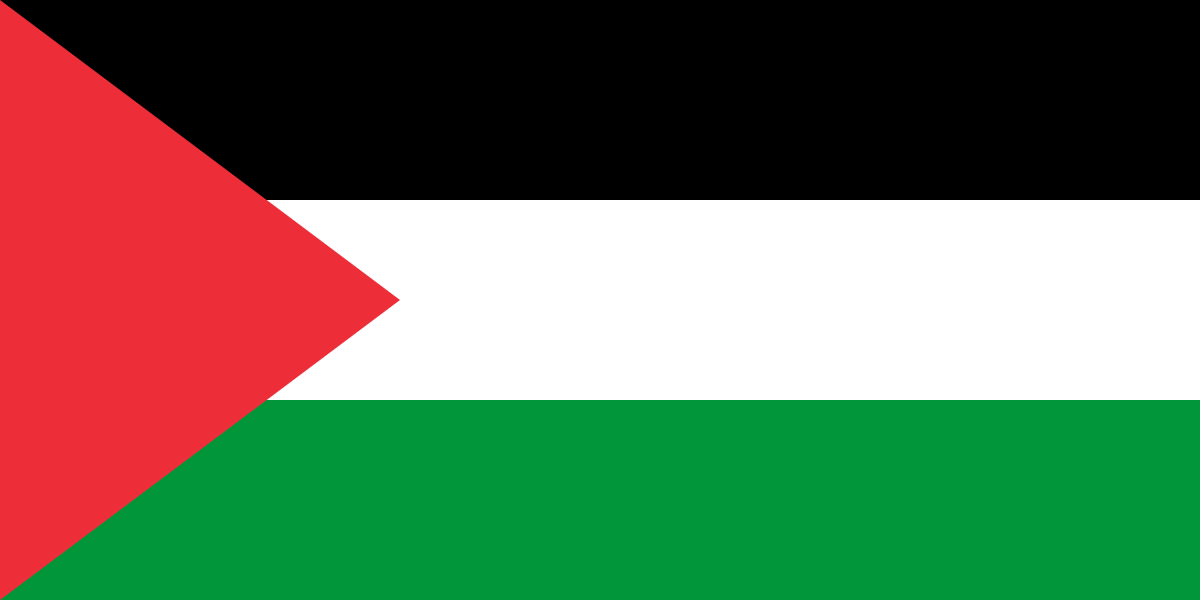
Palestine would like to express its gratitude to all those who sponsored the resolutions related to the question of Palestine and the situation in the Middle East, as well as all those who voted in their favour. We view the adoption of those resolutions as a very strong signal from the General Assembly both with regard to upholding international law and reaffirming very clear principles.
We hope, and will work diligently to ensure, that the Israeli side will comply with the essence of these resolutions, which are rooted in international law and the civilized conduct of nations. We do not see upholding international law and reaffirming those principles as conditions. What we see as illegal, and as obstacles to peace, is unilateral action in building illegal settlements, the construction of an illegal wall and the annexation of East Jerusalem. And if the Israeli occupying authority thinks that they can take us for a ride, forcing us to negotiate on the basis of their conditions, creating all those unilateral, illegal actions, they will have a long time to wait. They must abide by their obligations under international law and by the essence of the resolutions of the General Assembly and the Security Council.
We are eager to move forward in the direction of peace, as we have demonstrated all along by fulfilling all of our obligations. We do not see similar behaviour on the Israeli side. And for those who think that these resolutions are one-sided, they have to recall that this strong message is sent by almost the entire membership of the United Nations. We cannot all of us be wrong. We cannot all of us be selecting Israel as a target. Israel is acting and behaving as if it were above international law, and it is getting away with it. It is high time for all of us to bring Israel into compliance with international law and the essence of these resolutions.
The one-sided action is that of the Israeli side, which is building illegal settlements and creating the reality on the ground. Its actions are much stronger than resolutions. Although these resolutions defend international law and the rights of the Palestinian people, the action of the Israeli side, which should be condemned and which we should seek to stop, could be the most important contribution to the peace process so that all obstacles could be removed from the path of
the peace negotiations and the occupation brought to an end, allowing the Palestinian people to enjoy freedom and sovereignty in their own independent Palestine, with East Jerusalem as its capital.
We hope that, collectively, we can find a way to bring Israel into compliance so that we can put an end to the tragedy of the Palestinian people and allow them to exercise self-determination and have their own independent State in Palestine.
We wish to thank all members for the strong message they are sending to our people, who continue in their struggle. They will not cease in their struggle until they succeed in putting an end to the occupation and realizing their aspiration for an independent State of Palestine.
The General Assembly has thus concluded this stage of its consideration of agenda item 15.
The meeting rose at 11.05 a.m.